
The First Gate
השער הראשון
Branch 1
שער א ענף א
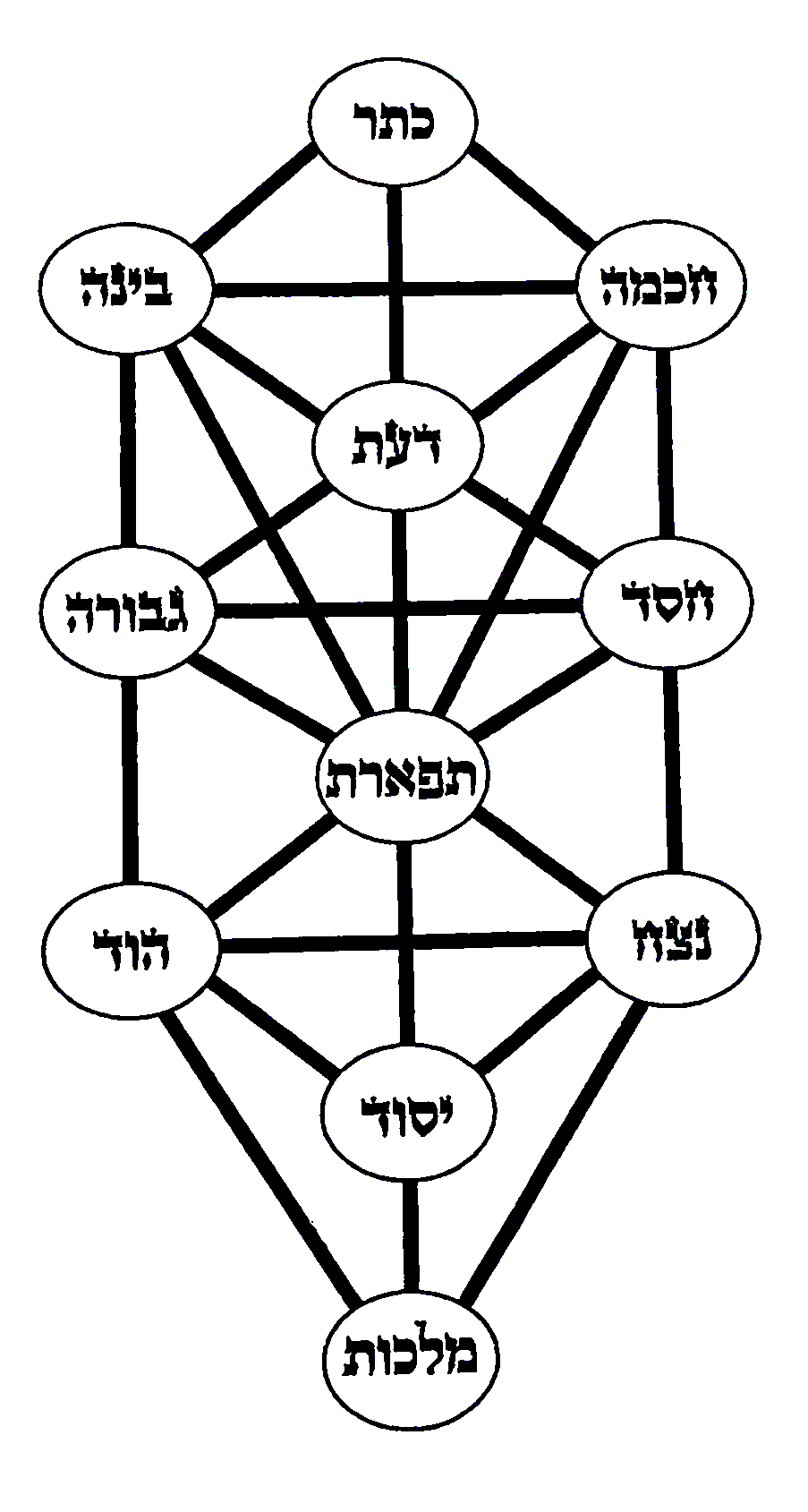
The first palace of the Seven Palaces, and it is the Palace of Adam Kadmon, and in this palace there are seven gates
היכל א מן שבעה היכלות, והוא היכל אדם קדמון, ובהיכל זה יש שבעה שערים
Discourse on Circular and Linearity, and it contains five branches
דרוש עגולים ויושר ובו חמשה ענפים
[1:1] Concerning the matter of the ultimate purpose of intention of the creation of the worlds (בְּעִנְיַן תַּכְלִית הַכַּוָּנָה שֶׁל בְּרִיאַת הָעוֹלָמוֹת), we shall now explain two investigations with which the Kabbalists occupied themselves (נְבָאֵר עַתָּה ב׳ חֲקִירוֹת שֶׁנִּתְעַסְּקוּ בָּהֶם הַמְּקוּבָּלִים). The first investigation is that which early and later Sages investigated (הַחֲקִירָה הָרִאשׁוֹנָה הוּא מַה שֶּׁחָקְרוּ חֲכָמִים רִאשׁוֹנִים וְאַחֲרוֹנִים), to know the cause of the creation of the worlds, for what purpose it was (לָדַעַת סִבַּת בְּרִיאַת הָעוֹלָמוֹת לְאֵיזֶה סִבָּה הָיְתָה). And they deliberated and concluded and decreed, saying (וְנִמְנוּ וְגָמְרוּ וְגָזְרוּ אוֹמֵר), that the cause of the matter was that behold, He, may He be blessed, is compelled to be perfect in all His actions and His powers (כִּי סִבַּת הַדָּבָר הָיָה לְפִי שֶׁהִנֵּה הוּא יִתְבָּרַךְ מֻכְרָח שֶׁיִּהְיֶה שָׁלֵם בְּכָל פְּעֻלּוֹתָיו וְכֹחוֹתָיו), and in all His Names of greatness and exaltedness and honor (וּבְכָל שְׁמוֹתָיו שֶׁל גְּדֻלָּה וּמַעֲלָה וְכָבוֹד). And if He had not brought forth His actions and His powers into actualization and deed (וְאִם לֹא הָיָה מוֹצִיא פְּעֻלּוֹתָיו וְכֹחוֹתָיו לִידֵי פֹעַל וּמַעֲשֶׂה), He would not, as it were, be called perfect (לֹא הָיָה כִּבְיָכוֹל נִקְרָא שָׁלֵם), neither in His actions nor in His Names and appellations (לֹא בִּפְעֻלּוֹתָיו וְלֹא בִּשְׁמוֹתָיו וְכִנּוּיָיו).
For behold, the great Name, which is of four letters, Havayah (כִּי הִנֵּה הַשֵּׁם הַגָּדוֹל שֶׁהוּא בֶּן ד׳ אוֹתִיּוֹת הֲוָיָ״ה), is called thus because of the indication of His eternal being (נִקְרָא כֵּן עַל הוֹרָאוֹת הֲוָיּוּתוֹ הַנִּצְחִית), and His existence forever (וְקִיּוּמוֹ לָעַד), He was, He is, and He will be (הָיָה הוֹוֶה וְיִהְיֶה), before the creation (טֶרֶם הַבְּרִיאָה), and during the existence of the creation (וּבִזְמַן קִיּוּם הַבְּרִיאָה), and after its reversal to what it was (וְאַחֲרֵי הִתְהַפְּכוֹ אֶל מַה שֶּׁהָיָה). And if the worlds and all that is in them had not been created (וְאִם לֹא נִבְרְאוּ הָעוֹלָמוֹת וְכָל אֲשֶׁר בָּהֶם), the truth of the indication of His eternal being, may He be blessed, in past, present, and future would not be able to be seen (לֹא יוּכַל לְהֵרָאוֹת אֲמִתּוּת הוֹרָאַת הֲוָיּוּתוֹ יִתְבָּרַךְ הַנִּצְחִית בְּעָבָר וְהֹוֶה וְעָתִיד), and He would not be called by the Name Havayah as above (וְלֹא יִהְיֶה נִקְרָא בְּשֵׁם הֲוָיָ״ה כַּנַּ״ל). And likewise the Name Adnut is called thus by the indication of lordship, that He has servants and is Master over them (וְכֵן שֵׁם אַדְנוּ״ת נִקְרָא כֵּן עַל הוֹרָאַת אַדְנוּת הֱיוֹת לוֹ עֲבָדִים וְהוּא אָדוֹן עֲלֵיהֶם), and if He had no created beings, He could not be called by the Name “Master” (וְאִם לֹא הָיָה לוֹ נִבְרָאִים לֹא יוּכַל לִקָּרֵא בְּשֵׁם אָדוֹן). And similarly with all the other Names (וְעַל־דֶּרֶךְ זֶה בִּשְׁאָר הַשֵּׁמוֹת כֻּלָּם). And likewise in the matter of the appellations, such as Merciful and Gracious, Slow to Anger (וְכֵן בְּעִנְיַן הַכִּנּוּיִים כְּגוֹן רַחוּם וְחַנּוּן אֶרֶךְ אַפַּיִם), He would not be called by these Names except through there being created beings in the world who would call Him “Slow to Anger” (לֹא יִקָּרֵא עַל שְׁמָם זוּלָת בִּהְיוֹת נִבְרָאִים בָּעוֹלָם שֶׁיִּקְרְאוּ לוֹ אֶרֶךְ אַפַּיִם), and likewise with all the other appellations (וְכַיּוֹצֵא בָּזֶה בִּשְׁאָר הַכִּנּוּיִים כֻּלָּם). However, when the worlds are created (אָֽמְנָם בִּהְיוֹת הָעוֹלָמוֹת נִבְרָאִים), then His actions and His powers, may He be blessed, come forth into actualization (אָז יָצְאוּ פְּעֻלּוֹתָיו וְכֹחוֹתָיו יִתְבָּרַךְ לִידֵי פֹעַל), and He is called perfect in all types of His actions and His powers (וְיִהְיֶה נִקְרָא שָׁלֵם בְּכָל מִינֵי פְּעֻלּוֹתָיו וְכֹחוֹתָיו), and He is also perfect in all the Names and appellations, without any deficiency whatsoever, Heaven forfend (וְגַם יִהְיֶה שָׁלֵם בְּכָל הַשֵּׁמוֹת וְהַכִּנּוּיִים בִּלְתִּי שׁוּם חֶסְרוֹן כְּלָל חַס וְשָׁלוֹם).
And the matter of this reasoning is explained well in Sefer haZohar, Parashat Pinḥas, daf 257b (וְעִנְיַן טַעַם זֶה נִתְבָּאֵר הֵיטֵב בְּסֵפֶר הַזֹּהַר פָּרָשַׁת פִּינְחָס דְּרַנ״ז ע״ב), and this is its wording (וְזֶה לְשׁוֹנוֹ): “The thirteenth commandment, etc., this is the Shema Yisrael (פְּקוּדָא תְּלִיסַר כו׳ דָּא קְרִיאַת שְׁמַע), and one must know that He is called wise in all kinds of wisdom, and understanding in all kinds of understanding, etc (וְאִית לְמִנְדַּע דְּאִיהוּ אִקְרֵי חַכִּים בְּכָל מִינֵי חָכְמָתִין וּמֵבִין בְּכָל מִינֵי תְבוּנוֹת כו׳), but before He created the world He was called by all these levels on account of the created beings who were destined to be created (אֶלָּא קוֹדֶם דִּבְרָא עָלְמָא אִתְקְרֵי בְּכָל אִלֵּין דַּרְגִּין עַל שְׁמָא דְּבְרַיָּין דְּהָווּ עֲתִידִין לְמִבְרֵי), for if there were no created beings in the world, why would He be called Merciful or Judge? (דְּאִי לָאו הָווּ בְּרַיָּין בְּעָלְמָא אַמַּאי אִתְקְרֵי רַחוּם דַּיָּן), rather on account of the created beings who were destined, etc.” (אֶלָּא עַל שְׁמָא דְּבְרַיָּין דַּעֲתִידִין כו׳). And in Parashat Bo, daf 42 (וּבְּפָרָשַׁת בֹּא דְּמ״ב), and this is its wording (וְז״ל):
“For if His light did not spread over all created beings, how would they know Him, and how would ‘the whole earth is full of His glory’ be fulfilled?” (דְּאִי לָא אִתְפַּשֵּׁט נְהוֹרֵיהּ עַל כָּל בְּרַיָּין אֵיךְ יִשְׁתְּמוֹדְעוּן לֵיהּ וְאֵיךְ יִתְקַיֵּים מְלֹא כָּל הָאָרֶץ כְּבוֹדוֹ).
The second investigation is close to the question of what is above and what is below, what is before and what is after (הַחֲקִירָה ב׳ הִיא קְרוֹבָה אֶל שְׁאֵלַת מַה לְמַעְלָה וּמַה לְמַטָּה מַה לְפָנִים וּמַה לְאָחוֹר), as in Tractate Ḥagigah, chapter “Ein Dorshin” (בְּמַסֶּכֶת חֲגִיגָה פֶּרֶק אֵין דּוֹרְשִׁין) (Ḥagigah 11b). And behold, since this question is exceedingly deep (וְהִנֵּה לִהְיוֹת הַשְּׁאֵלָה זוֹ עֲמוּקָה מְאֹד), such that a person almost endangers himself by deepening his contemplation in this investigation (אֲשֶׁר כִּמְעַט מִסְתַּכֵּן הָאָדָם בְּהַעֲמִיק הִסְתַּכְּלוּתוֹ בַּחֲקִירָה זוֹ). And its matter is as the Sages mentioned in the Mishnah above (וְעִנְיָנוֹ כַּאֲשֶׁר הִזְכִּירוּ חֲזָ״ל בַּמִּשְׁנָה הַנַּ״ל): “Whoever contemplates these four matters, it would have been better for him had he not come into the world” (כָּל הַמִּסְתַּכֵּל בְּד׳ דְּבָרִים אֵלּוּ רָאוּי לוֹ שֶׁלֹּא בָּא לָעוֹלָם) — “what is above, what is below, what is before, what is after, and whoever does not have concern for the honor of his Maker, it would have been better for him had he not come into the world” (מַה לְמַעְלָה מַה לְמַטָּה מַה לְפָנִים מַה לְאָחוֹר וְכָל שֶׁאֵין חָס עַל כְּבוֹד קוֹנוֹ רָאוּי לוֹ שֶׁלֹּא בָּא לָעוֹלָם). And therefore we cannot expand and deepen in their investigation (וְעַל כֵּן לֹא נוּכַל לְהַרְחִיב וּלְהַעֲמִיק בַּחֲקִירָתָם). However, with the help of Hashem, we shall explain the headings of chapters (אָֽמְנָם נְבָאֵר בְּעֶזְרַת ה׳ רָאשֵׁי פְּרָקִים), like one who peers through the lattice (כְּמֵצִיץ מִן הַחֲרַכִּים), without contemplation of the deep matters (בִּלְתִּי הִסְתַּכְּלוּת בַּדְּבָרִים הָעֲמוּקִים). And one who understands our words will find good taste and understanding, if he comprehends them (וְהַמַּשְׂכִּיל עַל דְּבָרֵינוּ אֵלֶּה יִמְצָא טוֹב טַעַם וָדַעַת אִם יְבִינֵהוּ).
And behold, the matter of this investigation is that they ask why the creation of this world was at the time that it was, and not before or after (וְהִנֵּה עִנְיַן הַחֲקִירָה הַזֹּאת אֲשֶׁר שׁוֹאֲלִים לָמָּה בְּרִיאַת עוֹלָם הַזֶּה הָיְתָה בַּזְּמַן שֶׁהָיָה וְלֹא קֹדֶם אוֹ אַחַר כָּךְ). Therefore you must know that which we shall explain in our compositions (וְלָכֵן צָרִיךְ שֶׁתֵּדַע אֵת אֲשֶׁר נְבָאֵר בְּחִבּוּרֵינוּ). And it is that behold, it is known (וְהוּא כִּי הִנֵּה נוֹדַע), that the supernal light, above above without end (כִּי הָאוֹר הָעֶלְיוֹן לְמַעְלָה לְמַעְלָה עַד אֵין קֵץ), is called Ein Sof, and its name testifies about it (הַנִּקְרָא אֵין סוֹף שְׁמוֹ מוֹכִיחַ עָלָיו), that there is no grasp in it whatsoever, neither in thought nor in contemplation at all (שֶׁאֵין בּוֹ שׁוּם תְּפִיסָה לֹא בְּמַחֲשָׁבָה וְלֹא בְּהִרְהוּר כְּלָל וְעִיקָּר). And it is abstract and separate from all thoughts (וְהוּא מֻפְשָׁט וּמוּבְדָּל מִכָּל מַחֲשָׁבוֹת), and it precedes all the emanated, the created, the formed, and the made (וְהוּא קוֹדֵם אֶל כָּל הַנֶּאֱצָלִים וְהַנִּבְרָאִים וְהַיְצוּרִים וְהַנַּעֲשִׂים). And there was no time of beginning or origin in it (וְלֹא הָיָה בּוֹ זְמַן הַתְחָלָה וְרֵאשִׁית), for it is always found and exists forever (כִּי תָּמִיד הוּא נִמְצָא וְקַיָּם לָעַד), and it has no beginning and no end whatsoever (וְאֵין בּוֹ רֹאשׁ וָסוֹף כְּלָל).
And behold, from the Ein Sof there was afterward emanated the existence of the great luminary called Adam Kadmon, prior to all Primordials (וְהִנֵּה מִן הָאֵין סוֹף נִשְׁתַּלְשֵׁל אַחַ״כ מְצִיאוּת הַמָּאוֹר הַגָּדוֹל הַנִּקְרָא אָדָם קַדְמוֹן לְכָל הַקַּדְמוּמִים), as written in Branch 3 (כְּמוֹ שֶׁכָּתוּב בְּעָנָף ג׳). And afterward there were emanated from Him the lights that are attached to Adam Kadmon (וְאַחַ״כ נִשְׁתַּלְשְׁלוּ מִמֶּנּוּ הָאוֹרוֹת הַנִּתְלִין בְּאָדָם קַדְמוֹן), behold they are many lights that emerge from within Him and illuminate outward (הִנֵּה הֵם אוֹרוֹת רַבִּים הַיּוֹצְאִים מִתּוֹכוֹ וּמְאִירִין חוּצָה לוֹ). Some of them are attached from His brain (מֵהֶם תְּלוּיִין מִמּוֹחוֹ), and some from the skull (וּמֵהֶם מִגֻּלְגָּלְתָּא), and some from His eyes (וּמֵהֶם מֵעֵינָיו), and some from His ears (וּמֵהֶם מֵאָזְנָיו), and some from His nose (וּמֵהֶם מֵחֹטְמוֹ), and some from His mouth (וּמֵהֶם מִפִּיו), and some from His forehead outward (וּמֵהֶם מִמִּצְחוֹ חוּצָה לוֹ), and some from around His body (וּמֵהֶם סְבִיבוֹת גּוּפוֹ), which are the aspect of His seven lower ones (שֶׁהוּא בְּחִינַת ז׳ תַּחְתּוֹנִים שֶׁלּוֹ). And around them are many lights that shine and are attached to them (וּבְּסְבִיבוֹתֵיהֶם אוֹרוֹת רַבִּים מְאִירִים וְנִתְלִין בָּהֶם), which are called the World of Nekudim [Points] (הַנִּקְרָא עוֹלָם הַנְּקוּדִים). And afterward there were emanated from Him the four worlds Atzilut, Beri’ah, Yetzirah, Asiyah, known and famous (וְאַחַ״כ נִשְׁתַּלְשְׁלוּ מִמֶּנּוּ ד׳ עוֹלָמוֹת אֲצִילוּת בְּרִיאָה יְצִירָה עֲשִׂיָּה הַיְדוּעִים וּמְפֻרְסָמִים), as mentioned in the Zohar and in the Tikkunim (כַּנִּזְכָּר בַּזֹּהַר וּבַתִּקּוּנִים). And indeed, the Atzilut of this Adam Kadmon (וְאָֽמְנָם אֲצִילוּת אָדָם קַדְמוֹן הַזֶּה), and all the more so the other worlds beneath Him as mentioned above (וּמִכָּל שֶׁכֵּן שְׁאָר הָעוֹלָמוֹת שֶׁתַּחְתָּיו כַּנַּ״ל), had a beginning and an end (הָיָה לָהֶם רֹאשׁ וָסוֹף), and they had a time of the beginning of their becomings and their emanations (וְהָיָה לָהֶם זְמַן הַתְחָלַת הֲוָיּוֹתָם וַאֲצִילוּתָם), unlike the Ein Sof mentioned above (מַה שֶּׁאֵין כֵּן בָּאֵין סוֹף הַנַּ״ל).
And behold, from the time and moment that the expansion and the chaining of the lights and the worlds mentioned above began (וְהִנֵּה מִן הָעֵת וְהַזְּמַן אֲשֶׁר הִתְחִיל הִתְפַּשְּׁטוּת וְהִשְׁתַּלְשְׁלוּת הָאוֹרוֹת וְהָעוֹלָמוֹת הַנַּ״ל), from then began the becomings of all created beings one after another (מֵאָז הִתְחִילוּ הֲוָיּוֹת הַנִּבְרָאִים כֻּלָּם זֶה אַחַר זֶה), until the matter reached the existence which is now (עַד שֶׁבָּא הַדָּבָר אֶל הַמְּצִיאוּת אֲשֶׁר הוּא עַתָּה). And according to the order of the expansion and the chaining, according to the order of the times, one after another, so it was done (וּכְפִי סֵדֶר הַהִתְפַּשְּׁטוּת וְהַהִשְׁתַּלְשְׁלוּת כְּסֵדֶר הַזְּמַנִּים זֶה אַחַר זֶה כָּךְ נַעֲשָׂה). And it was not possible to advance or to delay the creation of this world (וְלֹא הָיָה אֶפְשָׁר לְהַקְדִּים אוֹ לְאַחֵר בְּרִיאַת עוֹלָם הַזֶּה), for each and every world was created after the creation of the world above it (כִּי כָּל עוֹלָם וְעוֹלָם נִבְרָא אַחַר בְּרִיאַת עוֹלָם שֶׁלְּמַעְלָה מִמֶּנּוּ). And all the worlds were being created, expanding, and chaining, going one beneath another at different times, later one than another (וְכָל הָעוֹלָמוֹת הָיוּ נִבְרָאִים וּמִתְפַּשְּׁטִים וּמִשְׁתַּלְשְׁלִים וְהוֹלְכִים זֶה תַּחַת זֶה בִּזְמַנִּים שׁוֹנִים וּמְאֻחָרִים זֶה מִזֶּה), until the time of the creation of this world arrived (עַד שֶׁהִגִּיעַ זְמַן בְּרִיאַת עוֹלָם הַזֶּה), and then it was created at the time fitting for it after the creation of the supernal worlds that are above it (וְאָז נִבְרָא בַּזְּמַן הָרָאוּי לוֹ אַחַר בְּרִיאַת הָעוֹלָמוֹת הָעֶלְיוֹנִים אֲשֶׁר עָלָיו). And this suffices (וְדַי בָּזֶה), for we cannot expand and deepen the explanation of this matter as needed—how, and how much, and when (כִּי לֹא נוּכַל לְהַרְחִיב וּלְהַעֲמִיק בֵּאוּר עִנְיַן זֶה כְּכָל הַצֹּרֶךְ וְאֵיךְ וְכַמָּה וּמָתַי).
Branch 2
שער א ענף ב
[1:2] In the matter of Ein Sof, blessed be He (בְּעִנְיַן א״ס ב״ה), how was the beginning of the Atzilut of the worlds emanated from Him (אֵיךְ הָיְתָה הַתְחָלַת אֲצִילוּת הָעוֹלָמוֹת הַנֶּאֱצָלִים מִמֶּנּוּ), and it is also a great investigation and an immense dispute (וְגַם חֲקִירָה גְדוֹלָה וּמַחֲלֹקֶת עָצוּם), in which all the Kabbalists, all of them, disagreed (נֶחְלְקוּ בּוֹ כָּל הַמְּקוּבָּלִים כֻּלָּם), for there is one who wrote that the Ten Sefirot are in the order of ten levels one after another (כִּי יֵשׁ מִי שֶׁכָּתַב כִּי הַי״ס הֵם כְּסֵדֶר י׳ מַדְרֵגוֹת זוֹ אַחַ״ז), and each one below the other (וְזוֹ לְמַטָּה מִזּוֹ), and there is one who wrote that the order of their standing is by way of lines, right and left and middle (וְיֵשׁ מִי שֶׁכָּתַב כִּי סֵדֶר עֲמִידָתָן דֶּרֶךְ קַוִּים יָמִין וּשְׂמֹאל וְאֶמְצָע), and they are three Sefirot Chokhmah–Chesed–Netzach one upon another in the right line (וְהֵם ג״ס חח״ן זוֹ ע״ג זוֹ בְּקַו יָמִין), and three Sefirot Binah–Gevurah–Hod one upon another in the left line (וְג״ס בְּג״ה זוֹ ע״ג זוֹ בְּקַו שְׂמֹאל), and four Sefirot Keter–Tiferet–Yesod–Malkhut one upon another in the middle line (וְד״ס כְּתִי״ם זוֹ ע״ג זוֹ בְּקַו הָאֶמְצָעִי), and many will grow wise and say that they are in the form of circular spheres, one within one, and this surrounds and encompasses that (וְרַבִּים יֶחְכְּמוּ וְיֹאמְרוּ כִּי הֵם בְּצוּרַת גַּלְגַּלִּים עֲגוּלִים זֶה תּוֹךְ זֶה וְזֶה מַקִּיף וְסוֹבֵב לָזֶה).
And behold, one who will look into the words of Rabbi Shim‘on bar Yochai in the Sefer haZohar and the Tikkunim, and likewise in Sefer haBahir (of Rabbi Neḥunya ben haKanah) (וְהִנֵּה מִי שֶׁיִּסְתַּכֵּל בְּדִבְרֵי רַשְׁבִּ״י בְּסֵפֶר הַזֹּהַר וְהַתִּקּוּנִים וְכֵן בְּסֵפֶר הַבָּהִיר (לְרַבִּי נְחוּנְיָא בֶּן הַקָּנֶה)), will find in their words statements that are different and divergent, inclining here and there (יִמְצָא בְּדִבְרֵיהֶם מַאֲמָרִים שׁוֹנִים וּמְחֻלָּפִים נוֹטִים לְכָאן וּלְכָאן), and the later Kabbalists were confounded in this (וְהַמְּקוּבָּלִים הָאַחֲרוֹנִים (נָבוֹכוּ בָזֶה)), they toiled more to investigate and could not (נִלְאוּ יוֹתֵר לַחְקֹר וְלֹא יָכְלוּ), for a great and strong difficulty goes and storms upon them (כִּי קֻשְׁיָא גְדוֹלָה וַחֲזָקָה הוֹלֶכֶת וּמְסַעֶרֶת עֲלֵיהֶם), when they say: since Ein Sof is equal in every aspect, complete equality (בְּאָמְרָם מֵאַחַר שֶׁהָא״ס שָׁוֶה בְּכָל בְּחִינָה הַשְׁוָאָה גְמוּרָה), it is not fitting to speak of above and below, front and back (לֹא יִצְדַּק בּוֹ מַעְלָה וּמַטָּה פָּנִים וְאָחוֹר), for all these terms indicate measure and limit and boundary and dimension in the supernal light of Ein Sof, Heaven forbid (כִּי כָּל הַכִּנּוּיִים הָאֵלֶּה מוֹרִים הֵם הֱיוֹת קִצְבָּה וּגְבוּל וּתְחוּם וּמִדָּה בְּאוֹר א״ס הָעֶלְיוֹן חַס וְשָׁלוֹם).
And it is likewise known that the light of Ein Sof pierces and passes through the thickness of every Sefirah and Sefirah (וְכֵן נוֹדַע שֶׁאוֹר א״ס נוֹקֵב וְעוֹבֵר בְּעֹבִי כָּל סְפִירָה וּסְפִירָה), and from within every Sefirah and Sefirah (וּמִלְגָּאו כָּל סְפִירָה וּסְפִירָה), and it surrounds them from without, for every Sefirah and Sefirah (וְאָסְחַר לוֹן מִלְבַּר לְכָל סְפִירָה וּסְפִירָה), as mentioned in the Sefer haZohar, Parashat Behar, in Ra‘aya Meheimna, daf 109 (כַּנִּזְכָּר בְּסֵפֶר הַזֹּהַר פָּרָשַׁת בְּהַר בְּרַעְיָא מְהֵימְנָא דְּק״ט), and this is its wording: “You are a soul to the soul, etc.” (וְז״ל אַנְתְּ נְשָׁמָה לִנְשָׁמָה כו׳), and in Parashat Pinḥas, daf 225 and 226 (וּבְּפָרָשַׁת פִּינְחָס דְּרכ״ה וְרכ״ו), and likewise in the introduction to the Tikkunim, daf 4 (וְכֵן בְּהַקְדָּמַת הַתִּקּוּנִים דְּד׳), and this is its wording: “And above all, Cause of all causes, there is no god above Him, nor below Him, nor to the four directions of the world” (וְז״ל וּלְעֵילָּא עַל כָּלָּא עִלַּת עַל כָּל הָעִלּוֹת לֵית אֱלָהָא עֲלֵיהּ וְלָא תְחוֹתֵיהּ וְלָא לְד׳ סִטְרֵי עָלְמָא), “and He fills all worlds and surrounds them from every side, etc.” (וְהוּא מְמַלֵּא כָּל עָלְמִין וְאָסְחַר לוֹן מִכָּל סִטְרָא כו׳). And if so, since all the Ten Sefirot are close in equality relative to Ein Sof, and all of them receive light from Him directly (וְאִם כֵּן מֵאַחַר שֶׁכָּל הַי״ס קְרוֹבוֹת בְּהַשְׁוָאָה אֶל הָא״ס וְכֻלָּם מְקַבְּלִים מִמֶּנּוּ אוֹר בְּעַצְמוֹ), then what difference is there between one and another (אִם כֵּן מַה הֶפְרֵשׁ בֵּין זֶה לָזֶה), and in what does each Sefirah surpass its fellow (וּבַמֶּה תִּתְעַלֶּה כָּל סְפִירָה מֵחֲבֶרְתָּהּ), since all the levels are equal as stated above (כֵּיוָן שֶׁמַדְרֵגוֹת כֻּלָּם שָׁווֹת כַּנַּ״ל), as explained in Mavo She’arim, Part One, Chapter Four (מְבוֹ״ש ש״א ח״א פ״ד).
And behold, the truth is that these and those are the words of the Living Elohim (וְהִנֵּה הָאֱמֶת הוּא שֶׁאֵלּוּ וְאֵלּוּ דִּבְרֵי אֱלֹהִים חַיִּים), and all of them are correct for the understanding one, and upright for those who find knowledge (וְכֻלָּם נְכוֹחִים לַמֵּבִין וִישָׁרִים לְמוֹצְאֵי דָעַת). However, the difference between the two aforementioned approaches—whether they are in their order as ten levels one above the other, or whether they are in the manner of lines (אֲבָל הַהֶפְרֵשׁ שֶׁבֵּין ב׳ הַסְּבָרוֹת הַנַּ״ל אִם הֵם כְּסִדְרָן י׳ מַדְרֵגוֹת זוֹ לְמַעְלָה מִזּוֹ אִם הֵם בְּדֶרֶךְ קַוִּים), this matter will be explained later, with the help of Hashem, in the matter of the World of Nekudim [Points] (זֶה הָעִנְיָן יִתְבָּאֵר לְקַמָּן בְּעֶזְרַת ה׳ בְּעִנְיַן עוֹלָם הַנְּקוּדִים), how before their rectification they were in their order, one above the other (אֵיךְ קֹדֶם תִּקּוּנָם הָיוּ כְּסִדְרָן זֶה לְמַעְלָה מִזֶּה), but after the rectification they were according to the other approach (אֲבָל אַחַר הַתִּקּוּן הָיוּ כַּסְּבָרָה הָאַחֶרֶת), and they were in the form of three lines as mentioned above (וְהָיוּ בְּצִיּוּר ג׳ קַוִּים כַּנַּ״ל).
And furthermore, the difference between the two approaches—whether they are in the manner of lines or in circles one within another—we shall explain, with the help of Hashem, in this branch (וְאָֽמְנָם הַהֶפְרֵשׁ שֶׁיֵּשׁ בֵּין ב׳ הַסְּבָרוֹת אִם הֵם בְּדֶרֶךְ קַוִּים אוֹ בְּעִגּוּלִים זֶה תּוֹךְ זֶה נְבָאֵר בְּעֶזְרַת ה׳ בְּעָנָף זֶה). And set your heart to the matters that will now be explained (וְשִׂים לִבְּךָ בַּדְּבָרִים שֶׁיִּתְבָּאֲרוּ עַתָּה), and from them every one who attains a matter will gain understanding (וּמֵהֶם תַּשְׂכִּיל כָּל מוֹצֵא דָבָר), for the two approaches are correct and true (כִּי ב׳ הַסְּבָרוֹת נְכוֹחוֹת וַאֲמִתִּיּוֹת), since there were two aspects in the matter of the Ten Sefirot (כִּי ב׳ בְּחִינוֹת הָיוּ בְּעִנְיַן הַי״ס): one is the aspect of their being circular, in the form of ten circles one within another (א׳ הוּא בְּחִינַת הֱיוֹתָם עֲגוּלִים בְּצִיּוּר י׳ עֲגוּלִים זֶה תּוֹךְ זֶה), and they also had another aspect (וְגַם הָיְתָה בָהֶם בְּחִינָה אַחֶרֶת), which is their being ten Sefirot in upright form, by way of three lines (וְהוּא הֱיוֹתָם י׳ סְפִירוֹת בְּיֹשֶׁר דֶּרֶךְ ג׳ קַוִּים), in the appearance of a human form with head and arms and thighs and torso and legs (כְּמַרְאֵה אָדָם בַּעַל רֹאשׁ וּזְרוֹעוֹת וְשׁוֹקַיִם וְגוּף וְרַגְלַיִם), as I shall write all of it well, in the branches, with the help of Hashem, later (כְּמוֹ שֶׁאֶכְתֹּב הֵיטֵב כֻּלּוֹ בָּעֲנָפִים בְּעֶזְרַת ה׳ לְקַמָּן). And this is their explanation (וְזֶהוּ בֵּיאוּרָם).
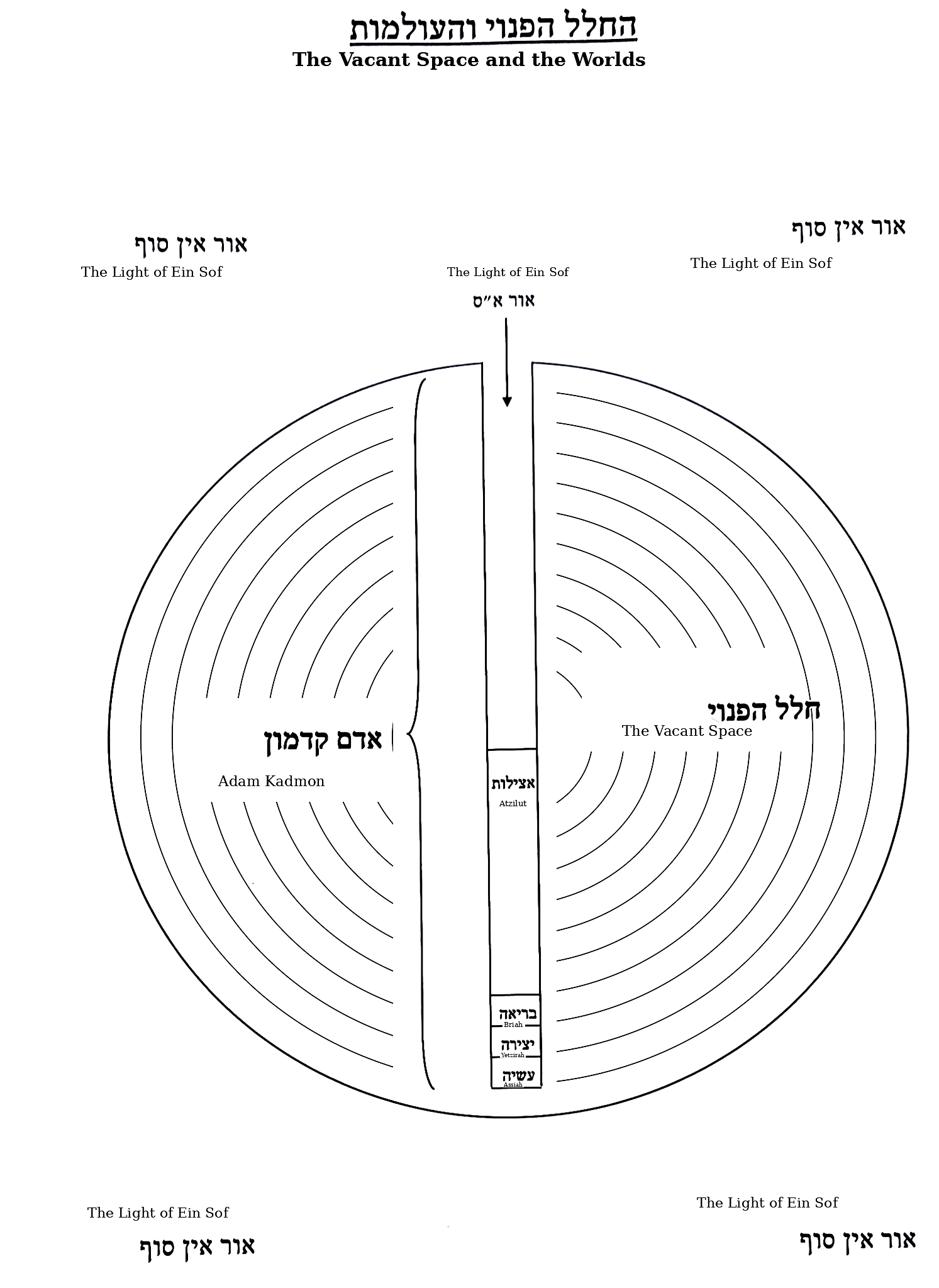
Know that before the emanated ones were emanated and the created ones were created (דַּע כִּי טֶרֶם שֶׁנֶּאֱצְלוּ הַנֶּאֱצָלִים וְנִבְרְאוּ הַנִּבְרָאִים), there was a supernal simple light filling all existence (הָיָה אוֹר עֶלְיוֹן פָּשׁוּט מְמַלֵּא כָּל הַמְּצִיאוּת), and there was no vacant place in the aspect of empty air or void (וְלֹא הָיָה שׁוּם מָקוֹם פָּנוּי בִּבְחִינַת אוֹיִר רֵיקָנִי וְחָלָל), rather everything was filled from that simple light of Ein Sof (אֶלָּא הַכֹּל הָיָה מְמֻלָּא מִן אוֹר אֵין־סוֹף פָּשׁוּט הַהוּא), and it had no aspect of head and no aspect of end (וְלֹא הָיָה לוֹ בְּחִינַת רֹאשׁ וְלֹא בְּחִינַת סוֹף), but everything was one simple light equal in one uniform equality (אֶלָּא הַכֹּל הָיָה אוֹר אֶחָד פָּשׁוּט שָׁוֶה בְּהַשְׁוָאָה אַחַת), and this is called the Light of Ein Sof (וְהוּא הַנִּקְרָא אוֹר אֵין־סוֹף). And when it arose in His simple will to create the worlds and to emanate the emanated ones (וּכְשֶׁעָלָה בִּרְצוֹנוֹ הַפָּשׁוּט לִבְרֹא הָעוֹלָמוֹת וּלְהַאֲצִיל הַנֶּאֱצָלִים), to bring forth into light the perfection of His actions and His Names and His appellations (לְהוֹצִיא לָאוֹר שְׁלֵימוּת פְּעֻלּוֹתָיו וּשְׁמוֹתָיו וְכִנּוּיָיו), for this was the cause of the creation of the worlds as explained by us in Branch One in the first investigation (אֲשֶׁר זֹאת הָיְתָה סִבַּת בְּרִיאַת הָעוֹלָמוֹת כְּמְבוֹאָר אֶצְלֵנוּ בְּעָנָף הָרִאשׁוֹן בַּחֲקִירָה הָרִאשׁוֹנָה). Then Ein Sof constricted Himself at the central point that is within Him, in the very center of His light (וְהִנֵּה אָז צִמְצֵם אֶת עַצְמוֹ אֵין־סוֹף בַּנְּקוּדָּה הָאֶמְצָעִית אֲשֶׁר בּוֹ בְּאֶמְצַע אוֹרוֹ מַמָּשׁ), (he said: Meir in our wording, the Rav said this, and understand it well) (אָמַר מֵאִיר בְּעֶרְכֵּינוּ אָמַר הָרַב זֶה וְקַל לָךְ), and He constricted that light and distanced it to the surrounding sides of the central point (וְצִמְצֵם הָאוֹר הַהוּא וְנִתְרַחֵק אֶל צִדְּדֵי סְבִיבוֹת הַנְּקוּדָּה הָאֶמְצָעִית), and then there remained a vacant place and air and empty void from the very central point (וְאָז נִשְׁאַר מָקוֹם פָּנוּי וְאוֹיִר וְחָלָל רֵיקָנִי מִנְּקוּדָּה אֶמְצָעִית מַמָּשׁ כָּזֶה צִיּוּר). 
And behold, this constriction was in one equal measure around that empty central point (וְהִנֵּה הַצִּמְצוּם הַזֶּה הָיָה בְּהַשְׁוָאָה אַחַת בִּסְבִיבוֹת הַנְּקוּדָּה הָאֶמְצָעִית הָרֵיקָנִית הַהִיא), such that the place of that void was circular from all its sides in complete equality (בְּאוֹפֶן שֶׁמְּקוֹם הַחָלָל הַהוּא הָיָה עָגוֹל מִכָּל סְבִיבוֹתָיו בְּהַשְׁוָאָה גְמוּרָה), and it was not in the form of a square with right angles (וְלֹא הָיָה בִּתְמוּנַת מְרֻבָּע בַּעַל זָוִיּוֹת נִצָּבוֹת), since Ein Sof also constricted Himself in a circular aspect with one equal measure from all sides (לְפִי שֶׁגַּם אֵין־סוֹף צִמְצֵם עַצְמוֹ בִּבְחִינַת עָגוֹל בְּהַשְׁוָאָה אַחַת מִכָּל צְדָדִים), and the reason was that since the light of Ein Sof is equal in complete equality (וְהַסִּבָּה הָיְתָה לְפִי שֶׁכֵּיוָן שֶׁאוֹר אֵין־סוֹף שָׁוֶה בְּהַשְׁוָאָה גְמוּרָה), it was therefore necessary that He constrict Himself also in one equal measure from all sides (הֻכְרַח גַּם כֵּן שֶׁיִּצְמְצֵם עַצְמוֹ בְּהַשְׁוָאָה אַחַת מִכָּל הַצְּדָדִים), and not that He constrict Himself from one side more than the other sides (וְלֹא שֶׁיִּצְמְצֵם עַצְמוֹ מִצַּד אֶחָד יוֹתֵר מִשְּׁאָר הַצְּדָדִים).
And it is known in the wisdom of measure that there is no form so equal as the form of the circle (וְנוֹדַע בְּחָכְמַת הַשִּׁעוּר שֶׁאֵין תְּמוּנָה כָּל כָּךְ שָׁוֶה כְּמוֹ תְּמוּנַת הָעִגּוּל), unlike the form of a square with protruding right angles (מַה שֶּׁאֵין כֵּן בִּתְמוּנַת מְרֻבָּע בַּעַל זָוִיּוֹת נִצָּבוֹת בּוֹלְטוֹת), and likewise the form of a triangle and similar forms (וְכֵן תְּמוּנַת הַמְּשֻׁלָּשׁ וְכַיּוֹצֵא בִּשְׁאָר הַתְּמוּנוֹת). And therefore it is necessary that the Tzimtzum of Ein Sof be in the aspect of a circle (וְעַל כֵּן מֻכְרָח הוּא לִהְיוֹת צִמְצוּם הָאֵין־סוֹף בִּבְחִינַת עִגּוּל), and the reason is because He is equal in all His measures as mentioned above (וְהַסִּבָּה הִיא בַּעֲבוּר שֶׁהוּא שָׁוֶה בְּכָל מִדּוֹתָיו כַּנַּ״ל). Also in Parashat Bo, daf 42, it is stated: “The manna was in a circle, for it is Yod” (גַּם בְּפָרָשַׁת בֹּא דְּמ״ב אִיתָא מָן בְּעִגּוּלָא דְּאִיהוּ י׳). And see Parashat Pekudei, daf 258, where it states that the palaces and what is within them are circles (וְעַיֵּן בְּפָרָשַׁת פְּקוּדֵי דְּרנ״ח דְּקָאָמַר כִּי הֵיכָלוֹת וּמַה שֶּׁבָּהֶם הֵם עִגּוּלִים). There is another reason as well (עוֹד יֵשׁ סִבָּה אַחֶרֶת), and it is on account of the emanated ones whom He would afterward emanate within that empty and vacant void as mentioned above (וְהוּא בַּעֲבוּר הַנֶּאֱצָלִים אֲשֶׁר עָתִיד לְהַאֲצִילָם אַחַר כָּךְ בְּתוֹךְ הַמָּקוֹם הַחָלָל הַהוּא הָרֵיק וְהַפָּנוּי כַּנַּ״ל).
And the matter is that when the emanated ones are in the form of circles (וְהָעִנְיָן הוּא כִּי בִּהְיוֹת הַנֶּאֱצָלִים בִּתְמוּנַת הָעִגּוּלִים), then all of them will be close and attached to Ein Sof that surrounds them with one complete equality (הִנֵּה אָז יִהְיוּ כֻּלָּם קְרוֹבִים וּדְבוּקִים בָּאֵין־סוֹף הַסּוֹבֵב אוֹתָם בְּהַשְׁוָאָה אַחַת גְמוּרָה), and the light and the flow that they require they will receive from Ein Sof from all their sides in one balanced measure (וְהָאוֹר וְהַשֶּׁפַע הַצָּרִיךְ לָהֶם יְקַבְּלוּ מִן אֵין־סוֹף מִכָּל צְדָדֵיהֶם בְּשִׁקּוּל אֶחָד). Unlike if the emanated ones were in the aspect of a square or triangle or similar forms (מַה שֶּׁאֵין כֵּן אִם הָיוּ הַנֶּאֱצָלִים בִּבְחִינַת מְרֻבָּע אוֹ מְשֻׁלָּשׁ וְכַיּוֹצֵא בִּשְׁאָר תְּמוּנוֹת), for then they would have protruding corners closer to Ein Sof than their other sides (כִּי אָז הָיוּ בָהֶם זָוִיּוֹת בּוֹלְטוֹת קְרוֹבוֹת אֶל אֵין־סוֹף יוֹתֵר מִשְּׁאָר צְדָדֵיהֶם), and they would not receive the light of Ein Sof in one equal measure (וְלֹא הָיוּ מְקַבְּלִים אוֹר אֵין־סוֹף בְּהַשְׁוָאָה אַחַת). And at the end of Branch Three will be explained the reason why this matter of Tzimtzum was necessary and what its meaning is (וּבְּסוֹף עָנָף ג׳ יִתְבָּאֵר טַעַם לָמָּה הֻצְרַךְ עִנְיַן הַצִּמְצוּם הַזֶּה וּמַה עִנְיָנוֹ).
The matter of this Tzimtzum is to reveal the root of the judgments (מ״ב עִנְיַן הַצִּמְצוּם הַזֶּה הוּא לְגַלּוֹת שֹׁרֶשׁ הַדִּינִין), in order afterward to give the attribute of judgment in the worlds (כְּדֵי לָתֵת מִדַּת הַדִּין אַחַ״כ בָּעוֹלָמוֹת), and that power is called Butzina deKardinuta (The Hard Spark) (וְכֹחַ הַהוּא נִקְרָא בּוּצִינָא דְּקַרְדִּינוּתָא), like a thread of burning judgment (כְּמוֹ חִטֵּי קַרְדִּינוּתָא).
And behold, after the aforementioned Tzimtzum (וְהִנֵּה אַחַר הַצִּמְצוּם הַנַּ״ל), when there then remained a place of void and empty air in the very center of the light of Ein Sof as explained above (אֲשֶׁר אָז נִשְׁאַר מְקוֹם הַחָלָל וְאוֹיִר פָּנוּי וְרֵיקָנִי בְּאֶמְצַע אוֹר הָאֵין־סוֹף מַמָּשׁ כַּנַּ״ל), behold, there was already a place in which the emanated ones and the created ones and the formed ones and the made ones could exist (הִנֵּה כְּבָר הָיָה מָקוֹם שֶׁיּוּכְלוּ לִהְיוֹת שָׁם הַנֶּאֱצָלִים וְהַנִּבְרָאִים וְהַיְצוּרִים וְהַנַּעֲשִׂים). And then He drew from the light of Ein Sof one straight line from His circular light, from above to below (וְאָז הִמְשִׁיךְ מִן אוֹר אֵין־סוֹף קַו אֶחָד יָשָׁר מִן הָאוֹר הָעָגוֹל שֶׁלּוֹ מִלְמַעְלָה לְמַטָּה), and it chained and descended into that void, as such (וּמִשְׁתַּלְשֵׁל וְיוֹרֵד תּוֹךְ הֶחָלָל הַהוּא כָּזֶה). And the upper head of the line is drawn from Ein Sof itself and touches it (וְרֹאשׁ הָעֶלְיוֹן שֶׁל הַקַּו נִמְשָׁךְ מִן הָאֵין־סוֹף עַצְמוֹ וְנוֹגֵעַ בּוֹ). However, the conclusion of this line below, at its end, does not touch the light of Ein Sof (אָֽמְנָם סִיּוּם הַקַּו הַזֶּה לְמַטָּה בְּסוֹפוֹ אֵינוֹ נוֹגֵעַ בְּאוֹר אֵין־סוֹף), and through this line the light of Ein Sof is drawn and spreads downward (וְדֶרֶךְ הַקַּו הַזֶּה נִמְשָׁךְ וְנִתְפַּשֵּׁט אוֹר אֵין־סוֹף לְמַטָּה). And in that place of the void He emanated and created and formed and made all the worlds entirely (וּבִמְקוֹם הֶחָלָל הַהוּא הֶאֱצִיל וּבָרָא וְיָצַר וְעָשָׂה כָּל הָעוֹלָמוֹת כֻּלָּם). And this line is like one thin conduit through which the waters of the supernal light of Ein Sof spread and are drawn to the worlds that are in the place of that air and void (וְהַקַּו הַזֶּה כְּעֵין צִנּוֹר דַּק אֶחָד אֲשֶׁר בּוֹ מִתְפַּשֵּׁט וְנִמְשָׁךְ מֵימֵי אוֹר הָעֶלְיוֹן שֶׁל אֵין־סוֹף אֶל הָעוֹלָמוֹת אֲשֶׁר בִּמְקוֹם הָאוֹיִר וְהֶחָלָל הַהוּא). 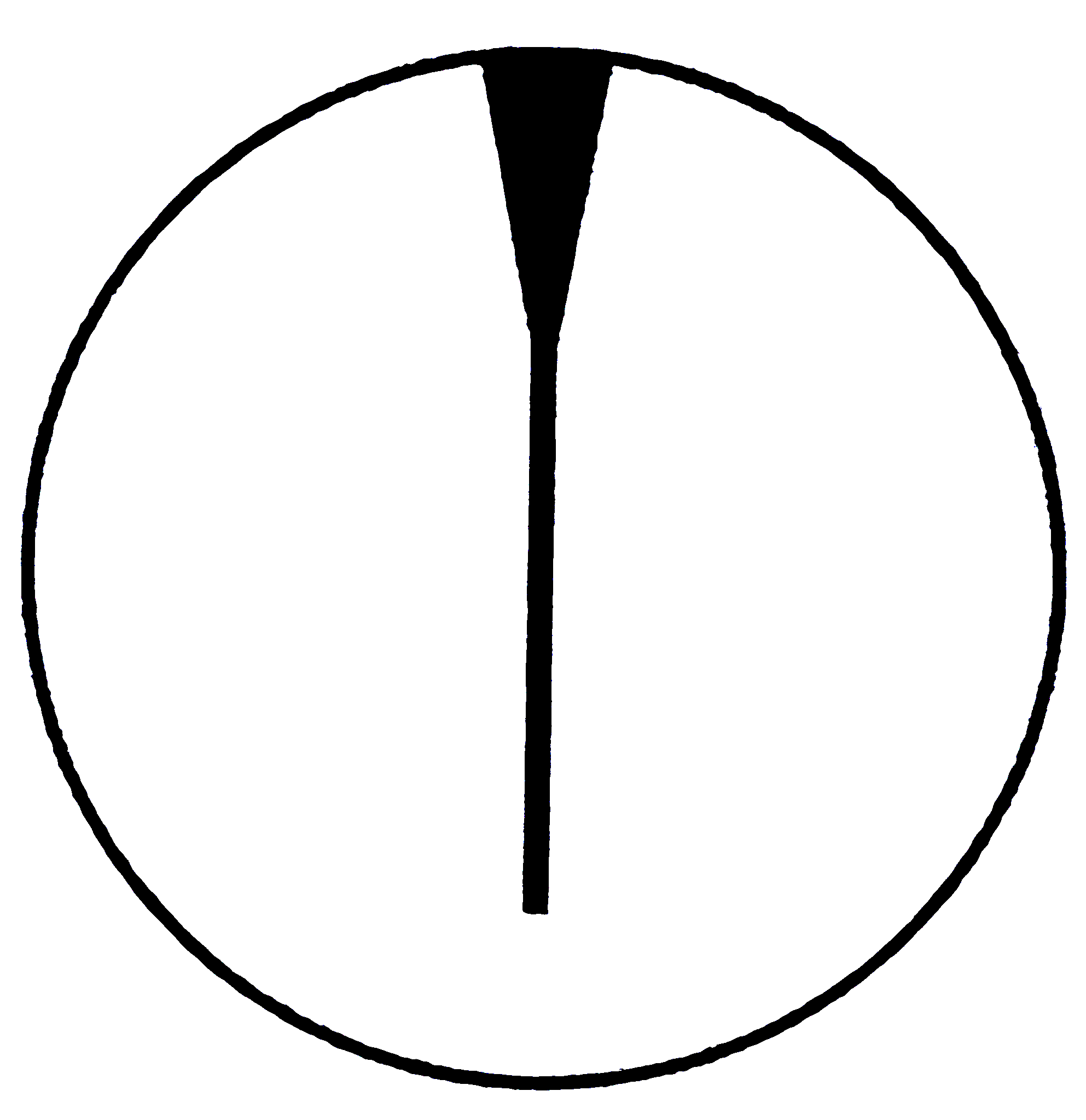
And we shall now explain somewhat the matter of the investigation of the Kabbalists, to know how there is head, interior, and end in the aforementioned Sefirot (וְנְבָאֵר עַתָּה קְצָת עִנְיַן חֲקִירַת הַמְּקוּבָּלִים לָדַעַת אֵיךְ יֵשׁ רֹאשׁ תּוֹךְ סוֹף בַּסְּפִירוֹת הַנַּ״ל). However, since the head of that line touches the light of Ein Sof from the upper side, and its end does not extend downward to the place of the light of Ein Sof that surrounds beneath the worlds and is not attached to it (אָֽמְנָם בִּהְיוֹת כִּי הַקַּו הַהוּא רֹאשׁוֹ נוֹגֵעַ בְּאוֹר אֵין־סוֹף מִצַּד הָעֶלְיוֹן וְסוֹפוֹ אֵינוֹ נִמְשָׁךְ לְמַטָּה עַד מְקוֹם אוֹר אֵין־סוֹף הַסּוֹבֵב תַּחַת הָעוֹלָמוֹת וְאֵינוֹ דָּבוּק בּוֹ), therefore head and end are applicable to it (לָכֵן אָז יִצְדַּק בּוֹ רֹאשׁ וְסוֹף).
For if through both extremities it were receiving the flow of Ein Sof, then both extremities would be aspects of equal heads, one like the other, and there would then be no aspect of above and below (כִּי אִם דֶּרֶךְ ב׳ הַקְּצָווֹת הָיָה מְקַבֵּל שֶׁפַע אֵין־סוֹף הָיוּ ב׳ הַקְּצָווֹת בְּחִינַת רָאשִׁים שָׁוִים זֶה לָזֶה וְלֹא הָיָה אָז בְּחִינַת מַעְלָה וּמַטָּה). And likewise, if Ein Sof were extending from all the surrounding sides of that place of the void, there would be no above and no below, no front and no back, no east and no west and north and south (וְכֵן אִם הָיָה אֵין־סוֹף נִמְשָׁךְ מִכָּל סְבִיבוֹת צִדְּדֵי מְקוֹם הֶחָלָל הַהוּא לֹא הָיָה לֹא מַעְלָה וְלֹא מַטָּה לֹא פָּנִים וְלֹא אָחוֹר לֹא מִזְרָח וְלֹא מַעֲרָב וְצָפוֹן וְדָרוֹם). But since the light of Ein Sof is drawn by way of one line and a thin conduit alone, above and below, front and back, east and west are applicable to it (אַךְ בִּהְיוֹת אוֹר אֵין־סוֹף נִמְשָׁךְ דֶּרֶךְ קַו אֶחָד וְצִנּוֹר דַּק לְבַד יִצְדַּק בּוֹ מַעְלָה וּמַטָּה פָּנִים וְאָחוֹר מִזְרָח וּמַעֲרָב), as we shall write, with the help of Hashem, in this branch, within the generality of our words (וּכְמוֹ שֶׁנִּכְתֹּב בְּעֶזְרַת ה׳ בְּעָנָף זֶה בִּכְלַל דְּבָרֵינוּ).
And behold, when the light of Ein Sof was drawn in the aspect of a straight line into the aforementioned void (וְהִנֵּה בִּהְיוֹת אוֹר הָאֵין־סוֹף נִמְשָׁךְ בִּבְחִינַת קַו יָשָׁר תּוֹךְ הֶחָלָל הַנַּ״ל), it did not extend and spread immediately all the way downward (לֹא נִמְשָׁךְ וְנִתְפַּשֵּׁט תֵּכֶף עַד לְמַטָּה). Rather, it would spread little by little (אָֽמְנָם הָיָה מִתְפַּשֵּׁט לְאַט לְאַט), meaning that at first the line of light began to spread there (ר״ל כִּי בַּתְּחִלָּה הִתְחִיל קַו הָאוֹר לְהִתְפַּשֵּׁט שָׁם), and immediately at the beginning of its spreading in the mystery of a line (וְתֵּכֶף בִּתְחִלַּת הִתְפַּשְּׁטוּתוֹ בְּסוֹד קַו), it spread and was drawn and became like one circular sphere surrounding (נִתְפַּשֵּׁט וְנִמְשָׁךְ וְנַעֲשָׂה כְּעֵין גַּלְגַּל אֶחָד עָגוֹל מִסָּבִיב). And this circle was not attached to the light of Ein Sof that surrounds it from all its sides (וְהָעִגּוּל הַזֶּה הָיָה בִּלְתִּי דָּבוּק עִם אוֹר הָאֵין־סוֹף הַסּוֹבֵב עָלָיו מִכָּל צְדָדָיו), for if it were to attach to it, the matter would return to what it was (שֶׁאִם יִדָּבֵק בּוֹ יַחֲזֹר הַדָּבָר לִכְמוֹת שֶׁהָיָה), and it would be nullified within the light of Ein Sof and its power would not be revealed at all (וְיִתְבַּטֵּל בְּאוֹר אֵין־סוֹף וְלֹא יִתְרָאֶה כֹּחוֹ כְּלָל), and everything would be only the light of Ein Sof alone as at the beginning (וְיִהְיֶה הַכֹּל אוֹר אֵין־סוֹף לְבַד כְּבָרִאשׁוֹנָה).
Therefore, this circle is near to the circle of Ein Sof yet not attached to it (לָכֵן הָעִגּוּל הַזֶּה סָמוּךְ אֶל עִגּוּל הָאֵין־סוֹף וּבִלְתִּי מִתְדַּבֵּק בּוֹ). And the entire connection and adhesion of that emanated circle with Ein Sof, the Emanator is only by way of that line mentioned above (וְכָל עִקַּר הַהִתְקַשְּׁרוּת וְהַדְּבֵקוּת שֶׁל הָעִגּוּל הַנֶּאֱצָל הַהוּא עִם אֵין־סוֹף הַמַּאֲצִיל הוּא עַל־יְדֵי הַקַּו הַהוּא הַנַּ״ל), through which light descends and is drawn from Ein Sof and bestows upon that circle (אֲשֶׁר דֶּרֶךְ בּוֹ יוֹרֵד וְנִמְשָׁךְ אוֹר מִן אֵין־סוֹף וּמַשְׁפִּיעַ בָּעִגּוּל הַהוּא). And Ein Sof surrounds and encompasses it from all its sides (וְאֵין־סוֹף סוֹבֵב וּמַקִּיף עָלָיו מִכָּל צְדָדָיו), for He too is in the aspect of a circle surrounding it and distant from it as mentioned above (כִּי גַּם הוּא בִּבְחִינַת עָגוֹל סָבִיב עָלָיו וְרָחוֹק מִמֶּנּוּ כַּנַּ״ל).
For it is necessary that the illumination of Ein Sof in the emanated ones be only by way of that line alone (כִּי הוּא מֻכְרָח שֶׁהָאָרָת אֵין־סוֹף בַּנֶּאֱצָלִים תִּהְיֶה דֶּרֶךְ הַקַּו הַהוּא לְבַד). For if the light were drawn to them also from all their surrounding sides (כִּי אִם הָיָה הָאוֹר נִמְשָׁךְ לָהֶם דֶּרֶךְ גַּם מִכָּל סְבִיבוֹתֵיהֶם), the emanated ones would be in the aspect of the Emanator Himself, without boundary or measure (הָיוּ הַנֶּאֱצָלִים בִּבְחִינַת הַמַּאֲצִיל עַצְמוֹ בִּלְתִּי גְבוּל וְקִצְבָּה).
And moreover, even that line itself is very thin (וְלֹא עוֹד אֶלָּא אֲפִלּוּ גַּם הַקַּו הַהוּא דַּק מְאֹד), and not of great breadth (וְלֹא בְּהִתְרַחֲבוּת גָּדוֹל), so that the light drawn to the emanated ones be in measure and limitation (כְּדֵי שֶׁיִּהְיֶה הָאוֹר הַנִּמְשָׁךְ אֶל הַנֶּאֱצָלִים בְּמִדָּה וְקִצְבָּה). For this reason the emanated ones are called ten measures and ten Sefirot (אֲשֶׁר לְסִבָּה זוֹ נִקְרְאוּ הַנֶּאֱצָלִים י׳ מִדּוֹת וְי׳ סְפִירוֹת), to indicate that they have measure and limitation and a fixed number (לְהוֹרוֹת שֶׁיֵּשׁ לָהֶם מִדָּה וְקִצְבָּה וּמִסְפָּר קָצוּב), unlike Ein Sof (מַה שֶּׁאֵין כֵּן בְּאֵין־סוֹף). As it is written in Sefer haZohar, Parashat Pinchas: “The thirteenth commandment, this is Shema…” etc (וּכְמוֹ שֶׁכָּתוּב בְּסֵפֶר הַזֹּהַר פָּרָשַׁת פִּינְחָס פְּקוּדָא תְּלִיסַר דָּא קְרִיאַת שְׁמַע כו׳), “but He has no measure and no known name like the Sefirot” (אֲבָל דְּלָא אִית לֵיהּ מִדָּה וְלָא שֵׁם יְדִיעַ כְּגוֹוְנָא דְּסְפִירָן כו׳), for every Sefirah has a known name and measure and boundary and domain (דְּכָל סְפִירָה אִית לָהּ שֵׁם יְדִיעַ וּמִדָּה וּגְבוּל וּתְחוּם). And since the line is thin, it draws to them only sufficient flow for their need (וּבִהְיוֹת הַקַּו דַּק יַמְשִׁיךְ לָהֶם שֶׁפַע כְּדֵי צָרְכָּם בִּלְבַד), relative to their being emanated (בְּעֶרֶךְ הֱיוֹתָם נֶאֱצָלִים), and not excessively relative to their being emanators (וְלֹא יוֹתֵר מִדַּאי בְּעֶרֶךְ הֱיוֹתָם מַאֲצִילִים).
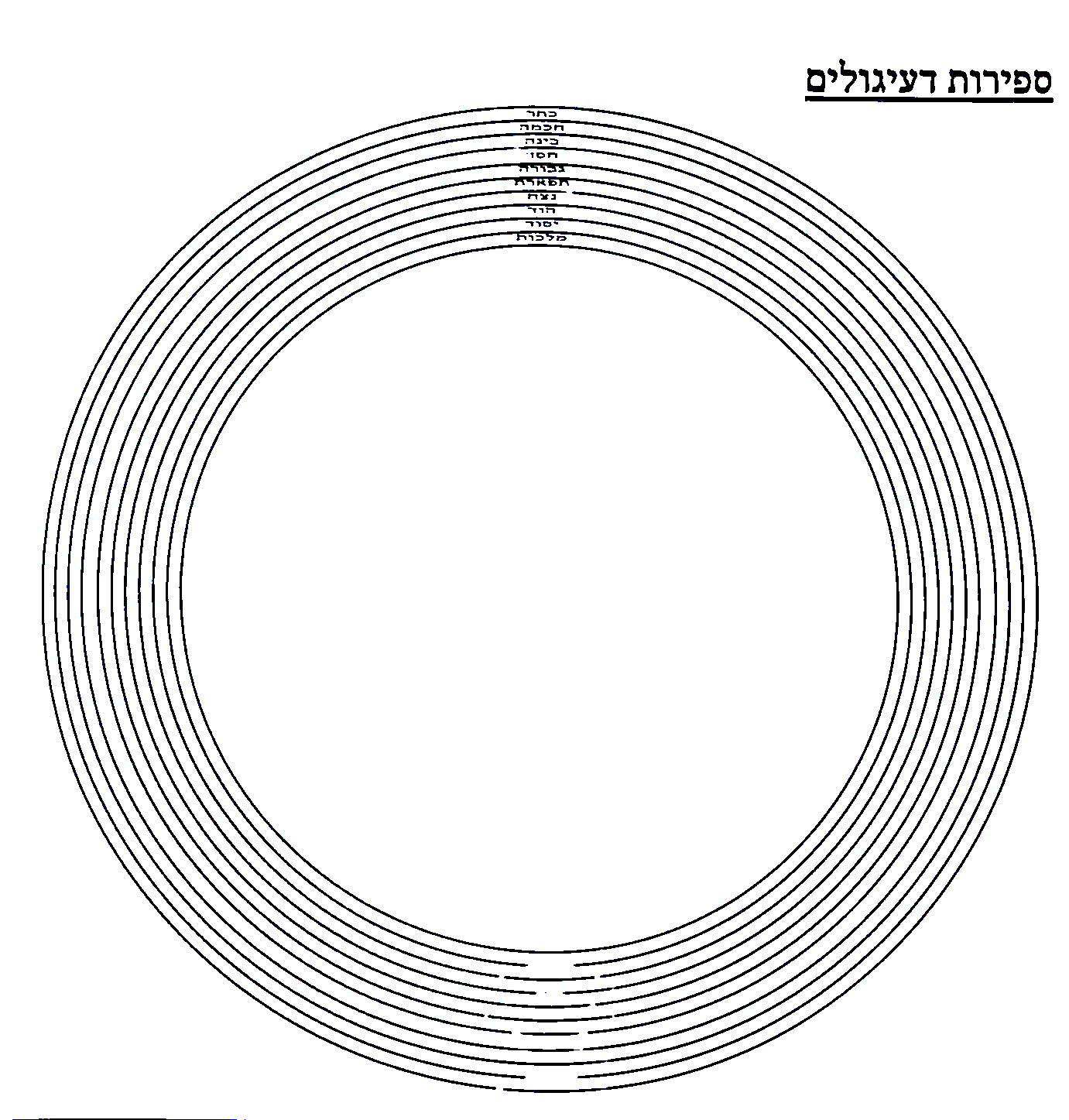
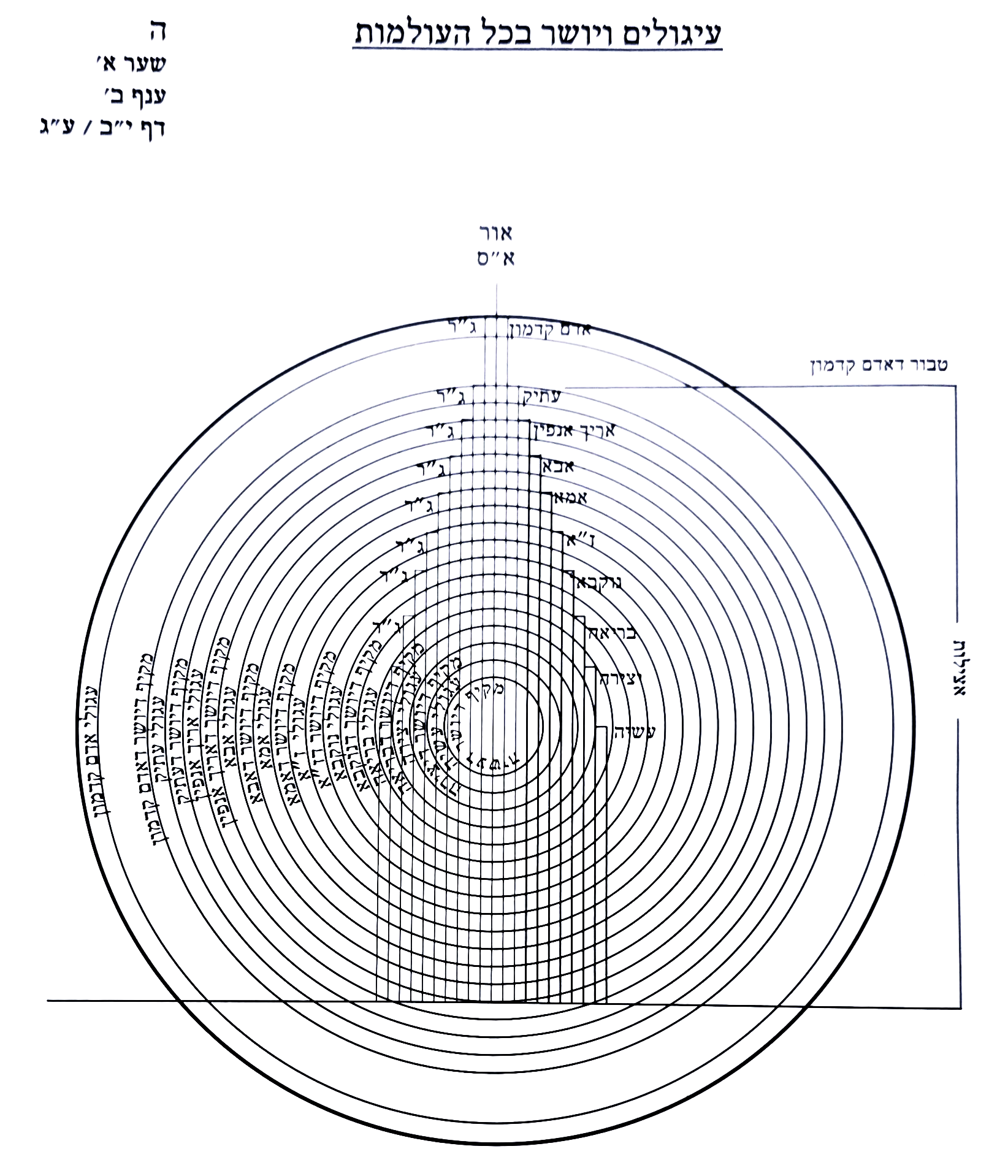
And behold, this first circle, which is the most attached to Ein Sof, is called the Keter of Adam Kadmon (וְהִנֵּה הָעִגּוּל הַזֶּה הָרִאשׁוֹן הַיּוֹתֵר דָּבוּק עִם הָאֵין־סוֹף הוּא הַנִּקְרָא כֶּתֶר דְּאָדָם קַדְמוֹן), and afterward this line spread further and was drawn a bit more, and returned to become circular and made a second circle within the first circle (וְאַחַ״כ נִתְפַּשֵּׁט עוֹד הַקַּו הַזֶּה וְנִמְשָׁךְ מְעַט וְחָזַר לְהִתְעַגֵּל וְנַעֲשָׂה עִגּוּל ב׳ תּוֹךְ הָעִגּוּל הָא׳), and this is called the circle of Chokhmah of Adam Kadmon (וְזֶה נִקְרָא עִגּוּל הַחָכְמָה דְּאָדָם קַדְמוֹן). It spread further downward and returned to become circular and made a third circle within the second circle (עוֹד מִתְפַּשֵּׁט יוֹתֵר לְמַטָּה וְחָזַר לְהִתְעַגֵּל וְנַעֲשָׂה עִגּוּל ג׳ תּוֹךְ הָעִגּוּל הַב׳), and it is called the circle of Binah of Adam Kadmon (וְנִקְרָא עִגּוּל בִּינָה דְּאָדָם קַדְמוֹן).
And in this manner it would go on spreading and becoming circular until the tenth circle, which is called the circle of Malkhut of Adam Kadmon (וְעַל דֶּרֶךְ זֶה הָיָה הוֹלֵךְ וּמִתְפַּשֵּׁט וּמִתְעַגֵּל עַד עִגּוּל י׳ הַנִּקְרָא עִגּוּל מַלְכוּת דְּאָדָם קַדְמוֹן). Thus has been explained the matter of the Ten Sefirot that were emanated in the mystery of ten circles, one within another (הֲרֵי נִתְבָּאֵר עִנְיַן הַי״ס שֶׁנֶּאֱצְלוּ בְּסוֹד י׳ עִגּוּלִים זֶה תּוֹךְ זֶה), and all this is the aspect of the ten Sefirot that include, in a general way, all aspects of all the worlds (וְכָל זֶה הוּא בְּחִינַת עֶשֶׂר סְפִירוֹת הַכּוֹלְלוֹת דֶּרֶךְ סְתָם כָּל בְּחִינוֹת הָעוֹלָמוֹת כֻּלָּם). However, it is explained and simple that many kinds of worlds were emanated and created and formed and made, thousands upon thousands and myriads upon myriads (אָֽמְנָם מְבוֹאָר וּפָשׁוּט הוּא שֶׁכַּמָּה מִינֵי עוֹלָמוֹת נֶאֱצְלוּ וְנִבְרְאוּ וְנוֹצְרוּ וְנַעֲשׂוּ אֶלֶף אֲלָפִים וּרְבוֹא רְבוֹאוֹת), and all of them as one are within the aforementioned void, and nothing is outside of it (וְכֻלָּם כְּאֶחָד הֵם תּוֹךְ הַמָּקוֹם הֶחָלָל הַנַּ״ל וְאֵין דָּבָר חוּצָה לוֹ).
And behold, in each and every world there are ten particular Sefirot (וְהִנֵּה כָּל עוֹלָם וְעוֹלָם יֵשׁ בּוֹ י׳ סְפִירוֹת פְּרָטִיּוֹת), and each and every particular Sefirah in each and every world is itself composed of ten extremely particular Sefirot (וְכָל סְפִירָה וּסְפִירָה פְּרָטִית שֶׁבְּכָל עוֹלָם וְעוֹלָם כָּלוּל מִי׳ סְפִירוֹת פְּרָטִי פְּרָטִי), and all of them are in the form of circles one within another, and one more interior than the other, without end or number (וְכֻלָּם הֵם בְּצוּרַת עִגּוּלִים זֶה תּוֹךְ זֶה וְזֶה לִפְנִים מִזֶּה עַד אֵין קֵץ וּמִסְפָּר), and all of them are like layers of onions one within another, according to the form of spheres, as mentioned in the books of astronomers (וְכֻלָּם כְּגַלְדֵּי בְצָלִים זֶה תּוֹךְ זֶה עַל דֶּרֶךְ תְּמוּנַת הַגַּלְגַּלִּים כַּנִּזְכָּר בְּסִפְרֵי תוֹכְנִיִּים).
And behold, the aspect that binds all the circles together is the matter of this thin line that spreads from Ein Sof and passes and descends and is drawn from circle to circle until the end of all of them as explained above (וְהִנֵּה הַבְּחִינָה הַמְחַבֶּרֶת כָּל הָעִגּוּלִים יַחַד הוּא עִנְיַן הַקַּו הַדַּק הַזֶּה הַמִּתְפַּשֵּׁט מִן הָאֵין־סוֹף וְעוֹבֵר וְיוֹרֵד וְנִמְשָׁךְ מֵעִגּוּל אֶל עִגּוּל עַד סִיּוּם תַּכְלִית כֻּלָּם כַּנַּ״ל). And through this line the light and the flow necessary for each and every one of them is drawn (וְדֶרֶךְ הַקַּו הַזֶּה נִמְשָׁךְ הָאוֹר וְהַשֶּׁפַע הַצָּרִיךְ לְכָל אֶחָד וְאֶחָד מֵהֶם), and thus has been explained the aspect of the circles of the Ten Sefirot (וַהֲרֵי נִתְבָּאֵר בְּחִינַת הָעִגּוּלִים שֶׁל הַי״ס).
And now we shall explain the second aspect that exists in the Ten Sefirot, namely the aspect of the Light of Yosher, like the likeness of three lines, in the form of Adam haElyon (וְעַתָּה נְבָאֵר בְּחִינָה הַב׳ שֶׁיֵּשׁ בַּי״ס הֲלֹא הוּא בְּחִינַת אוֹר הַיֹּשֶׁר כְּדִמְיוֹן ג׳ קַוִּים כְּצוּרַת אָדָם הָעֶלְיוֹן). And behold, by way of the aforementioned line that spreads from above to below, from which the aforementioned circles spread (וְהִנֵּה דֶּרֶךְ הַקַּו הַנַּ״ל הַמִּתְפַּשֵּׁט מִלְמַעְלָה לְמַטָּה אֲשֶׁר מִמֶּנּוּ מִתְפַּשְּׁטִים הָעִגּוּלִים הַנַּ״ל), that same line also spreads in uprightness from above to below (גַּם הַקַּו הַהוּא מִתְפַּשֵּׁט בְּיֹשֶׁר מִלְמַעְלָה לְמַטָּה), from the top of the roof of the highest circle of all (מֵרֹאשׁ גַּג הָעֶלְיוֹן שֶׁל הָעִגּוּל הָעֶלְיוֹן מִכֻּלָּם), until below, beneath the bottom of the conclusion of all the circles, literally (עַד לְמַטָּה מִתַּחְתִּית סִיּוּם כָּל הָעִגּוּלִים מַמָּשׁ). From above to below it is composed of ten Sefirot (מִלְמַעְלָה לְמַטָּה כָּלוּל מִי״ס), in the mystery of the image of an upright Adam, of erect stature (בְּסוֹד צֶלֶם אָדָם יָשָׁר בַּעַל קוֹמָה זְקוּפָה), composed of two hundred and forty-eight limbs (כָּלוּל מֵרמ״ח אֵיבָרִים), depicted in the form of three lines—right, left, and middle (מְצֻיָּרִים בְּצִיּוּר ג׳ קַוִּים יָמִין וּשְׂמֹאל וְאֶמְצַע), composed of ten Sefirot in generality (כָּלוּל מִי״ס בְּכְלָלוּת), and each and every Sefirah among them is detailed into ten Sefirot (וְכָל סְפִירָה וּסְפִירָה מֵהֶם נִפְרֶטֶת לִי״ס), without end (עַד אֵין קֵץ), in the manner explained above concerning the Ten Sefirot that are in the way of circles (עַל דֶּרֶךְ הַנַּ״ל בְּעִנְיַן הַי״ס שֶׁהֵם בְּדֶרֶךְ הָעִגּוּלִים).
And behold, this second aspect is called the Image of Elohim (וְהִנֵּה בְּחִינָה זוֹ הַב׳ נִקְרֵאת צֶלֶם אֱלֹהִים), and to it Scripture alludes when it says: “And Elohim created the Adam in His image, in the image of Elohim” (וְעָלֶיהָ רָמַז הַכָּתוּב בְּאָמְרוֹ וַיִּבְרָא אֱלֹהִים אֶת הָאָדָם בְּצַלְמוֹ בְּצֶלֶם אֱלֹהִים) (Bereshit 1). And almost the entire book of the Zohar and the Tikkunim, the majority of all their words, deal only with this second aspect (וְכִמְעַט כָּל סֵפֶר הַזֹּהַר וְהַתִּקּוּנִים רֹב דִּבְרֵיהֶם כֻּלָּם מִתְעַסְּקִים בְּבְחִינָה ב׳ הַזֹּאת לְבַד), as is written well elsewhere (כְּמוֹ שֶׁכָּתוּב הֵיטֵב בְּמָקוֹם אַחֵר). And thus both of the aforementioned approaches are fulfilled (וַהֲרֵי בָּזֶה יִתְקַיְּמוּ ב׳ הַסְּבָרוֹת הַנַּ״ל), for there are two aspects: the way of circles and the way of lines (כִּי יֵשׁ ב׳ בְּחִינוֹת דֶּרֶךְ עִגּוּלִים וְדֶרֶךְ קַוִּים), and both together are good, the words of the Living Elohim (וּשְׁתֵּיהֶן כְּאֶחָד טוֹבִים דִּבְרֵי אֱלֹהִים חַיִּים). And by this many statements that appear to be in dispute with one another regarding the order and arrangement of the Ten Sefirot will be resolved for you (וּבָזֶה יִתְיַשְּׁבוּ לְךָ כַּמָּה מַאֲמָרִים הַנִּרְאִים כְּחֲלוּקִים זֶה עִם זֶה בְּעִנְיַן סֵדֶר וּמַצָּב הַי״ס). Also, the aforementioned investigation will be clarified for you—how there can be head and end, above and below, in the matter of the Ten Sefirot (גַּם יִתְבָּאֵר לְךָ הַחֲקִירָה הַנַּ״ל אֵיךְ יִהְיֶה רֹאשׁ וְסוֹף מַעְלָה וּמַטָּה בְּעִנְיַן הַי״ס), and behold it is explained in both of these aspects (וְהִנֵּה הוּא מְבוֹאָר בִּשְׁתֵּי בְּחִינוֹת אֵלּוּ).
The first aspect is the Ten Sefirot in the form of circles, one within another (הָא׳ בְּחִינַת הַי״ס בְּצִיּוּר עִגּוּלִים זֶה תּוֹךְ זֶה), and this is simple, that the circle that surrounds all of them, which is the sphere of Keter (וְזֶה פָּשׁוּט הוּא שֶׁהָעִגּוּל הַסּוֹבֵב עַל כֻּלָּם שֶׁהוּא גַּלְגַּל הַכֶּתֶר), behold it is attached to Ein Sof more than all of them (הִנֵּה הוּא דָּבוּק עִם הָאֵין־סוֹף יוֹתֵר מִכֻּלָּם), and therefore it is more exalted (וְלָכֵן הוּא מְשֻׁבָּח). However, the second sphere, which is called Chokhmah (אָֽמְנָם הַגַּלְגַּל הַב׳ הַנִּקְרָא חָכְמָה), has a separation between it and Ein Sof (יֵשׁ הֶפְסֵק בֵּינוֹ וּבֵין הָאֵין־סוֹף), namely the sphere of Keter (וְהוּא גַּלְגַּל הַכֶּתֶר), therefore its level is below the level of Keter (לָכֵן מַעֲלָתוֹ לְמַטָּה מִמַּעֲלַת הַכֶּתֶר). And likewise, the sphere of Binah is distant from Ein Sof by the measure of two circles (וְכֵן גַּלְגַּל הַבִּינָה הוּא רָחוֹק מִן הָאֵין־סוֹף שִׁעוּר ב׳ עִגּוּלִים), and its level is below the level of Chokhmah (וּמַעֲלָתוֹ לְמַטָּה מִמַּעֲלַת הַחָכְמָה), and in this manner each and every circle of all the worlds that are within the void (וְעַל דֶּרֶךְ זֶה כָּל עִגּוּל וְעִגּוּל מִכָּל הָעוֹלָמוֹת כֻּלָּם אֲשֶׁר בְּתוֹךְ הֶחָלָל), whoever is closer to the light of Ein Sof than his fellow is exceedingly superior and more praiseworthy than his fellow (כָּל הַקָּרוֹב אֶל אוֹר אֵין־סוֹף יוֹתֵר מֵחֲבֵרוֹ הוּא עֶלְיוֹן מְאֹד וּמְשֻׁבָּח מֵחֲבֵרוֹ), until it is found that this lowly, earthly, material world (עַד שֶׁנִּמְצָא כִּי הָעוֹלָם הַזֶּה הָאַרְצִי הַחָמְרִי), is the central middle point within all the circles (הוּא נְקוּדָה הָאֶמְצָעִית תִּיכוֹנָה תּוֹךְ כָּל הָעִגּוּלִים כֻּלָּם), within all the place of the void and the empty air mentioned above (בְּתוֹךְ כָּל מְקוֹם הֶחָלָל וְהָאוֹיִר הַפָּנוּי הַנַּ״ל), and it is also distant from Ein Sof with complete distance more than all the worlds (וְגַם הוּא מְרֻחָק מִן הָאֵין־סוֹף הַרְחָקָה גְּמוּרָה יוֹתֵר מִכָּל הָעוֹלָמוֹת כֻּלָּם), and therefore it is so exceedingly physical and material, to the utmost of materiality (וְעַל כֵּן הוּא כָּךְ גַּשְׁמִי וְחָמְרִי בִּתְכָלִית הַגַּשְׁמִיּוּת), despite its being a central point within all the circles (עִם הֱיוֹתוֹ נְקוּדָה אֶמְצָעִית בְּתוֹךְ כָּל הָעִגּוּלִים), and understand this well (וְהָבֵן זֶה הֵיטֵב).
And there is yet a second reason, close to the above (וְעוֹד יֵשׁ סִבָּה ב׳ הִיא קְרוֹבָה אֶל הַנַּ״ל), for behold it has been explained how the line drawn from Ein Sof would spread and afterward become circular, and spread further downward and become circular, until the completion of all the circles (כִּי הִנֵּה נִתְבָּאֵר אֵיךְ הַקַּו הַנִּמְשָׁךְ מִן הָאֵין־סוֹף הָיָה מִתְפַּשֵּׁט וְאַחַ״כ מִתְעַגֵּל וּמִתְפַּשֵּׁט יוֹתֵר לְמַטָּה וּמִתְעַגֵּל עַד סִיּוּם תַּכְלִית כָּל הָעִגּוּלִים). And the circle that comes into being first at the place of the beginning of the line is superior and more praiseworthy than all the circles beneath it (וְהָעִגּוּל הַמִּתְהַוֶּה רִאשׁוֹן בִּמְקוֹם רֵאשִׁית הַקַּו הִנֵּה הוּא מְעֻלֶּה וּמְשֻׁבָּח מִכָּל הָעִגּוּלִים אֲשֶׁר תַּחְתָּיו), for behold it is drawn from the head of the line (כִּי הִנֵּה הוּא נִמְשָׁךְ מֵרֹאשׁ הַקַּו), and furthermore, behold it receives illumination by being in a higher place than all of them (וְעוֹד כִּי הִנֵּה הוּא מְקַבֵּל הָאָרָה בִּהְיוֹתוֹ בְּמָקוֹם גָּבוֹהַּ יוֹתֵר מִכֻּלָּם). And this uppermost circle of all will be called “above” (וְזֶה הָעִגּוּל הָעֶלְיוֹן שֶׁבְּכֻּלָּם יִקָּרֵא מַעְלָה), and the most inner circle, which is the central and middle of all of them (וְהָעִגּוּל הַיּוֹתֵר פְּנִימִי הוּא הָאֶמְצָעִי וְהַתִּיכוֹן שֶׁבְּכֻּלָּם), which is the lowest of all of them (אֲשֶׁר הוּא הַתַּחְתּוֹן שֶׁבְּכֻּלָּם), which receives the light from the bottom of that line (אֲשֶׁר הוּא מְקַבֵּל הָאוֹר מִתַּחְתִּית הַקַּו הַהוּא), will be called “below” (יִקָּרֵא מַטָּה).
And in Branch Three, in the matter of the ten circles of the World of Nekudim [Points], it will be explained how even the aspect of the Ten Sefirot of the circles has within it the aspect of lines literally, despite their being circles (וּבְּעָנָף ג׳ בְּעִנְיַן י׳ עִגּוּלִים דְּעוֹלָם הַנְּקוּדִים יִתְבָּאֵר אֵיךְ גַּם בְּחִינַת י״ס שֶׁל הָעִגּוּלִים יֵשׁ בָּהֶם בְּחִינַת קַוִּים מַמָּשׁ עִם הֱיוֹתָם עִגּוּלִים), aside from the aspect of the Ten Sefirot of Yosher which is made in the form of the appearance of Adam (מִלְּבַד בְּחִינַת הַי״ס שֶׁל הַיֹּשֶׁר הַנַּעֲשֶׂה בְּצִיּוּר מַרְאֵה אָדָם), see there (עַיֵּן שָׁם). And there is the conclusion of the discourse of the circles (וְשָׁם תַּכְלִית דְּרוּשׁ הָעִגּוּלִים), and there it will be explained to you how even in the Ten Sefirot of the circles it is fitting to speak of right and left and middle, despite their being like circles one within another (וְשָׁם יִתְבָּאֵר לְךָ אֵיךְ גַּם בְּי״ס הָעִגּוּלִים יִצְדַּק בָּהֶם יָמִין וּשְׂמֹאל וְאֶמְצַע עִם הֱיוֹתָן כְּדִמְיוֹן עִגּוּלִים זֶה תּוֹךְ זֶה).
And behold, also in the second aspect of Yosher, which is in the form of Adam, above and below, front and back, are applicable (וְהִנֵּה גַּם בְּבְחִינָה ב׳ שֶׁל הַיֹּשֶׁר שֶׁהוּא בְּצִיּוּר אָדָם יִצְדַּק שָׁם מַעְלָה וּמַטָּה פָּנִים וְאָחוֹר), for it is obvious that that which is close to the beginning of the line is the head (כִּי פָּשׁוּט הוּא שֶׁהַקָּרוֹב אֶל רֵאשִׁית הַקַּו יִהְיֶה רֹאשׁ), and below it is the body (וּשְׁלְּמַטָּה מִמֶּנּוּ יִהְיֶה גוּף), and below that are the legs (וּשְׁלְּמַטָּה מִמֶּנּוּ יִהְיֶה רַגְלַיִם), and similarly in the other detailed particulars (וְכַיּוֹצֵא בִּשְׁאָר פְּרָטֵי פְּרָטוֹת). And in Branch Three it will also be explained in the matter of the ten circles of Adam Kadmon (וּבְּעָנָף ג׳ יִתְבָּאֵר גַּם כֵּן בְּעִנְיַן י׳ עִגּוּלִים דְּאָדָם קַדְמוֹן), see there (עַיֵּן שָׁם).
And behold, this matter that has been explained in this branch—how all the worlds are in the aspect of circles one within another like the layers of onions, and this is the first aspect (וְהִנֵּה עִנְיַן זֶה שֶׁנִּתְבָּאֵר בְּעָנָף זֶה אֵיךְ כָּל הָעוֹלָמוֹת הֵם בִּבְחִינַת עִגּוּלִים זֶה תּוֹךְ זֶה כְּגַלְדֵּי בְצָלִים וְהוּא בְּחִינָה א׳), is alluded to in the Zohar in many places (נִרְמָז בַּזֹּהַר בְּהַרְבֵּה מְקוֹמוֹת), and especially in Parashat Vayikra, daf 9 and 10 (וּבִפְרָט בְּפָרָשַׁת וַיִּקְרָא דְּט׳ וְיו״ד), how even the firmaments and the lands are like layers of onions one within another, see there (אֵיךְ אֲפִלּוּ הָרְקִיעִים וְהָאֲרָצוֹת כְּגַלְדֵּי בְצָלִים זֶה תּוֹךְ זֶה ע״ש). And likewise in Parashat Bereshit, daf 19, and this is its wording (וְכֵן בְּפָרָשַׁת בְּרֵאשִׁית דְּי״ט וְז״ל): “Kudsha Berikh Hu, needed all of them to create the world and to rectify the world with them, and all is brain within, and many Klipot cover the brain, and the whole world is in this manner, etc.; all is this within that, and that within this, etc.” (כּוּלָא אִצְטְרִיךְ קוּדְשָׁא בְּרִיךְ הוּא לְמִבְרֵי עָלְמָא בְּהוֹן וּלְאִתְתַּקְּנָא עָלְמָא בְּהוֹן וְכָלָּא מוֹחָא לְגָאו וְכַמָּה קְלִיפִּין חָפְיָין לְמוֹחָא וְכָל עָלְמָא כְּגוֹונָא כו׳ כָּלָּא אִיהוּ דָּא לְגוֹ מִן דָּא וְדָּא לְגוֹ מִן דָּא כו׳).
And behold, it is compelled from here how all the worlds—this surrounds that and that surrounds this (וְהֲרֵי מֻכְרָח אֵיךְ כָּל הָעוֹלָמוֹת זֶה סוֹבֵב לָזֶה וְזֶה סוֹבֵב לָזֶה). And even though from there it appears the opposite—that the more inner is the brain and that which covers it is the shell that is inferior to it (וְאַף־עַל־פִּי שֶׁמִשָּׁם נִרְאֶה לְהֵפֶךְ שֶׁהַיּוֹתֵר פְּנִימִי הוּא הַמּוֹחַ וְהַחוֹפֵף עָלָיו הוּא הַקְּלִיפָּה הַגְּרוּעָה מִמֶּנּוּ), nevertheless, if you open the eyes of your intellect, you will understand and see (עִכָּל זֶה אִם תִּפְקַח עֵינֵי שִׂכְלְךָ תָּבִין וְתִּרְאֶה), that this statement speaks according to our perspective, we dwellers of the lower earth (כִּי מַאֲמָר זֶה מְדַבֵּר בְּעֶרְכֵּנוּ אֲנַחְנוּ שׁוֹכְנֵי אֶרֶץ הַתַּחְתּוֹנָה), for that which is closest to us is called the Klipah, which surrounds—according to our perspective—the brain that is inward from it (אֲשֶׁר הַיּוֹתֵר קָרוֹב אֵלֵינוּ הוּא הַנִּקְרָא קְלִיפָּה הַסּוֹבֶבֶת בְּעֶרְכֵּנוּ אֶל הַמּוֹחַ אֲשֶׁר לִפְנִים מִמֶּנּוּ), and that is the sphere that surrounds it (וְהוּא גַּלְגַּל הַסּוֹבֵב עָלָיו), and afterward another sphere, more inward than it according to our perspective, and that is the brain relative to the other sphere (וְאַחַ״כ עוֹד גַּלְגַּל אַחֵר הַיּוֹתֵר פְּנִימִי מִמֶּנּוּ בְּעֶרְכֵּנוּ וְהוּא הַמּוֹחַ לַגַּלְגַּל הָאַחֵר), and so on in this manner (וְכֵן עַל דֶּרֶךְ זֶה).
Until it is found that Ein Sof is inward of all the emanated ones, and is the inner brain of them all (עַד אֲשֶׁר נִמְצָא כִּי הָאֵין־סוֹף לִפְנִים מִכָּל הַנֶּאֱצָלִים וְהוּא מוֹחַ פְּנִימִי לְכֻלָּם), and all the emanated ones are Klipot and garments relative to Him (וְכָל הַנֶּאֱצָלִים קְלִיפִּין וּלְבוּשִׁין אֵלָיו), and the sphere that is closest to us is the outermost of all of them and is called a shell upon all of them (וְהַגַּלְגַּל הַיּוֹתֵר קָרוֹב אֵלֵינוּ הוּא הַחִיצוֹן שֶׁבְּכֻלָּם וְנִקְרָא קְלִיפָּה עַל כֻּלָּם).
However, in the aspect of the worlds themselves, it is not so (אָֽמְנָם בִּבְחִינַת הָעוֹלָמוֹת בְּעַצְמָם אֵינוֹ כֵן), rather the innermost of all of them is the Klipah, and that which surrounds all of them is the brain (אֶלָּא הַפְּנִימִי שֶׁבְּכֻלָּם הוּא הַקְּלִיפָּה וְהַסּוֹבֵב עַל כֻּלָּם הוּא הַמּוֹחַ). And also in this statement the second aspect, called the form of Adam in uprightness, is understood (גַּם בְּמַאֲמָר זֶה יוּבַן הַבְּחִינָה הַב׳ הַנִּקְרֵאת צִיּוּר אָדָם בְּיֹשֶׁר), which includes many worlds, as mentioned in Sefer haZohar, Parashat Toledot, daf 134 (שֶׁכּוֹלֵל כַּמָּה עוֹלָמוֹת כְּנִזְכָּר בְּסֵפֶר הַזֹּהַר פָּרָשַׁת תּוֹלְדוֹת דַּף קל״ד), “And how the human is divided into many limbs, and all of them stand as levels upon levels, rectifying these upon those, and all of them are one body—so too is the world” (וְכַמָּה דְּבַר נָשׁ אִיהוּ אִתְפְּלַג לְכַמָּה שַׁיְפִּין וְכֻלְּהוּ קָיְימִין דַּרְגִּין עַל דַּרְגִּין מִתְתַּקְּנִין אִילֵּין עַל אִילֵּין וְכֻלְּהוּ חַד גּוּפָא הָכִי נָמֵי עָלְמָא). And in Branch Four we shall explain how all the aspects are depicted in the form of Adam, and they are this within that and that within this—Atik within Arich Anpin, and Arich Anpin within Abba and Imma, and Abba and Imma within, etc., through all the levels (וּבְּעָנָף ד׳ נְבָאֵר אֵיךְ כָּל הַבְּחִינוֹת מִצְטַיְּרוֹת בְּצִיּוּר אָדָם וְהֵם דָּא לְגוֹ מִן דָּא וְדָּא לְגוֹ מִן דָּא עַתִּיק לְגוֹ מִן אֲרִיךְ אַנְפִּין וַאֲרִיךְ אַנְפִּין לְגוֹ מִן אַבָּא וְאִמָּא וְאוֹ״א לְגוֹ כו׳ עַד סוֹף כָּל הַמַּדְרֵגוֹת). And there it will be well understood, according to some say: the aspect of their being this within that—this is brain and this is shell, see there well (וְשָׁם יוּבַן הֵיטֵב כְּפִי נ״א בְּחִינַת הֱיוֹתָן דָּא לְגוֹ מִן דָּא דָּא מוֹחָא וְדָּא קְלִיפָּה ע״ש הֵיטֵב). Thus, behold, the matter of the two aspects that exist in the Ten Sefirot has been explained: one aspect is circles, and one aspect is uprightness, like the appearance of Adam (הֲרֵי נִתְבָּאֵר עִנְיַן ב׳ בְּחִינוֹת שֶׁיֵּשׁ בַּי״ס א׳ בְּחִינַת עִגּוּלִים וְא׳ בְּחִינַת יֹשֶׁר כְּמַרְאֵה אָדָם).
Second edition: a single comprehensive introduction from Ein Sof until Ze’ir Anpin (מַהֲדוּרָא תְּנִינָא הַקְדָּמָה אַחַת כּוֹלֶלֶת מִן הָאֵין־סוֹף עַד הַזְּעֵיר אַנְפִּין). Know that the beginning of everything was that all existence was simple light and was called the Light of Ein Sof, blessed be He (דַּע כִּי תְּחִלַּת הַכֹּל הָיָה כָּל הַמְּצִיאוּת אוֹר פָּשׁוּט וְנִקְרָא אוֹר אֵין־סוֹף בָּרוּךְ הוּא), and there was no void and no empty air at all, but everything was the Light of Ein Sof (וְלֹא הָיָה שׁוּם חָלָל וְשׁוּם אוֹיִר פָּנוּי אֶלָּא הַכֹּל הָיָה אוֹר אֵין־סוֹף). And when it arose in His will to emanate the emanated ones and to create the created ones for a known reason (וּכְשֶׁעָלָה בִּרְצוֹנוֹ לְהַאֲצִיל הַנֶּאֱצָלִים וְלִבְרֹא הַנִּבְרָאִים לְסִבָּה נוֹדַעַת), which is to be called Merciful and Gracious and the like (וְהוּא לִקָּרֵא רַחוּם וְחַנּוּן וְכַיּוֹצֵא), for if there is no one in the world to receive His mercies from Him, how could He be called Merciful (וְאִם אֵין בָּעוֹלָם מִי שֶׁיְקַבֵּל רַחֲמָיו מִמֶּנּוּ אֵיךְ יִקָּרֵא רַחוּם), and similarly with the rest of the appellations (וְכֵן עַל דֶּרֶךְ זֶה שְׁאָר הַכִּנּוּיִים). Behold, He constricted Himself in the center of His light, at the central middle point, toward the surroundings and the sides, and a void remained in between (הִנֵּה צִמְצֵם עַצְמוֹ בְּאֶמְצַע אוֹרוֹ בִּנְקוּדַת הַמֶּרְכָּז הָאֶמְצָעִי אֶל הַסְּבִיבוֹת וְהַצְּדָדִים וְנִשְׁאַר חָלָל בֵּינְתַּיִם). And this was the first Tzimtzum of the supernal Emanator (וְזֶה הָיָה צִמְצוּם א׳ שֶׁל הַמַּאֲצִיל הָעֶלְיוֹן), and this place is a circular void, equal from all sides (וְזֶה הַמָּקוֹם חָלָל עָגוֹל בְּשָׁוֶה מִכָּל צְדָדִין), until it is found that the World of Atzilut and all the worlds are placed within this circle, and the Light of Ein Sof surrounds it equally (עַד שֶׁנִּמְצָא עוֹלָם הָאֲצִילוּת וְכָל הָעוֹלָמוֹת נְתוּנִים תּוֹךְ עִגּוּל זֶה וְאוֹר אֵין־סוֹף מַקִּיפוֹ בְּשָׁוֶה).
And behold, when He constricted Himself, then through one side of the void He drew by way of one thin straight line, like a conduit, one light drawn from Ein Sof into the void and filling it (וְהִנֵּה כַּאֲשֶׁר צִמְצֵם עַצְמוֹ אָז דֶּרֶךְ צַד אֶחָד מִן הֶחָלָל הִמְשִׁיךְ דֶּרֶךְ קַו אֶחָד יָשָׁר דַּק כְּעֵין צִנּוֹר אוֹר אֶחָד הַנִּמְשָׁךְ מִן הָאֵין־סוֹף אֶל תּוֹךְ הֶחָלָל וּמְמַלֵּא אוֹתוֹ). However, a vacant space remained between the light within the void and the Light of Ein Sof that surrounds the void (אֲבָל נִשְׁאַר מָקוֹם פָּנוּי בֵּין הָאוֹר שֶׁבְּתוֹךְ הֶחָלָל וּבֵין אוֹר אֵין־סוֹף הַמַּקִּיף אֶת הֶחָלָל), for if not so, the matter would return to what it was, and this light within the void would return and reconnect with Ein Sof as at the beginning (שֶׁאִם לֹא כֵן יַחֲזֹר הַדָּבָר לִכְמוֹת שֶׁהָיָה וְתַחֲזוֹר וְתִתְחַבֵּר הָאוֹר הַזֶּה שֶׁבְּתוֹךְ הֶחָלָל עִם הָאֵין־סוֹף כְּבָרִאשׁוֹנָה יַחַד).
And therefore the light did not spread and extend broadly into the void, but only through one thin line alone (וְעַל כֵּן לֹא נִתְפַּשֵּׁט וְנִמְשָׁךְ הָאוֹר רָחָב אֶל תּוֹךְ הֶחָלָל רַק דֶּרֶךְ קַו אֶחָד דַּק לְבַד), and through this line the Light of Ein Sof is drawn and descends into the circular void, which is the emanated (וְדֶרֶךְ קַו זֶה נִמְשָׁךְ וְיוֹרֵד אוֹר אֵין־סוֹף אֶל תּוֹךְ הֶחָלָל הָעָגוֹל שֶׁהוּא הַנֶּאֱצָל), and through this the Emanator cleaves to the emanated together (וְעַל־יָדוֹ מִתְדַּבֵּק הַמַּאֲצִיל בַּנֶּאֱצָל יַחַד).
And furthermore, even though all the Atzilut is circular and Ein Sof surrounds it from all its sides equally (וְלֹא עוֹד אֶלָּא אַף־עַל־פִּי שֶׁכָּל הָאֲצִילוּת עָגוֹל וְהָאֵין־סוֹף מַקִּיפוֹ מִכָּל צְדָדָיו בְּשָׁוֶה), nevertheless that place which remains actually attached to Him, and from which the head of this line is drawn, is called the head of the supernal Atzilut (עִכָּל זֶה אוֹתוֹ הַמָּקוֹם הַנִּשְׁאַר דָּבוּק בּוֹ מַמָּשׁ וְנִמְשָׁךְ מִמֶּנּוּ רֹאשׁ הַקַּו הַזֶּה נִקְרָא רֹאשׁ הָאֲצִילוּת הָעֶלְיוֹנָה), and all that is drawn and spreads downward is called the bottom of the Atzilut (וְכָל מַה שֶּׁנִּמְשָׁךְ וְנִתְפַּשֵּׁט לְמַטָּה נִקְרָא תַּחְתִּית הָאֲצִילוּת). And through this it is found that there is an aspect of above and below in the Atzilut (וְעַל־יְדֵי זֶה נִמְצָא שֶׁיֵּשׁ בְּחִינַת מַעְלָה וּמַטָּה בָּאֲצִילוּת), for otherwise there would be no aspect of head and feet, above and below, in the Atzilut (דְּאִם לָאו כֵן לֹא הָיְתָה בְּחִינַת רֹאשׁ וְרַגְלַיִם מַעְלָה וּמַטָּה בָּאֲצִילוּת).
And behold, this light that spreads within this void is divided into two aspects (וְהִנֵּה הָאוֹר הַזֶּה הַמִּתְפַּשֵּׁט תּוֹךְ הֶחָלָל הַזֶּה הִנֵּה הוּא נֶחְלָק לִבְּחִינַת ב׳). The first aspect is that all the lights within this void are necessarily in the aspect of circles, one within another (הָא׳ הוּא שֶׁכָּל הָאוֹרוֹת שֶׁבְּתוֹךְ הֶחָלָל הַזֶּה מֻכְרָח הוּא שֶׁיִּהְיֶה בִּבְחִינַת עִגּוּלִים אֵלּוּ תּוֹךְ אֵלּוּ). And the parable for this is the light of the Sefirah of Keter—one circle (וְהַמָּשָׁל בָּזֶה אוֹר סְפִירַת הַכֶּתֶר עִגּוּל אֶחָד), and within this circle a circle of Chokhmah (וּבְתוֹךְ עִגּוּל זֶה עִגּוּל חָכְמָה), and so forth until the completion of ten circles, which are the Ten Sefirot of Adam Kadmon (וְכַיּוֹצֵא בָּזֶה עַד תַּשְׁלוּם י׳ עִגּוּלִים שֶׁהֵם י׳ סְפִירוֹת דְּאָדָם קַדְמוֹן). And afterward ten other circles, which are the Ten Sefirot of Atik (וְאַחַ״כ י׳ עִגּוּלִים אֲחֵרִים וְהֵם י׳ סְפִירוֹת דְּעַתִּיק), and afterward within them ten other circles, which are the Ten Sefirot of Arich Anpin (וְאַחַ״כ בְּתוֹכָם י׳ עִגּוּלִים אֲחֵרִים וְהֵם י׳ סְפִירוֹת דְּאֲרִיךְ אַנְפִּין), and afterward within them ten other circles, which are the Ten Sefirot of Abba (וְאַחַ״כ בְּתוֹכָן י׳ עִגּוּלִים אֲחֵרִים וְהֵם י׳ סְפִירוֹת דְּאַבָּא), one within another until the completion of all the details of Atzilut (אֵלּוּ תּוֹךְ אֵלּוּ עַד סִיּוּם כָּל פְּרָטֵי אֲצִילוּת). And each one of these circles has a surrounding light corresponding to it, also another circle like it (וְכָל עִגּוּל מֵאֵלּוּ יֵשׁ לוֹ אוֹר מַקִּיף אֵלָיו כְּמוֹהוּ גַּם כֵּן עִגּוּל אַחֵר כְּמוֹהוּ), so it is found that there is inner light and surrounding light, and all of them are in the aspect of circles (נִמְצָא שֶׁיֵּשׁ אוֹר פְּנִימִי וְאוֹר מַקִּיף וְכֻלָּם בִּבְחִינַת עִגּוּלִים).
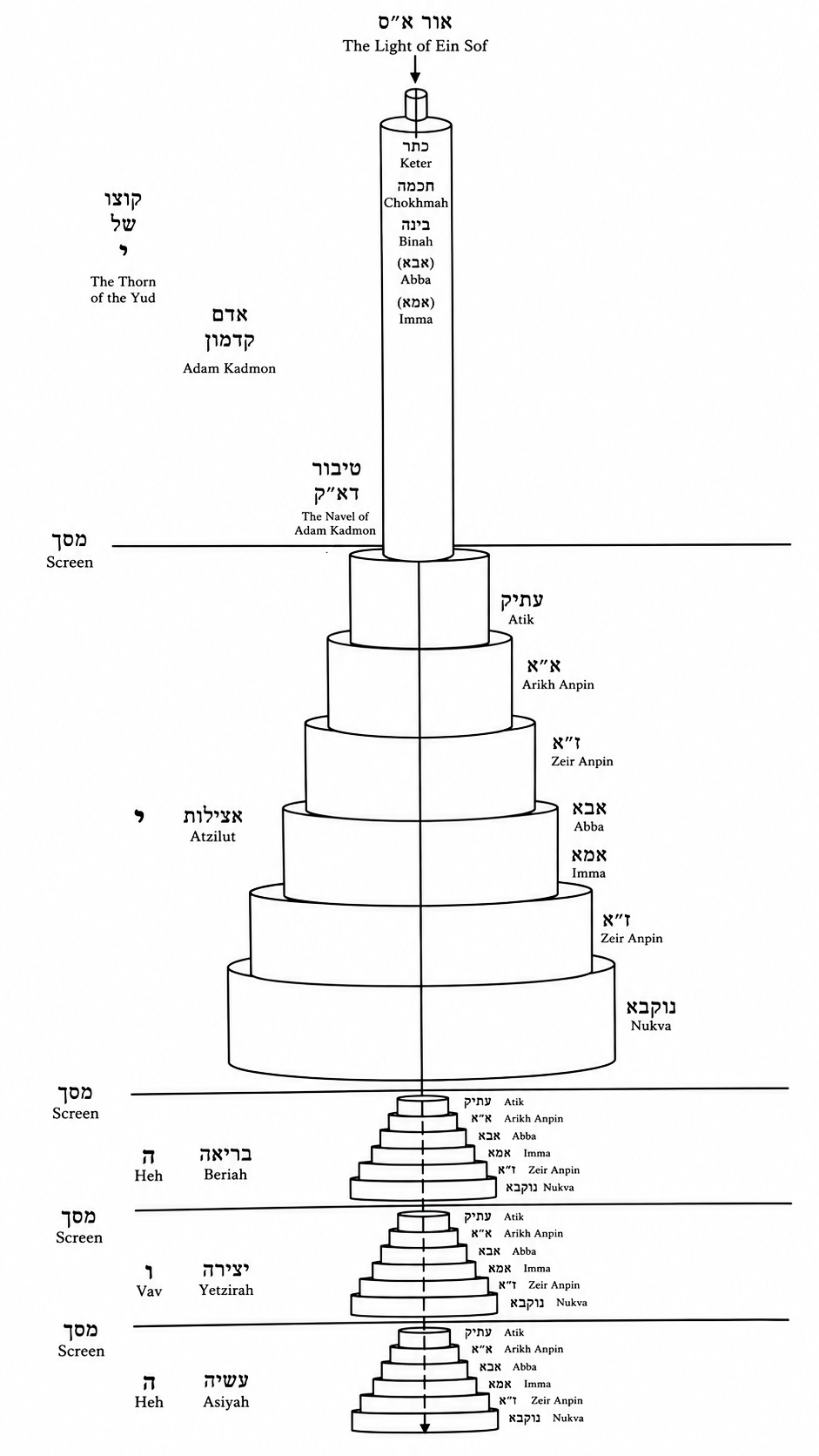
And the second aspect is that behold, in the center of all this circular Atzilut there spreads by way of a straight line an aspect of light similar to the circle itself, except that it is in uprightness (וְהַבְּחִינָה הַב׳ הוּא כִּי הִנֵּה בְּאֶמְצַע כָּל הָאֲצִילוּת הָעָגוֹל הַזֶּה מִתְפַּשֵּׁט דֶּרֶךְ קַו יָשָׁר בְּחִינַת אוֹר דֻּגְמַת הָעִגּוּל מַמָּשׁ רַק שֶׁהוּא בְּיֹשֶׁר). And within it there is the aspect of Arich Anpin and Abba and Imma and Ze’ir Anpin and Nukvah, and all of them are in uprightness (וְיֵשׁ בּוֹ בְּחִינַת אֲרִיךְ אַנְפִּין וְאוֹ״א וְזו״ן וְכֻלָּם בְּיֹשֶׁר). And for this aspect the Torah called it “the Adam in His image, in the image of Elohim,” as it is written: “And Elohim created the Adam in His image” (וְלִבְחִינָה זוֹ קָרְאוּ בַּתּוֹרָה אֶת הָאָדָם בְּצַלְמוֹ בְּצֶלֶם אֱלֹהִים כְּמוֹ שֶׁכָּתוּב וַיִּבְרָא אֱלֹהִים אֶת הָאָדָם בְּצַלְמוֹ) (Bereshit 1).
For it is a straight line and spreads by way of lines (כִּי הוּא קַו יָשָׁר וּמִתְפַּשֵּׁט בְּדֶרֶךְ קַוִּים), and almost the entire Sefer haZohar and the Tikkunim speak of nothing other than this uprightness (וְכִמְעַט כָּל סֵפֶר הַזֹּהַר וְהַתִּקּוּנִים אֵינָם מְדַבְּרִים אֶלָּא בָּזֶה הַיֹּשֶׁר), as will be explained, with the help of Hashem (כמ״ש בע״ה). And know that within this Atzilut there are kinds of worlds without end, and their explanation is not now (וְדַע כִּי יֵשׁ בָּאֲצִילוּת הַזֶּה מִינֵי עוֹלָמוֹת לְאֵין קֵץ וְאֵין עַתָּה בֵּאוּרָם), but we shall now begin to explain one further detail that includes all the existence of this void, and from it all the worlds spread, as we shall write with the help of Hashem (אֲבָל נַתְחִיל עַתָּה לְבָאֵר עוֹד פְּרָט אֶחָד הַכּוֹלֵל כָּל מְצִיאוּת הֶחָלָל הַזֶּה וּמִמֶּנּוּ מִתְפַּשְּׁטִים כָּל הָעוֹלָמוֹת כְּמוֹ שֶׁנִּכְתֹּב בְּעֶזְרַת ה׳), and it is the aspect of the existence of Adam Kadmon of all the ancients, mentioned in the Zohar and the Tikkunim, and after him the order of all the levels is drawn (וְהוּא בְּחִינַת מְצִיאוּת אָדָם קַדְמוֹן לְכָל הַקַּדְמוּמִים הַנִּזְכָּר בְּסֵפֶר הַזֹּהַר וְהַתִּקּוּנִים וְאַחֲרָיו נִמְשָׁךְ סֵדֶר כָּל הַמַּדְרֵגוֹת כֻּלָּם).
Know that in this void Adam Kadmon of all the ancients was emanated, and within him there is the existence of ten Sefirot, and they fill this entire void (דַּע כִּי בֶּהֶחָלָל הַזֶּה נֶאֱצַל אָדָם קַדְמוֹן לְכָל הַקַּדְמוּמִים וְיֵשׁ בּוֹ מְצִיאוּת י׳ סְפִירוֹת וְהֵם מְמַלְּאִים כָּל הֶחָלָל הַזֶּה). However, at first the ten Sefirot emerged by way of circles, one within another (אָֽמְנָם בַּתְּחִלָּה יָצְאוּ י׳ סְפִירוֹת דֶּרֶךְ עִגּוּל אֵלּוּ תּוֹךְ אֵלּוּ), and afterward, within the circles, there was drawn by way of uprightness the form of one Adam, along the length of all the aforementioned circles, in this form (וְאַחַ״כ בְּתוֹךְ הָעִגּוּלִים נִמְשָׁךְ דֶּרֶךְ יֹשֶׁר כְּצִיּוּר אָדָם אֶחָד בְּאֹרֶךְ כָּל הָעִגּוּלִים הַנַּ״ל בַּצִּיּוּר הַזֶּה). And we are not engaged at all with the aspect of circles, but only with the aspect of uprightness (וְאֵין אָנוּ עֲסוּקִים כְּלָל בִּבְחִינַת עִגּוּלִים רַק בִּבְחִינַת יֹשֶׁר לְבַד), and later I shall explain, with the help of Hashem, further the existence of the circles and the uprightness, what their matter is (וּלְקַמָּן אֲבָאֵר בְּעֶזְרַת ה׳ עוֹד מְצִיאוּת הָעִגּוּלִים וְהַיֹּשֶׁר מַה עִנְיָנָם).
And behold, through this aforementioned Tzimtzum by which this human was made, there was within him the aspect of essence and vessels (וְהִנֵּה עַל־יְדֵי הַצִּמְצוּם הַזֶּה הַנַּ״ל אֲשֶׁר נַעֲשָׂה הָאָדָם הַנַּ״ל הָיְתָה בּוֹ בְּחִינַת עַצְמוּת וְכֵלִים), for the constriction of the light causes the existence of the becomings of the vessels, as will be written later with the help of Hashem (כִּי צִמְצוּם הָאוֹר גּוֹרֵם מְצִיאוּת הֲוָיוֹת הַכֵּלִים כְּמוֹ שֶׁנִּכְתֹּב לְקַמָּן בְּעֶזְרַת ה׳). And we have no permission to speak further in such a lofty place (וְאֵין לָנוּ רְשׁוּת לְדַבֵּר יוֹתֵר בְּמָקוֹם גָּבוֹהַּ כָּזֶה), and the understanding one will grasp the beginning of the matter from its end, as will be written with the help of Hashem in other discourses that come before us (וְהַמַּשְׂכִּיל יָבִין רֵאשִׁית דָּבָר מֵאַחֲרִיתוֹ כְּמוֹ שֶׁנִּכְתֹּב בְּעֶזְרַת ה׳ בִּדְּרוּשִׁים אֲחֵרִים הַבָּאִים לְפָנֵינוּ). However, it is not truly a vessel, but relative to the light within it, it is called a vessel (וְאָֽמְנָם אֵינוֹ כְּלִי מַמָּשׁ אֶלָּא שֶׁבְּעֶרֶךְ הָאוֹר שֶׁבְּתוֹכוֹ נִקְרָא כְּלִי). Yet it is refined and luminous in the utmost refinement and subtlety and clarity (אָֽמְנָם הוּא זַךְ וּבָהִיר בִּתְכָלִית הַזִּכּוּךְ וְהַדַּקּוּת וְהַבְּהִירוּת).
And behold, this Adam Kadmon passes from end to end, from the upper end to the lower end (וְהִנֵּה הָאָדָם קַדְמוֹן הַזֶּה מַבְרִיחַ מִן הַקָּצֶה אֶל הַקָּצֶה מִן הַקָּצֶה הָעֶלְיוֹן עַד הַקָּצֶה הַתַּחְתּוֹן), (meaning: but not including) (פֵּרוּשׁ וְלֹא עַד בִּכְלָל), throughout all the void of the aforementioned Atzilut (בְּכָל חֶלֶל הָאֲצִילוּת הַנַּ״ל), and within this Adam all the worlds are included, as we shall write with the help of Hashem (וּבָאָדָם זֶה נִכְלָלִין כָּל הָעוֹלָמוֹת כְּמוֹ שֶׁנִּכְתֹּב בְּעֶזְרַת ה׳). But regarding the inner aspect and essence of this Adam, we have no permission to speak of it or to engage with it at all (אֲבָל בִּבְחִינַת פְּנִימִית וְעַצְמוּתוֹ שֶׁל אָדָם זֶה אֵין אָנוּ רְשׁוּת לְדַבֵּר בּוֹ וּלְהִתְעַסֵּק בּוֹ כְּלָל). However, we shall engage and speak of that which was emanated from him (אָֽמְנָם נִתְעַסֵּק וְנְדַבֵּר בְּמַה שֶּׁנֶּאֱצַל מִמֶּנּוּ), for behold, since the light of Ein Sof is exceedingly great, they could not receive it except by means of this Adam Kadmon (וְהִנֵּה לִהְיוֹת אוֹר אֵין־סוֹף גָּדוֹל מְאֹד לֹא הָיוּ יְכוֹלִין לְקַבְּלוֹ אֶלָּא בְּאֶמְצָעוּת אָדָם קַדְמוֹן הַזֶּה), and even from this Adam Kadmon they could not receive it except after the light went forth outside of him through the apertures and windows within him, which are ear, nose, mouth, and eyes, as we shall write with the help of Hashem (וַאֲפִלּוּ מֵאָדָם קַדְמוֹן זֶה לֹא הָיוּ יְכוֹלִין לְקַבְּלוֹ אֶלָּא אַחַר יְצִיאַת הָאוֹר חוּצָה לוֹ דֶּרֶךְ הַנְּקָבִים וְהַחַלּוֹנוֹת שֶׁבּוֹ שֶׁהֵם אֹזֶן חֹטֶם פֶּה עֵינַיִם כמ״ש בע״ה).
The Sefirot of the Igulim [Circles]
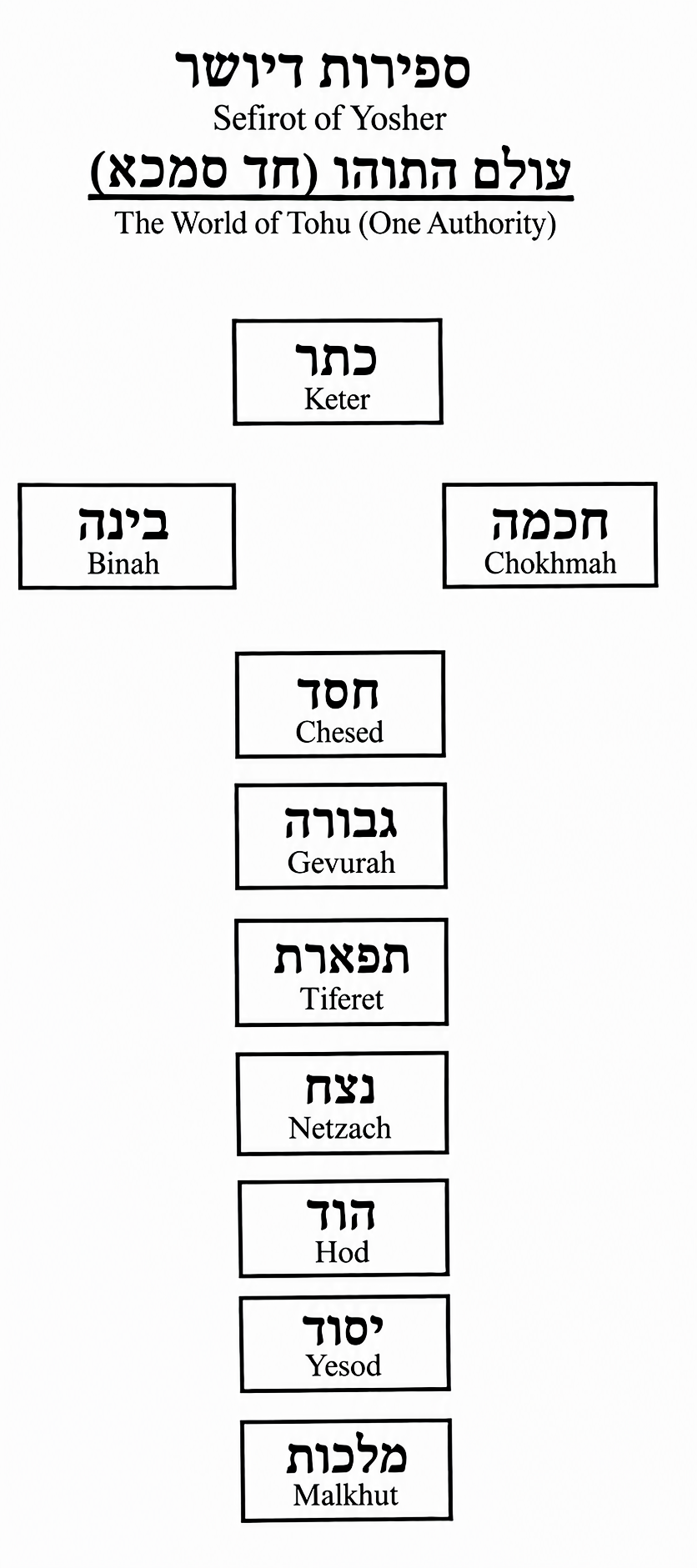
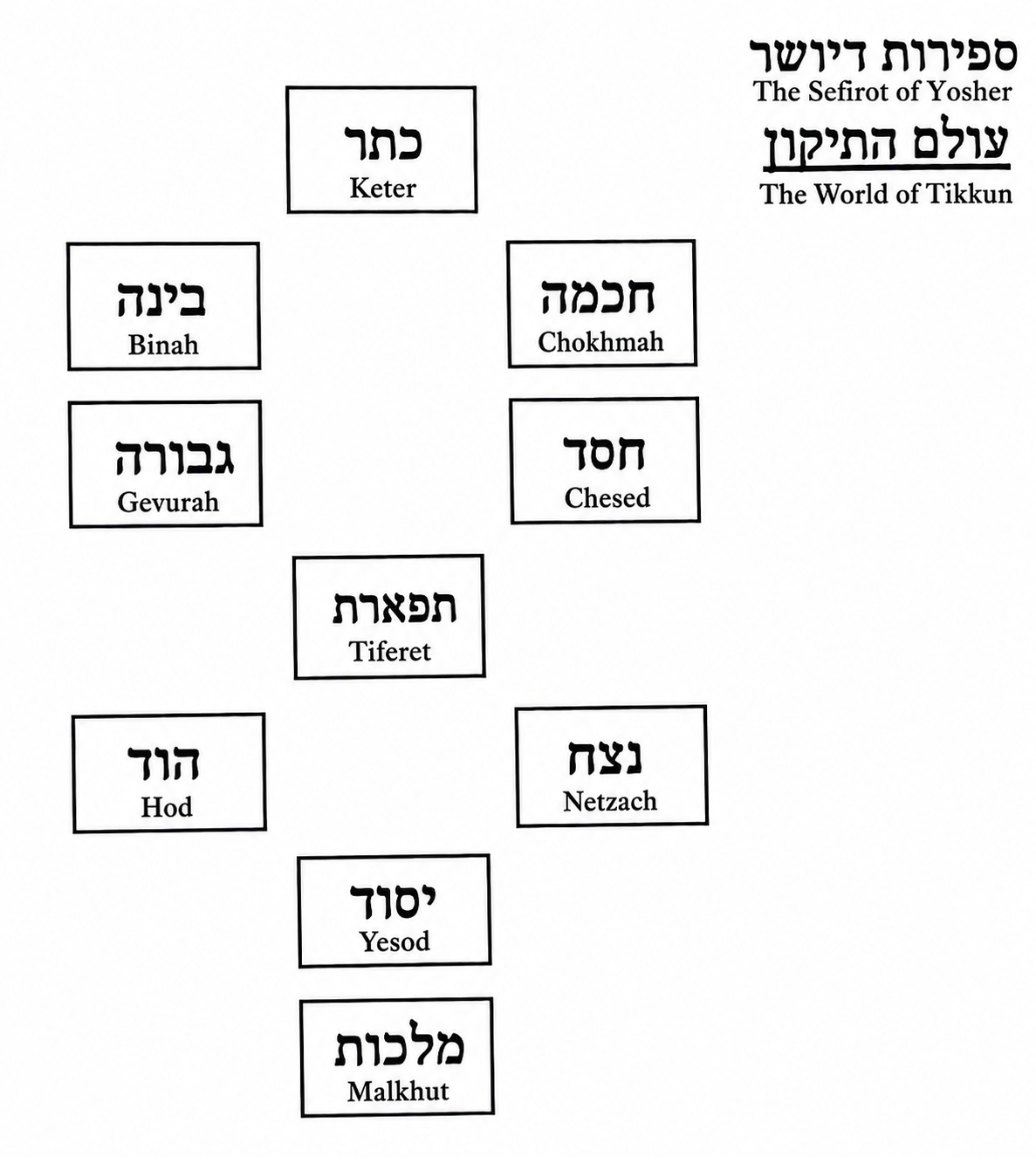
Circular and Linear aspect of Adam Kadmon
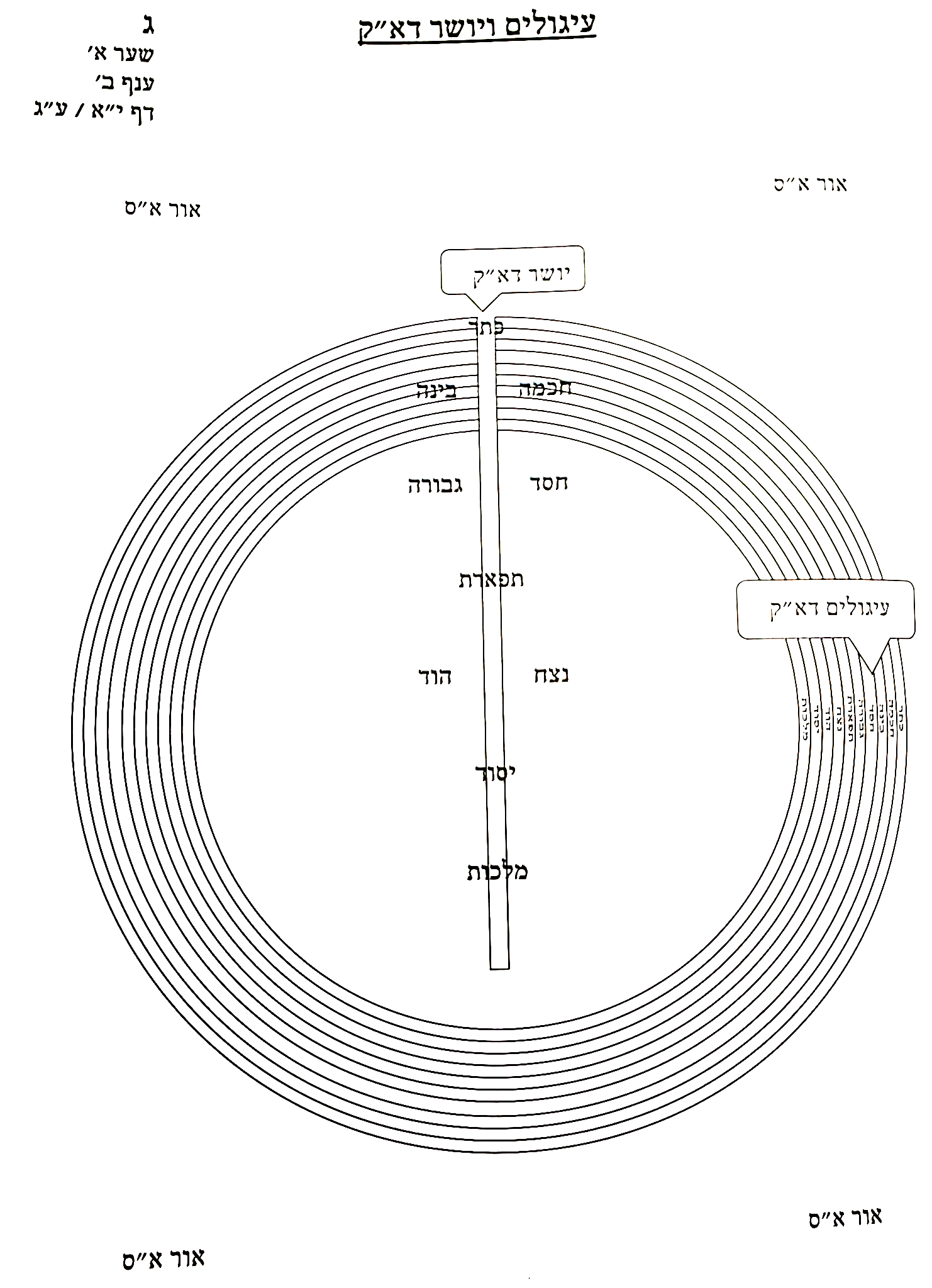
The Kav of Ein Sof and the Light Within It
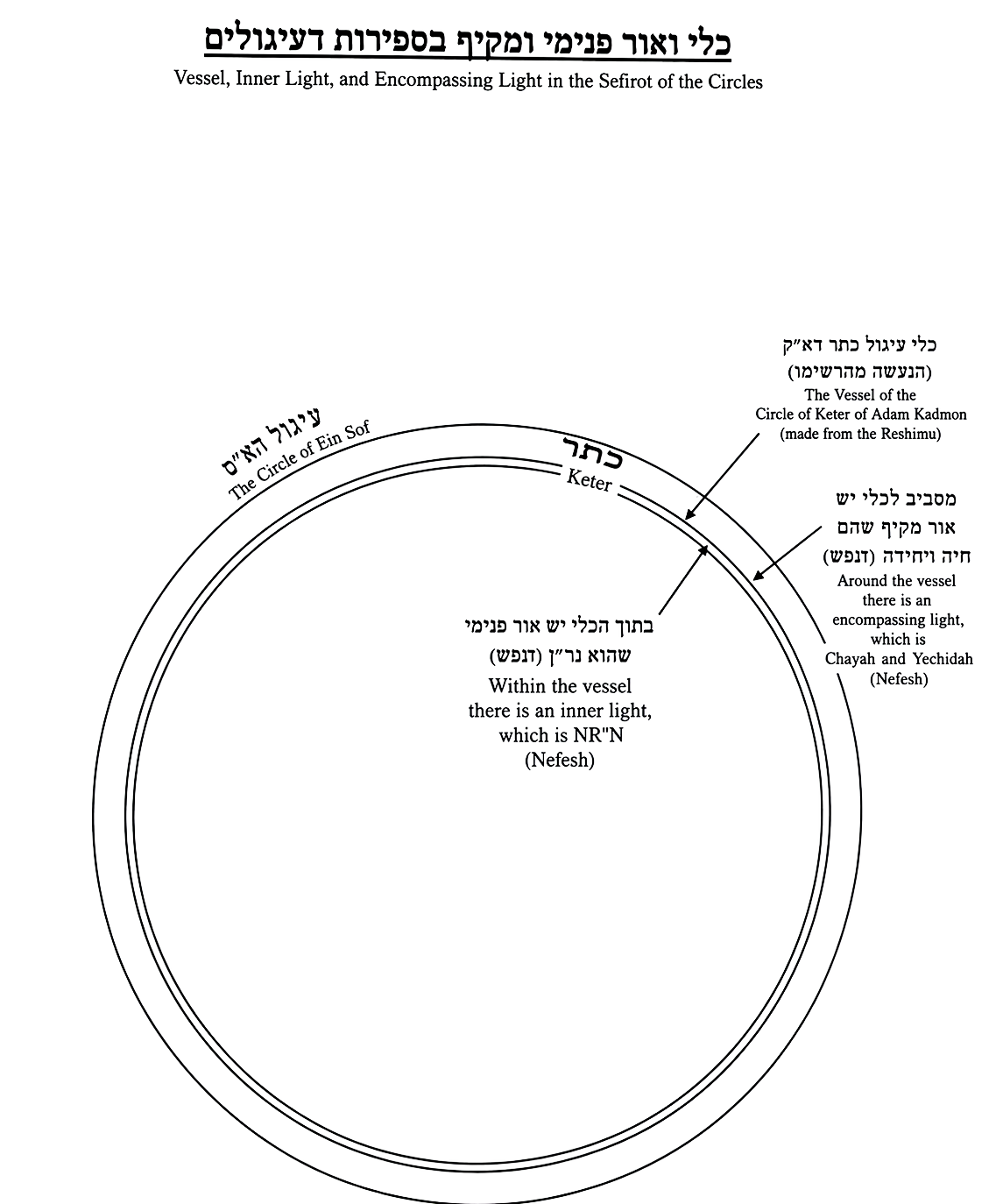
The line, which is like a hollow conduit, a vessel (הַקַּו שֶׁהוּא כְּעֵין צִנּוֹר חָלוּל (כְּלִי)), is drawn from the light that was initially within the void (הוּא נִמְשָׁךְ מִן הָאוֹר שֶׁהָיָה בַּתְּחִלָּה תּוֹךְ הֶחָלָל), and was constricted toward the sides (וְנִצְטַמְצֵם אֶל הַצְּדָדִים), and became circular surrounding the void (וְנִתְעַגֵּל מִסָּבִיב לֶחָלָל).
The light that is within the inner interior of the line is drawn from the aspect of the Light of Ein Sof that is most encompassing, before and within (הָאוֹר שֶׁבְּתוֹךְ פְּנִימִיּוּת הַקַּו נִמְשָׁךְ מִבְּחִינַת אוֹר אֵין־סוֹף הַיּוֹתֵר סוֹבֵב לִפְנֵי וְלִפְנִים), (the intention is the Light of Ein Sof that was not in the place of the empty void) (הַכַּוָּנָה לְאוֹר אֵין־סוֹף שֶׁלֹּא הָיָה בִּמְקוֹם שֶׁל הֶחָלָל הַפָּנוּי).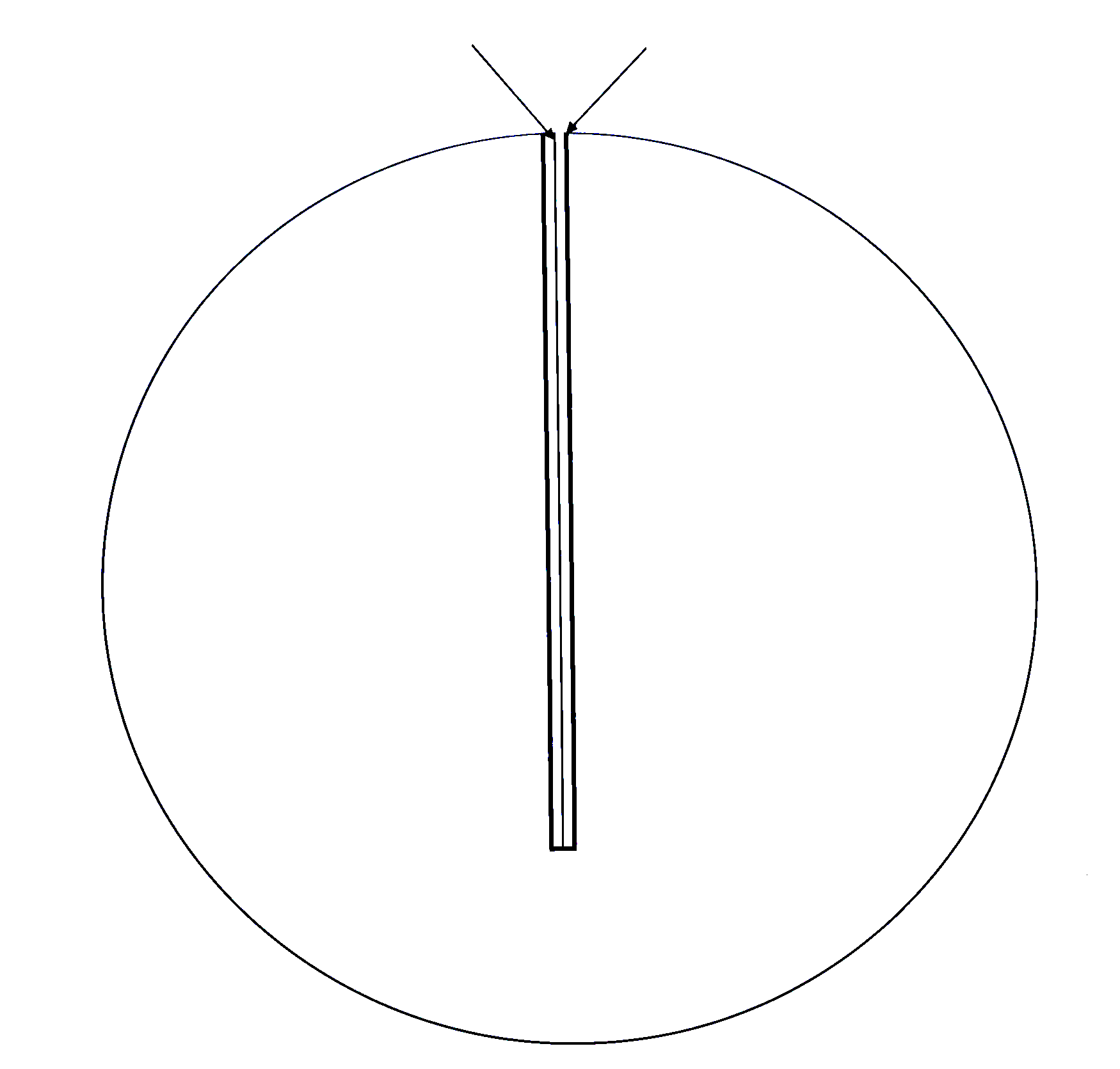
Igulim [Circles] and Yosher in All the Worlds
In Adam Kadmon all the Worlds were Included
Branch 3
שער א ענף ג
[1:3] Furthermore, we must inform you concerning these two aspects, which are circular and Linear in the form of Adam (מ״ק עוֹד צְרִיכִים אָנוּ לְהוֹדִיעֲךָ בְּעִנְיַן אֵלּוּ הַב׳ בְּחִינוֹת שֶׁהֵם עִגּוּלִים וְהַיֹּשֶׁר בְּצִיּוּר אָדָם). For behold, in the lower Adam there are five aspects of lights (וְהִנֵּה יֵשׁ בָּאָדָם הַתַּחְתּוֹן ה׳ בְּחִינוֹת אוֹרוֹת), which are Nefesh, Ruach, Neshamah, Chayah, Yechidah (שֶׁהֵם הַנרנח״י), and they are five levels (וְהֵם (ה׳ מַעֲלוֹת)), one above the other (זוֹ לְמַעְלָה מִזּוֹ). And they are the secret of the five times “Bless, my soul,” etc (וְהֵם סוֹד ה׳ פְּעָמִים בָּרְכִי נַפְשִׁי אֶת כו׳), as mentioned in Tractate Berakhot, (כְּנִזְכָּר בְּמַסֶּכֶת בְּרָכוֹת פֶּרֶק קַמָּא) (Berakhot 10a). And they correspond to the five aspects that the soul possesses (שֶׁהֵם כְּנֶגֶד ה׳ בְּחִינוֹת שֶׁיֵּשׁ לַנְּשָׁמָה), and they are Nefesh, Ruach, Neshamah, Chayah, Yechidah (וְהֵם נרנח״י), which are five levels, one above the other (שֶׁהֵם ה׳ מַדְרֵגוֹת זוֹ לְמַעְלָה מִזּוֹ), as written elsewhere in the matter of the lights of the mouth of Adam Kadmon, which are called Akudim, see there (כְּמוֹ שֶׁכָּתוּב בְּמָקוֹם אַחֵר בְּעִנְיַן אוֹרוֹת הַפֶּה דְּאָדָם קַדְמוֹן הַנִּקְרָאִים עֲקוּדִים ע״ש).
And behold, the aspect of the Ten Sefirot of the circles all contain all the aforementioned aspects, which are lights and vessels (וְהִנֵּה בְּחִינַת הַי״ס דְּעִגּוּלִים כֻּלָּם יֵשׁ בָּהֶם כָּל הַבְּחִינוֹת הַנַּ״ל שֶׁהֵם אוֹרוֹת וְכֵלִים). And the light is divided into Inner Light and Surrounding Light (וְהָאוֹר נֶחְלָק לְאוֹר פְּנִימִי וְאוֹר מַקִּיף), and the vessel is divided into externality and internality (וְהַכְּלִי נֶחְלָק לְחִיצוֹנִיּוּת וּפְנִימִיּוּת). And likewise, the aspect of the Ten Sefirot of uprightness in the form of a human has all these aspects as well (וְכֵן בְּחִינַת י״ס דְּיֹשֶׁר בְּצִיּוּר אָדָם יֵשׁ בּוֹ כָּל הַבְּחִינוֹת הָאֵלּוּ בְּעַצְמָם גַּם כֵּן). However, the distinction between the circles and the uprightness is as follows (אָֽמְנָם הַחִלּוּק שֶׁיֵּשׁ בֵּין הָעִגּוּלִים לַיֹּשֶׁר הוּא): that the Ten Sefirot of the circles are the aspect of the light called Nefesh (כִּי י״ס דְּעִגּוּלִים הֵם בְּחִינַת הָאוֹר הַנִּקְרָא נֶפֶשׁ), and within them are Inner Light and Surrounding Light, internal and external (וְיֵשׁ בָּהֶם אוֹר פְּנִימִי וְאוֹר מַקִּיף פְּנִימִי וְחִיצוֹן). And they have the aspect of Ten Sefirot of vessels (שֶׁיֵּשׁ לָהֶם בְּחִינַת י״ס שֶׁל כֵּלִים), and in each vessel among them there is internality and externality (וּבְכָל כְּלִי מֵהֶם יֵשׁ בּוֹ פְּנִימִיּוּת וְחִיצוֹנִיּוּת). And there are also Ten Sefirot of lights (וְגַם יֵשׁ י״ס שֶׁל אוֹרוֹת), and for each light there is Inner Light and Surrounding Light (וּלְכָל אוֹר יֵשׁ בּוֹ אוֹר פְּנִימִי וְאוֹר מַקִּיף). But the Ten Sefirot of uprightness are the aspect of the light called Ruach (אֲבָל הַי״ס דְּיֹשֶׁר הֵם בְּחִינַת הָאוֹר הַנִּקְרָא רוּחַ), which is a level higher than the level of Nefesh, as is known (שֶׁהוּא מַדְרֵגָה גְּבוֹהָה עַל מַדְרֵגַת הַנֶּפֶשׁ כַּנּוֹדָע). And they too are composed of Inner Light and Surrounding Light (גַּם הֵם כְּלוּלִים מֵאוֹר פְּנִימִי וְאוֹר מַקִּיף). And they also have Ten Sefirot of vessels (גַּם יֵשׁ לָהֶם י״ס דְּכֵלִים), and in each vessel among them there is internality and externality (וּבְכָל כְּלִי מֵהֶם יֵשׁ בּוֹ פְּנִימִיּוּת וְחִיצוֹנִיּוּת).
And it is obvious that the aspect of Nefesh was emanated first (וּפְשִׁיטָא הוּא שֶׁבְּחִינַת הַנֶּפֶשׁ נֶאֱצְלָה תְּחִלָּה), and afterward Ruach was emanated, which is a higher level (וְאַחַ״כ נֶאֱצַל הָרוּחַ שֶׁהוּא מַדְרֵגָה יוֹתֵר עֶלְיוֹנָה), as is known in the lower Adam, that first he acquires Nefesh, and afterward, if he merits more, Ruach is given to him (כַּנּוֹדָע בָּאָדָם הַתַּחְתּוֹן שֶׁבַּתְּחִלָּה קוֹנֶה נֶפֶשׁ וְאַחַ״כ אִם זָכָה יָתֵיר יְהַבִּין לֵיהּ רוּחַ), as mentioned in the Zohar, Parashat Mishpatim, daf 94 (כְּנִזְכָּר בַּזֹּהַר מִשְׁפָּטִים דְּצ״ד), and this is its wording: “Come and see: when a person is born, they give him a Nefesh,” etc (וְז״ל תָּא חֲזֵי בַּר נָשׁ כַּד אִתְיְלִיד יְהַבִּין לֵיהּ נַפְשָׁא כו׳). And so it was in the Supernal Adam as well (וְכֵן הָיָה בָּאָדָם הָעֶלְיוֹן), that at first there were emanated and revealed the aspects of the circles, which are the levels of Nefesh and their vessels (שֶׁבַּתְּחִלָּה נֶאֱצְלוּ וְנִתְגַּלּוּ בְּחִינוֹת הָעִגּוּלִים שֶׁהֵם בְּחִינַת מַדְרֵגוֹת הַנֶּפֶשׁ וְהַכֵּלִים שֶׁלָּהֶם), and afterward there were emanated the second aspect of uprightness in the form of Adam, which are the levels of the lights of Ruach and their vessels (וְאַחַ״כ נֶאֱצְלוּ בְּחִינוֹת ב׳ דְּיֹשֶׁר בְּצִיּוּר אָדָם שֶׁהֵם מַדְרֵגוֹת אוֹרוֹת רוּחַ וְהַכֵּלִים שֶׁלָּהֶם), as is known, for Ruach is called Adam (כַּנּוֹדָע כִּי הָרוּחַ נִקְרָא אָדָם), and understand this very well (וְהָבֵן זֶה מְאֹד).
And this matter existed in all the worlds entirely (וְדָבָר זֶה הָיָה בְּכָל הָעוֹלָמוֹת כֻּלָּם), for in each and every aspect of them, first their Ten Sefirot were emanated in the aspect of the circles of that aspect (כִּי בְּכָל בְּחִינָה וּבְחִינָה מֵהֶם בַּתְּחִלָּה נֶאֱצְלוּ הַי״ס שֶׁלָּהֶם בִּבְחִינַת הָעִגּוּלִים שֶׁל הַבְּחִינָה הַהִיא), and afterward there were emanated the Ten Sefirot of uprightness of that aspect (וְאַחַ״כ נֶאֱצְלוּ הַי״ס דְּיֹשֶׁר שֶׁל הַבְּחִינָה הַהִיא). However, the distinction between the vessels of Nefesh and the vessels of Ruach is already known (אָֽמְנָם הַהֶפְרֵשׁ בֵּין הַכֵּלִים שֶׁל נֶפֶשׁ וְהַכֵּלִים שֶׁל הָרוּחַ כְּבָר נוֹדַע), for the organ of the liver is a dwelling place for the light called Nefesh (כִּי אֵיבֶר הַכָּבֵד הוּא מִשְׁכָּן לָאוֹר הַנִּקְרָא נֶפֶשׁ), and the sign of the matter is that the blood, which is heavy and fills the liver, is the Nefesh (וְסִימָן לַדָּבָר כִּי הַדָּם שֶׁהוּא כָּבֵד שֶׁמָּלֵא דָּם הוּא הַנֶּפֶשׁ). And the organ of the heart is a dwelling place for Ruach (וְאֵיבֶר הַלֵּב מִשְׁכָּן לָרוּחַ), and the organ of the brain is a dwelling place for the light called Neshamah [Soul] (וְאֵיבֶר הַמּוֹחַ מִשְׁכָּן לָאוֹר הַנִּקְרָא נְשָׁמָה). And this is not the place to explain these matters (וְאֵין זֶה מָקוֹם בֵּאוּר לִדְבָרִים אֵלּוּ). And behold, with the introduction that we have introduced to you in this branch, each and every one will be explained in its proper place, at length and in detail (וְהִנֵּה עִם הַהַקְדָּמָה שֶׁהִקְדַּמְנוּ לְךָ בְּעָנָף זֶה יִתְבָּאֵר כָּל אֶחָד וְאֶחָד בִּמְקוֹמוֹ הָרָאוּי לוֹ בְּאֹרֶךְ וּבִפְרָטוּת).
The general principle that emerges is that the beginning of the Atzilut is in this manner as mentioned (הַכְּלָל הָעוֹלֶה כִּי תְּחִלַּת הָאֲצִילוּת הָיְתָה בְּזֶה הָאוֹפֶן הַנִּזְכָּר), for first ten Sefirot were emanated in the aspect of circles, and they are ten vessels (כִּי תְּחִלָּה נֶאֱצְלוּ י׳ סְפִירוֹת בִּבְחִינַת עִגּוּלִים וְהֵם י׳ כֵּלִים), and in each vessel among them there is internality and externality (וּבְכָל כְּלִי מֵהֶם יֵשׁ בּוֹ פְּנִימִיּוּת וְחִיצוֹן). And within these ten vessels were enclothed ten Sefirot of the essence of the lights called Nefesh (וּבְתוֹךְ הַי׳ כֵּלִים אֵלּוּ נִתְלַבְּשׁוּ י׳ סְפִירוֹת עַצְמוּת הָאוֹרוֹת הַנִּקְרָא נֶפֶשׁ). And there are also ten surrounding lights upon the vessels from outside, and they too are the aspect of Nefesh (וְעוֹד יֵשׁ י׳ אוֹרוֹת מַקִּיפִים עַל הַכֵּלִים מִבַּחוּץ וְגַם הֵם בְּחִינַת נֶפֶשׁ), except that they are called surrounding lights from outside, and the others are called inner lights (אֶלָּא שֶׁנִּקְרְאוּ אוֹרוֹת מַקִּיפִים מִבַּחוּץ וְהָאֲחֵרִים נִקְרְאוּ אוֹרוֹת פְּנִימִיּוֹת). And all of this is in the aspect of circles (וְהַכֹּל הוּא בִּבְחִינַת עִגּוּלִים), for the inner light is like a sphere, and it enclothes within one vessel which is also circular (כִּי אוֹר פְּנִימִי הוּא כְּעֵין גַּלְגַּל וְהוּא מִתְלַבֵּשׁ תּוֹךְ כְּלִי אֶחָד מְעֻגָּל גַּם הוּא), and upon this vessel there is a surrounding light upon it in a circle, like the sphere around it (וְעַל הַכְּלִי הַזֶּה יֵשׁ אוֹר מַקִּיף עָלָיו בְּעִגּוּל כְּדִמְיוֹן הַגַּלְגַּל סָבִיב לוֹ).
And all the ten Sefirot of circles are in this manner, like the form of the spheres and firmaments called Ophanim (וְכָל הַי׳ סְפִירוֹת דְּעִגּוּלִים הֵם עַל דֶּרֶךְ זֶה כִּתְמוּנַת הַגַּלְגַּלִּים וְהָרְקִיעִים הַנִּקְרָאִים אוֹפַנִּים), and they are the firmaments above us in this lowly world (וְהֵם הָרְקִיעִים שֶׁעָלֵינוּ בָּעוֹלָם הַזֶּה הַשָּׁפֵל). And afterward ten Sefirot were emanated in the aspect of uprightness, in the form of Adam (וְאַחַ״כ נֶאֱצְלוּ י׳ סְפִירוֹת בִּבְחִינַת יֹשֶׁר כְּמַרְאֵה אָדָם), and they are more elevated in level than the circles, for they are the aspect of Ruach (וְהֵם יוֹתֵר מְעֻלִּים בְּמַעֲלָה מִן הָעִגּוּלִים כִּי הֵם בְּחִינַת רוּחַ). And they are ten vessels in the form of one Adam, including all ten vessels (וְהֵם י׳ כֵּלִים בְּצִיּוּר אָדָם אֶחָד כוֹלֵל כָּל י׳ כֵּלִים), and in each vessel among them there is internality and externality (וּבְכָל כְּלִי מֵהֶם יֵשׁ בּוֹ פְּנִימִיּוּת וְחִיצוֹנִיּוּת). And within these vessels are enclothed ten Sefirot in the aspect of the essence of the lights called Ruach (וּבְתוֹךְ הַכֵּלִים הָאֵלֶּה מִתְלַבְּשִׁים י׳ סְפִירוֹת בִּבְחִינַת עַצְמוּת אוֹרוֹת הַנִּקְרָא רוּחַ). And there are also ten other lights that surround the vessels from outside, and they too are of the aspect of Ruach (וְעוֹד יֵשׁ י׳ אוֹרוֹת אֲחֵרִים הַמַּקִּיפִים עַל הַכֵּלִים מִבַּחוּץ וְגַם הֵם מִבְּחִינַת רוּחַ). And all of this is in the way of uprightness, made in the form of the aforementioned Adam (וְהַכֹּל הוּא בְּדֶרֶךְ יֹשֶׁר עָשׂוּי כְּמַרְאֵה אָדָם הַנַּ״ל). And in this manner it is in all the worlds—those that are emanated, and those that are created, and those that are formed, and those that are made—which were rectified within the place of the void and the empty air as mentioned above (וְעַל דֶּרֶךְ זֶה בְּכָל הָעוֹלָמוֹת הַנֶּאֱצָלִים וְהַנִּבְרָאִים וְהַיְצוּרִים וְהַנַּעֲשִׂים אֲשֶׁר נִתְקַּנוּ תּוֹךְ מְקוֹם הֶחָלָל וְהָאוֹיִר הַפָּנוּי כַּנַּ״ל), for in this place all the worlds came into being, and there is nothing outside of it (כִּי בַּמָּקוֹם הַזֶּה נִתְהַוּוּ כָּל הָעוֹלָמוֹת כֻּלָּם אֵין דָּבָר חוּצָה לוֹ), and the Light of Ein Sof surrounds and encompasses them and illuminates all the worlds that are within this place from all their sides with one equal measure (וְאוֹר אֵין־סוֹף מַקִּיף וְסוֹבֵב עֲלֵיהֶם וּמֵאִיר לְכָל הָעוֹלָמוֹת אֲשֶׁר בְּתוֹךְ הַמָּקוֹם הַזֶּה מִכָּל צְדָדֵיהֶם בְּהַשְׁוָואָה אַ). Aside from that which illuminates them—the essential, true, great, and actual illumination—by way of the line that spreads from Him and is drawn within all these worlds, as explained above (מִלְּבַד מַה שֶּׁמֵּאִיר בָּהֶם עִקַּר הָאָרָה הָאֲמִתִּית גְּדוֹלָה וּמַמָּשִׁית דֶּרֶךְ הַקַּו הַמִּתְפַּשֵּׁט מִמֶּנּוּ וְנִמְשָׁךְ בְּתוֹךְ כָּל הָעוֹלָמוֹת הָאֵלּוּ כַּנַּ״ל), each and every one of these worlds, and each and every detail in every world, has these two aforementioned aspects, which are the circles and the uprightness (וְכָל עוֹלָם וְעוֹלָם מֵהֶם וְכָל פְּרָט וּפְרָט שֶׁבְּכָל עוֹלָם וְעוֹלָם יֵשׁ בּוֹ ב׳ בְּחִינוֹת הַנַּ״ל שֶׁהֵם הָעִגּוּלִים וְהַיֹּשֶׁר). And the circles are in one aspect, for the one that is more exalted than its fellow surrounds and encompasses its fellow (וְהָעִגּוּלִים הֵם בִּבְחִינָה אַחַת כִּי הַמְּעֻלֶּה מֵחֲבֵרוֹ סוֹבֵב וּמַקִּיף עַל חֲבֵרוֹ), and the circles that are the most inner and central of all are the most inferior of all (וְהָעִגּוּלִים הַיּוֹתֵר פְּנִימִיִּים תּוֹכְנִיִּים מִכֻּלָּם הֵם הַיּוֹתֵר גְּרוּעִים מִכֻּלָּם), namely the firmaments and the spheres that surround the lowly world (הֲלֹא הֵמָּה הָרְקִיעִים וְהַגַּלְגַּלִּים הַסּוֹבְבִים עַל הָעוֹלָם הַשָּׁפֵל), for they are placed within all the circles, in the middle of all of them (שֶׁהֵם נְתוּנִים תּוֹךְ כָּל הָעִגּוּלִים בְּאֶמְצַע כֻּלָּם). But the uprightness is the opposite (אֲבָל הַיֹּשֶׁר הוּא לְהֵפֶךְ), for the most inner is the most exalted and superior of all (כִּי הַיּוֹתֵר פְּנִימִי הוּא עֶלְיוֹן וּמְעֻלֶּה מִכֻּלָּם), and the outermost of all is the most inferior of all (וְהַחִיצוֹן שֶׁבְּכֻּלָּם הוּא יוֹתֵר גָּרוּעַ מִכֻּלָּם). And this uprightness clothes that, and that clothes this, until the most inferior of all clothes all of them (וְיֹשֶׁר זֶה מַלְבִּישׁ לָזֶה וְזֶה לָזֶה עַד שֶׁהַגָּרוּעַ שֶׁבְּכֻּלָּם הוּא מַלְבִּישׁ לְכֻלָּם), and understand all this very well (וְהָבֵן כָּל זֶה הֵיטֵב).
And behold, after we have presented to you the aforementioned introductions, you will now be able to understand the matter of the reason for the necessity of the Tzimtzum, by which Ein Sof constricted Himself in the center of His light, to leave a void and emptiness, as explained above in Branch Two (וְהִנֵּה אַחַר שֶׁהִצַּגְנוּ לְךָ הַקְדָּמוֹת הַנַּ״ל תּוּכַל לְהָבִין עַתָּה עִנְיַן סִבַּת צֹרֶךְ הַצִּמְצוּם אֲשֶׁר צִמְצֵם הָאֵין־סוֹף אֶת עַצְמוֹ בְּאֶמְצָעִית אוֹרוֹ לְהַנִּיחַ מָקוֹם חָלָל וָרֵיק כַּנַּ״ל בְּעָנָף ב׳). And the matter is in order to make the aspect of vessels (וְהָעִנְיָן הוּא כְּדֵי לַעֲשׂוֹת בְּחִינַת כֵּלִים), for through the constriction of the light and its diminution there is possibility for the vessel to come into being and be revealed (כִּי עַל־יְדֵי צִמְצוּם הָאוֹר וּמִעוּטוֹ יֵשׁ אֶפְשָׁרוּת אֶל הַכְּלִי לְהִתְהַוּוֹת וּלְהִתְגַּלּוֹת), whereas through the increase of the light the vessel would be nullified due to its insufficient power to receive the abundant and great light (וּבְהִתְרַבּוּת הָאוֹר יִתְבַּטֵּל הַכְּלִי מִמִּעוּט כֹּחוֹ לְקַבֵּל הָאוֹר הָרַב וְהַגָּדוֹל), as is written in the matter of the Seven Kings of Edom, who are called the World of Nekudim [Points], how they reigned and died, see there well (כְּמוֹ שֶׁכָּתוּב בְּעִנְיַן ז׳ מַלְכֵי אֱדוֹם וְהֵם הַנִּקְרָא עוֹלָם הַנְּקוּדִים אֵיךְ מָלְכוּ וּמֵתוּ ע״ש הֵיטֵב), how there was the aspect of the creation and becoming of the vessels (אֵיךְ הָיְתָה בְּחִינַת בְּרִיאָה וַהֲוָיוֹת הַכֵּלִים), for at first there must be constriction of the light and its diminution (כִּי בַּתְּחִלָּה צָרִיךְ צִמְצוּם הָאוֹר וּמִעוּטוֹ), and through this the becoming of the vessel is revealed (וְעַל־יְדֵי כֵן יִתְגַּלֶּה הֲוָיַת הַכְּלִי), and after it has already been revealed and come into being (וְאַחַר שֶׁכְּבָר נִתְגַּלֶּה וְנִתְהַוָּה), then the light returns to be drawn into it and the vessel is able to endure and not be nullified (אָז חָזַר הָאוֹר לְהִמָּשֵׁךְ בּוֹ וְיָכוֹל הַכְּלִי לְהִתְקַיֵּם וְלֹא לְהִתְבַּטֵּל). And so it was here, for He first constricted the light and the vessels came into being (וְכֵן הָיָה כָּאן כִּי צִמְצֵם בָּרִאשׁוֹנָה אֶת הָאוֹר וְנִתְהַוּוּ הַכֵּלִים), and afterward He returned and drew that line to illuminate them (וְאַחַ״כ חָזַר וְהִמְשִׁיךְ הַקַּו הַהוּא לְהָאִיר בָּהֶם). And by this the reason is explained why Ein Sof constricted Himself and removed that great light entirely from that place (וּבָזֶה יִתְבָּאֵר טַעַם לָמָּה אֵין־סוֹף צִמְצֵם עַצְמוֹ וְסִלֵּק הָאוֹר הָרַב הַהוּא מִן הַמָּקוֹם הַהוּא לְגַמְרֵי), and afterward returned it in measure and weight by way of that line (וְאַחַ״כ הֶחֱזִירוֹ בְּמִדָּה וּבְמִשְׁקָל דֶּרֶךְ הַקַּו הַהוּא). For He could have left that aspect of the line in its place and removed only the rest of the great light, since He was destined to return it (וְהָיָה יָכוֹל לְהַנִּיחַ אוֹתוֹ בְּחִינַת הַקַּו הַהוּא בִּמְקוֹמוֹ וְלְסַלֵּק שְׁאָר הָאוֹר הַגָּדוֹל בִּלְבַד כֵּיוָן שֶׁהוּא עָתִיד לְהַחֲזִירוֹ), but the reason was for the aforementioned cause (אֶלָּא שֶׁהַטַּעַם הָיָה לְסִבָּה הַנַּ״ל), for the vessels could not come into being until the light completely withdrew (כִּי לֹא יָכְלוּ לְהִתְהַוּוֹת הַכֵּלִים עַד שֶׁיִּסְתַּלֵּק הָאוֹר לְגַמְרֵי), and after the vessels came into being He returned and drew the light (by way of the line) in measure and weight according to the amount sufficient for them (וְאַחַר שֶׁנִּתְהַוּוּ הַכֵּלִים חָזַר וְהִמְשִׁיךְ הָאוֹר (דֶּרֶךְ הַקַּו) בְּמִדָּה וּבְמִשְׁקָל כְּפִי שִׁעוּר הַמַּסְפִּיק לָהֶם), to illuminate them and to give them life in a manner that they can bear and endure and not be nullified (לְהָאִירָם וּלְהַחֲיוֹתָם בְּאוֹפֶן שֶׁיּוּכְלוּ לִסְבֹּל וְיִתְקַיְּמוּ וְלֹא יִתְבַּטְּלוּ), and this suffices (וְדַי בָּזֶה).
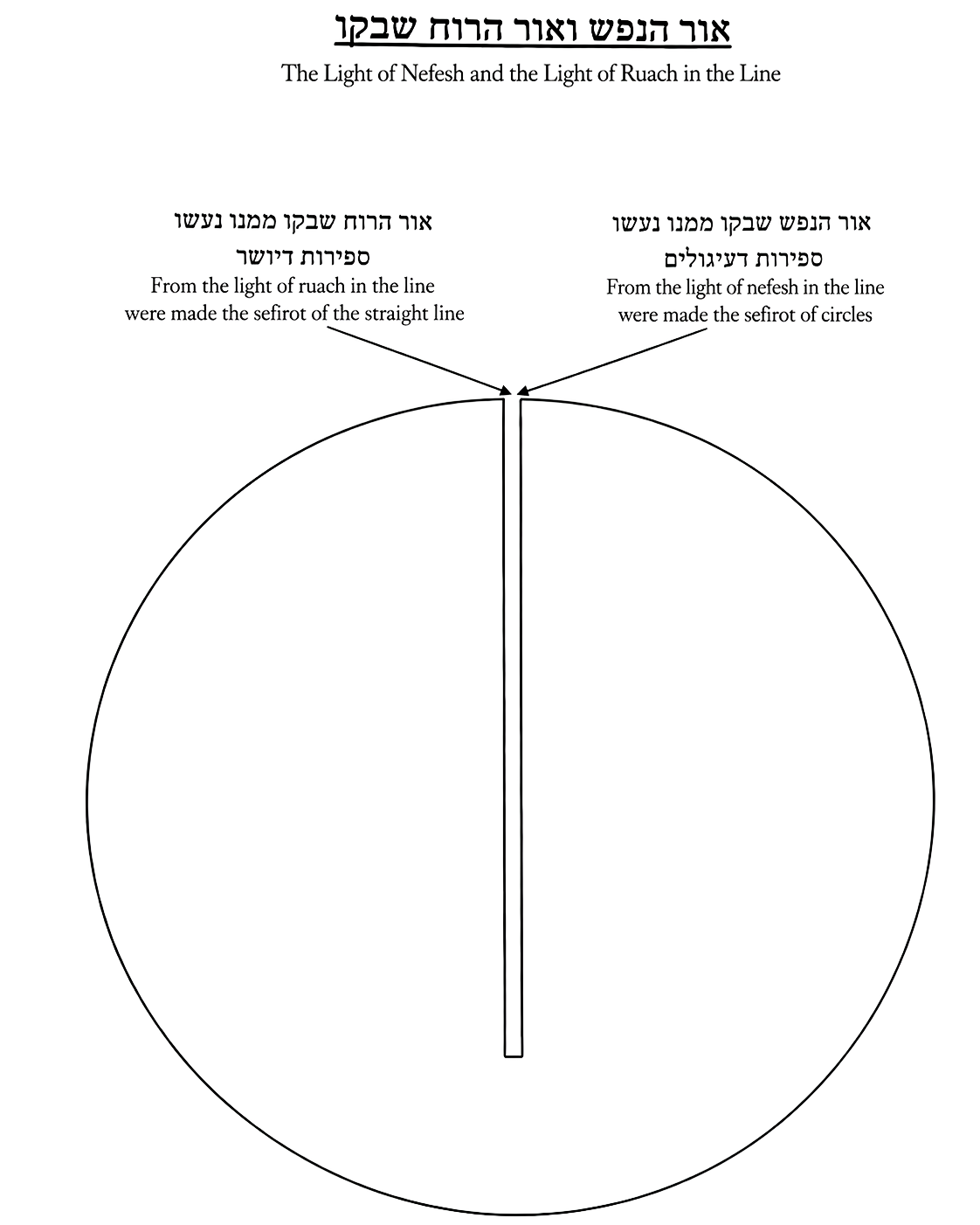
Branch 4
שער א ענף ד
[1:4] After we have written in the previous branches, in a brief way and in a general way, the matter of the Ten Sefirot in every place they are—how there are in them many, many aspects (אַחַר שֶׁכָּתַבְנוּ בָּעֲנָפִים הַקּוֹדְמִים לָזֶה בְּדֶרֶךְ קָצָרָה וְדֶרֶךְ כְּלָל עִנְיַן הַי״ס בְּכָל מָקוֹם שֶׁהֵם אֵיךְ יֵשׁ בָּהֶם כַּמָּה וְכַמָּה בְּחִינוֹת), we shall speak in this branch, briefly as well, of the aspect of the levels of the worlds that were created within the place of the empty void mentioned above, outside of which there is nothing (נְדַבֵּר בְּעָנָף זֶה בְּקִצּוּר גַּם כֵּן בְּחִינַת מַדְרֵגוֹת הָעוֹלָמוֹת אֲשֶׁר נִבְרְאוּ תּוֹךְ מְקוֹם הֶחָלָל הָרֵיקָנִי הַנַּ״ל שֶׁאֵין דָּבָר חוּצָה לוֹ מִן הַמָּקוֹם הַזֶּה), and all the worlds, all of them, are within this place (וְכָל הָעוֹלָמוֹת כֻּלָּם הֵם תּוֹךְ הַמָּקוֹם הַזֶּה).
And let it not arise in your mind that the Ten Sefirot called by us in Sefer haZohar “the Ten Sefirot of Atzilut”—do not err to think that they are earlier and higher than all that was emanated (וְאַל יַעֲלֶה בְדַעְתְּךָ כִּי הַי״ס הַנִּקְרָא אֶצְלֵנוּ בְּסֵפֶר הַזֹּהַר י״ס דַּאֲצִילוּת אַל תִּטְעֶה לַחְשֹׁב שֶׁהֵם יוֹתֵר רִאשׁוֹנִים וּגְבוֹהִים מִכָּל מַה שֶּׁנֶּאֱצַל), for many worlds preceded them (כִּי כַּמָּה עוֹלָמוֹת קָדְמוּ עֲלֵיהֶם), and because of their great concealment they did not extend a hand to mention them in Sefer haZohar except by wondrous hint, as your eyes will look straight and see three statements from the book of the Tikkunim concerning Adam Kadmon of all the ancients, as we shall write with the help of Hashem in this branch (וּלְרֹב הֶעְלָמָם לֹא שָׁלְחוּ בָּהֶם יָד לְהַזְכִּירָם בְּסֵפֶר הַזֹּהַר אֶלָּא בְּרֶמֶז נִפְלָא כַּאֲשֶׁר עֵינֶיךָ לְנוֹכַח יַבִּיטוּ ג׳ מַאֲמָרִים מִסֵּפֶר הַתִּקּוּנִים בְּעִנְיַן אָדָם קַדְמוֹן לְכָל הַקַּדְמוּמִים כְּמוֹ שֶׁנִּכְתֹּב בְּעֶזְרַת ה׳ בְּעָנָף זֶה).
And as it is written in Sefer haZohar, Parashat Bereshit, daf 23, and also in the Tikkunim, daf 134, and this is its wording (וְכַאֲשֶׁר כָּתוּב בְּסֵפֶר הַזֹּהַר פָּרָשַׁת בְּרֵאשִׁית דְּכ״ג וְגַם בַּתִּקּוּנִים דְּקל״ד וְז״ל): “Come and see: how many worlds are hidden, that are enclothed and compounded in the Sefirot, etc.” (תַּא חֲזֵי כַּמָּה עוֹלָמוֹת אִינּוּן סְתִימִין דְּאִינּוּן מִתְלַבְּשִׁין וּמִתְרַכְּבִין בִּסְפִירָן כו׳). And also one statement was brought in Parashat Noaḥ of Sefer haZohar, also in Parashat Pekudei, daf 226a, and daf 268b, and this is its wording (וְגַם מַאֲמָר אֶחָד הוּבָא בְּפָרָשַׁת נֹחַ דְּסֵפֶר הַזֹּהַר גַּם בְּפָרָשַׁת פְּקוּדֵי דְּרכ״ו ע״א וְדַף רס״ח ע״ב וְז״ל): “Rabbi Shim‘on bar Yochai said: I raise my hand in His shadow above, etc., and from the secret of the supernal thought to below, all of them are called Ein Sof, etc.” (אָמַר רַשְׁבִּ״י אֲרִימַת יָדִי בְּצִלּוֹ לְעֵילָא כו׳ וּמֵרָזָא דְּמַחֲשָׁבָה עִילָאָה דְּלְתַתָּא כּוּלְּהוּ אִיקְרוּ אֵין־סוֹף כו׳). And if you will set the eyes of your intellect to scrutinize well all the extra words and the repetitions and the hints hinted to the understanding one in the statements mentioned above (וְאִם תָּשִׂים עֵינֵי שִׂכְלְךָ לְדַקְדֵּק הֵיטֵב כָּל הַמִּלּוֹת הַמְּיֻתָּרוֹת וְהַכְּפוּלִים וְהָרְמָזִים הַנִּרְמָזִים אֶל הַמֵּבִין בַּמַּאֲמָרִים הַנַּ״ל), you will be amazed and astonished when you see how many levels upon levels without end or number preceded the Ten Sefirot called by us “the Ten Sefirot of Atzilut” (תַּפְלִיא וְתִשְׁתּוֹמֵם בִּרְאוֹתְךָ כַּמָּה מַדְרֵגוֹת עַל מַדְרֵגוֹת לְאֵין קֵץ וּמִסְפָּר קָדְמוּ לַי״ס הַנִּקְרָא אֶצְלֵנוּ בְּשֵׁם י״ס הָאֲצִילוּת). And the one who studies this our composition, if he merits, will know and understand and stand upon their proper structure, as we shall write in this branch at the end (וְהַמְעַיֵּן בְּחִבּוּרֵנוּ זֶה אִם יִזְכֶּה יֵדַע וְיָבִין וְיַעֲמֹד עַל מַתְכֻּנְתָּם וּכְמוֹ שֶׁנִּכְתֹּב בְּעָנָף זֶה בְּסוֹף).
And behold, the Geonim concealed them in the sweetness of their language (וְהִנֵּה הַגְּאוֹנִים הִסְתִּירוּם בְּמֶתֶק לְשׁוֹנָם), and called them “the ten clarities” upon the supernal Keter (וְקָרְאוּם עֶשֶׂר צַחְצָחוֹת עַל [גַּבֵּי] כֶּתֶר עֶלְיוֹן), and the like of these expressions (וְכַיּוֹצֵא בִּדְבָרִים אֵלּוּ). And although there is no limit to the worlds in this place, for they are thousands and myriads (וְעִם הֱיוֹת כִּי אֵין קִצְבָּה אֶל הָעוֹלָמוֹת שֶׁבַּמָּקוֹם הַזֶּה כִּי הֵם אֲלָפִים וּרְבָבוֹת), nevertheless we shall explain a little of what is in our capacity to explain in this place, in a brief manner (עִכָּל זֶה נְבָאֵר קְצָת מַה שֶּׁיֵּשׁ בְּיָדֵינוּ יְכוֹלֶת לְבָאֵר בַּמָּקוֹם הַזֶּה דֶּרֶךְ קָצָרָה). And first we shall begin to explain one detail (וּבָרִאשׁוֹנָה נַתְחִיל לְבָאֵר פְּרָט אֶחָד), which includes and grasps all the place of this void (אֲשֶׁר הוּא כּוֹלֵל וְתוֹפֵס כָּל מְקוֹם הֶחָלָל הַזֶּה), from which all the worlds spread (אֲשֶׁר מִן הַפְּרָט הַזֶּה מִתְפַּשְּׁטִים כָּל הָעוֹלָמוֹת כֻּלָּם), and in which they are suspended and held (וּבוֹ נִתְלִים וְנֶאֱחָזִים), and from which they emerge and are revealed outward (וּמִמֶּנּוּ הֵם יוֹצְאִים וְנִתְגַּלִּים בַּחוּץ), as we shall write with the help of Hashem (כְּמוֹ שֶׁנִּכְתֹּב בְּעֶזְרַת ה׳).
However, this detail is called by the name Adam Kadmon of all the ancients (אָֽמְנָם הַפְּרָט הַזֶּה הוּא נִקְרָא בְּשֵׁם אָדָם קַדְמוֹן לְכָל הַקַּדְמוּמִים), who precedes all the existents (אֲשֶׁר הוּא קוֹדֵם לְכָל הַנִּמְצָאִים), as we shall write with the help of Hashem (כְּמוֹ שֶׁנִּכְתֹּב בְּעֶזְרַת ה׳). And because of the many exalted levels of Adam Kadmon, due to the greatness of his level and his concealment (וְלְרֹב מַעֲלוֹת אָדָם קַדְמוֹן לְרֹב גֹּדֶל מַעֲלָתוֹ וְהֶעְלָמוֹ), they did not extend a hand to engage with him in Sefer haZohar except in a few limited places (לֹא שָׁלְחוּ בּוֹ יָד לְהִתְעַסֵּק בְּסֵפֶר הַזֹּהַר אֶלָּא בְּקְצָת מְקוֹמוֹת מְעוֹטִים), and even that was in a manner of great concealment (וְאַף גַּם זֶה הָיָה בְּדֶרֶךְ הֶעְלָם גָּדוֹל).
And I shall mention some of them (וְאַזְכִּיר קְצָתָם). In the Tikkunim, at the end of Tikkun Nineteen, daf 41b, and this is its wording (בַּתִּקּוּנִים סוֹף תִּקּוּן י״ט דְּמ״א ע״ב וְז״ל): “He said to him: If so, it is known that there is Adam Kadmon of all the ancients, and there is another Adam, etc.” (אָמַר לֵיהּ אִי הָכִי אִשְׁתְּמוֹדַע דְּאִית אָדָם קַדְמוֹן לְכָל הַקַּדְמוּמִים וְאִית אָדָם אַחֵר כו׳). Also at the beginning of Tikkun Seventy, daf 119, and this is its wording (גַּם רֵישׁ תִּקּוּן ע׳ דְּקי״ט וְז״ל): “The wondrous craftsman fashioned and formed a form in the palaces of Adam Kadmon of all the ancients, that there is an Adam, etc.” (אָמּוֹן מוּפְלָא רָקַם וְצִיֵּר צִיּוּרָא בְּהֵיכָלַיָּא דְּאָדָם קַדְמוֹן לְכָל הַקַּדְמוּמִים דְּאִית אָדָם כו׳). Also in the aforementioned Tikkunim, daf 132, and this is its wording (גַּם בַּתִּקּוּנִים הַנַּ״ל דְּקל״ב וְז״ל): “We found in the secret of the Mishnah, in the hidden mystery of mysteries, concealed of the concealed, that the Adam of Beri’ah is the primordial of all primordials” (אַשְׁכַּחְנָא בְּרָזָא דְּמַתְנִיתִין בְּסִתְרָא דְּסִתְרִין טְמִירָא דְּטְמִירִין דְּאָדָם דִּבְרִיאָה דְּאִיהוּ קַדְמוֹן לְכָל הַקַּדְמוּמִים). And we shall begin to explain the matter (וְנַתְחִיל לְבָאֵר הָעִנְיָן).
Know that the first lights that were emanated within that place, by way of the line of uprightness that spreads from Ein Sof which surrounds everything, as mentioned in Branch Two (דַּע כִּי הָאוֹרוֹת הָרִאשׁוֹנִים אֲשֶׁר נֶאֱצְלוּ תּוֹךְ הַמָּקוֹם הַהוּא דֶּרֶךְ הַקַּו הַיֹּשֶׁר הַמִּתְפַּשֵּׁט מִן הָאֵין־סוֹף הַסּוֹבֵב אֶת הַכֹּל כַּנִּזְכָּר בְּעָנָף ב׳), are the aspect of the Ten Sefirot whose collective union is called Adam Kadmon of all the ancients, as mentioned above (הֵם בְּחִינַת הַי״ס אֲשֶׁר חִבּוּר כְּלָלוּתָם נִקְרָא אָדָם קַדְמוֹן לְכָל הַקַּדְמוּמִים הַנַּ״ל).
And behold, the Ten Sefirot of Adam Kadmon, which include all the aspects mentioned in Branches Two and Three (וְהִנֵּה י״ס דְּאָדָם קַדְמוֹן הַכּוֹלְלוֹת כָּל בְּחִינוֹת הַנִּזְכָּרוֹת בְּעָנָף ב׳ ג׳), are these: for at first these Ten Sefirot emerged and were revealed in the aspect of circles, which is the aspect of the Nefesh of this Adam Kadmon (הֲלֹא הֵם אֵלּוּ כִּי בַּתְּחִלָּה יָצְאוּ וְנִתְגַּלּוּ י״ס אֵלּוּ בִּבְחִינַת עִגּוּלִים שֶׁהֵם בְּחִינַת נֶפֶשׁ דְּאָדָם קַדְמוֹן הַזֶּה). And they have the aspect of ten Kelim [Vessels] in the form of circles (וְיֵשׁ לָהֶם בְּחִינַת י׳ כֵּלִים בְּצוּרַת עִגּוּלִים), and in each one of these Kelim [Vessels] there is inner and outer (וּבְכָל כְּלִי מֵהֶם יֵשׁ פְּנִימִיּוּת וְחִיצוֹנִיּוּת), and all of this is the aspect of Kelim [Vessels] (וְהַכֹּל הוּא בְּחִינַת כֵּלִים). And within each one of these Kelim [Vessels] there is within it the essence of Ohr Penimi [Inner Light], which is called Nefesh, clothed within it literally (וּבְתוֹךְ כָּל כְּלִי מֵהֶם יֵשׁ בְּתוֹכוֹ עַצְמוּת אוֹר פְּנִימִי הַנִּקְרָא נֶפֶשׁ מִתְלַבֵּשׁ בְּתוֹכוֹ מַמָּשׁ). And there is also the aspect of Ohr Makif [Surrounding Light] around it, and it too is the aspect of Nefesh (וְעוֹד יֵשׁ בְּחִינַת אוֹר מַקִּיף סְבִיבוֹ וְגַם הוּא בְּחִינַת נֶפֶשׁ), and all of this is in the aspect of circles (וְהַכֹּל בִּבְחִינַת עִגּוּלִים). And the outermost circle of all of them, within which all the other circles are contained, is attached and close to Ein Sof (וְהָעִגּוּל הַחִיצוֹן שֶׁבְּכֻלָּם אֲשֶׁר כָּל שְׁאָר הָעִגּוּלִים בְּתוֹכוֹ הוּא דָּבוּק וְקָרוֹב אֶל הָאֵין־סוֹף). And Ein Sof surrounds it and encompasses it all around (וְאֵין־סוֹף סוֹבֵב עָלָיו וּמַקִּיף סָבִיבוֹ), and this outermost circle of all of them is the most exalted and the greatest of all of them, as mentioned in Branch Three (וְהָעִגּוּל הַזֶּה הַחִיצוֹן מִכֻּלָּם הוּא הַמְעֻלֶּה וְהַגָּדוֹל שֶׁבְּכֻלָּם כַּנִּזְכָּר בְּעָנָף ג׳). And it is the aspect of the circle of Keter of Adam Kadmon (וְהוּא בְּחִינַת עִגּוּל כֶּתֶר דְּאָדָם קַדְמוֹן). And within this circle a second circle is formed, which is called the circle of Chokhmah of Adam Kadmon (וּבְתוֹךְ עִגּוּל זֶה מִתְעַגֵּל עִגּוּל ב׳ הַנִּקְרָא עִגּוּל חָכְמָה דְּאָדָם קַדְמוֹן), and so on in this manner, ten circles one within another, until the tenth inner circle within all of them, which is called the circle of Malkhut of Adam Kadmon (וְכֵן עַל דֶּרֶךְ זֶה י׳ עִגּוּלִים זֶה תּוֹךְ זֶה עַד הָעִגּוּל הַי׳ הַפְּנִימִי שֶׁבְּתוֹךְ כֻּלָּם וְהוּא נִקְרָא עִגּוּל דְּמַלְכוּת דְּאָדָם קַדְמוֹן).
It is thus found that these ten circles of Adam Kadmon encompass all this void within Ein Sof, close to Him, and Ein Sof encompasses them all around (נִמְצָא כִּי אֵלּוּ הַי׳ עִגּוּלִים דְּאָדָם קַדְמוֹן הֵם מַקִּיפִים כָּל הֶחָלָל הַזֶּה בְּתוֹךְ הָאֵין־סוֹף קְרוֹבִים אֵלָיו וְהָאֵין־סוֹף מַקִּיף עֲלֵיהֶם סָבִיב). However, in the middle of these ten circles there remains a place of void and empty air for the sake of the other emanated ones and the other worlds, which are also in the aspect of circles one within another, as mentioned in Branch Three (וְאָֽמְנָם בְּאֶמְצַע י׳ עִגּוּלִים אֵלּוּ נִשְׁאַר מָקוֹם חָלָל אוֹיִר פָּנוּי לְצֹרֶךְ שְׁאָר הַנֶּאֱצָלִים וְשְׁאָר הָעוֹלָמוֹת אֲשֶׁר גַּם הֵם בְּחִינַת עִגּוּלִים זֶה תּוֹךְ זֶה כַּנִּזְכָּר בְּעָנָף ג׳). And it has already been explained there as well the existence of the becomings of the Kelim [Vessels], how it was (וְכְבָר נִתְבָּאֵר גַּם כֵּן שָׁם מְצִיאוּת הֲוָיוֹת הַכֵּלִים אֵיךְ הָיְתָה), for through the Tzimtzum by which Ein Sof constricted Himself, the light was diminished and the Kelim [Vessels] were revealed (כִּי עַל־יְדֵי הַצִּמְצוּם שֶׁצִּמְצֵם הָאֵין־סוֹף עַצְמוֹ נִתְמַעֵט הָאוֹר וְנִתְגַּלּוּ הַכֵּלִים), and afterward the light returned to spread within those Kelim [Vessels] of Adam Kadmon (וְאַחַ״כ חָזַר הָאוֹר לְהִתְפַּשֵּׁט תּוֹךְ הַכֵּלִים הָהֵם דְּאָדָם קַדְמוֹן). And in this, do not err, Heaven forfend, to think that in Adam Kadmon there are actual Kelim [Vessels] (וּבְזֶה אַל תִּטְעֶה חַס וְשָׁלוֹם כִּי בְּאָדָם קַדְמוֹן יֵשׁ בְּחִינַת כֵּלִים מַמָּשׁ), for behold, the aspect of Kelim [Vessels] was revealed only from the World of Nekudim [Points] and onward, as we shall write with the help of Hashem (כִּי הִנֵּה בְּחִינַת כֵּלִים לֹא נִתְגַּלּוּ רַק מִן עוֹלָם הַנְּקוּדִים וָאֵילָךְ כְּמוֹ שֶׁנִּכְתֹּב בְּעֶזְרַת ה׳). And that which we call them by the name Kelim [Vessels] is only relative to the light and the essence that are within them (וּמַה שֶּׁאָנוּ מְכַנִּים אוֹתָם בְּשֵׁם כֵּלִים הוּא בְּעֶרֶךְ הָאוֹר וְהָעַצְמוּת אֲשֶׁר בְּתוֹכָם). However, the Kelim [Vessels] themselves are refined light in the utmost refinement and subtlety (וְאָֽמְנָם הַכֵּלִים בְּעַצְמָם הֵם אוֹר זַךְ בִּתְכָלִית הַזַּכּוּת וְהַדַּקּוּת), and be careful and do not err further in this matter (וְהִזָּהֵר וְאַל תִּטְעֶה עוֹד בְּעִנְיַן זֶה).
And behold, after these Ten Sefirot of Adam Kadmon, the aspect of Nefesh [in the form of circles], were first revealed and emerged (וְהִנֵּה לְאַחַר שֶׁנִּתְגַּלּוּ וְיָצְאוּ בָּרִאשׁוֹנָה אֵלּוּ הַי״ס דְּאָדָם קַדְמוֹן בְּחִינַת נֶפֶשׁ [בִּתְמוּנַת עִגּוּלִים]), there emerged further Ten Sefirot, another set, in the aspect of Ruach of this Adam Kadmon, in the aspect of Yosher, in the form of a Adam of upright stature (עוֹד יָצְאוּ י״ס אֲחֵרוֹת בִּבְחִינַת רוּחַ דְּאָדָם קַדְמוֹן הַזֶּה בִּבְחִינַת יֹשֶׁר כְּמַרְאֵה אָדָם בַּעַל קוֹמָה זְקוּפָה), composed of two hundred and forty-eight limbs (כָּלוּל מֵרמ״ח אֵיבָרִים), in the depiction of a stature of head and arms and palms of the hands, torso and legs (בְּצִיּוּר קוֹמָה רֹאשׁ וּזְרוֹעוֹת וְכַפּוֹת יָדַיִם גּוּף וְרַגְלַיִם). And it begins to be drawn from Ein Sof that surrounds, by way of the aforementioned line (וְהוּא מַתְחִיל לְהִמָּשֵׁךְ מִן הָאֵין־סוֹף הַמַּקִּיף דֶּרֶךְ הַקַּו הַנַּ״ל), and from there and downward in the form of Adam as mentioned above (וּמִשָּׁם וּלְמַטָּה בְּצִיּוּר אָדָם כַּנַּ״ל), including three lines—right, left, and middle (כּוֹלֵל ג׳ קַוִּים יָמִין וּשְׂמֹאל וְאֶמְצַע), and within them are included the Ten Sefirot of Yosher that are within it, as explained above in Branch Two (וּבָהֶם נִכְלָלִים י״ס יֹשֶׁר שֶׁבּוֹ כַּנַּ״ל בְּעָנָף ב׳).
And behold, even though the beginning of this line, which is the form of Yosher of Adam Kadmon, begins to spread from Ein Sof and pierces and enters between all the circles from the side of their upper roofs (וְהִנֵּה אַף־עַל־פִּי שֶׁרֵאשִׁית קַו זֶה שֶׁהוּא צוּרַת יֹשֶׁר דְּאָדָם קַדְמוֹן מַתְחִיל לְהִתְפַּשֵּׁט מִן הָאֵין־סוֹף וּבוֹקֵעַ וְנִכְנָס בֵּין כָּל הָעִגּוּלִים מִצַּד גַּגּוֹתֵיהֶם הָעֶלְיוֹנִים), do not think that this line is drawn and spreads downward until the end of all the circles from the side of their lower parts, which curve beneath the feet of Adam Kadmon of Yosher (אַל תַּחְשֹׁב כִּי כֵּן הַקַּו הַזֶּה נִמְשָׁךְ וְנִתְפַּשֵּׁט לְמַטָּה עַד סִיּוּם כָּל הָעִגּוּלִים מִצַּד תַּחְתֵּיהֶם הַמִּתְעַגְּלִים מִתַּחַת רַגְלֵי אָדָם קַדְמוֹן דְּיֹשֶׁר).
Rather, the measure of its spreading is only until the beginning of the floor of the circles (אָֽמְנָם שִׁעוּר הִתְפַּשְּׁטוּתוֹ אֵינוֹ רַק עַד הַתְחָלַת קַרְקְעִית הָעִגּוּלִים), for since it is the aspect of the Partzuf of Keter of the World of Atzilut, as will be explained in its place (דְּעַל־יְדֵי שֶׁהוּא בְּחִינַת פַּרְצוּף כֶּתֶר דְּעוֹלָם הָאֲצִילוּת כְּמוֹ שֶׁיְּבֹאָר בִּמְקוֹמוֹ), the aforementioned circles of Atik are curved beneath the feet of the Yosher of Adam Kadmon itself alone, as stated (אֲשֶׁר הָעִגּוּלִים הַנַּ״ל דְּעַתִּיק מִתְעַגְּלִים מִתַּחַת רַגְלֵי הַיֹּשֶׁר דְּאָדָם קַדְמוֹן עַצְמוֹ לְבַד כְּמוֹ שֶׁנֶּאֱמַר). And thus it has been explained how this Adam Kadmon, in its circle and its uprightness, fills the entire place of the void and the empty air within Ein Sof as mentioned above (וְהִנֵּה נִתְבָּאֵר אֵיךְ אָדָם קַדְמוֹן הַזֶּה מְמַלֵּא בְּעִגּוּלוֹ וּבְיֹשְׁרוֹ אֶת כָּל מְקוֹם הֶחָלָל וְהָאוֹיִר הַפָּנוּי שֶׁבְּתוֹךְ הָאֵין־סוֹף כַּנַּ״ל). However, a vacant place remained between the Ohr Makif [Surrounding Light] of the Yosher within it and the Kelim [Vessels] and the Ohr Penimi [Inner Light] of the Yosher within it (אָֽמְנָם נִשְׁאַר מָקוֹם פָּנוּי בֵּין אוֹר מַקִּיף שֶׁל אוֹר הַיֹּשֶׁר שֶׁבּוֹ אֶל הַכֵּלִים וְאוֹר פְּנִימִי דְּיֹשֶׁר שֶׁבּוֹ), and there all the worlds came into being and were emanated (וְשָׁם נִתְהַוּוּ וְנֶאֱצְלוּ כָּל הָעוֹלָמוֹת), all of them being suspended and held in this Adam Kadmon and from it they emerged, as explained above (אֲשֶׁר כֻּלָּם נִתְלִים וְנֶאֱחָזִים בְּאָדָם קַדְמוֹן זֶה וּמִמֶּנּוּ יָצְאוּ כַּנַּ״ל).
And behold, I shall now explain to you, by way of extremely great brevity, the totality of all the worlds that are in this place of the void, which is between the Ohr Makif [Surrounding Light] of the Yosher of Adam Kadmon and between the Kelim [Vessels] of his Yosher, as explained above (וְהִנֵּה אֲבָאֵר לְךָ עַתָּה דֶּרֶךְ קִצּוּר מֻפְלָג כְּלָלוּת כָּל הָעוֹלָמוֹת אֲשֶׁר בִּמְקוֹם הֶחָלָל הַזֶּה שֶׁבֵּין אוֹר מַקִּיף דְּיֹשֶׁר שֶׁל אָדָם קַדְמוֹן וּבֵין הַכֵּלִים שֶׁלּוֹ דְּיֹשֶׁר כַּנַּ״ל).
And behold, this matter has been explained elsewhere at great length, each matter on its own (וְהִנֵּה עִנְיַן זֶה נִתְבָּאֵר בְּמָקוֹם אַחֵר בַּאֲרִיכוּת גְּדוֹלָה כָּל דָּבָר וְדָבָר בִּפְנֵי עַצְמוֹ), and there in its place it will be explained to you how from the aspect of the Yosher of Adam Kadmon there emerged and were revealed many lights (וְשָׁם בִּמְקוֹמוֹ יִתְבָּאֵר לְךָ אֵיךְ מִבְּחִינַת הַיֹשֶׁר דְּאָדָם קַדְמוֹן יָצְאוּ וְנִתְגַּלּוּ אוֹרוֹת רַבִּים), whose collective totality are the lights that burst forth and emerge from the ears that are in him, outward (אֲשֶׁר כְּלָלוּתָם הֵם הָאוֹרוֹת הַבּוֹקְעִים וְיוֹצְאִים מִן הָאָזְנַיִם שֶׁבּוֹ וְלַחוּץ), afterward the lights of the nose emerge (אַחַ״כ יוֹצְאִים אוֹרוֹת הַחֹטֶם), and afterward the lights of the mouth, which are called Akudim (וְאַחַ״כ אוֹרוֹת הַפֶּה הַנִּקְרָאִים עֲקוּדִים). And all these lights are only in the way of Yosher, and they have no aspect of circles at all (וְכָל אֵלּוּ הָאוֹרוֹת הֵם בְּדֶרֶךְ יֹשֶׁר לְבַד וְאֵין לָהֶם בְּחִינַת עִגּוּל כְּלָל). And afterward there emerged the lights of the eyes of this Adam Kadmon, and these are called the World of Nekudim [Points] (וְאַחַ״כ יָצְאוּ אוֹרוֹת הָעֵינַיִם דְּאָדָם קַדְמוֹן הַזֶּה וְאֵלּוּ נִקְרָאִים עוֹלָם הַנְּקוּדִים), and in them there are two aspects: circles and Yosher (וְיֵשׁ בָּהֶם ב׳ בְּחִינוֹת עִגּוּלִים וְיֹשֶׁר). And the place of their positioning and their standing is from the navel of this Adam Kadmon until the completion of his feet (וּמְקוֹם מַצָּבָם וּמַעֲמָדָם הֵן מֵהַטַּבּוּר דְּאָדָם קַדְמוֹן הַזֶּה עַד סִיּוּם רַגְלָיו), for this place is called the generality of Netzach, Hod, Yesod of Adam Kadmon (שֶׁהַמָּקוֹם הַזֶּה נִקְרָא כְּלָלוּת נֵצַח הוֹד יְסוֹד דְּאָדָם קַדְמוֹן).
And this is their order (וְזֶהוּ סִדְרָן): for at first there emerged ten circles of the Nekudot [Vowel Points] (כִּי בַּתְּחִלָּה יָצְאוּ י׳ עִגּוּלִים דְּנְקוּדוֹת), and they became circular surrounding the Kelim [Vessels] of Netzach, Hod, Yesod of Adam Kadmon in the aspect of his Yosher (וְנִתְעַגְּלוּ סָבִיב הַכֵּלִים דְּנֵצַח הוֹד יְסוֹד דְּאָדָם קַדְמוֹן בִּבְחִינַת הַיֹשֶׁר שֶׁלּוֹ), and within the Kelim [Vessels] the Ohr Penimi [Inner Light] of theirs is clothed, as explained above (וּבְתוֹךְ הַכֵּלִים מִתְלַבֵּשׁ אוֹר פְּנִימִי שֶׁלָּהֶם כַּנַּ״ל). And these circles of the points (וְאֵלּוּ הָעִגּוּלִים דְּנְקוּדוֹת), which are from the aspect of Nefesh (שֶׁהֵם בְּחִי׳ נֶפֶשׁ), surround (הֵם סוֹבְבִים) the vessels (עַל הַכֵּלִים) and the Inner Light (וְאו״פ) of Netzach, Hod, Yesod of Yosher of Adam Kadmon (שֶׁל נְה״י דְּיוֹשֶׁר דְּאָדָם קַדְמוֹן). And these circles of the Nekudim [Points] (וְאֵלּוּ הָעִגּוּלִים שֶׁל הַנְּקוּדִים) have already been explained above (כְּבָר נִתְבָּאֵר לְעֵיל), that they include (שֶׁהֵם כּוֹלְלִים) Inner Light of Nefesh (או״פ דְּנֶפֶשׁ) and vessels (וְכֵלִים), and Surrounding Light upon the vessels (וְאו״מ עַל הַכֵּלִים), and the totality of this (וְכְלָלוּת זֶה) is called (נִקְרָא) circles of Nekudim [Points] (עִגּוּלִים דְּנְקוּדִים). And upon these Nekudim [Points] (וְעַל אֵלּוּ הַנְּקוּדִים) [some say: the circles] ([נ״א הָעִגּוּלִים]) there is additionally Surrounding Light (עוֹד או״מ) from the aspect of Yosher of Adam Kadmon (מִבְּחִי׳ דְּיוֹשֶׁר דְּאָדָם קַדְמוֹן), and upon the Surrounding Light of the Yosher of Adam Kadmon (וְעַל או״מ דְּיוֹשֶׁר דְּאָדָם קַדְמוֹן) surround (סוֹבְבִים) the ten circles of Adam Kadmon itself (הַי׳ עִגּוּלִים דְּאָדָם קַדְמוֹן עַצְמוֹ), which include (הַכּוֹלְלִים) Inner Light (או״פ) and vessels (וְכֵלִים) and their Surrounding Light (וְאו״מ שֶׁלָּהֶם), as is known (כַּנּוֹדָע), and this was at the beginning (וְזֶה הָיָה בַּתְּחִלָּה).
However, when afterward they were emanated also (אָמְנָם כַּאֲשֶׁר נֶאֶצְלוּ אַחַר כָּךְ גַּם) the ten Sefirot of Yosher of the world of Nekudim [Points] (הַי״ס דְּיוֹשֶׁר דְּעוֹלַם הַנְּקוּדִים), which are the aspect of Ruach of theirs (שֶׁהוּא בְּחִי׳ רוּחַ שֶׁלָּהֶם), then they clothed (אָז הִלְבִּישׁוּ) the ten Sefirot of Yosher of Nekudim [Points] (הַי״ס דְּיוֹשֶׁר דְּנְקוּדִים), which include Inner Light and vessels and Surrounding Light of Yosher (הַכּוֹלְלִים או״פ וְכֵלִים וְאו״מ דְּיוֹשֶׁר), upon the vessels and the Inner Light of the Yosher of Netzach, Hod, Yesod of Adam Kadmon (עַל גַּב הַכֵּלִים וְאו״פ דְּיוֹשֶׁר דְּנְה״י דְּאָדָם קַדְמוֹן). And upon the Yosher of Nekudim [Points] (וְעַל הַיּוֹשֶׁר דְּנְקוּדִים) they clothed (הִלְבִּישׁוּ) those very circles themselves of theirs (אוֹתָם הָעִגּוּלִים עַצְמָן שֶׁלָּהֶם), and upon the circles of Nekudim [Points] (וְעַל הָעִגּוּלִים דְּנְקוּדִים) the Surrounding Light of the Yosher of Adam Kadmon (או״מ דְּיוֹשֶׁר דְּאָדָם קַדְמוֹן), and upon them (וַעֲלֵיהֶם) were the circles of Adam Kadmon itself (הָיוּ הָעִגּוּלִים דְּאָדָם קַדְמוֹן עַצְמוֹ).
And behold, it will be explained below (וְהִנֵּה יִתְבָּאֵר לְמַטָּה) in this our composition (בְּחִבּוּרֵנוּ זֶה), in the matter of the world of Nekudim [Points] (בְּעִנְיַן עוֹלַם הַנְּקוּדִים), how the seven kings of Edom (אֵיךְ ז׳ מַלְכֵי אֱדוֹם) who reigned and died (שֶׁמָּלְכוּ וָמֵתוּ), and afterward were rectified (וְאַחַר כָּךְ נִתְקַנּוּ), and when they were rectified (וְכַאֲשֶׁר נִתְקַנּוּ) there were made from them (נַעֲשׂוּ מֵהֶם) the aspect of four worlds A"B"Y"A (בְּחִי׳ ד׳ עוֹלָמ׳ אבי״ע), and each world among them (וְכָל עוֹלָם מֵהֶם) includes six general Partzufim (כּוֹלֵל ו׳ פַּרְצוּפִים כּוֹלְלִים), aside from other particular Partzufim (לְבַד מִפַּרְצוּפִים אֲחֵרִים פְּרָטִים), which are made as branches (שֶׁהֵם נַעֲשִׂים עֲנָפִים) emerging from these six Partzufim (הַיּוֹצְאִים מֵאֵלּוּ הַו׳ פַּרְצוּפִים), and these are (וְאֵלּוּ הֵם) Atik (עַתִּיק) and Arich Anpin (וְא״א) and Abba and Imma (וְאו״א) and Ze’ir Anpin and Nukvah (וְזו״ן).
And we shall now explain briefly their state and their standing (וְנְבָאֵר עַתָּה בְּקִצּוּר מַצָּבָן וּמַעֲמָדָן), and we shall begin from above to below (וְנַתְחִיל מִלְמַעְלָה לְמַטָּה), behold the Ein Sof surrounds and encompasses (הִנֵּה הָא״ס הוּא סוֹבֵב וּמַקִּיף) upon the ten circles of Adam Kadmon (עַל גַּב י׳ עִגּוּלִים דְּאָדָם קַדְמוֹן), in all three kinds of aspects (בְּכָל ג׳ מִינֵי בְּחִי׳), Inner Light of Nefesh (או״פ דְּנֶפֶשׁ), vessels of Nefesh (וְכֵלִים דְּנֶפֶשׁ), and Surrounding Light of Nefesh (וְאו״מ דְּנֶפֶשׁ), and all of them are in the form of circles as mentioned above (וְכֻלָּם בְּצוּרַת עִגּוּלִים כַּנַּ״ל). And similarly in all the other circles in the other particulars (וְכַיּוֹצֵא בָזֶה בִּשְׁאָר כָּל הָעִגּוּלִים שֶׁבְּשְׁאָר הַפְּרָטִים), and we will not need to mention this matter in all places (וְלֹא נִצְטָרֵךְ לְהַזְכִּיר עִנְיַן זֶה בְּכָל הַמְּקוֹמוֹת). And the ten circles of Adam Kadmon (וְי׳ עִגּוּלִים דְּאָדָם קַדְמוֹן) encompass and surround (הֵם מַקִּיפִין וְסוֹבְבִין) the Surrounding Light of Yosher of Adam Kadmon itself (עַל או״מ דְּיוֹשֶׁר דְּאָדָם קַדְמוֹן עַצְמוֹ), and the Surrounding Light of Yosher of Adam Kadmon is upon the ten circles of Atik (וְאו״מ דְּיוֹשֶׁר דְּאָדָם קַדְמוֹן עַל גַּב י׳ עִגּוּלִים דְּעַתִּיק), and the ten circles of Atik surround (וְי׳ עִגּוּלִים דְּעַתִּיק סוֹבְבִים) the Surrounding Light of Yosher of Atik itself (עַל אוֹר מַקִּיף דְּיוֹשֶׁר דְּעַתִּיק עַצְמוֹ), and the Surrounding Light of Yosher of Atik (וְאו״מ דְּיוֹשֶׁר דְּעַתִּיק) encompasses the ten circles of Arich Anpin (מַקִּיפִים עַל י״ע דְּא״א). And the ten circles of Arich Anpin (וְי״ע דְּא״א) encompass (מַקִּיפִים) the Surrounding Light of Yosher of Arich Anpin itself (עַל או״מ דְּיוֹשֶׁר דְּא״א עַצְמוֹ), and the Surrounding Light of Yosher of Arich Anpin (וְאו״מ דְּיוֹשֶׁר דְּא״א) encompasses the ten circles of Abba (מַקִּיף עַל י״ע דְּאַבָּא), and the ten circles of Abba (וְי״ע דְּאַבָּא) encompass (מַקִּיף) the Surrounding Light of Yosher of Abba itself (עַל או״מ דְּיוֹשֶׁר דְּאַבָּא עַצְמוֹ), and the Surrounding Light of Yosher of Abba (וְאו״מ דְּיוֹשֶׁר דְּאַבָּא) encompasses the ten circles of Imma (מַקִּיף עַל י״ע דְּאִמָּא), and the ten circles of Imma surround (וְי׳ עִגּוּלִים דְּאִמָּא סוֹבְבִים) the Surrounding Light of Yosher of Imma itself (עַל או״מ דְּיוֹשֶׁר דְּאִמָּא עַצְמָהּ). And the Surrounding Light of Yosher of Imma (וְאוֹר מַקִּיף דְּיוֹשֶׁר דְּאִמָּא) encompasses the ten circles of Ze’ir Anpin (מַקִּיף עַל י׳ עִגּוּלִים דְּז״א), and the ten circles of Ze’ir Anpin (וְי׳ עִגּוּלִים דְּז״א) encompass (מַקִּיפִים) the Surrounding Light of Yosher of Ze’ir Anpin itself (עַל או״מ דְּיוֹשֶׁר דְּז״א עַצְמוֹ), and the Surrounding Light of Yosher of Ze’ir Anpin (וְאו״מ דְּיוֹשֶׁר דְּז״א) encompasses the ten circles of Nukvah (מַקִּיף עַל י״ע דְּנוּקְבָּא), and the ten circles of Nukvah (וְי״ע דְּנוּקְבָּא) encompass (מַקִּיפִין) the Surrounding Light of Yosher of Nukvah itself (עַל או״מ דְּיוֹשֶׁר דְּנוּקְבָּא עַצְמָהּ).
And the Surrounding Light of Yosher of Nukvah of Ze’ir Anpin of Atzilut (וְאו״מ דְּיוֹשֶׁר דְּנוּקְבָּא דְּז״א דַּאֲצִילוּת) encompasses the ten circles of Beri’ah (מַקִּיף עַל י״ע דִּבְרִיאָה), and it too is divided into all the particulars mentioned above (וְגַם הִיא נֶחְלֶקֶת לְכָל הַפְּרָטִים הַנַּ״ל), and the ten circles of Beri’ah surround (וְי״ע דִּבְרִיאָה סוֹבְבִים) the Surrounding Light of Yosher of Beri’ah itself (עַל או״מ דְּיוֹשֶׁר דִּבְרִיאָה עַצְמָהּ), and the Surrounding Light of Yosher of Beri’ah (וְאו״מ דְּיוֹשֶׁר דִּבְרִיאָה) encompasses the ten circles of Yetzirah (מַקִּיף עַל י״ע דְּיְצִירָה), which is also divided into all the particulars mentioned above (הַנֶּחְלָק גַּם הוּא לְכָל הַפְּרָטִים הַנַּ״ל), and the ten circles of Yetzirah upon the Surrounding Light of Yosher of Yetzirah itself (וְי״ע דְּיְצִירָה עַל או״מ דְּיוֹשֶׁר דְּיְצִירָה עַצְמָהּ), and the Surrounding Light of Yosher of Yetzirah upon the circles of Asiyah (וְאו״מ דְּיוֹשֶׁר דְּיְצִירָה עַל עִגּוּלֵי הָעֲשִׂיָּה), which is also divided into all the particulars mentioned above (הַנֶּחְלֶקֶת גַּם הִיא לְכָל הַפְּרָטִים הַנַּ״ל), and the circles of Asiyah upon the Surrounding Light of Yosher of Asiyah itself (וְעִגּוּלֵי עֲשִׂיָּה עַל או״מ דְּיוֹשֶׁר דְּעֲשִׂיָּה עַצְמָהּ).
And behold, there have been completed (וְהִנֵּה נִשְׁלְמוּ) by way of generality (דֶּרֶךְ כְּלָלוּת) all the aspects of the circles (כָּל בְּחִי׳ הָעִגּוּלִים) and the Surrounding Lights of Yosher (וְהָאוֹרוֹת הַמַּקִּיפִים דְּיוֹשֶׁר) of all these worlds (שֶׁל כָּל הָעוֹלָמוֹת הָאֵלֶּה כֻּלָּם) from above to below (מִלְמַעְלָה לְמַטָּה), and from here onward (וּמִכָּאן וּלְהָלְאָה) we shall explain (נְבָאֵר) the aspects of the vessels and their Inner Lights of Yosher (יָצְאוּ בְּחִי׳ הַכֵּלִים וְאו״פ שֶׁלָּהֶם דְּיוֹשֶׁר) of all the worlds (שֶׁל כָּל הָעוֹלָמוֹת), for these aspects (אֲשֶׁר בְּחִי׳ אֵלּוּ) are the reverse of the above (הֵם הֲפוּכִים מִן הַנַּ״ל), since in all cases (לְפִי שֶׁאֵלּוּ כָּל מִי שֶׁהוּא) one who is inferior in level to his fellow (גָּרוּעַ בְּמַעֲלָה מֵחֲבֵרוֹ) clothes his fellow who is superior to him (מַלְבִּישׁ אֶת חֲבֵרוֹ הַמְּעוּלֶּה מִמֶּנּוּ) and surrounds him (וּמַקִּיף אוֹתוֹ), as mentioned above in Branch Three (כַּנַּ״ל בְּעָנָף ג׳).
And this is the secret of the Surrounding Light of Yosher of Asiyah encompassing the vessels and the Inner Light of Yosher of Asiyah itself (וְז״ס או״מ דְּיוֹשֶׁר דְּעֲשִׂיָּה מַקִּיף עַל הַכֵּלִים וְאו״פ דְּיוֹשֶׁר דְּעֲשִׂיָּה עַצְמָהּ), and there will be no need to repeat this everywhere (וְלֹא יִצְטָרֵךְ לִכְפֹּל זֶה בְּכ״מ), since it has already been explained above (לְפִי שֶׁנִּתְבָּאֵר לְעֵיל), that the Inner Light of Yosher is always bound and cleaves (כִּי או״פ דְּיוֹשֶׁר לְעוֹלָם קָשׁוּר וְדָבוּק) with the vessels of Yosher themselves (עִם הַכֵּלִים דְּיוֹשֶׁר שֶׁלָּהֶם עַצְמָם), and it is actually within them (וְהוּא בְּתוֹכָם מַמָּשׁ). And the vessels and Inner Light of Yosher of Asiyah are upon the vessels and Inner Light of Yosher of Yetzirah (וְכֵלִים וְאו״פ דְּיוֹשֶׁר דְּעֲשִׂיָּה עַל כֵּלִים וְאו״פ דְּיוֹשֶׁר דְּיְצִירָה), and the vessels and Inner Light of Yosher of Yetzirah upon the vessels and Inner Light of Yosher of Beri’ah (וְכֵלִים וְאוֹר פְּנִימִי דְּיוֹשֶׁר דְּיְצִירָה עַל כֵּלִים וְאו״פ דְּיוֹשֶׁר דִּבְרִיאָה), and the vessels and Inner Light of Yosher of Beri’ah upon the vessels and Inner Light of Yosher of the Nukvah of Ze’ir Anpin of Atzilut (וְכֵלִים וְאו״פ דְּיוֹשֶׁר דִּבְרִיאָה עַל כֵּלִים וְאו״פ דְּיוֹשֶׁר דְּנוּקְבָּא דְּז״א דַּאֲצִילוּת), and the vessels and Inner Light of Yosher of the Nukvah upon the vessels and Inner Light of Yosher of Ze’ir Anpin (וְכֵלִים וְאו״פ דְּיוֹשֶׁר דְּנוּקְבָּא עַל כֵּלִים וְאו״פ דְּיוֹשֶׁר דְּז״א), and the vessels and Inner Light of Yosher of Ze’ir Anpin upon the vessels and Inner Light of Yosher of Imma (וְכֵלִים וְאו״פ דְּיוֹשֶׁר דְּז״א עַל כֵּלִים וְאו״פ דְּיוֹשֶׁר דְּאִמָּא), and the vessels and Inner Light of Yosher of Imma upon the vessels and Inner Light of Yosher of Abba (וְכֵלִים וְאו״פ דְּיוֹשֶׁר דְּאִמָּא עַל כֵּלִים וְאו״פ דְּיוֹשֶׁר דְּאַבָּא), and the vessels and Inner Light of Yosher of Abba upon the vessels and Inner Light of Yosher of Arich Anpin (וְכֵלִים וְאו״פ דְּיוֹשֶׁר דְּאַבָּא עַל כֵּלִים וְאו״פ דְּיוֹשֶׁר דְּא״א), and the vessels and Inner Light of Yosher of Arich Anpin upon the vessels and Inner Light of Yosher of Atik (וְכֵלִים וְאו״פ דְּיוֹשֶׁר דְּא״א עַל כֵּלִים וְאו״פ דְּיוֹשֶׁר דְּעַתִּיק), and the vessels and Inner Light of Yosher of Atik upon the vessels and Inner Light of Yosher of Netzach, Hod, Yesod of Adam Kadmon (וְכֵלִים וְאו״פ דְּיוֹשֶׁר דְּעַתִּיק עַל כֵּלִים וְאו״פ דְּיוֹשֶׁר דְּנְה״י דְּאָדָם קַדְמוֹן), and the vessels and Inner Light of Yosher of Netzach, Hod, Yesod of Adam Kadmon upon the Inner Light that emerges from the Light of Ein Sof (וְכֵלִים וְאו״פ דְּיוֹשֶׁר דְּנְה״י דְּאָדָם קַדְמוֹן עַל או״פ הַיּוֹצֵא מֵאוֹר א״ס), which clothes within it (הַמִּתְלַבֵּשׁ בְּתוֹכוֹ) by way of the straight line (דֶּרֶךְ קַו הַיָּשָׁר), that extends from the Ein Sof (הַמִּתְפַּשֵּׁט מִן הָא״ס) to illuminate and enliven all the worlds, all of them, as mentioned above (לְהָאִיר וּלְהַחֲיוֹת כָּל הָעוֹלָמוֹת כֻּלָּם כַּנַּ״ל).
And behold, the order of the enclothing of the worlds has been well explained (וַהֲרֵי נִתְבָּאֵר הֵיטֵב סֵדֶר הִתְלַבְּשׁוּת הָעוֹלָמוֹת), and you have seen with your eyes (וְרָאִיתָ בְּעֵינֶיךָ) how the Ein Sof ascends within all the worlds (אֵיךְ א״ס מִתְעַלֶּה בְּתוֹךְ כָּל הָעוֹלָמוֹת), and the one who receives from it first is Adam Kadmon (וְהַמְּקַבֵּל מִמֶּנּוּ תְּחִלָּה הוּא א״ק), and afterward Atik (וְאַחַר כָּךְ עַתִּיק), until it is found (עַד שֶׁנִּמְצָא), that the vessels of Yosher of Asiyah are more external (כִּי כֵּלִים דְּיוֹשֶׁר דְּעֲשִׂיָּה הֵם יוֹתֵר חִיצוֹנִים), and very distant (וְרְחוֹקִים מְאֹד) from the Inner Light of Ein Sof (מִן אוֹר א״ס הַפְּנִימִי), in the ultimate distance (בְּתַכְלִית הָרִחוּק), for there is no greater distance than it (שֶׁאֵין רִחוּק גָּדוֹל מִמֶּנּוּ). And likewise (וְכֵן), relative to the Ein Sof that surrounds from outside all the worlds (בְּעֶרֶךְ א״ס הַסּוֹבֵב מִבַּחוּץ עַל כָּל הָעוֹלָמוֹת), the vessels of Asiyah are found (נִמְצְאוּ כֵּלִים דְּעֲשִׂיָּה) to be distant from it in the ultimate distance (רְחוֹק מִמֶּנּוּ בְּתַכְלִית הָרִחוּק), for there is none more distant than it (שֶׁאֵין רָחוֹק מִמֶּנּוּ).
Therefore the vessels of Yosher of Asiyah are the most inferior in level (לָכֵן הַכֵּלִים דְּיוֹשֶׁר דְּעֲשִׂיָּה הֵם הַיּוֹתֵר גְּרוּעִים בְּמַעֲלָה), more than all the worlds, all of them (יוֹתֵר מִכָּל הָעוֹלָמוֹת כֻּלָּם), and there in the world of Asiyah came into being the lowly material world (וְשָׁם בְּעוֹלַם הָעֲשִׂיָּה נִתְהַוָּה עוֹלָם הַשָּׁפָל הַחוֹמְרִי), in the ultimate coarseness and thickness (בְּתַכְלִית הַגַּסּוּת וְהָעֲבִיּוּת), such as none like it (שֶׁאֵין כָּמוֹהוּ). It is found that the globe of the earth upon which we stand (נִמְצָא כִּי כַּדּוּר הָאָרֶץ שֶׁאָנוּ עוֹמְדִים בּוֹ), behold it is the central point of all the worlds (הִנֵּה הוּא הַנְּקוּדָּה הָאֶמְצָעִית שֶׁבְּכָל הָעוֹלָמוֹת כֻּלָּם), like the pit of the date (כְּעֵין גַּרְעִין הַתְּמָרָה), which is in the middle of the fruit (שֶׁהוּא בָּאֶמְצַע הָאוֹכֶל), and the fruit surrounds it from all its sides (וְהָאוֹכֶל מַקִּיפוֹ מִכָּל צְדָדָיו). And this is according to our valuation (וְזֶהוּ בְּעֶרְכֵּנוּ), we, human beings, who dwell in it (אֲנַחְנוּ בְּנֵי אָדָם הַיּוֹשְׁבִים בּוֹ), but according to the valuation of the Ein Sof that surrounds all (אֲבָל בְּעֶרֶךְ א״ס הַסּוֹבֵב הַכֹּל), on the contrary (אַדְרַבָּה), the world of Asiyah is the shell that covers all of them (עוֹלָם הָעֲשִׂיָּה הוּא הַקְּלִפָּה הַחוֹפֶפֶת עַל כֻּלָּם).
And everything that draws closer to the Ein Sof (וְכָל מַה שֶּׁנִּתְקָרֵב אֶל הָא״ס) is more internal (הוּא יוֹתֵר פְּנִימִי), until it is found (עַד שֶׁנִּמְצָא) that the ten circles of Adam Kadmon (י׳ עִגּוּלִים דְּאָדָם קַדְמוֹן) are closer to the Ein Sof (קְרוֹבִים אֶל הָא״ס), more than all the worlds (יוֹתֵר מִכָּל הָעוֹלָמוֹת). And likewise in the aspect of the Inner Light of Ein Sof (וְכֵן בִּבְחִי׳ אוֹר א״ס הַפְּנִימִי), it is found that the world of Asiyah is a shell for all the worlds (נִמְצָא כִּי עוֹלָם הָעֲשִׂיָּה הוּא קְלִפָּה לְכָל הָעוֹלָמוֹת), and everything that draws closer to the Inner Ein Sof (וְכָל מַה שֶּׁמִּתְקָרֵב אֶל הָא״ס הַפְּנִימִי) is the most internal (הוּא הַיּוֹתֵר פְּנִימִי), until it is found (עַד שֶׁנִּמְצָא) that the ten Sefirot of Yosher of Adam Kadmon (י״ס דְּיוֹשֶׁר דְּאָדָם קַדְמוֹן) are the most internal of all (הֵם פְּנִימִיִּים מִכֻּלָּם), for they receive the Inner Light of Ein Sof itself (הֵם מְקַבְּלִים אוֹר א״ס הַפְּנִימִי מַמָּשׁ), the beginning of all (תְּחִלַּת הַכֹּל).
And behold, after we have explained the discourses of the circles and the Yosher briefly (וְהִנֵּה אַחַר שֶׁבֵּאַרְנוּ דְּרוּשֵׁי הָעִגּוּלִים וְהַיּוֹשֶׁר בְּקִצְרָה), in the order of the enclothing of all the worlds (בְּסֵדֶר הִתְלַבְּשׁוּת כָּל הָעוֹלָמוֹת), we must now explain (צְרִיכִים אָנוּ לְבָאֵר עַתָּה) how far the expansion of the feet of Adam Kadmon reaches (עַד הֵיכָן הִגִּיעַ הִתְפַּשְּׁטוּת רַגְלֵי א״ק), [some say: the Adam] ([נ״א הָאָדָם]), the Yosher in each and every world (הַיָּשָׁר שֶׁבְּכָל עוֹלָם וְעוֹלָם), as we began to explain this matter (כַּאֲשֶׁר הִתְחַלְנוּ לְבָאֵר עִנְיַן זֶה), at the beginning of this branch (בִּתְחִלַּת עָנָף זֶה).
And behold, it is necessary (וְהִנֵּה מֻכְרָח הוּא) that the straight line be actually cleaving to the Ein Sof that surrounds (כִּי קַו הַיָּשָׁר יִהְיֶה דָּבוּק מַמָּשׁ בָּא״ס הַסּוֹבֵב), and from it it expands (וּמִמֶּנּוּ מִתְפַּשֵּׁט), and descends (וְיוֹרֵד), and clothes itself (וּמִתְלַבֵּשׁ) within the inner dimension of Adam Kadmon (תּוֹךְ פְּנִימִיּוּת א״ק), as mentioned above (כַּנַּ״ל), and it continues and expands (וְנִמְשָׁךְ וּמִתְפַּשֵּׁט) until the conclusion of the feet of Adam Kadmon of Yosher (עַד סִיּוּם רַגְלֵי א״ק הַיָּשָׁר), as mentioned above (כַּנַּ״ל), which is actually (שֶׁהוּא מַמָּשׁ) up to the half-circles of Atik Yomin (עַד חֲצָאֵי עִגּוּלֵי עַתִּיק יוֹמִין), that surround beneath his feet (הַסּוֹבְבִים תַּחַת רַגְלָיו), until there (עַד שָׁם) the feet of the Yosher of Adam Kadmon conclude (מִסְתַּיְּמִין רַגְלֵי הַיּוֹשֶׁר דְּא״ק).
For if we were to say (כִּי אִם נֹאמַר) that the feet of Adam Kadmon reach and expand downward (שֶׁרַגְלֵי א״ק הֵם מַגִּיעִים וּמִתְפַּשְּׁטִים עַד לְמַטָּה), into his own circles (בְּתוֹךְ עִגּוּלָיו עַצְמָם), until their conclusion and their end (עַד סִיּוּמָם וְסוֹפָם), it would be found (נִמְצָא) that he returns and cleaves (שֶׁחוֹזֵר וּמִתְדַּבֵּק) with the circle of the Ein Sof (עִם עִגּוּל הָא״ס), in the lower half (בַּחֲצִי הַתַּחְתּוֹן), which is beneath the feet of Adam Kadmon (אֲשֶׁר תַּחַת רַגְלֵי א״ק). And if so (וְאִם כֵּן הוּא), it would be found (נִמְצָא) that the Ein Sof would illuminate within it from there and downward (כִּי הָא״ס יָאִיר בּוֹ מִשָּׁם וּלְמַטָּה), by way of the straight line (דֶּרֶךְ קַו הַיָּשָׁר), and there would not be (וְלֹא תִהְיֶה) the aspect of above and below (בְּחִיַּת מַעְלָה וּמַטָּה), of bestowers and receivers (מַשְׁפִּיעִים וּמְקַבְּלִים). And therefore (וְעַל כֵּן) the head of the line did not extend downward (לֹא נִמְשַׁךְ רֹאשׁ הַקַּו לְמַטָּה), as mentioned above (כַּנַּ״ל), in Branch Two (בְּעָנָף ב׳).
And behold, the general principle that arises briefly is this (וְהִנֵּה הַכְּלָל הָעוֹלֶה בְּקִצּוּר הוּא זֶה), that the feet of Adam Kadmon of Yosher (כִּי רַגְלֵי א״ק דְּיוֹשֶׁר), behold they expand and extend (הִנֵּה הֵם מִתְפַּשְּׁטִים וְנִמְשָׁכִים), until the lower halves of the circles of Atik Yomin (עַד חֲצָאֵיהֶם הַתַּחְתּוֹנִים שֶׁל עִגּוּלֵי עַתִּיק יוֹמִין), from below (מִצַּד מַטָּה), in such a manner (בְּאוֹפֶן), that the circles of Atik Yomin surround (כִּי עִגּוּלֵי עַתִּיק יוֹמִין מַקִּיפִים) around the feet of the Yosher of Adam Kadmon (סָבִיב רַגְלֵי יוֹשֶׁר דְּא״ק). However, all the other feet of Yosher (אָמְנָם כָּל שְׁאָר הָרַגְלַיִם דְּיוֹשֶׁר), such as the feet of Atik (כְּגוֹן רַגְלֵי עַתִּיק), and the feet of Arich Anpin (וְרַגְלֵי א״א), and the feet of Ze’ir Anpin (וְרַגְלֵי ז״א), and the feet of Nukvah (וְרַגְלֵי נוּקְבָּא), all of them concluded (כֻּלָּם מִסְתַּיְּמִים), in one equal level (בְּהַשְׁוָאָה אַחַת), and that is (וְהוּא), until the lower halves of the circles of Arich Anpin (עַד חֲצָאֵי הַתַּחְתּוֹנִים שֶׁל עִגּוּלֵי א״א), from below (מִצַּד מַטָּה), in such a manner (בְּאוֹפֶן), that the circles of Arich Anpin (כִּי עִגּוּלֵי א״א), encompass and surround (הֵם מַקִּיפִים וְסוֹבְבִים), beneath all the aforementioned feet, all of them (מִתַּחַת כָּל רַגְלֵי הַנַּ״ל כֻּלָּם).
However, there are aspects of Partzufim (אָמְנָם יֵשׁ בְּחִיַּת פַּרְצוּפִים), whose stature is not tall (שֶׁאֵינָם גְּבוֹהִים קוֹמָתָם), such as Abba and Imma (כְּגוֹן או״א), whose measure of stature (שֶׁשִּׁעוּר קוֹמָתָם), is from the throat of Arich Anpin (מֵהַגָּרוֹן דְּא״א), until the navel of Arich Anpin alone (עַד הַטַּבּוּר שֶׁל א״א בִּלְבַד), and likewise the Partzuf of Leah (וְכֵן פַּרְצוּף לֵאָה), which begins from the Da’at of Ze’ir Anpin (שֶׁהִיא מַתְחֶלֶת מֵהַדַּעַת דְּז״א), until his chest (עַד הֶחָזֶה שֶׁלּוֹ), as is written in its place (כְּמוֹ שֶׁכָּתוּב בִּמְקוֹמוֹ). And these Partzufim (וְאֵלּוּ הַפַּרְצוּפִים), their feet do not incline until the feet of Arich Anpin (אֵין רַגְלֵיהֶם נוֹטִים עַד רַגְלֵי א״א), because they are short in stature (כִּי הֵם קְצָרֵי קוֹמָה), and each one will be explained in its place in detail (וְכָל אֶחָד יִתְבָּאֵר בִּמְקוֹמוֹ בִּפְרָטוּת).
And behold, on another occasion (וְהִנֵּה פַּעַם אַחֶרֶת), I heard from my teacher, may his memory be for the life of the World to Come (שָׁמַעְתִּי מִמּוֹרִי זל״ה״ה), regarding the discourse of the rectification of Arich Anpin (בְּעִנְיַן דְּרוּשׁ תִּקּוּן אֲרִיךְ אַנְפִּין), how he was born and emerged and nursed (אֵיךְ נוֹלַד וְיָצָא וְיָנַק), from the two lower joints of the feet of Atik Yomin (מִבּ׳ פְּרָקִין תַּתָּאִין דְּרַגְלֵי עַתִּיק יוֹמִין), and there we explained (וְשָׁם בֵּאַרְנוּ), how the two lower joints (אֵיךְ בּ׳ פְּרָקִין תַּתָּאִין), which are called the heels of Atik Yomin (הַנִּקְרָאִים עֲקֵבַיִּים דְּעַתִּיק יוֹמִין), expand further downward (הֵם מִתְפַּשְּׁטִים יוֹתֵר לְמַטָּה), than the feet of Arich Anpin (מֵרַגְלֵי א״א), and they enter into the boundary of the world of Beri’ah (וְהֵם נִכְנָסִים בִּגְבוּל עוֹלַם הַבְּרִיאָה), as mentioned there (כַּנִּזְכָּר שָׁם).
And it is possible to say (וְאֶפְשָׁר לוֹמַר), that it was not so (כִּי לֹא הָיָה כָּךְ), except before the rectification of Atzilut (אֶלָּא קֹדֶם תִּקּוּן אֲצִילוּת), and after the rectification (וְאַחַר הַתִּקּוּן), it was no longer necessary for this (לֹא הֻצְרַךְ לָזֶה), for Atik returned to gather his feet upward (שֶׁחָזַר הָעַתִּיק לֶאֱסֹף רַגְלָיו לְמַעְלָה), in one equal level (בְּהַשְׁוָאָה אַחַת), together with the feet of Arich Anpin (עִם רַגְלֵי א״א), and this requires investigation (וְצָרִיךְ עִיּוּן). One more matter has not yet been explained to us (עוֹד דָּבָר א׳ לֹא נִתְבָּאֵר לָנוּ), regarding the matters of the circles of Adam Kadmon (בְּעִנְיְנֵי עִגּוּלֵי א״ק), and in his Yosher (וּבְיוֹשֶׁר שֶׁלּוֹ), how they are joined together (אֵיךְ הֵם מִתְחַבְּרִים יַחַד). However, regarding the matter of Atik Yomin (אָמְנָם בְּעִנְיַן עַתִּיק יוֹמִין), it has been explained in its place (נִתְבָּאֵר בִּמְקוֹמוֹ), that these ten circles of his (כִּי אֵלּוּ י׳ עִגּוּלִים שֶׁלּוֹ), all of them are drawn and expand (כֻּלָּם נִמְשָׁכִים וּמִתְפַּשְּׁטִים), surrounding only the three upper ones (סָבִיב ג׳ רִאשׁוֹנוֹת לְבַד), of his Yosher (דְּיוֹשֶׁר שֶׁלּוֹ), see there (עַיֵּן שָׁם). And perhaps so it will be (וְאוּלַי כָּךְ יִהְיֶה), regarding the matters of the circles of Adam Kadmon (בְּעִנְיְנֵי עִגּוּלֵי אָדָם קַדְמוֹן), and this requires investigation (וְצָרִיךְ עִיּוּן). And this is his language (וְז״ל): Sha‘ar haHakdamot, daf 5a (שַׁעַר הַהַקְדָּמוֹת דַּף ה׳ ע״א).
However, it is an openly revealed matter (וְאָמְנָם דָּבָר גָּלוּי הוּא), that there is above no body and no bodily power, Heaven forbid (כִּי אֵין לְמַעְלָה גּוּף וְלֹא כֹּחַ גּוּף חַס וְשָׁלוֹם). And all these likenesses and depictions (וְכָל הַדִּמְיוֹנוֹת וְהַצִּיּוּרִים הָאֵלּוּ) are not because they are so, Heaven forbid (לֹא מִפְּנֵי שֶׁהֵם כָּךְ חַס וְשָׁלוֹם). Rather, in order to ease the ear (אָמְנָם לְשַׁכֵּךְ אֶת הָאֹזֶן), so that a person will be able to understand (לְכְשֶׁיּוּכַל הָאָדָם לְהָבִין) the supernal spiritual matters (הַדְּבָרִים הָעֶלְיוֹנִים הָרוּחָנִים), which are ungraspable and unrecorded (בִּלְתִּי נִתְפָּסִים וְנִרְשָׁמִים), in the human intellect (בַּשֵּׂכֶל הָאֱנוֹשִׁי), therefore permission was given to speak (לָכֵן נִתְּנָה רְשׁוּת לְדַבֵּר), in the aspect of depictions and likenesses (בִּבְחִיַּת צִיּוּרִים וְדִמְיוֹנוֹת), as is simple and evident (כַּאֲשֶׁר הוּא פָּשׁוּט), in all the books of the Zohar (בְּכָל סִפְרֵי הַזֹּהַר). And also in the verses of the Torah itself (וְגַם בִּפְסוּקֵי הַתּוֹרָה עַצְמָהּ), all of them together respond and say this matter (כֻּלָּם כְּאֶחָד עוֹנִים וְאוֹמְרִים בְּדָבָר הַזֶּה), as the verse says (כְּמוֹ שֶׁאָמַר הַכָּתוּב), “The eyes of Hashem roam throughout all the earth” (עֵינֵי ה׳ הֵמָּה מְשׁוֹטְטִים בְּכָל הָאָרֶץ) (Zechariah 4), “The eyes of Hashem are toward the righteous” (עֵינֵי ה׳ אֶל צַדִּיקִים) (Psalms 34), “And Hashem heard” (וַיִּשְׁמַע ה׳), “And Hashem smelled” (וַיָּרַח ה׳), “And Hashem spoke” (וַיְדַבֵּר ה׳), and many such as these (וְכָאֵלֶּה רַבּוֹת). And greater than all of them (וּגְדוֹלָה מִכֻּלָּם), is what the verse says (מַה שֶּׁאָמַר הַכָּתוּב), “And Elohim created the Adam in His image, in the image of Elohim He created him, male and female…” (וַיִּבְרָא אֱלֹהִים אֶת הָאָדָם בְּצַלְמוֹ בְּצֶלֶם אֱלֹהִים בָּרָא אֹתוֹ זָכָר וּנְקֵבָה וְגוֹ׳) (Bereshit 1).
And if the Torah itself spoke thus (וְאִם הַתּוֹרָה עַצְמָהּ דִּבְּרָה כָּךְ), then we too may speak in this language (גַּם אֲנַחְנוּ נוּכַל לְדַבֵּר כְּלָשׁוֹן הַזֶּה), even though it is simple and obvious (עִם הֱיוֹת שֶׁפָּשׁוּט הוּא), that above there are only subtle lights (שֶׁאֵין שָׁם לְמַעְלָה אֶלָּא אוֹרוֹת דַּקִּים), in the ultimate spirituality (בְּתַכְלִית הָרוּחָנִיּוּת), utterly ungraspable there (בִּלְתִּי נִתְפָּסִים שָׁם כְּלָל). And as the verse said (וּכְמוֹ שֶׁאָמַר הַכָּתוּב), “For you did not see any image” (כִּי לֹא רְאִיתֶם כָּל תְּמוּנָה) (Deuteronomy 4), and many like these (וְכָאֵלֶּה רַבּוֹת). However, there is yet another way (וְאָמְנָם יֵשׁ עוֹד דֶּרֶךְ אַחֶרֶת), to draw and depict the supernal matters (כְּדֵי לְהַמְשִׁיךְ וּלְצַיֵּר בָּהּ הַדְּבָרִים הָעֶלְיוֹנִים), and this is the aspect of writing the form of letters (וְהֵם בְּחִינַת כְּתִיבַת צוּרַת אוֹתִיּוֹת), for each and every letter (כִּי כָּל אוֹת וְאוֹת), indicates a specific supernal light (מוֹרָה עַל אוֹר פְּרָטִי עֶלְיוֹן). And also this depiction (וְגַם תְּמוּנָת זוֹ), is a simple matter (דָּבָר פָּשׁוּט הוּא), that above there is neither letter nor point (כִּי אֵין לְמַעְלָה לֹא אוֹת וְלֹא נְקוּדָה), and this too is a parable and depiction (וְגַם זֶה דֶּרֶךְ מָשָׁל וְצִיּוּר), to ease the ear, as mentioned (לְשַׁכֵּךְ אֶת הָאֹזֶן כַּנִּזְכָּר).
Therefore we shall now explain the aforementioned introduction (לָכֵן נְבָאֵר עַתָּה הַהַקְדָּמָה הַנִּזְכֶּרֶת), by way of the depiction of letters as well (עַל דֶּרֶךְ צִיּוּר הָאוֹתִיּוֹת גַּם כֵּן), and in the aspect of depictions (וּבִבְחִיַּת צִיּוּרִים אֵלּוּ), whether the depiction of the form of Adam (הֵן צִיּוּר הָאָדָם), or the depiction of letters (וְהֵן צִיּוּר אוֹתִיּוֹת), both of them are necessary (שְׁתֵּיהֶן מֻכְרָחִים), to understand the matter of the supernal lights (לְהָבִין עִנְיַן הָאוֹרוֹת הָעֶלְיוֹנִים), as you will see (כַּאֲשֶׁר תִּרְאֶה), that the books of the Zohar are built (סִפְרֵי הַזֹּהַר בְּנוּיִם), upon these two aspects of depiction (עַל שְׁתֵּי בְּחִיּוֹת הַצִּיּוּרִים הָאֵלֶּה). End quote (עכ״ל).
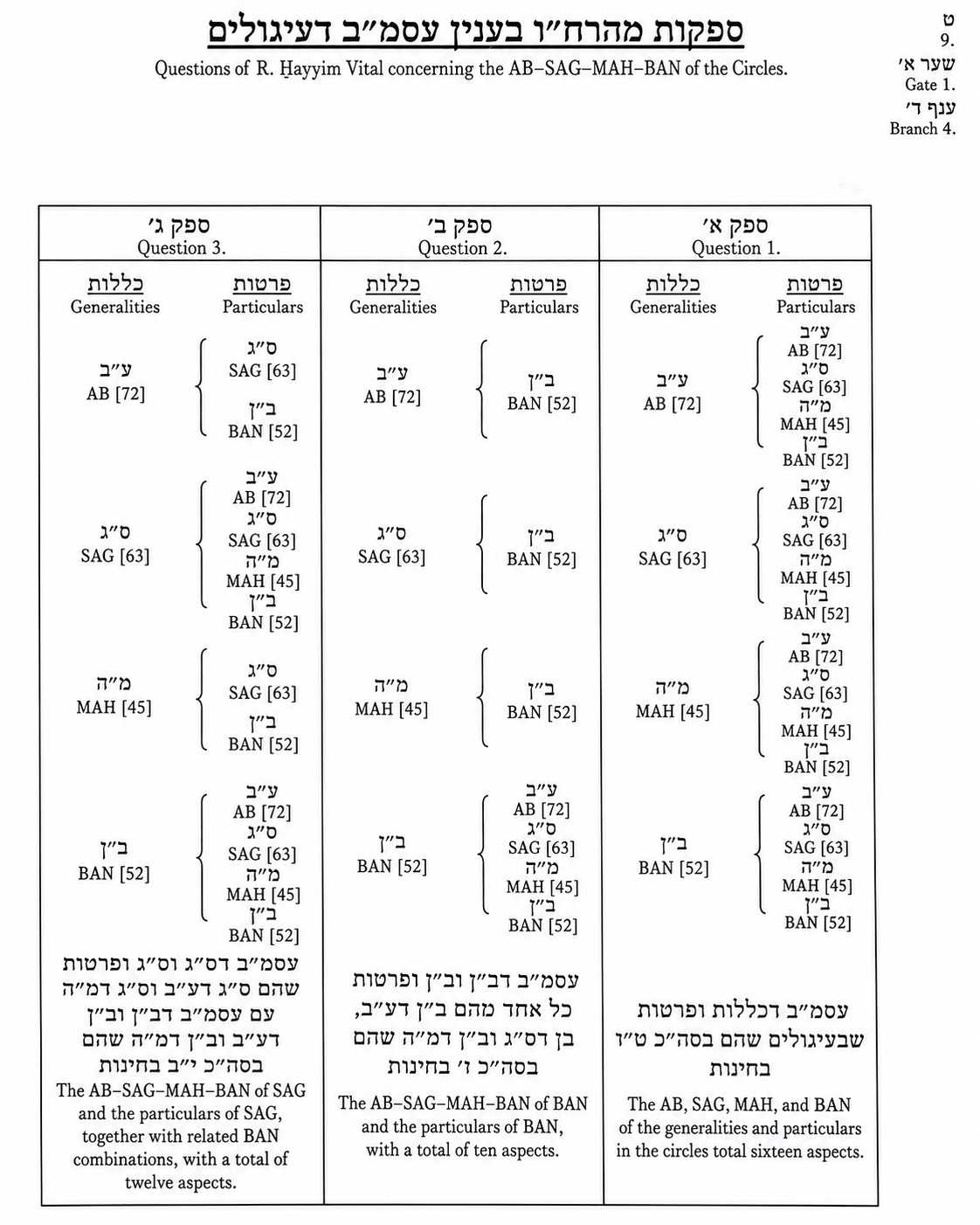
Igulim [Circles] and Yosher in All the Worlds
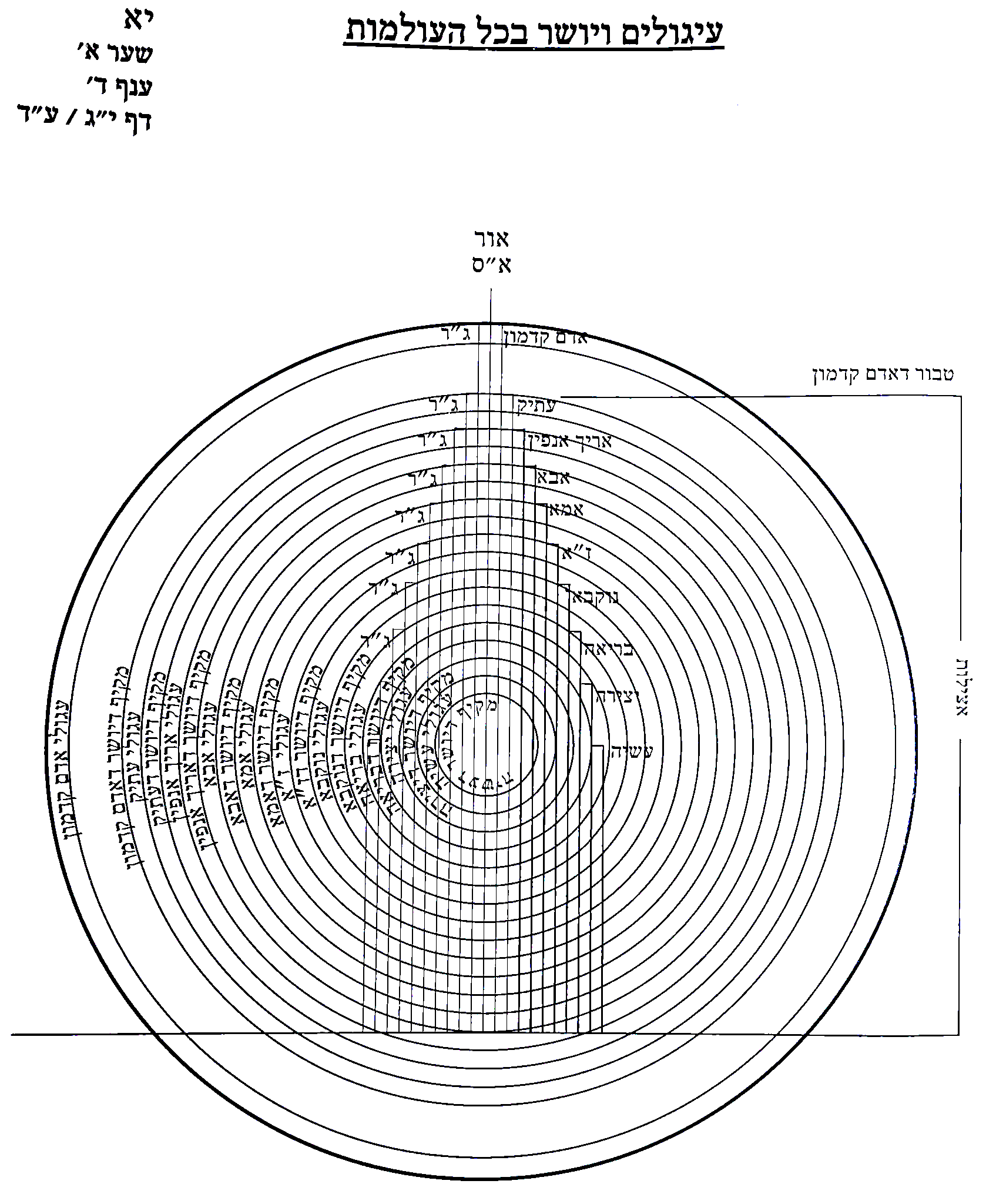
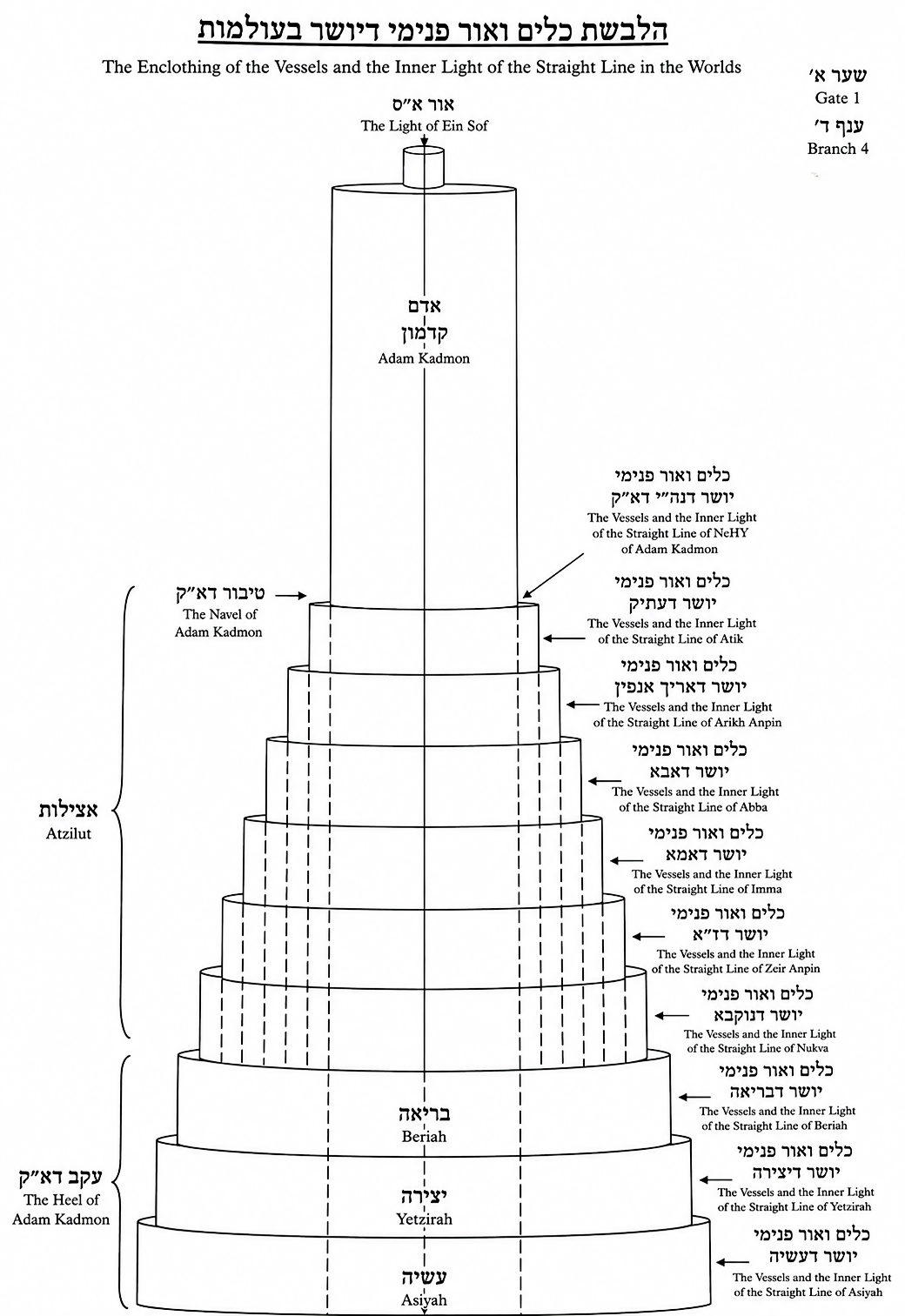
Branch 5
שער א ענף ה
[1:5] My intention in this branch (רְצוֹנִי בְּעָנָף זֶה), is to preface a few introductions (לְהַקְדִּים קְצָת הַקְדָּמוֹת), for everyone who comes to fill his hand (אֶל כָּל הַבָּא לְמַלֵּאוֹת אֶת יָדוֹ), and to engage in this wisdom (וּלְהִתְעַסֵּק בְּחָכְמָה זוֹ). And it is this (וְהוּא כִּי), that we have already explained above (כִּי כְּבָר בֵּאַרְנוּ לְעֵיל), that the Partzuf of Adam (כִּי פַּרְצוּף אָדָם), is composed of two hundred and forty-eight limbs (כָּלוּל מֵרמ״ח אֵיבָרִים), within the ten particular Sefirot that are in him (בְּי״ס פְּרָטִיּוֹת שֶׁבּוֹ), in this manner (בְּאוֹפֶן זֶה): Keter is the skull (כִּי כֶּתֶר הוּא גֻּלְגַּלְתָּא), and Chokhmah–Binah–Da’at are the three brains (וְחב״ד הֵם ג׳ מוֹחִין), and Chesed, Gevurah, Tiferet are the two arms and the torso (וְחג״ת הֵם ב׳ דְּרוֹעִין וְגוּפָא), and Netzach, Hod, Yesod are the two legs and the membrum (וְנה״י ב׳ שׁוֹקִין וְאַמָּה), and Malkhut is his female (וּמַלְכוּת הִיא נְקֵבָה שֶׁלּוֹ).
However, if you wish to divide and detail (אָמְנָם אִם תִּרְצֶה לְחַלֵּק וּלְפָרֵט), these ten general Sefirot into many particulars (אֵלּוּ הַי״ס הַכְּלָלִיּוֹת בִּפְרָטִים רַבִּים), behold they are not divided (הִנֵּה אֵינָן נֶחְלָקוֹת), except into five aspects alone (רַק לְה׳ בְּחִינוֹת לְבַד), such that each one of them (אֲשֶׁר כָּל בְּחִינָה מֵהֶם), is one complete Partzuf (הוּא פַּרְצוּף א׳ שָׁלֵם), with the appearance of a human form (כְּמַרְאֵה אָדָם). And this is their order (וְזֶה סִדְרָן): behold, Keter is one complete Partzuf of ten Sefirot (הִנֵּה הַכֶּתֶר הוּא פַּרְצוּף א׳ שָׁלֵם מִי״ס), and is called Arich Anpin (וְנִקְרָא א״א). And Chokhmah is also one Partzuf of ten Sefirot (וְחָכְמָה הוּא גַּם כֵּן פַּרְצוּף א׳ מִי״ס), and is called Abba (וְנִקְרָא אַבָּא). And Binah is also one Partzuf of ten Sefirot (וּבִינָה הִיא גַּם כֵּן פַּרְצוּף א׳ מִי״ס), and is called Imma (וְנִקְרָא אִמָּא). And the six extremities from Chesed until Yesod (וְהַו״ק מֵחֶסֶד עַד הַיְסוֹד), are one Partzuf of ten Sefirot (הוּא פַּרְצוּף א׳ מִי״ס), and is called Ze’ir Anpin (וְנִקְרָא ז״א). And the tenth Sefirah which is Malkhut (וְסְפִירָה עֲשִׂירִית שֶׁהִיא מַלְכוּת), is one Partzuf of ten Sefirot (הִיא פַּרְצוּף א׳ מִי״ס), and is called the Nukvah of Ze’ir Anpin (וְנִקְרֵאת נוּקְבָא דְּז״א). It is also necessary to state (עוֹד צָרִיךְ לוֹמַר), that the aspect of Malkhut (כִּי בְּחִינַת הַמַּלְכוּת), in each and every Partzuf (שֶׁבְּכָל פַּרְצוּף וּפַרְצוּף), of these five Partzufim (מֵאֵלּוּ הַה׳ פַּרְצוּפִים), is in the following manner (הוּא בְּאוֹפֶן זֶה): that the Malkhut which is in a male Partzuf (כִּי מַלְכוּת אֲשֶׁר בְּפַרְצוּף זָכָר), such as Abba and Ze’ir Anpin (כְּגוֹן אַבָּא וְז״א), behold the Malkhut within him (הִנֵּה הַמַּלְכוּת שֶׁבּוֹ), is the aspect of a crown upon the Tzaddik (הוּא בְּחִינַת עֲטָרָה שֶׁעַל הַצַּדִּיק), who is called Yesod (הַנִּקְרָא יְסוֹד), in the secret of “Blessings upon the head of the Tzaddik” (בְּסוֹד בְּרָכוֹת לְרֹאשׁ צַדִּיק), mentioned in the Zohar (הַנִּזְכָּר בְּס״ה), Parashat Vayetze, daf 162 (פָּרָשַׁת וַיֵּצֵא דְּקס״ב), and this is its language (וְזֶה לְשׁוֹנוֹ):
Rabbi Yisa the Small was frequently before Rabbi Shimon, he said to him: what is that which is written “Blessings upon the head of the Tzaddik,” it should have said “to the Tzaddik,” etc (ר׳ יִיסָא זוּטָא הֲוָה שְׁכִיחַ קַמֵּיהּ דְּר״ש אֲמַר לֵיהּ מַהוּ דִּכְתִיב בְּרָכוֹת לְרֹאשׁ צַדִּיק לְצַדִּיק מִבָּעֵי לֵיהּ וְכוּ׳). And if it is Malkhut in a female Partzuf (וְאִם הוּא מַלְכוּת בְּפַרְצוּף נְקֵבָה), such as Imma and the Nukvah of Ze’ir Anpin (כְּגוֹן אִמָּא וְנוּקְבָא דְּז״א), behold the Malkhut within her as well (הִנֵּה הַמַּלְכוּת שֶׁבָּהּ גַּם כֵּן), is the aspect of the crown of her Yesod (הוּא בְּחִינַת עֲטֶרֶת הַיְסוֹד שֶׁבָּהּ), for her Yesod is the womb (כִּי הַיְסוֹד שֶׁבָּהּ הוּא הָרֶחֶם), and her crown (וְהָעֲטָרָה שֶׁבָּהּ), is the aspect of flesh of the apple upon it (הוּא בְּחִינַת בָּשָׂר הַתַּפּוּחַ שֶׁעָלֶיהָ), which is called in the words of the Sages (הַנִּקְרָא בְּדִבְרֵי חֲז״ל), “the lower intestines” (שְׁפּוּלֵי מֵעַיִם), in the matters of the signs of Illanot (בְּעִנְיְנֵי סִימָנֵי אֲיָילוֹנוֹת), as is known (כַּנּוֹדָע). And however, the Sefirah of Malkhut that includes all (וְאָמְנָם סְפִירַת הַמַּלְכוּת הַכּוֹלֶלֶת), which is the last Partzuf among the five Partzufim (שֶׁהוּא פַּרְצוּף אַחֲרוֹן שֶׁבַּחֲמִשָּׁה פַּרְצוּפִים), which is called the Nukvah of Ze’ir Anpin (הַנִּקְרָא נוּקְבָא דְּז״א), behold she is (הִנֵּה הִיא) a complete female (נְקֵבָה גְּמוּרָה), in a complete Partzuf (בְּפַרְצוּף גָּמוּר), like all the other Partzufim (כְּשְׁאָר כָּל הַפַּרְצוּפִים), and remember this (וּזְכוֹר זֶה). And we shall resolve a strong and great difficulty (וְנְתָרֵץ קֻשְׁיָא חֲזָקָה וּגְדוֹלָה), with which great Sages struggled (שֶׁנִּתְקַשּׁוּ בָהּ חֲכָמִים גְּדוֹלִים), and they did not descend to the depth of it (וְלֹא יָרְדוּ לְסוֹף עֲמָקָהּ).
For in the Introduction to the Zohar, daf 4a (כִּי בְּהַקְדָּמַת הַזֹּהַר דּ׳ א׳), they said there (אָמְרוּ שָׁם), regarding the verse “Lift up your eyes on high and see who created these” (עַל פָּסוּק שְׂאוּ מָרוֹם עֵינֵיכֶם וּרְאוּ מִי בָּרָא אֵלֶּה), etc (וְכוּ׳), that in Keter and in Chokhmah there is no question there at all (כִּי בְּכֶתֶר וּבְחָכְמָה לֵית תַּמָּן שְׁאֵלָה כְּלָל), and from Binah and onward there stands a question (וּמִבִּינָה וָאֵילָךְ קַיְימָא לְשְׁאֵלָה), but He is in a hidden path and does not reveal at all (אֲבָל אִיהוּ בְּאָרַח סְתִים וְלָא אִתְגַּלְּיָיא כְּלָל). When it reaches Malkhut, which is called “M”H” (כֵּיוָן דְּמָטֵי עַד מַלְכוּת הַנִּקְרָא מ״ה), “What have you searched and what have you known?” (מַה פִּשְׁפַּשְׁתָּ וּמַה יָדַעְתָּ), behold everything is hidden as at the beginning (הָא כּוּלָּא סָתִים כְּדַבְּקַדְמִיתָא). And in other places (וּבִמְקוֹמוֹת אֲחֵרִים), on the verse “For ask now of the former days” (עַל פָּסוּק כִּי שְׁאַל נָא לְיָמִים רִאשׁוֹנִים), they said (אָמְרוּ), that it is from Chesed and onward (שֶׁהוּא מֵחֶסֶד וָאֵילָךְ), but above that there is no question in the three upper ones (אֲבָל לְמַעְלָה מִשָּׁם אֵין שְׁאֵלָה בַּג״ר). They also said in the Tikkunim, Tikkun 22, daf 62 (גַּם אָמְרוּ בַּתִּקּוּנִים תִּקּוּן כ״ב דְּס״ב): “The supernal Keter—this is the completeness of Neshamah [Soul], Ruach, Nefesh, and this is that which was not given to Moshe” (כֶּתֶר עֶלְיוֹן דָּא אִיהוּ שְׁלִימוּ דְּנש״ב וְדָא אִיהוּ דְּלָא אִתְיְהֵיב לְמֹשֶׁה), about which it is said (דְּעָלֵיהּ נֶאֱמַר), “A path that no bird knows” (נָתִיב לֹא יְדָעוֹ עָיִט). And about it our Sages said (וְעָלֵיהּ אָמְרוּ רַז״ל), “In that which is too wondrous for you, do not inquire” (בְּמוֹפְלָא מִמְּךָ אַל תִּדְרוֹשׁ), “and in that which is concealed from you, do not investigate” (וּבַמְכֻסֶּה מִמְּךָ אַל תַּחְקוֹר), “you have no business with hidden matters—only with what you were permitted, contemplate” (אֵין לְךָ עֵסֶק בַּנִּסְתָּרוֹת בְּמַה שֶּׁהוּרְשֵׁיתָ הִתְבּוֹנֵן). And at the beginning of this Tikkun 22 it says (וּבְרֵישׁ הָאֵי תִּקּוּן כ״ב קָא אָמַר), “the hidden things—these are Abba and Imma, etc.” (הַנִּסְתָּרוֹת דָּא אִינוּן או״א וְכוּ׳).
Behold, that in the three upper ones it is forbidden to expound and to investigate them (הֲרֵי כִּי בַּג״ר אָסוּר לִדְרוֹשׁ וְלַחְקוֹר בָּהֶם), as you will find in the ruling of the Gaon Rabbi Yitzḥak of Latash (כַּאֲשֶׁר תִּמְצָא בְּפְסַק הַגָּאוֹן ר׳ יִצְחָק דְּלַטָּאש), at the beginning of Sefer haZohar (בִּתְחִלַּת ס״ה), see there (עַיֵּן שָׁם), in the resolution of this statement (בְּיִשּׁוּב זֶה הַמַּאֲמָר). And many like these (וְכָאֵלֶּה רַבִּים). And behold, throughout all of Sefer haZohar (וַהֲרֵי בְּכָל ס״ה), and especially in the two Idrot (וּבִפְרָט בִּשְׁתֵּי הָאִדְּרוֹת), and in the Tikkunim (וּבַתִּקּוּנִים), they spoke wondrously about the three upper ones (הִפְלִיא לְדַבֵּר בַּג״ר). And how is it that in the Introduction to the Zohar (וְאֵיךְ בְּהַקְדָּמַת הַזֹּהַר), it said the opposite (אָמַר בְּהֶפֶךְ), that even investigation in the final Malkhut (שֶׁאֲפִלּוּ הַחֲקִירָה בַּמַּלְכוּת הָאַחֲרוֹנָה), about her it is stated (עָלֶיהָ אִתְמַר), as our Sages said (כְּמָה דְּאָמְרוּ רַז״ל), “What have you searched and what have you known?” etc (מַה פִּשְׁפַּשְׁתָּ וּמַה יָדַעְתָּ וְכוּ׳).
But the matter is thus (אֲבָל הָעִנְיָן הוּא כָּךְ), and it is understood from what was written in Branch Four (וּמוּבָן בְּמַה שֶּׁנִּכְתַּב בְּעָנָף ד׳), the matter of Adam Kadmon (עִנְיַן א״ק), and how all the worlds are branches and offshoots from him (וְאֵיךְ כָּל הָעוֹלָמוֹת הֵם עֲנָפִים וּמִסְתַּעֲפִים מִמֶּנּוּ), until it is found (עַד שֶׁנִּמְצָא), that the world of Atzilut is only a garment (כִּי עוֹלַם הָאֲצִילוּת אֵינוֹ רַק לְבוּשׁ), for the Netzach, Hod, Yesod of Adam Kadmon (אֶל נְה״י דְּא״ק), which are only the aspect of his feet (שֶׁהֵם בְּחִינַת רַגְלָיו לְבַד). And you already know (וְכְבָר יָדַעְתָּ), that the world of Asiyah corresponds to Malkhut (כִּי עוֹלַם הָעֲשִׂיָּה הוּא כְּנֶגֶד הַמַּלְכוּת), [of Adam Kadmon] ([דְּא״ק]), whose place was back-to-back with Ze’ir Anpin (אֲשֶׁר מְקוֹמָהּ הָיָה אָחוֹר בְּאָחוֹר עִם ז״א), only in his Tiferet–Netzach, Hod, Yesod (בְּתִנְה״י שֶׁלּוֹ לְבַד). It is found (נִמְצָא), that the world of Atzilut is not (כִּי עוֹלַם הָאֲצִילוּת אֵינוֹ), except [even] ([אֶלָּא] (אֲפִלּוּ)), in relation to the world of Asiyah (בְּעֶרֶךְ עוֹלַם עֲשִׂיָּה), which is the Malkhut of Adam Kadmon (שֶׁהִיא מַלְכוּת דְּא״ק).
It is found (נִמְצָא), that all our involvement in Sefer haZohar (כִּי כָּל עִסְקֵינוּ בְּס״ה), in the world of Atzilut (בְּעוֹלַם הָאֲצִילוּת), even in the three upper ones (אֲפִלּוּ בַּג״ר), is only [even] ([רַק] (אֲפִלּוּ)) the aspect of the world of Asiyah of Adam Kadmon (בְּחִינַת עוֹלַם עֲשִׂיָּה דְּא״ק), which is the Malkhut of Adam Kadmon (שֶׁהִיא מַלְכוּת דְּא״ק). But in the three upper ones of Adam Kadmon (אֲבָל בַּג״ר דְּא״ק), it is forbidden to do so (אָסוּר לַעֲשׂוֹת כֵּן), and even in the Malkhut of Adam Kadmon (וַאֲפִלּוּ בְּמַלְכוּת דְּא״ק), which is the aspect of Asiyah (שֶׁהִיא בְּחִינַת עֲשִׂיָּה). It is further necessary that we preface for you one introduction (עוֹד צָרִיךְ שֶׁנַּקְדִּים לְךָ הַקְדָּמָה א׳), and it is this (וְהוּא כִּי), that all the ten Sefirot which include each and every world (כִּי כָּל הַי״ס הַכּוֹלְלוֹת כָּל עוֹלָם וְעוֹלָם), behold in their totality together (הִנֵּה בִּכְלָלוּת יַחַד), are all as one aspect (כֻּלָּם כְּאַחַת בְּחִינָה), of one Havayah in every place that it is (הֲוָיָ״ה אַחַת בְּכָל מָקוֹם שֶׁהוּא), whether in generality or in particularity, as stated above (בֵּין בִּכְלָלוּת בֵּין בִּפְרָטוּת כַּנַּ״ל). It emerges (יוֹצֵא), that from each and every letter of them (מִכָּל אוֹת וְאוֹת מֵהֶם), comes forth one Havayah (הֲוָיָ״ה אַחַת).
And behold (וְהִנֵּה), the thorn of the Yod of that Havayah (קוֹצוֹ שֶׁל יו״ד שֶׁבְּאוֹתָהּ הֲוָיָ״ה), is the Sefirah of Keter (הוּא סְפִירַת כֶּתֶר), and the Yod itself (וְיו״ד עַצְמָהּ), is the aspect of Chokhmah (הוּא בְּחִינַת חָכְמָה), and the first Heh is Binah (וְהַה׳ רִאשׁוֹנָה בִּינָה), and the Vav is Tiferet (וְהַו׳ הוּא הַת״ת), including six Sefirot (כּוֹלֵל ו׳ סְפִירָן), whose totality is called by the name Ze’ir Anpin (אֲשֶׁר כְּלָלוּתָן נִקְרָא בְּשֵׁם ז״א), as written in its place, with Hashem’s help (כְּמוֹ שֶׁנִּכְתַּב בִּמְקוֹמוֹ בְּעֶזְרַת ה׳). And the final Heh is Malkhut (וְהַה׳ הָאַחֲרוֹנָה מַלְכוּת), which is called by us the Nukvah of Ze’ir Anpin (הַנִּקְרֵאת אֶצְלֵנוּ נוּקְבָא דְּז״א). And all this (וְכָל זֶה), is by way of the Havayah that includes the five Partzufim together, as stated above (הוּא בְּדֶרֶךְ הֲוָיָ״ה הַכּוֹלֶלֶת הַה׳ פַּרְצוּפִים יַחַד כַּנַּ״ל).
And likewise (וְכֵן), if we divide the ten Sefirot in each and every Partzuf (אִם נְחַלֵּק הַי״ס בְּכָל פַּרְצוּף וּפַרְצוּף), there will also be a Havayah in that Partzuf in particular (תִּהְיֶה גַּם הֲוָיָ״ה שֶׁבְּפַרְצוּף הַהוּא בִּפְרָטוּת), according to the manner of the generality (עַל דֶּרֶךְ הַכְּלָלוּת). For the thorn of the Yod is the Keter (כִּי קוֹצוֹ שֶׁל יו״ד הוּא הַכֶּתֶר), which is the skull in that Partzuf (שֶׁהוּא גֻּלְגַּלְתָּא שֶׁבְּפַרְצוּף הַהוּא), and the Yod is Chokhmah (וְיו״ד חָכְמָה), and the Heh is Binah in that Partzuf (וְה׳ בִּינָה שֶׁבְּפַרְצוּף), and they are the two brains, right and left (וְהֵם ב׳ מוֹחִין יָמִין וּשְׂמֹאל), and the Vav is the main body (וְו׳ הוּא עִקַּר הַגּוּף), and the six extremities in that Partzuf (ו״ק שֶׁבְּפַרְצוּף הַהוּא), and the final Heh is the Malkhut in that Partzuf (וְה׳ אַחֲרוֹנָה הוּא מַלְכוּת שֶׁבְּאוֹתוֹ פַּרְצוּף).
It is further necessary to preface another aspect close to the above (עוֹד צָרִיךְ לְהַקְדִּים בְּחִינָה אַחֶרֶת קְרוֹבָה אֶל הַנַּ״ל), and it is this (וְהוּא כִּי), that from each and every letter of the Name Havayah (כִּי מִכָּל אוֹת וְאוֹת מִשֵּׁם הֲוָיָ״ה), emerges one Havayah (יוֹצֵא הֲוָיָ״ה אַחַת), and there is no difference between them (וְאֵין חִלּוּק בֵּינֵיהֶם), except in the manner of their fillings (רַק בְּאוֹפֶן מִלּוּיֵיהֶן), and this is their matter (וְזֶהוּ עִנְיָנָם). For the Yod (כִּי יו״ד), which alludes to Abba (שֶׁהוּא רוֹמֵז בְּאַבָּא), which is the Sefirah called Chokhmah (שֶׁהוּא סְפִירָה הַנִּקְרֵאת חָכְמָה), has within it one Havayah in the filling of Yodin (יֵשׁ בּוֹ הֲוָיָ״ה אַחַת בְּמִלּוּי יוֹדִין), and it is the numerical value of seventy-two (וְהוּא גִּימַטְרִיָּא ע״ב). And the Heh is alluded to in Imma (וְהַה׳ נִרְמֶזֶת בְּאִמָּא), which is the Sefirah called Binah (שֶׁהִיא הַסְּפִירָה הַנִּקְרֵאת בִּינָה); there is within her a Havayah in the filling of Yodin and Aleph (יֵשׁ בָּהּ הֲוָיָ״ה בְּמִלּוּי יוֹדִי״ן וְאָלֶף), in this manner: Yod–Heh–Vav–Heh (כָּזֶה יו״ד ה״י וָאו ה״י), and it is the numerical value of sixty-three (וְהוּא גִּימַטְרִיָּא ס״ג). And the Vav, which alludes to Ze’ir Anpin (וְהַו׳ שֶׁהוּא רוֹמֶזֶת בְּז״א), which are the six Sefirot (שֶׁהֵם ו״ס), from Chesed until Yesod (אֲשֶׁר מֵחֶסֶד עַד יְסוֹד), there is within it one Havayah in the filling of Alephin (יֵשׁ בָּהּ הֲוָיָ״ה אַחַת בְּמִלּוּי אַלְפִי״ן), and it is the numerical value of forty-five (וְהוּא גִּימַטְרִיָּא מ״ה). And the final Heh, which alludes to Malkhut, the Nukvah of Ze’ir Anpin (וְהַה׳ הָאַחֲרוֹנָה שֶׁהִיא רוֹמֶזֶת בְּמַלְכוּת נוּקְבָא דְּז״א), there is within it one Havayah in the filling of Hehin (יֵשׁ בָּהּ הֲוָיָ״ה אַחַת בְּמִלּוּי הֶהִי״ן), and it is the numerical value of fifty-two (וְהוּא גִּימַטְרִיָּא ב״ן).
And in this manner also in particularity (וְעַד״ז גַּם כֵּן בִּפְרָטוּת), every Partzuf and Partzuf (כָּל פַּרְצוּף וּפַרְצוּף), among the five Partzufim mentioned above (שֶׁבַּה׳ פַּרְצוּפִים הַנַּ״ל), in each one of them there is a Havayah in particularity as stated above (אֲשֶׁר בְּכָל א׳ מֵהֶם יֵשׁ הֲוָיָ״ה בִּפְרָטוּת כַּנַּ״ל): there is the Name Havayah of seventy-two in the Chokhmah of that Partzuf (יֵשׁ בָּהּ שֵׁם הֲוָיָ״ה דְּע״ב בְּחָכְמַת פַּרְצוּף הַהוּא), and the Havayah of sixty-three in the Binah of that Partzuf (וְהֲוָיָ״ה דְּס״ג בְּבִינַת פַּרְצוּף הַהוּא), and one Havayah of forty-five in Ze’ir Anpin, in the six extremities of that Partzuf (וְהֲוָיָ״ה אַחַת דְּמ״ה בְּז״א בְּו״ק שֶׁבְּפַרְצוּף הַהוּא), and the Havayah of fifty-two in the Nukvah of Ze’ir Anpin of that Partzuf (וְהֲוָיָ״ה דְּב״ן בְּנוּקְבָא דְּז״א שֶׁבְּפַרְצוּף הַהוּא). And just as every Sefirah is particularized into ten Sefirot (וּכְמוֹ שֶׁכָּל סְפִירָה וּסְפִירָה נִפְרֶטֶת לְי״ס), and from ten to ten without end or limit, as stated above (וּמִי״ס לְי״ס עַד אֵין קֵץ וְתַכְלִית כַּנַּ״ל), so too is the division of the fillings of the Havayahs (כָּךְ הוּא חִלּוּק מִלּוּי הַפְּרָטִי שֶׁל הַהֲוָיוֹת), which multiply and subdivide without end (שֶׁהֵם מִתְרַבִּים וּמִתְחַלְּקִים עַד אֵין קֵץ), according to the division of the particularities of the Sefirot without end (כְּפִי חִלּוּק פְּרָטִיּוּת הַסְּפִירוֹת עַד אֵין קֵץ).
And behold, after we have prefaced for you all these introductions (וְהִנֵּה אַחַר שֶׁהִקְדַּמְנוּ לְךָ כָּל הַהַקְדָּמוֹת הָאֵלֶּה), we must arouse the one who comes to study Sefer haZohar (צְרִיכִים אָנוּ לְעוֹרֵר אֶל הַמְּעַיֵּן הַבָּא לְעַיֵּן בְּס״ה), that he will find many statements (שֶׁיִּמְצָא מַאֲמָרִים רַבִּים), different and distant from one another (שׁוֹנִים וּרְחוֹקִים זֶה מִזֶּה), in the ultimate distance (בְּתַכְלִית הָרִחוּק). And if he does not possess these introductions (וְאִם לֹא יִהְיוּ לוֹ הַקְדָּמוֹת אֵלּוּ), his understanding will be confounded (יִסְתָּר מֵעִיּוּנוֹ), for he will not know how to discern (כִּי לֹא יֵדַע לְהַבְחִין), in which reality or aspect (בְּאֵיזֶה מְצִיאוּת בְּחִינָה), the statement before him is speaking (הוּא מְדַבֵּר הַמַּאֲמָר אֲשֶׁר הוּא בּוֹ). And he will not know how to discern (וְלֹא יֵדַע לְהַבְחִין), in which aspect the statement is speaking (בְּאֵיזוֹ בְּחִינָה הוּא מְדַבֵּר הַמַּאֲמָר הַהוּא): whether it is speaking in Adam Kadmon itself (אִם הוּא בְּאָדָם קַדְמוֹן עַצְמוֹ), or in all those lights that emerged and illuminated from him (וְאִם בְּכָל אוֹתָן הָאוֹרוֹת שֶׁיָּצְאוּ וְהֵאִירוּ מִמֶּנּוּ), whether in the aspect of the lights of the ear (אִם בִּבְחִינַת אוֹרוֹת הָאוֹזֶן), or whether in the aspect of the lights of the nose (אִם בִּבְחִינַת אוֹרוֹת הַחוֹטֶם). Whether it is in the aspect of the lights of the mouth, which are called Akudim (אִם בִּבְחִינַת אוֹרוֹת הַפֶּה הַנִּקְרָא עֲקוּדִים), or in the aspect of the lights of the eye, which are called the world of Nekudim [Points], which is the world of Atzilut before their rectification (וְאִם בִּבְחִינַת אוֹרוֹת הָעַיִן הַנִּקְרָא עוֹלָם הַנְּקוּדִים שֶׁהוּא עוֹלַם הָאֲצִילוּת טֶרֶם תִּקּוּנָם), or in the aspect of the lights of the forehead, which are the aspect of the world of Atzilut after it was rectified (וְאִם בִּבְחִינַת אוֹרוֹת הַמֵּצַח שֶׁהוּא בְּחִינַת עוֹלַם הָאֲצִילוּת אַחַר שֶׁנִּתְקַן), or whether in the world of Beri’ah (וְאִם בְּעוֹלַם הַבְּרִיאָה), or whether in the world of Yetzirah (וְאִם בְּעוֹלַם הַיְצִירָה), or whether in the world of Asiyah (וְאִם בְּעוֹלַם הָעֲשִׂיָּה). And all this is by way of generality (וְכָל זֶה דֶּרֶךְ כְּלָלוּת).
And behold, there is further to discern by way of particularity (וְהִנֵּה יֵשׁ עוֹד לְהַבְחִין דֶּרֶךְ פְּרָטוּת), whether he is speaking of the Partzuf of Atik in each and every one of those worlds (אִם מְדַבֵּר בְּפַרְצוּף עַתִּיק שֶׁבְּכָל עוֹלָם מֵהֶם), or of the Partzuf of Arich Anpin (אוֹ בְּפַרְצוּף א״א), or of Abba (אוֹ בְּאַבָּא), or of Imma (אוֹ בְּאִמָּא), or of Ze’ir Anpin (אוֹ בְּז״א), or of the Nukvah (אוֹ בְּנוּקְבָּא), or of Yisrael-Saba (אוֹ בְּיִשְׂרָאֵל סָבָא), or of Tevunah (אוֹ בִּתְבוּנָה), or of Ya‘akov (אוֹ בְּיַעֲקֹב), or of Leah (אוֹ בְּלֵאָה). It is further necessary to discern the most minute particulars (עוֹד צָרִיךְ לְהַבְחִין פְּרָטֵי פְּרָטִים), whether it is speaking of the ten Sefirot of circles or of the ten Sefirot of Yosher (אִם מְדַבֵּר בְּי״ס דְּעִגּוּלִים אוֹ בְּי״ס דְּיוֹשֶׁר), and whether in the Surrounding Light or in the Inner Light (וְאִם בְּמַקִּיף וְאִם בְּאו״פ), and whether in the Essence or in the vessels (וְאִם בְּעַצְמוּת אוֹ בַּכֵּלִים). And greater than all of them (וּגְדוֹלָה מִכֻּלָּם), it is necessary to discern (צָרִיךְ לְהַבְחִין), that the modes of the ten Sefirot, and their states and their standings, their deficiency and their fullness, are beyond number (כִּי אוֹפְנֵי הַי״ס וּמַצָּבָן וּמַעֲמָדָן חֶסְרוֹנָם וּמִלּוּאָם עַצְמוֹ מִסְפָּר). Whether at the time they were emanated (אִם בְּעֵת שֶׁנֶּאֱצְלוּ), or at the time of the complaint of the moon (אִם בְּעֵת קִטְרוּג הַלְּבָנָה), or at the time of the creation of Adam haRishon (אִם בְּעֵת בְּרִיאַת אָדָם הָרִאשׁוֹן), or at the time when he sinned and all the worlds were changed (אִם בְּעֵת שֶׁחָטָא שֶׁנִּשְׁתַּנּוּ כָּל הָעוֹלָמוֹת), or in the generation of the wilderness (אִם בְּדוֹר הַמִּדְבָּר), or in the First Temple (אִם בְּבַיִת רִאשׁוֹן), or at the time of its destruction (וְאִם בְּעֵת חָרְבָּנוֹ), or in the Second Temple (וְאִם בְּבַיִת שֵׁנִי), or at the time of its destruction (וְאִם בְּעֵת חָרְבָּנוֹ). Greater than all of them (גְּדוֹלָה מִכֻּלָּם), whether on a weekday or on Shabbat or on a Festival (אִם בְּחוֹל אִם בְּשַׁבָּת אוֹ בְּיוֹם טוֹב), whether by day or by night (אִם בְּיוֹם וְאִם בַּלַּיְלָה).
And not only this (וְלֹא עוֹד), but in every hour and every hour the worlds change (אֶלָּא שֶׁבְּכָל שָׁעָה וְשָׁעָה מִשְׁתַּנִּים הָעוֹלָמוֹת), and this hour is not like that hour (וְאֵין שָׁעָה זוֹ דּוֹמָה לְשָׁעָה זוֹ). And one who looks into the matter of the movement of the constellations and stars (וּמִי שֶׁמִּסְתַּכֵּל בְּעִנְיַן הִלּוּךְ הַמַּזָּלוֹת וְהַכּוֹכָבִים), and the change of their states and their standings (וְשִׁנּוּי מַצָּבָן וּמַעֲמָדָן), and how in one instant they are in one manner (וְאֵיךְ בְּרֶגַע אֶחָד הֵם בְּאוֹפֶן אַחֵר), and the one born in it events will occur to him (וְהַנּוֹלָד בּוֹ יִקְרוּ לוֹ מְאוֹרָעוֹת שׁוֹנוֹת), different from the one born in the instant that preceded it (מֵהַנּוֹלָד בְּרֶגַע שֶׁקָּדַם לָזֶה).
From this he will look and understand (וּמִזֶּה יִסְתַּכֵּל וְיָבִין), regarding the supernal worlds (בָּעוֹלָמוֹת הָעֶלְיוֹנִים), that they have no end and no number (שֶׁאֵין לָהֶם קֵץ וּמִסְפָּר). And if you open the eyes of your intellect (וְאִם תִּפְקַח עֵינֵי שִׂכְלְךָ), you will know and understand from the outset of the matter (תֵּדַע וְתַשְׂכִּיל זוֹ מִמּוֹצָא דָּבָר), that there is no intellect in the heart of man (כִּי אֵין שֵׂכֶל בְּלֵב אָדָם), to stand upon all these particulars (לַעֲמֹד עַל כָּל פְּרָטִים). And concerning this David the servant of Hashem said (וְעַל זֶה אָמַר דָּהָע״ה), “Uncover my eyes and I will behold wonders from Your Torah” (גַּל עֵינַי וְאַבִּיטָה נִפְלָאוֹת מִתּוֹרָתֶךָ) (Psalms 119). And Shlomo the servant of Hashem, about whom it is written “and he was wiser than all men” (וְשֶׁהָע״ה שֶׁכָּתוּב בּוֹ וַיֶּחְכַּם מִכָּל אָדָם), said (אָמַר), “I said, I will be wise—but it is far from me” (אָמַרְתִּי אֶחְכָּמָה וְהִיא רְחוֹקָה מִמֶּנִּי) (Ecclesiastes 7). And go and see what is written in the book of the Tikkunim (וְלֵךְ וּרְאֵה מַה שֶּׁכָּתוּב בְּסֵפֶר הַתִּקּוּנִים), Tikkun 22 of Sefer haZohar (תִּקּוּן כ״ב דְּס״ה), in what is written (בְּמַה שֶּׁכָּתוּב), “Rabbi Shimon arose and said: Sava, Sava…” (קָם ר׳ שִׁמְעוֹן וְאָמַר סָבָא סָבָא וְכוּ׳). And the garments that He wears in the morning He does not wear in the evening (וְלְבוּשִׁין דְּאִיהוּ לְבִישׁ בְּצַפְרָא לָא לְבִישׁ בְּרַמְשָׁא), and the garment that He wears one day He does not wear on the next day (וּלְבוּשָׁא דְּלָבִישׁ בְּיוֹמָא דָּא לָא לְבִישׁ בְּיוֹמָא תִּנְיָנָא). And through this you will understand (וּבְזֶה תָּבִין), how the standing and state of the worlds change (אֵיךְ מִשְׁתַּנֶּה מַעֲמָד וּמַצַּב הָעוֹלָמוֹת), which are the garments of Ein Sof (שֶׁהֵם הַלְּבוּשִׁין שֶׁל א״ס), into many changes at every time and moment (לְכַמָּה שִׁנּוּיִין בְּכָל עֵת וָרֶגַע). And according to those changes (וּכְפִי הַשִּׁנּוּיִין הָהֵם), so the aspects of the statements of Sefer haZohar are changed (כָּךְ נִשְׁתַּנּוּ בְּחִינוֹת הַמַּאֲמָרִים שֶׁל ס״ה).
And all of them are the words of the living God (וְכֻלָּם דִּבְרֵי אֱלֹהִים חַיִּים). You will also find mentioned (גַּם תִּמְצָא מֻזְכָּרִים), aspects of Havayahs in different fillings (בְּחִינוֹת הֲוָיוֹת בְּמִלּוּיִים שׁוֹנִים), whether in the filling of seventy-two (אוֹ בְּמִלּוּי ע״ב), or in the filling of sixty-three (אוֹ בְּמִלּוּי ס״ג), or forty-five (אוֹ מ״ה), or fifty-two (אוֹ ב״ן), as mentioned in the Introduction to the Tikkunim that were not printed (כַּנִּזְכָּר בְּהַקְדָּמַת הַתִּקּוּנִים שֶׁלֹּא נִדְפְּסוּ), and likewise at the end of Tikkun 13 (וְכֵן בְּסוֹף תִּקּוּן י״ג), and in Tikkun 79 (וְכֵן בְּתִּקּוּן ע״ט), and similar to these Tikkunim (וְכַיּוֹצֵא בְּתִּקּוּנִים אֵלּוּ), for there the filling of these Havayahs is mentioned (כִּי שָׁם נִזְכָּר מִלּוּי שֶׁל אֵלּוּ הַהֲוָיוֹת). And you must know (וְצָרִיךְ שֶׁתֵּדַע), in which aspect that statement is engaged (בְּאֵיזוֹ בְּחִינָה מִתְעַסֵּק הַמַּאֲמָר הַהוּא), so that you will know (כְּדֵי שֶׁתֵּדַע), that Havayah, to which place it alludes (אוֹתָהּ הֲוָיָ״ה בְּאֵיזֶה מָקוֹם הִיא רוֹמֶזֶת).
And behold, when you are deepening and contemplating and standing upon the clarifications of these matters (וְהִנֵּה בִּהְיוֹתְךָ מַעֲמִיק וּמְעַיֵּן וְעוֹמֵד עַל בֵּרוּרִים שֶׁל דְּבָרִים אֵלּוּ), then it is possible that you will be able to understand these statements (אָז אֶפְשָׁר שֶׁתּוּכַל לְהָבִין מַאֲמָרִים אֵלּוּ), if God will be with you (אִם יִהְיֶה אֱלֹהִים עִמָּךְ), when you are wholehearted with Him (בִּהְיוֹתְךָ תָּמִים לוֹ), for He will not withhold good from those who walk in integrity (כִּי לֹא יִמְנַע טוֹב לַהֹלְכִים בְּתָמִים) (Psalms 84).
I further saw fit to arouse you regarding one matter (עוֹד רָאִיתִי לְעוֹרְרְךָ עַל עִנְיָן אֶחָד): behold, it is necessary to know (הֲלֹא צָרִיךְ לָדַעַת), that most of the statements of the Zohar, and almost all of them (כִּי רֹב מַאֲמָרֵי הַזֹּהַר וְכִמְעַט כֻּלָּם), do not speak of the matter of the ten Sefirot of circles (אֵינָם מְדַבְּרִים מֵעִנְיַן הַי״ס שֶׁל הָעִגּוּלִים), but only in the aspect of Yosher (רַק בִּבְחִינַת יוֹשֶׁר), like the form of Adam (כְּמַרְאֵה אָדָם). And this matter is inclusive in all the worlds (וְעִנְיַן זֶה כּוֹלֵל בְּכָל הָעוֹלָמוֹת), whether it is engaged with Adam Kadmon (הֵן בִּהְיוֹתוֹ מִתְעַסֵּק בְּא״ק), or with Atik (אוֹ בְּעַתִּיק), or with Arich Anpin (אוֹ בְּא״א), or with Abba and Imma (אוֹ בְּאו״א), or with Ze’ir Anpin and Nukvah of Atzilut (אוֹ בְּזו״ן דַּאֲצִילוּת), or with the other worlds Beri’ah–Yetzirah–Asiyah (אוֹ בִּשְׁאָר עוֹלָמוֹת בִּי״ע). And if these matters will be before your eyes (וְאִם יִהְיוּ דְּבָרִים אֵלּוּ נֹכַח פָּנֶיךָ), and they will not depart from your eyes (וְאַל יָלִיזוּ מֵעֵינֶיךָ), if you run you will not stumble (אִם תָּרוּץ לֹא תִּכָּשֵׁל), and then you will walk securely on your path (וְאָז תֵּלֵךְ לָבֶטַח דַּרְכֶּךָ).