
The Third Gate
Chapter 1
שער ג פרק א
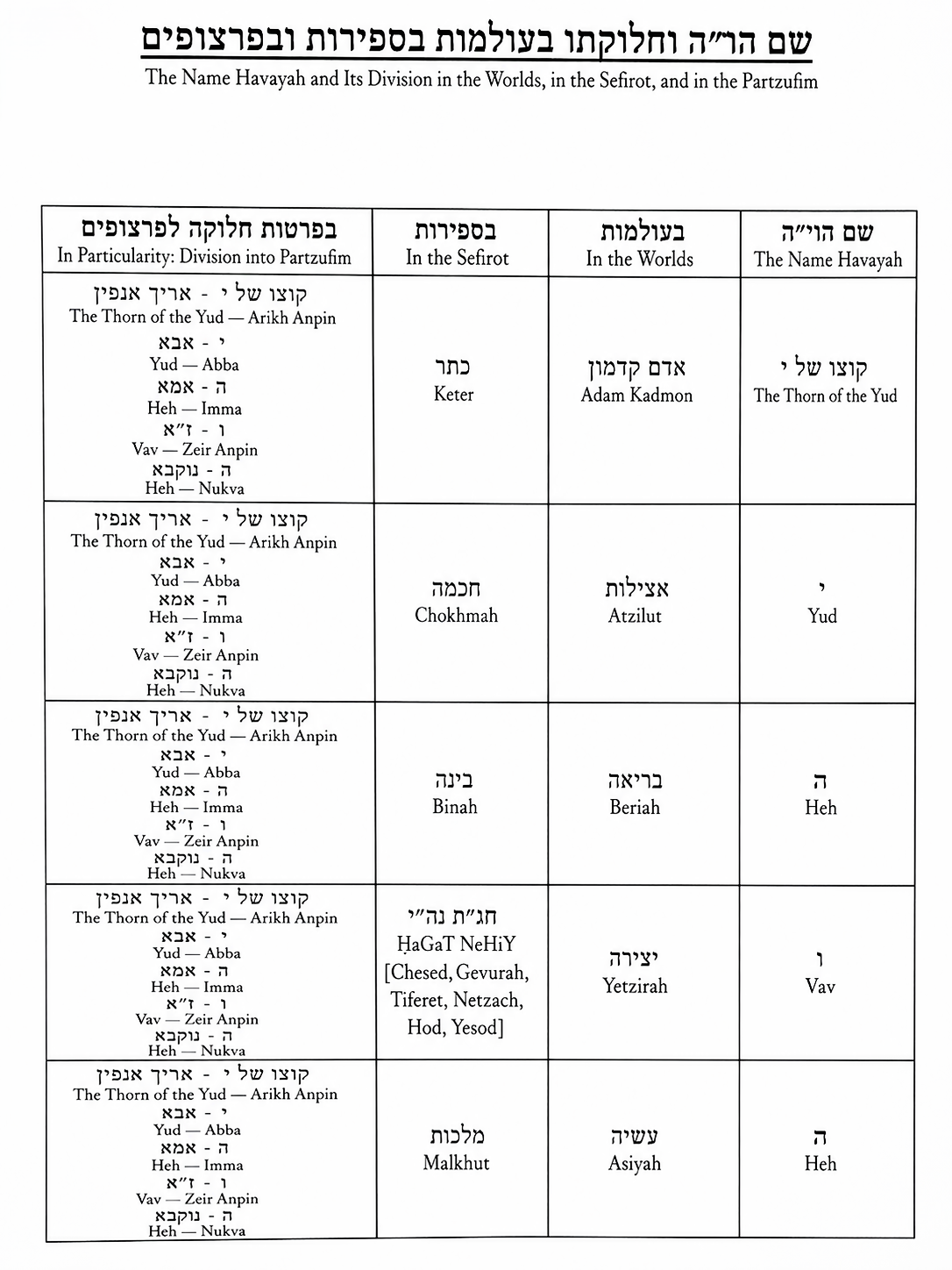
The Order of Emanation in Extreme Conciseness, by Rabbi Chaim Vital
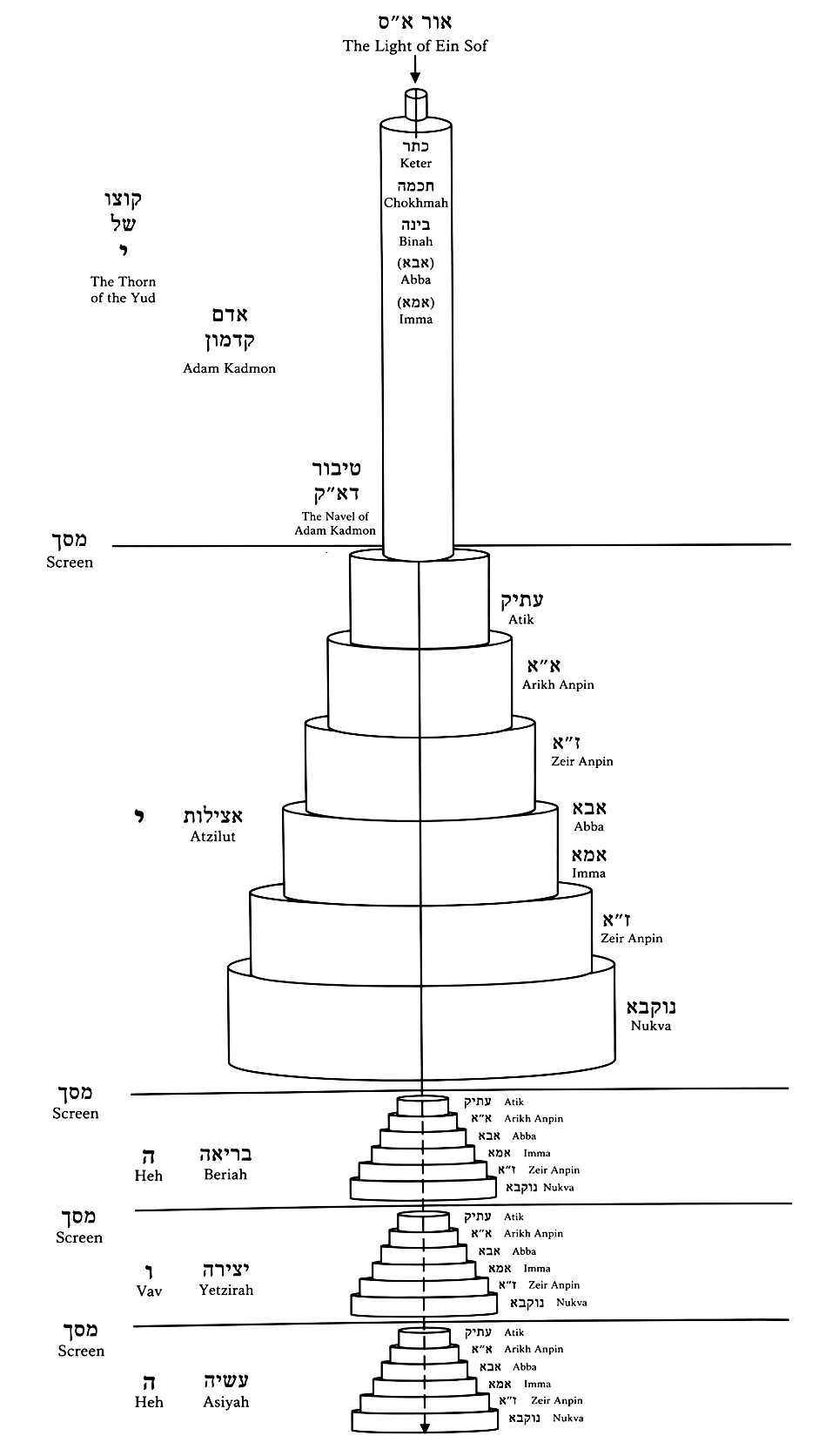
[3:1] Firstly, the Ein Sof, blessed be He, encompasses all the worlds (רִאשׁוֹנָה כָּל הָא״ס בּ״ה מַקִּיף אֶת כָּל הָעוֹלָמוֹת), and He is also encompassed by them and clothes within them (וְגַם הוּא מֻקָּף מֵהֶם וּמִתְלַבֵּשׁ בְּתוֹכָם), until the end of the world of Atzilut (עַד סוֹף עוֹלַם הָאֲצִילוּת). And He does not touch or cleave (וְאֵינוֹ נוֹגֵעַ וְדָבוּק), except in the world of Atzilut alone (זוּלָתִי בְּעוֹלַם אֲצִילוּת לְבַד), and not in Beri’ah–Yetzirah–Asiyah (וְלֹא בְּבי״ע). Therefore, from there and below (וְלָכֵן מִשָּׁם וּלְמַטָּה), their essence changes (יִשְׁתַּנֶּה מַהוּתָם), and they are called Beri’ah–Yetzirah–Asiyah (וְיִקָּרְאוּ בי״ע). However, the aspect of the Surrounding Light cleaves and touches all four Atzilut, Beri’ah, Yetzirah, Asiyah (אַךְ בְּחִינַת הַמַּקִּיף דָּבוּק וְנוֹגֵעַ בְּכָל הַד׳ אבי״ע). And first (וּתְחִלָּה), there is drawn down from Him in His middle (מִשְׁתַּלְשֵׁל מִמֶּנּוּ בְּאֶמְצָעוּתוֹ), Adam Kadmon, mentioned in the Tikkunim, Tikkun 70, daf 132 (א״ק הַנִּזְכָּר בַּתִּקּוּנִים תִּי׳ ע׳ דְּקל״ב). And in the aspect of his being second to the Ein Sof (וּבִבְחִינַת הֱיוֹתוֹ שֵׁנִיּוּת לָא״ס), he is called the Adam of Beri’ah (נִקְרָא אָדָם דִּבְרִיאָה), even though he precedes Atzilut (עִם שֶׁהוּא קוֹדֵם אֲצִילוּת). And this Adam is also alluded to (וְגַם נִרְמָז אָדָם זֶה), in Parashat Pekudei, daf 268 (בְּפָרָשַׁת פְּקוּדֵי דְּרס״ח), in the statement: “Rabbi Shimon said: I raised my hands in prayer above…” etc (בְּמַאֲמָר אָמַר ר״ש אֲרִימִית יְדַי בִּצְלוֹתִין לְעֵילָא וְכוּ׳), “nine palaces…” etc., “all of them are called Ein Sof” (טִי״ת הֵיכָלִין וְכוּ׳ כּוּלְּהוּ אִיקְרוּן א״ס), end quote (עכ״ל).
For this Adam is composed of ten Sefirot (כִּי זֶה הָאָדָם כָּלוּל מִי״ס), and all of them are called Ein Sof (וְכוּלָּן נִקְרָאִים א״ס), in relation to the world of Atzilut beneath him (בְּעֶרֶךְ עוֹלַם הָאֲצִילוּת שֶׁלְּמַטָּה הֵימֶנּוּ). And this Adam Kadmon is divided into thousands and myriads of worlds (וְזֶה הָא״ק נֶחְלָק לַאֲלָפִים וְלִרְבָבוֹת עוֹלָמוֹת), and the beginning of his division (וּתְחִלַּת הִתְחַלְּקוּתוֹ), are four worlds (הֵם ד׳ עוֹלָמוֹת), which are called seeing, hearing, smelling, speaking (הַנִּקְרָאִים רְאִיָּה שְׁמִיעָה רֵיחָא דִּבּוּר), mentioned in the Tikkunim, Tikkun 70, daf 121 (הַנִּזְכָּר בַּתִּקּוּנִים תִּי׳ ע׳ דְּקכ״א). And from them (וּמֵהֶם), worlds are divided without end (מִתְחַלְּקִים עוֹלָמוֹת לְאֵין קֵץ). And all these aspects were alluded to (וְכָל אֵלּוּ הַבְּחִינוֹת נִרְמְזוּ), in the aforementioned statement of Pekudei (בַּמַּאֲמָר פְּקוּדֵי הַנִּזְכָּר), to one who understands (לַמֵּבִין). And this Adam is alluded to (וְזֶה הָאָדָם נִרְמָז), in the thorn of the Yod of the Name Havayah (בְּקוֹצוֹ שֶׁל יו״ד דְּשֵׁם הֲוָיָ״ה), for he is the aspect of Keter of the totality of the worlds (כִּי הוּא בְּחִינַת הַכֶּתֶר שֶׁל כְּלָלוּת הָעוֹלָמוֹת). And the Light of Ein Sof, by the power of its clothing in the Chokhmah of this Adam Kadmon (וְאוֹר א״ס בְּכֹחַ הִתְלַבְּשׁוּתוֹ בְּחָכְמָה דְּא״ק זֶה), emanated beneath it the world of Atzilut (הֶאֱצִיל תַּחְתָּיו עוֹלַם הָאֲצִילוּת). And this is the secret of “all of them You made with wisdom” (וְזֶה סוֹד כֻּלָּם בְּחָכְמָה עָשִׂיתָ). And that Chokhmah mentioned above clothed itself in the Malkhut of Adam Kadmon (וְחָכְמָה הַנַּ״ל נִתְלַבְּשָׁה בְּמַלְכוּת דְּא״ק). And this Malkhut descended and clothed itself (וּמַלְכוּת זוֹ יָרְדָה וְנִתְלַבְּשָׁה), in the secret of her ten Sefirot (בְּסוֹד י״ס שֶׁלָּהּ), within the ten Sefirot of the world of Atzilut (תּוֹךְ י״ס דְּעוֹלַם הָאֲצִילוּת). And this was in order to bind Adam Kadmon to the world of Atzilut (וְהָיָה זֶה כְּדֵי לְקַשֵּׁר א״ק בְּעוֹלַם הָאֲצִילוּת). And in this manner also in each and every world (וְעַל דֶּרֶךְ זֶה בְּכָל עוֹלָם וְעוֹלָם), as will be explained with Hashem’s help (כמ״ש בע״ה).
And the head of this Malkhut, which are her three upper ones, remained in their place (וְרֹאשׁ זוֹ הַמַּלְכוּת שֶׁהֵם גּ״ר שֶׁבָּהּ נִשְׁאֲרוּ בִּמְקוֹמָם), and the seven lower ones, which are her body of the seven days of Creation (וְז״ת שֶׁהֵם גּוּפָא דִילָהּ שֶׁל ז׳ יְמֵי בְרֵאשִׁית), were clothed in the ten Sefirot of Atzilut (הֵם נִתְלַבְּשׁוּ בְּי״ס דַּאֲצִילוּת). And this aspect is called Atik Yomin (וּבְחִינָה זוֹ נִקְרָא עַתִּיק יוֹמִין), for they are the seven days that were transferred from the Malkhut of Adam Kadmon (שֶׁהֵם ז׳ יָמִים הֶעְתִּיקָן מִן מַלְכוּת דְּא״ק). And the seven lower ones are divided into ten Sefirot (וְהַז״ת נֶחְלָקִים לְי״ס), for the first is included of three (כִּי רִאשׁוֹנָה כְּלוּלָה מִג׳), in the manner of the Holy of Holies, which includes three (עַל דֶּרֶךְ הֵיכַל קֹדֶשׁ הַקֳּדָשִׁים שֶׁכּוֹלֵל ג׳). And this Atik becomes a Neshamah [Soul] for Arich Anpin, who is the Keter of Atzilut (וְזֶה הָעַתִּיק נַעֲשֶׂה נְשָׁמָה לְא״א שֶׁהוּא כֶּתֶר דַּאֲצִילוּת), and he also extends into nine other Sefirot of Atzilut (וְגַם הוּא מִתְפַּשֵּׁט בְּט׳ סְפִירוֹת אֲחֵרוֹת דַּאֲצִילוּת). And the Light of Ein Sof is within Adam Kadmon of Adam Kadmon, within Atik (וְאוֹר א״ס תּוֹךְ (א״ק דְּא״ק) תּוֹךְ הָעַתִּיק), and Arich Anpin clothes the seven lower ones of this Atik (וְא״א מַלְבִּישׁ לַז״ת לְזֶה הָעַתִּיק). And Chokhmah and Binah of Atzilut clothe Arich Anpin, only his seven lower ones (וְחו״ב דַּאֲצִילוּת מַלְבִּישִׁים לְא״א הַז״ת שֶׁלּוֹ לְבַד), in their expansion into Ze’ir Anpin (בְּהִתְפַּשְּׁטוּתָם בְּז״א), in the manner explained above (עַל דֶּרֶךְ הַנַּ״ל), and they are called Abba and Imma (וְנִקְרְאוּ או״א). And Ze’ir Anpin, who is the six Sefirot of Atzilut (וְז״א הוּא ו״ס דַּאֲצִילוּת), clothes Abba and Imma, their seven lower ones (מַלְבִּישׁ לְאו״א אֶת הַז״ת שֶׁלָּהֶם). And each extremity is in the form of the letter Vav (וְכָל קָצֶה הוּא צוּרַת ו׳), which are six extremities (שֶׁהֵם ו״ק), and the numerical value of Vav is six, and six times six is thirty-six, which is the numerical value of “Eleh” (These) (וְפ״ו גִּימַטְרִיָּא אֵל״ה). And within them clothes Binah, which is called “Mi” (Who) (וּבָהֶם מִתְלַבֶּשֶׁת הַבִּינָה הַנִּקְרֵאת מ״י), and there is made Elohim: Mi bara Eleh (Who created these) (וְנַעֲשֶׂה אֱלֹהִים מ״י בָּרָא אֵל״ה). And the Nukvah of Ze’ir Anpin is the Malkhut of Atzilut (וְנוּקְבָא דְּז״א הִיא הַמַּלְכוּת דַּאֲצִילוּת), and she clothes Ze’ir Anpin, his seven lower ones (מַלְבֶּשֶׁת לְז״א הַז״ת שֶׁלּוֹ), in the secret of “a female shall surround a male” (בְּסוֹד נְקֵבָה תְּסוֹבֵב גָּבֶר). And at the time of union she is equal to him, face to face (וּבְעֵת הַזִּוּוּג שָׁוָה הִיא אֵלָיו פָּנִים בְּפָנִים), and this suffices (וְדַי בָּזֶה).
Behold, when we contemplate with greater discernment (הֲרֵי כְּשֶׁנַּעֲרִיךְ בְּדֵעָה יְתֵרָה), it is found that the entire stature of Malkhut is the measure of one Sefirah alone (נִמְצָא הֱיוֹת כָּל קוֹמַת מַלְכוּת שִׁעוּר סְפִירָה א׳ לְבַד), in relation to the totality of the entire world of Atzilut (בְּעֶרֶךְ כְּלָלוּת כָּל עוֹלַם הָאֲצִילוּת). And Ze’ir Anpin will be the six extremities of the totality, even though he himself is ten Sefirot (וְז״א יִהְיֶה ו״ק שֶׁל כְּלָלוּת עִם שֶׁהוּא בְּעַצְמוֹ י״ס). And Abba and Imma are higher than him (וְאו״א גְּבוֹהִים מִמֶּנּוּ), and the head of Keter is higher above them (וְרֹאשׁ הַכֶּתֶר גָּבוֹהַּ מֵעֲלֵיהֶם). Indeed, the feet of all of them are equal until the end of Atzilut (הָאֻמְנָם רַגְלֵי כֻּלָּן שָׁוִין עַד סוֹף הָאֲצִילוּת): the feet of Atik and the feet of Arich Anpin and the feet of Abba and Imma and the feet of Ze’ir Anpin and Nukvah, all of them are equal (רַגְלֵי עַתִּיק וְרַגְלֵי א״א וְרַגְלֵי או״א וְרַגְלֵי זו״ן כֻּלָּן שָׁוִין). However, they are separated in their heads, this one above that one (אַךְ יִתְפָּרְדוּ בְּרָאשֵׁיהֶם זֶה לְמַעְלָה מִזֶּה), in such a manner that they are all clothed, one garment within another (בְּאוֹפֶן כִּי יִהְיוּ כֻּלָּם מְלוּבָּשִׁים זֶה מַלְבּוּשׁ לָזֶה וְזֶה מַלְבּוּשׁ לָזֶה). And Atik, who is the Malkhut of Adam Kadmon (וְהָעַתִּיק שֶׁהוּא מַלְכוּת דְּא״ק), and within him the Chokhmah of Adam Kadmon (וּבְתוֹכוֹ חָכְמָה דְּא״ק), in the secret of “Hashem founded the earth with wisdom” (בְּסוֹד ה׳ בְּחָכְמָה יָסַד אֶרֶץ), and within him the Ein Sof Himself (וּבְתוֹכוֹ הָא״ס עַצְמוֹ). All three of these clothe within Atzilut (כָּל ג׳ אֵלּוּ מִתְלַבְּשִׁים תּוֹךְ הָאֲצִילוּת).
And this is alluded to in the Idra Ha’azinu, daf 288 (וְזֶה נִרְמָז בְּאַדְרָא הָאַזִינוּ דְּרפ״ח), and this is its language (וְז״ל): when it was rectified, it brought forth nine flaming lights from its rectifications, and those lights illuminate from it and blaze, and they go and spread to every limb, like a lamp from which lights spread to every limb (כַּד אִתְתַּקַּן אַפִּיק ט׳ נְהוֹרִין דְּלָהֲטִין מִינֵּיהּ מִתִּקּוּנוֹי וְאִינּוּן נְהוֹרִין מִינֵּיהּ מְנַהֲרָן וּמִתְלַהֲטָן וְאָזְלִין וּמִתְפַּשְּׁטִין לְכָל עִבָּר כְּבוּצִינָא דְּמִתְפַּשְּׁטִין מִינֵּיהּ נְהוֹרִין לְכָל עִבָּר). And those lights that spread, when one comes to know them, they are not found except as a lamp alone (וְאִינּוּן נְהוֹרִין דְּמִתְפַּשְּׁטִין כַּד יִקְרְבוּן לְמִנְדַּע לוֹן לָא שְׁכִיחַ אֶלָּא בּוּצִינָא בִּלְחוֹדוֹי). Thus is Atika Kadisha: a supernal luminary, concealed of all concealments (כָּךְ הוּא עַתִּיקָא קַדִּישָׁא בּוּצִינָא עִילָּאָה סְתִימָא דְּכָל סְתִימִין), and it is not found except those lights that spread, which are revealed and concealed (וְלָא אִשְׁתְּכַחָא בַּר אִינּוּן נְהוֹרִין דְּאִתְפַּשְּׁטָן דְּמִתְגַּלְיָין וְטְמִירִין). And they are called the Holy Name, and all is one (וְאִינּוּן אִיקְרוּן שְׁמָא קַדִּישָׁא וּבְגִין דְּכֹלָּא חַד). In such a manner that nothing is discernible from each one of them except the heads (בְּאוֹפֶן כִּי אֵין נִכָּר מִכָּל אֶחָד מֵהֶם כִּי אִם הָרָאשִׁים).
However, their bodies are clothed, one within another, and they are not discernible except in the aspect of their heads (אַךְ גּוּפָם מִתְלַבְּשִׁים אֵלּוּ תּוֹךְ אֵלּוּ וְאֵינָם נִכָּרִים רַק בְּחִינַת רָאשֵׁיהֶם). Therefore, they are called in the Idra Ha’azinu by the aspect of the heads (לָכֵן יְכַנּוּם בְּאַדְרָא הָאַזִינוּ בִּבְחִינַת הָרָאשִׁים), and understand this (וד"ל). And behold, all the ten Sefirot of Atzilut are divided into five Partzufim: Keter–Chokhmah–Binah–Ze’ir Anpin–Nukvah (וְהִנֵּה כָּל הַי״ס דַּאֲצִילוּת נֶחְלָקִים לְה״פ כַּח״ב זו״ן), each one of them inclusive of 248 limbs (כָּל אֶחָד כָּלוּל מֵרמ״ח אֵיבָרִים). And they are the aspect of the four letters of Havayah (וְהֵם בְּחִינַת ד׳ אוֹתִיּוֹת הֲוָיָ״ה), which include the world of Atzilut alone (הַכּוֹלֵל עוֹלַם אֲצִילוּת לְבַד). And together with the thorn of the Yod (וְעִם קוֹצוֹ שֶׁל יו״ד), behold they are five Partzufim (הֲרֵי הֵם ה׳ פַּרְצוּפִים).
However, in relation to the Havayah that includes all the worlds, as stated above (אַךְ בְּעֶרֶךְ הַהֲוָיָ״ה הַכּוֹלֶלֶת כָּל הָעוֹלָמוֹת כַּנַּ״ל), it is found that Adam Kadmon is the thorn of the Yod (נִמְצָא כִּי א״ק קוֹצוֹ שֶׁל יו״ד), and the ten Sefirot of Atzilut are the Yod of Havayah (וְי״ס דַּאֲצִילוּת הֵם יו״ד דְּהֲוָיָ״ה), alluded to in Chokhmah (הַנִּרְמֶזֶת בְּחָכְמָה), and this is Atzilut, as is known (וְהוּא אֲצִילוּת כַּנּוֹדָע). And afterward the line of the Ein Sof was completed in its inner aspect, as mentioned above (וְאַחַר כָּךְ נִשְׁלַם חוּט הָא״ס בִּבְחִינַת פְּנִימִיּוּתוֹ הַנַּ״ל), and then the light thickened and became a screen (וְאָז נִתְעַבֶּה הָאוֹר וְנַעֲשָׂה שָׁם מָסָךְ). And through the screen (וְדֶרֶךְ הַמָּסָךְ), the Malkhut of Atzilut descended—her seven lower ones (יָרְדָה שָׁם הַמַּלְכוּת דַּאֲצִילוּת ז״ת שֶׁבָּהּ)—and she became the head of the ten Sefirot of Beri’ah (וְהָיְתָה רֹאשׁ לְי״ס דִּבְרִיאָה).
And all of this occurred after her thickening and her clothing through the aforementioned screen (וְכָל זֶה אַחַר הִתְעַבּוּתָהּ וְהִתְלַבְּשׁוּתָהּ דֶּרֶךְ הַמָּסָךְ הַנַּ״ל). Also the Binah of Atzilut clothed the light of her seven lower ones within the Malkhut of Atzilut (גַּם הַבִּינָה דַּאֲצִילוּת נִתְלַבְּשָׁה אוֹר ז״ת שֶׁלָּהּ בְּמַלְכוּת דַּאֲצִילוּת), and she descended through the screen and clothed within the ten Sefirot of Beri’ah (וְיָרְדָה דֶּרֶךְ הַמָּסָךְ וְנִתְלַבְּשָׁה בְּי״ס דִּבְרִיאָה). And this is the secret of “Binah nests in the Throne” (וְזֶה סוֹד בִּינָה מְקַנֶּנֶת בְּכֻרְסְיָיא). And these seven lower ones of Malkhut became Atik of Beri’ah (וְאֵלּוּ הַז״ת דְּמַלְכוּת נִתְהַוּוּ לְעַתִּיק דִּבְרִיאָה), and Atik of Beri’ah became Arich Anpin of Beri’ah, etc (וְעַתִּיק דִּבְרִיאָה בְּא״א דִּבְרִיאָה וְכוּ׳), according to the order mentioned above in Atzilut (עַל הַסֵּדֶר הַנַּ״ל בַּאֲצִילוּת). And this too is five Partzufim of Beri’ah (וְגַם הוּא ה״פ דִּבְרִיאָה), and all of them are the aspect of the first Heh of the Havayah that includes all the worlds (וְכֻלָּם בְּחִינַת ה׳ דְּהֲוָיָ״ה הַכּוֹלֶלֶת כָּל הָעוֹלָמוֹת). And afterward a second screen was spread (וְאַחַר כָּךְ נִפְרַשׂ מָסָךְ ב׳), and the seven lower ones of the Malkhut of Beri’ah descended (וְיָרְדוּ ז״ת דְּמַלְכוּת דִּבְרִיאָה), and within them is clothed the light of the six extremities of the seven lower ones of Atzilut (וּבְתוֹכָם מִתְלַבֶּשֶׁת אוֹר ו״ק דְּז״ת דַּאֲצִילוּת). And there came into being the aspect of Atik of Yetzirah (וְנִתְהַוְּיָה בְּחִינַת עַתִּיק דִּיצִירָה). And this is the secret of “Ze’ir Anpin nests in Yetzirah” (וְזֶה סוֹד ז״א מְקַנֵּן בִּיצִירָה). And this Atik clothes within Arich Anpin of Yetzirah, etc (וְזֶה הָעַתִּיק מִתְלַבֵּשׁ בְּא״א דִּיצִירָה וְכוּ׳), in the manner mentioned regarding Beri’ah, as stated above (עַל דֶּרֶךְ הַנִּזְכָּר בִּבְרִיאָה כַּנַּ״ל). And this too is five Partzufim of Yetzirah (וְגַם הוּא ה״פ דִּיצִירָה), and all of them are the aspect of the Vav of the Havayah that includes all the worlds (וְכֻלָּם בְּחִינַת ו׳ דְּהֲוָיָ״ה הַכּוֹלֶלֶת כָּל הָעוֹלָמוֹת). And afterward the seven lower ones of the Malkhut of Yetzirah descended (וְאַחַר כָּךְ יָרְדוּ ז״ת דְּמַלְכוּת דִּיצִירָה), and within them Malkhut alone of Atzilut is clothed (וּבְתוֹכָם מַלְכוּת לְבַד דַּאֲצִילוּת מִתְלַבֶּשֶׁת), [some say: she alone clothes] ([נ״א הִיא לְבַדָּהּ מִתְלַבֶּשֶׁת]), within Arich Anpin of Asiyah (תּוֹךְ א״א דַּעֲשִׂיָּה), and this too is by way of a screen between Yetzirah and Asiyah (וְגַם זֶה דֶּרֶךְ מָסָךְ שֶׁבֵּין יְצִירָה לַעֲשִׂיָּה). And this is the secret of “Malkhut nests in Ofan” (וְזֶה סוֹד מַלְכוּת מְקַנְּנָא בְּאוֹפָן), and she is called Atik and clothes within Arich Anpin of Asiyah (וְנִקְרֵאת עַתִּיק וּמִתְלַבֶּשֶׁת תּוֹךְ א״א דַּעֲשִׂיָּה). And all is in the manner mentioned above in Yetzirah (וְהַכֹּל עַל דֶּרֶךְ הַנַּ״ל בִּיצִירָה). And these too are five Partzufim (וְגַם הֵם ה״פ), and all of them are the aspect of the final Heh of the Havayah that includes all the worlds (וְכֻלָּם בְּחִינַת ה׳ תַּחְתּוֹנָה דְּהֲוָיָ״ה הַכּוֹלֶלֶת כָּל הָעוֹלָמוֹת).
The Order of the Emanation of the Light of Ein Sof and the Enclothing of the Partzufim
סדר המשכת אור א״ס והתלבשות הפרצופים
Chapter 2
שער ג פרק ב
[3:2] However, know (אָמְנָם דַּע), that every aspect of the five Partzufim in each and every world mentioned above (כִּי כָּל בְּחִינַת ה׳ פַּרְצוּפִים שֶׁבְּכָל עוֹלָם וְעוֹלָם הַנַּ״ל), behold each one is comprised of 248 limbs and three hundred and sixty-five sinews (הִנֵּה כָּל א׳ כָּלוּל מֵרמ״ח אֵיבָרִים וְשס״ה גִּידִין). And the one who studies must investigate (וְצָרִיךְ הַמְּעַיֵּן לַחְקוֹר), the anatomy of the limbs in each and every Partzuf (עַל נִתּוּחַ אֵיבָרִים שֶׁבְּכָל פַּרְצוּף וּפַרְצוּף), how a limb of this Partzuf encounters a limb of the Partzuf that clothes it (אֵיךְ יִפְגְּשׁוּ אֵיבַר פַּרְצוּף זֶה בְּאֵיבַר פַּרְצוּף הַמַּלְבִּישׁ אוֹתוֹ). For all the Partzufim do not stand equally and in one stature (כִּי אֵין עוֹמְדִים כָּל הַפַּרְצוּפִים בְּשָׁוֶה וּבְקוֹמָה אַחַת). It is found, therefore (נִמְצָא), that the head of the Malkhut of Asiyah encounters the bottom of the heel of Adam Kadmon (כִּי רֹאשׁ הַמַּלְכוּת דַּעֲשִׂיָּה נִפְגָּשָׁה בְּתַחְתִּית הָעָקֵב דְּא״ק). And likewise in all the other aspects (וְכַעֲדַ״ז בְּכָל שְׁאָר הַבְּחִינוֹת), the eye cannot contain them (לֹא יְכִילֵם הָעַיִן), except if the heavens were rolled like a scroll (אֶלָּא אִם נָגֹלּוּ כְּסֵפֶר הַשָּׁמַיִם). And according to this joining (וּכְפִי דִּבּוּק זֶה), of a limb in this Partzuf with a limb of the corresponding Partzuf (שֶׁל הָאֵיבָר שֶׁבְּזֶה הַפַּרְצוּף בְּאֵיבַר הַפַּרְצוּף שֶׁכְּנֶגְדּוֹ), sometimes an eye encounters a nose, and an ear encounters a heel (לְפָעָמִים יִפְגְּשׁוּ עַיִן בְּחוֹטֶם וְאָזֶן בְּעָקֵב), and so forth without end (וְכַיּוֹצֵא בָּזֶה לְאֵין קֵץ).
And this is the matter of the wisdom of the permutation of the twenty-two letters of the alphabet (וְזֶהוּ עִנְיַן חָכְמַת הַצֵּרוּף כ״ב אוֹתִיּוֹת א״ב), Aleph with all of them and all of them with Aleph (אֶלֶ״ף עִם כֻּלָּם וְכֻלָּם עִם אֶלֶ״ף), and likewise with the other letters (וְכַיּוֹצֵא בִּשְׁאָר הָאוֹתִיּוֹת). And they are the ones that cause the variation (וְהֵם הֵם הַגּוֹרְמִים הַשִּׁנּוּי), such that there is no day similar to its fellow (שֶׁאֵין לְךָ יוֹם שֶׁדּוֹמֶה לַחֲבֵרוֹ), and no righteous one similar to his fellow (וְאֵין צַדִּיק דּוֹמֶה לַחֲבֵרוֹ), and no creature similar to its fellow (וְאֵין בְּרִיָּה דּוֹמָה לַחֲבֶרְתָּהּ). And all created beings, all of them, are for a supernal purpose (וְכָל הַנִּבְרָאִים כֻּלָּם לְצוֹרֶךְ גָּבוֹהַּ), for the nurture of all of them is not equal (כִּי אֵין יְנִיקַת כֻּלָּם שָׁוָה), nor is the rectification of all of them equal (וְאַף לֹא תִּקּוּן כֻּלָּם שָׁוָה). And the galbanum rectifies in the incense what frankincense does not rectify (וְתִתְקַן הַחֶלְבָּנָה בַּקְּטֹרֶת מַה שֶּׁלֹּא תְּתַקֵּן הַלְּבוֹנָה). Therefore, in these worlds there had to be good and evil and the intermediate (לָכֵן הָיָה צָרִיךְ בָּעוֹלָמוֹת אֵלּוּ טוֹב וָרַע וּבֵינוֹנִי), and in each of them kinds without end (וּבְכָל אֶחָד מִינִים לְאֵין קֵץ).
And behold, these five Partzufim of the world of Atzilut (וְהִנֵּה אֵלּוּ ה׳ פַּרְצוּפִים שֶׁל עוֹלַם הָאֲצִילוּת), were explained in the Idra Rabba and in the Idra Zuta (נִתְבָּאֵרוּ בָּאִדְּרָא רַבָּא וּבָאִדְּרָא זּוּטָא). And this is the secret of “behibaram”—“with a Heh He created them” (וְזֶה סוֹד בְּהִבָּרְאָם בְּה׳ בְּרָאָם), for all created beings were the aspect of five Partzufim (כִּי כָּל הַנִּבְרָאִים הָיוּ בְּחִינַת ה׳ פַּרְצוּפִים), whether in Atzilut or in Beri’ah–Yetzirah–Asiyah (הֵן בַּאֲצִילוּת הֵן בְּבי״ע). And this is the secret of the small Heh (וְזֶה סוֹד ה׳ זְעֵירָא), for all of them emerged from the small Heh of the Malkhut of Adam Kadmon (כִּי כֻּלָּם יָצְאוּ מֵה׳ זְעֵירָא דְּמַלְכוּת דְּא״ק), (after it was diminished) ([אַחַר שֶׁנִּתְמַעֲטָה]), [after it was extended] ([אַחַר שֶׁנִּתְפַּשְּׁטָה]), in the secret of her seven lower ones alone (בְּסוֹד ז״ת שֶׁלָּהּ לְבַד). And then she became a head for them, as stated above (וְאָז הָיְתָה רֹאשׁ לָהֶם כַּנַּ״ל). Therefore they were alluded to in the small Heh (לָכֵן נִרְמְזוּ בְּה׳ זְעֵירָא).
And behold, the ten Sefirot of Atzilut, because they are garments for the Malkhut of Adam Kadmon (וְהִנֵּה הַי״ס דַּאֲצִילוּת לִהְיוֹתָם לְבוּשִׁים לְמַלְכוּת דְּא״ק), the dross began in them (הִתְחִילוּ בָּהֶם הַסִּיגִים), and they were alluded to in those kings mentioned at the beginning of the Idra Rabba (וְנִרְמְזוּ בְּאֵלֶּה הַמְּלָכִים הַנִּזְכָּרִים בְּרֹאשׁ אַדְרָא רַבָּא). For all of them are sons of kings (כִּי כֻּלָּם בְּנֵי מְלָכִים הֵם), “In the beginning Elohim created” (בְּרֵאשִׁית בָּרָא אֱלֹהִים), [which is the Malkhut of Adam Kadmon called Elohim, and from her the heavens and the earth of Atzilut were created] ([שֶׁהִיא מַלְכוּת דְּא״ק הַנִּקְרֵאת אֱלֹהִים וּמִכֹּחָהּ נִבְרְאוּ שָׁמַיִם וָאָרֶץ דַּאֲצִילוּת]). And at first they were not rectified (וּמִתְּחִלָּה לֹא נִתְקַנּוּ), until Hadar, the eighth king, emerged (עַד שֶׁיָּצָא הֲדַר מֶלֶךְ הַשְּׁמִינִי), (from M”H, S”G, Arich Anpin) ((מִמ״ה ס״א א״א)). The Name Havayah is the generations of the Yesod of Adam Kadmon (שֵׁם הֲוָיָ״ה הוּא תּוֹלְדוֹת הַיְסוֹד דְּא״ק), the circumcision that was given on the eighth day (מִילָה שֶׁנִּתְּנָה בְּח׳), and this is “the glory of the countenance of the beard ( Some say : Face)” (וְהוּא הֲדַרַת פְּנֵי [נ״א פָּנִים] זָקָן). And he begot the drop of whiteness called Chasadim (וְהוֹלִיד טִפַּת הַלֹּבֶן הַנִּקְרֵאת חֲסָדִים), and he cast it into the female waters of his Malkhut (וְהִטִּיל בְּמ״ן דְּמַלְכוּת שֶׁבּוֹ), [some say: male waters into female waters in her Malkhut] ([נ״א מ״ד בְּמ״ן בְּמַלְכוּת שֶׁבָּהּ]), which is the drop of redness, the land of Edom (שֶׁהוּא טִפַּת אֹדֶם אֶרֶץ אֱדוֹם). And then the worlds were rectified (וְכַדֵּין עָלְמִין אִתְתַּקָּנוּ), which are the seven kings including the ten Sefirot of Atzilut (שֶׁהֵם ז׳ מְלָכִים הַכּוֹלְלִים הַי״ס דַּאֲצִילוּת), for the first includes the three upper ones (כִּי רִאשׁוֹן כּוֹלֵל גּ״ר). And then the world was sweetened in the union of Yesod and Malkhut of Adam Kadmon (וְכַדֵּין עָלְמָא אִתְבְּסֵם בְּזִוּוּג יְסוֹד וּמַלְכוּת דְּא״ק). And this is “on the day that Hashem Elohim made earth and heavens” (וְזֶהוּ בְּיוֹם עֲשׂוֹת ה׳ אֱלֹהִים אֶרֶץ וְשָׁמָיִם), He joined mercy with judgment (שִׁתֵּף רַחֲמִים בְּדִין), and then Atzilut was rectified (וְאָז נִתְקַן הָאֲצִילוּת). Also the Malkhut itself of Adam Kadmon (גַּם הַמַּלְכוּת עַצְמָהּ דְּא״ק), which is the beginning of Atzilut (שֶׁהִיא רֵאשִׁית דַּאֲצִילוּת), and she is Atik Yomin (וְהִיא עַתִּיק יוֹמִין), her drop of redness was rectified (נִתְקַנָּה טִפַּת אֹדֶם שֶׁלָּהּ), [that is, the light of her seven lower ones that clothes in the ten Sefirot of Atzilut] ([הַיְנוּ אוֹר ז״ת שֶׁלָּהּ הַמִּתְלַבֵּשׁ בְּי״ס דַּאֲצִילוּת]). And concerning her it is said in the Idra Rabba, daf 135a (וְעָלֶיהָ נֶאֱמַר בְּאַדְרָא רַבָּא דְּקל״ה ע״א): “Every head of the people that was not rectified first—the people are not rectified” (כָּל רֵישָׁא דְּעַמָּא דְּלָא אִתְתַּקַּן אִיהוּ בְּקַדְמֵיתָא לֵית עַמָּא מִתְתַּקָּן). And the intention, Heaven forbid, is not regarding her essence itself (וְאֵין הַכַּוָּנָה חַ״ו עָלֶיהָ עַצְמָהּ), but rather regarding the illumination of her seven lower ones (אֶלָּא עַל הֶאָרַת ז״ת שֶׁבָּהּ), which clothe in the ten Sefirot of Atzilut (הַמִּתְלַבְּשִׁים בְּי״ס דַּאֲצִילוּת). However, the actual essence of her seven lower ones remained above in its place (אַךְ עַצְמוּת מַמָּשׁ ז״ת שֶׁבָּהּ נִשְׁאֲרוּ לְמַעְלָה בִּמְקוֹמָם), and only sparks of their light are those that descend to clothe in Atzilut (רַק נִיצוֹצֵי אוֹרָם הֵם הַיּוֹרְדִים לְהִתְלַבֵּשׁ בַּאֲצִילוּת). And they are called the “head of the people” (וְנִקְרָא רֵישָׁא דְּעַמָּא), and therefore she is called “Ani” (וְלָכֵן נִקְרֵאת אֲנִי), and she is called “Ein” (וְנִקְרֵאת אֵי״ן). And this is the Malkhut of Adam Kadmon and the Keter of Atzilut (וְדָא מַלְכוּת דְּא״ק וְכֶתֶר דַּאֲצִילוּת), and understand this (וְהָבֵן).
And this is what is said in the Idra Zuta, daf 288 (וְזֶ״שׁ בְּאַדְרָא זּוּטָא דְּרפ״ח): “And also it is called Atik, Ein, upon which everything depends—Ein” (וּבְגִין כָּךְ אִקְרֵי עַתִּיק אֵי״ן דְּבֵיהּ תָּלְיָא אֵי״ן). “Because this hidden Chokhmah” (בְּגִין דְּהַאי חָכְמְתָא סְתִימָאָה), “[is called Ein, upon which everything depends]” ([אִקְרֵי אֵי״ן דְּבֵיהּ תָּלְיָא]), “in which it is explained three times, etc.” (דְּבֵיהּ מִתְפָּרֵשׁ תְּלָת זִמְנִין וְכוּ׳). And this is the Chokhmah of Adam Kadmon that clothes in Atik, who is the Keter of Atzilut (שֶׁהִיא חָכְמָה דְּא״ק הַמִּתְלַבֶּשֶׁת בְּעַתִּיקָא שֶׁהוּא כֶּתֶר דַּאֲצִילוּת), and then it is called Ein (וְאָז נִקְרֵאת אֵי״ן).
Behold, if the one who studies wishes to delve deeply into these words of ours (הֲרֵי אִם יִרְצֶה הַמְּעַיֵּן לְהַעֲמִיק בִּדְבָרֵינוּ אֵלֶּה), he should contemplate (יִסְתַּכֵּל), that Ein Sof is inner to the worlds and encompasses all the worlds (הֱיוֹת א״ס פְּנִימִי לָעוֹלָמוֹת וּמַקִּיף כָּל הָעוֹלָמוֹת), and the feet of the stature of Adam Kadmon that clothes the Ein Sof (וְרַגְלֵי קוֹמַת א״ק הַמַּלְבִּישׁ אֶת הָא״ס), pass through until the completion of all the worlds Atzilut, Beri’ah, Yetzirah, Asiyah (מַבְרִיחַ עַד סִיּוּם כָּל הָעוֹלָמוֹת אבי״ע). And Atzilut is a garment for the seven lower ones of the Malkhut within him (וַאֲצִילוּת לְבוּשׁ לְז״ת דְּמַלְכוּת שֶׁבּוֹ), and every Beri’ah is a garment for the seven lower ones of the Malkhut of Atzilut (וְכָל בְּרִיאָה לְבוּשׁ לְז״ת דְּמַלְכוּת דַּאֲצִילוּת), and all Yetzirah is a garment for the seven lower ones of Beri’ah (וְכָל הַיְצִירָה לְבוּשׁ לְז״ת דִּבְרִיאָה), and all Asiyah is a garment for the seven lower ones of the Malkhut of Yetzirah (וְכָל עֲשִׂיָּה לְבוּשׁ לְז״ת דְּמַלְכוּת דִּיצִירָה). And it was (וְהָיָה), [some say: for] ([נ״א כִּי]), that the heels of Adam Kadmon clothe in the ten Sefirot of Asiyah (עֲקֵבַיִם דְּא״ק מִתְלַבְּשִׁים בְּי״ס דַּעֲשִׂיָּה). And each one is included of a hundred (וְכָל אַחַת כְּלוּלָה מִמֵּאָה), behold one thousand days of the weekday (הֲרֵי אֶלֶף יוֹמִין דְּחוֹל), for there are all the Klipot (כִּי שָׁם הַקְּלִיפּוֹת כֻּלָּן). And when the light is completed in being refined and clarified from the world of Asiyah (וּבְהִשְׁתַּלֵּם לְהִזְדַּכֵּךְ וּלְהִתְבָּרֵר הָאוֹר מֵעוֹלַם הָעֲשִׂיָּה), which is the Yesod of Ya‘akov (שֶׁהוּא יְסוֹד יַעֲקֹב), Yod–Akev (י׳ עָקֵב), for they are ten sparks of light (כִּי הֵם עֶשֶׂר נִיצוֹצֵי אוֹרָה), that are given in the heel, which is the world of Asiyah (הַנִּתָּנִים בָּעָקֵב שֶׁהוּא עוֹלַם הָעֲשִׂיָּה).
For then, in the footsteps of Mashiach (כִּי אָז בְּעִקְבָא דְּמְשִׁיחָא), audacity will increase (א״ק חֻצְפָּא יִסְגָּא). And afterward His feet will stand upon the Mount of Olives, as it is written (וְאַחַר כָּךְ יַעַמְדוּ רַגְלָיו עַל הַר הַזֵּיתִים דִּכְתִיב וְעָמְדוּ רַגְלָיו וְגוֹ׳) (Zechariah 14). And His stature will be completed (וְיִשְׁתַּלֵּם קוֹמָתוֹ). And concerning Him it is said (וְעָלָיו נֶאֱמַר): “Behold, My servant shall prosper; he shall be exalted and lifted up and very high” (הִנֵּה יַשְׂכִּיל עַבְדִּי יָרוּם וְנִשָּׂא וְגָבַהּ מְאֹד) (Isaiah 52). He shall prosper from Asiyah (יִשְׂכִּיל מֵעֲשִׂיָּה), in the secret of “and the tree was pleasant to make wise,” the Tree of Knowledge (בְּסוֹד וְנֶחְמָד הָעֵץ לְהַשְׂכִּיל עֵץ הַדַּעַת). He shall be exalted from Yetzirah (יָרוּם מִיְצִירָה). And lifted up from Beri’ah (וְנִשָּׂא מִבְּרִיאָה). And very high from Atzilut (וְגָבַהּ מֵאֲצִילוּת). “Very” — the letters Adam (מְאֹ״ד אוֹתִיּוֹת אָדָם). He is Adam Kadmon (הוּא א״ק). Then Mashiach will come, with Hashem’s help (אָז יָבוֹא מָשִׁיחַ בְּעֶזְרַת ה׳), and he will strike the image upon its feet (וּמָחַת לְצַלְמָא עַל רַגְלוֹהִי), which are the Klipot corresponding to the three worlds Beri’ah–Yetzirah–Asiyah (הֵם הַקְּלִיפּוֹת שֶׁכְּנֶגֶד ג׳ עוֹלָמוֹת בי״ע).
For regarding Atzilut it is said, “I am Hashem, that is My Name, and My glory I will not give to another” (כִּי עַל הָאֲצִילוּת נֶאֱמַר אֲנִי ה׳ הוּא שְׁמִי וּכְבוֹדִי לְאַחֵר לֹא אֶתֵּן) (Isaiah 42). And Beri’ah is the head of gold (וְהַבְּרִיאָה הִיא רֵישָׁא דְּדַהֲבָא), for it is the aspect of gold — “gold comes from the north” (כִּי הִיא בְּחִינַת זָהָב מִצָּפוֹן זָהָב יֶאֱתָה), which is Binah, the concealed world (שֶׁהִיא בִּינָה עָלְמָא דְּאִתְכַּסְיָא), which clothes and nests in Beri’ah as explained above (הַמִּתְלַבֶּשֶׁת וּמְקַנֶּנֶת בִּבְרִיאָה כַּנַּ״ל). And the Klipot of Yetzirah are silver and copper (וּקְלִיפּוֹת דְּיְצִירָה כֶּסֶף וּנְחֹשֶׁת). And the Klipot of Asiyah are iron and clay (וּקְלִיפּוֹת דְּעֲשִׂיָּה פַּרְזְלָא וְחַסְפָּא). And the stone — the final Malkhut in all the worlds — is the heel of Adam Kadmon (וְהָאֶבֶן מַלְכוּת הָאַחֲרוֹנָה שֶׁבְּכָל הָעוֹלָמוֹת הוּא עָקֵב א״ק), and “you shall bruise him at the heel” (וְאַתָּה תְּשׁוּפֶנּוּ עָקֵב) (Bereshit 3). With this stone the brain of the serpent is crushed (בְּהַאי אֶבֶן רְצוּץ מוֹחָא דְנָחָשׁ), and he strikes the image upon its feet in Asiyah (וּמָחַת לְצַלְמָא עַל רַגְלוֹהִי שֶׁבַּעֲשִׂיָּה). And then the heavens of Asiyah and the earth of Asiyah — it is said of them, “the heavens shall vanish like smoke,” etc., “and the earth shall wear out like a garment” (וְאָז שָׁמַיִם דַּעֲשִׂיָּה וְאֶרֶץ דַּעֲשִׂיָּה נֶאֱמַר עֲלֵיהֶם שָׁמַיִם כֶּעָשָׁן וְכוּ׳ וְהָאָרֶץ כַּבֶּגֶד תִּבְלֶה) (Isaiah 51).
For with the revelation of the feet of Adam Kadmon upon the Mount of Olives (כִּי בְּהִגָּלוֹת רַגְלֵי א״ק עַל הַר הַזֵּיתִים), within which the Ein Sof clothes itself as explained above (אֲשֶׁר בְּתוֹכָם הָא״ס מִתְלַבֵּשׁ כַּנַּ״ל), then the light of the moon will be like the light of the sun (וְאָז יִהְיֶה אוֹר הַלְּבָנָה כְּאוֹר הַחַמָּה), and the light of the sun will be sevenfold, like the light of the seven primordial days (וְאוֹר הַחַמָּה יִהְיֶה שִׁבְעָתַיִם כְּאוֹר ז׳ הַיָּמִים הָרִאשׁוֹנִים), the seven lower ones of the Malkhut of Adam Kadmon as explained above (ז״ת דְּמַלְכוּת דְּא״ק כַּנַּ״ל), which are called Atik Yomin of Atzilut (הַנִּקְרָא עַתִּיק יוֹמִין דַּאֲצִילוּת).
The Image of Nevuchadnetzar and the Stature of the Klipah
צלם נבוכדנצר וקומת הקליפה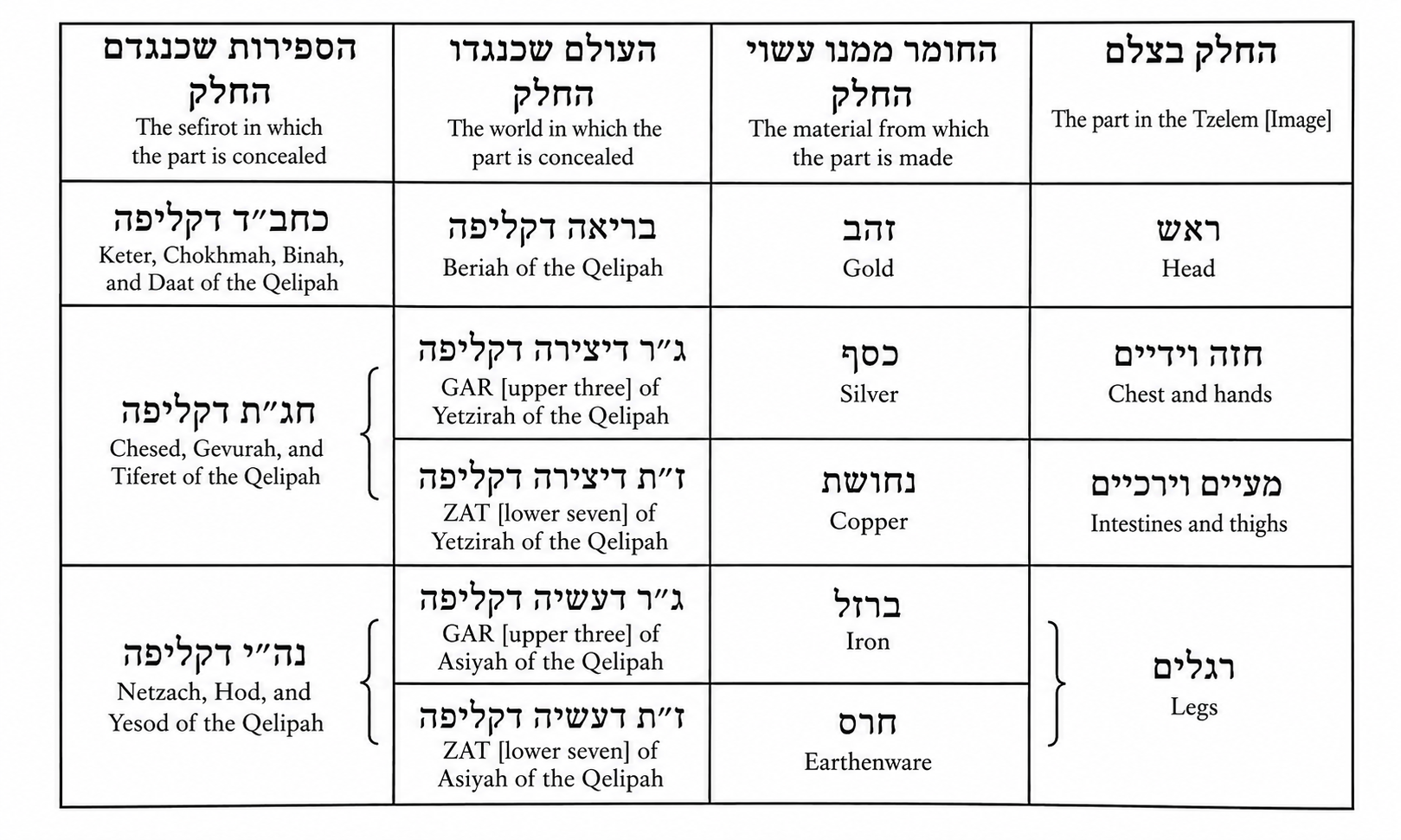
Chapter 3
שער ג פרק ג
[3:3] The principle that arises is (כְּלָל הָעוֹלֶה), that the Ein Sof is a soul to the soul (כִּי הָא״ס הוּא נְשָׁמָה לְנְשָׁמָה), and He emanated from Him one Adam that includes all the worlds, all of them (וְהֶאֱצִיל מִמֶּנּוּ אָדָם אֶחָד הַכּוֹלֵל כָּל הָעוֹלָמוֹת כֻּלָּם), whose aspect of essence within him, which is the aspect of Nefesh, Ruach, Neshamah, Chayah, Yechidah, is called Adam Kadmon (שֶׁבְּחִינַת עַצְמוּת שֶׁבּוֹ שֶׁהֵם בְּחִי׳ נרנח״י נִקְרָא א״ק). And the aspect of the body within him is the world of Atzilut (וּבְחִינַת הַגּוּף שֶׁבּוֹ הוּא עוֹלַם הָאֲצִילוּת). And the aspect of the garments are the three worlds Beri’ah–Yetzirah–Asiyah (וּבְחִינַת הַמַּלְבּוּשִׁים הֵם ג׳ עוֹלָמוֹת בי״ע), which are only one world alone (שֶׁאֵינָם רַק עוֹלָם א׳ לְבַד), and it is the garment of the entire Atzilut (וְהוּא לְבוּשׁ הָאֲצִילוּת כֻּלּוֹ); for between the three of them there are only ten Sefirot, like the ten Sefirot of Atzilut, which is called “body” (שֶׁבֵּין שְׁלָשְׁתָּם אֵינָם רַק י״ס דֻּגְמַת י״ס דַּאֲצִילוּת הַנִּקְרָא גּוּף). And thus it is in the Tikkunim, Tikkun 18: Imma nests in the three upper Sefirot in Beri’ah (וְכֵן מְקוֹמוֹ בַּתִּקּוּנִים תִּקּוּן י״ח אִמָּא בְּג״ס עִילָּאִין מְקַנְּנָא בִּבְרִיאָה). And you already know in Ra‘aya Mehemna, Parashat Bo, daf 42 (וְכְבָר יָדַעְתָּ בְּרַעְיָא מְהֵימְנָא פָּרָשַׁת בֹּא דְּמ״ב), that the ten Sefirot of Atzilut are called “vessels,” meaning limbs of the body (כִּי הַי״ס דַּאֲצִילוּת נִקְרְאוּ מָאנִין ר״ל אֵיבְרֵי הַגּוּף), for the body—which are the vessels—were revealed there in Atzilut, and no higher (כִּי הַגּוּף שֶׁהֵם הַכֵּלִים שָׁם נִגְלוּ בַּאֲצִילוּת וְלֹא יוֹתֵר לְמַעְלָה כַּנּוֹדָע).
And you already know that Nefesh, Ruach, Neshamah, Chayah, Yechidah do not clothe in the body except by means of an intermediary refined garment for each one of them (וְכְבָר יָדַעְתָּ כִּי הַנרנח״י אֵינָם מִתְלַבְּשִׁים בַּגּוּף זוּלָתִי עַל יְדֵי אֶמְצָעִית מַלְבּוּשׁ זַךְ לְכָל אֶחָד מֵהֶם). And everything is called “essence” (וְהַכֹּל נִקְרָא עַצְמוּת), for thus Adam Kadmon, who is the aspect of all the essence, has a refined body within which his essence clothes, in order afterward to clothe in the true body, which is Atzilut (כִּי כֵּן א״ק שֶׁהוּא בְּחִינַת כָּל הָעַצְמוּת יֵשׁ לוֹ גּוּף זַךְ שֶׁבּוֹ מִתְלַבֵּשׁ עַצְמוּתוֹ כְּדֵי לְהִתְלַבֵּשׁ אַחַר כָּךְ בַּגּוּף הָאֲמִתִּי שֶׁהוּא אֲצִילוּת). Therefore, even the vessels of Adam Kadmon are called “essence” (לָכֵן אֲפִלּוּ הַכֵּלִים דְּא״ק נִקְרָא עַצְמוּת). And just as the essence, besides its being rooted in the interior of the body, nevertheless sends forth branches of its light into all the limbs of the body, from within and from without, and within their thickness, to draw life into it (וּכְמוֹ שֶׁהָעַצְמוּת מִלְּבַד הֱיוֹתוֹ עִקָּרִיּוּתוֹ בִּפְנִימִיּוּת הַגּוּף עִם כָּל זֶה מְשַׁלֵּחַ פָּארוֹת מֵאוֹרוֹ בְּכָל אֵיבְרֵי הַגּוּף מִבַּיִת וּמִבַּחוּץ וּבְתוֹךְ עֳבִים לְהַמְשִׁיךְ בּוֹ חַיּוּת), so Adam Kadmon illuminates his essence in all the limbs of the body of Atzilut (כֵּן א״ק מֵאִיר עַצְמוּתוֹ בְּכָל אֵיבְרֵי הַגּוּף דַּאֲצִילוּת).
And that light is called Ein Sof in relation to Atzilut (וְאוֹתוֹ הָאוֹר נִקְרָא א״ס בְּעֶרֶךְ הָאֲצִילוּת), and it is called “the Cause of causes” of Atzilut (וְנִקְרָא עִילַּת הָעִלּוֹת שֶׁל הָאֲצִילוּת). But in the garments the light of essence is not revealed (אַךְ בַּמַּלְבּוּשִׁים אֵין אוֹר עַצְמוּת מִתְגַּלֶּה), therefore Beri’ah–Yetzirah–Asiyah are not of the aspect of divinity, but are called created, formed, made (לָכֵן בי״ע אֵינָם מִבְּחִינַת אֱלֹהוּת אֶלָּא נִקְרָאִים נִבְרָאִים נוֹצָרִים נַעֲשִׂים). And likewise in Adam Kadmon, who became an aspect of body to this supernal Ein Sof (וְכַעֲדַ״ז בְּא״ק שֶׁנַּעֲשָׂה בְּחִינַת גּוּף אֶל הָא״ס הַזֶּה הָעֶלְיוֹן): the Light of Ein Sof is revealed within him, but not in the garment (אוֹר א״ס מִתְגַּלֶּה בּוֹ אַךְ לֹא בַּמַּלְבּוּשׁ), the supernal Ein Sof (הָא״ס הָעֶלְיוֹן), which are the ten Sefirot of Atzilut (שֶׁהֵם י״ס דַּאֲצִילוּת). For the Ein Sof revealed in the ten Sefirot of Atzilut is called Adam Kadmon, as stated above (כִּי הָא״ס הַנִּגְלֶה בְּי״ס דַּאֲצִילוּת הוּא הַנִּקְרָא א״ק כַּנַּ״ל). However, after the clothing of the supernal Ein Sof in Adam Kadmon, in the Chokhmah within him (אָמְנָם אַחֲרֵי הִתְלַבְּשׁוּת אֵין סוֹף עֶלְיוֹן בְּא״ק בְּחָכְמָה שֶׁבּוֹ), for then through it He illuminates in the ten Sefirot of Atzilut (שֶׁאָז מֵאִיר עַל יָדוֹ בְּי״ס דַּאֲצִילוּת), and this is what it says, “all of them You made with wisdom” (וְזֶה אוֹמְרוֹ כֻּלָּם בְּחָכְמָה עָשִׂיתָ). And this is what it says, “You made” (וְזֶה אוֹמְרוֹ עָשִׂיתָ), for the ten Sefirot of Atzilut are the aspect of Asiyah relative to the supernal Ein Sof (כִּי הַי״ס דַּאֲצִילוּת הֵם בְּחִינַת עֲשִׂיָּה אֶל הָא״ס הָעֶלְיוֹן), for they are garments, as stated above (כִּי הֵם מַלְבּוּשִׁים כַּנַּ״ל). And in this manner Adam Kadmon, in order to illuminate in his garments, which are Beri’ah–Yetzirah–Asiyah (וְכַעֲדַ״ז א״ק כְּדֵי לְהָאִיר בְּמַלְבּוּשָׁיו שֶׁהֵם בי״ע), clothes in the Binah of Atzilut (מִתְלַבֵּשׁ בְּבִינָה דַּאֲצִילוּת), and through her He illuminates in Beri’ah (וְעַל יָדָהּ מֵאִיר בִּבְרִיאָה), as it is written, “Imma nests in the Throne” (כְּמוֹ שֶׁאָמַר אִמָּא מְקַנְּנָא בְּכֻרְסְיָיא). And all that we have said (וְכָל זֶה שֶׁאָמַרְנוּ), you will know from the second introduction of the Chariot of Yeḥezkel (תֵּדַע מֵהַקְדָּמָה ב׳ שֶׁל מֶרְכֶּבֶת יְחֶזְקֵאל) (Ezekiel 1). And outside these garments, which are Beri’ah–Yetzirah–Asiyah, are the Klipot (וְחוּץ לְאֵלּוּ הַמַּלְבּוּשִׁים שֶׁהֵם בי״ע הֵם הַקְּלִיפּוֹת).
And therefore you will see (וְלָכֵן תִּרְאֶה), that even the Klipot corresponding to Atzilut are not there except in Beri’ah (שֶׁאֲפִלּוּ הַקְּלִיפּוֹת שֶׁכְּנֶגֶד הָאֲצִילוּת אֵינָם שָׁם אֶלָּא בִּבְרִיאָה), as is known to us (כַּנּוֹדָע אֶצְלֵנוּ). It is found (נִמְצָא), that even though it is said that Atzilut is the body of Adam Kadmon (כִּי אַף שֶׁנֶּאֱמַר כִּי אֲצִילוּת הוּא גּוּף דְּא״ק), behold the light that Adam Kadmon illuminates in this body is called the Nefesh, Ruach, Neshamah of Atzilut (הִנֵּה הָאוֹר שֶׁמֵּאִיר הָא״ק בַּגּוּף הַזֶּה נִקְרָא נר״ן שֶׁל אֲצִילוּת), and within all of them clothes the light itself of Adam Kadmon (וּבְתוֹךְ כֻּלָּם מִתְלַבֵּשׁ הָאוֹר עַצְמוֹ דְּא״ק). And likewise in Adam Kadmon relative to the supernal Ein Sof (וְכַעֲדַ״ז בְּא״ק כְּנֶגֶד א״ס הָעֶלְיוֹן), and likewise in Beri’ah–Yetzirah–Asiyah relative to Atzilut which is called body (וְכַעֲדַ״ז בְּבי״ע כְּנֶגֶד אֲצִילוּת הַנִּקְרָא גּוּף). And this is what is said in the Tikkunim and in Sefer haZohar (וְזֶ״שׁ בַּתִּקּוּנִים וּבְסֵפֶר הַזֹּהַר), that the Throne, which is Imma, is like a body relative to the Shekhinta of Atzilut (דְּכֻרְסְיָיא דְּאִיהוּ אִמָּא כְּגוּפָא לְגַבֵּי שְׁכִינְתָא דַּאֲצִילוּת). It is found (נִמְצָא), that the Klipot are garments in Atzilut in generality (כִּי הַקְּלִיפּוֹת יִהְיוּ לְבוּשִׁים בַּאֲצִילוּת בִּכְלָלוּת), even though in particularity there is a body in Atzilut itself and Beri’ah–Yetzirah–Asiyah are garments for it (עִם הֱיוֹת שֶׁבִּפְרָטוּת יֵשׁ גּוּף בַּאֲצִילוּת עַצְמוֹ וּבי״ע הֵם לְבוּשִׁים אֵלָיו).
And behold (וְהִנֵּה), all the aspects of the vessels of all the worlds have exteriority and interiority (כָּל בְּחִינַת הַכֵּלִים שֶׁל כָּל הָעוֹלָמוֹת יֵשׁ בָּהֶם חִיצוֹנִיּוּת וּפְנִימִיּוּת). And I have already informed you (וְכְבָר הוֹדַעְתִּיךָ), how all these worlds—each becomes a body to the one above it and a body to the one below it (אֵיךְ כָּל הָעוֹלָמוֹת הָאֵלּוּ זֶה נַעֲשֶׂה גּוּף לָזֶה וְזֶה לָזֶה), and it is found (וְנִמְצָא), that all the worlds, all of them together—even Adam Kadmon (כִּי כָּל הָעוֹלָמוֹת כֻּלָּם כְּאֶחָד אֲפִלּוּ א״ק), all of their vessels have within them an aspect of interiority and exteriority (כָּל הַכֵּלִים שֶׁלָּהֶם יֵשׁ בָּהֶם בְּחִינַת פְּנִימִיּוּת וְחִיצוֹנִיּוּת). And know (וְדַע), that every aspect of Ze’ir Anpin and Nukvah that exists in all the worlds (כִּי כָּל בְּחִינַת זו״ן שֶׁיֵּשׁ בָּעוֹלָמוֹת כֻּלָּם), is called the seven extremities [some say: six extremities] of the body of that world (נִקְרָא ז״ק [נ״א ו״ק] שֶׁל גּוּף שֶׁל אוֹתוֹ עוֹלָם).
For so they emerged at the time of the first emanation (כִּי כֵּן יָצְאוּ בְּעֵת אֲצִילוּת הָרִאשׁוֹן), when they were emanated lacking the three upper ones for Ze’ir Anpin (שֶׁנֶּאֶצְלוּ חֲסֵרִים גּ״ר לְז״א), and lacking the ten heads for Nukvah (וְט״ר לְנוּקְבָא). And these two (וְאֵלּוּ הַב׳), require three times (צְרִיכִים ג׳ זְמַנִּים), which are Ibbur [Gestation], Yenikah [Nursing], and Mochin [Intellects] (שֶׁהֵם עִיבּוּר יְנִיקָה וּמוֹחִין), in order to complete them (לְהַשְׁלִימָם). It is found (נִמְצָא), that each and every world does not require Ibbur [Gestation], Yenikah [Nursing], and Mochin [Intellects] (כִּי כָּל עוֹלָם וְעוֹלָם אֵינָם צְרִיכִים עִיבּוּר יְנִיקָה וּמוֹחִין), except for the Ze’ir Anpin and Nukvah of that world (רַק זו״ן שֶׁל אוֹתוֹ עוֹלָם), in relation to the Arich Anpin and Abba and Imma of that world (בְּעֶרֶךְ א״א וְאו״א שֶׁל אוֹתוֹ הָעוֹלָם), for they are complete according to that world (שֶׁהֵם שְׁלֵמִים כְּפִי אוֹתוֹ עוֹלָם).
However, in the aspect of generality (אָמְנָם בִּבְחִינַת הַכְּלָל), all five Partzufim of that world are called Ze’ir Anpin and Nukvah (יִקָּרְאוּ כָּל הַה״פ שֶׁבְּאוֹתוֹ עוֹלָם זו״ן), in relation to the world above it (אֶל עוֹלָם שֶׁלְּמַעְלָה הֵימֶנּוּ). And they will be lacking Mochin [Intellects] in the aspect of generality (וְיִהְיוּ חֲסֵרִי מוֹחִין בִּבְחִינַת הַכְּלָל), as stated above (כַּנַּ״ל). And understand this well (וְהָבֵן זֶה הֵיטֵב). It is found (נִמְצָא), since there are two aspects in every type of vessel—interiority and exteriority (כֵּיוָן שֶׁיֵּשׁ ב׳ בְּחִינוֹת בְּכָל מִינֵי כֵּלִים שֶׁהֵם חִיצוֹנִיּוּת וּפְנִימִיּוּת), it is therefore necessary (אִם כֵּן מֻכְרָח הוּא), that there be Ibbur [Gestation]–Yenikah [Nursing]–Mochin [Intellects] in exterior vessels (שֶׁיִּהְיֶה עִי״מ בְּכֵלִים חִיצוֹנִיִּים), and Ibbur [Gestation]–Yenikah [Nursing]–Mochin [Intellects] in interior vessels (וְעִי״מ בְּכֵלִים פְּנִימִיִּים).
Behold (הִנֵּה), on Rosh Hashanah (בְּר״ה), at the beginning the interior vessels are formed (בִּתְחִלָּה נַעֲשֶׂה כֵּלִים פְּנִימִיִּים). But at the receiving of Shabbat and in the prayer of the rest of the weekdays (אַךְ בְּקַבָּלַת שַׁבָּת וּבַתְּפִלָּה שֶׁל שְׁאָר יְמֵי הַחוֹל), first the Mochin [Intellects] of the exterior vessels are rectified (תְּחִלָּה נִתְקַן מוֹחִין כֵּלִים חִיצוֹנִיִּים), (and afterward) (וְאַחַר כָּךְ), the interior Mochin [Intellects] (מוֹחִין פְּנִימִיִּים). Therefore (לָכֵן), when you study our books (כְּשֶׁתַּעֲיֵן בְּסְפָרֵינוּ), do not be astonished (אַל תִּתְמַהּ), if sometimes it appears that there are already Mochin [Intellects] (אִם פְּעָמִים יֵרָאֶה שֶׁכְּבָר יֵשׁ מוֹחִין), and sometimes it appears that they are still in Yenikah [Nursing] (וּפְעָמִים יֵרָאֶה שֶׁהֵם עֲדַיִן בִּינִיקָה), and similar matters (וְכַיּוֹצֵא בָּזֶה). For this is in the interior, and that is in the exterior (כִּי זֶה בַּפְּנִימִיּוּת וְזֶה בַּחִיצוֹנִיּוּת). And see above (וְעַיֵּן לְעֵיל), how every interiority is called “brain” in relation to exteriority, which is called “body” (אֵיךְ כָּל פְּנִימִיּוּת נִקְרָא מוֹחָא בְּעֶרֶךְ חִיצוֹנִיּוּת הַנִּקְרָא גּוּפָא).
Notes
Daniel 2:
In the second year of the reign of Nebuchadnezzar (וּבִשְׁנַ֣ת שְׁתַּ֗יִם לְמַלְכוּת֙ נְבֻֽכַדְנֶצַּ֔ר), Nebuchadnezzar dreamed dreams (חָלַ֥ם נְבֻֽכַדְנֶצַּ֖ר חֲלֹמ֑וֹת), and his spirit was troubled (וַתִּתְפָּ֣עֶם רוּח֔וֹ), and his sleep was upon him (וּשְׁנָת֖וֹ נִהְיְתָ֥ה עָלָֽיו׃). And the king said to call (וַיֹּ֣אמֶר הַ֠מֶּ֠לֶךְ לִקְרֹ֨א) the magicians (לַֽחַרְטֻמִּ֜ים) and the enchanters (וְלָֽאַשָּׁפִ֗ים) and the sorcerers (וְלַֽמְכַשְּׁפִים֙) and the Chaldeans (וְלַכַּשְׂדִּ֔ים), to tell the king his dreams (לְהַגִּ֥יד לַמֶּ֖לֶךְ חֲלֹמֹתָ֑יו), and they came (וַיָּבֹ֕אוּ) and stood before the king (וַיַּֽעַמְד֖וּ לִפְנֵ֥י הַמֶּֽלֶךְ׃). And the king said to them (וַיֹּ֧אמֶר לָהֶ֛ם הַמֶּ֖לֶךְ), I have dreamed a dream (חֲל֣וֹם חָלָ֑מְתִּי), and my spirit is troubled (וַתִּפָּ֣עֶם רוּחִ֔י), to know the dream (לָדַ֖עַת אֶֽת־הַחֲלֽוֹם׃). And the Chaldeans spoke to the king in Aramaic (וַֽיְדַבְּר֧וּ הַכַּשְׂדִּ֛ים לַמֶּ֖לֶךְ אֲרָמִ֑ית), O king, live forever (מַלְכָּא֙ לְעָלְמִ֣ין חֱיִ֔י), say the dream (אֱמַ֥ר חֶלְמָ֛א (לעבדיך) [לְעַבְדָ֖ךְ]), and we will show the interpretation (וּפִשְׁרָ֥א נְחַוֵּֽא׃). The king answered and said (עָנֵ֤ה מַלְכָּא֙ וְאָמַ֣ר) to the Chaldeans (לְכַשְׂדָּאֵ֔י) (לכשדיא) [לְכַשְׂדָּאֵ֔י]), the matter has gone from me (מִלְּתָ֖ה מִנִּ֣י אַזְדָּ֑א), if you do not make known to me the dream and its interpretation (הֵ֣ן לָ֤א תְהֽוֹדְעוּנַּ֙נִי֙ חֶלְמָ֣א וּפִשְׁרֵ֔הּ), you will be made into pieces (הַדָּמִין֙ תִּתְעַבְד֔וּן), and your houses will be made a dunghill (וּבָתֵּיכ֖וֹן נְוָלִ֥י יִתְּשָׂמֽוּן׃). But if you show the dream and its interpretation (וְהֵ֨ן חֶלְמָ֤א וּפִשְׁרֵהּ֙ תְּֽהַחֲוֺ֔ן), you will receive gifts and reward and great honor from before me (מַתְּנָ֤ן וּנְבִזְבָּה֙ וִיקָ֣ר שַׂגִּ֔יא תְּקַבְּל֖וּן מִן־קֳדָמָ֑י), therefore show me the dream and its interpretation (לָהֵ֕ן חֶלְמָ֥א וּפִשְׁרֵ֖הּ הַחֲוֺֽנִי׃). They answered a second time and said (עֲנ֥וֹ תִנְיָנ֖וּת וְאָמְרִ֑ין), O king, let the king say the dream to his servants (מַלְכָּ֕א חֶלְמָ֛א יֵאמַ֥ר לְעַבְד֖וֹהִי), and we will show the interpretation (וּפִשְׁרָ֥ה נְהַחֲוֵֽה׃). The king answered and said (עָנֵ֤ה מַלְכָּא֙ וְאָמַ֔ר), I know with certainty (מִן־יַצִּיב֙ יָדַ֣ע אֲנָ֔ה), that you are buying time (דִּ֥י עִדָּנָ֖א אַנְתּ֣וּן זָבְנִ֑ין), because you see that the matter has gone from me (כׇּל־קֳבֵל֙ דִּ֣י חֲזֵית֔וֹן דִּ֥י אַזְדָּ֖א מִנִּ֥י מִלְּתָֽא׃). If you do not make known to me the dream (דִּ֣י הֵן־חֶלְמָא֩ לָ֨א תְהֽוֹדְעֻנַּ֜נִי), one is your decree (חֲדָה־הִ֣יא דָֽתְכ֗וֹן), and you have prepared to speak a lying and corrupt word before me (וּמִלָּ֨ה כִדְבָ֤ה וּשְׁחִיתָה֙ (הזמנתון) [הִזְדְּמִנְתּוּן֙] לְמֵאמַ֣ר קׇֽדָמַ֔י), until the time changes (עַ֛ד דִּ֥י עִדָּנָ֖א יִשְׁתַּנֵּ֑א), therefore say to me the dream (לָהֵ֗ן חֶלְמָא֙ אֱמַ֣רוּ לִ֔י), and I will know that you can show me its interpretation (וְֽאִנְדַּ֕ע דִּ֥י פִשְׁרֵ֖הּ תְּהַחֲוֻנַּֽנִי׃). The Chaldeans answered before the king and said (עֲנ֨וֹ (כשדיא) [כַשְׂדָּאֵ֤י] קֳדָם־מַלְכָּא֙ וְאָ֣מְרִ֔ין), there is not a man upon the dry land (לָֽא־אִיתַ֤י אֱנָשׁ֙ עַל־יַבֶּשְׁתָּ֔א), who can show the king’s matter (דִּ֚י מִלַּ֣ת מַלְכָּ֔א יוּכַ֖ל לְהַחֲוָיָ֑ה), because no great and ruling king (כׇּל־קֳבֵ֗ל דִּ֚י כׇּל־מֶ֙לֶךְ֙ רַ֣ב וְשַׁלִּ֔יט), has asked such a thing (מִלָּ֤ה כִדְנָה֙ לָ֣א שְׁאֵ֔ל), of any magician or enchanter or Chaldean (לְכׇל־חַרְטֹ֖ם וְאָשַׁ֥ף וְכַשְׂדָּֽי׃). And the matter that the king asks is precious (וּמִלְּתָ֨א דִֽי־מַלְכָּ֤ה שָׁאֵל֙ יַקִּירָ֔ה), and there is no other who can show it before the king (וְאׇחֳרָן֙ לָ֣א אִיתַ֔י דִּ֥י יְחַוִּנַּ֖הּ קֳדָ֣ם מַלְכָּ֑א), except gods (לָהֵ֣ן אֱלָהִ֔ין), whose dwelling is not with flesh (דִּ֚י מְדָ֣רְה֔וֹן עִם־בִּשְׂרָ֖א לָ֥א אִיתֽוֹהִי׃). Because of this (כׇּל־קֳבֵ֣ל דְּנָ֔ה), the king became furious and very angry (מַלְכָּ֕א בְּנַ֖ס וּקְצַ֣ף שַׂגִּ֑יא), and he said to destroy all the wise men of Babylon (וַאֲמַר֙ לְה֣וֹבָדָ֔ה לְכֹ֖ל חַכִּימֵ֥י בָבֶֽל׃). And the decree went out (וְדָתָ֣א נֶפְקַ֔ת), and the wise men were being killed (וְחַכִּֽימַיָּ֖א מִֽתְקַטְּלִ֑ין), and they sought Daniel and his friends to be killed (וּבְע֛וֹ דָּנִיֵּ֥אל וְחַבְר֖וֹהִי לְהִתְקְטָלָֽה׃) In that moment Daniel returned counsel and discretion (בֵּאדַ֣יִן דָּנִיֵּ֗אל הֲתִיב֙ עֵטָ֣א וּטְעֵ֔ם), to Arioch, the chief of the king’s executioners (לְאַרְי֕וֹךְ רַב־טַבָּחַיָּ֖א), who had gone out to kill the wise men of Babylon (דִּ֣י מַלְכָּ֑א דִּ֚י נְפַ֣ק לְקַטָּלָ֔ה לְחַכִּימֵ֖י בָּבֶֽל׃). He answered and said to Arioch (עָנֵ֣ה וְאָמַ֗ר לְאַרְיוֹךְ֙), the ruler of the king (שַׁלִּיטָ֣א דִֽי־מַלְכָּ֔א), why is the decree so harsh from before the king (עַל־מָ֥ה דָתָ֛א מְהַחְצְפָ֖ה מִן־קֳדָ֣ם מַלְכָּ֑א), then Arioch made the matter known to Daniel (אֱדַ֣יִן מִלְּתָ֔א הוֹדַ֥ע אַרְי֖וֹךְ לְדָנִיֵּֽאל׃). And Daniel went in and requested from the king (וְדָ֣נִיֵּ֔אל עַ֖ל וּבְעָ֣ה מִן־מַלְכָּ֑א), that he give him time (דִּ֚י זְמָ֣ן יִנְתִּן־לֵ֔הּ), and he would show the interpretation to the king (וּפִשְׁרָ֖א לְהַֽחֲוָיָ֥ה לְמַלְכָּֽא׃). Then Daniel went to his house (אֱדַ֥יִן דָּנִיֵּ֖אל לְבַיְתֵ֣הּ אֲזַ֑ל), and he made the matter known to Hananiah, Mishael, and Azariah, his friends (וְ֠לַחֲנַנְיָ֠ה מִֽישָׁאֵ֧ל וַעֲזַרְיָ֛ה חַבְר֖וֹהִי מִלְּתָ֥א הוֹדַֽע׃). And to seek mercies (וְרַחֲמִ֗ין לְמִבְעֵא֙), from before the God of heaven (מִן־קֳדָם֙ אֱלָ֣הּ שְׁמַיָּ֔א), concerning this mystery (עַל־רָזָ֖א דְּנָ֑ה), so that they would not be destroyed (דִּ֣י לָ֤א יְהֽוֹבְדוּן֙), Daniel and his friends (דָּנִיֵּ֣אל וְחַבְר֔וֹהִי), with the rest of the wise men of Babylon (עִם־שְׁאָ֖ר חַכִּימֵ֥י בָבֶֽל׃). Then the mystery was revealed to Daniel in a vision of the night (אֱדַ֗יִן לְדָנִיֵּ֛אל בְּחֶזְוָ֥א דִֽי־לֵילְיָ֖א רָזָ֣א גְלִ֑י), then Daniel blessed the God of heaven (אֱדַ֙יִן֙ דָּֽנִיֵּ֔אל בָּרִ֖ךְ לֶאֱלָ֥הּ שְׁמַיָּֽא׃). Daniel answered and said (עָנֵ֤ה דָֽנִיֵּאל֙ וְאָמַ֔ר), let the Name of God be blessed from eternity and until eternity (לֶהֱוֵ֨א שְׁמֵ֤הּ דִּֽי־אֱלָהָא֙ מְבָרַ֔ךְ מִן־עָלְמָ֖א וְעַ֣ד עָלְמָ֑א), for wisdom and might are His (דִּ֧י חׇכְמְתָ֛א וּגְבוּרְתָ֖א דִּ֥י לֵֽהּ־הִֽיא׃). And He changes times and seasons (וְ֠ה֠וּא מְהַשְׁנֵ֤א עִדָּנַיָּא֙ וְזִמְנַיָּ֔א), removes kings and establishes kings (מְהַעְדֵּ֥ה מַלְכִ֖ין וּמְהָקֵ֣ים מַלְכִ֑ין), gives wisdom to the wise (יָהֵ֤ב חׇכְמְתָא֙ לְחַכִּימִ֔ין), and knowledge to those who know understanding (וּמַנְדְּעָ֖א לְיָדְעֵ֥י בִינָֽה׃). He reveals deep and hidden things (ה֛וּא גָּלֵ֥א עַמִּיקָתָ֖א וּמְסַתְּרָתָ֑א), knows what is in the darkness (יָדַע֙ מָ֣ה בַחֲשׁוֹכָ֔א), and light dwells with Him (וּנְהוֹרָ֖א עִמֵּ֥הּ שְׁרֵֽא׃) (ונהירא) [וּנְהוֹרָ֖א]). To You, O God of my fathers (לָ֣ךְ ׀ אֱלָ֣הּ אֲבָהָתִ֗י), I give thanks and I praise (מְהוֹדֵ֤א וּמְשַׁבַּח֙ אֲנָ֔ה), that You have given me wisdom and might (דִּ֧י חׇכְמְתָ֛א וּגְבוּרְתָ֖א יְהַ֣בְתְּ לִ֑י), and now You have made known to me what we asked from You (וּכְעַ֤ן הֽוֹדַעְתַּ֙נִי֙ דִּֽי־בְעֵ֣ינָא מִנָּ֔ךְ), that You have made known to us the king’s matter (דִּֽי־מִלַּ֥ת מַלְכָּ֖א הוֹדַעְתֶּֽנָא׃) Because of this (כׇּל־קֳבֵ֣ל דְּנָ֗ה), Daniel went in to Arioch (דָּֽנִיֵּאל֙ עַ֣ל עַל־אַרְי֔וֹךְ), whom the king had appointed (דִּ֚י מַנִּ֣י מַלְכָּ֔א), to destroy the wise men of Babylon (לְהוֹבָדָ֖ה לְחַכִּימֵ֣י בָבֶ֑ל); he went (אֲזַ֣ל ׀), and thus he said to him (וְכֵ֣ן אֲמַר־לֵ֗הּ), to the wise men of Babylon (לְחַכִּימֵ֤י בָבֶל֙), do not destroy (אַל־תְּהוֹבֵ֔ד), bring me in (הַעֵ֙לְנִי֙), before the king (קֳדָ֣ם מַלְכָּ֔א), and I will show the interpretation to the king (וּפִשְׁרָ֖א לְמַלְכָּ֥א אֲחַוֵּֽא׃). Then Arioch (אֱדַ֤יִן אַרְיוֹךְ֙), in haste (בְּהִתְבְּהָלָ֔ה), brought Daniel in (הַנְעֵ֥ל לְדָנִיֵּ֖אל), before the king (קֳדָ֣ם מַלְכָּ֑א); and thus he said to him (וְכֵ֣ן אֲמַר־לֵ֗הּ), that I have found a man (דִּֽי־הַשְׁכַּ֤חַת גְּבַר֙), from the children of the exile (מִן־בְּנֵ֤י גָֽלוּתָא֙), of Yehudah (דִּ֣י יְה֔וּד), who will make known the interpretation to the king (דִּ֥י פִשְׁרָ֖א לְמַלְכָּ֥א יְהוֹדַֽע׃). The king answered and said to Daniel (עָנֵ֤ה מַלְכָּא֙ וְאָמַ֣ר לְדָנִיֵּ֔אל), whose name is Belteshazzar (דִּ֥י שְׁמֵ֖הּ בֵּלְטְשַׁאצַּ֑ר), are you able (כָּהֵ֗ל), to make known to me (לְהוֹדָעֻתַ֛נִי), the dream that I saw and its interpretation (חֶלְמָ֥א דִֽי־חֲזֵ֖ית וּפִשְׁרֵֽהּ׃), (some say: are you able) ((האיתיך) [הַֽאִיתָ֣ךְ]) (Daniel answered before the king and said (עָנֵ֧ה דָנִיֵּ֛אל קֳדָ֥ם מַלְכָּ֖א וְאָמַ֑ר), the mystery that the king asks (רָזָא֙ דִּֽי־מַלְכָּ֣א שָׁאֵ֔ל), wise men cannot (לָ֧א חַכִּימִ֣ין), enchanters (אָֽשְׁפִ֗ין), magicians (חַרְטֻמִּין֙), decreers (גָּזְרִ֔ין), are able to show to the king (יָכְלִ֖ין לְהַֽחֲוָיָ֥ה לְמַלְכָּֽא׃). But there is a God in heaven (בְּרַ֡ם אִיתַ֞י אֱלָ֤הּ בִּשְׁמַיָּא֙), who reveals mysteries (גָּלֵ֣א רָזִ֔ין), and He has made known to the king Nebuchadnezzar (וְהוֹדַ֗ע לְמַלְכָּא֙ נְבֽוּכַדְנֶצַּ֔ר), what will be at the end of days (מָ֛ה דִּ֥י לֶהֱוֵ֖א בְּאַחֲרִ֣ית יוֹמַיָּ֑א); your dream, and the visions of your head upon your bed—this is it (חֶלְמָ֨ךְ וְחֶזְוֵ֥י רֵאשָׁ֛ךְ עַֽל־מִשְׁכְּבָ֖ךְ דְּנָ֥ה הֽוּא׃). You, O king (מַלְכָּ֗א), your thoughts upon your bed arose (רַעְיוֹנָךְ֙ עַל־מִשְׁכְּבָ֣ךְ סְלִ֔קוּ), what would be after this (מָ֛ה דִּ֥י לֶהֱוֵ֖א אַחֲרֵ֣י דְנָ֑ה); and He who reveals mysteries made known to you what will be (וְגָלֵ֧א רָזַיָּ֛א הוֹדְעָ֖ךְ מָה־דִ֥י לֶהֱוֵֽא׃), (some say: you) ((אנתה) [אַ֣נְתְּ]). And I (וַאֲנָ֗ה), not by the wisdom that is in me (לָ֤א בְחׇכְמָה֙ דִּֽי־אִיתַ֥י בִּי֙), more than all the living (מִן־כׇּל־חַיַּיָּ֔א), this mystery was revealed to me (רָזָ֥א דְנָ֖ה גֱּלִ֣י לִ֑י); but so that the interpretation be made known to the king (לָהֵ֗ן עַל־דִּבְרַת֙ דִּ֤י פִשְׁרָא֙ לְמַלְכָּ֣א יְהוֹדְע֔וּן), and that the thoughts of your heart be known (וְרַעְיוֹנֵ֥י לִבְבָ֖ךְ תִּנְדַּֽע׃). You, O king, were seeing (מַלְכָּ֗א חָזֵ֤ה הֲוַ֙יְתָ֙), and behold, one great image (וַאֲל֨וּ צְלֵ֥ם חַד֙ שַׂגִּ֔יא); this image was mighty (צַלְמָ֨א דִכֵּ֥ן רַ֛ב), and its brightness was exceeding (וְזִיוֵ֥הּ יַתִּ֖יר), standing before you (קָאֵ֣ם לְקׇבְלָ֑ךְ), and its appearance was fearful (וְרֵוֵ֖הּ דְּחִֽיל׃), (some say: you) ((אנתה) [אַ֣נְתְּ]). This image (ה֣וּא צַלְמָ֗א), its head was of fine gold (רֵאשֵׁהּ֙ דִּֽי־דְהַ֣ב טָ֔ב), its chest and its arms were of silver (חֲד֥וֹהִי וּדְרָע֖וֹהִי דִּ֣י כְסַ֑ף), its belly and its thighs were of bronze (מְע֥וֹהִי וְיַרְכָתֵ֖הּ דִּ֥י נְחָֽשׁ׃). Its legs were of iron (שָׁק֖וֹהִי דִּ֣י פַרְזֶ֑ל), its feet (רַגְל֕וֹהִי), (some of them) ((מנהון) [מִנְּהֵין֙]) were of iron (דִּ֣י פַרְזֶ֔ל), (and some of them) ((ומנהון) [וּמִנְּהֵ֖ין]) were of clay (דִּ֥י חֲסַֽף׃). You were seeing (חָזֵ֣ה הֲוַ֗יְתָ), until (עַ֠ד דִּ֣י), a stone was cut out (הִתְגְּזֶ֤רֶת אֶ֙בֶן֙), without hands (דִּי־לָ֣א בִידַ֔יִן), and it struck the image upon its feet (וּמְחָ֤ת לְצַלְמָא֙ עַל־רַגְל֔וֹהִי), of iron and clay (דִּ֥י פַרְזְלָ֖א וְחַסְפָּ֑א), and it crushed them (וְהַדֵּ֖קֶת הִמּֽוֹן׃). Then (בֵּאדַ֣יִן), were crushed together (דָּ֣קוּ כַחֲדָ֡ה), the iron, the clay, the bronze, the silver, and the gold (פַּרְזְלָא֩ חַסְפָּ֨א נְחָשָׁ֜א כַּסְפָּ֣א וְדַהֲבָ֗א), and they became like chaff from the summer threshing floors (וַהֲווֹ֙ כְּע֣וּר מִן־אִדְּרֵי־קַ֔יִט), and the wind carried them away (וּנְשָׂ֤א הִמּוֹן֙ רוּחָ֔א), and no place was found for them (וְכׇל־אֲתַ֖ר לָא־הִשְׁתְּכַ֣ח לְה֑וֹן); and the stone that struck the image (וְאַבְנָ֣א ׀ דִּֽי־מְחָ֣ת לְצַלְמָ֗א), became a great mountain (הֲוָ֛ת לְט֥וּר רַ֖ב), and filled all the earth (וּמְלָ֥את כׇּל־אַרְעָֽא׃). This is the dream (דְּנָ֣ה חֶלְמָ֔א), and its interpretation we will speak before the king (וּפִשְׁרֵ֖הּ נֵאמַ֥ר קֳדָם־מַלְכָּֽא׃). You, O king, are king of kings (מַלְכָּ֔א מֶ֖לֶךְ מַלְכַיָּ֑א), to whom the God of heaven has given (דִּ֚י אֱלָ֣הּ שְׁמַיָּ֔א מַלְכוּתָ֥א חִסְנָ֛א וְתׇקְפָּ֥א וִֽיקָרָ֖א יְהַב־לָֽךְ׃), kingdom, strength, power, and glory (מַלְכוּתָ֥א חִסְנָ֛א וְתׇקְפָּ֥א וִֽיקָרָ֖א). And wherever (וּבְכׇל־דִּ֣י), (those who dwell) ((דארין) [דָֽיְרִ֣ין])), the children of men (בְּֽנֵי־אֲ֠נָשָׁ֠א), the beasts of the field (חֵיוַ֨ת בָּרָ֤א), and the birds of the heavens (וְעוֹף־שְׁמַיָּא֙), He has given into your hand (יְהַ֣ב בִּידָ֔ךְ), and has made you ruler over them all (וְהַשְׁלְטָ֖ךְ בְּכׇלְּה֑וֹן); you are the head of gold (ה֔וּא רֵאשָׁ֖ה דִּ֥י דַהֲבָֽא), (some say: you) ((אנתה) [אַ֨נְתְּ־]ה֔וּא)). And after you (וּבָתְרָ֗ךְ), another kingdom will arise (תְּק֛וּם מַלְכ֥וּ אׇחֳרִ֖י), (earthly) ((ארעא) [אֲרַ֣ע])), inferior to you (מִנָּ֑ךְ); and another third kingdom (וּמַלְכ֨וּ (תליתיא) [תְלִיתָאָ֤ה] אׇחֳרִי֙), of bronze (דִּ֣י נְחָשָׁ֔א), which will rule over all the earth (דִּ֥י תִשְׁלַ֖ט בְּכׇל־אַרְעָֽא׃). And the fourth kingdom (וּמַלְכוּ֙ (רביעיה) [רְבִ֣יעָאָ֔ה]) will be strong as iron (תֶּהֱוֵ֥א תַקִּיפָ֖ה כְּפַרְזְלָ֑א): just as iron crushes and shatters all (כׇּל־קֳבֵ֗ל דִּ֤י פַרְזְלָא֙ מְהַדֵּ֤ק וְחָשֵׁל֙ כֹּ֔לָּא), so like iron that breaks all these (וּֽכְפַרְזְלָ֛א דִּֽי־מְרָעַ֥ע כׇּל־אִלֵּ֖ן), it will crush and break (תַּדִּ֥ק וְתֵרֹֽעַ׃). And that you saw the feet and the toes (וְדִֽי־חֲזַ֜יְתָה רַגְלַיָּ֣א וְאֶצְבְּעָתָ֗א), (some of them) ((מנהון) [מִנְּהֵ֞ן])), of potter’s clay (חֲסַ֤ף דִּֽי־פֶחָר֙), (and some of them) ((ומנהון) [וּמִנְּהֵ֣ין])), of iron (פַּרְזֶ֔ל), it will be a divided kingdom (מַלְכ֤וּ פְלִיגָה֙ תֶּהֱוֵ֔ה); but there will be in it some of the firmness of iron (וּמִן־נִצְבְּתָ֥א דִֽי־פַרְזְלָ֖א לֶֽהֱוֵא־בַ֑הּ), because you saw iron mixed with clay (כׇּל־קֳבֵל֙ דִּ֣י חֲזַ֔יְתָה פַּ֨רְזְלָ֔א מְעָרַ֖ב בַּחֲסַ֥ף טִינָֽא׃). And the toes of the feet (וְאֶצְבְּעָת֙ רַגְלַיָּ֔א), (some of them) ((מנהון) [מִנְּהֵ֥ין])), iron (פַּרְזֶ֖ל), (and some of them) ((ומנהון) [וּמִנְּהֵ֣ין])), clay (חֲסַ֑ף), part of the kingdom will be strong (מִן־קְצָ֤ת מַלְכוּתָא֙ תֶּהֱוֵ֣ה תַקִּיפָ֔ה), and part of it will be broken (וּמִנַּ֖הּ תֶּהֱוֵ֥א תְבִירָֽה׃). And that you saw iron mixed with clay (חֲזַ֗יְתָ פַּרְזְלָא֙ מְעָרַב֙ בַּחֲסַ֣ף טִינָ֔א), (and some say: and that) ((די) [וְדִ֣י])), they will mingle with the seed of men (מִתְעָרְבִ֤ין לֶהֱוֺן֙ בִּזְרַ֣ע אֲנָשָׁ֔א), but they will not cleave one to another (וְלָֽא־לֶהֱוֺ֥ן דָּבְקִ֖ין דְּנָ֣ה עִם־דְּנָ֑ה), just as iron does not mix with clay (הֵֽא־כְדִ֣י פַרְזְלָ֔א לָ֥א מִתְעָרַ֖ב עִם־חַסְפָּֽא׃). And in the days of those kings (וּֽבְיוֹמֵיה֞וֹן דִּ֧י מַלְכַיָּ֣א אִנּ֗וּן), the God of heaven will raise up a Molcho (יְקִים֩ אֱלָ֨הּ שְׁמַיָּ֤א מַלְכוּ֙), which will never be destroyed (דִּ֤י לְעָלְמִין֙ לָ֣א תִתְחַבַּ֔ל), and its sovereignty will not be left to another people (וּמַ֨לְכוּתָ֔ה לְעַ֥ם אׇחֳרָ֖ן לָ֣א תִשְׁתְּבִ֑ק); it will crush and bring to an end all these kingdoms (תַּדִּ֤ק וְתָסֵיף֙ כׇּל־אִלֵּ֣ין מַלְכְוָתָ֔א), and it will stand forever (וְהִ֖יא תְּק֥וּם לְעָלְמַיָּֽא׃). Just as you saw (כׇּל־קֳבֵ֣ל דִּֽי־חֲזַ֡יְתָ), that from the mountain a stone was cut out without hands (דִּ֣י מִטּוּרָא֩ אִתְגְּזֶ֨רֶת אֶ֜בֶן דִּי־לָ֣א בִידַ֗יִן), and it crushed the iron, the bronze, the clay, the silver, and the gold (וְ֠הַדֵּ֠קֶת פַּרְזְלָ֨א נְחָשָׁ֤א חַסְפָּא֙ כַּסְפָּ֣א וְדַהֲבָ֔א); the great God has made known to the king what will be after this (אֱלָ֥הּ רַב֙ הוֹדַ֣ע לְמַלְכָּ֔א מָ֛ה דִּ֥י לֶהֱוֵ֖א אַחֲרֵ֣י דְנָ֑ה), and the dream is sure and its interpretation is faithful (וְיַצִּ֥יב חֶלְמָ֖א וּמְהֵימַ֥ן פִּשְׁרֵֽהּ׃). Then the king Nebuchadnezzar fell upon his face (בֵּ֠אדַ֠יִן מַלְכָּ֤א נְבֽוּכַדְנֶצַּר֙ נְפַ֣ל עַל־אַנְפּ֔וֹהִי), and to Daniel he bowed (וּלְדָנִיֵּ֖אל סְגִ֑ד), and he said to offer him an offering and sweet smells (וּמִנְחָה֙ וְנִ֣יחֹחִ֔ין אֲמַ֖ר לְנַסָּ֥כָה לֵֽהּ׃). The king answered Daniel and said (עָנֵה֩ מַלְכָּ֨א לְדָנִיֵּ֜אל וְאָמַ֗ר), truly (מִן־קְשֹׁט֙), your God is God of gods (דִּ֣י אֱלָהֲכ֗וֹן ה֣וּא אֱלָ֧הּ אֱלָהִ֛ין), and Lord of kings (וּמָרֵ֥א מַלְכִ֖ין), and revealer of mysteries (וְגָלֵ֣ה רָזִ֑ין), since you were able to reveal this mystery (דִּ֣י יְכֵ֔לְתָּ לְמִגְלֵ֖א רָזָ֥א דְנָֽה׃). Then the king made Daniel great (אֱדַ֨יִן מַלְכָּ֜א לְדָנִיֵּ֣אל רַבִּ֗י), and he gave him great and many gifts (וּמַתְּנָ֨ן רַבְרְבָ֤ן שַׂגִּיאָן֙ יְהַב־לֵ֔הּ), and he made him ruler over all the province of Babylon (וְהַ֨שְׁלְטֵ֔הּ עַ֖ל כׇּל־מְדִינַ֣ת בָּבֶ֑ל), and chief of the prefects over all the wise men of Babylon (וְרַ֨ב־סִגְנִ֔ין עַ֖ל כׇּל־חַכִּימֵ֥י בָבֶֽל׃). And Daniel requested of the king (וְדָנִיֵּאל֙ בְּעָ֣א מִן־מַלְכָּ֔א), and he appointed (וּמַנִּ֗י) over the administration of the province of Babylon (עַ֤ל עֲבִֽידְתָּא֙ דִּ֚י מְדִינַ֣ת בָּבֶ֔ל), Shadrach, Meshach, and Abed-nego (לְשַׁדְרַ֥ךְ מֵישַׁ֖ךְ וַעֲבֵ֣ד נְג֑וֹ), and Daniel was in the king’s gate (וְדָנִיֵּ֖אל בִּתְרַ֥ע מַלְכָּֽא׃).