
The Second Gate
The Gate of Arich Anpin, and It Contains Fourteen Chapters
שער שני שער א״א ובו י״ד פרקים
Chapter 1
שער יג פרק א מ״ת
[13:1] And we will explain the rectification of Arich Anpin, which was rectified after Atik Yomin (וְנְבָאֵר תִּקּוּן א״א אֲשֶׁר נִתְקַן אַחַר עַתִּיק יוֹמִין). Behold, it has already been explained above that it was made from the aspect of the Chokhmah of M”H, which are the Nekudot [Vowel Points] of M”H (הִנֵּה נִתְבָּאֵר לְעֵיל שֶׁנַּעֲשָׂה מִבְּחִי׳ חָכְמָה דְּמ״ה שֶׁהֵם בְּחִי׳ הַנְּקֻדּוֹת דְּמ״ה), and from the five lower of the Keter of B”N (וּמִן ה׳ אַחֲרוֹנוֹת דְּכֶתֶר דְּב״ן). And it includes male and female (וְהוּא כּוֹלֵל זָכָר וּנְקֵבָה), M”H on its right and B”N on its left, as mentioned above (מ״ה בִּימִינוֹ וּב״ן בִּשְׂמֹאלוֹ כַּנַּ״ל). And behold, it enclothes Atik Yomin (וְהִנֵּה הוּא מַלְבִּישׁ לְע״י).
In this manner (בְּאוֹפֶן זֶה), for behold the three upper ones of Atik cannot be enclothed within Arich Anpin (כִּי הִנֵּה ג״ר דְּעַתִּיק אִי אֶפְשָׁר שֶׁיִּתְלַבְּשׁוּ תּוֹךְ א״א), and it is also impossible to receive their light (וְגַם אִי אֶפְשָׁר לְקַבֵּל אוֹרָם), and therefore they remain revealed (וְלָכֵן נִשְׁאֲרִין מְגֻלִּים), and they stand as an aspect of surrounding light to Arich Anpin (וְהֵם עוֹמְדִין לִבְחִי׳ מַקִּיף אֶל א״א). And the seven lower of Atik alone are enclothed within Arich Anpin (וְהַז״ת דְּעַתִּיק לְבַדָּם מִתְלַבְּשִׁין תּוֹךְ א״א). In this manner (בְּאוֹפֶן זֶה), that the Chokhmah–Binah–Keter of Arich Anpin enclothe the Chesed, Gevurah, Tiferet of Atik (כִּי כח״ב דְּא״א מַלְבִּישִׁין לְחג״ת דְּע״י), and the seven lower of Arich Anpin enclothe the Netzach, Hod, Yesod of Atik (וְז״ת דְּא״א מַלְבִּישִׁין לְנֵה״י דְּעַתִּיק).
In this manner (בְּאוֹפֶן זֶה), for behold there are three joints in the Netzach of Atik (כִּי הִנֵּה ג׳ פְּרָקִין יֵשׁ בְּנֵצַח דְּעַתִּיק), and the first two joints are enclothed within the Chesed and Netzach of Arich Anpin (וּב׳ פְּרָקִין קַדְמָאִין מִתְלַבְּשִׁים תּוֹךְ חֶסֶד וְנֵצַח דְּא״א). And likewise the first two joints of the Hod of Atik are enclothed within the Gevurah and Hod of Arich Anpin (וְכֵן ב׳ פְּרָקִין קַדְמָאִין דְּהוֹד דְּעַתִּיק מִתְלַבְּשִׁים תּוֹךְ גְּבוּרָה וְהוֹד דְּא״א). And there remained the lower joint of the Netzach of Atik and the lower joint of the Hod of Atik revealed without enclothement (וְנִשְׁאֲרוּ פֶּרֶק תַּחְתּוֹן דְּנֵצַח דְּעַתִּיק וּפ״ת דְּהוֹד דְּעַתִּיק מְגֻלִּים בִּלְתִּי הִתְלַבְּשׁוּת). And these remained below in Beri’ah beneath Atzilut in order to illuminate there the world of Beri’ah (וְאֵלּוּ נִשְׁאֲרוּ לְמַטָּה בִּבְּרִיאָה תַּחַת הָאֲצִילוּת כְּדֵי לְהָאִיר שָׁם לְעוֹלָם הַבְּרִיאָה). And these are in the likeness of two udders of an animal that stand there near the legs (וְאֵלּוּ הֵם כִּדְמִיוֹן ב׳ דַּדֵּי בְּהֵמָה שֶׁעוֹמְדִין שָׁם אֵצֶל הָרַגְלַיִם), for all these aspects of Arich Anpin and Abba and Imma and Ze’ir Anpin and Nukvah, when they were rectified (כִּי כָּל אֵלּוּ הַבְּחִינוֹת שֶׁל א״א וְאו״א וְזו״ן כְּשֶׁנִּתְקְנוּ [נ״א: שֶׁהֵם נִתְקְנוּ]) at the time when they were emanated (בְּעֵת שֶׁנֶּאֱצְלוּ), were below there in Beri’ah (הָיוּ לְמַטָּה שָׁם בִּבְּרִיאָה), and they began to ascend (וְהִתְחִילוּ לַעֲלוֹת), and they first nursed from the two aspects of the breasts of an animal (וְיָנְקוּ תְּחִלָּה מִב׳ בְּחִינוֹת דַּדֵּי בְּהֵמָה), and afterward they grew further and nursed from the breasts of a human (וְאַחַר כָּךְ הִגְדִּילוּ יוֹתֵר וְיָנְקוּ מִדַּדֵּי אָדָם), as will be written, with the help of Hashem, at the beginning of the discourse of the rectification of Ze’ir Anpin (כְּמוֹ שֶׁנִּכְתֹּב בְּעֶזְרַת ה׳ בִּתְחִלַּת דְּרוּשׁ תִּקּוּן ז״א).
And behold, the Yesod of Atik is enclothed within the Tiferet of Arich Anpin until the chest, and there it concludes (וְהִנֵּה יְסוֹד שֶׁל עַתִּיק מִתְלַבֵּשׁ תּוֹךְ ת״ת דְּא״א עַד הֶחָזֶה וְשָׁם הוּא מִסְתַּיֵּם). And know (וְדַע), that in the Yesod of Atik Yomin there are the five Chasadim and the five Gevurot (כִּי בִּיסוֹד דְּע״י יֵשׁ שָׁם ה״ח וְה״ג). And even though Atik is male and female, which are M”H and B”N as mentioned above (וְאַף עַל פִּי שֶׁעַתִּיק הוּא זו״נ שֶׁהֵם מ״ה וּב״ן כַּנַּ״ל), and if so it would have been fitting that there be within it five Chasadim and five Gevurot from the side of the male and likewise from the side of the Nukvah (וְאִם כֵּן הָיָה מִן הָרָאוּי שֶׁיִּהְיֶה בּוֹ ה״ח וְה״ג מִצַּד הַזָּכָר וְכֵן מִצַּד הַנּוּקְבָּא), in the same manner that there are in Abba and Imma and in Ze’ir Anpin and Nukvah, as will be explained in its place (עַל דֶּרֶךְ שֶׁיֵּשׁ בְּאו״א וּבְּזו״ן כְּמוֹ שֶׁנִּכְתַּב בִּמְקוֹמוֹ).
However (אֲבָל), since there the male and the female are distinct Partzufim (לְפִי שֶׁשָּׁם הַזָּכָר וְהַנְּקֵבָה הֵם פַּרְצוּפִים חֲלוּקִים), therefore there are Chasadim and Gevurot in each one of them (לָכֵן יֵשׁ שָׁם חו״ג בְּכָל אֶחָד מֵהֶם). But here, since the male and the Nukvah of Atik are one single Partzuf, joined together as mentioned above (אֲבָל כָּאן שֶׁהַזָּכָר וְהַנְּקֵבָה דְּעַתִּיק הֵם פַּרְצוּף אֶחָד מְחֻבָּרִים כַּנַּ״ל), therefore there are in it only the five Chasadim and the five Gevurot alone (לָכֵן לֹא הָיָה בּוֹ רַק ה״ח וְה״ג לְבַד). And these five Chasadim and five Gevurot emerge and are revealed from within the opening of the concealed Yesod of Atik (וְאֵלּוּ ה״ח וְה״ג יוֹצְאִין וּמִתְגַּלִּין מִתּוֹךְ פִּי יְסוֹד דְּעַתִּיק הַנֶּעְלָם), and are enclothed within Arich Anpin (וּמִתְלַבְּשִׁין תּוֹךְ א״א), and the five Chasadim spread within the right line of Arich Anpin from within (וּמִתְפַּשְּׁטִין ה״ח בְּקו יָמִין דְּא״א מִבִּפְנִים), and the five Gevurot in the left line (וְה״ג בְּקו שְׂמֹאל), as will be written, with the help of Hashem, later in the matter of Abba and Imma (כְּמוֹ שֶׁנִּכְתֹּב בְּעֶזְרַת ה׳ לְקַמָּן בְּעִנְיַן או״א).
Chapter 2
שער יג פרק ב מ״ת
[13:2] And now we will explain one discourse from the discourses of Arich Anpin (וְעַתָּה נְבָאֵר דְּרוּשׁ א׳ מִדְּרוּשֵׁי א״א), which is the explanation of the three heads within it (וְהוּא בֵּיאוּר ג׳ רִישִׁין שֶׁבּוֹ). A general introduction including the ten Sefirot of Atzilut (הַקְדָּמָה כּוֹלֶלֶת י״ס דַּאֲצִילוּת), and it is founded upon the statement “three heads are engraved, this within that” (וְהוּא מְיוּסָד עַל פִּי מַאֲמָר תְּלַת רִישִׁין אִתְגַּלְּפִין דָּא לְגוֹ מִן דָּא), and it is in the Idra Zuta, daf 88a (וְהוּא בְּאַדְרָ״ז דְּרפ״ח), and this is its wording (וְזַ״ל): “Three heads are engraved, this within that, and this above that,” etc. (תְּלַת רִישִׁין אִתְגַּלְּפִין דָּא לְגוֹ מִן דָּא וְדָּא לְעֵילָּא מִן דָּא וְכוּ׳).
Behold, the supernal Emanator who emanated the world of Atzilut (הִנֵּה הַמַּאֲצִיל הָעֶלְיוֹן אֲשֶׁר הֶאֱצִיל עוֹלָם אֲצִילוּת), is the one called by the Name Ein Sof, because of its great concealment (הוּא הַנִּקְרָא בְּשֵׁם א״ס לְרוֹב הֶעְלֵמוֹ). “Deep, deep—who can find Him?” (עָמֹק עָמֹק מִי יִמְצָאֶנּוּ). And the very existence of the Ein Sof is what is called in the Idra Zuta “Atika of all Atikin” (וְאֶל מְצִיאוּת הָא״ס הוּא הַנִּקְרָא בְּאַדְרָ״ז בְּשֵׁם עַתִּיקָא דְּכָל עַתִּיקִין). And the matter is (וְהָעִנְיָן הוּא), that before its enclothement there is no one who can grasp it at all, in any way (כִּי טֶרֶם הִתְלַבְּשׁוּתוֹ אֵין מִי שֶׁיַּשִּׂיגֶנּוּ כְּלָל וְעִקָּר). And therefore, in order that there be a possibility for the lower ones to receive some small illumination from it (וְלָכֵן כְּדֵי שֶׁיִּהְיֶה אֶפְשָׁרוּת בַּתַּחְתּוֹנִים לְקַבֵּל קְצָת הֶאָרָה מִמֶּנּוּ), it enclothed itself and was concealed within the Sefirah of Keter (נִתְלַבֵּשׁ וְנִגְנַז בִּסְפִירַת הַכֶּתֶר), as mentioned in the Zohar and in the Tikkunim, which say that “Ein Sof is hidden and concealed within the supernal Keter” (כַּנִּזְכָּר בְּס״ה וּבַתִּקּוּנִים דְּאָמְרֵי דְּא״ס טָמִיר וְגָנִיז גּוֹ כִּתְרָא עִלָּאָה). And after its enclothement within it (וְאַחַר הִתְלַבְּשׁוּתוֹ בּוֹ), there is power in the lower ones to receive some illumination from it (יֵשׁ כֹּחַ בַּתַּחְתּוֹנִים לְקַבֵּל קְצָת הֶאָרָה מִמֶּנּוּ).
And indeed (וְאָֽמְנָם), when the Ein Sof enclothes itself in what is below it as mentioned above (כַּאֲשֶׁר הָא״ס מִתְלַבֵּשׁ בְּמַה שֶּׁלְּמַטָּה הֵימֶנּוּ כַּנַּ״ל), behold it enclothes itself in these three heads mentioned here in the Idra (הִנֵּה הוּא מִתְלַבֵּשׁ בְּג׳ רִישִׁין אֵלּוּ הַנִּזְכָּרִים כָּאן בְּאַדְרָא). And when it is enclothed and concealed within them (וּבְהִיוֹתוֹ מִתְלַבֵּשׁ וּמִתְעַלֵּם בְּתוֹכָם), then the Ein Sof is called “Atika of all Atikin” (אָז נִקְרָא הָא״ס עַתִּיקָא דְּכָל עַתִּיקִין). And the three supernal heads themselves are also called “Atika Kadisha” (וְגַם הַג׳ רִישִׁין עִלָּאִין עַצְמָן נִקְרָאִים עַתִּיקָא קַדִּישָׁא גַּם כֵּן), when the Ein Sof is enclothed within them (בְּהִיוֹת א״ס מִתְלַבֵּשׁ בְּתוֹכָם). And this is what is said afterward (וְזֶהוּ שֶׁאָמַר אַחַ״כ), “this Atika is found in three heads” (הָאֵי עַתִּיקָא אִשְׁתְּכַח בְּג׳ רִישִׁין). And the meaning of “is found” (וּפֵרוּשׁ אִשְׁתְּכַח), is that it is found by us and revealed to us (ר״ל שֶׁהוּא נִמְצָא לָנוּ וְנִגְלֶה אֵלֵינוּ), when it is enclothed within these three heads mentioned above (בְּהִיוֹתוֹ מִתְלַבֵּשׁ גּוֹ אֵלּוּ תְּלַת רִישִׁין הַנַּ״ל), for if it were not enclothed it would not be found or revealed to the lower ones (שֶׁאִם לֹא הָיָה מִתְלַבֵּשׁ לֹא הָיָה נִמְצָא וְנִגְלֶה אֶל הַתַּחְתּוֹנִים). And it follows from this (וְנִמְצָא כְּפִי זֶה), that the primary designation “Atika” is the Ein Sof itself (כִּי עִיקַּר שֵׁם עַתִּיקָא הוּא הָא״ס עַצְמוֹ), which is from the navel of Adam Kadmon and below, enclothed within Atik (שֶׁהוּא מִטַּבּוּרָא דְּאָדָם קַדְמוֹן וּלְמַטָּה הַמִּתְלַבֵּשׁ בְּעַתִּיק), Some say: within Atika, because of the Ein Sof concealed within it (נ״א: בְּעַתִּיקָא עַל שֵׁם א״ס הַגָּנוּז בְּתוֹכוֹ).
However (אָֽמְנָם), with respect to its being enclothed within those three heads (בְּבְחִי׳ הֱיוֹתוֹ מִתְלַבֵּשׁ גּוֹ אִינּוּן ג׳ רִישִׁין), they too are called by the name Atika (נִקְרָאִים גַּם הֵם בְּשֵׁם עַתִּיקָא). And remember this general principle (וּזְכוֹר כְּלָל זֶה). And even though we said that the Ein Sof enclothes itself within three heads (וְעִם הֱיוֹת שֶׁאָמַרְנוּ כִּי הָא״ס מִתְלַבֵּשׁ גּוֹ ג׳ רִישִׁין), certainly the Ein Sof does not truly enclothe itself except within the supernal head of them all, which is Atik (וַדַּאי כִּי אֵין הָא״ס מִתְלַבֵּשׁ בַּאֲמִתּוּת אֶלָּא גּוֹ רִישָׁא עִלָּאָה דְּכֻלְּהוּ שֶׁהוּא עַתִּיק). And the second head receives the light of the Ein Sof through the screen of the supernal head (וְרִישָׁא תִּנְיָנָא מְקַבֵּל אוֹר א״ס דֶּרֶךְ מָסָךְ רִישָׁא עִלָּאָה), and the third head receives through the screen of the two heads (וְרִישָׁא תְּלִיתָאָה מְקַבֵּל דֶּרֶךְ מָסָךְ ב׳ רִישִׁין). But since all of them are in the aspect of heads (אַךְ לִהְיוֹת כֻּלָּן בִּבְחִי׳ רָאשִׁים), therefore it is said that the light of the Ein Sof enclothes itself in all of them (לָכֵן אָמַר אוֹר א״ס מִתְלַבֵּשׁ בְּכֻלָּם), Some say: is enclothed within them (נ״א: מְלוּבָּשׁ בְּתוֹכָם), for these three receive the light of the Ein Sof more than the rest of Atzilut (כִּי אֵלּוּ ג׳ מְקַבְּלִין אוֹר א״ס יוֹתֵר בִּזְכוּת מִשְּׁאָר אֲצִילוּת). And we will now explain these three heads (וְנְבָאֵר עַתָּה ג׳ רִישִׁין אֵלּוּ).
And behold, it is known that the order of the emanated Sefirot is Keter–Chokhmah–Binah, Chesed, Gevurah, Tiferet, Netzach, Hod, Yesod (כִּי הִנֵּה נוֹדָע כִּי הַסֵּדֶר שֶׁל הַסְּפִירוֹת הַנֶּאֱצָלִים הֵם כח״ב חג״ת נה״י), and they are nine Sefirot exceedingly concealed (וְהֵם ט׳ סְפִירוֹת נֶעְלָמוֹת מְאֹד). And above these nine Sefirot there is another aspect called the supernal head, “the head that is not known” (וּלְמַעְלָה מֵאֵלּוּ הַט׳ סְפִירוֹת יֵשׁ בְּחִי׳ אַחֶרֶת הַנִּקְרֵאת רִישָׁא עִלָּאָה דְּלָא אִתְיְדַע), and it is the uppermost head of these three heads (וְהוּא הָרֹאשׁ הָעֶלְיוֹן שֶׁבִּג׳ רִישִׁין אֵלּוּ), and it is called Atik Yomin (וְנִקְרָא ע״י). And the remaining nine Sefirot mentioned above that are beneath it are called by the name Arich Anpin (וּשְׁאָר הַט׳ סְפִירוֹת הַנַּ״ל אֲשֶׁר תַּחְתָּיו נִקְרָאִים בְּשֵׁם א״א).
It follows that these three heads mentioned above (וְנִמְצָא כִּי הַג׳ רִישִׁין הַנַּ״ל), the uppermost head among them called The Unknowable Head (וְהָרֹאשׁ הָעֶלְיוֹן שֶׁבָּהֶם הַנִּקְרָא רדל״א), is the one called Atik Yomin (הוּא הַנִּקְרָא ע״י), which is the Nukvah of Atik Yomin as explained above (שֶׁהוּא נוּקְבָּא דְּע״י כַּנַּ״ל), and it is called The Unknowable Head because of the uncertainties that exist within it (וְנִקְרָא רדל״א עַל שֵׁם הַסְּפֵקוֹת שֶׁיֵּשׁ בָּהּ). And there is also another explanation (וְגַּם יֵשׁ פֵּרוּשׁ אַחֵר): behold, its body is enclothed within Arich Anpin and is grasped and known to us through Arich Anpin (כִּי הִנֵּה גּוּפָא דִּילֵיהּ אִתְלַבֵּשׁ גּוֹ א״א וְהוּא מֻשָּׂג וְנוֹדָע אֶצְלֵנוּ עַל יְדֵי א״א), but its head, which is not enclothed within Arich Anpin, is not known (אֲבָל רִישָׁא דִּילֵיהּ דְּלָא אִתְלַבֵּשׁ גּוֹ א״א לָא אִתְיְדַע), for even Arich Anpin itself does not know it (כִּי אֲפִלּוּ א״א עַצְמוֹ לָא יָדַע לֵיהּ). And the two heads beneath it, together with it, make three heads (וּב׳ רִישִׁין שֶׁתַּחְתָּיו שֶׁעִמָּהֶם הֵם ג׳ רִישִׁין), and they are the Keter and the Chokhmah of Arich Anpin as mentioned above (הִנֵּה הֵם כֶּתֶר וְחָכְמָה דְּא״א כַּנַּ״ל), for the Keter and the Chokhmah within it are each called an aspect of a head (כִּי כֶּתֶר וְחָכְמָה שֶׁבּוֹ נִקְרָא כָּל אֶחָד מֵהֶם בְּחִי׳ רֹאשׁ). But from the Binah of Arich Anpin and below they are not included among these three heads (אֲבָל מִבִּינָה דְּא״א וּלְמַטָּה אֵינָם מִכְּלַל הַג׳ רִישִׁין הַנַּ״ל). And these three were counted and explained here in the Idra Zuta (וְג׳ אֵלּוּ נִמְנוּ וְנִתְבָּאֲרוּ כָּאן בְּאַדְרָ״ז), “three heads are engraved, this within that, and this above that” (ג׳ רִישִׁין אִתְגַּלְּפִין דָּא לְגוֹ מִן דָּא וְדָּא לְעֵילָּא מִן דָּא). And it began to explain them from below to above (וְהִתְחִיל לְבָאֵרָם מִלְּמַטָּה לְמַעְלָה), and it began with the lowest among them, which is the Chokhmah of Arich Anpin (וְהִתְחִיל בַּיּוֹתֵר תַּחְתּוֹנָה שֶׁבָּהֶם וְהוּא חָכְמָה דְּא״א). And it said, “one head is concealed wisdom that is covered,” etc. (וְאָמַר רִישָׁא חֲדָא חָכְמְתָא סְתִימָאָה דְּאִתְכַּסְיָא וְכוּ׳). And above it is the second head, which is the Keter of Arich Anpin (וְעָלֶיהָ רֹאשׁ ב׳ וְהוּא כֶּתֶר דְּא״א), and corresponding to it it said, “the supernal holy head, Atika, concealed of all concealments” (וְכְנֶגְדָּהּ אָמַר רִישָׁא עִלָּאָה קַדִּישָׁא עַתִּיקָא סְתִימָאָה דְּכָל סְתִימִין). And above it is the first and uppermost head among the three (וְעָלֶיהָ הָרֹאשׁ הָרִאשׁוֹנָה וְהָעֶלְיוֹנָה שֶׁבַּג׳), and it is the one called Atik Yomin (וְהוּא הַנִּקְרָא עַתִּיק יוֹמִין), and corresponding to it it said, “the head of all heads, a head that is not a head, that is not known and not known at all,” etc. (וְכְנֶגְדָּהּ אָמַר רִישָׁא דְּכָל רִישִׁין רִישָׁא דְּלָאו רִישָׁא וְלָא יָדַע וְלָא אִתְיְדַע וְכוּ׳).
It follows that there are ten Sefirot concealed in the utmost concealment (נִמְצָאוּ שֶׁהֵם י׳ סְפִירוֹת נֶעְלָמוֹת בְּתַכְלִית הַהֶעְלֵם), and the Ein Sof enclothes itself within them (וּמִתְלַבֵּשׁ בְּתוֹכָם הָא״ס). And they are Atik and the Unknowable Head (וְהֵם עַתִּיק וְרדל״א), and beneath it are nine Sefirot from Keter to Yesod called Arich Anpin (וְתַחְתָּיו ט׳ סְפִירוֹת מִכֶּתֶר עַד יְסוֹד וְנִקְרָא בְּשֵׁם א״א). And together they are ten Sefirot (וּבֵין כֻּלָּם הֵם י׳ סְפִירוֹת), which are the root, source, and vitality of the entire Atzilut (שֶׁהֵם שֹׁרֶשׁ וּמָקוֹר וְחַיּוּת אֶל כָּל הָאֲצִילוּת כּוּלּוֹ).
However, these nine Sefirot mentioned above (אָמְנָם אֵלּוּ הַט״ס הַנּ״ל), which are below the Unknowable Head (אֲשֶׁר הֵם לְמַטָּה מִן רדל״א), behold they are those nine Heikhalot mentioned (הִנֵּה הֵם אוֹתָן הַט׳ הֵיכָלִין הַנִּזְכָּר), Parashat Noach (פ׳ נֹחַ), Zohar 65a (דס״ה) (Zohar, Noach 65a), and at the end of Parashat Pekudei (וּבְסוֹף פ׳ פְקוּדֵי), Zohar 69a and 226a (דרס״ט ודרכ״ו) (Zohar, Pekudei 69a; Zohar, Pekudei 226a), and this is its wording (וְז״ל): Rabbi Shimon said (אָמַר ר״ש), I raised my hands in its shade above (אֲרִימַת יָדַי בְּצִלּוֹ לְעֵילָא) etc. (כו׳), and then this illumination of thought that is not known (וְכַדִּין דָּא נְהִירוּ דְמַחֲשָׁבָה דְּלָא אִתְיְידַע), dips in the river of Parasa and the river as one (בְּטִישׁ בְּנַהֲרָא דְּפַרְסָה וְנַהֲרָא כְּחַדָּא), and nine chambers and palaces were made (וְאִתְעֲבִידוּ ט׳ הִילְכִין וְהֵיכָלִין), and the palaces are not lights (וְהֵיכָלִין לָאו אִינּוּן נְהוֹרִין), and they are not spirits (וְלָאו אִינּוּן רוּחִין), and they are not souls (וְלָאו אִינּוּן נְשָׁמְתִּין), and there is no one who stands within them (וְלָא אִית מָאן דְּקָיְימִי בְּהוֹן) etc. (כו׳).
And regarding these nine (וּלְאֵלּוּ הַט׳), from Keter until Yesod (שֶׁמִּכֶּתֶר עַד הַיְסוֹד), which are below this Unknowable Head (שֶׁהֵם לְמַטָּה מֵהַאי רדל״א), behold it is that which he called in these places nine Heikhalot (הִנֵּה הוּא שֶׁקָּרְאָה בִּמְקוֹמוֹת אֵלּוּ ט׳ הֵיכָלִין), that are not spirits and that are not souls (דְּלָאו אִינּוּן רוּחִין וְלָאו אִינּוּן נְשָׁמְתִּין). Also these nine are mentioned in the Idra (גַּם אֵלּוּ הַט׳ נִזְכְּרוּ בְּאַדְרָא), Zohar 128a (דרפ״ח ע״א) (Zohar, Idra 128a): Rabbi Shimon opened and said (פָּתַח ר״ש וְאָמַר), “I am my beloved’s and His desire is upon me,” etc. (אֲנִי לְדוֹדִי וְעָלַי תְּשׁוּקָתוֹ וְגו׳), Atika of all Atikin (עַתִּיקָא דְּכָל עַתִּיקִין), the concealed of all concealed ones (סְתִימָאָה דְּכָל סְתִימִין), was rectified and was not rectified (אִתְתַּקַּן וְלָא אִתְתַּקַּן) etc. (כו׳), when it was rectified (כַּד אִתְתַּקַּן), it brought forth nine flaming lights from its rectifications (אַפִּיק ט׳ נְהוֹרִין דְּלֶהָטִין מִינֵּיהּ מִתִּיקּוּנוֹי), and those lights spread to every limb (וְאִינּוּן נְהוֹרִין מִתְפַּשְּׁטִין לְכָל עִיבָּר), like a lamp from which lights spread to every limb (כְּבוּצִינָא דְּמִתְפַּשְּׁטִין מִינֵּיהּ נְהוֹרִין לְכָל עִיבָּר) etc. (כו׳).
And in the explanation of this wording I was uncertain (וּבְבֵיאוּר לָשׁוֹן זֶה נִסְתַּפַּקְתִּי), regarding what I heard from my master, of blessed memory (בְּמַה שֶּׁשָּׁמַעְתִּי מִמּוֹרִי זל״ה), for first he said “it was rectified” (כִּי תְּחִלָּה אָמַר אִתְתַּקַּן), and afterward he said “it brought forth flaming lights from it” (וְאַחַ״כ אָמַר אַפִּיק נְהוֹרִין דְּלֶהָטִין מִינֵּיהּ), meaning (ר״ל), that after Atik was rectified through the enclothing of the seven lower ones in Arich Anpin (כִּי אַחַר שֶׁנִּתְקַן עַתִּיק ע״י הִתְלַבְּשׁוּת ז״ת בְּא״א), Some say: in the seven lower ones of Arich Anpin (נ״א בְּז״ת דְּא״א), then it brought forth these nine flaming lights from it (אָז אַפִּיק הָנֵי ט׳ נְהוֹרִין דְּלֶהָטִין מִינֵּיהּ), for from the middle of the aforementioned Atik it brought forth the aforementioned lights (כִּי בְּאֶמְצָעִית הָעַתִּיק הַנַּ״ל אַפִּיק נְהוֹרִין הַנַּ״ל), which are the Sefirah of Keter of Atzilut (שֶׁהֵם סְפִי׳ כֶּתֶר דַּאֲצִילוּת), called Arich Anpin (הַנִּקְרָא א״א), which is divided into nine lights alone (הַמִּתְחַלֵּק לְט׳ נְהוֹרִין לְבַד).
And behold, these nine Sefirot of Arich Anpin (וְהִנֵּה אֵלּוּ הַט״ס דְּא״א), they are the nine lights that are not spirits (הֵם ט׳ נְהוֹרִין דְּלָאו אִינּוּן רוּחִין), as mentioned in the places above (כְּנִזְכָּר בַּמְּקוֹמוֹת הַנַּ״ל). And once I heard from my master, of blessed memory (וּפַעַם אַחַת שָׁמַעְתִּי מִמּוֹרִי ז״ל), that these nine Sefirot mentioned above were divided into three parts (כִּי הַט״ס הַנַּ״ל נִתְחַלְּקוּ בְּג׳ חֲלָקִים), for behold, the three upper ones among them, which are Chokhmah, Binah, and Keter (כִּי הִנֵּה הַג״ר שֶׁבָּהֶם שֶׁהֵם חו״ב), were extended in Arich Anpin (נִתְפַּשְּׁטוּ בְּא״א), and Chesed, Gevurah, and Tiferet in Ze’ir Anpin (וְחַג״ת בְּז״א), and Netzach, Hod, and Yesod in Nukvah (וְנֵה״י בְּנוּקְבָא). And through this you will understand why the aspect of the existence of Abba and Imma is not mentioned in the Idra Rabba except at the end in the Idra Zuta (וּבָזֶה תָּבִין לָמָּה בְּחִי׳ מְצִיאוּת או״א לֹא נִזְכַּר בְּאַדְרָא רַבָּא אֶלָּא בָּאַחֲרוֹנָה בְּאַדְרָא זּוּטָא), for Abba and Imma depend on the Mazal (כִּי או״א בְּמַזָּלָא תַּלְיָין). And this is what I heard from my master, of blessed memory, regarding this matter (וְזֶה מַה שֶּׁשָּׁמַעְתִּי מִמּוֹרִי ז״ל בְּעִנְיַן זֶה), and it is that you should know (וְהוּא דַּע), that behold we explained at first (כִּי הִנֵּה בֵּאַרְנוּ תְּחִלָּה), that the nine primordial Sefirot (שֶׁהַט״ס הַמְּקוֹרִיּוֹת), Some say: the points (נ״א הַנְּקוּדוֹת), together with the Unknowable Head (עִם רדל״א), and they are ten primordial Sefirot (וְהֵם י״ס מְקוֹרִיּוֹת), foundational and root-like for all of Atzilut (וְשָׁרְשִׁיּוֹת לְכָל הָאֲצִילוּת), but the matter of the existence of the Sefirah of Malkhut has not yet been revealed at this time (אֲבָל עִנְיַן מְצִיאוּת סְפִי׳ הַמַּלְכוּת לֹא נִתְגַּלָּה עֲדַיִן עַתָּה). However, we will now explain first of all this the Unknowable Head (אָמְנָם נְבָאֵר תְּחִלַּת הַכֹּל הַאי רדל״א), and through this you will understand the greatness of Malkhut (וּבָזֶה תָּבִין מַעֲלַת מַלְכוּת), for she is a crown upon the head of the righteous (כִּי הִיא עֲטָרָה בְּרֹאשׁ צַדִּיק), and she was the chief cornerstone (וְהָיְתָה לְרֹאשׁ פִּנָּה), and in the future her light will be greater than the sun (וְיִהְיֶה לֶעָתִיד אוֹרָהּ גָּדוֹל מִן הַשֶּׁמֶשׁ), and understand this (וְהָבֵן זֶה).
The first edition: (מ״ק): from here is the secret of the six Sefirot (Some say: ten Sefirot) of Arich Anpin (מִכָּאן סוֹד ז״ס (נ״א י״ס) דְּא״א), how from them were made ten complete Partzufim (אֵיךְ נַעֲשׂוּ מֵהֶם י׳ פַּרְצוּפִים שְׁלֵמִים), for we have already explained (כִּי כְּבָר בֵּאַרְנוּ), that the three upper ones of Arich Anpin remained above (כִּי ג״ר דְּא״א נִשְׁאָר לְמַעְלָה), in the secret of the revealed head (בְּסוֹד רֵישָׁא מְגֻלֶּה).
And behold, the Binah of Arich Anpin, which is in the neck, the throat of it, as is known (וְהִנֵּה בִּינָה דְּא״א שֶׁהוּא בַּצַּוָּאר גָּרוֹן שֶׁלּוֹ כַּנּוֹדָע), from it were made two crowns for Abba and Imma (מִמֶּנּוּ נַעֲשׂוּ ב׳ כְּתָרִים לְאו״א), and the Chesed of Arich Anpin enclothes itself in Abba (וְחֶסֶד דְּא״א מִתְלַבֵּשׁ בְּאַבָּא), and Gevurah in Imma, who is called Binah (וּגְבוּרָה בְּאִמָּא הַנִּקְרֵאת בִּינָה), and this is the secret of “I am Binah, Gevurah is mine” (וְזֶה סוֹד אֲנִי בִינָה לִי גְבוּרָה) (Proverbs 8:14). And the Chesed of Arich Anpin is divided into two Partzufim, Abba and Yisrael Saba (וְחֶסֶד דְּא״א נֶחְלָק לִב׳ פַּרְצוּפִים אַבָּא וְיִשְׂרָאֵל סָבָא), and the Gevurah of Arich Anpin is divided into two, Binah and Tevunah (וּגְבוּרָה דְּא״א נֶחְלָק לִב׳ בִּינָה וּתְבוּנָה), behold four Partzufim (הֲרֵי ד׳ פַּרְצוּפִים). And Tiferet of Arich Anpin shines into Ze’ir Anpin and Nukvah (וְת״ת דְּא״א מֵאִיר בְּזו״ן), and Ze’ir Anpin is called (Some say: in Ze’ir Anpin, and then Ze’ir Anpin is called) Israel, and Ya'akov is also included within him (וְזְעֵיר אַנְפִּין הַנִּקְרָא (נ״א בְּז״א וְאָז הַזּ״א נִקְרָא) יִשְׂרָאֵל כָּלוּל בּוֹ גַּם כֵּן יַעֲקֹב), and all of it is one Partzuf (וְהַכֹּל פַּרְצוּף אֶחָד). And likewise in the Nukvah, Leah and Rachel are included (וְכֵן בְּנוּקְבָא כָּלוּל לֵאָה וְרָחֵל), and all of it is one Partzuf (וְהַכֹּל פַּרְצוּף אֶחָד).
Behold, there are two Partzufim included in the Tiferet of Arich Anpin (הֲרֵי ב׳ פַּרְצוּפִים כְּלוּלִין בְּת״ת דְּא״א), and together with the first four, behold there are six (וְעִם הַד׳ הָרִאשׁוֹנִים הֲרֵי ו׳). And afterward these two Partzufim mentioned above are divided into four Partzufim (וְאַחַ״כ מִתְחַלְּקִים ב׳ פַּרְצוּפִים הַנַּ״ל לְד׳ פַּרְצוּפִים), for the Netzach of Arich Anpin enclothes itself in Ze’ir Anpin, who is called Israel (כִּי נֵצַח דְּא״א מִתְלַבֵּשׁ בְּז״א הַנִּקְרָא יִשְׂרָאֵל), and the Hod of Arich Anpin enclothes itself in Leah (וְהוֹד דְּא״א מִתְלַבֵּשׁ בְּלֵאָה), and the Yesod of Arich Anpin enclothes itself in Ya'akov (וִיסוֹד דְּא״א מִתְלַבֵּשׁ בְּיַעֲקֹב), and the Malkhut of Arich Anpin in Rachel (וּמַלְכוּת דְּא״א בְּרָחֵל). Behold, there are four Partzufim (הֲרֵי ד׳ פַּרְצוּפִים), and together with the first six, behold there are ten Partzufim from the seven lower of Arich Anpin (וְעִם ו׳ הָרִאשׁוֹנִים הֲרֵי י׳ פַּרְצוּפִים מִז״ת דְּא״א).
And behold (וְהִנֵּה), the Malkhut of Arich Anpin was not recognizable (הַמַּלְכוּת דְּא״א לֹא הָיְתָה נִכֶּרֶת), as is explained by us in the introduction to the explanation of the Idra Zuta (כִּמְבוֹאָר אֶצְלֵינוּ בְּהַקְדָּמַת בֵּיאוּר אַדְרָ״ז), for there were in Arich Anpin only nine Sefirot (כִּי לֹא הָיָה בְּא״א רַק ט״ס), from Keter until Yesod (מִכֶּתֶר עַד יְסוֹד), because the Unknowable Head is the aspect of Atik (כִּי רדל״א הוּא בְּחִינַת עַתִּיק), and Arich Anpin remained in the aspect of nine Sefirot alone (וְנִשְׁאָר א״א בִּבְחִינַת ט״ס לְבַד). But from the light of the expansion (אֲבָל מִן הָאוֹר שֶׁל הִתְפַּשְּׁטוּת), of Netzach, Hod, and Yesod of Atik (נֵה״י דְּע״י), which enclothe themselves within Arich Anpin (הַמִּתְלַבְּשִׁין בְּא״א), from there was made the aspect of the Malkhut of Arich Anpin (מִשָּׁם נַעֲשְׂתָה בְּחִינַת הַמַּלְכוּת דְּא״א), and ten Sefirot were completed within it (וְנִשְׁלְמוּ בּוֹ י״ס). And through this you will understand (וּבָזֶה תָּבִין), how always the aspect of Malkhut is greater (אֵיךְ לְעוֹלָם בְּחִינַת הַמַּלְכוּת גְּדוֹלָה), than the male that is above her (מִן הַזָּכָר הָעֶלְיוֹן מִמֶּנָּה), and therefore she is called the crown of her husband (וְלָכֵן נִקְרֵאת עֲטֶרֶת בַּעְלָהּ).
Second edition: Atika Kadisha mentioned in the Zohar is the aspect of the Nukvah of Atik (מ״ב ע״ק הַנִּזְכָּר בַּזֹּהַר הִיא בְּחִינַת נוּקְבָא דְּעַתִּיק), which is made from the Divine Name B”N (הַנַּעֲשֵׂית מִשֵּׁם ב״ן), and not from the aspect of the male, which is made from the Divine Name M”H (וְלֹא בִּבְחִינַת דְּכוּרָא הַנַּעֲשֶׂה מִשֵּׁם מ״ה), because Arich Anpin refined from the Divine Name B”N only the lower letter Heh of Keter (כִּי א״א בֵּרֵר מִשֵּׁם ב״ן ה״ת דְּכֶתֶר לְבַד), and they become the Nukvah of Arich Anpin (וְנַעֲשִׂים נוּקְבָא דְּא״א). However, Arich Anpin as male is made entirely from Chokhmah of the Divine Name M”H (אָמְנָם א״א דְּכוּרָא נַעֲשֶׂה מֵחָכְמָה כֻּלָּהּ דְּמ״ה), and indeed the state of their standing is as follows (וְאָמְנָם מַצַּב מַעֲמָדָן הוּא כֵּן), for the male and the Nukvah are both a single Partzuf by themselves, just as in Atik (כִּי הַזָּכָר וְהַנּוּקְבָא שְׁנֵיהֶם פַּרְצוּף אֶחָד לְבַדּוֹ כְּמוֹ בְּעַתִּיק), except that the male takes the entire right side (אֶלָּא שֶׁהַזָּכָר לוֹקֵחַ צַד יָמִין כֻּלּוֹ), and has within it its face and its back alone (וְיֵשׁ בּוֹ פָּנִים וְאָחוֹר שֶׁלּוֹ לְבַד), and the Nukvah took the left side (וְהַנּוּקְבָא לָקְחָה צַד שְׂמֹאל), and she has within her face and back entirely for herself (וְיֵשׁ בָּהּ פָּנִים וְאָחוֹר הַכֹּל שֶׁלָּהּ לְבַדָּהּ). And this matter is a great distance and a greater separation than in Atik (וְעִנְיָן זֶה הוּא הַרְחָק גָּדוֹל וְהֶבְדֵּל יוֹתֵר מִבְּעַתִּיק), for there, on each side and side, the male and the female were joined together back to back, as mentioned above (כִּי שָׁם בְּכָל צַד וְצַד נִתְחַבְּרוּ יַחַד הַזָּכָר וְהַנְּקֵבָה אֲב״א כַּנַּ״ל). But Arich Anpin, the male, is separated from the Nukvah (וְא״א הַזָּכָר נִפְרָד מִן הַנּוּקְבָא), for all the face and back of the male are on the right (כִּי כָּל פָּנִים וְאָחוֹר דְּדְּכוּרָא הֵם בְּיָמִין), and the face and back of the Nukvah are on the left (וּפָנִים וְאָחוֹר דְּנוּקְבָא בִּשְׂמֹאל). However, they are joined together in one Partzuf and one body (אָמְנָם הֵם מְחֻבָּרִים יַחַד בְּפַרְצוּף אֶחָד בְּגוּף אֶחָד), and behold this is an additional separation in Arich Anpin more than in Atik, the male within it from the Nukvah within it (וְהֲרֵי זֶה פֵּרוּד נוֹסָף בְּא״א יוֹתֵר מִבְּעַתִּיק הַזָּכָר שֶׁבּוֹ מִן הַנְּקֵבָה שֶׁבּוֹ).
And behold, the Mochin of Arich Anpin were made through the Netzach, Hod, and Yesod of Atik (וְהִנֵּה הַמּוֹחִין דְּא״א נַעֲשׂוּ עַל־יְדֵי נֵה״י דְּעַתִּיק), and then the Yesod of Atik, which contains within it the aspect of Da‘at of Arich Anpin, which are the Chasadim of M”H and the Gevurot of B”N (וְאָז הַיְסוֹד דְּעַתִּיק שֶׁיֵּשׁ בּוֹ בְּחִינַת דַּעַת דְּא״א שֶׁהֵם חֲסָדִים דְּמ״ה וּגְבוּרוֹת דְּב״ן), and it stands in the chest of Arich Anpin and concludes there (וְעוֹמֵד בְּחָזֶה דְּא״א וּמִסְתַּיֵּם שָׁם). And the Chasadim of M”H of the Da‘at of Arich Anpin emerge from within the Yesod of Atik (וְיוֹצְאִים הַחֲסָדִים דְּמ״ה דְּדַעַת דְּא״א מִתּוֹךְ יְסוֹד דְּעַתִּיק), and they spread in the right line of Arich Anpin (וּמִתְפַּשְּׁטִין בְּקו יָמִין דְּא״א), since it is the male, as mentioned above (יַעַן כִּי הוּא הַזָּכָר כַּנַּ״ל). And the Gevurot also emerge and spread in the left line of Arich Anpin (וְיוֹצְאוֹת גַּם הַגְּבוּרוֹת וּמִתְפַּשְּׁטוֹת בְּקו שְׂמֹאל דְּא״א), for she is the Nukvah, as mentioned above (כִּי הִיא נְקֵבָה כַּנַּ״ל). And it is found that in the Yesod of Arich Anpin (it should say: of Atik) p2-1(וְנִמְצָא כִּי בִּיסוֹד דְּא״א (צ״ל בְּעַתִּיק)), since it is the middle line, it is compelled that there gather there lights of males and females (כֵּיוָן שֶׁהוּא קַו הָאֶמְצָעִי מֻכְרָח הוּא שֶׁיִּתְקַבְּצוּ שָׁם אוֹרוֹת זְכָרִים וּנְקֵבוֹת), which are (Some say: which are there) the Chasadim of M”H and the Gevurot of B”N (שֶׁהֵם (נ״א שֶׁשָּׁם) חֲסָדִים דְּמ״ה וּגְבוּרוֹת דְּב״ן). However, the M”H and the B”N, each one has within it Chasadim and Gevurot (וְאָמְנָם כִּי הַמ״ה וְהַב״ן כָּל אֶחָד יֵשׁ בּוֹ חו״ג), but since the M”H and the B”N of Atik, which are male and female themselves, are joined together in one Partzuf (אֲבָל לִהְיוֹת שֶׁהַמ״ה וְהַב״ן דְּעַתִּיק שֶׁהֵם זָכָר וּנְקֵבָה עַצְמָם מְחֻבָּרִים יַחַד בְּפַרְצוּף אֶחָד), therefore the Chasadim and Gevurot of M”H are called the five Chasadim alone (עַל כֵּן הַחו״ג דְּמ״ה נִקְרָא ה״ח לְבַד), and the Chasadim and Gevurot of B”N are called the five Gevurot (וְהַחו״ג דְּב״ן נִקְרָא ה״ג). However, in the two lines, right and left, of Arich Anpin, it is not so (אָמְנָם בִּשְׁנֵי הַקַּוִּין יָמִין וּשְׂמֹאל דְּא״א אֵינוֹ כֵּן), but rather the Chasadim of M”H are on the right side (רַק הַחֲסָדִים דְּמ״ה מִצַּד יָמִין), and the Gevurot of B”N are on the left side (וְהַגְּבוּרוֹת דְּב״ן צַד שְׂמֹאל).
Chapter 3
שער יג פרק ג מ״ת
[13:3] And now we shall return to explain according to the ordered manner that I heard from my master, of blessed memory (וְנַחְזוֹר עַתָּה לְבָאֵר ע״פ סֵדֶר שֶׁשָּׁמַעְתִּי מִמּוֹרִי זל״ה), for this matter is that which I heard from my master, of blessed memory, in greater detail and with expanded expositions, as will be written with the help of Hashem (כִּי עִנְיַן זֶה הוּא שֶׁשָּׁמַעְתִּי מִמּוֹרִי זל״ה בִּפְרָטוּת יוֹתֵר וְהַרְחָבַת דְּרוּשִׁים כְּמוֹ שֶׁכָּתוּב בְּע״ה), and this is the beginning, with the help of Hashem (וְזֶה הַחֵלֶי בְּע״ה). At first it is necessary to know (תְּחִלָּה צָרִיךְ לָדַעַת), that the lower ones are not able to receive the illumination of the aforementioned lights (כִּי אֵין הָאוֹרוֹת הַנַּ״ל יְכוֹלִין הַתַּחְתּוֹנִים לְקַבֵּל אוֹרָם), except after the rectification by which they were rectified in the aspect of a Partzuf, as mentioned above (אִם לֹא אַחַר הַתִּקּוּן שֶׁנִּתְקַנּוּ בִּבְחִינַת פַּרְצוּף כַּנַּ״ל), and as explained by me at length (וְכַמְבוֹאָר אֶצְלִי בְּאֹרֶךְ). For at first their light was abundant and exceedingly powerful (כִּי מִתְּחִלָּה הָיָה אוֹר שֶׁלָּהֶם רַב וְעָצוּם), and the lower ones did not have the strength to bear it (וְאֵין כֹּחַ בַּתַּחְתּוֹנִים לְסוֹבְלוֹ). And when they were rectified, which is the aspect of a complete Partzuf (וְכַאֲשֶׁר נִתְקַנּוּ שֶׁהוּא בְּחִינַת פַּרְצוּף שָׁלֵם), then the light is drawn through screens and enclothement within the garments (שֶׁאָז נִמְשָׁךְ הָאוֹר דֶּרֶךְ מָסָכִים וְהִתְלַבְּשׁוּת בְּתוֹךְ הַלְּבוּשִׁים), behold the light became somewhat thickened (הִנֵּה נִתְעַבֶּה הָאוֹר מְעַט), and it was also diminished (וְגַם נִתְמַעֵט), and it emerged and was drawn through openings and channels and thin windows and exceedingly fine hairs (וְיָצָא וְנִמְשָׁךְ דֶּרֶךְ נְקָבִים וְצִנּוֹרוֹת וְחַלּוֹנוֹת דַּקִּים וְשְׂעָרוֹת דַּקִּים מְאֹד), in the secret of the Partzuf (בְּסוֹד הַפַּרְצוּף). (Some say: thus it should read, “and the Partzuf was rectified” (נ״א כָּצ״ל וְנִתְקַן הַפַּרְצוּף). Through these two things—namely, the thickening of the light and also its diminution (ע״י ב׳ דְּבָרִים אֵלּוּ שֶׁהֵם הִתְעַבּוּת הָאוֹר וְגַם מִעוּטוֹ), then the lower ones had the capacity to receive the supernal light (אָז הָיָה כֹּחַ בַּתַּחְתּוֹנִים לְקַבֵּל אוֹר הָעֶלְיוֹן).
Behold, the matter of the rectification mentioned in the two Idrot has thus been explained to you—what its meaning is (וַהֲרֵי נִתְבָּאֵר לְךָ עִנְיַן הַתִּקּוּן הַנִּזְכָּר בְּב׳ אַדְּרוֹת מַה עִנְיָנוֹ). And we shall begin to explain the order of their rectification (וְנַתְחִיל לְבָאֵר סֵדֶר תִּקּוּנָם). Behold, that supernal head of the Unknowable Head, which is called Atik Yomin (הִנֵּה אוֹתוֹ רֹאשׁ הָעֶלְיוֹן דְּל״א הַנִּקְרָא עַתִּיק יוֹמִין), behold it is the first of all the ten Sefirot mentioned above, which are called primordial and root-like for all of Atzilut (הִנֵּה הוּא הָרִאשׁוֹן שֶׁבְּכָל י״ס הַנַּ״ל הַנִּקְרָא מְקוֹרִיּוֹת וְשָׁרְשִׁיּוֹת לְכָל הָאֲצִילוּת). However, in this head there is no grasp at all (אָמְנָם בְּרֹאשׁ זֶה אֵין בּוֹ תְּפִיסָה כְּלָל), and we cannot expand the discourse and explanation required for it (וְלֹא נוּכַל לְהַרְחִיב בּוֹ הַדִּבּוּר וְהַבֵּיאוּר הַצָּרִיךְ לוֹ). But know (אֲבָל דַּע), that behold it is comprised of ten Sefirot within it (שֶׁהִנֵּה הוּא כָּלוּל מִי״ס שֶׁבּוֹ), which are Keter, Chokhmah, Binah, Da‘at, Chesed, Gevurah, Tiferet, Netzach, Hod, and Yesod (שֶׁהֵם כּחב״ד חַג״ת נֵה״י). And the matter is as follows (וְהָעִנְיָן), behold each one of the primordial and root-like ten Sefirot mentioned above (כִּי הִנֵּה כָּל אֶחָד מֵהַי״ס הַמְּקוֹרִיּוֹת וְהַשָּׁרְשִׁיּוֹת הַנַּ״ל), each and every one of them includes ten (כָּל אֶחָד וְאֶחָד מֵהֶם כּוֹלֵל יו״ד), for everything that is called a head is comprised of ten (כִּי כָּל דָּבָר שֶׁנִּקְרָא רֹאשׁ הוּא כָּלוּל מִי׳).
And behold, the supernal head has already been explained to be called Atik Yomin and is comprised of ten (וְהִנֵּה רֵישָׁא עִלָּאָה כְּבָר נִתְבָּאֵר שֶׁנִּקְרָא עַתִּיק יוֹמִין וְכָלוּל מִי׳). However, the other nine Sefirot are divided in the following manner (אָמְנָם הַט׳ סְפִירוֹת אֲחֵרוֹת חֲלוּקִים הֵם בְּאוֹפֶן זֶה): for the Keter, Chokhmah, and Binah within them are the three heads of Atik, which is Arich Anpin (כִּי כּח״ב שֶׁבָּהֶם הֵם ג׳ רֵישִׁין דְּעַתִּיק שֶׁהוּא א״א), and the Chesed, Gevurah, and Tiferet within them are the three heads of Ze’ir Anpin (וְחַג״ת שֶׁבָּהֶם הֵם ג׳ רֵישִׁין דְּז״א), and the Netzach, Hod, and Yesod within them are the three heads of the Nukvah of Ze’ir Anpin (וְנֵה״י שֶׁבָּהֶם הֵם ג׳ רֵישִׁין דְּנוּקְבָא דְּז״א). And this matter you will understand from what I have informed you (אֲשֶׁר עִנְיָן זֶה תָּבִין בְּמַה שֶּׁהוֹדַעְתִּיךָ), that the three Mochin of the Nukvah of Ze’ir Anpin are the aspect of Netzach, Hod, and Yesod (כִּי ג׳ מוֹחִין דְּנוּקְבָא דְּז״א הֵם בְּחִינַת נֵה״י), and understand this very well (וְהָבֵן זֶה מְאֹד).
And behold, that the Unknowable Head (וְהִנֵּה הַהוּא רדל״א), behold it enclothes itself within Arich Anpin (הִנֵּה הוּא מִתְלַבֵּשׁ בְּא״א), which is the aspect of the generality of those two lower heads from among the three heads mentioned in the Idra Zuta (שֶׁהוּא בְּחִינַת כְּלָלוּת אוֹתָן ב׳ רֵישִׁין תַּתָּאִין מֵאוֹתָן הַג׳ רֵישִׁין הַנִּזְכָּר בְּאַדְרָ״ז). For it is known (כִּי נוֹדָע הוּא), that every one who is more supernal and higher than his fellow is enclothed within the lower one in order to illuminate him and enliven him (שֶׁכָּל עֶלְיוֹן וְגָבוֹהַּ מֵחֲבֵרוֹ הוּא מְלוּבָּשׁ בַּתַּחְתּוֹן כְּדֵי לְהָאִיר בּוֹ וּלְהַחֲיוֹתוֹ).
And I have already informed you above (וּכְבָר הוֹדַעְתִּיךָ לְעֵיל), that these two lower heads among the three heads mentioned above (כִּי אֵלּוּ ב׳ רֵישִׁין תַּתָּאִין שֶׁבַּג׳ רֵישִׁין הַנַּ״ל), behold they are the secret of Keter and Chokhmah of Arich Anpin (הִנֵּה הֵם סוֹד כֶּתֶר חָכְמָה דְּא״א), which are the first two Sefirot from the nine primordial and root-like ones mentioned above (שֶׁהֵם ב׳ סְפִירוֹת הָרִאשׁוֹנוֹת מִן הַט״ס מְקוֹרִיּוֹת וְשָׁרְשִׁיּוֹת כַּנַּ״ל). And these two heads, which are Keter and Chokhmah of Arich Anpin (וְאֵלּוּ הַתְּרֵין רֵישִׁין שֶׁהֵם כֶּתֶר חָכְמָה דְּא״א), behold they are the aspect of the Skull and the Concealed Brain of Arich Anpin mentioned in the Idra Zuta above (הִנֵּה הֵם בְּחִינַת גֻּלְגַּלְתָּא וּמוֹחָא סְתִימָאָה דְּא״א הַנִּזְכָּר בְּאַדְרָ״ז הַנַּ״ל). However, these two heads are divided and become three heads, aside from the supernal head of the Unknowable Head (וְאָמְנָם תְּרֵין רֵישִׁין אֵלּוּ מִתְחַלְּקִין וְנַעֲשִׂין תְּלַת רֵישִׁין מִלְּבַד הָרֵישָׁא עִילָּאָה דְּל״א).
However, the two by themselves are divided and become three heads (אָמְנָם הַשְּׁנַיִם לְבַדָּם נֶחְלָקִים וְנַעֲשִׂים ג׳ רֵישִׁין), and these three heads are called Skull, Brain, and Air (וְג׳ רֵישִׁין אֵלּוּ נִקְרָאִים גֻּלְגַּלְתָּא וּמוֹחָא וַאֲוִירָא), and they are below this the Unknowable Head, as mentioned above (וְהֵם לְמַטָּה מֵהַאי רדל״א כַּנַּ״ל). Therefore, we shall now explain the aforementioned statement that is at the beginning of the Idra Zuta, Zohar 128a (לָכֵן נְבָאֵר עַתָּה הַמַּאֲמָר הַנַּ״ל שֶׁבִּתְחִלַּת אַדְרָ״ז דְּרפ״ח), the statement: “Three heads are engraved, this within that, and that above that,” etc. (מַאֲמָר תְּלַת רֵישִׁין אִתְגַּלְפִּין דָּא לְגוֹ מִן דָּא וְדָא לְעֵילָא מִן דָּא וְכו׳). And it has already been explained above that they are explained there from below to above (וּכְבָר נִתְבָּאֵר לְעֵיל כִּי הֵם מִתְבָּאֲרוֹת שָׁם מִלְּמַטָּה לְמַעְלָה).
And they are as follows (וְהֵם): one head is the concealed Chokhmah that is in Arich Anpin, which is within its Keter (רֵישָׁא חֲדָא הוּא חָכְמָה סְתִימָאָה שֶׁבְּא״א שֶׁבְּתוֹךְ הַכֶּתֶר שֶׁלּוֹ), and above it is Atika Kadisha (וּלְמַעְלָה מִמֶּנָּה הוּא ע״ק). Therefore it says about it “a supernal head” (לָכֵן אָמַר בָּהּ רֵישָׁא עִילָּאָה), because it is more supernal than the others mentioned above (לְפִי שֶׁהִיא יוֹתֵר עֶלְיוֹנָה מִן הָאֲחֵרוֹת הַנַּ״ל), and it is the Keter of Arich Anpin, which is called its Skull (וְהוּא כֶּתֶר דְּא״א הַנִּקְרָא גֻּלְגַּלְתָּא דִּילֵיהּ). And above all of them is the head of all heads, etc. (וּלְמַעְלָה מִכֻּלָּם רֵישָׁא דְּכָל רֵישִׁין וְכו׳).
And behold, the explanation of these three heads is as follows (וְהִנֵּה בֵּיאוּר ג׳ רֵישִׁין אֵלּוּ הוּא כִּי): for behold, in each and every head among these three there must be an aspect of vessels and an aspect of essence and spirituality within it (כִּי הִנֵּה בְּכָל רֹאשׁ וְרֹאשׁ מֵאֵלּוּ הַג׳ צָרִיךְ שֶׁיִּהְיֶה בּוֹ בְּחִינַת כֵּלִים וּבְחִינַת עַצְמוּת וְרוּחָנִיּוּת שֶׁבּוֹ). And according to this there will be six aspects (וּכְפִי זֶה יִהְיֶה ו׳ בְּחִינוֹת). And each one of these six aspects is divided into three others (וְכָל אֶחָד מֵאֵלּוּ הַו׳ בְּחִינוֹת מִתְחַלֵּק לְג׳ אֲחֵרוֹת), and it is found that their totality rises to eighteen (וְנִמְצָא כְּלָלוּתָן עוֹלֶה ח״י), which is the secret of “the life of the worlds” (אֲשֶׁר הוּא סוֹד חֵי הָעוֹלָמִים), for from these eighteen aspects the vitality spreads to all the worlds, all of them (כִּי מֵאֵלּוּ הַח״י בְּחִינוֹת מִתְפַּשֵּׁט הַחַיּוּת בְּכָל הָעוֹלָמוֹת כֻּלָּם), and also in the world of Atzilut (וְגַם בְּעוֹלַם אֲצִילוּת). And now we shall explain these eighteen aspects, with the help of Hashem (וְעַתָּה נְבָאֵר ח״י בְּחִינוֹת אֵלּוּ בְּע״ה).
Behold, the Unknowable Head, which is the most supernal of the three heads (הִנֵּה רדל״א שֶׁהִיא עֶלְיוֹנָה שֶׁבְּג׳ רֵישִׁין), is not included among the three heads mentioned above that we have now explained as becoming eighteen aspects (אֵינוֹ בִּכְלַל ג׳ רֵישִׁין הַנַּ״ל שֶׁהִזְכַּרְנוּ עַתָּה שֶׁנַּעֲשִׂין ח״י בְּחִינוֹת), for the Unknowable Head is exceedingly supernal (כִּי רדל״א הִיא עֶלְיוֹנָה מְאֹד), and we have no permission to explain its matter (וְאֵין בָּנוּ רְשׁוּת לְבָאֵר עִנְיָנָהּ), since within this head the Ein Sof enclothes itself (לְפִי שֶׁבְּתוֹךְ הַאי רֵישָׁא מִתְלַבֵּשׁ א״ס). And it is not similar to the two lower heads that are below it (וְאֵינוֹ דּוֹמֶה אֶל ב׳ רֵישִׁין תַּתָּאִין מִינֵּיהּ), for these two heads, each one of them contains an aspect of a vessel, and within the vessel there is an aspect of the spirituality and the essence within it (לְפִי שֶׁאֵלּוּ הַב׳ רֵישִׁין כָּל אֶחָד מֵהֶם יֵשׁ בּוֹ בְּחִינַת כְּלִי וּבְתוֹךְ הַכְּלִי יֵשׁ בְּחִינַת הָרוּחָנִיּוּת וְהָעַצְמוּת שֶׁבָּהּ). And afterward the second head, with its two aspects, enclothes itself within the third head, with its two aspects (וְאַחַ״כ הָרֹאשׁ הַבּ׳ בִּב׳ בְּחִינוֹת מִתְלַבְּשׁוֹת תּוֹךְ הָרֹאשׁ הַג׳ בִּב׳ בְּחִינוֹת).
However, the Unknowable Head, which is the aspect of a garment for the Ein Sof (אָמְנָם רדל״א שֶׁהוּא בְּחִינַת מַלְבּוּשׁ לְא״ס), does not enclothe itself within the second head in the manner that the second head enclothes itself within the third head, as mentioned above (אֵינָהּ מִתְלַבֶּשֶׁת תּוֹךְ הָרֹאשׁ הַבּ׳ כְּדוּגְמַת הָרֹאשׁ הַבּ׳ הַמִּתְלַבֵּשׁ תּוֹךְ הָרֹאשׁ הַג׳ כַּנַּ״ל), for the first head is not thus “within” the second head, but rather above it (כִּי רֹאשׁ הָא׳ אֵינוֹ כָּךְ לְגוֹ מִן הָרֹאשׁ הַבּ׳ רַק לְמַעְלָה מִמֶּנּוּ), for due to its great spirituality, as mentioned above, the second head cannot enclothe it (כִּי לְרֹב רוּחָנִיּוּתוֹ כַּנַּ״ל אֵין הָרֹאשׁ הַבּ׳ יָכוֹל לְהַלְבִּישׁוֹ). And this is the meaning of what is written, “Three heads are engraved,” etc. (וְזֶהוּ שֶׁאָמַר תְּלַת רֵישִׁין אִתְגַּלְפִּין כּו׳), and it explained that they are the aspect of “this within that, and that above that” (וּבֵאֵר כִּי הֵם בְּחִינַת דָּא לְגוֹ מִן דָּא וְדָא לְעֵילָא מִן דָּא). The explanation is that the second head is within the third head and enclothes itself within it, as is known (פֵּרוּשׁ כִּי הָרֹאשׁ הַבּ׳ הוּא לְגוֹ מִן הַג׳ וּמִתְלַבֵּשׁ בְּתוֹכָהּ כַּנּוֹדָע), but the supernal head together with the second head is not in the aspect of “this within that,” but rather in the aspect of “this above that” (אֲבָל הָרֹאשׁ הָעֶלְיוֹנָה עִם הַבּ׳ אֵינוֹ בִּבְחִינַת דָּא לְגוֹ מִן דָּא רַק בִּבְחִינַת דָּא לְעֵילָא מִן דָּא), for the supernal head is called the Unknowable Head and is above the two heads called Arich Anpin (כִּי הָרֹאשׁ הָעֶלְיוֹנָה נִקְרָא רדל״א וְהוּא לְעֵילָא מִן ב׳ רֵישִׁין הַנִּקְרָא א״א), and it does not enclothe itself at all, but only the seven lower ones, as is known, enclothe themselves within Arich Anpin (וְאֵינָהּ מִתְלַבֶּשֶׁת כְּלָל רַק ז׳ הַתַּחְתּוֹנִים כַּנּוֹדָע הַמִּתְלַבְּשִׁין בְּא״א).
And behold, Arich Anpin is a general name that includes two heads, namely Keter and the concealed Chokhmah (וְהִנֵּה אֲרִיךְ אַנְפִּין הוּא שֵׁם כּוֹלֵל בּ׳ רֵישִׁין דְּהַיְינוּ כִּתְרָא וּמ״ס), for these are the two heads that are beneath the Unknowable Head (שֶׁאֵלּוּ הֵם בּ׳ רֵישִׁין שֶׁתַּחַת רדל״א). And behold, every head must be comprised of ten (וְהִנֵּה כָּל רֹאשׁ צָרִיךְ שֶׁיִּהְיֶה כָּלוּל מִי׳), and therefore they are divided into two aspects (וְלָכֵן מִתְחַלְּקִין לִב׳ בְּחִינוֹת). And this is because each one of the two contains an aspect of ten Sefirot (וְהוּא כִּי כָּל אֶחָד מִב׳ יֵשׁ בּוֹ בְּחִינַת י״ס), for in Keter there are ten Sefirot (כִּי בַּכֶּתֶר יֵשׁ י״ס), and likewise in the concealed Chokhmah, which is called the actual head (וְכֵן בַּחָכְמָה סְתִימָאָה הַנִּקְרָא רֵישָׁא מַמָּשׁ). And the matter is as follows (וְהָעִנְיָן הוּא): for behold, the first head among them is the aspect of Keter (כִּי הִנֵּה הָרֹאשׁ הָרִאשׁוֹנָה שֶׁבָּהֶם הוּא בְּחִינַת כֶּתֶר), and it contains ten Sefirot, as mentioned above (וְיֵשׁ בָּהּ י״ס כַּנַּ״ל). And behold, it surrounds the concealed Chokhmah (וְהִנֵּה הוּא מְסוֹבֵב אֶת מ״ס), and it is called Skull in the Idra (וְנִקְרֵאת גֻּלְגַּלְתָּא בְּאַדְרָא). And likewise the word “Keter” is from the language of “crown” (וְכֵן מִלַּת כֶּתֶר מִלְּשׁוֹן כּוֹתֶרֶת), meaning “encompassing” (ר״ל מַקִּיף), for the skull encompasses the brain (כִּי גֻּלְגֹּלֶת מַקִּיף הַמּוֹחַ). And within this skull there is inside it an aspect of an exceedingly concealed brain (וּבְתוֹךְ הַגֻּלְגֹּלֶת הַזֹּאת יֵשׁ בְּתוֹכָהּ בְּחִינַת מוֹחַ סָתוּם מְאֹד), aside from the concealed Chokhmah of Arich Anpin, which is beneath the ten of Keter (מִלְּבַד מ״ס דְּא״א שֶׁהוּא תַּחַת י׳ דְּכֶתֶר). Therefore, this brain is exceedingly supernal and concealed (לָכֵן הַמּוֹחַ הַזֶּה עֶלְיוֹן מְאֹד וְסָתוּם), and it is called by the name “supernal air” (וְנִקְרָא בְּשֵׁם אֲוִירָא עִלָּאָה), as mentioned in the two Idrot and in Sefer Pardes (כְּנִזְכָּר בִּב׳ אַדְּרוֹת וּבְסֵפֶר פַּרְדֵּ״ס). And this air is between the Skull and the membrane that covers upon the Chokhmah of the concealed Chokhmah (וְהַאי אֲוִירָא הוּא בֵּין גֻּלְגַּלְתָּא לְקְרוּמָא דְּחָפְיָא עֲלַיָּהּ דְּחָכְמָה דְּמ״ס), and it is called in Sefer Pardes, in the first chapter, “the membrane of the air that was refined,” etc. (וְאִתְקְרֵי בְּסֵפֶר פַּרְדֵּ״ס בְּפ״ק קְרוּמָא דְּאוִירָא דְּאִזְדַּכֵּךְ כּו׳). And beneath it there is an aspect of the Chokhmah of Arich Anpin (וּלְמַטָּה מִמֶּנּוּ יֵשׁ בְּחִינַת חָכְמָה דְּא״א), which is called in the Idra “the concealed Chokhmah of Atik” (נִקְרָא בְּאַדְרָא מ״ס דְּעַתִּיק).
And behold, that supernal brain which is in the Keter of Arich Anpin, which is called by the name “air” (וְהִנֵּה הַמּוֹחַ הָעֶלְיוֹן הַהוּא שֶׁבְּכֶתֶר א״א הַנִּקְרָא בְּשֵׁם אֲוִירָא), even though relative to Keter itself it is called the brain within it (אַע״פּ שֶׁבְּעֶרֶךְ כֶּתֶר עַצְמוֹ הוּא נִקְרָא בְּשֵׁם מוֹחַ שֶׁבּוֹ), nevertheless it becomes an actual Skull relative to the Chokhmah of Arich Anpin, which is the concealed Chokhmah of Arich Anpin (עכ״ז הוּא נַעֲשֶׂה גֻּלְגַּלְתָּא מַמָּשׁ בְּעֶרֶךְ חָכְמָה דְּא״א שֶׁהוּא מ״ס דְּא״א). And therefore this supernal brain, which is called “air,” is also called an actual head relative to the concealed Chokhmah of Arich Anpin (וְע״כ גַּם הַמּוֹחַ הָעֶלְיוֹן הַהוּא הַנִּקְרָא אֲוִירָא נִקְרָא גַּם הוּא רֵישָׁא מַמָּשׁ בְּעֶרֶךְ הַחָכְמָה מ״ס דְּא״א). And behold, it has now been explained how the two heads, which are Keter and Chokhmah within it (וְהֲרֵי נִתְבָּאֵר אֵיךְ הַב׳ רֵישִׁין שֶׁהֵם כֶּתֶר וְחָכְמָה שֶׁבּוֹ), are included as three actual heads (נִכְלָלִין בְּג׳ רֵישִׁין מַמָּשׁ), and they are: Keter, which is the supernal head; Air, which is the second head; and the concealed Chokhmah, which is the third head (וְהֵם כֶּתֶר רֵישָׁא עִילָּאָה וַאֲוִירָא רֵישָׁא תִּנְיָינָא וּמ״ס רֵישָׁא תְּלִיתָאָי). This is aside from the head of the Unknowable Head, which is called Atik Yomin (מִלְּבַד רֵישָׁא דְּל״א הַנִּקְרָא עַתִּיק יוֹמִין), for even though in the Idra the Keter and Chokhmah of Arich Anpin are called only two heads (שֶׁאַע״פּ שֶׁבְּאַדְרָא נִקְרָא הַכֶּתֶר וְהַחָכְמָה דְּא״א בִּבְחִינַת ב׳ רֵישִׁין בִּלְחוֹד), nevertheless they are in truth three actual heads (עכ״ז הֵם ג׳ רֵישִׁין מַמָּשׁ), which do not include the Unknowable Head among them (אֲשֶׁר אֵין מִכְּלָלָם רדל״א).
Chapter 4
שער יג פרק ד מ״ת
[13:4] And now we shall explain these three heads, which were called in the Idra two aspects, namely two heads alone, as mentioned above (וְעַתָּה נְבָאֵר ג׳ רֵישִׁין אֵלּוּ אֲשֶׁר נִקְרְאוּ בְּאַדְרָא ב׳ בְּחִינוֹת ב׳ רֵישִׁין בִּלְחוֹד כַּנַּ״ל). Behold, above we explained that each and every head among these three heads, whose totality is called only two heads, behold each one of them contains essence and vessels (הִנֵּה לְעֵיל בֵּאַרְנוּ כִּי כָּל רֹאשׁ וְרֹאשׁ מֵאֵלּוּ הַג׳ רֵישִׁין אֲשֶׁר כְּלָלוּתָן ב׳ רֵישִׁין בִּלְחוֹד הִנֵּה כָּל אֶחָד מֵהֶם יֵשׁ בּוֹ עַצְמוּת וְכֵלִים), and they are six aspects (וְהֵם ו׳ בְּחִינוֹת). And each one of these aspects includes three (וְכָל בְּחִינָה מֵהֶם כּוֹלֶלֶת ג׳), behold they are all eighteen aspects, as mentioned above (הֲרֵי הֵם כֻּלָּם ח״י בְּחִינוֹת כַּנַּ״ל), into which the Unknowable Head is not included at all whatsoever (אֲשֶׁר אֵין הָרדל״א נִכְלָל בִּכְלָלוּתָן כְּלָל וְעִקָּר).
However, below, in the order of the enclothement of the Unknowable Head, which is called Atik Yomin, within (Some say: relative to) the head of Arich Anpin, it will be explained how this second head, which is called Air, which sits upon this concealed Chokhmah, which is the third head of Arich Anpin (וְאָמְנָם לְמַטָּה בְּסֵדֶר הִתְלַבְּשׁוּת רדל״א הַנִּקְרָא ע״י בְּתוֹךְ (נ״א בְּעֶרֶךְ) רֵישָׁא דְּא״א יִתְבָּאֵר אֵיךְ הַאי רֵישָׁא תִּנְיָינָא הַנִּקְרָא אֲוִירָא דְּיָתְבָא עַל הַאי מ״ס שֶׁהִיא רֵישָׁא ג׳ דְּא״א), behold it is drawn from the aspect of this the Unknowable Head of Atik Yomin, which was not able to enclothe itself within Arich Anpin (הִנֵּה הִיא נִמְשֶׁכֶת מִבְּחִינַת הַאי רדל״א דְּעַתִּיק יוֹמִין שֶׁלֹּא יָכְלָה לְהִתְלַבֵּשׁ בְּאֲרִיךְ אַנְפִּין), and it revealed its light in this head, etc., which is called Air (וְאַחֲזֵי נְהוֹרֵיהּ בְּהַאי רֵישָׁא כּו׳ הַנִּקְרָא אֲוִירָא).
And understand this (וְהָבֵן זֶה), and look below regarding the matter of this Air (וְעַיֵּן לְמַטָּה מַה עִנְיַן הַאי אֲוִירָא). And we shall first explain the aspect of the essence that is in these three heads (וְנְבָאֵר תְּחִלָּה בְּחִינַת הָעַצְמוּת אֲשֶׁר בְּג׳ רֵישִׁין אֵלּוּ), which is the spirituality within each and every one of them (שֶׁהוּא הָרוּחָנִיּוּת שֶׁבְּתוֹךְ כָּל אֶחָד וְאֶחָד מֵהֶם). Each and every one of them is divided into three aspects (מִתְחַלֵּק כָּל אֶחָד וְאֶחָד מֵהֶם לְג׳ בְּחִינוֹת). It is found that they are three aspects in each and every one of them (נִמְצָא שֶׁהֵם ג׳ בְּחִינוֹת כָּל אֶחָד וְאֶחָד מֵהֶם), three and three (ג׳ ג׳), and among all of them there are nine aspects of essence (וּבֵין כֻּלָּם ט׳ בְּחִינוֹת שֶׁל עַצְמוּת). And corresponding to them there are nine other aspects in the secret of their vessels (וּכְנֶגְדָּן ט׳ בְּחִינוֹת אֲחֵרוֹת בְּסוֹד הַכֵּלִים שֶׁלָּהֶם), and among all of them they are eighteen aspects (וּבֵין כֻּלָּם הֵם ח״י בְּחִינוֹת). And we shall begin with the matter of the nine aspects of essence, which are three by three (וְנַתְחִיל בְּעִנְיַן ט׳ בְּחִינוֹת הָעַצְמוּת שֶׁהֵם ג׳ ג׳).
And behold, the reason that they are three aspects is because it has already been explained by us (וְהִנֵּה סִבַּת הֱיוֹתָן בְּחִינוֹת ג׳ הוּא לְפִי שֶׁכְּבָר נִתְבָּאֵר אֶצְלֵינוּ), that all aspects of supernal lights contain three aspects within them (שֶׁכָּל בְּחִינַת אוֹרוֹת עֶלְיוֹנִים יֵשׁ בָּהֶם ג׳ בְּחִינוֹת). One aspect is the Inner Light (א׳ הוּא או״פ), and upon it there is a light more supernal than it, which is called the Surrounding Light (וְעָלָיו יֵשׁ אוֹר עֶלְיוֹן מִמֶּנּוּ הַנִּקְרָא או״מ), and above them there is a light more supernal and greater than both of them, and it surrounds both of them (עָלָיו וַעֲלֵיהֶן אוֹר עֶלְיוֹן וְגָדוֹל מִשְּׁנֵיהֶן וְהוּא מַקִּיף לִשְׁנֵיהֶן).
And behold, these three aspects are the three heads mentioned above (וְהִנֵּה ג׳ בְּחִינוֹת אֵלּוּ הֵם ג׳ רֵישִׁין הַנַּ״ל). For the supernal head of Atika, which is Keter, and which is called the Skull of Arich Anpin (כִּי רֵישָׁא עִילָּאָה דְּעַתִּיקָא שֶׁהוּא כֶּתֶר הַנִּקְרָא גֻּלְגַּלְתָּא דְּא״א), is the supernal surrounding light, the greatest of all (הוּא מַקִּיף עֶלְיוֹן הַגָּדוֹל מִכֻּלָּם). And beneath it there is the second head, which is called Air (וְתַחְתָּיו יֵשׁ רֵישָׁא תִּנְיָינָא הַנִּקְרָא אֲוִירָא), and it is a brain relative to the aforementioned Skull (וְהוּא מוֹחָא בְּעֶרֶךְ הַגֻּלְגַּלְתָּא הַנַּ״ל), and it too becomes a Skull relative to the third head, which is called Chokhmah, as mentioned above (וְגַם הוּא נַעֲשֶׂה גֻּלְגַּלְתָּא בְּעֶרֶךְ רֵישָׁא תְּלִיתָאָי הַנִּקְרָא חָכְמָה כַּנַּ״ל). And this second head, which is called Air, is the lesser surrounding light, which surrounds the Inner Light (וְזוֹ הָרֵישָׁא תִּנְיָינָא הַנִּקְרָא אֲוִירָא הוּא מַקִּיף קָטָן שֶׁהוּא מַקִּיף לְאו״פ). And beneath it there is the third head, which is called the concealed Chokhmah of Arich Anpin (וְתַחְתָּיו יֵשׁ רֵישָׁא תְּלִיתָאָי הַנִּקְרָא מ״ס דְּא״א), which is called the Chokhmah of Arich Anpin (הַנִּקְרָא חָכְמָה דְּא״א), and this is the secret of the Inner Light (וְהוּא סוֹד או״פ).
And behold, these three heads are the aspects of Nefesh, Ruach, and Neshamah within Arich Anpin (וְהִנֵּה אֵלּוּ הַג׳ רֵישִׁין הֵם בְּחִינַת נר״ן שֶׁבְּא״א), for the Skull is Neshamah (כִּי גֻּלְגַּלְתָּא הוּא נְשָׁמָה), and the Air is Ruach (וַאֲוִירָא הוּא רוּחַ), and the concealed Chokhmah is Nefesh (וְחָכְמָה סְתִימָאָה הִיא נֶפֶשׁ). And after these three heads have been explained in general (וְאַחַר שֶׁנִּתְבָּאֵר ג׳ רֵישִׁין אֵלּוּ בִּכְלָלוּת), we shall explain each one of them in detail (נְבָאֵר כָּל אֶחָד מֵהֶם בִּפְרָטוּת). And this is as it was said in the secret of generality, that they are three aspects (וְהוּא כְּמוֹ שֶׁנֶּאֱמַר בְּסוֹד הַכְּלָלוּת שֶׁהֵם ג׳ בְּחִינוֹת), and likewise each and every one of these three is itself comprised of these three aspects as well (וְגַם כָּל אֶחָד וְאֶחָד מֵאֵלּוּ הַג׳ כָּלוּל מִג׳ בְּחִינוֹת אֵלּוּ גַּם כֵּן), and this is their detailed explanation (וְזֶהוּ פְּרָטָן).
Behold, in the supernal head, which is called Neshamah, and is called the Keter of Arich Anpin, and is called its Skull, and is called the great Surrounding Light (הִנֵּה בְּרֵישָׁא עִילָּאָה הַנִּקְרָא נְשָׁמָה וְנִקְרָא כֶּתֶר דְּא״א וְנִקְרָא גֻּלְגַּלְתָּא דִּילֵיהּ וְנִקְרָא או״מ הַגָּדוֹל), behold there are also within it these same three aspects (הִנֵּה יֵשׁ בּוֹ גַּם כֵּן ג׳ בְּחִינוֹת אֵלּוּ עַצְמָן), and they are the Inner Light within it, and the Surrounding Light upon it, and a Surrounding Light more supernal than both of them (וְהֵם או״פ שֶׁבּוֹ וְאו״מ שֶׁעָלָיו וְאו״מ עֶלְיוֹן מִשְּׁנֵיהֶן). And all three of them are called Neshamah relative to the generality (וּשְׁלָשְׁתָּן נִקְרָא נְשָׁמָה בְּעֶרֶךְ הַכְּלָלוּת), and are called the great Surrounding Light (וְנִקְרָא או״מ הַגָּדוֹל), and are called the Keter of Arich Anpin (וְנִקְרָא כֶּתֶר א״א), and are called its Skull (וְנִקְרָא גֻּלְגַּלְתָּא דִּילֵיהּ).
And behold, these three aspects that are called Neshamah (וְהִנֵּה ג׳ בְּחִינוֹת אֵלּוּ הַנִּקְרָא נְשָׁמָה), behold they are three Divine Names of Havayah (הִנֵּה הֵם ג׳ שֵׁמוֹת הֲוָיָ״ה), and each one of them is in the filling of Yodin (וְכָל אֶחָד מֵהֶם הוּא בְּמִלּוּי יוֹדִין), for this general rule shall also be in your hand, that every aspect of Neshamah is the Divine Name Havayah with the filling of Yodin (כִּי גַּם כְּלָל זֶה יִהְיֶה בְיָדְךָ שֶׁכָּל בְּחִינַת הַנְּשָׁמָה הוּא הֲוָיָ״ה דְּיוֹדִין). However, the difference that exists among these three Havayot of Yodin (אָמְנָם הַהֶפְרֵשׁ שֶׁיֵּשׁ בְּג׳ הֲוָיוֹת אֵלּוּ דְּיוֹדִין), is in the matter of the vowel points within them (הוּא בְּעִנְיַן הַנְּקוּדוֹת שֶׁבָּהֶם). And the matter is as follows (וְהָעִנְיָן הוּא): for this general rule shall also be in your hand, that in Arich Anpin all the Havayot within it are in the secret of fillings and also in the secret of vowel points (כִּי גַּם כְּלָל זֶה יִהְיֶה בְיָדְךָ שֶׁבְּא״א כָּל הֲוָיוֹת שֶׁבּוֹ הֵם בְּסוֹד מִלּוּיִן וְגַם בְּסוֹד נְקוּדוֹת), for all of them are filled and vowelized (כִּי כֻּלָּם מְלֵאִים וּמְנֻקָּדִים). But the difference among them is in the matter of the order of the vowelization—how it is (אֲבָל הַהֶפְרֵשׁ שֶׁבֵּינֵיהֶם הוּא בְּעִנְיַן סֵדֶר הַנִּקּוּד אֵיךְ הוּא).
For behold, the aspect of the first head, the Inner Light (כִּי הִנֵּה בְּחִינַת רֵישָׁא קַדְמָאָה אוֹר הַפְּנִימִי), is a Name in this form: Yod Heh Vav Heh (הוּא שֵׁם כָּזֶה יׄוד הֵי וָיו הֵי), and it is not vowelized except in the four simple letters alone (וְאֵינוֹ מְנֻקָּד רַק בְּד׳ אוֹתִיּוֹת הַפְּשׁוּטוֹת בִּלְבַד שֶׁבּוֹ), in this manner: that there is a Cholam on the Yod, and a Tzeirei on the Heh, and a Kamatz on the Vav, and a Tzeirei on the Heh (כָּזֶה שֶׁהֵם חוֹלָם בְּיו״ד וְצֵירֵי בְּה״י וְקָמַ״ץ בְּוִי״ו וְצֵירִי בְּה״י). And this vowelization is according to the movement of the letters, as is known in the books of the Kabbalists (וְנִקּוּד זֶה הוּא כְּפִי תְּנוּעַת הָאוֹתִיּוֹת כַּנּוֹדָע בְּסִפְרֵי הַמְקוּבָּלִים).
And behold, there is a second light that surrounds it (וְהִנֵּה יֵשׁ אוֹר ב׳ הַמַּקִּיף עָלָיו), and it is also the Divine Name Havayah in the filling of Yodin, in this form: Yod Heh Vav Heh (וְהוּא הֲוָיָ״ה בְּמִלּוּי יוֹדִין גַּם כֵּן כָּזֶה יׄוׄדׄ הֵֵיֵ וָיָוָ הֵיָ). However, it is vowelized in all ten of its letters with the aforementioned vowelization (אָמְנָם מְנֻקֶּדֶת בְּכָל י׳ אוֹתִיּוֹתֶיהָ בַּנִּקּוּד הַנַּ״ל), for the three letters Yod within it have three vowel points of Cholam (כִּי ג׳ אוֹתִיּוֹת יוֹד יֵשׁ בּוֹ ג׳ נְקוּדוֹת חוֹלָם), and in the two letters Heh there is a Tzeirei beneath each one of them (וּבְב׳ אוֹתִיּוֹת ה״י יֵשׁ בְּכָל אַחַת מֵהֶם צֵירֵי), and in the three letters Vav there are three Kamatzim, with a Kamatz vowel beneath each one of them (וּבְג׳ אוֹתִיּוֹת וָיו ג׳ קַמָצִין תַּחַת כָּל אַחַת מֵהֶם נִקּוּד קָמָץ), and in the two letters Heh there is beneath each one of them a Tzeirei (וּבְב׳ אוֹתִיּוֹת ה״י יֵשׁ תַּחַת כָּל אַחַת מֵהֶם צֵירֵי). There is also a third light that surrounds both of them (עוֹד יֵשׁ אוֹר ג׳ הַמַּקִּיף עַל שְׁנֵיהֶן), and it too is the Divine Name Havayah in the filling of Yodin (וְהוּא גַּם כֵּן הֲוָיָ״ה בְּמִלּוּי יוֹדִין), Yod Heh Vav Heh (יׄוָדָ הֵיָ וָיָוָ הֵיָ). However, the manner of its vowelization is as follows (אָמְנָם אֹפֶן הַנִּקּוּד הוּא כִּי): in the four simple letters they are vowelized according to the movements of the letters—Cholam, Tzeirei, Kamatz, Tzeirei (שֶׁבְּד׳ אוֹתִיּוֹת הַפְּשׁוּטוֹת הֵם מְנֻקָּדִים ע״ד תְּנוּעוֹת הָאוֹתִיּוֹת חוֹלָם צֵירֵי קָמַץ צֵירֵי), and the other six letters of the filling are all vowelized with a Kamatz beneath each one of them (וְשֵׁשׁ אוֹתִיּוֹת אֲחֵרוֹת שֶׁל הַמִּלּוּי כֻּלָּן מְנֻקָּדִים בְּקָמַץ תַּחַת כָּל אוֹת מֵהֶם).
And behold, the three Havayot that are in the supernal head, which is called Keter, the Skull of Arich Anpin, have now been explained (וְהֲרֵי נִתְבָּאֵר ג׳ הֲוָיוֹת שֶׁיֵּשׁ בְּרֵישָׁא עִילָּאָה הַנִּקְרָא כֶּתֶר גֻּלְגַּלְתָּא דְּא״א). And they are in the secret of the Inner Light, and a Surrounding Light, and another Surrounding Light over both of them (וְהֵם בְּסוֹד או״פ וּמַקִּיף וְעוֹד מַקִּיף אַחֵר עַל שְׁנֵיהֶן). However, relative to the generality of the other heads (אָמְנָם בְּעֶרֶךְ הַכְּלָלוּת שֶׁל שְׁאָר רֵישִׁין), all three of these aspects are only the aspect of the supernal Surrounding Light of all of them (כָּל ג׳ בְּחִינוֹת אֵלּוּ אֵינָן רַק בְּחִינַת אוֹר הַמַּקִּיף הָעֶלְיוֹן שֶׁבְּכֻלָּם), and this is Neshamah (וְהוּא נְשָׁמָה).
The second head, which is called Air (רֵישָׁא תִּנְיָינָא וְהוּא הַנִּקְרָא אֲוִירָא), also has within it three Havayot of the Divine Name S”G (יֵשׁ בּוֹ גַּם כֵּן ג׳ הֲוָיוֹת שֶׁל שֵׁם ס״ג), likewise exactly in the manner explained above and with the aforementioned vowelizations (גַּם כֵּן עַל דֶּרֶךְ הַנַּ״ל מַמָּשׁ וּבַנִּקּוּדִים הַנַּ״ל). In this form: Yod Heh Vav Heh, Yod Heh Vav Heh, Yod Heh Vav Heh (כָּזֶה יׄוד הֶי וָאו הֶי יׄוׄדׄ הֶיֶ וֶאָוֶ הֶיֶ יוָדָ הֶיָ וֶאָוֶ הֶיָ), except that in place of every Tzeirei vowel there is a Segol vowel in its stead (אֶלָּא שֶׁבִּמְקוֹם כָּל נְקוּדַת צֵירִי יֵשׁ נְקוּדַת סֶגוֹל תְּמוּרָתָן). And all three of them are the Inner Light, and a Surrounding Light, and a Surrounding Light over both of them, in the aspect of particularity (וּשְׁלָשְׁתָּן או״פ וּמַקִּיף וּמַקִּיף לִשְׁנֵיהֶן בִּבְחִינַת הַפְּרָטוּת). However, relative to the generality (אֲבָל בְּעֶרֶךְ הַכְּלָלוּת), all three of these aspects are only the aspect of the lesser Surrounding Light that is upon the Inner Light (כָּל ג׳ בְּחִינוֹת אֵלּוּ אֵינָן רַק בְּחִינַת אוֹה״מ הַקָּטָן שֶׁעַל הַפְּנִימִי), and this is Ruach (וְהוּא רוּחַ).
The third head, which is called Chokhmah, the concealed Chokhmah of Arich Anpin (רֵישָׁא תְּלִיתָאָי וְהוּא הַנִּקְרָא חָכְמָה מ״ס דְּא״א), also has within it three other Havayot, in this form: Yod Heh Vav Heh, Yod Heh Vav Heh, Yod Heh Vav Heh (וְיֵשׁ בָּהּ גַּם כֵּן ג׳ הֲוָיוֹת אֲחֵרוֹת כָּזֶה יׄוד הֶא וַאו הֶא יׄוׄדׄ הֶאֶ וַאַוַ הֶאֶ יַוַדַ הֶאַ וַאַוַ הֶאַ), in the filling of M”H with Alephin (בְּמִלּוּי מ״ה דְּאַלְפִי״ן), with the vowelization mentioned above for the second head, which is Segol in place of Tzeirei (בִּנְקוּדַת הַנַּ״ל שֶׁל רֵישָׁא תִּנְיָינָא שֶׁהֵם סֶגוֹל בִּמְקוֹם צֵירִי). And there is an additional change in these, which is a second change (וְעוֹד נוֹסָף בְּאֵלּוּ שִׁנּוּי ב׳), namely, that also in place of the vowel Kamatz, in these there is the vowel Patach in place of the Kamatz (וְהוּא כִּי גַּם בִּמְקוֹם נִקּוּד קָמַץ הֵם בְּאֵלּוּ נִקּוּד פַּתַּח תְּמוּרַת הַקָּמַץ). And all three of them are Inner Light, Surrounding Light, and a Surrounding Light over both of them, in the aspect of particularity (וּשְׁלָשְׁתָּן או״פ וּמַקִּיף וּמַקִּיף לִשְׁנֵיהֶן בִּבְחִינַת פְּרָטִיּוּת).
However, in the aspect of generality, all three of these aspects are only the aspect of the Inner Light alone among the three heads mentioned above (אֲבָל בִּבְחִינַת הַכְּלָלוּת כָּל ג׳ בְּחִינוֹת אֵלּוּ אֵינָן רַק בְּחִינַת או״פ לְבַד שֶׁבְּג׳ רֵישִׁין הַנַּ״ל). And the three heads that are comprised of the nine aspects are the aspects of Nefesh, Ruach, and Neshamah in Arich Anpin, as mentioned above (וְג׳ רֵישִׁין הַכְּלוּלִין מִן ט׳ בְּחִינוֹת הֵם בְּחִינַת נר״ן שֶׁבְּא״א כַּנַּ״ל). And the Havayot of the Neshamah are in the filling of Yodin, which is numerical value seventy-two (וְהֲוָיוֹת הַנְּשָׁמָה בְּמִלּוּי יוֹדִי״ן שֶׁהוּא ע״ב), and the Havayot of the Ruach are in the filling of S”G (וְהֲוָיוֹת הָרוּחַ בְּמִלּוּי ס״ג), and the Havayot of the Nefesh are in the filling of Alephin (וְהֲוָיוֹת הַנֶּפֶשׁ בְּמִלּוּי אַלְפִי״ן). And the difference in their vowelization has already been explained above (וְאָמְנָם הֶפְרֵשׁ נִקּוּדָן כְּבָר נִתְבָּאֵר לְעֵיל). And all of these are nine Havayot of the essence and the spirituality within them (וְכָל אֵלּוּ הֵם ט׳ הֲוָיוֹת שֶׁל הָעַצְמוּת וְהָרוּחָנִיּוּת שֶׁבְּתוֹכָן). And there are also nine other aspects of the Divine Name Ehyeh, which are called their vessels, within which the nine Havayot of the essence enclothe themselves (וְעוֹד יֵשׁ ט׳ בְּחִינוֹת אֲחֵרוֹת דְּאֶהְיֶה הַנִּקְרָא כֵּלִים שֶׁלָּהֶם שֶׁבְּתוֹכָם מִתְלַבְּשִׁים הַט׳ הֲוָיוֹת שֶׁל הָעַצְמוּת). And they are nine Names of Ehyeh, and they are exactly according to the filling of the nine Havayot of the essence (וְהֵם ט׳ שֵׁמוֹת שֶׁל אֶהְיֶה וְהֵם מַמָּשׁ עַל דֶּרֶךְ מִלּוּי הַט׳ הֲוָיוֹת שֶׁל הָעַצְמוּת). Behold, between all of them there are eighteen Names, which are the “Life of the worlds,” as mentioned above (הֲרֵי בֵּין כֻּלָּם ח״י שֵׁמוֹת שֶׁהֵם חֵי הָעוֹלָמִים כַּנַּ״ל).
The three vessels of the first head are in this form: Aleph Heh Yod Heh, Aleph Heh Yod Heh, Aleph Heh Yod Heh (ג׳ כֵּלִים דְּרֵישָׁא קַדְמָאָה כָּזֶה אֹלֶף הֵי יָוד הֵי אֹלף הֵיֵ יָוָדָ הֵיֵ אֹלָף הֵיָ יָוֶדָ הֵיָ). The three vessels of the second head are in this form: Aleph Heh Yod Heh, Aleph Heh Yod Heh, Aleph Heh Yod Heh (ג׳ כֵּלִים דְּרֵישָׁא תִּנְיָינָא כָּזֶה אֹֹלף הֶי יָוד הֶי אֹלף הֶיֶ יָוָדָ הֶיֶ אלָף הֶיָ יָוָדָ הֶיָ). The three vessels of the third head are in this form: Aleph Heh Yod Heh, Aleph Heh Yod Heh, Aleph Heh Yod Heh (ג׳ כֵּלִים דְּרֵישָׁא תְּלִיתָאָי כָּזֶה אֹלף הֶא יַוד הֶא אֹלף הֶאֶ יַוַדַ הֶאֶ אֹלַף הֶאַ יַוַדַ הֶאַ).
Chapter 5
שער יג פרק ה מ״ת
[13:5] And behold, through this you will understand the statement in the Idra, folio 128b (וְהִנֵּה בָּזֶה תָּבִין מַאֲמָר בְּאַדְרָא דַּף קכ״ח ע״ב): “This Skull—its whiteness illuminates thirteen engraved limbs, this on one side and that on the other,” etc. (הַאי גֻּלְגַּלְתָּא חִוָּרָא דִּילֵיהּ אֲנֵהִיר לִתְלִיסַר עִיבָּר גְּלִיפִין דָּא בִּסְטַרָא דָּא וְדָא בִּסְטַרָא דָּא כּו׳). And there, on daf 129a, it says as follows (וְשָׁם דְּקכ״ט ע״א אָמַר וְז״ל): “Thirteen strands of hair stand from this side and from that side” (י״ג נִימִין דְּשַׂעֲרֵי קָיְימִי מֵהַאי סִטְרָא וּמֵהַאי סִטְרָא). And here, in the Idra Zuta, daf 128b (וְכָאן בְּאַדְרָ״ז דְּרפ״ח ע״ב), it says: “Because this concealed Chokhmah within it is differentiated three times into four and four,” etc. (אָמַר בְּגִין דְּהַאי חָכְמָה סְתִימָאָה בֵּיהּ אִתְפָּרֵשׁ ג׳ זִימְנִין לְד׳ ד׳ כּו׳).
And behold, in these three places we find the aspect of thirteen (וְהֲרֵי בְּג׳ מְקוֹמוֹת אֵלּוּ מָצִינוּ בְּחִינַת י״ג), and it is necessary to understand what their matter is (וְצָרִיךְ לְהָבִין מַה עִנְיָנָם). But the explanation is according to what has been explained above (אֲבָל הַבֵּיאוּר הוּא בְּמַה שֶּׁנִּתְבָּאֵר לְעֵיל), that there are three kinds of Havayot of the essence in the three heads (כִּי ג׳ מִינֵי הֲוָיוֹת שֶׁל הָעַצְמוּת יֵשׁ בְּג׳ רֵישִׁין), for each head of the three contains three distinct Havayot (שֶׁכָּל רֹאשׁ מִשְּׁלָשְׁתָּן יֵשׁ בָּהּ ג׳ הֲוָיוֹת מְשֻׁנּוֹת). For the three supernal Havayot of the supernal head, which is called the Skull of Arich Anpin (כִּי ג׳ הֲוָיוֹת עֶלְיוֹנוֹת דְּרֵישָׁא עִילָּאָה הַנִּקְרָא גֻּלְגַּלְתָּא דְּא״א), are in the filling of Yodin, which is called seventy-two (הֵם בְּמִלּוּי יוֹדִי״ן הַנִּקְרָא ע״ב). And in them there are twelve simple letters (וּבָהֶם י״ב אוֹתִיּוֹת הַפְּשׁוּטוֹת), and together with the collective totality of the three, behold there are thirteen (וְעִם כְּלָלוּת שְׁלָשְׁתָּן הֲרֵי י״ג). And likewise, three other Havayot are in the second head, which is called Air, in the filling of S”G (וְכֵן ג׳ הֲוָיוֹת אֲחֵרוֹת בְּרֵישָׁא תִּנְיָינָא הַנִּקְרָא אֲוִירָא בְּמִלּוּי ס״ג), and they are twelve letters (וְהֵם י״ב אוֹתִיּוֹת), and together with the collective totality of the Name itself, behold there are thirteen (וְעִם כְּלָלוּת הַשֵּׁם עַצְמוֹ הֲרֵי י״ג). And likewise, three other Havayot are in the filling of M”H with Alephin, in the third head, which is called the concealed Chokhmah (וְכֵן ג׳ הֲוָיוֹת אֲחֵרוֹת בְּמִלּוּי מ״ה דְּאַלְפִי״ן בְּרֵישָׁא תְּלִיתָאָי הַנִּקְרָא מ״ס), and in them there are twelve letters (וּבָהֶם י״ב אוֹתִיּוֹת), and together with the collective totality of the Name itself, behold there are thirteen (וּבִכְלָלוּת הַשֵּׁם עַצְמָן הֲרֵי י״ג).
And behold, the three aspects of thirteen—thirteen, thirteen, thirteen—mentioned in the two Idrot have thus been explained (וְהֲרֵי נִתְבָּאֵר ג׳ בְּחִינוֹת שֶׁל י״ג י״ג י״ג הַנִּזְכָּר בִּב׳ אַדְּרוֹת). And we shall explain the matter (וְנְבָאֵר הָעִנְיָן): behold, the supernal head, which is called the Skull, the white head (הִנֵּה הָרֹאשׁ הָעֶלְיוֹן הַנִּקְרָא גֻּלְגַּלְתָּא רֵישָׁא חִוָּרָא), is the secret of the Keter of Arich Anpin (הוּא סוֹד הַכֶּתֶר דְּא״א), and there are within it thirteen Tikkunim (וְיֵשׁ בּוֹ י״ג תִּקּוּנִים), which are the thirteen letters that are in the three Havayot within it, as explained above, together with their collective totality (שֶׁהֵם י״ג אוֹתִיּוֹת שֶׁבְּג׳ הֲוָיוֹת שֶׁבּוֹ כַּנַּ״ל עִם כְּלָלוּתָן). And these are the thirteen mentioned in the Idra Naso, daf 128b (וְהֵם י״ג הַנִּזְכָּר בְּאַדְרָא נָשָׂא דְּקכ״ח ע״ב), and this is its wording (וְז״ל): “This Skull, its whiteness illuminates thirteen engraved limbs” (הַאי גֻּלְגַּלְתָּא חִוָּרָא דִּילֵיהּ אֲנֵהִיר לִי״ג עִיבָּר גְּלִיפָן).
The matter is as follows (הָעִנְיָן הוּא): for this white head has within it thirteen Tikkunim that spread within it from this whiteness of it (כִּי הַאי רֵישָׁא חִוָּרָא יֵשׁ בָּהּ י״ג תִּקּוּנִין דְּמִתְפַּשְּׁטִין בָּהּ מֵהַאי חִוַּרְתָּא דִּילֵיהּ), and this is the aspect of the whiteness that is in the Skull between hair and hair, as mentioned there (וְהוּא בְּחִינַת הַלַּבְנוּנִית שֶׁיֵּשׁ בַּגֻּלְגַּלְתָּא בֵּין שֵׂעָר לְשֵׂעָר כַּנִּזְכָּר שָׁם). And its secret is as follows (וְסוֹדוֹ הוּא): that the hairs themselves are the aspect of the form of letters written in ink (כִּי הַשְּׂעָרוֹת עַצְמָן הֵם בְּחִינַת צוּרַת אוֹתִיּוֹת הַנִּכְתָּבוֹת בְּדְיוֹ), and the whiteness is the aspect of the paper and the white parchment upon which the letters are written (וְהַלַּבְנוּנִית הוּא בְּחִינַת הַנְּיָר וְהַקְּלָף הַלָּבָן שֶׁעָלָיו כּוֹתְבִין הָאוֹתִיּוֹת). And there is an aspect in which the hairs are superior to the whiteness (וְיֵשׁ בְּחִינַת שְׂעָרוֹת מְעוּלִין מִן הַלַּבְנוּנִית), and there is another aspect in which the whiteness is superior to the hairs (וְיֵשׁ בְּחִינַת אַחֶרֶת שֶׁהַלַּבְנוּנִית מְעוּלָה מִן הַשְּׂעָרוֹת), as is written elsewhere regarding the matter of the unifications, in the unification of the letter Heh (כְּמוֹ שֶׁכָּתוּב בְּמָקוֹם אַחֵר בְּעִנְיַן הַיִּחוּדִים בְּיִחוּד ה׳). And this is the reason that from the whiteness, from the illumination of it, the righteous inherit four hundred worlds of longing (וְזֶהוּ טַעַם שֶׁמִּן הַחוּרְתָּא מִנְּהוֹרָא דִּילֵיהּ יָרְתִין צַדִּיקַיָּא ת׳ עָלְמִין דְּכִסּוּפִין), and from the hairs Ze’ir Anpin himself derives nourishment (וּמִן הַשְּׂעָרוֹת יוֹנֵק הַזּ״א עַצְמוֹ). And below, with the help of Hashem, we shall explain how the seven lower of it enclothe themselves in the head of Arich Anpin, and its Netzach and Hod enclothe themselves in two aspects of Arich Anpin, namely its two ears and its two eyes (וּלְמַטָּה בְּע״ה נְבָאֵר אֵיךְ ע״י מִתְלַבְּשִׁין ז״ת דִּילֵיהּ בְּרֵישָׁא דְּא״א וְנֵה״י שֶׁלּוֹ מִתְלַבְּשִׁין בִּב׳ בְּחִינוֹת שֶׁל א״א וְהֵם ב׳ אָזְנַיִם וּב׳ עֵינַיִם שֶׁבּוֹ).
And behold, in these two aspects no hair grows (וְהִנֵּה בִּב׳ בְּחִינוֹת אֵלּוּ אֵין שֵׂעָר גָּדֵל בָּהֶם). However, when their light returns from below to above through this membrane of Air of Arich Anpin (אָמְנָם כַּאֲשֶׁר אוֹרָם חוֹזֵר מִתַּתָּא לְעֵילָא דֶּרֶךְ הַאי קְרוּמָא דְּאוִירָא דְּא״א), within which the Tiferet of Atik enclothes itself, which is the aspect of Vav, as is known (אֲשֶׁר שָׁם מִתְלַבֵּשׁ ת״ת דְּעַתִּיק שֶׁהוּא בְּחִינַת ו׳ כַּנּוֹדָע), then those illuminations emerge upon the Skull of Arich Anpin and become strands and hairs (אָז הָהֵאָרוֹת הָהֵם יוֹצְאִין עַל הַגֻּלְגַּלְתָּא דְּא״א וְנַעֲשִׂין נִימִין וְשְׂעָרוֹת), in the likeness of the form of the letter Vav (כִּדְמִיוֹן צוּרַת וָוִין), for the hairs emerge from the aspect of Netzach and Hod, which are called “the hooks of the pillars” (כִּי הַשְּׂעָרוֹת יוֹצְאִין מִבְּחִינַת נֵה״י הַנִּקְרָא וָוֵי הָעַמּוּדִים), and understand this (וְהָבֵן זֶה). And therefore, through the power of these aspects, two aspects came into being in the supernal head of Arich Anpin, in the Skull (וְלָכֵן מִכֹּחַ אֵלּוּ הַבְּחִינוֹת נִתְהַוּוּ ב׳ בְּחִינוֹת בְּרֵישָׁא עִילָּאָה דְּא״א בַּגֻּלְגַּלְתָּא), and they are the whiteness and the hairs (וְהֵם הַחוּרְתָּא וְהַשְּׂעָרוֹת): this one is in the aspect of the writing of the letters themselves (זֶה בִּבְחִינַת כְּתִיבַת הָאוֹתִיּוֹת עַצְמָן), and that one is in the aspect of the parchment and the white paper that bears the writing upon it (וְזֶה בִּבְחִינַת הַקְּלָף וְהַנְּיָר הַלָּבָן הַסּוֹבֵל הַכְּתָב עָלָיו).
And behold, this whiteness is divided into thirteen paths (וְהִנֵּה זֹאת הַחוּרְתָּא מִתְחַלֶּקֶת לְי״ג אָרְחִין), for we have already explained above that in this white head there are three Havayot, and within them twelve letters, and together with the collective totality they are thirteen (כִּי כְּבָר בֵּאַרְנוּ לְעֵיל שֶׁיֵּשׁ בְּהַאי רֵישָׁא חוּרְתָּא ג׳ הֲוָיוֹת וּבָהֶם י״ב אוֹתִיּוֹת וְעִם הַכּוֹלֵל הֲרֵי י״ג). And they are divided in the following manner (וְהֵם מִתְחַלְּקִין בְּאוֹפֶן זֶה): on the back of the head there is one Havayah, and in it four letters (כִּי בְּאָחוֹרֵי רֵישָׁא יֵשׁ הֲוָיָ״ה א׳ וּבָהּ ד׳ אוֹתִיּוֹת), and on the side of the face there are two Havayot on the two cheeks, this on this side and that on that side, and the nose separates between them (וּבְצַד הַפָּנִים יֵשׁ ב׳ הֲוָיוֹת בִּשְׁנֵי הַלְּחָיַיִם זוֹ מִצַּד זוֹ וְזוֹ מִצַּד זוֹ וְהַחוֹטֶם מַפְסִיק בֵּינֵיהֶן), and behold they are three limbs (וְהֲרֵי הֵם ג׳ עִיבָּר), and in each limb there are four letters of one Havayah (וּבְכָל עִיבָּר ד׳ אוֹתִיּוֹת הֲוָיָ״ה א׳). And it has already been explained above that we count only the simple letters (וּכְבָר נִתְבָּאֵר לְעֵיל כִּי אֵין אָנוּ מוֹנִין אֶלָּא אוֹתִיּוֹת הַפְּשׁוּטוֹת), but they are filled with the filling of Yodin (אֲבָל הֵם מְמֻלָּאִים בְּמִלּוּי יוֹדִין).
And behold, in the posterior limb there are four whitenesses, as mentioned above, which are the four letters of one Havayah, which are filled with Yodin (וְהִנֵּה בְּעִיבָּר הָאָחוֹר יֵשׁ ד׳ חוּרְתָּא כַּנַּ״ל שֶׁהֵם ד׳ אוֹתִיּוֹת הֲוָיָ״ה א׳ שֶׁהֵם מְמֻלָּאִים בְּיוֹדִין). And behold, they are drawn from the aspect of the two Netzach and Hod of Atik Yomin, which enclothe themselves in the two ears and in the two eyes of Arich Anpin, as explained above (וְהִנֵּה הֵם נִמְשָׁכִין מִצַּד ב׳ בְּחִינוֹת נֵ״ה דְּעַתִּיק יוֹמִין הַמִּתְלַבְּשׁוֹת בִּב׳ אָזְנַיִם וּבִב׳ עֵינַיִם דְּא״א כַּנַּ״ל). And behold, they are four, which are two ears and two eyes (וְהֲרֵי הֵם ד׳ שֶׁהֵם ב׳ אָזְנַיִם וּב׳ עֵינַיִם), and corresponding to them are the four whitenesses on the posterior side of the head (וְכְנֶגְדָּן הֵם ד׳ חוּרְתָּא בְּצַד אֲחוֹרֵי רֵישָׁא). And therefore they said there in the Idra, daf 128 (וְלָכֵן אָמְרוּ שָׁם בְּאַדְרָא קכ״ח), “Four hundred thousand worlds spread from the whiteness of the Skull of the head” (תּ׳ אֶלֶף עָלְמִין אִתְפַּשַּׁט חוּרְוָא דְּגֻלְגַּלְתָּא דְּרֵישָׁא). And not all the whitenesses are included in them (וְאֵין כָּל הַחוּרְתָּא נִכְלָלִין בָּהֶם), for behold they are thirteen whitenesses, as mentioned there afterward (כִּי הֲרֵי הֵם י״ג חוּרְתָּא כַּנִּזְכָּר שָׁם אַחַ״כ), “This whiteness of the Skull, its whiteness illuminates thirteen limbs,” etc. (הַאי חוּרְתָּא גֻּלְגַּלְתָּא חִוָּרָא דִּילֵיהּ אֲנֵהִיר לְי״ג עִיבָּר כּו׳).
However, the four hundred thousand worlds are those four whitenesses of the posterior alone (אָמְנָם הַתּ׳ אֶלֶף עָלְמִין הֵם אוֹתָן ד׳ חוּרְתָּא שֶׁבָּאָחוֹר לְבַד), for each one of them ascends to the numerical value of one hundred thousand worlds (שֶׁכָּל אַחַת מֵהֶן עוֹלָה לְחֶשְׁבּוֹן ק׳ אֶלֶף עָלְמִין). And the reason for this is as follows (וְהַטַּעַם הוּא): for behold, they are one Havayah in the filling of Yodin (לְפִי שֶׁהִנֵּה הֵם הֲוָיָ״ה א׳ בְּמִלּוּי יוֹדִין), and within it there are four Yods (וְיֵשׁ בָּהּ ד׳ יוֹדִין), and each Yod is comprised of ten (וְכָל יו״ד כָּלוּל מִי׳), behold they are four hundred (הֲרֵי הֵם ד׳ מֵאוֹת). However, since they are in the secret of Arich Anpin (אָמְנָם לִהְיוֹתָם בְּסוֹד א״א), they ascend to a great numerical value, in the secret of four hundred thousand (הֵם עוֹלִין לְחֶשְׁבּוֹן גָּדוֹל בְּסוֹד ת׳ אֶלֶף), as has been explained by us (כְּמְבוֹאָר אֶצְלֵינוּ), that there are numerical reckonings in Arich Anpin in the secret of thousands (שֶׁיֵּשׁ חֶשְׁבּוֹנוֹת בְּא״א וְהוּא בְּסוֹד אֲלָפִים), and in Abba and Imma they are hundreds (וּבְאו״א הֵם מֵאוֹת), and in Ze’ir Anpin and Nukvah they are in the secret of tens and units (וּבְזו״ן הֵם בְּסוֹד עֲשָׂרוֹת וְאַחְדוֹת).
And behold, these four whitenesses on the posterior side descend through there (וְהִנֵּה אֵלּוּ ד׳ חוּרְתָּא שֶׁבְּצַד הָאָחוֹר יוֹרְדִין דֶּרֶךְ שָׁם), and are drawn until the thirteen strands of hair that we shall explain below, with the help of Hashem (וְנִמְשָׁכִין עַד י״ג נִימִין דְּשַׂעֲרֵי שֶׁנְּבָאֵר לְמַטָּה בְּע״ה), for they too are drawn through the posterior of the head (שֶׁהֵם נִמְשָׁכִין גַּם כֵּן דֶּרֶךְ אֲחוֹרֵי הָרֹאשׁ). And this is the secret of the whiteness that is in the nape of Arich Anpin (וְהוּא סוֹד הַלַּבְנוּנִית שֶׁבָּעוֹרֶף דְּא״א), similar to that which is written regarding the Keter of Ze’ir Anpin (דּוּגְמַת מַה שֶּׁכָּתוּב בְּעִנְיַן כֶּתֶר דְּז״א), and see there well (וְעַיֵּן שָׁם הֵיטֵב). And this whiteness spreads there in the posterior of Arich Anpin (וְזֹאת הַלַּבְנוּנִית מִתְפַּשֶּׁטֶת שָׁם בָּאָחוֹרִים דְּא״א), upon its shoulders (עַל גַּבֵּי כְּתֵפִין דִּילֵיהּ), until the place where the head of Ze’ir Anpin begins (עַד מָקוֹם שֶׁמַּתְחִיל רֵישָׁא דְּז״א), as will be explained, with the help of Hashem, later (כְּמוֹ שֶׁנְּבָאֵר בְּע״ה לְקַמָּן עִנְיָן זֶה). And through this whiteness the flow spreads and is drawn to the head of Ze’ir Anpin and illuminates within it (וְדֶרֶךְ הַאי חוּרָא מִתְפַּשֵּׁט הַשֶּׁפַע וְנִמְשָׁךְ לְרֵישָׁא דְּז״א וּמֵאִיר בּוֹ). However, through the sides it does not spread (אָמְנָם דֶּרֶךְ הַצְּדָדִין אֵינָם מִתְפַּשְּׁטִים), as mentioned there (כַּנִּזְכָּר שָׁם), “its hairs rise from behind the ears, because they do not cover them” (דְּשַׂעֲרוֹי סָלִיק מִבָּתַר אוּדְנִין בְּגִין דְּלָא לְחַפְּיָא עֲלַיְיהוּ). And they spread only through the posterior, upon the two shoulders, as mentioned above (וְאֵינָם מִתְפַּשְּׁטִים רַק דֶּרֶךְ הָאָחוֹר עַל גַּבֵּי ב׳ כְּתֵפִין כַּנַּ״ל).
And behold, we shall first explain the matter of the nine other whitenesses that are drawn from the side of the face of Arich Anpin—what their matter is (וְהִנֵּה נְבָאֵר תְּחִלָּה עִנְיַן ט׳ חוּרְתָּא הָאֲחֵרִים הַנִּמְשָׁכִין מִצַּד הַפָּנִים דְּא״א מַה עִנְיָנוֹ), and afterward we shall return to explain the matter of the drawing of these four whitenesses of the posterior of the head (of the hairs) (וְאַחַ״כ נַחְזוֹר לְבָאֵר עִנְיַן הַמְשָׁכוֹת אֵלּוּ הַד׳ חוּרְתָּא דְּאֲחוֹרֵי רֵישָׁא (דְּשַׂעֲרֵי)).
Know (דַּע), that those nine other whitenesses on the side of the face of Arich Anpin are also drawn and descend through the face until the head of Ze’ir Anpin (כִּי אוֹתָן הַט׳ חוּרְתָּא הָאֲחֵרִים שֶׁמִּצַּד הַפָּנִים דְּא״א הֵם נִמְשָׁכִין וְיוֹרְדִים גַּם כֵּן דֶּרֶךְ הַפָּנִים עַד רֵישָׁא דְּז״א), and there they unite in the beard of Ze’ir Anpin (וְשָׁם מִתְחַבְּרִים בְּדִיקְנָא דְּז״א), and then there are made for him nine rectifications of the beard (וְאָז נַעֲשִׂים לוֹ ט׳ תִּקּוּנֵי דִיקְנָא), as mentioned there, “nine rectifications were rectified in the beard of Ze’ir Anpin,” etc. (כַּנִּזְכָּר שָׁם בְּט׳ תִּקּוּנִין אִתְתַּקַּן דִּיקְנָא דְּז״א כּו׳). And when those four whitenesses of the head of Arich Anpin are also drawn through the posterior until the head of Ze’ir Anpin (וְכַאֲשֶׁר נִמְשָׁכִין גַּם אוֹתָן הַד׳ חוּרְתָּא דְּרֵישָׁא דְּאֲרִיךְ אַנְפִּין דֶּרֶךְ אָחוֹר עַד רֵישָׁא דְּזְעֵיר אַנְפִּין), then they are completed and become in Ze’ir Anpin and Nukvah thirteen rectifications of the beard (אָז נִגְמָרִין וְנַעֲשִׂים בְּזו״ן י״ג תִּקּוּנֵי דִיקְנָא), just as there are in the beard of Arich Anpin (כְּמוֹ שֶׁיֵּשׁ בְּדִיקְנָא דְּאֲרִיךְ אַנְפִּין), as has been explained by us in the intention of “And He passed,” that they are thirteen, etc. (כְּמְבוֹאָר אֶצְלֵינוּ בְּכַוָּנַת וַיַּעִיבּוּר שֶׁהֵם י״ג כּו׳). There is yet another mode for the existence of thirteen rectifications to be formed in the beard of Ze’ir Anpin (עוֹד יֵשׁ מְצִיאוּת אַחֵר לְהֵעָשׂוֹת י״ג תִּקּוּנִים בְּדִיקְנָא דְּז״א), and that is at the time when Ze’ir Anpin ascends and rises to the place of Abba and Imma (וְהוּא בִּזְמַן שֶׁמִּתְעַלֶּה וְעוֹלֶה ז״א אֶל מְקוֹם או״א), for then Ze’ir Anpin is included in the four latter rectifications of the beard of Arich Anpin (כִּי אָז נִכְלָל ז״א בְּד׳ תִּקּוּנִין בַּתְרָאִין דְּדִיקְנָא דְּא״א), for there is the place of the standing of Abba and Imma (כִּי שָׁם מְקוֹם מַעֲמַד או״א). And then, when Ze’ir Anpin ascends there, he also has four other rectifications (וְאָז בְּעָלוֹתוֹ שָׁם ז״א יֵשׁ לוֹ גַּם כֵּן ד׳ תִּקּוּנִים אֲחֵרִים), and then the thirteen rectifications of the beard are completed within him, like Arich Anpin (וְאָז נִשְׁלָמִים בּוֹ י״ג תִּקּוּנֵי דִיקְנָא כְּמוֹ א״א). And in the Idra, daf 128 it says: “From the illumination of this whiteness, the righteous inherit four hundred worlds,” as mentioned there (וּבְאַדְרָא קכ״ח אָז מַנְּהִירוּ [דְּהַאי חִיוּרְתָּא] דִּילְהוֹן יָרְתִין צַדִּיקַיָּא ת׳ עָלְמִין כְּנִזְכָּר שָׁם). And it says: “From the illumination of this whiteness, the righteous inherit four hundred worlds of longing” (וּמַנְּהִירוּ דְּהַאי חִיוּרָא יָרְתֵי צַדִּיקַיָּא ת׳ עָלְמִין דְּכִסּוּפִין).
This is the meaning of the verse, “four hundred shekels of silver, passing to the merchant” (הַה״ד אַרְבַּע מֵאוֹת שֶׁקֶל כֶּסֶף עֹבֵר לַסֹּחֵר), for even though when they are above, in Arich Anpin, they are in a great reckoning of four hundred thousand (כִּי אַע״פ שֶׁבִּהְיוֹתָם לְמַעְלָה בְּא״א הֵם בְּחֶשְׁבּוֹן גָּדוֹל שֶׁל ד׳ מֵאוֹת אֶלֶף), nevertheless, when they descend below, they are then in a lesser reckoning and are only four hundred alone (הִנֵּה בְּרִדְתָּן לְמַטָּה הֵם אָז בְּחֶשְׁבּוֹן מוּעָט וְאֵינָם רַק ד׳ מֵאוֹת לְבַד). And from them the righteous are illuminated in the World to Come (וּמֵהֶם נֶהֱרִין צַדִּיקַיָּא בְּעָלְמָא דְּאָתֵי). And this is the secret of “four hundred shekels of silver” (וְזֶה סוֹד אַרְבַּע מֵאוֹת שֶׁקֶל כֶּסֶף), for behold this Havayah is in the filling of Yodin, which is the numerical value of seventy-two and the numerical value of Chesed, which is “silver,” as is known (כִּי הִנֵּה הֲוָיָ״ה זוֹ הִיא בְּמִלּוּי יוֹדִין שֶׁהֵם גִּימַטְרִיָּא ע״ב וְגִּימַטְרִיָּא חֶסֶד שֶׁהוּא כֶּסֶף כַּנּוֹדָע). Therefore, they are the aspect of “shekels of silver” (וְלָכֵן הֵם בְּחִינַת שֶׁקֶל כֶּסֶף).
And furthermore, silver is white (וְעוֹד כִּי הִנֵּה כֶּסֶף הוּא לָבָן), and this is the secret of the whiteness of the head, from which these four whitenesses are drawn (וְהוּא סוֹד חִיוּרָא דְּרֵישָׁא שֶׁמִּשָּׁם נִמְשָׁכִין אֵלּוּ הַד׳ חוּרְתָּא). And their being the number four hundred has already been explained by us (וְהֱיוֹתָן בְּחֶשְׁבּוֹן ת׳ כְּבָר בֵּאַרְנוּ), that it is because in the filling of this Havayah there are four Yodin, and each one of the four Yodin is comprised of ten, behold they are four hundred (שֶׁהוּא לִהְיוֹת בְּמִלּוּי הֲוָיָ״ה זוֹ ד׳ יוֹדִין וְכָל אֶחָד מֵאַרְבַּע יוֹדִין כָּלוּל מִי׳ הֲרֵי ת׳). And they are the two letters Shin-Kuf from “shekel” (וְהֵם ב׳ אוֹתִיּוֹת שׁ״ק מִן שֶׁקֶל). And the Havayah itself is the numerical value of twenty-six, and together with its four letters they are thirty from “shekel” (וְהֲוָיָ״ה עַצְמָהּ גִּימַטְרִיָּא כ״ו וְעִם ד׳ אוֹתִיּוֹת הֲרֵי ל׳ מִן שֶׁקֶל). And this is the meaning of “four hundred shekels of silver, passing to the merchant” (וְזֶהוּ עִנְיַן אַרְבַּע מֵאוֹת שֶׁקֶל כֶּסֶף עֹבֵר לַסֹּחֵר), for it is the Skull, which is called Keter, that surrounds the head (הוּא גֻּלְגֹּלֶת הַנִּקְרֵאת כֶּתֶר הַסּוֹבֵב הָרֹאשׁ), and the Targum [Aramaic Translation] of Saviv [Around] is Saḥor [Around] (תַּרְגּוּם סָבִיב סָחוֹר). And this is “passing to the merchant”—it is the Keter (וְזֶהוּ עֹבֵר לַסֹּחֵר הוּא הַכֶּתֶר).
Second edition: four principles
principle one
(מ״ב דּ׳ כְּלָלִים כְּלָל א׳)
Behold, Arich Anpin has hairs of the head, which are the whiteness and the strands drawn from behind it (הִנֵּה א״א יֵשׁ לוֹ שְׂעָרוֹת רֵישָׁא שֶׁהֵם חוּרְתָּא וְהַנִּימִין הַנִּמְשָׁכִין מֵאֲחוֹרָיו), and it has the hairs of the beard, which are drawn from before it (וְיֵשׁ לוֹ שַׂעֲרֵי דִיקְנָא הַנִּמְשָׁכִין מִלְּפָנָיו). And the place of the conclusion of these two aspects is until the navel of the heart, as mentioned in the Idra (וּמְקוֹם סִיּוּם ב׳ בְּחִינוֹת אֵלּוּ הֵם עַד טַבּוּרָא דְלִבָּא כַּנִּזְכָּר בְּאַדְרָא). And the explanation of “the navel of the heart” is that the Tiferet of Arich Anpin is called the heart, and the midpoint of it is called the navel of the heart (וּבֵיאוּר טַבּוּרָא דְלִבָּא הוּא שֶׁת״ת דְּא״א נִקְרָא לֵב וּנְקוּדַת מֶחֱצִיתוֹ נִקְרָא טַבּוּרָא דְלִבָּא), for the navel of the body is at the end of two-thirds of Tiferet (כִּי טַבּוּרָא דְגוּפָא הוּא בְּסוֹף ב׳ שְׁלִישִׁים שֶׁל ת״ת).
Behold, the body—from the throat until half of Tiferet—is enclothed, Arich Anpin, through Abba and Imma (וְהִנֵּה גּוּפָא דִּילֵיהּ מִן הַגָּרוֹן עַד חֲצִי ת״ת מִתְלַבֵּשׁ א״א ע״י או״א), but the two aforementioned aspects of hair enclothe Abba and Imma from the outside, from behind them and from before them (אַךְ ב׳ בְּחִינוֹת שְׂעָרוֹת הַנַּ״ל מַלְבִּישִׁין לְאו״א מִבַּחוּץ מֵאֲחוֹרֵיהֶם וּמִלִּפְנֵיהֶם). And it is found that these two aspects of hair reach until the navel of the heart, which is half of Tiferet, and conclude there (וְנִמְצָא שֶׁב׳ בְּחִינוֹת שְׂעָרוֹת מַגִּיעִין עַד טַבּוּרָא דְלִבָּא שֶׁהוּא חֲצִי ת״ת וּמִסְתַּיְּמִין שָׁם). And there also Abba and Imma conclude (וְגַם שָׁם מִסְתַּיְּמִין או״א), and from there and below Ze’ir Anpin enclothes the remainder of Arich Anpin (and Abba and Imma) (וּמִשָּׁם וּלְמַטָּה מַלְבִּישׁ ז״א אֶת שְׁאֵרִית א״א (וְאו״א)). And it is found that these two aspects of hair reach until the head of Ze’ir Anpin, face and back (וְנִמְצְאוּ ב׳ בְּחִינוֹת שְׂעָרוֹת אֵלּוּ מַגִּיעִין עַד רֵישָׁא דְז״א פָּנִים וְאָחוֹר), and they do not enter into it, for they are not long and their measure is only until there, evenly (וְאֵינָם נִכְנָסִין בּוֹ כִּי אֵינָם אֲרוּכִים וְאֵין שִׁעוּרָן אֶלָּא עַד שָׁם בְּשָׁוֶה). And from them vitality and flow are drawn to the hairs of the head of Ze’ir Anpin (וּמֵהֶם נִמְשָׁכִין חַיּוּת וְשֶׁפַע אֶל שְׂעָרוֹת דְּרֵישָׁא דְז״א).
For even though they are hairs and are judgments (שֶׁאַע״פ שֶׁהֵם שְׂעָרוֹת וְהֵם דִּינִין), nevertheless, since they are the hairs of Arich Anpin, they are complete mercies, more than the mercies of Ze’ir Anpin (עכ״ז לִהְיוֹתָם שְׂעָרוֹת דְּא״א הֵם יוֹתֵר רַחֲמִים גְּמוּרִים מִן הָרַחֲמִים דְּז״א). And from there and below, Ze’ir Anpin has no hairs covering him, neither from the front nor from the back, like Abba and Imma (וּמִשָּׁם וּלְמַטָּה ז״א אֵין לוֹ שְׂעָרוֹת חוֹפְפִין עָלָיו לֹא מִפָּנִים וְלֹא מֵאָחוֹר כְּמוֹ או״א). And this is the secret of “And I am a smooth man,” without the hairs of Arich Anpin to enclothe him (וְז״ס וְאָנֹכִי אִישׁ חָלָק בְּלֹא שְׂעָרוֹת דְּא״א לְהַלְבִּישׁוֹ). However, from the hairs themselves Ze’ir Anpin derives nourishment (אָמְנָם הַשְּׂעָרוֹת מֵהֶם יוֹנֵק ז״א עַצְמוֹ), but from the whiteness—from their illumination—the righteous inherit four hundred worlds of longing of the World to Come (אַךְ הַחוּרְתָּא מַנְּהִירוּ דִּילְהוֹן יָרְתִין צַדִּיקַיָּא ת׳ עָלְמִין דְּכִסּוּפִין דְּעָלְמָא דְאָתֵי). And it has already been explained elsewhere that in one aspect the hairs are superior to the whiteness, and in another aspect it is the opposite (וּכְבָר נִתְבָּאֵר בְּמָקוֹם אַחֵר שֶׁבְּבְּחִינָה א׳ הַשְּׂעָרוֹת מְעוּלִים מִן הַחוּרְתָּא וּבְבְּחִינָה אַחֶרֶת הוּא לְהֵפֶךְ). And know (וְדַע), that nothing is drawn to Ze’ir Anpin from any of the whitenesses except from one path that goes through the middle of the hairs (שֶׁאֵין נִמְשָׁךְ אֶל הַז״א מִשּׁוּם א׳ מִן הַחוּרְתָּא רַק מֵחַד אָרְחָא דְּאָזִיל בִּפְלַגּוּתָא דְּשַׂעֲרֵי), and from there it is drawn to another path of the head of Ze’ir Anpin, also through the middle of the hairs (וּמִשָּׁם נִמְשָׁךְ אֶל אָרְחָא אַחֲרָא דְּרֵישָׁא דְז״א בִּפְלַגּוּתָא דְּשַׂעֲרֵי גַּם כֵּן). And from the four whitenesses the thirteen rectifications are completed, as is known (וּמִד׳ חוּרְתָּא נִשְׁלָם י״ג תִּקּוּנִין כַּנּוֹדָע), and from the nine whitenesses of the face there are made in Ze’ir Anpin nine rectifications, as is written by us elsewhere (וְט׳ חוּרְתָּא דְּפָנִים נַעֲשֶׂה בְּז״א ט׳ תִּקּוּנִין כְּכָתוּב אֶצְלֵינוּ בְּמָקוֹם אַחֵר).
Principle two (כְּלָל ב׳)
Know (דַּע), that in the head of Ze’ir Anpin there is the root of the klipot that cling to its black hairs (כִּי בְּרֵישָׁא דְּז״א שָׁם שֹׁרֶשׁ הַקְּלִיפּוֹת הַנֶּאֱחָזִין בְּשַׂעֲרוֹת הַשְּׁחוֹרוֹת שֶׁלּוֹ), but the head of the Nukvah is only the root of the judgments, and the klipot do not cling there (אַךְ רֵישָׁא דְּנוּקְבָא שֹׁרֶשׁ הַדִּינִין לְבַד וְאֵין נֶאֱחָזִין שָׁם הַקְּלִיפּוֹת), and they are red (וְהֵם אֲדֻמִּים).
And the reasoning would appear to be the opposite (וְהַסְּבָרָא נִרְאֶה לְהֵפֶךְ). And the reason is as follows (וְהַטַּעַם): for the Emanator saw that if the root of the judgments were in the head of Ze’ir Anpin, the judgments would be exceedingly harsh (כִּי רָאָה מֵאֲצִיל שֶׁאִם שֹׁרֶשׁ הַדִּינִין הָיָה בְּרֵישָׁא דְּז״א הָיוּ הַדִּינִין קָשִׁים עַד מְאֹד), for the judgments of the male are harsh and forceful in the head (כִּי דִּינִין דְּדְּכוּרָא קָשִׁין וְתַקִּיפִין בְּרֵישָׁא), because they are Mochin from the aspect of Netzach, Hod, and Yesod of Tevunah, the Nukvah (כִּי הֵם מוֹחִין מִבְּחִינַת נֵה״י דְּתְבוּנָה נוּקְבָא), and the judgments would be harsh, overpowering, and would cling there greatly (וְהָיוּ הַדִּינִין קָשִׁים מִתְגַּבְּרִין וְנֶאֱחָזִין שָׁם מְאֹד). And likewise, if the root of the klipot were below, in the head of the Nukvah, where all the klipot surround her, in the secret of “as a lily among thorns” (וְכֵן אִם הָיָה שֹׁרֶשׁ הַקְּלִיפּוֹת לְמַטָּה בְּרֵישָׁא דְּנוּקְבָא אֲשֶׁר כָּל הַקְּלִיפּוֹת סוֹבְבִים אוֹתָהּ בְּסוֹד כְּשׁוֹשַׁנָּה בֵּין הַחוֹחִים), they would cling there constantly and the world would be destroyed (הָיוּ נֶאֱחָזִין שָׁם תָּמִיד וְהָיָה הָעוֹלָם חָרֵב).
Therefore, the supernal Emanator, in His wisdom, saw fit to reverse the reasoning (וְלָכֵן רָאָה הַמַּאֲצִיל הָעֶלְיוֹן בְּחָכְמָתוֹ לְשַׁנּוֹת הַסְּבָרָא), and the roots of the klipot would draw sustenance from the head of the male (וְהָיוּ שֹׁרֶשׁ הַקְּלִיפּוֹת יוֹנְקִים מֵרֵישָׁא דְּדְּכוּרָא), where the light comes to them from a distance (אֲשֶׁר הָאוֹר בָּא עֲלֵיהֶם מֵרָחוֹק), and they are not able to cling there as they would if they were below, in the head of the Nukvah (וְאֵין יְכוֹלִין לְהִתְאַחֵז שָׁם כְּמוֹ אִם הָיוּ לְמַטָּה בְּרֵישָׁא דְּנוּקְבָא). And likewise, the root of the judgments was placed below, in the head of the Nukvah (וְכֵן שֹׁרֶשׁ הַדִּינִין לְמַטָּה בְּרֹאשׁ הַנּוּקְבָא), where her Mochin are from the Netzach, Hod, and Yesod of Ze’ir Anpin, the male (אֲשֶׁר מוֹחִין דִּילָהּ מִנֵּה״י דְּז״א זָכָר), for there the Chasadim are revealed (אֲשֶׁר שָׁם הַחֲסָדִים מְגֻלִּים), and they are tranquil in the head (וְהֵם נִיחִין בְּרֵישָׁא), and through this the judgments are sweetened (וּבְזֶה יִהְיוּ הַדִּינִין מְמוּתָּקִים).
Principle three (כְּלָל ג׳)
And behold, the hairs of the head of Arich Anpin are white like clean wool (וְהִנֵּה הַשְּׂעָרוֹת רֵישָׁא דְּא״א לְבָנוֹת כְּעָמֶר נָקֵא), and those of Ze’ir Anpin are black, as it is written: “His locks are curled, black as a raven” (Shir HaShirim 5) (וְשֶׁל ז״א שְׁחוֹרוֹת כְּמ״ש קְוֻצּוֹתָיו תַּלְתַּלִּים שְׁחוֹרוֹת כָּעוֹרֵב), and those of the Nukvah are red like crimson, as it is written: “and the locks of your head” (Shir HaShirim 7)(וְשֶׁל נוּקְבָא אֲדֻמִּים כָּאַרְגָּמָן כְּמ״ש וְדַלַּת רֹאשֵׁךְ). And their mnemonic is (Aleph, Shin, Lamed): “red, black, white,” from below to above (וְסִימָנוֹ אַשׁ״ל ״אָדוֹם ״שָׁחוֹר ״לָבָן מִתַּתָּא לְעֵילָא). And this is the secret of “And he planted a Tamarisk (Aleph, Shin, Lamed) in Be’er Sheva” (וְז״ס וַיִּטַּע אַשׁ״ל בִּבְאֵר שָׁבַע), for through the waters, which are the attribute of Abraham, hairs grow, which are called Tamarisk (Bereshit 21) (כִּי ע״י הַמַּיִם מִדַּת אַבְרָהָם צוֹמְחִין שְׂעָרוֹת הַנִּקְרָא אַשׁ״ל).
Principle four (כְּלָל ד׳)
The hairs of the head are from the Keter, which is Arich Anpin (שְׂעָרוֹת הָרֹאשׁ מִן הַכֶּתֶר שֶׁהוּא אֲרִיךְ אַנְפִּין), into which Chesed of Atik enclothes itself (שֶׁנִּתְלַבֵּשׁ בּוֹ הַחֶסֶד דְּעַתִּיק), always (לְעוֹלָם), and even in Arich Anpin it is Chesed (וַאֲפִלּוּ בְּא״א הוּא חֶסֶד). And the hairs of the beard are from the side of Chokhmah (וְשְׂעָרוֹת דְּדִיקְנָא מִצַּד הַחָכְמָה), into which the Gevurah of Atik enclothes itself (שֶׁנִּתְלַבֵּשׁ בָּהּ הַגְּבוּרָה דְּעַתִּיק), always (לְעוֹלָם), and even in Arich Anpin it is Gevurah (וַאֲפִלּוּ בְּא״א הוּא גְּבוּרָה). Therefore, the hairs of the head are soft (וְלָכֵן שַׂעֲרֵי דְּרֵישָׁא שַׁעְיָעִין), and the hairs of the beard are harder (וְשֶׁל דִּיקְנָא קָשִׁים יוֹתֵר).
Chapter 6
שער יג פרק ו מ״ק
[13:6] However, the existence of the seven rectifications of the Skull of Arich Anpin mentioned in Sifra deTzni‘uta is as follows (אָמְנָם מְצִיאוּת ז׳ תִּקּוּנֵי גֻּלְגַּלְתָּא דְּא״א הַנִּזְכָּר בספ״ד הֵם כָּךְ): the first is the Skull (גֻּלְגַּלְתָּא א׳), the second is the Dew of crystal (טַלָּא דְּבְדוּלְחָא ב׳), the third is the membrane of Air (קְרוּמָא אוִירָא ג׳), the fourth is clean wool (עָמֶר נָקֵא ד׳), the fifth is the Will of wills (רַעֲוָא דְּרַעֲוִין ה׳), the sixth is the supernal opening (פְּקִיחָא עִלָּאָה ו׳), the seventh is the two nostrils of the Pardeshka, which is the nose (תְּרֵין נוּקְבִין דְּפַרְדְּשְׁקָא וְהוּא חוֹטְמָא ז׳). And behold, it has already been explained elsewhere (וְהִנֵּה כְּבָר נִתְבָּאֵר בְּמָקוֹם אַחֵר), that the secret of that the Unknowable Head enclothes itself within Arich Anpin (כִּי סוֹד הַהוּא רדל״א מִתְלַבֵּשׁ בְּא״א), and everything that is higher than its fellow enclothes itself within its fellow in order to illuminate it and give it life (וְכָל דָּבָר שֶׁהוּא גָּבוֹהַּ מֵחֲבֵרוֹ מִתְלַבֵּשׁ בְּחֲבֵרוֹ לְהָאִיר בּוֹ וּלְהַחֲיוֹתוֹ).
And know (וְהִנֵּה דַּע), that the secret of that the Unknowable Head enclothes itself in the Keter and Chokhmah of Arich Anpin, which are the generality of the two heads, as mentioned above (כִּי סוֹד הַהוּא רדל״א מִתְלַבֵּשׁ בְּכֶתֶר וְחָכְמָה דְּא״א שֶׁהוּא כְּלָלוּת הַב׳ רֵישִׁין כַּנַּ״ל). And first we shall explain how it spreads within these two heads (וּתְחִלָּה נְבָאֵר אֵיךְ הוּא מִתְפַּשֵּׁט בְּב׳ רֵישִׁין אֵלּוּ). And indeed, you already know (וְאָמְנָם כְּבָר יָדַעְתָּ), that always when what is higher than its fellow enclothes itself in the lower, as mentioned above (שֶׁלְּעוֹלָם כַּאֲשֶׁר הַגָּבוֹהַּ מֵחֲבֵרוֹ מִתְלַבֵּשׁ בַּתַּחְתּוֹן כַּנַּ״ל), the lower does not have the strength to bear its light except for the seven lower within it (אֵין כֹּחַ בַּתַּחְתּוֹן לִסְבֹּל אוֹרוֹ רַק מִז״ת שֶׁבּוֹ לְבַד), for the seven lower of the Unknowable Head, which are from Chesed until Malkhut within it, enclothe themselves in the two lower heads of Arich Anpin and illuminate within them (כִּי ז״ת דְּרדל״א שֶׁהֵם מֵחֶסֶד עַד מַלְכוּת שֶׁבּוֹ מִתְלַבְּשִׁין בְּב׳ רֵישִׁין תַּתָּאִין דְּא״א וּמְאִירִין בָּהֶם). How is this (כֵּיצַד)?
Know (דַּע), that the Chesed of the supernal head spreads and illuminates in the Skull (שֶׁחֶסֶד שֶׁבְּרֵישָׁא עִילָּאָה מִתְפַּשֵּׁט וּמֵאִיר בַּגֻּלְגַּלְתָּא), and the Gevurah in the Brain (וּגְבוּרָה בְּמוֹחָא), for these are the secret of the two lower heads mentioned above (כִּי אֵלּוּ הֵם סוֹד הַב׳ רֵישִׁין תַּתָּאִין כַּנַּ״ל). And through this you will understand how Keter is complete mercy (וּבָזֶה תָּבִין אֵיךְ הַכֶּתֶר רַחֲמִים גְּמוּרִים), but Chokhmah contains judgments (אַךְ הַחָכְמָה יֵשׁ בָּהּ דִּינִין), only that they are inverted in this place (רַק שֶׁהֵם נִכְפִּין בַּמָּקוֹם הַזֶּה), and they are inverted there (וְאִתְכַּפְיָין תַּמָּן). And this is what Rabbi Yehudah “HaḤayyat” (the tailor)p2-2 wrote in Minḥat Yehudah, that Chokhmah is judgment (וְזֶהוּ מַה שֶּׁכָּתַב הַחַיָּיט בְּסֵפֶר מִנְחַת יְהוּדָה כִּי חָכְמָה הוּא דִּין), and understand this very deeply (וְהָבֵן זֶה מְאֹד). And this is the statement of the Zohar, daf 128 (וְזֶהוּ מַאֲמַר הַזֹּהַר קכ״ח): “the brain is calm and sits, and is tranquil like good wine upon its lees” (מוֹחָא דְּשָׁקִיט וְיָתִיב וְשָׁכִיךְ כְּחַמְרָא טַב עַל דּוּרְדַּיָּא), for it is the secret of wine upon its lees, only that here they are subdued (כִּי הוּא סוֹד יַיִן עַל שְׁמָרָיו רַק שֶׁהֵם נִכְפִּין כָּאן). And the Tiferet enclothes itself in this membrane of Air, which is the third rectification (וְהַת״ת הוּא מִתְלַבֵּשׁ בְּהַאי קְרוּמָא דְּאוִירָא שֶׁהוּא תִּקּוּן הַג׳), which is the secret of the firmament that separates between waters and waters (שֶׁהוּא סוֹד רָקִיעַ הַמַּבְדִּיל בֵּין מַיִם לְמָיִם). And it is placed between the Skull and the Brain, which are Chesed and Gevurah (וְהוּא נָתוּן בֵּין גֻּלְגַּלְתָּא וּמוֹחָא שֶׁהֵם ח״ג), and the membrane is in between them (וְהַקְּרוּם בֵּינְתַּיִם), and it is the secret of Tiferet, which separates between Chesed and Gevurah and mediates between them (וְהוּא סוֹד ת״ת הַמַּבְדִּיל בֵּין ח״ג וּמַכְרִיעַ בֵּינְתַּיִם). And Netzach and Hod have two aspects (וְנֵה״י יֵשׁ בָּהֶם ב׳ בְּחִינוֹת): one is the secret of their being concealed, which is the secret of the two testes of the male (א׳ הוּא סוֹד הֱיוֹתָן סְתוּמִים שֶׁהֵם סוֹד תְּרֵין בֵּיעִין דְּדוּכְרָא), and their hint is the two ears of Atika (וְהָרֶמֶז לָהֶם הֵם ב׳ אָזְנַיִם דְּעַתִּיקָא). And because they are two testes that are concealed, therefore ears are not mentioned at all in Atika, neither in the Idra Rabba nor in the Idra Zuta (וּלְהִיּוֹתָן ב׳ בֵּיעִין שֶׁהֵם סְתוּמִים לָכֵן לֹא נִזְכַּר אָזְנַיִם כְּלָל בְּעַתִּיקָא לֹא בְּאַדְרָ״ר וְלֹא בְּאַדְרָ״ז). And because Netzach is always included in Chesed and Hod in Gevurah (וּלְהִיּוֹת שֶׁלְּעוֹלָם נֵצַח כָּלוּל בְּחֶסֶד וְהוֹד בִּגְבוּרָה), therefore these Netzach and Hod are hinted to in the Skull and the Brain and are hidden there (לָכֵן נֵה״י אֵלּוּ רְמוּזִים בַּגֻּלְגַּלְתָּא וּמוֹחָא וְטְמִירִי תַּמָּן). And because Netzach and Hod are always the secret of all judgments, as mentioned in Parashat Tzav, in the secret of “evenings of the valley” (וּלְהִיּוֹת שֶׁלְּעוֹלָם נֵה״י הֵם סוֹד הַדִּינִין כֻּלָּם כַּנִּזְכָּר פָּרָשַׁת צַו בְּסוֹד וְעַרְבֵי נָחַל), therefore the hairs spread forth from them, which are the secret of judgments, as is known (לָכֵן מִתְפַּשְּׁטִין מֵהֶם הַשְּׂעָרוֹת שֶׁהֵם סוֹד הַדִּינִין כַּנּוֹדָע). And therefore their secret is Returning Light, from below to above (וְלָכֵן סוֹדָם הוּא אוֹר חוֹזֵר מִמַּטָּה לְמַעְלָה), for they emerge from Netzach and Hod upward upon the Skull, and from there they emerge (כִּי יוֹצְאִין מִנֵּה״י וּלְמַעְלָה עַל הַגֻּלְגַּלְתָּא וּמִשָּׁם יוֹצְאִין). And because their root is from the ears, which are Netzach and Hod (וּלְהִיּוֹת שֶׁשָּׁרְשָׁם מִן הָאָזְנַיִם שֶׁהֵם נֵה״י), therefore it is necessary to remove the hairs from above the ears (לָכֵן צָרִיךְ לְבַעֵר שַׂעֲרֵי מֵעַל אוּדְנִין), and understand this (וְהָבֵן זֶה), so that they should not have great power and strength (כְּדֵי שֶׁלֹּא יִהְיֶה לָהֶם כֹּחַ וְחוֹזֶק גָּדוֹל).
However, these aspects are above the Yesod (וְאָמְנָם בְּחִינוֹת אֵלּוּ הֵם לְמַעְלָה מִן הַיְסוֹד), for these two ears and the Yesod of the Nukvah and of the male of Atik are both in the forehead (כִּי אֵלּוּ ב׳ אָזְנַיִם וִיסוֹד דְּנוּקְבָא וּדְדוּכְרָא דְּעַתִּיק שְׁנֵיהֶם בַּמֵּצַח), as is written, that just as in the forehead of Ze’ir Anpin there is the Yesod of Abba and Imma, so in the forehead of Arich Anpin there is the secret of the Yesod of the Unknowable Head (כִּי כְּמוֹ שֶׁבַּמֵּצַח דְּז״א הוּא יְסוֹד דְּאו״א כֵּן בַּמֵּצַח דְּא״א הוּא סוֹד הַיְסוֹד דְּרדל״א). Therefore Netzach and Hod—meaning these two testes, which are the concealed Netzach and Hod—are revealed in the forehead (לָכֵן נֵה״י (ר״ל אֵלּוּ הַב׳ בֵּיעִין שֶׁהֵם נֵה״י הַסְּתוּמִים) אֵלּוּ מִתְגַּלִּין בַּמֵּצַח), for they pour the flow to the Yesod (כִּי הֵם יָרִיקוּ הַשֶּׁפַע לַיְסוֹד). And therefore there is in the forehead the secret of judgments, as is known (וְלָכֵן יֵשׁ בַּמֵּצַח סוֹד הַדִּינִין כַּנּוֹדָע), for there are twenty-four houses of judgment in the forehead of Ze’ir Anpin, from the Yesod of Imma, as is known there (כִּי כ״ד בָּתֵּי דִינִין בְּמֵצַח ז״א מִיְסוֹד דְּאִמָּא אֲשֶׁר שָׁם).
Only that here, in Atika, they are subdued (רַק שֶׁבְּכָאן בְּעַתִּיקָא הֵם נִכְפִּין). And therefore “forehead” and “Netzach” are entirely one, in contiguous letters, as mentioned above (וְלָכֵן מֵצַח וְנֵצַח כּוּלָּא חַד בְּאוֹתְוָן רְצוּפִים כַּנַּ״ל), for indeed Netzach and Hod are revealed in the Yesod (כִּי הֲלֹא נֵה״י הֵם גְּלוּיִים בַּיְסוֹד). However, the two aspects that are in the two lower segments of Netzach and Hod, which are the secret of the thighs that are beneath the Yesod, are the two eyes (וְאָמְנָם ב׳ הַבְּחִינוֹת שֶׁבְּב׳ פְּרָקִין תַּתָּאִין דְּנֵה״י שֶׁהֵם סוֹד הַיְּרֵכַיִם שֶׁהֵם תַּחַת הַיְסוֹד הֵם ב׳ עֵינַיִם), and the place of the Yesod is in the forehead (וְהַיְסוֹד מְקוֹמוֹ בַּמֵּצַח). Therefore you will find that just as Chesed is concealed and descends into the mouth of Imma (וְלָכֵן תִּמְצָא כִּי כְּמוֹ שֶׁהַחֶסֶד הוּא גָּנוּז וְנָחִית בְּפוּמָא דְּאִמָּא), so too the supernal Chesed of the Unknowable Head descends here into the forehead, where the Yesod is (כָּךְ גַּם חֶסֶד עִלָּאָה דְּרדל״א נָחִית הָכָא בְּמִצְחָא שֶׁשָּׁם הוּא הַיְסוֹד), and there is revealed the power of this pleasant dew in sweetness, and it is called Will (וְשָׁם מִתְגַּלֶּה כֹּחַ הַאי טַלְנָא נָאָה בְּסִימָא וְנִקְרָא רָצוֹן), because it is drawn from the Chesed of the Unknowable Head (כִּי נִמְשָׁךְ מִן הַחֶסֶד דְּרדל״א). And this is what is said in the Idra Zuta: “the forehead that is revealed in Atika is the essential Will, for the Unknowable Head spreads one pleasant dew,” etc. (וְז״ש בְּאַדְרָ״ז מִצְחָא דְּמִתְגַּלְּיָא בְּעַתִּיקָא רָצוֹן עִיקָּרִי דְּהָא הַאי רדל״א פָּשִׁיט חַד טַלְנָא נָאָה כּו׳). However, Malkhut has its source in the nose (וְאָמְנָם הַמַּלְכוּת מְקוֹרָהּ בַּחוֹטֶם), and this is the secret of “and My praise I will restrain for you” (וְז״ס וּתְהִלָּתִי אֶחֱטָם לָךְ), for praise is always in Malkhut, except that it is the Malkhut of the Unknowable Head (כִּי לְעוֹלָם תְּהִלָּה בְּמַלְכוּת רַק שֶׁהִיא הַמַּלְכוּת דְּרדל״א).
Behold, I have explained to you that only the seven lower of the Unknowable Head are concealed in Arich Anpin (הֲרֵי בֵּאַרְתִּי לְךָ אַךְ ז״ת דְּרדל״א הֵם גְּנוּזִים בְּא״א), in the secret of the seven rectifications of the Skull mentioned at the beginning of Sifra deTzni‘uta (בְּסוֹד ז׳ תִּקּוּנֵי דְּגֻלְגַּלְתָּא הַנִּזְכָּר בְּרֵישׁ סִפְרָא דִּצְנִיעוּתָא), which are: the Skull, and there is Chesed there (גֻּלְגַּלְתָּא וְשָׁם חֶסֶד), the Dew of crystal, and there is Gevurah there (טַלָּא דְּבְדוּלְחָא וְשָׁם גְּבוּרָה), the membrane of Air, and there is Tiferet there (קְרוּמָא דְּאוִירָא וְשָׁם ת״ת), clean wool, and there are Netzach and Hod there (עָמֶר נָקֵא וְשָׁם נֵה״י), the Will of wills, which is the forehead, and there is Yesod there (רַעֲוָא דְּרַעֲוִין וְהוּא הַמֵּצַח וְשָׁם הַיְסוֹד), the supernal gaze, which are the two thighs, Netzach and Hod (אַשְׁגָּחָא פְּקִיחָא וְהֵם ב׳ יְרֵכַיִם נֵה״י), the two nostrils of the Pardeshka, and there is Malkhut there (ב׳ נוּקְבֵי דְּפַרְדְּשְׁקִי וְשָׁם הַמַּלְכוּת). However, the secret of the Da‘at of the Unknowable Head is exceedingly concealed, and therefore it is in the secret of the mouth of Atik, as mentioned in the Zohar, “Da‘at is concealed in the mouth” (אָמְנָם סוֹד הַדַּעַת דְּרדל״א הוּא גָּנוּז מְאֹד וְלָכֵן הוּא בְּסוֹד הַפֶּה דְּעַתִּיק דַּעַת גָּנִיז בְּפוּמָא), but its three upper aspects are in the secret of the Surrounding Light, for they cannot enclothe themselves, as explained above (אַךְ ג״ר שֶׁלּוֹ הֵם בְּסוֹד אוֹר הַמַּקִּיף כִּי אֵינָם יְכוֹלִין לְהִתְלַבֵּשׁ כַּנַּ״ל).
The Binah of Atik did not enclothe itself at all (בִּינָה דְּעַתִּיק לֹא נִתְלַבְּשָׁה כְּלָל), however an illumination is drawn from it from the outside until the forehead of Arich Anpin (אָמְנָם נִמְשֶׁכֶת הֶאָרָה מִמֶּנָּה מִבַּחוּץ עַד מִצְחָא דְּא״א). Also, in the head of Arich Anpin itself there is its Da‘at (גַּם בְּרֵישָׁא דְּא״א הוּא דַּעַת דִּידֵיהּ), and within it is the Yesod of Atik (וּבְתוֹכוֹ יְסוֹד דְּעַתִּיק). And an illumination emerges from that Yesod and breaks forth and goes outwards (וְגַם יוֹצֵאת הֶאָרָה מִן הַיְסוֹד הַנַּ״ל וּבוֹקַעַת וְיוֹצֵאת לַחוּץ), and it strikes the light of the Binah of Atik which is outside (וּפוֹגַעַת בְּאוֹר בִּינָה דְּעַתִּיק אֲשֶׁר בַּחוּץ), and they strike one another (וּמַכִּין זֶה בָּזֶה). And the one that is within goes outwards (וְזֶה שֶׁבִּפְנִים יוֹצֵא לַחוּץ), and the one that is outside enters within (וְזֶה שֶׁבַּחוּץ נִכְנָס לִפְנִים). And then that illumination is drawn downward until below, until the forehead of Abba and Imma from the outside (וְאָז הֶאָרָה הַהִיא נִמְשֶׁכֶת עַד לְמַטָּה עַד מִצְחָא דְּאו״א מִבַּחוּץ), and it illuminates in their Mochin (וּמֵאִיר בְּמוֹחִין דִּילְהוֹן). And from there it is drawn until the forehead of Ze’ir Anpin (וּמִשָּׁם נִמְשֶׁכֶת עַד מִצְחָא דְּז״א), and the judgments and the Gevurot that are there are subdued (וּמִתְכַּפְיָין הַדִּינִין וְהַגְּבוּרוֹת שֶׁשָּׁם), by the power of the crown of Gevurah that is there in the Da‘at within the forehead of Ze’ir Anpin (מִכֹּחַ עֲטָרָא דִּגְבוּרָה שֶׁשָּׁם בְּדַעַת תּוֹךְ מִצְחָא דְּז״א), and they are sweetened (וּמִתְבַּסְּמִין). And from there that illumination is drawn further until the eyes of Ze’ir Anpin (וּמִשָּׁם נִמְשֶׁכֶת עוֹד הֶאָרָה הַהִיא עַד עֵינַיִן דְּז״א), and then he is able to raise his eyes and look upon the forehead of Arich Anpin (וְאָז יָכוֹל לְהַגְבִּיהַּ עֵינָיו וּלְהִסְתַּכֵּל בְּמִצְחָא דְּא״א), and a great light descends to him from there afterward (וְיוֹרֵד לוֹ מִשָּׁם אוֹר גָּדוֹל אַחַ״כ).
And behold, in the descent of all these lights from the Binah of Atik as explained above (וְהִנֵּה בִּרְדַת כָּל אֵלּוּ הָאוֹרוֹת מִבִּינָה דְּעַתִּיק כַּנַּ״ל), it is necessary that the light of the Chokhmah of Atik be concealed within the illumination of the Binah (בְּהֶכְרֵחַ הוּא שֶׁאוֹר הַחָכְמָה דְּעַתִּיק תִּהְיֶה נֶעְלֶמֶת בְּתוֹךְ הֶאָרַת הַבִּינָה), and it too illuminates downward until below, to the forehead, in the manner explained above (וּמֵאִירָה גַּם הִיא עַד לְמַטָּה בְּמִצְחָא עַל דֶּרֶךְ הַנַּ״ל), for there is the Chokhmah of Ze’ir Anpin there, and it receives that illumination (כִּי יֵשׁ שָׁם חָכְמָה דְּז״א וּמְקַבֶּלֶת הֶאָרָה הַנַּ״ל).
And know (וְדַע), that I have already explained to you that the totality of the Unknowable Head reveals its light in this Air that is between the Skull and the concealed Chokhmah (כִּי כְּבָר בֵּאַרְתִּי לְךָ כִּי כְּלָלוּת רדל״א אַחֲזֵי נְהוֹרֵיהּ בְּהַאי אֲוִירָא שֶׁבֵּין גֻּלְגַּלְתָּא וּמ״ס), and the secret of this Air is the secret mentioned in many places in Sefer haZohar “Let there be light—let there be air” (וְסוֹד הַאי אֲוִירָא הוּא סוֹד הַנִּזְכָּר בְּס״ה בְּכַמָּה מְקוֹמוֹת יְהִי אוֹר יְהִי אוִיר), for the Yod departed from Avir and light remained (כִּי יָצְאָה יו״ד מֵאוִיר וְאִשְׁתָּאֵר אוֹר). Therefore the membrane separates between this Air and the concealed Chokhmah so that it can endure it (לָכֵן הַקְּרוּם מַפְסִיק בֵּין הַאי אֲוִירָא לְמ״ס כְּדֵי שֶׁיּוּכַל לְסָבְלוֹ).
And behold, all these seven lower aspects are in the Skull of Arich Anpin in its seven (וְהִנֵּה כָּל ז״ת אֵלּוּ בַּגֻּלְגַּלְתָּא דְּא״א בְּז׳ דִּילֵיהּ), and behold all these seven of the Skull are drawn from the side of the Skull which is Keter, which is always like a crown encompassing the brain (וְהִנֵּה כָּל ז׳ אֵלּוּ דְּגֻלְגַּלְתָּא הֵם נִמְשָׁכִין מִצַּד הַגֻּלְגַּלְתָּא שֶׁהוּא הַכֶּתֶר שֶׁהוּא תָּמִיד כְּמוֹ כּוֹתֶרֶת מַקִּיף אֶת הַמּוֹחַ). But the concealed Chokhmah is revealed and spreads in the secret of the beard of Atik (אַךְ הַמ״ס הוּא נִגְלֶה וּמִתְפַּשֵּׁט בְּסוֹד דִּיקְנָא דְּעַתִּיקָא). And therefore know (וְלָכֵן דַּע), that these two heads, which are the Skull and the Brain, each spreads into thirteen, for they are ten and they are thirteen (כִּי ב׳ רֵישִׁין אֵלּוּ שֶׁהֵם גֻּלְגַּלְתָּא וּמוֹחָא כָּל אֶחָד מִתְפַּשֵּׁט לְי״ג כִּי הֵם י׳ וְהֵם י״ג). And the matter is as follows (וְהָעִנְיָן הוּא): that the concealed Chokhmah spreads into thirteen rectifications of the beard, as is written (כִּי מ״ס מִתְפַּשֵּׁט בְּי״ג תִּקּוּנֵי דִיקְנָא כְּמוֹ שֶׁכָּתוּב), and the Skull likewise spreads into thirteen, for every head must be included in thirteen (וְהַגֻּלְגַּלְתָּא מִתְפַּשֶּׁטֶת גַּם כֵּן בְּי״ג כִּי כָּל רֵישָׁא צָרִיךְ שֶׁיִּהְיֶה כָּלוּל מִי״ג).
And behold, you already know (וְהִנֵּה כְּבָר יָדַעְתָּ), that the two ears, the two eyes, and the two nostrils of the Pardeshka in Atika are all considered as one (כִּי ב׳ אָזְנַיִם ב׳ עֵינַיִם ב׳ נוּקְבֵי דְּפַרְדְּשְׁקָא בְּעַתִּיקָא כֻּלָּן נֶחְשָׁבִין לְאֶחָד לְבַד). And the order of the thirteen of the Skull, in which the seven lower of Atik illuminate, is as follows (וְסֵדֶר הַי״ג דְּגֻלְגַּלְתָּא שֶׁבָּהֶם מְאִירִין ז״ת דְּעַתִּיק סִדְרָן כָּךְ): Keter—the Skull (כֶּתֶר גֻּלְגַּלְתָּא), Chokhmah and Binah—the two ears (חו״ב ב׳ אָזְנַיִם), Da‘at—the Brain (דַּעַת מוֹחָא), the forehead (מִצְחָא), Chesed and Gevurah—the two eyes (ח״ג ב׳ עֵינַיִם), Tiferet—the nose, the line of balance (ת״ת הַחוֹטֶם קַו הַמִּישׁוֹר), Netzach and Hod—the two lips (נֵה״י ב׳ שְׂפָוֹן), Yesod—the tongue (יְסוֹד לָשׁוֹן), Malkhut—the mouth (מַלְכוּת פֶּה), and the two cheeks are the two apples (וּב׳ לְחָיַיִם הֵם תְּרֵין תַּפּוּחִין).
Behold, you have thirteen included in the Skull (הֲרֵי לְךָ י״ג כְּלוּלִים בַּגֻּלְגַּלְתָּא). And behold, each and every one of the Partzufim—whether Arich Anpin, or Abba and Imma, or Ze’ir Anpin and Nukvah—all of them contain thirteen (וְהִנֵּה כָּל אֶחָד מִן הַפַּרְצוּפִים בֵּין א״א בֵּין או״א בֵּין זו״ן כֻּלָּם יֵשׁ בָּהֶם י״ג), for after you have already known that the supernal does not enclothe itself in the lower except for its seven lower ones (כִּי אַחַר שֶׁכְּבָר יָדַעְתָּ שֶׁאֵין הָעֶלְיוֹן מִתְלַבֵּשׁ בַּתַּחְתּוֹן רַק ז״ת שֶׁבּוֹ), and it is necessary that in the lower there be the secret of three others to receive some aspect of illumination from the three upper ones (וְצָרִיךְ שֶׁיִּהְיֶה בַּתַּחְתּוֹן סוֹד ג׳ אֲחֵרִים לְקַבֵּל מִג״ר אֵיזֶה צַד הֶאָרָה), therefore they all proceed according to the order of thirteen and thirteen (וְלָכֵן הֵם הוֹלְכִים כֻּלָּם עַל סֵדֶר י״ג י״ג).
And know (וְדַע), that behold from Atik there were drawn Nefesh, Ruach, and Neshamah to Arich Anpin (כִּי הִנֵּה מֵעַתִּיק נִמְשְׁכוּ נר״ן לְא״א), and therefore the seven lower ones were emanated and enclothed within it, as mentioned above (וְלָכֵן נֶאֱצְלוּ וְנִתְלַבְּשׁוּ ז״ת בּוֹ כַּנַּ״ל). For the final Heh is called Nefesh, and the Vav is Ruach (כִּי ה׳ אַחֲרוֹנָה נִקְרֵאת נֶפֶשׁ וְו׳ רוּחַ), but the Neshamah is from the three upper ones (אָמְנָם הַנְּשָׁמָה הִיא מִג״ר), and because of the abundance of its light it cannot enclothe itself within Arich Anpin (וּמֵרוֹב אוֹרָהּ אֵינָהּ יְכוֹלָה לְהִתְלַבֵּשׁ בְּא״א), but rather it remains above in the aspect of a Surrounding Light (כִּי אִם נִשְׁאֲרָה לְמַעְלָה בְּסוֹד מַקִּיף). Therefore it was necessary for its Da‘at to enclothe itself within Arich Anpin in the secret of Neshamah (לָכֵן הֻצְרַךְ לְהִתְלַבֵּשׁ דַּעַת שֶׁלָּהּ בְּא״א בְּסוֹד הַנְּשָׁמָה), and this is the secret that I hinted to you: “the Air sits upon this membrane that covers the Brain” (וְזֶהוּ סוֹד שֶׁרָמַזְתִּי לְךָ אֲוִירָא יָתֵיב עַל הַאי קְרוּמָא דְּחָפְיָא עַל מוֹחָא), for it is the secret of the Da‘at that is revealed there (כִּי הוּא סוֹד הַדַּעַת הַמִּתְגַּלֶּה שָׁם). And even so, it is extremely concealed there (וְאַף עַל פִּי כֵן הָיָה שָׁם מְכוּסֶּה מְאֹד), and it needed to be revealed more in the mouth, as mentioned above (וְהֻצְרַךְ לְהִתְגַּלּוֹת יוֹתֵר בְּפוּמָא כַּנַּ״ל), and even so it is still concealed (וְאַף עַל פִּי כֵן הוּא סָתוּם עֲדַיִן), for within it the forefathers are destined to be enclothed (דְּבֵיהּ אֲבָהָתָנָא עֲתִידִין לְהִתְלַבֵּשׁ).
And know (וְדַע), that we have already explained that that membrane of Air is the secret of Tiferet of Atik (כִּי כְּבָר בֵּאַרְנוּ כִּי אוֹתוֹ קְרוּמָא דְּאוִירָא הוּא סוֹד ת״ת [דְּעַתִּיק]), and behold, Tiferet is called Vav (וְהִנֵּה ת״ת נִקְרָא וָו). And you already know in the Tikkunim that all strands and hairs are the secret of Vavin (וְכְבָר יָדַעְתָּ בַּתִּקּוּנִים שֶׁכָּל נִימִין וְשְׂעָרוֹת הֵם סוֹד וָוִין). You also know that the Vavin are always the secret of Netzach and Hod, which are called the hooks of the pillars (גַּם יָדַעְתָּ כִּי הַוָוִין הֵם לְעוֹלָם סוֹד נֵה״י הַנִּקְרָא וָוֵי הָעַמּוּדִים), for Netzach and Hod are the secret of the Vavin that emerge from the great Vav, which is Tiferet (כִּי נֵה״י הֵם סוֹד וָוִין הַיּוֹצְאִים מִת״ת ו׳ הַגְּדוֹלָה).
And behold, through this you will understand how the thirteen strands of hair emerge from the membrane of Air, which is the Tiferet (וְהִנֵּה בָּזֶה תָּבִין אֵיךְ י״ג נִימִין דְּשַׂעֲרֵי נָפְקִי מִקְּרוּמָא דְּאוִירָא שֶׁהוּא הַת״ת), and they are Netzach and Hod themselves (וְהֵם נֵה״י עַצְמָן), which are a hint to those “clean wool” that hang in the balance (שֶׁהֵם רֶמֶז אֶל אִינּוּן עָמֶר נָקֵא דְּתַלְיָין בְּשִׁיקּוּלָא). And this is the secret of “These are the kings who reigned before any king reigned,” etc. (וְז״ס אֵלֶּה הַמְּלָכִים לִפְנֵי מְלֹךְ מֶלֶךְ וְגו׳), for behold, “a king reigning for the children of Israel” is the secret of rectification, as is known (כִּי הֲלֹא מְלֹךְ מֶלֶךְ לִבְנֵי יִשְׂרָאֵל הוּא סוֹד הַתִּקּוּן כַּנּוֹדָע).
For behold, through the hairs the light becomes thickened (שֶׁהֲרֵי ע״י הַשְּׂעָרוֹת נִתְעַבֶּה הָאוֹר), and there is strength in those kings mentioned above to receive it (וְיֵשׁ כֹּחַ בַּמְּלָכִים הַנַּ״ל לְקַבְּלוֹ), and understand this (וְהָבֵן). And see (וּרְאֵה), that “clean wool” is the fourth rectification of the seven of the Skull mentioned at the beginning of Sifra deTzni‘uta (כִּי עָמֶר נָקֵא הוּא הַתִּקּוּן הַד׳ מִז׳ דְּגֻלְגַּלְתָּא הַנִּזְכָּר בְּרֵישׁ סִפְרָא דִּצְנִיעוּתָא), and they are the secret of what is called “the children of Israel,” which are Netzach and Hod (וְהֵם סוֹד הַנִּקְרָא בְּנֵי יִשְׂרָאֵל שֶׁהֵם נֵה״). And this is “before” (one) (וְזֶהוּ לִפְנֵי א׳), “reigned” (two) (מְלֹךְ ב׳), “for the children” (three) (לִבְנֵי ג׳), “of Israel” (four) (יִשְׂרָאֵל ד׳), for when the fourth rectification came, which is “the children of Israel,” who are the hairs (כִּי כַּאֲשֶׁר בָּא תִּקּוּן ד׳ שֶׁהוּא בְּנֵי יִשְׂרָאֵל שֶׁהֵם הַשְּׂעָרוֹת), there was power to receive the light through the hairs (הָיָה כֹּחַ לְקַבֵּל הָאוֹר ע״י הַשְּׂעָרוֹת). And the secret of these Vavin we explained in the Idra Rabba, daf 128 (וְסוֹד וָוִין אֵלּוּ בֵּאַרְנוּ בְּאַדְרָ״ר דַּף קכ״ח), “It was taught: upon the Skull of the head hang thousands of myriads and tens of thousands,” see there (תָּאנָא בְּגֻלְגַּלְתָּא דְּרֵישָׁא תַּלְיָין אַף אַלְפִין רִבּוֹ רִבָּבָן ע״ש).
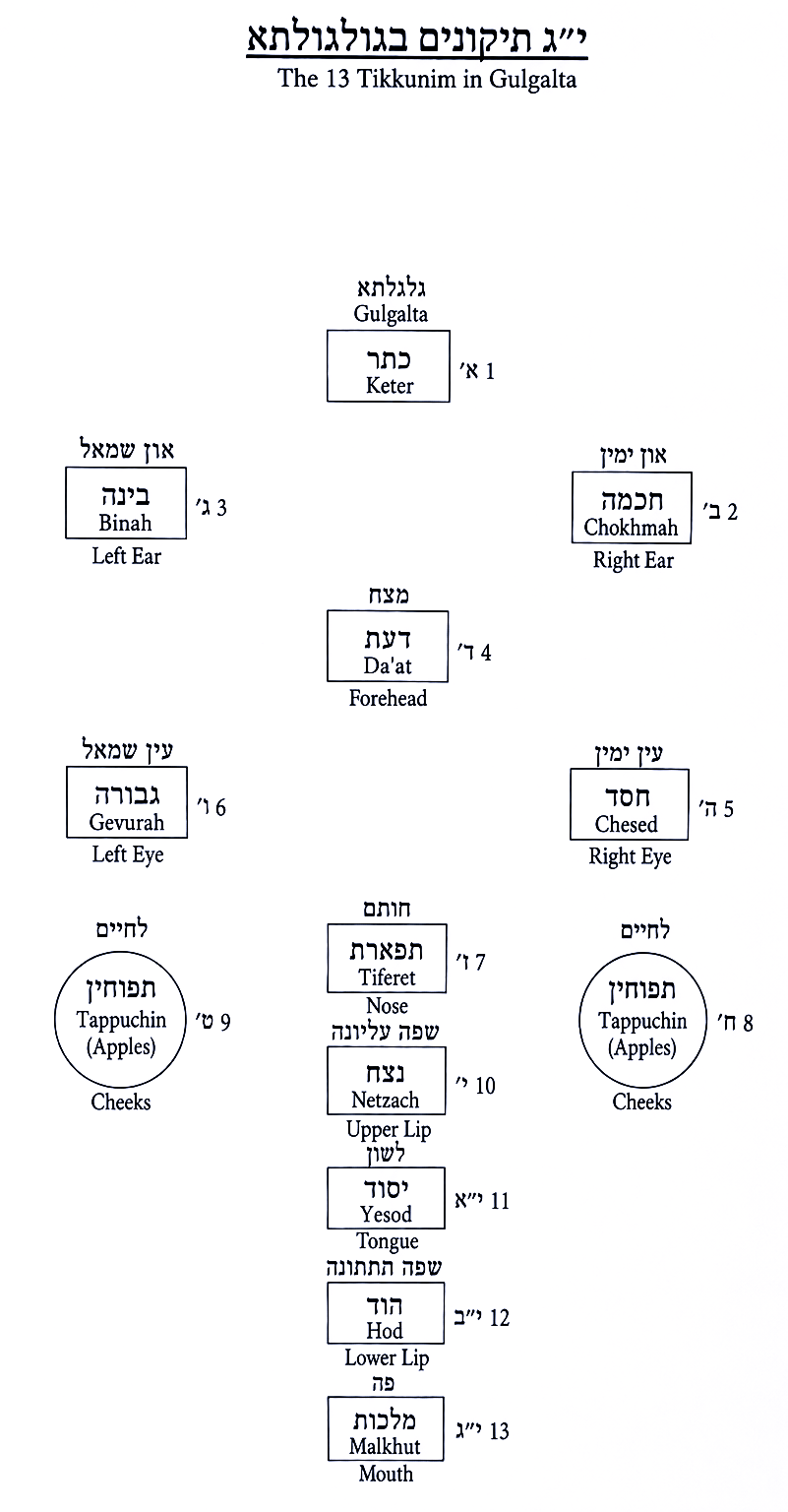
Chapter 7
שער יג פרק ז
[13:7] And behold, it has already been explained (וְהִנֵּה כְּבָר נִתְבָּאֵר), that the seven lower ones of Atik (כִּי ז״ת דְּעַתִּיק), behold they are revealed in the seven of the Skull of Arich Anpin (הִנֵּה הֵם מִתְגַּלִּין בְּז׳ דְּגֻלְגַּלְתָּא דְּא״א), and this is the secret mentioned in the Zohar, “Atik Yomin” (וְהוּא סוֹד הַנִּזְכָּר בַּזֹּהַר עַתִּיק יוֹמִין), meaning that only the aspect of “days” is revealed (פֵּירוּשׁ שֶׁאֵין מִתְגַּלֶּה רַק בְּחִינַת יוֹמִין), which are the seven days of Creation, the seven lower ones of it (שֶׁהֵם ז׳ יְמֵי בְּרֵאשִׁית ז״ת דִּילֵיהּ). And everywhere the explanation of “Atik Yomin” is that they are the seven lower ones that are revealed in the seven of the Skull (וּבְכָל מָקוֹם פֵּירוּשׁ עַתִּיק יוֹמִין הֵם ז״ת הַמִּתְגַּלִּין בְּז׳ דְּגֻלְגַּלְתָּא). And relative to its enclothement within Arich Anpin (וּבְעֶרֶךְ שֶׁהוּא מִתְלַבֵּשׁ בְּא״א), it is written about it, “and the hair of His head was like clean wool” (כְּתִיב בֵּיהּ וְשַׂעַר רֵישֵׁיהּ כְּעָמֶר נָקֵא), even though this is not its actual head (וְאַע״פּ שֶׁאֵין זוֹ רֹאשׁוֹ מַמָּשׁ), but only that it is revealed here (רַק שֶׁמִּתְגַּלֶּה בְּכָאן).
And know (וְדַע), that even though all of these are hairs, in the secret of the root of the judgments (כִּי אַע״פּ שֶׁכָּל אֵלּוּ הֵם שְׂעָרוֹת בְּסוֹד שֹׁרֶשׁ הַדִּינִין), nevertheless they are more merciful than the mercies of Ze’ir Anpin (עכ״ז הִנֵּה הֵם יוֹתֵר רַחֲמִים מֵרַחֲמֵי ז״א). And therefore from these hairs influence is drawn to Ze’ir Anpin (וְלָכֵן מֵאֵלּוּ הַשְּׂעָרוֹת נִמְשָׁךְ הַשֶּׁפַע לְז״א), and they do not reach except until the head of Ze’ir Anpin, and no further (וְאֵינָם מַגִּיעִין רַק עַד רֵישָׁא דְּז״א וְלֹא יוֹתֵר). And the rest of the totality of Ze’ir Anpin is smooth (וּשְׁאָר כְּלָלוּת הַז״א הוּא חָלָק), and this is the secret of “and I am a smooth man” (וְז״ס וְאָנֹכִי אִישׁ חָלָק), as is written in the secret of sackcloth and ashes (כְּמ״ש בְּסוֹד שַׂק וָאֵפֶר).
Ze’ir Anpin is illuminated by several kinds of lights in its Mochin (ז״א מְאִירִין בּוֹ כַּמָּה מִינֵי אוֹרוֹת בְּמוֹחִין דִּילֵיהּ). The first is that an illumination spreads from the supernal Chesed that enclothes itself in the Keter of Arich Anpin (א׳ הוּא שֶׁמִּתְפַּשֶּׁטֶת הֶאָרָה מִן הַחֶסֶד הָעֶלְיוֹן שֶׁמִּתְלַבֵּשׁ בְּכֶתֶר דְּא״א), and from there it spreads until the thirteenth Mazal of Arich (וּמִשָּׁם מִתְפַּשֶּׁטֶת עַד מַזָּל הַי״ג דְּאֲרִיךְ), and from there that illumination spreads further until the Da‘at that is between Abba and Imma (וּמִשָּׁם מִתְפַּשֶּׁט עוֹד הֶאָרָה הַהִיא עַד הַדַּעַת שֶׁבֵּין או״א), and unites them (וּמְיַחֵד אוֹתָן). And then through this power the Mochin of Ze’ir Anpin are formed, which enclothe themselves in the Netzach, Hod, and Yesod of Imma (וְאָז בְּכֹחַ זֶה נַעֲשֶׂה מוֹחִין דְּז״א הַמִּתְלַבְּשִׁין בְּנֵה״י דְּאִמָּא).
The second illumination is drawn from the concealed Chokhmah of Arich Anpin (ב׳ הֶאָרָה נִמְשֶׁכֶת מִמּ״ס דְּא״א), and descends through the hairs of the head and also through the hairs of the beard of Arich Anpin (וְיוֹרֶדֶת דֶּרֶךְ שַׂעֲרוֹת דְּרֵישָׁא וְדֶרֶךְ שַׂעֲרוֹת דְּדִיקְנָא דְּא״א גַּם כֵּן), and they are drawn until the beard of Ze’ir Anpin (וְנִמְשָׁכִין עַד דִּיקְנָא דְּז״א), and they illuminate in its Mochin (וּמְאִירִין בְּמוֹחִין דִּילֵיהּ).
The third illumination emerges from the Yesod of Atik (ג׳ הֶאָרָה יוֹצֵאת מִיְסוֹד דְּעַתִּיק), within which (the concealed inner Chokhmah) is the brain of Da‘at of Arich Anpin (אֲשֶׁר תּוֹכוֹ (מ״ס פְּנִימִים) מוֹחָא דְּדַעַת דְּא״א), and it breaks through the forehead of Arich Anpin (וּבוֹקֵעַ מִצְחָא דְּא״א), and an illumination goes out until the forehead of Ze’ir Anpin (וְיוֹצֵא הֶאָרָה עַד מִצְחָא דְּז״א), and it illuminates in its forehead, in the inner aspect of the Mochin within its forehead (וּמֵאִיר בְּמִצְחָא דִּילֵיהּ בִּפְנִים שֶׁל הַמּוֹחִין בְּתוֹךְ מִצְחָא דִּילֵיהּ), and then all the judgments in the forehead (Some say: in the Mochin) of Ze’ir Anpin are nullified (וְאָז מִתְבַּטְּלִין כָּל הַדִּינִין שֶׁבַּמֵּצַח (נ״א שֶׁבַּמּוֹחִין) דְּז״א). And behold, above it was explained that the whitenesses are divided into thirteen paths (וְהִנֵּה לְעֵיל נִתְבָּאֵר כִּי הַחוּרְתָּא מִתְחַלְּקִים לְי״ג אָרְחִין), and the four alone, which are the posterior of the head, are drawn together with the thirteen strands of hair of the head that are drawn from the posterior of the head until the head of Ze’ir Anpin (וְהַד׳ לְבַדָּן שֶׁהֵם אֲחוֹרֵי הָרֹאשׁ הֵם נִמְשָׁכִין עִם י״ג נִימִין דְּשַׂעֲרֵי דְּרֵישָׁא הַנִּמְשָׁכִין אֲחוֹרֵי הָרֹאשׁ עַד רֵישָׁא דְּז״א), and from there the flow descends to the head of Ze’ir Anpin (וּמִשָּׁם יוֹרֵד הַשֶּׁפַע לְרֵישָׁא דְּז״א).
Behold then (הִנֵּה א״כ), that Abba and Imma are influenced from the secret of the Mazal of Atika (כִּי או״א מֻשְׁפָּעִים מִסּוֹד מַזָּלָא דְּעַתִּיקָא), for they are drawn from the concealed Chokhmah, the Chokhmah of Keter (כִּי הֵם נִמְשָׁכִין מִמ״ס חָכְמָה דְּכֶתֶר). And Ze’ir Anpin is influenced more from above, from the Keter of Arich Anpin (וְהַז״א מֻשְׁפָּע יוֹתֵר מִלְּמַעְלָה מִכֶּתֶר דְּא״א), from where the thirteen whitenesses are drawn (שֶׁמִּשָּׁם נִמְשָׁכִין י״ג חוּרְתָּא). And because of this aspect, Ze’ir Anpin is sometimes more elevated than Abba and Imma (וּמִפְּאַת בְּחִינָה זוֹ הוּא יוֹתֵר מְעוּלֶּה הַז״א לִפְעָמִים מֵאו״א). However, since the flow descends to him only through Abba and Imma (אַךְ לִהְיוֹת כִּי אֵין יוֹרֵד לוֹ הַשֶּׁפַע רַק דֶּרֶךְ או״א), in this aspect they are greater than him (בִּבְחִינָה זוֹ הֵם גְּדוֹלִים מִמֶּנּוּ). And this is the secret hinted to in the Idra Zuta, daf 292 (וְז״ס הַנִּרְמָז בְּאַדְרָ״ז רצב״ב): “Abba and Imma emerge from this brain; Ze’ir Anpin depends on Atika and is held by it” (או״א מֵהַאי מוֹחָא נָפְקִי ז״א בְּעַתִּיקָא תָּלְיָא וַאֲחִיד). And understand this (וְהָבֵן זֶה), according to what was written (ע״ד מ״ש), that Ze’ir Anpin draws nourishment from the Keter of Arich Anpin (כִּי ז״א יוֹנֵק מִכֶּתֶר דְּא״א), and Abba and Imma from the brain of Atika through the Mazal that descends from there (וְאו״א מִמּוֹחָא דְּעַתִּיקָא ע״י הַמַּזָּל הַיּוֹרֵד מִשָּׁם). And since it has come into our hands, we shall explain what is meant by “dependent and held” (וְהוֹאִיל וְאָתָא לְיָדָן נְבָאֵר מַה שֶּׁאָמַר תַּלְיָא וַאֲחִיד).
Know (דַּע), that it has already been explained that half of the Tiferet of Arich Anpin and its Netzach and Hod and Yesod enclothe themselves in Ze’ir Anpin (כִּי כְּבָר נִתְבָּאֵר כִּי חֲצִי ת״ת דְּא״א וְנֵה״י שֶׁלּוֹ הֵם מִתְלַבְּשִׁין בְּז״א), and this is what is meant by “held and dependent in Atika” (וְז״ש בְּעַתִּיקָא אֲחִיד וְתַלְיָא), for he is truly held there in the Netzach, Hod, and Yesod (כִּי הוּא אֲחִיד שָׁם מַמָּשׁ בְּנֵה״י). However, relative to these thirteen rectifications of whiteness mentioned above (אַךְ בְּעֶרֶךְ אֵלּוּ י״ג תִּקּוּנֵי חוּרְתָּא כַּנִּזְכָּר), regarding them it says “dependent” (עַל זֶה אָמַר תַּלְיָא), for by them Ze’ir Anpin is suspended but not held (כִּי בָּהֶם נִתְלֶה ז״א וְלֹא אֲחִיד). And relative to these two aspects it says “held and dependent” (וּבְעֶרֶךְ ב׳ בְּחִינוֹת אֵלּוּ אָמַר אֲחִיד וְתַלְיָא). And this itself is also in Abba and Imma (גַּם זֶה עַצְמוֹ הוּא בְּאו״א), for they are dependent on Atika Kadisha through the holy Mazal that is drawn from the concealed Chokhmah (כִּי הֵם תַּלְיָין בְּעַתִּיקָא קַדִּישָׁא בְּמַזָּלָא קַדִּישָׁא הַנִּמְשָׁךְ מִמ״ס), and they are also held in the Binah and the Chesed and Gevurah and Tiferet of Arich Anpin (וְהֵם גַּם כֵּן אֲחוּזִים בְּבִינָה חַג״ת דְּא״א). It is found (נִמְצָא), that Arich Anpin enclothes itself in the entirety of Atzilut (כִּי א״א מִתְלַבֵּשׁ בְּכָל הָאֲצִילוּת כֻּלּוֹ), but its head does not enclothe itself (אַךְ רֹאשׁוֹ אֵינוֹ מִתְלַבֵּשׁ), for the supernal does not enclothe itself in the lower except through its seven lower ones (כִּי אֵין הָעֶלְיוֹן מִתְלַבֵּשׁ בַּתַּחְתּוֹן אֶלָּא בְּז״ת), and the three upper ones remain in the aspect of Surrounding Light (כִּי הַג״ר נִשְׁאָרִים בְּסוֹד מַקִּיף). And this is the secret hinted to in the Idra Zuta (וְז״ס הַנִּרְמָז בְּאַדְרָ״ז): “Certainly in this Atika nothing is revealed except the head alone” (וַדַּאי בְּהַאי עַתִּיקָא לָא אִתְגַּלֵּי אֶלָּא רֵישָׁא בִּלְחוֹדוֹי).
And behold, it appears difficult according to this from what is written in the Idra Zuta, daf 130b (וְהִנֵּה נִרְאֶה דְּקָשֶׁה לָזֶה מַה שֶּׁכָּתוּב בְּאַדְרָ״ז דְּק״ל ע״ב), that the beard hangs until the navel of the heart of Arich Anpin (כִּי דִּיקְנָא תַּלְיָיא עַד טַבּוּרָא דְּלִבָּא דְּא״א), for it would appear that he has the stature of a body (דְּנִרְאֶה שֶׁיֵּשׁ לוֹ קוֹמַת הַגּוּף). But this you will understand from what is said, “it is not revealed,” and it does not say “it does not exist” (אַךְ זֶה תָּבִין מַה שֶּׁאָמַר לָא אִתְגַּלְיָיא וְלֹא אָמַר וְלָא הֲוֵי), for he indeed has the stature of the entire body, but it is not revealed except for the head alone (כִּי יֵשׁ לוֹ קוֹמַת כָּל הַגּוּף וְאֵינוֹ נִגְלֶה רַק הָרֹאשׁ לְבַד), because there is no manner for the head itself to enclothe—only the body enclothes (כִּי אֵין דֶּרֶךְ לְהַלְבִּישׁ הָרֹאשׁ רַק הַגּוּף).
And behold, from the beginning of the throat until the navel of the heart of Arich Anpin, there is the presence of Abba and Imma (וְהִנֵּה מִתְּחִלַּת הַגָּרוֹן עַד טַבּוּרָא דְּלִבָּא דְּא״א שָׁם מְצִיאוּת או״א), for until there they enclothe him (כִּי עַד שָׁם מַלְבִּישִׁין אוֹתוֹ). And from there and below Ze’ir Anpin enclothes him (וּמִשָּׁם וּלְמַטָּה מַלְבִּישׁוֹ ז״א). And this is the secret of Tiferet, which is called the heart (וְז״ס הַת״ת שֶׁנִּקְרָא לֵב), and understand this (וְהָבֵן זֶה). And from the navel of the heart, which is half of its Tiferet, from there begins the secret of the head of Ze’ir Anpin (וּמִטַּבּוּרָא דְּלִבָּא שֶׁהוּא חֲצִי ת״ת שֶׁלּוֹ מַתְחִיל מִשָּׁם סוֹד רֵישָׁא דְּז״א). And within Ze’ir Anpin, Arich Anpin enclothes itself from its navel until the conclusion of its Yesod (וּבְתוֹךְ הַז״א מִתְלַבֵּשׁ א״א מִטַּבּוּרוֹ עַד סִיּוּם יְסוֹד שֶׁבּוֹ).
Therefore they said, “in Atika nothing is revealed except the head alone” (וְלָכֵן אָמְרוּ בְּעַתִּיקָא לָא אִתְגַּלְיָא אֶלָּא רֵישָׁא בִּלְחוֹדוֹי). And we shall return to the matter (וְנַחְזוֹר לָעִנְיָן), for although we said that the seven lower ones of Atik enclothe themselves in the seven of the Skull of Arich Anpin (כִּי ז״ת דְּעַתִּיק אַף עַל פִּי שֶׁאָמַרְנוּ שֶׁהֵם מִתְלַבְּשִׁין בְּז׳ דְּגֻלְגַּלְתָּא דְּא״א), nevertheless it is necessary that they spread throughout the entire stature of Arich Anpin (עכ״ז בְּהֶכְרֵחַ הוּא שֶׁיִּתְפַּשְּׁטוּ בְּכָל קוֹמַת א״א). And the primary aspect of their being in the head of Arich Anpin is only two—Chesed and Gevurah (וְעִיקַּר מַה שֶּׁהֵם בְּרֵישָׁא דְּא״א אֵינָם אֶלָּא ב׳ שֶׁהֵם חֶסֶד וּגְבוּרָה): Chesed in the head, in the Skull (חֶסֶד בְּרֵישָׁא בַּגֻּלְגַּלְתָּא), and Gevurah in the Brain (גְּבוּרָה בְּמוֹחָא).
For the Skull and the Brain are the two lower heads (כִּי גֻּלְגַּלְתָּא וּמוֹחָא הֵם תְּרֵין רֵישִׁין תַּתָּאִין), and they are the roots for all the existence of the head (וְהֵם שָׁרָשִׁים לְכָל מְצִיאוּת הָרֵישָׁא). But the other aspects that are revealed in the seven of the head are only an illumination alone (אֲבָל שְׁאָר הַמִּתְגַּלִּין בְּז׳ דְּרֵישָׁא אֵינָם אֶלָּא הֶאָרָה בְּעַלְמָא), whereas their primary enclothement is below, in the rest of the measure of the stature of Arich Anpin (אַךְ עִיקַּר הִתְלַבְּשׁוּתָם לְמַטָּה בִּשְׁאָר שִׁעוּר קוֹמַת א״א).
How is this? (כֵּיצַד) Tiferet is in the Binah of Arich Anpin, which is the Skull of Abba and Imma (ת״ת בְּבִינָה דְּא״א שֶׁהוּא גֻּלְגַּלְתָּא דְּאו״א), and Netzach and Hod are in the Chesed and Gevurah of Arich Anpin, which are the Mochin for Abba and Imma (נֵה״י בְּחַג״ת דְּא״א שֶׁהֵם מוֹחִין לְאו״א). And afterward, from the Yesod, an illumination spreads into the Tiferet and the Netzach, Hod, and Yesod of Arich Anpin (וְאַחַ״כ מִן הַיְסוֹד מִתְפַּשֶּׁטֶת הֶאָרָה בְּת״ת וּנֵה״י דְּא״א), for you already know that always all Netzach, Hod, and Yesod come from the secret of addition and are not primary (כִּי כְּבָר יָדַעְתָּ כִּי לְעוֹלָם כָּל נֵה״י הֵם בָּאִים מִסּוֹד תּוֹסֶפֶת וְאֵינָם עִיקָּרִין).
Therefore they always come in the manner of addition and not as root and essence (לָכֵן הֵם בָּאִים תָּמִיד בְּדֶרֶךְ הוֹסָפָה וְלֹא שֹׁרֶשׁ וְעִיקָּר). And therefore, from the Yesod of Atik the Netzach, Hod, and Yesod of Arich Anpin spread forth (לָכֵן מִסּוֹד יְסוֹד דְּעַתִּיק מִתְפַּשְּׁטִין נֵה״י דְּא״א). And this is the matter in all the Netzach, Hod, and Yesod of Atzilut (וְכֵן הָעִנְיָן בְּכָל נֵה״י דַּאֲצִילוּת). And if you examine carefully you will find (וְאִם תְּדַקְדֵּק תִּמְצָא), that always from Tiferet there is made the Keter, which is the Skull (כִּי תָּמִיד ת״ת נַעֲשֶׂה מִמֶּנּוּ הַכֶּתֶר שֶׁהוּא גֻּלְגַּלְתָּא), for the Tiferet of Atik is there the Skull of Abba and Imma (כִּי ת״ת דְּעַתִּיק תַּמָּן גֻּלְגַּלְתָּא דְּאו״א), which is the secret of the Binah of Arich Anpin (שֶׁהוּא סוֹד בִּינָה דְּא״א). And from the Tiferet of Arich Anpin there is made the Keter and the Skull of Ze’ir Anpin (וּמִת״ת [נ״א וְכֵן ת״ת] דְּא״א נַעֲשֶׂה כֶּתֶר וְגֻלְגַּלְתָּא דְּז״א), and likewise from the Tiferet of Ze’ir Anpin there is made the Keter and the Skull of the Nukvah (וְכֵן מִת״ת דְּז״א נַעֲשֶׂה כֶּתֶר וְגֻלְגַּלְתָּא דְּנוּקְבָא).
Also know (גַּם דַּע), that the secret of the Tiferet of Arich Anpin is divided into two halves (כִּי סוֹד ת״ת דְּא״א נֶחְלָק לִב׳ חֲצָאִין): half of it for the existence of Abba and Imma, for the need of their body (חֶצְיוֹ לִמְצִיאוּת או״א לְצֹרֶךְ גּוּפָם), and half of it for the Keter of Ze’ir Anpin (וְחֶצְיוֹ לְכֶתֶר דְּז״א). Behold, Abba and Imma and Ze’ir Anpin are two kings who use one crown (הֲרֵי כִּי או״א וְז״א הֵם ב׳ מְלָכִים מִשְׁתַּמְּשִׁין בְּכֶתֶר א׳). Likewise, the Tiferet of Ze’ir Anpin is divided into two (גַּם ת״ת דְּז״א נֶחְלָק לִב׳): half of it for the body of Ze’ir Anpin, in the manner mentioned above (חֶצְיוֹ לְגוּף דְּז״א עַל דֶּרֶךְ הַנַּ״ל), and half of it for the Keter of the Nukvah (וְחֶצְיוֹ לְכֶתֶר דְּנוּקְבָא). And this too is the secret of two kings using one crown (וְגַם הוּא סוֹד ב׳ מְלָכִים לְהִשְׁתַּמֵּשׁ בְּכֶתֶר א׳). And always every Tiferet is divided into two halves (וּלְעוֹלָם כָּל הַת״ת נֶחְלָק לִשְׁנֵי חֲצָאִין).
However, the distinction is this (אַךְ הַחִלּוּק הוּא): that the secret of the Tiferet of Atik, which is concealed in Binah, is divided equally, this side and that side, to Abba and Imma together (כִּי סוֹד ת״ת דְּעַתִּיק הַגָּנוּז בְּבִינָה מִתְחַלֵּק בְּשָׁוֶה זֶה בְּצַד זֶה לְאו״א כַּחֲדָא). But the Tiferet of Arich Anpin is divided into two halves, one above the other (אֲבָל ת״ת דְּא״א נֶחְלָק לִב׳ חֲצָאִין זֶה לְמַעְלָה מִזֶּה): one half for itself (א׳ לוֹ לְעַצְמוֹ), and the second half below, in Ze’ir Anpin (וְחֶצְיוֹ הַב׳ לְמַטָּה בְּז״א). And likewise the Tiferet of Ze’ir Anpin, for the Keter of the Nukvah (וְכֵן ת״ת דְּז״א לְכֶתֶר דְּנוּקְבָא), is divided into two halves: half for itself and half for the Nukvah, one below the other (נֶחְלָק לִב׳ חֲצָאִין חֶצְיוֹ לְעַצְמוֹ וְחֶצְיוֹ לַנּוּקְבָא זֶה עַל גַּבֵּי זֶה). And in the discourse on Abba and Imma this will be explained at length (וּבְדְרוּשׁ או״א יִתְבָּאֵר זֶה בְּאֹורֶךְ). However, the illumination of Atik is revealed in the two lower heads of Arich Anpin as one (וְאָמְנָם הֶאָרַת הָעַתִּיק הוּא מִתְגַּלֶּה בִּשְׁנֵי רֵישִׁין תַּתָּאִין דְּא״א כַּחֲדָא), even though it would have been fitting that the first be revealed in the second, and the second in the third (אַף עַל פִּי שֶׁמֵהָרָאוּי הָיָה שֶׁיִּהְיֶה הָא׳ מִתְגַּלֶּה בַּב׳ וְהַב׳ בַּג׳).
The reason is this (הַטַּעַם): for behold, the existence of these two heads is later revealed in Abba and Imma, and Abba and Imma emerge as one and abide as one (כִּי הִנֵּה מְצִיאוּת אֵלּוּ הַב׳ רֵישִׁין מִתְגַּלִּין אַחַ״כ בְּאו״א וְאו״א כַּחֲדָא נָפְקִי וְכַחֲדָא שָׁרְיָין). Therefore, these two heads are also as one (לָכֵן גַּם אֵלּוּ הַב׳ רֵישִׁין יִהְיוּ כַּחֲדָא), and the first enclothes itself equally within them as well (וְהָרִאשׁוֹן מִתְלַבֵּשׁ בְּשָׁוֶה בָּהוֹן גַּם כֵּן). And therefore you will find (וְלָכֵן תִּמְצָא), that the Chesed within it is revealed in the Skull (כִּי הַחֶסֶד שֶׁבּוֹ מִתְגַּלֶּה בַּגֻּלְגַּלְתָּא), and the Gevurah is revealed in the Brain (וְהַגְּבוּרָה מִתְגַּלֶּה בְּמוֹחָא), and then Chesed is included within Gevurah and Gevurah within Chesed (וְאָז נִכְלָל חֶסֶד בִּגְבוּרָה וּגְבוּרָה בְּחֶסֶד). And we also find (גַּם אָנוּ מוֹצְאִין), that the Yesod is revealed in the forehead, which is the secret of the second head (כִּי הַיְסוֹד מִתְגַּלֶּה בַּמֵּצַח שֶׁהוּא סוֹד רֵישָׁא תִּנְיָינָא), and from there it is revealed in the beard, in the secret of Will, as mentioned in the Idra Zuta, daf 289 (וּמִשָּׁם מִתְגַּלֶּה בְּדִיקְנָא בְּסוֹד הָרָצוֹן כַּנִּזְכָּר בְּאַדְרָ״ז דְּרפ״ט).
You have also already known (גַּם כְּבָר יָדַעְתָּ), that the secret of “the splendor of the beard” (וְהוֹד זָקָן), Some say: it is the beard of Arich Anpin (נ״א הוּא זָקָן דְּא״א), mentioned in the Idra, also belongs to the beard (הַנִּזְכָּר בְּאַדְרָא גַּם דְּדִיקְנָא), for it too is included in that (כִּי גַּם בּוֹ נִכְלָל הַהוּא כִּי הַדִּיקְנָא), and it is only in the aspect of Yesod (אֵינוֹ אֶלָּא בִּבְחִינַת יְסוֹד). Therefore, women (and the eunuch) do not have a beard (לָכֵן הַנָּשִׁים (וְהַסָּרִיס) אֵין לָהֶם זָקָן).
Behold, these two heads are thus included one within the other (הֲרֵי דְּב׳ רֵישִׁין אֵלּוּ כְּלוּלִין זֶה בָּזֶה). And it appears to me, Chaim, that this is analogous to the light of the forehead that emerged from Adam Kadmon, which gives life to the Nekudim (וְנִרְאֶה לִי דְּחַיִּים שֶׁזּוֹ דִּמְיוֹן אוֹר הַמֵּצַח שֶׁיָּצָא מֵא״ק הַמְחַיֶּה הַנְּקוּדִים). There is also another aspect: the illumination of the mouth of Arich Anpin, from whose mouth vapors emerge and surround as Surrounding Light the seven lower ones of Arich Anpin (Some say: of Ze’ir Anpin) (עוֹד יֵשׁ בְּחִינַת הֶאָרַת פֶּה דְּא״א שֶׁיּוֹצְאִין מִפִּיו הֲבָלִים וּמַקִּיפִין בְּסוֹד או״מ לְז״ת דְּא״א (נ״א דְּז״א)). And this too appears to me, Chaim, that it is analogous to the mouth of Adam Kadmon, which brings forth the Akudim (וְגַם זֶה נִרְאֶה לִי דְּחַיִּים שֶׁהוּא דִּמְיוֹן פֶּה דְּא״ק הַמּוֹצִיא הָעֲקוּדִים).
Chapter 8
שער יג פרק ח
[13:8] And now we shall explain the existence of the beard of Arich Anpin—what it is (וְעַתָּה נְבָאֵר מְצִיאוּת דִּיקְנָא דְּא״א מַה הוּא). Behold, it is known that Arich Anpin enclothes Atik, as mentioned above (הִנֵּה נוֹדָע כִּי א״א מַלְבִּישׁ לְעַתִּיק כַּנַּ״ל), and we have already explained (וּכְבָר בֵּאַרְנוּ), that in Arich Anpin there is a Skull, and this is the secret of the Keter of Arich Anpin (כִּי בְּא״א יֵשׁ גֻּלְגַּלְתָּא וְהוּא סוֹד הַכֶּתֶר דְּא״א). And within it there is one brain alone, which is not divided into three brains as in Ze’ir Anpin, but one alone (וּבְגוֵוהּ חַד מוֹחָא לְחוּד דְּלָא אִתְפַּלֵּיג לְג׳ מוֹחִין כְּמוֹ בְּז״א רַק חַד לְחוּד). And this brain is the secret of the Chokhmah of Arich Anpin and is called the concealed Chokhmah (וְהַאי מוֹחָא הוּא סוֹד חָכְמָה דְּא״א וְנִקְרָא מ״ס).
However, this difference exists in Arich Anpin more than in the other Partzufim (אָמְנָם שִׁנּוּי זֶה יֵשׁ בְּא״א יוֹתֵר מִבִּשְׁאָר פַּרְצוּפִים): for in its Skull there are Keter and Chokhmah, but Binah and Da‘at are not in its Skull (כִּי בַּגֻּלְגַּלְתָּא שֶׁלּוֹ יֵשׁ כֶּתֶר וְחָכְמָה אֲבָל בִּינָה וְדַעַת אֵין בַּגֻּלְגַּלְתָּא שֶׁלּוֹ). Rather, the Binah of Arich Anpin is the secret of the throat of Arich Anpin, and there it descends and does not remain in the head (וְאָמְנָם בִּינָה דְּא״א הוּא סוֹד הַגָּרוֹן דְּא״א וְתַמָּן נַחְתָּת וְלָא קָיְימָא בְּרֵישָׁא). And from here you will understand how Binah is called “throat,” and is called “Keter,” and is called “shofar” (וּמִכָּאן תָּבִין אֵיךְ בִּינָה נִקְרָא גָּרוֹן וְנִקְרָא כֶּתֶר וְנִקְרָא שׁוֹפָר), for behold, in the throat of Arich Anpin the Keter of Abba and Imma is made (כִּי הֲלֹא בַּגָּרוֹן דְּא״א נַעֲשֶׂה כֶּתֶר לְאו״א). It is found that the three upper ones of Arich Anpin sit one upon the other—Keter, and beneath it Chokhmah, and beneath it Binah (נִמְצָא כִּי ג״ר דְּא״א יָתְבִין דָּא עַל דָּא כֶּתֶר וְתַחְתָּיו חָכְמָה וְתַחְתָּיו בִּינָה), and they are not in the secret of lines—Keter above and Chokhmah and Binah below on two sides of the Keter (וְאֵינָם בְּסוֹד קַוִּין כֶּתֶר לְמַעְלָה וְחו״ב לְמַטָּה מִב׳ צִדֵּי הַכֶּתֶר). And the essence of this rectification is to be in the manner of lines, as mentioned in many places (וְעִיקַּר הַתִּקּוּן הַזֶּה הוּא לִהְיוֹת קַוִּין כַּנַּ״ל בְּכַמָּה מְקוֹמוֹת). And the reason for this difference in Arich Anpin was as follows (וְטַעַם שִׁנּוּי זֶה דְּא״א הָיָה כִּי): for I have already informed you of the secret of the kings who died, who are the secret of the points, and afterward they were rectified (כְּבָר הוֹדַעְתִּיךָ סוֹד הַמְּלָכִים שֶׁמֵּתוּ הֵם סוֹד הַנְּקוּדוֹת וְאַחַ״כ נִתְקַנּוּ). However, in the head of Atik there was no aspect at all of the kings who died, as explained by us (וְאָמְנָם בְּרֵישָׁא עַתִּיק לֹא הָיָה בּוֹ שׁוּם בְּחִינַת מְלָכִים שֶׁמֵּתוּ כַּמְבוֹאָר אֶצְלֵינוּ). But from Arich Anpin and below there was clarification of the seven kings (אַךְ מֵאֲרִיךְ אַנְפִּין וּלְמַטָּה הָיָה בּוֹ בֵּרוּר ז׳ מְלָכִים).
Therefore, Arich Anpin, which enclothes and receives the light of Atik itself, did not have the strength for the Binah within it to receive its light (לָכֵן א״א הַמַּלְבִּישׁ וּמְקַבֵּל אוֹר דְּעַתִּיק עַצְמוֹ לֹא הָיָה כֹּחַ אֶל הַבִּינָה שֶׁבּוֹ לְקַבֵּל אוֹרוֹ), and therefore it descended to the throat (וְלָכֵן יָרְדָה בַּגָּרוֹן), for from a distant place it is able to receive illumination (כִּי מִמָּקוֹם רָחוֹק תּוּכַל לְקַבֵּל הֶאָרָה). And the reason is that from Binah judgments are aroused (וְהַטַּעַם לְפִי שֶׁבִּינָה דִּינִין מִתְעָרִין מִינָּהּ), and therefore it does not have the capacity to receive the portion of the light of Atik like Chokhmah does (לָכֵן אֵין בָּהּ כֹּחַ לְקַבֵּל הַחֵלֶק שֶׁל אוֹר דְּעַתִּיק כְּמוֹ הַחָכְמָה). Therefore, Chokhmah remained in its place (לָכֵן הַחָכְמָה נִשְׁאֲרָה בִּמְקוֹמָהּ), and Binah descended to the throat (וְהַבִּינָה יָרְדָה בַּגָּרוֹן).
However, in the other Partzufim, such as Abba and Imma and Ze’ir Anpin and Nukvah, all of them receive the light of Atik through the garment of Arich Anpin (וְאָמְנָם בִּשְׁאָר פַּרְצוּפִים כְּגוֹן או״א וְזו״ן כֻּלָּם מְקַבְּלִים אוֹר דְּעַתִּיק ע״י לְבוּשׁ א״א), and they have the capacity to grasp it (וְיֵשׁ בָּהֶם יְכוֹלֶת לְהַשִּׂיגוֹ), and there is no need for their Binah to descend and distance itself (וְאֵין צֹרֶךְ לְבִינָה שֶׁלָּהֶם לָרֶדֶת וּלְהִתְרַחֵק). But after Binah descended to the throat (וְאָמְנָם אַחַר שֶׁיָּרְדָה הַבִּינָה בַּגָּרוֹן), the Da‘at descended and enclothed itself in the six extremities of Arich Anpin themselves, and it was their spirituality (יָרַד הַדַּעַת וְנִתְלַבֵּשׁ בְּו״ק דְּא״א עַצְמָם וְהָיָה רוּחָנִיּוּת אֲלֵיהֶם). And it has no gathered place except between the two shoulders of Arich Anpin, where it stands, as mentioned elsewhere (וְאֵין לוֹ מָקוֹם מְקוּבָּץ כִּי אִם בֵּין תְּרֵין כְּתֵפָיו דְּא״א הוּא עוֹמֵד כַּנִּזְכָּר בְּמָקוֹם אַחֵר). And we shall return to the matter (וְנַחְזוֹר לָעִנְיָן), for in the head of Arich Anpin there are only Keter and Chokhmah (כִּי בְּרֵישָׁא דְּא״א יֵשׁ כֶּתֶר וְחָכְמָה לְבַד).
And behold, all of this is in the aspect of generality (וְהִנֵּה כָּל זֶה הוּא בִּבְחִינַת הַכְּלָלוּת). But you already know (אֲבָל כְּבָר יָדַעְתָּ), that every measure and every measure among them is comprised of ten (כִּי כָּל מִדָּה וּמִדָּה מֵהֶם כְּלוּלָה מִי׳). And therefore, Keter and Chokhmah each have ten Sefirot within them (וְא״כ כֶּתֶר וְחָכְמָה יֵשׁ בְּכָל אֶחָד י״ס).
And behold, the entire measure of the head, which is until the forehead, which is the place of the hairs (וְהִנֵּה כָּל שִׁעוּר הָרֹאשׁ שֶׁהוּא עַד הַמֵּצַח שֶׁהוּא מְקוֹם הַשְּׂעָרוֹת), there is there the totality of ten Sefirot from Keter and ten Sefirot from Chokhmah (שָׁם יֵשׁ כְּלָלוּת י״ס מִן הַכֶּתֶר וְי״ס מִן הַחָכְמָה). And likewise, below the forehead until the throat, where Binah is (וְכֵן לְמַטָּה מִן הַמֵּצַח עַד הַגָּרוֹן שֶׁשָּׁם הַבִּינָה), there is also the totality of ten Sefirot from Keter and ten Sefirot from Chokhmah (יֵשׁ גַּם כֵּן כְּלָלוּת י״ס מִן הַכֶּתֶר וְי״ס מִן הַחָכְמָה). And all of this is in the aspect of Inner Light (וְכָל זֶה בִּבְחִינַת פְּנִימִית).
And behold also, in the aspect of Surrounding Light, there are ten Surroundings from Keter and ten Surroundings from Chokhmah in the head (וְהִנֵּה גַּם כֵּן בִּבְחִינַת אוֹר מַקִּיף יֵשׁ י׳ מַקִּיפִין מִן הַכֶּתֶר וְי׳ מַקִּיפִין מִן הַחָכְמָה בָּרֹאשׁ). And likewise, ten Surroundings from Keter and ten Surroundings from Chokhmah are from the place of the forehead until the throat (וְכֵן י׳ מַקִּיפִין מִן הַכֶּתֶר וְי׳ מַקִּיפִין מִן הַחָכְמָה יֵשׁ מִמְּקוֹם הַמֵּצַח עַד הַגָּרוֹן). And now we are not occupied with the Surroundings of the head (וְעַתָּה [אֵין] אָנוּ עֲסוּקִין בְּמַקִּיפֵי הָרֹאשׁ), and we shall speak of the Surroundings of the face (וְנְדַבֵּר בְּמַקִּיפֵי הַפָּנִים).
Behold, the secret of the thirteen rectifications of the beard is the secret of the Surrounding Lights of the face, in the manner that we shall explain, with the help of Hashem (הִנֵּה סוֹד י״ג תִּקּוּנֵי דִיקְנָא הֵם סוֹד מַקִּיפֵי פָּנִים עַל דֶּרֶךְ שֶׁנְּבָאֵר בְּע״ה). And the matter is this (וְהָעִנְיָן), that it is true that in the aspect of Inner Light there are ten Sefirot from Keter and ten Sefirot from Chokhmah (כִּי אֱמֶת הוּא שֶׁבִּבְחִינַת או״פ יֵשׁ י״ס מִן הַכֶּתֶר וְי״ס מִן הַחָכְמָה), but in the secret of Surrounding Light there are only thirteen Surroundings from Keter and Chokhmah alone (אַךְ בְּסוֹד מַקִּיף לֹא יֵשׁ רַק י״ג מַקִּיפִים מִכֶּתֶר וְחָכְמָה לְבַד), for the others are not able to be revealed (כִּי הַשְּׁאָרִים אֵינָם יְכוֹלִין לְהִתְגַּלּוֹת). However, the ten Inner Lights stand one upon another in their order—Keter, Chokhmah, Binah, and so on, until the final Malkhut (וְאָמְנָם עֶשֶׂר פְּנִימִיִּים עוֹמְדִים זֶה עַל גַּבֵּי זֶה כְּסִדְרָן כֶּתֶר חָכְמָה בִּינָה וְכו׳ עַד הַמַּלְכוּת הָאַחֲרוֹנָה), and they hold the measure of the place that contains and bears the thirteen Surrounding Lights (וּמַחֲזִיקִים שִׁעוּר הַמָּקוֹם הַמַּחֲזִיק וְהַסּוֹבֵל לְי״ג אוֹרוֹת מַקִּיפִים), and their measure is equal (וְשִׁעוּרָם שָׁוֶה). And this is the secret of the hairs of the beard, through whose openings the lights emerge and illuminate in the aspect of Surrounding Lights (וְזֶהוּ סוֹד שַׂעֲרוֹת הַדִּיקְנָא שֶׁיּוֹצְאִין הָאוֹרוֹת דֶּרֶךְ נִקְבֵי הַשְּׂעָרוֹת וּמְאִירִין בְּסוֹד מַקִּיפִים).
However, there is one distinction between the Inner Lights and the Surrounding Lights (וְאָמְנָם יֵשׁ חִלּוּק א׳ בֵּין פְּנִימִים לְמַקִּיפִים), and it is that the ten inner Sefirot of Keter are one upon another in their order (וְהוּא כִּי י״ס הַפְּנִימִיּוֹת דְּכֶתֶר הֵם זֶה עַל גַּבֵּי זֶה), and likewise the ten inner Sefirot of Chokhmah are also in their order, one upon another (וְכֵן י״ס שֶׁל פְּנִימִיּוּת הַחָכְמָה הֵם גַּם כֵּן כְּסִדְרָן זֶה עַל גַּבֵּי זֶה). However, the Surrounding Lights are the opposite (אָמְנָם הַמַּקִּיפִים הֵם לְהֵפֶךְ), for they begin from below and ascend upward (כִּי הֵם מַתְחִילִין מִלְּמַטָּה לְמַעְלָה), with Malkhut at the head of all thirteen rectifications of the beard (מַלְכוּת בְּרֹאשׁ כָּל י״ג תִּקּוּנֵי דִיקְנָא), and Keter at their end (וְהַכֶּתֶר בְּסוֹפָם). And likewise, the ten Surrounding Sefirot of Chokhmah are in this same manner (וְכֵן הַי״ס מַקִּיפִים שֶׁל חָכְמָה הֵם עַל דֶּרֶךְ זוֹ גַּם כֵּן). And not only this (וְלֹא דַי בָּזֶה), but also all the Surrounding Sefirot of Chokhmah are higher than all the ten Surrounding Sefirot of Keter (אֶלָּא שֶׁגַּם כָּל הַסְּפִירוֹת מַקִּיפִים שֶׁל חָכְמָה הֵם עֶלְיוֹנִים מִכָּל י״ס מַקִּיפִים שֶׁל הַכֶּתֶר).
It follows that the last of all of them, which is the Malkhut of Chokhmah, stands above all of them (נִמְצָא כִּי הָאַחֲרוֹנָה שֶׁבְּכֻלָּם שֶׁהִיא מַלְכוּת דְּחָכְמָה עוֹמֶדֶת לְמַעְלָה מִכֻּלָּם), and the highest and most elevated of all of them, which is the Keter of Keter, stands below all of them (וְהַגָּבוֹהַּ וְהַמְעֻלֶּה שֶׁבְּכֻלָּם שֶׁהוּא כֶּתֶר שֶׁבְּכֶתֶר עוֹמֵד לְמַטָּה מִכֻּלָּם). And the reason is that since it is a revealed light, a Surrounding Light, the lower ones did not have the power to bear it (וְהַטַּעַם כִּי לִהְיוֹתוֹ אוֹר מְגֻלֶּה מַקִּיף לֹא הָיָה כֹּחַ בַּתַּחְתּוֹנִים לְסוֹבְלוֹ), and therefore the supernal lights were not revealed except below their own level (וְלָכֵן הָאוֹרוֹת הָעֶלְיוֹנִים לֹא נִתְגַּלּוּ אֶלָּא לְמַטָּה מִמַּדְרֵגָתָם). And therefore, the Keter of Keter, which is the most supernal level, was revealed in the lowest level of all (וּלְפִיכָךְ כֶּתֶר שֶׁבְּכֶתֶר שֶׁהִיא מַדְרֵגָה עֶלְיוֹנָה יוֹתֵר נִתְגַּלְּתָה בַּמַּדְרֵגָה הַיּוֹתֵר תַּחְתּוֹנָה שֶׁבְּכֻלָּם). And likewise, the Malkhut of Chokhmah, which is the smallest of all of them, was revealed above all of them (וְכֵן מַלְכוּת שֶׁבְּחָכְמָה שֶׁהִיא הַיּוֹתֵר קְטַנָּה שֶׁבְּכֻלָּם נִתְגַּלְּתָה לְמַעְלָה מִכֻּלָּם), because the lower ones have the power to receive it (כִּי יֵשׁ כֹּחַ בַּתַּחְתּוֹנִים לְקַבְּלָהּ), and likewise with the other Sefirot (וְכַיּוֹצֵא בָּזֶה בִּשְׁאָר הַסְּפִירוֹת). And what I said, that the Keter within Keter is revealed in the lowest level, my words were not exact (וּמַה שֶּׁאֲנִי אוֹמֵר שֶׁכֶּתֶר שֶׁבְּכֶתֶר נִתְגַּלָּה בַּמַּדְרֵגָה הַתַּחְתּוֹנָה לֹא דִּיַּקְתִּי לְמִלָּתִי), for behold there are only thirteen rectifications of the beard, and they are not twenty (שֶׁהֲרֵי אֵינָם רַק י״ג תִּקּוּנֵי דִיקְנָא לְבַד וְאֵינָם ך׳). Rather, the intention is to say that the most supernal level within Keter, which is called 'Ve-Nakeh' [and He clears], which is Chesed, is revealed in a lower level, as will be explained, with the help of Hashem (אֶלָּא הַכַּוָּנָה לוֹמַר כִּי הַמַּדְרֵגָה הַיּוֹתֵר עֶלְיוֹנָה שֶׁבַּכֶּתֶר שֶׁהוּא נִקְרָא וְנַקֵּה שֶׁהוּא הַחֶסֶד נִתְגַּלָּה בְּמַדְרֵגָה תַּחְתּוֹנָה כְּמוֹ שֶׁנְּבָאֵר בְּע״ה), for this does not depend on that matter (כִּי אֵין תָּלוּי בָּזֶה). Also know (גַּם דַּע), that the boundaries of places are not defined as they appear to your eyes, to arrange them one upon another in an exact vertical order (כִּי אֵין גֶּדֶר הַמְּקוֹמוֹת כְּמוֹ שֶׁנִּרְאֶה בְּעֵינֶיךָ לְסַדְּרָם זֶה עַל גַּבֵּי זֶה מַמָּשׁ), for the order of levels is not according to whether the physical place is above or below (כִּי אֵין סֵדֶר הַמַּדְרֵגוֹת כְּפִי הֱיוֹת הַמָּקוֹם עֶלְיוֹן אוֹ תַּחְתּוֹן).
For behold, there is a place that is below and is called supernal, and there is a place that is above and is called lower (כִּי הֲלֹא יֵשׁ מָקוֹם לְמַטָּה וְנִקְרָא עֶלְיוֹן וְיֵשׁ מָקוֹם לְמַעְלָה וְנִקְרָא תַּחְתּוֹן). For behold, the place that is beneath the mouth is lower than all of them (כִּי הֲלֹא הַמָּקוֹם שֶׁתַּחַת הַפֶּה הוּא יוֹתֵר תַּחְתּוֹן מִכֻּלָּם), yet it is among the supernal places (וְאָמְנָם הוּא מִכְּלַל הַמְּקוֹמוֹת הָעֶלְיוֹנִים), because it is close to the mouth and receives the light and the breath that emerges from there (לִהְיוֹתוֹ סָמוּךְ אֶל הַפֶּה וּמְקַבֵּל הָאוֹר וְהֶבֶל הַיּוֹצֵא מִשָּׁם), more than many places that are physically higher, because of its closeness to the mouth (יוֹתֵר מִכַּמָּה מְקוֹמוֹת הָעֶלְיוֹנִים לִהְיוֹתוֹ סָמוּךְ לַפֶּה). And likewise, that which is close to the eyes (וְכֵן הַסָּמוּךְ לָעֵינַיִם), and likewise that which is close to the nose (וְכֵן הַסָּמוּךְ אֶל הַחוֹטֶם), for illumination also emerges from them (כִּי גַּם מֵהֶם יוֹצֵאת הֶאָרָה). And if you will say that the place beneath the mouth ought to be called the first rectification (וְאִם תֹּאמַר מָקוֹם שֶׁתַּחַת הַפֶּה הָיָה רָאוּי לְקָרְאוֹ תִּקּוּן רִאשׁוֹן), know that the matter does not depend on this (אַךְ דַּע כִּי אֵין הַדָּבָר תָּלוּי בָּזֶה), but rather it is fitting to evaluate the place itself—whether it is supernal or not (רַק רָאוּי לְהַעֲרִיךְ הַמָּקוֹם עַצְמוֹ אִם הוּא עֶלְיוֹן אִם לָאו), and whether it is close to the place of the breath (וְקָרוֹב לְמָקוֹם הַהֶבֶל). And sometimes there are supernal places that are higher than the place of the breath (וְלִפְעָמִים יֵשׁ מְקוֹמוֹת עֶלְיוֹנִים שֶׁהֵם גְּבוֹהִים מִמְּקוֹם הַהֶבֶל). And this matter depends on the valuation by which the Emanator, blessed be He, evaluated the places in the order of the thirteen rectifications of the beard (וְדָבָר זֶה תָּלוּי בַּהַעֲרָכָה שֶׁהֶעֱרִיךְ הַמַּאֲצִיל יִתְבָּרֵךְ הַמְּקוֹמוֹת בְּסֵדֶר י״ג תִּקּוּנֵי דִיקְנָא), in the manner that we shall explain (עַל דֶּרֶךְ שֶׁנְּבָאֵר).
Chapter 9
שער יג פרק ט
[13:9] However, the explanation of the thirteen attributes, in the secret of the thirteen rectifications of the beard of Arich Anpin, will be clarified by explaining where the thirteen rectifications are located in the beard (אָמְנָם פֵּירוּשׁ י״ג מִדּוֹת בְּסוֹד י״ג תִּקּוּנֵי דִיקְנָא דְּא״א נְבָאֵר מְקוֹם הַי״ג תִּקּוּנִים הֵיכָן הֵם בְּדִיקְנָא). And first we shall enumerate the words, how they are thirteen (וְאָמְנָם נִמְנֶה תְּחִלָּה הַתֵּבוֹת אֵיךְ הֵם י״ג): one, “Who is a God like You” (א׳ מִי אֵל כָּמוֹךָ); two, “Bearing iniquity” (ב׳ נוֹשֵׂא עָוֹן); three, “And passing over transgression” (ג׳ וְעוֹבֵר עַל פֶּשַׁע); four, “For the remnant of His inheritance” (ד׳ לִשְׁאֵרִית נַחֲלָתוֹ); five, “He does not retain His anger forever” (ה׳ לֹא הֶחֱזִיק לָעַד אַפּוֹ); six, “For He delights in lovingkindness” (ו׳ כִּי חָפֵץ חֶסֶד הוּא); seven, “He will return, He will have compassion upon us” (ז׳ יָשׁוּב יְרַחֲמֵנוּ); eight, “He will subdue our iniquities” (ח׳ יִכְבֹּשׁ עֲוֹנֹתֵינוּ); nine, “And You will cast into the depths of the sea all their sins” (ט׳ וְתַשְׁלִיךְ בִּמְצֻלוֹת יָם כָּל חַטֹּאתָם); ten, “You will give truth to Ya'akov” (י׳ תִּתֵּן אֱמֶת לְיַעֲקֹב); eleven, “Lovingkindness to Abraham” (י״א חֶסֶד לְאַבְרָהָם); twelve, “As You swore to our fathers” (י״ב אֲשֶׁר נִשְׁבַּעְתָּ לַאֲבוֹתֵינוּ); thirteen, “From days of old” (י״ג מִימֵי קֶדֶם). However, these thirteen attributes of Micah are the inner effluence that is drawn from the concealed Chokhmah into the hairs of the beard, and they are called the praise of Atik (וְאָמְנָם הַי״ג מִדּוֹת אֵלּוּ דְּמִיכָה הֵם הַשֶּׁפַע הַפְּנִימִיּוֹת הַנִּמְשָׁכִין מִמ״ס בְּתוֹךְ שַׂעֲרוֹת הַזָּקָן וְהֵם הַנִּקְרָאִים שִׁבְחָא דְּעַתִּיקָא), but the hairs of the beard themselves, which are the conduits and vessels and passages through which the holy anointing oil is poured, are the thirteen attributes mentioned in the Torah in the portion Ki Tisa (אַךְ שַׂעֲרוֹת הַזָּקָן עַצְמָן שֶׁהֵם הַצִּנּוֹרוֹת וְהַכֵּלִים וְהַמַּעֲבָרִים שֶׁיָּרִיק הַמִּשְׁחָתָא קַדִּישָׁא בָּהֶם הֵם י״ג מִדּוֹת שֶׁנִּזְכְּרוּ בַּתּוֹרָה בַּפָּרָשָׁה כִּי תִשָּׂא), and they are like (some say: also) the thirteen of Ze’ir Anpin (וְהֵם כְּמוֹ [נ״א נַמֵּי] י״ג דְּז״א), for you already know that in Ze’ir Anpin there are only nine, which are those of the portion Shelach Lekha, and when these thirteen illuminate within it then it is called by their names (כִּי כְּבָר יָדַעְתָּ שֶׁאֵין בְּז״א רַק ט׳ וְהֵם שֶׁל פּ׳ שְׁלַח לְךָ וּכְשֶׁמְּאִירִין בּוֹ י״ג אֵלּוּ אָז נִקְרָא בִּשְׁמָם), and they are in this order: God (one) (אֵל א׳), compassionate (two) (רַחוּם ב׳), and gracious (three) (וְחַנּוּן ג׳), slow (four) (אֶרֶךְ ד׳), of anger (five) (אַפַּיִם ה׳), because “slow to anger” indicates two attributes together and therefore it does not say “slow of anger” in the singular but “of angers” in the plural (לְפִי שֶׁאֶרֶךְ אַפַּיִם מוֹרֶה עַל ב׳ מִדּוֹת יַחַד וְלָזֶה לֹא אָמַר אֶרֶךְ אַף אֶלָּא אַפַּיִם), abundant in kindness (six) (רַב חֶסֶד ו׳), and truth (seven) (וֶאֱמֶת ז׳), preserving kindness (eight) (נֹצֵר חֶסֶד ח׳), for thousands (nine) (לָאֲלָפִים ט׳), bearing iniquity (ten) (נֹשֵׂא עָוֹן י׳), and transgression (eleven) (וָפֶשַׁע י״א), and sin (twelve) (וְחַטָּאָה י״ב), and He cleanses (thirteen) (וְנַקֵּה י״ג). And now we shall explain them in the face of the Adam itself, how they are thirteen rectifications (וְעַתָּה נְבָאֵרָם בִּפְנֵי הָאָדָם עַצְמוֹ אֵיךְ הֵם י״ג תִּקּוּנִים).
And behold, beneath the two corners of the head there begin two heads of the beard (וְאָמְנָם תַּחַת שְׁנֵי פַּאֲתֵי הָרֹאשׁ הֵם מַתְחִילִין ב׳ רֵישִׁין דְּדִיקְנָא), and they are short and not wide (וְהֵם קְצָרִים וְלֹא רְחָבִים), and they are opposite the ear (וְהֵם כְּנֶגֶד הָאֹזֶן), and this is rectification one, which is called “God” (וְזֶהוּ תִּקּוּן א׳ נִקְרָא אֵל). And afterward, rectification two is the rows of hairs that grow on the upper lip over the mouth in length (וְאַחַ״כ תִּקּוּן הַב׳ וְהוּא שׁוּרוֹת הַשְּׂעָרוֹת הַגְּדֵלִים בְּשָׂפָה עֶלְיוֹנָה עַל הַפֶּה לְאֹרֶךְ), and this is “compassionate” (וְזֶהוּ רַחוּם). Three, “and gracious,” is that path that is opposite the middle of the nose (ג׳ וְחַנּוּן הוּא אוֹתוֹ אָרְחָא שֶׁכְּנֶגֶד הָאֶמְצָעִית הַחוֹטֶם). Four, “slow,” is the row of hairs that is beneath the lower lip (ד׳ אֶרֶךְ הוּא שׁוּרַת שְׂעָרוֹת שֶׁתַּחַת שָׂפָה הַתַּחְתּוֹנָה). Five, “of anger,” is the second path that separates in the middle of the beard, and it is aligned opposite the first path that is beneath the nose (ה׳ אַפַּיִם הוּא אָרְחָא תִּנְיָינָא הַמַּפְסִיק בְּאֶמְצַע הַזָּקָן וְהוּא מְכוּוָּן נֶגֶד אָרְחָא קַדְמָאָה שֶׁתַּחַת הַחוֹטֶם). Six, “abundant in kindness,” is beneath the first rectification of “God” (ו׳ וְרַב חֶסֶד הוּא תַּחַת תִּקּוּן קַדְמָאָה דְּאֵל). And this is the completion of the measure of those short hairs of the beard (וְהוּא סִיּוּם שִׁעוּר אוֹתָן הַשְּׂעָרוֹת הַקְּצָרוֹת שֶׁל שַׂעַר הַזָּקָן), and it is in the place where it begins to widen slightly (וְהוּא בַּמָּקוֹם שֶׁהִתְחִיל לְהִתְרַחֵב מְעַט), which is the place of the beginning of the cheekbone itself (שֶׁהוּא מְקוֹם הַתְחָלַת עֶצֶם הַלְּחָיַיִם עַצְמוֹ), which protrudes like a kind of angle beneath the ear (שֶׁהוּא יוֹצֵא כְּמִין זָוִית תַּחַת הָאֹזֶן), and from there downward it is broader than above (וּמִשָּׁם וּלְמַטָּה הוּא רָחָב יוֹתֵר מִשֶּׁל מַעְלָה). And this is called “abundant in kindness” (וְזֶהוּ נִקְרָא וְרַב חֶסֶד), and this extends until the place that is opposite the mouth (וְזֶה נִמְשָׁךְ עַד הַמָּקוֹם שֶׁכְּנֶגֶד הַפֶּה). Seven, “and truth,” are the two smooth faces without hair, the two holy apples (ז׳ וֶאֱמֶת הֵם ב׳ הַפָּנִים הַחֲלָקִים מִן הַשֵּׂעָר תְּרֵין תַּפּוּחִין קַדִּישִׁין). Eight, “preserving kindness,” is that which is called the holy Mazal, and it is the beard from opposite the mouth and downward (ח׳ נֹצֵר חֶסֶד וְהוּא נִקְרָא מַזָּלָא קַדִּישָׁא וְהוּא הַזָּקָן מִכְּנֶגֶד הַפֶּה וּלְמַטָּה), which is the totality of the beard as a whole in a single unification (שֶׁהוּא כְּלָלוּת הַזָּקָן בִּכְלָלוּתָן בְּחִבּוּר אֶחָד), for that which is above this is divided into two, since the two apples and the nose separate between them (כִּי מַה שֶּׁלְּמַעְלָה מִזֶּה הוּא נֶחְלָק לִב׳ כִּי ב׳ תַּפּוּחִין וְחוֹטְמָא מַפְסִיקִין בֵּינְתַּיִם). However, from opposite the mouth and downward is the thickness of the beard and their joining together (וְאָמְנָם מִכְּנֶגֶד הַפֶּה וּלְמַטָּה הוּא עֲבִי הַזָּקָן וְהִתְחַבְּרוּתָן יַחַד), and indeed it is very thick, and they are hairs upon hairs (וְאָמְנָם הוּא מְאֹד עָבֶה וְהֵם שְׂעָרוֹת עַל גַּבֵּי שְׂעָרוֹת). And these are divided into two (וְאֵלּוּ נֶחְלָקִין לִב׳), how so: the side of the beard from above, which is the place of the beard that is revealed, is one rectification (כֵּיצַד צַד הַזָּקָן מִכְּנֶגֶד מַעְלָה שֶׁהוּא מְקוֹם הַזָּקָן הַמְּגֻלֶּה הוּא תִּקּוּן א׳), and the side of the beard that is covered, which is opposite the throat, is a second rectification (וְצַד הַזָּקָן הַמְכֻסֶּה שֶׁהוּא כְּנֶגֶד הַגָּרוֹן הוּא תִּקּוּן ב׳). It is found that we divide the thickness of the beard, for the upper side that is revealed to the eyes is one rectification (נִמְצָא כִּי אָנוּ מְחַלְּקִין עֲבִיּוּת הַזָּקָן כִּי צַד הָעֶלְיוֹן הַנִּגְלֶה לָעֵינַיִם תִּקּוּן א׳). And that which is opposite the throat are the hairs that are beneath those first ones, and they are covered by them—this is rectification two (וּמַה שֶּׁהוּא כְּנֶגֶד הַגָּרוֹן הֵם הַשְּׂעָרוֹת שֶׁתַּחַת אֵלּוּ הָרִאשׁוֹנִים וְהֵם מִתְכַּסִּים בְּאֵלּוּ הֵם תִּקּוּן ב׳).
And behold, these two rectifications are called mazal (וְהִנֵּה אֵלּוּ ב׳ תִּקּוּנִים נִקְרָאִים מַזָּל), and the explanation of mazal is from the language of “it shall drip,” as in “My teaching shall drip like dew,” meaning the extension of the hairs in length from above to below (וּפֵרוּשׁ מַזָּל מִלְּשׁוֹן תִּזַּל כַּטַּל אָמַרְתִּי שֶׁהוּא מֶשֶׁךְ הַשְּׂעָרוֹת בְּאֹרֶךְ מִלְּמַעְלָה לְמַטָּה). And among all these thirteen rectifications there are none that are called thus except these two (וְאֵין בְּכָל הַי״ג תִּקּוּנִים הָאֵלּוּ שֶׁיִּהְיֶה נִקְרָא כָּךְ אֶלָּא אֵלּוּ הַשְּׁנַיִם), the upper one is called “Preserving” which is rectification eight (הָעֶלְיוֹן נִקְרָא נֹצֵר תִּקּוּן הַח׳), and the lower one is called “And He cleanses,” which is rectification thirteen (וְהַתַּחְתּוֹן נִקְרָא וְנַקֵּה תִּקּוּן י״ג). And each of them individually is called mazal (וּשְׁנֵיהֶן כָּל אֶחָד נִקְרָא מַזָּל).
And behold, these hairs extend long until his navel (וְאָמְנָם אֵלּוּ הַשְּׂעָרוֹת הֵם אֲרוּכוֹת עַד הַטַּבּוּר שֶׁלּוֹ). Nine is “for thousands,” for between these long hairs are embedded some small ones, and this is “for thousands” (ט׳ הוּא לָאֲלָפִים כִּי בֵּין אֵלּוּ הַשְּׂעָרוֹת הָאֲרוּכוֹת מוּבְלָעִים קְצָת קְטַנִּים וְזֶהוּ לָאֲלָפִים). Ten is “bearing iniquity,” after these two mazalot there are small hairs adjacent to the throat, and they are a little above it, and they are not embedded in the aforementioned mazal but are discernible on their own and cover the throat (י׳ נֹשֵׂא עָוֹן אַחַר כָּל ב׳ מַזָּלוֹת אֵלּוּ יֵשׁ שְׂעָרוֹת קְטַנִּים סְמוּכוֹת לַגָּרוֹן וְהֵם לְמַעְלָה מִמֶּנּוּ מְעַט וְאֵינָם מוּבְלָעִים בַּמַּזָּל הַנַּ״ל רַק נִכָּרִים לְבַדָּם וְחָפְיֵי אַגְרוֹנָא). Eleven is “and transgression,” which is that these small hairs are equal in their length and none protrudes above the other (י״א וָפֶשַׁע הוּא הֱיוֹת אֵלּוּ הַשְּׂעָרוֹת קְטַנּוֹת שָׁווֹת בְּאָרְכָּן וְלָא נָפְקִי דָּא מִן דָּא). Twelve is “and sin,” which is the mouth itself being free of hairs (י״ב וְחַטָּאָה הוּא הַפֶּה עַצְמוֹ לִהְיוֹת פָּנוּי מִשְּׂעָרוֹת). Thirteen is “and He cleanses,” which is the second mazal and is called rectification thirteen (י״ג וְנַקֵּה הוּא הַמַּזָּל הַב׳ וְנִקְרָא תִּקּוּן י״ג).
And behold, these two mazalot lie one upon the other, and they are male and female (וְאָמְנָם ב׳ מַזָּלוֹת אֵלּוּ שׁוֹכְבִים זֶה עַל זֶה וְהֵם דְּכוּרָא וְנוּקְבָא), and Abba draws nourishment from the eighth, and Imma draws nourishment from the thirteenth (וְאַבָּא יוֹנֵק מִן הַח׳ וְאִמָּא יוֹנֶקֶת מִן הַי״ג). Behold, we have explained the thirteen rectifications of the beard (הֲרֵי בֵּאַרְנוּ י״ג תִּקּוּנֵי דִיקְנָא).
Chapter 10
שער יג פרק י
[13:10] And now we shall explain the names of the Sefirot in the thirteen rectifications of the beard (וְעַתָּה נְבָאֵר שֵׁמוֹת הַסְּפִירוֹת בְּי״ג תִּקּוּנֵי דִיקְנָא), for behold the first eight rectifications are eight Sefirot of Chokhmah (וְהוּא כִּי הֲלֹא ח׳ תִּקּוּנֵי דִיקְנָא קַדְמָאִין הֵם ח׳ סְפִירוֹת דְּחָכְמָה), and they are from Malkhut until Binah (וְהֵם מִמַּלְכוּת עַד הַבִּינָה), for the Keter and Chokhmah of the concealed Chokhmah were not revealed at all (כִּי הַכֶּתֶר וְהַחָכְמָה דְּמ״ס לֹא נִתְגַּלּוּ כְּלָל), since the lower ones did not have the capacity to receive their illumination even if they were to be revealed below (כִּי לֹא הָיְתָה יְכוֹלֶת בַּתַּחְתּוֹנִים לְקַבֵּל הֶאָרָתָן אַף עַל פִּי שֶׁיִּתְגַּלּוּ לְמַטָּה). And the order of their places and their arrangement is as follows (וְסֵדֶר מְקוֹמָם וְסִדְרָן כָּךְ): “God” is Malkhut (אֵל מַלְכוּת), “compassionate” is Yesod (רַחוּם יְסוֹד), “and gracious” is Hod (וְחַנּוּן הוֹד), “slow” is Netzach (אֶרֶךְ נֵצַח), “of anger” is Tiferet (אַפַּיִם ת״ת), “abundant in kindness” is Gevurah (וְרַב חֶסֶד גְּבוּרָה), “and truth” is Chesed (וֶאֱמֶת חֶסֶד), “preserving kindness” is Binah (נֹצֵר חֶסֶד בִּינָה).
Behold, these are eight rectifications of Chokhmah (הֲרֵי ח׳ תִּקּוּנִים דְּחָכְמָה), for the first two were not revealed at all (כִּי ב׳ הָרִאשׁוֹנִים לֹא נִתְגַּלּוּ כְּלָל). And the five remaining rectifications, which are supernal (וְה׳ תִּקּוּנִים [אֲחֵרִים] עֶלְיוֹנִים), are the five extremities of Keter (הֵם ה׳ קְצָווֹת הַכֶּתֶר), and how is this (כֵּיצַד): “for thousands” is Hod (לָאֲלָפִים הוֹד), “bearing iniquity” is Netzach (נֹשֵׂא עָוֹן נֵצַח), “and transgression” is Tiferet (וָפֶשַׁע ת״ת), “and sin” is Gevurah (וְחַטָּאָה גְּבוּרָה), “and He cleanses” is Chesed (וְנַקֵּה חֶסֶד). Behold, the thirteen rectifications of the beard have been completed (הֲרֵי נִשְׁלְמוּ י״ג תִּקּוּנֵי דִיקְנָא). However, the three upper ones of Keter were not able to be revealed (אָמְנָם ג״ר דְּכֶתֶר לֹא יָכְלוּ לְהִתְגַּלּוֹת), but in Chokhmah only the first two were not able to be revealed (אַךְ בְּחָכְמָה הַב׳ הָרִאשׁוֹנִים בִּלְבַד לֹא יָכְלוּ לְהִתְגַּלּוֹת), whereas its Binah was revealed (אַךְ הַבִּינָה שֶׁלָּהּ נִתְגַּלְּתָה), because the existence of Chokhmah is below Keter and its Binah does not illuminate like the Binah of Keter (כִּי חָכְמָה מְצִיאוּתָהּ לְמַטָּה מִכֶּתֶר וְאֵין בִּינָה שֶׁלָּהּ מֵאִירָה כְּמוֹ בִּינָה דְּכֶתֶר), and there is capacity in the lower ones to receive its illumination (וְיֵשׁ יְכוֹלֶת בַּתַּחְתּוֹנִים לְקַבֵּל הֶאָרָתָהּ).
However, the Malkhut of Keter was not revealed (אָמְנָם הַמַּלְכוּת דְּכֶתֶר לֹא נִתְגַּלְּתָה), because in Arich Anpin there is no discernible existence of a Nukvah, especially in its Keter (כִּי בְּא״א אֵין מְצִיאוּת נוּקְבָא נִכֶּרֶת וּבִפְרָט בְּכֶתֶר שֶׁבּוֹ). But in its Chokhmah, which is the secret of its Nukvah as explained by us (אַךְ בְּחָכְמָה שֶׁבּוֹ שֶׁהוּא סוֹד נוּקְבָא דִּילֵיהּ כַּנִּזְכָּר אֶצְלֵינוּ), there is capacity for the Malkhut within it to be revealed (יֵשׁ יְכוֹלֶת לְהִתְגַּלּוֹת הַמַּלְכוּת שֶׁבָּהּ). And the Yesod of Keter was revealed in the Binah of Chokhmah, which is its Nukvah, in the eighth rectification (וְהַיְסוֹד דְּכֶתֶר נִתְגַּלָּה בְּבִינָה דְּחָכְמָה שֶׁהִיא נוּקְבָא דִּילֵיהּ בְּתִקּוּן הַח׳), and this is the secret of “preserving kindness” (וְז״ס נֹצֵר חֶסֶד), where “preserving” is the Binah of Chokhmah and “kindness” is the Yesod of Keter (נֹצֵר הִיא הַבִּינָה דְּחָכְמָה וְחֶסֶד הוּא הַיְסוֹד שֶׁבְּכֶתֶר), and both of them are called one rectification (וּשְׁנֵיהֶם נִקְרְאוּ תִּקּוּן א׳).
And the reason is that there above there is no separation whatsoever between the male, which is Keter, and the Nukvah, which is Chokhmah (וְהַטַּעַם כִּי שָׁם לְמַעְלָה אֵין פֵּרוּד בֵּין דְּכוּרָא שֶׁהוּא הַכֶּתֶר וְנוּקְבָא שֶׁהִיא חָכְמָה בְּשׁוּם פָּנִים), and therefore the Yesod of Keter is always cleaving to the three upper ones of Chokhmah (לָכֵן יְסוֹד דְּכֶתֶר לְעוֹלָם הוּא דָּבוּק בְּג״ר דְּחָכְמָה). And since only the Binah among them is discernible (וּלְפִי שֶׁאֵינוֹ נִכָּר בָּהֶם רַק הַבִּינָה לְבַד), therefore we join it with the Binah (לָכֵן אָנוּ מְחַבְּרִים אוֹתוֹ עִם הַבִּינָה). However, the place of the Inner Lights is precisely aligned from within, opposite these Surrounding Lights (וְאָמְנָם מְקוֹם הָאוֹרוֹת הַפְּנִימִיִּים הֵם מְכֻוָּנִים מַמָּשׁ מִבִּפְנִים כְּנֶגֶד הַמַּקִּיפִים הָאֵלּוּ), and there is no difference except that these are from below to above and those are from above to below, as explained above (וְאֵין הֶפְרֵשׁ אֶלָּא שֶׁאֵלּוּ הֵם מִתַּתָּא לְעֵילָא וְאֵלּוּ הֵם מֵעֵילָא לְתַתָּא כַּנַּ״ל). Therefore it is fitting to intend also the Inner Lights corresponding to these (לָכֵן רָאוּי לְכַוֵּן גַּם כֵּן בְּאו״פ שֶׁכְּנֶגֶד אֵלּוּ), and I will write their order (וְאֶכְתּוֹב סִדְרָן).
“El [God]” is the Inner Light of Binah (אֵל פְּנִימִי דְּבִינָה), “compassionate” is the Inner Light of Chesed (רַחוּם פְּנִימִי דְּחֶסֶד), “and gracious” is the Inner Light of Gevurah (חַנּוּן פְּנִימִי דְּגְבוּרָה), “slow” is the Inner Light of Tiferet (אֶרֶךְ פְּנִימִי דְּת״ת), “of anger” is the Inner Light of Netzach (אַפַּיִם פְּנִימִי דְּנֵצַח), “abundant in kindness” is the Inner Light of Hod (וְרַב חֶסֶד פְּנִימִי דְּהוֹד), and “truth” is the Inner Light of Yesod (וֶאֱמֶת פְּנִימִי דְּיְסוֹד), “preserving” is the Inner Light of Malkhut (נֹצֵר פְּנִימִי דְּמַלְכוּת). For in the Inner Lights they begin from Binah and proceed until Malkhut, whereas in the Surrounding Lights they begin from Malkhut and proceed until Binah (כִּי בַּפְּנִימִית מַתְחִילִין מִן הַבִּינָה עַד הַמַּלְכוּת וּבַמַּקִּיפִים מַתְחִילִין מִמַּלְכוּת עַד הַבִּינָה). Afterward, in the final five, intend as follows (אַחַ״כ בַּה׳ אַחֲרוֹנוֹת תְּכַוֵּן): “kindness” within the phrase “preserving kindness” is the Inner Light of Chesed itself of Keter (חֶסֶד שֶׁבְּמִלַּת נֹצֵר חֶסֶד הוּא חֶסֶד פְּנִימִי מַמָּשׁ דְּכֶתֶר), “for thousands” is the Inner Light of Gevurah (לָאֲלָפִים פְּנִימִי דְּגְבוּרָה), “bearing iniquity” is the Inner Light of Tiferet (נֹשֵׂא עָוֹן פְּנִימִי דְּת״ת), “and transgression” is the Inner Light of Netzach (וָפֶשַׁע פְּנִימִי דְּנֵצַח), “and sin” is the Inner Light of Hod (וְחַטָּאָה פְּנִימִי דְּהוֹד), and “and He cleanses” is the Inner Light of Yesod (וְנַקֵּה פְּנִימִי דְּיְסוֹד). Thus also in these latter ones the order begins in the Inner Light from Chesed until Yesod, while the Surrounding Lights are from Yesod until Chesed (הֲרֵי גַּם בְּאֵלּוּ הָאַחֲרוֹנִים הִתְחִיל בְּסוֹד הַפְּנִימִי מֵחֶסֶד עַד יְסוֹד וְהַמַּקִּיפִים הֵם מִיְסוֹד עַד הַחֶסֶד). However, the first two of Chokhmah and the three upper ones of Keter, in their Inner Lights, do not have Surrounding Lights, as explained above (וְאָמְנָם ב׳ הָרִאשׁוֹנִים דְּחָכְמָה וְג״ר דְּכֶתֶר הַפְּנִימִיִּים אֵין בָּהֶם מַקִּיפִים כַּנַּ״ל), and the place of these is in five other places that exist in the face of Arich Anpin, and now is not the time to explain them (וּמְקוֹם אֵלּוּ הֵם בְּה׳ מְקוֹמוֹת אֲחֵרִים שֶׁיֵּשׁ בְּפָנִים דְּא״א וְאֵין עַתָּה זְמַן בֵּיאוּרָם).
But I have a doubt (אַךְ יֵשׁ לִי סָפֵק), whether they are precisely aligned opposite the Surrounding Lights—namely, the eight Surrounding Lights of Chokhmah with the eight Inner Lights of Chokhmah itself, and the five Surrounding Lights of Keter with the five Inner Lights of Keter itself (אִם הֵם מְכֻוָּנִים מַמָּשׁ נֶגֶד הַמַּקִּיפִים ח׳ מַקִּיפִים דְּחָכְמָה עִם ח׳ פְּנִימִיִּים דְּחָכְמָה עַצְמָהּ וְה׳ מַקִּיפִים דְּכֶתֶר עִם ה׳ פְּנִימִיִּים דְּכֶתֶר עַצְמוֹ). And this explanation is more accurate (וְזֶהוּ הַפֵּירוּשׁ יוֹתֵר אֲמִתִּי), for in this way eight will correspond to eight and five to five (כִּי בָּזֶה יָבֹאוּ מְכֻוָּנִים ח׳ כְּנֶגֶד ח׳ וְה׳ כְּנֶגֶד ה׳), and there will be no difference between them except that these are from below to above and those are from above to below (וְאֵין שׁוּם הֶפְרֵשׁ בֵּינֵיהֶן רַק שֶׁאֵלּוּ הֵם מִתַּתָּא לְעֵילָא וְאֵלּוּ הֵם מֵעֵילָא לְתַתָּא). And if so is this explanation (וְאִם כָּךְ הוּא הַפֵּירוּשׁ), it would follow that even in the Inner Lights Chokhmah stands above Keter, which is difficult (נִמְצָא כִּי אֲפִלּוּ בַּפְּנִימִיִּים עוֹמֶדֶת הַחָכְמָה לְמַעְלָה מִכֶּתֶר וְהוּא דָּחוּק).
Or if we say (אוֹ אִם נֹאמַר), that certainly always the Inner Lights are Keter above Chokhmah (שֶׁלְעוֹלָם וַדַּאי שֶׁהַפְּנִימִיִּים הֵם כֶּתֶר עַל חָכְמָה), then the Surrounding Lights of Keter will correspond opposite the Inner Light of Chokhmah, and the Surrounding Lights of Chokhmah will correspond opposite the Inner Light of Keter, and some of them opposite Chokhmah (וְהַמַּקִּיפִים דְּכֶתֶר יָבֹאוּ מְכֻוָּנִים נֶגֶד פְּנִימִי דְּחָכְמָה וּמַקִּיפִים דְּחָכְמָה מְכֻוָּנִים נֶגֶד פְּנִימִי דְּכֶתֶר וְקִצְתָּם נֶגֶד חָכְמָה), and this requires further investigation (וְצָרִיךְ עִיּוּן). However, the first explanation is more accurate (וְאָמְנָם הַפֵּירוּשׁ הָרִאשׁוֹן יוֹתֵר אֲמִתִּי), for my master, of blessed memory, told me the first order (כִּי מוֹרִי זל״ה אָמַר לִי הַסֵּדֶר הָרִאשׁוֹן): the Inner Light of Chesed of Keter corresponds opposite the Surrounding Light of Yesod of Keter, and likewise all the other rectifications (הַפְּנִימִי דְּחֶסֶד שֶׁבְּכֶתֶר נֶגֶד מַקִּיף דְּיְסוֹד שֶׁבְּכֶתֶר וְכֵן כָּל שְׁאָר הַתִּקּוּנִים). And if so (וְאִם כֵּן), it is necessary that even in the Inner Lights Chokhmah will be above Keter (מוּכְרָח הוּא שֶׁגַּם בַּפְּנִימִיִּים תִּהְיֶה חָכְמָה לְמַעְלָה מִכֶּתֶר), and this is true and appears to me closer to certainty (וְזֶהוּ אֲמִתִּי וְקָרוֹב אֶצְלִי יוֹתֵר לְוַדַּאי).
Chapter 11
שער יג פרק יא
[13:11] And now we shall explain the two Names of the thirteen rectifications of the beard, namely Havayah and Havayah, which precede them in the Torah (וְעַתָּה נְבָאֵר ב׳ שֵׁמוֹת י״ג תִּקּוּנֵי דִיקְנָא דְּהַיְינוּ יְהוָ״ה יְהוָ״ה שֶׁקּוֹדֵם לָהֶם בַּתּוֹרָה).
Know (דַּע), that we have already explained that in the Skull there are ten Sefirot until the forehead (כִּי כְּבָר בֵּאַרְנוּ כִּי בַּגֻּלְגַּלְתָּא יֵשׁ י״ס עַד הַמֵּצַח), and indeed they are in their proper order—Keter above and Malkhut below (וְאָמְנָם הֵם כְּסִדְרָן כֶּתֶר לְעֵילָא וּמַלְכוּת לְתַתָּא). And behold, the final Sefirah, which is Malkhut, is the secret of the pe’ah (corners) of the head (וְהִנֵּה הַסְּפִירָה הָאַחֲרוֹנָה שֶׁהִיא מַלְכוּת הוּא סוֹד פֵּאָה שֶׁבָּרֹאשׁ), for everywhere pe’ah is Malkhut (כִּי בְּכָל מָקוֹם פֵּאָה הִיא מַלְכוּת).
And behold, in the head of Arich Anpin this pe’ah is the Name MTZPTZ (וְהִנֵּה בְּרֵישָׁא דְּא״א פֵּאָה זוֹ הִיא הַשֵּׁם מַצְפּ״ץ), and they are two—one on the right and one on the left (וְהֵם ב׳ א׳ מִיָּמִין וְא׳ מִשְּׂמֹאל): the right corresponding to Abba and Imma of Ze’ir Anpin (מִיָּמִין כְּנֶגֶד (ז״א) או״א), and the left corresponding to the Nukvah of Ze’ir Anpin (וּשְׂמֹאל כְּנֶגֶד (נוּקְבָא) ז״א), for also in Atika there are Ze’ir Anpin (and Nukvah) and Abba and Imma (כִּי גַּם בְּעַתִּיקָא יֵשׁ ז״א (וְנוּקְבָא) וְאו״א). And behold, each one of these Names includes thirteen rectifications of the beard (וְהִנֵּה כָּל אֶחָד מֵאֵלּוּ הַשֵּׁמוֹת כּוֹלֵל י״ג תִּקּוּנֵי דִיקְנָא).
In this manner (בְּאוֹפֶן זֶה), that the four supernal rectifications are the secret of the four Mochin (כִּי ד׳ תִּקּוּנִים עֶלְיוֹנִים הֵם סוֹד ד׳ מוֹחִין), and this is the secret of the letter Mem of MTZPTZ (וְזֶהוּ סוֹד מ׳ דְּמַצְפּ״ץ). And the nine rectifications that remain are the letter Tzadi of MTZPTZ (וְט׳ תִּקּוּנִים הַנִּשְׁאָרִים הֵם צ׳ דְּמַצְפּ״ץ). And the reason is that the first four rectifications of the beard are included in its Keter and Chokhmah (וְהַטַּעַם כִּי הַד׳ רִאשׁוֹנִים דְּתִּקּוּנֵי דִיקְנָא נִכְלָלִין בְּכֶתֶר וְחָכְמָה שֶׁבּוֹ), for these have an extra elevation (כִּי אֵלּוּ יֵשׁ לָהֶם מַעֲלָה יְתֵרָה), since they include the head of Atik, as is known (כִּי הֵם כּוֹלְלִים רֵישָׁא דְּעַתִּיק כַּנּוֹדָע). Afterward, the nine are counted from Binah and below (אַחַ״כ הַט׳ נִמְנִים מִבִּינָה וּלְמַטָּה). And afterward, since even so Binah has an extra measure over the eight beneath it (וְאַחַ״כ לִהְיוֹת שֶׁעכ״ז יֵשׁ יִתּוּר לַבִּינָה מִשְּׁמוֹנָה שֶׁתַּחְתֶּיהָ), it returned to count the eight separately (לָכֵן חָזַר לִמְנוֹת הַח׳ בִּפְנֵי עַצְמָן), and they are the letter Peh of MTZPTZ (וְהֵם פ׳ דְּמַצְפּ״ץ). And afterward, the final Tzadi are the nine of Ze’ir Anpin (וְאַחַ״כ צ׳ אַחֲרוֹנָה הֵם ט׳ דְּז״א). Thus, in each one of these Names the thirteen rectifications are included (הֲרֵי שֶׁבְּכָל שֵׁם מֵאֵלּוּ נִכְלָלִין הַי״ג תִּקּוּנִים).
And behold, these two Names descend from the aspect of the head, for their numerical value is three hundred (וְהִנֵּה אֵלּוּ הַב׳ שֵׁמוֹת מִשְׁתַּלְשְׁלִים מִפְּאַת הָרֹאשׁ כִּי הֵם גִּימַטְרִיָּא ש׳). And behold, the Name Elohim in the filling of Yodin is also three hundred (וְהִנֵּה שֵׁם אֱלֹהִים דְּיוֹדִין גִּימַטְרִיָּא ש׳), in this manner: Aleph–Lamed–Heh–Yod–Mem (כָּזֶה אַל״ף לָמ״ד ה״י יו״ד מ״ם). And this Elohim, in Arich Anpin, is in the aspect of MTZPTZ (וְאֱלֹהִים זֶה בְּא״א הוּא בְּחִינַת מַצְפּ״ץ), about which it is said, “and there is no Elohim with Me” (שֶׁעָלָיו אִתְמַר וְאֵין אֱלֹהִים עִמָּדִי), and there is in Him only Havayah (וְאֵין בּוֹ אֶלָּא הֲוָיָ״ה). And in the place where there is Elohim in Ze’ir Anpin (וּבְמָקוֹם שֶׁיֵּשׁ אֱלֹהִים בְּז״א), in Arich Anpin Havayah is exchanged for MTZPTZ (אָז בְּא״א מִתְחַלֶּף הֲוָיָ״ה בְּמַצְפּ״ץ), for ultimately every substitution is judgment (כִּי סוֹף כָּל חִלּוּף הוּא דִּין). And since Elohim has thirteen letters in its filling (וּלְהִיּוֹת שֶׁאֱלֹהִים יֵשׁ לוֹ י״ג אוֹתִיּוֹת בְּמִלּוּאוֹ), therefore these are the thirteen rectifications of the beard that are drawn from it (לָכֵן הֵם י״ג תִּקּוּנֵי דִיקְנָא הַנִּמְשָׁכִין מִשָּׁם). And you have already known that the existence of the beard in its entirety is judgments, and through it the judgments below are subdued (וּכְבָר יָדַעְתָּ כִּי מְצִיאוּת הַדִּיקְנָא כֻּלּוֹ דִּינִין וְעַל יָדוֹ אִתְכַּפְיָין דִּינִין דְּלְתַתָּא), for judgment is not sweetened except at its root (כִּי אֵין הַדִּין נִמְתָּק אֶלָּא בְּשָׁרְשׁוֹ).
And behold, since the existence of this Pe’ah [Corner] is Malkhut, and Malkhut is judgment and is called Elohim, as is known (וְהִנֵּה לְפִי שֶׁמְּצִיאוּת פֵּאָה זוֹ הִיא מַלְכוּת וְהַמַּלְכוּת הוּא דִּין וְנִקְרָא אֱלֹהִים כַּנּוֹדָע), for there are three Elohim: one in Gevurah, one in Hod, and one in Malkhut (כִּי ג׳ אֱלֹהִים הֵם א׳ בִּגְבוּרָה ב׳ בְּהוֹד ג׳ בְּמַלְכוּת). Therefore, the Malkhut of the ten Sefirot of the supernal head is Elohim, whose numerical value is Pe’ah [Corner] (פָּא״ה), except that it is in the filling of Yodin, since it is in the aspect of the head (לָכֵן הַמַּלְכוּת שֶׁל י״ס דְּרֵישָׁא עִילָּאָה הוּא אֱלֹהִים גִּימַטְרִיָּא פָּא״ה רַק שֶׁהוּא בְּמִלּוּי יוֹדִין לִהְיוֹתוֹ בְּסוֹד רֹאשׁ), and this is in Ze’ir Anpin (וְזֶהוּ בְּז״א). But in Arich Anpin the Pe’ah [Corner] is the Name MTZPTZ, as explained above (אַךְ בְּא״א הַפֵּאָה הוּא הַשֵּׁם מַצְפּ״ץ כַּנַּ״ל).
And behold, the two pe’ot are on the two sides of the head (וְהִנֵּה ב׳ פֵּאוֹת הֵם בִּשְׁנֵי צִדֵּי הָרֹאשׁ), and they are the secret of the two great luminaries—MTZPTZ, MTZPTZ—as mentioned in the Zohar, Bereishit, daf 22 (וְהֵם סוֹד שְׁנֵי הַמְּאוֹרוֹת הַגְּדוֹלִים מַצְפּ״ץ מַצְפּ״ץ כַּנִּזְכָּר זֹהַר בְּרֵאשִׁית דַּף כ״ב). And they are the two Names that precede the thirteen attributes of mercy, which are “Hashem, Hashem, God, compassionate…” (וְהֵם ב׳ שֵׁמוֹת קוֹדֶם י״ג מִכִּילִין דְּרַחֲמֵי שֶׁהֵם ה׳ ה׳ אֵל רַחוּם כּו׳). And the explanation of the matter is this (וּפֵרוּשׁ הָעִנְיָן הוּא), that Ze’ir Anpin emerges from the right MTZPTZ, and the Nukvah emerges from the left MTZPTZ (כִּי ז״א יָצָא מִמַּצְפּ״ץ הַיְּמָנִי וְנוּקְבָא מִמַּצְפּ״ץ הַשְּׂמָאלִי), and these are the root of the two great luminaries (וְאֵלּוּ הֵם שֹׁרֶשׁ ב׳ הַמְּאוֹרוֹת הַגְּדוֹלִים), for there is no difference between this and that, and each one has a complete Havayah (כִּי אֵין הֶפְרֵשׁ בֵּין זֶה לָזֶה וְכָל אֶחָד יֵשׁ לוֹ הֲוָיָ״ה שְׁלֵמָה), except that this is right and that is left (רַק שֶׁזֶּה יָמִין וְזֶה שְׂמֹאל). And the matter is that it has already been explained above that in Arich Anpin there are Chesed and Gevurah, and they are Ze’ir Anpin and Nukvah (וְהָעִנְיָן כִּי כְּבָר נִתְבָּאֵר לְעֵיל שֶׁבְּא״א יֵשׁ בּוֹ חֶסֶד וּגְבוּרָה וְהֵם זו״ן). Therefore, from the right side of the head, from where the five Chasadim—the crown of the male—extend, a right Pe’ah [Corner] emerges, from which Ze’ir Anpin draws nourishment (לָכֵן מִצַּד יָמִין דְּרֹאשׁ שֶׁמִּשָּׁם ה״ח עֲטָרָא דְּדוּכְרָא יָצְאָה פֵּאָה אַחַת שֶׁמִּמֶּנָּה יוֹנֵק ז״א), for the hairs are the excess of the brain, as is known (כִּי הֲלֹא הַשְּׂעָרוֹת מוֹתְרֵי מוֹחָא אִינּוּן). And from the Gevurot of the left side emerges a left Pe’ah [Corner], from which its Nukvah draws nourishment (וְהַגְּבוּרוֹת דְּשְׂמֹאל יָצְאָה פֵּאָה שְׂמָאלִית שֶׁמִּמֶּנָּה יוֹנֶקֶת נוּקְבָא דִּילֵיהּ). And that which is said in the Zohar, that the two prior Names are counted among the thirteen attributes, etc. (וְאָמְנָם מַה שֶּׁאָמַר בַּזֹּהַר כִּי ב׳ שְׁמָהָן קַדְמָאִין מִנְיָינִין לְי״ג מִכִּילִין כּו׳).
The matter is as I have written (הָעִנְיָן הוּא כְּמ״ש), for behold the first rectification of the beard is “El,” and it is Malkhut, and the pe’ah is the aspect of Malkhut (כִּי הֲלֹא תִּקּוּן רִאשׁוֹן שֶׁבְּדִיקְנָא הוּא אֵל וְהוּא מַלְכוּת וּפֵאָה בְּחִינַת מַלְכוּת). It is found that two Malkhuyot are adjacent and cleave to one another (נִמְצָא שֶׁבּ׳ מַלְכֻיּוֹת סְמוּכוֹת וּדְבוּקוֹת זֶה לָזֶה), for in the place where the Malkhut of the head concludes, which is the pe’ah of the head, from there begins the Malkhut of the beard, which is the first rectification (כִּי בְּמָקוֹם שֶׁמִּסְתַּיֶּמֶת מַלְכוּת שֶׁבָּרֹאשׁ שֶׁהִיא פֵּאַת הָרֹאשׁ מִשָּׁם מַתְחִילָה מַלְכוּת דְּדִיקְנָא שֶׁהוּא תִּקּוּן רִאשׁוֹן). And then this lower one nurses from the supernal one (וְאָז יוֹנֶקֶת זוֹ הַתַּתָּאָה מִן הָעֶלְיוֹנָה), for by virtue of the hairs of the head that remain in the pe’ah of the head, from them emerge the hairs of the thirteen rectifications of the beard, as explained above (כִּי מִכֹּחַ שְׂעָרוֹת הָרֹאשׁ הַנִּשְׁאָרוֹת בְּפֵאַת הָרֹאשׁ מֵהֶם יוֹצְאִין שְׂעָרוֹת י״ג תִּקּוּנֵי דִיקְנָא כַּנַּ״ל). Thus it is found that all thirteen attributes nurse from the two pe’ot of the head (נִמְצָא כִּי כָּל הַי״ג מִכִּילִין יוֹנְקִים מִבּ׳ פֵּאוֹת הָרֹאשׁ).
Therefore, at their beginning we mention these two Havayah Names, which are the secret of MTZPTZ MTZPTZ in substitution (לָכֵן בִּתְחִלָּתָן אָנוּ מַזְכִּירִין ב׳ הֲוָיוֹת אֵלּוּ שֶׁהֵם סוֹד מַצְפּ״ץ מַצְפּ״ץ בְּחִלּוּף), and afterward we mention the thirteen attributes (וְאַחַ״כ אָנוּ מַזְכִּירִין הַי״ג מִדּוֹת). And indeed, we have already explained that in Ze’ir Anpin there is no existence of thirteen rectifications of the beard, but only nine (וְאָמְנָם כְּבָר בֵּאַרְנוּ כִּי אֵין לְז״א מְצִיאוּת י״ג תִּקּוּנֵי דִיקְנָא אֶלָּא ט׳ לְבַד), and even when we mention thirteen rectifications of the beard in Ze’ir Anpin, it is only that the illumination of the thirteen is included within the nine of Ze’ir Anpin (וְאַף כְּשֶׁאָנוּ מַזְכִּירִין י״ג תִּקּוּנֵי דִיקְנָא בְּז״א אֵינוֹ אֶלָּא שֶׁנִּכְלָלִין הֶאָרַת י״ג בְּט׳ דְּז״א), and there are within them thirteen illuminations (וְיֵשׁ בָּהֶם י״ג הֶאָרוֹת), but the thirteen rectifications themselves are only nine (אַךְ הַי״ג תִּקּוּנִים אֵינָם אֶלָּא ט׳ לְבַד).
Therefore, the thirteen rectifications of the beard are in Arich Anpin, and they extend until the nine of Ze’ir Anpin (וְא״כ הַי״ג תִּקּוּנֵי דִיקְנָא הֵם בְּא״א שֶׁהֵם מַמְשִׁיכִין עַד ט׳ דְּז״א), and therefore they are the two Names MTZPTZ MTZPTZ (וְלָכֵן הֵם ב׳ שֵׁמוֹת מַצְפּ״ץ מַצְפּ״ץ), for if they were in Ze’ir Anpin they would be only two Elohim of Yodin, as explained above (כִּי אִם הָיוּ בְּז״א לֹא הָיוּ אֶלָּא ב׳ אֱלֹהִים דְּיוֹדִין כַּנַּ״ל). And indeed, from the two Elohim that are in the pe’ot of the head there were drawn two “El” to the first and second rectifications (וְאָמְנָם מִב׳ אֱלֹהִים שֶׁבְּפֵאוֹת הָרֹאשׁ נִמְשְׁכוּ ב׳ אֵל לְתִקּוּן הָא׳ וְהַב׳), and the two “Yah” “Yah” that are within the two Elohim were drawn to the sixth rectification (וְי״ה י״ה שֶׁבְּב׳ אֱלֹהִים נִמְשְׁכוּ לְתִקּוּן הַו׳), as is mentioned in the Idra in the explanation of “From the strait I called Yah” (וּכְנִזְכָּר בְּאַדְרָא בְּבֵיאוּר מִן הַמֵּצַר קָרָאתִי י״ה). And indeed, you already know that in the first rectification there is “El,” the points of the hairs (וְאָמְנָם כְּבָר יָדַעְתָּ כִּי בְּתִקּוּן הָא׳ יֵשׁ בּוֹ אֵל קוֹצֵי דְּשַׂעֲרֵי), and therefore it is called “El” (וְלָכֵן נִקְרָא אֵל), and it is drawn from the “El” of Elohim (וְהוּא נִמְשָׁךְ מֵאֵל דְּאֱלֹהִים). And indeed, in the sixth rectification (which is the first “He”) it is in the strait, in part (וְאָמְנָם בְּתִקּוּן הַו׳ (הָא׳) הוּא (בַּמֵּצַר) בְּמִקְצָת), some say: it is in the secret of the beard (נ״א הוּא בְּסוֹד הַדִּיקְנָא), there is there “Yah” of Elohim (יֵשׁ שָׁם י״ה דְּאֱלֹהִים), Yod on the right and Heh (of Elohim) on the left (י׳ בְּיָמִין ה׳ (דְּאֱלֹהִים) בִּשְׂמֹאל), and this is “From the strait I called Yah” (וְזֶהוּ מִן הַמֵּצַר קָרָאתִי י״ה). And afterward, below, in the place where the beard begins to broaden, which is at the two (which are opposite the two) cheeks (וְאַחַ״כ לְמַטָּה בְּמָקוֹם שֶׁמַּתְחִיל לְהִתְרַחֵב הַזָּקָן שֶׁהוּא בִּב׳ (שֶׁהוּא כְּנֶגֶד ב׳) תַּפּוּחִין), there is also the second “Yah” from the second Elohim (יֵשׁ גַּם כֵּן י״ה הַב׳ מֵאֱלֹהִים הַב׳), Yod on the right and Heh on the left (י׳ מִיָּמִין ה׳ מִשְּׂמֹאל). And afterward, the closed Mem of Elohim is in the mouth, which is like a closed Mem (וְאַחַ״כ מ׳ סְתוּמָה דְּאֱלֹהִים הוּא בַּפֶּה שֶׁהוּא כְּעֵין מ׳ סְתוּמָה), and these are two Mems (וְהֵם ב׳ מְמִי״ן), for the lips that close the mouth are like a closed Mem (כִּי שְׂפָתַיִם הַסּוֹגְרוֹת הַפֶּה הוּא כְּעֵין מ׳ סָתוּם), and afterward the teeth are also like a round wall, like a closed Mem (וְאַחַ״כ הַשִּׁנַּיִם הוּא גַּם כֵּן כְּמִין חוֹמָה עֲגוּלָּה כְּעֵין ם׳ סְתוּמָה), and they are two Mems of the Name Elohim (וְהֵם ב׳ מְמִי״ן דְּשֵׁם אֱלֹהִים). And thus the verse is explained, “From the strait I called Yah” (וְכָךְ פֵּירוּשׁ הַפָּסוּק מִן הַמֵּצַר קָרָאתִי י״ה), for there the “El” began to be revealed (כִּי שָׁם הִתְחִיל הָאֵל לְהִתְגַּלּוֹת), and therefore his intention was to draw also the remaining “Yah” from Elohim (וְלָכֵן הָיְתָה כַּוָּנָתוֹ לְהַמְשִׁיךְ גַּם שָׁם י״ה [הַנִּשְׁאָר] מֵאֱלֹהִים), but “He did not answer me in Yah in the strait, for that is not its place” (אַךְ לֹא עָנָנִי [הַשֵּׁם י״ה בַּמֵּצַר כִּי אֵין שָׁם מְקוֹמוֹ]), but rather “in expansiveness Yah” (כִּי אִם בַּמֶּרְחָב י״ה), for it descended to the place of expansiveness in the sixth rectification (כִּי יָרַד בִּמְקוֹם הַמֶּרְחָב בְּתִקּוּן הַו׳), and it did not remain in the strait (וְלֹא נִשְׁאַר בַּמֵּצַר).
Behold, it has been explained how the entire beard is the secret of judgments from the Name Elohim (הֲרֵי נִתְבָּאֵר אֵיךְ כָּל הַדִּיקְנָא הוּא סוֹד הַדִּינִין מִשֵּׁם אֱלֹהִים), and the reason is that all the beard is from the brain, and the concealed Chokhmah there is the root of the judgments that subdue everything below them (וְהַטַּעַם כִּי כָּל הַדִּיקְנָא הוּא מִן הַמּוֹחָא וְהַמ״ס שָׁם שָׁרְשֵׁי הַדִּינִין הַכּוֹפִין כָּל מַה שֶּׁלְּמַטָּה מֵהֶם), and therefore they said that the secret of the beard is to subdue judgments (וְלָכֵן אָמְרוּ כִּי סוֹד הַדִּיקְנָא לְאַכְפָּיָא דִּינִין).
It appears to me, Chaim, that this may be the intent of our sages of blessed memory in their statement, “Kingship does not touch its fellow, even the fullness of a hair” (נִלְחַ״ח שֶׁאֶפְשָׁר שֶׁזֶּהוּ כַּוָּנַת רַז״ל בְּאָמְרָם אֵין מַלְכוּת נוֹגַעַת בַּחֲבֶרְתָּהּ אֲפִלּוּ כִּמְלֹא נִימָא). Behold, they were precise in saying “like the fullness of a hair,” which means a hair (הִנֵּה דִּקְדְּקוּ בְּאָמְרָם כִּמְלֹא נִימָא שֶׁהוּא פֵּירוּשׁ שֵׂעָר), to allude to what is written here: that the Malkhut within the hairs of the head and the Malkhut within the hairs of the beard are adjacent to one another and do not touch one another inwardly even by one hair, as mentioned above (לְרַמֵּז עַל מַה שֶּׁכָּתוּב כָּאן שֶׁהַמַּלְכוּת שֶׁבְּשַׂעֲרוֹת הָרֹאשׁ וְהַמַּלְכוּת שֶׁבְּשַׂעֲרוֹת הַדִּיקְנָא הֵם סְמוּכִים זֶה לָזֶה וְאֵינָם נוֹגְעִין זֶה בְּתוֹךְ זֶה אֲפִלּוּ נִימָא אֶחָת כַּנַּ״ל שֵׂעָר אֶחָד), but rather precisely at the place where the Malkhut of the hairs ends, there the Malkhut of the beard begins (אֶלָּא מַמָּשׁ בְּמָקוֹם שֶׁמִּסְתַּיֶּמֶת מַלְכוּת שֶׁל שַׂעֲרוֹת שָׁם מַתְחִילָה מַלְכוּת שֶׁל הַדִּיקְנָא).
Chapter 12
שער יג פרק י״ב מ״ב
[13:12] Now we will explain the reality of the nose and the mouth of Arich Anpin (וְעַתָּה נְבָאֵר מְצִיאוּת הַחוֹטֶם וְהַפֶּה דְּא״א), know that in the mouth of Arich Anpin there exists exteriority and interiority (דַּע כִּי בַּפֶּה דְּא״א יֵשׁ בּוֹ חִיצוֹנִיּוּת וּפְנִימִיּוּת), and the interiority is the Name S"G (וְהַפְּנִימִית הוּא שֵׁם ס״ג), which is the interiority of the spirit within this mouth (שֶׁהוּא פְּנִימִית רוּחָא שֶׁבַּפֶּה זֶה), and when it joins with the Name Ehyeh in the secret of Zivug (וּבְהִתְחַבְּרוֹ בְּשֵׁם אֶהְיֶ״ה בְּסוֹד זוּוּג), there comes into being a mouth together with the kolel (יִהְיֶה פֶּה עִם הַכּוֹלֵל), and they are the aspect of male and female within the ten Sefirot of the mouth (וְהֵם בְּחִינַת זָכָר וּנְקֵבָה שֶׁבְּתוֹךְ י״ס שֶׁל הַפֶּה), and they are the palate as male and the throat as female (וְהֵם חֵךְ זָכָר וְגָרוֹן נְקֵבָה). And then the remaining twenty-two letters emerge from this Zivug (וְאָז יוֹצְאִין שְׁאָר הַכ״ב אוֹתִיּוֹת מִזִּוּוּג זֶה), for Aleph–Chet–Ayin–Heh are the Mayin Nukvin [Feminine Waters] of the Nukvah which is in the throat (כִּי אחע״ה הֵם מ״ן דְּנוּקְבָּא שֶׁהוּא בַּגָּרוֹן), whose gematria is eighty-four (גִּימַטְרִיָּא פ״ד), and Gimel–Yod–Kaf-Qof are the letters of the palate, the Mayin Dukhrin [Masculine Waters] (וְגיכ״ק אוֹתִיּוֹת הַחֵךְ מ״ד), and they join together, Aleph–Chet–Ayin–Heh with Gimel–Yod–Kaf-Qof (וּמִתְחַבְּרִים יַחַד אחע״ה וְגיכ״ק). And then first emerge the letters of the tongue, Dalet–Tet–Lamed–Nun–Tav (וְאָז יוֹצְאִין תְּחִלָּה אוֹתִיּוֹת הַלָּשׁוֹן דטלנ״ת), which are the aspect of Da‘at, which is called “tongue” (שֶׁהוּא בְּחִינַת הַדַּעַת הַנִּקְרָא לָשׁוֹן). Afterwards emerge the letters of the teeth, Zayin–Samekh–Shin–Resh–Tsadi (אַחַר כָּךְ יוֹצְאִין אוֹתִיּוֹת הַשִּׁנַּיִם שֶׁהֵם זסשר״ץ), and they are the five Gevurot, MTZPTZ (וְהֵם ה״ג מִנְצַפ״ך). Afterwards emerge the letters of the lips, which are more external (אַחַר כָּךְ יוֹצְאִין אוֹתִיּוֹת שְׂפָתַיִם שֶׁהוּא יוֹתֵר חִיצוֹנִיּוּת), and they are Bet–Vav–Mem–Pe (וְהֵם בומ״ף). And these three articulations of teeth, tongue, and lips (וְאֵלּוּ הַג׳ מוֹצָאוֹת שֶׁל שִּׁנַּיִם וְלָשׁוֹן וְשְׂפָתַיִם) are three Names Yod–Heh–Vav (הֵם ג׳ שֵׁמוֹת יה״ו), all three of which together have the gematria S"G (שֶׁשְּׁלָשְׁתָּן גִּימַטְרִיָּא ס״ג), like the root from which they emerged (כְּמוֹ הַשֹּׁרֶשׁ שֶׁמִּמֶּנּוּ יָצְאוּ), which is the interiority of the spirit of the mouth, as stated above (שֶׁהוּא פְּנִימִית רוּחָא שֶׁל הַפֶּה כַּנַּ״ל).
Now they are in the filling of Yodin and Aleph, and one aspect of Aleph remains within the mouth (וְהֵם בְּמִלּוּי יוֹדִין וְאַל״ף וְנִשְׁאָר בְּחִינַת א׳ בְּתוֹךְ הַפֶּה), and the remainder goes outwards in the secret of the vapor that goes forth from the mouth of Arich Anpin, and this is the Surrounding Light (וְהַשְּׁאָר יוֹצֵא לַחוּץ בְּסוֹד הֶבֶל הַיּוֹצֵא מִן הַפֶּה דְּא״א וְהוּא אוֹר הַמַּקִּיף), and behold the root of the mouth is alluded to within, which is S"G and the Name Ehyeh (וְהֲרֵי נִרְמַז הַשֹּׁרֶשׁ שֶׁל הַפֶּה בִּפְנִים שֶׁהוּא ס״ג וְשֵׁם אֶהְיֶ״ה), and afterwards the offspring that emerge, which are the three Names Yod–Heh–Vav, which are S"G (וְאַחַר כָּךְ תּוֹלְדוֹת הַיּוֹצְאִין וְהֵם ג׳ יה״ו שֶׁהֵם ס״ג), and the twenty-two letters which also ascend to the value of mouth (וְכ״ב אוֹתִיּוֹת הָעוֹלִין גַּם כֵּן פֶּה). And there is also an aspect of the external mouth, and this is the back-sides of M"H which ascend to one hundred and thirty (וְעוֹד יֵשׁ בְּחִינַת פֶּה הַחִיצוֹנִיּוֹת וְהוּא אֲחוֹרַיִם דְּמ״ה הָעוֹלִין ק״ל), remove from them M"H and there remains eighty-five (תָּסִיר מֵהֶם מ״ה נִשְׁאָר פ״ה), and this is the secret of “Who placed a mouth for man” (וְזֶה סוֹד מִי שָׂם פֶּה לָאָדָם), for from Adam, whose gematria is M"H, and from its filling and its square, a mouth is made (כִּי מֵאָדָם שֶׁהוּא גִּימַטְרִיָּא מ״ה וּמִמִּלּוּאוֹ מֵרִבּוּעוֹ נַעֲשֶׂה פֶּה), and then those offspring and the vapor of the mouth emerge, as stated above (וְאָז יוֹצְאִין אוֹתָן הַתּוֹלְדוֹת וְהֶבֶל הַפֶּה כַּנַּ״ל), in accordance with this aspect of the external mouth (עַל דֶּרֶךְ בְּחִינַת זֹאת שֶׁל הַפֶּה הַחִיצוֹנִית).
And behold, in the nose of Arich Anpin as well, its interiority is S"G according to the numerical value of nose (וְהִנֵּה בַּחוֹטֶם דְּא״א גַּם הַפְּנִימִית שֶׁבּוֹ הוּא ס״ג כְּמִנְיַן חוֹטֶם), and the exteriority is three Names Ehyeh whose gematria is S"G, nose (וְהַחִיצוֹנִית הוּא ג׳ שֵׁמוֹת אֶהְיֶ״ה שֶׁהוּא גִּימַטְרִיָּא ס״ג חוֹט״ם), and these three Ehyeh emerge from three Alephs that are in the filling of M"H of Alephs, which is eighty-five of Arich Anpin, as stated above (וְאֵלּוּ הַג׳ אֶהְיֶ״ה יוֹצְאִין מִג׳ אַלְפִּין שֶׁיֵּשׁ בְּמִלּוּי מ״ה דְּאַלְפִּין שֶׁהוּא פ״ה דְּא״א כַּנַּ״ל), and from there they are drawn upward and an aspect of the exteriority of the nose is formed (וּמִשָּׁם נִמְשָׁכִין לְמַעְלָה וְנַעֲשֶׂה בְּחִינַת חִיצוֹנִית דְּחוֹטֶם).
Now behold, these two aspects of the nose and the mouth of Arich Anpin give rise to aspects of vapors and Surrounding Lights (וְהִנֵּה אֵלּוּ הַב׳ בְּחִינוֹת דְּחוֹטֶם וּפֶה דְּא״א יוֹצְאִין מֵהֶם בְּחִינוֹת הֲבָלִים וְאוֹרוֹת מַקִּיפִין), and their illumination extends until Ze’ir Anpin and Nukvah, as will be explained with the help of Hashem (וְנִמְשָׁכִין הֶאָרָתָן עַד זו״נ כְּמ״ש בְּע״ה), and the lights of the nose extend until the mouth (וְאוֹרוֹת דְּחוֹטֶם נִמְשָׁכִין עַד הַפֶּה), and there they become enclothed within the lights of the mouth (וְשָׁם מִתְלַבְּשִׁין תּוֹךְ אוֹרוֹת הַפֶּה), and the lights of the mouth become in the aspect of Surrounding Light relative to the lights of the nose (וְנַעֲשִׂים אוֹרוֹת הַפֶּה בִּבְחִינַת אוֹ״מ אֶל אוֹרוֹת הַחוֹטֶם), and they clothe them (וּמְלַבְּשִׁין אוֹתָן). And if you contemplate, all of this is in the aspect of the lights of the Ears, Nose, and Mouth of Adam Kadmon that emerge to the Nekudim (וְאִם תִּסְתַּכֵּל כָּל זֶה הוּא בִּבְחִינַת אוֹרוֹת אח״פ דְּא״ק הַיּוֹצְאִין אֶל הַנְּקוּדִים), which is analogous to Ze’ir Anpin and Nukvah (שֶׁהוּא דִּמְיוֹן זו״נ), and this is sufficient (וְדַי בָּזֶה).
However, the interiority of the nose is S"G (וְאָמוּנָם פְּנִימִית הַחוֹטֶם הוּא ס״ג), for the first Heh is in the Nukvah of Pardeshka on the right side, as mentioned in the Idra Zuta (כִּי ה׳ רִאשׁוֹנָה בְּנוּקְבָּא דְּפַרְדְּשְׁקָא בְּצַד יָמִין כַּנִּזְכָּר בְּאִדְּרָ״ז), and it is a Heh upon a Yod according to the order of all Mayin Nukvin (וְהוּא ה׳ עַל י׳ כְּסֵדֶר כָּל מ״ן), and from there the spirit of life is breathed to Ze’ir Anpin (וּמִתָּמָן נָשִׁיב רוּחָא דְּחַיֵּי לְז״א), and the Vav–Dalet is the concealed spirit (וְו״ד הוּא רוּחָא דְּגָנִיז), and the Heh is the opening (וְהַה׳ הוּא הַנֶּקֶב). And on the left side is the second Heh (וּבְצַד שְׂמֹאל הִיא ה׳ שְׁנִיָּה), and from there the spirit of life is breathed to the Nukvah (וְנָשִׁיב מִתָּמָן רוּחָא דְּחַיֵּי לְנוּקְבָּא), and the Vav is the partitioning wall (וְהַו״ו הוּא הַכּוֹתֶל הַמַּפְסֶקֶת). And furthermore, the Yod of S"G is divided (וְאָמוּנָם יו״ד דְּס״ג נֶחְלָק), for the simple Yod is the concealed spirit in the right opening for Ze’ir Anpin (כִּי י׳ פְּשׁוּטָה רוּחָא דְּגָנִיז בְּנֶקֶב יָמִין לְז״א), and the Vav–Dalet of the filling of the Yod is the concealed spirit in the left opening for the Nukvah (וְו״ד דְּמִלּוּי יו״ד רוּחָא דְּגָנִיז בְּנֶקֶב שְׂמָאלִי לְנוּקְבָּא).
And behold, from these lights the lights are drawn until Ze’ir Anpin and Nukvah, and also until Abba and Imma, in order to arouse them toward Zivug (וְהִנֵּה מֵאֵלּוּ הָאוֹרוֹת נִמְשָׁכִין הָאוֹרוֹת עַד זו״נ וְגַם עַד או״א כְּדֵי לְעוֹרְרָם אֶל הַזִּוּוּג). And the matter is that Havayah and Ehyeh are Abba and Imma (וְהָעִנְיָן כִּי הִנֵּה הֲוָיָ״ה אֶהְיֶ״ה הֵם או״א), and in Ze’ir Anpin and Nukvah they are Havayah–Elohim and Havayah–Adonai (וּבְזו״נ הֵם הֲוָיָ״ה אֱלֹהִים וַהֲוָיָ״ה אֲדֹנָי).
Now behold, the first Yod–Heh–Vav of the interiority of the mouth is drawn until Abba (וְהִנֵּה יה״ו הָרִאשׁוֹן דִּפְנִימִית הַפֶּה נִמְשָׁךְ עַד אַבָּא), to illuminate him (לְהָאִיר בּוֹ), in order to arouse him toward the Zivug (כְּדֵי לְעוֹרְרוֹ אֶל הַזִּוּוּג), and to Imma is drawn the second Yod–Heh–Vav mentioned from the interiority of the mouth (וּלְאִמָּא נִמְשָׁךְ יה״ו (הַב׳) הַנִּזְכָּר מִפְּנִימִית הַפֶּה), and also descends a simple Yod from the aspect of the nose (וְגַם יוֹרֵד י׳ פְּשׁוּט מִבְּחִינַת חוֹטֶם), which is S"G of the interiority (שֶׁהוּא ס״ג דִּפְנִימִית), and also the first Ehyeh of the exteriority (וְגַם אֶהְיֶ״ה הָא׳ דְּחִיצוֹנִיוּת), and they are those three Alephs that are there in the mouth (וְהֵם אוֹתָן ג׳ אַלְפִּין אֲשֶׁר שָׁם בַּפֶּה), and afterwards to Ze’ir Anpin in the first aspect there descends the second Yod–Heh–Vav of the interiority (וְאַחַר כָּךְ אֶל הַז״א בִּבְחִינָה הָרִאשׁוֹנָה יוֹרֵד יה״ו הַב׳ דִּפְנִימִיּוּת), and also the first Yod (some say: the first Heh) of S"G, simple (וְגַם יו״ד (נ״א ה׳) רִאשׁוֹנָה דְּס״ג פְּשׁוּטָה), the interiority of the nose in the right opening (פְּנִימִיּוּת דְּחוֹטֶם שֶׁבַּנֶּקֶב יָמִין), and to the Nukvah in the first aspect of Elohim (וְלַנּוּקְבָּא בִּבְחִינָה רִאשׁוֹנָה דֶּאֱלֹהִים), there descends from the nose alone (יוֹרֵד מִן הַחוֹטֶם לְבַד), the Vav–Dalet of the filling of S"G (ו״ד מִלּוּי דְּס״ג), which is in the left opening of the interiority of the nose (שֶׁבַּנֶּקֶב שְׂמָאלִי דְּחוֹטֶם פְּנִימִית), and also the second Ehyeh of the exteriority of the nose (וְגַם אֶהְיֶ״ה הַב׳ דְּחִיצוֹנִיּוּת דְּחוֹטֶם), and afterwards to Ze’ir Anpin in the second aspect of Havayah (וְאַחַר כָּךְ אֶל הַז״א בִּבְחִינַת [דְּהֲוָיָ״ה] הַב׳), there descends the third Yod–Heh–Vav of the interiority of the mouth (יוֹרֵד יה״ו הַג׳ דִּפְנִימִית הַפֶּה), and also the first simple Yod of S"G of the interiority of the nose in the right opening (וְגַם י׳ פְּשׁוּטָה הָרִאשׁוֹנָה דְּס״ג דִּפְנִימִית דְּחוֹטֶם בַּנֶּקֶב יָמִין), and to the Nukvah in the second aspect of Adonai (וְלַנּוּקְבָּא בִּבְחִינָה הַב׳ דַּאֲדֹנָי), there descends from the nose alone (יוֹרֵד מִן הַחוֹטֶם לְבַד), the Dalet of the filling of the Yod of S"G (וְד׳ דְּמִלּוּי יו״ד דְּס״ג), which is in the left opening of the interiority of the nose (דְּנֶקֶב שְׂמָאלִי דְּחוֹטֶם בַּפְּנִימִית), and also descends from the third Ehyeh of the exteriority of the nose (וְגַם יוֹרֵד מֵאֶהְיֶ״ה הַג׳ דְּחִיצוֹנִיּוּת הַחוֹטֶם), in the right opening (בַּנֶּקֶב יָמִין), and it requires investigation how it is possible (וְצ״ע אֵיךְ אֶפְשָׁר), that we said that from the three Alephs in the mouth of Arich Anpin are made the three Ehyeh of the exteriority of his nose (שֶׁאָמַרְנוּ שֶׁמִג׳ אַלְפִּין שֶׁבַּפֶּה דְּא״א נַעֲשִׂין ג׳ אֶהְיֶ״ה דְּחִיצוֹנִיּוּת דְּחוֹטֶם שֶׁלּוֹ), and behold the nose is higher than the mouth (וַהֲרֵי הַחוֹטֶם גָּבוֹהַּ מִן הַפֶּה), and perhaps it is according to what was explained above (וְאֶפְשָׁר שֶׁהוּא עַל דֶּרֶךְ הַנַּ״ל), that the letter Aleph in the Name M"H of Alephs in the filling of Vav (שֶׁאוֹת א׳ שֶׁבְּשֵׁם מ״ה דְּאַלְפִּין בְּמִלּוּי וא"ו), is the aspect of Ehyeh of Imma (הוּא בְּחִינַת אֶהְיֶ״ה דְּאִמָּא), and descends there to give life to Ze’ir Anpin who is M"H (וְיוֹרֶדֶת שָׁם לְהַחֲיוֹת ז״א שֶׁהוּא מ״ה), and so it is here (וְכֵן הוּא כָּאן), but the intent is not literally (אֲבָל אֵין הַכַּוָּנָה מַמָּשׁ), that after they descended below into the mouth they returned and ascended and became nose (שֶׁאַחַר שֶׁיָּרְדוּ לְמַטָּה בַּפֶּה חָזְרוּ לַעֲלוֹת וְנַעֲשׂוּ חוֹטֶם), rather first the nose was formed and afterwards they descended into the mouth (אֶלָּא תְּחִלָּה נַעֲשָׂה חוֹטֶם וְאַחַר כָּךְ יָרְדוּ בַּפֶּה).
Chapter 13
שער יג פרק יג
[13:13] Now, the matter of the gazing of the forehead of Atika into the forehead of Ze’ir Anpin mentioned in the Idra of Daf 136 is as follows (עִנְיַן הִסְתַּכְּלוּת מִצְחָא דְּעַתִּיקָא בְּמִצְחָא דְּז״א הַנִּזְכָּר בְּאִדְּרָא דְּקַל״ו), for behold we have already explained how in the head of Arich Anpin there is an aspect of Keter within it (כִּי הִנֵּה כְּבָר בֵּאַרְנוּ אֵיךְ בְּרֵישָׁא דְּא״א יֵשׁ בְּחִינַת כֶּתֶר שֶׁבּוֹ), from which spread the thirteen whitenesses of the head (אֲשֶׁר מִשָּׁם מִתְפַּשְּׁטִין י״ג חוּוַרְתִּי דְּרֵישָׁא), which are the aspect of the whiteness of the Keter as explained above (שֶׁהֵם בְּחִינַת לְבָנוּנִית הַכֶּתֶר עַל דֶּרֶךְ מַה שֶּׁלָּמַעְלָה). And these whitenesses either include three Havayot corresponding to the three Mochin that are within (וְאָמְנָם הַחוּוַרְתִּי אוֹ הֵם כּוֹלְלִים ג׳ הֲוָיוֹת כְּנֶגֶד ג׳ מוֹחִין אֲשֶׁר שָׁם בִּפְנִים), and understand this well (וְהָבֵן זֶה הֵיטֵב).
And each Havayah is from the Name A"B of Yodin (וְכָל הֲוָיָ״ה הוּא מִשֵּׁם ע״ב דְּיוֹדִי״ן), and the third Havayah, which is the whiteness of the head from the aspect of Da‘at (וְהֲוָיָ״ה ג׳ שֶׁהוּא חוּוַרְתִּי דְּרֵישָׁא מִבְּחִינַת דַּעַת), is drawn through the back of the head of Arich Anpin (נִמְשֶׁכֶת דֶּרֶךְ אֲחוֹרֵי רֵישָׁא דְּא״א), from which the righteous inherit four hundred worlds of longing (דְּמִינֵיהּ יַרְתִּין צַדִּיקַיָּא ת׳ עָלְמִין דְּכִסּוּפִין), for they are the four letters of the Name A"B (כִּי הֵם ד׳ אוֹתִיּוֹת הַשֵּׁם ע״ב), and within it are four Yods (וּבּוֹ ד׳ יוֹדִין), and each one is included of ten, thus four hundred (וְכָל אַחַת כְּלוּלָה מִי׳ הֲרֵי ת׳). However, the two other Havayot, which are the aspect of the two Mochin Chokhmah and Binah that are in the Keter (אָֽמְנָם ב׳ הֲוָיוֹת אֲחֵרוֹת שֶׁהֵם בְּחִינַת ב׳ מוֹחִין חו״ב אֲשֶׁר בַּכֶּתֶר), which have eight letters and within them eight Yods (שֶׁיֵּשׁ בָּהֶם ח׳ אוֹתִיּוֹת וּבָהֶם ח׳ יוֹדִין), are drawn toward the front (הֵם נִמְשָׁכִין כְּנֶגֶד הַפָּנִים), and they spread in the aspect of the front of Atika (וְהֵם מִתְפַּשְּׁטִין בִּבְחִינַת הַפָּנִים דְּעַתִּיקָא), where these eight whitenesses shine (שֶׁשָּׁם מְאִירִין אֵלּוּ הַח׳ חוּוַרְתִּי).
And thus altogether there are twelve whitenesses (וַהֲרֵי בֵּין הַכֹּל י״ב חוּוַרְתִּי), and in addition there is one whiteness that includes all twelve whitenesses (וְעוֹד יֵשׁ חַד חוּוַר הַכּוֹלֵל כָּל י״ב חוּוַרְתִּי), and together with it all are called the thirteen whitenesses of the head (שֶׁעִמּוֹ נִקְרָאִין כּוּלָּם י״ג חוּוַרְתִּי דְּרֵישָׁא), and this thirteenth whiteness remains above in the head of the skull (וְזֶהוּ הַחוּוַר הַי״ג נִשְׁאָר לְמַעְלָה בְּרֵישָׁא דְּגַלְגַּלְתָּא). And we will explain these eight whitenesses that are drawn over the face (וְנְבָאֵר אֵלּוּ הַח׳ חוּוַרְתִּי שֶׁנִּמְשָׁכִין עַל הַפָּנִים), and they are two Havayot in which there are eight letters in their simple form (וְהֵם ב׳ הֲוָיוֹת שֶׁבָּהֶם ח׳ אוֹתִיּוֹת כִּפְשׁוּטָן), however they are in the filling of Yodin (אָֽמְנָם הֵם בְּמִלּוּי יוֹדִין), and they are divided as follows (וְהֵם מִתְחַלְּקִין), one Havayah on one face (הֲוָיָ״ה א׳ בְּפָן א׳), and the second Havayah on the second face (הֲוָיָ״ה ב׳ בְּפָן ב׳).
Now however, each one of these Havayot has within it forty-two letters (וְאָֽמְנָם כָּל אַחַת מֵאֵלּוּ הֲוָיוֹת יֵשׁ בָּהֶן מ״ב אוֹתִיּוֹת), for there are four simple letters and ten letters of the filling, thus fourteen (שֶׁהֵם ד׳ אוֹתִיּוֹת הַפָּשׁוּט וְי׳ אוֹתִיּוֹת הַמִּלּוּי הֲרֵי י״ד), and twenty-eight letters of the filling of the filling, thus forty-two letters in the first face (וְכ״ח אוֹתִיּוֹת דְּמִלּוּי הַמִּלּוּי הֲרֵי מ״ב אוֹתִיּוֹת בְּפָן א׳), and forty-two letters in the second face (וּמ״ב אוֹתִיּוֹת בְּפָן הַב׳). And it has already been explained in its place that the aspect of the face is the seventh Tikkun of the Thirteen Tikkunim of Arich Anpin, as mentioned in the Idra (וּכְבָר נִתְבָּאֵר בִּמְקוֹמוֹ כִּי בְּחִינַת הַפָּנִים הוּא תִּקּוּן ז׳ דְּתִּיקוּנֵי דִּקְנָא דְּא״א כַּנִּזְכָּר בְּאִדְּרָא), and this is the Tikkun of the two holy apples (וְהוּא תִּקּוּן תְּרֵין תַּפּוּחִין קַדִּישִׁין).
And behold, each face of the two includes ten Sefirot, as is known (וְהִנֵּה כָּל פָּן וּפָן מִשְּׁנֵיהֶם כּוֹלֵל י״ס כַּנּוֹדָע), for there is nothing in holiness that is less than ten (כִּי אֵין דָּבָר שֶׁבִּקְדֻשָּׁה פָּחוֹת מִי׳). And we will explain the matter of the first face, and from it the second face will be understood (וְנְבָאֵר עִנְיַן הַפָּן א׳ וּמִמֶּנּוּ יוּבַן הַפָּן הַב׳).
Behold, it is known that the matter of the fifty gates that are in Binah is because it is the matter of the forty-two mentioned above that are in Binah (הִנֵּה נוֹדָע כִּי עִנְיַן נ׳ שְׁעָרִים שֶׁיֵּשׁ בְּבִינָה לְפִי שֶׁהוּא עִנְיַן מ״ב הַנַּ״ל שֶׁיֵּשׁ בְּבִינָה), and because it is seven Names in which there are forty-two letters (וּלְפִי שֶׁהוּא ז׳ שֵׁמוֹת שֶׁבָּהֶם מ״ב אוֹתִיּוֹת), and together with the seven Names themselves they are forty-nine (וְעִם ז׳ שֵׁמוֹת עַצְמָן הֲרֵי מ״ט), and there is the fiftieth gate that includes all the forty-nine (וְיֵשׁ שַׁעַר נ׳ הַכּוֹלֵל כָּל הַמ״ט), and it is the supernal Keter among them (וְהוּא כֶּתֶר עֶלְיוֹן שֶׁבָּהֶם), thus there are fifty gates of Binah as mentioned in Tikkun Twenty-Two (הֲרֵי נ׳ שַׁעֲרֵי בִינָה כַּנִּזְכָּר תִּקּוּן כ״ב). And in this do not wonder if the fiftieth gate alone is Keter and all the forty-nine are in the other nine Sefirot (וּבָזֶה אַל תִּתְמַהּ אִם שַׁעַר הַנ׳ הוּא לְבַדּוֹ כֶּתֶר וְכָל הַמ״ט הֵם בְּט׳ סְפִירוֹת אֲחֵרוֹת), and the Nun is the supernal Keter (וְהַנּוּן הוּא כֶּתֶר עֶלְיוֹן), for behold it includes all the forty-nine gates, all of them (כִּי הֲרֵי הוּא כּוֹלֵל כָּל הַמ״ט שְׁעָרִים כֻּלָּם), and it is not a particular gate on its own (וְאֵינוֹ חֵלֶק שַׁעַר פְּרָטִי).
Now behold, we will not speak now about the matter of the totality of the seven Names which together with them are forty-nine, and with the kolel are fifty (וְהִנֵּה לֹא נְדַבֵּר עַתָּה בְּעִנְיַן כְּלָלוּת הַז׳ שֵׁמוֹת אֲשֶׁר עִמָּהֶם הֵם מ״ט וְעִם הַכּוֹלֵל ן׳), but we will speak of the Name of forty-two itself (אֲבָל נְדַבֵּר בְּשֵׁם מ״ב עַצְמוֹ), which is the Name of forty-two letters (שֶׁהוּא שֵׁם מ״ב אוֹתִיּוֹת), and they are forty-two gates (וְהֵם מ״ב שְׁעָרִים).
And behold, they are divided into ten Sefirot which include the forty-two gates (וְהִנֵּה נֶחְלָקִים אֶל י״ס הַכּוֹלְלִים מ״ב שְׁעָרִים), and behold, the Keter (the supernal) among them is the supernal gate (וְהִנֵּה כֶּתֶר (עֶלְיוֹן) שֶׁבָּהֶם הוּא הַשַּׁעַר הָעֶלְיוֹן), which is the gate of forty-two that includes all the forty-two gates (שֶׁהוּא שַׁעַר הַמ״ב הַכּוֹלֵל כָּל הַמ״ב שְׁעָרִים). However, the nine lower Sefirot (אָֽמְנָם ט׳ סְפִירוֹת תַּחְתּוֹנוֹת), not each Sefirah among them includes all the forty-two gates (אֵין כָּל סְפִירָה מֵהֶם כּוֹלֶלֶת כָּל הַמ״ב שְׁעָרִים), rather each Sefirah among them includes only the forty-one gates (רַק כָּל סְפִירָה מֵהֶם כּוֹלֶלֶת כָּל הַמ״א שְׁעָרִים לְבַד). And the matter is as follows (וְהָעִנְיָן), for the gate of forty-two is in the Keter as stated above (כִּי שַׁעַר הַמ״ב הוּא בַּכֶּתֶר כַּנַּ״ל), and the forty-one gates are in the nine Sefirot (וּמ״א שְׁעָרִים הֵם בְּט׳ סְפִירוֹת), and each Sefirah among them includes also each and every one of the forty-one gates (וְכָל סְפִירָה מֵהֶם כּוֹלֶלֶת גַּם כֵּן כָּל מ״א שְׁעָרִים). Thus, in the nine Sefirot of the first face there are nine times forty-one (אִם כֵּן הֵם בְּט׳ סְפִירוֹת שֶׁל הַפָּן הָא׳ ט׳ פְּעָמִים מ״א), and they are the gematria three hundred sixty-nine (וְהֵם גִּימַטְרִיָּא שס״ט), and together with their kolel they are three hundred seventy gates (וְעִם כְּלָלוּתָם הֵם ש״ע שְׁעָרִים). But their Keter includes them all (אֲבָל הַכֶּתֶר שֶׁלָּהֶם הוּא כּוֹלֵל כּוּלָּם), for it is the gate of forty-two (כִּי הוּא (שַׁעַר) מ״ב), which includes all the forty-one lower gates (הַכּוֹלֵל כָּל הַמ״א שְׁעָרִים הַתַּחְתּוֹנִים).
And behold, they are divided among all the nine Sefirot (וְהִנֵּה הֵם נֶחְלָקִים בְּכָל ט׳ סְפִירוֹת), and each Sefirah includes all the forty-one (וְכָל סְפִירָה כּוֹלֶלֶת כָּל הַמ״א), which are three hundred seventy in total (שֶׁהֵם ש״ע בֵּין כֻּלָּם). And behold, it has been explained that in the first face of Atika there is the Havayah of Yodin with forty-two letters (וְהֲרֵי נִתְבָּאֵר כִּי בַּפָּן הָא׳ דְּעַתִּיקָא יֵשׁ בּוֹ הֲוָיָ״ה דְּיוֹדִי״ן וּבָהּ מ״ב אוֹתִיּוֹת), and the aspect of the supernal gate among the forty-two is the Keter which is there (וּבְחִינַת שַׁעַר הָעֶלְיוֹן מִן הַמ״ב הוּא הַכֶּתֶר אֲשֶׁר שָׁם), and the forty-one letters are the nine Sefirot (וְהַמ״א אוֹתִיּוֹת הֵם ט׳ סְפִירוֹת), each and every one of which includes all the forty-one, which are three hundred seventy (אֲשֶׁר כָּל אַחַת מֵהֶם כּוֹלֶלֶת כָּל הַמ״א שֶׁהֵם ש״ע). And the supernal gate of the completion of the forty-two includes all of them (וְשַׁעַר הָעֶלְיוֹן שֶׁל תַּשְׁלוּם הַמ״ב כּוֹלֵל כּוּלָּם), and it too has the gematria three hundred seventy (וְהוּא גַּם כֵּן גִּימַטְרִיָּא ש״ע), and just as there is a Havayah in the first face (וּכְמוֹ שֶׁיֵּשׁ הֲוָיָ״ה בְּפָן א׳), so it is in this manner in the second face (כְּעַד״ז בְּפָן ב׳), and the second Havayah that is there (וְהֲוָיָ״ה הַב׳ אֲשֶׁר שָׁם), and behold it is known that there is no left side in Atik, for all is right (וְהִנֵּה נוֹדָע כִּי שָׁם בְּעַתִּיק לֵית שְׂמָאלָא כִּי כּוּלָּא יְמִינָא), as mentioned in the Idra daf 129 (כַּנִּזְכָּר בְּאִדְּרָא דְּקכ״ט), and the two faces are considered as one (וּב׳ הַפָּנִים נֶחְשָׁבִין כְּאֶחָד), and this is what is said “they are” (וְזֶהוּ שֶׁאָמַר הֵם), daf 13, section forty-nine (דַּף י״ג סְעִיף מ״ט), (Daf 128) that from Atik his faces expanded to three hundred seventy myriad worlds (דְּקכ״ח) דְּעַתִּיקָא נִתְפַּשְּׁטוּ אַנְפּוֹי לְש״ע רִבּוֹא עָלְמִין), even though there are three hundred seventy in the first face (עִם הֱיוֹת שֶׁיֵּשׁ ש״ע בְּפָן א׳), and three hundred seventy in the second face (וְש״ע בְּפָן ב׳), and all of this is the expansion of that whiteness mentioned above (וְהַכֹּל הוּא הִתְפַּשְּׁטוּת הַהוּא חוּוַרְתָּא כַּנַּ״ל), and there is another reason in this (וְעוֹד יֵשׁ טַעַם בָּזֶה), for behold in these two Havayot are the two Mochin, Chokhmah and Binah (כִּי הִנֵּה בְּב׳ הֲוָיוֹת אֵלּוּ הֵם (ב׳) מוֹחִין חו״ב), from which Abba and Imma were drawn (אֲשֶׁר מִשָּׁם (נִמְשְׁכוּ) או״א), as will be explained with the help of Hashem (כְּמ״ש בְּע״ה), and know that Abba and Imma dwell as one (וְדַע כִּי או״א כְּחַדָּא שְׁרָיָין), and nevertheless Abba is more hidden and concealed (וְעכ״ז אַבָּא טָמִיר וְגָנִיז יְתִיר), as mentioned in the Idra Zuta of daf 291 (כַּנִּזְכָּר בְּאִדְּרָ״ז דְּרצ״א), for because he is more hidden and concealed he is included within Imma (כִּי לִהְיוֹתוֹ טָמִיר וְגָנִיז יְתִיר הוּא נִכְלָל בְּאִמָּא), therefore both faces are considered as one (לָכֵן כָּל ב׳ הַפָּנִים נֶחְשָׁבִין כְּאֶחָד), and only three hundred seventy myriad worlds are mentioned (וְאֵינָן נִזְכָּר אֶלָּא ש״ע רִבּוֹא עָלְמִין לְבַד), but according to the truth they are two sets of three hundred seventy (אֲבָל כְּפִי הָאֱמֶת הֵם ב׳ ש״ע), as explained by us (כְּמְבוֹאָר אֶצְלֵנוּ), according to Isaiah chapter eleven, verse eight (ע״פ יְשַׁעְיָהוּ פֶּרֶק י״א פָּסוּק ח׳), “and the suckling shall play on the hole of the viper” (וְשִׁעֲשַׁע יוֹנֵק עַל חֹר פָּתֶן), and behold twice three hundred seventy is the gematria seven hundred forty (וְהִנֵּה ב״פ ש״ע גִּימַטְרִיָּא תש״ם), and this is alluded to in the verse “before the hoary head you shall rise” (Vayikra 19:32) (וְהוּא נִרְמָז בַּפָּסוּק מִפְּנֵי שֵׂיבָה תָּקוּם), whose initials are Mem–Shin–Tav (ר״ת מש״ת), for “before hoariness” refers to the two apples of Atik Kadisha (כִּי מִפְּנֵי שֵׂיבָה הֵם ב׳ תַּפּוּחִין דְּע״ק), and this is Sha‘ashua [Delight/play] whose gematria is seven hundred forty (וְזֶהוּ שַׁעֲשַׁע גִּימַטְרִיָּא תש״ם), and this is the secret of “and the land shall not be desolate” (וְזֶה סוֹד וְהָאֲדָמָה לֹא תֵשַׁם), as will be explained with the help of Hashem (כְּמ״ש בְּע״ה), and there is yet another reason (וְעוֹד טַעַם אַחֵר).
For behold, since Abba is more hidden and concealed (כִּי הִנֵּה אַבָּא טָמִיר וְגָנִיז יְתִיר), therefore the secret of the Keter of Imma is included within Abba (לָכֵן סוֹד הַכֶּתֶר שֶׁל אִמָּא כָּלוּל בְּאַבָּא), for the supernal gate of forty-two, which is her Keter as explained above, is included within Abba (כִּי שַׁעַר הַמ״ב הָעֶלְיוֹן שֶׁהוּא כֶּתֶר שֶׁבָּהּ כַּנַּ״ל כָּלוּל בְּאַבָּא), thus there remain only forty-one in Imma, and also in Abba (נִמְצָא כִּי נִשְׁאָרִין מ״א לְבַד בְּאִמָּא וְגַם בְּאַבָּא), and this is the secret of “also the bird has found a house” (Psalms 84:3) (וְזֶ״ס גַּם צִפּוֹר מָצְאָה בַּיִת), for Tzadi–Pe–Resh (Bird) lacking Vav has the gematria three hundred seventy (כִּי צִפּוֹר חָסֵר ו׳ גִּימַטְרִיָּא ש״ע), [referring to] the lights that emerge from the forty-two gates mentioned above (נְהוֹרִין הַיּוֹצְאִין מִן מ״ב שְׁעָרִים הַנַּ״ל), and Abba takes the “Gam” (also) that includes them (וְאַבָּא לוֹקֵחַ (הַגַּ״ם הַכּוֹלְלִין)), the all-inclusive total that includes all the Tzadi–Pe–Resh, the three hundred seventy lights (הַכֹּ״ע הַכּוֹלֵל כָּל צִפּוֹר ש״ע נְהוֹרִין). And this is the secret of “for “Im”(If) is Binah she shall be called” (Proverbs 2:3) (וְזֶ״ס כִּי אֵם לְבִינָה תִּקָּרֵא), for Binah is called “Im” (If) (כִּי הַבִּינָה נִקְרֵאת אֵם), because the Keter is lacking from her (מִפְּנֵי שֶׁחָסֵר מִמֶּנָּה הַכֶּתֶר), and she is included within Abba (וְהִיא נִכְלֶלֶת בְּאַבָּא), and therefore Binah is always called “Im” (וְלָכֵן לְעוֹלָם הַבִּינָה נִקְרֵאת אֵם), and understand this (וְהָבֵן זֶה).
Also, “Bird” filled with Vav has the gematria three hundred seventy-six (גַּם צִפּוֹר מָלֵא ו׳ גִּימַטְרִיָּא שע״ו), and the three hundred seventy are the three hundred seventy lights of the whitenesses that are drawn to the faces (וְש״ע הֵם ש״ע נְהוֹרִין שֶׁל הַחוּוַרְתָּא הַנִּמְשָׁכִין אֶל הַפָּנִים), and the letter Vav hints to the faces themselves (וְאוֹת ו׳ רֶמֶז אֶל הַפָּנִים עַצְמָן), which are the seventh Tikkun of the thirteen Tikkunim of the Beard (שֶׁהֵם תִּקּוּן ז׳ מִי״ג ת״ד), and this seventh Tikkun includes all six Tikkunim that precede it (וְזֶה תִּקּוּן ז׳ כּוֹלֵל כָּל ו׳ תִּקּוּנִים הַקּוֹדְמִים אֵלָיו), which are the Vav of “Bird” (שֶׁהֵם ו׳ שֶׁל צִפּוֹר). And know that just as those whitenesses spread in the face of Atika, so too from the aspect of the forehead, the will of Atika, an illumination is drawn to His face (וְדַע כִּי כְּמוֹ שֶׁאוֹתָן הַחוּוַרְתָּא מִתְפַּשְּׁטוֹת בַּפָּנִים שֶׁל עַתִּיקָא כֵּן גַּם מִבְּחִינַת הַמֵּצַח הָרָצוֹן שֶׁל עַתִּיקָא נִמְשָׁךְ הֶאָרָה אֶל הַפָּנִים שֶׁלּוֹ), and the matter is as we have said elsewhere (וְהָעִנְיָן כְּמ״ש בְּמ״א), that the Yesod of Atik is concealed within the forehead of Arich Anpin (כִּי הַיְּסוֹד דְּעַתִּיק גָּנוּז תּוֹךְ מֵצַח דְּא״א), and therefore it is called the forehead of will (וְלָכֵן נִקְרָא מֵצַח הָרָצוֹן), and the Yesod is called “peace” because it includes all the three hundred seventy-six lights mentioned above (וְהַיְּסוֹד נִקְרָא שָׁלוֹם כִּי הוּא כּוֹלֵל כָּל שע״ו נְהוֹרִין הַנַּ״ל), and these spread in the forehead (וְאֵלּוּ מִתְפַּשְּׁטִין בַּמֵּצַח), and from there they are drawn until the eyes (וּמִשָּׁם נִמְשָׁכִין עַד הָעֵינַיִם), and also until the face (וְגַם עַד הַפָּנִים). And you also know what is written in the Idra Zuta, daf 292, regarding Ze’ir Anpin, that from the brain of Da‘at in the head his faces spread, and his faces shine, and his faces testify in Abba and Imma, as is known (גַּם יָדַעְתָּ מַה שֶּׁכָּתוּב בְּאִדְּרָ״ז דְּרצ״ב בְּעִנְיַן ז״א מִמּוֹחַ הַדַּעַת דְּבְרֵישָׁא אֶתְפַּשְּׁטוּ אַנְפּוֹי וְנָהֲרִין אַנְפּוֹי וְאַסְהִידוּ אַנְפּוֹי בְּאו״א כַּנּוֹדָע), so too will it be in Arich Anpin (שֶׁעַד״ז יִהְיֶה גַּם בְּא״א), for his Da‘at, which is concealed in his forehead (כִּי הַדַּעַת שֶׁלּוֹ הַגָּנוּז בְּמִצְחָא שֶׁלּוֹ), within this concealed Da‘at is the Yesod of Atik Yomin (אֲשֶׁר בְּתוֹךְ הַדַּעַת הַזֶּה הַגָּנוּז יְסוֹד דְּעַתִּיק יוֹמִין), and therefore this Da‘at also spreads until the faces of Arich Anpin (וְאִם כֵּן גַּם הַדַּעַת הַזֶּה מִתְפַּשְּׁט עַד אַנְפּוֹי דְּא״א), and illuminates his faces from the secret of the Da‘at within him (וְאַנְהִירוּ אַנְפּוֹי מִסּוֹד הַדַּעַת שֶׁבּוֹ).
And behold, it has been explained that the faces are the seventh Tikkun of the thirteen Tikkunim of the beard of Atika (וְהִנֵּה נִתְבָּאֵר כִּי הַפָּנִים הֵם תִּקּוּן ז׳ מִי״ג ת״ד דְּעַתִּיקָא), and behold, in the Idra on daf 132 they said that the beard of the High Priest is rectified with eight Tikkunim (וְהִנֵּה בְּאִדְּרָא קל״ב אָמְרוּ דִּיקְנָא דְּכָהֲנָא רַבָּא בְּח׳ תִּקּוּנִין אִתְתַּקַּן), and the matter is that there are thirteen Tikkunim of the beard (וְהָעִנְיָן כִּי י״ג ת״ד הֵם), and the first five Tikkunim are in the secret of the Mochin of the beard, which extend until Chesed (וְהַה׳ תִּקּוּנִים קַדְמָאִין הֵם בְּסוֹד מוֹחִין שֶׁל הַדִּקְנָא שֶׁהֵם עַד הַחֶסֶד), therefore the sixth Tikkun is “Rav Chesed,” as is known (לָכֵן תִּקּוּן ו׳ וְרַב חֶסֶד כַּנּוֹדָע), and from there until the completion of the thirteen there are eight Tikkunim (וּמִשָּׁם עַד תַּשְׁלוּם י״ג הֵם ח׳ תִּקּוּנִים), and all of them are called by the name of Chesed (וְכֻלָּם נִקְרָאִים עַל שֵׁם הַחֶסֶד), and this is what is said, that the beard of the High Priest is rectified with eight Tikkunim (וְזֶהוּ שֶׁאָמְרוּ דִּיקְנָא דְּכָהֲנָא רַבָּא בְּח׳ תִּקּוּנִין אִתְתַּקַּן), for Chesed is called Kohen, as is known (כִּי הַחֶסֶד נִקְרָא כֹּהֵן כַּנּוֹדָע). Also, the explanation of this matter is according to what was explained above (גַּם בֵּיאוּר עִנְיַן זֶה הוּא עַל דֶּרֶךְ הַנַּ״ל), for behold, the eight whitenesses of the head of Arich Anpin spread into the two apples of his face, as stated above (כִּי הִנֵּה ח׳ חוּוַרְתָּא דְּרֵישָׁא דְּא״א מִתְפַּשְּׁטִין בִּתְרֵין תַּפּוּחִין דִּילֵיהּ כַּנַּ״ל), and from them are drawn the eight Tikkunim of the beard of the High Priest, which are the secret of Chesed (וּמֵהֶם נִמְשָׁכִין ח׳ ת״ד דְּכָהֲנָא רַבָּא שֶׁהוּא סוֹד הַחֶסֶד), this aspect of the whiteness, which is the Name A"B with Yodin, whose gematria is Chesed (בְּחִינָה זוֹ הַחוּוַרְתָּא שֶׁהוּא שֵׁם ע״ב דְּיוֹדִין גִּימַטְרִיָּא חֶסֶד).
And behold, afterwards these eight whitenesses spread into the throat of Arich Anpin (וְהִנֵּה אַחַר כָּךְ מִתְפַּשְּׁטִין אֵלּוּ הַח׳ חוּוַרְתָּא בְּגָרוֹן דְּא״א), and there they become twice A"B, which are the root of the eight whitenesses mentioned above (וְשָׁם נַעֲשִׂין ב״פ ע״ב שֶׁהֵם שֹׁרֶשׁ הַח׳ חוּוַרְתָּא הַנַּ״ל), and these are the aspect of Aleph–Chet-Heh–Ayin in the throat, which is the gematria forty-two plus forty-two (וְאֵלּוּ הֵם בְּחִינַת אחה״ע בַּגָּרוֹן שֶׁהוּא גִּימַטְרִיָּא מ״ב מ״ב), and therefore there is there an aspect of one Zivug that is made through the palate and the throat, as explained by us (וּלְפִיכָךְ יֵשׁ שָׁם בְּחִינַת זִוּוּג א׳ הַנַּעֲשֶׂה עַל יְדֵי הַחֵךְ וְהַגָּרוֹן כַּמְּבוֹאָר אֶצְלֵנוּ), and behold, the secret of Aleph–Chet–Ayin–Heh is the Zivug of the Name S"G with the Name Ehyeh, whose gematria is Aleph–Chet–Ayin–Heh (וְהִנֵּה סוֹד אחע״ה הוּא זִוּוּג שֵׁם ס״ג עִם שֵׁם אֶהְיֶ״ה שֶׁהֵם גִּימַטְרִיָּא אחע״ה), for these too are a Zivug of Chokhmah and Binah (כִּי אֵלּוּ הֵם גַּם כֵּן זִוּוּג חו״ב), and if you contemplate all that has been explained above (וְאִם תִּסְתַּכֵּל בְּכָל הַנַּ״ל), you will understand that all these aspects are Zivug of Chokhmah and Binah (תָּבִין כִּי כָּל בְּחִינוֹת אֵלּוּ הֵם זִוּוּג חו״ב), and therefore all these drawdowns and expansions mentioned above are aspects of Chokhmah and Binah (וְלָכֵן כָּל אֵלּוּ הַהַמְשָׁכוֹת וְהַהִתְפַּשְּׁטוּת הַנַּ״ל הֵם בְּחִינַת חו״ב), and through this you will understand the matter of Abba and Imma and Ze’ir Anpin and Nukvah, how from here the power of Zivug is drawn to them (וּבָזֶה תָּבִין עִנְיַן או״א וְזו״ן אֵיךְ נִמְשָׁךְ מִכָּאן אֲלֵיהֶם כֹּחַ הַזִּוּוּג). And the matter is that from these faces an illumination is drawn to Ze’ir Anpin and Nukvah, and to Abba and Imma as well (וְהָעִנְיָן כִּי מֵאֵלּוּ הַפָּנִים נִמְשֶׁכֶת הֶאָרָה לְזו״ן וְאו״א), and likewise from the forehead of Atika (וְכֵן מִן הַמֵּצַח דְּעַתִּיקָא), because there the Yesod of Atik Yomin is enclothed within the Da‘at of Arich Anpin itself (לְפִי שֶׁשָּׁם הַיְּסוֹד דְּעַתִּיק יוֹמִין מְלוּבָּשׁ בְּדַעַת דְּא״א עַצְמוֹ), and all of this is an aspect of Zivug (וְכָל זֶה הוּא בְּחִינַת זִוּוּג), and from there it is drawn to the throat, to the Zivug that is there (וּמִשָּׁם נִמְשָׁךְ אֶל הַגָּרוֹן אֶל הַזִּוּוּג אֲשֶׁר שָׁם), and from there the Zivug goes out to Abba and Imma who are there in the throat of Arich Anpin (וּמִשָּׁם יָצָא הַזִּוּוּג אֶל או״א אֲשֶׁר שָׁם בַּגָּרוֹן דְּא״א), for there are their two Keters, as we have written (כִּי שָׁם ב׳ כְּתָרִים שֶׁלָּהֶם כְּמ״ש).
And we will first explain how their Zivugim are drawn from here (וּנְבָאֵר תְּחִלָּה אֵיךְ נִמְשָׁכִים מִכָּאן הַזִּוּוּגִים שֶׁלָּהֶם), know that when Abba and Imma or Ze’ir Anpin and Nukvah gaze upon the forehead of Arich Anpin (דַּע כִּי כַּאֲשֶׁר או״א אוֹ זו״ן מִסְתַּכְּלִין בְּמֵצַח שֶׁל א״א), then their Zivugim are complete (אָז הַזִּוּוּגִים שֶׁלָּהֶם שְׁלֵמִים), because then they are equal in stature upward (לְפִי שֶׁאָז הֵם שָׁוִים בְּקוֹמָתָן לְמַעְלָה), but when they gaze upon the faces of Atika and not upon the forehead (אֲבָל כַּאֲשֶׁר מִסְתַּכְּלִים בְּפָנִים דְּעַתִּיקָא וְלֹא בְּמֵצַח), then their Zivug is not complete and they are not complete in their stature (אָז אֵין זִוּוּגָם שָׁלֵם וְאֵינָם שְׁלֵמִים בְּקוֹמָתָן), and the Zivug is in the secret of the inclining of the head (וְהַזִּוּוּג הוּא בְּסוֹד הַרְכָּנַת הָרֹאשׁ), meaning that even though the Zivug is face-to-face (ר״ל אַף עַל פִּי שֶׁהַזִּוּוּג הוּא פב״פ), nevertheless it is when Ze’ir Anpin is in the aspect of half of Tiferet and only his Netzach, Hod, Yesod, together with a Nukvah of shortened stature (עכ״ז הוּא בִּהְיוֹת בְּחִינַת ז״א בִּבְחִינַת חֲצִי ת״ת וְנה״י שֶׁלּוֹ לְבַד עִם נוּקְבָּא קְצוּרוֹת הַקּוֹמָה שֶׁלָּהּ), according to the measure mentioned above (כְּשִׁעוּר הַנַּ״ל), and in this manner there are also two aspects in Abba and Imma (וְכַעֲד״ז בְּאו״א ב׳ בְּחִינוֹת), as will be explained later with the help of Hashem (וּכְמ״ש לְקַמָּן בְּע״ה).
And know that there are two kinds of gazing (וְדַע כִּי ב׳ מִינֵי הִסְתַּכְּלוּת הֵם), one is the gazing of Ze’ir Anpin or of Abba and Imma into Atika (א׳ הוּא הִסְתַּכְּלוּת הַז״א אוֹ או״א בְּעַתִּיקָא), the second is the gazing of Atika into them (הַב׳ הוּא הִסְתַּכְּלוּת דְּעַתִּיקָא בָּהֶם), and each one of these two is divided into two others (וְכָל אֶחָד מֵאֵלּוּ הַב׳ נֶחְלָק לִב׳ אֲחֵרִים), and they are four (וְהֵם ד׳), either when the gazing is upon the forehead of Abba and Imma (some say: Arich Anpin) (אוֹ כַּאֲשֶׁר הִסְתַּכְּלוּת הוּא בְּמֵצַח או״א (נ״א א״א)), or when the gazing is only with the eye (אוֹ כַּאֲשֶׁר הִסְתַּכְּלוּת הוּא בָּעַיִן לְבַד), and each one of these is divided into four aspects (וְכָל אֶחָד מֵאֵלּוּ נֶחְלָק לְד׳ בְּחִינוֹת), either the gazing of one eye (אוֹ הִסְתַּכְּלוּת עַיִן א׳), or the gazing of two eyes (אוֹ הִסְתַּכְּלוּת ב׳ עֵינַיִן), and so too it will be with Ze’ir Anpin gazing into Atika (וְגַם כָּזֶה יִהְיֶה בְּז״א הַמִּסְתַּכֵּל בְּעַתִּיקָא), and likewise these two divisions when Atika gazes into Ze’ir Anpin (וְכֵן ב׳ חֲלוּקוֹת אֵלּוּ כַּאֲשֶׁר עַתִּיקָא מִסְתַּכֵּל בְּז״א), in the end they are many divisions (סוֹף דָּבָר הֵם חֲלוּקוֹת רַבִּים), and we did not explain above except two aspects alone (וְאָנוּ לֹא בֵּאַרְנוּ לְמַעְלָה רַק ב׳ בְּחִינוֹת לְבַד), as stated above (כַּנַּ״ל), which are these: the gazing of Abba and Imma or of Ze’ir Anpin into the forehead of Atika, or the gazing into the faces alone (שֶׁהֵם אֵלּוּ הִסְתַּכְּלוּת או״א אוֹ ז״א בְּמֵצַח דְּעַתִּיק אוֹ הִסְתַּכְּלוּת בְּפָנִים לְבַד).
(First Edition): the secret of the three hundred seventy lights of the faces is that on each side of the face there is a square of seventy-two, that is one hundred eighty-four on the right and one hundred eighty-four on the left (מ״ק סוֹד הַש״ע נְהוֹרִין דְּאַנְפִּין יֵשׁ בְּכָל צַד שֶׁל הַפָּנִים רִבּוּעַ ע״ב דְּהַיְינוּ קפ״ד מִימִין וְקפ״ד בִּשְׂמֹאל), and together with their kolelim they are the gematria three hundred seventy lights (וְהֵם גִּימַטְרִיָּא עִם הַכּוֹלְלִים ש״ע נְהוֹרִין), and these one hundred eighty-four from the back-sides of seventy-two of Yodin are the root of other three hundred seventy lights that are also in the faces (וְאֵלּוּ קפ״ד דַּאֲחוֹרַיִם שֶׁל ע״ב דְּיוֹדִין הֵם שֹׁרֶשׁ לְש״ע נְהוֹרִין אֲחֵרִים שֶׁיֵּשׁ בַּפָּנִים גַּם כֵּן), and they are two Aleph–Lamed in their full spelling on the two sides of the face, right and left (וְהֵם ב׳ א״ל בִּמְלוֹאָם בִּשְׁנֵי צִדֵּי הַפָּנִים יָמִין וּשְׂמֹאל), and Aleph–Lamed in its full spelling has the gematria one hundred eighty-five (וְא״ל בִּמְלוֹאוֹ גִּימַטְרִיָּא קפ״ה), and the two of them together are the gematria three hundred seventy (וּשְׁנֵיהֶם גִּימַטְרִיָּא ש״ע), and there is also a third Aleph–Lamed in the nose, which is between the two eyes (וְיֵשׁ א״ל ג׳ גַּם כֵּן בַּחוֹטֶם שֶׁהוּא בֵּין ב׳ עֵינַיִם), and this Aleph–Lamed emerges from Yod–Yod–Aleph–Yod of S"G, which has the gematria Aleph–Lamed (וְא״ל זֶה יוֹצֵא מִן ייא״י דְּס״ג שֶׁהוּא גִּימַטְרִיָּא א״ל).
Chapter 14
שער יג פרק יד
[13:14] And regarding the three hundred seventy lights mentioned in the Idra on daf 128, “and from this the length of His face spread to three hundred seventy myriad worlds,” I heard from my teacher, of blessed memory, several aspects (וּבְעִנְיַן הַש״ע נְהוֹרִין הַנִּזְכָּר בְּאִדְּרָא קכ״ח וּמֵהַאי אִתְפַּשַּׁט אוֹרְכָּא דְּאַנְפּוֹי לְש״ע רִבּוֹא עָלְמִין שָׁמַעְתִּי מִמּוֹרִי זל״ה כַּמָּה בְּחִינוֹת (הֵם)), and all of them are also three hundred seventy lights (וְכֻלָּם הֵם גַּם כֵּן ש״ע נְהוֹרִין), one is according to what was explained above (א׳ הוּא עַל דֶּרֶךְ הַנַּ״ל), for behold there are three hundred seventy lights from the side of Chokhmah and three hundred seventy lights from the side of Binah (כִּי הִנֵּה יֵשׁ ש״ע נְהוֹרִין מִצַּד הַחָכְמָה וְש״ע נְהוֹרִין מִצַּד הַבִּינָה), and those three hundred seventy of Abba are concealed (וְאוֹתָן ש״ע דְּאַבָּא הֵם טְמִירִין), however the three hundred seventy of Binah are revealed in the supernal faces (אֲבָל ש״ע שֶׁל הַבִּינָה הֵם מִתְגַּלִּים בַּפָּנִים הָעֶלְיוֹנִים), from the side of Binah which is Ehyeh (מִצַּד הַבִּינָה שֶׁהִיא אֶהְיֶ״ה), which exists in simple, filling, and filling of filling as forty-one letters (אֲשֶׁר יֵשׁ בְּפָשׁוּט וּמִלּוּי וּמִלּוּי דְּמִלּוּי א״ם אוֹתִיּוֹת), and the nine Sefirot that are in the supernal faces revealed from the side of Binah (וְהַט״ס שֶׁהֵם בַּפָּנִים הָעֶלְיוֹנִים הַמִּתְגַּלִּים מִצַּד הַבִּינָה), each Sefirah among them has the Name Ehyeh in the secret of forty-one letters (כָּל סְפִירָה שֶׁבָּהֶם שָׁם אֶהְיֶ״ה בְּסוֹד א״ם אוֹתִיּוֹת), and all of them together are the gematria three hundred seventy lights (וְכֻלָּם גִּימַטְרִיָּא ש״ע נְהוֹרִין), except that those of Abba are concealed (רַק כִּי שֶׁל אַבָּא הֵם טְמִירִין), and therefore other three hundred seventy are not mentioned (וְלָכֵן ש״ע אֲחֵרִים אֵינָם נִזְכָּרִים).
Also there are three hundred seventy in another manner, and it is from ten times the filling of S"G, which has the gematria thirty-seven (גַּם יֵשׁ ש״ע בְּאוֹפֶן אַחֵר וְהוּא מִן י״פ מִלּוּי ס״ג שֶׁהוּא גִּימַטְרִיָּא ל״ז), and ten times thirty-seven is the gematria three hundred seventy (וְי״פ ל״ז גִּימַטְרִיָּא ש״ע), also there are three hundred seventy in another manner, for behold the aspect of the supernal faces is the seventh Tikkun of the thirteen Tikkunim of the beard (גַּם יֵשׁ ש״ע בְּאוֹפֶן אַחֵר כִּי הִנֵּה בְּחִינַת פָּנִים הָעֶלְיוֹנִים הוּא תִּקּוּן ז׳ שֶׁל י״ג ת״ד), and in its place we explained that they begin from below to above, the first Tikkun is Aleph–Lamed, and it is Malkhut, etc. (וּבִמְקוֹמוֹ בֵּאַרְנוּ כִּי הֵם מַתְחִילִין מִלְּמַטָּה לְמַעְלָה תִּקּוּן א׳ הוּא א״ל וְהוּא הַמַּלְכוּת כו׳), and the seventh Tikkun, which is “truth,” is in Chesed, which is called Aleph–Lamed (תִּקּוּן ז׳ שֶׁהוּא אֱמֶת הוּא בַּחֶסֶד הַנִּקְרָא א״ל), and therefore in these two faces there are two Names Aleph–Lamed, and when they are in filling, Aleph–Lamed Aleph–Lamed, they are the gematria three hundred seventy (וְא״כ בִּשְׁנֵי פָּנִים הַלָּלוּ יֵשׁ ב׳ שֵׁמוֹת א״ל וּכְשֶׁיִּהְיוּ בְּמִלּוּי אַל״ף לָמ״ד אַל״ף לָמ״ד הֵם גִּימַטְרִיָּא ש״ע). Also in another manner, for the faces are the seventh Tikkun which is called “and truth” (גַּם בְּאוֹפֶן אַחֵר כִּי הַפָּנִים הֵם תִּקּוּן ז׳ הַנִּקְרָא וֶאֱמֶת), and behold it is the totality of the Partzuf of the faces together with the nose (וְהִנֵּה הוּא כְּלָלוּת פַּרְצוּף פָּנִים עִם הַחוֹטֶם), for there are three Names S"G in one face and three Names S"G in the second face (כִּי ג׳ שֵׁמוֹת ס״ג יֵשׁ בְּפָן אֶחָד וְג׳ שֵׁמוֹת ס״ג יֵשׁ בְּפָן ב׳), and behold they are the gematria three hundred seventy-eight (וַהֲרֵי הֵם גִּימַטְרִיָּא שע״ח), and one S"G in the nose itself, for indeed “nose” has the gematria S"G (וְס״ג א׳ בַּחוֹטֶם עַצְמוֹ כִּי כֵן חוֹטֶם גִּימַטְרִיָּא ס״ג), and seven times S"G is the gematria “truth” (וְז״פ ס״ג גִּימַטְרִיָּא אֱמֶת). However, the six S"G alone which are in the two faces are the gematria three hundred seventy-eight (אֲבָל הַשֵּׁשׁ ס״ג לְבַד אֲשֶׁר הֵם בִּשְׁנֵי הַפָּנִים הֵם גִּימַטְרִיָּא שע״ח), and this is the secret of the eight whitenesses of the head that spread into the faces as three hundred seventy lights, as explained above (וְהוּא סוֹד ח׳ חוּוַרְתָּא דְּרֵישָׁא הַמִּתְפַּשְּׁטִין בַּפָּנִים לְש״ע נְהוֹרִין כַּנַּ״ל), and behold they are three hundred seventy, and together with the eight whitenesses they are three hundred seventy-eight, as stated above (וַהֲרֵי הֵם ש״ע וְעִם ח׳ חוּוַרְתָּא הֵם שע״ח כַּנַּ״ל).
And behold, know that these three hundred seventy lights of the supernal faces extend until the sixth Heichal of Hod, which is called the Heichal “Essence of the Heavens” (וְהִנֵּה דַּע כִּי אֵלּוּ הַש״ע נְהוֹרִין דְּאַנְפִּין עִלָּאִין נִמְשָׁכִין עַד הֵיכַל הַו׳ דְּהוֹד הַנִּקְרָא הֵיכַל עֶצֶם הַשָּׁמַיִם), and there is that spirit within it which is called Ohr Peni’el (וְשָׁם הַהוּא רוּחָא דְּבֵיהּ הַנִּקְרָא אוֹר פְּנִיאֵ״ל), and that spirit of the Heichal is called thus, as mentioned in Parashat Pekudei, daf 246 (וְאוֹתוֹ הָרוּחַ שֶׁל הַהֵיכָל נִקְרָא כָּךְ כַּנִּזְכָּר פ׳ פְקוּדֵי רמ״ו), because these three hundred seventy-eight lights are drawn there (לְפִי שֶׁאֵלּוּ הַשע״ח נְהוֹרִין נִמְשָׁכִין שָׁם), and they are the gematria Ohr Peni’el (וְהֵם גִּימַטְרִיָּא אוֹר פְּנִיאֵ״ל). And also its understanding (some say: its preparations) are letters divided as Ohr Peni’el (וְגַם הַהֲבָנָה (נ״א הַהֲכָנוֹת) שֶׁלּוֹ הֵם אוֹתִיּוֹת נֶחְלָקוֹת אוֹר פְּנִיאֵ״ל), meaning the light of the supernal faces (ר״ל אוֹר הַפָּנִים הָעֶלְיוֹנִים), which are drawn from Aleph–Lamed, which are two Aleph–Lamed in filling, and two S"G with ten letters in each (הַנִּמְשָׁכִין מֵא״ל שֶׁהוּא ב׳ א״ל בְּמִלּוּי וּב׳ ס״ג עִם י׳ אוֹתִיּוֹת בְּכָל אֶחָד), whose gematria is “His face” (פני״ו), and they are in the plural (וְהֵם לָשׁוֹן רַבִּים), two S"G and two Aleph–Lamed as stated above (ב׳ ס״ג ב׳ א״ל כַּנַּ״ל). And it is also called Chashmal, as mentioned there (וְגַם נִקְרָא חַשְׁמַל כַּנִּזְכָּר שָׁם), for it too has the gematria three hundred seventy-eight (שֶׁגַּם הוּא גִּימַטְרִיָּא שע״ח).
And know that there is in the klipah an aspect of three hundred seventy (וְדַע כִּי יֵשׁ בַּקְּלִיפָּה בְּחִינַת ש״ע), and these three hundred seventy correspond to the three hundred seventy of holiness of Arich Anpin (וְאֵלּוּ ש״ע הֵם נֶגֶד ש״ע דִּקְדוּשָׁה דְּא״א), and they are called “moth” in the secret of “like a garment a moth shall consume them” (וְהֵם נִקְרָאִים עָשׁ בְּסוֹד כְּבֶגֶד יֹאכְלֵם עָשׁ), for it consumes and destroys the supernal garments (לְפִי שֶׁהוּא הָאוֹכֵל וּמְכַלֶּה בְּגָדִים עֶלְיוֹנִים), which are the aspect of garment corresponding to the number Chashmal (שֶׁהֵם בְּחִינַת מַלְבּוּשׁ כְּמִנְיַן חַשְׁמַל). And the matter is that there is an aspect in the klipah, and the Chashmal mentioned above, whose permutation is Chet–Shin–Mem–Lamed, as mentioned in Parashat Vayakhel (וְהָעִנְיָן הוּא כִּי יֵשׁ בְּחִינָה בַּקְּלִיפָּה וְהַחַשְׁמַל הַנַּ״ל אֲשֶׁר צֵירוּפָהּ הוּא ח׳ ש״מ״ל כַּנִּזְכָּר פ׳ וַיַּקְהֵל), which is the aspect of the klipah that wishes to take this light (שֶׁהוּא בְּחִינַת הַקְּלִיפָּה שֶׁרוֹצָה לִקַּח אֶת הָאוֹר הַזֶּה), but it is unable to take except the three hundred seventy alone (וְאֵינוֹ יָכוֹל לִקַּח רַק בְּחִינַת הַש״ע לְבַד), and from them is made that “moth” mentioned above (וּמֵהֶם נַעֲשֶׂה הָעָשׁ הַנַּ״ל). But the eight extra, which are the aspect of the eight whitenesses mentioned above, which are supernal and illuminate within the three hundred seventy lights of the faces, the klipah does not take them (אֲבָל ח׳ הַיְתֵרִים שֶׁהֵם בְּחִינַת ח׳ חוּוַרְתָּא כַּנַּ״ל שֶׁהֵם עֶלְיוֹנִים הַמְּאִירִים בַּש״ע נְהוֹרִין שֶׁבַּפָּנִים אֵין הַקְּלִיפָּה לוֹקַחַת אוֹתָם), and also, this is the secret of: '[He] makes Ash (the Great Bear), Kesil (Orion), and Kimah (the Pleiades). (וְגַם זֶ״ס עוֹשֶׂה עָשׁ כְּסִיל וְכִימָה).
And there is also another explanation, as written in the Idra on daf 128, “and from this the length of His face spread to three hundred seventy myriad lights” (גַּם יֵשׁ פֵּרוּשׁ אַחֵר כְּמ״ש בְּאִדְּרָא קכ״ח וּמֵהַאי אִתְפַּשַּׁט אוֹרְכָּא דְּאַנְפּוֹי לְש״ע רִבּוֹא נְהוֹרִין כו׳). And through this you will understand what is written in Parashat Terumah on daf 145, “and his song was five and a thousand” (וּבָזֶה תָּבִין מ״ש פ׳ תְּרוּמָה דְּקמ״ה וַיְהִי שִׁירוֹ חֲמֵשָׁה וָאֶלֶף), for they are the secret of the five gates from Chesed until Hod (כִּי הֵם סוֹד ה׳ תְּרָעִין מֵחֶסֶד עַד הוֹד), and these are “five and a thousand” (וְאֵלּוּ הֵם חֲמֵשָׁה וָאֶלֶף), they are the aspect of Yesod, which is the Tree of Life (הֵם בְּחִינַת הַיְּסוֹד שֶׁהוּא אִילָנָא דְּחַיֵּי), which goes until Chokhmah and Binah through the spinal cord, as is known (הַהוֹלֵךְ עַד חו״ב דֶּרֶךְ חוּט הַשִּׁדְרָה כַּנּוֹדָע), and behold it is known that all the ten Sefirot are included in Atika (וְהִנֵּה נוֹדָע כִּי כָּל הַי״ס כְּלִילִין בְּעַתִּיקָא), and the three upper are three hundred (וְהַג״ר הֵם ש׳), because since they are supernal they are in the aspect of hundreds (לְפִי שֶׁהֵם עֶלְיוֹנִים הֵם בְּחִינַת מֵאוֹת), but the seven lower are not each included except of ten (אֲבָל ז״ת אֵין כָּל אֶחָד מֵהֶם כְּלוּל אֶלָּא מִי׳), thus they are seventy (הֲרֵי הֵם ע׳), and behold between all of them they are three hundred seventy myriads (וַהֲרֵי בֵּין כֻּלָּם ש״ע רִבּוֹא), but Ze’ir Anpin has only one hundred fifty myriads of lights alone (אֲבָל ז״א אֵין בּוֹ רַק ק״ן רִבּוֹא נְהוֹרִין לְבַד), because corresponding to Tiferet itself they are one hundred (לְפִי שֶׁכְּנֶגֶד ת״ת עַצְמוֹ הֵם ק׳), and corresponding to the five gates from Chesed until Hod, each one included of ten, thus fifty (וּכְנֶגֶד ה׳ תְּרָעִין שֶׁיֵּשׁ מֵחֶסֶד עַד הוֹד כָּל אֶחָד כָּלוּל מִי׳ הֲרֵי נ׳), thus between all of them they are one hundred fifty myriads (הֲרֵי בֵּין הַכֹּל ק״ן רִבּוֹא), and behold from the three hundred seventy mentioned above remove the one hundred fifty mentioned above (וְהִנֵּה מִן הַש״ע הַנַּ״ל תָּסִיר מִמֶּנּוּ ק״ן הַנַּ״ל), there remains two hundred twenty (נִשְׁאָר אר״ך), and these are the aspects that remain in Arich Anpin (וְאֵלּוּ הֵם בְּחִינַת הַנִּשְׁאָרִים בְּא״א), by whose name he is called Arich Anpin (אֲשֶׁר עַל שְׁמָם נִקְרָא אֲרִיךְ אַנְפִּין), for the length of his face spreads to two hundred twenty myriads (דְּאִתְפַּשַּׁט אַנְפּוֹי דִּילֵיהּ לְאַר״ך רִבּוֹא), and Ze’ir Anpin to one hundred fifty myriads (וְז״א לְק״ן רִבּוֹא), as mentioned in the Idra on daf 135b (כַּנִּזְכָּר בְּאִדְּרָא קל״ה ע״ב), and between all of them three hundred seventy myriads (וּבֵין כֻּלָּם ש״ע רִבּוֹא). And we will explain the matter of Ze’ir Anpin, why he takes only one hundred fifty myriads of lights, as mentioned in the Idra Naso on daf 135, “and from this pure air his faces spread to one hundred fifty myriads” (וּנְבָאֵר עִנְיַן הַז״א לָמָּה אֵינוֹ לוֹקֵחַ רַק ק״ן רִבּוֹא נְהוֹרִין כַּנִּזְכָּר בְּאִדְּרָא נָשָׂא קל״ה וּמֵהַאי אוִירָא דְּכִיָּא נִתְפַּשְּׁטוּ אַנְפּוֹי לְק״ן רִבּוֹא כו׳), and you must know that also Imma the supernal, when she is in the aspect of the second Zivug of “crouching upon the fledglings” mentioned above (וְצָרִיךְ שֶׁתֵּדַע כִּי גַּם אִמָּא עִלָּאָה כַּאֲשֶׁר הִיא בִּבְחִינַת הַזִּוּוּג הַב׳ שֶׁל רְבִיצָה עַל הָאֶפְרוֹחִים הַנַּ״ל), for then Abba also inclines his head and they are not complete in their stature, as mentioned elsewhere in the secret of “when a bird’s nest happens before you” (שֶׁאָז גַּם אַבָּא מַרְכִּין רֹאשׁוֹ וְאֵינָם שְׁלֵמִים בְּקוֹמָתָן כַּנִּזְכָּר בְּמ״א בְּסוֹד כִּי יִקָּרֵא קַן צִפּוֹר לְפָנֶיךָ), and this is when Abba and Imma are unable to gaze upon the forehead of Arich Anpin but only upon His faces (וְהוּא כַּאֲשֶׁר אֵין או״א יְכוֹלִין לְהִסְתַּכֵּל בְּמֵצַח דְּא״א אֶלָּא בְּאַנְפִּין דִּידֵיהּ), for then it is the lower Zivug of Abba and Imma (שֶׁאָז הוּא הַזִּוּוּג הַתַּחְתּוֹן שֶׁל או״א), and then she has only one hundred fifty myriads alone, just as Ze’ir Anpin has (וְאָז אֵין בָּהּ רַק ק״ן רִבּוֹא לְבַד כְּמוֹ שֶׁיֵּשׁ לְז״א), and the matter of this one hundred fifty in Imma (some say: in Abba) is as follows (וְעִנְיַן הַק״ן הַזֶּה בְּאִמָּא (נ״א דְּאַבָּא)), for when Abba and Imma are equal in their stature then there are nine Sefirot in Imma, and each one is included of forty-one gates, as explained above, which are in the faces of Arich Anpin, those three hundred seventy lights which are also included in Imma the supernal and she receives them when she is complete in nine Sefirot and then gazes upon the forehead of Arich Anpin (כִּי כַּאֲשֶׁר או״א הֵם שָׁוִים בְּקוֹמָתָן אָז יֵשׁ ט״ס בְּאִמָּא וְכָל אַחַת כְּלוּלָה מִמ״א שְׁעָרִים כַּנַּ״ל שֶׁיֵּשׁ בְּאַנְפִּין דְּא״א אוֹתָן הַש״ע נְהוֹרִין הַנִּכְלָלִין גַּם בְּאִמָּא עִלָּאָה וּמְקַבֶּלֶת אוֹתָן כַּאֲשֶׁר הִיא שְׁלֵמָה בְּט״ס וְאָז מִסְתַּכֶּלֶת בְּמֵצַח א״א), but when she does not gaze upon the forehead of Arich Anpin but only upon His faces (אֲבָל כַּאֲשֶׁר אֵינָהּ מִסְתַּכֶּלֶת בְּמֵצַח א״א רַק בְּאַנְפּוֹי דְּא״א), for then she has no stature except from the chest and the Netzach, Hod, Yesod of Abba alone, and even though she is then face-to-face with Abba through the inclining of the head (שֶׁאָז אֵין לְאִמָּא שִׁעוּר קוֹמָה רַק מֵהַחָזֶה דְּנֵצַח–הוֹד–יְסוֹד דְּאַבָּא לְבַד וְאַף עַל פִּי שֶׁהִיא שָׁם פָּנִים בְּפָנִים עִם אַבָּא עַל יְדֵי הַרְכָּנַת הָרֹאשׁ).
And behold, in the three Sefirot Netzach, Hod, Yesod there are three times EM, EM, EM, whose gematria is one hundred twenty-three (וְהִנֵּה בְּג״ס נה״י הֵם ג״פ א״ם א״ם א״ם גִּימַטְרִיָּא קכ״ג), and in the two thirds of Tiferet, which are from the chest downward, as is known (וּבִב׳ שְׁלִישׁ הַת״ת שֶׁהוּא מֵחָזֶה וּלְמַטָּה כַּנּוֹדָע), it is two thirds of EM, which is twenty-seven (הוּא ב׳ שְׁלִישׁ שֶׁל א״ם שֶׁהוּא כ״ז), and together with one hundred twenty-three they are one hundred fifty myriads alone (וְעִם קכ״ג הֲרֵי ק״ן רִבּוֹא לְבַד). So is the matter in Ze’ir Anpin (כֵּן הָעִנְיָן בְּז״א), for behold his measure is from half of Tiferet and the Netzach, Hod, Yesod of Arich Anpin and downward (כִּי הֲלֹא שִׁעוּרוֹ מֵחֲצִי ת״ת וּנה״י דְּא״א וּלְמַטָּה), and he is analogous to Imma when she is from the chest of Abba and downward (וְהוּא דּוּגְמַת אִמָּא כַּאֲשֶׁר הִיא מִן הֶחָזֶה דְּאַבָּא וּלְמַטָּה), therefore also in Ze’ir Anpin there are only one hundred fifty myriads, like the one hundred fifty of Imma (לָכֵן גַּם בְּז״א אֵין בּוֹ רַק ק״ן רִבּוֹא דּוּגְמַת ק״ן דְּאִמָּא).
However, even so there is a difference between the one hundred fifty of Imma and the one hundred fifty of Ze’ir Anpin (אַךְ עכ״ז יֵשׁ הֶפְרֵשׁ בֵּין ק״ן דְּאִמָּא לְק״ן דְּז״א), for Imma draws this one hundred fifty to herself from Arich Anpin itself, because she is cleaving to Him there still (כִּי אִמָּא נִמְשָׁךְ אֵלֶיהָ זֶה הַק״ן מֵא״א עַצְמוֹ לִהְיוֹתָהּ דְּבוּקָה עִמּוֹ שָׁם עֲדַיִן), but Ze’ir Anpin is very far from the faces of Arich Anpin (אֲבָל הַז״א הוּא רָחוֹק מְאֹד מִן הַפָּנִים דְּא״א), therefore these one hundred fifty myriads are not drawn to him from Arich Anpin itself (לָכֵן אֵין נִמְשָׁכִין אֵלָיו אֵלּוּ הַק״ן רִבּוֹא מֵא״א עַצְמוֹ), but only through Imma, who is called the pure air, as explained by us (אֶלָּא עַל יְדֵי אִמָּא הַנִּקְרֵאת אוִירָא דְּכִיָּא כַּמְּבוֹאָר אֶצְלֵנוּ). And these two sets of one hundred fifty are alluded to in the Mishnah, “Do not look at the vessel but at what is within it” (וְאֵלּוּ הַב׳ ק״ן אֵלֶּה הֵם נִרְמָזִים בַּמִּשְׁנָה אַל תִּסְתַּכֵּל בַּקַּנְקַן אֶלָּא בְּמַה שֶּׁיֵּשׁ בּוֹ), and see Sha‘ar haKavanot in the prayers of Rosh HaShanah, in the blessing of Avot, the matter of the three hundred seventy lights that are in the faces of the Nukvah and of Ze’ir Anpin (וְעַיֵּן בְּשַׁעַר הַכַּוָּנוֹת בִּתְפִלַּת ר״ה בִּבְּרָכוֹת אָבוֹת עִנְיַן ש״ע נְהוֹרִין שֶׁיֵּשׁ בְּאַנְפִּין דְּנוּקְבָּא וְדְּז״א).
This Palace is Called the Palace of Abba and Imma, and It Contains Three Gates
היכל הרביעי היכל זה נקרא היכל אבא ואמא ובו שלשה שערים
Notes
צ״ל stands for צָרִיךְ לִהְיוֹת (Tzarich Lehiyot), literally translated as "it must be" or "it ought to be.
Rabbi Yehudah ben Ya‘aqov Ḥayyat (יהודה בן יעקב חייט; c. 1450–c. 1510), a leading Iberian kabbalist of the expulsion generation, is best known for Minḥat Yehudah (מנחת יהודה), his extensive commentary on Ma‘areket ha-Elohut. Written after the upheavals of 1492 and composed in Italy, the work both preserves earlier traditions and systematizes them for a post-expulsion readership; it was printed together with Ma‘areket ha-Elohut at Ferrara in 1557 under the title Minḥat Yehudah and again at Mantua in 1558.