
The First Gate
The Gate of the Tikkun of the Nukvah, and within it are seven chapters
השער הראשון שער תיקון נוקבא ובו ז׳ פרקים
Chapter 1
שער לד פרק א מ״ב
[34:1] (The matter of the three hundred and seventy lights that are in the Anpin of the Nukvah of Ze’ir Anpin—know (עִנְיַן ש״ע נְהוֹרִין שֶׁיֵּשׁ בְּאַנְפִּין דְּנוּקְבָּא דְּז״א דַּע), that four aspects are drawn to the Malkhut (שֶׁד׳ בְּחִינוֹת נִמְשָׁכוֹת אֶל הַמַּלְכוּת), and so it is (וְכֵן הוּא). Some say: the one is B”N (נ״א הָאֶחָד הוּא ב״ן), from her Nefesh (שֶׁמִן הַנֶּפֶשׁ שֶׁלָּהּ), which the Yesod of the male placed within her (שֶׁנָּתַן הַיְסוֹד שֶׁל הַזָּכָר בָּהּ), so that she may be able to arouse Mayin Nukvin [Feminine Waters] at the time of the Zivug [Union] (כְּדֵי שֶׁתּוּכַל לְעוֹרֵר מ״ן בָּעֵת הַזִּוּוּג), for through this Nefesh she becomes a vessel (כִּי עַל־יְדֵי הַנֶּפֶשׁ הַזּוֹ הִיא נַעֲשֵׂית כְּלִי). And the second is Ruach (וְהַב׳ הוּא רוּחַ). And the third is Neshamah that he gives into her (וְהַג׳ הוּא נְשָׁמָה שֶׁנּוֹתֵן בָּהּ), and these are the Name M”H and the Name S”G (וְהֵם שֵׁם מ״ה וְשֵׁם ס״ג). And the fourth is what is written in parashat Terumah, [the teaching of] the son of Rav Safra, on the verse “Light is sown for the righteous” (וְהַד׳ הוּא מַה שֶּׁכָּתוּב בְּפָרָשַׁת תְּרוּמָה בְּרִיָּה דְּרַב סַפְרָא עַל פָּסוּק אוֹר זָרוּעַ לַצַּדִּיק), that behold, the souls of the righteous themselves are those who unite with the Malkhut (שֶׁהִנֵּה נִשְׁמוֹת הַצַּדִּיקִים הֵם עַצְמָן מִזְדַּוְּגִים עִם הַמַּלְכוּת), and they are the ones who produce souls (וְהֵם הָעוֹשִׂין נְשָׁמוֹת), as it is written, “and the souls that they made in Haran” (כְּמָ״שׁ וְאֶת הַנֶּפֶשׁ אֲשֶׁר עָשׂוּ בְּחָרָן).
And behold, most of the Zivugim [Unions] that are performed during the time of exile are in this manner (וְהִנֵּה רֹב הַזִּוּוּגִים הַנַּעֲשִׂים בִּזְמַן הַגָּלוּת הֵם בְּאוֹפֶן זֶה). And behold, these four aspects mentioned above are these four aspects of the fillings mentioned above (וְהִנֵּה אֵלּוּ הַד׳ בְּחִינוֹת הַנַּ״ל הֵם אֵלּוּ הַד׳ בְּחִינוֹת הַמִּלּוּיִין הַנַּ״ל). And all four of them are included within the first aspect, which is the generality of the filling, and this is what is called Nefesh (וְאַרְבַּעְתָּן נִכְלָלִין בִּבְחִי׳ הָא׳ שֶׁהוּא כְּלָלוּת מֵהַמִּלּוּי וְהוּא הַנִּקְרָא נֶפֶשׁ). It follows that this entire filling, in its entirety, is the aspect of Nefesh (נִמְצָא שֶׁזֶּה הַמִּלּוּי כֻּלּוֹ בִּכְלָלוֹ בְּחִי׳ נֶפֶשׁ), yet within it all four aspects are alluded to in a particularized manner (אַךְ בּוֹ נִרְמָזִין כָּל הַד׳ בְּחִינוֹת דֶּרֶךְ פְּרָט). This has already been explained in Sha‘ar thirty one, chapter five, by way of the generality of the three Partzufim, Rachel, Ya‘akov, and Leah (כְּבָר נִתְבָּאֵר בְּשַׁעַר ל״א פ״ה דֶּרֶךְ כְּלָלוּת הַג׳ פַּרְצוּפִים שֶׁהֵם רָחֵל וְיַעֲקֹב וְלֵאָה).
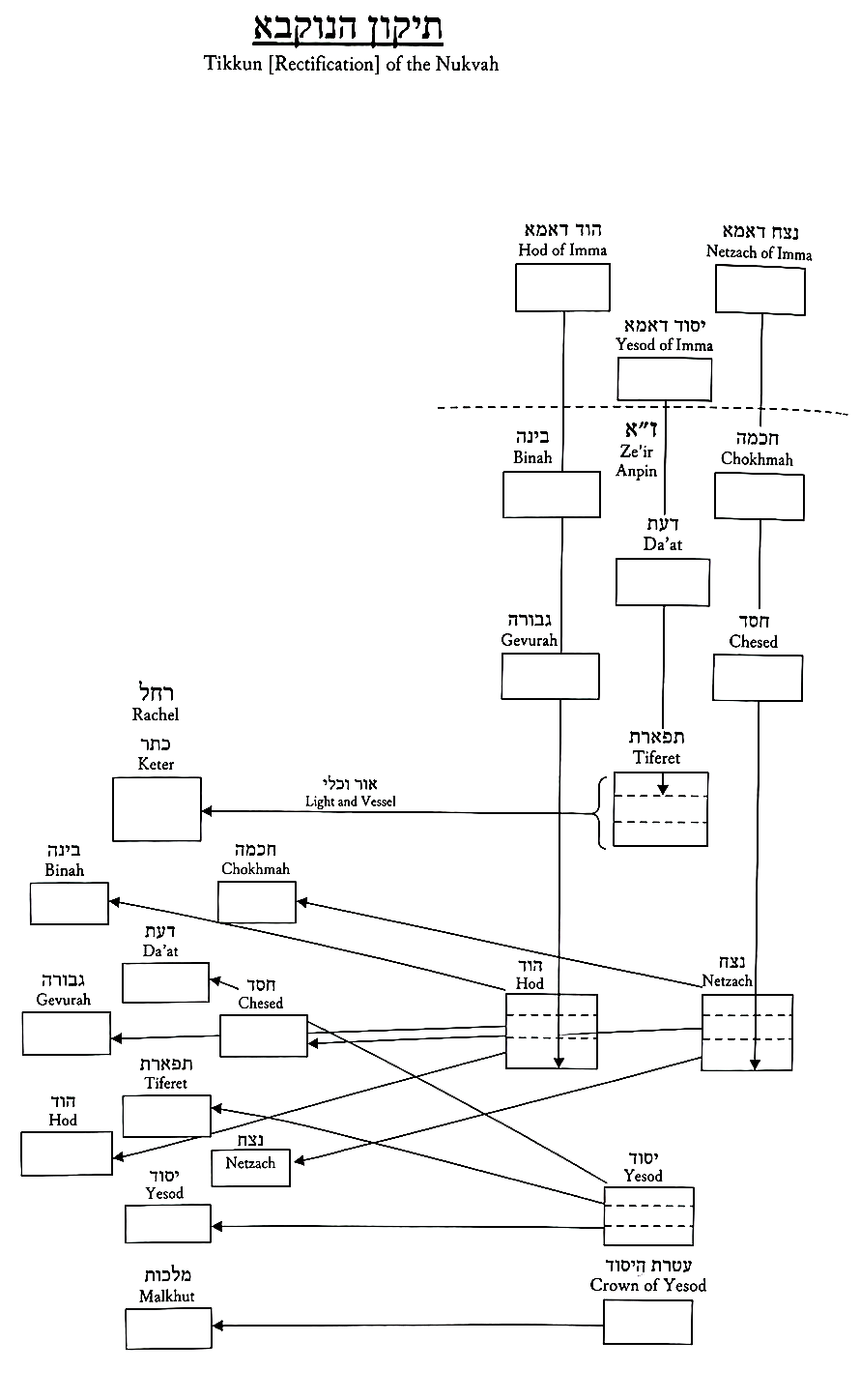
And we shall explain their particulars, and we shall begin with Rachel, who is called the true Nukvah of Ze’ir Anpin, as mentioned above (וְנְבָאֵר פְּרָטָן וְנַתְחִיל בְּרָחֵל הַנִּקְרֵאת נוּקְבָּא דְּז״א הָאֲמִתִּית כַּנַּ״ל). She is the tenth point of the ten points that include the entire World of Atzilut, as mentioned above (שֶׁהִיא נְקֻדָּה עֲשִׂירִית מִן הַי׳ נְקֻדּוֹת הַכּוֹלְלוֹת כָּל עוֹלָם הָאֲצִילוּת כַּנַּ״ל), and she is the Malkhut among them (וְהִיא הַמַּלְכוּת שֶׁבָּהֶם). And she is the wife of Yisrael, who is called Ze’ir Anpin everywhere (וְהִיא אֵשֶׁת יִשְׂרָאֵל הַנִּקְרָא ז״א בְּכָל מָקוֹם). And it has already been explained that she emerges from Tiferet, from the illumination of the Mochin of Netzach, Hod, Yesod of Imma (וּכְבָר נִתְבָּאֵר כִּי הִיא יוֹצֵאת מִן הַת״ת מֵהֶאָרַת הַמּוֹחִין שֶׁל נְה״י דְּאִמָּא). And she stands behind Ze’ir Anpin at the beginning of her creation and her rectification, back-to-back (וְהִיא עוֹמֶדֶת בַּאֲחוֹרֵי ז״א בִּתְחִלַּת בְּרִיאָתָהּ וְתִקּוּנָהּ אֲב״א), from the chest of Ze’ir Anpin and below until the completion of his feet (מֵהֶחָזֶה דְּז״א וּלְמַטָּה עַד סִיּוּם רַגְלָיו). And this place is the measure of her stature, in all the ten Sefirot (וּמָקוֹם זֶה הוּא שִׁעוּר קוֹמָתָהּ בְּכָל הַי״ס).
And behold, the reason for Rachel being back-to-back with Ze’ir Anpin is as we have written (וְהִנֵּה סִבַּת הֱיוֹת רָחֵל אֲב״א עִם ז״א הַטַּעַם הוּא כְּמָ״שׁ): that the external forces cannot grasp at all the holiness from its face, not even from the face of the Nukvah, but only from the aspect of the backs alone (שֶׁהַחִיצוֹנִים אֵינָם יְכוֹלִים לְהִתְאַחֵז כְּלָל עִם הַקְּדוּשָׁה בִּבְחִי׳ פָּנֶיהָ אֲפִלּוּ בְּפָנֶיהָ שֶׁל הַנּוּקְבָּא רַק בִּבְחִי׳ הָאֲחוֹרַיִם לְבַד). For behold, the external forces are called other Elohim (כִּי הִנֵּה הַחִיצוֹנִים נִקְרְאוּ אֱלֹהִים אֲחֵרִים), and all their drawing of nourishment and their grasp is through the holy Name Elohim (וְכָל יְנִיקָתָם וַאֲחִיזָתָם הוּא בְּשֵׁם אֱלֹהִים הַקָּדוֹשׁ).
And it is known that all aspects of Elohim are in the backs of holiness (וְנוֹדַע כִּי כָּל בְּחִינַת אֱלֹהִים הֵם בָּאֲחוֹרַיִם שֶׁל הַקְּדוּשָׁה). And behold, Rachel—since she is the true Nukvah of Ze’ir Anpin, as mentioned above—if she had stood in a manner similar to Leah, whose face is toward the back of Ze’ir Anpin (וְהִנֵּה רָחֵל שֶׁהִיא הַנּוּקְבָּא הָאֲמִתִּית שֶׁל ז״א כַּנַּ״ל אִם הָיְתָה עוֹמֶדֶת כִּדְמִיוֹן לֵאָה אֲשֶׁר פָּנֶיהָ כְּלַפֵּי אֲחוֹרֵי ז״א), then her backs would have remained exposed, and the external forces would have grasped her greatly (הִנֵּה הָיוּ אֲחוֹרֶיהָ נִשְׁאָרִין בְּגָלוּי וְהָיוּ הַחִיצוֹנִים נֶאֱחָזִים בָּהּ מְאֹד), since she is female, as is known (לְפִי שֶׁהִיא נְקֵבָה כַּנּוֹדָע). For “her feet descend to death” (כִּי רַגְלֶיהָ יוֹרְדוֹת מָוֶת), and the reason is that she is complete judgments, and there is the grasp of the external forces (וְהַטַּעַם הוּא לְפִי שֶׁהִיא דִּינִין גְּמוּרִים וְשָׁם אֲחִיזַת הַחִיצוֹנִים). And in addition to this, since she is the last of all the ten Sefirot of Atzilut (וְנוֹסָף עַל זֶה כִּי הִיא אַחֲרוֹנָה שֶׁבְּכָל הַי״ס דַּאֲצִילוּת), the Klipot would have grasped her exceedingly (לָכֵן הָיוּ נֶאֱחָזִין בָּהּ הַקְּלִיפּוֹת מְאֹד).
Therefore, in order that the Klipot should not grasp her for the reasons mentioned above—and especially since she is the essential and true Nukvah of Ze’ir Anpin, and we do not desire that the Klipot should grasp her, unlike Leah, as is explained in its place (לָכֵן כְּדֵי שֶׁלֹּא יִתְאַחֲזוּ בָּהּ הַקְּלִיפּוֹת מִסִּבַּת הַנַּ״ל וּבִפְרָט שֶׁהִיא נוּקְבָּא דְּז״א הָעִקָּרִית וְהָאֲמִתִּית וְאֵין אָנוּ רוֹצִים שֶׁיִּתְאַחֲזוּ בָּהּ הַקְּלִיפּוֹת מַה שֶּׁאֵין כֵּן בְּלֵאָה כְּמָ״שׁ בִּמְקוֹמוֹ) therefore Ze’ir Anpin and Nukvah were placed back-to-back, cleaving together (לָכֵן הֻנְחוּ זו״ן אֲב״א דְּבוּקִים יַחַד), “each one approaching the other” (אֶחָד בְּאֶחָד יִגָּשׁוּ), so that the spirit of the external forces would not pass between them, and no stranger would pass among them at all (וְרוּחַ הַחִיצוֹנִים לֹא יַעֲבוֹר בֵּינֵיהֶן וְלֹא יַעֲבוֹר זָר בְּתוֹכָם כְּלָל), since they are cleaving and truly bound together (לִהְיוֹתָן דְּבוּקִים וּמְחֻבָּרִים יַחַד מַמָּשׁ).
Until afterward an actual nesirah is required, as our Sages, of blessed memory, said on the verse “And Hashem Elohim built the side” (עַד שֶׁצָּרִיךְ אַחַר כָּךְ נְסִירָה מַמָּשׁ כְּמַאֲרַז״ל עַל פָּסוּק וַיִּבֶן ה׳ אֱלֹהִים אֶת הַצֵּלָע). And then the face of Ze’ir Anpin and the face of Rachel remain revealed (וְנִשְׁאָרוּ פְּנֵי ז״א וּפְּנֵי רָחֵל מְגוּלִּים), for there is no grasp of the external forces there at all (כִּי אֵין שָׁם אֲחִיזַת הַחִיצוֹנִים כְּלָל). And after their backs have been perfumed and sweetened through the nesirah (וְאַחַר אֲשֶׁר נִתְבַּשְּׂמוּ וְנִתְמַתְּקוּ עַל־יְדֵי הַנְּסִירָה אֵלּוּ הָאֲחוֹרַיִם שֶׁלָּהֶם), then Ze’ir Anpin and Nukvah return to be face-to-face after they have been separated (אָז חוֹזְרִין זו״ן פָּנִים בְּפָנִים אַחַר שֶׁנִּנְסְרוּ), for there is no longer any power in the external forces to grasp even the backs (כִּי כְּבָר אֵין כֹּחַ בַּחִיצוֹנִים לְהִתְאַחֵז אֲפִלּוּ בָּאֲחוֹרַיִם). And through this you will understand the secret of the verse “They turn backward” (וּבָזֶה תָּבִין סוֹד פָּסוּק נָזוֹרוּ אָחוֹר), for whenever Israel sin below, then Ze’ir Anpin and Nukvah return to be back-to-back (כִּי תָּמִיד כְּשֶׁיִּשְׂרָאֵל חוֹטְאִין לְמַטָּה אָז חוֹזְרִין זו״ן לִהְיוֹת אֲב״א). And the reason for the matter is that then, through the evil deeds of the lower ones, the Klipot would be able to grasp the revealed backs if they were face-to-face (וְטַעַם הַדָּבָר הוּא כִּי אָז עַל־יְדֵי מַעֲשֵׂי הַתַּחְתּוֹנִים הָרָעִים הָיוּ הַקְּלִיפּוֹת יְכוֹלִין לְהִתְאַחֵז בָּאֲחוֹרַיִם הַמְּגוּלִּים אִם הָיוּ פָּנִים בְּפָנִים). Therefore they must return to be back-to-back, so that the backs be covered and the external forces not grasp them (לָכֵן צְרִיכִין לַחֲזוֹר אֲב״א כְּדֵי שֶׁיִּתְכַּסּוּ הָאֲחוֹרַיִם וְלֹא יִתְאַחֲזוּ בָּהֶם הַחִיצוֹנִים).
And behold, the reason for the beginning of the rectification of Rachel from the chest is because up to that place the lights of Netzach, Hod, Yesod of Tevunah are concealed, and there the Yesod of Tevunah concludes, and the lights are revealed (וְהִנֵּה סִבַּת הַתְחָלַת תִּקּוּן רָחֵל מִן הֶחָזֶה הוּא כִּי עַד שָׁם אוֹרוֹת נְה״י שֶׁל הַתְּבוּנָה מְכוּסִים וְשָׁם נִסְתַּיֵּם יְסוֹד תְּבוּנָה וְהָאוֹרוֹת מְגוּלִּין). And in particular, there begins the revelation of the Yesod of Abba to be revealed (וּבִפְרָט כִּי שָׁם מַתְחִיל גִּלּוּי יְסוֹד דְּאַבָּא לְהִתְגַּלּוֹת). And this is the secret of “Hashem founded the earth with Chokhmah” (וְזֶהוּ סוֹד ה׳ בְּחָכְמָה יָסַד אָרֶץ) said in the Tikkunim, for Abba founded his daughter (הַנֶּאֱמַר בַּתִּקּוּנִים כִּי אַבָּא יָסַד בְּרַתֵּיהּ).
And the matter is as follows (וְהָעִנְיָן), for in the place of the revelation of the Yesod of Abba, there begins the building of the Malkhut, Rachel, who is called Earth (כִּי בִּמְקוֹם גִּלּוּי יְסוֹד אַבָּא שָׁם מַתְחִיל בִּנְיַן הַמַּלְכוּת רָחֵל הַנִּקְרֵאת אֶרֶץ). This is not the case with Leah, whose essence is from the place of Tevunah, where Abba has not yet been revealed, but only from the chest and below (מַה שֶּׁאֵין כֵּן בְּלֵאָה שֶׁעִקָּרָהּ מִן הַמָּקוֹם שֶׁל הַתְּבוּנָה שֶׁעֲדַיִן לֹא נִתְגַּלָּה אַבָּא אֶלָּא מֵהֶחָזֶה וּלְמַטָּה). And the reason for the cleaving of Rachel to Ze’ir Anpin back-to-back, with one wall for both of them (וְטַעַם הִתְדַּבְּקוּת רָחֵל בְּז״א אֲב״א בְּכוֹתֶל אֶחָד לִשְׁנֵיהֶם), unlike Ya‘akov and Ze’ir Anpin, will be explained later (מַה שֶּׁאֵין כֵּן בְּיַעֲקֹב וְז״א יִתְבָּאֵר לְקַמָּן). And now we shall explain the expansion of the measure of the stature of Rachel, the Nukvah of Ze’ir Anpin, at his back, opposite the chest and downward until his feet (וְעַתָּה נְבָאֵר הִתְפַּשְּׁטוּת שִׁעוּר קוֹמַת רָחֵל נוּקְבָּא דְּז״א בְּאֲחוֹרָיו מִכְּנֶגֶד הֶחָזֶה וּלְמַטָּה עַד רַגְלָיו), and her emergence from the aspect of the illumination of the Mochin and the vessels of Netzach, Hod, Yesod of Imma (וִיצִיאָתָהּ מִבְּחִי׳ הֶאָרַת הַמּוֹחִין וְהַכֵּלִים דְּנְה״י דְּאִמָּא).
Behold, it has been explained that the five Chesedim of the Da‘at of Ze’ir Anpin from the side of Imma were divided from Chesed until Hod within Ze’ir Anpin (הִנֵּה נִתְבָּאֵר כִּי הַה״ח דְּדַעַת דְּז״א דְּמִצַּד אִמָּא נִתְחַלְּקוּ מֵחֶסֶד עַד הוֹד שֶׁבְּז״א). And the Chesed that spreads within the Tiferet of Ze’ir Anpin is divided into three thirds, as explained (וְהַחֶסֶד שֶׁמִּתְפַּשֵּׁט בְּתוֹךְ הַת״ת דְּז״א מִתְחַלֵּק לְג׳ שְׁלִישִׁים כַּמְבֹאָר). And its two lower thirds, which are from the chest until the completion of the body—which is the Tiferet—are revealed (וּב׳ שְׁלִישָׁיו הַתַּחְתּוֹנִים שֶׁהֵם מִן הֶחָזֶה עַד סִיּוּם הַגּוּף שֶׁהוּא הַת״ת הֵם בְּגִלּוּי), unlike the upper third, which is still concealed within the vessel of the Yesod of Imma (מַה שֶּׁאֵין כֵּן הַשְּׁלִישׁ הָעֶלְיוֹן שֶׁעֲדַיִן הוּא מְכוּסֶה בְּתוֹךְ כְּלִי יְסוֹד אִמָּא). Therefore, the two lower thirds of Chesed, being revealed, are effective twice as much as if they were concealed (לָכֵן ב׳ שְׁלִישֵׁי הַחֶסֶד הַתַּחְתּוֹנִים לִהְיוֹתָם מְגוּלִּים הֵם מַסְפִּיקִים כִּפְלַיִם מֵאִלּוּ הָיוּ סְתוּמִים). And thus, one third alone of Ze’ir Anpin sufficed for the need of Tiferet itself—namely, for the two lower thirds—and half of the upper third ascended to his Keter, and half was given to Rachel for her Keter (וְלָכֵן שְׁלִישׁ אֶחָד לְבַד מִז״א הִסְפִּיק לְצֹרֶךְ הַת״ת עַצְמוֹ לִב׳ שְׁלִישִׁים תַּחְתּוֹנִים וַחֲצִי שְׁלִישׁ עָלָה לְכֶתֶר שֶׁלּוֹ וַחֲצִי נִתַּן אֶל רָחֵל לְכֶתֶר שֶׁבָּהּ). And through this you will understand why women are exempt from tefillin (וּבָזֶה תָּבִין לָמָּה נָשִׁים פְּטוּרוֹת מִן הַתְּפִלִּין), for Rachel does not have the aspect of surrounding lights, which are the secret of tefillin, as Ya‘akov has (כִּי אֵין לְרָחֵל בְּחִי׳ אוֹרוֹת מַקִּיפִין שֶׁהֵם סוֹד הַתְּפִלִּין כְּמוֹ שֶׁיֵּשׁ לְיַעֲקֹב), as will be explained below in the matter of Ya‘akov (כְּמָ״שׁ לְמַטָּה בְּעִנְיַן יַעֲקֹב).
And behold, Rachel took a vessel and light for the need of her Keter (וְהֲרֵי שֶׁלָּקְחָה רָחֵל כְּלִי וְאוֹר לְצֹרֶךְ כֶּתֶר שֶׁלָּהּ), and above the matter of this Keter has already been explained well—see there (וְשָׁם לְעֵיל נִתְבָּאֵר הֵיטֵב עִנְיַן הַכֶּתֶר הַזֶּה וְעַיֵּן שָׁם). And afterward, from the illumination of the opening (petach) of the vessel of Netzach of Imma, within which is the final third of the light of the Mochin called Chokhmah of Ze’ir Anpin, clothed within the threefold Netzach of Ze’ir Anpin (וְאַחַר כָּךְ מֵהֶאָרַת פֶּתַח שֶׁל כְּלִי דְּנֵצַח דְּאִמָּא אֲשֶׁר בְּתוֹכוֹ שְׁלִישׁ אַחֲרוֹן שֶׁל אוֹר הַמּוֹחַ הַנִּקְרָא חָכְמָה דְּז״א הַמְּלוּבָּשׁ בְּג״פ נֵצַח דְּז״א), behold, the illumination of these threefold aspects clothes itself in the right line of Rachel, for the needs of Chokhmah–Chesed–Netzach within her, both in the aspect of the vessel and in the aspect of the light of the Mochin within it (הִנֵּה הֶאָרַת ג״פ אֵלּוּ מִתְלַבְּשִׁין בְּקו יְמִינִי שֶׁל רָחֵל לְצֹרֶךְ חח״ן שֶׁבָּהּ בֵּין בִּבְחִי׳ הַכְּלִי בֵּין בִּבְחִי׳ אוֹר הַמּוֹחַ שֶׁבְּתוֹכוֹ). And likewise, from the aspect of the Chesed of the five Chesedim that spread, one of which spreads into the Netzach of Ze’ir Anpin, as mentioned above—even it, since it is revealed, sufficed that half of it illuminate the Netzach of Ze’ir Anpin and half illuminate the entire right line of Rachel (וְכֵן מִבְּחִי׳ הַחֶסֶד מֵה״ח הַמִּתְפַּשְּׁטִים אֲשֶׁר אֶחָד מֵהֶם מִתְפַּשֵּׁט בְּנֵצַח דְּז״א כַּנַּ״ל גַּם הוּא לִהְיוֹתוֹ מְגוּלֶּה הִסְפִּיק חֶצְיוֹ לְהָאִיר בְּנֵצַח דְּז״א וְחֶצְיוֹ לְהָאִיר בְּכָל קַו יָמִין שֶׁל רָחֵל). And in a similar manner, in the final section of Hod of Imma, within which is clothed the final third of the Mochin of Binah of Ze’ir Anpin, and both of them spread within the Hod of Ze’ir Anpin (וְכַעֵין זֶה בְּפֶרֶק אַחֲרוֹן דְּהוֹד אִמָּא הַמִּתְלַבֵּשׁ בְּתוֹכוֹ שְׁלִישׁ אַחֲרוֹן שֶׁל מוֹחַ בִּינָה דְּז״א וּשְׁנֵיהֶן מִתְפַּשְּׁטִין תּוֹךְ הוֹד דְּז״א), from these are made the three Sefirot in Gevurah–Hod–Hod of the left line of Rachel (וּמֵאֵלּוּ נַעֲשֶׂה ג״ס בִּג״ה דְּקו שְׂמָאלִי דְּרָחֵל). And likewise, from the aspect of the Chesed of the five Chesedim that reaches the portion of Hod of Ze’ir Anpin, since it is revealed, half sufficed for the Hod of Ze’ir Anpin and half for the entire left line of Rachel (וְכֵן מִבְּחִי׳ חֶסֶד שֶׁל ה״ח הַמַּגִּיעַ לְחֵלֶק הוֹד דְּז״א לִהְיוֹתוֹ מְגוּלֶּה הִסְפִּיק חֶצְיוֹ לְהוֹד דְּז״א וְחֶצְיוֹ לְכָל קַו שְׂמֹאלִי דרָחֵל). And however, in her middle line, aside from her Keter, which she took from the Chesed of Tiferet of Ze’ir Anpin (וְאֲמְנָם בְּקו הָאֶמְצָעִי שֶׁלָּהּ זוּלַת הַכֶּתֶר שֶׁלָּהּ שֶׁלָּקְחָה מֵחֶסֶד ת״ת דְּז״א), she also took the illumination of the five Gevurot that were in the Yesod of Ze’ir Anpin, as explained above, from the side of the Da‘at of Imma (לָקְחָה גַּם־כֵּן הֶאָרַת הַה״ג שֶׁהָיוּ בִּיסוֹד שֶׁל ז״א כַּנַּ״ל מִצַּד הַדַּעַת דְּאִמָּא). And these five Gevurot joined together in her Da‘at and were gathered there (וְאֵלּוּ הַה״ג נִתְחַבְּרוּ בְּדַעַת שֶׁלָּהּ וְנִתְקַבְּצוּ שָׁם). But the remainder of her middle line—namely her Da‘at, Tiferet, and Yesod—has no Chesedim within it (אֲבָל שְׁאָר הַקַּו שֶׁלָּהּ שֶׁהוּא דת״י שֶׁבָּהּ אֵין בָּהֶם חֲסָדִים).
And behold, one may ask (וְהִנֵּה יֵשׁ לִשְׁאוֹל): just as the five Chesedim emerged from the Yesod of Binah and were revealed from the chest and below, and were separated and divided into the six Sefirot of Ze’ir Anpin—Chesed, Gevurah, Tiferet, Netzach, Hod (כְּמוֹ שֶׁהַה״ח יָצְאוּ מִן הַיְסוֹד דְּבִינָה וְנִתְגַּלּוּ מֵהֶחָזֶה וּלְמַטָּה וְנִפְרְדוּ וְנִתְחַלְּקוּ בְּה״ס דְּז״א בְּחַג״ת נ״ה), so too, the five Gevurot should be divided (כָּךְ גַּם הַה״ג יִתְחַלְּקוּ). Granted, in Ze’ir Anpin they were not able to be divided, since the five Chesedim had already been divided there; therefore the five Gevurot descended to the Yesod of Ze’ir Anpin (בִּשְׁלָמָא בְּז״א לֹא הָיוּ יְכוֹלִין לְהִתְחַלֵּק הַה״ג אַחַר שֶׁכְּבָר נִתְחַלְּקוּ שָׁם הַה״ח לָכֵן יָרְדוּ אֶל הַיְסוֹד דְּז״א).
However, from there and below, why did the Gevurot also not divide (אֲמְנָם מִשָּׁם וּלְמַטָּה לָמָּה לֹא נִתְחַלְּקוּ גַּם הַגְּבוּרוֹת), since they no longer have a vessel that would gather them together and bind them (כִּי כְּבָר אֵין לָהֶם כְּלִי שֶׁיִּקַבְּצֵם יַחַד וִיחַבְּרֵם), and if so, what caused all five of them to gather and unite together in her Da‘at (וְאִם כֵּן מִי גָּרַם לָהֶם שֶׁיִּתְקַבְּצוּ וְיִתְחַבְּרוּ בְּדַעַת שֶׁלָּהּ כָּל הַה׳ יַחַד). But the matter is as follows (אֲבָל הָעִנְיָן): the Yesod of Abba, which is now revealed openly from the chest of Ze’ir Anpin and below, as explained above (כִּי יְסוֹד דְּאַבָּא אֲשֶׁר נִתְגַּלָּה עַתָּה בְּגָלוּי מֵהֶחָזֶה דְּז״א וּלְמַטָּה כַּנַּ״ל), illuminated an illumination to the five Gevurot that are in the Yesod of Ze’ir Anpin (הֵאִיר הֶאָרָה אֶל הַה״ג שֶׁבִּיסוֹד דְּז״א). And there they unite together and are well gathered (וְשָׁם מִתְחַבְּרִין יַחַד וּמִתְאַסְּפִין הֵיטֵב). And this illumination sweetens the harsh judgments within them by means of this unification (וְהוּא מְמַתֵּק הַדִּינִין הַקָּשִׁים שֶׁבָּהֶם עַל־יְדֵי הַחִבּוּר הַזֶּה). And since they were united there (וְכֵיוָן שֶׁנִּתְחַבְּרוּ שָׁם), therefore when they emerged into the Da‘at of Rachel, they remained there as well all united, without separation (לָכֵן כַּאֲשֶׁר יָצְאוּ בְּדַעַת שֶׁל רָחֵל נִשְׁאָרוּ שָׁם גַּם־כֵּן מְחֻבָּרִים כֻּלָּם בִּלְתִּי פֵרוּד).
And behold, after these five Gevurot were gathered in his Yesod, which is the aspect of her Da‘at (וְהִנֵּה אַחַר שֶׁאֵלּוּ הַה״ג נִתְקַבְּצוּ בִּיסוֹד שֶׁלּוֹ שֶׁזֶּהוּ בְּחִי׳ הַדַּעַת שֶׁלָּהּ), then the lights return and the five Gevurot spread downward—from Chesed until Netzach–Hod of her—according to the manner in which the five Chesedim were divided in the male (אָז חוֹזְרִים הָאוֹרוֹת וּמִתְפַּשְּׁטִים לְמַטָּה הַה״ג מֵחֶסֶד עַד הַנ״ה שֶׁלָּהּ עַל דֶּרֶךְ שֶׁנִּתְחַלְּקוּ הַה״ח בַּזָּכָר). And afterward, all five return together and gather in her Yesod at the time of her Zivug [Union] with Ze’ir Anpin (וְאַחַר כָּךְ חוֹזְרִים חֲמֵשְׁתָּן יַחַד וּמִתְקַבְּצוֹת בִּיסוֹד שֶׁלָּהּ בְּעֵת הַזִּוּוּג שֶׁלָּהּ עִם הַז״א). And it is known that also in Ya‘akov, when he unites with Rachel, all five Chesedim of Ya‘akov gather in his Yesod (וְנוֹדַע כִּי גַּם בְּיַעֲקֹב כְּשֶׁמִּזְדַּוֵּג עִם רָחֵל מִתְקַבְּצוֹת כָּל הַה״ח שֶׁלּוֹ בִּיסוֹד שֶׁלּוֹ).
Chapter 2
שער לד פרק ב מ״ב
And within it are twenty-two principles concerning the Nukvah
ובו כ״ב כללים לענין נוקבא
[34:2] 1. There is a need for investigation (צ״ע), for since the point of Malkhut did not emerge except the Keter (כִּי כֵּיוָן שֶׁהַנְּקוּדַת מַלְכוּת לֹא יָצְאָה כִּי אִם הַכֶּתֶר), if so, analogously to Ze’ir Anpin (אִם כֵּן עַל דֶּרֶךְ שֶׁבְּז״א), when its Mochin withdraw (שֶׁמִּסְתַּלְּקִין מוֹחוֹתָיו), so that the external forces not rule over them at the time of blemish (שֶׁלֹּא יִשְׁלְטוּ בָּהֶם הַחִיצוֹנִים בְּעֵת הַפְּגָם), since they are the choicest (לְפִי שֶׁהֵם מוּבְחָרִים), there the nine lower of Malkhut (שָׁם ט׳ תַּתָּאִין דְּמַלְכוּת) should have withdrawn (הָיָה לָהֶם לְהִסְתַּלֵּק), yet on the contrary it is written in the Amidah prayer (וְאַדְרַבָּא כָּתוּב בִּתְפִלַּת עֲמִידָה), that the nine lower Malkhuyot descended into Beri’ah (כִּי ט׳ מַלְכוּת תַּתָּאִין נַחְתִּי בִּבְרִיאָה), and its Keter remained in Atzilut (וְכֶתֶר שֶׁלָּהּ נִשְׁאָר בַּאֲצִילוּת), whereas it should have been the opposite (וְהָיְתָה לָהּ לִהְיוֹת בְּהֶפֶךְ). And we can resolve half of the difficulty (וְנוּכַל לְתָרֵץ חֲצִי הַקֻּשְׁיָא), for also from Ze’ir Anpin there is falling in the secret of “in hidden places my soul weeps because of pride” (כִּי גַּם מִז״א נוֹפְלִים בְּסוֹד בַּמִּסְתָּרִים תִּבְכֶּה נַפְשִׁי מִפְּנֵי גֵוָה), and despite this it is still difficult (וְעַכְז״ל קַשְׁיָא), for if so, the two points should have emerged in one identical manner and not as opposites (דְּאִם כֵּן הָיָה לָצֵאת ב׳ הַנְּקוּדוֹת בְּאוֹפֶן אֶחָד וְלֹא הֲפוּכִים), since both of them are equal in their falling (כֵּיוָן שֶׁשְּׁנֵיהֶן שָׁוִין בַּנְּפִילָה)
2. There is a need for investigation (צ״ע), to settle the matter mentioned (לְיַשֵּׁב עִנְיָן הַנִּזְכָּר), regarding the ten points (בְּי׳ נְקוּדוֹת), that the upper three emerged in completeness (שֶׁג״ר יָצְאוּ בִּשְׁלֵימוּת), and the fourth emerged as six extremities (וְהָרְבִיעִית יָצָא ו״ק), and the fifth emerged as one point (וְהַה׳ יָצְאָה נְקוּדָה א׳). It is necessary to divide these aspects (צָרִיךְ לְחַלֵּק בְּחִי׳ אֵלּוּ), according to the number of the two hundred and eighty-eight sparks (כְּפִי מִסְפַּר הָרַפ״ח נִיצוֹצִין), which is written for us (שֶׁכָּתוּב אֶצְלֵינוּ), in the matter of ʿA"B, S"G, M"H, B"N (בְּעִנְיָן ע״ב ס״ג מ״ה ב״ן), which are four divisions (שֶׁהֵם ד׳ חֲלוּקוֹת). The B"N of the kings (הַבּ״ן דְּמְלָכִים), which include five Partzufim (אֲשֶׁר כּוֹלְלִים ה׳ פַּרְצוּפִים), how will they be arranged in balance (אֵיךְ יִסְתַּדְּרוּ בְּמִשְׁקָל), weighing the number of the fall of their sparks (בְּשָׁקְלוֹ מִסְפַּר נְפִילַת הַנִּיצוֹצִים שֶׁלָּהֶם), together with the aspect of what emerged from each one (עִם בְּחִי׳ מַה שֶּׁיָּצְאוּ מִכָּל אֶחָד).
3. There is also a need for investigation (גַּם צ״ע), for if only the Keter of Malkhut emerged (כִּי אִם לֹא יָצָא רַק כֶּתֶר דְּמַלְכוּת), and the Keter has no breaking within it (וְהַכֶּתֶר לֹא יֵשׁ בּוֹ שְׁבִירָה), since there is no concern in it because it is elevated (כִּי אֵין חֲשָׁשׁ בּוֹ שֶׁהוּא גָּבוֹהַּ), if so what was broken and what descended to the Klipot (אִם כֵּן מַה נִשְׁבַּר וּמַה יָרַד לַקְּלִיפּוֹת). And furthermore, how are the sparks of Arich Anpin and Abba and Imma clarified (וְעוֹד אֵיךְ מְבָרְרִים א״א וְאו״א נִיצוֹצוֹתֵיהֶם), which fell and will not be rectified until the coming of Mashiach (שֶׁנָּפְלוּ וְלֹא יִתְקַנּוּ עַד בִּיאַת מָשִׁיחַ). And if you say that it is only sparks of Keter (וְאִם תֹּאמַר שֶׁאֵינוֹ רַק נִיצוֹצֵי כֶּתֶר), this is impossible (אִי אֶפְשָׁר), for behold (הֲרֵי), she is called (הִיא נִקְרָא), (some say: there, נ״א שָׁם), relative to ʿA"B, S"G, M"H, B"N (בְּעֶרֶךְ ע״ב ס״ג מ״ה ב״ן), which are two hundred and eighty-eight, as is known (שֶׁהֵם רפ״ח כַּנּוֹדָע), if so all aspects emerged and descended (אִם כֵּן כָּל בְּחִי׳ יָצְאוּ וְיָרְדוּ). And furthermore, for there is a difference between Leah and Rachel (וְעוֹד כִּי הֶפְרֵשׁ בֵּין לֵאָה וְרָחֵל), and it is that Rachel is a complete Partzuf of all her ten Sefirot (וְהוּא כִּי רָחֵל הִיא פַּרְצוּף שָׁלֵם מִכָּל הַי״ס שֶׁלָּהּ).
4. (Mahadura Kama (First Edition)) (מ״ק), why in the Keter of Rachel a half of a third suffices (לָמָּה בְּכֶתֶר שֶׁל רָחֵל מַסְפִּיק חֲצִי שְׁלִישׁ), whereas in the Mochin a third and a half are required (וּבְמוֹחִין צָרִיךְ שְׁלִישׁ וָחֵצִי). And the answer is (וְהַתְּשׁוּבָה הוּא), because in Netzach it is by means of a screen (מִפְּנֵי שֶׁבְּנֵצַח הוּא עַל־יְדֵי מָסָךְ), but in Keter it is revealed from Ze’ir Anpin (וּבְכֶתֶר הוּא מְגֻלֶּה מִז״א), and through this (וְעַל־יְדֵי זֶה), (some say: and through this, ס״א וְעַל־זֶה), the Chesed strikes into Chokhmah and into the Netzach of Binah which is within it (מַכֶּה הַחֶסֶד בְּחָכְמָה וּבְנֵצַח דְּבִינָה אֲשֶׁר בְּתוֹכוֹ), and it is sealed from the Netzach of Ze’ir Anpin itself (וְהוּא סָתוּם מִנֵּצַח דְּז״א עַצְמוֹ).
5. It is necessary that you understand (צָרִיךְ שֶׁתָּבִין), regarding the matter that we say (בְּעִנְיָן מַה שֶּׁאָנוּ אוֹמְרִים), that Malkhut sometimes nurses from Tiferet (כִּי הַמַּלְכוּת לִפְעָמִים יוֹנֶקֶת מִתּ״ת), and sometimes from Keter (וְלִפְעָמִים מִכֶּתֶר), and sometimes from Binah (וְלִפְעָמִים מִבִּינָה), how shall we attribute her reception to any one of the levels (אֵיךְ נְיַחֵס קַבָּלָתָהּ לְשׁוּם אֶחָד מִן הַמַּדְרֵגוֹת), after we have known (אַחַר שֶׁיָּדַעְנוּ), that all kinds of effluence come from Keter (הֱיוֹת כָּל מִינֵי שֶׁפַע בָּא מִכֶּתֶר). And the matter is (וְהָעִנְיָן כִּי), when that Sefirah serves only as a conduit (כַּאֲשֶׁר לֹא תּוֹעִיל אוֹתָהּ סְפִירָה רַק לְמַעֲבָר), the effluence is attributed to Keter (יִתְכַּנֶּה הַשֶּׁפַע אֶל הַכֶּתֶר), and when it becomes intermingled there in Binah or in Tiferet and the like (וְכַאֲשֶׁר יִתְעָרֵב שָׁם בְּבִינָה אוֹ בְּת״ת וְכַיּוֹצֵא), her reception is called by the name of that place in which it became intermingled (יִקָּרֵא קַבָּלָתָהּ עַל שֵׁם אוֹתוֹ הַמָּקוֹם אֲשֶׁר נִתְעָרֵב שָׁם). And we have already explained this at length (וּכְבָר בֵּאַרְנוּ זֶה בְּאֹרֶךְ), in Parashat Ḥukat on the Zohar (בְּפָרָשַׁת חֻקַּת עַל הַזֹּהַר), beginning “Come and see, at the time that supernal wisdom…” (הַמַּתְחִיל תּ״ח בְּשַׁעְתָּא דְּחָכְמְתָא עִלָּאָה), see in my explanations (עַיֵּן בְּבֵאוּרַי).
6. (Mahadura Kama (First Edition)) (מ״ק), why the Mochin of the Nukvah were not made from the Chesed, Gevurah, Tiferet of Ze’ir Anpin (לָמָּה הַמּוֹחִין דְּנוּקְבָּא לֹא נַעֲשׂוּ מֵחַג״ת דְּז״א), but only from the Netzach, Hod, Yesod within him (רַק מִנֵּה״י שֶׁבּוֹ). And the answer is (וְהַתְּשׁוּבָה), for behold the Netzach, Hod, Yesod are revealed, as is known (כִּי הִנֵּה הַנֵּה״י הֵם מְגֻלִּין כַּנּוֹדָע), but the Chesed, Gevurah, Tiferet are concealed lights (אַךְ הַחַג״ת הֵם אוֹרוֹת סְתוּמִים), and there is no power in them to become Mochin (וְאֵין בָּהֶם כֹּחַ לְהֵעָשׂוֹת מוֹחִין).
7. The matter of the enlargement of the Nukvah of Ze’ir Anpin during twelve years and one day is as follows (עִנְיַן הַגְדָּלַת נוּקְבָא דז״א בי״ב שָׁנִים וְיוֹם א׳): the right line comprises three years, the left line three years, and the middle line three years—thus, nine years (הֵם קַו יָמִין ג׳ שָׁנִים וְקַו שְׂמֹאל ג׳ שָׁנִים וְקַו אֶמְצָעִי ג׳ שָׁנִים הֲרֵי ט׳ שָׁנִים). And the matter of “three years and one day, when her intercourse is deemed intercourse,” corresponds to Keter, Da‘at, and Tiferet (וְעִנְיַן ג׳ שָׁנִים וְיוֹם א׳ שֶׁבִּיאָתָהּ בִּיאָה כֶּתֶר וְדַעַת וְת״ת), while the one day pertains to the entry of Yesod (וְיוֹם א׳ הוּא שֶׁל הַכְנָסַת יְסוֹד). Afterward, the three intermediate Sefirot illuminate within the two lines, right and left; these constitute three additional years—thus, twelve years and one day (אַחַ״כ מְאִירִין ג׳ אֶמְצָעִים בב׳ קַוִּין יָמִין וּשְׂמֹאל הֵם ג׳ שָׁנִים אֲחֵרִים הֲרֵי י״ב וְיוֹם אֶחָד):
8. (Mahadura Batra (Final Edition) (מ״ב), “And Hashem, God, caused a deep sleep to fall” (וַיַּפֵּל ה׳ אֱלֹהִים תַּרְדֵּמָה), its gematria is Targum (גִּימַטְרִיָּא תַּרְגּוּם), for all the back-sides are in the secret of a square, as is known (כִּי כָּל הָאֲחוֹרַיִים הֵם בְּסוֹד רִבּוּעַ כַּנּוֹדָע), and the sawing was when these back-sides were present within him, which are called “deep sleep,” as mentioned above (וְהַנְּסִירָה הָיְתָה בִּהְיוֹת בּוֹ אֲחוֹרַיִים אֵלּוּ הַנִּקְרָאִים תַּרְדֵּמָה כַּנַּ״ל), and afterward He brought them face to face (וְאַחַר כָּךְ הֱבִיאָהּ פָּנִים בְּפָנִים). And the matter is (וְהָעִנְיָן), that in each one of the nine Sefirot of Ze’ir Anpin there is one Havayah (כִּי בְּכָל אַחַת מִטּ״ס דְּז״א יֵשׁ בָּהּ הֲוָיָ״ה אַחַת), and in its back-side its gematria is seventy-two, as is known (וּבָאֲחוֹרַיִים שֶׁלָּהּ הוּא גִּימַטְרִיָּא ע״ב כַּנּוֹדָע), and behold nine times seventy-two is the gematria of “deep sleep” (וַהֲרֵי ט״פ ע״ב גִּימַטְרִיָּא תַּרְדֵּמָה), (and they are the gematria of Targum) (וְהֵם גִּימַטְרִיָּא תַּרְגּוּם).
[Gloss — and it requires investigation, for the back-sides are only Elokim] ([הַגָּהָה – וְצָרִיךְ עִיּוּן שֶׁהָאֲחוֹרַיִים אֵינָם אֶלָּא אֱלֹהִים]). And all of them are given to the Malkhut at the time of the sawing (וְכֻלָּם נִתָּנִים אֶל הַמַּלְכוּת בְּעֵת הַנְּסִירָה), and understand this very much (וְהָבֵן זֶה מְאֹד).
[Gloss — And it appears to me, Chaim (הַגָּהָה – וְנִלְ״ח), for behold the nine powers of Malkhut are attached to Ze’ir Anpin (כִּי הֲרֵי ט׳ כֹּחוֹת הַמַּלְכוּת הֵם נֶאֱחָזוֹת בְּז״א), and together with these nine powers, which are only one power (וְעִם ט׳ כֹּחוֹת אֵלּוּ שֶׁהֵם כֹּחַ א׳ לְבַד), there are completed for him ten Sefirot as mentioned there (נִשְׁלַם לוֹ לְי״ס כַּנִּזְכָּר שָׁם), and at the time of the sawing he remains with nine Sefirot alone (וּבְעֵת הַנְּסִירָה נִשְׁאָר הוּא בְּט׳ סְפִירוֹת לְבַד), and then these nine powers are joined with one power—one point alone—of Malkhut (וְאָז ט׳ כֹּחוֹת אֵלּוּ מִתְחַבְּרִין עִם כֹּחַ נְקוּדָה א׳ לְבַד דְּמַלְכוּת), and she grows and becomes complete ten Sefirot (וְנִגְדֶּלֶת וְנַעֲשֵׂית י״ס גְּמוּרוֹת), and he is nine alone, as is known (וְהוּא ט׳ לְבַד כַּנּוֹדָע), for that point of hers is forever separated from him (כִּי אוֹתָהּ הַנְּקוּדָה שֶׁלָּהּ לְעוֹלָם נִפְרֶדֶת מִמֶּנּוּ), and it is an aspect in and of itself (וְהִיא בְּחִינָה בִּפְנֵי עַצְמָהּ), but those other nine parts attach to him (אַךְ אוֹתָם הַט׳ חֲלָקִים אֲחֵרִים הֵם מִתְדַּבְּקִים בּוֹ), and sometimes they are sawn apart (וּלְפָעָמִים נִנְסָרִין), and understand this very much (וְהָבֵן זֶה מְאֹד).
However, there are within her two aspects (וְאָמְנָם יֵשׁ בָּהּ בּ׳ בְּחִינוֹת), namely face and back (וְהוּא פָּנִים וְאָחוֹר), and at the time of the back aspect (וּבְעֵת הָאָחוֹר), all nine of her aspects of back are within him (כָּל הַט׳ שֶׁלָּהּ שֶׁל אָחוֹר הֵם בּוֹ), and the tenth aspect of back is alone within her (וּבְחִי׳ הָעֲשִׂירִית שֶׁל אָחוֹר הִיא לְבַדָּהּ בָּהּ), and she always forever stands at the chest and not at his back (וְתָמִיד לְעוֹלָם עוֹמֶדֶת בֶּחָזֶה שֶׁלֹּא בַּאֲחוֹרָיו). And afterward, in the sawing (וְאַחַר כָּךְ בַּנְּסִירָה), all the nine (some say: all ten) backs join together within her (מִתְחַבְּרִין כָּל הַט׳ (ס״א כָּל הַי׳) אֲחוֹרַיִים בָּהּ יַחַד), and she grows to be like him (וְנִגְדֶּלֶת כְּמוֹהוּ). And afterward, in the face aspect (וְאַחַר כָּךְ בַּפָּנִים), there is another single point from the aspect of face (יֵשׁ נְקוּדָה אַחֶרֶת לְבַד מִבְּחִי׳ פָּנִים), and it sits in the secret of the hand-tefillin forever with him (וְיוֹשֶׁבֶת בְּסוֹד תְּפִלִּין דְּיָד לְעוֹלָם עִמּוֹ), and it never moves from there forever (וְאֵינָהּ זָזָה מִשָּׁם לְעוֹלָם). And then all the nine aspects of her face (וְאָז כָּל הַט׳ בְּחִינוֹת דְּפָנִים שֶׁלָּהּ), are then given into her one by one (אָז נִתָּנִין בָּהּ אַחַת לְאַחַת), until she grows face to face like him (עַד שֶׁנִּתְגַּדְּלָה פָּנִים בְּפָנִים כְּמוֹהוּ). Thus (בְּאוֹפֶן כִּי), when we say that after she grows back to back she then returns to being a small point in the face aspect (כְּשֶׁאָנוּ אוֹמְרִים שֶׁאַחַר שֶׁנִּגְדְּלָה אֲב״א אָז חוֹזֶרֶת לִהְיוֹת נְקוּדָה קְטַנָּה בַּפָּנִים), the explanation is (פֵּרוּשׁ הוּא), regarding that point from the aspect of face (עַל אוֹתָהּ הַנְּקוּדָה מִבְּחִינַת פָּנִים), for still in her face aspect she has only one point (שֶׁעֲדַיִן בִּבְחִי׳ פָּנִים שֶׁלָּהּ אֵין לָהּ רַק נְקוּדָה אַחַת). However, all the back-sides are completely whole (וְאָמְנָם כָּל הָאֲחוֹרַיִים הֵם שְׁלֵמִים לְגַמְרֵי), and understand this very much (וְהָבֵן זֶה מְאֹד).
And behold, you know that in each and every Sefirah there is within it face and back in the secret of letters and not in the secret of number (וְהִנֵּה יָדַעְתָּ כִּי בְּכָל סְפִירָה וּסְפִירָה יֵשׁ בָּהּ פָּנִים וְאָחוֹר בְּסוֹד אוֹתִיּוֹת וְלֹא בְּסוֹד מִסְפָּר), and corresponding to it there is back and face in the aspect of number (וְכְנֶגְדָּהּ אָחוֹר וּפָנִים בִּבְחִי׳ מִסְפָּר). It follows, then (וְנִמְצָא אִם כֵּן), that all the aspects of the back-sides of number belong to the female attached to the male (כִּי כָּל בְּחִי׳ אֲחוֹרַיִים שֶׁל הַמִּסְפָּר הֵם שֶׁל הַנְּקֵבָה הַדְּבוּקָה בַּזָּכָר), which are the back-sides of letters (שֶׁהֵם אֲחוֹרַיִים שֶׁל אוֹתִיּוֹת), and they are back to back (וְהֵם אֲב״א). And the faces of number from one side and the faces of letters from the other side (וְהַפָּנִים שֶׁל מִסְפָּר שֶׁמִּצַּד א׳ וּפָנִים שֶׁל אוֹתִיּוֹת שֶׁמִּצַּד אַחֵר), still do not exist for them at all (עֲדַיִן אֵין לָהֶם כְּלָל), but only the two back-sides alone (רַק שְׁנֵי הָאֲחוֹרַיִים לְבַד). And at the time of the sawing (וּבְעֵת הַנְּסִירָה), the back-sides of number are sawn away from the back-sides of the aspect of letters—of his (נִנְסָרִין הָאֲחוֹרַיִים שֶׁל הַמִּסְפָּר מֵהָאֲחוֹרַיִים שֶׁל בְּחִי׳ אוֹתִיּוֹת (שֶׁלּוֹ)). And afterward the Mochin of the aspect of his face and her face come (וְאַחַר כָּךְ בָּאִים הַמּוֹחִין דְּבִחִי׳ פָּנִים שֶׁלּוֹ וְשֶׁלָּהּ), and then her faces are given to her through him (וְאָז הַפָּנִים שֶׁלָּהּ נִתָּנִין לָהּ עַל־יָדוֹ), and his faces remain within him (וּפָנָיו שֶׁלּוֹ נִשְׁאָרִין בּוֹ). And just as she takes the back-sides first through him and afterward through her mother (וּכְמוֹ שֶׁהָאֲחוֹרַיִים לוֹקַחַת תְּחִלָּה עַל־יָדוֹ וְאַחַר כָּךְ עַל־יְדֵי אִמָּהּ), so too in the aspect of the faces—first through him and afterward through Imma, as is known (כֵּן בִּבְחִי׳ הַפָּנִים תְּחִלָּה עַל־יָדוֹ וְאַחַר כָּךְ עַל־יְדֵי אִמָּא כַּנּוֹדָע).
And know (וְדַע), that all of this is from the aspect of themselves (כִּי כָּל זֶה הוּא מִבְּחִי׳ שֶׁלָּהֶם עַצְמָם), but it is also possible that the back-sides of the Malkhut of Abba and Imma, in the aspect of their number, are an aspect of face toward Ze’ir Anpin itself (אַךְ אֶפְשָׁר שֶׁגַּם הָאֲחוֹרַיִים שֶׁל מַלְכוּת דְּאו״א בִּבְחִי׳ מִסְפָּרָם יִהְיוּ בְּחִי׳ פָּנִים אֶל ז״א עַצְמוֹ), and this is understood (וְזֶה מוּבָן). And the parable for all of this (וְהַמָּשָׁל לְכָל זֶה), behold (הִנֵּה), the Mochin of Ze’ir Anpin (הַמּוֹחִין שֶׁל ז״א), of the aspect of back-sides (דְּבִחִינַת אֲחוֹרַיִים), was in his Keter (הָיָה בְּכֶתֶר שֶׁלּוֹ), which are Yod, Yod-Heh, Yod-Heh-Vav, Yod-Heh-Vav-Heh (שֶׁהֵם י׳ י״ה יה״ו יהו״ה), and attached with him is the number of these back-sides (וּמְחֻבָּר עִמּוֹ מִסְפַּר הָאֲחוֹרַיִים אֵלּוּ), which are ten letters literally (שֶׁהֵם י׳ אוֹתִיּוֹת מַמָּשׁ), similar to them (כַּיּוֹצֵא בָּהֶם), except that they are in the aspect of number, seventy-two (אֶלָּא שֶׁהֵם בִּבְחִינַת מִסְפָּר ע״ב). And afterward, at the time of the sawing (וְאַחַר כָּךְ בְּעֵת הַנְּסִירָה), Yod, Yod-Heh, Yod-Heh-Vav, Yod-Heh-Vav-Heh remained (נִשְׁאָר י׳ י״ה יה״ו יהו״ה), in the aspect of letters alone (בִּבְחִי׳ אוֹתִיּוֹת לְבַד), to the Keter of Ze’ir Anpin (אֶל הַכֶּתֶר דְּז״א), and Yod, Yod-Heh, Yod-Heh-Vav, Yod-Heh-Vav-Heh (וְי׳ י״ה יה״ו יהו״ה), in the aspect of number (בִּבְחִי׳ הַמִּסְפָּר), which is seventy-two (שֶׁהֵם ע״ב), in the Keter of the Nukvah (בְּכֶתֶר נוּקְבָא). Afterward, the Mochin of face came (אַחַר כָּךְ בָּאוּ הַמּוֹחִין דְּפָנִים), to Ze’ir Anpin and Nukvah (אֶל זו״ן), and then Havayah came there (וְאָז בָּאָה שָׁם הֲוָיָ״ה), in the Keter of Ze’ir Anpin of face (בְּכֶתֶר ז״א דְּפָנִים), in the aspect of four letters alone (בִּבְחִינַת אַרְבַּע אוֹתִיּוֹת לְבַד), and this same Havayah came (וּבָאָה הֲוָיָ״ה זוֹ עַצְמָהּ), in the face of the Keter of the Nukvah (בְּפָנִים דְּכֶתֶר נוּקְבָא), except that it is in the secret of number (אֶלָּא שֶׁהוּא בְּסוֹד מִסְפָּר), which is gematria twenty-six (שֶׁהוּא גִּימַטְרִיָּא כ״ו). And in this manner, in all the other nine Sefirot (וְעַד״ז בְּכָל הַט״ס אֲחֵרוֹת), as appears from another place (כְּפִי הַנִּרְאֶה מִמּ״א), for after they are back to back (כִּי אַחַר שֶׁהֵם אֲב״א), and he gave her the aspect of the Gevurot (וְנָתַן לָהּ בְּחִי׳ הַגְּבוּרוֹת). Afterward, the Mochin departed from him (אַחַ״כ נִסְתַּלְּקוּ מִמֶּנּוּ הַמּוֹחִין), and Binah and Gevurah alone were given to the Nukvah through Imma (וְנִתְּנוּ בִּינָה וּגְבוּרָה לְבַדָּם אֶל הַנּוּקְבָא עַל־יְדֵי אִמָּא), and they are harsh judgments (וְהֵם דִּינִין קָשִׁין). And then the Mochin that departed, which are Chokhmah and Chesed, which remained as surrounding lights, as is known (וְאָז הַמּוֹחִין שֶׁנִּסְתַּלְּקוּ שֶׁהֵם חָכְמָה וְחֶסֶד שֶׁנִּשְׁאֲרוּ מַקִּיפִין כַּנּוֹדָע), became Mayin Nukvin [Feminine Waters] (נַעֲשׂוּ מ״ן), and Abba and Imma were joined in Zivug [Union] (וְנִזְדַּוְּגוּ או״א), and they brought forth other MNTZPKH (וְהוֹצִיאוּ מַנְצַפ״ךְ אֲחֵרִים), and they were renewed (וְנִתְחַדְּשׁוּ), and now the Gevurot were sweetened (וְנִמְתְּקוּ עַתָּה הַגְּבוּרוֹת), for behold they are judgments more sweetened (כִּי הֲרֵי הֵם דִּינִין יוֹתֵר מְמוּתָּקִין). And they return to gather all the Mochin together with the new MNTZPKH within Ze’ir Anpin (וְחוֹזְרִין לִכְנוֹס כָּל הַמּוֹחִין עִם הַמַּנְצַפ״ךְ הֶחָדָשׁ תּוֹךְ ז״א), and they are drawn to the Nukvah through him during all the nine days of repentance (וְנִמְשָׁכִין לַנּוּקְבָה עַל־יָדוֹ בְּכָל ט׳ יְמֵי תְּשׁוּבָה).
[Gloss — and according to what appears to me from there (הַגָּהָה – וּכְפִי הַנִּרְאֶה לִי מִשָּׁם), it is that Leah takes the judgments through Imma (הוּא שֶׁלֵּאָה לוֹקַחַת הַדִּינִין עַל־יְדֵי אִמָּא), because she is in a concealed place from the chest and above (לִהְיוֹתָהּ בְּמָקוֹם מְכֻסֶּה מֵהֶחָזֶה וּלְמַעְלָה), and after Leah in her entirety was sawn (וְאַחַר שֶׁנִּנְסְרָה לֵאָה כֻּלָּהּ), together with her heels which enter into the Keter of Rachel (עִם עֲקֵבֶיהָ הַנִּכְנָסִין תּוֹךְ כֶּתֶר דְּרָחֵל), it is found that on the first day of Rosh HaShanah Leah and the Keter of Rachel were sawn (נִמְצָא כִּי בְּיוֹם רִאשׁוֹן שֶׁל ר״ה נִנְסְרָה לֵאָה וְכֶתֶר דְּרָחֵל). And afterward the Mochin returned within Ze’ir Anpin (וְאַחַר כָּךְ חָזְרוּ הַמּוֹחִין תּוֹךְ ז״א), to saw Rachel from the chest and below (לִנְסֹר אֶת רָחֵל מֵהֶחָזֶה וּלְמַטָּה), since she is already in a revealed place (שֶׁכְּבָר הִיא בְּמָקוֹם מְגֻלֶּה), and she is able to receive them through Ze’ir Anpin himself (וִיכוֹלָה לְקַבְּלָם עַל־יְדֵי ז״א עַצְמוֹ), unlike Leah (מַה שֶּׁאֵין כֵּן בְּלֵאָה). And thus it is found that Leah is sawn before the shofar of the first day of Rosh HaShanah (וְאִם כֵּן נִמְצָא כִּי לֵאָה נִנְסֶרֶת קֹדֶם שׁוֹפָר דְּיוֹם א׳ דְּר״ה), and the sawing is that she receives new Gevurot through Imma (וְהַנְּסִירָה הִיא שֶׁמְּקַבֶּלֶת גְּבוּרוֹת חֲדָשׁוֹת עַל־יְדֵי (אִמָּא)), and she is then sawn (וְנִנְסֶרֶת אָז). And after the effluence of the first day, through that very shofar (וְאַחַר הַשֶּׁפַע דְּיוֹם א׳ עַל־יְדֵי הַשּׁוֹפָר הַהוּא עַצְמוֹ), the new MNTZPKH came to Rachel (בָּאוּ הַמַּנְצַפ״ךְ חֲדָשִׁים לְרָחֵל), except that they are through Ze’ir Anpin himself (אֶלָּא שֶׁהֵם עַל־יְדֵי ז״א עַצְמוֹ), and the Keter of Rachel is sawn on that very first day (וְנִנְסַר כֶּתֶר דְּרָחֵל בְּיוֹם א׳ עַצְמוֹ), through the shofar (עַל־יְדֵי הַשּׁוֹפָר).
The general principle that emerges is (כְּלַל הָעוֹלֶה כִּי), that both for Leah and for Rachel (שֶׁהֵם צְרִיכִין בֵּין לְלֵאָה בֵּין לְרָחֵל), who are called Jerusalem and Zion, as mentioned elsewhere (הַנִּקְרָאִים יְרוּשָׁלַיִם וְצִיּוֹן כַּנִּזְכָּר בְּמ״א), they require two kinds of Gevurot (צְרִיכוֹת ב׳ מִינֵי גְּבוּרוֹת), harsh and sweetened (קָשׁוֹת וּמְמוּתָּקוֹת), which are the old ones—harsh—and the new ones—sweet (שֶׁהֵם הַיְשָׁנוֹת קָשִׁין וַחֲדָשׁוֹת מְתוּקוֹת). Except that the harsh ones of Leah she takes through Ze’ir Anpin (אֶלָּא שֶׁהַקָּשׁוֹת דְּלֵאָה לוֹקַחַת עַל־יְדֵי זְעֵיר אַנְפִּין), and the sweetened ones through Imma (וְהַמְּתוּקוֹת עַל־יְדֵי אִמָּא), and both of them are called harsh in relation to the sweetened judgments of Rachel (וּשְׁנֵיהֶן נִקְרָאִים קָשׁוֹת בְּעֶרֶךְ דִּינֵי רָחֵל הַמְּתוּקוֹת). And as for Rachel, the harsh and the sweetened (וְדְּרָחֵל הַקָּשׁוֹת וְהַמְּתוּקוֹת), both of them are drawn to her through Ze’ir Anpin himself (שְׁנֵיהֶן נִמְשָׁכִין לָהּ עַל־יְדֵי ז״א עַצְמוֹ), except that these are before the sleep (אֶלָּא שֶׁאֵלּוּ הֵם קֹדֶם הַשֵּׁנָה), and those are after the sleep (וְאֵלּוּ הֵם אַחַר הַשֵּׁנָה), which is the secret of the shofar (שֶׁהוּא סוֹד הַשּׁוֹפָר). It follows, then (וְנִמְצָא אִם כֵּן), that the Mayin Nukvin [Feminine Waters] are formed before anything else (כִּי הַמ״ן נַעֲשֶׂה קֹדֶם כָּל דָּבָר), and afterward the Netzach, Hod, Yesod of Imma entered within Leah to saw her (וְאַחַר כָּךְ נִכְנְסוּ נְה״י דְּאִמָּא תּוֹךְ לֵאָה לְנַסְּרָהּ), and they went out from there into Ze’ir Anpin to saw Rachel (וְיָצְאוּ מִשָּׁם בְּז״א לִנְסֹר אֶת רָחֵל). And understand this very much, according to what appears to me (וְהָבֵן מְאֹד כְּנִרְאֶה לְדַעְתִּי), end (עַד כָּאן).
9. Behold, we find that Malkhut is called “female” (הִנֵּה מָצִינוּ שֶׁהַמַּלְכוּת נִקְרֵאת נְקֵבָה), the reason for the matter is (טַעַם הָעִנְיָן הוּא), as it is written in the Idra (כְּמוֹ שֶׁכָּתוּב בְּאִדְרָא), page one hundred forty-one (קמ״א): “It was taught: this Tiferet spreads forth from the navel of the heart, and pierced (תַּנָא מִתְפַּשֵּׁט הַאי תּ״ת מִטַּבּוּרָא דְּלִבָּא וְנָקִיב), and passed through to the other side and rectified the Partzuf of the Nukvah until the navel (וְעָבַר בְּגִיסָא אַחֲרָא וְתִקֵּין פַּרְצוּף דְּנוּקְבָא עַד טַבּוּרָא), and from the navel it begins and at the navel it is completed” (וּמִטַּבּוּרָא שָׁרֵי וּבְטַבּוּרָא שָׁלֵים). For the lights of the Malkhut, Rachel (כִּי אוֹרוֹת דְּמַלְכוּת רָחֵל), he gave to her through her husband Ze’ir Anpin (נְתָנָם לָהּ עַל־יְדֵי בַּעְלָהּ ז״א), the firstborn son (בֵּן בְּכוֹר), who takes a double portion—his portion and her portion (שֶׁנּוֹטֵל פִּי שְׁנַיִם חֶלְקוֹ וְחֶלְקָהּ). And afterward he pierced in his chest (וְאַחַר כָּךְ נָקִיב בַּחָזֶה שֶׁלּוֹ), and from there, through that piercing, her lights go out to the back of Ze’ir Anpin (וּמִשָּׁם דֶּרֶךְ הַנֶּקֶב הַהוּא יוֹצְאִין אוֹרוֹתֶיהָ לַאֲחוֹרֵי ז״א), for there she stands (כִּי שָׁם עוֹמֶדֶת הִיא), as it is written, “behind and before You formed me” (כְּמוֹ שֶׁכָּתוּב אָחוֹר וָקֶדֶם צַרְתָּנִי) (Psalms 139). And then she grows there and her entire Partzuf is rectified (וְאָז נִגְדֶּלֶת שָׁם וְנִתְקַנָּה כָּל פַּרְצוּפָהּ).
And it is known that Malkhut is the final Heh of the Name Havayah (וְנוֹדָע כִּי הַמַּלְכוּת הִיא ה׳ אַחֲרוֹנָה שֶׁבְּשֵׁם הֲוָיָ״ה), and through this she is called Nekevah [Female] (וְעַל־יְדֵי זֶה נִקְרֵאת נְקֵבָה), meaning, nekev Heh [the opening of Heh] (ר״ל נֶקֶב ה׳), for through the aforementioned opening, Malkhut—which is the final Heh—is built (כִּי עַל־יְדֵי הַנֶּקֶב הַנַּ״ל נִבְנֵית הַמַּלְכוּת שֶׁהִיא ה׳ אַחֲרוֹנָה), and through it she is made into a Nekevah [Female] (וְנַעֲשֵׂית עַל־יָדוֹ נְקֵבָה).
There is also another reason (גַּם טַ״א): the periods of her growth are four periods (כִּי זְמַנֵּי גִדּוּלָהּ הֵם ד׳ זְמַנִּים), alluded to by the initial letters forming Nekevah (הָרְמוּזִין בְּרָ״ת נְקֵבָה): Na‘arah [Maiden], Ketanah [Minor], Bogeret [Mature Woman], and the lower Heh (נַעֲרָה קְטַנָּה בּוֹגֶרֶת ה׳ תַּתָּאָה). And even though this is not their proper order (וְאַעַ״פ שֶׁאֵין כֵּן סִדְרָם), but rather Ketanah [Minor], Na‘arah [Maiden], Bogeret [Mature Woman], and the lower Heh (אֶלָּא קנב״ה), as we shall explain with Hashem’s help (כְּמוֹ שֶׁכָּתַבְנוּ בְּעֶזְרַת ה׳), nevertheless, she is called Nekevah [Female] according to this ordering of the letters (עכ״ז נִקְרֵאת נְקֵבָה בְּסֵדֶר אוֹתִיּוֹת אֵלּוּ), to indicate yet another reason (לְהוֹרוֹת גַּם טַעַם אַחֵר): that she is nekev Heh [the opening of Heh] (שֶׁהִיא נֶקֶב ה׳).
And behold, even though each one of these four contains many details (וְהִנֵּה אַעַ״פ שֶׁכָּל זֶה מֵאֵלּוּ הַד׳ יֵשׁ בָּהּ פְּרָטִים רַבִּים), nevertheless the general categories are only four, as stated (הִנֵּה הַכְּלָלִים אֵינָם רַק ד׳ כַּנַּ״ל). However, their details are (וְאָמְנָם פְּרָטָם הֵם), according to the way they were in Ze’ir Anpin (עַל דֶּרֶךְ מַה שֶׁהָיוּ בְּז״א). Behold, it is known that Ze’ir Anpin had many aspects (הִנֵּה נוֹדָע כִּי ז״א הָיָה לוֹ כַּמָּה בְּחִינוֹת): whether at the time of the emergence of the kings (אִם בְּעֵת יְצִיאַת הַמְּלָכִים), whether at the time of the first Ibbur of the Tikkun (אִם בְּשַׁעַת עִיבּוּר א׳ שֶׁל הַתִּקּוּן), whether in Yenikah (אִם בִּינִיקָה), whether in the Mochin of the aspect of back (אִם בְּמוֹחִין דְּבְחִינַת אָחוֹר), whether in the Mochin of the aspect of face (אִם בְּמוֹחִין דְּבְחִי׳ פָּנִים), whether in Yisrael-Saba and Tevunah (אִם בְּיִשְׂרָאֵל סָבָא וּתְבוּנָה), whether in Abba and Imma (אִם בְּאו״א), whether in the beard of Arich Anpin (אִם בְּדִיקְנָא דְּא״א), and the like—many other details (וְכַיּוֹצֵא בָּזֶה פְּרָטִים רַבִּים אֲחֵרִים). And necessarily (וּבְהֶכְרֵחַ), corresponding to all the aspects mentioned above (כִּי דּוּגְמַת כָּל הַבְּחִינוֹת הַנַּ״ל), there will be corresponding levels in the Nukvah (יִהְיוּ כְּנֶגְדָּן מַדְרֵגוֹת בַּנּוּקְבָא). And first we will explain all the details that exist in the first time (וּתְחִלָּה נְבָאֵר כָּל פְּרָטִים שֶׁיֵּשׁ בַּזְּמַן הָא׳), which is the time of “small” (שֶׁהוּא זְמַן קְטַנָּה), and its details are as follows (וּפְרָטָיו הֵם כָּךְ), even though in each one of these details there are other details, more particular (אַעַ״פ שֶׁיֵּשׁ בְּכָל פְּרָט מֵהֶם פְּרָטִים אֲחֵרִים יוֹתֵר בִּפְרָטוּת).
And we will begin to explain its matter (וְנַתְחִיל לְבָאֵר עִנְיָנוֹ), behold, at the time of the emergence of the kings (הִנֵּה בְּעֵת צֵאת הַמְּלָכִים), the three upper ones emerged (יָצְאוּ גּ״ר), which are Arich Anpin and Abba and Imma (שֶׁהֵם א״א וְאו״א), complete in ten Sefirot (שְׁלֵמִים בְּי״ס), but they were from the aspect of B״N alone (אַךְ הָיוּ מִבְּחִי׳ בּ״ן לְבַד), which is the aspect of Nefesh (שֶׁהוּא בְּחִי׳ נֶפֶשׁ), and also the vessels for each one (וְגַם הַכֵּלִים לְכָל אֶחָד), but they were not rectified in the aspect of a Partzuf (אַךְ לֹא הָיוּ מְתֻקָּנִים בִּבְחִי׳ פַּרְצוּף), since the new Name M״H had not yet come (כֵּיוָן שֶׁלֹּא בָּא עֲדַיִן שָׁם מ״ה הֶחָדָשׁ). And Ze’ir Anpin was in the aspect of six extremities alone (וְהַז״א בִּבְחִי׳ ו״ק לְבַד), of B״N—essence and vessels (דְּב״ן עַצְמוּת וְכֵלִים), and without rectification as a Partzuf (וּבְלִי תִּקּוּן פַּרְצוּף). And the Nukvah emerged in the aspect of one Sefirah alone (וְנוּקְבָא יוֹצֵאת בִּבְחִי׳ סְפִירָה א׳ לְבַד), essence and vessels from the Name B״N (עַצְמוּת וְכֵלִים מִשֵּׁם בּ״ן). And at the time of the rectification (וּבְעֵת הַתִּקּוּן), Atik, Arich Anpin, and Abba and Imma (עַתִּיק א״א וְאו״א), there was added within them rectification in their Name B״N (נִתְוַסֵּף בָּהֶם תִּקּוּן בְּשֵׁם בּ״ן שֶׁלָּהֶם), such that it became a complete Partzuf (שֶׁנַּעֲשָׂה פַּרְצוּף שָׁלֵם), and from the Name M״H came all the ten Sefirot (וּמִשֵּׁם מ״ה כָּל הַי״ס). And in Ze’ir Anpin there was added the three upper ones (וּבַז״א נִתְוַסֵּף בּוֹ גּ״ר), from the Name B״N—essence and vessels (דְּשֵׁם בּ״ן עַצְמוּת וְכֵלִים), and from the Name M״H all the ten Sefirot—essence and vessels (וּמִשֵּׁם מ״ה כָּל הַי״ס עַצְמוּת וְכֵלִים). And in the Nukvah there were added nine Sefirot from the Name B״N—essence and vessels (וּבְנוּקְבָא נִתְוֹסְפוּ בָּהּ ט׳ סְפִירוֹת מִשֵּׁם בּ״ן עַצְמוּת וְכֵלִים), and from the Name M״H the ten Sefirot—essence and vessels (וּמִשֵּׁם מ״ה הַי״ס עַצְמוּת וְכֵלִים).
And with this you will understand (וּבְזֶה תָּבִין), how in every Partzuf of the five Partzufim (אֵיךְ בְּכָל פַּרְצוּף מֵהַה׳ פַּרְצוּפִים), there are within them the aspects of M״H and B״N (יֵשׁ בָּהֶם בְּחִי׳ מ״ה וּב״ן), both in the males and in the females (בֵּין בַּזְּכָרִים בֵּין בַּנְּקֵבוֹת), and they are the aspects of Ruach and Nefesh of that Partzuf (וְהֵם בְּחִי׳ רוּחַ וְנֶפֶשׁ שֶׁל אוֹתוֹ פַּרְצוּף). You will also find (גַּם תִּמְצָא), that at the time of blemish (כִּי בְּעֵת הַפְּגָם), there depart from Ze’ir Anpin the three upper ones of B״N (מִסְתַּלְּקִים מִז״א גּ״ר דְּב״ן), which are called Gadlut (הַנִּקְרָא גַּדְלוּת), and also all the ten Sefirot of M״H that are within him (וְגַם כָּל הַי״ס דְּמ״ה שֶׁבּוֹ), and from the Nukvah there depart the first nine Sefirot of B״N and the ten Sefirot of M״H (וּמִנּוּקְבָא מִסְתַּלְּקִין ט׳ סְפִירוֹת רִאשׁוֹנוֹת דְּב״ן וְי״ס דְּמ״ה).
And behold, at the emergence of the kings (וְהִנֵּה בְּצֵאת הַמְּלָכִים), they emerged from the aspect of B״N (יָצְאוּ מִבְּחִי׳ בּ״ן), from the eyes of Adam Kadmon (מֵעֵינֵי א״ק), and there were in it ten lights of the ten Sefirot of B״N (וְהָיוּ בּוֹ י׳ אוֹרוֹת שֶׁל י״ס דְּב״ן), which are the totality of the entire world of Atzilut (שֶׁהֵם כְּלָלוּת כָּל עוֹלָם אֲצִילוּת). And first the aspect of vessels was made (וּתְחִלָּה נַעֲשָׂה בְּחִי׳ כֵּלִים), and afterward the lights emerged to enter into the vessels (וְאַחַ״כ יָצְאוּ הָאוֹרוֹת לִכְנוֹס בַּכֵּלִים). However (וְאָמוּנָם), these ten vessels were small (הַי׳ כֵּלִים הָאֵלּוּ הָיוּ קְטַנִּים), and they are called “points” (וְנִקְרְאוּ נְקוּדוֹת), meaning (פֵּרוּשׁ), that each and every vessel among them was not large enough (כִּי לֹא הָיָה כָּל כְּלִי וּכְלִי מֵהֶם גָּדוֹל), so that all ten portions of the light of that point could spread within it (כְּדֵי שֶׁיּוּכְלוּ כָּל הַי׳ חֲלָקֵי הָאוֹר שֶׁל הַנְּקוּדָה הַהִיא לְהִתְפַּשֵּׁט בְּתוֹכוֹ), in the likeness of the form of Adam as it is now after the Tikkun (דְּמוּת צוּרַת אָדָם כְּמוֹ שֶׁהוּא עַתָּה אַחַ״ז הַתִּקּוּן), but only the tenth part of it alone (רַק חֵלֶק הָעֲשִׂירִית שֶׁבָּהּ לְבַד), such that each vessel among them was large only to the measure of the vessel of the Keter of now of that point (בְּאוֹפֶן שֶׁכָּל כְּלִי מֵהֶם הָיָה גָּדוֹל כְּשִׁעוּר כְּלִי שֶׁל כֶּתֶר שֶׁל עַתָּה שֶׁל הַנְּקוּדָה הַהִיא), which is one tenth of the ten parts of the vessel (שֶׁהִיא עֲשִׂירִית אַחַת מֵי׳ חֲלָקֵי הַכְּלִי). And that tenth is called a point (וְאוֹתוֹ עֲשִׂירִית נִקְרָא נְקוּדָה), for a point is Yod, which is a tenth (כִּי הַנְּקוּדָה הִיא י׳ שֶׁהִיא עֲשִׂירִית), and therefore they are called ten points (וְלָכֵן נִקְרְאוּ י׳ נְקוּדוֹת), and all of them are the aspect of Keter alone (וְכֻלָּן בְּחִי׳ הַכְּתָרִים לְבַד), as stated above (וְכַנַּ״ל).
And behold, their roots are only five points alone (וְהִנֵּה שָׁרְשָׁם אֵינָם רַק ה׳ נְקוּדוֹת לְבַד), except that in the three upper ones each one has ten lights (אֶלָּא שֶׁהַגּ״ר כָּל אֶחָד יֵשׁ בּוֹ י׳ אוֹרוֹת), but the vessel (some say: all) is only the measure of one light among them alone (אַךְ הַכְּלִי (נ״א הַכֹּל) הוּא שִׁעוּר אוֹר א׳ מֵהֶם לְבַד). And the other six points are only one point alone (וְהַו׳ נְקוּדוֹת אֲחֵרוֹת אֵינָם רַק נְקוּדָה א׳ לְבַד), which corresponds to Ze’ir Anpin of Atzilut (שֶׁהוּא כְּנֶגֶד ז״א דַּאֲצִילוּת). And the reason that it is called six points (וְהַטַּעַם שֶׁנִּקְרָא ו׳ נְקוּדוֹת), is in the aspect of “all who add, detract,” with respect to that point of Ze’ir Anpin (הוּא בִּבְחִי׳ כָּל הַמּוֹסִיף גּוֹרֵעַ אֶל אוֹתָהּ הַנְּקוּדָה דְּז״א).
And the meaning is (וְר״ל), that that point which was fit to have ten lights within it, just as each of the three upper points has, as stated above (כִּי אוֹתָהּ הַנְּקוּדָה שֶׁהָיְתָה רְאוּיָה שֶׁיִּהְיוּ בָּהּ י׳ אוֹרוֹת כְּמוֹ שֶׁיֵּשׁ לְכָל אֶחָד לְג׳ הַנְּקוּדוֹת הָעֶלְיוֹנוֹת כַּנַּ״ל), behold, in this one it was not so (הִנֵּה בְּזוֹ לֹא הָיָה כָּךְ), for only six parts of that point emerged, the lower ones from Da'at and Chesed and onward (כִּי לֹא יָצְאוּ רַק ו׳ חֲלָקֵי הַנְּקוּדָה הַהִיא הָאַחֲרוֹנוֹת מִדַּעַת חֶסֶד וָאֵילָךְ), and the lights of the three upper points did not emerge (וְאוֹרוֹת הַג׳ נְקוּדוֹת הָעֶלְיוֹנוֹת לֹא יָצְאוּ), for they remained in their root above (כִּי נִשְׁאֲרוּ בְּשָׁרְשָׁם לְמַעְלָה). And behold, in this point there are six parts of the point in the aspect of light (וַהֲרֵי יֵשׁ בַּנְּקוּדָה הַזֹּאת ו׳ חֲלָקֵי הַנְּקוּדָה בִּבְחִי׳ הָאוֹר), and likewise there is no power in its vessel except six parts of one part alone of the point, which is only the Keter within it (וְכֵן אֵין כֹּחַ בִּכְלִי שֶׁלָּהּ רַק ו׳ חֲלָקִים מִן חֵלֶק א׳ לְבַד שֶׁל הַנְּקוּדָה שֶׁהִיא כֶּתֶר שֶׁבּוֹ לְבַד).
In such a manner (בְּאוֹפֶן כִּי), these six points are only slightly more than half of one point alone (ו׳ נְקוּדוֹת אֵלּוּ אֵינָן רַק מְעַט יוֹתֵר מִמַּחֲצִית נְקוּדָה א׳ לְבַד). And the fifth point, which is the tenth among all of them, from the ten general points as stated above (וְהַנְּקוּדָה הַחֲמִישִׁית שֶׁהִיא עֲשִׂירִית שֶׁבְּכֻלָּן מִן הַי׳ נְקוּדוֹת הַכְּלָלוֹת כַּנַּ״ל), is the point of Malkhut of Atzilut, the Nukvah of Ze’ir Anpin (הוּא נְקוּדַת מַלְכוּת דַּאֲצִילוּת נוּקְבָא דְּז״א). However, even though we call her a “point” (וְאָמְנָם אַעַ״פ שֶׁאָנוּ קוֹרִין אוֹתָהּ נְקוּדָה), she is not like the other three first points (אֵינָהּ כִּשְׁאָר הַג׳ נְקוּדוֹת הָרִאשׁוֹנוֹת), each one of which was the totality of ten lights (שֶׁכָּל אַחַת הָיְתָה הַכְּלָלוּת מִי׳ אוֹרוֹת). Rather, there is in her only one part of the light of that point (אֶלָּא אֵין בָּהּ רַק חֵלֶק א׳ חֵלֶק הָאוֹר הַנְּקוּדָה (הַהִיא)), and it is the aspect of the light of Keter within her (וְהִיא בְּחִי׳ אוֹר הַכֶּתֶר שֶׁבָּהּ). And likewise in the aspect of the vessel (וְכֵן בִּבְחִי׳ הַכְּלִי), there was in her only one tenth alone (לֹא הָיָה בָּהּ רַק עֲשִׂירִית א׳ לְבַד), of the ten parts of the vessel of Keter that would be fitting for her after the rectification (מִי׳ חֲלָקֵי (כְּלִי) הַכֶּתֶר הָרְאוּיָה אֵלֶיהָ אַחַר הַתִּקּוּן). The general conclusion is (כְּלַל הָעוֹלֶה כִּי), that the tenth point of the ten points of the kings (נְקוּדָה עֲשִׂירִית שֶׁל י׳ נְקוּדוֹת שֶׁל הַמְּלָכִים), which are only five points alone as stated above (שֶׁאֵינָם רַק ה׳ נְקוּדוֹת לְבַד כַּנַּ״ל).
And behold (וְהִנֵּה), she is smaller than all the other points (הִיא קְטַנָּה מִכָּל שְׁאָר הַנְּקוּדוֹת), whether in light or in vessel (בֵּין בָּאוֹר בֵּין בַּכְּלִי): in the light (בָּאוֹר), there is in her only one tenth of the light (אֵין בָּהּ רַק עֲשִׂירִית הָאוֹר), and in the vessel (וּבַכְּלִי), there is in her only a tenth of a tenth of the vessel (אֵין בָּהּ רַק עֲשִׂירִית שֶׁבְּעֲשִׂירִית הַכְּלִי). And the three upper points (וְהַג׳ נְקוּדוֹת הָעֶלְיוֹנוֹת), their light is complete in all its parts (הָאוֹר שֶׁלָּהֶם שָׁלֵם בְּכָל חֲלָקָיו), and the vessel has in them only one tenth alone (וְהַכְּלִי אֵין בָּהֶם רַק עֲשִׂירִית לְבַד). And the fourth point, which includes the six points as stated above (וְהַנְּקוּדָה הָרְבִיעִית הַכּוֹלֶלֶת ו׳ נְקוּדוֹת כַּנַּ״ל), the light within it is the six lower points in complete form alone (הָאוֹר שֶׁבּוֹ הֵם ו׳ הַנְּקוּדוֹת הַתַּחְתּוֹנוֹת שְׁלֵמוֹת לְבַד), and the vessel is six parts of the one-tenth portion that would be fitting for the vessel after the rectification (וְהַכְּלִי הוּא ו׳ חֲלָקִים שֶׁל חֵלֶק עֲשִׂירִית הָרְאוּיָּה אֶל הַכְּלִי אַחַר הַתִּקּוּן). Thus it is that Ze’ir Anpin was then six points (בְּאוֹפֶן כִּי הַז״א הָיָה אָז ו׳ נְקוּדוֹת), corresponding to the number six of the Name Havayah (כְּמִנְיַן ו׳ שֶׁל הֲוָיָ״ה), and they are from Da’at until Yesod (וְהֵם מִדַּעַת עַד יְסוֹד), for Netzach and Hod are two halves of one body (כִּי נֵצַח וְהוֹד הֵם תְּרֵי פַּלְגֵי גוּפָא), and they are considered as one (וְנֶחְשָׁבִין לְא׳), and it is found that they are six points (וְנִמְצְאוּ שֶׁהֵם ו׳ נְקוּדוֹת), as explained by us (כַּמְבֹאָר אֶצְלֵינוּ). And then the point of the female was at the end of the Yesod of Ze’ir Anpin (וְאָז הַנְּקוּדָה שֶׁל נְקֵבָה הָיְתָה בְּסוֹף הַיְסוֹד דְּז״א), in the secret of the crown itself of the Yesod (בְּסוֹד הָעֲטָרָה עַצְמָהּ דְּיְסוֹד), as the aspect of a seventh point for it (בְּחִי׳ נְקוּדָה ז׳ אֵלָיו), “a crown upon the head of the righteous,” which is the Yesod (עֲטָרָה בְּרֹאשׁ צַדִּיק שֶׁהוּא הַיְסוֹד).
And we have already explained above (וּכְבָר בֵּאַרְנוּ לְעֵיל), that this point was the aspect of the Keter within her (כִּי זוֹ הַנְּקוּדָה הָיְתָה בְּחִי׳ כֶּתֶר שֶׁבָּהּ), and therefore it is called “Atarah [Crown]” (וְעַל כֵּן נִקְרֵאת עֲטָרָה), for Keter and Atarah [Crown] are one single concept (כִּי כֶּתֶר וְעֲטָרָה הַכֹּל הֲבָנָה אַחַת). For “Atarah [Crown]” is a term of surrounding (כִּי עֲטָרָה לְשׁוֹן סוֹבֵב), as in “they crowned David and his men” (כְּמוֹ עוֹטְרִים אֶת דָּוִד וַאֲנָשָׁיו), and “Keter” is from the expression “a wicked one crowns the righteous” (וְכֶתֶר מִלְּשׁוֹן רָשָׁע מַכְתִּיר אֶת הַצַּדִּיק), and from the term “heading” (וּמִלְּשׁוֹן כּוֹתֶרֶת), for the Keter surrounds the four Mochin in the secret of the skull (כִּי הַכֶּתֶר מַקִּיף אֶת הַד׳ מוֹחִין בְּסוֹד גֻּלְגַּלְתָּא). And likewise the Atarah [Crown] surrounds the head of the Yesod (וְכֵן עֲטָרָה מַקֶּפֶת רֹאשׁ הַיְסוֹד), in the secret of “and their crowns are upon the heads of the righteous” (בְּסוֹד וַעֲטָרוֹתֵיהֶן בְּרָאשֵׁיהֶן שֶׁל צַדִּיקִים).
It is found, then (נִמְצָא), that the Atarah [Crown] of the Yesod is itself the very point (שֶׁעֲטֶרֶת הַיְסוֹד הִיא עַצְמָהּ נְקוּדָה), of the Nukvah (דְּנוּקְבָא), clothing truly (הַמְלַבֶּשֶׁת מַמָּשׁ), in the aspect of the Keter within her, as stated above (בִּבְחִי׳ הַכֶּתֶר שֶׁבָּהּ כַּנַּ״ל). However, the measure of her growth is (וְאָמְנָם שִׁעוּר (גָּדְלָה הוּא)), the size of the Atarah [Crown] (גֹּדֶל הָעֲטָרָה), which is one part of three thirds of the measure of the Yesod (שֶׁהוּא חֵלֶק א׳ מִג׳ שְׁלִישִׁים מִדַּת הַיְסוֹד). And the measure of the Yesod is one quarter of the measure of Tiferet, which is the body (וְאָמְנָם מִדַּת יְסוֹד רֹבַע מִדַּת הַתּ״ת שֶׁהוּא הַגּוּף), as we will explain with Hashem’s help (כְּמוֹ שֶׁנְּבָאֵר בְּעֶזְרַת ה׳), in the verse “for his measure is not like the measure of the other extremities,” as is apparent to the eye (בַּפָּסוּק זֶה כִּי אֵין מִדָּתוֹ כְּמִדַּת גֹּדֶל שְׁאָר הַקְּצָווֹת כַּנִּרְאֶה בְּחוּשׁ הָעַיִן). And this is what is stated: “and the number is a quarter of Israel” (וְזֶה שֶׁאָמַר וּמִסְפַּר רֹבַע יִשְׂרָאֵל), as we explained there with Hashem’s help (כְּמוֹ שֶׁבֵּאַרְנוּ שָׁם בְּעֶזְרַת ה׳).
It follows, then (אִם כֵּן נִמְצָא), that the Atarah [Crown], which is one third of the Yesod (כִּי הָעֲטָרָה שֶׁהִיא שְׁלִישׁ הַיְסוֹד), and the Yesod is one quarter of Tiferet (וְיְסוֹד רְבִיעִית תּ״ת), thus its measure will be approximately (אִם כֵּן יִהְיֶה מִדָּתָהּ בְּקֵרוּב), that which is above (לְמַעְלָה שֶׁהוּא), one part of ten parts (חֵלֶק א׳ י׳ חֲלָקִים), in each and every vessel of each Sefirah (שֶׁבְּכָל כְּלִי וּכְלִי שֶׁל כָּל סְפִירָה וּסְפִירָה). And therefore she is called only a “point” (וְעַל כֵּן נִקְרֵאת נְקוּדָה לְבַד), as stated above (כַּנַּ״ל). And this is the secret of “and He measured the dust of the earth by a third” (וְזֶה סוֹד וְכָל בְּשָׁלִישׁ עֲפַר הָאָרֶץ), for the vessel of the Malkhut, which is called “the dust of the earth” (שֶׁהוּא הַכְּלִי שֶׁל הַמַּלְכוּת הַנִּקְרָא עֲפַר הָאָרֶץ), the Emanator measured it (מְדָדוֹ הַמַּאֲצִיל), according to the measure of the Atarah [Crown] (כְּשִׁעוּר הָעֲטָרָה), which is a third of the Yesod (שֶׁהוּא שְׁלִישׁ הַיְסוֹד). And this verse was stated (וּפָסוּק זֶה נֶאֱמַר), both with regard to the first aspect of the Malkhut, which is called “earth” (בֵּין בִּבְחִי׳ הָרִאשׁוֹנָה שֶׁל הַמַּלְכוּת הַנִּקְרָא אֶרֶץ), at the time of the kings who reigned in the land of Edom (בִּזְמַן הַמְּלָכִים שֶׁמָּלְכוּ בְּאֶרֶץ אֱדוֹם), when she herself was an Atarah [Crown], as stated above (שֶׁהָיְתָה הִיא עַצְמָהּ עֲטָרָה כַּנַּ״ל), and also at the time of the Tikkun (וּבֵין בִּזְמַן הַתִּקּוּן), when the Malkhut separated as an independent Partzuf (שֶׁנִּפְרְדָה הַמַּלְכוּת פַּרְצוּף בִּפְנֵי עַצְמָהּ), as we explained (כְּמוֹ שֶׁבֵּאַרְנוּ).
For then (שֶׁאָז), the Atarah [Crown] remained attached there to the Yesod (נִשְׁאֲרָה הָעֲטָרָה דְּבוּקָה שָׁם בַּיְסוֹד), and concerning it was said “and He measured the dust of the earth by a third” (וְעָלֶיהָ נֶאֱמַר וְכָל בְּשָׁלִישׁ עֲפַר הָאָרֶץ). And behold, the reason (וְהִנֵּה הַסִּבָּה), that initially the Malkhut emerged beneath the Yesod in the aspect of an Atarah [Crown] (שֶׁמִּתְּחִלָּה יָצְאָה הַמַּלְכוּת תַּחַת הַיְסוֹד בִּבְחִי׳ עֲטָרָה), and not in another place (וְלֹא בְּמָקוֹם אַחֵר), and also why she was attached there (וְגַם לָמָּה הָיְתָה דְּבוּקָה שָׁם), the reason is (הַטַּעַם הוּא), because it is known (כִּי נוֹדָע), that always—even before the Tikkun—(כִּי לְעוֹלָם אֲפִלּוּ קֹדֶם הַתִּקּוּן), the Netzach, Hod, Yesod of Imma would enter into the body of Ze’ir Anpin (דְּנֵה״י דְּאִמָּא הָיוּ נִכְנָסִין תּוֹךְ גּוּפָא דְּז״א), in the same manner as at other times (עַל דֶּרֶךְ שְׁאָר הַזְּמַנִּים).
And behold, Netzach and Hod are sealed (וְהִנֵּה נֵצַח וְהוֹד הֵם סְתוּמִים), but the Yesod is open within Ze’ir Anpin (אַךְ הַיְסוֹד הוּא פָּתוּחַ תּוֹךְ ז״א), and it is on the middle line (וְהוּא בְּקו הָאֶמְצָעִי), and then the lights go out through the Yesod (וְיוֹצְאִין אָז הָאוֹרוֹת דֶּרֶךְ הַיְסוֹד), and they rectify the Malkhut there (וּמְתַקְּנִים שָׁם אֶת הַמַּלְכוּת), therefore she has her root there in the secret of the Atarah [Crown] (עַל כֵּן יֵשׁ לָהּ שֹׁרֶשׁ שָׁם בְּסוֹד הָעֲטָרָה). And remember this reason (וּזְכוֹר טַעַם זֶה), for all times and for all levels of the Malkhut (לְכָל הַזְּמַנִּים וּלְכָל הַמַּדְרֵגוֹת הַמַּלְכוּת), that forever her attachment and the beginning of her emergence is only in the middle line (שֶׁלְעוֹלָם אֵין דִּבּוּקָהּ וְהַתְחָלַת יְצִיאָתָהּ אֶלָּא בְּקו הָאֶמְצָעִי), opposite the Yesod or opposite the Tiferet or opposite the Da’at and the like (נֶגֶד הַיְסוֹד אוֹ נֶגֶד הַתּ״ת אוֹ נֶגֶד הַדַּעַת וְכַיּוֹצֵא), as we will explain with Hashem’s help (וּכְמוֹ שֶׁנְּבָאֵר בְּעֶזְרַת ה׳). And the reason is (וְהַטַּעַם), because all of her construction is from the Yesod of Imma in which are the Gevurot (לְפִי שֶׁכָּל בִּנְיָנָהּ הוּא מִיְסוֹד אִמָּא שֶׁבְּתוֹכוֹ הַגְּבוּרוֹת), and the Yesod of Imma is within the middle line of Ze’ir Anpin (וְהַיְסוֹד דְּאִמָּא הוּא תּוֹךְ קו אֶמְצָעִי דְּז״א), and therefore her place is always there (וְעַל כֵּן מְקוֹמָהּ שָׁם תָּמִיד).
However (וְאָמְנָם), since also the six points did not emerge bound together all of them (לְפִי שֶׁגַּם הַו׳ נְקוּדוֹת לֹא יָצְאוּ מְקֻשָּׁרִים יַחַד כֻּלָּם), but separated, each one from its fellow (אֶלָּא נִפְרָדִין כָּל אֶחָד מֵחֲבֵרוֹ), in the secret of a public domain (בְּסוֹד הָרְהָ״ר), and not in the secret of a private domain (וְלֹא בְּסוֹד הָרְהָ״י), as explained in its place (כְּמוֹ שֶׁמְּבֹאָר בִּמְקוֹמוֹ), therefore also the Nukvah was below the Yesod in the aspect of an Atarah [Crown] (עַל כֵּן גַּם הַנּוּקְבָא הָיְתָה לְמַטָּה מִן הַיְסוֹד בִּבְחִי׳ עֲטָרָה), and therefore, when the female was in the aspect of an Atarah [Crown] (וְעַל כֵּן בִּהְיוֹת הַנְּקֵבָה בִּבְחִי׳ עֲטָרָה), there was not yet found a female corresponding to the male (לֹא נִמְצָא אָז עֲדַיִן נְקֵבָה אֶל הַזָּכָר).
10. Adonai, the filling of the filling, is thirty-four letters (אֲדֹנָי מִלּוּי הַמִּלּוּי דַּל אוֹתִיּוֹת), and if you fill the Tav with a Yod it will be thirty-five letters (וְאִם תְּמַלֵּא הַתָּו בְּיוֹ״ד יִהְיֶה ל״ה אוֹתִיּוֹת), and the additional Yod is exceedingly exalted above the other letters (וְהַיּוֹ״ד הַיְתֵרָה הִיא מְעֻלָּה מְאֹד מִשְּׁאָר אוֹתִיּוֹת), and it is the secret of the supernal Mochin within her on Shabbatot, Festivals, and Rosh Chodesh alone (וְהוּא סוֹד מוֹחִין עִלָּאִין שֶׁבָּהּ בְּשַׁבָּתוֹת וְיוֹם־טוֹב וְרֹאשׁ־חֹדֶשׁ לְבַד). But on weekdays she is lacking the Yod, which is the Mochin (אַךְ בַּחוֹל הִיא חֲסֵרָה יוֹ״ד שֶׁהוּא הַמּוֹחִין), therefore her gematria is Dal (לָכֵן הוּא גִּימַטְרִיָּא דַּל), for then she is poor and destitute (כִּי אָז הִיא עֲנִיָּה וְדַלָּה). But through the Yod she is thirty-five letters (אַךְ עַל־יְדֵי יוֹ״ד הִיא ל״ה אוֹתִיּוֹת), which are the gematria of Yod-Heh (שֶׁהֵם גִּימַטְרִיָּא יוֹ״ד ה״י), the two Mochin of hers, as is known (ב׳ מוֹחִין דִּילָהּ כַּנּוֹדָע), for women’s daʿat is light and she has only two Mochin (כִּי נָשִׁים דַּעְתָּן קַלָּה וְאֵין בָּהּ רַק ב׳ מוֹחִין).
11. Know (דַּע), that Malkhut includes all the Names altogether in this matter (כִּי הַמַּלְכוּת כּוֹלֶלֶת כָּל הַשֵּׁמוֹת כֻּלָּם בְּעִנְיָן זֶה), for behold the four Havayot— A"B, S"G, M"H, B"N—have the gematria two hundred thirty-two (כִּי הֲלֹא ד׳ הֲוָיוֹת ע״ב ס״ג מ״ה ב״ן גִּימַטְרִיָּא רל״ב). And the three Ehyeh—one hundred sixty-one, one hundred fifty-one, one hundred forty-three—have the gematria four hundred fifty-five (וְג׳ אֶהְיֶה קס״א קנ״א קמ״ג גִּימַטְרִיָּא תנ״ה), four hundred fifty-five (תנ״ה). And four hundred fifty-five together with two hundred thirty-two are six hundred eighty-seven (וְתנ״ה וְרל״ב הֵם תרפ״ז). And behold, Adonai in its filling has the gematria six hundred seventy-one (וְהִנֵּה אֲדֹנָי בְּמִלּוּאוֹ גִּימַטְרִיָּא תרע״א), and the twelve letters of the filling and the four letters of Adonai together are sixteen (וְי״ב אוֹתִיּוֹת הַמִּלּוּי וְד׳ אוֹתִיּוֹת אֲדֹנָי כֻּלָּם הֵם י״ו). And six hundred seventy-one together with sixteen ascend to six hundred eighty-seven (וְתרע״א עוֹלֶה עִם י״ו לְתרפ״ז), corresponding to the number of all the Names mentioned (כְּמִנְיַן כָּל הַשֵּׁמוֹת הַנִּזְכָּרִים).
12. The Da’at of the Malkhut, at first, had two vessels alone—an intermediate and an external (דַּעַת הַמַּלְכוּת תְּחִלָּה הָיָה לָהּ בּ׳ כֵּלִים לְחוּד אֶמְצָעִי וְחִיצוֹן), and also the surrounding light was in another manner (וְגַם הַמַּקִּיף הָיָה בְּאוֹפֶן אַחֵר). Afterward, in the first union (אַחַ״כ בַּבִּיאָה רִאשׁוֹנָה), Ze’ir Anpin placed within her a spirit in order to make her a vessel (הִנִּיחַ בָּהּ ז״א רוּחָא לַעֲשׂוֹתָהּ כְּלִי), and then there was added within her an inner Da’at, which is the Name B״N (וְאָז נִתְוַסֵּף בָּהּ דַּעַת פְּנִימִי שֶׁהוּא שֵׁם בּ״ן), and this is the secret of Benjamin (וְהוּא סוֹד בִּנְיָמִין). And then her Da’at returns to be in the aspect of male (וְאָז חוֹזֵר דַּעַת שֶׁלָּהּ לִהְיוֹת בְּחִינַת זָכָר), and the surrounding light of the male is renewed within her (וְנִתְחַדֵּשׁ בָּהּ אוֹ״מ הַזָּכָר).
13. (Mahadura Batra (Final Edition)) (מ״ב), the Name B״N is the Nukvah of Ze’ir Anpin (שֵׁם בּ״ן הוּא הַנּוּקְבָא דְּז״א), and the reason why in the fillings of ʿA"B and M"H and S"G there are ten letters (וְהַטַּעַם לָמָּה בְּמִלּוּי ע״ב וּמ״ה וְס״ג יֵשׁ י׳ אוֹתִיּוֹת), whereas in B״N there are only nine letters (וּבְב״ן אֵינוֹ רַק ט׳ אוֹתִיּוֹת), is because she is lacking the aspect of Yesod (הוּא כִּי הִיא חֲסֵרָה בְּחִי׳ יְסוֹד). For you already know (כִּי כְּבָר יָדַעְתָּ), that the female began with the measure of her stature from the Netzach, Hod, Yesod of the male (שֶׁהַנְּקֵבָה הִתְחִילָה שִׁעוּר קוֹמָתָהּ מִנֵּה״י דְּדְּכוּרָא). And behold (וְהִנֵּה), the Netzach and Hod within him are long (נֵצַח וְהוֹד שֶׁבּוֹ הֵם אֲרוּכִים), whereas the Yesod is short (וְהַיְסוֹד קָצָר), therefore the Netzach and Hod, which were long, reached until the end of her stature (לָכֵן הַנֵּצַח וְהוֹד שֶׁהָיוּ אֲרוּכִים הִגִּיעוּ עַד סִיּוּם קוֹמָתָהּ). However, the Yesod of the male, which is short, did not reach until her Yesod and she remained lacking from it (וְאָמְנָם הַיְסוֹד דְּדְּכוּרָא שֶׁהוּא קָצָר לֹא הִגִּיעַ עַד הַיְסוֹד שֶׁבָּהּ וְנִשְׁאֲרָה חֲסֵרָה מִמֶּנּוּ), and this is the reason that Malkhut is called “female” (וְזֶהוּ הַטַּעַם שֶׁהַמַּלְכוּת נִקְרֵאת נְקֵבָה), because she was not created in the secret of Yesod, for the reason stated above (כִּי לֹא נִבְרְאָה בְּסוֹד הַיְסוֹד לַטַּעַם הַנַּ״ל), unlike Binah (מַה שֶּׁאֵין כֵּן בְּבִינָה), and therefore Binah is called male, as mentioned in the Zohar (וְעַל כֵּן נִקְרָא בִּינָה דְּכוּרָא כַּנִּזְכָּר בַּזֹּהַר). And this is also the reason that she had only two Mochin alone (וְגַם זֶהוּ הַטַּעַם שֶׁלֹּא הָיָה בָּהּ רַק ב׳ מוֹחִין לְבַד), which are from Netzach and Hod of him (שֶׁהֵם מִנֵּצַח וְהוֹד שֶׁלּוֹ), but from the Yesod there was not in her a third Moach (אֲבָל מִן הַיְסוֹד לֹא הָיָה בָּהּ מוֹחַ ג׳), for from the Yesod of him was created the measure of the stature of her body, which includes six extremities (כִּי מִן הַיְסוֹד (שֶׁלּוֹ) נִבְרָא שִׁעוּר קוֹמַת גּוּפָהּ הַכּוֹלֵל ו״ק), since the Yesod itself also contains six small parts (כִּי גַּם הַיְסוֹד יֵשׁ בּוֹ ו׳ זְעֵירָא), and from it was made the body of the Malkhut which has six extremities (וּמִמֶּנּוּ נַעֲשָׂה גּוּף הַמַּלְכוּת שֶׁיֵּשׁ בּוֹ ו״ק). But in the aspect of her Yesod there is not a second Vav (אֲבָל בְּחִי׳ הַיְסוֹד שֶׁלָּהּ אֵין בָּהּ ו׳ שְׁנִיָּה), for the second Vav of Ze’ir Anpin becomes the first Vav in the Malkhut (כִּי ו׳ ב׳ דְּז״א נַעֲשֵׂית ו׳ רִאשׁוֹנָה בַּמַּלְכוּת), and she lacks the second Vav (וְחָסֵר לָהּ ו׳ ב׳), therefore all the desire of the female is for this second Vav, which is the Yesod, in order to complete her deficiency (לָכֵן כָּל תַּאֲוַת הַנְּקֵבָה לְו׳ זוֹ הַשְּׁנִיָּה שֶׁהוּא הַיְסוֹד כְּדֵי לְמַלּוֹת חֶסְרוֹנָהּ).
14. At first the Nukvah was attached to his back (תְּחִלָּה הָיְתָה הַנְּקֵבָה דְּבוּקָה בַּאֲחוֹרָיו), because her vessels were still small, in the aspect of Ibbur (יַעַן הַכֵּלִים שֶׁלָּהּ עֲדַיִן קְטַנִּים בִּבְחִינַת עִיבּוּר). And afterward she expanded in the aspect of Yenikah (וְאַחַר כָּךְ נִתְפַּשֵּׁט בִּבְחִינַת יְנִיקָה), and afterward in the aspect of Gadlut (וְאַחַר כָּךְ בִּבְחִינַת גַּדְלוּת). And throughout all this time (וְכָל זְמַן זֶה), her Nefesh or her Ruach or her Neshamah (הַנֶּפֶשׁ שֶׁלָּהּ אוֹ הָרוּחַ אוֹ הַנְּשָׁמָה), would be drawn to her from his interior (הָיָה נִמְשָׁךְ לָהּ מִתּוֹךְ פְּנִימִיּוּתוֹ), and would go out to her externally through his limbs (וְיוֹצֵא לָהּ לַחוּץ דֶּרֶךְ אֵיבָרָיו). And therefore she was compelled to cleave there (וְעַל כֵּן הֻכְרְחָה לְהִדָּבֵק שָׁם), for the spirituality of the fetus—through his partitions and her partitions—clings there (שֶׁרוּחָנִיּוּת הָעוּבָּר מִתּוֹךְ מְחִיצוֹתָיו וּמְחִיצוֹתֶיהָ מִתְדַּבְּקִים אוֹתָם שָׁם), and they become one body (וְנַעֲשִׂים גּוּף אֶחָד). And when her spirituality entered (וּכְשֶׁנִּכְנַס הָרוּחָנִיּוּת שֶׁלָּהּ), she was his back (הָיְתָה (הִיא) אֲחוֹרָיו), and he alone clothed the Netzach, Hod, Yesod of Imma (וְהוּא לְבַדּוֹ מַלְבִּישׁ נֵה״י דְּאִמָּא). And it is found that Imma, Ze’ir Anpin, and the Nukvah are one within the other (וְנִמְצָא אִמָּא ז״א וְנוּקְבָא זֶה תּוֹךְ זֶה), in the secret of Nefesh, Ruach, Neshamah (בְּסוֹד נר״ן). And afterward she is sawn (וְאַחַר כָּךְ נִנְסֶרֶת), and her spirituality withdraws from within Ze’ir Anpin (וּמִסְתַּלֵּק הָרוּחָנִיּוּת שֶׁלָּהּ מִתּוֹךְ ז״א), and through this there is no longer adhesion as above (וְעַל־יְדֵי זֶה אֵין הַדְּבֵקוּת כַּנַּ״ל), and they separate (וְנִפְרָדִין). And then they turn face to face (וְאָז נֶהְפָּכִין פָּנִים בְּפָנִים), and they are equal (וְהֵם שָׁוִין). And both of them together clothe Abba and Imma and the Netzach–Hod of Arich Anpin (וּשְׁנֵיהֶם בְּיַחַד מַלְבִּישִׁין לְאו״א וּלְנ״ה דְּא״א), that is, Ze’ir Anpin clothes Abba and Abba clothes the Netzach of Arich Anpin (דְּהַיְנוּ ז״א מַלְבִּישׁ לְאַבָּא וְאַבָּא מַלְבִּישׁ לְנֵצַח דְּא״א), and she clothes Imma and Imma clothes the Hod of Arich Anpin (וְהִיא מַלְבֶּשֶׁת לְאִמָּא וְאִמָּא מַלְבֶּשֶׁת אֶת הוֹד דְּא״א).
15. There are three vessels in Malkhut (ג׳ כֵּלִים יֵשׁ בַּמַּלְכוּת), and in the first vessel there are three aspects: her vessel, and the vessel that clothes Ze’ir Anpin within it, and the vessel that clothes Imma within it (וּבְכְלִי רִאשׁוֹן יֵשׁ ג׳ בְּחִינוֹת כְּלִי שֶׁלָּהּ וּכְלִי מַלְבּוּשׁ ז״א בְּתוֹכוֹ וּכְלִי מַלְבּוּשׁ אִמָּא בְּתוֹכוֹ), and the Mochin of Nefesh are within them (וּמוֹחִין דְּנֶפֶשׁ בְּתוֹכָם). And in the second vessel there are three other aspects like the above (וּבְכְלִי שֵׁנִי ג׳ בְּחִינוֹת אֲחֵרוֹת כַּנַּ״ל), and the Ruach is within them (וְהָרוּחַ בְּתוֹכָם). And in the inner vessel there are the three aspects mentioned above and the Neshamah within them (וּבְכְלִי הַפְּנִימִי ג׳ בְּחִינוֹת הַנַּ״ל וְהַנְּשָׁמָה בְּתוֹכָם). It is found that in her Yesod there are three aspects of three and three (וְנִמְצָא שֶׁיֵּשׁ בִּיסוֹד שֶׁלָּהּ ג׳ בְּחִינוֹת שֶׁל ג׳ ג׳), and her vessel is called Yesod (וְהַכְּלִי שֶׁלָּהּ נִקְרָא יְסוֹד), and the vessel of Imma is called Chotam (וְהַכְּלִי שֶׁל אִמָּא נִקְרָא חוֹתָם). And the Mochin within them—whether Nefesh, or Ruach, or Neshamah—are the aspect of the five Gevurot of Mayin Nukvin [Feminine Waters] themselves (וְהַמּוֹחִין שֶׁבְּתוֹכָם הֵן נֶפֶשׁ הֵן רוּחַ הֵן נְשָׁמָה הֵם בְּחִינַת ה״ג דְּמ״ן עַצְמָן). And the vessel of Ze’ir Anpin—perhaps it is the Name B״N that elevates Mayin Nukvin [Feminine Waters] (וְהַכְּלִי דְּז״א אֶפְשָׁר שֶׁהוּא שֵׁם בּ״ן הַמַּעֲלֶה מ״ן), or perhaps the Mochin that are within, which are the five Gevurot and which are the Name B״N that elevates Mayin Nukvin [Feminine Waters] (אוֹ אֶפְשָׁר שֶׁהַמּוֹחִין שֶׁבִּפְנִים שֶׁהֵם ה״ג וְהֵם שֵׁם בּ״ן הַמַּעֲלֶה מ״ן), and it is the spirit that he casts within her (וְהוּא רוּחָא דְּשָׁדֵי בְּגַוָּוהּ). But the Mayin Nukvin [Feminine Waters] are the refinements that she refined in the brain (אַךְ הַמּ״ן הֵם הַבֵּרוּרִין שֶׁבֵּרְרָה הִיא בְּמוֹחָא), and they descended there in the aspect of a drop of union of Mayin Nukvin [Feminine Waters] (וְיָרַד שָׁם בִּבְחִי׳ טִפָּה דְּזִוּוּג דְּמ״ן).
16. Know (דַּע), that there is an aspect of Yesod also in smallness (שֶׁיֵּשׁ בְּחִינַת הַיְסוֹד גַּם בְּקַטְנוּת), and it is called “the serpent that bites the womb of the doe” (וְנִקְרָא נָחָשׁ הַנּוֹשֵׁךְ אֶת רֶחֶם הָאַיָּלָה), which is the Nukvah in her smallness as well (שֶׁהִיא הַנְּקֵבָה בְּקַטְנוּתָהּ גַּם כֵּן), for then there are in her womb only the five Gevurot (שֶׁאָז אֵין בְּרַחְמָהּ רַק ה״ג), and therefore her womb is narrow until the five Chasadim enter into her (וְלָכֵן רַחְמָהּ צַר עַד שֶׁיִּכָּנְסוּ בָּהּ ה״ח). And it is then called “serpent” (וְנִקְרָא [אָז] נָחָשׁ), because the Yesod is called Shaddai (יַעַן שֶׁהַיְסוֹד נִקְרָא שַׁדַּי), and when it has only the garments of Ehyeh, which are called Dam [Blood]—back-sides—as is known (וּכְשֶׁאֵין לוֹ רַק הַלְּבוּשִׁין דְּאֶהְיֶה הַנִּקְרָא דָּ״ם אֲחוֹרַיִים כַּנּוֹדָע), then Dam [Blood] rises with Shaddai (אָז עוֹלֶה דָּ״ם שַׁדַּי), with the gematria of “serpent” (כְּמִנְיַן נָחָשׁ). Also, the back-sides of Ehyeh with Yodin (גַּם אֲחוֹרַיִים דְּאֶהְיֶה דְּיוֹדִי״ן) are six hundred forty-four (הֵם תקמ״ד); remove from them the five hundred of the filling of Shaddai (תָּסִיר מֵהֶם ת״ק מִלּוּי שַׁדַּי), there remains one hundred forty-four (נִשְׁאָר מ״ד), and together with Shaddai in its simple form it is the gematria of “serpent” (וְעִם שַׁדַּי פָּשׁוּט כְּמִנְיַן נָחָשׁ). Also, you know that the Yesod is called El Shaddai (גַּם יָדַעְתָּ שֶׁהַיְסוֹד נִקְרָא אֵל שַׁדַּי), and the filling of Shaddai has nine letters (וּמִלּוּי שַׁדַּי יֵשׁ ט׳ אוֹתִיּוֹת), and together with the five letters of El Shaddai it is the gematria of “serpent,” with the kolel (וְעִם ה׳ אוֹתִיּוֹת דְּאֵל שַׁדַּי כְּמִנְיַן נָחָשׁ עִם הַכּוֹלֵל). And in the filling of El Shaddai—Alef Lamed Shin Dalet Yod (וּבְמִלּוּי אֵל שַׁדַּי אַלֶ״ף לָמֶ״ד שִׁי״ן דָּלֶ״ת יוֹ״ד)—the gematria is Alef (גִּימַטְרִיָּא אֶלֶף), the secret of the thousand openings, as mentioned in Parashat Vayakhel, daf 219b (סוֹד אֶלֶף מַפְתְּחָאן כַּנִּזְכָּר פָּרָשַׁת וַיַּקְהֵל דַּף רי״ט ע״ב).
17. The hinges and the doors of the Yesod of the Nukvah are on the outside (צִירִים וּדְלָתוֹת שֶׁבִּיסוֹד דְּנוּקְבָא הֵם בַּחוּץ), and until there it is the aspect of the serpent that comes upon Eve (וְעַד שָׁם הוּא בְּחִינַת נָחָשׁ דְּאָתֵי עַל חַוָּה), but not within the inner Yesod (אַךְ לֹא בִּפְנִים גּוֹ הַיְסוֹד הַפְּנִימִי). And according to what appears to me (וְנִלְעַ״ד), all of this is in the secret of the external vessels (שֶׁכָּל זֶה הוּא בְּסוֹד הַכֵּלִים הַחִיצוֹנִים), for there is the serpent of Elokim of smallness (שֶׁשָּׁם נָחָשׁ דְּאֱלֹהִים דְּקַטְנוּת), and in it the Klipot take hold (וּבוֹ נֶאֱחָזִין הַקְּלִיפּוֹת). And corresponding to it, in her Yesod are the external hinges (וּכְנֶגְדּוֹ בִּיסוֹד שֶׁבָּהּ הֵם הַצִּירִים הַחִיצוֹנִים), and inside, opposite the chamber, are the Mayin Nukvin [Feminine Waters] (וּבִפְנִים מוּל הַחֶדֶר הוּא מ״ן).
18. The chamber and the antechamber that are mentioned in Tractate Niddah (הַחֶדֶר הַפְּרוֹזְדוֹר שֶׁנִּזְכָּר בְּמַסֶּכֶת נִדָּה), are the aspects of Yesod and Malkhut within the Nukvah (הֵם בְּחִינוֹת יְסוֹד וּמַלְכוּת שֶׁבַּנּוּקְבָא).
[Gloss — the Yesod of the female (הַגָּהָה – יְסוֹד הַנְּקֵבָה), for when she is impure she emits blood (כִּי כְּשֶׁהִיא טְמֵאָה מַשְׁפַּעַת דָּם), and when she gives birth then the blood ascends and is transformed into milk (וּכְשֶׁיּוֹלֶדֶת אָז הַדָּם עוֹלֶה וּמִתְהַפֵּךְ לְחָלָב). And the matter is (וְהָעִנְיָן כִּי), that the secret of Ehyeh in square has the gematria of blood (שֶׁסוֹד אֶהְיֶה בְּרִבּוּעַ גִּימַטְרִיָּא דָּם), as written in the letter Alef of the filling of Vav (כְּמוֹ שֶׁכָּתוּב בְּאוֹת א׳ שֶׁל מִלּוּי וָ״ו). And behold, when it is below (וְהִנֵּה בִּהְיוֹתָהּ לְמַטָּה), the judgments are drawn forth (אָז הַדִּינִין נִמְשָׁכִין), for whenever they are drawn they intensify (כִּי כָּל זְמַן שֶׁנִּמְשָׁכִין הֵם מִתְגַּבְּרִין). But when it ascends upward (אַךְ כְּשֶׁהוּא מִתְעַלֶּה לְמַעְלָה), in the secret of the four Yodin of A"B (בְּסוֹד ד׳ יוֹדִי״ן דְּע״ב), it returns to mercy and is called milk (אָז חוֹזֵר רַחֲמִים וְנִקְרָא חָלָב). And milk has the gematria of forty (וְחָלָב גִּימַטְרִיָּא מ׳), corresponding to the four Yodin of the Name A"B (נֶגֶד ד׳ יוֹדִי״ן דְּשֵׁם ע״ב).
19. The Nukvah of Ze’ir Anpin is called “side” and “Assembly of Israel” and “the bride of Moses” and “the supernal rose” (נוקבא דז״א נִקְרָא צֵלָע וּכְנֶסֶת יִשְׂרָאֵל וְכַלַּת מֹשֶׁה וְשׁוֹשַׁנָּה עֶלְיוֹנָה), and Ze’ir Anpin is called Moses and Israel and Da’at (וְז״א נִקְרָא מֹשֶׁה וְיִשְׂרָאֵל וְדַעַת), but Ya'akov is called Tiferet (וְיַעֲקֹב נִקְרָא תִּפְאֶרֶת), and the Nukvah is called “rock” and “the lower rose” (וְנוּקְבָא נִקְרָא סֶלַע וְשׁוֹשַׁנָּה תַּחְתּוֹנָה). And see in the commentary of my master, of blessed memory (וְעַיֵּן בְּפֵרוּשׁ מוֹרִי זל״ה), at the beginning of Parashat Bereshit (בְּרֵישׁ פָּרָשַׁת בְּרֵאשִׁית), in the third version (בְּנוּסַח הַג׳), on “Rabbi Ḥizkiyah opened…” (עַל ר׳ חִזְקִיָּה פָּתַח כּו׳).
20. We have already explained elsewhere the matter of the enlargement of the female (כְּבָר בֵּאַרְנוּ בְּמָקוֹם אַחֵר עִנְיַן הַגְּדָלַת נְקֵבָה), and however, in general terms it is as follows (וְאָמְנָם דֶּרֶךְ כְּלָל הוּא), that then from behind Tiferet the five Chasadim and the five Gevurot shone into her (כִּי אָז מֵאֲחוֹרֵי הַתִּפְאֶרֶת הֵאִירוּ [בָּהּ] ה״ח וְה״ג), and they emerged and were given into her (וְיָצְאוּ וְנִתְּנוּ בָּהּ). And there too there was the aspect of Tzelem [Image] upon her head (וְגַם שָׁם הָיָה בִּבְחִי׳ צֶלֶם עַל רֹאשָׁהּ), and they would enter in twelve years, as is known (וְהָיוּ נִכְנָסִין בְּי״ב שָׁנִים כַּנּוֹדָע). And then the five Chasadim were given into her three upper ones to enlarge her from the aspect of a point into the measure of a complete stature (וְאָז ה״ח נִתְּנוּ בְּג״ר שֶׁבָּהּ לְהַגְדִּילָהּ מִבְּחִי׳ נְקוּדָה אֶל מִדָּה שְׁלֵמָה), and the Gevurot extended the rest of her body (וְהַגְּבוּרוֹת הִדִּילוּ שְׁאָר גּוּפָהּ), in such a manner that ten complete Sefirot were formed and a complete Partzuf (בְּאוֹפֶן שֶׁנַּעֲשׂוּ י״ס שְׁלֵמוֹת וּפַרְצוּף שָׁלֵם). And the five Gevurot descended, their imprint and their illumination, there into her Yesod (וְיָרְדוּ ה״ג הָרֹשֶׁם שֶׁלָּהֶם וְהָאֲרָתָם שָׁם בִּיסוֹד שֶׁלָּהּ), in the likeness of the illumination of the five Chasadim in the Yesod of Ze’ir Anpin (דּוּגְמַת הָאֲרַת ה״ח בִּיסוֹד דְּז״א). And behold, all the limbs were made and formed through the twenty-two letters, as is known (וְהִנֵּה כָּל הָאֵיבָרִים נַעֲשׂוּ וְנִצְטַיְּרוּ בְּכ״ב אַתְוָן כַּנּוֹדָע), for the body is from the letters (כִּי גוּף הוּא מִן הָאוֹתִיּוֹת). Therefore, the illumination of the twenty-two male letters, from which his very essence was formed for the needs of his own body, were gathered in his Yesod and became a vessel (לָכֵן הָאֲרָת כ״ב אַתְוָן דְּכוּרִין שֶׁמֵּהֶם נִצְטַיֵּר עַצְמוּתוֹ לְצֹרֶךְ גּוּפוֹ עַצְמוֹ נִתְקַבְּצוּ בִּיסוֹד שֶׁבּוֹ וְנַעֲשָׂה כְּלִי). And the illumination of the twenty-two female letters, from which her bodily essence itself was formed, were gathered in her Yesod and became for her a vessel (וְהָאֲרָת כ״ב אַתְוָן דְּנוּקְבָא [שֶׁבָּהּ] שֶׁמֵּהֶן עַצְמָן נִצְטַיֵּר עַצְמוּת גּוּפָא נִתְקַבְּצוּ בִּיסוֹד שֶׁבָּהּ וְנַעֲשָׂה בָּהּ כְּלִי).
And behold, the five additional masculine letters of MNTZPKH are the Mayin Dukhrin [Masculine Waters] themselves, which are within the mouth of his Yesod that was made from the twenty-two letters, and they are the five Chasadim (וְהִנֵּה ה׳ אוֹתִיּוֹת מַנְצַפ״ךְ הַיְּתֵרוֹת הַזְּכָרִים הֵם הַמ״ד עַצְמָן שֶׁבְּתוֹךְ פִּי הַיְסוֹד שֶׁלּוֹ שֶׁנַּעֲשָׂה מִכ״ב אַתְוָן וְהֵם ה״ח), and all of this he takes in the Mochin of Gadlut before the sawing (וְכָל זֶה לוֹקֵחַ בְּמוֹחִין דְּגַדְלוּת קֹדֶם הַנְּסִירָה). And the five additional feminine letters of MNTZPKH are the Mayin Nukvin [Feminine Waters] within her Yesod, which was made from her twenty-two letters, and they are the five Gevurot (וְה׳ אוֹתִיּוֹת מַנְצַפ״ךְ הַנְּקֵבוֹת הַיְּתֵרוֹת הֵם מ״ן שֶׁבְּתוֹךְ הַיְסוֹד שֶׁלָּהּ שֶׁנַּעֲשָׂה מִכ״ב אַתְוָן דִּילָהּ וְהֵם ה״ג). And behold, there are now one door and one hinge from her twenty-two letters, and simple Mayin Nukvin [Feminine Waters] from MNTZPKH in her Yesod, all of this before the sawing mentioned elsewhere (וַהֲרֵי יֵשׁ עַתָּה דֶּלֶת א׳ וְצִיר א׳ מִכ״ב אַתְוָן דִּילָהּ וּמ״ן פְּשׁוּטִים מִמַּנְצַפ״ךְ בִּיסוֹד שֶׁלָּהּ כָּל זֶה קֹדֶם הַנְּסִירָה הַנִּזְכָּר בְּמ״א).
It is found, then (וְנִמְצָא), that from the illumination of the twenty-two male letters, which are literally his limbs, the vessel of the male Yesod was made (כִּי מִן הָאֲרָת כ״ב אוֹתִיּוֹת דְּכוּרָא שֶׁהֵם הָאֵיבָרִים שֶׁלּוֹ מַמָּשׁ נַעֲשָׂה כְּלִי דִּיסוֹד דְּכוּרָא), and from the illumination of the five Chasadim themselves that enlarge the limbs, the Mayin Dukhrin [Masculine Waters] were formed (וּמֵהָאֲרָת ה״ח עַצְמָן הַמַּגְדִּילִין אֶת הָאֵיבָרִים נַעֲשׂוּ מ״ד). And likewise in the Nukvah (וְכֵן בַּנּוּקְבָא), from the illumination of the twenty-two letters, which are her limbs themselves, the vessel of her Yesod was made (מֵהָאֲרָת כ״ב אוֹתִיּוֹת שֶׁהֵם הָאֵיבָרִים עַצְמָן שֶׁלָּהּ נַעֲשָׂה יְסוֹד כְּלִי שֶׁלָּהּ), and from the illumination of her five Gevurot the Mayin Nukvin [Feminine Waters] within her were formed (וּמֵהָאֲרָת ה״ג שֶׁלָּהּ נַעֲשָׂה מ״ן שֶׁבָּהּ).
21. The reason that Malkhut is called twenty-five (הַטַּעַם שֶׁהַמַּלְכוּת נִקְרֵאת כ״ה), is because she receives the thirteen Tikunei Dikna of Arich Anpin and nine from Ze’ir Anpin (מִשּׁוּם שֶׁנּוֹטֶלֶת י״ג תִּקּוּנֵי דִּיקְנָא דְּא״א וְט׳ דְּז״א), behold, these are twenty-two Tikunim (הֲרֵי כ״ב תִּקּוּנִים). And within her there are three Tikunim that Ze’ir Anpin gives her (וּבָהּ יֵשׁ ג׳ תִּקּוּנִים שֶׁהַז״א נוֹתֵן לָהּ ג׳), which are Torah, Prophets, and Writings (שֶׁהֵם תּוֹרָה נְבִיאִים כְּתוּבִים). Behold, twenty-five (הֲרֵי כ״ה): thirteen of Arich Anpin, nine of Ze’ir Anpin, and three that Ze’ir Anpin gives to her (י״ג דְּא״א וְט׳ דְּז״א וְג׳ שֶׁהַז״א נוֹתֵן אֵלֶיהָ).
22. The Malkhut is called Tevel [World] (הַמַּלְכוּת נִקְרֵאת תֵּבֵל), and this appellation is called thus (הַכִּנּוּי זֶה נִקְרָא כָּךְ), at the time when the upper two hundred and sixteen are joined within her (בְּשָׁעָה שֶׁהַמַּלְכוּת מִתְחַבְּרִין בָּהּ רי״ו הָעֶלְיוֹן), in the secret of the holy Mazal (בְּסוֹד מַזָּלָא קַדִּישָׁא), and the lower two hundred and sixteen that are within her (וְריו״ו הַתַּחְתּוֹן שֶׁבָּהּ), in the secret of A"B Kedem, as mentioned above (בְּסוֹד ע״ב קֶדֶם כַּנַּ״ל), and as explained by us (וְכִמְבֹאָר אֶצְלֵינוּ), in the intention of the Qof at the time of sleep (בְּכַוָּנַת ק בְּעֵת הַשֵּׁנָה). And behold, the two two-hundred-and-sixteens are Tevel [World] (וְהִנֵּה ב׳ רי״ו הֵם תֵּבֵל), and then she is called thus (וְאָז נִקְרֵאת כָּךְ). The reason that Binah is called “Hu” (He) (הַטַּעַם שֶׁהַבִּינָה נִקְרֵאת הוּא), is not because of concealment (אֵינוֹ מִפְּנֵי הֶעְלֵם), for behold Abba is concealed from her and is called “Atah” (You) (שֶׁהֲרֵי אַבָּא נֶעְלָם מִמֶּנָּה וְנִקְרָא אַתָּה), and also Arich Anpin is called “Hu” (He) (וְגַם א״א נִקְרָא הוּא), but rather because (אֶלָּא מִשּׁוּם), the word “Hu” (He) is always in Keter (כִּי תֵּבַת הוּא לְעוֹלָם בְּכֶתֶר), and Imma is the Keter of Ze’ir Anpin (וְאִמָּא הוּא כֶּתֶר לְז״א), and Arich Anpin is the Keter of Abba and Imma (וְא״א הוּא כֶּתֶר לְאו״א).
Chapter 3
שער לד פרק ג מ״ב
[34:3] The order of the Tikkun of the creation of the Nukvah of Ze’ir Anpin (סֵדֶר תִּקּוּן בְּרִיאַת נוּקְבָא דְּז״א), and in it will be explained to you that which is written (וּבוֹ יִתְבָּאֵר לְךָ מַה שֶּׁכָּתוּב), in the Gemara (בַּגְּמָרָא), “the woman ascends with him and does not descend with him” (הָאִשָּׁה עוֹלָה עִמּוֹ וְאֵינָהּ יוֹרֶדֶת עִמּוֹ), and we will explain how many kinds of changes of times there were in her (וְנְבָאֵר כַּמָּה מִינֵי שִׁנּוּי זְמַנִּים הָיוּ בָהּ), and we will explain first why Malkhut is called female (וְנְבָאֵר תְּחִלָּה לָמָּה נִקְרֵאת הַמַּלְכוּת נְקֵבָה). Also we will explain what difference there is in the supernal lights, that this one is called male and that one is called female (גַּם נְבָאֵר מַה הֶפְרֵשׁ יֵשׁ בָּאוֹרוֹת עֶלְיוֹנִים שֶׁלָּזֶה נִקְרָא זָכָר וְלָזֶה נִקְרָא נְקֵבָה). Also we will explain how we find that souls of males come from the female and are called males, such as King David, peace be upon him, and others (גַּם נְבָאֵר אֵיךְ מָצִינוּ שֶׁנְּשָׁמוֹת זְכָרִים בָּאִים מִן הַנְּקֵבָה וְנִקְרָאִים זְכָרִים כְּמוֹ דָּהָע״ה וְזוּלָתוֹ).
Know that Da‘at includes two crowns (דַּע כִּי הַדַּעַת כּוֹלֵל ב׳ עַטְרִין), and they are Chesed and Gevurah (וְהֵם חו״ג), and the Chesedim are called males (וְהַחֲסָדִים נִקְרָאִים זְכָרִים), and the Gevurot are called females (וְהַגְּבוּרוֹת נִקְרָאִים נְקֵבוֹת), and even so there are male Gevurot and there are female Gevurot (וְאַעַפ״כ יֵשׁ גְּבוּרוֹת זְכָרִים וְיֵשׁ גְּבוּרוֹת נְקֵבוֹת). And the matter is that it is certainly so that the crown of Chesed remains in Ze’ir Anpin (וְהָעִנְיָן הוּא שֶׁוַדַּאי הוּא שֶׁעִטְרָא דְּחַסָדִים נִשְׁאָר בְּז״א), and the crown of Gevurah is taken by Rachel (וְעִטְרָא דְּגְבוּרוֹת לוֹקַחַת רָחֵל). And behold, we have explained elsewhere that since the female takes only the crown of Gevurah, therefore our Rabbis of blessed memory said that the understanding of women is light (וְהִנֵּה בֵּאַרְנוּ בְּמָקוֹם אַחֵר שֶׁלְּפִי שֶׁאֵין הַנְּקֵבָה לוֹקַחַת רַק עֲטָרָא דְּגְבוּרָה לָכֵן אָמְרוּ רַז״ל דַּעְתָּן שֶׁל נָשִׁים קַלָּה). And if so, the male as well would have light understanding if there were in him only half of Da‘at like her, which is the crown of Chesed (וְאִם כֵּן גַּם הַזָּכָר יִהְיֶה דַּעְתּוֹ קַל אִם אֵין בּוֹ רַק מַחֲצִית דַּעַת כְּדֻגְמָתָהּ שֶׁהֵם עֲטָרָא דְּחֶסֶד).
Indeed, necessarily it is so (אָמְנָם בְּהֶכְרֵחַ הוּא שֶׁ), that the root of the crown of Gevurah remains in the Da‘at of the male (שֶׁשֹּׁרֶשׁ עַטְרָא דְּגְבוּרָה נִשְׁאֶרֶת בְּדַעַת הַזָּכָר), and not only this (וְלֹא דַּי בָּזֶה), but also the six extremities of the male (גַּם הַו״ק דְּזָכָר), for just as the five Chasadim spread there, as is known (כְּמוֹ שֶׁשָּׁם מִתְפַּשְּׁטִין הַה״ח כַּנּוֹדָע), so too the five Gevurot spread there together with the five Chasadim (כֵּן מִתְפַּשְּׁטִין שָׁם הַה״ג עִם הַה״ח), and therefore also these Gevurot that remain within him are called males (וְעַל כֵּן גַּם אֵלּוּ הַגְּבוּרוֹת שֶׁנִּשְׁאֲרוּ בּוֹ נִקְרָאוּ זְכָרִים). And when they are given at the time of Zivug [Union] from the male to the female through the Yesod (וְכַאֲשֶׁר נִתָּנִין בְּעֵת הַזִּוּוּג מִן הַזָּכָר לַנְּקֵבָה דֶּרֶךְ הַיְסוֹד), they emerge openly from the mouth of the Yesod (יוֹצְאִין מְשׁ בְּגָלוּי מִפִּי הַיְסוֹד), and there is no partition there (וְאֵין שָׁם מְחִיצָה), and the light does not weaken its strength from what it was (וְאֵין הָאוֹר נֶחְלָשׁ כֹּחוֹ מִמֶּה שֶׁהָיָה), therefore they are called males (לָכֵן נִקְרָאִים זְכָרִים).
Indeed, the Gevurot that initially went out to the female to rectify her Partzuf (אָמְנָם הַגְּבוּרוֹת שֶׁיָּצְאוּ מִתְּחִלָּה אֶל הַנְּקֵבָה לְתַקֵּן פַּרְצוּפָהּ), and first spread within her six extremities in the manner of the male as mentioned above (וְנִתְפַּשְּׁטוּ תְּחִלָּה בּוֹ״ק עַל דֶּרֶךְ הַזָּכָר כַּנַּ״ל), and afterward she gives them at the time of Zivug [Union] in the aspect of a drop of Mayin Nukvin [Feminine Waters] (וְאַחַר כָּךְ הִיא נוֹתֶנֶת אוֹתָן בְּעֵת הַזִּוּוּג בִּבְחִי׳ טִפַּת מ״נ), these are females (אֵלּוּ הֵם נְקֵבוֹת). And furthermore, there is another reason (וְעוֹד סִבָּה אַחֶרֶת), that when these lights of the Gevurot went out from the male to her (שֶׁכַּאֲשֶׁר יָצְאוּ אֵלּוּ הָאוֹרוֹת שֶׁל הַגְּבוּרוֹת מִן הַזָּכָר אֵלֶיהָ), behold they passed through the body of Ze’ir Anpin itself, truly from his posterior (הִנֵּה עָבְרוּ דֶּרֶךְ גּוּפָא דְּז״א מַמָּשׁ מִן הָאָחוֹרַיִם שֶׁלּוֹ), and then necessarily, in their passing through a partition, its strength was weakened and its illumination diminished (וְאָז בְּהֶכְרֵחַ בְּעָבְרוֹ דֶּרֶךְ מְחִיצָה נֶחְלַשׁ כֹּחוֹ וּמִתְמַעֶטֶת הֶאָרָתוֹ), and therefore these lights are called females (וְעַל כֵּן נִקְרְאוּ אֵלּוּ הָאוֹרוֹת נְקֵבוֹת). And this is the secret of that which they always say everywhere, “his strength weakened like a female” (וְזֶה סוֹד שֶׁאוֹמְרִים תָּמִיד בְּכָל מָקוֹם תָּשַׁשׁ כֹּחוֹ כַּנְּקֵבָה), for weakening of strength is an appellation referring to the female (כִּי חֲלִישׁוּת הַכֹּחַ הוּא כִּנּוּי אֶל הַנְּקֵבָה), unlike when the lights spread initially in the male (מַה שֶּׁאֵין כֵּן כְּשֶׁנִּתְפַּשְּׁטוּ הָאוֹרוֹת תְּחִלָּה בַּזָּכָר), for then they went out openly from the mouth of the Yesod of Tevunah, which is the womb of the female clothed within the male (שֶׁאָז יָצְאוּ בְּגָלוּי מִפִּי יְסוֹד תְּבוּנָה שֶׁהוּא רֶחֶם נוּקְבָא הַמְּלוּבָּשׁ תּוֹךְ הַזָּכָר), and from there they went out with their strength openly without weakening of strength (וּמִשָּׁם יָצְאוּ בְּכֹחָם בְּגָלוּי בִּלְתִּי חֲלִישַׁת כֹּחַ), but still in their full strength in the manner that they went out from the mind of Abba itself (אֶלָּא עֲדַיִן הֵם בְּכֹחָם עַל דֶּרֶךְ שֶׁיָּצְאוּ מִמּוֹחַ אַבָּא מַמָּשׁ), and therefore they are called males (וְלָכֵן נִקְרָאִים זְכָרִים).
Also, the matter is further clarified (גַּם הָעִנְיָן יוֹתֵר מְבֹאָר), for it is known that these two crowns are Chokhmah and Gevurah, the two arms of Arich Anpin, as is explained by us (שֶׁנּוֹדָע שֶׁב׳ עַטְּרִין אֵלּוּ הֵם ח״ג ב׳ זְרוֹעוֹת דְּא״א כְּמְבֹאָר אֶצְלֵנוּ), and there certainly both of them are males (וְשָׁם בְּוַדַּאי שְׁנֵיהֶן זְכָרִים), except that while they are spreading within the male they are called males (אֶלָּא שֶׁבְּעוֹדָן מִתְפַּשְּׁטִין בַּזָּכָר נִקְרָאִים זְכָרִים), even though he gives them (אַף עַל פִּי שֶׁנוֹתְנָם), except that while they are spreading within the male they are called males (אֶלָּא שֶׁבְּעוֹדָן מִתְפַּשְּׁטִין בַּזָּכָר נִקְרָאִים זְכָרִים), even though he gives them at the time of Zivug [Union] to the female (אַף עַל פִּי שֶׁנוֹתְנָם בְּעֵת הַזִּוּוּג אֶל הַנְּקֵבָה), but when they descend to spread from there within the body of the female, then they are called females (וּבְרִדְתָּן לְהִתְפַּשֵּׁט מִשָּׁם בְּגוּף הַנְּקֵבָה אָז נִקְרָא נְקֵבוֹת). And this is the matter of several souls, such as the soul of David, peace be upon him, and the entire root of Cain, as mentioned in its place (וְזֶהוּ עִנְיַן כַּמָּה נְפָשׁוֹת כְּמוֹ נֶפֶשׁ דְּהָע״ה וְכָל שֹׁרֶשׁ קַיִן כְּנִזְכָּר בִּמְקוֹמוֹ).
And this is the reason why a woman is called Nekevah [Female] (וְזֶה טַעַם לָמָּה אִשָּׁה נִקְרָא נְקֵבָה), and this is as it is written in the Idra, that the spark of harsh judgment passed (וְהוּא כְּמ״ש בְּאַדְרָא דְּעָבַר בּוּצִינָא דְּקַרְדִּינֵיתָא), and it pierced in the chest of Ze’ir Anpin and went out outward from his back (וְנָקִיב בְּחָדֵיהּ דְּז״א וְנָפִיק לְבַר מֵאָחוֹרָיו), therefore she is called nekevah (לָכֵן הִיא נִקְרֵאת נְקֵבָה), for all her light goes out through that opening (שֶׁכָּל הָאוֹר שֶׁלָּהּ יוֹצֵא דֶּרֶךְ נֶקֶב הַהוּא).
This is the explanation of the term Nekevah [Female]: Nekev Heh [the Opening of Heh] (זֶהוּ פֵּרוּשׁ לְשׁוֹן נְקֵבָה נֶקֶב ה׳), for the Malkhut, which is the lower Heh, all of her light goes out through that opening (שֶׁהַמַּלְכוּת שֶׁהִיא ה׳ תַּתָּאָה כָּל אוֹר שֶׁלָּהּ יוֹצֵא דֶּרֶךְ נֶקֶב הַהוּא). And behold, seven kinds came to the Nukvah of Ze’ir Anpin until she was fit for Zivug [Union] and returned with him face to face (וְהִנֵּה ז׳ זָנִים הָיוּ אֶל הַנּוּקְבָּא דְּז״א עַד שֶׁהָיְתָה רְאוּיָה לְזִוּוּג וְחָזְרָה עִמּוֹ פָּנִים בְּפָנִים), and there is another aspect as well, and it will be explained elsewhere with the help of Hashem (וְיֵשׁ בְּחִינָה אַחֶרֶת גַּם כֵּן וְיִתְבָּאֵר בְּמָקוֹם אַחֵר בְּעֶזְרַת ה׳), and these are them (וְאֵלּוּ הֵם).
First: when she was before rectification, at which time she was a small point (א׳ בְּהֱיוֹתָהּ קֹדֶם תִּקּוּן שֶׁאָז הָיְתָה נְקֻדָּה קְטַנָּה).
Second: during the first impregnation of the rectification, and then she was called “a step outward” (הַב׳ בְּעִיבּוּר א׳ שֶׁל הַתִּקּוּן וְאָז הָיְתָה נִקְרֵאת פְּסִיעָה לְבָר).
Third: at the time of nursing, and then she was called the lower Heh, and then she was called a rib (הַג׳ בִּזְמַן הַיְנִיקָה וְאָז נִקְרֵאת ה׳ תַּתָּאָה וְאָז נִקְרֵאת צֵלָע).
Fourth: from then onward until she becomes twelve years and one day, and this entire duration is called “a minor,” and then she is also called Chavah, the wife of Adam (הַד׳ מִשָּׁם וָאֵילָךְ עַד שֶׁתִּהְיֶה בַּת י״ב שָׁנִים וְיוֹם א׳ וְהֶמְשֵׁךְ זְמַן זֶה נִקְרֵאת קְטַנָּה וְאָז נִקְרֵאת גַּם כֵּן חַוָּה אֵשֶׁת אָדָם).
Fifth: after twelve years and one day have passed over her, at which time all the Mochin of Gadlut within her have completed their entering, and then she is called a youth lacking Heh (הַה׳ אַחַר שֶׁעָבְרוּ עָלֶיהָ י״ב שָׁנִים וְיוֹם א׳ שֶׁאָז כָּל הַמּוֹחִין דְּגַדְלוּת שֶׁבָּהּ נִגְמְרוּ לְהִכָּנֵס וְאָז נִקְרֵאת נַעַר חָסֵר ה׳).
Sixth: at the time of the sawing, and then she is called a maiden with Heh (הַו׳ בְּעֵת הַנְּסִירָה וְאָז נִקְרֵאת נַעֲרָה בַּה׳).
Seventh: when she returns with him face to face for Zivug [Union], and then she is called a mature woman (הַז׳ כְּשֶׁחֹזֶרֶת עִמּוֹ פב״פ לְזִוּוּג וְאָז נִקְרֵאת בּוֹגֶרֶת).
And behold, these seven times, in their totality, constitute the latter five (וְהִנֵּה ז׳ זְמַנִּים אֵלּוּ כְּלָלוּתָן הֵם הַה׳ אַחֲרוֹנוֹת), for it was then that she began to be called by the name Nekevah [Female] (שֶׁאָז הִתְחִילָה לְהִקָּרֵא בְּשֵׁם נְקֵבָה). And they are comprised within four, because the fifth and sixth aspects are both one (וְנִכְלָלִין בְּד׳ כִּי בְּחִי׳ הַה׳ וְו׳ שְׁנֵיהֶן א׳).
And these four levels are alluded to in the four letters of Nekevah [Female], even though they do not follow the order of the letters (וְאֵלּוּ הַד׳ מַדְרֵגוֹת נִרְמָזִין בְּד׳ אוֹתִיּוֹת נְקֵבָה אַף עַל פִּי שֶׁאֵינָן כְּסֵדֶר הָאוֹתִיּוֹת). And they are: Na‘arah [Maiden], Ketanah [Minor], Bogeret [Mature Woman], and the lower Heh (וְהֵם נַעֲרָה קְטַנָּה בּוֹגֶרֶת ה׳ תַּתָּאָה). Therefore, these four times were alluded to by way of the notarikon NKB״H [Ketanah [Minor], Na‘arah [Maiden], Bogeret [Mature Woman], and the lower Heh] (וְלָכֵן נִרְמְזוּ ד׳ זְמַנִּים אֵלּוּ בְּנוֹטָרִיקוֹן שֶׁהֵם נְקַב״ה).
And first you must know (וּתְחִלָּה צָרִיךְ שֶׁתֵּדַע), that always the aspect of Malkhut is on the middle line of Ze’ir Anpin, behind him (שֶׁלְּעוֹלָם בְּחִי׳ הַמַּלְכוּת הוּא בְּקו הָאֶמְצָעִי דְּז״א מֵאֲחוֹרָיו), because behold the Netzach, Hod, and Yesod of Imma that spread within Ze’ir Anpin—the Netzach and Hod are closed (לְפִי שֶׁהִנֵּה הַנֵּה״י שֶׁל אִמָּא הַמִּתְפַּשְּׁטִין תּוֹךְ ז״א הַנֵּה הֵם סְתוּמִים), and her Yesod, which spreads within the middle line of Ze’ir Anpin as is known, is alone an opening (וִיסוֹד שֶׁלָּהּ הַמִּתְפַּשְּׁט תּוֹךְ קו אֶמְצָעִי דְּז״א כַּנּוֹדָע הוּא לְבַדּוֹ פֶּתַח), and from it the lights are revealed within Ze’ir Anpin (וּמֵהֶם מִתְגַּלִּין הָאוֹרוֹת תּוֹךְ ז״א), therefore Malkhut does not stand except opposite the conclusion of the Yesod of Imma, which is on the middle line (לָכֵן אֵין הַמַּלְכוּת עוֹמֶדֶת אֶלָּא נֶגֶד סִיּוּם הַיְסוֹד דְּאִמָּא שֶׁהוּא בְּקו הָאֶמְצָעִי), and in every middle line of Ze’ir Anpin there is for Malkhut a root there (וּבְכָל קו הָאֶמְצָעִי שֶׁל ז״א יֵשׁ אֶל הַמַּלְכוּת שֹׁרֶשׁ שָׁם). And this is the matter that the woman ascends with him and does not descend with him (וְזֶהוּ הָעִנְיָן הָאִשָּׁה עוֹלָה עִמּוֹ וְאֵינָהּ יוֹרֶדֶת עִמּוֹ), according to the changes of the times her places change on the middle line (כְּפִי הִשְׁתַּנּוּת הַזְּמַנִּים מְקוֹמוֹתֶיהָ מִשְׁתַּנִּים בְּקו אֶמְצָעִי), and always roots remain established there, as is known (וּלְעוֹלָם נִשְׁאָרִין שָׁרָשִׁים קַיָּמִין שָׁם כַּנּוֹדָע), for anything that is of holiness is never uprooted from its root from there (כִּי כָּל דָּבָר שֶׁבִּקְדֻשָּׁה אֵינוֹ נֶעֱקָר שָׁרְשׁוֹ מִשָּׁם).
And by this you should not wonder at the many aspects that are found for Malkhut (וּבָזֶה אַל תִּתְמַהּ בְּכַמָּה בְּחִי׳ שֶׁנִּמְצְאוּ אֶל הַמַּלְכוּת), for behold, at first her place was in the crown beneath the Yesod, and there Malkhut is alluded to (כִּי הִנֵּה תְּחִלָּה הָיְתָה מְקוֹמָהּ בָּעֲטָרָה שֶׁתַּחַת הַיְסוֹד וְשָׁם הִיא רְמוּזָה הַמַּלְכוּת), and afterward she grew (and was unified) and was uprooted from there and ascended onto the Tiferet within it, as in the Morning Prayer (וְאַחַ״כ נִגְדְּלָה וְנֶעֱקְרָה מִשָּׁם וְעָלְתָה עַל הַת״ת שֶׁבּוֹ כְּמוֹ בִּתְפִלַּת הַשַּׁחַר), and afterward she was completely rectified and returns with him face to face (וְאַחַ״כ נִתְקַנְּתָה לְגַמְרֵי וְחוֹזֶרֶת עִמּוֹ פב״פ), and because of this the first roots were not uprooted, but they remain established there forever (וְלֹא מִפְּנֵי זֶה נֶעֶקְרוּ שָׁרָשִׁים הָרִאשׁוֹנִים וְשָׁם נִשְׁאָרִין קַיָּמִין לְעוֹלָם).
For this is the matter that the woman ascends with him and does not descend with him (אֲשֶׁר זֶהוּ הָעִנְיָן הָאִשָּׁה עוֹלָה עִמּוֹ וְאֵינָהּ יוֹרֶדֶת עִמּוֹ), because in every growth of Ze’ir Anpin she too was growing with him, and her roots remain established within him (כִּי בְּכָל גִּדּוּל שֶׁל הַז״א גַּם הִיא הָיְתָה נִגְדֶּלֶת עִמּוֹ וְנִשְׁאָרִין שָׁרָשֶׁיהָ קַיָּמִין בּוֹ). And also above, behind the Da‘at of Ze’ir Anpin, she has one root there, from which Leah is made (וְגַם לְמַעְלָה בַּאֲחוֹרֵי הַדַּעַת דְּז״א יֵשׁ לָהּ שֹׁרֶשׁ א׳ אֲשֶׁר מִשָּׁם נַעֲשֵׂית לֵאָה), and this is the root of the emergence of Leah there, and remember this principle (וְזֶהוּ שֹׁרֶשׁ יְצִיאַת לֵאָה שָׁם וּזְכוֹר כְּלָל זֶה). And not only this, but even with each and every Sefirah of the Sefirot of Ze’ir Anpin she has one root there (וְלֹא עוֹד אֶלָּא אֲפִי׳ עִם כָּל סְפִירָה וּסְפִירָה מִסְּפִירוֹת ז״א יֵשׁ לָהּ שֹׁרֶשׁ א׳ שָׁם), for at the time of the impregnation, when she was there together with Ze’ir Anpin, she became intermingled with each and every Sefirah within him and left a root in all of them (כִּי בְּעֵת הָעִיבּוּר שֶׁהָיְתָה שָׁם עִם ז״א אָז נִתְעָרְבָה הִיא עִם כָּל סְפִירָה וּסְפִירָה שֶׁבּוֹ וְהִשְׁאִירָה שֹׁרֶשׁ בְּכֻלָּם). And this is the secret in the Tikkunim and in the Zohar, Vayikra, daf 86, that he is complete of every Sefirah and Sefirah (וְזֶה סוֹד בַּתִּקּוּנִים וּבַּזֹּהַר וַיִּקְרָא דְּפ״ו דְּאִיהוּ שְׁלִימָא דְּכָל סְפִירָה וּסְפִירָה). And by this you should not wonder if Malkhut is called the crown of the Yesod or if she is an actual female Partzuf by herself (וּבָזֶה אַל תִּתְמַהּ אִם הַמַּלְכוּת נִקְרֵאת עַטְרָה שֶׁל הַיְסוֹד אוֹ אִם הִיא פַּרְצוּף נְקֵבָה מַמָּשׁ לְבַדָּהּ). And we shall begin to explain all the aspects of the Nukvah (וְנַתְחִיל לְבָאֵר כָּל בְּחִי׳ הַנּוּקְבָּא).
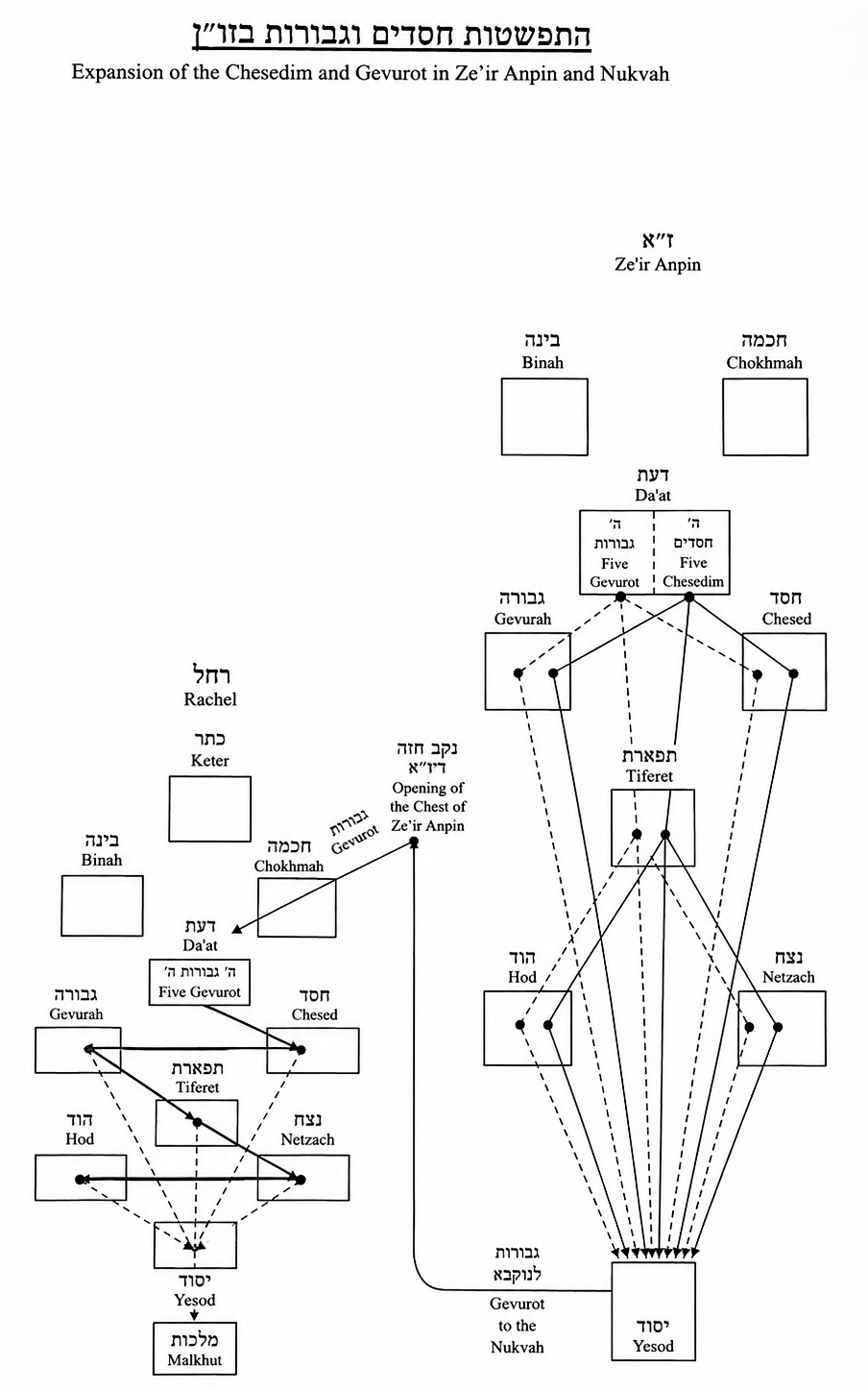
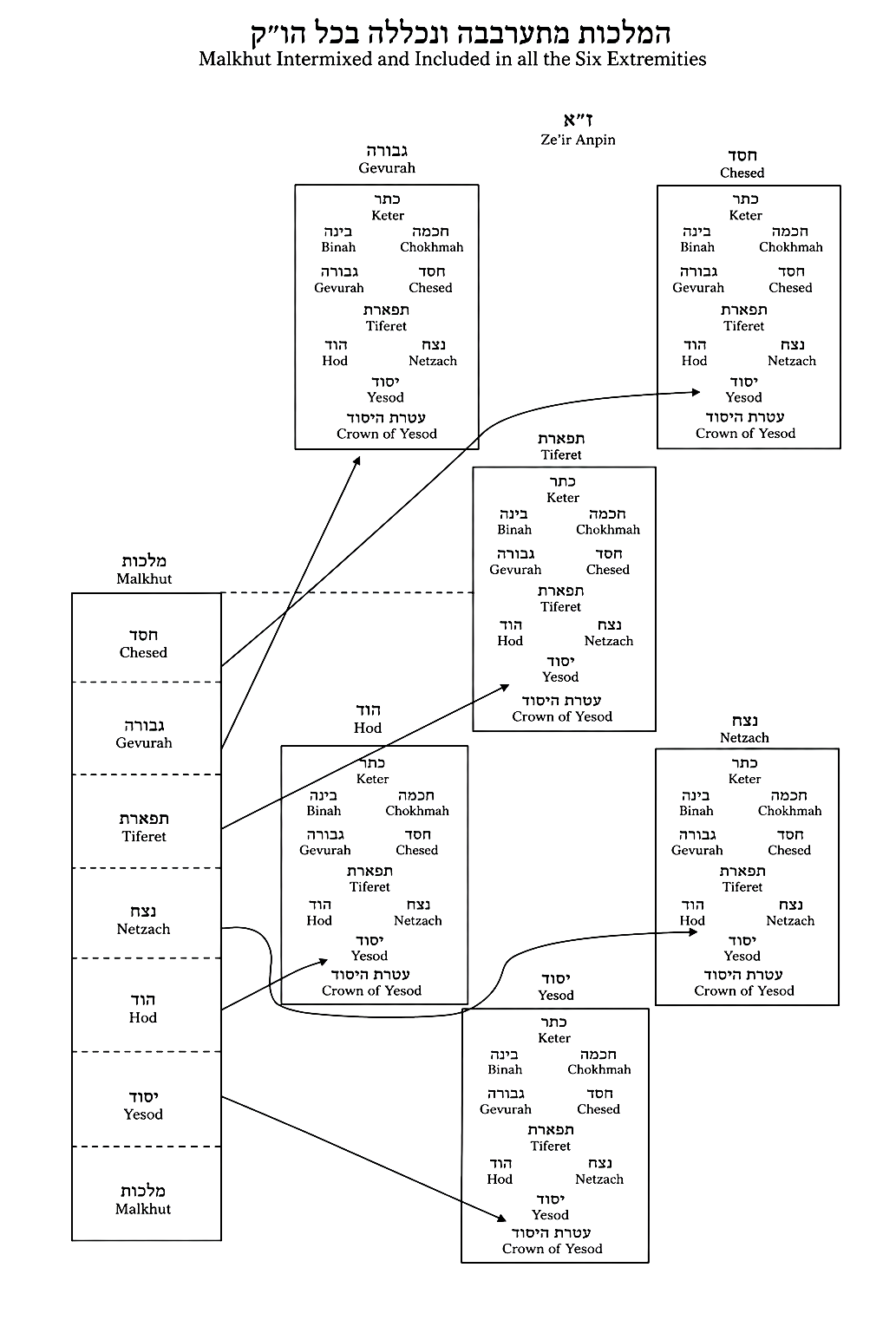
Chapter 4
שער לד פרק ד מ״ב
[34:4] Aspect one (בְּחִינָה א׳). Behold, at first, before the rectification (הִנֵּה תְּחִלָּה קֹדֶם הַתִּקּוּן), Ze’ir Anpin was in the secret of six points separated from one another (הָיָה ז״א בְּסוֹד ו׳ נְקוּדוֹת נִפְרָדוֹת זוֹ מִזּוֹ), and he was called a public domain (וְהָיָה נִקְרָא רְה״ר), as mentioned in its place (כְּנִזְכָּר בִּמְקוֹמוֹ), and he was called the Vav of Havayah (וְנִקְרָא ו׳ שֶׁל הוי״ה), corresponding to the number of six points that were then within him (כְּמִנְיַן ו׳ נְקוּדוֹת שֶׁהָיָה אָז בּוֹ). And then Malkhut was also one point, a seventh to him (וְאָז הָיְתָה הַמַּלְכוּת גַּם כֵּן נְקוּדָה אַחַת שְׁבִיעִית אֵלָיו), and she was beneath the Yesod of Ze’ir Anpin (וְהָיְתָה לְמַטָּה מִיְסוֹד שֶׁל ז״א), in the aspect of the crown within it (בִּבְחִי׳ עֲטָרָה שֶׁבּוֹ), and therefore there was not yet found a female for the male (וְלָכֵן לֹא נִמְצָא אָז עֲדַיִן נְקֵבָה אֶל הַזָּכָר).
And this has already been explained in aspect four of Keri’at Shema (וּכְבָר נִתְבָּאֵר זֶה בִּבְחִי׳ ד׳ דְּק״ש), and see there the root of the matters (וְע״ש שֹׁרֶשׁ הַדְּבָרִים). And behold, at that time, the measure of her stature was the Atarah [Crown] within the Yesod (וְהִנֵּה אָז שִׁעוּר מִדָּתָהּ הָעֲטָרָה שֶׁבַּיְסוֹד), which is one-third of the measure of the Yesod (שֶׁהִיא שְׁלִישִׁית מִדַּת הַיְסוֹד). This is the mystery of, “And measured the dust of the earth with a shalish [measure; one-third]” (Isaiah 40:12) (אֲשֶׁר ז״ס וְכֹל בְּשָׁלִישׁ עֲפַר הָאָרֶץ), for the measure of the earth—which is Malkhut (כִּי מִדַּת הָאָרֶץ שֶׁהִיא מַלְכוּת)—was equal to the measure of the Atarah [Crown] (הָיְתָה כְּמִדַּת הָעֲטָרָה), which is called one-third of the measure of the Yesod (הַנִּקְרָא שְׁלִישׁ מִדַּת הַיְסוֹד); and at that time she was called Atarah [Crown] (וְאָז נִקְרֵאת עֲטָרָה).
Aspect two (בְּחִינָה ב׳). She was at the time of the first impregnation of Ze’ir Anpin within Binah (הָיְתָה בִּזְמַן הָעִיבּוּר א׳ שֶׁל ז״א בְּתוֹךְ הַבִּינָה), and then an addition of rectification was added to Ze’ir Anpin (וְאָז נִתּוֹסֵף תִּקּוּן ז״א), for his six points that were initially separate before the rectification (כִּי ו׳ נְקוּדוֹתָיו שֶׁהָיוּ נִפְרָדִין תְּחִלָּה קֹדֶם הַתִּקּוּן), now were included three within three (עַתָּה נִכְלָלִין ג׳ גּוֹ ג׳), for Netzach, Hod, Yesod clothed Chesed, Gevurah, Tiferet (כִּי נֵה״י הִלְבִּישׁוּ לַחַג״ת), and it was found that Chesed was within Netzach and Gevurah within Hod and Tiferet within Yesod (וְנִמְצָא חֶסֶד תּוֹךְ נֵצַח וּגְבוּרָה תּוֹךְ הוֹד וְתִּפְאֶרֶת תּוֹךְ יְסוֹד).
And behold, the point of Malkhut that was initially beneath the Yesod as mentioned above (וְהִנֵּה נְקוּדַּת הַמַּלְכוּת שֶׁהָיְתָה תְּחִלָּה תַּחַת הַיְסוֹד כַּנַּ״ל), she too ascended there together with the Yesod (גַּם הִיא עָלְתָה שָׁם עִם הַיְסוֹד), and when the Yesod ascended and included Tiferet within it and clothed it (וְכַאֲשֶׁר עָלָה הַיְסוֹד וְכָלַל אֶת הַת״ת בְּתוֹכוֹ וְהִלְבִּישׁוֹ), there was no place for Malkhut to be included within it and she had no counterpart (לֹא הָיָה מָקוֹם לַמַּלְכוּת לְכָלֵל בּוֹ וְלֹא הָיָה לָהּ בֶּן זוּג). And just as that impregnation was for the purpose of rectifying Ze’ir Anpin (וּכְמוֹ שֶׁהָעִיבּוּר הַהוּא הָיָה לְצוֹרֶךְ תִּקּוּן ז״א), so too it was for the purpose of her rectification (גַּם הָיָה לְצוֹרֶךְ תִּקּוּנָהּ), and it was in this manner (וְהָיָה בְּאוֹפֶן זֶה): for her point too ascended and clothed the Yesod (כִּי גַּם הַנְּקוּדָה שֶׁלָּהּ עָלְתָה וְהִלְבִּישָׁה אֶת הַיְסוֹד), and through this ascent Malkhut was included also in all the six extremities (וְעַל יְדֵי עֲלִיָּה זוֹ נִכְלְלָה הַמַּלְכוּת גַּם בְּכָל הַו״ק), for by including the middle line she includes also the two other lines (כִּי בִּהְיוֹתָהּ כּוֹלֶלֶת קו הָאֶמְצָעִי כּוֹלֶלֶת גַּם אֶת ב׳ הַקָּוִין הָאֲחֵרִים), and through this impregnation she too, by being there in the middle line, was included in all of them (וְעַל יְדֵי זֶה הָעִיבּוּר גַּם הִיא בִּהְיוֹתָהּ שָׁם בְּקו הָאֶמְצָעִי נִכְלֶלֶת בְּכֻלָּם), and everything became the aspect of a private domain (וְנַעֲשֶׂה הַכֹּל בְּחִי׳ רְה״י).
It follows that the point of Malkhut clothed the Yesod in the secret of the crown (נִמְצָא כִּי נְקוּדַּת הַמַּלְכוּת הִלְבִּישָׁה אֶת הַיְסוֹד בְּסוֹד עֲטָרָה), and the Yesod clothed Tiferet (וְהַיְסוֹד הִלְבִּישׁ אֶת הַת״ת), and then she was called “a step outward” (וְאָז הָיְתָה נִקְרֵאת פְּסִיעָה לְבָר). And this is what is written in Parashat Balak, daf 203 (וְזֶ״ש פ׳ בָּלָק דְּר״ג), “I see him, but not near” (אָשׁוּרֶנּוּ וְלֹא קָרוֹב), when he was in the innards of Imma he extended a step outward, etc. (כֵּיוָן דְּהָוֵי בְּמֵיעֲהָא דְּאִמָּא אוֹשִׁיט פְּסִיעָה לְבָר וְכו׳). And the explanation of “ashurenu”('I see him') is a term of stepping (וּבֵיאוּר אָשׁוּרֶנּוּ לָשׁוֹן סְפִיעָה), like “You support my steps in Your paths” (Psalms 17:5) (כְּמוֹ תָּמִיךְ אַשׁוּרַי בְּמַעְגְּלוֹתֶיךָ).
And the matter is as explained above (וְהָעִנְיָן כַּנַּ״ל), for the six points that were initially in Ze’ir Anpin were included three within three (כִּי הַו׳ נְקוּדוֹת שֶׁהָיוּ תְּחִלָּה בְּז״א נִכְלָלִין ג׳ גּוֹ ג׳), and it was the small Vav within the first Heh of Havayah (וְהָיָה ו׳ זְעֵירָא שֶׁבָּאוֹת ה׳ רִאשׁוֹנָה שֶׁל הוי״ה), for they are six but they are not revealed except half a Vav alone (כִּי הֵם ו׳ אֲבָל אֵינָן מִתְגַּלִּין רַק חֲצִי ו׳ לְבַד), therefore it is a small Vav (לָכֵן הוּא ו׳ זְעֵירָא), and there, at the end of the letter, the small Vav extended a step outward like this (וְשָׁם בְּסוֹף אוֹת הו׳ זְעֵירָא אוֹשִׁיט פְּסִיעָה לְבָר כָּזֶה): And the reason is (וְהַטַּעַם הוּא), that when the Yesod clothed the Tiferet (כִּי כַּאֲשֶׁר הִלְבִּישׁ הַיְסוֹד אֶת הַת״ת), its thickness was equal to the other lines (הָיָה עָבְיוֹ שָׁוֶה אֶל שְׁאָר הַקָּוִין), but when Malkhut also ascended and she too clothed the Yesod (אֲבָל כַּאֲשֶׁר גַּם הַמַּלְכוּת עָלְתָה וְהִלְבִּישָׁה גַּם הִיא אֶת הַיְסוֹד), there is there the thickness of three Sefirot (יֵשׁ שָׁם עוֹבִי ג״ס), therefore there was added there the thickness of the point of Malkhut (לָכֵן נִתּוֹסֵף שָׁם עוֹבִי נְקוּדַּת הַמַּלְכוּת), and she became like a kind of step that goes outward at the end of the Vav (וְנַעֲשֵׂית כְּעֵין פְּסִיעָה הַיּוֹצֵאת בַּחוּץ בְּסוֹף הַו׳). And then through the impregnation she grew and became according to the measure of the entire stature of the Yesod of Ze’ir Anpin (וְאָז עַל יְדֵי הָעִיבּוּר נִגְדְּלָה וְנַעֲשֵׂית כְּשִׁעוּר כָּל קוֹמַת הַיְסוֹד שֶׁל ז״א). But the measure of the Yesod is one quarter of the measure of the Tiferet (וְאָכֵן שִׁעוּר מִדַּת הַיְסוֹד הוּא רוֹבַע מִדַּת הַת״ת), as mentioned in the Zohar, Balak, daf 204 (כְּנִזְכָּר זֹהַר בָּלָק דַּף ר״ד), “and he counted the quarter of Israel” (עַל וּמְסַפֵּר אֶת רוֹבַע יִשְׂרָאֵל), for the measure of the body is four covenants (דְּשִׁעוּרָא דְגוּפָא הוּא ד׳ בְּרִיתוֹת), and the covenant which is the quarter of Israel is according to the measure of the body of Ze’ir Anpin (וּבְרִית רוֹבַע יִשְׂרָאֵל הוּא כְּשִׁעוּרָא דְגוּפָא דְּז״א), see there (ע״ש).
[Mahadura Kama (First Edition)] (מ״ק). The reason that Malkhut was created in the secret of a step outward (הַטַּעַם שֶׁהַמַּלְכוּת נִבְרְאָה בְּסוֹד פְּסִיעָה לְבָר), is because afterward, in the growth, she needed to come and be at the back of Ze’ir Anpin, as is known (הוּא מִפְּנֵי שֶׁאַחַ״כ בְּהַגְדָּלָה הָיְתָה צְרִיכָה לָבוֹא וְלִהְיוֹת בַּאֲחוֹרֵי ז״א כַּנּוֹדָע), for there is her house (כִּי שָׁם בֵּיתָהּ), and therefore she remained there at the termination of the Vav (לָכֵן נִשְׁאֲרָה שָׁם בְּסִיּוּם הַו׳), and returned from there as Malkhut at the back of the Vav (וְחָזְרָה מִשָּׁם מַלְכוּת בַּאֲחוֹר שֶׁל הַו׳). And when the three last parts of the Vav were lengthened through the growth, which are Netzach, Hod, Yesod of Ze’ir Anpin as mentioned above (וְכַאֲשֶׁר נִתְאָרְכוּ ג׳ אַחֲרוֹנוֹת שֶׁל הַו׳ עַל יְדֵי הַגְדָּלָה שֶׁהֵם נֵה״י דְּז״א כַּנַּ״ל), then she remained there in their posterior (אָז נִשְׁאֶרֶת שָׁם בַּאֲחוֹרֵיהֶם), at the back of the Tiferet (בַּאֲחוֹרֵי הַת״ת), and she is called the final Heh of the Name (וְנִקְרֵאת ה׳ אַחֲרוֹנָה שֶׁבַּשֵּׁם)].
Aspect three, Mahadura Batra (Final Edition) (בְּחִינָה ג׳ מ״ב). She was at the time of the nursing of Ze’ir Anpin (הָיְתָה בִּזְמַן הַיְנִיקָה שֶׁל ז״א), after he emerged from the womb of Imma (אַחַר שֶׁיָּצָא מִבֶּטֶן אִמָּא), and the six extremities expanded greatly (וְנִתְפַּשְּׁטוּ ו״ק גְּדוֹלִים). And then, when they expanded and the Yesod descended from upon the Tiferet (וְאָז כְּשֶׁנִּתְפַּשְּׁטוּ וְיָרַד הַיְסוֹד מֵעַל גַּבֵּי הַת״ת), she did not descend with him below as at first beneath the Yesod (אָז לֹא יָרְדָה הִיא עִמּוֹ לְמַטָּה כְּבַתְּחִלָּה תַּחַת הַיְסוֹד), but remained there above, cleaving to the back of the Tiferet of Ze’ir Anpin (אֶלָּא נִשְׁאֲרָה שָׁם לְמַעְלָה דְּבוּקָה בַּאֲחוֹרֵי הַת״ת דְּז״א). And this is the secret of “the woman ascends with him and does not descend with him” (וְזֶ״ס הָאִשָּׁה עוֹלָה עִמּוֹ וְאֵינָהּ יוֹרֶדֶת עִמּוֹ), for when the Yesod ascended she ascended with him (כִּי כְּשֶׁעָלָה הַיְסוֹד עָלְתָה עִמּוֹ), and when it descended she did not descend with him (וּכְשֶׁיָּרַד לֹא יָרְדָה עִמּוֹ). And remember what was said above (וּזְכוֹר מַה שֶּׁלֵּאל), that her first root in the crown remains below forever (כִּי שָׁרְשָׁהּ הָרִאשׁוֹן שֶׁבָּעֲטָרָה נִשְׁאֶרֶת לְמַטָּה לְעוֹלָם).
And behold, through the nursing Ze’ir Anpin grows, as is known (וְהִנֵּה ע״י הַיְנִיקָה מִתְגַּדֵּל ז״א כַּנּוֹדָע), and she too grows with him (וְגַם הִיא נִגְדֶּלֶת עִמּוֹ), and becomes according to the measure of the Sefirah Tiferet of Ze’ir Anpin itself (וְנַעֲשֵׂית כְּשִׁעוּר סְפִירַת הַת״ת דְּז״א מַמָּשׁ). And behold, she is now a complete full measure, as great as the entire Sefirah of Tiferet of Ze’ir Anpin (וַהֲרֵי הִיא עַתָּה מִדָּה שְׁלֵמָה גְּדוֹלָה כְּכָל סְפִירַת ת״ת דְּז״א), unlike at first when she was according to the measure of the Yesod or the crown, which are small measures, as explained above (מַה שֶּׁאֵין כֵּן תְּחִלָּה בִּהְיוֹתָהּ כְּשִׁעוּר הַיְסוֹד אוֹ הָעֲטָרָה שֶׁהֵם מִדּוֹת קְטַנּוֹת כַּנַּ״ל). However, she is still not yet a Partzuf, but only one complete great measure, like the other Sefirot of Ze’ir Anpin (אָכֵן עֲדַיִן אֵינוֹ פַּרְצוּף רַק מִדָּה אַחַת שְׁלֵמָה גְּדוֹלָה כְּכָל שְׁאָר סְפִירוֹת דְּז״א), and now she is called the lower Heh of Havayah (וְעַתָּה הִיא נִקְרֵאת ה׳ תַּתָּאָה שֶׁל הוי״ה).
And behold, it has been explained (וְהִנֵּה נִתְבָּאֵר), that Ze’ir Anpin grew through nursing (כִּי ז״א נִגְדַּל בִּינִיקָה), and he also had the aspect of Mochin of Katnut (וְהָיָה לוֹ גַּם כֵּן בְּחִי׳ מוֹחִין דְּקַטְנוּת), and the Nukvah also grew, and in her there were Mochin in her Katnut (וְגַם הַנּוּקְבָּא נִגְדְּלוּ בָּהּ מוֹחִין בְּקַטְנוּתָהּ). And behold, her Mochin of nursing are alluded to by the name that she now has, which is the final letter Heh of Havayah, as mentioned above (וְהִנֵּה הַמּוֹחִין שֶׁלָּהּ דְּיִנִיקָה נִרְמְזוּ בַּשֵּׁם שֶׁיֵּשׁ לָהּ עַתָּה שֶׁהִיא אוֹת ה׳ אַחֲרוֹנָה דְּהוי״ה כַּנַּ״ל). And the matter is (וְהָעִנְיָן), that the Name Havayah of nursing which is in Ze’ir Anpin alone (כִּי שֵׁם הוי״ה דְּיִנִיקָה אֲשֶׁר בְּז״א לְבַדּוֹ), the two first letters Yod–Heh are the Mochin of Ze’ir Anpin (ב׳ אוֹתִיּוֹת י״ה הָרִאשׁוֹנוֹת הֵם מוֹחִין דְּז״א), and the Vav includes all the six extremities within him (וְהַו׳ כּוֹלֶלֶת כָּל הַו״ק שֶׁבּוֹ), but the essence of the Vav is in the Tiferet, which is his middle line (אֲבָל עִקַּר הַו׳ הוּא בַּת״ת שֶׁהוּא קו אֶמְצָעִי שֶׁבּוֹ), and there, at the back of this Vav which is in the Tiferet, there she stands—the lower Heh, which is the Nukvah (וְשָׁם בַּאֲחוֹר הַו׳ הַזּוֹ שֶׁהִיא בַּת״ת שָׁם הִיא עוֹמֶדֶת ה׳ תַּתָּאָה שֶׁהִיא הַנּוּקְבָּא). And we shall explain the matter of her Mochin (וְנְבָאֵר עִנְיַן הַמּוֹחִין שֶׁלָּהּ): behold, the Mochin of Chokhmah within her is Elokim with filling of Alefs (הִנֵּה מוֹחַ הַחָכְמָה שֶׁבָּהּ הוּא אֱלֹהִים דְּמִלּוּי אַלְפִּין), and the Mochin of her Binah is the Name Elokim with filling of Heh’s (וּמוֹחַ בִּינָה שֶׁלָּהּ הוּא שֵׁם אֱלֹקִים דְּמִלּוּי הַהִי״ן), for every letter Heh is Binah (כִּי כָּל אוֹת ה׳ הוּא בִּינָה), and the third Mochin is Elokim simple without filling (וּמוֹחַ ג׳ הוּא אֱלֹקִים פָּשׁוּט בְּלִי מִלּוּי), because the Da‘at of the Nukvah is Kal [Light] (מִפְּנֵי שֶׁהַדַּעַת שֶׁל הַנּוּקְבָּא הוּא קַל), and all the more so at the time of Katnut (וּמִכָּל שֶׁכֵּן בִּזְמַן הַקַּטְנוּת).
And behold, the Name Elokim with filling of Yods does not have the power to be revealed in her (וְהִנֵּה שֵׁם אֱלֹקִים דְּיוֹדִי״ן אֵין בָּהּ כֹּחַ לְהִתְגַּלוֹת בָּהּ), and in its place there was in her Elokim with filling of Alefs (וּבִמְקוֹמוֹ הָיָה בָּהּ אֱלֹקִים דְּאַלְפִּי״ן). It follows that the two Mochin of Chokhmah and Binah within her are fillings of Alefs and Heh’s (נִמְצָא כִּי ב׳ מוֹחִין דְּחו״ב שֶׁבָּהּ הֵם מִלּוּי אַלְפִּי״ן וְהַהִי״ן), And this is alluded to in that this Heh is called in this filling—Heh, Hehin, Alefin (וְזֶה נִרְמָז בְּמַה שֶּׁנִּקְרֵאת ה׳ זוֹ בְּמִלּוּי זֶה ה״א הַהִי״ן אַלְפִּי״ן). And since she is female, the Heh overpowered the Alef (וּלְפִי שֶׁהִיא נְקֵבָה גָּבְרָה ה׳ עַל א׳), and since all the essence of Malkhut now is the letter lower Heh (וּלְפִי שֶׁכָּל עִקָּרָהּ שֶׁל מַלְכוּת עַתָּה הִיא אוֹת ה׳ תַּתָּאָה), therefore her Mochin also are in the secret of the filling of the two letters Heh–Alef as mentioned above (לָכֵן גַּם הַמּוֹחִין שֶׁלָּהּ הֵם בְּסוֹד מִלּוּי ב׳ אוֹתִיּוֹת ה״א כַּנַּ״ל), therefore she is now called Heh–Alef (לָכֵן נִקְרֵאת עַתָּה ה״א). And corresponding to this simple Heh is the Mochin of Da‘at within her (וּכְנֶגֶד ה׳ זוֹ פְּשׁוּטָה הוּא מוֹחַ הַדַּעַת שֶׁבָּהּ), which is Elokim simple, which has only five letters, according to the number of the simple Heh (שֶׁהוּא אֱלֹקִים פָּשׁוּט שֶׁיֵּשׁ בּוֹ ה׳ אוֹתִיּוֹת לְבַד כְּמִנְיַן ה׳ פְּשׁוּטָה).
And behold, the three Mochin are alluded to in her name, which is the lower Heh of Havayah (וַהֲרֵי הַג׳ מוֹחִין נִרְמְזוּ בִּשְׁמָהּ שֶׁהִיא ה׳ תַּתָּאָה שֶׁל הוי״ה). Also, the three Mochin are alluded to in the form of the three lines that are in the letter Heh (גַּם נִרְמְזוּ ג׳ מוֹחִין בְּצִיּוּר ג׳ קַוִּין שֶׁיֵּשׁ בָּאוֹת ה׳), which are three lines—Chokhmah and Binah, and Da‘at in the middle (שֶׁהֵם ג׳ קַוִּין חו״ב וְדַּעַת בָּאֶמְצָע). And it is known what is written in the Zohar, Bereshit, daf 61 (וְנוֹדָע מַה שֶּׁכָּתוּב בַּזֹּהַר בְּרֵאשִׁית דְּס״א), “And Elokim created the two luminaries” (וַיִּבְרָא אֱלֹקִים אֶת שְׁנֵי הַמְּאוֹרוֹת), for initially the Malkhut in her smallness is subordinate to the male (כִּי תְּחִלָּה הַמַּלְכוּת בְּקַטְנוּתָהּ הִיא טְפֵלָה אֶל הַזָּכָר), and she is called the lower Heh (וְנִקְרֵאת ה׳ תַּתָּאָה), and in her completion, face to face, she has her own name independently (וּבְהַשְׁלֵמוּתָהּ פב״פ יֵשׁ לָהּ שֵׁם שֶׁלָּהּ בִּפְנֵי עַצְמָהּ), such as Adonai or Elokim and the like, according to the times and according to the state (כְּגוֹן אֲדֹנָי אוֹ אֱלֹקִים וְכַיּוֹצֵא בָּהּ כְּפִי הַזְּמַנִּים וּכְפִי הַמְּצִיאוּת), and then she is not subordinate to him (וְאֵינָהּ טְפֵלָה אֵלָיו אָז).
And behold, even in smallness it is certainly necessary that the Name Adonai be alluded to within her (וְהִנֵּה גַּם בְּקַטְנוּת וַדַּאי צָרִיךְ שֶׁיִּהְיֶה נִרְמָז בָּהּ שֵׁם אֲדֹנָי), but it is only by way of allusion, in number and in count and calculation alone (אָכֵן אֵינוֹ רַק דֶּרֶךְ רֶמֶז בְּמִנְיָן וּבְמִסְפָּר וְחֶשְׁבּוֹן לְבַד). How so (כֵּיצַד): when you count the number of these three Mochin (כְּשֶׁתִּמְנֶה מִסְפַּר ג׳ מוֹחִין אֵלּוּ), behold the first two, of the Heh’s and of the Alefins, are the gematria Tokef (הִנֵּה ב׳ רִאשׁוֹנִים דְּהַהִי״ן וְדְּאַלְפִּי״ן הֵם גִּימַטְרִיָּא תּוֹקֶ״ף), for these Mochin of smallness are strength and complete judgment (כִּי אֵלּוּ הַמּוֹחִין דְּקַטְנוּת הֵם תּוֹקֶף וְדִין גָּמוּר), and especially the smallness of the female (וּבִפְרָט קַטְנוּת הַנְּקֵבָה). And when the Mochin of Da‘at, which is Elokim simple, is joined with them (וּמִתְחַבֵּר עִמָּהֶם מוֹחַ הַדַּעַת שֶׁהוּא אֱלֹקִים פָּשׁוּט), all three together are gematria Tera‘ah (יִהְיוּ שְׁלָשְׁתָּן גִּימַטְרִיָּא תַּרְע״א), according to the calculation of Adonai in its full spelling (כְּחֶשְׁבּוֹן אֲדֹנָי בִּמְלוֹאוֹ). And behold, now she is still called the lower Heh (וְהִנֵּה עַתָּה עֲדַיִן נִקְרֵאת ה׳ תַּתָּאָה), and she is called a rib (וְנִקְרֵאת צֵלָע), as it is written, “It is not good for the man to be alone” (כְּמ״ש לֹא טוֹב הֱיוֹת הָאָדָם לְבַדּוֹ), for initially the Nukvah was only behind the Tiferet alone (כִּי תְּחִלָּה הָיְתָה הַנּוּקְבָּא אֲחוֹרֵי הַת״ת לְבַד), in the aspect of one rib (בִּבְחִי׳ צֵלָע אַחַת), which is the lower Heh as explained above (שֶׁהִיא ה׳ תַּתָּאָה כַּנַּ״ל), for she was only the measure of Tiferet (שֶׁלֹּא הָיְתָה רַק מִדַּת ת״ת).
Aspect four, Mahadura Batra (Final Edition) (בְּחִינָה ד׳ מ״ב). It is at the time that she is called “Ketanah [Minor]”, which is until twelve years and one day (הִיא בִּזְמַן שֶׁנִּקְרֵאת קְטַנָּה שֶׁהוּא עַד י״ב שָׁנִים וְיוֹם א׳). And the matter is (וְהָעִנְיָן), that the woman is not rectified until after the completion of the rectification of the man (כִּי אֵין הָאִשָּׁה נִתְקֶנֶת עַד אַחַר גְּמַר תִּקּוּן הָאָדָם), as it is written, “It is not good that the man be alone” (וּכְמ״ש לֹא טוֹב הֱיוֹת הָאָדָם לְבַדּוֹ). For after the man was rectified, and Chavah was still only in the secret of a rib (כִּי אַחַר שֶׁנִּתְקַן הָאָדָם וְהָיְתָה חַוָּה עֲדַיִן בְּסוֹד צֵלָע לְבַד), then He rectified her and made her a help opposite him, complete (אָז תִּקְּנָהּ וַעֲשָׂאָהּ עֵזֶר כְּנֶגְדּוֹ שְׁלֵמָה). For so we see with the clarity of sight (כִּי כֵן אָנוּ רוֹאִים בְּחוּשׁ הָרְאוֹת), that always the man is older in years than the woman (שֶׁלְּעוֹלָם הָאִישׁ גָּדוֹל בְּשָׁנִים מִן הָאִשָּׁה). It follows that after the Mochin of Ze’ir Anpin entered and he grew (וְנִמְצָא כִּי אַחַר שֶׁנִּכְנְסוּ מוֹחִין דְּז״א וְהִגְדִּיל), then these Mochin illuminate in the Nukvah and she too grows (אָז מְאִירִין מוֹחִין אֵלּוּ בַּנּוּקְבָּא וְנִגְדֶּלֶת גַּם הִיא). And just as Ze’ir Anpin does not grow until all the Mochin finish entering into him, which is until the completion of thirteen years and one day (וּכְמוֹ שֶׁאֵין הַז״א גָּדֵל עַד שֶׁיִּגָּמְרוּ כָּל הַמּוֹחִין לְהִכָּנֵס בּוֹ וְהוּא עַד תַּשְׁלוּם י״ג שָׁנִים וְיוֹם א׳), so too the Nukvah does not grow until all the Mochin finish entering into her, which is until the completion of twelve years and one day (כֵּן הַנּוּקְבָּא אֵינָהּ נִגְדֶּלֶת עַד שֶׁיִּגָּמְרוּ כָּל הַמּוֹחִין לְהִכָּנֵס בָּהּ וְהוּא עַד תַּשְׁלוּם י״ב שָׁנִים וְיוֹם א׳), and then she is called “Na‘arah” (a young maiden), as it is written (וְאָז תִּקָּרֵא נַעֲרָה כְּמ״ש).
And behold, the place of the Nukvah now is at the back of the chest of Tiferet (וְהִנֵּה מְקוֹם הַנּוּקְבָּא עַתָּה הִיא בַּאֲחוֹרֵי הֶחָזֶה שֶׁל הַת״ת), and the lights that go out from Ze’ir Anpin to enter into her do not go out and pass through the entire thickness of the partition of the body of Ze’ir Anpin (וְהָאוֹרוֹת הַיּוֹצְאִין מִן ז״א לְכָנֵס בָּהּ אֵינָם יוֹצְאִים וְעוֹבְרִים דֶּרֶךְ כָּל עוֹבִי מְחִיצַת גּוּף ז״א), for if so, it would be found that in one instant all the Mochin would enter into her (דְּאִם כֵּן הָיָה הַדָּבָר נִמְצָא שֶׁבְּרֶגַע הָיוּ נִכְנָסִין בָּהּ כָּל הַמּוֹחִין). Rather, the hard spark mentioned in the Idra, daf 141, pierced and passed from his back, etc. (אֶלָּא הַבּוּצִינָא דְּקַרְדִּינוּתָא הַנִּזְכָּר בָּאַדְרָא דְּקמ״א נָקִיב וְעָבַר מֵאָחוֹרָיו כו׳), for at the place of the chest of Ze’ir Anpin one opening was pierced (כִּי בִּמְקוֹם הֶחָזֶה דְּז״א נָקִיב נֶקֶב א׳), and through there the lights pass to the back (וְדֶּרֶךְ שָׁם עוֹבְרִים הָאוֹרוֹת לְאָחוֹר), and there stands the head of the Nukvah (וְשָׁם עוֹמֶדֶת רֹאשׁ הַנּוּקְבָּא), and there they make one Tzelem [Image] upon the head of the Nukvah (וְשָׁם עוֹשִׂין צֶלֶם א׳ עַל גַּבֵּי רֹאשׁ הַנּוּקְבָּא), in the manner explained above regarding the Tzelem [Image] of the Mochin of Ze’ir Anpin (עַל דֶּרֶךְ הַנַּ״ל בְּצֶלֶם דְּמוֹחִין דְּז״א), and they enter into her little by little over an extended time (וְנִכְנָסִין מְעַט מְעַט בְּהֶמְשֵׁךְ זְמַן), until the completion of twelve years and one day (עַד תַּשְׁלוּם י״ב שָׁנָה וְיוֹם א׳), and then the Mochin finish entering (וְאָז נִגְמָרִין לְכָנֵס הַמּוֹחִין).
It follows that these lights that go out to the Nukvah first ascend from below to above, from the Yesod up to above, to the chest of the Tiferet of Ze’ir Anpin, within the inner aspect of the body of Ze’ir Anpin (וְנִמְצָא כִּי אוֹרוֹת אֵלּוּ הַיּוֹצְאִין אֶל הַנּוּקְבָּא הֵם עוֹלִין תְּחִלָּה מִלְּמַטָּה לְמַעְלָה מִן הַיְסוֹד עַד לְמַעְלָה בֶּחָזֶה הַת״ת שֶׁל ז״א תּוֹךְ פְּנִימִית גּוּף ז״א), and there they pierce and go out to the outside, at the back of the chest, upon the head of the Nukvah (וְשָׁם נוֹקְבִין וְיוֹצְאִין לַחוּץ בַּאֲחוֹרֵי הֶחָזֶה עַל רֹאשׁ הַנּוּקְבָּא), and then they bend and descend and enter into the Nukvah from above, from her Keter down to below, to the end of her body, through a bending of the stature (וְאָז נִכְפָּפִין וְיוֹרְדִין וְנִכְנָסִין תּוֹךְ הַנּוּקְבָּא מִלְּמַעְלָה מִן הַכֶּתֶר שֶׁלָּהּ עַד לְמַטָּה בְּסִיּוּם גּוּף שֶׁלָּהּ דֶּרֶךְ כְּפִיפַת קוֹמָה). And this is the matter of that question mentioned in tractate Bava Kamma, in the chapter HaKones, regarding “a bending fire that damages” (וְזֶהוּ עִנְיָן אוֹתָהּ הַבְּעָיָא הַנִּזְכָּר בְּמַסֶּכֶת בָּבָא קַמָּא בְּפֶרֶק הַכּוֹנֵס עַל הָאֵשׁ נִכְפֶּפֶת שֶׁהִזִּיקָה), for you already know that the lights of Malkhut are Gevurot, which are called fire (כִּי כְּבָר יָדַעְתָּ כִּי אוֹרוֹת הַמַּלְכוּת הֵם גְּבוּרוֹת הַנִּקְרָאִים אֵשׁ), and they go out from the aspect of a bending fire, as explained here (וְהֵם יוֹצְאִים מִבְּחִי׳ אֵשׁ נִכְפֶּפֶת כְּמְבוֹאָר כָּאן).
Chapter 5
שער לד פרק ה מ״ב
[34:5] And behold, know (וְהִנֵּה דַּע), that the lights that go out to the Nukvah from Ze’ir Anpin, from all three Sefirot Netzach, Hod, Yesod within him, as will be explained below (כִּי הָאוֹרוֹת הַיּוֹצְאִין אֶל הַנּוּקְבָּא מִן הַז״א מִכָּל ג׳ סְפִירוֹת נֵה״י שֶׁבּוֹ כְּמ״ש לְמַטָּה), do not go out alone (אֵינָן יוֹצְאִין לְבַדָּן), but rather in the same manner that when they were within Ze’ir Anpin they were clothed within the Netzach, Hod, Yesod of Imma, and afterward within the Netzach, Hod, Yesod of Ze’ir Anpin (אֶלָּא כְּדֶרֶךְ שֶׁבִּהְיוֹתָן תּוֹךְ ז״א הָיוּ מְלוּבָּשִׁין תּוֹךְ נֵה״י דְּאִמָּא וְאַחַ״כ תּוֹךְ נֵה״י דְּז״א), so too when they go out from there, they go out with their garments together with them (כֵּן כְּשֶׁיּוֹצְאִין מִשָּׁם יוֹצְאִין הֵם וּלְבוּשֵׁיהֶם עִמָּהֶם), from the aspect of Netzach, Hod, Yesod of Imma and from the aspect of Netzach, Hod, Yesod of Ze’ir Anpin (מִבְּחִי׳ נֵה״י דְּאִמָּא וּמִבְּחִי׳ נֵה״י דְּז״א).
For behold, in their going out they pass through those screens (כִּי הֲרֵי בְּצֵאתָן עוֹבְרִין דֶּרֶךְ הַמַּסָּכִים הָהֵם), therefore just as they go out, so too the illumination of the screens goes out with them (אִם כֵּן כְּמוֹ שֶׁהֵם יוֹצְאִין כָּךְ הֶאָרַת הַמַּסָּכִים יוֹצֵאת עִמָּהֶם), and they clothe themselves within the Nukvah (וּמִתְלַבְּשִׁים תּוֹךְ הַנּוּקְבָּא), in the same manner that these lights were within Ze’ir Anpin—within the Netzach, Hod, Yesod of Imma, and the Netzach, Hod, Yesod of Imma within the Netzach, Hod, Yesod of Ze’ir Anpin, and the Netzach, Hod, Yesod of Ze’ir Anpin within the entire Nukvah (עַל דֶּרֶךְ שֶׁהָיוּ בְּז״א אוֹרוֹת אֵלּוּ תּוֹךְ נֵה״י דְּאִמָּא וְנֵה״י דְּאִמָּא תּוֹךְ נֵה״י דְּז״א וְנֵה״י דְּז״א תּוֹךְ הַנּוּקְבָּא כֻּלָּהּ).
And behold, as was explained above (וְהִנֵּה כְּמַשֶּׁלּוּ), that when the lights went out from Ze’ir Anpin to enter the Nukvah (כִּי כַּאֲשֶׁר יָצְאוּ הָאוֹרוֹת מִז״א לְכָנֵס בַּנּוּקְבָּא), they went out together with their sheath (יָצְאוּ הֵם וְנַרְתְּקָן עִמָּהֶם), which is the aspect of the illumination of Netzach, Hod, Yesod of Imma and of Netzach, Hod, Yesod of Ze’ir Anpin itself (שֶׁהוּא בְּחִי׳ הֶאָרַת נֵה״י דְּאִמָּא וּמִנֵּה״י דְּז״א עַצְמוֹ), and they entered clothed within them into the Nukvah (וְנִכְנְסוּ מְלוּבָּשִׁים בְּתוֹכָם תּוֹךְ הַנּוּקְבָּא). And thus it is found (וְאִם כֵּן נִמְצָא), that just as in Ze’ir Anpin there are concealed Chasadim, which extend until the chest (כְּמוֹ שֶׁיֵּשׁ בְּז״א חֲסָדִים סְתוּמִים שֶׁהוּא עַד הֶחָזֶה), for until there reaches the conclusion of the screen of the Yesod of Imma (כִּי עַד שָׁם הִגִּיעַ סִיּוּם מָסָךְ הַיְסוֹד דְּאִמָּא), and from there and below the Chasadim are revealed within him (וּמִשָּׁם וּלְמַטָּה מִתְגַּלִּין הַחֲסָדִים בְּתוֹכוֹ), so too is the matter here in the Nukvah (כֵּן הָעִנְיָן כָּאן בַּנּוּקְבָּא). For the sheath that the Gevurot took with them from the Yesod of Ze’ir Anpin, where they were, and from where they went out (כִּי הַנֶּרְתֵּק שֶׁלָּקְחוּ הַגְּבוּרוֹת עִמָּהֶם מִן יְסוֹד דְּז״א אֲשֶׁר שָׁם הָיוּ וּמִשָּׁם יָצְאוּ), entered into her Da‘at (וְנִכְנְסוּ אֶל הַדַּעַת שֶׁבָּהּ), and that sheath of the Yesod of Ze’ir Anpin spreads within the middle line of the Nukvah (וְאוֹתוֹ נֶרְתֵּק שֶׁל יְסוֹד דְּז״א מִתְפַּשֵּׁט תּוֹךְ קו אֶמְצָעִי שֶׁל הַנּוּקְבָּא). And since the Yesod of Ze’ir Anpin, which is male, is long (וּלְהִיוֹת הַיְסוֹד דְּז״א אֲשֶׁר הוּא זָכָר וְהוּא אָרוֹךְ), therefore it spreads through the entire middle line until the conclusion of the Tiferet of the Nukvah (לָכֵן מִתְפַּשֵּׁט בְּכָל קו אֶמְצָעִי עַד סִיּוּם הַת״ת דְּנוּקְבָּא).
Therefore it is found (לָכֵן נִמְצָא), that Ze’ir Anpin has revealed two-thirds of the Chesed in Tiferet and two complete Chasadim of Netzach and Hod (כִּי הַז״א יֵשׁ בּוֹ מְגֻלִּין שְׁתֵּי שְׁלִישֵׁי חֶסֶד שֶׁבַּת״ת וּשְׁתֵּי חֲסָדִים שְׁלֵמוֹת שֶׁל נ״ה), but in the Nukvah there is no revelation except of the two Gevurot themselves that spread only in her Netzach and Hod (אֲבָל בַּנּוּקְבָּא אֵין בָּהּ גִּלּוּי רַק לִשְׁתֵּי גְּבוּרוֹת עַצְמָן שֶׁנִּתְפַּשְּׁטוּ בְּנ״ה שֶׁלָּהּ לְבַד), and this is one distinction in the matter of the Gevurot themselves in contrast to the Chasadim (וַהֲרֵי זֶה שִׁנּוּי א׳ בְּעִנְיַן הַגְּבוּרוֹת עַצְמָן אֶל הַחֲסָדִים). Another difference exists in the matter of the place itself (עוֹד יֵשׁ שִׁנּוּי אַחֵר בְּעִנְיַן הַמָּקוֹם עַצְמוֹ), for in Ze’ir Anpin, where the Yesod of Imma concludes at his chest, there is a great distance from there until his Yesod (כִּי בְּז״א שֶׁנִּגְמַר יְסוֹד דְּאִמָּא בֶּחָזֶה שֶׁלּוֹ יֵשׁ הַרְחֵק גָּדוֹל מִשָּׁם עַד הַיְסוֹד שֶׁלּוֹ), and when the Chasadim go out from there, they fall and descend from a high place with great swiftness (וְכַאֲשֶׁר יוֹצְאִין מִשָּׁם הַחֲסָדִים הֵם נוֹפְלִין וְיוֹרְדִין מִמָּקוֹם גָּבוֹהַּ בִּמְרוּצָה גְּדוֹלָה). But the Gevurot that go out from the Yesod of Ze’ir Anpin to the Yesod of Malkhut are truly close and attached to it (אֲבָל גְּבוּרוֹת הַיּוֹצְאִין מִיְסוֹד דְּז״א אֶל יְסוֹד דְּמַלְכוּת הוּא סָמוּךְ מַמָּשׁ וְנִדְבָּק בּוֹ), for it has already been explained that it concludes at the end of the Tiferet of the Nukvah (כִּי הֲרֵי נִתְבָּאֵר שֶׁמִּסְתַּיֵּם בְּסוֹף הַת״ת דְּנוּקְבָּא), and there is almost no discernible aspect of descent there (וְכִמְעַט שֶׁאֵין נִכָּר שָׁם בְּחִי׳ יְרִידָה).
For all the time that they spread and descend, they are placed within the Yesod of Ze’ir Anpin, which is like a partition for them, and it is not called a fall (כִּי כָּל זְמַן שֶׁמִּתְפַּשְּׁטִין וְיוֹרְדִין נְתוּנִים בְּתוֹךְ הַיְסוֹד דְּז״א שֶׁהוּא כְּמוֹ מְחִיצָה אֲלֵיהֶם וְאֵינוֹ נִקְרָא נְפִילָה), but when the Yesod of Ze’ir Anpin concludes and there is no partition for them, then it is called a fall (אֲבָל כְּשֶׁנִּגְמַר הַיְסוֹד דְּז״א וְאֵין מְחִיצָה אֲלֵיהֶם אָז נִקְרָא נְפִילָה). And behold, the cause of these two differences brings about a third difference (וְהִנֵּה סִבַּת ב׳ שִׁנּוּיִים אֵלּוּ גּוֹרֵם שִׁנּוּי ג׳), and it is (וְהוּא כִּי): for in Ze’ir Anpin there were three Chasadim minus a third revealed (כִּי בְּז״א הָיוּ ג׳ חֲסָדִים פָּחוֹת שְׁלִישׁ מְגֻלִּין), and they are many lights compared to the Nukvah (וְהֵם אוֹרוֹת רַבִּים מִשֶּׁל נְקֵבָה), and also because they descend swiftly from a very high place, as mentioned above (וְגַם שֶׁיּוֹרְדִין בִּמְרוּצָה מִמָּקוֹם גָּבוֹהַּ מְאֹד כַּנַּ״ל).
Therefore there is in them afterward the power to ascend exceedingly (לָכֵן יֵשׁ בָּהֶם כֹּחַ אַחַ״כ לַעֲלוֹת מְאֹד מְאֹד), as is seen clearly by sense perception (כַּנִּרְאֶה בְּחוּשׁ הָרְאוֹת), for when a stone falls from a high place it returns, by the force of the strong impact of its descent, to rise upward with great power (כִּי כַּאֲשֶׁר יִפּוֹל הָאֶבֶן מִמָּקוֹם גָּבוֹהַּ תַּחֲזוֹר מִכֹּחַ הַכָּאַת יְרִידָה שֶׁהָיְתָה בְּחֹזֶק לַחֲזוֹר לַעֲלוֹת לְמַעְלָה בְּכֹחַ שִׁעוּר גָּדוֹל), whereas when its fall was from a low place it will not return to rise so high (וּכְשֶׁנְּפִילָתָהּ הָיְתָה מִמָּקוֹם נָמוּךְ לֹא תַּחֲזוֹר לַעֲלוֹת כָּל כָּךְ בְּגוֹבַהּ). Therefore there was power in the revealed Chasadim, for these two reasons, to spread in the three lines of Ze’ir Anpin (לָכֵן הָיָה כֹּחַ בַּחֲסָדִים הַמְּגֻלִּין לִב׳ סִבּוֹת הַנַּ״ל לְהִתְפַּשֵּׁט בְּג׳ קַוִּין בְּז״א), and to ascend in all three up to the Keter (וְלַעֲלוֹת בִּשְׁלָשְׁתָּן עַד הַכֶּתֶר), and they enlarge the entirety of Ze’ir Anpin, as mentioned above (וּמַגְדִּילִין אֶת כָּל הַז״א כַּנַּ״ל), for the greatness of Ze’ir Anpin is through water, which are the Chasadim (כִּי הַגַּדְלוּת דְּז״א הֵם עַל יְדֵי מַיִם שֶׁהֵם הַחֲסָדִים). But the Nukvah (אֲבָל הַנְּקֵבָה), whose place of descent of the Gevurot is very small, to the point that it is almost not called a descent (שֶׁמְּקוֹם יְרִידַת הַגְּבוּרוֹת הוּא מוּעָט מְאֹד עַד שֶׁכִּמְעַט אֵינוֹ נִקְרָא יְרִידָה), and also in the matter of their measure they are only two Gevurot (וְגַם בְּעִנְיַן שִׁעוּרָם הֵם ב׳ גְּבוּרוֹת בִּלְבַד), whereas there in Ze’ir Anpin there were close to three Chasadim (וְשָׁם בְּז״א הָיָה קָרוֹב לְג׳ חֲסָדִים).
Therefore, if these Gevurot were to spread in their ascent through the three lines (לָכֵן אִלּוּ הָיוּ אֵלּוּ הַגְּבוּרוֹת מִתְפַּשְּׁטוֹת בַּעֲלִיָּתָן דֶּרֶךְ הַג׳ קַוִּין), they would not have the power, these two, to ascend up to the Keter and enlarge it (לֹא הָיָה בְּכֹחַ אֵלּוּ הַב׳ לַעֲלוֹת עַד הַכֶּתֶר וּלְהַגְדִּילוֹ), for their power would be spread out in these three lines (כִּי הָיוּ מִתְפַּשְּׁטִים כֹּחָם בְּאֵלּוּ הַג׳ קַוִּין), and even that they might be able to ascend up to her Chokhmah and Binah alone would already be a wonder (וְהַלְוַאי שֶׁיּוּכְלוּ לַעֲלוֹת עַד חו״ב שֶׁבָּהּ לְבַד). And behold, we need to enlarge the Keter within her (וְהִנֵּה אָנוּ צְרִיכִין לְהַגְדִּיל הַכֶּתֶר שֶׁבָּהּ), and therefore it was necessary that these two Gevurot of Netzach and Hod descend down to her Yesod (וְלָכֵן הֻצְרַךְ שֶׁאֵלּוּ הַב׳ גְּבוּרוֹת דְּנ״ה שֶׁיָּרְדוּ עַד הַיְסוֹד שֶׁבָּהּ), so that when they return to ascend (שֶׁכַּאֲשֶׁר חוֹזְרוֹת לַעֲלוֹת), both of them gather together (יִתְקַבְּצוּ שְׁנֵיהֶן), and ascend through the middle line alone (וְיַעֲלוּ דֶּרֶךְ קו הָאֶמְצָעִי הֵם לְבַד), until they ascend to the Keter and enlarge it (עַד שֶׁיַעֲלוּ אֶל הַכֶּתֶר וְיַגְדִּילוּהוּ).
And if you will say (וְאִם תֹּאמַר): behold now, when these Gevurot return to ascend through the middle line to enlarge her Keter (הֲרֵי עַתָּה כְּשֶׁחוֹזְרוֹת אֵלּוּ הַגְּבוּרוֹת לַעֲלוֹת דֶּרֶךְ קו הָאֶמְצָעִי לְהַגְדִּיל כֶּתֶר שֶׁבָּהּ), they are clothed within the aforementioned garments (הֵם מִתְלַבְּשִׁין תּוֹךְ הַלְּבוּשִׁים הַנַּ״ל), which are the garments of Netzach, Hod, Yesod of Imma and Netzach, Hod, Yesod of Ze’ir Anpin (שֶׁהֵם לְבוּשֵׁי נֵה״י דְּאִמָּא וְנֵה״י דְּז״א), and if so, behold they are concealed as at first (וְאִם כֵּן הֲרֵי הֵם סְתוּמִים כְּמִתְחִלָּה). And what benefit was there in their revelation below (וּמָה הוֹעִילוּ בְּגִלּוּיָם לְמַטָּה), for behold afterward, since they were not strengthened and did not add power in order to be able to enlarge, except because of the revelation that was revealed (וַהֲרֵי אַחַר שֶׁהֵם לֹא הִתְחַזְּקוּ וְלֹא הוֹסִיפוּ כֹּחַ כְּדֵי שֶׁיּוּכְלוּ לְהַגְדִּיל רַק מֵחֲמַת הַגִּלּוּי שֶׁנִּתְגַּלֶּה), in the manner explained above regarding the Chasadim of Ze’ir Anpin (עַל דֶּרֶךְ הַנַּ״ל בַּחֲסָדִים דְּז״א). And if so, now that they return to ascend and enter as at first (וְאִם כֵּן עַתָּה שֶׁחוֹזְרִין לַעֲלוֹת וְנִכְנָסִין כְּבָרִאשׁוֹנָה), through the mouth of the Yesod of Ze’ir Anpin from the place from which they went out (דֶּרֶךְ פִּי הַיְסוֹד דְּז״א מִמָּקוֹם שֶׁיָּצְאוּ), and they return and are covered and clothed (וְחוֹזְרִין וּמִתְכַּסִּין וּמִתְלַבְּשִׁין), behold their light returns to be weakened and diminished (הֲרֵי חָזַר אוֹרָם לְהֶחָלֵשׁ וּלְהִתְמַעֵט), and how will they be able to ascend to her Keter (וְאֵיךְ יוּכְלוּ לַעֲלוֹת אֶל הַכֶּתֶר שֶׁבָּהּ). But the answer is (אַךְ הַתְּשׁוּבָה הוּא), in the same manner as what was said regarding the Chasadim of Ze’ir Anpin (עַל דֶּרֶךְ מַה שֶּׁנֶּאֱמַר בַּחֲסָדִים דְּז״א), for when they went out from the Yesod of Imma and were revealed (כִּי כַּאֲשֶׁר יָצְאוּ מִיְסוֹד דְּאִמָּא וְנִתְגַּלּוּ), they acquired a great illumination within themselves (קָנוּ הֶאָרָה גְּדוֹלָה בְּעַצְמָן), and their illumination, which at first was concealed within them because of the narrowness of the place (וְהֶאָרָתָן שֶׁהָיְתָה תְּחִלָּה נֶעְלֶמֶת בָּהֶם מֵחֲמַת צָרוּת הַמָּקוֹם), expanded and illuminated within them (נִתְפַּשְּׁטָה וְהֵאִירָה בָּהֶם).
Therefore, even if now they return to be covered (לָכֵן אַף אִם עַתָּה יַחְזְרוּ לְהִתְכַּסּוֹת), their measure is already greater than it was at first (כְּבָר שִׁעוּרָם גָּדוֹל מִבְּרֵאשׁוֹנָה). And when they enter into the Yesod of Imma (וּכְשֶׁנִּכְנָסִין בִּיְסוֹד דְּאִמָּא), the place expands more than it was at first (הַמָּקוֹם מִתְרַחֵב יוֹתֵר מִמַּה שֶׁהָיָה תְּחִלָּה), and also the concealed Chasadim acquire a great illumination (וְגַּם הַחֲסָדִים הַמְּכוּסִּים קוֹנִים הֶאָרָה גְּדוֹלָה), and through this they grow (וְעַל יְדֵי כֵן מִתְגַּדְּלִים), for the place cannot contain them (כִּי אֵין הַמָּקוֹם יָכוֹל לְסוֹבְלָן). And so was this matter here with the Gevurot of the Nukvah (וְכֵן הָיָה הָעִנְיָן הַזֶּה כָּאן בַּגְּבוּרוֹת הַנּוּקְבָּא). And indeed, the reason for the matter—why we require a greater enlargement of the Keter than of the other aspects within her (וְאָמְנָם טַעַם הַדָּבָר לָמָּה אָנוּ צְרִיכִין יוֹתֵר הִתְגַּדְּלוּת הַכֶּתֶר מִשְּׁאָר בְּחִיּוֹת שֶׁבָּהּ)—is because in the two lines, right and left, within her (הוּא כִּי בִּב׳ הַקָּוִין יָמִין וּשְׂמֹאל שֶׁבָּהּ), there illuminate there the two Mochin of Chokhmah and Binah of Ze’ir Anpin (הֵם מְאִירִין שָׁם ב׳ מוֹחִין חו״ב שֶׁל ז״א), which spread through the entire length of the two lines (הַמִּתְפַּשְּׁטִין בְּכָל אֹרֶךְ ב׳ הַקָּוִין). But in the middle line (אָכֵן בְּקו הָאֶמְצָעִי), no Mochin of Ze’ir Anpin spread within it (אֵין שׁוּם מוֹחַ דְּז״א מִתְפַּשֵּׁט בּוֹ), except for the aspect of half of one third of the light of the Chesed of the Tiferet of Ze’ir Anpin (רַק בְּחִי׳ חֲצִי שְׁלִישׁ אוֹר שֶׁל חֶסֶד שֶׁל ת״ת דְּז״א), which enters into her Keter, as explained above (שֶׁנִּכְנָס בְּכֶתֶר שֶׁלָּהּ כַּנַּ״ל).
Therefore it is necessary that the illumination of these Gevurot ascend up to the Keter (לָכֵן מֻכְרָח שֶׁיַּעֲלֶה הֶאָרַת אֵלּוּ הַגְּבוּרוֹת עַד הַכֶּתֶר), so that there will be there the aspect of Mochin of Keter (כְּדֵי שֶׁיִּהְיֶה שָׁם בְּחִי׳ מוֹחִין דְּכֶתֶר), for if not (דְּאִם לֹא כֵן), the Keter would be inferior to Chokhmah and Binah (יִהְיֶה הַכֶּתֶר גָּרוּעַ מֵחו״ב), in the manner explained regarding the ascent of the Chasadim to the Keter of Ze’ir Anpin (עַל דֶּרֶךְ שֶׁנִּתְבָּאֵר בְּעִנְיַן עֲלִיַּת הַחֲסָדִים בְּכֶתֶר ז״א). And for this reason (וּלְטַעַם זֶה), so that their illumination will suffice to ascend up to her Keter (כְּדֵי שֶׁיַּסְפִּיקוּ הֶאָרָתָן לַעֲלוֹת עַד כֶּתֶר שֶׁבָּהּ), therefore they did not spread on their ascent except through the middle line alone (לָכֵן לֹא נִתְפַּשְּׁטוּ בְּדֶרֶךְ עֲלִיָּתָן רַק בְּקו הָאֶמְצָעִי לְבַד), through the Yesod of Ze’ir Anpin (דֶּרֶךְ יְסוֹד ז״א), which is there (אֲשֶׁר שָׁם), for from it they went out (כִּי מִמֶּנּוּ יָצְאוּ), and through it they ascend up to the Keter (וְדֶרֶךְ בּוֹ עוֹלוֹת עַד הַכֶּתֶר), and they enlarge her (וּמַגְדִּילוֹת אוֹתָהּ).
And know (וְדַע), that the primary assistance and help for this process—that they gather together and ascend through the middle line (כִּי עִקַּר הַסִּיּוּעַ וְהָעֵזֶר אֶל הַהַמְצָאָה הַזֹּאת שֶׁיִּתְקַבְּצוּ יַחַד וְיַעֲלוּ דֶּרֶךְ קו הָאֶמְצָעִי)—is through the Yesod of Abba (הוּא עַל יְדֵי יְסוֹד אַבָּא), which spreads within Ze’ir Anpin (אֲשֶׁר מִתְפַּשֵּׁט תּוֹךְ ז״א), and it is a male Yesod (וְהוּא יְסוֹד זָכָר), and it is long, extending until the Yesod of Ze’ir Anpin (וְהוּא אָרוֹךְ עַד יְסוֹד דְּז״א), and it is aligned opposite the middle line of the Nukvah (וְהוּא מְכֻוָּן נֶגֶד קו הָאֶמְצָעִי שֶׁל הַנּוּקְבָּא), and it illuminates within her (וּמֵאִיר בָּהּ). And by the power of that illumination (וּמִכֹּחַ הֶאָרָה הַהוּא), it gathers those Gevurot together in her middle line (מְקַבֵּץ אוֹתָן הַגְּבוּרוֹת יַחַד בְּקו הָאֶמְצָעִי שֶׁלָּהּ), and they ascend through there up to her Keter (וְעוֹלִין דֶּרֶךְ שָׁם עַד הַכֶּתֶר שֶׁבָּהּ). And this is the secret of “Hashem, in Chokhmah, founded the earth” (וְזֶ״ס ה׳ בְּחָכְמָה יָסַד אָרֶץ), for through the Yesod of Abba He rectified and founded the earth, which is the Nukvah (כִּי עַל יְדֵי יְסוֹד אַבָּא תִּקֵּן וְיִסֵּד אֶרֶץ שֶׁהִיא הַנּוּקְבָּא). And this matter has already been explained in the parashah Beha‘alotekha (וּכְבָר נִתְבָּאֵר עִנְיָן זֶה בְּפָרָשָׁה בְּהַעֲלֹתְךָ), for behold, it was commanded that initially, when he would light those lamps of the Menorah (כִּי הִנֵּה נִצְטַוָּה שֶׁמִּתְחִלָּה כַּאֲשֶׁר הָיָה מַדְלִיק אוֹתָן נֵרוֹת הַמְּנוֹרָה), he should intend in his intention (יִהְיֶה מְכֻוָּן בְּכַוָּנָתוֹ), that when the Gevurot descend downward in the way of their descent (שֶׁכַּאֲשֶׁר יֵרְדוּ הַגְּבוּרוֹת לְמַטָּה בְּדֶרֶךְ יְרִידָתָן), which is then the time of their lighting and illumination (שֶׁאָז הוּא זְמַן הַדְלָקָתָן וְהֶאָרָתָן), as it is written, “the seven lamps shall give light” (וּכְמוֹ שֶׁכָּתוּב יָאִירוּ שִׁבְעַת הַנֵּרוֹת), then he should intend that those two Gevurot incline toward the face of the Menorah (אָז יְכַוֵּן בְּאוֹתָן ב׳ הַגְּבוּרוֹת שֶׁיִּהְיוּ נוֹטִים אֶל מוּל פְּנֵי הַמְּנוֹרָה), which is the middle line alone (שֶׁהוּא קו הָאֶמְצָעִי בלְבַד). And this is what our Sages of blessed memory said (וְזֶ״ש רַז״ל), “Wait until the flame rises by itself” (הַמְתֵּן עַד שֶׁתְּהֵא שַׁלְהֶבֶת עוֹלָה מֵאֵלֶיהָ), meaning until the flame of the light of those two Gevurot returns to rise upward (ר״ל עַד שֶׁתַּחֲזוֹר לַעֲלוֹת שַׁלְהֶבֶת אוֹר אוֹתָן ב׳ גְּבוּרוֹת לְמַעְלָה). But at the time when they already begin to ascend (אֲבָל בְּעֵת שֶׁכְּבָר מַתְחִילִין לַעֲלוֹת), he was not commanded about this (לֹא נִצְטַוָּה בְּכָךְ), and he added beyond what he was commanded (וְהוּא הוֹסִיף עַל מַה שֶּׁנִּצְטַוָּה). For he said in his heart (לְפִי שֶׁאָמַר בְּלִבּוֹ), after the Gevurot were revealed below and separated one from another (אַחַר שֶׁהַגְּבוּרוֹת נִתְגַּלּוּ לְמַטָּה וְנִפְרְדוּ אִישׁ מֵעַל אָחִיו), certainly when they ascend they will also ascend separated through the two lines (וַדַּאי שֶׁכְּשֶׁיַּעֲלוּ יַעֲלוּ גַּם כֵּן נִפְרָדוֹת דֶּרֶךְ ב׳ קַוִּין).
Therefore he waited longer in his intention (לָכֵן הִמְתִּין יוֹתֵר בְּכַוָּנָתוֹ), and he did not move from there in his intention (וְלֹא זָז מִשָּׁם בְּכַוָּנָתוֹ), until the Gevurot ascended from below to above through the middle line alone (עַד שֶׁעָלוּ הַגְּבוּרוֹת מִלְּמַטָּה לְמַעְלָה דֶּרֶךְ קו אֶמְצָעִי לְבַד), which is called “toward the face of the Menorah” (הַנִּקְרָא אֶל מוּל פְּנֵי הַמְּנוֹרָה). And this is what is written (וְזֶ״ש), “And Aaron did so; toward the face of the Menorah he raised…” (וַיַּעַשׂ כֵּן אַהֲרֹן אֶל מוּל פְּנֵי הַמְּנוֹרָה הֶעֱלָה וְגו׳), and it does not say “he lit the seven lamps” (וְלֹא אָמַר הֵאִיר אֶת ז׳ נֵרוֹתֶיהָ), but rather “he raised” (אֶלָּא הֶעֱלָה).
However, after they already began to enter through the middle line (אָכֵן אַחַר שֶׁכְּבָר הִתְחִילוּ לְכָנֵס דֶּרֶךְ קו הָאֶמְצָעִי), there is no need to wait any longer (אֵין צָרִיךְ לְהַמְתִּין עוֹד), for there is no concern (כִּי אֵין חֲשָׁשׁ), since they have already returned and rejoined as at first (כֵּיוָן שֶׁחָזְרוּ וְנִתְחַבְּרוּ כְּבָרִאשׁוֹנָה), and they ascend through partitions (וְהֵם עוֹלִין דֶּרֶךְ מְחִיצוֹת), for certainly they will not be able to incline right or left (כִּי וַדַּאי לֹא יוּכְלוּ לְהַטּוֹת יָמִין וּשְׂמֹאל), and through this they will ascend to the Keter and enlarge it (וְעַל יְדֵי כֵן יַעֲלוּ עַד כֶּתֶר וְיַגְדִּילוּ אוֹתוֹ). And this is what our Sages of blessed memory said (וְזֶה שֶׁאָמְרוּ רַז״ל), “And Aaron did so,” which teaches his praise, that he did not change (וַיַּעַשׂ כֵּן אַהֲרֹן מַגִּיד שִׁבְחוֹ שֶׁלֹּא שִׁנָּה).
Meaning (ר״ל), that even though he was commanded that the seven lamps should give light toward the face of the Menorah (כִּי אַף עַל פִּי שֶׁנִּצְטַוָּה שֶׁיָּאִירוּ ז׳ נֵרוֹת אֶל מוּל פְּנֵי הַמְּנוֹרָה), which is at the time of their descent, which is called illumination (שֶׁהוּא בְּעֵת יְרִידָתָן הַנִּקְרָא הֶאָרָה), and which is “toward the face of the Menorah” (וְהוּא אֶל מוּל פְּנֵי הַמְּנוֹרָה), he also raised them (הֶעֱלָה גַּם כֵּן), and not illumination alone (וְלֹא הֶאָרָה בִּלְבַד). And if so, this is an added praise (וְאִם כֵּן זֶהוּ תּוֹסֶפֶת שֶׁבַּח), for the reason explained above (הוּא לַטַּעַם הַנַּ״ל), and it is not called a change (וְאֵינוֹ נִקְרָא שִׁנּוּי), therefore he is worthy of praise (אִם כֵּן רָאוּי לְשַׁבְּחוֹ). And the reason that this matter was through Aaron (וְטַעַם הֱיוֹת עִנְיָן זֶה עַל יְדֵי אַהֲרֹן), is because Aaron was a priest in the secret of Chokhmah, which is Abba (כִּי אַהֲרֹן הָיָה כֹּהֵן בְּסוֹד הַחָכְמָה שֶׁהוּא אַבָּא), and “Chesed depends upon it” (וְחֶסֶד בָּהּ תַּלְיָיא). And Aaron is the Yesod of Abba clothed within Ze’ir Anpin (וְאַהֲרֹן הוּא יְסוֹד אַבָּא הַמְּלוּבָּשׁ תּוֹךְ ז״א), for so is the gematria of Aaron (שֶׁכֵּן הוּא גִּימַטְרִיָּא שֶׁל אַהֲרֹן), seventy-two and one hundred eighty-four (ע״ב קפ״ד), which are the back-aspects of the Name ʿA”B of Yodin in Chokhmah (שֶׁהֵם אֲחוֹרַיִם דְּע״ב דְּיוֹדִי״ן שֶׁבַּחָכְמָה), and this is the aspect of the back-aspects of the Yesod of Abba (וְהוּא בְּחִי׳ אֲחוֹרַיִם דְּיְסוֹד אַבָּא). And from there is the root of the aspect of Aaron (וּמִשָּׁם שֹׁרֶשׁ בְּחִי׳ אַהֲרֹן), as is known in its place (כְּנוֹדָע בִּמְקוֹמוֹ). For the aspect of the back-aspects is revealed within him (כִּי בְּחִינַת אֲחוֹרַיִם הֵם מִתְגַּלִּין בּוֹ), since the inner aspect of the Yesod is concealed and not seen (כִּי פְּנִימִיּוּת הַיְסוֹד סָתוּם וְאֵינוֹ נִרְאֶה), but only its externality, which is called its back-aspects (רַק חִיצוֹנִיּוּתוֹ לְבַד שֶׁהוּא נִקְרָא אֲחוֹרַיִם שֶׁלּוֹ). And this causes the gathering of the Gevurot of the Nukvah to ascend through the middle line (וְהוּא גּוֹרֵם קִבּוּץ הַגְּבוּרוֹת שֶׁבַּנּוּקְבָּא לַעֲלוֹת דֶּרֶךְ קו הָאֶמְצָעִי), for this is the meaning of “Hashem, in Chokhmah, founded the earth” (כִּי זֶהוּ עִנְיַן ה׳ בְּחָכְמָה יָסַד אָרֶץ).
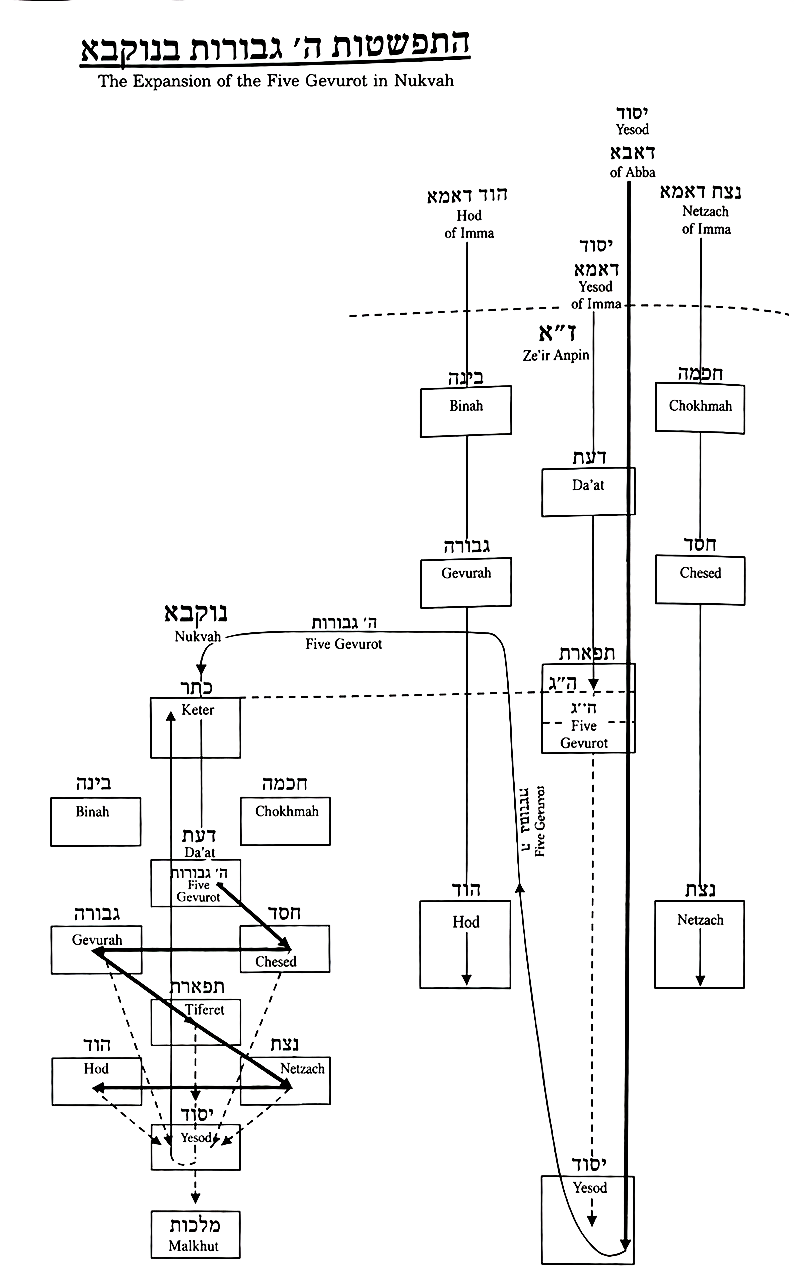
Chapter 6
שער לד פרק ו מ״ב
[34:6] And we shall explain the matter of all that was stated above, how it is drawn out over the course of twelve years and one day (וְנְבָאֵר עִנְיַן כָּל הַנַּ״ל עַד עַתָּה אֵיךְ נִמְשָׁךְ בְּהֶמְשֵׁךְ י״ב שָׁנָה וְיוֹם א׳), during which entire time she is called Ketanah [Minor], as mentioned above (אֲשֶׁר כָּל זְמַן זֶה נִקְרֵאת קְטַנָּה כַּנַּ״ל). And behold, the entry of half of one third of the light of the Chesed of the Tiferet of Ze’ir Anpin into her Keter, as explained above, is one year (וְהִנֵּה כְּנִיסַת חֲצִי שְׁלִישׁ אוֹר הַחֶסֶד ת״ת דְּז״א בְּכֶתֶר שֶׁלָּהּ כַּנַּ״ל הוּא שָׁנָה א׳). And afterward, first the lower joint of the Netzach of Ze’ir Anpin enters into her head, into her Chokhmah—behold, that is year two (וְאַחַ״כ תְּחִלָּה נִכְנָס פֶּרֶק תַּחְתּוֹן דְּנֵצַח ז״א בְּרֹאשָׁהּ בְּחָכְמָה שֶׁבָּהּ הֲרֵי שָׁנָה ב׳). And afterward the lower joint of the Hod of Ze’ir Anpin enters into her Binah—behold, that is year three (וְאַחַ״כ נִכְנָס פ״ת דְּהוֹד ז״א בְּבִינָה שֶׁבָּהּ הֲרֵי שָׁנָה ג׳). And afterward these two lower joints descend to her Chesed and Gevurah (וְאַחַ״כ אֵלּוּ הַב״פ תַּתָּאִין יוֹרְדִין עַד ח״ג שֶׁבָּהּ), and into their places enter the middle joint of Netzach into her Chokhmah and the middle joint of Hod into her Binah—and behold, five years (וְנִכְנָסִין בִּמְקוֹמָן פֶּרֶק אֶמְצָעִי דְּנֵצַח בְּחָכְמָה וּפֶּרֶק אֶמְצָעִי דְּהוֹד בְּבִינָה וַהֲרֵי ה׳ שָׁנִים). And afterward the two lower joints descend to her Netzach and Hod, and the two middle ones to her Chesed and Gevurah (וְאַחַ״כ הַב״פ תַּתָּאִין יוֹרְדִין לְנֵצַח הוֹד שֶׁבָּהּ וּב׳ אֶמְצָעִיִּים לְח״ג שֶׁבָּהּ), and into their places enter the upper joint of Netzach into her Chokhmah and the upper joint of Hod into her Binah—behold, seven years (וְנִכְנָסִין בִּמְקוֹמָן פ״ע דְּנֵצַח בְּחָכְמָה וּפ״ע דְּהוֹד בְּבִינָה הֲרֵי ז׳ שָׁנִים). And behold, the Keter and both lines have been completed (וַהֲרֵי נִגְמְרוּ הַכֶּתֶר וְכָל הַב׳ קַוִּין), and all of this is through the lights of the Chasadim (וְכָל זֶה עַל יְדֵי אוֹרוֹת שֶׁל הַחֲסָדִים).
And it has already been explained above that the Gevurot do not enter her until all the Chasadim finish entering her (וּכְבָר נִתְבָּאֵר לְעֵיל שֶׁהַגְּבוּרוֹת אֵינָן נִכְנָסִים בָּהּ עַד שֶׁיִּגָּמְרוּ כָּל הַחֲסָדִים לְכָנֵס בָּהּ), therefore now, in the eighth year, the five Gevurot went out from the Yesod of Ze’ir Anpin and entered into her Da‘at, aligned opposite the Yesod, as explained above (לָכֵן עַתָּה בְּשָׁנָה ח׳ יָצְאוּ הַה״ג מִן הַיְסוֹד דְּז״א וְנִכְנְסוּ בְּדַעַת שֶׁלָּהּ מְכֻוָּן נֶגֶד הַיְסוֹד כַּנַּ״ל). And afterward, in the ninth year (וְאַחַר כָּךְ בְּשָׁנָה ט׳), the root of the Gevurot remained in her Da‘at (נִשְׁאָר שֹׁרֶשׁ הַגְּבוּרוֹת בְּדַעַת שֶׁלָּהּ), and their lights spread through the middle line up to her Tiferet (וְהָאוֹרוֹת שֶׁלָּהֶן נִתְפַּשְּׁטוּ דֶּרֶךְ קו הָאֶמְצָעִי עַד הַת״ת שֶׁבָּהּ). And afterward they descended another descent down to her Yesod through the middle line (וְאַחַ״כ יָרְדוּ יְרִידָה אַחֶרֶת עַד הַיְסוֹד שֶׁבָּהּ דֶּרֶךְ קו הָאֶמְצָעִי), and this descent to her Yesod (וִירִידָה זוֹ עַד הַיְסוֹד שֶׁבָּהּ), this descent is in a place of revelation where the partitions of the Yesod of Ze’ir Anpin do not reach (וִירִידָה זוֹ הִיא בִּמְקוֹם גִּלּוּי שֶׁאֵין שָׁם מְחִיצוֹת יְסוֹד דְּז״א מַגַּעַת), for it has already concluded at the end of the Tiferet (כִּי כְּבָר נִסְתַּיֵּם בְּסִיּוּם הַת״ת). And since this is so (וְכֵיוָן שֶׁכֵּן הוּא), no time is required (אֵין צָרִיךְ זְמַן), for immediately and at once they descend (כִּי תֵּכֶף וּמִיָּד יוֹרְדוֹת), since there are no partitions there to delay their descent (שֶׁאֵין שָׁם מְחִיצוֹת לְעַכֵּב יְרִידָתָן). And nevertheless (וְעִכָּל זֶה), this small amount of time we will explain at the end what it is (זְמַן מוּעָט זֶה נְבָאֵר אוֹתוֹ בָּאַחֲרוֹנָה כַּמָּה הוּא). And afterward the Gevurot returned and ascended to enlarge the Keter, as explained above (וְאַחַ״כ חָזְרוּ וְעָלוּ הַגְּבוּרוֹת לְהַגְדִּיל הַכֶּתֶר כַּנַּ״ל), and they traveled three journeys (וְנָסְעוּ ג׳ מַסָּעוֹת): one from the Yesod to the Tiferet (וְהֵם א׳ מִן הַיְסוֹד לַת״ת), the second from the Tiferet to the Da‘at (ב׳ מִן הַת״ת אֶל הַדַּעַת), the third from the Da‘at to the Keter (ג׳ מִן הַדַּעַת אֶל הַכֶּתֶר).
And behold, they are three years (וַהֲרֵי הֵם ג׳ שָׁנִים), and together with the first nine they are twelve years (וְעִם ט׳ הָרִאשׁוֹנִים הֲרֵי י״ב שָׁנִים), and now there is still lacking one more day beyond twelve years in order that she be a Na‘arah (וַעֲדַיִן חָסֵר עַתָּה יוֹם א׳ יוֹתֵר עַל י״ב שָׁנִים כְּדֵי שֶׁתִּהְיֶה נַעֲרָה). Thus two matters were fulfilled (בְּאֹפֶן שֶׁנִּתְקַיְּמוּ ב׳ דְּבָרִים): that all the Gevurot did not enter until all the Chasadim had entered (כִּי לֹא נִכְנְסוּ כָּל הַגְּבוּרוֹת עַד שֶׁיִּכָּנְסוּ כָּל הַחֲסָדִים), and also that the Keter was not completed in its rectification until the end, through the fourth part of the Chesed alone, which entered last (וְגַם שֶׁלֹּא נִגְמַר הַכֶּתֶר לְהִתְקַן עַד בָּאַחֲרוֹנָה עַל יְדֵי חֵלֶק הַד׳ מִן הַחֶסֶד לְבַד שֶׁנִּכְנַס בָּאַחֲרוֹנָה). And nevertheless, it is necessary to give a reason regarding how the Gevurot spread within her, since the fourth part of the Chesed still remained to enter the Keter (וְעִכָּל זֶה צָרִיךְ לָתֵת טַעַם בְּעִנְיָן אֵיךְ נִתְפַּשְּׁטוּ הַגְּבוּרוֹת בָּהּ כֵּיוָן שֶׁעֲדַיִן נִשְׁאַר חֵלֶק הַד׳ שֶׁל חֶסֶד לְכָנֵס בְּכֶתֶר). But the matter is (אֲבָל הָעִנְיָן), that that part was not yet within the body of Ze’ir Anpin (כִּי לֹא הָיָה אוֹתוֹ הַחֵלֶק עֲדַיִן תּוֹךְ גּוּף ז״א), however it had already gone out from him (אָמְנָם כְּבָר יָצָא מִמֶּנּוּ), and it was upon the head of the Nukvah in the secret of surrounding light, as at first (וְהָיָה עַל רֹאשׁ הַנּוּקְבָּא בְּסוֹד אוֹר מַקִּיף כְּבַתְּחִלָּה). Therefore the Gevurot were able to spread within her (וְלָכֵן יָכְלוּ הַגְּבוּרוֹת לְהִתְפַּשֵּׁט בָּהּ), and after they were completed (וְאַחַר שֶׁנִּגְמְרוּ), that fourth part mentioned above then entered her as well, into her Keter (נִכְנַס בָּהּ גַּם חֵלֶק הַד׳ הַנַּ״ל בְּכֶתֶר שֶׁלָּהּ). And now we shall explain the extra one day beyond the twelve years—what is its matter (וְעַתָּה נְבָאֵר יוֹם א׳ הַיּוֹתֵר עַל י״ב שָׁנִים מַה עִנְיָנוֹ).
For behold, it has been explained above that there, in Ze’ir Anpin, the time of the descent of the Chasadim to the Yesod in a state of revelation was the measure of one day (כִּי הִנֵּה נִתְבָּאֵר לְעֵיל כִּי שָׁם בְּז״א הָיָה זְמַן יְרִידַת הַחֲסָדִים אֶל הַיְסוֹד שֶׁבְּגִלּוּי שִׁעוּר יוֹם א׳), for even though they are in a state of revelation (כִּי אַף עַל פִּי שֶׁהֵם בְּגִלּוּי), nevertheless the place is high—two-thirds of the Tiferet from the chest, from where their revealed descent begins (עִכָּל זֶה הַמָּקוֹם גָּבוֹהַּ ב׳ שְׁלִישֵׁי הַת״ת מִן הֶחָזֶה שֶׁמִּשָּׁם הַתְחָלַת יְרִידָתָם בְּגִלּוּי). But here, in the Nukvah (אֲבָל כָּאן בַּנּוּקְבָּא), immediately when they go out from the Yesod of Ze’ir Anpin, which is completed at the end of her Tiferet (תֵּכֶף כְּשֶׁיּוֹצְאִין מִן הַיְסוֹד דְּז״א הַנִּשְׁלָם בְּסִיּוּם ת״ת שֶׁלָּהּ), they enter into her Yesod (הֵם נִכְנָסִים בְּיְסוֹד שֶׁבָּהּ). And the place of the beginning of their revealed descent is a very small measure (וּמְקוֹם הַתְחָלַת יְרִידָתָן בְּגִלּוּי הוּא שִׁעוּר מוּעָט מְאֹד), therefore there is no need for one full day for that descent alone (לָכֵן אֵין צָרִיךְ יוֹם א׳ לִירִידָתוֹ לְבַד). But through the combination of this small descent (אֲבָל בְּהִצְטָרְפוּת יְרִידָה זוֹ הַקְּטַנָּה), together with the descent of the fourth part that was surrounding the Keter (עִם יְרִידַת חֵלֶק הַד׳ שֶׁהָיָה מַקִּיף אֶל הַכֶּתֶר), and there as well no time was needed for its entry into the Keter (וְשָׁם גַּם כֵּן לֹא הָיָה צָרִיךְ זְמַן לִכְנִיסָתוֹ בַּכֶּתֶר), the combination of the two together amounts to one day (וְהִצְטָרְפוּת שְׁנֵיהֶן יִהְיֶה יוֹם א׳). And thus the matter of twelve years and one day has been explained (וַהֲרֵי נִתְבָּאֵר עִנְיַן י״ב שָׁנִים וְיוֹם א׳).
It follows that on the one day of the thirteenth year, beyond the twelve years, her entire rectification is completed (נִמְצָא כִּי בְּיוֹם א׳ שֶׁל שְׁנַת הַי״ג הַיּוֹתֵר עַל י״ב שָׁנִים נִגְמֶרֶת תִּקּוּנָהּ כּוּלָּהּ), and the entry of the Chesed into her Keter is fully completed (וְנִגְמֶרֶת כְּנִיסַת הַחֶסֶד בְּכֶתֶר שֶׁלָּהּ לְגַמְרֵי). And now she can already be rectified and be called Na‘ar [Youth] lacking the letter Heh (וְעַתָּה כְּבָר יְכוֹלָה לְהִתְתַּקֵּן וּלְהִקָּרֵא נַעַר חָסֵר ה׳), as will be explained below (כְּמ״ש לְמַטָּה). But still, throughout the twelve years and one day, she was not called except Ketanah [Minor] (אָבָל עֲדַיִן בְּכָל הַי״ב שָׁנִים וְיוֹם א׳ לֹא הָיְתָה נִקְרֵאת אֶלָּא קְטַנָּה). And even now, during these twelve years and one day, she is called Chavah, the wife of Adam (גַּם עַתָּה נִקְרֵאת בְּאֵלּוּ י״ב שָׁנִים וְיוֹם א׳ חַוָּה אֵשֶׁת אָדָם). And the matter—I do not remember what I heard regarding this (וְהָעִנְיָן אֵינִי זוֹכֵר מַה שֶּׁשָּׁמַעְתִּי בָּזֶה), and I will write two explanations, for I am uncertain which of them I heard (וְאֶכְתֹּב ב׳ פֵּרוּשִׁים שֶׁאֲנִי מְסֻפָּק אֵיזֶה מֵהֶם שָׁמַעְתִּי). And the matter is (וְהָעִנְיָן), that behold it has been explained that half of one third of the Chesed of the Tiferet of Ze’ir Anpin was divided into four and entered at four times into her Keter (כִּי הִנֵּה נִתְבָּאֵר שֶׁחֲצִי שְׁלִישׁ חֶסֶד שֶׁבַּת״ת דְּז״א נֶחְלַק לְד׳ וְנִכְנְסוּ בְּד׳ זְמַנִּים בְּכֶתֶר שֶׁלָּהּ).
And behold, this half-third is called one-sixth of the Chesed of the Tiferet of Ze’ir Anpin (וְהִנֵּה חֲצִי שְׁלִישׁ הַזֶּה נִקְרָא שֵׁשֶׁת הַחֶסֶד דְּת״ת דְּז״א), which is one part out of six parts within it (שֶׁהוּא חֵלֶק א׳ מִו׳ חֲלָקִים שֶׁבּוֹ). And this is the matter of the Vav of Chavah (וְזֶהוּ עִנְיַן הו׳ שֶׁל חַוָּה). And the Malkhut that receives these lights is the lower Heh, as is known (וְהַמַּלְכוּת הַמְּקַבֶּלֶת הָאוֹרוֹת הָאֵלּוּ הִיא ה׳ תַּתָּאָה כַּנּוֹדָע), and this is the letter Heh of Chavah (וְזֶהוּ אוֹת ה׳ שֶׁל חַוָּה). And what remains now—the letter Chet of Chavah—is a doubt for me (וּמַה שֶּׁנִּשְׁאַר עַתָּה אוֹת ח׳ שֶׁל חַוָּה הוּא הַסָּפֵק אֶצְלִי).
And it appears to me (ונלע״ד), that I heard that the matter is as follows (שֶׁשָּׁמַעְתִּי כִּי הָעִנְיָן הוּא): that if we do not evaluate what she takes from the Chesed of the Tiferet of Ze’ir Anpin for the need of the Keter in terms of the entire Chesed (כִּי אִם לֹא נַעֲרִיךְ מַה שֶּׁלּוֹקַחַת מִן הַחֶסֶד שֶׁבַּת״ת דְּז״א לְצוֹרֶךְ הַכֶּתֶר בְּכָל הַחֶסֶד), but rather we evaluate it only in terms of the two revealed thirds (אֶלָּא נַעֲרִיךְ אוֹתוֹ בִּשְׁנֵי שְׁלִישִׁים הַמְּגֻלִּים לְבַד), for there is the measure of the stature of her Keter, as is known (כִּי שָׁם שִׁעוּר קוֹמַת הַכֶּתֶר שֶׁלָּהּ כַּנּוֹדָע). It follows that the half-third which she takes is one quarter of the two revealed thirds (נִמְצָא כִּי חֲצִי שְׁלִישׁ שֶׁלּוֹקַחַת הוּא רְבִיעַ א׳ שֶׁל הַב׳ שְׁלִישִׁים הַמְּגֻלִּים). And this quarter also does not enter at one time (וְגַם זֶה הָרְבִיעַ לֹא נִכְנַס בְּפַעַם א׳), but is divided into four parts and enters in four times (אֶלָּא נֶחְלַק לְד׳ חֲלָקִים וְנִכְנַס בְּד׳ פְּעָמִים).
And behold, they are two times four, which is eight (וַהֲרֵי הֵם פ״ד שֶׁהוּא ח׳), and each time only one part of the eight enters (וּבְכָל פַּעַם אֵינוֹ נִכְנָס רַק חֵלֶק א׳ מִן הַח׳). Behold, this is the Chet of Chavah (הֲרֵי זוֹ ח׳ שֶׁל חַוָּה). And it appears to me more true (וְנִרְאֶה לִי יוֹתֵר אֱמֶת) that what I heard was this second explanation, which we shall now explain (שֶׁשָּׁמַעְתִּי וְהוּא זֶה הַפֵּרוּשׁ הַב׳ שֶׁנְּבָאֵר). And that is (וְהוּא): that there it was explained in the matter of the greatness of the Chasadim of Ze’ir Anpin (כִּי שָׁם נִתְבָּאֵר בְּעִנְיַן גַּדְלוּת הַחֲסָדִים דְּז״א), that because of their revelation they grew and doubled, twice what they were when they were concealed (שֶׁלְּסִבַּת גִּלּוּיָם הִגְדִּילוּ וְנִכְפְּלוּ כִּפְלַיִם מִמַּה שֶּׁהָיוּ בְּעֵת הֱיוֹתָם מְכוּסִּים). It follows that those two revealed thirds of the Chesed of the Tiferet of Ze’ir Anpin doubled and became four thirds (נִמְצָא כִּי אוֹתָן ב׳ שְׁלִישֵׁי חֶסֶד שֶׁבַּת״ת דְּז״א הַמְּגֻלִּים נִכְפְּלוּ וְנַעֲשׂוּ ד׳ שְׁלִישִׁים). And nevertheless, when the Nukvah takes her portion from that Chesed at first, it is only a half-third (וְעִכָּל זֶה כְּשֶׁלּוֹקַחַת הַנּוּקְבָּא חֶלְקָהּ מִן הַחֶסֶד הַהוּא תְּחִלָּה אֵינוֹ רַק חֲצִי שְׁלִישׁ), but afterward it grows and becomes one complete third (אֶלָּא שֶׁאַחַ״כ נִגְדָּל וְנַעֲשֶׂה שְׁלִישׁ א׳ שָׁלֵם). Therefore, if we evaluate the half-third relative to the four thirds that grew and doubled as explained above (לָכֵן אִם נַעֲרִיךְ חֲצִי שְׁלִישׁ בְּאַרְבַּעַת שְׁלִישִׁים שֶׁנִּגְדְּלוּ וְנִכְפְּלוּ כַּנַּ״ל), it is one part of eight (יִהְיֶה חֵלֶק א׳ מֵח׳). And this is the Chet of Chavah (וְזֶהוּ ח׳ שֶׁל חַוָּה).
And behold, the name Chavah has thus been explained, as she is before her union with Adam (וַהֲרֵי נִתְבָּאֵר שֵׁם חַוָּה שֶׁהוּא קֹדֶם שֶׁתִּזְדַּוֵּג עִם אָדָם). And nevertheless, even afterward this aspect remains within her (וְעִכָּל זֶה גַּם אַחַ״כ נִשְׁאֶרֶת בָּהּ בְּחִי׳ זוֹ), and because of it she is called Chavah (אֲשֶׁר לְסִבָּתָהּ נִקְרֵאת חַוָּה), therefore she is called Chavah forever (לָכֵן נִקְרֵאת חַוָּה לְעוֹלָם). And behold, it has been explained (וְהִנֵּה נִתְבָּאֵר), that the place of her standing is from the conclusion of the upper third of the Tiferet of Ze’ir Anpin, which is from the chest and below (כִּי מְקוֹם עֲמִידָתָהּ הוּא מִסִּיּוּם שְׁלִישׁ עֶלְיוֹן דְּת״ת ז״א וְהוּא מֵהֶחָזֶה וּלְמַטָּה).
It follows that the measure of the place of the Nukvah is in the two lower thirds of the Tiferet and the Netzach, Hod, Yesod–Malkhut of Ze’ir Anpin (נִמְצָא כִּי שִׁעוּר מְקוֹם הַנּוּקְבָּא הוּא בִּשְׁנֵי שְׁלִישִׁים תַּחְתּוֹנִים דְּת״ת וְנֵהי״ם דְּז״א). And behold, her Keter is formed from the two lower thirds of the Tiferet (וְהִנֵּה כֶּתֶר שֶׁלָּהּ נַעֲשֶׂה מִב׳ שְׁלִישִׁים תַּחְתּוֹנִים דְּת״ת), and her two Mochin—Chokhmah and Binah—are from the first joints of Netzach and Hod (וּב׳ מוֹחִין חו״ב שֶׁלָּהּ מִב״פ קַדְמָאִין דְּנ״ה), and her Chesed and Gevurah are from the middle joints of Netzach and Hod (וְחו״ג דִּילָהּ מִב״פ אֶמְצָעִיִּים דְּנ״ה), and her Netzach and Hod are from the lower joints of his Netzach and Hod (וְנ״ה שֶׁלָּהּ מִב״פ תַּתָּאִין דְּנ״ה שֶׁלּוֹ). However, for her entire middle line, which are her Da‘at–Tiferet–Yesod–Malkhut (וְאָכֵן לְכָל קו הָאֶמְצָעִי שֶׁלָּהּ שֶׁהֵם דְּתִי״ם), she has only the aspect of his Yesod alone (אֵין לָהּ רַק בְּחִי׳ הַיְסוֹד שֶׁלּוֹ לְבַד), as will be explained, with the help of Hashem, in the matter of Atbach (וּכְמ״ש בְּעֶזְרַת ה׳ בְּעִנְיַן אַטְבַּ״ח). And now we shall explain the matter of the lights that go out from within Ze’ir Anpin to the Nukvah (וְעַתָּה נְבָאֵר עִנְיָן הָאוֹרוֹת הַיּוֹצְאִים מִתּוֹךְ ז״א אֶל הַנּוּקְבָּא).
Behold, it is known that the five Chasadim spread within the body of Ze’ir Anpin from the Chesed within him until the Hod within him (הִנֵּה נוֹדָע כִּי הַה״ח מִתְפַּשְּׁטִין בְּגוּפָא דְּז״א מֵחֶסֶד שֶׁבּוֹ עַד הוֹד שֶׁבּוֹ). And each Chesed and Chesed within him is divided into three thirds (וְכָל חֶסֶד וְחֶסֶד שֶׁבּוֹ נֶחְלָק לְג׳ שְׁלִישִׁים): for the Chesed of Chesed spreads in the right arm, which has three joints (כִּי חֶסֶד דְּחֶסֶד מִתְפַּשֵּׁט בִּזְרוֹעַ יָמִין שֶׁיֵּשׁ בּוֹ ג״פ), and likewise the Chesed within Gevurah in the three joints of the left arm (וְכֵן חֶסֶד שֶׁבִּגְבוּרָה בְּג״פ דְּזְרוֹעַ שְׂמֹאל), and likewise the Chesed within Netzach in the three joints of the right leg (וְכֵן חֶסֶד שֶׁבְּנֵצַח בְּג״פ שֶׁבְּשׁוֹק יָמִין), and likewise the Chesed within Hod in the three joints of the left leg (וְכֵן חֶסֶד שֶׁבְּהוֹד בְּג״פ שֶׁבְּשׁוֹק שְׂמֹאל). And the Chesed within Tiferet is also divided into three thirds (וְחֶסֶד שֶׁבַּת״ת נֶחְלַק גַּם כֵּן לְג׳ שְׁלִישִׁים): one third until the chest (וְהֵם שְׁלִישׁ אֶחָד עַד הֶחָזֶה), and one third until the navel (וְשְׁלִישׁ אֶחָד עַד הַטַּבּוּר), and one third until the conclusion of the Tiferet (וְשְׁלִישׁ א׳ עַד סִיּוּם הַת״ת). And after the five Chasadim have spread within him (וְאַחַר שֶׁנִּתְפַּשְּׁטוּ בּוֹ הַה״ח), afterward the five Gevurot go out from the Da‘at within him (אַחַ״כ יוֹצֵא הַה״ג מִן הַדַּעַת שֶׁבּוֹ), and there was no place for them to spread (וְלֹא הָיָה מָקוֹם לְהִתְפַּשֵּׁט), for the Chasadim had already spread there (כִּי כְּבָר נִתְפַּשְּׁטוּ שָׁם הַחֲסָדִים).
Therefore they descended to the Yesod within him (לָכֵן יָרְדוּ עַד הַיְסוֹד שֶׁבּוֹ), and were delayed there until the time of the rectification of the Nukvah (וְנִתְעַכְּבוּ שָׁם עַד זְמַן תִּקּוּן הַנּוּקְבָּא). And behold, there are two kinds of lights that the Nukvah takes for the rectification of her body (וְהִנֵּה ב׳ מִינֵי אוֹרוֹת לוֹקַחַת הַנּוּקְבָּא לְתִקּוּן גּוּפָהּ): one light is—and this is the meaning—the light of Chesed from the chest of the Tiferet of Ze’ir Anpin and below (אוֹר א׳ הוּא וְזֶ״ש אוֹר הַחֶסֶד מֵהֶחָזֶה דְּת״ת דְּז״א וּלְמַטָּה), and additionally two complete Chasadim of Netzach and Hod (וְעוֹד ב׳ חֲסָדִים שְׁלֵמִים דְּנ״ה), for that is the place of her standing, as explained above (כִּי שָׁם מְקוֹם עֲמִידָתָהּ כַּנַּ״ל). And these two Chasadim and the two-thirds are revealed within Ze’ir Anpin (וְאֵלּוּ ב״ח וּב״ש הֵם מְגֻלִּים תּוֹךְ ז״א), for they go out from the Yesod of Imma, which concludes and is completed at the chest of Ze’ir Anpin (כִּי יוֹצְאִים מִן הַיְסוֹד דְּאִמָּא הַנִּגְמָר וְנִשְׁלָם בֶּחָזֶה דְּז״א).
The second light is the five Gevurot that are within the Yesod of Ze’ir Anpin, as explained above (אוֹר הַב׳ הוּא הַה״ג שֶׁבּוֹ בִּיסוֹד דְּז״א כַּנַּ״ל). And behold, the light of the Chasadim is given into all her right line and into all her left line, and into the Keter alone, which is in her middle line (וְהִנֵּה אוֹר הַחֲסָדִים הֵם נִתָּנִין בְּכָל קו יָמִין וּבְכָל קו שְׂמֹאל שֶׁבָּהּ וְכֶתֶר לְבַד אֲשֶׁר בְּקו הָאֶמְצָעִי שֶׁלָּהּ). But the Gevurot are in her middle line, in her Da‘at, and afterward they spread throughout all her six extremities (אָכֵן הַגְּבוּרוֹת הֵם בְּקו הָאֶמְצָעִי שֶׁלָּהּ בְּדַעַת שֶׁלָּהּ וְאַחַ״כ מִתְפַּשְּׁטִים בְּכָל ו״ק שֶׁבָּהּ). However, in her Da‘at–Tiferet–Yesod–Malkhut there are no Chasadim at all (אָכֵן בְּדתי״ם וּבְמַלְכוּת שֶׁבָּהּ אֵין בָּהּ חֲסָדִים כְּלָל). Also know (גַּם דַּע), that first the Chasadim enter her, and afterward the Gevurot go out from Ze’ir Anpin and enter her (כִּי תְּחִלָּה נִכְנָסִים בָּהּ הַחֲסָדִים וְאַחַ״כ יוֹצְאִין הַגְּבוּרוֹת מִז״א וְנִכְנָסִים בָּהּ). It follows that first her two lines, right and left, are formed, and afterward her middle line is formed (נִמְצָא כִּי תְּחִלָּה נַעֲשִׂים ב׳ קַוִּין יָמִין וּשְׂמֹאל שֶׁלָּהּ וְאַחַ״כ נַעֲשֶׂה קו הָאֶמְצָעִי שֶׁלָּהּ).
And know (וְדַע), that the Chasadim that spread within Ze’ir Anpin involved descent and ascent, for first they descended from the Da‘at down to the Yesod within him, and afterward they returned and ascended to enlarge him up to his Keter, as explained in its place (כִּי חֲסָדִים הַמִּתְפַּשְּׁטִים בְּז״א הָיָה בָּהֶם יְרִידָה וַעֲלִיָּה כִּי תְּחִלָּה יָרְדוּ מִן הַדַּעַת עַד הַיְסוֹד שֶׁבּוֹ וְאַחַ״כ חָזְרוּ וְעָלוּ לְהַגְדִּילוֹ עַד כֶּתֶר שֶׁבּוֹ כְּמְבוֹאַר בִּמְקוֹמוֹ). However, the Nukvah [Female] possesses the illumination of the Chasadim [Kindnesses] that she receives from Ze’ir Anpin, as mentioned above (אָכֵן הַנּוּקְבָּא אֵין לָהּ הֶאָרַת הַחֲסָדִים שֶׁלּוֹקַחַת מִז״א כַּנַּ״ל), only by way of ascent—Ohr Chozer [Returning Light] from below to above—which is called Ohr Nukvah [Female Light] (אֶלָּא בְּדֶרֶךְ עֲלִיָּה אוֹר חוֹזֵר מִלְּמַטָּה לְמַעְלָה הַנִּקְרָא אוֹר נוּקְבָּא). And this is the secret of “Ascend, O well; respond to it” (וְזֶ״ס עֲלִי בְאֵר עֱנוּ לָהּ), and they are according to what was explained above, that they ascend from the Yesod up to the chest, and there they pierce and go out (וְהֵם עַל דֶּרֶךְ הַנַּ״ל שֶׁעוֹלִין מִן הַיְסוֹד עַד הֶחָזֶה וְשָׁם נוֹקְבִין וְיוֹצְאִין).
And behold, the Gevurot are in a different manner (וְהִנֵּה הַגְּבוּרוֹת הֵם בְּאוֹפֶן אַחֵר), for behold they descended into his Yesod (כִּי הִנֵּה הֵם יָרְדוּ בִּיסוֹד שֶׁלּוֹ), and behold her Da‘at is aligned at the back of his Yesod, as explained above (וְהִנֵּה דַּעַת שֶׁבָּהּ מְכֻוֶּנֶת בַּאֲחוֹרֵי הַיְסוֹד שֶׁלּוֹ כַּנַּ״ל), for her Keter is opposite the two lower thirds of his Tiferet, and her Da‘at is opposite his Yesod (כִּי כֶתֶר שֶׁלָּהּ נֶגֶד ב׳ שְׁלִישֵׁי ת״ת שֶׁבּוֹ וְדַעַת שֶׁלָּהּ נֶגֶד הַיְסוֹד שֶׁלּוֹ). And after the aforementioned Chasadim have spread in the Keter and in both her lines, all of them—right and left (וְאַחַר שֶׁנִּתְפַּשְּׁטוּ הַחֲסָדִים הַנַּ״ל בְּכֶתֶר וּבְב׳ קַוִּין שֶׁלָּהּ כֻּלָּם יָמִין וּשְׂמֹאל), then the five Gevurot go out from his Yesod (אָז יוֹצְאִין הַה״ג מִן הַיְסוֹד שֶׁלּוֹ), and are given into her Da‘at which is aligned opposite it (וְנִיתָּנִין בְּדַעַת שֶׁלָּהּ הַמְכֻוֶּנֶת כְּנֶגְדּוֹ), and there they all remain (וְשָׁם נִשְׁאָרִין כֻּלָּם), and afterward they spread within her body, as will be explained with the help of Hashem (וְאַחַ״כ מִתְפַּשְּׁטִין בְּגוּפָא כְּמ״ש בְּעֶזְרַת ה׳). And now we shall explain the order of the division of the aforementioned Chasadim and Gevurot (וְעַתָּה נְבָאֵר סֵדֶר הִתְחַלְּקוּת הַחו״ג הַנַּ״ל).
And behold, just as she takes from the externality itself of the body of Ze’ir Anpin for the rectification of her Partzuf (וְהִנֵּה כְּמוֹ שֶׁהִיא לוֹקַחַת מֵחִיצוֹנִיּוּת עַצְמוֹ דְּגוּפָא דְּז״א לְתִקּוּן פַּרְצוּפָהּ), so too she takes from the Inner Light, which are the aforementioned Chasadim (כֵּן הִיא לוֹקַחַת מֵאוֹר פְּנִימִי שֶׁהֵם הַחֲסָדִים הַנַּ״ל). And we shall begin with her Keter (וְנַתְחִיל מִכֶּתֶר שֶׁבָּהּ), and we shall say (וְנֹאמַר), that behold, from the Tiferet of Ze’ir Anpin—from the body and the vessel itself—there is made the body and the vessel of the Keter of Rachel itself, literally (כִּי הִנֵּה מִת״ת דְּז״א מִן הַגּוּף וְהַכְּלִי עַצְמוֹ נַעֲשֶׂה הַגּוּף וְהַכְּלִי שֶׁל כֶּתֶר רָחֵל עַצְמָהּ מַמָּשׁ). And the measure of the place, from the chest until the conclusion of the Tiferet, is two thirds of the body (וְשִׁעוּר הַמָּקוֹם מֵהֶחָזֶה עַד סִיּוּם הַת״ת הֵם ב׳ שְׁלִישֵׁי הַגּוּף).
However, it is certainly so (אָכֵן וַדַּאי), that the height of her Keter is according to the measure of the place from the chest as mentioned above (שֶׁגּוֹבַהּ הַכֶּתֶר שֶׁלָּהּ הוּא כְּשִׁעוּר הַמָּקוֹם מִן הֶחָזֶה הַנַּ״ל), but she does not take all of those two thirds (אֲבָל אֵינָהּ לוֹקַחַת כָּל אוֹתָן הַב׳ שְׁלִישִׁים), for Ze’ir Anpin must leave for himself half of one third (כִּי הַז״א צָרִיךְ לְהַשְׁאִיר לְעַצְמוֹ חֲצִי שְׁלִישׁ), and these are for the aspect of the body of the Tiferet itself (וְהֵם לִבְחִי׳ גּוּף שֶׁל הַת״ת עַצְמוֹ), and one and a half thirds he gives to the Nukvah for the body of her Keter (וּשְׁלִישׁ וָחֵצִי נוֹתֵן לַנּוּקְבָּא לְגוּף הַכֶּתֶר שֶׁלָּהּ). And the reason for the matter is (וְטַעַם הַדָּבָר), that Ze’ir Anpin, since initially he had within him all three thirds (כִּי הַז״א כֵּיוָן שֶׁמִּתְּחִלָּה הָיָה בּוֹ כָּל הַג׳ שְׁלִישִׁים), and furthermore there are within him many illuminations there (וְעוֹד יֵשׁ בּוֹ שָׁם הֶאָרוֹת רַבּוֹת), for there the Yesod of Imma is revealed within him and there are many lights there (שֶׁשָּׁם הוּא בְּגִלּוּי יְסוֹד דְּאִמָּא שֶׁבְּתוֹכוֹ וְיֵשׁ שָׁם אוֹרוֹת רַבִּים), therefore the half-third suffices for him to complete the body of his Tiferet (לָכֵן יַסְפִּיקוּ לוֹ הַחֲצִי שְׁלִישׁ לְהִשְׁתַּלֵּם גּוּף הַת״ת שֶׁלּוֹ), and one and a half thirds the Nukvah took for her Keter as body (וּשְׁלִישׁ וָחֵצִי לָקְחָה הַנּוּקְבָּא לְכֶתֶר שֶׁלָּהּ בִּבְחִי׳ גּוּף). And thus is the order of their division (וְכָךְ סֵדֶר הִתְחַלְּקוּתָן): half of one third she takes for the body of her Keter (כִּי חֲצִי שְׁלִישׁ לוֹקַחַתָּהּ לְגוּף הַכֶּתֶר שֶׁלָּהּ), and half of one third for the body of her Da‘at (וַחֲצִי שְׁלִישׁ לְגוּף הַדַּעַת שֶׁלָּהּ), and half of one third for the body of her Tiferet (וַחֲצִי שְׁלִישׁ לְגוּף הַת״ת שֶׁלָּהּ).
However, the matter of the lights—their division—is in another manner (אָכֵן עִנְיַן הָאוֹרוֹת הִתְחַלְּקוּתָן בְּעִנְיָן אַחֵר). For behold, the light of the Chesed that is within the Tiferet of Ze’ir Anpin is likewise divided into three thirds, corresponding to the body of the Tiferet mentioned above (כִּי הִנֵּה אוֹר הַחֶסֶד שֶׁבַּת״ת דְּז״א נֶחְלָק גַּם הוּא לְג׳ שְׁלִישִׁים עַל דֶּרֶךְ גּוּף הַת״ת הַנַּ״ל). And there, in the matter of Ze’ir Anpin, it was explained what is done with the two upper thirds of that Chesed (וְשָׁם בְּעִנְיַן ז״א נִתְבָּאֵר מַה נַּעֲשֶׂה בִּב׳ שְׁלִישִׁים עֶלְיוֹנִים דְּחֶסֶד הַהוּא). However, from the lower third of it, it is divided into two halves (וְאָכֵן מִן שְׁלִישׁ תַּחְתּוֹן שֶׁבּוֹ נֶחְלַק לִב׳ חֲצָאִים), and one half ascended up to the Keter of Ze’ir Anpin (וַחֲצִי עָלָה עַד הַכֶּתֶר דְּז״א), and its other half was given through the back, as explained above, into the Keter of the Nukvah (וַחֲצִיוֹ נִתָּן דֶּרֶךְ הָאָחוֹר כַּנַּ״ל בְּכֶתֶר דְּנוּקְבָּא).
It follows that from the light of the Chesed that is within the Tiferet, she took half of one third of the light for the sake of the light of her Keter (נִמְצָא כִּי מִן הָאוֹר שֶׁבַּחֶסֶד שֶׁבַּת״ת לָקְחָה חֲצִי שְׁלִישׁ הָאוֹר לְצוֹרֶךְ אוֹר הַכֶּתֶר שֶׁבָּהּ), and from the body of the Tiferet she took one and a half thirds for the sake of the body of her Keter, her Da‘at, and her Tiferet (וּמִגּוּף הַת״ת לָקְחָה שְׁלִישׁ א׳ וָחֵצִי לְצוֹרֶךְ גּוּף הַכֶּתֶר וְהַדַּעַת וְהַת״ת שֶׁבָּהּ). And by this you will understand the matter of the two kings who use one crown (וּבָזֶה תָּבִין עִנְיַן ב׳ מְלָכִים שֶׁמִּשְׁתַּמְּשִׁין בְּכֶתֶר א׳), for the light of the lower third of the Chesed that is within the Tiferet of Ze’ir Anpin was divided into two (כִּי הָאוֹר שְׁלִישׁ א׳ תַּחְתּוֹן שֶׁבַּת״ת דְּז״א נֶחְלַק לִב׳), half of it ascended to the Keter of Ze’ir Anpin as explained above (וַחֲצִיוֹ עָלָה לְכֶתֶר דְּז״א כַּנַּ״ל), and its other half was given into the Keter of the Nukvah (וַחֲצִיוֹ נִתָּן בְּכֶתֶר דְּנוּקְבָּא). And from the body of the Tiferet of Ze’ir Anpin, from it was made the body of the Tiferet of the Nukvah (וּמִן הַגּוּף שֶׁל ת״ת דְּז״א נַעֲשָׂה מִמֶּנּוּ גּוּף הַת״ת דְּנוּקְבָּא), and his Tiferet extends until her Tiferet (וּמִתְפַּשֵּׁט ת״ת שֶׁלּוֹ עַד הַת״ת שֶׁלָּהּ). And the cause of all this was in order to equalize them together (וְסִבַּת כָּל זֶה הָיְתָה כְּדֵי לְהַשְׁווֹתָן יַחַד), and especially in the middle line, which is the essence of the body (וּבִפְרָט בְּקו הָאֶמְצָעִי שֶׁהוּא עִקַּר הַגּוּף), so that the two kings would be equal in all their states (כְּדֵי שֶׁיִּהְיוּ ב׳ מְלָכִים שָׁוִים בְּכָל מְצִיאוּתָן). And from the light of the Chesed that spreads in the Netzach of Ze’ir Anpin, which is divided there into three joints of Netzach (וּמִן אוֹר הַחֶסֶד הַמִּתְפַּשֵּׁט בְּנֵצַח דְּז״א הַנֶּחְלָק שָׁם לְג״פ שֶׁל הַנֵּצַח), the upper third is given into her Chokhmah (שְׁלִישׁ עֶלְיוֹן נִתָּן בְּחָכְמָה שֶׁבָּהּ), and the middle third into her Chesed (וְשְׁלִישׁ אֶמְצָעִי בְּחֶסֶד שֶׁבָּהּ), and the lower third into her Netzach (וְשְׁלִישׁ תַּחְתּוֹן בְּנֵצַח שֶׁבָּהּ). And likewise, in this manner, the light of the Chesed that is in the Hod of Ze’ir Anpin is divided into three thirds in her left line (וְכַעֲדֵ״ז נֶחְלַק לְג״ש אוֹר הַחֶסֶד שֶׁבְּהוֹד דְּז״א בְּקו הַשְּׂמָאלִי שֶׁבָּהּ), which are in her Gevurah and Hod (שֶׁהֵם בִּגְבוּרָה וְהוֹד שֶׁבָּהּ). And after the two Chasadim and the two thirds were completed in spreading within her, according to the order mentioned above (וְאַחַר שֶׁנִּגְמְרוּ הַב׳ חֲסָדִים וּב׳ הַשְּׁלִישִׁים לְהִתְפַּשֵּׁט בָּהּ וְכַסֵּדֶר הַנַּ״ל), afterward the five Gevurot that were in the Yesod of Ze’ir Anpin went out (אַחַ״כ יָצְאוּ הַה״ג שֶׁהָיוּ בִּיסוֹד דְּז״א), and were given from there into her Da‘at (וְנִיתְּנוּ מִשָּׁם אֶל הַדַּעַת שֶׁבָּהּ), and their root remained there (וְנִשְׁאַר שָׁם שָׁרְשָׁם). And afterward the illuminations of the five Gevurot descend, after their root has remained there in her Da‘at (וְאַחַ״כ יוֹרְדִין הֶאָרוֹת הַה״ג אַחַר שֶׁנִּשְׁאַר שָׁרְשָׁם שָׁם בְּדַעַת שֶׁבָּהּ), and the illuminations of those Gevurot spread from her Chesed until her Hod (וּמִתְפַּשְּׁטִין הֶאָרוֹת אוֹתָן הַה״ג מֵחֶסֶד עַד הוֹד שֶׁבָּהּ). And afterward the illuminations of these Gevurot that spread in her six extremities go out (וְאַחַ״כ יָצְאוּ הֶאָרַת אֵלּוּ הַה״ג שֶׁנִּתְפַּשְּׁטוּ בְּו״ק), and their illumination alone is included in her Yesod (וְהֶאָרָתָן לְבַד נִכְלֶלֶת בִּיסוֹד שֶׁלָּהּ). And afterward, the illumination of the illumination of the Gevurot that is in the Yesod goes out and is included in her Malkhut (וְאַחַ״כ הֶאָרָה דְּהֶאָרַת הַה״ג שֶׁבִּיסוֹד יוֹצֵאת וְנִכְלֶלֶת בְּמַלְכוּת שֶׁבָּהּ), in the secret of a seal within a seal (וּבְסוֹד חוֹתָם בְּתוֹךְ חוֹתָם), for the seal is its illumination that was gathered in the Yesod (כִּי חוֹתָם הוּא הֶאָרָתָהּ שֶׁנִּתְקַבְּצָה בִּיסוֹד), and the illumination of that seal was gathered in her Malkhut (וְהֶאָרַת הַחוֹתָם הַהוּא נִתְקַבְּצָה בְּמַלְכוּת שֶׁבָּהּ). And all of this is exactly in the manner of the spreading of the Chasadim in the body of Ze’ir Anpin (וְכָל זֶה הוּא מַמָּשׁ עַל דֶּרֶךְ הִתְפַּשְּׁטוּת הַחֲסָדִים בְּגוּפָא דְּז״א), and in the way that we explained there (וְכֵן בַּדֶּרֶךְ שֶׁבֵּאַרְנוּ שָׁם), for Chasadim are called water, which enlarge the tree (כִּי חֲסָדִים נִקְרָאִים מַיִם הַמַּגְדִּילִין הָאִילָן). And likewise is the matter with the Gevurot (וְכֵן הָעִנְיָן בַּגְּבוּרוֹת), for they enlarge the Nukvah (שֶׁהֵם מַגְדִּילִין הַנּוּקְבָּא). For even though they are called fire in relation to the Chasadim, which are called water (כִּי גַּם אַף עַל פִּי שֶׁנִּקְרְאוּ אֵשׁ בְּעֶרֶךְ הַחֲסָדִים הַנִּקְרָאִים מַיִם), nevertheless, in relation to the Nukvah they are truly water that enlarges her (עִכָּל זֶה בְּעֶרֶךְ הַנּוּקְבָּא הֵם מַיִם מַמָּשׁ הַמַּגְדִּילִין אוֹתָהּ).
Rather, they are Mayin Nukvin [Feminine Waters] and are called Gevurot of rains, as is known (אֶלָּא שֶׁהֵם מ״נ וְנִקְרְאִים גְּבוּרוֹת גְּשָׁמִים כַּנּוֹדָע), for they are truly waters (כִּי מַיִם מַמָּשׁ הֵם). Afterward, the revealed Gevurot return and ascend up to the Keter, as will be explained with the help of Hashem (אַחַ״כ חוֹזְרִין הַגְּבוּרוֹת הַמְּגֻלִּים וְעוֹלִין עַד הַכֶּתֶר כְּמ״ש בְּעֶזְרַת ה׳), and behold, the construction of the Nukvah is completed (הֲרֵי נִשְׁלַם בִּנְיַן הַנּוּקְבָּא). And there are still many details remaining (וַעֲדַיִן יֵשׁ פְּרָטוֹת רַבִּים), especially regarding the Yesod and the Malkhut within her—whence they were made for her (וּבִפְרָט בְּעִנְיַן הַיְסוֹד וְהַמַּלְכוּת שֶׁבָּהּ מֵהֵיכָן נַעֲשׂוּ לָהּ), and below, in Alef–Bet of Atbach, it is well explained (וּלְמַטָּה בְּא״ב דְּאַטְבַּ״ח נִתְבָּאֵר הֵיטֵב).
Chapter 7
שער לד פרק ז מ״ת
[34:7] And now it is necessary to explain in detail (וְעַתָּה צָרִיךְ לְבָאֵר דֶּרֶךְ פְּרָט), the order of the descent of these Gevurot (סֵדֶר יְרִידַת אֵלּוּ הַגְּבוּרוֹת), and the order of their spreading in the body of the Nukvah (וְסֵדֶר הִתְפַּשְּׁטוּתָן בְּגוּף הַנּוּקְבָּא), and afterward the order of their ascent upward until her Keter (וְאַחַ״כ סֵדֶר עֲלִיָּתָן לְמַעְלָה עַד הַכֶּתֶר שֶׁבָּהּ). And we shall explain this discourse in relation to the mitzvah of raising the Menorah (וְנְבָאֵר דְּרוּשׁ זֶה עַל מִצְוַת הַעֲלָאַת הַמְּנוֹרָה), as it is written in Parashat Beha‘alotekha, “when you raise the lamps” (כְּמ״ש פ׳ בְּהַעֲלֹתְךָ אֶת הַנֵּרוֹת), what is the matter of this great mitzvah (מַה עִנְיַן מִצְוָה זוֹ הַגְּדוֹלָה), and what is the matter of the praise of Aaron that he did not change, as our Sages of blessed memory said (וּמַה עִנְיַן שִׁבְחוֹ שֶׁל אַהֲרֹן שֶׁלֹּא שִׁנָּה וּכְמַאֲרַז״ל). And behold, the matter is (וְהִנֵּה הָעִנְיָן), that the Menorah is Rachel, the Nukvah of Ze’ir Anpin (כִּי הַמְּנוֹרָה הִיא רָחֵל נוּקְבָּא דְּז״א), standing behind Ze’ir Anpin (הָעוֹמֶדֶת בַּאֲחוֹר ז״א). And her seven lamps are her seven extremities, from Chesed until Malkhut (וְז׳ נֵרוֹתֶיהָ הֵם שִׁבְעָה קְצָווֹתֶיהָ מֵחֶסֶד עַד הַמַּלְכוּת שֶׁבָּהּ). And just as the Chasadim that spread in the six extremities of Ze’ir Anpin are called the five illuminating lights, which are the five lights of the first day of Parashat Bereshit (וּכְמוֹ שֶׁהַחֲסָדִים הַמִּתְפַּשְּׁטִין בְּו״ק דְּז״א נִקְרָאִים ה׳ אוֹרוֹת מְאִירִין שֶׁהֵם ה׳ אוֹר דְּיוֹם א׳ דְּפ׳ בְּרֵאשִׁית), so too the five Gevurot that spread in the Nukvah, in her seven extremities, are likewise her lights that illuminate in the seven lamps of the Menorah, which are the seven lower Sefirot (כֵּן הַה״ג הַמִּתְפַּשְּׁטִין בַּנּוּקְבָּא בְּז״ק שֶׁלָּהּ הֵם גַּם כֵּן אוֹרוֹת שֶׁבָּהּ הַמְּאִירִין בְּז׳ נֵרוֹת הַמְּנוֹרָה שֶׁהֵם ז״ת). For they are the aspect of the flame of the lamp that illuminates (כִּי הֵם בְּחִינַת שַׁלְהֶבֶת הַנֵּר הַמְּאִירָה), except that the lights of Ze’ir Anpin are called the luminaries of day (אֶלָּא שֶׁהָאוֹרוֹת שֶׁל ז״א נִקְרָאִים מְאוֹרֵי יוֹם), and those of the Nukvah are called the luminaries of night (וְשֶׁל הַנּוּקְבָּא נִקְרָאִים מְאוֹרֵי לַיְלָה).
And before we explain the matter of their ascent—which is the return of the Gevurot from below to above, up to the Keter, as explained above (וּקֹדֶם שֶׁנְּבָאֵר עִנְיַן הַעֲלָאָתָן שֶׁהוּא חֲזָרַת הַגְּבוּרוֹת מִלְּמַטָּה לְמַעְלָה עַד הַכֶּתֶר כַּנַּ״ל)—we shall explain the matter of their kindling, which is the descent of the lights of the Gevurot from above, from her Da‘at, down to her Yesod (נְבָאֵר עִנְיַן הַדְלָקָתָן שֶׁהוּא יְרִידַת אוֹרוֹת הַגְּבוּרוֹת מִלְּמַעְלָה מִן הַדַּעַת שֶׁבָּהּ עַד הַיְסוֹד שֶׁבָּהּ), as it is written, “the seven lamps shall give light” (כְּמ״ש יָאִירוּ שִׁבְעַת הַנֵּרוֹת). But the return is mentioned explicitly in the verse “when you raise” (אַךְ הַחֲזָרָה נִזְכֶּרֶת בְּמִשְׁנֵה הַכָּתוּב בְּהַעֲלֹתְךָ), as will be explained with the help of Hashem (וּכְמ״ש בְּעֶזְרַת ה׳). And behold, regarding the order of their descent, I am uncertain between these two modes—which of them is correct (וְהִנֵּה בְּסֵדֶר יְרִידָתָן אֲנִי מְסֻפָּק בִּב׳ אוֹפָנִים אֵלּוּ אֵיזֶה מֵהֶם הוּא). And it appears to me that I heard from my master, may his memory be a blessing, both of them (וְנִרְאֶה לִי שֶׁשָּׁמַעְתִּי מִמּוֹרִי זלה״ה שְׁנֵיהֶם), but I do not have the ability to reconcile them together (אֶלָּא שֶׁאֵין בְּיָדִי לְיַשְּׁבָן יַחַד), as I stated in the introduction of the book, that I do not wish to add or subtract even a single point from all that I heard from my master, may his memory be a blessing (כְּמוֹ שֶׁהִקְדַּמְתִּי בְּהַקְדָּמַת הַסֵּפֶר שֶׁאֵינִי רוֹצֶה לְהוֹסִיף וְלִגְרוֹעַ נְקוּדָה אַחַת מִכָּל מַה שֶּׁשָּׁמַעְתִּי מִמּוֹרִי זלה״ה).
One explanation is (א׳), that at the time the Gevurot go out from her Da‘at (כִּי בְּעֵת צֵאת הַגְּבוּרוֹת מִן הַדַּעַת שֶׁלָּהּ), two Gevurot go out together (יוֹצְאוֹת ב׳ גְּבוּרוֹת יַחַד): one to her Chesed (אַחַת אֶל הַחֶסֶד שֶׁבָּהּ), and one to her Gevurah (וְאַחַת בִּגְבוּרָה שֶׁבָּהּ). Therefore the Chesed does not require the Gevurah (לָכֵן אֵין הַחֶסֶד צָרִיךְ אֶל הַגְּבוּרָה שֶׁבָּהּ), and the Gevurah does not require the Chesed (וְאֵין הַגְּבוּרָה צָרִיךְ אֶל הַחֶסֶד שֶׁבָּהּ). And the Tiferet does not require either the Chesed or the Gevurah (וְגַם הַת״ת אֵינוֹ צָרִיךְ לֹא לַחֶסֶד וְלֹא לַגְּבוּרָה), for its Gevurah-light spreads from the Da‘at and descends to it through the middle line (כִּי אוֹר הַגְּבוּרָה שֶׁלּוֹ מִתְפַּשֵּׁט מִן הַדַּעַת וְיוֹרֵד אֵלָיו דֶּרֶךְ קו הָאֶמְצָעִי).
And behold, Netzach and Hod do not require one another (וְהִנֵּה נֵצַח וְהוֹד אֵין צְרִיכִין זֶה לָזֶה), and they also do not require Chesed and Gevurah that are above them (וְגַם אֵינָם צְרִיכִין אֶל חֶסֶד וּגְבוּרָה שֶׁלְּמַעְלָה מֵהֶם). However, Netzach and Hod do require the Tiferet (אָכֵן נֵצַח וְהוֹד הֵם צְרִיכִין אֶל הַתִּפְאֶרֶת), for the two lights of their Gevurot go out from the Tiferet (כִּי ב׳ אוֹרוֹת הַגְּבוּרוֹת שֶׁלָּהֶם יוֹצְאִין מִן הַת״ת), and are divided—this one to the right and that one to the left—into Netzach and Hod (וְנֶחְלָקִים זֶה לְיָמִין וְזֶה לִשְׂמֹאל בְּנֵצַח וְהוֹד). Afterward, all their illuminations are gathered together in the Yesod, as explained above (אַחַ״כ כֻּלָּם מִתְקַבְּצִין הֶאָרָתָן בִּיסוֹד כַּנַּ״ל). And another manner appears to me that I certainly heard (וְאוֹפֶן אַחֵר נִרְאֶה לִי שֶׁשָּׁמַעְתִּי בְּוַדַּאי), that the Chasadim of Ze’ir Anpin and the Gevurot of the Nukvah descend level after level from Chesed until Hod (כִּי הַחֲסָדִים שֶׁל ז״א וְהַגְּבוּרוֹת שֶׁל הַנּוּקְבָּא יוֹרְדִין מַדְרֵגָה אַחַר מַדְרֵגָה מִן הַחֶסֶד עַד הוֹד).
For at first all of them descend together into Chesed (כִּי תְּחִלָּה כֻּלָּן יוֹרְדִין בַּחֶסֶד יַחַד), and afterward its Gevurah remains there (וְאַחַ״כ נִשְׁאָרָה גְּבוּרָתוֹ שָׁם), and the four Gevurot descend to Gevurah (וְיוֹרְדִין ד׳ גְּבוּרוֹת אֶל הַגְּבוּרָה), and its Gevurah remains there (וְנִשְׁאָרָה גְּבוּרָתָהּ שָׁם). And three Gevurot descend to Tiferet (וְיוֹרְדִין ג׳ גְּבוּרוֹת בַּת״ת), and its Gevurah remains there (וְנִשְׁאָר שָׁם גְּבוּרָתוֹ). And two Gevurot descend into her Netzach (וְיוֹרְדִין ב׳ גְּבוּרוֹת בְּנֵצַח שֶׁלָּהּ), and its Gevurah remains there (וְנִשְׁאָרָה שָׁם גְּבוּרָתוֹ). And the final Gevurah descends into her Hod (וְיוֹרֶדֶת גְּבוּרָה אַחֲרוֹנָה בְּהוֹד). And afterward, the illumination of each of them descends into the Yesod (וְאַחַ״כ הֶאָרַת כָּל אֶחָד יוֹרְדִין בִּיסוֹד), and afterward the illumination of their illumination into her Malkhut (וְאַחַ״כ הֶאָרַת הֶאָרָתָן בְּמַלְכוּת שֶׁבָּהּ). These two modes appear to me that I heard—both of them—as stated above (אֵלּוּ הַב׳ אוֹפָנִים נִרְאֶה לִי שֶׁשָּׁמַעְתִּי גַּם שְׁנֵיהֶם כַּנַּ״ל).