
Chapter Forty-Three (פֶּרֶק אַרְבָּעִים וּשְׁלוֹשָׁה)
The letter Samekh-its point is larger than others (אוֹת הַסָּמֶ״ךְ נְקוּדָתָהּ יְתוֹמָה גְּדוֹלָה מֵאֲחֵרִים), and it is great in the point of the closed sea (וְהִיא גְדוֹלָה בְּנְקוּדַּת הַיָּם סָתוּמָה). And after the Tzimtzum placed the point (וְאַחַר שֶׁהַצִּמְצוּם הִנִּיחַ הַנְּקוּדָּה), the power of Tzimtzum of Ein Sof returned and struck in the middle of the point (חָזַר כֹּחַ הַצִּמְצוּם שֶׁל א״ס וּבָטַשׁ בְּאֶמְצַע הַנְּקוּדָּה), and from that striking came forth eighteen points (וְיָצְאָה מִן הַבְּטִישָׁה הַהִיא ח״י נְקוּדוֹת), corresponding to the value of three Vavin (כְּמִנְיַן ג׳ וָוִין), which are in the form of the Samekh (שֶׁהֵם בְּצוּרַת הַסָּמֶ״ךְ). And these points joined together and became the form of the Samekh (וְאֵלּוּ הַנְּקוּדוֹת נִתְחַבְּרוּ יַחַד וְנַעֲשׂוּ צוּרַת ס׳). And know for yourself that the form of Samekh is in the form of the closed Mem (וְדַע לְךָ שֶׁצוּרַת סָמֶ״ךְ הִיא בְּצוּרַת מ״ם סְתוּמָה), for in the Milui (spelling out) of Samekh there are Mayim and Kaf Sofit-which are its filling (שֶׁהֲרֵי בְּמִלּוּי הַסָּמֶ״ךְ יֵשׁ מַיִם וְך׳ שֶׁהֵם מִלּוּאוֹ), and this equals the numerical value of Samekh itself (עוֹלֶה כְּמִנְיַן סָמֶ״ךְ). It follows that the Samekh was originally Mem (נִמְצָא שֶׁהַסָּמֶ״ךְ הָיְתָה מִקּוֹדֶם מ״ם), and both of them equal one hundred (וּשְׁנֵיהֶם עוֹלִים מֵאָה). Subtract nine points (הָסֵר ט׳ נְקוּדוֹת), which are one point that has Sof, Tokh, and Rosh (שֶׁהִיא נְקוּדָּה אַחַת שֶׁיֵּשׁ לָהּ סוֹף תּוֹךְ רֹאשׁ), you will find nine points which are their essential root (תִּמְצָא ט׳ נְקוּדוֹת שֶׁהֵם שָׁרְשָׁם הָעִקָּרִי). There will remain ninety-one (יֵשָׁאֲרוּ צ״א), which equals the numerical value of Amen (כְּמִנְיַן אָמֵן). And the Back of Ben Samekh is Amen (וּבַּאֲחוֹר שֶׁל ב״ן סָמֶ״ךְ הוּא אָמֵן): thus, the Back of Bet is Alef (כָּזֶה: בַּאֲחוֹר שֶׁל הַבֵּית – א׳), the Back of Nun is Mem (בַּאֲחוֹר שֶׁל הַנוּן – מ׳), and the Back of Samekh is Nun (וּבַּאֲחוֹר שֶׁל הַסָּמֶ״ךְ – ן׳). Behold, Amen (הֲרֵי אָמֵן). And by the merit of Amen they would stand (וּבִזְכוּת אָמֵן הָיוּ עוֹמְדִים). And also, the letters of Benes rise to the value of Yabok (וְגַם אוֹתִיּוֹת ב״נ״ס עוֹלִים יְבֹק), which are three Names - Adid, YHVH, Adonai (שֶׁהֵם ג׳ שֵׁמוֹת – אֲדִיד, יְדוּ״ד, אֲדֹנָי). And know that the Luchot (tablets) are Netzach and Hod of Imma (וְדַע שֶׁהַלֻּחוֹת הֵם נֵצַח וְהוֹד שֶׁל אִמָּא), and they are the Name Ehyeh and the Name Havayah (וְהֵם שֵׁם אֶהְיֶה וְשֵׁם הֲוָיָה), each one in its Milui rising to the value of Luch (שֶׁכָּל אֶחָד עוֹלֶה בְּמִלּוּאוֹ כְּמִנְיַן לוּ״חַ): the square of Ehyeh is forty-four (רִיבּוּעַ אֶהְיֶה מ״ד), and the Name MaH is fifty-four (שֵׁם מ״ה נ״ד). If so, after they were engraved upon the Luchot (tablets), Samekh-Mem - which are the Names YHVH and Adonai together with EHYH - were interwoven (אִם כֵּן אַחַר שֶׁנֶּחְקְקוּ בַלֻּחוֹת ס״ם שֶׁהֵם שֵׁם יְדוּ״ד וַאֲדֹנָי עִם אֲדִיד), and the letters were combined together (וְנִשְׁתַּלְּבוּ הָאוֹתִיּוֹת יַחַד), and this Name was made: YAA-HHD-VYN-HHY (וְנַעֲשָׂה שֵׁם זֶה: יָא״א הָהֵד־וִינ הָהֵי), and they became the number of Benes (וְנַעֲשׂוּ מִנְיַן ב״נ״ס), which is also Yabok (שֶׁהוּא גַּם כֵּן יְבֹק). And these three Names together are one Name of twelve letters (וְאֵלּוּ הַשְּׁלשָׁה שֵׁמוֹת יַחַד הֵם שֵׁם אֶחָד שֶׁל י״ב אוֹתִיּוֹת), which the Sages hid because of the profane (שֶׁגָּנְזוּ הַחֲכָמִים זִכְרוֹנָם לִבְרָכָה מִפְּנֵי הַפְּרִיצִים), as they said in Tractate Kiddushin (כְּמוֹ שֶׁאָמְרוּ רַבּוֹתֵינוּ ז״ל בְּמַסֶּכֶת קִדּוּשִׁין) (Kiddushin 71a): “The Name of twelve letters” (שֵׁם בֶּן י״ב אוֹתִיּוֹת). And Rashi, of blessed memory, said: “I do not know this Name” (וְאָמַר רַשִׁ״י ז״ל: אֵינִי יוֹדֵעַ שֵׁם זֶה). And know that every Jew has a radiance upon him from these three Names (וְדַע שֶׁכָּל יְהוּדִי יֵשׁ לוֹ הָאֲרָה עָלָיו מִג׳ שֵׁמוֹת אֵלּוּ), that is - they are interwoven as one Name (הַיְנוּ מְשֻׁלָּבִים בְּשֵׁם אֶחָד), and they rule with a person in his thought, speech, and action (וְשׁוֹלְטִים עִם הָאָדָם בְּמַחֲשַׁבְתּוֹ בְּדִבּוּרוֹ וּבְמַעֲשֵׂהוּ). And when he is a Tzaddik, they assist him - YHVH in his thought (וּכְשֶׁהוּא צַדִּיק מְסַיְּעִים אוֹתוֹ – יְדוּ״ד בְּמַחֲשַׁבְתּוֹ), and in other spiritual people, EHYH in speech, Adonai in action (וּבִשְׁאָר אֲנָשִׁים רוּחָנִיִּים אֲדִיד בְּדִבּוּר, אֲדֹנָי בְּמַעֲשֶׂה). And when a person sins in the four levels of thought (וּכְשֶׁאָדָם חוֹטֵא בְּד׳ מַדְרֵגוֹת הַמַּחֲשָׁבָה), in each level that he sins, one letter of the Name separates from him and mourns for him (וּבְכָל מַדְרֵגָה שֶׁהוּא חוֹטֵא נִפְרֶדֶת אוֹת אַחַת מִן הַשֵּׁם וּמִתְאַבֶּלֶת עָלָיו). And so too in the four levels of speech, and in the four levels of action (וְכֵן בְּד׳ מַדְרֵגוֹת הַדִּבּוּר, וְכֵן בְּד׳ מַדְרֵגוֹת הַמַּעֲשֶׂה), and they ascend away from him, and that man is left without a shadow (וְנִתְעַלִּים מֵעָלָיו, וְנִשְׁאָר הָאָדָם הַהוּא בְּלֹא צֵל). And this is what the Scripture says: “Their shadow has departed from them” (וְזֶה שֶׁאוֹמֵר הַכָּתוּב: סָר צִלָּם מֵעֲלֵיהֶם) (Numbers 14:9). For just as there is a shadow in holiness - which is the Name Elohim and YHVH together with their nine letters that equal 121 (שֶׁכְּשֵׁם שֶׁיֵּשׁ צֵל בִּקְדֻשָּׁה, שֶׁהוּא שֵׁם אֱלֹהִים וִידוּ״ד עִם הַט׳ אוֹתִיּוֹת הָעוֹלִים קכ״א), so too they rise as the word Tzel with the word itself (כֵּן עוֹלִים צֵל עִם הַתֵּיבָה). And like the defilement, there are 120 permutations of Elohim with the root (וּכְטֻמְאָה יֵשׁ ק״ך צֵירוּפֵי אֱלֹהִים עִם הַשֹּׁרֶשׁ), behold, 121 (הֲרֵי קכ״א). And this is what is written in the verse (וְזֶהוּ מַה שֶׁכָּתוּב בַּפָּסוּק): "Their shadow has departed from upon them, and Hashem is with us; do not fear them" (Numbers 14) ("סָר צִלָּם מֵעֲלֵיהֶם וַֽה׳ אִתָּֽנוּ אַל־תִּירָאֻם"). That is, the shadow of the defilement has departed from upon them (דְּהַיְינוּ שֶׁסָּר מֵעֲלֵיהֶם צֵל הַטֻּמְאָה), for they had no assistance even from the defilement (כִּי לֹא הָיָה לָהֶם סִיּוּעַ אֲפִלּוּ מִן הַטֻּמְאָה), and for us, we have the shadow of holiness (וְלָנוּ יֵשׁ לָנוּ צֵל הַקְּדֻשָּׁה), as it is written: "And Hashem is with us" (כְּמוֹ שֶׁכָּתוּב: "וַֽה׳ אִתָּֽנוּ"), that is, He and His court (שֶׁהוּא וּבֵית דִּינוֹ), which are: Havayah Elohim (שֶׁהֵם: הוי׳ אֱלֹהִים), which are the shadow of holiness, as we have said (שֶׁהֵם צֵל הַקְּדֻשָּׁה כְּמוֹ שֶׁאָמַרְנוּ). And know that the 120 permutations of Elohim which are holiness (וְדַע שֶׁק״ך צֵירוּפֵי אֱלֹהִים שֶׁהֵם קְדֻשָּׁה), dwell upon Yisrael (שׁוֹרִים עַל יִשְׂרָאֵל), and the Name Eloah is sealed in the soul of a Jew (וְשֵׁם אֱלוֹהַּ חָתוּם בְּנִשְׁמָתוֹ שֶׁל יְהוּדִי), as they said in the Zohar, Parashat Mishpatim (כְּמוֹ שֶׁאָמְרוּ בַּזֹּהַר פָּרָשַׁת מִשְׁפָּטִים), on the verse: "He shall not have dominion to sell her, in his betrayal of her, to Hashem" (Exodus 21) ("לֹא יִמְשֹׁל לְמָכְרָהּ בְּבִגְדוֹ בָהּ לַה׳"), that the garment of the Holy One Blessed Be He is the Name Eloah (שֶׁבִּגְדוֹ שֶׁל הקב״ה הוּא שֵׁם אֱלוֹהַּ), which is the seal of the soul of the world (שֶׁהוּא גֻּשְׁפַּנְקָא דְּנִשְׁמְתָא שֶׁל עוֹלָם).
The Name Eloah ascends and descends in the soul of a Jew (הַשֵּׁם אֱלוֹהַּ הַזֶּה עוֹלֶה וְיוֹרֵד בְּנִשְׁמָתוֹ שֶׁל יְהוּדִי), and the remaining letters of Elohim, which are Yam, ascend and descend in the body (וּשְׁאָר אוֹתִיּוֹת שֶׁל אֱלֹהִים שֶׁהֵם יָם, עוֹלוֹת וְיוֹרְדוֹת בַּגּוּף), and also among the nations of the world, this Name of Yam is engraved in their body and soul (וְגַם בְּאֻמּוֹת הָעוֹלָם יֵשׁ שֵׁם זֶה שֶׁל יָם חָקוּק בְּגוּפָם וּנְשָׁמָתָם), however, it is in reversed letters (אֲבָל הוּא בְּאוֹתִיּוֹת לְהֵפֶךְ), for instead of Yam [sea] they have Mi [who] (כִּי תַחַת יָם יֵשׁ לָהֶם מִי), and this is the Name that Pharaoh knew (וְזֶה הַשֵּׁם הָיָה יוֹדֵעַ פַּרְעֹה), who said: "Who is Hashem that I should listen to His voice?" (Exodus 5) ("מִי ה׳ אֲשֶׁר אֶשְׁמַע בְּקֹלוֹ"), and therefore he said: "I do not know Hashem" (וְלָכֵן אָמַר: לֹא יָדַעְתִּי אֶת ה׳). Afterward the Holy One Blessed Be He said to Moshe: "Come to Pharaoh... and in order that I may place these My signs" (אַחַר כָּךְ אָמַר הקב״ה לְמֹשֶׁה: "בֹּא אֶל פַּרְעֹה... וּלְמַעַן שִׁיתִי אֹתֹתַי אֵלֶּה"). Do not read “These are My signs” (אַל תִּקְרֵי אוֹתֹתַי אֵלֶּה), but rather “These are My letters” (אֶלָּא אוֹתִיּוֹתַי אֵלֶּה), that is, the letters that remain from Elohim (הַיְנוּ הָאוֹתִיּוֹת הַנִּשְׁאָרִים לְאֱלֹהִים), which are Eleh from Yam (שֶׁהֵם אֵלֶּה מִן יָם), and place them within him (וּתְשִׂימֵם בְּקִרְבּוֹ), in order that judgment be done upon him (כְּדֵי שֶׁיַּעֲשׂוּ בוֹ דִּין), and he may know them (וְיֵדַע אוֹתָם). And to inform you of the content of these matters, you must know (וּלְהוֹדִיעֲךָ תּוֹכֶן הַדְּבָרִים צָרִיךְ אַתָּה לָדַעַת): the Name Elohim has within it 120 permutations (שֵׁם אֱלֹהִים יֵשׁ בּוֹ ק״ך צֵירוּפִים), for each letter of Elokim has 24 permutations (כִּי לְכָל אוֹת מֵאֱלֹהִים יֵשׁ לוֹ כ״ד צֵירוּפִים), if so, in the letters Mem and Yod there are 48 permutations (אִם כֵּן בְּאוֹתִיּוֹת מ״י יֵשׁ לוֹ מ״ח צֵירוּפִים), and for this reason Mitzrayim is called "the land of Cham" (וְלָזֶה נִקְרֵאת מִצְרַיִם אֶרֶץ חָם). And the letters Eleh have in them 72 permutations (וְאוֹתִיּוֹת אֵלֶּה יֵשׁ בָּהֶן ע״ב צֵירוּפִים), corresponding to the 72 permutations of: vayisa, vayavo, vayet (כְּנֶגֶד ע״ב צֵירוּפִים שֶׁל: וַיִּסַּע, וַיָּבֹא, וַיֵּט), through which Pharaoh and all his army were smitten in the sea (שֶׁלָּקָה בּוֹ פַּרְעֹה וְכָל חֵילוֹ בַּיָּם). And this is "My signs these, within him" (וְהַיְינוּ אוֹתֹתַי אֵלֶּה בְּקִרְבּוֹ מַמָּשׁ), in the sea (בַּיָּם), it is found that at the splitting of the Sea of Reeds, Eleh [These] and Yam [Sea] joined together (נִמְצָא שֶׁבְּקְרִיעַת יַם־סוּף נִתְחַבְּרוּ יַחַד אֵלֶּה עִם יָם), and the complete Name Elohim was found (וְנִמְצָא שֵׁם אֱלֹהִים שָׁלֵם), and with this Rabbi Akiva is justified in saying (וְעִם זֶה יִצְדָּק רַבִּי עֲקִיבָא בְּאוֹמְרוֹ): "That each and every plague was of five plagues" (שֶׁכָּל מַכָּה וּמַכָּה הָיְתָה שֶׁל חָמֵשׁ מַכּוֹת), which are the five letters of Elohim (שֶׁהֵן ה׳ אוֹתִיּוֹת שֶׁל אֱלֹהִים). It is found that the Yisraeli who sins through mockery, all these 120 permutations of Elohim are turned upon him for liability (נִמְצָא שֶׁהַיִּשְׂרְאֵלִי הַחוֹטֵא בִּלְצוֹנוּת, כָּל אֵלּוּ ק״ך צֵירוּפֵי אֱלֹהִים נֶהְפָּכִים עָלָיו לְחוֹבָה), that is, he has turned the tzel (Shadow) into letz (Scorner) (הַיְנוּ שֶׁהָפַךְ הַצֵּל לְלֵץ), and they are also turned upon him for judgment (וְגַם כֵּן נֶהְפְּכוּ עָלָיו לְדִין), and afflictions come upon him (וְיִסּוּרִין בָּאִין עָלָיו), and this is what the verse says: "A presumptuous scorner is his name" (Proverbs 21) (וְזֶה שֶׁאוֹמֵר הַכָּתוּב: "זֵד יָהִיר לֵץ שְׁמוֹ"), meaning that the arrogant shows what is not within him (כְּלוֹמַר שֶׁהַזֵּד מַרְאֶה מַה שֶׁאֵין בּוֹ), so too the Scorner (כֵּן הַלֵּץ), mocks with words of falsehood and vanity (מִתְלוֹצֵץ בִּדְבָרֵי שֶׁקֶר לְהַבָּאִי). And this is what the verse says (וְזֶה שֶׁאוֹמֵר הַכָּתוּב): “And it shall not be well with the wicked” (וְטוֹב לֹא יִהְיֶה לָרָשָׁע), “and he shall not prolong days” (וְלֹא יַאֲרִיךְ יָמִים), “like a shadow” (כַּצֵּל), “who does not fear before Elohim” (אֲשֶׁר אֵינֶנּוּ יָרֵא מִלִּפְנֵי אֱלֹהִים). He meant the shadow of defilement (רָצָה לוֹמַר בְּצֵל הַטֻּמְאָה), which does not fear before Elohim (אֲשֶׁר אֵינֶנּוּ יָרֵא מִלִּפְנֵי אֱלֹהִים). Therefore it too turns upon him (לְכֵן מַהֲפֵךְ גַּם הוּא עָלָיו), to accuse him for his harm (לְהַשְׁטִינוֹ לְרָעָתוֹ). And “like a shadow” (וְכַצֵּל), is also the letters of “like a scorner” (הַיְנוּ גַּם כֵּן אוֹתִיּוֹת כְּלֵץ), as we said (כְּמוֹ שֶׁאָמַרְנוּ). And we return to say (וְנָשׁוּב לוֹמַר): that the Name Eloah (שֶׁשֵׁם אֱלוֹהַּ), is the seal of the soul (הוּא גֻּשְׁפַּנְקָא דְּנִשְׁמְתָא). And this Name Eloah, with a Vav, equals forty-two (וְשֵׁם אֱלוֹהַּ זֶה, עִם ו׳, עוֹלֶה מ״ב), which alludes to the Name: ABGYTTZ (שֶׁרוֹמֵז עַל שֵׁם: אַבַּגִּיתַ״ץ), from which man was constructed (שֶׁנִּבְנָה מִמֶּנּוּ הָאָדָם). And the forty-two letters mentioned (וְאוֹתִיּוֹת מ״ב הַנִּזְכָּרִים), are engraved in the head of man (הֵם נֶחֱקָקִים בְּרֹאשׁ הָאָדָם). And to them are hinted the forty-two words that are in the Shema (וּלָהֶם נִרְמַז הַמ״ב תֵּבוֹת שֶׁהֵם בִּשְׁמַע), beginning from “And you shall love” (מַתְחִילִין מִן "וְאָהַבְתָּ"), until “and in your gates” (עַד "וּבִשְׁעָרֶיךָ"), which passage corresponds to the head of man (שֶׁאוֹתָהּ הַפָּרָשָׁה הִיא נֶגֶד רֹאשׁ הָאָדָם). And from “And it shall be if you will surely listen” (וּמִ"וְהָיָה אִם שָׁמוֹעַ"), until “and you shall place them” (עַד "וְשַׂמְתֶּם"), there are seventy-two words (יֵשׁ ע״ב תֵּבוֹת), which correspond to the arms of man (שֶׁהֵם כְּנֶגֶד זְרוֹעוֹת הָאָדָם). And from “these words” (וּמִ"אַת דְּבָרַי"), until “like the days of the heavens upon the earth” (עַד "כִּימֵי הַשָּׁמַיִם עַל הָאָרֶץ"), there are fifty words (יֵשׁ נ׳ תֵּבוֹת), corresponding to the belly of man (כְּנֶגֶד בֶּטֶן הָאָדָם). And from “And He said” (וּמִ"וַיֹּאמֶר"), until the end of the passage (עַד סוֹף הַפָּרָשָׁה), there are seventy-two words (יֵשׁ ע״ב תֵּבוֹת), which correspond to the thighs with the Yesod, the holy covenant (שֶׁהֵם כְּנֶגֶד הַיְרֵכַיִם עִם הַיְּסוֹד בְּרִית קֹדֶשׁ). And it is found in man (וְנִמְצָא שֶׁיֵּשׁ בָּאָדָם): forty-two, seventy-two, fifty, seventy-two (מ״ב, ע״ב, נ׳, ע״ב), which are 236 (שֶׁהֵם רל״ו), and with the twelve words of Shema and “Blessed be the Name” (וְי״ב תֵּבוֹת שֶׁל שְׁמַע עִם "בָּרוּךְ שֵׁם"), behold 248 (הֲרֵי רמ״ח). And if you say (וְאִם תֹּאמַר): how are there seventy-two in the arms and in the thighs? (אֵיךְ שָׁם בִּזְרוֹעוֹת וּבִירֵכַיִם שָׁם ע״ב), know that the one of the thighs is from the eyes (דַּע שֶׁאוֹתוֹ שֶׁל הַיְרֵכַיִם הוּא שֶׁל עֵינַיִן), like this form (כַּזֶּה).
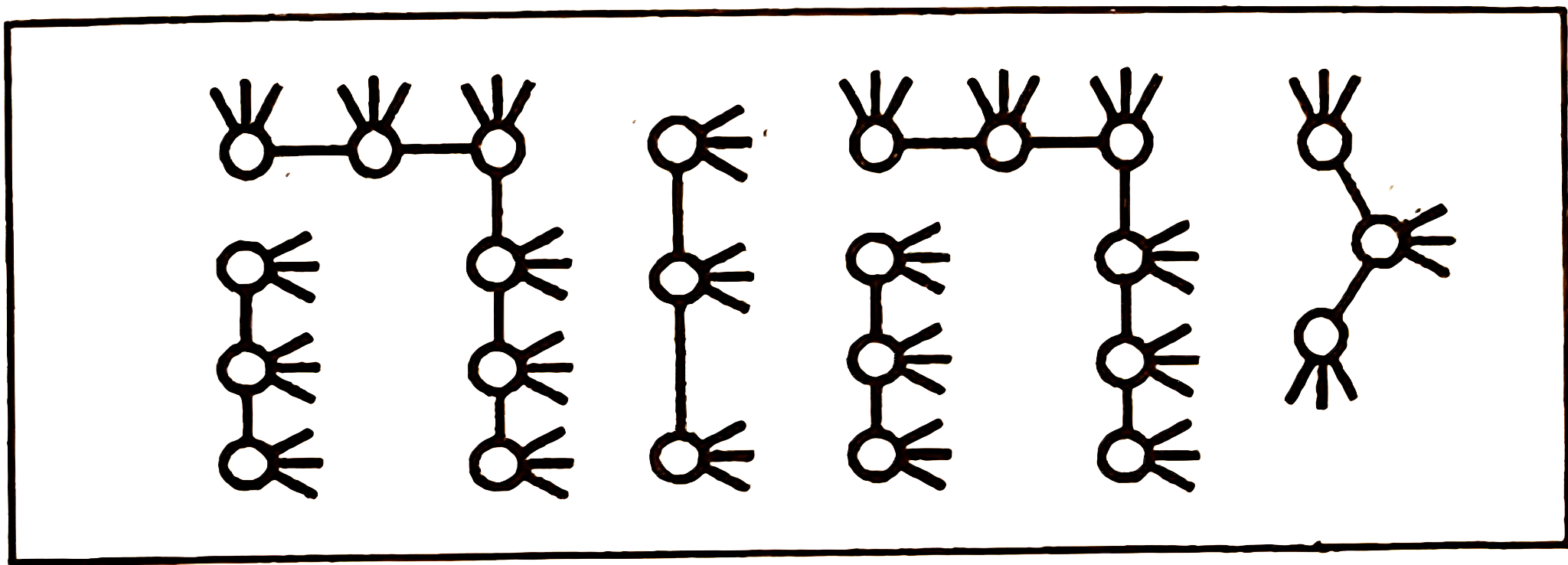
And there are on each circle three tagin (וְיֵשׁ עַל כָּל עִגּוּל ג׳ תָּגִין), and the circles are twenty-four (וְהָעִגּוּלִים הֵם כ״ד), and the tagin are seventy-two (וְהַתָּגִין הֵם ע״ב). And from these Names there are three names (וְיֵשׁ מֵאֵלּוּ הַשֵּׁמוֹת ג׳ כְּדֵי״ן), that is (הַיְנוּ), they are three Names of Havayah of the eyes (שֶׁהֵם ג׳ שֵׁמוֹת שֶׁל הוי׳ דְּעֵינִין), that is, the Netzach, Hod, and Yesod of Imma (הַיְנוּ מ״נָה״י שֶׁל אִמָּא). It is found that they are seventy-two circles (נִמְצָא שֶׁהֵם ע״ב עִגּוּלִים), and 216 tagin in one Name (וְרִי״ו תָּגִין בְּשֵׁם אֶחָד), like the Name of “vayisa, vayavo, vayet” (כְּמוֹ שֵׁם שֶׁל: וַיִּסַּע וַיָּבֹא וַיֵּט), which are seventy-two Names and 216 letters (שֶׁהֵם ע״ב שֵׁמוֹת וְרִי״ו אוֹתִיּוֹת). And know that when the Netzach-Hod-Yesod of Imma enter the head of Ze’ir (וְדַע כְּשֶׁנ״ה״י שֶׁל אִמָּא נִכְנָסִים בְּרֵאשׁ שֶׁל זְעֵיר), these Netzach and Hod shine from behind the eyes of Ze’ir (אֵלּוּ נֶצַח וְהוֹד מֵאִירִין מֵחוּרֵי עֵינֵי זְעֵיר), and this is what they said in the Tikkunim, Tikkun 18 (וְהַיְנוּ שֶׁאָמְרוּ בַּתִּיקּוּנִים תִּיקּוּן י״ח): Netzach and Hod of Imma are the two eyes of Ze’ir (נֶצַח וְהוֹד שֶׁל אִימָּא הֵם תְּרֵין עֵינִין שֶׁל זְעֵיר). It is found that Rachel is Malkhut (נִמְצָא שֶׁרָחֵל הִיא מַלְכוּת), and she has no eyes (וְלֵית לָהּ עֵינִין), and this is what was hinted by the Sava, Parashat Mishpatim (וְהוּא שֶׁרָמַז בְּסָבָא פָּרָשַׁת מִשְׁפָּטִים): “A beautiful maiden who has no eyes” (עוּלֵימְתָּא שַׁפִּירְתָּא דְּלֵית לָהּ עֵינִין). That is the secret of Rachel (דְּהַיְינוּ סוֹד רָחֵל). Therefore, a person must intend when he says Shema (לְכָךְ צָרִיךְ הָאָדָם לְכַוֵּן כְּשֶׁאוֹמֵר שְׁמַע), and especially in the paragraph of “Vayomer” (וּבִפְרָט בְּפָרָשַׁת "וַיֹּאמֶר"), which is a hint to the eyes of Ze’ir (שֶׁהִיא רֶמֶז לְעֵינִין שֶׁל זְעֵיר), that shine from the Netzach-Hod-Yesod of Imma (שֶׁהֵם מֵאִירִין מִנ״ה״י שֶׁל אִימָּא), through the three Havayot mentioned (בִּג׳ הֲוָיוֹת הַנִּזְכָּרוֹת), that the one who prays should gaze upon the tzitzit (שֶׁיִּרְאֶה הַמִּתְפַּלֵּל בַּצִּיצִית), which are the hairs of Rachel (שֶׁהֵם שְׂעָרוֹת רָחֵל), so that they may whiten (כְּדֵי שֶׁיִּתְלַבְּנוּ), and light may enter them (וְיִכָּנֵס בָּהֶם הָאוֹר), from the eyes of the person (מֵעֵינָיו שֶׁל הָאָדָם), which are the likeness of the eyes of Ze’ir (שֶׁהֵם דּוּגְמָת עֵינֵי זְעֵיר). And one must place the tzitzit in his hand opposite the chest (וְצָרִיךְ לָשִׂים הַצִּיצִית בְּיָדוֹ נֶגֶד הַחָזֶה), for there is the cavity that exists in Ze’ir toward the head of his Nukvah (כִּי יֵשׁ שָׁם הַחֹר יֵשׁ מִזְּעֵיר לְרֹאשׁ נוּקְבֵיהּ), for the cavity is in the chest (שֶׁהַחֹר הוּא בַּחָזֶה), and it opens outward opposite it from the spine (וּמוֹצִיא נֶגְדּוֹ לַחוּץ מִן הַשִּׁדְרָה), and from there it shines to his Nukvah (וּמִשָּׁם מֵאִיר לְנוּקְבֵיהּ), that is, from there it enters the head of the Nukvah (הַיְנוּ מִשָּׁם נִכְנָס לְרֹאשׁ נוּקְבֵיהּ), and shines to her through the back of her head (וּמֵאִיר לָהּ דֶּרֶךְ אֲחוֹרֵי רֹאשָׁהּ), for her head cleaves to that cavity from the back (שֶׁרֹאשָׁהּ נִדְבָּק בַּחֹר הַהוּא דֶּרֶךְ אֲחוֹרִים), and from there she receives all the shefa (וּמִשָּׁם יוֹנֶקֶת כָּל הַשָּׁפַע). And therefore, when a person looks at the tzitzit (וְלָזֶה כְּשֶׁאָדָם רוֹאֶה בַּצִּיצִית), light enters into it through the chest (נִכְנָס בָּהּ הָאוֹר דֶּרֶךְ הַחָזֶה), as we have said (כְּמוֹ שֶׁאָמַרְנוּ), and it is found that the person draws the light from the Netzach-Hod-Yesod of Imma (וְנִמְצָא שֶׁמוֹשֵׁךְ הָאָדָם הָאוֹר מִנ״ה״י שֶׁל אִמָּא), into the eyes of Ze’ir (בְּתוֹךְ עֵינֵי זְעֵיר), and it enters through the aforementioned cavity (וְנִכְנָס דֶּרֶךְ הַחוֹר הַנִּזְכָּר), into the head of Rachel (לְתוֹךְ רֹאשׁ רָחֵל), and shines in her eyes (וּמֵאִירִים בְּעֵינֶיהָ), that is, the Chokhmah and Binah of Rachel (דְּהַיְנוּ חָכְמָה וּבִינָה שֶׁל רָחֵל). It is found that this “beautiful maiden who has no eyes” (נִמְצָא שֶׁאוֹתָהּ "עוּלֵימְתָּא שַׁפִּירְתָּא דְּלֵית לָהּ עֵינִין"), is given eyes through this intentional gazing (נַעֲשִׂים לָהּ עֵינִין בְּכַוָּונַת הַרְּאִיָּיה הַזֹּאת).