
The Ninth Gate
The Gate of the Discourses of the Tzelem [Image], and within it are eight discourses
השער התשיעי שער דרושי הצלם ובו ח׳ דרושים
Discourse 1
שער כה דרוש א מ״ב
[25:1] It has already been explained above (כְּבָר נִתְבָּאֵר לְעֵיל), that the Mochin of Ibbur of Ze’ir Anpin were from the Zivug [Union] of Abba and Imma in the outer Kelim [Vessels] (כִּי הַמּוֹחִין דְּעִיבּוּר דְּזְעֵיר אַנְפִּין הָיָה מִזִּוּוּג אַבָּא וְאִמָּא בַּכֵּלִים הַחִיצוֹנִים), and his Mochin at that time were drawn from the lights called Nefesh that belong to them (וְהַמּוֹחִין שֶׁלּוֹ אָז נִמְשְׁכוּ מִן הָאוֹרוֹת הַנִּקְרָאִים נֶפֶשׁ שֶׁלָּהֶם). And the Mochin of Yenikah are from the middle Kelim [Vessels] (וּמוֹחִין דְּיְנִיקָה הֵם מִן הַכֵּלִים הָאֶמְצָעִיִּים), and from the lights called Ruach (וּמִן הָאוֹרוֹת הַנִּקְרָאִים רוּחַ). And now, in the state of maturity, Abba and Imma return to unite (וְעַתָּה בְּגַדְלוּת חוֹזְרִין או״א לְהִזְדַּוֵּג), in the aspect of their inner vessels (בִּבְחִינַת כֵּלִים פְּנִימִים שֶׁלָּהֶם), together with the lights that are there, which are called Neshamah (עִם הָאוֹרוֹת אֲשֶׁר שָׁם הַנִּקְרָא נְשָׁמָה), and they generate Mochin of maturity for Ze’ir Anpin (וּמוֹלִידִין מוֹחִין דְּגַדְלוּת דְּז״א), and they are also a Neshamah to him (וְהֵם נְשָׁמָה אֵלָיו גַּם כֵּן), and this is called the Tzelem [Image] of the Neshamah of Ze’ir Anpin (וְנִקְרָא צֶלֶם נִשְׁמַת ז״א). And these are the true Mochin (וְאֵלּוּ הֵם הַמּוֹחִין הָאֲמִתִּיִּים), which are drawn from the inner aspect of Abba and Imma (הַנִּמְשָׁכִין מִפְּנִימִית או״א), after all the details of the aspect of Tzelem [Image] have been explained (אַחַר שֶׁנִּתְבָּאֵר כָּל פְּרָטֵי בְּחִינַת צֶלֶם), its matter and the matter of every aspect of the Tzelem [Image] (עִנְיָנָהּ וְעִנְיַן כָּל בְּחִינַת הַצֶּלֶם), of Ze’ir Anpin of Ibbur, Yenikah, and Mochin (דְּז״א דְּעִיבּוּר יְנִיקָה וּמוֹחִין). Furthermore, it is necessary to explain the matter of the Mochin of Ze’ir Anpin (עוֹד צָרִיךְ לְפָרֵשׁ עִנְיַן מוֹחִין דְּז״א), and this discourse is the essential one to understand the matter of Tevunah—what its nature is (וְזֶה הַדְּרוּשׁ הוּא עִיקָּר לְהָבִין עִנְיַן דְּתְבוּנָה מַה עִנְיָנָהּ), and the matter of every aspect of the Tzelem [Image] of Ze’ir Anpin (וְעִנְיַן כָּל בְּחִינַת הַצֶּלֶם דְּז״א), and this is the root for all the discourses (וְזֶה שֹׁרֶשׁ לְכָל הַדְּרוּשִׁים).
Behold, these Mochin are drawn from the aspect of a drop (הִנֵּה מוֹחִין אֵלּוּ הֵם נִמְשָׁכִים מִבְּחִינַת טִפָּה), which Abba gives into Imma at the time of their union with one another (שֶׁנּוֹתֵן אַבָּא בְּאִמָּא בְּעֵת זִוּוּגָם זֶה בָּזֶה). “From my flesh I behold God” (וּמִבְּשָׂרִי אֶחֱזֶה אֱלוֹהַּ) (Job 19). For just as from the drop of a male a complete offspring is formed in all its limbs (כִּי כְּמוֹ שֶׁמִטִּפַּת זָכָר נוֹצָר וָלָד שָׁלֵם בְּכָל אֵיבָרָיו), so too this drop, even though we call it the Mochin of Ze’ir Anpin (כֵּן טִפָּה זוֹ אַף עַל פִּי שֶׁאָנוּ קוֹרְאִין אוֹתָהּ מוֹחִין דְּז״א). Nevertheless, they are one complete Partzuf in their place, which is in the head of Ze’ir Anpin (עכ״ז הֵם פַּרְצוּף א׳ שָׁלֵם שָׁם בִּמְקוֹמָם שֶׁהוּא בְּרֹאשׁ ז״א), and there is also a second aspect (גַּם יֵשׁ בְּחִינָה ב׳), for they also afterward expand into all the limbs of the body of Ze’ir Anpin and Nukvah (כִּי הֵם גַּם מִתְפַּשְּׁטִים אַחַ״כ בְּכָל אֵיבְרֵי הַגּוּף דְּזו״ן), for behold this drop is included from the union of male and female, as is written (כִּי הֲרֵי טִפָּה זוֹ כְּלוּלָה מִזִּוּוּג זָכָר וּנְקֵבָה הוּא כְּמוֹ שֶׁכָּתוּב), therefore it is included of both of them (לָכֵן הִיא כְּלוּלָה מִשְּׁנֵיהֶם), and they expand in Ze’ir Anpin and Nukvah, as is written (וּמִתְפַּשְּׁטִין בְּז״א וְנוּקְבָא כְּמוֹ שֶׁכָּתוּב).
And behold, these Mochin have three aspects, as has been written (וְהִנֵּה מוֹחִין אֵלּוּ יֵשׁ לָהֶם ג׳ בְּחִינוֹת כְּמוֹ שֶׁכָּתוּב), and their totality is called Tzelem [Image] (וּכְלָלוּתָן נִקְרָא צֶלֶם), and this is the Tzelem [Image] that goes with a person always, as mentioned many times in the Zohar (וְהוּא הַצֶּלֶם הַהוֹלֵךְ עִם הָאָדָם תָּמִיד כַּנִּזְכָּר בַּזֹּהַר כַּמָּה פְּעָמִים). And behold, it has been explained that there are three aspects in Imma, and corresponding to them in Abba (וְהִנֵּה נִתְבָּאֵר כִּי ג׳ בְּחִינוֹת הֵם בְּאִמָּא וּכְנֶגְדָּן בְּאַבָּא), and we shall explain those of Imma, and from there those of Abba will be understood (וְנְבָאֵר אוֹתָן דְּאִמָּא וּמִשָּׁם יִתְבָּאֵר שֶׁל אַבָּא).
For behold, at first there is the Upper Binah, and it extends until the chest (כִּי הִנֵּה הֵם בַּתְּחִלָּה בִּינָה עֶלְיוֹנָה וְהִיא עַד הֶחָזֶה [שֶׁלָּהּ]), and Tevunah is from the chest and downward (וּתְבוּנָה הִיא מֵהֶחָזֶה וּלְמַטָּה), and these two are called Mem (וְאֵלּוּ הַשְּׁנַיִם נִקְרָא מ״ם). And afterward, the Tevunah itself is also divided into two (וְאַחַ״כ הַתְּבוּנָה גַּם הִיא נֶחְלֶקֶת לִב׳), and they are: the first Tevunah until its chest, in the aspect of Binah and first Tevunah (וְהֵם תְּבוּנָה רִאשׁוֹנָה עַד הֶחָזֶה שֶׁלָּהּ בִּבְחִינַת בִּינָה וּתְבוּנָה רִאשׁוֹנָה), and the second Tevunah from the chest of this Tevunah and downward (וּתְבוּנָה ב׳ מֵהֶחָזֶה שֶׁל הַתְּבוּנָה הַזּוֹ וּלְמַטָּה), and it is called the second Tevunah (וְנִקְרָא תְּבוּנָה ב׳), which is called the third in relation to the Upper Binah (אֲשֶׁר נִקְרֵאת שְׁלִישִׁית בְּעֵרֶךְ בִּינָה רִאשׁוֹנָה). And they are three: Binah, Tevunah, and Tevunah of Tevunah (וְהֵם ג׳ בִּינָה וּתְבוּנָה וּתְבוּנָה דְּתְבוּנָה). And this second Tevunah, which is the third as mentioned above (וְזֹאת הַתְּבוּנָה הַשְּׁנִיָּה שֶׁהִיא הַשְּׁלִישִׁית כַּנַּ״ל), is the one that becomes the Tzelem [Image] and the Mochin for Ze’ir Anpin, as has been written (הִיא הַנַּעֲשֵׂית צֶלֶם וּמוֹחִין אֶל ז״א כְּמוֹ שֶׁכָּתוּב).
And behold, at the time of their union to bring forth the drop of the Tzelem [Image] (וְהִנֵּה בְּעֵת זִוּוּגָם לְהוֹצִיא טִפַּת צֶלֶם), these Mochin are all made into one Partzuf (הַמּוֹחִין הָאֵלּוּ הֵם נַעֲשִׂים כֻּלָּם פַּרְצוּף א׳), and it is found that the first Tevunah, which is the second—from the chest and downward—of the entire Partzuf, when it is whole (וְנִמְצָא תְּבוּנָה רִאשׁוֹנָה שֶׁהִיא הַב׳ מֵהֶחָזֶה וּלְמַטָּה שֶׁל כָּל הַפַּרְצוּף בְּהִיּוֹתוֹ שָׁלֵם), and in this Tevunah is the womb of the totality of the Partzuf (וּבִתְּבוּנָה זוֹ הִיא בֵּית הָרֶחֶם שֶׁל כְּלָלוּת הַפַּרְצוּף), and there is the place of the Ibbur of the Tzelem [Image] of the Mochin of Ze’ir Anpin, as mentioned above (וְשָׁם מְקוֹם הָעִיבּוּר דְּצֶלֶם דְּמוֹחִין [דְּז״א] כַּנַּ״ל). However, the essential root of this drop of the Tzelem [Image] is formed (וְאָמְנָם עִיקָּר זוֹ הַטִּפָּה שֶׁל הַצֶּלֶם נוֹצָר), from the Upper Chokhmah and Binah (מִן חו״ב הָעֶלְיוֹנִים), when they are clothed and included (בִּהְיוֹתָן מְלוּבָּשִׁים וְנִכְלָלִין), within Chokhmah and the second Tevunah (בְּחָכְמָה וּתְבוּנָה הַב׳).
And behold, this Tzelem [Image] is formed there (וְהִנֵּה צֶלֶם זוֹ נוֹצָר שָׁם), in the womb of this second Tevunah (בְּרֶחֶם תְּבוּנָה זוֹ הַב׳), which is the first Tevunah as explained above (שֶׁהִיא תְּבוּנָה הָא׳ כַּנַּ״ל). And at the time of birth (וּבְעֵת הַלֵּידָה), this Tzelem [Image] emerges from its womb (יוֹצֵא צֶלֶם זוֹ מֵהָרֶחֶם שֶׁלָּהּ), and clothes itself within the second Tevunah (וּמִתְלַבֵּשׁ תּוֹךְ תְּבוּנָה הַשְּׁנִיָּה), which is the third (שֶׁהִיא הַג׳), and there it is called the Tzelem [Image] of Ze’ir Anpin (וְשָׁם נִקְרֵאת צֶלֶם דְּז״א), as will be explained with Divine assistance (כְּמוֹ שֶׁנְּבָאֵר בְּע״ה).
We shall explain first these Mochin themselves (וְנְבָאֵר תְּחִלָּה אֵלּוּ הַמּוֹחִין עַצְמָן), and afterward we shall explain the aspect that makes them into a Tzelem [Image] (וְאַחַ״כ נְבָאֵר בְּחִינַת הָעוֹשֶׂה אוֹתָם צֶלֶם). And behold, the Mochin are three aspects (וְהִנֵּה הַמּוֹחִין הֵם ג׳ בְּחִינוֹת): Chokhmah, Binah, and Da‘at (חב״ד). And the Da‘at is divided into two (וְהַדַּעַת נֶחְלָק לִב׳), which are Chesed and Gevurah (שֶׁהֵם חו״ג), and thus they are four Mochin (וַהֲרֵי הֵם ד׳ מוֹחִין): Chokhmah and Binah, Chesed and Gevurah (חו״ב חו״ג).
And their root is drawn as follows (וְאָמְנָם שָׁרְשָׁם הֵם נִמְשָׁכִים כָּךְ): Chokhmah and Binah are drawn from the Mochin of Abba and Imma themselves (חו״ב הֵם נִמְשָׁכִין מִמּוֹחִין או״א עַצְמָן), Chokhmah from the brain of the father (שֶׁהִיא חָכְמָה מִמּוֹחַ אָב), and it is from his Binah (וְהִיא מִבִּינָתוֹ), and Binah from the brain of the mother (וּבִינָה מִמּוֹחַ הָאֵם), and it is from her Binah (וְהִיא מִבִּינָתָהּ), as explained in the discourse on Tzitzit (כַּמְבֹאָר בִּדְרוּשׁ הַצִּיצִית). And the Da‘at, which is called Chesed and Gevurah (וְאָמְנָם הַדַּעַת הַנִּקְרָא חו״ג), the two halves of the Da‘at (ב׳ חֲצָאֵי הַדַּעַת), were initially the two shoulders of Arich Anpin (הֵם הָיוּ תְּחִלָּה הַתְּרֵין כְּתֵפִין דְּא״א), and from there they were drawn (וּמִשָּׁם נִמְשְׁכוּ), to the two crowns of the Yesod of Abba and Imma (אֶל ב׳ הָעֲטָרוֹת הַיְסוֹדוֹת דְּאו״א), which are the Gevurot of Abba and of Imma (שֶׁהֵן גְּבוּרוֹת דְּאַבָּא וְדְּאִמָּא), and from there they were drawn to become the two crowns (וּמִשָּׁם נִמְשְׁכוּ לִהְיוֹת תְּרֵין עַטְרִין), in the Da‘at of Ze’ir Anpin (בְּדַעַת דְּז״א), as mentioned in the Idra Rabba and the Idra Zuta (כַּנִּזְכָּר בְּאַדְּרָ״ר וְאַדְּרָ״ז). However, the two Mochin themselves, which are Chokhmah and Binah (וְאָמְנָם הַב׳ מוֹחִין עַצְמָן שֶׁהֵם חו״ב), are drawn from the two Mochin from the very brain of Abba and Imma (אֵלּוּ נִמְשָׁכִין מִתְּרֵין מוֹחִין מִמּוֹחָא דְּאו״א מַמָּשׁ), and from there they are drawn to their two Yesodot (וּמִשָּׁם נִמְשָׁכִין אֶל ב׳ יְסוֹדוֹתֵיהֶם), Chokhmah in the Yesod of Abba (חָכְמָה בִּיסוֹד אַבָּא), Binah in the Yesod of Imma (בִּינָה בִּיסוֹד אִמָּא). And the two Crowns that were initially the two shoulders of Arich Anpin (וּב׳ עַטְרוֹת שֶׁהָיוּ תְּחִלָּה ב׳ כְּתֵפִין דְּא״א), were drawn into the two Crowns of the Yesodot mentioned above of Abba and Imma (נִמְשְׁכוּ בְּב׳ עַטְרוֹת דְּיְסוֹדוֹת הַנַּ״ל דְּאו״א), the Chesed in the Crown of the Yesod of Abba (הַחֲסָדִים בְּעַטֶּרֶת יְסוֹד אַבָּא), and the Gevurot in the Crown of the Yesod of Imma (וּגְבוּרוֹת בְּעַטֶּרֶת יְסוֹד אִמָּא).
It follows that the two Mochin called Chokhmah and Binah of Ze’ir Anpin (נִמְצָא כִּי ב׳ מוֹחִין הַנִּקְרָאִים חו״ב דְּז״א), are in the two Yesodot of Abba and Imma (הֵם בִּב׳ הַיְסוֹדוֹת דְּאו״א), for the aspect of Yesod is always male (אֲשֶׁר בְּחִינַת הַיְסוֹד הֵם לְעוֹלָם זְכָרִים), whether in Abba or in Imma (בֵּין בְּאַבָּא בֵּין בְּאִמָּא). And the two Crowns of the Da‘at (וּב׳ עַטְרוֹת דְּדַעַת), are in the two Crowns of their Yesodot (הֵם בְּב׳ הָעַטְרוֹת שֶׁל הַיְסוֹדוֹת שֶׁלָּהֶם), both of which are female (שֶׁשְּׁתֵּיהֶן נְקֵבוֹת). From this you will understand why the Da‘at is called “two Crowns” in the Idra Zuta (וּמִזֶּה תָּבִין לָמָּה הַדַּעַת נִקְרָא תְּרֵין עַטְרִין בְּאַדְּרָ״ז), for they are the aspect of the two Crowns of their Yesodot (כִּי הֵם בְּחִינַת ב׳ הָעַטְרוֹת שֶׁל יְסוֹדוֹתֵיהֶם). And through this you will understand the verse “Blessings upon the head of the righteous” (וּבָזֶה תָּבִין פָּסוּק בְּרָכוֹת לְרֹאשׁ צַדִּיק), mentioned in the Zohar, Parashat Vayetze (הַנִּזְכָּר בַּזֹּהַר פָּרָשַׁת וַיֵּצֵא) (Bereshit 49). And the matter is as follows (וְהָעִנְיָן), that these two Crowns, when they descend here below (כִּי תְּרֵין עַטְרִין אֵלּוּ בְּרִדְתָּן פֹּה לְמַטָּה), into the two Crowns of Abba and Imma (בְּב׳ עַטְרוֹת דְּאו״א), their place is between the two thighs (שֶׁמְקוֹמָם הֵם בֵּין תְּרֵין יַרְכִּין), and therefore they are called “blessings,” a term of knees (וְלָכֵן נִקְרָא בְּרָכוֹת לְשׁוֹן בִּרְכַּיִם), and these are the knees (וְאֵלּוּ הֵם הַבִּרְכַּיִם). And the blessings are upon the head of the righteous (וְהַבְּרָכוֹת הֵם בְּרֹאשׁ צַדִּיק), for the righteous is Yesod (כִּי צַדִּיק יְסוֹד), and the head of the righteous is its Crown (וְרֹאשׁ צַדִּיק עֲטָרָה שֶׁבּוֹ), which is called the head of the Yesod (הַנִּקְרָא רֹאשׁ יְסוֹד), and there is their place (וְשָׁם מְקוֹמָם).
Also through this you will understand (גַּם בָּזֶה תָּבִין), how afterward at the time of the Zivug [Union] (אֵיךְ אַחַ״כ בְּעֵת הַזִּוּוּג), Ze’ir Anpin gives to the Nukvah the five Gevurot (נוֹתֵן ז״א בְּנוּקְבָּא אֶת ה׳ גְּבוּרוֹת), and afterward the five Chasadim (וְאַחַ״כ ה׳ חֲסָדִים), for all of them are aspects of Malkhut (כִּי כֻּלָּם בְּחִינַת מַלְכוּת הֵם). And now we shall explain (וְנְבָאֵר עַתָּה), how these Mochin are called Tzelem [Image] (אֵיךְ אֵלּוּ הַמּוֹחִין נִקְרָאִים צֶלֶם), and become the aspect of Tzelem [Image] (וְנַעֲשִׂין בְּחִינַת צֶלֶם). And the matter is (וְהָעִנְיָן), that behold it has been explained above (כִּי הִנֵּה נִתְבָּאֵר לְעֵיל), that they emerged from the womb of the first Tevunah, which is the second (כִּי יָצְאוּ מֵרֶחֶם שֶׁל תְּבוּנָה הָא׳ שֶׁהִיא הַב׳), and they clothed themselves within the second Tevunah, which is the third (וּמִתְלַבְּשִׁים בִּתְבוּנָה הַב׳ שֶׁהִיא הַג׳). However, this clothing is divided into several aspects (וְאָמְנָם הִתְלַבְּשׁוּת זוֹ נֶחְלֶקֶת לְכַמָּה בְּחִינוֹת).
For behold, initially, before the emergence of these Mochin (כִּי הִנֵּה תְּחִלָּה קֹדֶם יְצִיאַת הַמּוֹחִין הָאֵלּוּ), Ze’ir Anpin was a male possessing six extremities (הָיָה ז״א אִישׁ בַּעַל ו״ק), and he then had one Tzelem [Image] for the six extremities (וְהָיָה לוֹ אָז צֶלֶם א׳ אֶל הַו״ק). And regarding that Tzelem [Image] it is said, “But man walks in a Tzelem [Image]” (וְעַל אוֹתוֹ הַצֶּלֶם נֶאֱמַר אַךְ בְּצֶלֶם יִתְהַלֶּךְ אִישׁ) (Psalms 39), for Ze’ir Anpin was still called “man” and not “Adam” (כִּי עֲדַיִן ז״א נִקְרָא אִישׁ וְלֹא אָדָם). And now, when these Mochin come to him, which are called Tzelem [Image] as explained above (וְעַתָּה בְּבוֹא לוֹ הַמּוֹחִין הָאֵלֶּה הַנִּקְרָאִים צֶלֶם כַּנַּ״ל), it is called the Tzelem [Image] of Adam (נִקְרָא צֶלֶם אָדָם), for he is now called a complete Adam (כִּי כְּבָר הוּא נִקְרָא אָדָם שָׁלֵם). And concerning this Tzelem [Image] it is said, “And Elohim created the Adam in His image” (וְעַל צֶלֶם זֶה נֶאֱמַר וַיִּבְרָא אֱלֹהִים אֶת הָאָדָם בְּצַלְמוֹ) (Bereshit 1), and likewise, “For in the image of Elohim He made the Adam” (וְכֵן כִּי בְּצֶלֶם אֱלֹהִים עָשָׂה אֶת הָאָדָם) (Bereshit 9). For Ze’ir Anpin is called Adam (כִּי ז״א נִקְרָא אָדָם), and this Tzelem [Image] is called the Tzelem [Image] of Adam (וְצֶלֶם זֶה נִקְרָא צֶלֶם אָדָם).
And know (וְדַע), that the totality of all the aspects of this Tzelem [Image], as will be explained with Divine assistance (כִּי כְּלָלוּת כָּל בְּחִינוֹת צֶלֶם זֶה כַּמְּשֶׁנְּבָאֵר בְּעֶזְרַת הַשֵּׁם), is one Name called Havayah (הוּא שֵׁם א׳ הַנִּקְרָא הוי״ה). For the Mochin of Gadlut [Greatness] are called Havayah (כִּי הַמּוֹחִין דְּגַדְלוּת נִקְרָאִים הוי״ה). And you will understand this (וְתָבִין זֶה). And the first three letters, which are Yod–Heh–Vav (וְג׳ אוֹתִיּוֹת רִאשׁוֹנוֹת שֶׁהֵם י״ה״ו), are called Tzelem [Image], three letters (נִקְרָאִים צֶלֶם ג׳ אוֹתִיּוֹת), and the final Heh is called Demut [Likeness] (וְה׳ אַחֲרוֹנָה נִקְרֵאת דְּמוּת). And this is the secret of “Let us make Adam in our image, according to our likeness” (וְזֶה סוֹד נַעֲשֶׂה אָדָם בְּצַלְמֵנוּ כִּדְמוּתֵנוּ) (Bereshit 1). And the totality of Tzelem [Image] and Demut [Likeness] is a complete Adam (וּכְלָלוּת צֶלֶם וּדְמוּת הוּא אָדָם שָׁלֵם), which includes Ze’ir Anpin and Nukvah (הַכּוֹלֵל זו״ן), which are the letters Yod–Heh–Vav together with the final Heh (שֶׁהֵם אוֹתִיּוֹת י״ה״ו עִם ה׳ אַחֲרוֹנָה). And we shall explain the three letters of Tzelem [Image], how they are the three letters Yod–Heh–Vav (וְנְבָאֵר ג׳ אוֹתִיּוֹת צֶלֶם אֵיךְ הֵם ג׳ אוֹתִיּוֹת י״ה״ו). And first we shall begin with the Mem of the Tzelem [Image] (וּתְחִלָּה נַתְחִיל מִן ם׳ דְּצֶלֶם), for behold it is from below upward (כִּי הִנֵּה הוּא מִמַּטָּה לְמַעְלָה), and the Mem within it is the most upper of all (וְהַמ׳ שֶׁבּוֹ הוּא בְּחִינָה עֶלְיוֹנָה מִכֻּלָּם), and corresponding to it is the Yod of Yod–Heh–Vav (וּכְנֶגְדּוֹ י׳ שֶׁל י״ה״ו), and it is Chokhmah (וְהוּא חָכְמָה).
And behold, the Mem of the Tzelem [Image] is comprised of four Mochin: Chokhmah and Binah, Chesed and Gevurah (וְהִנֵּה הַם׳ שֶׁל צֶלֶם כְּלוּלָה מִד׳ מוֹחִין חו״ב חו״ג), each one included of ten (כָּל א׳ כָּלוּל מִי׳), behold Mem (הֲרֵי ם׳). And indeed these Mochin emerge from the womb of the first Tevunah, which is the second (וְאָמְנָם אֵלּוּ הַמּוֹחִין יוֹצְאִין מֵרֶחֶם תְּבוּנָה רִאשׁוֹנָה שֶׁהִיא הַב׳), and they clothed themselves in the six extremities of the second Tevunah, which is the third, as explained above (וְנִתְלַבְּשׁוּ בו״ק שֶׁל תְּבוּנָה הַב׳ שֶׁהִיא הַג׳ כַּנַּ״ל). And they are Keter, Chokhmah, Binah, Da‘at, Chesed–Gevurah of this Tevunah (וְהֵם כְּחַב״ד ח״ג דְּתְבוּנָה זוֹ), which is until the chest in its own aspect (שֶׁהוּא עַד הֶחָזֶה שֶׁבִּבְחִינַת עַצְמָהּ).
And you already know (וּכְבָר יָדַעְתָּ), that according to the order of the division of Tevunah (כִּי כְּפִי סֵדֶר הִתְחַלְּקוּת הַתְּבוּנָה), so too is the division of Chokhmah (הוּא גַּם כֵּן הִתְחַלְּקוּת הַחָכְמָה), and automatically they will be understood (וּמִמֵּילָא יוּבְנוּ). It is found that there are also other Mochin (נִמְצָא כִּי גַּם יֵשׁ בְּחִינַת מוֹחִין אֲחֵרִים), which clothed themselves in the third Chokhmah of the Chokhmah (שֶׁנִּתְלַבְּשׁוּ בְּחָכְמָה הַג׳ שֶׁל הַחָכְמָה), in the six first extremities within it (בְּו״ס רִאשׁוֹנוֹת שֶׁבָּהּ), which extend until its chest (שֶׁהוּא עַד הֶחָזֶה שֶׁבָּהּ).
It is found that there are two Tzelemim [Images], male and female (נִמְצָא כִּי ב׳ צְלָמִים זָכָר וּנְקֵבָה), this one is the aspect of Chayah (זוֹ בְּחִינַת חַיָּה), and that one is the aspect of Neshamah (וְזוֹ בְּחִינַת נְשָׁמָה). And the Tzelem [Image] of Abba becomes a Neshamah to the Tzelem [Image] of Imma (וְצֶלֶם אַבָּא נַעֲשֵׂית נְשָׁמָה אֶל צֶלֶם דְּאִמָּא), and clothes itself within it (וּמִתְלַבֵּשׁ בְּתוֹכוֹ), and is concealed there (וְנֶעְלָם שָׁם). Therefore, we always speak only of the Tzelem [Image] of Imma (לָכֵן תָּמִיד אֵין אָנוּ מְדַבְּרִים אֶלָּא בְּצֶלֶם דְּאִמָּא), and from it the Tzelem [Image] of Abba will be understood (וּמִמֶּנּוּ יִתְבָּאֵר צֶלֶם אַבָּא). Remember and do not forget (וּזְכוֹר וְאַל תִּשְׁכַּח).
And behold, it is known that Abba and Imma are Havayah and Ehyeh with Yodin (וְהִנֵּה נוֹדַע כִּי או״א הֵם הוי״ה וְאֶהְיֶה בְּיוֹדִין), and Havayah is concealed within Ehyeh, as explained above (וְהוי״ה נֶעְלָם תּוֹךְ אֶהְיֶה כַּנַּ״ל). Therefore, Tzelem [Image] has the numerical value of Ehyeh with Yodin (לָכֵן צֶלֶם גִּימַטְרִיָּא אֶהְיֶה דְּיוֹדִין), for Havayah is concealed within it (כִּי הוי״ה נֶעְלָם בְּתוֹכוֹ), and is not revealed or recognizable (וְאֵינוֹ נִגְלֶה וְנִכָּר), except Ehyeh with Yodin (רַק אֶהְיֶה דְּיוֹדִין), which is the numerical value of Tzelem [Image] (שֶׁהוּא גִּימַטְרִיָּא צֶלֶם).
For it has already been explained above (כִּי כְּבָר נִתְבָּאֵר לְעֵיל), that this Tzelem [Image] causes the union of the Upper Chokhmah and Binah (כִּי צֶלֶם זֶה מְזַוֵּג חו״ב עִלָּאִין), which are called Havayah and Ehyeh with Yodin (הַנִּקְרָאִים הוי״ה וְאֶהְיֶה דְּיוֹדִין), and from there it is drawn (וּמִשָּׁם נִמְשָׁךְ). Therefore it is called by its name (לָכֵן נִקְרָא עַל שְׁמוֹ), even though afterward they clothe themselves in the third Tevunah (אַף עַל פִּי שֶׁמִּתְלַבְּשִׁים אַחַ״כ בִּתְבוּנָה הַג׳), whose name is not so (שֶׁאֵינוֹ כֵן שְׁמָהּ), but rather the Name S״G, as explained (רַק שֵׁם ס״ג כַּמְּשֶׁנֶּאֱמַר).
And behold, in this aspect which clothes itself in the six first extremities of the third Tevunah (וְהִנֵּה בָּזֹאת הַבְּחִינָה הַמִּתְלַבֶּשֶׁת בְּו״ס רִאשׁוֹנוֹת דְּתְבוּנָה הַג׳), there is the totality of all the aspects below it (יֵשׁ כְּלָלוּת כָּל הַבְּחִינוֹת שֶׁלְּמַטָּה מִמֶּנָּה), as will be explained (עַל דֶּרֶךְ שֶׁיִּתְבָּאֵר), which are the three letters of Tzelem [Image] (שֶׁהֵם ג׳ אוֹתִיּוֹת צֶלֶם). Therefore this aspect alone is called Tzelem [Image] (לָכֵן בְּחִינָה זוֹ לְבַדָּהּ נִקְרֵאת צֶלֶם), for within it all are included (כִּי בָּהּ נִכְלְלוּ כֻּלָּם), even though they are only the Mem of Tzelem [Image], as explained above (אַף עַל פִּי שֶׁאֵינָם רַק ם׳ שֶׁל צֶלֶם כַּנַּ״ל). And it is found that this Mem aspect (וְנִמְצָא הֱיוֹת בְּחִינַת ם׳ זוֹ), is like Surrounding Light from its place (כְּמוֹ אוֹר מַקִּיף מִמְּקוֹמוֹ), upon all of Ze’ir Anpin until his feet (אֶל כָּל הַז״א עַד רַגְלָיו). However, it does not actually descend there (וְאָמְנָם אֵינוֹ יוֹרֵד מַמָּשׁ שָׁם), rather it remains there above (אֶלָּא נִשְׁאָר שָׁם לְמַעְלָה), in the aspect of Surrounding Light for all of Ze’ir Anpin (בִּבְחִינַת או״מ לְכָל הַז״א).
And you already know (וּכְבָר יָדַעְתָּ), that every Surrounding Light is Ehyeh with Yodin (כִּי כָּל או״מ הוּא אֶהְיֶה דְּיוֹדִין), therefore Tzelem [Image] is numerically equal to Ehyeh (לָכֵן צֶלֶם בְּגִימַטְרִיָּא אֶהְיֶה כַּנַּ״ל). It is found that this Tzelem [Image] contains the totality of all the lower aspects (נִמְצָא כִּי הַצֶּלֶם זֶה יֵשׁ בּוֹ כְּלָלוּת כָּל הַבְּחִינוֹת הַתַּחְתּוֹנוֹת), which are required from the Tzelem [Image] (שֶׁהוּא צָרִיךְ מִצֶּלֶם), as will be explained with Divine assistance (וְכַמְּשֶׁנְּבָאֵר בְּע״ה).
And know (וְדַע), that these four Mochin that are in this Tzelem [Image] (כִּי ד׳ מוֹחִין אֵלּוּ שֶׁבְּזֶה הַצֶּלֶם), are the secret of the four Yodin (הֵם סוֹד ד׳ יוֹדִין), that are in the Name Havayah with the filling of Yodin of Abba (שֶׁיֵּשׁ בְּשֵׁם הוי״ה בְּמִלּוּי יוֹדִין דְּאַבָּא), for from there they are drawn (כִּי מִשָּׁם נִמְשְׁכוּ). And they are the Mem of the Tzelem [Image] (וְהֵם ם׳ שֶׁל צֶלֶם). And also this Mem of the Tzelem [Image] (וְגַּם זֶה הַם׳ שֶׁל צֶלֶם), which is called a complete Tzelem [Image] (אֲשֶׁר נִקְרָא צֶלֶם גָּמוּר), since the lower aspects are also included within it (לְפִי שֶׁגַּם בְּחִינוֹת הַתַּחְתּוֹנִים נִכְלָלִים בָּהּ), behold this aspect is called Air (הִנֵּה בְּחִינָה זוֹ נִקְרֵאת אֲוִיר), for they have not yet entered into the body of Ze’ir Anpin itself (כִּי עֲדַיִן לֹא נִכְנְסוּ תּוֹךְ גּוּפָא דְּז״א מַמָּשׁ), but rather stand in the secret of Surrounding Light, as explained above (רַק עוֹמְדִים בְּסוֹד או״מ כַּנַּ״ל). And it is called Air (וְנִקְרָא אֲוִיר).
And also the reason is (וְגַּם הַסִּבָּה), for behold you already know (כִּי הִנֵּה יָדַעְתָּ), that Chokhmah and Binah and Chesed, each one includes seventy-two (שֶׁהַחו״ב וְהַחֶסֶד כָּל א׳ כּוֹלֵל ע״ב), and the Gevurah includes them all, which are two hundred and sixteen (וְהַגְּבוּרָה כּוֹלֶלֶת כֻּלָּם שֶׁהֵם רי״ו), as explained above (כַּנַּ״ל), in the secret of “and He passed,” seventy-two and two hundred and sixteen (בְּסוֹד וַיַּעֲבֹר ע״ב רי״ו) (Exodus 34). And the reason is (וְהַטַּעַם), because the Gevurah is for the need of the final Heh of the Name (כִּי הַגְּבוּרָה הִיא לְצֹרֶךְ הַמַּלְכוּת ה׳ אַחֲרוֹנָה שֶׁל הַשֵּׁם), and it must include within it all the aspects of the three letters Yod–Heh–Vav that are above it (וְצָרִיךְ לִכְלוֹל בָּהּ כָּל הַבְּחִינוֹת שֶׁל ג׳ אוֹתִיּוֹת י״ה״ו שֶׁעָלֶיהָ), which are Chokhmah, Binah, and Chesed (שֶׁהֵם חָכְמָה בִּינָה חֶסֶד), each one included of seventy-two (שֶׁכָּל א׳ כָּלוּל מֵע״ב). And they are the totality of three times seventy-two (וְהוּא כְּלָלוּת ג׳ פְּעָמִים ע״ב), and they become two hundred and sixteen (וְנַעֲשִׂים רי״ו). And the reason is (וְהַטַּעַם), because she also includes ten Sefirot like the male (כִּי גַּם הִיא כּוֹלֶלֶת י׳ סְפִירוֹת דֻּגְמַת הַזָּכָר), and just as the male has three times seventy-two (וּכְמוֹ שֶׁהַזָּכָר יֵשׁ לוֹ ג׳ פְּעָמִים ע״ב), so too shall it be in the Nukvah (כֵּן תִּהְיֶה בַּנּוּקְבָּא).
Therefore this aspect is called Air (לָכֵן בְּחִינָה זוֹ נִקְרֵאת אֲוִיר), with the numerical value of two hundred and sixteen including the total (בְּגִימַטְרִיָּא רי״ו עִם הַכּוֹלֵל), and it is called so because this Air includes three times seventy-two—Chokhmah, Binah, Chesed—males, which are two hundred and sixteen (וְהוּא עַל שֵׁם הֱיוֹת אוִיר זֶה כּוֹלֵל ג׳ פְּעָמִים ע״ב חו״ב חֶסֶד זְכָרִים שֶׁהֵם רי״ו). And also in the Gevurah there is one two hundred and sixteen, as mentioned (וְגַם בַּגְּבוּרָה יֵשׁ רי״ו א׳ כַּנִּזְכָּר). Therefore this aspect is called Air (לָכֵן בְּחִינָה זוֹ נִקְרֵאת אֲוִיר). And it is found that this aspect is the first Yod of Havayah (וְנִמְצָא כִּי בְּחִינָה זוֹ הִיא י׳ רִאשׁוֹנָה שֶׁל הוי״ה), which includes all the expansion of the Mochin (הַכּוֹלֵל כָּל הִתְפַּשְּׁטוּת הַמּוֹחִין), and it is called Chokhmah (וְנִקְרָא חָכְמָה). And it is the Mem of the Tzelem [Image] (וְהוּא ם׳ שֶׁל צֶלֶם), and it is Air (וְהוּא אֲוִיר), and it is the Mem—six first extremities—of the third Tevunah (וְהוּא מ׳ (ו״ס) רִאשׁוֹנוֹת דְּתְבוּנָה הַג׳). And it is called Tzelem [Image] (וְנִקְרָא צֶלֶם), because the two letters Tzadi and Lamed are found within it (כִּי ב׳ אוֹתִיּוֹת צ״ל נִמְצָאִים בּוֹ), and their roots are included here in the Mem (וְנִכְלָלִים שָׁרְשָׁם פֹּה בַּמ׳). Afterward, the second aspect is the first Heh of Havayah (אַחַ״כ בְּחִינַת הַב׳ הִיא ה׳ רִאשׁוֹנָה שֶׁל הוי״ה), which includes the expansion of the Mochin as explained above (הַכּוֹלֵל הִתְפַּשְּׁטוּת הַמּוֹחִין כַּנַּ״ל), and it is called Binah (וְנִקְרָא בִּינָה), and it is the Lamed of the Tzelem [Image] (וְהוּא ל׳ דְּצֶלֶם).
However, this too includes within it also the third aspect below it (וְאָמְנָם גַּם זוֹ כּוֹלֶלֶת בָּהּ גַּם בְּחִינַת ג׳ שֶׁלְּמַטָּה מִמֶּנָּה), which is the Tzadi of the Tzelem [Image] (הוּא צ׳ דְּצֶלֶם), and it is called Tzadik–Lamed (נִקְרָא צ״ל), and it lacks from it only the Mem of the Tzelem [Image] (וְלֹא חָסֵר מִמֶּנּוּ רַק מ׳ דְּצֶלֶם), for it is above it (כִּי הִיא עֶלְיוֹנָה מִמֶּנּוּ), and it is therefore called Tzadik–Lamed (וְנִקְרָא צ״ל). However, its essence is only the Lamed of the Tzelem [Image] (אַךְ עִיקָּרָהּ ל׳ דְּצֶלֶם בִּלְבַד). And the matter is (וְהָעִנְיָן), that after the first aspect (כִּי אַחַר בְּחִינַת א׳), the four initial Mochin return (חוֹזְרִין הַד׳ מוֹחִין הָרִאשׁוֹנִים), which clothed themselves in the six first Sefirot of the third Tevunah (שֶׁנִּתְלַבְּשׁוּ בְּו׳ סְפִירוֹת רִאשׁוֹנוֹת שֶׁל תְּבוּנָה הַג׳), and they descend a second descent (וְיוֹרְדִין עוֹד יְרִידָה ב׳), and a second expansion (וְהִתְפַּשְּׁטוּת ב׳), and they clothe themselves in Netzach, Hod, Yesod of the third Tevunah (וּמִתְלַבְּשִׁין בְּנֵה״י דְּתְבוּנָה הַג׳). Each one is included of ten (כָּל א׳ כָּלוּל מִי׳), behold thirty (הֲרֵי ל׳ דְּצֶלֶם).
It is found that at first the four Mochin themselves were recognizable (נִמְצָא כִּי תְּחִלָּה הָיוּ הַד׳ מוֹחִין עַצְמָן נִכָּרִין), therefore it is called the Mem of the Tzelem [Image] (לָכֵן נִקְרָא מ׳ דְּצֶלֶם). But here their existence is concealed (אַךְ פֹּה נֶעְלָם מְצִיאוּתָן), and they are not recognizable (וְאֵינָם נִכָּרִים), except for the garments (רַק הַמַּלְבּוּשִׁים), which are Netzach, Hod, Yesod of the said Tevunah (שֶׁהֵם נֵה״י דְּתְבוּנָה הַנַּ״ל). And those Netzach, Hod, Yesod are called the Lamed of the Tzelem [Image] (וְהַנֵּה״י הָהֵם נִקְרָאִים ל׳ דְּצֶלֶם), and the aspect of the Mochin is concealed and covered within this Lamed (וּבְחִינַת הַמּוֹחִין נֶעְלָם וּמְכֻסֶּה תּוֹךְ ל׳ זוֹ). And it is known that Ehyeh with Yodin is in the Upper Binah (וְנוֹדַע כִּי אֶהְיֶה (דְּיוֹדִי״ן) הוּא בַּבִּינָה הָעֶלְיוֹנָה), for Tevunah is called by the Name S״G (כִּי תְּבוּנָה נִקְרָא שֵׁם ס״ג). Therefore this Tzadik–Lamed, with its two letters (לָכֵן צ״ל זֶה עִם ב׳ אוֹתִיּוֹתָיו), has the numerical value of the filling of Ehyeh with Alefin (גִּימַטְרִיָּא מִלּוּי דְּאֶהְיֶה דְּאַלְפִּין), and the numerical value of “in the shadow of Shaddai” (וְגִּימַטְרִיָּא בְּצֵל שַׁדַּי). And Ehyeh itself is lacking from it (וְחָסֵר מִמֶּנּוּ אֶהְיֶה עַצְמוֹ), and nothing remains in it except its filling (וְלֹא נִשְׁאָר בּוֹ רַק מִלּוּאוֹ), as explained above (כַּנַּ״ל), for the Name Ehyeh itself is in Binah and not in Tevunah (כִּי שֵׁם אֶהְיֶה בְּעַצְמוֹ הוּא בַּבִּינָה וְלֹא בַּתְּבוּנָה).
It is found that above, in the first aspect (נִמְצָא כִּי לְמַעְלָה בִּבְחִינַת הָא׳), which was called by the name of the Mochin themselves (שֶׁהָיְתָה נִקְרֵאת עַל שֵׁם הַמּוֹחִין עַצְמָן), it was called the Mem of the Tzelem [Image] (נִקְרָא מ׳ דְּצֶלֶם), by the name of the Mochin themselves (עַל שֵׁם הַמּוֹחִין עַצְמָן). Therefore the Mem of the Tzelem [Image] alluded to the four Yodin of Havayah with Yodin (לָכֵן הָיָה מ׳ דְּצֶלֶם רוֹמֵז אֶל ד׳ יוֹדִין שֶׁל הוי״ה דְּיוֹדִין), as explained above (כַּנַּ״ל). But in this second aspect (אַךְ בִּבְחִינָה זוֹ הַב׳), which is called the Lamed of the Tzelem [Image] (שֶׁנִּקְרָא ל׳ דְּצֶלֶם), by the name of the Netzach, Hod, Yesod of Tevunah itself (עַל שֵׁם נֵה״י דְּתְבוּנָה עַצְמָהּ), behold Tevunah is only the Name S״G (וְהִנֵּה הַתְּבוּנָה אֵינָהּ רַק שֵׁם ס״ג), as explained above (כַּנַּ״ל).
Therefore even Ehyeh itself is concealed from it (וְלָכֵן נֶעְלָם מִמֶּנּוּ אֲפִלּוּ אֶהְיֶה עַצְמוֹ), and nothing remains from it except the filling with Alefin (וְלֹא נִשְׁאָר מִמֶּנּוּ רַק הַמִּלּוּי דְּאַלְפִּין), whose numerical value is Tzadik–Lamed (שֶׁהוּא גִּימַטְרִיָּא צ״ל). And also its root is only the Lamed alone of the Tzelem [Image] (וְגַם שָׁרְשׁוֹ אֵינוֹ רַק ל׳ לְבַדָּהּ שֶׁל צֶלֶם), which alludes to S״G of Tevunah (שֶׁהוּא רוֹמֵז אֶל ס״ג תְּבוּנָה). And they are the three Yodin in S״G (וְהֵם ג׳ יוֹדִין שֶׁבְּס״ג), whose numerical value is the Lamed of the Tzelem [Image] (שֶׁהֵם גִּימַטְרִיָּא ל׳ דְּצֶלֶם). And these three Yodin are the three Sefirot of Netzach, Hod, Yesod of Tevunah (וְהֵם ג׳ סְפִירוֹת נֵה״י דְּתְבוּנָה), for they are the revealed ones (כִּי הֵם הַנִּגְלִים), and not the Mochin themselves (וְלֹא הַמּוֹחִין עַצְמָן).
Also this aspect is called Light (גַּם בְּחִינָה זוֹ נִקְרֵאת אוֹר), for the first aspects are called Air (כִּי הַבְּחִינוֹת הָרִאשׁוֹנוֹת נִקְרָאִים אֲוִיר), and now the Yod of the Air is lacking from it, as explained above (וְעַתָּה חָסֵר מִמֶּנּוּ י׳ דְּאוִיר כַּנַּ״ל), for the first aspect is the Yod of Havayah, the Mem of the Tzelem [Image] (כִּי בְּחִינָה רִאשׁוֹנָה הִיא י׳ דְּהוי״ה מ׳ דְּצֶלֶם), and this second is called Heh, as explained above (וְזֶהוּ הַב׳ נִקְרָא ה׳ כַּנַּ״ל), and it is Light that remains from Air (וְהוּא אוֹר דְּאִשְׁתָּאַר מֵאֲוִיר). It is also called “a tower floating in the air” (גַּם נִקְרָא מִגְדָּל הַפּוֹרֵחַ בָּאֲוִיר), for this aspect as well is like Surrounding Light for Ze’ir Anpin (כִּי גַּם בְּחִינָה זוֹ כְּמוֹ אוֹר מַקִּיף אֶל ז״א), and the aspect of Netzach, Hod, Yesod of Tevunah, which is called “a tower floating in the air” (וּבְחִינַת נֵה״י דְּתְבוּנָה הַנִּקְרָא מִגְדָּל הַפּוֹרֵחַ בָּאֲוִיר). For this aspect too is called Air, in my humble opinion (כִּי גַּם בְּחִינָה זוֹ נִקְרֵאת אֲוִיר כְּנַ״ל לְדַעְתִּי), and see other discourses (וְעַיֵּן בִּדְּרוּשִׁים אֲחֵרִים). And it is the aspect of the Lamed itself (וְהוּא בְּחִינַת הַל׳ בְּעַצְמוֹ).
And behold, it is dependent and attached to the first aspect called Air (וְהִנֵּה הוּא תָּלוּי וְנֶאֱחָז בִּבְחִינַת רִאשׁוֹנָה הַנִּקְרֵאת אֲוִיר), and this is “a tower floating in the air” (וְזֶהוּ מִגְדָּל הַפּוֹרֵחַ בָּאֲוִיר), for you already know that the letter Lamed is called “a tower floating in the air,” as stated in the Zohar, Parashat Yitro (כִּי כְּבָר יָדַעְתָּ כִּי אוֹת ל׳ נִקְרֵאת מִגְדָּל הַפּוֹרֵחַ בָּאֲוִיר כְּמוֹ שֶׁכָּתוּב בַּזֹּהַר פָּרָשַׁת יִתְרוֹ). And this is this Lamed of the Tzelem [Image] (וְהוּא בְּחִינַת ל׳ זוֹ דְּצֶלֶם), which is Netzach, Hod, Yesod of the third Tevunah (שֶׁהוּא נֵה״י שֶׁל תְּבוּנָה הַג׳). Understand this (וְהָבֵן זֶה).
And it is found that this second aspect (וְנִמְצֵאת בְּחִינָה זוֹ ב׳), which is the first Heh of Havayah (שֶׁהוּא ה׳ רִאשׁוֹנָה שֶׁל הוי״ה), includes the expansion of the Mochin, as explained above (הַכּוֹלֵל הִתְפַּשְּׁטוּת הַמּוֹחִין כַּנַּ״ל), and is called Binah (וְנִקְרָא בִּינָה), and it is the Lamed of the Tzelem [Image] (וְהוּא ל׳ דְּצֶלֶם), and it is Light (וְהוּא אוֹר), it is Netzach, Hod, Yesod of the third Tevunah (הוּא נֵה״י דְּתְבוּנָה הַג׳), and it is called Tzadik–Lamed (וְנִקְרָא צ״ל), for the third aspect called Tzadi is included within it (כִּי גַּם בְּחִינָה ג׳ הַנִּקְרֵאת צ׳ נִכְלֶלֶת בָּהּ).
It is also called Lamed (וְגַם נִקְרָא ל׳), by reason of the three Yodin that are in the Name Ehyeh of Imma in the filling of Yodin (עַל שֵׁם ג׳ יוֹדִין שֶׁיֵּשׁ בְּשֵׁם אֶהְיֶה בְּאִמָּא בְּמִלּוּי יוֹדִין). For the Tzelem [Image], which is the first aspect, is called Mem (כִּי הַצֶּלֶם שֶׁהִיא בְּחִינָה א׳ נִקְרֵאת ם׳), by reason of the four Yodin of Havayah of seventy-two (עַל שֵׁם ד׳ יוֹדִין דְּהוי״ה דְּע״ב), since the Mochin themselves were revealed (יַעַן נִגְלוּ הַמּוֹחִין עַצְמָן). But here, where the Netzach, Hod, Yesod of Tevunah are revealed and the Mochin are concealed (אַךְ כָּאן שֶׁנִּתְגַּלּוּ נֵה״י דְּתְבוּנָה וְנֶעְלָמִים הַמּוֹחִין), therefore it is called Lamed (לָכֵן נִקְרָא ל׳), by reason of the three Yodin of Ehyeh with Yodin of Imma (עַל שֵׁם ג׳ יוֹדִין דְּאֶהְיֶה דְּיוֹדִין דְּאִמָּא), as explained above (כַּנַַ״ל). Afterward, the third aspect is the Vav of Havayah (אַחַ״כ בְּחִינָה ג׳ הִיא ו׳ שֶׁל הוי״ה), which includes the expansion of the Mochin, as explained above (הַכּוֹלֶלֶת הִתְפַּשְּׁטוּת הַמּוֹחִין כַּנַּ״ל). And in this aspect it is called Ze’ir Anpin, the Vav of Havayah (וּבְבְחִינָה זוֹ נִקְרָא ז״א ו׳ שֶׁל הוי״ה). Understand this (וְהָבֵן זֶה).
And this Vav, which is the third aspect (וְו׳ זוֹ שֶׁהִיא בְּחִינָה ג׳), is called Da‘at (נִקְרָא דַּעַת). And here the three letters Yod, Heh–Vav of Havayah are completed (וּפֹה נִשְׁלְמוּ ג׳ אוֹתִיּוֹת י״ה״ו שֶׁל הוי״ה), which include the expansion of the Mochin, as explained above (הַכּוֹלְלוֹת הִתְפַּשְּׁטוּת מוֹחִין כַּנַּ״ל). And it is known that Yod–Heh–Vav are Chokhmah, Binah, Da‘at (וְנוֹדַע כִּי י״ה״ו הֵם חב״ד). Understand this (וְהָבֵן זֶה). And now it is the aspect of the Tzadi of the Tzelem [Image] alone (וְעַתָּה הוּא בְּחִינַת צ׳ שֶׁל צֶלֶם לְבַדָּהּ), and it is the third aspect of Ze’ir Anpin (וְהִיא בְּחִינָה ג׳ שֶׁל ז״א), in which the Mochin spread in a third expansion (שֶׁנִּתְפַּשְּׁטוּ הַמּוֹחִין הִתְפַּשְּׁטוּת ג׳), and entered into Ze’ir Anpin itself (וְנִכְנְסוּ תּוֹךְ ז״א עַצְמוֹ), in the secret of inner Mochin and not Surrounding (בְּסוֹד מוֹחִין פְּנִימִיִּים וְלֹא מַקִּיפִים).
And indeed, its being now called the Tzadi of the Tzelem [Image] (וְאָמְנָם הֱיוֹתָהּ עַתָּה נִקְרֵאת צ׳ שֶׁל צֶלֶם), is because behold these four Mochin (כִּי הִנֵּה ד׳ מוֹחִין אֵלּוּ), in their clothing within Netzach, Hod, Yesod of the third Tevunah (בְּהִתְלַבְּשׁוּתָן תּוֹךְ נֵה״י דְּתְבוּנָה ג׳), become only three (נַעֲשִׂין ג׳ לְבַד), for Chesed and Gevurah become one Da‘at (כִּי חו״ג נַעֲשִׂין דַּעַת א׳). And these three Mochin (וְאֵלּוּ הַג׳ מוֹחִין), when clothed within Netzach, Hod, Yesod of Tevunah (בְּהִיוֹתָן מְלוּבָּשִׁים תּוֹךְ נֵה״י דְּתְבוּנָה), descended and clothed themselves within Ze’ir Anpin, as explained (יָרְדוּ וְנִתְלַבְּשׁוּ תּוֹךְ ז״א כַּנַּ״ל). And at first they enter the skull (וּתְחִלָּה נִכְנָסִׁין בַּגֻּלְגֹּלֶתָא), and afterward they spread through all his body (וְאַחַ״כ מִתְפַּשְּׁטִין בְּכָל גּוּפוֹ), as explained in other discourses later on, with Divine assistance (כְּמוֹ שֶׁכָּתוּב בִּדְּרוּשִׁים אֲחֵרִים לְקַמָּן בְּע״ה).
And it is known that Ze’ir Anpin is nine Sefirot and no more (וְנוֹדַע כִּי הַז״א הוּא ט׳ סְפִירוֹת וְלֹא יוֹתֵר), and each one is included of ten (וְכָל אֶחָד כָּלוּל מִי׳), and they are ninety (וְהֵם צ׳). Therefore these Mochin, which spread through all of Ze’ir Anpin (לָכֵן הַמּוֹחִין אֵלּוּ הַמִּתְפַּשְּׁטִין בְּכָל הַז״א), are called the Tzadi of the Tzelem [Image] (נִקְרָאִים צ׳ דְּצֶלֶם). And behold, now in this third aspect (וְהִנֵּה עַתָּה בְּזוֹ הַבְּחִינָה הַג׳), the three Mochin were fixed within the skull of Ze’ir Anpin (נִתְקַּנּוּ ג׳ מוֹחִין תּוֹךְ גֻּלְגֹּלֶתָא דְּז״א), in the secret of Chokhmah, Binah, and Da‘at (בְּסוֹד חב״ד). And it has already been explained above (וּכְבָר נִתְבָּאֵר לְעֵיל), that these three mentioned are the three letters of the Tzelem [Image] (כִּי ג׳ בִּחִינוֹת הַנַּ״ל הֵם ג׳ אוֹתִיּוֹת צֶלֶם), and they are Chokhmah, Binah, and Da‘at (וְהֵם חב״ד): Mem is Chokhmah (ם׳ חָכְמָה), Lamed is Binah (ל׳ בִּינָה), Tzadi is Da‘at (צ׳ דַּעַת).
And behold, first Chokhmah comes (וְהִנֵּה תְּחִלָּה בָּאָה הַחָכְמָה), and afterward the Da‘at (וְאַחַ״כ הַדַּעַת), and afterward the Binah (וְאַחַ״כ הַבִּינָה), which are the three letters in the Tzelem [Image] of the male (שֶׁהֵם ג׳ אוֹתִיּוֹת שֶׁבַּצֶּלֶם הַזָּכָר). Thus the order is Mem–Tzadi–Lamed (א״כ יִהְיֶה הַסֵּדֶר מ״צ״ל), which is Chokhmah, Da‘at, Binah (שֶׁהֵם חָכְמָה דַּעַת בִּינָה). And this is what is called in Yeḥezkel “beautiful branch and dense foliage,” Mem–Tzadi–Lamed (וְהוּא הַנִּקְרָא בִּיחֶזְקֵאל יָפֶה עָנָף וְחֹרֶשׁ מ״צ״ל), which is Ze’ir Anpin (שֶׁהוּא ז״א), who is called the cedar of Lebanon, as is known (הַנִּקְרָא אֶרֶז הַלְּבָנוֹן כַּנּוֹדָע). And it is found that this aspect is called Tzadi (וְנִמְצָא הֱיוֹת בְּחִינָה זוֹ צ׳), by reason of the nine Sefirot of Ze’ir Anpin itself (עַל שֵׁם ט׳ סְפִירוֹת דְּז״א עַצְמוֹ).
In which the above Mochin clothe themselves (שֶׁבָּהֶם מִתְלַבְּשִׁין הַמּוֹחִין הַנַּ״ל), similar to the second aspect called Lamed (דֻּגְמַת בְּחִינַת הַב׳ הַנִּקְרֵאת ל׳), by reason of Netzach, Hod, Yesod of the third Tevunah (עַל שֵׁם נֵה״י דְּתְבוּנָה הַג׳), in which the Mochin clothe themselves (שֶׁבָּהֶם מִתְלַבְּשִׁין הַמּוֹחִין). And even though here as well they also clothe themselves within Netzach, Hod, Yesod of Tevunah (וְאַף עַל פִּי שֶׁגַּם פֹּה גַּם כֵּן מִתְלַבְּשִׁין תּוֹךְ נֵה״י דְּתְבוּנָה), nevertheless, since Netzach, Hod, Yesod of Tevunah also clothe themselves within the nine Sefirot of Ze’ir Anpin (עכ״ז כֵּיוָן שֶׁגַּם נֵה״י דְּתְבוּנָה מִתְלַבְּשִׁין תּוֹךְ ט״ס דְּז״א), and they are revealed (וְהֵם נִגְלִים), therefore it is called Tzadi (לָכֵן נִקְרָא צ׳), by reason of the nine Sefirot of Ze’ir Anpin, which are revealed (עַל שֵׁם הַט״ס דְּז״א שֶׁהֵם הַנִּגְלוֹת).
And behold, it has been explained above (וְהִנֵּה נִתְלַּ״ל), that the first aspect is Mem (כִּי בְּחִינָה רִאשׁוֹנָה הוּא ם׳), corresponding to the four Yodin of Havayah with Yodin (נֶגֶד ד׳ יוֹדִי״ן דְּהוי״ה דְּיוֹדִי״ן). And the second aspect is the Lamed of the Tzelem [Image] (וּבְחִינָה ב׳ ל׳ דְּצֶלֶם), which corresponds to the three Yodin of Ehyeh with Yodin (שֶׁהוּא נֶגֶד ג׳ יוֹדִי״ן דְּאֶהְיֶה דְּיוֹדִי״ן). For this Tzelem [Image] is drawn from these aspects of Abba and Imma (כִּי צֶלֶם זֶה הוּא בְּחִינָה אֵלּוּ מֵאו״א), who are called Havayah and Ehyeh with Yodin, as explained above (הַנִּקְרָא הוי״ה וְאֶהְיֶה דְּיוֹדִי״ן כַּנַּ״ל), therefore these two Names are alluded to in all three aspects of the Tzelem [Image] (נִמְשְׁכוּ לָכֵן וְאֵלּוּ ב׳ שֵׁמוֹת נִרְמָזִין בְּכָל ג׳ בְּחִינוֹת הַצֶּלֶם).
And behold, the letters that remain from the two Names Havayah and Ehyeh with Yodin (וְהִנֵּה הָאוֹתִיּוֹת הַנִּשְׁאָרוֹת מִב׳ שֵׁמוֹת הוי״ה אֶהְיֶה דְּיוֹדִי״ן), are four Vavin and four Hehin and two Daletin and one Lamed and Peh (הֵם ד׳ וָוִי״ן וְד׳ הֵי״ן וּב׳ דַּלְתִּי״ן וְא׳ ל׳ פ׳). And now we shall take the Hehin and the Vavin (וְנִקַּח עַתָּה הַהֵי״ן וְהַוָּוִי״ן), for they are the essential letters found in Havayah and Ehyeh in their simple form without filling (כִּי הֵם הָאוֹתִיּוֹת הַשָּׁרְשִׁיּוֹת הַנִּמְצָאוֹת בְּהוי״ה וְאֶהְיֶה הַפְּשׁוּטִים בְּלִי מִלּוּי). And we shall make each Heh into three lines, which are Vavin (וְנַעֲשֶׂה הַהֵי״ן כָּל א׳ ג׳ קַוִּין וָוִי״ן).
It is found that four Vavin and four Hehin are sixteen Vavin (נִמְצָא ד׳ וָוִי״ן וְד׳ הֵי״ן הֵם י״ו וָוִי״ן). Set aside one Vav for what will be explained, with Divine assistance (תַּנִּיחַ ו׳ א׳ לְמ״ש בְּע״ה), and there remain fifteen Vavin (וְנִשְׁאֲרוּ ט״ו וָוִי״ן), whose numerical value is Tzadi of the Tzelem [Image] (וְהֵם גִּימַטְרִיָּא צ׳ דְּצֶלֶם). Thus the Tzadi of the Tzelem [Image] is called by reason of the Vavin and Hehin in the two Names Havayah and Ehyeh mentioned above (הֲרֵי כִּי צ׳ דְּצֶלֶם נִקְרָא עַל שֵׁם הַוָּוִי״ן וְהַהֵי״ן שֶׁבְּב׳ שֵׁמוֹת הוי״ה אֶהְיֶה הַנַּ״ל). There remain the other letters (נִשְׁאֲרוּ שְׁאָר הָאוֹתִיּוֹת), which are one Vav and two Daletin and one Lamed and Peh (שֶׁהֵם ו׳ אֶחָד וּב׳ דַּלְתִּי״ן וְא׳ וּל׳ וּפ׳).
And first we will preface to you one introduction, and it is this (וּתְחִלָּה נַקְדִּים לְךָ הַקְדָּמָה אַחַת וְהִיא זֹאת). Of this Tevunah, and the Tzadi is in the three lower of Tevunah, and it is Tzadi (דְּתְבוּנָה זוֹ וְצ׳ בְּג״ת דְּתְבוּנָה וְהוּא צ׳). It follows that these three are Tzelem [Image] (נִלְחַ״י כִּי ג׳ אֵלּוּ הֵם צֶלֶם), which are Chayah, Neshamah, and Ruach of Ze’ir Anpin (שֶׁהֵם חַיָּה נְשָׁמָה רוּחַ שֶׁל ז״א). Understand this (וְהָבֵן זֶה).
Know (דַּע), that there are two Da‘at (כִּי ב׳ דֵּעוֹת הֵם): one is the upper Da‘at (אֶחָד הוּא דַּעַת הָעֶלְיוֹן), which decides between the upper Chokhmah and Binah (הַמַּכְרִיעַ בֵּין חו״ב עִלָּאִין), which are the Mochin themselves, the male ones, as explained above (שֶׁהֵם הַמּוֹחִין עַצְמָן הַזְּכָרִים כַּנַּ״ל). And the second is called the lower Da‘at (וְהַב׳ נִקְרָא דַּעַת תַּחְתּוֹן), and they are the secret of the totality of the two Crowns (וְהֵם סוֹד כְּלָלוּת הַב׳ עַטְרִין), which are the two Malkhuyot of Abba and Imma, as explained above (שֶׁהֵם ב׳ מַלְכֻיּוֹת דְּאו״א כַּנַּ״ל). And behold, this upper Da‘at (וְהִנֵּה זֶה דַּעַת הָעֶלְיוֹן), is made from these six remaining letters (הוּא נַעֲשֶׂה מֵאֵלּוּ ו׳ אוֹתִיּוֹת הַנִּשְׁאָרִין), which are one Vav and two Daletin and one Lamed and Peh (שֶׁהֵם ו׳ אַחַת וּב׳ דַּלְתִּי״ן וְא׳ ל׳ וּפ׳). For the Daletin (כִּי הַדַּלְתִּי״ן), since they are not root letters (יַעַן שֶׁאֵינָם שָׁרְשִׁיּוֹת), and are found in the simple Names (וְנִמְצָאוּ בַּשֵּׁמוֹת הַפְּשׁוּטִים), therefore they were not divided in the form of Vavin like the Hehin (לָכֵן לֹא נֶחְלְקוּ בְּצִיּוּר וָוִי״ן כְּמוֹ הַהֵי״ן).
And behold, the number of the six letters mentioned above is one hundred and twenty-six (וְהִנֵּה מִסְפַּר ו׳ אוֹתִיּוֹת הַנַּ״ל גִּימַטְרִיָּא קכ״ו), and they are three times forty-two (וְהֵם ג׳ פְּעָמִים מ״ב). And these three times forty-two are the aspect of the upper Da‘at (וְאֵלּוּ הַג׳ פְּעָמִים מ״ב הֵם בְּחִינַת דַּעַת עֶלְיוֹן), which decides between the upper Chokhmah and Binah, the supernal Mochin (הַמַּכְרִיעַ בֵּין חו״ב מוֹחִין עִלָּאִין). And this is the Da‘at that we explained in the blessing of the Patriarchs, in the word “ve-Elohei Ya‘akov” (וְזֶה הַדַּעַת שֶׁבֵּאַרְנוּ בְּבִרְכַּת אָבוֹת בְּמִלַּת וֵאלֹהֵי יַעֲקֹב), for we already explained that that additional Vav is the secret of this upper Da‘at (כִּי כְּבָר בֵּאַרְנוּ כִּי אוֹתָהּ ו׳ הַנּוֹסֶפֶת הִיא סוֹד דַּעַת עֶלְיוֹן זֶה), therefore “ve-Elohei” has the numerical value of forty-two (לָכֵן נִקְרָא וֵאלֹהֵי גִּימַטְרִיָּא מ״ב).
And indeed, the reason that it is three times forty-two (וְאָמְנָם הֱיוֹת ג׳ פְּעָמִים מ״ב), is that the first forty-two is in Chokhmah, Binah, Da‘at of Ze’ir Anpin (כִּי מ״ב רִאשׁוֹן בְּחב״ד דְּז״א), and the second forty-two is in Chesed, Gevurah, Tiferet of Ze’ir Anpin (וּמ״ב ב׳ בְּחג״ת דְּז״א), and the third forty-two is in Netzach, Hod, Yesod of Ze’ir Anpin (וּמ״ב ג׳ בְּנֵה״י דְּז״א). There is also a third reason why it is called Tzadi (גַּם טַעַם ג׳ לָמָּה נִקְרָא צ׳), for now Ze’ir Anpin is called “king” (כִּי עַתָּה ז״א נִקְרָא מֶלֶךְ), whose numerical value is ninety (שֶׁהוּא גִּימַטְרִיָּא צ׳), unlike earlier, before he had Mochin (מַה שֶּׁאֵין כֵּן קֹדֶם הֱיוֹת לוֹ מוֹחִין). And understand when he is called “king” (וְהָבֵן אֵימָתַי נִקְרָא מֶלֶךְ), and that is when he has Mochin called Tzadi (וְהוּא בְּהִיוֹת לוֹ מוֹחִין הַנִּקְרָאִים צ׳).
And I have already informed you regarding the verse “Hashem reigns…” (וּכְבָר הוֹדַעְתִּיךָ בַּפָּסוּק ה׳ מָלַךְ כו׳), with the numerical value of the final letters MNTZPKH (בְּגִּימַטְרִיָּא מַנְצַפ״ךְ), which is the intention of MNTZPKH, as is known (שֶׁהֵם כַּוָּנַת מַנְצַפ״ךְ כַּנּוֹדָע), for “king” has the numerical value of ninety of MNTZPKH (כִּי מֶלֶךְ גִּימַטְרִיָּא צ׳ דְּמַנְצַפ״ךְ). And the matter is (וְהָעִנְיָן), that these Mochin, which are this Tzadi, made from the fifteen Vavin mentioned above (כִּי אֵלּוּ הַמּוֹחִין שֶׁהֵם זוֹ הַצ׳ הַנַּעֲשִׂים מִט״ו וָוִי״ן הַנַּ״ל), are drawn from the feminine waters of Binah, which are MNTZPKH, as is known (הִנֵּה הֵם נִמְשָׁכִים מִמ״נ דְּבִינָה שֶׁהֵם מַנְצַפ״ךְ כַּנּוֹדָע).
It is found that the Tzadi of the Tzelem [Image] is also numerically equal to “waters” (נִמְצָא כִּי צ׳ שֶׁל צֶלֶם הוּא גַּם כֵּן גִּימַטְרִיָּא מַיִם). And the Lamed of the Tzelem [Image] is called Light (וְל׳ דְּצֶלֶם נִקְרָא אוֹר), and the Mem of the Tzelem [Image] is called Air (וּמ׳ דְּצֶלֶם נִקְרָא אֲוִיר), as explained above (כַּנַּ״ל). And from these waters are the five letters MNTZPKH of Binah (וּמֵאֵלּוּ הַמַּיִם הֵם ה׳ אוֹתִיּוֹת מַנְצַפ״ךְ דְּבִינָה), which are the fivefold “waters” in the verse “Let there be a firmament” (שֶׁהֵם ה׳ פְּעָמִים מַיִם שֶׁבַּפָּסוּק יְהִי רָקִיעַ) (Bereshit 1). And we shall explain the matter of these three Mochin, which are called Tzadi (וְנְבָאֵר עִנְיַן ג׳ מוֹחִין אֵלּוּ הַנִּקְרָאִים צ׳), how they became thirty-two paths and fifty gates, as is known (אֵיךְ נַעֲשׂוּ ל״ב נְתִיבוֹת וְנ׳ שְׁעָרִים כַּנּוֹדָע).
And behold, there are two aspects to these Mochin (וְהִנֵּה ב׳ בְּחִינוֹת יֵשׁ לְאֵלּוּ הַמּוֹחִין): one, in the skull itself in its place (א׳ בַּגֻּלְגֹּלֶתָא עַצְמָהּ בִּמְקוֹמָהּ), and there is the totality of nine (וְשָׁם הוּא כְּלָלוּת ט׳), for behold they are three Mochin (כִּי הִנֵּה הֵם ג׳ מוֹחִין), which are Chokhmah, Binah, Da‘at (וְהֵם חב״ד), clothed within three, which are Netzach, Hod, Yesod of the third Tevunah (הַמִּתְלַבְּשִׁין תּוֹךְ ג׳ שֶׁהֵם נֵה״י דְּתְבוּנָה הַג׳), and they clothe themselves within Chesed, Gevurah, Tiferet of Ze’ir Anpin (וּמִתְלַבְּשִׁין תּוֹךְ חג״ת דְּז״א), which afterward become the aspect of three cavities of the skull (אֲשֶׁר נַעֲשׂוּ אַחַ״כ בְּחִינַת ג׳ חַלְלֵי דְּגֻּלְגֹּלֶתָא), as explained by us (כַּמְּבוֹאָר אֶצְלֵנוּ).
Behold nine aspects (הֲרֵי ט׳ בְּחִינוֹת), and they are Chokhmah, Binah, Da‘at, Chesed, Gevurah, Tiferet, Netzach, Hod, Yesod (וְהֵם חב״ד חג״ת נֵה״י), and all these nine are in the skull (וְכָל אֵלּוּ הַט׳ הֵם בַּגֻּלְגֹּלֶתָא). And afterward they spread through all the nine Sefirot of Ze’ir Anpin (וְאַחַ״כ מִתְפַּשְּׁטִין בְּכָל הַט״ס דְּז״א), behold nine other aspects (הֲרֵי ט׳ בְּחִינוֹת אֲחֵרוֹת). And it is already known that all the lower ones are rooted and included in Chokhmah (וּכְבָר נוֹדַע כִּי כָּל הַתַּחְתּוֹנִים נִשְׁרְשׁוּ וְנִכְלְלוּ בְּחָכְמָה), for this is the secret of “all of them You made with Chokhmah” (כִּי זֶה סוֹד כֻּלָּם בְּחָכְמָה עָשִׂיתָ) (Psalms 104). Therefore it is necessary that within Chokhmah be included all eight aspects below it (וְלָכֵן צָרִיךְ שֶׁבְּחָכְמָה יִהְיוּ נִכְלָלִים כָּל ח׳ בְּחִינוֹת שֶׁתַּחְתֶּיהָ), and also that each one of them be included of all four Mochin (וְגַם כָּל א׳ מֵהֶם תִּהְיֶה כְּלוּלָה מִכָּל ד׳ מוֹחִין).
And behold, four times eight are thirty-two (וְהִנֵּה ד׳ פְּעָמִים ח׳ הֵם ל״ב), which are the thirty-two paths of Chokhmah (נְתִיבוֹת חָכְמָה). And in this manner it is also necessary that in the second Mochin, which is called Binah (וְעַל דֶּרֶךְ זֶה צָרִיךְ גַּם שֶׁבַּמּוֹחַ הַב׳ הַנִּקְרָא בִּינָה), there be included within it all seven below it (יוּכְלְלוּ בּוֹ כָּל הַז׳ שֶׁתַּחְתָּיו), and that each one of the seven be included of the three lower Mochin (וְכָל א׳ מֵהַז׳ כְּלוּלָה מֵהַג׳ מוֹחִין הַתַּחְתּוֹנִים), for they have already been included in the first Mochin, in Chokhmah, as explained above (כִּי כְּבָר נִכְלְלוּ בַּמּוֹחַ הָרִאשׁוֹן בְּחָכְמָה כַּנַּ״ל).
And behold, seven times three are twenty-one (וְהִנֵּה ז״פ ג׳ הֵם כ״א), according to the numerical value of Ehyeh (כְּמִנְיַן אֶהְיֶה), therefore Ehyeh is in Binah (וְלָכֵן אֶהְיֶה בְּבִינָה). And since they have two aspects as explained above (וּלְהִיוֹת לָהֶם ב׳ בְּחִינוֹת כַּנַּ״ל), which are the aspect of the skull and the aspect of the nine Sefirot of all Ze’ir Anpin (שֶׁהֵם בְּחִינַת גֻּלְגֹּלֶתָא וּבְחִינַת ט״ס דְּז״א כֻּלּוֹ), therefore they are doubled (לָכֵן נִכְפְּלוּ), and there are two Names Ehyeh whose numerical value is forty-two (וְיִהְיֶה ב׳ שֵׁמוֹת אֶהְיֶה גִּימַטְרִיָּא מ״ב). And they contain eight letters (וְיֵשׁ בָּהֶם ח׳ אוֹתִיּוֹת), behold fifty Gates of Binah (הֲרֵי נ׳ שַׁעֲרֵי בִינָה).
Also the reason is (גַּם הַטַּעַם), for behold the seven included in the Mochin of Binah (כִּי הִנֵּה הַז׳ הַכְּלוּלִים בְּמוֹחַ בִּינָה), when they spread downward into the seven lower Sefirot of Ze’ir Anpin as explained above (כַּאֲשֶׁר מִתְפַּשְּׁטִים לְמַטָּה בְּז״ת דְּז״א כַּנַּ״ל), it is necessary that each one of the seven be included of the seven themselves (צָרִיךְ שֶׁכָּל א׳ מֵהַז׳ יִהְיֶה כָּלוּל מִז׳ עַצְמָן), behold forty-nine Gates (הֲרֵי מ״ט שְׁעָרִים), for the fiftieth Gate remains above in the skull (כִּי שַׁעַר הַנ׳ נִשְׁאָר לְמַעְלָה בַּגֻּלְגֹּלֶתָא). But the aspect of their spreading downward (אַךְ בְּחִינַת הִתְפַּשְּׁטוּתָן לְמַטָּה), is only forty-nine and not fifty (אֵינָם רַק מ״ט וְלֹא נ׳), unlike above (כְּמוֹ לְמַעְלָה), and this is the difference between their aspects above in the skull (וְזֶהוּ הַהֶפְרֵשׁ שֶׁיֵּשׁ בְּבְחִינוֹתָן לְמַעְלָה בַּגֻּלְגֹּלֶתָא), which are fifty (שֶׁהֵם נ׳), and their aspect below (לְבְחִינַתָן לְמַטָּה), which is only forty-nine (שֶׁאֵינָהּ רַק מ״ט), because the fiftieth Gate remains above (כִּי שַׁעַר הַנ׳ נִשְׁאָר לְמַעְלָה).
And we return to what was said above (וְנַחֲזֹר לְעֵיל), that this third aspect is the Vav of Havayah (כִּי זוֹ הַבְּחִינָה הַג׳ הִיא ו׳ דְּהוי״ה), which includes the expansion of the Mochin as explained above (הַכּוֹלֵלֶת הִתְפַּשְּׁטוּת הַמּוֹחִין כַּנַּ״ל), and is called Da‘at (וְנִקְרָא דַּעַת). And it is the Tzadi of the Tzelem [Image] (וְהוּא צ׳ דְּצֶלֶם), and it is called Waters (וְנִקְרָא מַיִם), whose numerical value is ninety (שֶׁהוּא גִּימַטְרִיָּא צ׳). And it is within the skull and within the nine Sefirot of Ze’ir Anpin (וְהוּא תּוֹךְ הַגֻּלְגֹּלֶתָא וְתוֹךְ ט״ס דְּז״א), in addition to also being the clothing of Netzach, Hod, Yesod of Tevunah within them as explained above (מִלְּבַד הֱיוֹתוֹ גַּם כֵּן הִתְלַבְּשׁוּת נֵה״י דְּתְבוּנָה בְּתוֹכָם כַּנַּ״ל). And behold, with this the entire aspect of the Tzelem [Image] is completed, which is the male (וְהֲרֵי בְּזֶה נִגְמְרָה בְּחִינַת הַצֶּלֶם כֻּלּוֹ שֶׁהוּא הַזָּכָר). And now we shall explain the Demut [Likeness], which is in the Nukvah (וְעַתָּה נְבָאֵר דְּמוּת שֶׁהִיא בַּנּוּקְבָּא).
Behold, this Nukvah is Leah (הִנֵּה נוּקְבָּא זוֹ הִיא לֵאָה), who emerges from behind the Mochin opposite the Da‘at, as explained above (הַיּוֹצֵאת מֵאֲחוֹרֵי הַמּוֹחִין נֶגֶד הַדַּעַת כַּנַּ״ל). And this is the secret of “and the righteous is the foundation of the world” (וְזֶה סוֹד וְצַדִּיק יְסוֹד עוֹלָם), for Tzadi is the third aspect of the Tzelem [Image] (כִּי צ׳ הוּא בְּחִינָה הַג׳ דְּצֶלֶם), and it is Ze’ir Anpin, the Vav of the Name, as explained above (וְהוּא ז״א ו׳ שֶׁל הַשֵּׁם כַּנַּ״ל). And the Tzadi is called Tzaddik, as is known (וְהַצָּדִ״י נִקְרָא צַדִּיק כַּנּוֹדָע). And from these Mochin, which are called Tzadi and Tzaddik (וּמֵאֵלּוּ הַמּוֹחִין הַנִּקְרָאִים צַדִּ״י וְצַדִּיק), from there the world was founded, which is Leah, as is known (מִשָּׁם נִתְיַסֵּד הָעוֹלָם שֶׁהִיא לֵאָה כַּנּוֹדָע). For the Nukvah is always called “world” (כִּי הַנּוּקְבָּא נִקְרֵאת תָּמִיד עוֹלָם). And from there Leah emerged in the secret of the knot of the Tefillin (וּמִשָּׁם יָצְאָה לֵאָה בְּסוֹד קֶשֶׁר שֶׁל תְּפִלִּין). And this is the secret of the final Heh of the Name Havayah (וְהוּא סוֹד ה׳ אַחֲרוֹנָה שֶׁל שֵׁם הוי״ה), which includes the expansion of the Mochin (הַכּוֹלֵל הִתְפַּשְּׁטוּת הַמּוֹחִין). And in her the Name Havayah of the Tzelem [Image] of the Mochin is completed (וּבָהּ נִשְׁלַם שֵׁם הוי״ה שֶׁל צֶלֶם הַמּוֹחִין). It is found that the three letters of Tzelem [Image] are the three letters Yod–Heh–Vav (נִמְצָא כִּי ג׳ אוֹתִיּוֹת צֶלֶם הֵם ג׳ אוֹתִיּוֹת י״ה״ו), and they are male (וְהֵם זְכָרִים), and the final Heh is Demut [Likeness], and she is female (וְה׳ אַחֲרוֹנָה הִיא דְּמוּת וְהִיא נְקֵבָה).
And behold, since the Tzadi of the Tzelem [Image] is also numerically equal to “waters” (וְהִנֵּה לְהִיוֹת כִּי צ׳ שֶׁל צֶלֶם הוּא גַּם כֵּן גִּימַטְרִיָּא מַיִם), because they were drawn from MNTZPKH of Binah (יַעַן שֶׁנִּמְשְׁכוּ מִמַּנְצַפ״ךְ דְּבִינָה), which are the fivefold “waters” in the portion of Bereshit, as explained above (שֶׁהֵם ה׳ פְּעָמִים מַיִם שֶׁבְּפָּרָשַׁת בְּרֵאשִׁית כַּנַּ״ל), and they are the aspect of Mayin Nukvin [Feminine Waters], as explained above (וְהֵם בְּחִינַת מ״ן כַּנַּ״ל). Therefore they had the power to bring forth Leah, the knot of the Tefillin, the Nukvah (לָכֵן הָיָה בָּהֶם כֹּחַ לְהוֹצִיא לֵאָה קֶשֶׁר שֶׁל תְּפִלִּין נוּקְבָּא). And the five waters, which are MNTZPKH (וְה׳ פְּעָמִים מַיִם שֶׁהֵם מַנְצַפ״ךְ), are numerically equal to Demut [Likeness] (הֵם גִּימַטְרִיָּא דְּמוּת). Therefore Leah is called Demut [Likeness] (לָכֵן נִקְרֵאת לֵאָה דְּמוּת), for from the power of the waters alluded to in the letter Tzadi, which is numerically equal to “waters” (כִּי מִכֹּחַ הַמַּיִם הָרוֹמְזִים בְּאוֹת צ׳ שֶׁהִיא גִּימַטְרִיָּא מַיִם), Leah emerged from their likeness, Leah whose numerical value is Demut [Likeness] (יָצְאָה מִדְּמוּתָם לֵאָה גִּימַטְרִיָּא דְּמוּת), which are the five waters (שֶׁהֵם ה׳ מַיִם).
And know (וְדַע), that these waters were refined (כִּי אֵלּוּ הַמַּיִם הוּבְרְרוּ), and from the pure waters was made the knot of the Tefillin (וּמִן הַמַּיִם הַזַּכִּים נַעֲשָׂה ד׳ קֶשֶׁר שֶׁל תְּפִלִּין), and it is the Dalet of Demut [Likeness] (וְהוּא ד׳ שֶׁל דְּמוּת). And there remained three letters Mem–Vav–Tav from Demut [Likeness] (וְנִשְׁאֲרוּ ג׳ אוֹתִיּוֹת מו״ת מִן דְּמוּת), and they are the murkiness, the waste of the waters (וְהֵם עֲכִירוּת פְּסֹלֶת שֶׁל מַיִם), and they are the Klipot (וְהֵם הַקְּלִפּוֹת). And this is the secret of “death” (וְזֶה סוֹד מָוֶת), alluded to in the verse “and she took from its fruit and ate” (הַנִּרְמָז בַּפָּסוּק וַתִּקַּח מִפִּרְיוֹ וַתֹּאכַל), which is stated regarding Chavah, who caused death (הַנִּזְכָּר בְּחַוָּה שֶׁגָּרְמָה הַמִּיתָה). Understand this (וְהָבֵן זֶה). And this is mentioned in the account of Rav Safra (וְזֶה נִזְכָּר בְּמַעֲשֶׂה דְּרַב סַפְרָא), in Parashat Terumah and Parashat Bereshit (פָּרָשַׁת תְּרוּמָה וּפָּרָשַׁת בְּרֵאשִׁית), regarding “and she took from its fruit and ate” (עַל וַתִּקַּח מִפִּרְיוֹ וַתֹּאכַל). Understand this (וְהָבֵן זֶה).
And behold, it has been explained above (וְהִנֵּה נִתְלַ״ל), that the Lamed–Mem of the Tzelem [Image] were made from the aspect of Yodin of Havayah and Ehyeh with Yodin (כִּי ל״ם דְּצֶלֶם נַעֲשׂוּ מִבְּחִינַת יוֹדִי״ן דְּהוי״ה וְאֶהְיֶה דְּיוֹדִי״ן), and the Tzadi of the Tzelem [Image] from the fifteen Vavin within them, as explained above (וְצ׳ דְּצֶלֶם מִט״ו וָוִי״ן שֶׁבָּהֶם כַּנַּ״ל). It follows that the totality of the Tzelem [Image] is Yodin and Vavin (הֲרֵי כִּי כְּלָלוּת הַצֶּלֶם הוּא יוֹדִי״ן וָוִי״ן). And from this Tzelem [Image], which is of Yodin and Vavin (וּמִן זֶה הַצֶּלֶם שֶׁהוּא מִיוֹדִי״ן וָוִי״ן), Demut [Likeness] is made, which is the Nukvah (נַעֲשֵׂית דְּמוּת שֶׁהִיא נוּקְבָּא). And this is the secret of “He descends according to His measures” (וְזֶה סוֹד שֶׁיוֹרֵד עַל פִּי מִדּוֹתָיו), meaning the Demut [Likeness] of Yod–Vav (ר״ל דְּמוּת י״ו), the Demut [Likeness] that is drawn from Yodin and Vavin (דְּמוּת הַנִּמְשָׁךְ מִיוֹדִי״ן וָוִי״ן).
And behold, we said above (וְהִנֵּה אָמַרְנוּ לְעֵיל), that from the remaining six letters (כִּי מִשְּׁאָר אוֹתִיּוֹת הַשֵּׁשׁ), the Upper Da‘at is formed (נַעֲשֵׂית דַּעַת עֶלְיוֹן), which is three times forty-two (שֶׁהֵם ג׳ פְּעָמִים מ״ב), in Chokhmah, Binah, Da‘at (בְּחב״ד), and in Chesed, Gevurah, Tiferet (וּבְחג״ת), and in Netzach, Hod, Yesod (וּבְנֵה״י). And afterward, from their end (וְאַחַ״כ מִסּוֹפָם), they were drawn to the Malkhut, which is the Nukvah (נִמְשְׁכוּ אֶל הַמַּלְכוּת שֶׁהִיא נוּקְבָּא), and from them her Keter was made (וּמֵהֶם נַעֲשָׂה כֶּתֶר שֶׁבָּהּ), as has been written (כְּמוֹ שֶׁכָּתוּב), that in her Keter is the Name Adonai in square expansion (שֶׁבְּכֶתֶר שֶׁבָּהּ הוּא שֵׁם אֲדֹנָי בְּרִבּוּעַ), whose numerical value is one hundred and twenty-six (גִּימַטְרִיָּא קכ״ו), corresponding to the number of the three forty-twos mentioned above (כְּמִנְיַן ג׳ מ״ב הַנַּ״ל).
And in my humble opinion (וְנִרְאֶה לְדַעְתִּי), this is Rachel (כִּי הִיא רָחֵל), who stands beneath Netzach, Hod, Yesod (הָעוֹמֶדֶת תַּחַת נֵה״י), for Leah is in Chokhmah, Binah, Da‘at above (כִּי לֵאָה בְּחב״ד לְמַעְלָה). And it is also known (גַּם נוֹדַע), that the Keter of Rachel is Adonai in square expansion (כִּי כֶּתֶר רָחֵל הוּא אֲדֹנָי בְּרִבּוּעַ), whose numerical value is one hundred and twenty-six (גִּימַטְרִיָּא קכ״ו).
It seems to me, Chaim (נל״ח), that these fifteen Vavin (כִּי אֵלּוּ הַט״ו וָוִי״ן), which have the numerical value of ninety (שֶׁהֵם גִּימַטְרִיָּא צ׳), and the numerical value of “waters” (וְגִּימַטְרִיָּא מַיִם), which is the Da‘at as explained above (שֶׁהוּא הַדַּעַת כַּנַּ״ל), behold it is the lower Da‘at (הִנֵּה הוּא הַדַּעַת הַתַּחְתּוֹן), the two Crowns, the two Malkhuyot (ב׳ עַטְרִין ב׳ מַלְכֻיּוֹת). Therefore they are called “waters,” in the plural (לָכֵן ב׳ נִקְרָאִים מַיִם). And it is found that the Tzadi of the Tzelem [Image], which is the Da‘at (וְנִמְצָא כִּי צ׳ דְּצֶלֶם שֶׁהוּא הַדַּעַת), behold all of it is nothing but the lower Da‘at (הִנֵּה כֻּלּוֹ אֵינוֹ רַק דַּעַת הַתַּחְתּוֹן), which is drawn from the fifteen Vavin (הַנִּמְשָׁךְ מִט״ו וָוִי״ן). And the upper Da‘at is drawn from the remaining letters, as explained above (וְדַעַת עֶלְיוֹן נִמְשָׁךְ מִשְּׁאָר אוֹתִיּוֹת כַּנַּ״ל). And Chokhmah and Binah are the Lamed–Mem of the Tzelem [Image], as explained above (וְהַחו״ב הֵם ל״ם שֶׁבַּצֶּלֶם כַּנַּ״ל).
Understand this very well (וְהָבֵן זֶה הֵיטֵב), for all these Mochin that are called the Tzadi of the Tzelem [Image] (כִּי כָּל אֵלּוּ הַמּוֹחִין הַנִּקְרָאִים צ׳ דְּצֶלֶם), are nothing but particular aspects of the lower Da‘at in Ze’ir Anpin (אֵינָם רַק בְּחִינוֹת פְּרָטִיּוֹת דְּדַעַת הַתַּחְתּוֹן בְּז״א). And they are the ones called the inner Mochin, Ruach within him (וְהֵם הַנִּקְרָאִים מוֹחִין פְּנִימִי רוּחַ שֶׁבּוֹ), since they are Malkhuyot (יַעַן שֶׁהֵם מַלְכֻיּוֹת). For the three upper ones themselves, which are Keter–Chokhmah–Binah of Ze’ir Anpin (כִּי ג״ר עַצְמָן שֶׁהֵם כ״ח״ב דְּז״א), are Yechidah, Chayah, and Neshamah of Ze’ir Anpin (הֵם יְחִידָה חַיָּה נְשָׁמָה דְּז״א), and they remain in the secret of Surrounding Lights to him (וְנִשְׁאָרוּ בְּסוֹד מַקִּיפִים אֵלָיו). And the totality of all is called Ze’ir Anpin (וּכְלָלוּת הַכֹּל נִקְרָא ז״א). Understand this exceedingly (וְהָבֵן מְאֹד). And the Nefesh of Ze’ir Anpin (וְהַנֶּפֶשׁ דְּז״א), is the aspect of the six extremities, his body itself (הוּא בְּחִינַת הו״ק גּוּפָא דִּילֵיהּ), and then he is called “small” (וְאָז נִקְרָא קָטָן).
Discourse 2
שער כה דרוש ב מ״ק
Discourse of Chasadim and Gevurot
דרוש חסדים וגבורות
[25:2:1] The order of the descent of the Chesed and Gevurah of this lower Da‘at (סֵדֶר יְרִידַת הַחו״ג שֶׁל זֶה הַדַּעַת הַתַּחְתּוֹן), behold it has already been explained above (הִנֵּה כְּבָר נִתְלַ״ל), that this lower Da‘at of Ze’ir Anpin includes two Crowns (כִּי דַּעַת זֶה הַתַּחְתּוֹן דְּז״א כּוֹלֵל ב׳ עַטְרִין), which are the two Malkhuyot of Abba and Imma (שֶׁהֵם ב׳ מַלְכֻיּוֹת דְּאו״א). And each one of them includes five (וְכָל א׳ מֵהֶם כּוֹלֵל ה׳). And the Crown of Chesed includes the five Chasadim, which are called “waters” (וְעַטְרָא דְּחֶסֶד כּוֹלֵל ה״ח הַנִּקְרָאִים מַיִם), and the Crown of Gevurah includes the five Gevurot, which are called “fire” (וְעַטְרָא דְּגְבוּרָה כּוֹלֵל ה״ג הַנִּקְרָאִים אֵשׁ).
And it is known (וְנוֹדַע), that their place is in the Crown of the Yesod of Imma (כִּי מְקוֹמָם הֵם בְּעַטֶּרֶת יְסוֹד אִמָּא), as will be explained below, with Divine assistance (כְּדִלְקַמָּן בְּע״ה), for initially they were in the two Crowns of Abba and Imma (כִּי תְּחִלָּה הָיוּ בִּב׳ עַטְרוֹת דְּאו״א), as explained above in the discourse on Ibbur (כַּנַּ״ל בִּדְרוּשׁ הָעִיבּוּר). However, afterward they were interchanged (אַךְ אַחַ״כ נִתְחַלְּפוּ), and both of them were placed in the crown of the Yesod of Imma (וּשְׁנֵיהֶם הוּשְׂמוּ בְּעַטֶּרֶת יְסוֹד אִמָּא), as written in the discourse of the letter Heh (כְּמוֹ שֶׁכָּתוּב בִּדְרוּשׁ ה׳).
And it is known (וְנוֹדַע), that when the Netzach, Hod, Yesod of Imma, together with the Mochin of Ze’ir Anpin, clothe themselves within the body of Ze’ir Anpin (כִּי בְּהִתְלַבֵּשׁ נֵה״י דְּאִמָּא עִם מוֹחִין דְּז״א תּוֹךְ גּוּפָא דְּז״א), behold the crown of the Yesod of Imma reaches until the end of the upper third of Tiferet (הִנֵּה עַטֶּרֶת יְסוֹד אִמָּא מַגִּיעַ עַד סוֹף שְׁלִישׁ עֶלְיוֹן דְּתִּפְאֶרֶת), which is until the chest of Ze’ir Anpin (שֶׁהוּא עַד הֶחָזֶה דְּז״א). And the opening of this crown was created closed and narrow (וּפִי עַטֶּרֶת זוֹ נִבְרָא סָתוּם וְצַר), so that when the Chesed and Gevurah wish to descend and spread within the body of Ze’ir Anpin (כְּדֵי שֶׁכַּאֲשֶׁר יִרְצוּ הַחו״ג לֵירֵד וּלְהִתְפַּשֵּׁט בְּגוּפָא דְּז״א), the Chasadim will descend first (יִהְיוּ הַחֲסָדִים יוֹרְדִים תְּחִלָּה), even though they are higher than the Gevurot (עִם הֱיוֹתָן עֶלְיוֹנִים מִן הַגְּבוּרוֹת), in order to rectify Ze’ir Anpin first (לְתַקֵּן תְּחִלָּה אֶת הַז״א), which is rectified by means of the Chasadim (הַנִּתְקָן עַל יְדֵי הַחֲסָדִים). Therefore, first the Chasadim descend (וְלָכֵן תְּחִלָּה יוֹרְדִים הַחֲסָדִים), since they are streams of waters (יַעַן שֶׁהֵם נַחֲלֵי מַיִם), and when they emerge (וּבְצֵאתָן), they widen the opening of the perforation of the crown of the Yesod of Imma (מַרְחִיבִים פִּי נֶקֶב עַטֶּרֶת יְסוֹד אִמָּא), in the secret of “a breach of waters” (בְּסוֹד בִּידְקָא דְּמַיָּא). Once it is widened, it widens (כֵּיוָן דְּרָוַח רָוַח), and they open the passage (וּפוֹתְחִין הַמַּעֲבָר). And after them the Gevurot descend (וְאַחֲרֵיהֶם יוֹרְדִים הַגְּבוּרוֹת), to spread afterward also into the Nukvah (לְהִתְפַּשֵּׁט אַחַ״כ גַּם הֵם בַּנּוּקְבָּא), for they have already found an opening widened (כִּי כְּבָר מָצְאוּ פֶּתַח פָּתוּחַ לְרָוָחָה).
And behold, it has been explained (וְהִנֵּה נִתְבָּאֵר), that the Chasadim are five (כִּי הַחֲסָדִים הֵם ה׳). Therefore, when they emerge (לָכֵן בְּצֵאתָן), they spread into five places (מִתְפַּשְּׁטִים בְּה׳ מְקוֹמוֹת): the first in Chesed of Ze’ir Anpin (הָרִאשׁוֹן בְּחֶסֶד דְּז״א), the second in Gevurah (הַב׳ בִּגְבוּרָה), the third in Tiferet (הַג׳ בְּתִּפְאֶרֶת), the fourth in Netzach (הַד׳ בְּנֵצַח), and the fifth in Hod (הַה׳ בְּהוֹד). And behold, it is known (וְהִנֵּה נוֹדַע), that from the chest and downward of the third Tevunah (כִּי מֵהֶחָזֶה וּלְמַטָּה דְּתְבוּנָה הַג׳), it is that which clothes itself in Ze’ir Anpin (הִיא אֲשֶׁר מִתְלַבֶּשֶׁת בְּז״א). And at the termination of her Tiferet (וּבְסִיּוּם הַתִּפְאֶרֶת שֶׁלָּהּ), there the heads of her Netzach, Hod, Yesod are joined together (שָׁם יַחַד מְחֻבָּרִים רָאשֵׁי נֵה״י שֶׁלָּהּ), which is at the termination of her body in the place of the loins (שֶׁהוּא בְּסִיּוּם הַגּוּף שֶׁלָּהּ בִּמְקוֹם הַמָּתְנַיִם). And from there downward they separate and branch apart (וּמִשָּׁם וּלְמַטָּה מִתְפָּרְדִין וּמִתְפַּצְּלִין). And in their clothing within Ze’ir Anpin (וּבְהִתְלַבְּשׁוּתָם תּוֹךְ ז״א), it is found that the heads of her Netzach, Hod, Yesod are joined (נִמְצָא כִּי רָאשֵׁי נֵה״י שֶׁלָּהּ מְחֻבָּרִים), until the measure of the end of the throat of Ze’ir Anpin (עַד שִׁעוּר סִיּוּם הַגָּרוֹן דְּז״א). And from there downward there is branching and division (וּמִשָּׁם וּלְמַטָּה הִתְפַּצְּלוּת וְהִתְחַלְּקוּת), of the Netzach, Hod, Yesod of Tevunah within Ze’ir Anpin (נֵה״י דְּתְבוּנָה תּוֹךְ הַז״א). And then the Netzach of Imma spreads into the right arm of Ze’ir Anpin (וְאָז הַנֵּצַח דְּאִמָּא מִתְפַּשֵּׁט תּוֹךְ זְרוֹעַ יָמִין דְּז״א), and the Hod into the left arm of Ze’ir Anpin (וְהוֹד תּוֹךְ זְרוֹעַ שְׂמֹאל דְּז״א), and the crown of the Yesod in the middle line, Tiferet of Ze’ir Anpin (וְעַטֶּרֶת הַיְסוֹד בְּקו אֶמְצָעִי תִּפְאֶרֶת דְּז״א). And from there downward likewise (וְאָז מִשָּׁם וּלְמַטָּה כֵּן), each one of them has a partition by itself (כָּל אֶחָד מֵהֶם יֵשׁ לוֹ מְחִיצָה בִּפְנֵי עַצְמוֹ). It is found that the place of these three branchings (נִמְצָא כִּי מְקוֹם ג׳ פִּצּוּלִין אֵלּוּ), is beneath the throat (הֵם תַּחַת הַגָּרוֹן), in the upper third of the Tiferet of Ze’ir Anpin (בִּשְׁלִישׁ הָעֶלְיוֹן דְּתִּפְאֶרֶת דְּז״א).
And behold, when the first two Chasadim wish to spread into the Chesed and Gevurah of Ze’ir Anpin (וְהִנֵּה כַּאֲשֶׁר ב׳ חֲסָדִים הָרִאשׁוֹנִים רוֹצִין לְהִתְפַּשֵּׁט בְּחו״ג דְּז״א), they cannot emerge (אֵין יְכוֹלִין לָצֵאת), for they are confined and surrounded within the partition of the crown of the Yesod of Imma (כִּי הֵם מֻגְבָּלִים וּמֻקָּפִים תּוֹךְ מְחִיצַת עַטֶּרֶת יְסוֹד אִמָּא). And how can they go out to enter the sides, which are the arms (וְאֵיךְ יֵצְאוּ לְהִכָּנֵס אֶל הַצְּדָדִים שֶׁהֵם הַזְּרוֹעוֹת), behold the opening of the Yesod is below the arms in the place of the chest, downward (וַהֲרֵי פִּי הַיְסוֹד הוּא לְמַטָּה מִן הַזְּרוֹעוֹת בִּמְקוֹם הֶחָזֶה דֶּרֶךְ מַטָּה), and not from the sides (וְלֹא מִן הַצְּדָדִים). However, the matter is thus (הָאֲמְנָם עִנְיָנוֹ כָּךְ): the roots of the two first Chasadim remain there (כִּי ב׳ חֲסָדִים שָׁרְשָׁם נִשְׁאָרוּ שָׁם), within the upper third of Tiferet (תּוֹךְ שְׁלִישׁ עֶלְיוֹן דְּתִּפְאֶרֶת), within the partitions of the Yesod of Imma (תּוֹךְ מְחִיצוֹת יְסוֹד אִמָּא). And only their illumination bursts forth and passes (וְהֶאָרָתָן לְבַד בּוֹקַעַת וְעוֹבֶרֶת), through the sides of the partitions of the Yesod of Imma (דֶּרֶךְ צִדֵּי הַמְּחִיצוֹת דְּיְסוֹד אִמָּא), and enters into the arms (וְנִכְנֶסֶת אֶל הַזְּרוֹעוֹת). But their roots remain in the Yesod (אֲבָל שָׁרְשָׁם נִשְׁאָר בַּיְסוֹד). And take this rule firmly in your hand and do not forget it (וְנְקוֹט הַאי כְּלָלָא בְּיָדָךְ וְאַל תִּשְׁכַּח).
Also the upper third of the third Chesed (גַּם שְׁלִישׁ הַחֶסֶד הַג׳), which spreads in the Tiferet of Ze’ir Anpin (הַמִּתְפַּשֵּׁט בְּתִּפְאֶרֶת דְּז״א), also remains there (גַּם הוּא נִשְׁאָר שָׁם), within the Yesod of Imma (תּוֹךְ יְסוֹד אִמָּא), which concludes at the chest (הַמִּסְתַּיֵּם עַד הֶחָזֶה). And the remaining two-thirds of the Chesed (וְשְׁאָר ב׳ שְׁלִישֵׁי חֶסֶד), which spread in the lower two-thirds of Tiferet (הַמִּתְפַּשְּׁטִים בִּשְׁנֵי שְׁלִישִׁים תַּחְתּוֹנִים דְּתִּפְאֶרֶת), and also the two lower Chasadim (וְגַּם ב׳ הַחֲסָדִים הַתַּחְתּוֹנִים), which spread in Netzach and Hod (הַמִּתְפַּשְּׁטִים בְּנֵצַח וְהוֹד), they themselves descend and are revealed and spread downward (הֵם עַצְמָן יוֹרְדִים וּמִתְגַּלִּים וּמִתְפַּשְּׁטִים לְמַטָּה), each one in its proper place (כָּל אֶחָד בִּמְקוֹמוֹ), and guard this principle (וּשְׁמוֹר כְּלָל זֶה). It is found that the two first Chasadim and the upper third (נִמְצָא כִּי ב׳ חֲסָדִים רִאשׁוֹנִים וּשְׁלִישׁ עֶלְיוֹן), are concealed Chasadim (הֵם חֲסָדִים סְתוּמִים). And the two-thirds of the third Chesed in Tiferet (וּב׳ שְׁלִישִׁים דְּחֶסֶד הַג׳ דְּתִּפְאֶרֶת), and the two lower Chasadim in Netzach and Hod (וּב׳ חֲסָדִים תַּחְתּוֹנִים דְּנֵצַח וְהוֹד), are revealed (הֵם מְגֻלִּים), and they illuminate Ze’ir Anpin with complete revelation (וּמְאִירִים אֶל הַז״א בְּגִלּוּי גָּמוּר).
And behold, since in their descent there are no partitions that restrain them (וְהִנֵּה כֵּיוָן שֶׁבְּרִדְתָּן אֵין לָהֶם מְחִיצוֹת הַמְּעַכְּבוֹת), and they are the aspect of waters, as explained above (וְהֵם בְּחִינַת מַיִם כַּנַּ״ל), therefore, since the nature of waters that descend through a slope without obstruction (וְהִנֵּה כֵּיוָן שֶׁטֶּבַע הַמַּיִם הַיּוֹרְדִים דֶּרֶךְ מוֹרָד בְּלִי עִכּוּב), is that they run with great speed (יִרְצוּ בִּמְרוּצָה גְּדוֹלָה), and do not incline to the sides (וְלֹא יִטּוּ אֶל הַצְּדָדִין), therefore these two lower Chasadim and the two-thirds of the middle Chesed (לָכֵן אֵלּוּ ב׳ חֲסָדִים תַּחְתּוֹנִים וּב׳ שְׁלִישִׁים שֶׁל הַחֶסֶד הָאֶמְצָעִי), in their descent (בְּרִדְתָּן), descend straight down with great speed (יוֹרְדִין דֶּרֶךְ יֹשֶׁר בִּמְרוּצָה גְּדוֹלָה), until the Yesod of Ze’ir Anpin (עַד הַיְסוֹד דְּז״א), and they do not split to the sides (וְלֹא יִתְפַּצְּלוּ אֶל הַצְּדָדִין), to remain—this one in Netzach, and this one in Hod, and this one in Tiferet (לְהִשָּׁאֵר זֶה בְּנֵצַח וְזֶה בְּהוֹד וְזֶה בְּתִּפְאֶרֶת).
However, after their descent in great speed (אֲמְנָם אַחַר יְרִידָתָן בִּמְרוּצָה), by the force of their being drawn in straight light with speed (מִכֹּחַ הַכְנָסָתָן בְּאוֹר יָשָׁר בִּמְרוּצָה), they immediately return to ascend (חוֹזְרִין תֵּכֶף לַעֲלוֹת), in the secret of returning light (בְּסוֹד אוֹר חוֹזֵר). And then, in their ascent from the Yesod itself (וְאָז בַּעֲלִיָּתָן מִיְסוֹד עַצְמוֹ), they split into three lines in their places (הֵם מִתְפַּצְּלִין לְג׳ קַוִּין בִּמְקוֹמָם): this one in Netzach, and this one in Hod, and this one in Tiferet (זֶה בְּנֵצַח וְזֶה בְּהוֹד וְזֶה בְּתִּפְאֶרֶת). For in the manner of a flame or smoke in its ascent from below upward (כִּי דֶּרֶךְ הַשַּׁלְהֶבֶת אוֹ הֶעָשָׁן בַּעֲלִיָּתָן מִתַּתָּא לְעֵילָא), it produces empty air without partitions (וּמוֹצִיא אוֹר פָּנוּי בְּלִי מְחִיצוֹת), it spreads to the sides and ascends (מִתְפַּשֵּׁט אֶל הַצְּדָדִין וְעוֹלֶה), and not in a straight line (וְלֹא בְּיֹשֶׁר מַמָּשׁ).
And behold, in the Yesod of Ze’ir Anpin (וְהִנֵּה בִּיסוֹד דְּז״א), there is space to receive the totality of the five Chasadim (יֵשׁ מָקוֹם לְקַבֵּל כְּלָלוּת ה״ח), and therefore it is called “Kol [all],” as is known (כִּי לָכֵן נִקְרָא כֹּל כַּנּוֹדָע), for they are the five Chasadim, each one included of ten (כִּי הֵם ה״ח כָּל א׳ כָּלוּל מִי׳), which are fifty (הֵם כ״ל). And behold, only the two Chasadim and the two revealed thirds descended (וְהִנֵּה לֹא יָרְדוּ רַק ב׳ חֲסָדִים וּב׳ שְׁלִישִׁים הַמְּגֻלִּים), and in their descent there (וּבְּרִדְתָּן שָׁם), they descend to the bottom of the Yesod (יוֹרְדִין בְּתַחְתִּית הַיְסוֹד), by the force of the impact and the speed (מִכֹּחַ הַהַכָּאָה וְהַמְּרוּצָה). And there remains space for the two upper Chasadim and one third of the Chesed (וְנִשְׁאָר מָקוֹם שֶׁל ב׳ חֲסָדִים הָעֶלְיוֹנִים וְשְׁלִישׁ א׳ שֶׁל חֶסֶד), empty and hollow in the upper part of the Yesod (פָּנוּי וְחָלָל בַּעֲלִיּוֹנוֹ שֶׁל יְסוֹד). And behold, immediately after the emergence of the Chasadim, before they return to ascend (וְהִנֵּה תֵּכֶף אַחַר צֵאת הַחֲסָדִים קֹדֶם שֶׁיַּחְזְרוּ לַעֲלוֹת), the five Gevurot also emerge from the Yesod of Imma (יוֹצְאוֹת גַּם ה״ג מִיְסוֹד אִמָּא).
And behold, there they cannot spread (וְהִנֵּה שָׁם אֵינָן יְכוֹלוֹת לְהִתְפַּשֵּׁט), since there are already the two Chasadim and one third, as explained above (כִּי כְּבָר יֵשׁ שָׁם ב׳ חֲסָדִים וְשְׁלִישׁ כַּנַּ״ל). And also because they descend for the purpose of building the Malkhut (וְגַם כִּי הֵן יוֹרְדוֹת לְצֹרֶךְ בִּנְיַן הַמַּלְכוּת), which is built from the Gevurot, as explained in its place (הַנִּבְנֵית מִן הַגְּבוּרוֹת כַּמְּשֶׁכָּתוּב בִּמְקוֹמוֹ). For the Da‘at of Rachel is opposite the Yesod of Ze’ir Anpin (כִּי דַּעַת שֶׁל רָחֵל נֶגֶד יְסוֹד דְּז״א), and it is made from the Gevurot that descended also into the Yesod (וְנַעֲשֶׂה מֵה״ג שֶׁיָּרְדוּ גַּם בִּיסוֹד).
And behold, in their descent into the Yesod (וְהִנֵּה בְּרִדְתָּן אֶל הַיְסוֹד), they descend one by one (יוֹרְדוֹת אַחַת לְאַחַת). First emerges the uppermost Gevurah of them all (תְּחִלָּה יוֹצֵאת גְּבוּרָה עֶלְיוֹנָה שֶׁבְּכֻלָּן), which is Gevurah within Chesed (וְהִיא גְּבוּרָה שֶׁבְּחֶסֶד). And after it, Gevurah within Gevurah (וְאַחֲרֶיהָ גְּבוּרָה שֶׁבִּגְבוּרָה), and so on (וְכוּ׳), until Gevurah within Hod (עַד גְּבוּרָה שֶׁבְּהוֹד). It is found that when Gevurah within Chesed descends into the Yesod of Ze’ir Anpin (נִמְצָא כִּי בְּרֶדֶת גְּבוּרָה שֶׁבְּחֶסֶד בִּיסוֹד דְּז״א), it descends below all of them (יוֹרֶדֶת לְמַטָּה מִכֻּלָּן), and it is in the place where Hod of the Chasadim of Ze’ir Anpin stands, as explained above (וְהוּא בַּמָּקוֹם שֶׁעוֹמֶדֶת הוֹד דְּחֲסָדִים דְּז״א כַּנַּ״ל), and there the Gevurah joins with the Chesed of Hod (וּמִתְחַבֶּרֶת שָׁם הַגְּבוּרָה עִם הַחֶסֶד דְּהוֹד). And after it descends Gevurah within Gevurot (וְאַחֲרֶיהָ יוֹרֶדֶת גְּבוּרָה שֶׁבִּגְבוּרוֹת), and it joins with the Chesed of Netzach of Ze’ir Anpin (וּמִתְחַבֶּרֶת עִם הַחֶסֶד דְּנֵצַח ז״א). And Gevurah within Tiferet descends after it (וּגְּבוּרָה שֶׁבְּתִּפְאֶרֶת יוֹרֶדֶת אַחֲרֶיהָ), afterward into the place where the two-thirds of the Chesed of Tiferet of Ze’ir Anpin stand (אַחַ״כ בַּמָּקוֹם שֶׁעוֹמְדִין ב׳ שְׁלִישֵׁי חֶסֶד דְּתִּפְאֶרֶת דְּז״א). And Gevurah within Netzach descends afterward (וּגְּבוּרָה שֶׁבְּנֵצַח יוֹרֶדֶת אַחַ״כ), into the place that is fitting for the Chesed within Gevurah of Ze’ir Anpin (בַּמָּקוֹם שֶׁרָאוּי אֶל חֶסֶד שֶׁבִּגְבוּרָה דְּז״א), even though it is not there, as explained above (אַף עַל פִּי שֶׁאֵינוֹ שָׁם כַּנַּ״ל). And Gevurah within Hod (נ״א: וְהוֹד שֶׁבִּגְבוּרָה), descends last of them all (יוֹרֶדֶת אַחֲרוֹן שֶׁבְּכֻלָּן), into the place that is fitting for the Chesed within Chesed of Ze’ir Anpin (בַּמָּקוֹם שֶׁהוּא רָאוּי אֶל חֶסֶד שֶׁבְּחֶסֶד דְּז״א), even though it is not there (הַגַּם שֶׁאֵינוֹ שָׁם).
It is found that the three upper Gevurot (נִמְצָא כִּי ב׳ גְּבוּרוֹת עֶלְיוֹנוֹת), which are of Chesed–Gevurah (שֶׁהֵן שֶׁל ח״ג), and the two-thirds of the lower Gevurot of Tiferet (וּב׳ שְׁלִישֵׁי גְּבוּרוֹת תַּחְתּוֹנִים שֶׁל תִּפְאֶרֶת), all of these, in their descent into the Yesod of Ze’ir Anpin (שֶׁכָּל אֵלּוּ בְּרִדְתָּן בִּיסוֹד דְּז״א), encamped there (חָנוּ שָׁם), and stood together with the Chasadim that are there (וְעוֹמְדִים עִם הַחֲסָדִים אֲשֶׁר שָׁם), and were sweetened with them (וְנִתְמַתְּקוּ עִמָּהֶם). But the Gevurot of Netzach–Hod (אַךְ ב׳ גְּבוּרוֹת דְּנֵצַח–הוֹד), and one third of Tiferet (וְשְׁלִישׁ אֶחָד דְּתִּפְאֶרֶת), did not find Chasadim there (לֹא מָצְאוּ שָׁם הַחֲסָדִים), and were not sweetened (וְלֹא נִתְמַתְּקוּ).
It is found that while the Chasadim were still below (וְנִמְצָא כִּי בְּהִיוֹת עֲדַיִן הַחֲסָדִים לְמַטָּה), in their descent (בְּרִדְתָּן), before they returned to ascend (קֹדֶם שֶׁיַּחְזְרוּ לַעֲלוֹת), they already sweetened the Gevurot—three minus one third, as explained above (כְּבָר הִמְתִּיקוּ אֶת הַגְּבוּרוֹת ג׳ פָּחוֹת שְׁלִישׁ כַּנַּ״ל). It is also found that even though the Gevurot, in their descent, did not descend by way of lines (וְגַם נִמְצָא שֶׁאַף עַל פִּי שֶׁהַגְּבוּרוֹת בְּרִדְתָּן לֹא יָרְדוּ דֶּרֶךְ קַוִּין), only one inside the other, as explained above (רַק זַעַג״ז כַּנַּ״ל), nevertheless, in their encampment there in the Yesod (הִנֵּה בְּחֲנִיָּתָן שָׁם בִּיסוֹד), they became aspects of lines (נַעֲשׂוּ בְּחִינַת קַוִּין), together with the Chasadim that are there (עִם הַחֲסָדִים אֲשֶׁר שָׁם), corresponding to them (כְּדֻגְמָתָן), for they too are there by way of lines, as explained above (שֶׁגַּם הֵם שָׁם דֶּרֶךְ קַוִּין כַּנַּ״ל). Thus the Gevurot gained two things (וַהֲרֵי הִרְוִיחוּ הַגְּבוּרוֹת ב׳ דְּבָרִים): one, that they became by way of lines (א׳ שֶׁנַּעֲשׂוּ דֶּרֶךְ קַוִּין), and one, that they were sweetened by the Chasadim (וְא׳ שֶׁנִּתְמַתְּקוּ עַל יְדֵי הַחֲסָדִים). And indeed, the Gevurot remain there in the Yesod (וְאָמְנָם הַגְּבוּרוֹת נִשְׁאָרוֹת שָׁם בִּיסוֹד), for they are for the need of the Da‘at of the Nukvah (כִּי הֵן לְצֹרֶךְ דַּעַת הַנּוּקְבָּא), as is written in its place (כְּמוֹ שֶׁכָּתוּב בִּמְקוֹמוֹ). But the Chasadim, which are three minus one third as explained above (וְאָמְנָם הַחֲסָדִים שֶׁהֵם ג׳ פָּחוֹת שְׁלִישׁ כַּנַּ״ל), are for the need of Ze’ir Anpin itself (הֵם לְצֹרֶךְ ז״א עַצְמוֹ), and they return to ascend and spread in their place (חוֹזְרִין לַעֲלוֹת וּלְהִתְפַּשֵּׁט בִּמְקוֹמָם).
It is found that in their ascent it is not like their descent (נִמְצָא כִּי בַּעֲלִיָּתָן אֵינוֹ כְּדֻגְמַת יְרִידָתָן), for behold, in the descent into the Yesod (כִּי הִנֵּה בִּירִידָה בַּיְסוֹד), we have already explained (כְּבָר בֵּאַרְנוּ), that they descended and became there aspects of lines in the Yesod (שֶׁיָּרְדוּ וְנַעֲשׂוּ שָׁם בְּחִינַת קַוִּין בַּיְסוֹד). However, in their ascent they are in two modes (וְאָמְנָם בַּעֲלִיָּתָן הֵם בִּב׳ פָּנִים): some of them by way of lines (קְצָתָן דֶּרֶךְ קַוִּין), and some of them one inside the other (וְקְצָתָן זַעַג״ז).
And the matter is (וְהָעִנְיָן), that Abba and Imma gave power to these Chasadim—three minus one third (כִּי או״א נָתְנוּ כֹּחַ בַּחֲסָדִים אֵלּוּ הַג׳ פָּחוֹת שְׁלִישׁ), so that they would enlarge Ze’ir Anpin up to his Keter through their ascent (כְּדֵי שֶׁיַּגְדִּילוּ אֶת ז״א עַד הַכֶּתֶר שֶׁבּוֹ דֶּרֶךְ עֲלִיָּתָן), as explained in other discourses. And they also gave them power (וְגַם נָתְנוּ בָּהֶם כֹּחַ), that they would sweeten the Gevurot through their ascent the second time (שֶׁיְּמַתְּקוּ אֶת הַגְּבוּרוֹת דֶּרֶךְ עֲלִיָּתָן בְּפַעַם ב׳). Therefore, when they ascend (וְלָכֵן כַּאֲשֶׁר הֵם עוֹלִים), they do not ascend by way of lines (אֵינָם עוֹלִים דֶּרֶךְ קַוִּין), for then the three Gevurot minus one third that are there (כִּי אָז ג׳ גְּבוּרוֹת פָּחוֹת שְׁלִישׁ אֲשֶׁר שָׁם), would return to be sweetened again through the ascent of the Chasadim (יַחְזְרוּ לְהִתְמַתֵּק שֵׁנִית דֶּרֶךְ עֲלִיַּת הַחֲסָדִים), in addition to the first sweetening (נוֹסָף עַל הַמְּתוֹק הָא׳), with which they were sweetened through the descent of the Chasadim (שֶׁנִּתְמַתְּקוּ דֶּרֶךְ יְרִידַת הַחֲסָדִים).
For behold, the Gevurot are placed there in the Yesod by way of lines, as explained above (כִּי הֲרֵי הַגְּבוּרוֹת הֵם נְתוּנִים שָׁם בַּיְסוֹד דֶּרֶךְ קַוִּין כַּנַּ״ל). And those three Gevurot minus one third would receive sweetening twice (וְאוֹתָן ג׳ גְּבוּרוֹת פָּחוֹת שְׁלִישׁ יְקַבְּלוּ מִתּוּק ב׳ פְּעָמִים). And the two Gevurot and one third (וְהַב׳ גְּבוּרוֹת וְשְׁלִישׁ), would not be sweetened at all (לֹא יִתְמַתְּקוּ כְּלָל), since the power of sweetening of their portion that is fitting for them (כִּי כְּבָר כֹּחַ הַמִּתּוּק שֶׁל חֶלְקָם הָרָאוּי לָהֶם), was taken by the other Gevurot mentioned above (לָקְחוּהוּ שְׁאָר הַגְּבוּרוֹת הַנַּ״ל). Therefore, in the ascent of the Chasadim (וְלָכֵן בַּעֲלִיַּת הַחֲסָדִים), they gather together (הֵם מִתְקַבְּצִין יַחַד), and ascend through the middle line (וְעוֹלִין דֶּרֶךְ קַו הָאֶמְצָעִי), which is the Tiferet within the Yesod itself of Ze’ir Anpin (שֶׁהוּא תִּפְאֶרֶת שֶׁבַּיְסוֹד עַצְמוֹ דְּז״א). For all the lines are in the Yesod of Ze’ir Anpin (כִּי כָּל הַקַּוִּין הֵם בִּיסוֹד דְּז״א), and there the five Gevurot stand by way of lines, as explained above (וְשָׁם עוֹמְדִין ה״ג דֶּרֶךְ קַוִּין כַּנַּ״ל).
Understand this well and do not forget (וְהָבֵן הֵיטֵב וְאַל תִּשְׁכַּח). And then, after their ascent to that Tiferet line (וְאָז אַחַר עֲלוֹתָן אֶל קַו הַתִּפְאֶרֶת הַהוּא), they separate and branch into three lines (אָז מִתְפָּרְדִין וּמִתְפַּצְּלִין לְג׳ קַוִּין), which are Chesed, Gevurah, Tiferet (שֶׁהֵם חֶסֶד גְּבוּרָה תִּפְאֶרֶת). And there they encounter the two Gevurot and one third that were not sweetened (וְשָׁם פָּגְעוּ אֶת הַב׳ גְּבוּרוֹת וְשְׁלִישׁ בִּלְתִּי מְתוּק), for they were in an empty place without Chasadim (כִּי הָיוּ בְּמָקוֹם פָּנוּי בִּלְתִּי הַחֲסָדִים). And then they are sweetened with these Chasadim through the ascent (וְאָז הֵם נִתְמַתְּקִים עִם אֵלּוּ הַחֲסָדִים דֶּרֶךְ עֲלִיָּה).
And behold, it is found that all five Gevurot were sweetened with the three Chasadim minus one third (וְהִנֵּה נִמְצָא כִּי כָּל ה״ג נִתְמַתְּקוּ עִם ג׳ חֲסָדִים פָּחוֹת שְׁלִישׁ הָאֵלּוּ), except that there is a difference between them (אֶלָּא שֶׁיֵּשׁ בֵּינֵיהֶם הֶפְרֵשׁ). For the three upper minus one third—namely Gevurah of Chesed, Gevurah of Gevurah, and two-thirds of Gevurah of Tiferet—were sweetened through the descent of the Chasadim in Direct Light from above downward (כִּי הַג׳ עֶלְיוֹנִים פָּחוֹת שְׁלִישׁ שֶׁהֵם גְּבוּרַת הַחֶסֶד וּגְּבוּרַת הַגְּבוּרָה וּב׳ שְׁלִישֵׁי גְּבוּרַת הַתִּפְאֶרֶת נִתְמַתְּקוּ דֶּרֶךְ יְרִידַת הַחֲסָדִים בְּאוֹר יָשָׁר מִלְמַעְלָה לְמַטָּה). And the two Gevurot and one third of the lower ones were sweetened through the ascent of the Chasadim in Returning Light from below upward (וְב׳ גְּבוּרוֹת וְשְׁלִישׁ הַתַּחְתּוֹנִים נִתְמַתְּקוּ דֶּרֶךְ עֲלִיַּת הַחֲסָדִים בְּאוֹר חוֹזֵר מִלְמַטָּה לְמַעְלָה). And remember this matter for the place where you will need it (וּזְכוֹר זֶה הָעִנְיָן לַמָּקוֹם שֶׁתִּצְטָרֵךְ אֵלָיו), regarding the Nukvah that is made from the Gevurot—what change this matter causes in her (בְּעִנְיַן הַנּוּקְבָּא הַנַּעֲשֵׂית מִן הַגְּבוּרוֹת מַה שִּׁנּוּי גָּרַם בָּהּ עִנְיָן זֶה). And see the discourse on Tzitzit (וְעַיֵּן בִּדְרוּשׁ צִיצִית), for there it appears the opposite of this (כִּי שָׁם נִרְאֶה בְּהֶפֶךְ מִזֶּה), that the Gevurot descend first and afterward the Chasadim (שֶׁהַגְּבוּרוֹת יוֹרְדִין תְּחִלָּה וְאַחַ״כ הַחֲסָדִים), and that is what caused the sin of Adam HaRishon—see there (וְהוּא מַה שֶּׁגָּרַם חֵטְא אָדָם הָרִאשׁוֹן ע״ש). And in the coming discourses, with Divine assistance, we will complete the explanation of the conclusion of this discourse—the full ascent of the five Chasadim to enlarge Ze’ir Anpin (וּבִדְרוּשִׁים הַבָּאִים בְּע״ה נִגְמָר לְבָאֵר סִיּוּם דְּרוּשׁ זֶה עֲלִיַּת ה״ח לְגַמְרֵי לְהַגְדִּיל ז״א), for in this discourse there was explained only the sweetening of the Gevurot through their ascent by way of the Yesod-line of Ze’ir Anpin (כִּי בְּדְרוּשׁ זֶה לֹא נִתְבָּאֵר רַק מִתּוּק הַגְּבוּרוֹת בַּעֲלִיָּתָן דֶּרֶךְ קַו הַיְסוֹד דְּז״א), and they have not yet ascended above the Yesod of Ze’ir Anpin (וַעֲדַיִן לֹא עָלוּ לְמַעְלָה מִיְסוֹד דְּז״א). Also, in the discourse that follows this one we will explain this matter (גַּם בַּדְּרוּשׁ שֶׁאַחַר זֶה נְבָאֵר עִנְיַן זֶה).
It seems to me, Chaim (נל״ח), that these are the two doubled MNTZPKH (כִּי אֵלּוּ הֵם ב׳ מַנְצַפ״ךְ כְּפוּלוֹת), for both of them are Malkhuyot (כִּי שְׁנֵיהֶן מַלְכֻיּוֹת), except that this one is fire and this one is water (אֶלָּא שֶׁזֶּה אֵשׁ וְזֶה מַיִם).
Discourse 2
שער כה דרוש ב מ״ק
[25:2:2] The order of the letters MNTZPKH as doubled, open and closed (סֵדֶר אוֹתִיּוֹת מַנְצַפ״ךְ כְּפוּלוֹת פְּתוּחוֹת וּסְתוּמוֹת), and the reason is that the open ones are the five Chasadim, for they are open to bestow (וְהַטַּעַם כִּי הַפְּתוּחוֹת הֵם ה׳ חֲסָדִים שֶׁהֵם פְּתוּחוֹת לְהַשְׁפִּיעַ), and the closed ones are Gevurot and they are judgment (וּסְתוּמוֹת הֵם גְּבוּרוֹת וְהֵם דִּין). Know that the five articulations of the mouth include all twenty-two letters, which are Alef, Chet, Ayin, Heh - Bet, Vav, Mem, Peh - Gimal, Yod, Kaf, Qof - Dalet, Tet, Lamed, Nun, Tav - Zayin, Samech, Shin, Reish, Tzadi (דַּע כִּי ה׳ מוֹצָאוֹת הַפֶּה הַכּוֹלְלוֹת כָּל כ״ב אֶתְוָן שֶׁהֵם אחע״ה בומ״ף גיכ״ק דטלנ״ת זסשר״ץ), each articulation is included in one letter of MNTZPKH (כָּל מוֹצָא כָּלוּל בְּאוֹת אַחַת שֶׁל מַנְצַפ״ךְ).
How Alef–Chet–Ayin–Heh is the articulation of Alef, the highest of all (כֵּיצַד אֲחַע״ה מוֹצָא א׳ עֶלְיוֹן שֶׁבְּכֻלָּם), and corresponding to it is the letter Tzadi, the final one of all five letters of MNTZPKH (וְכְנֶגְדָּהּ אוֹת ץ׳ הָאַחֲרוֹנָה מִכָּל ה׳ אוֹתִיּוֹת מנצפ״ך). And we shall say first that the three articulations are the secret of the three Ehyeh of Binah (וְנֹאמַר תְּחִלָּה כִּי הַג׳ מוֹצָאוֹת הֵם סוֹד ג׳ אהי״ה דְּבִינָה), one of Yodin, and one of Hehin, and one of Alfin (א׳ דְּיוֹדִי״ן וְא׳ דְּהֵהִי״ן וְא׳ דְּאַלְפִּי״ן). And the two other articulations are the secret of two Names Elohim that are also in Binah (וּב׳ מוֹצָאוֹת אֲחֵרִים הֵם סוֹד ב׳ שֵׁמוֹת אֱלֹקִים שֶׁבְּבִינָה גַּם כֵּן). And we return to explain that Alef–Heh–Chet–Ayin has the numerical value of eighty-four (וְנַחֲזוֹר לְבָאֵר אחה״ע הוּא גִּימַטְרִיָּא פ״ד), and they are twenty-one times Ehyeh, four letters in each (וְהֵם כ״א פְּעָמִים אהי״ה ד׳ אוֹתִיּוֹת בְּכ״א), for in twenty-one Ehyeh there are eighty-four letters (כִּי בְּכ״א אהי״ה יֵשׁ פ״ד אוֹתִיּוֹת). And all of them are from the striking of the first Name Ehyeh that strikes and brings forth the lights (וְכֻלָּן מִן הַכָּאַת שֵׁם אהי״ה הָרִאשׁוֹן הַמַּכֶּה וּמוֹצִיא הָאוֹרוֹת), in the secret of twenty-one times twenty-one according to its calculation as stated above (בְּסוֹד כ״א פְּעָמִים כ״א כְּפִי חֶשְׁבּוֹנוֹ כַּנַּ״ל).
And behold, this Ehyeh is Ehyeh of Hehin, with the numerical value of one hundred fifty-one (וְהִנֵּה אהי״ה זוֹ הוּא אהי״ה דְּהֵהִי״ן גִּימַטְרִיָּא קנ״א), and they are Tzadi of MNTZPKH, with the numerical value of ninety (וְהֵם ץ׳ דְּמנצפ״ך גִּימַטְרִיָּא תִּשְׁעִים). And the simple form of Tzadi is Yod–Nun, with the numerical value of sixty (וְצוּרַת ץ׳ פְּשׁוּטָה הוּא י״ן גִּימַטְרִיָּא ס׳), and together with Tzadi they are one hundred fifty-one with the kolel (וְעִם צ׳ הֲרֵי קנ״א עִם הַכּוֹלֵל). Gimel–Yod–Kaf–Qof is the second articulation (גיכ״ק מוֹצָא הַב׳), for from the throat it goes out to the palate (כִּי מִן הַגָּרוֹן יוֹצֵא לַחֵיךְ). And behold, Gimel–Yod–Kaf–Qof and Chet–Khaf have the numerical value of one hundred sixty-one (וְהִנֵּה גיכ״ק וְח״ךְ גִּימַטְרִיָּא קס״א), and behold it is one hundred fifty-one with ten letters and also the word “behold” (וְהִנֵּה הוּא קנ״א עִם י׳ אוֹתִיּוֹת וְגַם הִנֵּה), and it is Ehyeh of Yodin with the numerical value of one hundred sixty-one (וְהוּא אהי״ה דְּיוֹדִי״ן גִּימַטְרִיָּא קס״א), and it is the simple Nun from MNTZPKH (וְהוּא ן׳ פְּשׁוּטָה מִן מנצפ״ך), for Nun has the numerical value of one hundred six (כִּי נו״ן גִּימַטְרִיָּא ק״ו), and with three letters it is one hundred nine (וְעִם ג׳ אוֹתִיּוֹת גִּימַטְרִיָּא ק״ט). And the form of the simple Nun from MNTZPKH has above it the form of a Yod (וְצִיּוּר ן׳ פְּשׁוּטָה מִמנצפ״ך יֵשׁ לְמַעְלָה צוּרַת י׳), and its length is the measure of the length of two Vavs, which are twenty-two (וְאָרְכָּהּ הוּא שִׁעוּר אֹרֶךְ ב׳ וָוִי״ן הֵם כ״ב), and with three letters Yod–Vav–Vav they are twenty-five (וְעִם ג׳ אוֹתִיּוֹת יו״ו הֵם כ״ה). And behold, one hundred and nine together with twenty-five has the gematria of Gimel–Yod–Kaf–Qof, together with the Kolel [Inclusive Unit] (וְהִנֵּה ק״ט וְכ״ה גִּימַטְרִיָּא גיכ״ק ע״ה).
Dalet–Tet–Lamed–Nun–Tav is the third articulation, and it is the articulation of the tongue (דטלנ״ת מוֹצָא הַג׳ וְהוּא מוֹצָא הַלָּשׁוֹן), and it has the numerical value of the Name Tzadi–Tav–Gimel of forty-two, as is known (וְהוּא גִּימַטְרִיָּא שֵׁם צת״ג שֶׁל מ״ב כַּנּוֹדָע). And it is the secret of the simple Khaf of MNTZPKH (וְהוּא סוֹד ך׳ פְּשׁוּטָה דְּמנצפ״ך), for Khaf–Peh–Khaf has the numerical value of four hundred (כִּי ך׳ פ׳ ך׳ גִּימַטְרִיָּא ת׳), and with the Khaf itself it is the numerical value of four hundred twenty (וְעִם ך׳ עַצְמוֹ גִּימַטְרִיָּא ת״ך). And the form of Khaf has in it two Vavs, for its length is like the measure of two Vavs (וְצִיּוּר ך׳ יֵשׁ בָּהּ דוּ כִּי אָרְכָּהּ כְּשִׁעוּר ב׳ וָוִי״ן), and also in another form it has the form of three Vavs (גַּם בְּצִיּוּר אַחֵר יֵשׁ בָּהּ צוּרַת ג׳ וָוִי״ן).
And behold, two Vavs and three Vavs have the numerical value of twenty-eight (וְהִנֵּה ד״ו וְג׳ וָוִי״ן גִּימַטְרִיָּא כ״ח), and with four hundred twenty it is four hundred forty-eight (וְת״ך הֲרֵי תמ״ח), and with the Name Mah of Alfin it is Tzadi–Tav–Gimel, corresponding to the count of Dalet–Tet–Lamed–Nun–Tav (וְעִם שֵׁם מ״ה דְּאַלְפִּין הֲרֵי צת״ג כְּמִנְיַן דטלנ״ת). And it corresponds to Ehyeh of Alfin (וְהוּא נֶגֶד אהי״ה דְּאַלְפִּין), for if you place Yod–Heh upon Tzadi–Tav–Gimel it has the numerical value of five hundred eight (כִּי אִם תָּשִׂים י״ה עַל צת״ג גִּימַטְרִיָּא תק״ח), corresponding to the back-sides of Ehyeh of Alfin (כְּמִנְיַן אֲחוֹרַיִם דְּאהי״ה דְּאַלְפִּין).
Zayin–Samekh–Shin–Reish–Tzadi is the secret of the letter Mem from MNTZPKH (זסשר״ץ הוּא סוֹד ם׳ דְּמנצפ״ך), for the closed Mem is six hundred (כִּי ם׳ סְתוּמָה הוּא ת״ר), and the open Mem is fifty-six (וּמ׳ פְּתוּחָה הוּא נ״ו), with the numerical value of six hundred fifty-seven including the kolel, corresponding to the numerical value of Zayin–Samekh–Shin–Reish–Tzadi (גִּימַטְרִיָּא תרנ״ז ע״ה גִּימַטְרִיָּא ז״ס שר״ץ). And behold, Shin of Elohim of Yodin, Reish of Elohim in square, and Samekh–Tzadi have the numerical value of one hundred fifty (וְהִנֵּה ש׳ אֱלֹקִים דְּיוֹדִי״ן ר׳ אֱלֹקִים בְּרִבּוּעַ וְס״ץ גִּימַטְרִיָּא ק״ן), which comes in Alef–Bet of Alef–Yod–Qof, Bet–Kaf–Reish with the numerical value of fifteen (שֶׁבָּא״ב דְּאי״ק בכ״ר גִּימַטְרִיָּא ט״ו), which together with the one hundred fifty itself is one hundred sixty-five (שֶׁעִם ק״ן עַצְמוֹ גִּימַטְרִיָּא קס״ה), and with the seven of Zayin, Samekh, Shin, Reish, Tzadi it is one hundred seventy-two (וְעִם ז׳ דְּזסשר״ץ גִּימַטְרִיָּא קע״ב), which is the numerical value of twice Elohim (גִּימַטְרִיָּא ב״פ אֱלֹקִים), therefore this articulation is with the Name Elohim (הֲרֵי מוֹצָא זֶה בְּשֵׁם אֱלֹקִים).
Bet–Vav–Mem–Peh has the numerical value of one hundred twenty-eight (בומ״ף גִּימַטְרִיָּא קכ״ח), four fillings of Ayin–Bet, Samekh–Gimel, Mem–Heh, Bet–Nun (ד׳ מִלּוּאִים דְּע״ב ס״ג מ״ה ב״ן), the secret of the letter Peh from MNTZPKH (סוֹד ף׳ דְּמנצפ״ך), for Peh has the numerical value of eighty (כִּי פ׳ גִּימַטְרִיָּא שְׁמוֹנִים), and its form is Kaf–Vav–Yod which have the numerical value of thirty-six (וְצוּרָתָהּ כו״י שֶׁהֵם גִּימַטְרִיָּא ל״ו), thirty-six together with Peh is one hundred sixteen (ל״ו עִם פ׳ גִּימַטְרִיָּא קי״ו). And the filling of Peh–Heh is sometimes called Peh–Alef with Alef, and sometimes with Heh, Peh–Heh (וּמִלּוּי פ״ה לִפְעָמִים נִקְרָא פ״א עִם אַלֶף וְלִפְעָמִים עִם ה׳ פ״ה), behold they are four letters Peh–Heh and Peh–Alef (הֲרֵי הֵם ד׳ אוֹתִיּוֹת פ״ה פ״א), which is one hundred twenty (הֲרֵי ק״ך), and with the kolel of the four letters and the kolel of the three letters Kaf–Vav–Yod including the kolel it is altogether one hundred twenty-eight (וְעִם כְּלָלוּת ד׳ אוֹתִיּוֹת וּכְלָלוּת ג׳ אוֹתִיּוֹת כו״י ע״ה הֲרֵי הַכֹּל קכ״ח). And behold the Name Elohim has the numerical value of eighty-five including the kolel, thus this articulation also is with the Name Elohim (וְהִנֵּה שֵׁם אֱלֹקִים גִּימַטְרִיָּא פ״ה ע״ה הֲרֵי שֶׁמוֹצָא זֶה גַּם כֵּן בְּשֵׁם אֱלֹקִים).
The matter of Alef–Chet–Heh–Ayin–Heh, Bet–Vav–Mem–Peh, and so forth, are the five articulations that emerge from the upper mouth (עִנְיַן אחהע״ה בומ״ף כו׳ הֵם חֲמֵשָׁה מוֹצָאוֹת הַיּוֹצְאוֹת מִן הַפֶּה הָעֶלְיוֹן). And indeed I have already informed you that the five Chasadim enter into the body and they are Inner Light (וְאָמְנָם כְּבָר הוֹדַעְתִּיךָ כִּי ה״ח הֵם נִכְנָסִׁין תּוֹךְ הַגּוּף וְהֵם או״פ), but the five Gevurot strike when descending to the throat at the mouth and go out from there outward (אֲבָל ה״ג הֵם פּוֹגְעוֹת בְּרִדְתָּן אֶל הַגָּרוֹן בַּפֶּה וְיוֹצְאוֹת מִשָּׁם לַחוּץ), and there they become Surrounding Light outside in the seven lower (וְשָׁם נַעֲשִׂין אוֹר מַקִּיף מִבַּחוּץ בַּז״ת), and they are the secret of the seven vapors of Kohelet (וְהֵם סוֹד ז׳ הֲבָלִים דְּקֹהֶלֶת), and corresponding to them are the five Chasadim within (וּכְנֶגְדָּן הֵם ה״ח מִבִּפְנִים).
And behold, the Chasadim are certainly greater and more elevated than the Gevurot (וְהִנֵּה הַחֲסָדִים וַדַּאי שֶׁהֵם גְּדוֹלִים וּמְעֻלִּים מִן הַגְּבוּרוֹת). And indeed, since the Chasadim are within Ze’ir Anpin and the Gevurot surround outside of him, they shine more, and in this aspect they have an advantage over the Chasadim (וְאָמְנָם לִהְיוֹת הַחֲסָדִים תּוֹךְ הַז״א וְהַגְּבוּרוֹת מַקִּיפִים חוּצָה לוֹ הֵם מְאִירִים יוֹתֵר וְיֵשׁ לָהֶם בִּבְחִינָה זוֹ מַעֲלָה עַל הַחֲסָדִים). And indeed, in the Yesod of Ze’ir Anpin, there the power of the Gevurot that spread from within are gathered there, and they are Inner Light (וְאָמְנָם בִּיסוֹד דְּז״א שָׁם כֹּחַ הַגְּבוּרוֹת שֶׁנִּתְפַּשְּׁטוּ מִבִּפְנִים נִקְבָּצוֹת שָׁם וְהֵם או״פ). But vapor emerges from the mouth of the Yesod through the Atarah outward, and it returns and ascends and surrounds the Yesod from outside (אֲבָל יוֹצֵא הֶבֶל מִפִּי הַיְּסוֹד דֶּרֶךְ הָעֲטָרָה לַחוּץ וְחוֹזֵר וְעוֹלֶה וּמַקִּיף אֶת הַיְּסוֹד מִבַּחוּץ), and this vapor that emerges is the aspect of the Chasadim, and the inner one is the aspect of the Gevurot (וְהֶבֶל זֶה הַיּוֹצֵא הוּא בְּחִינַת הַחֲסָדִים וְהַפְּנִימִי בְּחִינַת גְּבוּרוֹת). And we return to the matter, that the five extremities from Chesed until Hod surround from outside the five Gevurot (וְנַחֲזוֹר לָעִנְיָן כִּי הֶה״ק מֵחֶסֶד עַד הוֹד הֵם מַקִּיפִים מִבַּחוּץ הֶה״ג), but in Yesod they surround the aspect of the Chasadim (אַךְ בִּיסוֹד הֵם מַקִּיפִים בְּחִינַת הַחֲסָדִים).
And we shall now explain these five Gevurot, for behold they are the secret of the five articulations in the mouth, and they are the five letters MNTZPKH, for these are the secret of the five Gevurot (וְנְבָאֵר עַתָּה אֵלּוּ הֶה״ג כִּי הֲלֹא הֵם סוֹד ה׳ מוֹצָאוֹת שֶׁבַּפֶּה וְהֵם ה׳ אוֹתִיּוֹת מנצפ״ך שֶׁאֵלּוּ הֵם סוֹד הֶה״ג). And behold, you already know that in many places the actions of the Gevurot are recorded, for the articulations of the mouth are the secret of the five Gevurot (וְהִנֵּה כְּבָר יָדַעְתָּ כִּי בְּכַמָּה מְקוֹמוֹת נִרְשָׁמוֹת פְּעֻלּוֹת הַגְּבוּרוֹת כִּי מוֹצָאוֹת הַפֶּה הֵם סוֹד הֶה״ג). Also in Idra Zuta they said that the five Gevurot spread in the nose, in the mouth, in the arms, in the hands, in the fingers, and so on (גַּם בְּאִדְּרָא זּוּטָא אָמְרוּ כִּי הֶה״ג נִתְפַּשְּׁטוּ בְּחוֹטְמָא בְּפוּמָא בִּדְרוֹעִין בְּיָדִין בְּאֶצְבְּעִין כו׳). There as well they said that the five Gevurot correspond to the five nakednesses that are in a woman, hair and so on (גַּם שָׁם אָמְרוּ כִּי הֶה״ג הֵם נֶגֶד ה׳ עֲרוֹת שֶׁיֵּשׁ בָּאִשָּׁה שֵׂעָר כו׳).
And we shall now explain the matter of the articulations of the mouth (וְנְבָאֵר עַתָּה עִנְיַן מוֹצָאוֹת הַפֶּה), for behold, even though the grammarians arranged them according to the order of the beginning of those letters (כִּי הֲלֹא אַף־עַל־פִּי שֶׁהַמְּדַקְדְּקִים סִדְּרוּ כְּסֵדֶר הַתְחָלַת הָאוֹתִיּוֹת), this order is not the true order except according to the order of their emergence (אֵין זֶה הַסֵּדֶר רַק כְּפִי סֵדֶר יְצִיאָתָן). For behold, articulation and sound are in the throat (כִּי הֲלֹא הֲבָרָה וְקוֹל הוּא בַּגָּרוֹן), and from there they go outwards (וּמִשָּׁם יָצְאוּ לַחוּץ), and then they are divided into five articulations (וְאָז נֶחְלָקִים לְה׳ מוֹצָאוֹת). Thus, the first are the throat letters Alef–Chet–Ayin–Heh (אֲחַע״ה), afterwards the sound goes out further to the palate and there become the letters Gimel–Yod–Kaf–Qof (אַחַ״כ יוֹצֵא הַקוֹל יוֹתֵר לַחוּץ בַּחֵךְ וְשָׁם נַעֲשִׂין אוֹתִיּוֹת גיכ״ק), afterwards the sound goes out further and becomes the letters Dalet–Tet–Lamed–Nun–Tav, and so on (אַחַ״כ יוֹצֵא הַקוֹל יוֹתֵר וְנַעֲשִׂין אוֹתִיּוֹת דטלנ״ת כו׳). It follows that their order is Alef–Chet–Ayin–Heh, Gimel, Yod, Kaf, Qof, Dalet, Tet, Lamed, Nun, Tav, Zayin ,Samekh, Shin ,Reish, Tzadi, Bet, Vav, Mem, Peh (נִמְצָא כִּי סִדְרָן אֲחַע״ה גיכ״ק דטלנ״ת זסשר״ץ בומ״ף). And behold, they begin from below to above (וְהִנֵּה הֵם מַתְחִילִין מִמַּטָּה לְמַעְלָה), for behold, Hod is the lowest of them all (כִּי הֲלֹא הַהוֹד הוּא תַּחְתּוֹנָה שֶׁבְּכֻלָּם).
And thus, when the five Gevurot descend into the throat, it is found that they stand in order, one above the other (וְאִם כֵּן כְּשֶׁיוֹרְדִין הֶה״ג בַּגָּרוֹן נִמְצָא עוֹמְדִין כְּסִדְרָן זוֹ לְמַעְלָה מִזּוֹ), Chesed highest of all and Hod lowest of all (חֶסֶד עֶלְיוֹנָה מִכֻּלָּן הוֹד לְמַטָּה מִכֻּלָּן). And thus, the one closest to the throat is the Gevurah of Hod (וְאִם כֵּן הַיּוֹתֵר קָרוֹב אֶל הַגָּרוֹן הוּא גְּבוּרַת הַהוֹד), and this is the secret of Alef–Chet–Ayin–Heh (וְהוּא סוֹד אֲחַע״ה), for you already know that Imma extends until Hod (כִּי כְּבָר יָדַעְתָּ כִּי אִמָּא עַד הוֹד אִתְפַּשְּׁטַת), for Hod is the aspect of Nukvah and Alef–Chet–Ayin–Heh are the aspect of Imma (כִּי הוֹד בְּחִינַת נוּקְבָא וְאֲחַע״ה בְּחִינַת אִמָּא).
However, Gimel–Yod–Kaf–Qof is the aspect of male, which is the palate, called Abba (אַךְ גיכ״ק הוּא בְּחִינַת דְּכוּרָא שֶׁהוּא הַח״ךְ הַנִּקְרָא אַבָּא), and it is the aspect of the Gevurot of Netzach, for the male is in Netzach and the female in Hod (וְהוּא בְּחִינַת גְּבוּרוֹת הַנֵּצַח כִּי דְּכוּרָא בְּנֵצַח וְנוּקְבָא בְּהוֹד). And afterwards Tiferet, which is the tongue, are the letters Dalet–Tet–Lamed–Nun–Tav (וְאַחַ״כ ת״ת שֶׁהוּא לָשׁוֹן הֵם אוֹתִיּוֹת דטלנ״ת). Afterwards the Gevurah, which are the teeth, are Zayin, Samekh, Shin, Reish, Tzadi (אַחַ״כ הַגְּבוּרָה שֶׁהֵם הַשִּׁנַּיִם זסשר״ץ), and you already know that all the teeth are the aspect of Gevurot, Shin whistling (וְכְבָר יָדַעְתָּ כִּי כָּל הַשִּׁנַּיִם הֵם בְּחִינַת גְּבוּרוֹת ש׳ שׁוֹרֶקֶת). But the lips are like the aspect of the final Chesed of them all, and that is Bet–Vav–Mem–Peh (אַךְ שְׂפָתַיִם דּוּגְמַת בְּחִינַת חֶסֶד אַחֲרוֹן מִכֻּלָּם וְהוּא בומ״ף).
And behold, the second matter, which is their expansion in the nose, in the mouth, and so forth (וְהִנֵּה עִנְיַן הַב׳ וְהוּא הִתְפַּשְּׁטוּתָן בְּחוֹטָם בְּפוּמָא כו׳), for the nose is the square Mem, the closed Mem of MNTZPKH (כִּי חוֹטְמָא הוּא ם׳ מְרוּבַּעַת מ׳ סְתוּמָה דְּמנצפ״ך), for when you join the nostrils and remove the central line, there remains the form of a square Mem (כִּי כְּשֶׁתְּחַבֵּר הַחוֹטֶם וְתָסִיר הַקו הָאֶמְצָעִי נִשְׁאָר דּוּגְמַת ם׳ מְרוּבַּעַת). And the mouth is the letter Peh (וּפוּמָא הוּא אוֹת פ׳), for Peh in its filling is Peh–Heh (כִּי פ׳ בְּמִלּוּי הוּא פ״ה). And the secret of the arms is the simple Nun (וְסוֹד דְּרוֹעִין הוּא אוֹת נ׳ פְּשׁוּטָה), and the hands are the simple Khaf of MNTZPKH, which are the two palms of the hands (וְהַיָּדַיִם הֵם ך׳ פְּשׁוּטָה דְּמנצפ״ך שֶׁהֵם ב׳ כַּפּוֹת הַיָּדַיִם), for Khaf in its filling is the letters Kaf–Peh (כִּי כ׳ בְּמִלּוּי אוֹתִיּוֹת כ״ף). And the fingers are the letter Tzadi of MNTZPKH (וְאֶצְבְּעוֹת אוֹת ץ׳ דְּמנצפ״ך), for the letter Tzadi has the form of fingers, and they connect in the palm which is the body of the Tzadi (כִּי אוֹת ץ׳ דְּמוּת אֶצְבְּעוֹת וּמִתְחַבְּרִים בַּכַּף שֶׁהוּא גּוּף הַץ).
Behold, this is the secret of MNTZPKH in the five places mentioned above (הֲרֵי סוֹד מנצפ״ך בְּה׳ מְקוֹמוֹת הַנַּ״ל). Also the matter of the third aspect, which is “a woman’s voice is nakedness,” and hair, and thigh, and foot, and hand—behold, they are five nakednesses (גַּם עִנְיַן הַג׳ וְהוּא קוֹל בְּאִשָּׁה עֶרְוָה וְשֵׂעָר וְשׁוֹק וְרֶגֶל וְיָד הֲרֵי ה׳ עֲרוֹת). And there, in Idra Zuta, they said that the Masters of the Mishnah mentioned only the three upper ones and not the two latter ones (וְשָׁם בְּאִדְּרָא זּוּטָא אָמְרוּ כִּי מָארֵי מַתְנִיתִין לֹא הִזְכִּירוּ רַק ג״ר וְלֹא ב׳ הַשְּׁנִיּוֹת). And the secret of the matter is that the two first Gevurot of MNTZPKH, which are Mem and Nun, were sweetened in the secret of the Manna, which they grind and pulverize; and they are sweetened through the grinding, as explained by us (וְסוֹד הַדָּבָר כִּי ב׳ גְּבוּרוֹת דְּמנצפ״ך הָרִאשׁוֹנִים שֶׁהֵם ם״ן נִתְמַתְּקוּ בְּסוֹד הַמ״ן שֶׁטּוֹחֲנִין וְשׁוֹחֲקִין וְהֵם מִתְמַתְּקִים עַל־יְדֵי הַטְּחִינָה כְּמְבוֹאָר אֶצְלֵנוּ). These are the two latter nakednesses, which are hand and foot, which the Masters of the Talmud did not mention, because these are the two Gevurot that are sweetened (אֵלּוּ הֵם ב׳ עֲרוֹת אֲחָרוֹנוֹת שֶׁהוּא יָד וְרֶגֶל שֶׁלֹּא הִזְכִּירוּ בַּעֲלֵי הַתַּלְמוּד לְפִי שֶׁאֵלּוּ הֵם ב׳ גְּבוּרוֹת הַנִּתְמַתְּקוֹת), and they are Netzach and Hod, as is known (שֶׁהֵם נ״ה כַּנּוֹדָע).
For the Chasadim are sweetened by two Chasadim of Abba and Shaddai, but the Gevurot are not sweetened except the two latter ones alone, Netzach and Hod (כִּי הַחֲסָדִים נִתְמַתְּקוּ ב׳ חֲסָדִים ב״ש אֲבָל הַגְּבוּרוֹת אֵינָן נִתְמַתְּקוֹת אֶלָּא ב׳ אַחֲרוֹנוֹת לְבַד נ״ה). Therefore they did not mention them (לָכֵן לֹא הִזְכִּירָם). However, they are more severe than the first ones, and the reason is that these are the essential Gevurot from which the rectification of the Partzuf of Nukvah is formed (אָמְנָם יְתִיר אִינּוּן מִן הָרִאשׁוֹנִים וְהַטַּעַם כִּי אֵלּוּ הֵם עִקַּר הַגְּבוּרוֹת שֶׁמֵּהֶם נוֹצָר תִּקּוּן פַּרְצוּף נוּקְבָא). And especially since they are more lower, and they are harsh judgments, for the legs are harsher, as is known (וּבִפְרָט שֶׁהֵם יוֹתֵר תַּחְתּוֹנִים וְהֵם דִּינִין קָשִׁים כִּי רַגְלַיִם יוֹתֵר קָשִׁים כַּנּוֹדָע). Therefore they are more severe than the other three (לָכֵן יְתִיר אִינּוּן מִג׳ אֲחֵרִים). But since they are revealed and were sweetened, they were not mentioned (אַךְ לִהְיוֹתָן מְגֻלּוֹת וְנִתְמַתְּקוּ לָכֵן לֹא הֻזְכְּרוּ).
The matter of the tongue, and the lip, and the teeth (עִנְיַן הַלָּשׁוֹן וְשָׂפָה וְהַשִּׁנַּיִם), know (דַּע), that we have already explained (כִּי כְּבָר בֵּאַרְנוּ), that the secret of the five articulations of the mouth (כִּי סוֹד ה׳ מוֹצָאוֹת הַפֶּה), are the secret of the five Gevurot of MNTZPKH (הֵם סוֹד ה״ג מנצפ״ך), and they are the secret of the throat (וְהֵם סוֹד הַגָּרוֹן). And we have already explained also that the throat is the secret of three Elohim, Mochin of Katnut [Smallness], and they are three times Elohim (וְכְבָר בֵּאַרְנוּ גַּם כֵּן שֶׁהַגָּרוֹן הוּא סוֹד ג׳ אֱלֹקִים מוֹחִין דְּקַטְנוּת וְהֵם ג״פ אֱלֹקִים).
And indeed, the tongue is from the aspect of Elohim (וְאָמְנָם הַלָּשׁוֹן מִבְּחִינַת אֱלֹקִים), for Elohim simple has the numerical value of eighty-six (כִּי אֱלֹקִים פָּשׁוּט גִּימַטְרִיָּא פ״ו), Elohim of Yodin has the numerical value of three hundred (אֱלֹקִים דְּיוֹדִי״ן גִּימַטְרִיָּא ש׳), behold all together are the numerical value of “tongue” (הֲרֵי הַכֹּל גִּימַטְרִיָּא לָשׁוֹן). Also the lips are in the secret of Elohim (גַּם הַשְּׂפָתַיִם הֵם בְּסוֹד אֱלֹקִים), for the secret of the five letters of Elohim are the five Gevurot, MNTZPKH (כִּי סוֹד ה׳ אוֹתִיּוֹת אֱלֹקִים הֵם ה״ג מנצפ״ך). And behold, “lip–mouth” has the numerical value of “tongue” (וְהִנֵּה שׂפ״ה גִּימַטְרִיָּא לָשׁוֹן), “lip–mouth,” Elohim of Yodin and simple, and the kolel of all of them are the secret of Elohim (שׂפ״ה אֱלֹקִים דְּיוֹדִי״ן וּפָשׁוּט וְכְלָלוּת הַכֹּל הֵם סוֹד אֱלֹקִים). And it is the root of all the five Gevurot (וְהוּא שֹׁרֶשׁ לְכָל הֶה״ג), and therefore the mouth, which includes all five articulations, is Elohim simple with the numerical value of eighty-five (וְלָכֵן הַפֶּה שֶׁהוּא כּוֹלֵל כָּל ה׳ מוֹצָאוֹת הוּא אֱלֹקִים פָּשׁוּט גִּימַטְרִיָּא פ״ה). And indeed, the teeth we have already explained that they are one hundred eighty-four and one hundred sixty-six, the numerical value of “tooth” (וְאָמְנָם הַשִּׁנַּיִם כְּבָר בֵּאַרְנוּ שֶׁהֵם קפ״ד קס״ו גִּימַטְרִיָּא ש״ן).
(Mahadura Batra): the order of the descent of Chasadim and Gevurot and their expansion within Ze’ir Anpin (מ״ב סֵדֶר יְרִידַת חו״ג וְהִתְפַּשְּׁטוּתָם תּוֹךְ ז״א).
You already know that in the Da‘at of Ze’ir Anpin there are two crowns (כְּבָר יָדַעְתָּ כִּי בְּדַּעַת ז״א יֵשׁ ב׳ עֲטָרִין), and they are the aspect of five Chasadim and five Gevurot (וְהֵם בְּחִינַת ה׳ חֲסָדִים וְה׳ גְּבוּרוֹת). And you already know that the Chasadim are called waters (וְכְבָר יָדַעְתָּ כִּי הַחֲסָדִים נִקְרָאִים מַיִם). And certainly the opening of the Yesod of Tevunah, which is in the chest of Ze’ir Anpin, is very narrow and not wide at all (וּבוֹדַאי כִּי פִּי הַיְּסוֹד דְּתְבוּנָה שֶׁהוּא בֶּחָזֶה דְּז״א הוּא צַר מְאֹד וְאֵינוֹ רָחָב בּוֹדַאי). And therefore, when the five Chasadim and the five Gevurot wish to emerge through there in order to spread, each one to its place (וְלָכֵן כַּאֲשֶׁר רוֹצִין הֶחָסָדִים וְהַגְּבוּרוֹת לָצֵאת דֶּרֶךְ שָׁם כְּדֵי לְהִתְפַּשֵּׁט כָּל אֶחָד בִּמְקוֹמוֹ), the Chasadim descend and emerge first (אָז הַחֲסָדִים יוֹרְדִים וְיוֹצְאִים תְּחִלָּה), for they are the secret of the upper rivers of water (כִּי הֵם סוֹד הַנְּחָלִים הָעֶלְיוֹנִים שֶׁל מַיִם). And all the while that they are drawn and emerge, they widen the opening and the mouth of the Yesod of Imma, as is known (וְכָל עוֹד שֶׁהֵם נִמְשָׁכִים וְיוֹצְאִים הֵם מַרְחִיבִים אֶת הַנֶּקֶב וְפִּי הַיְּסוֹד דְּאִמָּא כַּנּוֹדָע), for the nature of water is that when it goes out through one opening, it widens the opening many times more than it was at first (כִּי טֶבַע הַמַּיִם כְּשֶׁיּוֹצְאִים דֶּרֶךְ נֶקֶב אֶחָד הֵם מַרְחִיבִים אֶת הַנֶּקֶב כִּפְלֵי כִפְלַיִם מִמַּה שֶׁהָיָה בַּתְּחִלָּה).
Therefore the Chasadim, which are the secret of water, emerge first in order to make a passageway (לָכֵן יָצְאוּ הַחֲסָדִים שֶׁהֵם סוֹד מַיִם תְּחִלָּה כְּדֵי לַעֲשׂוֹת דֶּרֶךְ מַעֲבָר). And then, when the Gevurot emerged afterward, they found an opening wide open and they too emerged (וְאָז כְּשֶׁיָּצְאוּ הַגְּבוּרוֹת אַחַר כָּךְ מָצְאוּ פֶּתַח פָּתוּחַ לְרָוְחָה וְיָצְאוּ גַּם הֵם). And when the Chasadim emerge, they spread, each one in its place, until Hod (וּכְשֶׁיָּצְאוּ הַחֲסָדִים מִתְפַּשְּׁטִים הֵם כָּל אֶחָד בִּמְקוֹמוֹ עַד הוֹד): how—one remains in Chesed (כֵּיצַד אֶחָד נִשְׁאָר בְּחֶסֶד), and one in Gevurah (וְאֶחָד בִּגְּבוּרָה), and one in Tiferet (וְאֶחָד בְּתִפְאֶרֶת), and one in Netzach (וְאֶחָד בְּנֵצַח), and one in Hod (וְאֶחָד בְּהוֹד). But know that they are not alike, one to the other (אַךְ דַּע כִּי אֵינָם דּוֹמִין זֶה לָזֶה), for the upper ones are concealed (כִּי הָרִאשׁוֹנִים הֵם סְתוּמִים), and the lower ones are revealed (וְהַתַּחְתּוֹנִים הֵם מְגֻלִּים).
And the matter is (וְהָעִנְיָן), that the Yesod of Imma, we have already explained, reaches until the chest of Ze’ir Anpin (כִּי הַיְּסוֹד דְּאִמָּא כְּבָר בֵּאַרְנוּ כִּי מַגִּיעַ עַד הֶחָזֶה דְּז״א), and until the completion of the throat of Ze’ir Anpin (וְעַד סִיּוּם הַגָּרוֹן דְּז״א). There, the Netzach, Hod, Yesod of Imma are joined together (שָׁם מִתְחַבְּרִין נְה״י דְּאִמָּא יַחַד), as in “from my flesh I behold God” (כִּי מִבְּשָׂרִי אֶחֱזֶה אֱלוֹהַּ). For at the place of the completion of the body, at the place of the loins, there they are joined together (כִּי בִּמְקוֹם סִיּוּם הַגּוּף בִּמְקוֹם הַמָּתְנַיִם שָׁם הֵם דְּבוּקִים יַחַד נְה״י), and from there and below they separate (וּמִשָּׁם וּלְמַטָּה הֵם מִתְפָּרְדִים), each one in its own line (כָּל אֶחָד בְּקוֹ שֶׁלּוֹ).
And behold (וְהִנֵּה), from the place of the completion of the throat and below (בִּמְקוֹם סִיּוּם הַגָּרוֹן וּלְמַטָּה), there the Netzach, Hod, Yesod of Imma begin to split within Ze’ir Anpin (שָׁם מַתְחִילִין לְהִתְפַּצֵּל נְה״י דְּאִמָּא בְּז״א). For Netzach enters into the right arm of Ze’ir Anpin (כִּי הַנֵּצַח נִכְנָס תּוֹךְ זְרוֹעַ יָמִין דְּז״א), and Hod enters into the left arm (וְהוֹד נִכְנָס תּוֹךְ זְרוֹעַ שְׂמֹאל), and Yesod and the Atarah enter into the Tiferet of Ze’ir Anpin (וִיסוֹד וַעֲטָרָה נִכְנָסִין תּוֹךְ הַת״ת שֶׁל ז״א). And each one is cut off and separated from its fellow (וְכָל אֶחָד מֻפְסָק וּמוּבְדָּל מֵחֲבֵרוֹ), and each and every one has its own partition (וְכָל אֶחָד וְאֶחָד יֵשׁ לוֹ מְחִיצָה בִּפְנֵי עַצְמוֹ).
It is found that in the upper third of the Tiferet of Ze’ir Anpin they are split into three divisions (נִמְצָא כִּי בִּשְׁלִישׁ עֶלְיוֹן שֶׁל הַת״ת שֶׁל הַז״א הֵם מִתְפַּצְּלִים לְג׳ פִּצּוּלִין), as is known (כַּנּוֹדָע). And if so (וְאִם כֵּן), when the two upper Chasadim from the five Chasadim wish to spread into the two arms of Ze’ir Anpin (כַּאֲשֶׁר הַב׳ חֲסָדִים הָעֶלְיוֹנִים מִן הֶה״ח רוֹצִים לְהִתְפַּשֵּׁט בִּב׳ זְרוֹעוֹת שֶׁל ז״א), they are not able to spread within them (הֵם אֵינָם יְכוֹלִים לְהִתְפַּשֵּׁט בְּתוֹכָם), for they stand within the Yesod of Imma (כִּי הֵם עוֹמְדִים בְּתוֹךְ יְסוֹד דְּאִמָּא), and it is surrounded by partitions (וְהוּא מֻקָּף מְחִיצוֹת). And if so (וְאִם כֵּן), how would they pass those partitions (אֵיךְ יַעַבְרוּ אוֹתָן הַמְּחִיצוֹת), in order to enter into those arms (כְּדֵי לִיכָּנֵס תּוֹךְ הַזְּרוֹעוֹת הָהֵם)? And behold (וְהֲרֵי), it has no opening through which they could exit (אֵין לוֹ פֶּתַח שֶׁיּוּכְלוּ לָצֵאת בּוֹ), except downward at the mouth of the Yesod at the place of the chest (רַק לְמַטָּה בְּפִי הַיְּסוֹד בִּמְקוֹם הֶחָזֶה), which is below the arms (שֶׁשָּׁם הוּא לְמַטָּה מִן הַזְּרוֹעוֹת). And if so (וְאִם כֵּן), how will these Chasadim enter into the arms (אֵיךְ יִכָּנְסוּ אֵלּוּ הַחֲסָדִים תּוֹךְ הַזְּרוֹעוֹת)?
And behold (וְהֲרֵי), we have always said that the five Chasadim spread from Chesed until Hod (אָמַרְנוּ תָּמִיד כִּי הֶה״ח מִתְפַּשְּׁטִים מֵחֶסֶד עַד הוֹד). However, the truth is (אָמְנָם הָאֱמֶת הוּא), that these two first Chasadim from the five Chasadim do not emerge from the Yesod at all (כִּי אֵלּוּ ב׳ חֲסָדִים הָרִאשׁוֹנִים מִן הֶה״ח אֵינָם יוֹצְאִים מִן הַיְּסוֹד כְּלָל), but remain there (רַק נִשְׁאָרִים שָׁם). And from there their illumination passes through the partition (וּמִשָּׁם עוֹבֶרֶת הֶאָרָתָן דֶּרֶךְ מְחִיצָה), and illuminates in the two arms (וּמְאִירִין בִּב׳ הַזְּרוֹעוֹת). And their illumination spreads within the arms (וְהֶאָרָתָן מִתְפַּשֶּׁטֶת תּוֹךְ הַזְּרוֹעוֹת), but the Chasadim themselves do not emerge and do not spread outside the Yesod into the arms (אַךְ הַחֲסָדִים עַצְמָם אֵינָם יוֹצְאִים וּמִתְפַּשְּׁטִים חוּץ מִן הַיְּסוֹד תּוֹךְ הַזְּרוֹעוֹת). And guard this principle in your hand (וּשְׁמוֹר כְּלָל זֶה בְּיָדֶךָ). However, all the rest of the Chasadim spread in their own places (אָמְנָם כָּל שְׁאָר הַחֲסָדִים הֵם מִתְפַּשְּׁטִים בִּמְקוֹמָן עַצְמָן).
It follows that the two first Chasadim and the upper third of the Chesed of Tiferet are concealed within the Yesod of Imma (נִמְצָא כִּי ב׳ הַחֲסָדִים הָרִאשׁוֹנִים וּשְׁלִישׁ עֶלְיוֹן דְּחֶסֶד דְּת״ת הֵם סְתוּמִים תּוֹךְ יְסוֹד אִמָּא), and the two lower Chasadim and the two-thirds of the third Chesed in Tiferet are revealed (וּב׳ חֲסָדִים תַּחְתּוֹנִים וּב״ש הַחֶסֶד הַג׳ שֶׁבְּת״ת הֵם מְגֻלִּים), and they are not limited within the partition of the Yesod of Imma (וְאֵינָם מֻגְבָּלִים תּוֹךְ מְחִיצַת יְסוֹד אִמָּא). Therefore, Ze’ir Anpin receives their illumination in a revealed manner (לָכֵן מְקַבֵּל ז״א הֶאָרָתָן מְגֻלֶּה).
For the two lower Chasadim and the two-thirds descend and emerge outward from the Yesod of Imma (כִּי ב״ח וּב״ש יוֹרְדִין וְיוֹצְאִין לַחוּץ מִיְסוֹד אִמָּא). And therefore, when they emerge from the mouth of the Yesod of Imma, which is at the place of the chest (וְלָכֵן כְּשֶׁיּוֹצְאִין מִפִּי יְסוֹד אִמָּא שֶׁהוּא בִּמְקוֹם הֶחָזֶה), since from there and below there is no partition at all to restrain their course (שֶׁאֵין לָהֶם מִשָּׁם וּלְמַטָּה שׁוּם מְחִיצָה כְּדֵי שֶׁיַּעֲכֹב מְרוּצָתָן), therefore they run in a single moment (לָכֵן הֵם רָצִים בְּרֶגַע אֶחָד), and descend with great speed (וְיוֹרְדִין בִּמְרוּצָה גְּדוֹלָה), and fall by way of the straight line until the Yesod of Ze’ir Anpin (וְנוֹפְלִין דֶּרֶךְ קַו הַיֹּשֶׁר עַד הַיְּסוֹד דְּז״א). And they do not turn aside to the sides to spread in their places, which are Netzach and Hod (וְאֵינָם פּוֹנִים אֶל הַצְּדָדִין לְהִתְפַּשֵּׁט בִּמְקוֹמָם שֶׁהֵם בְּנ״ה). And then, when they descend into the Yesod of Ze’ir Anpin, they return and ascend from below to above, as is known (וְאָז כְּשֶׁיּוֹרְדִין בִּיסוֹד דְּז״א חוֹזְרִין וְעוֹלִין מִתַּתָּא לְעֵילָא כַּנּוֹדָע), by way of the natural principle that whatever is thrown from above to below with great force rebounds upward by the power of the strong impact with which it struck the ground (בְּדֶרֶךְ טֶבַע שֶׁכָּל הַזּוֹרֵק מִלְּמַעְלָה לְמַטָּה בִּמְרוּצָה גְּדוֹלָה הוּא חוֹזֵר לְמַעְלָה מִכֹּחַ תֹּקֶף הַהַכָּאָה הַגְּדוֹלָה שֶׁהִכָּה בָאָרֶץ), and this is simple (וְזֶה פָּשׁוּט). And afterwards, by the way of their ascent, they split into three lines (וְאַחַר כָּךְ בְּדֶרֶךְ עֲלִיָּתָן הֵם מִתְפַּצְּלִין לְג׳ קַוִּין): this one ascends in Tiferet (זֶה עוֹלֶה בְּת״ת), and this one ascends in Netzach (וְזֶה עוֹלֶה בְּנֵצַח), and this one ascends in Hod (וְזֶה עוֹלֶה בְּהוֹד).
For such is the way of a flame or smoke (כִּי כֵן דֶּרֶךְ שַׁלְהֶבֶת אוֹ עָשָׁן), when it rises from below to above (כְּשֶׁהוּא עוֹלֶה מִמַּטָּה לְמַעְלָה), and finds an empty place and air without partitions (וּמָצָא מָקוֹם פָּנוּי וַאֲוִיר בִּלְתִּי מְחִיצוֹת), it spreads to all sides and ascends and splits above (מִתְפַּשֵּׁט לְכָל הַצְּדָדִין וְעוֹלֶה וּמִתְפַּצֵּל לְמַעְלָה). And we have already explained (וְכְבָר בֵּאַרְנוּ), that the Yesod of Ze’ir Anpin is called “Kol,” for there is within it the totality of the five Chasadim (כִּי יְסוֹד דְּז״א נִקְרָא כֹּל לְפִי שֶׁיֵּשׁ בּוֹ כְּלָלוּת הֶה״ח), therefore it is necessary that in the Yesod there be space to receive all the five Chasadim (א״כ מֻכְרָח הוּא שֶׁיִּהְיֶה בִּיסוֹד מָקוֹם כְּדֵי לְקַבֵּל כָּל הֶה״ח).
And behold (וְהִנֵּה), when they descend (כְּשֶׁיּוֹרְדִים), they do not descend except two Chasadim and two-thirds of one Chesed alone (אֵינָם יוֹרְדִים רַק ב׳ חֲסָדִים וּב״ש חֶסֶד לְבַד), which is the aspect of Netzach–Hod and two-thirds of Tiferet (שֶׁהוּא בְּחִינַת נ״ה וּב״ש ת״ת), these fall into the Yesod (אֵלּוּ נוֹפְלִין תּוֹךְ הַיְּסוֹד). And behold (וְהִנֵּה), since there is in the Yesod of Ze’ir Anpin a place fit to receive all the five Chasadim (אַחַר שֶׁיֵּשׁ בִּיסוֹד דְּז״א מָקוֹם הָרָאוּי לְקַבֵּל כָּל הֶה״ח), and they do not descend except two Chasadim and two-thirds (וְאֵינָם יוֹרְדִים אֶלָּא ב״ח וּב״ש), therefore it is certain (א״כ בּוֹדַאי הוּא), that when the two Chasadim and the two-thirds descend (כְּשֶׁיּוֹרְדִים הַב״ח וּב׳ שְׁלִישִׁים), they descend downward to the lower part of the Yesod (הֵם יוֹרְדִים לְמַטָּה בְּתַחְתִּיּוֹת הַיְּסוֹד), to the place fit for the three lower Chasadim (בִּמְקוֹם הָרָאוּי לְג׳ חֲסָדִים תַּחְתּוֹנִים). And there remains in the Yesod above them (וְנִשְׁאָרִין בִּיסוֹד לְמַעְלָה מֵהֶם), at its beginning, space to contain two Chasadim and one-third (בְּרֵאשִׁיתוֹ מָקוֹם לִסְבֹּל ב״ח וְשְׁלִישׁ), a hollow and empty space (חָלָל וּפָנוּי), for those Chasadim descended downward (כִּי אוֹתָן הַחֲסָדִים יָרְדוּ לְמַטָּה), and there remains space for Chesed–Gevurah and the upper third of Tiferet, empty (וְנִשְׁאַר מָקוֹם ח״ג וּשְׁלִישׁ עֶלְיוֹן דְּת״ת פָּנוּי).
And now I shall explain the matter of the descent of the Gevurot (וְעַתָּה אֲבָאֵר עִנְיַן יְרִידַת הַגְּבוּרוֹת), for behold, the Gevurot do not wait to descend until after the ascent of the Chasadim (כִּי הֲלֹא הַגְּבוּרוֹת אֵינָן מְמַתִּינִין לֵירֵד עַד אַחַר עֲלִיַּת הַחֲסָדִים), but immediately after the Chasadim descended and emerged, the Gevurot at once emerge and descend after them (רַק אַחַר שֶׁיָּרְדוּ וְיָצְאוּ הַחֲסָדִים תֵּכֶף הַגְּבוּרוֹת יָצְאוּ וְיָרְדוּ אַחֲרֵיהֶם). And within the entire body of Ze’ir Anpin they do not find a place to spread (וּבְכָל גּוּף ז״א אֵינָם מוֹצְאוֹת מָקוֹם לְהִתְפַּשֵּׁט בּוֹ), for the Chasadim have already spread within it (כִּי כְּבָר נִתְפַּשְּׁטוּ בּוֹ הַחֲסָדִים). And therefore, when they emerge, all the five Gevurot descend and fall into the Yesod of Ze’ir Anpin (וְלָכֵן כְּשֶׁיּוֹצְאִין יוֹרְדִין כָּל הֶה״ג וְנוֹפְלִין בִּיסוֹד דְּז״א).
Also, the reason is (גַּם הַטַּעַם), that the Gevurot need to spread in the body of Nukvah, as is known (כִּי הַגְּבוּרוֹת הֵן צְרִיכוֹת לְהִתְפַּשֵּׁט בְּגוּפָא דְּנוּקְבָּא כַּנּוֹדָע), and therefore they do not spread in the body of Ze’ir Anpin (וְלָכֵן אֵינָן מִתְפַּשְּׁטוֹת בְּגוּפָא דְּז״א). And the two reasons mentioned above, one causes the other (וּב׳ הַטְּעָמִים הַנַּ״ל א׳ גָּרַם אֶת חֲבֵרוֹ), for since the Upper Emanator desired that the Gevurot should spread into the Nukvah (כִּי לְפִי שֶׁרָצָה הַמַּאֲצִיל הָעֶלְיוֹן שֶׁיִּתְפַּשְּׁטוּ הַגְּבוּרוֹת לַנּוּקְבָּא), therefore He brought out and lowered the Chasadim first from the mouth of the Yesod of Imma, which is narrow (לָכֵן הוֹצִיא וְהוֹרִיד הַחֲסָדִים תְּחִלָּה מִפִּי יְסוֹד דְּאִמָּא שֶׁהוּא צַר), so that when the Gevurot would emerge, they would not find a place to spread (שֶׁכְּשֶׁיֵּצְאוּ הַגְּבוּרוֹת לֹא יִמְצְאוּ מָקוֹם לְהִתְפַּשֵּׁט), and they would descend and spread into the Nukvah (וְיֵרְדוּ וְיִתְפַּשְּׁטוּ בַּנּוּקְבָּא). And in order that the Chasadim should descend first, He made the mouth of the Yesod narrow (וּכְדֵי שֶׁיֵּרְדוּ הַחֲסָדִים תְּחִלָּה עָשָׂה פִּי הַיְּסוֹד צַר). And blessed is the Name of the Holy One, blessed be He, for to Him all designs are prepared (וְיִתְבָּרַךְ שְׁמוֹ שֶׁל הַקָּדוֹשׁ בָּרוּךְ הוּא כִּי לוֹ נִתְכְּנוּ עֲלִילוֹת), so that this should descend within that, and that within this (כְּדֵי שֶׁיֵּרְדוּ זֶה תּוֹךְ זֶה וְזֶה תּוֹךְ זֶה). And the matter of the descent of the Gevurot into the Yesod of Ze’ir Anpin is as follows (וְעִנְיַן יְרִידַת גְּבוּרוֹת תּוֹךְ יְסוֹד ז״א הָעִנְיָן הוּא), for behold, the Nukvah stands at the back of Ze’ir Anpin, as is known (כִּי הֲלֹא הַנּוּקְבָּא עוֹמֶדֶת בְּאֲחוֹרֵי ז״א כַּנּוֹדָע).
And behold, from the Netzach and Hod of Ze’ir Anpin, the upper joints, Chokhmah and Binah are formed in her (וְהִנֵּה מִנ״ה דְּז״א מִפְרָקִים עֶלְיוֹנִים נַעֲשֶׂה בָּהּ חו״ב), and from the Yesod there is formed in her the secret of the Da‘at, as explained by us (וּמִיְסוֹד נַעֲשֶׂה בָּהּ סוֹד הַדַּעַת כְּמְבוֹאָר אֶצְלֵנוּ). For in the Da‘at of the Nukvah, there is the gathering of the five Gevurot (כִּי בְּדַּעַת דְּנוּק׳ שָׁם הוּא הִתְקַבְּצוּת הֶה״ג), and they go out and illuminate from the Yesod of Ze’ir Anpin to her Da‘at, which is aligned opposite it from behind him, as is known (וְהֵם יוֹצְאוֹת וּמְאִירוֹת מִיְסוֹד דְּז״א אֶל הַדַּעַת שֶׁלָּהּ הַמְּכוּוָּן כְּנֶגְדָּהּ מֵאֲחוֹרָיו כַּנּוֹדָע). And therefore they descend until the Yesod (וְלָכֵן הֵם יוֹרְדִין עַד הַיְּסוֹד).
And behold, when these Gevurot descend into the Yesod of Ze’ir Anpin (וְהִנֵּה כְּשֶׁיּוֹרְדוֹת אֵלּוּ הַגְּבוּרוֹת בִּיסוֹד ז״א), they descend one by one, this upon that (הֵם יוֹרְדִין אַחַת לְאַחַת זעג״ז), and not according to the order of the lines (וְלֹא כְּסֵדֶר הַקַּוִּין), for they emerge from the Yesod of Imma one by one (כִּי הֵם יוֹצְאוֹת מִיְסוֹד אִמָּא אַחַת לְאַחַת). It is found that the five Gevurot descend one upon the other (נִמְצָא שֶׁיּוֹרְדִין הֶה״ג זעג״ז), and the Gevurah of Chesed goes out (וְיוֹצֵאת גְּבוּרַת הַחֶסֶד), and above it the Gevurah of Gevurah (וְעָלֶיהָ גְּבוּרָה דִּגְבוּרָה), and above it the Gevurah of Tiferet (וְעָלֶיהָ גְּבוּרָה דְּת״ת), and above it the Gevurah of Netzach (וְעָלֶיהָ גְּבוּרָה דְּנֵצַח), and above it the Gevurah of Hod (וְעָלֶיהָ גְּבוּרָה דְּהוֹד), one above the other (זוֹ לְמַעְלָה מִזּוֹ).
And the matter is that the greater and more important emerges first (וְהָעִנְיָן שֶׁהַיּוֹתֵר גְּדוֹלָה וְחָשׁוּבָה יוֹצֵאת רִאשׁוֹנָה), and therefore first emerges the Gevurah of Chesed (וְלָכֵן בָּרִאשׁוֹנָה יוֹצֵאת גְּבוּרַת הַחֶסֶד), and the last of all is the Gevurah of Hod (וְהָאַחֲרוֹנָה שֶׁבְּכֻלָּן הִיא גְּבוּרַת הַהוֹד). It follows that the Gevurah of Chesed is the lowest of all (נִמְצָא גְּבוּרַת הַחֶסֶד הִיא תַּחְתּוֹנָה מִכֻּלָּן), and the Gevurah of Hod is the highest of all (וְגְּבוּרַת הַהוֹד עֶלְיוֹנָה מִכֻּלָּן). And behold, when the Gevurah of Chesed descends into the Yesod, being the lowest of all (וְהִנֵּה כְּשֶׁיּוֹרֶדֶת בִּיסוֹד גְּבוּרַת הַחֶסֶד שֶׁיּוֹרֶדֶת תַּחְתּוֹנָה מִכֻּלָּם), it descends downward in the Yesod, which is the place where the Chesed of Hod stands (הִיא יוֹרֶדֶת לְמַטָּה בַּיְּסוֹד שֶׁהוּא מָקוֹם שֶׁעוֹמֵד שָׁם חֶסֶד שֶׁל הַהוֹד). And the Gevurah of Gevurah descends and enters the place of the Chesed of Netzach (וּגְּבוּרָה דִּגְבוּרָה יוֹרֶדֶת וְנִכְנֶסֶת בִּמְקוֹם חֶסֶד שֶׁל נֵצַח). And the Gevurah of Tiferet descends and enters the place of the Chesed of Tiferet (וּגְּבוּרַת תִּפְאֶרֶת יוֹרֶדֶת וְנִכְנֶסֶת בִּמְקוֹם חֶסֶד שֶׁל תִּפְאֶרֶת). And the Gevurah of Netzach descends to the place of the Chesed of Gevurah, even though it is not there, for it is an empty place as mentioned above (וּגְּבוּרַת נֵצַח יוֹרֶדֶת בִּמְקוֹם חֶסֶד שֶׁל גְּבוּרָה אַף־עַל־פִּי שֶׁאֵינוֹ שָׁם שֶׁהוּא מָקוֹם פָּנוּי כַּנַּ״ל). And the Gevurah of Hod enters the place of the Chesed of Chesed, even though it too is not there, and it is an empty place (וּגְּבוּרַת הַהוֹד נִכְנֶסֶת בִּמְקוֹם חֶסֶד דְּחֶסֶד אַף־עַל־פִּי שֶׁגַּם הוּא אֵינוֹ שָׁם וְהוּא מָקוֹם פָּנוּי).
It is found that three Gevurot minus one third (נִמְצָא כִּי שָׁלֹשׁ גְּבוּרוֹת פָּחוֹת שְׁלִישׁ אֶחָד), which are the Gevurah of Chesed, and the Gevurah of Gevurah, and two thirds of the Gevurah of Tiferet (שֶׁהֵם גְּבוּרַת הַחֶסֶד וּגְּבוּרָה דִּגְבוּרָה וּב״ש גְּבוּרַת הַת״ת), these specifically strike and enter into places where there are Chasadim (אֵלּוּ דַּוְקָא פּוֹגְעִין וְנִכְנְסוּ בִּמְקוֹם שֶׁיֵּשׁ חֲסָדִים שָׁם), and their judgments are mixed and sweetened there with the mercies of the lower Chasadim (וּמִתְעָרְבִין וּמִתְמַתְּקִין שָׁם הַדִּינִין שֶׁלָּהֶם עִם רַחֲמֵי חֲסָדִים תַּחְתּוֹנִים), which are the Chesed of Hod, and the Chesed of Netzach, and two thirds of the Chesed of Tiferet (שֶׁהֵם חֶסֶד הַהוֹד וְחֶסֶד דְּנֵצַח וּב״ש חֶסֶד דְּת״ת).
However, there remained two Gevurot and one third from the lower ones (וְאָמְנָם נִשְׁאֲרוּ ב׳ גְּבוּרוֹת וְשְׁלִישׁ א׳ מִן הַתַּחְתּוֹנִים), which are the Gevurot of Netzach and the Gevurah of Hod and one third of Tiferet (שֶׁהֵם גְּבוּרוֹת הַנֵּצַח וּגְּבוּרַת הַהוֹד וְשְׁלִישׁ ת״ת), which were not sweetened (שֶׁלֹּא נִתְמַתְּקוּ), for they entered into an empty and hollow place (כִּי הֵם נִכְנְסוּ בִּמְקוֹם פָּנוּי וְחָלָל), which is the place of the Chesed of Chesed and the Chesed of Gevurah and one third of the Chesed of Tiferet (שֶׁהוּא מְקוֹם חֶסֶד דְּחֶסֶד וְחֶסֶד דְּגְבוּרָה וְשְׁלִישׁ חֶסֶד ת״ת). And since there was there an empty place without Chasadim (וּלְהִיּוֹת שָׁם מָקוֹם פָּנוּי בִּלְתִּי חֲסָדִים), for those Chasadim remained above, concealed, and did not descend, as mentioned above (כִּי הַחֲסָדִים הָאֵלּוּ נִשְׁאָרִים לְמַעְלָה מְכֻסִּים וְלֹא יָרְדוּ כַּנַּ״ל), therefore these remained without sweetening (לָכֵן נִשְׁאֲרוּ אֵלּוּ בִּלְתִּי מִיתּוּק).
It is found that when the Chasadim descended, before they returned to ascend (הֲרֵי כִּי בִּרְדַת הַחֲסָדִים קֹדֶם שֶׁחָזְרוּ לַעֲלוֹת), they sweetened three Gevurot minus one third (הִתְמִיתְּקוּ ג׳ גְּבוּרוֹת פָּחוֹת שְׁלִישׁ אֶחָד), and there remained two lower Gevurot and one third without sweetening (וְנִשְׁאֲרוּ ב׳ גְּבוּרוֹת תַּחְתּוֹנִים וְשְׁלִישׁ א׳ בְּלִי מִיתּוּק). It follows that when the Gevurot descended, they descended one upon the other, not by way of lines (נִמְצָא כִּי כְּשֶׁיָּרְדוּ הַגְּבוּרוֹת יָרְדוּ זעג״ז וְלֹא דֶּרֶךְ קַוִּין). However, after their entry into the Yesod and their spreading there in the place of the Chasadim, as mentioned above (אָמְנָם אַחֲרֵי הִכָּנְסָתָן בַּיְּסוֹד וְנִתְפַּשְּׁטוּ שָׁם בִּמְקוֹם הַחֲסָדִים כַּנַּ״ל), then they became in the Yesod in the secret of lines (אָז נַעֲשׂוּ בַּיְּסוֹד בְּסוֹד קַוִּין), for the place of the five Chasadim there in the Yesod is not one above the other but in the manner of lines (כִּי הֲלֹא מְקוֹם הֶה״ח שָׁם בַּיְּסוֹד אֵינוֹ זוֹ לְמַעְלָה מִזּוֹ רַק בְּדֶרֶךְ קַוִּין). And therefore, when these Gevurot entered there, they too became in the manner of lines, like the Chasadim (וְלָכֵן כְּשֶׁנִּכְנְסוּ שָׁם אֵלּוּ הַגְּבוּרוֹת נַעֲשִׂין גַּם הֵם דֶּרֶךְ קַוִּין כְּמוֹ הַחֲסָדִים).
However, the Chasadim are in another manner (אָמְנָם הַחֲסָדִים הֵם בְּאוֹפֶן אַחֵר): when they descend, they are by way of lines (כְּשֶׁהֵם יוֹרְדִין הֵם בְּדֶרֶךְ קַוִּין), and their return to ascend from below to above is in two aspects (וְהַחֲזָרָתָן לַעֲלוֹת מִמַּטָּה לְמַעְלָה אָז הוּא בִּב׳ פָּנִים), for some of them ascend by way of lines (כִּי קְצָתָן עוֹלִין דֶּרֶךְ קַוִּין), and some of them one upon the other (וְקְצָתָן זעג״ז). And the explanation of this ascent is in this manner (וּבֵאוּר עִנְיַן עֲלִיָּה זוֹ הוּא בְּאוֹפֶן זֶה), that at the beginning of the ascents they gather and ascend through the middle line (כִּי תְּחִלַּת הָעֲלִיּוֹת הֵם מִתְקַבְּצִין וְעוֹלִין דֶּרֶךְ קַו הָאֶמְצָעִי), and they do not ascend through the lines (וְאֵינָם עוֹלִין דֶּרֶךְ קַוִּין), but rather they gather and ascend through the middle line, through Tiferet (רַק מִתְקַבְּצִין וְעוֹלִין דֶּרֶךְ קַו הָאֶמְצָעִי דֶּרֶךְ ת״ת), and three Chasadim ascend through Tiferet (וְעוֹלִין ג׳ חֲסָדִים דֶּרֶךְ ת״ת). And the reason is (וְהַטַּעַם), that if they were to spread and ascend through the lines (שֶׁאִם יִתְפַּשְּׁטוּ וְיַעֲלוּ דֶּרֶךְ קַוִּין), the Gevurot that are there would again be sweetened a second time through the ascent (יַחְזְרוּ הַגְּבוּרוֹת אֲשֶׁר שָׁם לְהִתְמַתֵּק פַּעַם ב׳ דֶּרֶךְ עֲלִיָּה), and these Gevurot would remain sweetened twice (וְיִשָּׁאֲרוּ אֵלּוּ הַגְּבוּרוֹת מְמֻתָּקוֹת ב׳ פְּעָמִים), while the other Gevurot would not be sweetened at all (וּשְׁאָר הַגְּבוּרוֹת לֹא יִתְמַתְּקוּ כְּלָל).
For even though when the Chasadim ascend by way of ascent they would also pass through those Gevurot (כִּי אַף־עַל־פִּי שֶׁכְּשֶׁיַּעֲלוּ הַחֲסָדִים דֶּרֶךְ הָעֲלִיָּה גַּם כֵּן יַעַבְרוּ דֶּרֶךְ אוֹתָן הַגְּבוּרוֹת), there is no power in the ascending Chasadim to sweeten them (לֹא יֵשׁ בָּהֶם כֹּחַ בַּחֲסָדִים הָעוֹלִים לְמַתְּקָם), because the sweetening that they were able to give them was already taken by those first Gevurot the second time (כִּי הַמִּיתּוּק שֶׁהָיוּ יְכוֹלִים לָתֵת בָּהֶם כְּבָר נָטְלוּ אוֹתָן הַגְּבוּרוֹת הָרִאשׁוֹנִים בַּפַּעַם הַב׳), for at the beginning Abba and Imma gave power in these Chasadim to sweeten the Gevurot one time (כִּי בַּתְּחִלָּה נָתְנוּ או״א כֹּחַ בַּחֲסָדִים הָאֵלּוּ לְמַתֵּק הַגְּבוּרוֹת פַּעַם אַחַד).
And also in order to enlarge Ze’ir Anpin until the Keter within him by way of ascent (וְגַם כְּדֵי לְהַגְדִּיל אֶת הַז״א עַד הַכֶּתֶר שֶׁבּוֹ בְּדֶרֶךְ עֲלִיָּה), and if the sweetening had been given to those first Gevurot a second time (וְאִם הָיָה הַמִּיתּוּק נִתָּן אֶל אוֹתָן הַגְּבוּרוֹת הָרִאשׁוֹנִים בַּפַּעַם הַב׳), there would not have remained in it power to sweeten those lower Gevurot (לֹא הָיָה בָּהּ כֹּחַ לְהַמְתִּיק לְאוֹתָן הַגְּבוּרוֹת הַתַּחְתּוֹנִים), and they would have remained without any sweetening at all (וְהָיוּ נִשְׁאָרִין בְּלִי מִיתּוּק כְּלָל), and the first Gevurot would have been sweetened twice (וְגְּבוּרוֹת הָרִאשׁוֹנִים הָיוּ נִתְמַתְּקִין ב׳ פְּעָמִים).
Therefore these Chasadim ascended by way of the middle line (לָכֵן עָלוּ אֵלּוּ הַחֲסָדִים דֶּרֶךְ קַו אֶמְצָעִי), and after they reached Tiferet (וְאַחַר הַגִּיעָם אֶל הַת״ת), then they separate and split into two lines (אָז יִתְפָּרְדוּ וְיִתְפַּצְּלוּ לִב׳ קַוִּין), and they take the path of the lines of Chesed, Gevurah, Tiferet (וְיִטְּלוּ דֶּרֶךְ קַוֵּי חַג״ת). And then they encounter there two Gevurot and one third that are not sweetened, which stand there (וְאָז פָּגְעוּ שָׁם ב׳ גְּבוּרוֹת וְשְׁלִישׁ בִּלְתִּי מְמֻתָּקוֹת הָעוֹמְדִין שָׁם), and then they are sweetened with these Chasadim that ascend by way of ascent (וְאָז מִתְמַתְּקוֹת עִם אֵלּוּ הַחֲסָדִים הָעוֹלִין דֶּרֶךְ עֲלִיָּה). It follows that three Gevurot minus one third were sweetened through the descent of the Chasadim (נִמְצָא כִּי ג׳ גְּבוּרוֹת פָּחוֹת שְׁלִישׁ נִתְמַתְּקוּ דֶּרֶךְ יְרִידַת הַחֲסָדִים), and two Gevurot and one third were sweetened through the ascent of the Chasadim from below to above (וּב׳ גְּבוּרוֹת וְשְׁלִישׁ נִתְמַתְּקוּ דֶּרֶךְ עֲלִיַּת הַחֲסָדִים מִמַּטָּה לְמַעְלָה). For the power of sweetening that Abba and Imma gave in those Chasadim to sweeten the Gevurot (כִּי כֹּחַ הַמִּיתּוּק שֶׁנָּתְנוּ או״א בְּאוֹתָן הַחֲסָדִים כְּדֵי לְמַתֵּק הַגְּבוּרוֹת), if these had ascended by way of lines (וְאִלּוּ הָיוּ עוֹלִין בְּדֶרֶךְ קַוִּין), would have given those Gevurot two sweetenings (הָיָה נוֹתֵן לְאוֹתָן הַגְּבוּרוֹת ב׳ מִיתּוּקִין), and there would not have remained power of sweetening to sweeten other Gevurot, as explained above (וְלֹא הָיָה נִשְׁאָר כֹּחַ הַמִּיתּוּק לְהַמְתִּיק גְּבוּרוֹת אֲחֵרוֹת כַּנַּ״ל). And also there would not have been power in the Chasadim to ascend until the Keter of Ze’ir Anpin in order to enlarge him, as mentioned above, by way of ascent (וְגַם לֹא הָיָה בָּהֶם כֹּחַ בַּחֲסָדִים לַעֲלוֹת עַד כֶּתֶר דְּז״א כְּדֵי לְהַגְדִּילוֹ כַּנַּ״ל בְּדֶרֶךְ עֲלִיָּה).
Therefore they ascended in the manner mentioned above (לָכֵן עָלוּ בַּדֶּרֶךְ הַנַּ״ל), and afterwards they ascended higher than the entire measure of the Yesod of Ze’ir Anpin (וְאַחַר כָּךְ עָלוּ יוֹתֵר לְמַעְלָה מִכָּל שִׁעוּר יְסוֹד דְּז״א). And then those three Chasadim minus one third are divided into three lines (וְאָז אוֹתָן ג׳ חֲסָדִים פָּחוֹת שְׁלִישׁ הֵם נֶחְלָקִין לְג׳ קַוִּין): this one ascends in Tiferet (וְזֶה עוֹלֶה בְּת״ת), and this one ascends in Netzach (וְזֶה עוֹלֶה בְּנֵצַח), and this one in Hod (וְזֶה בְּהוֹד). For such is the nature of smoke or flame that ascends from below to above in an open place (כִּי כֵן טֶבַע עָשָׁן אוֹ שַׁלְהֶבֶת הָעוֹלֶה מִמַּטָּה לְמַעְלָה בְּמָקוֹם מְגֻלֶּה), that it does not ascend gathered but rather divides and spreads to the sides (שֶׁאֵינוֹ עוֹלֶה מְקֻבָּץ אֶלָּא מִתְחַלֵּק וּמִתְפַּצֵּל אֶל הַצְּדָדִין). And behold, that which we said that the Chasadim descended first refers to the rectification of the worlds before the sin of Adam haRishon (וְהִנֵּה זֶה שֶׁאָמַרְנוּ שֶׁהַחֲסָדִים יָרְדוּ תְּחִלָּה הַיְנוּ בְּתִקּוּן הָעוֹלָמוֹת קֹדֶם חֵטְא אָדָם הָרִאשׁוֹן). And in the discourse on Tzitzit it will be explained oppositely, that the Gevurot descended first (וּבִדְרוּשׁ הַצִּיצִית יִתְבָּאֵר לְהֵפֶךְ שֶׁהַגְּבוּרוֹת יָרְדוּ תְּחִלָּה), and this is what caused the sin of Adam haRishon (וְהוּא מַה שֶּׁגָּרַם חֵטְא אָדָם הָרִאשׁוֹן), as explained above in the discourse on Adam haRishon himself (כַּנַּ״ל בִּדְרוּשׁ אָדָם הָרִאשׁוֹן עַצְמוֹ).
General principles of Chasadim and Gevurot, and they are eighteen (כְּלָלִים שֶׁל חו״ג וְהֵם י״ח):
The first principle is that Havayah is in Chasadim and Gevurot (א׳ הֵם הוי״ה הוּא בְּחו״ג). In this manner: Yod is the five Chasadim and the five Gevurot in Da‘at itself (עַד זֶה י׳ הוּא ה״ח וְה״ג בְּדַעַת עַצְמוֹ), Heh are the five Chasadim that spread in the body (ה׳ הֵם ה״ח הַמִּתְפַּשְּׁטִין בְּגוּפָא), Vav is the Yesod of Ze’ir Anpin, which is called the small Vav, in which the five Gevurot gather in the Yesod (ו׳ הוּא יְסוֹד דְּז״א הַנִּקְרָא ו׳ זְעֵירָא שֶׁבּוֹ מִתְקַבֵּץ ה״ג בַּיְּסוֹד), in the secret of “and the eater shall repay the deposit to the land,” for they are for the need of the Malkhut and are deposited in the Yesod (בְּסוֹד וְהָיָה הָאוֹכֵל לְפִקָּדוֹן לָאָרֶץ כִּי הֵם לְצוֹרֶךְ הַמַּלְכוּת וּמוּפְקָדוֹת בּוֹ בַּיְּסוֹד), Heh are the five Gevurot themselves (ה׳ הֵם ה״ג עַצְמָן). The second manner: Yod is the five Chasadim and the five Gevurot in Da‘at (דֶּרֶךְ ב׳ י׳ הוּא ה״ח וְה״ג בְּדַעַת), Heh are the five Chasadim that spread (ה׳ הֵם ה״ח הַמִּתְפַּשְּׁטִים), the second Heh are the five Gevurot that remain in Da‘at above to be sweetened (ה׳ שְׁנִיָּה הֵם ה״ג הַנִּשְׁאָרִין בְּדַעַת לְמַעְלָה לְהִתְמַתֵּק), and the final Vav is the Yesod, to which afterward the five Chasadim and the five Gevurot descend together (ו׳ שֶׁבָּאַחֲרוֹנָה הוּא הַיְּסוֹד שֶׁשָּׁם יוֹרְדִין אַחַ״כ יַחַד בַּיְּסוֹד ה״ח וְה״ג הַנַּ״ל), which are alluded to in the Hehs, as explained above (הַנִּרְמָזִין בְּהֶהִי״ן כַּנַּ״ל). And this second manner is the permutation Yeh-Heh-Vav, which emerges from the verse “Let him who boasts boast, understanding and knowing” (וְזֶה דֶּרֶךְ הַב׳ הוּא צֵירוּף יהה״ו הַיּוֹצֵא מִפָּסוּק יִתְהַלֵּל הַמִּתְהַלֵּל הַשְׂכֵּל וְיָדוֹעַ) (Jeremiah 9). And this matter as well is in the discourse on Tefillin, in the book Pri Etz Ḥayim (וְגַם עִנְיַן זֶה בִּדְרוּשׁ תְּפִלִּין בְּסֵפֶר פְּעִ״ח).
The second principle: the two crowns of Chasadim and Gevurot are two Havayot, one of M”H and one of B”N (ב׳ ב׳ עֲטָרִין דְּחו״ג הֵם ב׳ הֲוָיוֹת א׳ דְּמ״ה וְא׳ דְּב״ן). Three Gevurot of Chesed, Gevurah, Tiferet are sweetened by three Chasadim in the Yesod by way of descent (ג׳ גְּבוּרוֹת חַג״ת מִתְמַתְּקוֹת מִג׳ חֲסָדִים בַּיְּסוֹד דֶּרֶךְ יְרִידָה), and two lower Gevurot, Netzach–Hod, are sweetened by way of the ascent of the Chasadim in order to enlarge Ze’ir Anpin (וּב׳ גְּבוּרוֹת תַּחְתּוֹנוֹת נ״ה מִתְמַתְּקוֹת דֶּרֶךְ עֲלִיַּת הַחֲסָדִים לְגַדֵּל אֶת ז״א). And behold, after the Chasadim descended downward they were enlarged (וְהִנֵּה אַחַר שֶׁיָּרְדוּ הַחֲסָדִים לְמַטָּה נִגְדְּלוּ), for their illumination that was gathered within them spread with great force and constriction, and now it was revealed (כִּי נִתְפַּשְּׁטָה הֶאָרָתָן הַמְּכוּנֶסֶת בָּהֶם בְּכֹחַ וּבְצָרוּת גָּדוֹל וְעַתָּה נִתְגַּלּוּ). And therefore, when they return to ascend (וְלָכֵן כְּשֶׁחוֹזְרִין לַעֲלוֹת), they enter the Yesod of Imma to enlarge the head of Ze’ir Anpin (נִכְנָסִין בִּיסוֹד אִמָּא לְגַדֵּל רֵישָׁא דְּז״א), they are greater (הֵם יוֹתֵר גְּדוֹלִים), and on the contrary they widen the Yesod of Imma that is in the chest and enlarge it (וְהֵם אַדְּרַבָּא מַרְחִיבִין אֶת יְסוֹד דְּאִמָּא שֶׁבֶּחָזֶה וּמַגְדִּילִין אוֹתוֹ). And also the Chasadim that remained concealed reveal their light and illumination and are enlarged and display their power (וְגַם הַחֲסָדִים אֲשֶׁר נִשְׁאֲרוּ סְתוּמִים מִתְגַּלֶּה אוֹרָם וְהֶאָרָתָן וְנִגְדְּלוּ וּמַרְאִים כֹּחָם). And this is the secret of the enlargement of the Chasadim, understand this (וְזֶה סוֹד הַגְדָּלַת הַחֲסָדִים וְהָבֵן זֶה).
The third principle, and there is a second explanation (ג׳ וְיֵשׁ פֵּרוּשׁ ב׳), that the Chasadim do not enter into the Yesod (וְהוּא שֶׁהַחֲסָדִים אֵינָן נִכְנָסִין תּוֹךְ הַיְּסוֹד), but rather return and ascend outside the walls of the Yesod of Imma (אֶלָּא חוֹזְרִין וְעוֹלִין מִחוּץ לְדַפְנוֹת יְסוֹד אִמָּא), and they separate between the body of Ze’ir Anpin and the Yesod of Imma (וּמַפְסִיקִין בֵּין גּוּפָא דְּז״א לִיסוֹד אִמָּא), and the hollow space between them (וְהֶחָלָל שֶׁבֵּינֵיהֶם). And they also ascend in the right and left line (וְהֵם גַּם כֵּן עוֹלִין בְּקו יָמִין וּשְׂמֹאל), and surround the Netzach–Hod of Imma according to what was explained above (וּמַקִּיפִין לְנ״ה דְּאִמָּא עַל דֶּרֶךְ הַנַּ״ל). It is found that the lights of the inner Mochin in the two lines within the Netzach–Hod of Imma illuminate from within (וְנִמְצָא שֶׁהָאוֹרוֹת דְּהַמּוֹחִין הַפְּנִימִים שֶׁבִּב׳ הַקַּוִּין שֶׁבְּתוֹךְ נ״ה דְּאִמָּא מְאִירִין מִבִּפְנִים), and the illumination of the middle line within the Yesod of Imma illuminates from within (וְהֶאָרַת קַו הָאֶמְצָעִי שֶׁבְּתוֹךְ יְסוֹד אִמָּא מְאִירָה מִבִּפְנִים). And these Chasadim that ascend and surround illuminate from without (וְאֵלּוּ הַחֲסָדִים הָעוֹלִין וּמַקִּיפִין מְאִירִין מִבַּחוּץ), and they strike one another (וּמַכִּין זֶה בָּזֶה), and their illumination is enlarged (וּמִתְגַּדְּלוֹת הֶאָרָתָן), and they are greatly increased (וְנִתּוֹסְפוּ מְאֹד). And this is the secret of enlargement (וְזֶה סוֹד הַגְדָּלָה). And the place of the revealed middle line surrounds the Yesod of Abba which is there (וּמְקוֹם קַו הָאֶמְצָעִי הַמְּגֻלֶּה מַקִּיפִין לִיסוֹד אַבָּא אֲשֶׁר שָׁם), and the Yesod of Abba is Shadai in its full spelling, 814 (וְיְסוֹד דְּאַבָּא הוּא שַׁדַּ״י בְּמִלּוּאוֹ תְּתִּי״ד), and it is the Yesod of Abba that is within Ze’ir Anpin (וְהוּא יְסוֹד אַבָּא שֶׁבְּתוֹךְ ז״א).
The fourth principle (ד׳), know (דַּע), that there is a difference (שֶׁיֵּשׁ חִלּוּק), between Rosh Hashanah (בֵּין ר״ה), which is analogous to the time of the creation of the world (שֶׁהוּא דּוּגְמַת מֵעֵת בְּרִיאַת עוֹלָם), and the other weekdays (לִשְׁאָר יְמוֹת הַחוֹל), which are after the creation of the world (וְהוּא שֶׁאַחַר בְּרִיאַת עוֹלָם). And likewise on Rosh Hashanah (וְכֵן בְּר״ה), the five Gevurot are drawn into her (נִמְשָׁכִין בָּהּ ה״ג), through Imma herself (ע״י אִמָּא עַצְמָהּ), in the secret of “And Hashem Elohim built the side” (בְּסוֹד וַיִּבֶן ה׳ אֱלֹקִים אֶת הַצֵּלָע) (Bereshit 2). But on the other days of the year (אַךְ בִּשְׁאָר יְמוֹת הַשָּׁנָה), the Gevurot are not drawn into her (אֵינָן נִמְשָׁכִין לָהּ הַגְּבוּרוֹת), except through Ze’ir Anpin alone (אֶלָּא ע״י זְעֵיר אַנְפִּין לְבַד), from behind him (מֵאֲחוֹרָיו). And know (וְדַע), that these two seals mentioned (שֶׁאֵלּוּ הַב׳ חוֹתָמוֹת הַנִּזְכָּרִים), in the intention of Ne‘ilah of Yom Kippur (בְּכַוָּנַת נְעִילָה דְּיוֹם הַכִּפּוּרִים), are not completed together (אֵינָן נִשְׁלָמִין יַחַד), but only when they are back to back (אֶלָּא בִּהְיוֹתָן אֲחוֹר בְּאָחוֹר).
Then she takes the second seal (אָז לוֹקַחַת זוֹ הַחוֹתָם הַב׳), which is inferior (הַגָּרוּעַ), for it is known (שֶׁהֲרֵי נוֹדָע), that when the illumination of the Mochin passes through the back (שֶׁכְּשֶׁעוֹבְרִין הֶאָרַת הַמּוֹחִין דֶּרֶךְ הָאָחוֹר), they enter from above to below (הֵם נִכְנָסִין מִלְּמַעְלָה לְמַטָּה), similar to how they entered Ze’ir Anpin (דּוּגְמָא כְּמוֹ שֶׁנִּכְנְסוּ בְּז״א). And thus first entered the illumination of the seal with the Gevurot (וְאִם כֵּן תְּחִלָּה נִכְנְסָה הֶאָרַת הַחוֹתָם עִם הַגְּבוּרוֹת), which pertain to the aspect of Malkhut (דְּשַׁיָּיכִי לְחֵלֶק הַמַּלְכוּת), and these descended into her Yesod (וְאֵלּוּ יָרְדוּ בִּיסוֹד שֶׁלָּהּ). And afterward, in the separation (וְאַחַ״כ בַּנְּסִירָה), she took her Mochin through Imma herself (לָקְחָה מוֹחִין שֶׁלָּהּ ע״י אִמָּא עַצְמָהּ), as the Netzach, Hod, Yesod of Imma themselves enter her (שֶׁנִּכְנָסִין בָּהּ נְה״י עַצְמָן דְּאִמָּא).
Therefore that seal which was in her Yesod descended to her Malkhut (לָכֵן יָרַד הַחוֹתָם הַהִיא שֶׁהָיָה בִּיסוֹד שֶׁלָּהּ עַד הַמַּלְכוּת שֶׁבָּהּ), and afterward descended the first seal of Imma, which is the essential one, into her Yesod (וְיָרַד אַחַ״כ הַחוֹתָם הָרִאשׁוֹן דְּאִמָּא הָעִקָּרִי בִּיסוֹד שֶׁלָּהּ). And the first is called the first Dalet (וְהָרִאשׁוֹן נִקְרָא ד׳ א׳), from MNTZPKH (מִמנצפ״ך), the first letter in her Malkhut (א׳ שֶׁבַּמַּלְכוּת שֶׁבָּהּ), and the second is called the second Dalet (וְהַב׳ נִקְרָא ד׳ ב׳), and the second MNTZPKH (וּמנצפ״ך ב׳), in her Yesod (שֶׁבִּיסוֹד שֶׁלָּהּ). And the first is the aspect of Gevurot within Gevurot (וְהָרִאשׁוֹן הֵם בְּחִינַת גְּבוּרוֹת שֶׁבִּגְּבוּרוֹת), and the second in the Yesod are Chasadim within Gevurot (וְהַב׳ בִּיסוֹד הֵם חֲסָדִים שֶׁבִּגְּבוּרוֹת). And these are the five impure bloods and the five pure bloods (וְהֵם ה׳ דָּמִים טְמֵאִים וְה׳ דָּמִים טְהוֹרִים), from the doubled MNTZPKH (מנצפ״ך כָּפוּל), and all of them are Gevurot (וְכֻלָּם גְּבוּרוֹת), as explained above (כַּנַּ״ל). And it is possible to say (וְאֶפְשָׁר לוֹמַר), that at first the Gevurot themselves did not spread in the body behind Ze’ir Anpin (שֶׁתְּחִלָּה לֹא נִתְפַּשְּׁטוּ הַגְּבוּרוֹת עַצְמָן בְּגוּפָא בַּאֲחוֹרֵי ז״א), since she is from the chest and below (יַעַן הֱיוֹתָהּ מֵהֶחָזֶה וּלְמַטָּה).
And it follows that her Da‘at is aligned opposite his Yesod (וְנִמְצָא דַּעַת שֶׁלָּהּ מְכוּוָּן נֶגֶד הַיְּסוֹד שֶׁלּוֹ), and therefore only the aspect of the totality of the portion of the Yesod entered into her (וְלָכֵן לֹא נִכְנְסוּ בָּהּ אֶלָּא בְּחִינַת הַכְּלָלוּת דְּחֵלֶק הַיְּסוֹד). For behold, she receives all the Gevurot only from the Yesod of Ze’ir Anpin into her Da‘at (לְפִי שֶׁהֲרֵי כָּל הַגְּבוּרוֹת לֹא קִבְּלָתָן אֶלָּא מִיְסוֹד דְּז״א אֶל הַדַּעַת שֶׁלָּהּ), but the Gevurot themselves she did not receive (אַךְ הַגְּבוּרוֹת עַצְמָן לֹא קִבְּלָתָן). And therefore the aspect of his Yesod spread in her body (וְלָכֵן בְּחִינַת הַיְּסוֹד שֶׁלּוֹ נִתְפַּשְּׁטָה בְּגוּפָהּ), and the aspect of his Malkhut spread in her Yesod (וּבְחִינַת הַמַּלְכוּת שֶׁלּוֹ נִתְפַּשְּׁטָה בִּיסוֹד שֶׁלָּהּ). And after she was separated (וְאַחַר שֶׁנִּנְסְרָה), she took the five Gevurot themselves (לָקְחָה הֶה״ג עַצְמָן), and they spread in her body (וְנִתְפַּשְּׁטוּ בְּגוּפָהּ). And then the totality of the portion of the Yesod descended to the Yesod (וְאָז יָרְדוּ כְּלָלוּתֵיהֶם שֶׁל חֵלֶק הַיְּסוֹד עַד הַיְּסוֹד), and the totality of the Malkhut descended to her Malkhut (וּכְלָלוּת הַמַּלְכוּת יָרְדָה עַד הַמַּלְכוּת שֶׁבָּהּ).
And behold, the spreading of her Gevurot was completed (וַהֲרֵי נִשְׁלַם הִתְפַּשְּׁטוּת הַגְּבוּרוֹת שֶׁלָּהּ), and all of this was due to her reception through Ze’ir Anpin, as mentioned (וְכָל זֶה הָיְתָה מֵחֲמַת קַבָּלָתָהּ ע״י ז״א כַּנִּזְכָּר). However, in Ze’ir Anpin the Chasadim were spread within him one time (אַךְ ז״א נִתְפַּשְּׁטוּ בּוֹ הַחֲסָדִים בְּפ״א). And behold, all this is still the first Gevurot for the need of her own essence, to enlarge her (וְהִנֵּה כָּל זֶה עֲדַיִן הוּא גְּבוּרוֹת רִאשׁוֹנוֹת לְצוֹרֶךְ עַצְמוּתָהּ לְגַדְּלָהּ). And afterward, in the first Zivug [Union], he gives her the five Gevurot themselves, more sweetened (וְאַחַ״כ בְּזִוּוּג רִאשׁוֹן נוֹתֵן לָהּ ה״ג עַצְמָן יוֹתֵר מְמֻתָּקוֹת), and this is called the Name M”H of B”N (וְנִקְרָא שֵׁם מ״ה דְּב״ן), and it is the spirit of Shaddai within her (וְהוּא רוּחָא דְּשַׁדַּי בְּגַוָּהּ), within this first seal (תוֹךְ זֶה הַחוֹתָם הָרִאשׁוֹן). And this remains within her always (וְזֶה נִשְׁאָר בָּהּ תָּמִיד), as the secret of her inner Nefesh (בְּסוֹד נֶפֶשׁ פְּנִימִית שֶׁלָּהּ), for the first ones were the illumination of Nefesh (כִּי הָרִאשׁוֹנוֹת הָיוּ הֶאָרַת נֶפֶשׁ), and this is the Nefesh itself (וְזֶה נֶפֶשׁ עַצְמָהּ), and they remain in her always for her need (וְנִשְׁאָרִין בָּהּ תָּמִיד לְצָרְכָּהּ). And afterward, when they couple a second time (וְאַחַ״כ כְּשֶׁנִּזְדַּוְּגוּ שֵׁנִית), she returns to take Mayin Nukvin [Feminine Waters] and the new Mochin (חוֹזֶרֶת לָקַחַת מ״ן וּמוֹחִין הַחֲדָשִׁים), he and she (הוּא וְהִיא), and they couple by means of that spirit that entered her at first (וּמִזְדַּוְּגִים ע״י הַהוּא רוּחָא דְּעָאל בָּהּ בְּקַדְמִיתָא), for it is what sweetens them there and raises them (כִּי הוּא הַמְּתַקְּנָם שָׁם וּמַעֲלֶה אוֹתָן).
In such a manner that the seal is the vessel and garment of Imma (בְּאוֹפֶן שֶׁהַחוֹתָם הוּא הַכְּלִי לְבוּשֵׁי אִמָּא), and the Mayin Nukvin [Feminine Waters], which are the first Gevurot, are to enlarge her essence (וְהַמ״ן גְּבוּרוֹת רִאשׁוֹנוֹת הוּא לְהַגְדִּיל עַצְמוּתָהּ). And the second Gevurot of the first union are the complete inner Nefesh (וְהַגְּבוּרוֹת שֵׁנִית דְּבִיאָה רִאשׁוֹנָה הֵם נֶפֶשׁ פְּנִימִי גָּמוּר), which is the spirit of Shaddai within her (שֶׁהִיא רוּחָא דְּשַׁדַּי בְּגַוָּהּ), to raise all the Mayin Nukvin [Feminine Waters], which are the new Gevurot (לְהַעֲלוֹת כָּל מ״ן שֶׁהֵם הַגְּבוּרוֹת הַחֲדָשִׁים). It follows that the spirit of Shaddai within her and the new Gevurot are all MNTZPKH themselves (נִמְצָא דְּרוּחָא דְּשַׁדַּי בְּגַוָּהּ וְהַגְּבוּרוֹת הַחֲדָשִׁים כֻּלָּם הֵם מנצפ״ך מַמָּשׁ), and they are Mayin Nukvin [Feminine Waters] (וְהֵם מ״ן), except that these are new and those are old (אֶלָּא שֶׁאֵלּוּ חֲדָשִׁים וְאֵלּוּ יְשָׁנִים), roots for these new ones (שָׁרָשִׁים לְאֵלּוּ חֲדָשִׁים). And indeed, the seals themselves are the twenty-two letters of the Torah (וְאָמְנָם הַחוֹתָמוֹת עַצְמָן הֵם כ״ב אוֹתִיּוֹת הַתּוֹרָה).
The fifth principle: the five Gevurot are in the Yesod of the Nukvah with their garments (ה׳ ה״ג (ע״ש) יֵשׁ בִּיסוֹד נוּקְבָא עִם לְבוּשֵׁיהֶן), which are the five bloods (שֶׁהֵם ה׳ דָּמִים), and the waste of the five bloods are the garments of the Gevurot, which are the Klipot (אֲשֶׁר הַפְּסֹלֶת שֶׁל ה׳ דָּמִים לְבוּשֵׁי הַגְּבוּרוֹת שֶׁהֵם הַקְּלִיפּוֹת). And there are the five Chasadim in the Yesod of the male with their garments (וְיֵשׁ ה׳ ה״ח בִּיסוֹד הַזָּכָר עִם לְבוּשֵׁיהֶם), which are the five bloods (שֶׁהֵם ה׳ דָּמִים), whose waste are harsh judgments but not Klipot (אֲשֶׁר הַפְּסֹלֶת שֶׁלָּהֶם דִּינִין קָשִׁים אַךְ לֹא קְלִיפּוֹת). And at the time of the Zivug [Union] the male gives to the female also the five Chasadim into her Yesod (וּבְעֵת הַזִּוּוּג נוֹתֵן זָכָר לַנְּקֵבָה גַּם אֶת ה׳ ה״ח בִּיסוֹד שֶׁלָּהּ), and afterward from the Chasadim and Gevurot the offspring is formed (וְאַחַ״כ מִן הַחו״ג נַעֲשֶׂה מֵהֶם הַוָּלָד). And from their garments there is refinement and milk is formed (וּמִן הַמְּלָבֻשִׁים שֶׁלָּהֶם מִתְבָּרְרִין וְנַעֲשֶׂה חָלָב), and from the waste there remains harsh judgment and klipah, as mentioned (וּמִן הַפְּסֹלֶת נִשְׁאָר דִּין קָשֶׁה וּקְלִיפָּה כַּנִּזְכָּר).
And behold, the fifty gates in Binah are the five Gevurot within her, each one inclusive of ten (וְהִנֵּה נ׳ שְׁעָרִים שֶׁבְּבִינָה הֵם ה״ג שֶׁבָּהּ כָּל א׳ כָּלוּל מֵי׳), and likewise there are fifty gates from the five Chasadim, each one inclusive of ten, they are fifty (גַּם יֵשׁ נ׳ שְׁעָרִים מֵה״ח כָּל א׳ כָּלוּל מֵי׳ הֵם נ׳). And these five Chasadim, which are fifty gates, are included in Ze’ir Anpin and spread within him, as is known (וְאֵלּוּ ה״ח שֶׁהֵם נ׳ שְׁעָרִים נִכְלָלִין בְּז״א וּמִתְפַּשְּׁטִין בּוֹ כַּנּוֹדָע). And behold, from the third of the Chesed in Tiferet, which is divided—half to her Keter and half to his Keter (וְהִנֵּה מִשְּׁלִישׁ הַחֶסֶד שֶׁבְּת״ת הַמִּתְחַלֵּק חֲצִי לְכֶתֶר שֶׁבָּהּ וַחֲצִי לְכֶתֶר שֶׁבּוֹ), then through the ascent of the Chesed the Tiferet of Imma descends to become a Keter for Ze’ir Anpin, as is known (אָז ע״י עֲלִיַּת הַחֶסֶד יוֹרֵד ת״ת דְּאִמָּא לֵעָשׂוֹת כֶּתֶר לְז״א כַּנּוֹדָע). It follows that this Chesed causes the entrance of the Keter (נִמְצָא שֶׁאוֹתוֹ חֶסֶד גּוֹרֵם כְּנִיסַת הַכֶּתֶר). Therefore it is said in the Tikkunim, daf 68b, “All of this is the completion of the fifty gates” (לָכֵן נֶאֱמַר בְּתִקּוּנִים דְּס״ח ע״ב כ״ע דָּא אִיהוּ שְׁלִימוּ דְּנ״ש״ב), for the Keter is called the fiftieth gate (כִּי הַכֶּתֶר נִקְרָא שַׁעַר הַנ׳), since it is not completed in its entrance until the ascent of that Chesed (יַעַן אֵינוֹ נִגְמָר לִיכָּנֵס עַד עֲלוֹת הַחֶסֶד הַהוּא). And it is called that fiftieth gate of the five Chasadim, which are divided into fifty as mentioned (וְהוּא נִקְרָא שַׁעַר הַנ׳ הַהוּא שֶׁל ה״ח הַנֶּחֱלָקִים לְנ׳ כַּנִּזְכָּר), because this Chesed does not ascend except after all the fifty gates of Binah, which are the five Chasadim, have completed their spreading in Ze’ir Anpin (לְפִי שֶׁאֵין חֶסֶד זֶה עוֹלֶה אֶלָּא אַחַר שֶׁנִּגְמְרוּ כָּל הַנ׳ שַׁעֲרֵי בִינָה שֶׁהֵם ה״ח לְהִתְפַּשֵּׁט בְּז״א). And this one comes last and is called the fiftieth gate for this reason (וְזֶה בָּא בָּאַחֲרוֹנָה וְנִקְרָא שַׁעַר נ׳ לְסִבָּה זוֹ).
The seventh principle, concerning the Chesed called “daytime,” because it goes with all the days, which are the six days of Creation, which are the six extremities in the aspect of Ze’ir Anpin, as is known (ז׳ בְּעִנְיַן הַחֶסֶד הַנִּקְרָא יוֹמָם מִשּׁוּם דְּאָזִיל עִם כּוּלְּהוּ יוֹמִין שֶׁהֵם ו׳ יְמֵי בְרֵאשִׁית הֵם ו״ק שֶׁבִּבְחִינַת ז״א כַּנּוֹדָע). And behold, from this Chesed, which is the first among the six extremities, five aspects of Chesed spread forth and are enclothed within the five Sefirot beneath it, and it is found that they are the five Chasadim (וְהִנֵּה מִזֶּה הַחֶסֶד שֶׁהִיא רִאשׁוֹנָה שֶׁבַּו״ק מִתְפַּשְּׁטוֹת ה׳ בְּחִינוֹת חֶסֶד וּמִתְלַבְּשִׁין תּוֹךְ ה׳ סְפִירוֹת שֶׁתַּחְתָּיו נִמְצָא שֶׁהֵם ה״ח). However, the first is entirely Chesed itself, and therefore it is not counted together with them, for the four (some say: the five) beneath it are not Chesed itself (אָמְנָם הָרִאשׁוֹן הוּא כֻּלּוֹ חֶסֶד מַמָּשׁ לָכֵן אֵינוֹ בַּמִּסְפָּר עִמָּהֶן כִּי הַד׳ (נ״א: ה׳) שֶׁתַּחְתָּיו אֵינָם חֶסֶד מַמָּשׁ). Rather, the five branches of the first Chesed are enclothed within them (אָמְנָם מִתְלַבְּשִׁין בְּתוֹכָם ה׳ עַנְפֵי הַחֶסֶד הָרִאשׁוֹן), and within these aspects of Chesed—the first Chesed that spreads and enclothes within them—the Binah of Ze’ir Anpin is enclothed within them (וּבְתוֹךְ אֵלּוּ הַבְּחִינוֹת דְּחֶסֶד (הָרִאשׁוֹן) הַמִּתְפַּשֵּׁט וּמִתְלַבֵּשׁ בְּתוֹכָם מִתְלַבֶּשֶׁת בָּהֶם הַבִּינָה דְּז״א). And within the Binah of Ze’ir Anpin, the Supernal Imma is enclothed, for the Mochin of Binah of Ze’ir Anpin emerge from Imma, as is known (וּבְתוֹךְ הַבִּינָה דְּז״א מִתְלַבֶּשֶׁת אִמָּא עִלָּאָה כִּי מוֹחַ בִּינָה דְּז״א מֵאִמָּא נָפְקָא כַּנּוֹדָע).
It is found that all illumination drawn from Imma to the six extremities is by means of this Chesed that spreads and enclothes within them, and they receive illumination through it (נִמְצָא שֶׁכָּל הָאָרָה הַנִּמְשֶׁכֶת מֵאִמָּא אֶל הַו״ק הוּא ע״י חֶסֶד זֶה הַמִּתְפַּשֵּׁט וּמִתְלַבֵּשׁ בְּתוֹכָם וּמְקַבְּלִין הָאָרָה עַל יָדוֹ). And in the Zohar, Parashat Emor, daf 103, I found it explained in another manner (וּבַזֹּהַר פָּרָשַׁת אֱמוֹר דְּק״ג מָצָאתִי בְּאוֹפֶן אַחֵר), and it does not disagree with what was said above, but only adds to the matter (וְאֵינוֹ חוֹלֵק עִם הַנַּ״ל רַק מוֹסִיף הָעִנְיָן). That the Chesed called Avraham, which is the first extremity of the six extremities, which are the totality of Ze’ir Anpin, as is known (שֶׁהַחֶסֶד הַנִּקְרָא אַבְרָהָם שֶׁהוּא קָצֶה הָרִאשׁוֹן מִו״ק שֶׁהֵם כְּלָלוּת ז״א כַּנּוֹדָע), whose root is only the six extremities (שֶׁשָּׁרְשׁוֹ הוּא ו״ק לְבַד). This Chesed receives abundance first from all the other six extremities (חֶסֶד זֶה הוּא מְקַבֵּל שֶׁפַע בִּתְחִלָּה מִכָּל שְׁאָר הַו״ק), and it receives by means of the Chesed that is in Supernal Imma, which is called “daytime” (וְהוּא מְקַבֵּל ע״י הַחֶסֶד שֶׁבְּאִמָּא עִלָּאָה הַנִּקְרָא יוֹמָם), for it is the root of all the Chasadim (כִּי הוּא שֹׁרֶשׁ לְכָל הַחֲסָדִים). And Imma enclothes within her Chesed, which is called her right side (וְאִמָּא מִתְלַבֶּשֶׁת בְּחֶסֶד שֶׁבָּהּ הַנִּקְרָא יָמִין שֶׁבָּהּ), and by means of it she illuminates Avraham, the Chesed of Ze’ir Anpin, first (וְע״י מְאִירָה לְאַבְרָהָם חֶסֶד דְּז״א בִּתְחִלָּה). And afterward, by means of Avraham, the flow is drawn to the five Sefirot beneath him (וְאַחַ״כ ע״י אַבְרָהָם נִמְשָׁךְ אֶל ה׳ סְפִירוֹת שֶׁתַּחְתָּיו). And see this explained at length in another place (וְעַיֵּן בְּאֹרֶךְ במ"א).
The eighth principle (ח), in every Chesed and Chesed of the five Chasadim, or the seven Chasadim (בְּכָל חֶסֶד וְחֶסֶד מֵה״ח אוֹ ז׳ חֲסָדִים), which are the five (שֶׁהֵם ה׳), and are included in the Yesod, thus six (וְנִכְלָלִין בִּיסוֹד הֲרֵי ו׳), and are given to the Nukvah, thus seven (וְנִתָּנִים לַנּוּקְבָּא הֲרֵי ז׳), and so too they are seven Gevurot (וְכֵן הֵם ז׳ גְּבוּרוֹת). And behold, from each one of these (וְהִנֵּה מִכָּל א׳ מֵאֵלּוּ), whether from the Chasadim or from the Gevurot (בֵּין הַחֲסָדִים בֵּין הַגְּבוּרוֹת), which spread in the body of Ze’ir Anpin (הַמִּתְפַּשְּׁטִים בְּגוּפָא דְּז״א), there is also in each one of them the totality of all seven (יֵשׁ גַּם כֵּן בְּכָל א׳ מֵהֶם כְּלָלוּת כָּל הַז׳).
It is found therefore (נִמְצָא אֵפוֹא), that the Chesed within Chesed of Ze’ir Anpin (שֶׁחֶסֶד שֶׁבְּחֶסֶד דְּז״א), and the Chesed within Gevurah of Ze’ir Anpin, and so on (וְחֶסֶד שֶׁבִּגְּבוּרָה דְּז״א כו׳), and the Chesed within Malkhut (וְחֶסֶד שֶׁבַּמַּלְכוּת), all of them are one aspect of Chesed (כֻּלָּם הֵם בְּחִינַת חֶסֶד א׳), which is called the first Chesed (הַנִּקְרָא חֶסֶד הָרִאשׁוֹן). And afterward the Chesed called Gevurah spreads into seven aspects (וְאַחַ״כ הַחֶסֶד הַנִּקְרָא גְּבוּרָה מִתְפַּשֵּׁט לְז׳ בְּחִינוֹת), and they are the Gevurot of the Chasadim in Chesed, Gevurah, Tiferet (וְהֵם גְּבוּרוֹת הַחֲסָדִים שֶׁבְּחַג״ת), and the Gevurot of the Chasadim in Netzach, Hod, Yesod, and so on (וּגְּבוּרוֹת הַחֲסָדִים שֶׁבְּנֶה״י כו׳), until the Gevurah of Chesed in Malkhut (עַד גְּבוּרַת חֶסֶד שֶׁבַּמַּלְכוּת). And likewise in all of them (וּכְעַד״ז כֻּלָּם), and the Chesed called Tiferet spreads into seven Sefirot (וְהַחֶסֶד הַנִּקְרָא תִּפְאֶרֶת מִתְפַּשֵּׁט בְּז׳ סְפִירוֹת), into the Tiferet of Chesed and Gevurah, and so on (בְּתִּפְאֶרֶת דְּחֶסֶד וּגְּבוּרָה כו׳), and into the Tiferet of Malkhut (וּבְתִּפְאֶרֶת דְּמַלְכוּת), and likewise all of them (וּכְעַד״ז כֻּלָּם).
In such a manner (בְּאוֹפֶן), that one cannot say (שֶׁאֵין לוֹמַר), that every aspect of Chesed within the Chasadim enters only into the Chesed of Ze’ir Anpin (שֶׁכָּל בְּחִינַת הַחֶסֶד שֶׁבַּה״ח נִכְנָס בְּחֶסֶד דְּז״א), and that every aspect of the Gevurot of the Chasadim enters only into the Gevurah of Ze’ir Anpin, and so on (וְכָל בְּחִינַת גְּבוּרוֹת הַחֲסָדִים נִכְנָס בִּגְּבוּרוֹת דְּז״א וְכַיּוֹצֵא בָּזֶה). However, the first Chesed of the five Chasadim is divided into seven aspects, corresponding to the seven Sefirot (אָמְנָם חֶסֶד רִאשׁוֹן שֶׁבַּה״ח נֶחְלָק לְז׳ בְּחִינוֹת לְז׳ סְפִירוֹת), and in this same manner are all seven Chasadim (וּכְעַד״ז כָּל ז׳ הַחֲסָדִים), and in this same manner are all seven Gevurot when they enter into the Nukvah of Ze’ir Anpin (וּכְעַד״ז כָּל ז׳ הַגְּבוּרוֹת כְּשֶׁנִּכְנָסִין בְּנוּקְבָּא דְּז״א), and understand all of this well (וְהָבֵן כָּל זֶה הֵיטֵב).
And indeed, that aspect of Chesed within Chesed is the root of all the other aspects of Chesed that spread through the seven Sefirot (וְאָמְנָם אוֹתוֹ בְּחִינַת חֶסֶד שֶׁבְּחֶסֶד הוּא שֹׁרֶשׁ לְכָל שְׁאָר בְּחִינוֹת דְּחֶסֶד הַמִּתְפַּשֵּׁט בְּז׳ סְפִירוֹת). And in this same manner, Gevurah within Chesed is the root of all seven aspects of Gevurah of Chesed (וּכְעַד״ז גְּבוּרָה שֶׁבְּחֶסֶד שֹׁרֶשׁ לְכָל ז׳ בְּחִינוֹת דְּגְבוּרָה דְּחֶסֶד), and likewise with all of them (וְכַיּוֹצֵא בָּזֶה מִכֻּלָּם). And indeed, the Chesed within the first Chesed alone is called “daytime” (וְאָמְנָם חֶסֶד שֶׁבְּחֶסֶד רִאשׁוֹן הוּא לְבַדּוֹ נִקְרָא יוֹמָם), in the secret of “By day Hashem commands His Chesed” (בְּסוֹד יוֹמָם יְצַוֶּה ה׳ חַסְדּוֹ) (Psalms 42), “the day of all of them” (יוֹמָא דְּכוּלְּהוּ), for it is the root of all of them (כִּי הוּא שֹׁרֶשׁ לְכֻלָּם), and they are branches that spread forth from it (וְהֵם עֲנָפִים הַמִּתְפַּשְּׁטִים מִמֶּנּוּ). But the other Chasadim are called “day” and not “daytime” (אֲבָל שְׁאָר הַחֲסָדִים נִקְרָאִים יוֹם וְלֹא יוֹמָם), and the Gevurot are called “night” (וְהַגְּבוּרוֹת נִקְרָאִים לַיְלָה).
The ninth principle (ט), the sin of Adam haRishon caused that the Gevurot, being in a wide place, emerged first (חֵטְא אָדָם הָרִאשׁוֹן גָּרַם שֶׁהַגְּבוּרוֹת לִהְיוֹתָן בְּמָקוֹם רָחָב יָצְאוּ תְּחִלָּה). But previously, when they were above in a narrow place, it was necessary that the Chasadim spread first (אַךְ מִקּוֹדֶם בִּהְיוֹתָן לְמַעְלָה בְּמָקוֹם צַר הָיָה מֻכְרָח שֶׁהַחֲסָדִים יִתְפַּשְּׁטוּ תְּחִלָּה). Also, when the Da‘at descended, the Yesod of Imma, which is its garment, descended with it (גַּם בִּרְדַת הַדַּעַת יְסוֹד דְּאִמָּא שֶׁהוּא לְבוּשׁוֹ יוֹרֵד עִמּוֹ), and the Netzach and Hod of Imma remained in their place (וְנֵצַח וְהוֹד דְּאִמָּא נִשְׁאֲרוּ בִּמְקוֹמָן). And this is not a wonder (וְאֵין זֶה תֵּימָא), for the middle line descends alone (כִּי קַו הָאֶמְצָעִי יוֹרֵד לְבַדּוֹ). And behold, just as Ze’ir Anpin and Nukvah left their root within Supernal Imma when they went outwards (וְהִנֵּה כְּמוֹ שֶׁזו״ן הִנִּיחוּ שֹׁרֶשׁ גּוֹ אִמָּא עִלָּאָה בְּצֵאתָן לַחוּץ), and their root is that spirit of Shaddai within her (וְשָׁרְשָׁם הוּא הַהוּא רוּחָא דְּשַׁדַּי בְּגַוָּהּ), so too the souls of the righteous that emerge from Binah or from Malkhut leave their root there in the Yesod (כֵּן הַנְּשָׁמוֹת שֶׁל הַצַּדִּיקִים הַיּוֹצְאִים מִבִּינָה אוֹ מִמַּלְכוּת מַנִּיחִין שָׁם שָׁרְשָׁם בִּיסוֹד), in the secret of that spirit within her as well (בְּסוֹד הַהוּא רוּחָא דְּבְּגַוָּהּ גַּם כֵּן). And understand this well (וְהָבֵן זֶה הֵיטֵב). However, the souls that emerge afterward are enclothed within that spirit of Ze’ir Anpin and within that spirit of the earlier souls (אַךְ נְשָׁמוֹת הַיּוֹצְאִין אַחַר כָּךְ הֵם מִתְלַבְּשִׁין בְּהַהוּא רוּחָא דְּז״א וּבְהַהוּא רוּחָא דְּנְשָׁמוֹת הַקּוֹדְמוֹת לָהֶם), it is found that their root, M”H and B”N, is included in that spirit of the Nukvah, whether in Binah or in Malkhut (נִמְצָא שֶׁשָּׁרְשָׁן מ״ה וּב״ן הוּא כָּלוּל בְּהַאי רוּחָא דְּנוּק׳ בֵּין בְּבִינָה בֵּין בְּמַלְכוּת). Except that its essence in Malkhut is B”N of Gevurot (אֶלָּא שֶׁעִקָּרוֹ בְּמַלְכוּת הוּא ב״ן דִּגְבוּרוֹת), and in the male it is the opposite (וּבַזָּכָר הוּא לְהֵפֶךְ), for the spirit of Abba is in his Yesod or in Ze’ir Anpin (שֶׁרוּחָא דְּאַבָּא הוּא בִּיסוֹד דִּילֵיהּ אוֹ בְּז״א), and its essence there is M”H of Chasadim (עִקָּרוֹ הוּא מ״ה דְּחֲסָדִים). And afterward, in the face-to-face Zivug [Union], he gives her the Chasadim of M”H themselves (וְאַחַ״כ בְּזִוּוּג פב״פ אָז נוֹתֵן בָּהּ חֲסָדִים דְּמ״ה עַצְמָן).
The tenth principle (י), even though the crown of the Gevurot is given to the Nukvah (אע״פ שֶׁעַטְרָא דְּגְבוּרוֹת נִתֶּנֶת לַנּוּקְבָּא), its root remains in the Da‘at of Ze’ir Anpin (שָׁרְשָׁהּ נִשְׁאֶרֶת בְּדַעַת דְּז״א), so that his Da‘at should not also be light like hers (שֶׁלֹּא יְהֵא גַּם הוּא דַּעַת קַל כְּמוֹהָ). And likewise, the root of the Chasadim remains in the Da‘at (וְגַם שֹׁרֶשׁ הַחֲסָדִים נִשְׁאֲרִים בַּדַּעַת), and afterward their branches are what spread in the six extremities, both the Chasadim and the Gevurot (וְאַחַ״כ עֲנָפֵיהֶן הֵם הַמִּתְפַּשְּׁטִים בַּו״ק בֵּין הַחֲסָדִים בֵּין הַגְּבוּרוֹת), and remember this (וּזְכוֹר זֶה). But in the Nukvah the five Gevurot alone spread (אַךְ בַּנּוּקְבָּא מִתְפַּשְּׁטִים ה״ג לְבַד).
The eleventh principle (י״א), the two lower Chasadim and the two-thirds of Tiferet that are revealed return and ascend from below to above and enlarge Ze’ir Anpin by way of ascent (ה״ח הַב׳ חֲסָדִים וּב״ש ת״ת הַגְּלוּיִם חוֹזְרִין וְעוֹלִין מִמַּטָּה לְמַעְלָה וּמַגְדִּילִין אֶת ז״א דֶּרֶךְ עֲלִיָּה). And the five Gevurot that spread in the Nukvah, which stands opposite the Netzach, Hod, Yesod of Ze’ir Anpin (וְה״ג הַמִּתְפַּשְּׁטִים בַּנּוּקְבָּא הָעוֹמֶדֶת נֶגֶד נְה״י דְּז״א), and the Yesod of Ze’ir Anpin is long, which is the Yesod of the male and spreads greatly (וִיסוֹד דְּז״א אָרוֹךְ שֶׁהוּא יְסוֹד דְּזָכָר וּמִתְפַּשֵּׁט הַרְבֵּה), therefore only the two lower Gevurot of her Netzach–Hod are revealed in her (לָכֵן אֵין מִתְגַּלּוֹת בָּהּ רַק ב׳ גְּבוּרוֹת תַּחְתּוֹנוֹת דְּנ״ה שֶׁבָּהּ לְבַד). And these two alone ascend within her body by way of ascent and enlarge her body (וְאֵלּוּ הַב׳ לְבַד הֵם עוֹלִין גּוֹ גוּפָהּ דֶּרֶךְ עֲלִיָּה וּמַגְדִּילִין גּוּפָהּ).
The twelfth principle (י״ב), in the Da‘at of Ze’ir Anpin there are the five Chasadim and the five Gevurot (בְּדַעַת דְּז״א יֵשׁ ה״ח וְה״ג), and they are ten Havayot with the numerical value of one hundred thirty (וְהֵם י׳ הֲוָיוֹת גִּימ׳ ק״ל). One hundred thirty twice is Ayin (ק״ל ק״ל ב״פ עי״ן), with the numerical value of two hundred sixty (כְּמִנְיַן ס״ר), to indicate seeing (לִרְאוֹת), for from there sight is drawn to the eyes (כִּי מִשָּׁם נִמְשֶׁכֶת רְאִיָּה אֶל הָעֵינַיִם), which sit directly opposite the Da‘at (הַיּוֹשְׁבִים מַמָּשׁ כְּנֶגֶד הַדַּעַת). But in the Da‘at of the Nukvah there are one hundred thirty Gevurot alone (אַךְ בְּדַעַת דְּנוּקְבָּא יֵשׁ ק״ל גְּבוּרוֹת לְבַד). And when they spread into the six extremities, which are the aspects of Chesed, Gevurah, Tiferet–Netzach, Hod, Yesod (וְכַאֲשֶׁר מִתְפַּשְּׁטוֹת בַּו״ק שֶׁהֵם בְּחִינַת חַג״ת נ״ה״י), there remain six in each extremity of hers (נִשְׁאָרִין בְּחִינַת ו׳ בְּכָל אֶחָד מֵהַק״ק שֶׁבָּהּ), and they are thirty (וְהֵם ל׳). And these are called “the tower that flies in the air” (וְאֵלּוּ נִקְרְאוּ מִגְדַּל הַפּוֹרֵחַ בָּאֲוִיר). And one hundred remains from the one hundred thirty Gevurot in her Yesod (וְנִשְׁאָר ק׳ מֵהַק״ל דְּגְבוּרוֹת בִּיסוֹד שֶׁלָּהּ). And afterward, when they couple, the male gives her also the first one hundred thirty of Chasadim (וְאַחַ״כ כְּשֶׁמִּזְדַּוְּגִין נוֹתֵן בָּהּ הַזָּכָר גַּם ק״ל רִאשׁוֹן דְּחֲסָדִים), and they join with the one hundred that are in her Yesod (וּמִתְחַבְּרִים עִם הַק׳ שֶׁבִּיסוֹד דִּילָהּ). And behold, one hundred and one hundred thirty equal the numerical value of “thigh” (וְהִנֵּה ק׳ וְק״ל גִּימַטְרִיָּא יָרֵךְ), for the Yesod is placed between the two thighs (כִּי הַיְּסוֹד נָתוּן בֵּין ב׳ הַיְרֵכַיִם).
The thirteenth principle (י״ג), the Da‘at of the Nukvah is only a partition (דַּעַת דְּנוּקְבָּא אֵינוֹ רַק מְחִיצָה), which is the crown of Gevurah alone (שֶׁהוּא עֲטָרָה דִּגְבוּרָה לְבַד). And even this aspect is not above in the head (וְאַף גַּם בְּחִינָה זוֹ אֵינָהּ לְמַעְלָה בְּרֵישָׁא), but in the body, in the upper third of her Tiferet (אֶלָּא בְּגוּפָא בִּשְׁלִישׁ עֶלְיוֹן דְּת״ת שֶׁבָּהּ), in the middle between her two shoulders (בָּאֶמְצָע בֵּין ב׳ הַכְּתֵפַיִם שֶׁלָּהּ). And this is the secret of the knot of the Yod of the hand-tefillin (וְזֶה סוֹד קֶשֶׁר יו״ד שֶׁל תְּפִלִּין שֶׁל יָד), as explained in its place (כְּמְבוֹאָר בִּמְקוֹמוֹ), for the Mochin of Ze’ir Anpin and Nukvah, which are Chokhmah and Binah, are those that draw Abba and Imma at the time of their Zivug [Union] from their own Mochin (לְפִי שֶׁהַמּוֹחִין דְּזו״ן שֶׁהֵם חָכְמָה וּבִּינָה הֵם הַמַּמְשִׁיכִין או״א בְּעֵת זִוּוּגָם מִמּוֹחִין שֶׁלָּהֶם עַצְמָם), and therefore they remain also in the head of Ze’ir Anpin and Nukvah (וְלָכֵן נִשְׁאָרִים גַּם כֵּן בְּרֹאשׁ זו״ן). However, the Da‘at in Ze’ir Anpin (and in the Nukvah) was not drawn from their supernal Da‘at (אַךְ הַדַּעַת שֶׁבְּז״א (וְנוּקְבָּא) לֹא הִמְשִׁיכוּהוּ מִדַּעַת עֶלְיוֹן שֶׁלָּהֶם), but rather it came from the Chasadim and Gevurot that spread in the six extremities of Abba and Imma (אֶלָּא הָיָה מֵהַחו״ג הַמִּתְפַּשְּׁטִין בַּו״ק דְּאו״א). Therefore, also in the Nukvah of Ze’ir Anpin it was so (לָכֵן גַּם בְּנוּקְבָּא דְּז״א הָיָה כָּךְ), as mentioned above (כַּנַּ״ל), that they descended and spread at the beginning of the six extremities in the upper third of Tiferet between the shoulders (שֶׁיָּרְדוּ וְנִתְפַּשְּׁטוּ בִּתְחִלַּת הַו״ק בִּשְׁלִישׁ עֶלְיוֹן דְּת״ת בֵּין הַכְּתֵפַיִם כַּנַּ״ל).
The fourteenth principle (י״ד), place this introduction before your eyes (שִׂים בַּהַקְדָּמָה זוֹ עֵינֶיךָ), that the Da‘at of Ze’ir Anpin must contain within it the aspect of ten Sefirot (שֶׁהַדַּעַת דְּז״א צָרִיךְ שֶׁיִּהְיֶה בּוֹ בְּחִינַת י״ס), and it spreads into all ten Sefirot of Ze’ir Anpin from Keter to Malkhut (וְהוּא מִתְפַּשֵּׁט בְּכָל י״ס דְּז״א מִכֶּתֶר עַד מַלְכוּת שֶׁבּוֹ). And this is the aspect of the spreading of the Chasadim within him in the secret of descent from the Da‘at downward (וְהֵם בְּחִינַת הִתְפַּשְּׁטוּת הַחֲסָדִים בּוֹ בְּסוֹד יְרִידָה מֵהַדַּעַת וּלְמַטָּה), and in the secret of return from the Da‘at upward to the three upper Sefirot (וּבְסוֹד חֲזָרָה מֵהַדַּעַת וּלְמַעְלָה לְג״ר). And within this Partzuf of the Da‘at, which is divided into all ten Sefirot (וּבְתוֹךְ פַּרְצוּף זֶה שֶׁל הַדַּעַת הַמִּתְחַלֵּק בְּכָל י״ס), there are enclothed within it the Mochin of Netzach, Hod, Yesod of Imma (מִתְלַבְּשִׁין בְּתוֹכוֹ מוֹחִין דְּנ״ה״י דְּאִמָּא), and the Mochin of Abba, which are its Chokhmah and Binah (וּמוֹחִין דְּאַבָּא שֶׁהֵם חו״ב שֶׁבּוֹ). And they too include all ten Sefirot within them (וְגַם הֵם כּוֹלְלִין כָּל י״ס שֶׁבּוֹ). And in the same manner, the Keter within him includes all ten (וְעַד״ז הַכֶּתֶר שֶׁבּוֹ כּוֹלֵל כָּל הַי׳), and all of them are one within the other and one within the other (וְכֻלָּם זֶה תּוֹךְ זֶה וְזֶה תּוֹךְ זֶה). And through this you will understand the reason for the return of the Chasadim upward to give Da‘at to Chokhmah–Binah–Keter (וּבָזֶה תָּבִין טַעַם חֲזָרַת הַחֲסָדִים לְמַעְלָה לָתֵת דַּעַת בְּחב״ד), and this matter is difficult, for it appears unnecessary (וְזֶה הַדָּבָר קָשֶׁה שֶׁנִּרְאֶה לְלֹא צֹרֶךְ), since there are there lights that are greater and more exalted (כֵּיוָן שֶׁיֵּשׁ שָׁם אוֹרוֹת יוֹתֵר גְּדוֹלִים וּמְעֻלִּים). But they are Partzufim one within the other and enclothed one within the other (אֲבָל הֵם פַּרְצוּפִים זֶה תּוֹךְ זֶה וּמְלוּבָּשִׁים זֶה תּוֹךְ זֶה). And the reason for the return is that they are concealed and enclothed in the Yesod of Tevunah (וְטַעַם הַחֲזָרָה הוּא שֶׁהֵם סְתוּמִים וּמְלוּבָּשִׁים בִּיסוֹד תְּבוּנָה), and they must exit entirely from within it (וְצָרִיךְ שֶׁיֵּצְאוּ לְגַמְרֵי מִתּוֹכָהּ), and return in the secret of Returning Light to the three upper Sefirot (וְלַחֲזוֹר בְּסוֹד אוֹר חוֹזֵר אֶל הַג״ר). Therefore they could not enter by way of descent (וְלָכֵן לֹא יָכְלוּ לִכָּנֵס דֶּרֶךְ יְרִידָה), for the Netzach and Hod of Abba and Imma are the Chokhmah and Binah within him (כִּי נ״ה דְּאו״א הֵם חו״ב שֶׁבּוֹ), from whose Zivug [Union] the Da‘at emerged below them (שֶׁמִזִּוּוּגָם יָצָא הַדַּעַת (לְמַטָּה מֵהֶם)).
And it returns and spreads from below to above in the three upper Sefirot (וְחוֹזֵר וּמִתְפַּשֵּׁט מִלְּמַטָּה לְמַעְלָה בַּג״ר), but it is in the secret of a garment to them from without (אֶלָּא שֶׁהוּא בְּסוֹד לְבוּשׁ אֲלֵיהֶם מִבַּחוּץ). And also through this you will understand how their garment goes out with them, so that the Da‘at may be enclothed within it (וְגַם בָּזֶה תָּבִין אֵיךְ יוֹצֵא לְבוּשָׁם עִמָּהֶם כְּדֵי שֶׁבּוֹ יִתְלַבֵּשׁ הַדַּעַת), and it is not the Yesod itself of Tevunah (וְאֵינוֹ יְסוֹד עַצְמוֹ דְּתְבוּנָה), but rather a derivative from it (אֶלָּא תּוֹלָדָה מִמֶּנָּה), like a son born who goes out from his father and mother from the lower Yesod (כְּדֶרֶךְ הַבֵּן הַנּוֹלָד הַיּוֹצֵא מֵאָבִיו וְאִמּוֹ מִיְסוֹד תַּחְתּוֹן), and returns and ascends and enclothes from without (וְחוֹזֵר וְעוֹלֶה וּמַלְבִּישׁ מִבַּחוּץ). And it is found that the Da‘at of the Mochin remains within (וְנִמְצָא שֶׁהַדַּעַת שֶׁל הַמּוֹחִין נִשְׁאָר בִּפְנִים), in the secret of Da‘at of Chokhmah–Binah (בְּסוֹד דַּעַת דְּחו״ב), and another Da‘at is made for it as a garment from without (וְעוֹד דַּעַת אַחֵר נַעֲשֶׂה לוֹ לְבוּשׁ מִבַּחוּץ), in the secret of the true outer Da‘at (בְּסוֹד דַּעַת הָאֲמִיתִי הַחִיצוֹן).
For the inner one is divided into two Da‘at (כִּי הַפְּנִימִי נֶחְלָק לִב׳ דֵּעוֹת): one Da‘at that mediates between the Chokhmah and Binah of Abba, and all of it is in the aspect of Chayah (דַּעַת א׳ הַמַּכְרִיעַ בֵּין חו״ב דְּאַבָּא וְהַכֹּל בִּבְחִינַת חַיָּה), and a second Da‘at that mediates between the Chokhmah and Binah of Imma, and all of it is called the aspect of Neshamah (וְדַּעַת הַב׳ הַמַּכְרִיעַ בֵּין חו״ב דְּאִמָּא וְהַכֹּל נִקְרָא בְּחִינַת נְשָׁמָה). And the third Da‘at is the true one, that mediates between the Chokhmah and Binah of Da‘at itself, and it is called Ruach (וְדַּעַת הַג׳ אֲמִיתִי הַמַּכְרִיעַ בֵּין חו״ב דְּדַּעַת עַצְמוֹ הַנִּקְרָא רוּחַ). And these are the three aspects, the parts of Da‘at (וְאֵלּוּ הֵם ג׳ בְּחִינוֹת חֶלְקֵי הַדַּעַת).
And understand this very well (וְהָבֵן מְאֹד), for the two Da‘at are within (כִּי הַב׳ דֵּעוֹת הֵם בִּפְנִים), one within the other, one within the Netzach, Hod, Yesod of Abba and one within the Netzach, Hod, Yesod of Imma (זֶה תּוֹךְ זֶה תּוֹךְ נ״ה״י דְּאַבָּא וְזֶה תּוֹךְ נ״ה״י דְּאִמָּא), and the third Da‘at is outside them (וְהַדַּעַת הַג׳ מִבַּחוּץ לָהֶם), and it is made in the secret of the return of the Chasadim (וְנַעֲשֶׂה בְּסוֹד חֲזָרַת הַחֲסָדִים). And this is the secret of the matter of the Chasadim to enlarge the Da‘at (וְזֶה סוֹד עִנְיַן הַחֲסָדִים לְהַגְדִּיל הַדַּעַת), and the meaning of this enlargement is to make in it Da‘at in the aspect of Ruach from without (וּפֵרוּשׁ הַגְדָּלָה זוֹ הוּא לַעֲשׂוֹת בּוֹ דַּעַת לִבְחִינַת רוּחַ מִבַּחוּץ). And in this same manner you should explain the other three, which are Chokhmah–Binah–Keter (וְעַד״ז תְּפָרֵשׁ בְּג׳ אֲחֵרוֹת שֶׁהֵם חכ״ב), and understand this (וְהָבֵן זֶה).
The fifteenth principle (ט״ו), in the first Mazal of Atika, the supernal Da‘at, there are three Havayot of Yodin with the numerical value of two hundred sixteen (בְּמַזָּל הָרִאשׁוֹן דְּעַתִּיקָא דַּעַת הָעֶלְיוֹן יֵשׁ בּוֹ ג׳ הֲוָיוֹת דְּיוֹדִי״ן גִּימַטְרִיָּא רי״ו), and they are the secret of the two hundred sixteen letters of the Name of seventy-two from “Vayisa, Vayavo, Vayet” (וְהֵם סוֹד רי״ו אוֹתִיּוֹת שֶׁבְּשֵׁמוֹת ע״ב (דְּוַיִּסַּע וַיָּבֹא וַיֵּט)). And this two hundred sixteen he gives her, her husband, in the first union (וְרִי״ו זֶה נוֹתֵן בָּהּ בַּעְלָהּ בְּבִיאָה רִאשׁוֹנָה), and it becomes in her the aspect of the spirit that her husband places within her (וְנַעֲשֶׂה בָּהּ בְּחִינַת רוּחָא דִּיהִיב בָּהּ בַּעְלָהּ), and then it is there in the aspect of Mayin Nukvin [Feminine Waters] (וְאָז הוּא שָׁם בִּבְחִינַת מ״ן). And afterward, in the second union, he gives her one Havayah of Yodin with the numerical value of seventy-two (וְאַחַ״כ בְּבִיאָה ב׳ נוֹתֵן בָּהּ שֵׁם הוי״ה א׳ דְּיוֹדִי״ן כְּמִנְיַן ע״ב), and they are the secret of the seventy-two words whose root is in the Name of seventy-two (וְהֵם סוֹד ע״ב תֵּיבִין שֶׁשָּׁרְשָׁם (שֶׁבְּשֵׁם) ע״ב). And then these aspects are the aspect of Mayin Dukhrin [Masculine Waters] (וְאָז בְּחִינָה אֵלּוּ הֵם בְּחִינַת מ״ד), and they are for actual begetting (וְהֵם לְהוֹלִיד מַמָּשׁ), and not for the aspect of the spirit that he leaves within her (וְלֹא לִבְחִינַת רוּחָא דְּשָׁבִיק בָּהּ).
The sixteenth principle (ט״ז), know that the Da‘at is the Neshamah of the six extremities (דַּע שֶׁהַדַּעַת הוּא נִשְׁמַת ו״ק). And know that the root of the Chasadim always remains in the Da‘at (וְדַע שֶׁשֹׁרֶשׁ הֶה״ח נִשְׁאָרִין בַּדַּעַת תָּמִיד), but their branches are the Chasadim that spread in the six extremities (אַךְ עֲנָפֵיהֶם הֵם הַחֲסָדִים הַמִּתְפַּשְּׁטִים בַּו״ק). And these branches are what enlarge Ze’ir Anpin from without, as explained above (וְאֵלּוּ הָעֲנָפִים הֵם הַמַּגְדִּילִין אֶת ז״א מִבַּחוּץ כַּנַּ״ל), and they are from without while their root is from within (וְהֵם מִבַּחוּץ וְשָׁרְשָׁם מִבִּפְנִים). And they receive illumination from their root through the partitions between them (וּמְקַבְּלִין הָאָרָה מִשָּׁרְשָׁם דֶּרֶךְ מְחִיצוֹת שֶׁבֵּינֵיהֶם), and they enlarge the very body of Ze’ir Anpin (וּמַגְדִּילִין לְגוּפָא דְּז״א עַצְמוֹ). And through this you will understand the secret of the wings that are in the world of Atzilut (וּבָזֶה תָּבִין סוֹד כְּנָפַיִם שֶׁיֵּשׁ בְּעוֹלָם הָאֲצִילוּת), for they are the concealed Chasadim that wish to ascend to their roots in the Da‘at in order to receive their illumination (כִּי הֵם חֲסָדִים הַסְּתוּמִים שֶׁרוֹצִין לַעֲלוֹת אֶל שָׁרְשֵׁיהֶם שֶׁבַּדַּעַת לְקַבֵּל הֶאָרָתָן). And since they are in a narrow place, they are unable to ascend (וּלְהִיּוֹתָן בְּמָקוֹם צַר אֵינָן יְכוֹלִין לַעֲלוֹת), and through the swaying with which they sway, they flutter (וְע״י נִעוּעַ שֶׁמִּתְנַעֲנְעִים מִתְעוֹפְפִים), and they raise Ze’ir Anpin itself together with them (וּמַעֲלִין אֶת ז״א עַצְמוֹ עִמָּהֶם), to be strongly cleaved to them (לִהְיוֹת דָּבוּק עִמָּהֶם בְּחֹזֶק). And from this power the wings are formed (וּמִכֹּחַ זֶה נַעֲשִׂין הַכְּנָפַיִם), they are the lights that sparkle from there outward to the arms (הֵם הָאוֹרוֹת שֶׁנּוֹצְצִין מִשָּׁם חוּץ לַזְּרוֹעוֹת), and they are the secret of the Gevurot that are there (וְהֵם סוֹד הַגְּבוּרוֹת אֲשֶׁר שָׁם). And they are the ones that flutter from outside (וְהֵם הַמְּעוֹפְפִים מִבַּחוּץ), in the secret of Returning Light that ascends from below to above (בְּסוֹד אוֹר חוֹזֵר הָעוֹלֶה מִמַּטָּה לְמַעְלָה). And then they raise the Chasadim mentioned above into the Da‘at (וְאָז מַעֲלִין הַחֲסָדִים הַנַּ״ל בַּדַּעַת), and this is the secret of the Name forty-two, which is called “wings” (וְזֶה סוֹד שֵׁם מ״ב הַנִּקְרָא כְּנָפַיִם).
The seventeenth principle (י״ז), Chasadim and Gevurot are the two shoulders of Arich Anpin (חו״ג הֵם ב׳ כְּתֵפִין דְּא״א), which are the right and left lines (שֶׁהֵם קַו יָמִין וּשְׂמֹאל), and they are the two crowns, as is known (וְהֵם תְּרֵין עַטְרִין כַּנּוֹדָע). And between these two crowns is the secret of the Da‘at that unites them as well (וּבֵין ב׳ עַטְרִין אֵלּוּ סוֹד הַדַּעַת הַמְזוַּגָם גַּם כֵּן). It is found that above there are Chokhmah, Binah, and supernal Da‘at (וְנִמְצָא שֶׁיֵּשׁ לְמַעְלָה חו״ב וְדַּעַת עֶלְיוֹן), and below them there are two crowns and lower Da‘at (וּלְמַטָּה מֵהֶם יֵשׁ ב׳ עַטְרִין וְדַּעַת תַּחְתּוֹן). And since these two crowns and the Da‘at are beneath the supernal Mochin (וְאָמְנָם לִהְיוֹת שֶׁאֵלּוּ ב׳ עַטְרִין וְדַּעַת הֵם תַּחַת הַמּוֹחִין הָעֶלְיוֹנִים), therefore all three are called by the name “Da‘at HaMakhri‘a [the Deciding Knowledge]” (לָכֵן שְׁלָשְׁתָּן נִקְרְאוּ בְּשֵׁם דַּעַת הַמַּכְרִיעַ), for they are called after the Da‘at that mediates between the supernal Chokhmah and Binah (עַל שֵׁם דַּעַת הַמַּכְרִיעַ בֵּין חו״ב עִלָּאִין מוֹחִין הָעֶלְיוֹנִים). And understand this (וְהָבֵן זֶה). And behold, the supernal Chokhmah and Binah are called the inheritance of Abba and Imma, for they are the upper ones (וְהִנֵּה הַחו״ב עִלָּאִין נִקְרָא אֲחַסְנָתָא דְּאו״א כִּי הֵם הָעֶלְיוֹנִים), and the lower Chokhmah, Binah, Da‘at are called the two crowns that Ze’ir Anpin inherits from Abba and Imma (וְחב״ד תַּחְתּוֹנִים נִקְרָא ב׳ עַטְרִין דְּיָרִית ז״א מֵאו״א), but they are not their inheritance (אַךְ אֵינָם אֲחַסְנָתָא דִּלְהוֹן).
It is found that the essence of what we mention as the aspect of the two Da‘at is the supernal Da‘at that mediates between Chokhmah and Binah (נִמְצָא שֶׁעִקָּר מַה שֶׁאָנוּ מַזְכִּירִין בְּחִינַת ב׳ דֵּעוֹת הֵם דַּעַת עֶלְיוֹן הַמַּכְרִיעַ בֵּין חו״ב), and the lower Da‘at, which mediates between the two crowns (וְדַּעַת תַּחְתּוֹן ו׳ הַמַּכְרִיעַ בֵּין ב׳ עַטְרִין). And to these they alluded in the verse “For El is a God of Da‘at” (וַעֲלֵיהֶם רָמְזוּ כִּי אֵל דֵּעוֹת ה׳) (I Samuel 2). And behold, the supernal Da‘at corresponding to it is called “to Him are weighed the deeds,” with an Alef, for it does not spread downward (וְהִנֵּה דַּעַת עֶלְיוֹן כְּנֶגְדּוֹ נִקְרָא ל״א נִתְכְּנוּ עֲלִילוֹת בְּאָלֶף כִּי אֵינוֹ מִתְפַּשֵּׁט לְמַטָּה). But the lower one is written with a Vav, corresponding to the second Da‘at (אַךְ לוֹ כְּתִיב בְּו׳ נֶגֶד הַדַּעַת הַב׳), for this one spreads in the secret of varied deeds, one different from another (שֶׁזֶּה מִתְפַּשֵּׁט בְּסוֹד עֲלִילוֹת מְשֻׁנּוֹת זֶה מִזֶּה), for it spreads in Chesed, Gevurah, Tiferet–Netzach, Hod, Yesod (שֶׁהֲרֵי מִתְפַּשֵּׁט בְּחַג״ת נ״ה״י), and each of its aspects is not similar to its fellow (וְכָל בְּחִינָה מֵהֶם אֵינָהּ דּוֹמָה לַחֲבֶרְתָּהּ).
It is found that all that we always mention—that the Da‘at spreads in the secret of the five Chasadim and the five Gevurot in the body of Ze’ir Anpin, and from there the Gevurot go out to the Nukvah of Ze’ir Anpin to her Da‘at (וְנִמְצָא שֶׁכָּל מַה שֶׁאָנוּ מַזְכִּירִין תָּמִיד שֶׁמִּתְפַּשֵּׁט הַדַּעַת בְּסוֹד ה״ח וְה״ג בְּגוּפָא דְּז״א וּמִשָּׁם יוֹצְאִין הַגְּבוּרוֹת לְנוּקְבָּא דְּז״א לְדַעַת שֶׁלָּהּ), we are speaking in this lower Da‘at that mediates between the two crowns (אָנוּ מְדַבְּרִים בְּזֶה הַדַּעַת הַתַּחְתּוֹן הַמַּכְרִיעַ בֵּין ב׳ עַטְרִין). And not in the two crowns themselves, but only in their Da‘at (וְלֹא בְּב׳ עַטְרִין עַצְמָן רַק הַדַּעַת שֶׁלָּהֶם). And this is the secret of Ya'akov, of whom it is said, “dwelling in tents” (וְזֶה סוֹד יַעֲקֹב שֶׁנֶּאֱמַר בּוֹ יוֹשֵׁב אֹהָלִים), for Ya'akov is drawn from this lower Da‘at that afterward spreads in the body (כִּי יַעֲקֹב נִמְשָׁךְ מִזֶּה הַדַּעַת הַתַּחְתּוֹן הַמִּתְפַּשֵּׁט אַחַ״כ בְּגוּפָא), and there are within it judgment and mercy, two tents, two sides, different from one another (וְיֵשׁ בּוֹ דִּין וְרַחֲמִים ב׳ אֹהָלִים ב׳ אֲדָרִין מְשֻׁנִּים זֶה מִזֶּה). And this is the secret of “with the pious You show Yourself pious, with the crooked You show Yourself subtle” (וְזֶה סוֹד עִם חָסִיד תִּתְחַסָּד עִם עִקֵּשׁ תִּתְפַּתָּל). And this is the secret of “and Ya'akov told Rachel that he was her father’s brother” (וְזֶה סוֹד וַיַּגֵּד יַעֲקֹב לְרָחֵל כִּי אֲחִי אָבִיהָ הוּא), and our sages said: “his brother in cunning,” and “son of Rebecca in simplicity” (וְאָמְרוּ רַבּוֹתֵינוּ אָחִיו בְּרַמָּאוּת וְכִי בֶן רִבְקָה הוּא בְּתַמִּימוּת).
However, Moses merited the supernal Da‘at (אָמְנָם מֹשֶׁה זָכָה לְדַעַת עֶלְיוֹן), and this is what is said in the Zohar on Bereshit: “both are in Da‘at, but this one in the body and that one in the Neshamah” (וְזֶה שֶׁאָמַר בַּזֹּהַר בְּרֵאשִׁית דְּתַרְוַיְיהוּ בְּדַעַת אֶלָּא דָּא בְּגוּפָא וְדָּא בְּנִשְׁמָתָא). For this one is in the Da‘at that spreads in the body (כִּי זֶה בְּדַעַת הַמִּתְפַּשֵּׁט בְּגוּפָא), and that one is in the supernal Da‘at in the head, which is called Neshamah relative to the lower one (וְזֶה בְּדַעַת עֶלְיוֹן שֶׁבָּרֹאשׁ הַנִּקְרָא נְשָׁמָה לָזֶה הַתַּחְתּוֹן). And behold, this supernal Da‘at has its source drawn from the two faces of Arich Anpin (וְהִנֵּה זֶה הַדַּעַת עֶלְיוֹן מְקוֹרוֹ נִמְשָׁךְ מִב׳ פָּנִים דְּא״א), which are the seventh rectification of the thirteen rectifications of the beard, called “and truth” (שֶׁהֵם תִּקּוּן ז׳ מִי״ג תִּקּוּנֵי דִּיקְנָא הַנִּקְרָא וֶאֱמֶת). And it includes all six preceding rectifications (וְהוּא כּוֹלֵל כָּל ו׳ תִּקּוּנִים קַדְמָאִין), and it is the seventh for them and includes them all (וְלָכֵן הוּא ז׳ לָהֶם וְכוֹלֵל כּוּלְּהוּ). Therefore there are within it seven Names of S”G, as is known (לָכֵן יֵשׁ בּוֹ ז׳ שֵׁמוֹת ס״ג כַּנּוֹדָע), and their numerical value is “Truth” (וְהֵם גִּימַטְרִיָּא וֶאֱמֶת).
And behold, from these seven Names spread only seven fillings, which are seven times “Hevel” (וְהִנֵּה מִז׳ שֵׁמוֹת אֵלּוּ מִתְפַּשְּׁטִין ז׳ מִלּוּאִים לְבַד שֶׁהֵם ז״פ הֶבֶל), and these are the seven vapors of Kohelet (וְהֵם ז׳ הֲבָלִים דְּקֹהֶלֶת). And since they are from S”G, all of them are drawn until Supernal Imma (וּלְהִיּוֹתָן מִס״ג נִמְשָׁכִין כּוּלָּם עַד אִמָּא עִלָּאָה), and afterward they are drawn opposite her mouth and emerge from there (וְאַחַ״כ הֵם נִמְשָׁכִין נֶגֶד פִּיהָ וְיוֹצְאִין מִשָּׁם), in the secret of the seven vapors that emerge from the mouth (בְּסוֹד ז׳ הֲבָלִים הַיּוֹצְאִים מִן הַפֶּה), as mentioned in the secret of the shofar (כַּנִּזְכָּר בְּסוֹד הַשּׁוֹפָר). And see in the unification of the nose, and their root is revealed in her mouth (וְעַיֵּן בְּיִחוּד חוֹטָם וְשָׁרְשָׁם מִתְגַּלִּין בַּפֶּה שֶׁלָּהּ), and this is the secret of “the Torah of truth was in his mouth” (וְזֶה סוֹד תּוֹרַת אֱמֶת הָיְתָה בְּפִיהוּ) (Malachi 2).
For “Torah of truth” is Ze’ir Anpin, drawn from “and truth,” the seventh rectification of the beard (כִּי תּוֹרַת אֱמֶת הוּא ז״א הַנִּמְשָׁךְ מֵוֶאֱמֶת תִּקּוּן ז׳ דְּדִיקְנָא), and it was drawn and was in her mouth (וְנִמְשְׁכָה וְהָיְתָה בְּפִיהוּ דְּאִמָּא). And it says “in his mouth,” and it does not say “in his mouth” [masculine] nor “in her mouth” [feminine] (וְאָמַר בְּפִיהוּ וְלֹא אָמַר בְּפִיו אוֹ בְּפִיהָ), to hint to the filling of S”G (לְרַמֵּז עַל מִלּוּי דְּס״ג), which spreads from the rectification “and truth,” which is the secret of S”G itself, as mentioned (הַמִּתְפַּשֵּׁט מִתִּקּוּן וֶאֱמֶת שֶׁהוּא סוֹד ס״ג עַצְמוֹ כַּנִּזְכָּר), in the unification of the nose (בְּיִחוּד שֶׁל חוֹטָם). And this is “in his mouth,” for Heh–Yod and Vav–Vav in filling have the numerical value of “Hevel” (וְזֶהוּ בְּפִיהוּ כִּי ה״י ו״ו בְּמִלּוּי גִּימַטְרִיָּא הֶבֶל), as is known (ע״ש).
For these seven breaths emerge from her mouth (שֶׁיּוֹצְאִין ז׳ הֲבָלִים אֵלּוּ מִפִּיהָ), and they surround in the secret of surrounding breath-light the seven lower Sefirot of her herself, as mentioned above (וּמַקִּיפִין בְּסוֹד אוֹר הֶבֶל הַמַּקִּיף אֶל הַז״ת שֶׁלָּהּ עַצְמָהּ כַּנִּזְכָּר לְעֵיל). And from these seven surrounding breaths of her seven lower Sefirot is drawn the secret of the supernal Da‘at of Ze’ir Anpin (וּמֵאֵלּוּ ז׳ הֲבָלִים הַמַּקִּיפִים לַז״ת שֶׁבָּהּ נִמְשָׁךְ סוֹד דַּעַת עֶלְיוֹן דְּז״א), and it enters into the Yesod of Tevunah between the two Mochin of Chokhmah and Binah within the Netzach–Hod of Tevunah (וְנִכְנָס תּוֹךְ יְסוֹד תְּבוּנָה בֵּין ב׳ מוֹחִין דְּחו״ב בְּתוֹךְ נ״ה דְּתְבוּנָה), and it mediates between them in the secret of the Tzelem [Image] of Ze’ir Anpin (וּמַכְרִיעַ בֵּינֵיהֶם בְּסוֹד צֶלֶם דְּז״א). It is found that this Da‘at is made from seven breaths (וְנִמְצָא שֶׁדַּעַת זֶה נַעֲשֶׂה מִז׳ הֲבָלִים), and they are the numerical value of two hundred sixty with the kolel (וְהֵם גִּימַטְרִיָּא ס״ר עִם הַכּוֹלֵל). And since Moses is a chariot to this Da‘at mentioned above (וּלְהִיּוֹת שֶׁמֹשֶׁה הוּא מֶרְכָּבָה אֶל הַדַּעַת הַנַּ״ל), therefore it is said of him, “And Hashem saw,” for “to see” is two hundred sixty (לָכֵן נֶאֱמַר בּוֹ וַיַּרְא ה׳ כִּי ס״ר לִרְאוֹת). And see there in its place (וְעַיֵּן שָׁם בִּמְקוֹמוֹ).
And behold, the lower Da‘at is drawn from the two shoulders of Arich Anpin, which are Chasadim and Gevurot (וְהִנֵּה הַדַּעַת הַתַּחְתּוֹן נִמְשָׁךְ מִב׳ כְּתֵפִין דְּא״א שֶׁהֵם חו״ג), and within it are formed the five Chasadim and the five Gevurot (וְנַעֲשִׂין בּוֹ ה״ח וְה״ג), which mediate between the two crowns of Chasadim and Gevurot (הַמַּכְרִיעִין בֵּין ב׳ עַטְרִין דְּחו״ג). And they are ten Havayot with the numerical value of two hundred sixty (וְהֵם י׳ הֲוָיוֹת כְּמִנְיַן ס״ר), just like the supernal one (גַּם כְּמוֹ הָעֶלְיוֹן). And behold, to this as well it alluded, “And Hashem saw, for there is sight” (וְהִנֵּה גַּם עַל זֶה רָמַז וַיַּרְא ה׳ כִּי ס״ר לִרְאוֹת). And these spread in the body of Ze’ir Anpin (וְאֵלּוּ מִתְפַּשְּׁטִים בְּגוּפָא דְּז״א), the Chasadim within him and the Gevurot within her, as is known (הַחֲסָדִים בּוֹ וְהַגְּבוּרוֹת בָּהּ כַּנּוֹדָע). And know, that sometimes it is also possible to draw the Gevurot of the supernal Da‘at into the Nukvah as well (וְדַע שֶׁגַּם לִפְעָמִים אֶפְשָׁר לְהַמְשִׁיךְ הַגְּבוּרוֹת שֶׁבַּדַּעַת הָעֶלְיוֹן גַּם בְּנוּק׳), and Moses merited to do this (וְזֶה זָכָה מֹשֶׁה לַעֲשׂוֹת), as is written in its place, with the help of Hashem (כְּמ״ש בִּמְקוֹמוֹ בְּעֶזְרַת ה׳).
The eighteenth principle (י״ח), there is a supernal Da‘at in Ze’ir Anpin that mediates between the Chokhmah and Binah within him, in the Tzelem [Image] of Abba, and likewise in the Tzelem [Image] of Imma (י״ח יֵשׁ דַּעַת עֶלְיוֹן בְּז״א הַמַּכְרִיעַ בֵּין חו״ב שֶׁבּוֹ בְּצֶלֶם דְּאַבָּא וְכֵן בְּצֶלֶם אִמָּא), and it is drawn from the supernal Da‘at of Abba and Imma themselves, which mediates between their Chokhmah and their Binah (וְנִמְשָׁךְ מִדַּעַת עֶלְיוֹן דְּאו״א עַצְמָם הַמַּכְרִיעַ בֵּין חָכְמָה שֶׁלָּהֶם לְבִינָה שֶׁלָּהֶם). And furthermore, there is a Da‘at called Chesed and Gevurah, the two crowns (וְעוֹד יֵשׁ דַּעַת הַנִּקְרָא חֶסֶד וּגְבוּרָה ב׳ עַטְרִין), and this is drawn from the spreading of the Da‘at of Abba and Imma into their six extremities below (וְזֶה נִמְשָׁךְ מֵהִתְפַּשְּׁטוּת דַּעַת דְּאַבָּא וְאִמָּא בְּו׳ קְצָווֹת שֶׁלָּהֶם לְמַטָּה). And so it is in Ze’ir Anpin as well (וְכֵן בְּז״א הוּא כָּךְ), except that sometimes it ascends to the head of Ze’ir Anpin (אֶלָּא שֶׁלִּפְעָמִים עוֹלֶה בְּרֹאשׁ דְּז״א).
And it appears to me (וְנִלְע״ד), that even this second Da‘at contains within it the third Da‘at that mediates, which is called Tiferet (שֶׁאֲפִלּוּ זֶה הַדַּעַת הַב׳ יֵשׁ בּוֹ דַּעַת הַג׳ הַמַּכְרִיעַ הַנִּקְרָא תִּפְאֶרֶת). And if so, it is found (וְאִם כֵּן נִמְצָא), that the two crowns mentioned above, which are the second Da‘at, would remain forever in his head, were it not for the sin of Adam haRishon (שֶׁהַב׳ עַטְרִין הַנַּ״ל שֶׁהֵם דַּעַת הַב׳ נִשְׁאָר לְעוֹלָם בְּרֹאשׁוֹ לוּלֵי חֵטְא אָדָם הָרִאשׁוֹן). But the third Da‘at is the one that always spreads in the body of Ze’ir Anpin (אֲבָל דַּעַת הַג׳ הוּא הַמִּתְפַּשְּׁט תָּמִיד בְּגוּפָא דְּז״א), and its roots, which are the two crowns, remain in the head (וְשָׁרְשָׁיו שֶׁהֵם הַב׳ עַטְרִין נִשְׁאָרִין בָּרֹאשׁ). And so is the matter in Abba and Imma as well (וְכֵן הָעִנְיָן בְּאו״א).
Tzemach: and it is established (צָמַח וְנָכוֹן), that the Nukvah has only one one-hundred-thirty (שֶׁאֵין לַנּוּקְבָּא רַק ק״ל א׳), and it ascends to Ayin (וְעוֹלֶה עי״ן), therefore she is called Dalet, which has no eyes (לָכֵן נִקְרֵאת ד׳ דְּלֵית לֵיהּ עֵינַיִן), except for one Ayin alone (כִּי אִם עי״ן א׳).
Discourse 3
שער כה דרוש השלישי
[25:3] Behold, Ze’ir Anpin was only the master of the six extremities, called “small” (הִנֵּה הַז״א לֹא הָיָה רַק בַּעַל ו״ק הַנִּקְרָא קָטָן), and he grows and continues to grow until the completion of thirteen years and one day (וְהוּא גָּדֵל וְהוֹלֵךְ עַד תַּשְׁלוּם י״ג שָׁנָה וְיוֹם אֶחָד), through the Chasadim as explained above (ע״י הַחֲסָדִים כַּנַּ״ל), in the discourse preceding this one (בְּדְרוּשׁ הַקּוֹדֵם לָזֶה), which are the five Chasadim of the lower Da‘at mentioned above (שֶׁהֵם ה״ח שֶׁל הַדַּעַת הַתַּחְתּוֹן הַנַּ״ל), which are called “waters” (הַנִּקְרָא מַיִם). And it is the nature of water to enlarge the tree and give it life (וּמִטֶּבַע הַמַּיִם לְהַגְדִּיל הָאִילָן וּלְהַחֲיוֹתוֹ), and for this reason Ze’ir Anpin is called “the Tree of Life” (וּלְטַעַם זֶה נִקְרָא ז״א אִילָנָא דְּחַיֵּי).
And it has already been explained elsewhere the matter of the three states that exist for Ze’ir Anpin, which are Ibbur, Yenikah, and Mochin (וּכְבָר נִתְבָּאֵר בְּמ״א עִנְיַן ג׳ בְּחִי׳ שֶׁיֵּשׁ לְז״א שֶׁהֵם עִיבּוּר וְיְנִיקָה וּמוֹחִין), and behold, after the Yenikah, which are two years of Yenikah as is known (וְהִנֵּה אַחַר הַיְנִיקָה שֶׁהֵם ב׳ שָׁנִים דְּיְנִיקָה כַּנּוֹדָע), then the Mochin begin to come and to grow little by little until the completion of thirteen years and one day, as will be explained with the help of Hashem (אָז מַתְחִילִין לָבֹא הַמּוֹחִין וּלְהִתְגַּדֵּל מְעַט מְעַט עַד תַּשְׁלוּם י״ג שָׁנָה וְיוֹם אֶחָד כְּמ״ש בְּע״ה), and all this time is the time of the Mochin of Ze’ir Anpin that comes after the time of Yenikah (וְכָל זְמַן זֶה הוּא זְמַן הַמּוֹחִין דְּז״א הַבָּא אַחַר זְמַן הַיְנִיקָה). And know this general principle: that everything we speak of which requires times for the growth of Ze’ir Anpin, all of this was at the time of the first Atzilut (וְדַע כְּלָל זֶה כִּי כָל מַה שֶּׁאָנוּ מְדַבְּרִים בּוֹ שֶׁצָּרִיךְ זְמַנִּים לְגַדְלוּת דְּז״א כָּל זֶה הָיָה בְּעֵת אֲצִילוּת הָרִאשׁוֹן), but from then onward, after Ze’ir Anpin was emanated at the time of Atzilut and was rectified, behold, even though every single day he returns to receive new Mochin as at the beginning, as is explained in other discourses whose place is not here (אַךְ מִשָּׁם וָאֵילָךְ אַחַר שֶׁנֶּאֱצַל ז״א בְּעֵת אֲצִילוּת וְנִתְקַן הִנֵּה אַע״פ שֶׁבְּכָל יוֹם וְיוֹם חוֹזֵר לְקַבֵּל מוֹחִין חֲדָשִׁים כְּבַתְּחִלָּה כְּמ״ש בִּדְרוּשִׁים אֲחֵרִים שֶׁאֵין פֹּה מְקוֹמָם), nevertheless there is no need to wait for time, for in one instant it is done, and not in these long durations (הִנֵּה א״צ לְהַמְתִּין זְמַן כִּי בְּרֶגַע אֶחָד נַעֲשֶׂה וְלֹא בִּזְמַנִּים אֲרוּכִים הַלָּלוּ), and guard this principle in your hand (וּשְׁמוֹר כְּלָל זֶה בְּיָדֶךָ).
And behold, in the previous discourse it was explained that these Mochin are called the Tzelem [Image] of Man, and they are an encompassing light upon Ze’ir Anpin, as is explained there—see there (וְהִנֵּה בַּדְּרוּשׁ הַקּוֹדֵם נִתְבָּאֵר כִּי אֵלּוּ הַמּוֹחִין נִקְרָא צֶלֶם הָאָדָם וְהֵם אוֹר מַקִּיף עַל ז״א כְּמ״ש וְע״ש), and we shall explain this with further clarification (וְנְבָאֵר בּוֹ בֵּאוּר יוֹתֵר).
Know that the Tzelem [Image] is a complete Partzuf, subtle and exceedingly refined, and complete with ten Sefirot (דַּע כִּי הַצֶּלֶם הוּא פַּרְצוּף גָּמוּר דַּק וְזַךְ מְאֹד וְשָׁלֵם בְּי״ס), and it is the aspect of four Mochin, which are Chokhmah and Binah and Da‘at, with Da‘at divided into Chesed and Gevurah (וְהוּא בְּחִי׳ ד׳ מוֹחִין שֶׁהֵם חו״ב וְדַעַת שֶׁנֶּחְלָק לְחו״ג), and they are made into one complete Partzuf of ten Sefirot (וְהֵם נַעֲשֶׂה פַּרְצוּף אֶחָד שָׁלֵם בְּי״ס). And within this subtle Partzuf, which possesses complete ten Sefirot, there are Mochin, which are Chokhmah, Binah, Da‘at of these ten Sefirot of this Partzuf (וּבָזֶה הַפַּרְצוּף הַדַּק בַּעַל י״ס גְּמוּרוֹת יֵשׁ בּוֹ מוֹחִין שֶׁהֵם חב״ד שֶׁל י״ס הָאֵלּוּ שֶׁבַּפַּרְצוּף הַזֶּה).
And behold, the Da‘at of this Partzuf contains the five Chasadim and the five Gevurot, as mentioned above (וְהִנֵּה הַדַּעַת שֶׁל פַּרְצוּף זֶה יֵשׁ בּוֹ ה״ח וְה״ג כַּנַּ״ל), and these five Chasadim that are in the Da‘at of this Partzuf are there from above, before they enter into Ze’ir Anpin to become internal Mochin within him (וְהֶה״ח שֶׁבְּדַעַת זֶה שֶׁל זֶה הַפַּרְצוּף הֵם שָׁם מִלְמַעְלָה קֹדֶם שֶׁיִּכָּנְסוּ תּוֹךְ ז״א לְהֵעָשׂוֹת בּוֹ מוֹחִין פְּנִימִים), and prior to their entry they spread there, these five Chasadim, into the five Sefirot Chesed, Gevurah, Tiferet–Netzach–Hod of that subtle Partzuf (קֹדֶם כְּנִיסָתָן הֵם מִתְפַּשְּׁטִין שָׁם הֶה״ח בְּה״ס חַג״ת נ״ה שֶׁל אוֹתוֹ פַּרְצוּף הַדַּק), and understand this well (וְהָבֵן זֶה הֵיטֵב).
And know and understand that through the Yenikah of Ze’ir Anpin all the six extremities of Ze’ir Anpin were completed (וְדַע וְהָבֵן כִּי ע״י הַיְנִיקָה דְּז״א נִשְׁלְמוּ כָּל הַו״ק שֶׁל ז״א), and the truth is that relative to themselves they too are a complete Partzuf of ten Sefirot, for even the small one necessarily has a head (וְהָאֱמֶת הוּא שֶׁבְּעֶרֶךְ עַצְמָם הֵם ג״כ פַּרְצוּף שָׁלֵם מִי״ס כִּי גַּם הַקָּטָן יֵשׁ לוֹ רֹאשׁ בְּהֶכְרֵחַ), however all these ten Sefirot are called the aspect of six extremities relative to all the aspects of Ze’ir Anpin in their completeness (אַמְנָם כָּל אֵלּוּ הַי״ס נִקְרָא בְּחִינַת ו״ק בְּעֶרֶךְ כָּל בְּחִי׳ ז״א בִּשְׁלֵימוּתָן), for these ten Sefirot of the Partzuf of Yenikah later become for him only the aspect of six extremities (כִּי אֵלּוּ הַי״ס שֶׁל פַּרְצוּף הַיְנִיקָה נַעֲשִׂין לוֹ אַח״ך בְּחִי׳ ו״ק לְבַד). And the ten Sefirot of the Partzuf of the Mochin of Gadlut [Greatness], which is called Tzelem [Image] as mentioned above, become for him Mochin, which are Chokhmah, Binah, Da‘at (וְהַי״ס דְּפַרְצוּף הַמּוֹחִין דְּגַדְלוּת הַנִּקְרָא צֶלֶם כַּנַּ״ל נַעֲשִׂין לוֹ מוֹחִין שֶׁהֵם חב״ד), and additionally he has the aspect of the Keter of Ze’ir Anpin, for it is not included among the Mochin of Gadlut [Greatness] (וְעוֹד יֵשׁ לוֹ בְּחִי׳ הַכֶּתֶר שֶׁל ז״א כִּי אֵינָהּ בִּכְלַל הַמּוֹחִין דְּגַדְלוּת), since these Mochin are only Chokhmah, Binah, Da‘at of Ze’ir Anpin (כִּי אֵלּוּ הַמּוֹחִין הֵם חב״ד דְּז״א לְבַד). And later, after the explanation of the Mochin, we shall explain the matter of the Keter (וּלְקַמָּן אַחַר בֵּאוּר הַמּוֹחִין נְבָאֵר עִנְיַן הַכֶּתֶר), and understand these three aspects very, very well (וְהָבֵן ג׳ בְּחִי׳ אֵלּוּ הֵיטֵב מְאֹד מְאֹד). And know that all these three aspects are the letter Tzadi of the Tzelem [Image], which is called Da‘at, as mentioned in the above discourse (וְדַע כִּי כָּל בְּחִי׳ (זוֹ הַג׳) אֵלּוּ הֵם צ׳ שֶׁל צֶלֶם הַנִּקְרָא דַּעַת כַּנִּזְכָּר בַּדְּרוּשׁ הַנַּ״ל:). And we shall return to the matter, for behold the Tzelem [Image] is a subtle Partzuf as mentioned above, which possesses complete ten Sefirot (וְנַחֲזוֹר לָעִנְיָן כִּי הִנֵּה הַצֶּלֶם הוּא פַּרְצוּף דַּק כַּנַּ״ל שֶׁהוּא בַּעַל י״ס גְּמוּרוֹת).
Behold, it has been explained in the above discourse that after it was made from the aspect of the Zivug [Union] of the supernal Abba and Imma, behold, after several aspects, it became enclothed in the Netzach, Hod, Yesod and in the two thirds of Tiferet of the second Tevunah, which is the third aspect, which is from the chest and below of this Tevunah, and this is the Tzadi of the Tzelem [Image] (הִנֵּה נִתְבָּאֵר בַּדְּרוּשׁ הַנַּ״ל כִּי אַחַר הֵעָשׂוֹתוֹ מִבְּחִי׳ זִוּוּג או״א עֶלְיוֹנִים הִנֵּה אַחַר כַּמָּה בְּחִי׳ נִתְלַבֵּשׁ בְּנֵה״י וּבִשְׁנֵי שְׁלִישֵׁי הַת״ת שֶׁל הַתְּבוּנָה הַב׳ שֶׁהִיא הַג׳ שֶׁהוּא מֵהַחָזֶה וּלְמַטָּה שֶׁל תְּבוּנָה זוֹ וְהוּא צ׳ דְּצֶלֶם). However, you must know that the third aspect mentioned above, which is the Keter of Ze’ir Anpin, is what enclothes itself in the Tiferet of the Tevunah mentioned above, as is written at the end of this discourse, with the help of Hashem (אֲמְנָם צָרִיךְ שֶׁתֵּדַע כִּי בְּחִי׳ ג׳ הַנַּ״ל שֶׁהוּא כֶּתֶר דְּז״א הִיא הַמִּתְלַבֶּשֶׁת בַּת״ת דְּתְבוּנָה הַנַּ״ל כְּמ״ש סוֹף דְּרוּשׁ זֶה בְּע״ה). However, the aforementioned Tzelem [Image], which is the Partzuf of the ten Sefirot of the Mochin as mentioned above, all of it is enclothed only in the Netzach, Hod, Yesod of the Tevunah mentioned above, which is the Tzadi of the Tzelem [Image], and understand well everything that we have explained, and it is in this manner (אֲמְנָם הַצֶּלֶם הַנַּ״ל שֶׁהִיא הַפַּרְצוּף הַי״ס שֶׁל הַמּוֹחִין כַּנַּ״ל כֻּלּוֹ הוּא מִתְלַבֵּשׁ בְּנֵה״י לְבַד שֶׁל הַתְּבוּנָה הַנַּ״ל שֶׁהוּא צ׳ דְּצֶלֶם וְהָבֵן הֵיטֵב כָּל מַה שֶּׁבֵּאַרְנוּ וְהוּא בְּאוֹפֶן זֶה).
For the right line of this Partzuf, which is Chokhmah, Chesed, Netzach, enclothes itself in the three joints of Netzach of this Tevunah (כִּי קַו יָמִין שֶׁל פַּרְצוּף זֶה שֶׁהוּא חח״ן מִתְלַבֵּשׁ בְּג׳ פְּרָקִין שֶׁל נֵצַח שֶׁל תְּבוּנָה זוֹ), and the left line, which is Binah–Gevurah–Hod, enclothes itself in the three joints of Hod of Tevunah (וְקַו שְׂמֹאל שֶׁהוּא בג״ה מִתְלַבֵּשׁ בְּג״פ דְּהוֹד דְּתְבוּנָה), and the middle line, which is Da‘at–Tiferet–Yesod, enclothes itself in the two joints of Yesod of Tevunah, which are only two joints, Yesod and Atarah (וְקַו אֶמְצָעִי שֶׁהוּא דת״י מִתְלַבֵּשׁ בִּב׳ פְּרָקִין שֶׁל יְסוֹד דְּתְבוּנָה שֶׁהֵם ב״פ לְבַד יְסוֹד וְעֲטָרָה), and there all the middle line of the Partzuf of the Tzelem [Image] stands sealed (וְשָׁם עוֹמְדִין סְתוּמִים כָּל הַקַּו אֶמְצָעִי שֶׁל הַפַּרְצוּף דְּצֶלֶם).
And we shall explain the matter of these Netzach, Hod, Yesod of Tevunah, for behold only their externality is that in which the Tzelem [Image] and the Mochin mentioned above enclothe themselves (וְנְבָאֵר עִנְיַן אֵלּוּ הַנֵּה״י שֶׁל תְּבוּנָה כִּי הִנֵּה חִיצוֹנִיּוּתָן לְבַד הוּא אֲשֶׁר בּוֹ מִתְלַבֵּשׁ הַצֶּלֶם וְהַמּוֹחִין הַנַּ״ל), for the Inner Light does not remain here, because Ze’ir Anpin does not have the capacity to receive it (כִּי או״פ אֵינוֹ נִשְׁאָר כָּאן כִּי אֵין כֹּחַ בְּז״א לְקַבְּלוֹ), and behold it departs from there and gathers in the first half of the Tevunah, and there it remains (וְהִנֵּה הוּא מִסְתַּלֵּק מִשָּׁם וּמִתְקַבֵּץ בְּחֶצְיוֹ הָרִאשׁוֹן שֶׁל הַתְּבוּנָה וְשָׁם נִשְׁאָר), so it is found that the Netzach, Hod, Yesod of Tevunah are without their vitality (נִמְצָא כִּי נֵה״י שֶׁל תְּבוּנָה בְּלִי חַיּוּתָם). However, their very externalities are the ones that descend into Ze’ir Anpin, they themselves (וְאָמְנָם חִיצוֹנִיּוּתָם מַמָּשׁ הֵם הַיּוֹרְדִין תּוֹךְ ז״א הֵם בְּעַצְמָם), and this is the secret of “A man, if he shall die in a tent” (וְזֶה סוֹד אָדָם כִּי יָמוּת בָּאֹהֶל), and our sages of blessed memory expounded: “the Torah does not endure…” (וְדְּרַז״ל אֵין הַתּוֹרָה מִתְקַיֶּמֶת כו׳). And it is Ze’ir Anpin, who is called Torah, for it does not endure except through “Who,” which is Tevunah, which causes its externalities themselves to die, leaving them without the Inner Light, which is their vitality (וְהוּא ז״א הַנִּקְרָא תּוֹרָה אֵינָהּ מִתְקַיֶּמֶת אֶלָּא ע״י מִ״י שֶׁהִיא תְּבוּנָה שֶׁמְּמִיתָה עַצְמָהּ מַמָּשׁ חִיצוֹנִיּוֹתֶיהָ שֶׁבָּהּ הַנִּשְׁאָר בְּלִי או״פ שֶׁהוּא חַיּוּתָהּ), and this is for the sake of Ze’ir Anpin, to give him Mochin, which are his existence (וְזֶהוּ לְצוֹרֶךְ ז״א לָתֵת לוֹ מוֹחִין שֶׁהֵם קִיּוּמוֹ).
However, this Tzelem [Image] that enclothes itself in the Netzach, Hod, Yesod of Tevunah had, until now, its vitality and its inner aspect (אֲמְנָם הַצֶּלֶם הַזֶּה הַמִּתְלַבֵּשׁ בְּנֵה״י דְּתְבוּנָה הָיָה לָהֶם עַתָּה חַיּוּתָם וּפְנִימִיּוּתָם), and after their essential inner aspect departs, they remain as dead at the time of the birth of the Tzelem [Image], as explained on the verse “and you shall look upon the stones” (וְאַחַר שֶׁנִּסְתַּלֵּק פְּנִימִיּוּתָם הָעִקָּר שֶׁלָּהֶם נִשְׁאָרוּ כְּמֵתִים בְּעֵת הוֹלֶדֶת הַצֶּלֶם כַּמְּבֹאָר עַל פָּסוּק וּרְאִיתֶן עַל הָאֲבָנִים). And afterward they return to be revived through the Tzelem [Image], which becomes for them vitality and innerness by way of borrowing, for it is only an innerness for the sake of Ze’ir Anpin himself (וְאַח״כ חוֹזְרִים לְהַחֲיוֹת ע״י הַצֶּלֶם הַנַּעֲשֶׂה לָהֶם חַיּוּת וּפְנִימִית בְּהַשְׁאָלָה כִּי הֲלֹא אֵינוֹ רַק פְּנִימִית לְצוֹרֶךְ ז״א עַצְמוֹ). And it is also called in the language of “death” because it descends from its place to enclothe itself in Ze’ir Anpin, similar to “and the king of Egypt died,” for they lowered him from his greatness (א׳ גַּם נִקְרָא בְּלָשׁוֹן מִיתָה עַל שֶׁיוֹרֶדֶת מִמְּקוֹמָהּ לְהִתְלַבֵּשׁ בְּז״א דֻּגְמַת וַיָּמָת מֶלֶךְ מִצְרַיִם שֶׁהוֹרִידוּהוּ מִגְּדוּלָּתוֹ). And since it enclothes itself in the male, it is called Binah, the world of the male, as is known, and this is why it says “he causes himself to die,” and it does not say “she causes herself to die,” using feminine language (וּלְפִי שֶׁמִּתְלַבֶּשֶׁת בַּזָּכָר נִקְרָא בִּינָה עַלְמָא דְּדְכוּרָא כַּנּוֹדָע וְזֶהוּ שֶׁמְּמִית עַצְמוֹ וְלֹא אָמַר שֶׁמְּמִיתָה עַצְמָהּ לְשׁוֹן נְקֵבָה).
And behold, after this Tzelem [Image] enclothes itself in the Netzach, Hod, Yesod of Tevunah as mentioned above, they begin to enter into Ze’ir Anpin himself, which is the aspect of the Partzuf mentioned above, called the six extremities, as mentioned above (וְהִנֵּה אַחַר שֶׁנִּתְלַבֵּשׁ הַצֶּלֶם הַזֶּה בְּנֵה״י דְּתְבוּנָה כַּנַּ״ל מַתְחִילִין לְהִכָּנֵס תּוֹךְ ז״א עַצְמוֹ שֶׁהוּא בְּחִינַת הַפַּרְצוּף הַנַּ״ל הַנִּקְרָא ו״ק כַּנַּ״ל), and they begin to enter after two years, which are the time of Yenikah, for then the six extremities were completed, which is that Partzuf mentioned above (וּמַתְחִילִין לְהִכָּנֵס אַחַר ב׳ שָׁנִים שֶׁהֵם זְמַן הַיְנִיקָה כִּי אָז נִשְׁלְמוּ הַו״ק שֶׁהוּא הַפַּרְצוּף הַנַּ״ל). And behold, in the third year, the lower joint of the Netzach of Tevunah enters, and within it the Sefirah of Netzach of the Tzelem [Image], and it enters into the Sefirah of Chokhmah of Ze’ir Anpin in the aspect of the Partzuf of six extremities as mentioned above (וְהִנֵּה בַּשָּׁנָה ג׳ נִכְנָס פֶּרֶק תַּחְתּוֹן דְּנֵצַח תְּבוּנָה וּבְתוֹכוֹ סְפִירַת נֵצַח שֶׁל הַצֶּלֶם וְנִכְנָס תּוֹךְ סְפִירַת חָכְמָה דְּז״א בִּבְחִי׳ פַּרְצוּף ו״ק כַּנַּ״ל), and still the lower joint of the Hod of Tevunah remains above, like a person who bends his leg upward, suspended (וַעֲדַיִן פ״ת דְּהוֹד תְּבוּנָה נִשְׁאָר לְמַעְלָה כְּאָדָם הַכּוֹפֵף רַגְלוֹ לְמַעְלָה תָּלוּי). And in the fourth year, the Hod of the Tzelem [Image], which is within the lower joint of the Hod of Tevunah, enters into the Binah of Ze’ir Anpin (וּבַשָּׁנָה ד׳ נִכְנָס הוֹד דְּצֶלֶם אֲשֶׁר תּוֹךְ פ״ת דְּהוֹד תְּבוּנָה וְנִכְנָס בְּבִינָה דְּז״א). And in the fifth year, the Chesed of the Tzelem [Image], which is in the middle joint of the Netzach of Tevunah, enters into the Chokhmah of Ze’ir Anpin, and the lower joint of the Netzach of Tevunah, within which is the Netzach of the Tzelem [Image], descends downward into the Chesed of Ze’ir Anpin (וּבַשָּׁנָה ה׳ נִכְנָס חֶסֶד דְּצֶלֶם אֲשֶׁר בְּפֶרֶק אֶמְצָעִי דְּנֵצַח תְּבוּנָה בְּחָכְמָה דְּז״א וּפ״ת דְּנֵצַח תְּבוּנָה אֲשֶׁר בְּתוֹכָהּ נֵצַח דְּצֶלֶם יָרַד לְמַטָּה בְּחֶסֶד דְּז״א). And in the sixth year, the Gevurah of the Tzelem [Image], which is within the middle joint of the Hod of Tevunah, enters into the Binah of Ze’ir Anpin, and the lower joint of the Hod of Tevunah, within which is the Hod of the Tzelem [Image], descends downward into the Gevurah of Ze’ir Anpin (וּבַשָּׁנָה ו׳ נִכְנָס גְּבוּרָה דְּצֶלֶם שֶׁבְּתוֹךְ פֶּרֶק אֶמְצָעִי דְּהוֹד דְּתְבוּנָה בְּבִינָה ז״א וּפֶּרֶק תַּחְתּוֹן דְּהוֹד תְּבוּנָה אֲשֶׁר בְּתוֹכָהּ הוֹד דְּצֶלֶם יָרַד לְמַטָּה בִּגְבוּרָה דְּז״א). And in the seventh year (וּבַשָּׁנָה ז׳). Then, on the first day of the year, immediately the Atarah of the Yesod of Tevunah enters into the Da‘at of Ze’ir Anpin, as is known (אָז בְּיוֹם א׳ שֶׁל הַשָּׁנָה תֵּכֶף נִכְנָס עֲטָרָה דִּיסוֹד תְּבוּנָה תּוֹךְ דַּעַת דְּז״א כַּנּוֹדָע), for the Atarat Yesod of Tevunah is in the Da‘at of Ze’ir Anpin, as is known (כִּי עֲטֶרֶת יְסוֹד דְּתְבוּנָה הוּא בְּדַעַת דְּז״א כַּנּוֹדָע), for the Atarat Yesod of the Nukvah is “from my flesh I behold God,” which is above, between the two middle joints of the Netzach–Hod of Tevunah, and somewhat higher (כִּי עֲטֶרֶת יְסוֹד נוּקְבָּא מִבְּשָׂרִי אֶחֱזֶה אֱלוֹהַּ שֶׁהִיא לְמַעְלָה בֵּין ב׳ פְּרָקִין אֶמְצָעִיִּים דְּנֵ״ה דְּתְבוּנָה וְיוֹתֵר עֶלְיוֹן מְעַט), and therefore it enters after them and not between the two lower joints, because the middle line is short, as is known (וְלָכֵן נִכְנָס אַחֲרֵיהֶן וְלֹא בֵּין ב׳ פְּרָקִין תַּחְתּוֹנִים כִּי קַו אֶמְצָעִי קָצָר כַּנּוֹדָע).
And behold, this Atarah is not a complete Sefirah, for after the complete Gadlut [Greatness] of Ze’ir Anpin its place will be only in the upper third of the Tiferet of Ze’ir Anpin, which is only one third of a measure (וְהִנֵּה עֲטָרָה זוֹ אֵינָהּ סְפִירָה שְׁלֵמָה כִּי אַחַר גַּדְלוּת דְּז״א לְגַמְרֵי תִּהְיֶה מְקוֹמָהּ בִּשְׁלִישׁ עֶלְיוֹן שֶׁל ת״ת שֶׁבְּז״א לְבַד שֶׁהוּא שְׁלִישׁ מִדָּה), and therefore it does not require a full year for its entry, and immediately it enters, and this is called “one day” (וְלָכֵן אֵינָהּ צְרִיכָה שָׁנָה שְׁלֵמָה בִּכְנִיסָתָהּ וְתֵכֶף הִיא נִכְנֶסֶת וְזֶה נִקְרָא יוֹם אֶחָד). And behold, already now light has begun to be revealed in the Da‘at of Ze’ir Anpin (וְהִנֵּה כְּבָר עַתָּה הִתְחִיל לְהִתְגַּלּוֹת אוֹר בְּדַעַת ז״א), and since already the Da‘at of Ze’ir Anpin has been revealed with the light of this Atarah, and he has in him a little additional Da‘at beyond what he had at first (וְכֵיוָן שֶׁכְּבָר דַּעַת הַז״א נִתְגַּלָּה בּוֹ אוֹר הָעֲטָרָה זוֹ וְיֵשׁ בּוֹ דַּעַת נוֹסָף מְעַט עַל שֶׁהָיָה מִתְחִלָּה), therefore he is now called a Pe'ut [a minor], in the secret of “the minors— their transaction is a transaction” (וְלָכֵן נִקְרָא עַתָּה פָּעוּט בְּסוֹד הַפְּעוּטוֹת מִקְחָן מֶקַח), for they are called 'Minors' [Pe'utot] from six years and one day, which is the beginning of the seventh year and onward (כִּי הֵם נִקְרְאוּ פְּעוּטוֹת מִבֶּן ו׳ שָׁנָה וְיוֹם אֶחָד שֶׁהוּא הַתְחָלַת שָׁנָה הַז׳ וָאֵילָךְ).
And indeed, the reason that our sages of blessed memory said that his transaction is a transaction only with movable property (וְאָמְנָם סִבַּת אָמְרָם ז״ל מִקְחוֹ מֶקַח בְּמִטַּלְטְלִין לְבַד), is because only the aspect of the six extremities of the Tzelem [Image] has entered so far (הַטַּעַם הוּא כִּי עֲדַיִן לֹא נִכְנְסוּ רַק בְּחִי׳ ו״ק שֶׁל הַצֶּלֶם), and the six extremities are called movable property (וְהַו״ק נִקְרָא מִטַּלְטְלִין), since they are moved and overturned from mercy to judgment and from judgment to mercy (יַעַן שֶׁהֵם מְטֻלְטָלִין וּמִתְהַפְּכִים מֵרַחֲמִים לְדִין וּמִדִּין לְרַחֲמִים), unlike the three first Mochin themselves of the Tzelem [Image] (מַשֶּׁאֵין כֵּן בְּג׳ מוֹחִין רִאשׁוֹנִים עַצְמָן שֶׁל הַצֶּלֶם). And afterward, in the entire seventh year and one day (וְאַחַ״כ בַּשָּׁנָה ז׳ כּוּלָּהּ וְיוֹם א׳), the Chokhmah of the Tzelem [Image] which is within the upper joint of the Netzach of Tevunah enters into the Chokhmah of Ze’ir Anpin (נִכְנָס חָכְמַת הַצֶּלֶם שֶׁבְּתוֹךְ פ״ע דְּנֵצַח תְּבוּנָה בְּחָכְמָה דְּז״א), and the middle joint of the Netzach of Tevunah descends downward into the Chesed of Ze’ir Anpin (וּפֶרֶק אֶמְצָעִי דְּנֵצַח תְּבוּנָה יוֹרֵד לְמַטָּה בְּחֶסֶד דְּז״א), and the lower joint of the Netzach of Tevunah descends into the Netzach of Ze’ir Anpin (וּפ״ת דְּנֵצַח תְּבוּנָה יוֹרֵד בְּנֵצַח ז״א), and behold the entire right line is completed (וַהֲרֵי נִשְׁלַם קַו יָמִין כּוּלוֹ). And in the eighth year and one day (וּבַשָּׁנָה ח׳ וְיוֹם א׳), the Binah of the Tzelem [Image] which is within the upper joint of the Hod of Tevunah enters into the Binah of Ze’ir Anpin (נִכְנָס בִּינַת צֶלֶם אֲשֶׁר בְּתוֹךְ פ״ע שֶׁל הוֹד דְּתְבוּנָה בְּבִינָה דְּז״א), and the middle joint of the Hod of Tevunah descends into the Gevurah of Ze’ir Anpin (וּפֶרֶק אֶמְצָעִי דְּהוֹד תְּבוּנָה יוֹרֵד בִּגְבוּרָה דְּז״א), and the lower joint of the Hod of Tevunah descends into the Hod of Ze’ir Anpin (וּפ״ת דְּהוֹד תְּבוּנָה יוֹרֵד בְּהוֹד דְּז״א), and then the entire left line is completed (וְאָז נִשְׁלַם קַו שְׂמֹאל כּוּלוֹ). And in the ninth year and one day (וּבַשָּׁנָה ט׳ וְיוֹם א׳), the Da‘at of the Tzelem [Image] which is within the Yesod of Tevunah enters (נִכְנָס דַּעַת דְּצֶלֶם אֲשֶׁר בְּתוֹךְ הַיְסוֹד דְּתְבוּנָה), and it enters into the Da‘at of Ze’ir Anpin (וְנִכְנָס בְּדַעַת דְּז״א), and the Atarat Yesod of Tevunah enters into the Tiferet of Ze’ir Anpin, in its first third up to his chest (וְעֲטֶרֶת יְסוֹד תְּבוּנָה נִכְנָס בְּת״ת דְּז״א בִּשְׁלִישׁ רִאשׁוֹן עַד הֶחָזֶה שֶׁלּוֹ), and behold all three lines of Ze’ir Anpin are completed, right and left and middle (וַהֲרֵי נִשְׁלְמוּ כָּל הַג׳ קַוִּין דְּז״א יָמִין וּשְׂמֹאל וְאֶמְצַע). And you already know that the Yesod itself of Tevunah is above, between the heads of the upper joints of her Netzach and Hod, and somewhat higher still (וּכְבָר יָדַעְתָּ כִּי יְסוֹד עַצְמוֹ דְּתְבוּנָה הוּא לְמַעְלָה בֵּין רָאשֵׁי פְּרָקִין הָעֶלְיוֹנִים דְּנֵ״ה שֶׁלָּהּ וְיוֹתֵר לְמַעְלָה מְעַט), and therefore it enters now after all of them (וְלָכֵן נִכְנָס עַתָּה אַחַר כֻּלָּם), and behold now he is nine years and one day (וַהֲרֵי עַתָּה הוּא בֶּן ט׳ שָׁנִים וְיוֹם א׳), for the one day corresponds to the Atarah of Tevunah as mentioned above (כִּי יוֹם אֶחָד הוּא כְּנֶגֶד עֲטָרָה דְּתְבוּנָה כַּנַּ״ל). And behold now he is complete in all the Mochin, all of them in their true places, each aspect in its proper place according to what was explained above (וַהֲרֵי הוּא עַתָּה שָׁלֵם בְּכָל הַמּוֹחִין כֻּלָּם בִּמְקוֹמָם הָאֲמִתִּי כָּל בְּחִי׳ בִּמְקוֹם הָרָאוּי לָהּ עַל דֶּרֶךְ הַנַּ״ל), and his Da‘at has been completed, in which are the five Chasadim, as is known (וְנִשְׁלַם הַדַּעַת שֶׁלּוֹ אֲשֶׁר שָׁם ה״ח כַּנּוֹדָע), and behold he is now fit for union (וְהִנֵּה הוּא רָאוּי עַתָּה לְבִיאָה).
For the secret of all unions is to sweeten the Gevurot of the woman through the Chasadim of the male (כִּי סוֹד הַזִּוּוּגִים כֻּלָּם לְהַמְתִּיק גְּבוּרוֹת הָאִשָּׁה בַּחֲסָדֵי הַזָּכָר), and behold he already has Chasadim in his Da‘at to draw from there a drop through union, to give it within the Yesod of the Nukvah, where the Gevurot are (וּכְבָר יֵשׁ לוֹ חֲסָדִים בְּדַעְתּוֹ לְהַמְשִׁיךְ מִשָּׁם טִפָּה ע״י זִוּוּג לְתִתָּם תּוֹךְ הַיְסוֹד דְּנוּקְבָּא אֲשֶׁר שָׁם ה״ג), and therefore union is called by the term Da‘at, in the secret of “and the man knew his wife” (וְלָכֵן נִקְרָא הַזִּוּוּג לְשׁוֹן דַּעַת בְּסוֹד וַיֵּדַע הָאָדָם אֶת אִשְׁתּוֹ). And this is the secret mentioned in the Gemara, “a minor from nine years and one day, his union is a union” (וְזֶה סוֹד הַנִּזְכָּר בַּגְּמָ׳ קָטָן מִבֶּן ט׳ שָׁנִים וְיוֹם אֶחָד בִּיאָתוֹ בִּיאָה), unlike until now, when the aspects of the Mochin of the Tzelem [Image] were not yet completed in their places, and also his Da‘at was not yet complete (מַשֶּׁאֵין כֵּן עַד עַתָּה כְּשֶׁלֹּא נִשְׁלְמוּ בְּחִי׳ הַמּוֹחִין שֶׁל צֶלֶם בִּמְקוֹמָן גַּם לֹא הַדַּעַת שֶׁלּוֹ), and therefore he was still a complete minor and not fit for union (וְלָכֵן עֲדַיִן הוּא קָטָן גָּמוּר וְאֵינוֹ רָאוּי לְבִיאָה), and now an additional aspect has been added (גַּם נִתְוֹסְפוּ עַתָּה בְּחִי׳ אַחֶרֶת). And this is because, behold, it has been explained above that the five Chasadim which are in the Da‘at have already spread above into the five Sefirot of the Tzelem [Image] itself before they entered to become internal Mochin within Ze’ir Anpin, and they are in the Chesed, Gevurah, Tiferet–Netzach–Hod of the Tzelem [Image] (וְהוּא כִּי הִנֵּה נִתְלַ״ל כִּי ה״ח אֲשֶׁר בְּדַעַת כְּבָר נִתְפַּשְּׁטוּ לְמַעְלָה בְּה״ס שֶׁל הַצֶּלֶם עַצְמוֹ קֹדֶם שֶׁנִּכְנַס לִהְיוֹת מוֹחִין פְּנִימִים אֶל הַז״א וְהֵם בְּחַג״ת נ״ה שֶׁלּוֹ שֶׁל הַצֶּלֶם).
And behold, it has also been explained in the previous discourse that when the Chasadim are sealed within the Yesod of Tevunah, they do not spread until they are revealed and emerge from the mouth of that Atarah (וְהִנֵּה נִתְבָּאֵר ג״כ בַּדְּרוּשׁ הַקּוֹדֵם כִּי הַחֲסָדִים בִּהְיוֹתָן סְתוּמִים בִּיסוֹד תְּבוּנָה אֵינָם מִתְפַּשְּׁטִין עַד שֶׁיִּתְגַּלּוּ וְיֵצְאוּ מִפִּי הָעֲטָרָה הַהוּא). If so, it is found that during the first six years, when the joints of the Netzach, Hod, Yesod of Tevunah were entering into Ze’ir Anpin, also the aforementioned Chasadim that were spreading within them were entering into Ze’ir Anpin, each one in its place, in each and every joint (א״כ נִמְצָא כִּי בְּו׳ שָׁנִים הָרִאשׁוֹנִים בִּהְיוֹתָן נִכְנָסִין הַפְּרָקִין שֶׁל נֵה״י דְּתְבוּנָה בְּז״א גַּם הַחֲסָדִים הַנַּ״ל הַמִּתְפַּשְּׁטִין בָּהֶם הָיוּ נִכְנָסִין בְּז״א כ״א בִּמְקוֹמוֹ בְּכָל פֶּרֶק וּפֶרֶק), and this was until the completion of the six years for him (וְזֶה הָיָה עַד הַשְׁלָמָתוֹ לְו׳ שָׁנִים). However, in the last three years, which are seven, eight, and nine, and one day, three lower Chasadim descend, lacking a third, for these are always revealed, as explained above in the discourse (אַמְנָם בְּג׳ שָׁנִים הָאַחֲרוֹנִים שֶׁהֵם ז׳ ח׳ ט׳ וְיוֹם א׳ יוֹרְדִין ג׳ חֲסָדִים תַּחְתּוֹנִים פָּחוֹת שְׁלִישׁ שֶׁאֵלּוּ תָּמִיד הֵם מְגֻלִּין כַּנַּ״ל בַּדְּרוּשׁ), and then these descend, each one into its true place (וְאָז יָרְדוּ אֵלּוּ כָּל אֶחָד בִּמְקוֹמוֹ הָאֲמִתִּי). But nevertheless, he is not fit to beget except by way of happenstance (אַךְ עִכְזֶה אֵינוֹ רָאוּי לְהוֹלִיד אִם לֹא דֶּרֶךְ מִקְרֶה), however the essence of begetting is after the entry of the Chasadim themselves, which are to the Netzach–Hod and the two lower thirds of the Tiferet of Ze’ir Anpin himself (אַךְ עִקַּר הַהוֹלָדָה הוּא אַחַר כְּנִיסַת הַחֲסָדִים עַצְמָן שֶׁהֵם לְנ״ה וּב״ש תַּחְתּוֹנִים שֶׁל ת״ת דְּז״א עַצְמוֹ). It follows that the three Chasadim lacking a third, which are revealed as mentioned above, each one is now in its place (נִמְצָא כִּי ג׳ חֲסָדִים פָּחוֹת שְׁלִישׁ הַמְּגֻלִּין כַּנַּ״ל כָּל א׳ עַתָּה בִּמְקוֹמוֹ), and even immediately after nine years and one day all of them descend into the Yesod of Ze’ir Anpin (וְאַף תֵּכֶף אַחַר ט׳ שָׁנִים וְיוֹם אֶחָד כֻּלָּן יוֹרְדִין בִּיסוֹד דְּז״א), for the two Chasadim and the upper third are sealed in the Yesod of Tevunah as mentioned above (כִּי ב׳ חֲסָדִים וְשְׁלִישׁ הָעֶלְיוֹנִים הֵם סְתוּמִים בִּיסוֹד תְּבוּנָה כַּנַּ״ל).
And behold, it has been explained above that the waters which cause the tree to grow are the Chasadim, which are called waters, and they need to return and ascend to cause it all to grow, besides their sweetening of the Gevurot at the time of their ascent, as mentioned above in the discourse (וְהִנֵּה נִתְלַ״ל כִּי הַמַּיִם הַמְּגַדְּלִין הָאִילָן הֵם הַחֲסָדִים הַנִּקְרָאִים מַיִם וְצְרִיכִין לַחֲזוֹר וְלַעֲלוֹת וּלְהַגְדִּיל כּוּלוֹ זוּלַת מַה שֶׁהֵם מְמַתְּקִין הַגְּבוּרוֹת בְּעֵת עֲלִיָּתָן כַּנַּ״ל בַּדְּרוּשׁ), and there is no place here to explain them, rather here we will say and explain how they cause Ze’ir Anpin himself to grow, like waters entering the root of the tree, from which the tree draws nourishment—which is Ze’ir Anpin, called the Tree of Life—and they ascend from below upward to enlarge him, and understand this (וְאֵין פֹּה מָקוֹם בֵּאוּרָן רַק פֹּה נֹאמַר וּנְבָאֵר אֵיךְ מְגַדְּלִין אֶת ז״א עַצְמוֹ דֻּגְמַת הַמַּיִם הַנִּכְנָסִין בְּשֹׁרֶשׁ הָאִילָן וּמִשָּׁם יוֹנֵק הָאִילָן שֶׁהוּא ז״א הַנִּקְרָא אִילָנָא דְּחַיֵּי וְעוֹלִין מִמַּטָּה לְמַעְלָה לְהַגְדִּילוֹ וְהָבֵן זֶה). Therefore know also that these three Chasadim lacking a third, which are revealed, always remain in the Yesod of Ze’ir Anpin, and the returning light from them ascends from below upward to illuminate and enlarge him (לָכֵן דַּע גַּם כֵּן כִּי תָּמִיד נִשְׁאָרִין אֵלּוּ הַשָּׁלוֹשׁ חֲסָדִים פָּחוֹת שְׁלִישׁ הַמְּגֻלִּין בִּיסוֹד דְּז״א וְעוֹלֶה אוֹרָם הַחוֹזֵר מִמַּטָּה לְמַעְלָה לְהָאִיר וּלְהַגְדִּילוֹ).
Also know that all of this is now at the time of the Gadlut [Greatness] of Ze’ir Anpin (גַּם דַּע כִּי כָּל זֶה הוּא עַתָּה בְּעֵת הַגַּדְלוּת דְּז״א), however at the time of the Zivug [Union] then all the five Chasadim descend into the Yesod of Ze’ir Anpin for the sake of the Zivug [Union], and understand this (אֲמְנָם בְּעֵת הַזִּוּוּג אָז כָּל הֶה״ח יוֹרְדִין בִּיסוֹד דְּז״א לְצוֹרֶךְ הַזִּוּוּג וְהָבֵן זֶה). And however, the ascent of these Chasadim does not require time (וְאֲמְנָם עֲלִיַּת הַחֲסָדִים הָאֵלּוּ אֵין צְרִיכִין זְמַן), for immediately, by the force of the great momentum of the descent, they return and ascend in an instant up to the upper third of the Tiferet of Ze’ir Anpin, where the Atarat Yesod of Tevunah is (כִּי תֵּכֶף מִכֹּחַ הַמְּרוּצָה הַגְּדוֹלָה שֶׁל הַיְּרִידָה חוֹזְרִין וְעוֹלִין בְּרֶגַע עַד שְׁלִישׁ הָעֶלְיוֹן דְּת״ת דְּז״א אֲשֶׁר שָׁם עֲטֶרֶת יְסוֹד תְּבוּנָה). And by the force of this ascent, that they ascended into that upper third itself, and found there the two Chasadim and the concealed third, then they enlarged them and light was added to them (וּמִכֹּחַ הָעֲלִיָּה זוֹ שֶׁעָלוּ תּוֹךְ שְׁלִישׁ עֶלְיוֹן הַהוּא עַצְמוֹ וּמָצְאוּ שָׁם הַב׳ חֲסָדִים וְשְׁלִישׁ הַמְּכוּסִים וְאָז הִגְדִּילוּ אוֹתָן וְנִתּוֹסַף בָּהֶם אוֹר), for behold their root stands in the Atarat Yesod of Tevunah, and from there they send their light to the two arms through the partitions of the Atarah of Tevunah, as mentioned above (כִּי הִנֵּה שָׁרְשָׁן עוֹמְדִים בַּעֲטֶרֶת יְסוֹד תְּבוּנָה וּמִשָּׁם מְשַׁלְּחִין הַב״ח אֶת אוֹרָם אֶל הַב׳ זְרוֹעוֹת דֶּרֶךְ מְחִיצוֹת עֲטָרָא דְּתְבוּנָה כַּנַּ״ל), for there, in the upper third of the Tiferet, there is the Atarah of Tevunah, and there is the splitting and division of the two arms (כִּי שָׁם בִּשְׁלִישׁ עֶלְיוֹן דְּת״ת שָׁם הוּא עֲטָרָא דְּתְבוּנָה וְשָׁם הִיא פִּצּוּל וְהִתְחַלְּקוּת ב׳ זְרוֹעוֹת).
And however, this enlargement will be explained below in the years ten, eleven, twelve, and thirteen, as will be explained with the help of Hashem (וְאֲמְנָם הַגְּדָלָה זוֹ יִתְבָּאֵר לְמַטָּה בְּשָׁנִים שֶׁל י׳ י״א י״ב י״ג כְּמ״ש בְּע״ה), for from there the matter of this enlargement will be well understood (כִּי מִשָּׁם יוּבַן הֵיטֵב עִנְיַן הַגְּדָלָה זוֹ). And it is found now that all of Ze’ir Anpin has already been completely completed (וְנִמְצָא עַתָּה שֶׁכְּבָר כָּל הַז״א נִשְׁלַם כּוּלוֹ), and also the spreading of the five Chasadim in the five Sefirot of his Chesed, Gevurah, Tiferet–Netzach–Hod (וְגַם הִתְפַּשְּׁטוּת ה״ח בְּה״ס שֶׁלּוֹ בְּחַג״ת נ״ה), and they also enlarged the two Chasadim and the upper third, which are Chesed of Chesed, and Chesed of Gevurah, and the upper third of the Chesed of Tiferet, as will be explained below with the help of Hashem (וְגַם הִגְדִּילוּ הַב׳ חֲסָדִים וְשְׁלִישׁ עֶלְיוֹן שֶׁהֵם חֶסֶד דְּחֶסֶד וְחֶסֶד דְּגְבוּרָה וְשְׁלִישׁ עֶלְיוֹן דְּחֶסֶד ת״ת כְּמ״ש בְּע״ה לְקַמָּן הַגְדָּלָתָן).
And behold, all of this is done now in a single instant, in the secret of Returning Light, and with swift momentum immediately after nine years and one day (וְהִנֵּה כָּל זֶה נַעֲשָׂה עַתָּה בְּרֶגַע אֶחָד בְּסוֹד אוֹר חוֹזֵר וּבְמְרוּצָה תֵּכֶף אַחַר ט׳ שָׁנִים וְיוֹם אֶחָד), therefore the minor is now fit for union, and his union is a union as mentioned above (לָכֵן הַקָּטָן רָאוּי עַתָּה לְבִיאָה וּבִיאָתוֹ בִּיאָה כַּנַּ״ל), therefore now begins the education of the minor for mitzvah, but not a complete obligation until thirteen years and one day, for then his growth is completed, as will be explained with the help of Hashem (לָכֵן עַתָּה הַתְחָלַת חִנּוּךְ הַקָּטָן לְמִצְוָה אַךְ לֹא חִיּוּב גָּמוּר עַד שְׁנַת י״ג וְיוֹם א׳ כִּי אָז נִשְׁלַם גַּדְלוּתוֹ כְּמ״ש בְּע״ה), and the matter is that all of this is done now in a single instant (וְהָעִנְיָן כִּי כ״ז נַעֲשֶׂה עַתָּה בְּרֶגַע א׳).
However, it is also necessary that the Chasadim of the Da‘at spread in the head of Ze’ir Anpin (אֲמְנָם גַּם צָרִיךְ שֶׁיִּתְפַּשְּׁטוּ חֲסָדִים שֶׁל הַדַּעַת בְּרֵישָׁא דְּז״א), in order that there be the aspect of Da‘at in all parts of Ze’ir Anpin (לִשְׁיֶהְיֶה בְּחִי׳ הַדַּעַת בְּכָל חֶלְקֵי ז״א), and also that they be revealed (וְגַם שֶׁיִּהְיוּ בְּגָלוּי), for there, in his head, all the lights are sealed within the Netzach, Hod, Yesod of Tevunah (כִּי שָׁם בְּרֹאשׁוֹ כָּל הָאוֹרוֹת סְתוּמִים תּוֹךְ נֵה״י דְּתְבוּנָה), and the Netzach, Hod, Yesod of Tevunah separate between the Mochin of Ze’ir Anpin and the body of Ze’ir Anpin itself (וְנֵה״י דְּתְבוּנָה מַפְסִיקִין בֵּין מוֹחֵי ז״א לְגוּפָא דְּז״א עַצְמוֹ). Therefore it is necessary that there be revealed Chasadim in all ten Sefirot of Ze’ir Anpin (לָכֵן צָרִיךְ בְּחִי׳ חֲסָדִים מְגֻלִּין בְּכָל י״ס דְּז״א), in order to illuminate all the lights that are sealed within him (כְּדֵי לְהָאִיר אֶת הָאוֹרוֹת כּוּלָּם הַסְּתוּמִים בּוֹ), which are enclothed within the partitions of the Netzach, Hod, Yesod of Tevunah (הַמִּתְלַבְּשִׁין בִּמְחִיצוֹת נֵה״י דְּתְבוּנָה). And this is the matter of the spreading of these Chasadim and their enlargement (וְזֶהוּ עִנְיַן הִתְפַּשְּׁטוּת אֵלּוּ הַחֲסָדִים וְהַגְדָּלָתָן), and understand this principle (וְהָבֵן כְּלָל זֶה).
And it is found that in order to raise these Chasadim also into the head of Ze’ir Anpin, which is a narrow place and surrounded by the partitions of the Netzach, Hod, Yesod of Tevunah (וְנִמְצָא כִּי כְּדֵי לַעֲלוֹת אֵלּוּ הַחֲסָדִים גַּם בְּרֵישָׁא דְּז״א שֶׁהוּא מָקוֹם דָּחוּק וּמוּקָף בִּמְחִיצוֹת נֵה״י דְּתְבוּנָה), time is required (צָרִיךְ זְמַן), unlike their ascent up to the upper third of the Tiferet of Ze’ir Anpin (מַשֶּׁאֵין כֵּן בַּעֲלִיַּתָן עַד שְׁלִישׁ עֶלְיוֹן דְּת״ת דְּז״א), for until there they are revealed and return in an instant (כִּי עַד שָׁם הֵם בְּגָלוּי וְחוֹזְרִין בְּרֶגַע), and enter into that upper third where the Atarat Yesod of Tevunah is (וְנִכְנָסִין בְּאוֹתוֹ שְׁלִישׁ עֶלְיוֹן אֲשֶׁר שָׁם עֲטֶרֶת יְסוֹד תְּבוּנָה), which was at nine years and one day (אֲשֶׁר הָיָה בְּט׳ שָׁנִים וְיוֹם א׳). And now much time is required for them to ascend into the head of Ze’ir Anpin for the reason stated above (וְעַתָּה צָרִיךְ זְמַן רַב שֶׁיַּעֲלוּ בְּרֵישָׁא דְּז״א לַסִּבָּה הַנַּ״ל), and it is also necessary to newly rectify the Keter of Ze’ir Anpin (וְגַם צָרִיךְ לְתַקֵּן מֵחָדָשׁ הַכֶּתֶר דְּז״א), for as yet neither its externality nor its internality are within him, as will be explained with the help of Hashem (כִּי עֲדַיִן אֵינֶנּוּ בּוֹ לֹא חִיצוֹנִיּוּת וְלֹא פְּנִימִיּוּת כְּמ״ש בְּע״ה).
It is found now that in the tenth year Da‘at is given, which are the revealed Chasadim in the Da‘at of Ze’ir Anpin itself (נִמְצָא עַתָּה כִּי בַּשָּׁנָה י׳ נִתָּן דַּעַת שֶׁהֵם הַחֲסָדִים הַמְּגֻלִּין בְּדַעַת ז״א עַצְמוֹ), and in the eleventh in Binah (וּבְי״א בְּבִינָה), and in the twelfth in Chokhmah (וּבְי״ב בְּחָכְמָה), and in the thirteenth and one day in Keter (וּבְי״ג וְיוֹם אֶחָד בְּכֶתֶר), and then he is completed entirely (וְאָז נִשְׁלַם לְגַמְרֵי), and then he is obligated in all the commandments of the Torah (וְאָז הוּא חַיָּב בְּכָל הַמִּצְוֹת שֶׁבַּתּוֹרָה). And behold, the fact that it is necessary to raise Da‘at within the Da‘at of Ze’ir Anpin, after for there is the root of all the Chasadim (וְהִנֵּה הֱיוֹת צָרִיךְ לְהַעֲלוֹת דַּעַת בְּדַעַת ז״א אַחַר אֲשֶׁר שָׁם שֹׁרֶשׁ הַחֲסָדִים כֻּלָּם), is for the reason explained above (הוּא לְסִבָּה הַנַּ״ל), since they are sealed in the Yesod of Tevunah, which separates between them and the cavity of the body, the Da‘at of Ze’ir Anpin (יַעַן הֱיוֹתָן סְתוּמִים בִּיסוֹד תְּבוּנָה הַמַּפְסִיק בֵּינָם לַחֲלַל הַגּוּף הַדַּעַת דְּז״א), and now through these Chasadim their light will be revealed, as will be explained below (וְעַתָּה ע״י חֲסָדִים אֵלּוּ יִהְיֶה אוֹרָם בְּגָלוּי כְּמ״ש לְקַמָּן).
And the matter is that when these Chasadim ascend there, behold there is within them the aspect of Surrounding Light and Inner Light (וְהָעִנְיָן כִּי בַּעֲלוֹת אֵלּוּ הַחֲסָדִים שָׁם הִנֵּה יֵשׁ בָּהֶם בְּחִי׳ אוֹר מַקִּיף וְאוֹר פְּנִימִי), and preserve this principle (וּשְׁמוֹר כְּלָל זֶה). And then their Inner Light ascends and enters into the innerness of the Mochin and the Da‘at and enlarges them exceedingly (וְאָז או״פ שֶׁלָּהֶם עוֹלֶה וְנִכְנָס בִּפְנִימִיּוּת הַמּוֹחִין וְהַדַּעַת וּמַגְדִּילִין מְאֹד), and the Surrounding Light ascends and surrounds them from without to the partition of the Netzach, Hod, Yesod of Tevunah (וְהָאוֹר מַקִּיף עוֹלֶה וּמַקִּיפָם מִבַּחוּץ לִמְחִיצַת נֵה״י תְּבוּנָה), and through this the light of the Mochin is greatly multiplied, very greatly, from within and from without (וּבְזֶה מִתְרַבֶּה אוֹר הַמּוֹחִין מְאֹד מְאֹד מִבַּיִת וּמִחוּץ), and also Ze’ir Anpin himself receives illumination from them without the partition of the Netzach, Hod, Yesod of Tevunah (וְגַם ז״א עַצְמוֹ מְקַבֵּל הָאָרָה מֵהֶם בְּלִי מְחִיצַת נֵה״י תְּבוּנָה). And through this you will understand the benefit of the second greatness in the ascent of the Chasadim now, beyond the first benefit (וּבְזֶה תָּבִין תּוֹעֶלֶת ב׳ גָּדוֹל בַּעֲלִיַּת הַחֲסָדִים עַתָּה מֵהַתּוֹעֶלֶת הָא׳), and you will also understand that now there is a second Da‘at revealed, in complete revelation, in the skull of Ze’ir Anpin, outside the partition of the Netzach, Hod, Yesod of Tevunah (גַּם תָּבִין כִּי עַתָּה יֵשׁ דַּעַת ב׳ מְגוּלֶּה בְּגִלּוּי גָּמוּר בְּגֻלְגֹּלְתָּא דְּז״א מִחוּץ לִמְחִיצַת נֵה״י תְּבוּנָה), and this is what is called “revealed Da‘at,” and understand this well (וְהוּא הַנִּקְרָא דַּעַת מְגוּלֶּה וְהָבֵן הֵיטֵב). And we shall now explain the matter of the enlargement of the Chasadim also in the head of Ze’ir Anpin (וְנְבָאֵר עַתָּה עִנְיַן הַגְּדָלַת הַחֲסָדִים גַּם בְּרֵישָׁא דְּז״א), behold, after the revealed Chasadim illuminated the two Chasadim and the concealed third, their illumination increased and was doubled (הִנֵּה אַחַר שֶׁהֵאִירוּ הַחֲסָדִים הַמְּגוּלִּים בְּב׳ חֲסָדִים וְשְׁלִישׁ הַמְּכוּסֶה הִגְדִּילָה וְנִכְפְּלָה הָאָרָתָן לְב׳).
Behold, the doubling of their illumination is as follows (הִנֵּה כְּפִילַת הָאָרָתָן הוּא), that each Chesed among them has three thirds (כְּשֶׁנַּעֲרִיךְ שֶׁכָּל חֶסֶד מֵהֶם יֵשׁ בָּהֶם ג׳ שְׁלִישִׁים), in the secret of three joints of the arm and the thigh, as is known (בְּסוֹד ג׳ פְּרָקֵי הַזְּרוֹעַ וְהַשּׁוֹק כַּנּוֹדָע), in the secret of the banners, that in each are three tribes (בְּסוֹד הַדְּגָלִים שֶׁבְּכָל א׳ ג׳ שְׁבָטִים).
Behold, in its Gadlut [Greatness] it is doubled to six thirds (הִנֵּה בְּגַדְלוּתוֹ נִכְפַּל לְו׳ שְׁלִישִׁים), and behold, the Chesed of Chesed grows and becomes six thirds (וְהִנֵּה נִגְדַּל חֶסֶד שֶׁל הַחֶסֶד וְנַעֲשֶׂה ו׳ שְׁלִישִׁים), and the three remain in their place (וְהַג׳ נִשְׁאָרִין בִּמְקוֹמָן), and two thirds ascend through his right line into the Chokhmah of Ze’ir Anpin (וּב׳ שְׁלִישִׁים עוֹלִין דֶּרֶךְ קַו יָמִין שֶׁלּוֹ בְּחָכְמָה דְּז״א), and one third ascends into the Da‘at of Ze’ir Anpin on its right side in the place of the Chasadim there (וְשְׁלִישׁ א׳ עוֹלֶה בְּדַעַת דְּז״א בִּימִינוֹ בִּמְקוֹם הַחֲסָדִים אֲשֶׁר שָׁם). And likewise the Chesed of Gevurah becomes six thirds (וְעַל דֶּרֶךְ זֶה חֶסֶד שֶׁל גְּבוּרָה נַעֲשֶׂה ו׳ שְׁלִישִׁים), the three remain within it (הַג׳ נִשְׁאָרִין בּוֹ), and two ascend into Binah through its left line (וּב׳ עוֹלִין בְּבִינָה דֶּרֶךְ קַו שְׂמָאלִי שֶׁלּוֹ), and one third into the Da‘at of Ze’ir Anpin in the Gevurot there on its left side (וְשְׁלִישׁ א׳ בְּדַעַת ז״א בִּגְּבוּרוֹת אֲשֶׁר שָׁם בִּשְׂמֹאלוֹ). And by the power of these two thirds of Chesed and Gevurah (וּבְכֹחַ אֵלּוּ ב׳ שְׁלִישִׁים שֶׁל הַחו״ג), he decides there between Chokhmah and Binah (הוּא מַכְרִיעַ שָׁם בֵּין הַחו״ב), and both are Chasadim (וּשְׁנֵיהֶם חֲסָדִים), except that this is from the Chesed of Chesed and that is from the Chesed of Gevurah (אֶלָּא שֶׁזֶּה מֵחֶסֶד דְּחֶסֶד וְזֶה מֵחֶסֶד דְּגְבוּרָה), and through them he decides between Chokhmah and Binah (וְעַל יְדֵיהֶם מַכְרִיעַ בֵּין חו״ב), and understand this (וְהָבֵן זֶה).
And behold, now it is found that there are two thirds in Chokhmah and two thirds in Binah and two thirds in Da‘at, and all are equal (וְהֲרֵי עַתָּה נִמְצָא ב׳ שְׁלִישִׁים בְּחָכְמָה וּב׳ שְׁלִישִׁים בְּבִינָה וּב׳ שְׁלִישִׁים בְּדַעַת וְכֻלָּם שָׁוִים). And however, below in the body of Ze’ir Anpin there are three thirds in each (וְאֲמְנָם לְמַטָּה בְּגוּפָא דְּז״א הֵם ג׳ שְׁלִישִׁים בְּכָל א׳), and the reason is because there are no Mochin there (וְהַטַּעַם לְפִי שֶׁשָׁם אֵין בָּהֶם מוֹחִין), but here they are true Mochin (אַךְ פֹּה הֵם מוֹחִין אֲמִתִּיִּים), and they do not require so much (וְאֵינָם צְרִיכִין כָּךְ), and this suffices for them to reveal their light (וְיִסְפְּקוּ לָהֶם זֶה לְגַלּוֹת אוֹרָם), and see the general discourse below, chapter six (וְעַיֵּן בַּדְּרוּשׁ הַכּוֹלֵל לְקַמָּן פ״ו).
And behold, this enlargement in Chokhmah, Binah, Da‘at was completed in the other three years (וְהִנֵּה הַגְּדָלָה זוֹ בְּחב״ד נִשְׁלְמָה בְּג׳ שָׁנִים הָאַחֲרִים), it is found that Ze’ir Anpin is now twelve years and one day (נִמְצָא הַז״א עַתָּה בֶּן י״ב שָׁנִים וְיוֹם אֶחָד), and he has already been completed in all the Mochin (וְכְבָר הוּא נִשְׁלַם בְּמוֹחִין כּוּלָּם), and therefore he is obligated to fast rabbinically on Yom Kippur at twelve years and one day (וְלָכֵן חַיָּב לְהִתְעַנּוֹת מִד״ס בְּיוֹה״כ בֶּן י״ב שָׁנָה וְיוֹם אֶחָד). However, he still lacks entirely the entire aspect of Keter (אֲמְנָם חָסֵר עֲדַיִן כָּל בְּחִי׳ הַכֶּתֶר לְגַמְרֵי), and this is completed in the thirteenth year and one day, as will be explained with the help of Hashem (וְזֶה נִשְׁלַם בִּשְׁנַת י״ג שָׁנָה וְיוֹם אֶחָד וְכְמ״ש בְּע״ה). And before this it is necessary that we explain the aspect of the Keter of Ze’ir Anpin, what its matter is (וְקוֹדֶם זֶה צָרִיךְ שֶׁנְּבָאֵר בְּחִי׳ הַכֶּתֶר דְּז״א מָה עִנְיָנוֹ).
Know that the Mochin of Ze’ir Anpin, which are Chokhmah, Binah, Da‘at, were enclothed within the Netzach, Hod, Yesod of Tevunah as mentioned above (דַּע כִּי הַמּוֹחִין דְּז״א שֶׁהֵם חב״ד נִתְלַבְּשׁוּ תּוֹךְ נֵה״י דְּתְבוּנָה כַּנַּ״ל), whose Inner Light was emptied and departed (אֲשֶׁר נִתְרוֹקֵן או״פ שֶׁלָּהֶם), and these Mochin entered into those external vessels of the Netzach, Hod, Yesod of Tevunah (וְנִכְנְסוּ אֵלּוּ הַמּוֹחִין בְּאוֹתָן חִיצוֹנִיּוּת הַכֵּלִים שֶׁל נֵה״י תְּבוּנָה), and they became for him the Inner Light of Ze’ir Anpin (וְהָיוּ לָהֶם לְאו״פ דְּז״א). However, the Keter of Ze’ir Anpin is made from half of the Tiferet of Tevunah, from the navel and below (אַךְ כֶּתֶר דְּז״א נַעֲשֶׂה מֵחֲצִי הַת״ת דְּתְבוּנָה טַבּוּרָא וּלְמַטָּה), and it itself, in its two aspects, external and internal, which is its vitality, becomes the Keter of Ze’ir Anpin (וְהוּא עַצְמוֹ בִּב׳ בְּחִינוֹתָיו הַחִיצוֹנִים וְהַפְּנִימִים שֶׁהוּא הַחַיּוּת שֶׁלּוֹ נַעֲשֶׂה כֶּתֶר לְז״א), and it is not like her Netzach, Hod, Yesod whose innerness departs as mentioned above (וְאֵינוֹ כְּעֵין הַנֵּה״י שֶׁלָּהּ שֶׁמִּסְתַּלֵּק פְּנִימִיּוּתָם כַּנַּ״ל). And it is found that the Keter of Ze’ir Anpin, from its beginning, is nothing other than the lower half of the Tiferet of Tevunah itself, in its innerness and its externality (וְנִמְצָא כִּי כֶּתֶר ז״א מִתְּחִלָּתוֹ אֵינוֹ זוּלַת מַחֲצִית ת״ת הַתַּחְתּוֹן דְּתְבוּנָה עַצְמָהּ בִּפְנִימִיּוּתוֹ וְחִיצוֹנִיּוּתוֹ). And when this Keter departs, Ze’ir Anpin will remain without Keter, only from Chokhmah and below (וְכַאֲשֶׁר יִסְתַּלֵּק הַכֶּתֶר הַזֶּה יִשָּׁאֵר ז״א בְּלִי כֶּתֶר רַק מֵחָכְמָה וּלְמַטָּה), for the small one, even though he has no Mochin, has a complete head (שֶׁהַקָּטָן אַע״פ שֶׁאֵין לוֹ מוֹחִין יֵשׁ לוֹ רֹאשׁ שָׁלֵם), and the reason is because you already know that Arich Anpin is the Keter (וְהַטַּעַם לְפִי שֶׁכְּבָר יָדַעְתָּ כִּי א״א הוּא הַכֶּתֶר).
However, Ze’ir Anpin is counted from Chokhmah and below, therefore the Keter is outside of him and is made for him anew (אַךְ ז״א נִמְנֶה מֵחָכְמָה וּלְמַטָּה לָכֵן כֶּתֶר חוּץ מִמֶּנּוּ וְנַעֲשֶׂה לוֹ מֵחָדָשׁ), therefore his Keter is not made except after the completion of all the nine Sefirot (לָכֵן אֵין הַכֶּתֶר שֶׁלּוֹ נַעֲשֶׂה כִּי אִם אַחַר שֶׁנִּגְמַר הַשְׁלָמַת כָּל ט״ס). And behold, we shall explain afterward, with the help of Hashem, the aspect of the Keter of Ze’ir Anpin, what its matter is (וְהִנֵּה נְבָאֵר אַחַ״כ בְּע״ה בְּחִי׳ כֶּתֶר דְּז״א מָה עִנְיָנוֹ), and we will first complete the matter of the completion of thirteen years and one day, and afterward we will explain the aspect of the Keter (וְנַשְׁלִים תְּחִלָּה עִנְיַן תַּשְׁלוּם י״ג שָׁנִים וְיוֹם א׳ וְאַחַ״כ נְבָאֵר בְּחִי׳ הַכֶּתֶר). And the matter is that behold, half of the Tiferet of Tevunah and also the new Netzach, Hod, Yesod of Tevunah, all of them descend into the head of Ze’ir Anpin and spread also behind him until the head of Rachel, the Nukvah of Ze’ir Anpin, as will be explained below (וְהָעִנְיָן כִּי הִנֵּה מַחֲצִית שֶׁל ת״ת תְּבוּנָה וְגַם נֵה״י הַחֲדָשִׁים דְּתְבוּנָה כֻּּלָּן יוֹרְדִין בְּרֹאשׁ ז״א וּמִתְפַּשְּׁטִין גַּם מֵאֲחוֹרָיו עַד רֵישָׁא דְּרָחֵל נוּקְבָּא דְּז״א כְּדַלְקַמָּן). And all this drawing-down is completed in one year (וְכָל הַמְשָׁכָה זֹאת נִגְמְרָה בְּשָׁנָה א׳), and then Ze’ir Anpin is completed as thirteen years and one day (וְאָז נִגְמַר הַז״א בֶּן י״ג וְיוֹם א׳), and he is obligated in all the commandments, for he is already a complete man (וְחַיָּב בְּכָל מִצְוֹת כִּי כְּבָר הוּא אִישׁ שָׁלֵם). And he already had at first twelve years and one day, and with this year behold thirteen years and one day (וְכְבָר הָיָה לוֹ תְּחִלָּה י״ב שָׁנִים וְיוֹם א׳ וְעִם זוֹ הַשָּׁנָה הֲרֵי י״ג שָׁנִים וְיוֹם א׳). And afterward we will explain the meaning of the second “one day” that was added (וְאַחַ״כ נְבָאֵר פֵּרוּשׁ שֵׁנִי בְּיוֹם א׳ הַנּוֹסָף).
And behold, although these two aspects exist (וְהִנֵּה עִם הֱיוֹת שֶׁאֵלּוּ הַב׳ בְּחִי׳), whether the spreading of the Keter itself of Ze’ir Anpin until the head of the Nukvah (אִם הִתְפַּשְּׁטוּת הַכֶּתֶר עַצְמוֹ דְּז״א עַד רֵישָׁא דְּנוּקְבָּא), and whether the ascent of this Da‘at into the Keter from below upward (וְאִם עֲלִיַּת דַּעַת זֶה בְּכֶּתֶר מִלְּמַטָּה לְמַעְלָה), nevertheless both are done in the thirteenth year (עכ״ז שְׁנֵיהֶן נַעֲשִׂין בִּשְׁנַת הַי״ג). Also a second reason for the added one day beyond the year (גַּם טַעַם ב׳ לְיוֹם א׳ הַנּוֹסָף עַל הַשָּׁנָה), for behold, the lower third Chesed that ascends until the Keter (כִּי הִנֵּה הַשְּׁלִישׁ חֶסֶד תַּחְתּוֹן שֶׁעוֹלֶה עַד הַכֶּתֶר), ascends from lower down (עוֹלֶה יוֹתֵר מִלְּמַטָּה), alternative version: from above (נ״א מִלְּמַעְלָה), from the end of the Tiferet of Ze’ir Anpin, the lower third that is there (מִסִּיּוּם ת״ת ז״א שְׁלִישׁ הַתַּחְתּוֹן אֲשֶׁר שָׁם). However, the Keter does not descend there (וְאֲמְנָם הַכֶּתֶר אֵינוֹ יוֹרֵד שָׁם), except until the end of the first third of the Tiferet (עַד סִיּוּם שְׁלִישׁ הָא׳ דְּת״ת), which is until the chest alone (שֶׁהוּא עַד הֶחָזֶה לְבַד). And that measure in between which is extra (וְאוֹתוֹ הַשִּׁעוּר שֶׁבֵּנְתַּיִם שֶׁעוֹדֵף), which began to ascend first (שֶׁהִתְחִיל לַעֲלוֹת תְּחִלָּה), that lower third (אוֹתוֹ שְׁלִישׁ תַּחְתּוֹן), this is the aspect of the one day added beyond thirteen years (זֶהוּ בְּחִי׳ יוֹם א׳ הָעוֹדֵף עַל י״ג שָׁנִים).
And behold now, Ze’ir Anpin is complete (וְהֲרֵי עַתָּה ז״א שָׁלֵם), and obligated in all the commandments (וְחַיָּב בְּכָל הַמִּצְוֹת), for he is from thirteen years and one day (שֶׁהוּא מִבֶּן י״ג שָׁנָה וְיוֹם א׳). And however, that which we said (וְאֲמְנָם זֶה שֶׁאָמַרְנוּ), that the thirteenth year was in this drawing-down of the Keter and the new Netzach, Hod, Yesod until the chest from behind (שֶׁשְּׁנַת הַי״ג הָיָה בָּזֶה הַהֶמְשֵׁךְ שֶׁל יְרִידַת הַכֶּתֶר וְהַנֵּה״י הַחֲדָשִׁים עַד הֶחָזֶה מֵאֲחוֹרָיו), was not for this alone (אֵינוֹ לָזֶה לְבַד), but also there was, at the time of thirteen, the ascent of the Chesed into the Keter (רַק גַּם כֵּן הָיָה בִּשְׁעַת י״ג עֲלִיַּת הַחֶסֶד אֶל הַכֶּתֶר). And this is the matter of the completion of the ascent of the Chasadim to the Keter as mentioned above (וְזֶהוּ עִנְיַן תַּשְׁלוּם עֲלִיַּת הַחֲסָדִים אֶל הַכֶּתֶר כַּנַּ״ל), and all of this is done in the thirteenth year (וְכ״ז נַעֲשֶׂה בִּשְׁנַת י״ג). And we shall explain the matter of the ascent of the Chasadim into the Keter to enlarge it (וְנְבָאֵר עִנְיַן עֲלִיַּת הַחֲסָדִים בַּכֶּתֶר לְהַגְדִּילוֹ).
And behold, it has been explained above that two Chasadim are sealed in Chesed–Gevurah of Ze’ir Anpin (וְהִנֵּה נִתְלַ״ל כִּי ב׳ חֲסָדִים הֵם סְתוּמִים בְּחֶסֶד גְּבוּרָה דְּזְעֵיר אַנְפִּין), and they are the ones that are doubled and ascend in Chokhmah, Binah, Da‘at of Ze’ir Anpin to enlarge him (וְהֵם הַנִּכְפָּלִים וְעוֹלִין בְּחב״ד דְּזְעֵיר אַנְפִּין לְהַגְדִּילוֹ), and the upper third of the Chesed of Tiferet of Ze’ir Anpin remains concealed (וְנִשְׁאָר הַשְּׁלִישׁ הָעֶלְיוֹן דְּחֶסֶד דְּת״ת דְּז״א הַמְּכוּסֶּה), and it too is enlarged and doubled and becomes two thirds (וְגַם הוּא נִגְדַּל וְנִכְפָּל וְנַעֲשֶׂה ב׳ שְׁלִישִׁים). And however, the two lower thirds of the Tiferet that are revealed (וְאֲמְנָם ב׳ שְׁלִישִׁים שֶׁל הַת״ת הַתַּחְתּוֹנִים הַמְּגֻלִּים), they too were enlarged after they were revealed there below the chest of Ze’ir Anpin (גַּם הֵם גָּדְלוּ אַחַר שֶׁנִּתְגַּלּוּ שָׁם לְמַטָּה מֵהֶחָזֶה דְּז״א), and they too were doubled (וְגַם הֵם נִכְפְּלוּ).
And behold, the two lower revealed thirds became four thirds (וְהִנֵּה ב׳ שְׁלִישִׁים תַּחְתּוֹנִים הַמְּגֻלִּים נַעֲשׂוּ ד׳ שְׁלִישִׁים), and the two upper among them sufficed in their place (וְהַב׳ מֵהֶם הָעֶלְיוֹנִים הִסְפִּיקוּ בִּמְקוֹמָם), and of the two lower, one third became the Keter of Rachel (וּב׳ תַּחְתּוֹנִים שְׁלִישׁ א׳ נַעֲשֶׂה מִמֶּנּוּ כֶּתֶר דְּרָחֵל), and one third ascended up to the concealed upper third of the Tiferet (וְשְׁלִישׁ א׳ עָלָה עַד שְׁלִישׁ עֶלְיוֹן דְּת״ת הַמְּכוּסֶּה), and it too was enlarged and doubled to two thirds as mentioned above (וְנִגְדַּל גַּם הוּא וְנִכְפָּל לְב׳ שְׁלִישִׁים כַּנַּ״ל). And one third remained in its place (וְשְׁלִישׁ א׳ נִשְׁאַר בִּמְקוֹמוֹ), and one third joined with that third that ascended from below the chest as mentioned above (וְשְׁלִישׁ א׳ נִצְטָרֵף עִם זֶה הַשְּׁלִישׁ שֶׁעָלָה מִלְּמַטָּה מֵהֶחָזֶה כַּנַּ״ל), and these two thirds ascended into the Keter of Ze’ir Anpin (וְעָלוּ ב׳ שְׁלִישִׁים אֵלּוּ בְּכֶתֶר דְּז״א), similar to Chokhmah, Binah, Da‘at, in each of which there are two thirds as mentioned above (דֻּגְמַת הַחב״ד שֶׁבְּכָל א׳ מֵהֶם יֵשׁ ב׳ שְׁלִישִׁים כַּנַּ״ל). And through this you will understand the matter of “two kings use one crown” (וּבְזֶה תָּבִין עִנְיַן ב׳ מְלָכִים מִשְׁתַּמְּשִׁין בְּכֶתֶר א׳), for from the lower third of the Tiferet two thirds were made and from them two Keters of Ze’ir Anpin and Nukvah were made as mentioned above (כִּי מִן שְׁלִישׁ תַּחְתּוֹן דְּת״ת נַעֲשׂוּ ב׳ שְׁלִישִׁים וְנַעֲשׂוּ מֵהֶם ב׳ כְּתָרִים דְּזו״ן כַּנַּ״ל), except that his Keter is greater than her Keter (אֶלָּא שֶׁכִּתְרוֹ גָּדוֹל מִכִּתְרָהּ), for his Keter is two thirds of light and her Keter is half of a third of light (כִּי כִּתְרוֹ ב׳ שְׁלִישֵׁי אוֹר וְכִתְרָהּ חֲצִי שְׁלִישׁ אוֹר).
It appears to me (Chaim) that if so, this Tevunah would be the fourth, which is Malkhut of Malkhut within Tevunah (נל״ח שֶׁאִם כֵּן תִּהְיֶה זֹאת הַתְּבוּנָה ד׳ שֶׁהִיא מַל׳ דְּמַל׳ שֶׁבַּתְּבוּנָה).
And it appears to me (Chaim) that clarification is needed regarding the Yesod of Ze’ir Anpin that is later made anew by addition (וְנל״ח כִּי צ״ע בְּעִנְיַן יְסוֹד דְּז״א הַנַּעֲשֶׂה מֵחָדָשׁ אַח״כ בְּתוֹסֶפֶת), and perhaps it is from the aspect of the Yesod of the Partzuf of the Tzelem [Image] that is sealed and hidden here (וְאוּלַי הוּא מִכֹּחַ בְּחִי׳ הַיְסוֹד דְּפַרְצוּף הַצֶּלֶם הַנִּסְתָּם וְגָנוּז פֹּה).
And it appears to me (Chaim) that clarification is needed what is the aspect of the Tzelem [Image] that is within this Atarah (וְנל״ח כִּי צ״ע מַה הוּא בְּחִי׳ דְּצֶלֶם אֲשֶׁר תּוֹךְ עֲטָרָה זוֹ), and perhaps it is the Malkhut or the Yesod of the Tzelem [Image] (וְאוּלַי הוּא הַמַל׳ אוֹ יְסוֹד שֶׁל הַצֶּלֶם), which is made from the generality of the light and not the essence of the lights (שֶׁנַּעֲשֶׂה מֵחֲמַת כְּלָלוּת הָאוֹר וְלֹא עִקַּר הָאוֹרוֹת), and therefore it is diminished Da‘at (וְלָכֵן הוּא דַּעַת מוּעָט).
And it appears to me (Chaim) that clarification is needed whether they had already spread before they entered (וְנל״ח כִּי צ״ע אִם הָיוּ מִתְפַּשְּׁטִים כְּבָר קֹדֶם שֶׁיִּכָּנְסוּ), how it is said in the earlier discourse that all of them are concealed in the Yesod of Tevunah (אֵיךְ אָמְרִינַן בַּדְּרוּשׁ שֶׁקָּדַם כִּי כֻּלָּם מְכוּסִים בִּיסוֹד תְּבוּנָה), and in one instant they descend into the Yesod (וּבְרֶגַע אֶחָד יוֹרְדִין אֶל הַיְסוֹד), and afterward each one ascends to its place to spread there (וְאַחַ״כ עוֹלִין כ״א בִּמְקוֹמוֹ לְהִתְפַּשֵּׁט שָׁם), and according to this the two Chasadim of Netzach–Hod of the Tzelem [Image] are concealed in the Netzach–Hod of Tevunah (וְגַם כְּפִי זֶה הֵם מְכוּסִים הַב׳ חֲסָדִים דְּנ״ה שֶׁל הַצֶּלֶם בְּנ״ה דְּתְבוּנָה), and how they return to exit from the Yesod of Tevunah and descend into the Yesod of Ze’ir Anpin (וְאֵיךְ חוֹזְרִין לָצֵאת מִן הַיְסוֹד דְּתְבוּנָה וְיוֹרְדִין בִּיסוֹד דְּז״א).
And it appears to me (Chaim) in my humble opinion that this too requires clarification (וְנלע״ד שֶׁצ״ע גַּם זֶה), for behold, already in the seventh year the Chesed in Netzach was revealed (כִּי הֲרֵי בְּשָׁנָה ז׳ כְּבָר נִגְלָה הַחֶסֶד אֲשֶׁר שָׁם בְּנֵצַח), and in the eighth year also the Chesed of Hod (וּבַשָּׁנָה הַח׳ גַּם הַחֶסֶד שֶׁל הוֹד), if so why did all three wait to descend into the Yesod of Ze’ir Anpin only after nine years and one day (א״כ לָמָּה הִמְתִּינוּ לֵירֵד בִּיסוֹד דְּז״א שְׁלָשְׁתָּן אַחַר ט׳ שָׁנִים וְיוֹם א׳), for we already explained that the cause of the descent is revelation (כִּי כְּבָר בֵּאַרְנוּ כִּי סִבַּת הַיְּרִידָה הוּא הַגִּלּוּי), since there are no partitions there that impede (כִּי אֵין שָׁם מְחִיצוֹת מְעַכְּבֹת), therefore they descend of themselves in swift motion (לָכֵן יוֹרְדִין בִּמְרוּצָה מֵאֵלֵיהֶן). And if we say that it is true that so it was (וְאִם נֹאמַר שֶׁאֱמֶת הוּא כָּךְ שֶׁכָּךְ הָיָה), but since now their descent was completed therefore we said they descended now (רַק כֵּיוָן שֶׁעַתָּה נִשְׁלַם יְרִידָתָן לָכֵן אָמַרְנוּ שֶׁיָּרְדוּ עַתָּה), this cannot be (א״א), for by the force of the momentum of descent they immediately return to ascend (שֶׁהֲרֵי מִכֹּחַ מְרוּצַת הַיְּרִידָה חוֹזְרוֹת תֵּכֶף לַעֲלוֹת), and behold the ascent of all three is only after nine years and one day as we have now said (וְהֲרֵי אֵין עֲלִיַּתָן שֶׁל שְׁלָשְׁתָּן רַק אַחַר ט׳ שָׁנִים וְיוֹם א׳ כְּמוֹ שֶׁאָמַרְנוּ עַתָּה). And it is possible to say that also in this manner it is so (וְאֶפְשָׁר לוֹמַר כִּי גַּם בָּזֶה כָּךְ הוּא), that each one in its year descends and returns and ascends (כִּי כָּל א׳ בְּשָׁנָתוֹ יוֹרֵד וְחוֹזֵר וְעוֹלֶה). And still it is difficult (וְאֲכָתִי קָשֶׁה), for behold the Gevurot do not descend into the Yesod until all the Chasadim have finished descending, as mentioned in the earlier discourse (כִּי הֲרֵי הַה״ג אֵינָן יוֹרְדִין בִּיסוֹד רַק אַחַר כְּלוֹת כָּל הַחֲסָדִים לֵירֵד כַּנִּזְכָּר בַּדְּרוּשׁ שֶׁקָּדַם), and after the descent of the Gevurot then the ascent of the Chasadim to sweeten them (וְאַחַר יְרִידַת הַגְּבוּרוֹת אָז עֲלִיַּת הַחֲסָדִים לְמַתְּקָן). And it is possible to say, with what will be explained below (וְאֶפְשָׁר לוֹמַר עִם מַה שֶּׁכָּתוּב לְקַמָּן), that the Chasadim that descend into the Yesod do not completely return and ascend and depart from there (כִּי אֵין הַחֲסָדִים הַיּוֹרְדִין בַּיְסוֹד חוֹזְרִין וְעוֹלִין לְגַמְרֵי וּמִסְתַּלְּקִין מִשָּׁם), rather their essence remains there (אֶלָּא עִקָּרָן נִשְׁאָרִים שָׁם), and from there their Returning Light ascends upward (וּמִשָּׁם עוֹלָה בְּחִי׳ אוֹר חוֹזֵר שֶׁלָּהֶם לְמַעְלָה), and if so it is possible that they descended first and the Returning Light ascended (וְא״כ אֶפְשָׁר שֶׁיָּרְדוּ תְּחִלָּה וְעָלָה אוֹר הַחוֹזֵר), and afterward the Gevurot descended and were sweetened (וְאַח״כ יָרְדוּ הַגְּבוּרוֹת וְנִתְמַתְּקוּ). Also this is difficult (גַּם לָזֶה קָשֶׁה), for if so behold the Gevurot are sweetened through return and ascent (דְּא״כ הֲרֵי הַגְּבוּרוֹת מִתְמַתְּקוֹת דֶּרֶךְ חֲזָרָה וַעֲלִיָּה), whereas we explained in the above discourse that some of the Gevurot were sweetened through the descent of the Chasadim (וְהֲרֵי בֵּאַרְנוּ בַּדְּרוּשׁ הַנַּ״ל כִּי מִקְצָת גְּבוּרוֹת נִתְמַתְּקוּ דֶּרֶךְ יְרִידַת הַחֲסָדִים), and this requires further examination (וְצ״ע). And it appears to me (Chaim) that if so, all the totality of the Mochin would also be revealed outside the Netzach, Hod, Yesod of Tevunah in the body of Ze’ir Anpin itself (וְנל״ח דְּא״כ כָּל כְּלָלוּת הַמּוֹחִין יִהְיוּ בְּגִלּוּי ג״כ מִחוּץ נֵה״י תְּבוּנָה בְּגוּפָא דְּז״א עַצְמוֹ), and there would be two kinds of Mochin, one concealed and one revealed (וְיִהְיוּ ב׳ מִינֵי מוֹחִין א׳ בְּהֶעְלֵם וְא׳ בְּנִגְלֶה).
And it appears to me (Chaim) that it is analogous to the revealed Chasadim (וְנל״ח שֶׁהוּא דֻּגְמַת הַחֲסָדִים הַמְּגוּלִּים), that the Direct Light descended and spread downward into the Yesod (שֶׁהָאוֹר יָשָׁר יָרַד וְנִתְפַּשֵּׁט עַד לְמַטָּה בַּיְסוֹד), and the Returning Light within them ascended (וְהָאוֹר הַחוֹזֵר שֶׁבָּהֶם עָלָה), so it was with these (כֵּן הָיָה בְּאֵלּוּ), for it is impossible that their illumination be doubled anew, something that did not exist (כִּי א״א שֶׁיֻּכְפְּלוּ הָאָרָתָן מֵחָדָשׁ מַה שֶּׁלֹּא הָיָה). However, through the power of the ascent of the revealed Chasadim that ascended due to their descent by force as mentioned above (אֲמְנָם בְּכֹחַ עֲלִיַּת הַחֲסָדִים הַמְּגוּלִּים שֶׁעָלוּ מֵחֲמַת יְרִידָתָן בְּכֹחַ כַּנַּ״ל), but these, due to their being sealed, are unable to ascend to their place and reveal the Returning Light within them (אַךְ אֵלּוּ לְסִבַּת סְתִימָתָן אֵינָם יְכוֹלִים לַעֲלוֹת לִמְקוֹמָם וּלְגַלּוֹת הָאוֹר הַחוֹזֵר אֲשֶׁר בָּהֶם), and now through the Returning Light of the revealed ones it caused them that they too raise their Returning Light upward (וְעַתָּה ע״י הָאוֹר הַחוֹזֵר שֶׁל הַמְּגוּלִּים גָּרַם לָהֶם שֶׁגַּם הֵם יַעֲלוּ אוֹר חוֹזֵר שֶׁלָּהֶם לְמַעְלָה). And understand this well (וְהָבֵן זֶה הֵיטֵיב), how all aspects of the lights contain Direct Light and Returning Light (אֵיךְ כָּל בְּחִי׳ הָאוֹרוֹת יֵשׁ בָּהֶם אוֹר חוֹזֵר וְאוֹר יָשָׁר), and the upper ones cannot return until the lower revealed Chasadim ascend (וְא״א לַחֲזוֹר הָעֶלְיוֹנִים עַד שֶׁיַּעֲלוּ הַחֲסָדִים הַתַּחְתּוֹנִים הַמְּגוּלִּים), and likewise so it will be with the Mochin themselves (וְכְעֵין זֶה יִהְיֶה בַּמּוֹחִין עַצְמָן), for they too have Returning Light, as will be explained at the end of this discourse (כִּי גַּם בָּהֶם יֵשׁ אוֹר חוֹזֵר כְּמ״ש בְּסוֹף דְּרוּשׁ זֶה), and preserve this principle (וּשְׁמוֹר כְּלָל זֶה).
And it appears to me (Chaim) that elsewhere it was explained that it begins from the chest, which are the two thirds of the Tiferet of Tevunah (וְנל״ח כִּי בְּמ״א נִתְבָּאֵר שֶׁמַּתְחִיל מֵהֶחָזֶה שֶׁהֵם ב׳ שְׁלִישִׁים דְּת״ת דְּתְבוּנָה). And it appears to me (Chaim) that clarification is required regarding this reason, and it is possible that it refers to Atik, who took the crowns of the seven lower of B״N, from which Ze’ir Anpin and Nukvah were made (וְנל״ח שֶׁצ״ע בְּטַעַם זֶה וְאֶפְשָׁר דְּקָאֵי לְעַתִּיק שֶׁלָּקַח הַכְּתָרִים שֶׁל ז״ת דְּב״ן שֶׁנַּעֲשׂוּ מֵהֶם זו״ן). And it appears to me (Chaim) that clarification is required, after the one day was already included earlier in the Keter, how do we again come with the coming of the Keter (וְנל״ח שֶׁצ״ע אַחַר שֶׁכְּבָר הַיּוֹם א׳ נִכְלַל מִקּוֹדֶם בַּכֶּתֶר אֵיךְ נַחֲזוֹר לָבוֹא בְּבִיאַת הַכֶּתֶר). And it appears to me (Chiam) that clarification is required, for if so then also the Chasadim of Netzach, Hod, Yesod were doubled, and if so what is done with their excess, and see the general discourse, for there all of this is explained (וְנלע״ד שֶׁצ״ע דְּא״כ גַּם הַחֲסָדִים דְּנֵה״י נִכְפְּלוּ וְא״כ מַה נַּעֲשֶׂה לָהֶם בְּמוֹתָרָם וְעַיֵּן בַּדְּרוּשׁ הַכּוֹלֵל כִּי שָׁם נִתְבָּאֵר כָּל זֶה).
Discourse 4
שער כה דרוש ד
[25:4] And Behold, in all the discourses that have passed, the matter of the Tzelem [Image] has been explained (וְהִנֵּה בְּכָל הַדְּרוּשִׁים שֶׁעָבְרוּ נִתְבָּאֵר עִנְיַן הַצֶּלֶם), and the matter of the internal Mochin (וְעִנְיַן מוֹחִין פְּנִימִים), and the matter of the Keter of Ze’ir Anpin (וְעִנְיַן כֶּתֶר דְּז״א), and now we return our hand to the generality, with very great brevity and sharpness (וְעַתָּה נָשִׁיב אֶת יָדֵינוּ בִּכְלָלוּת בְּקִצּוּר רַב וְנִמְרָץ).
Behold, the third Tevunah, which is the second (some say: the fourth) (הִנֵּה הַתְּבוּנָה הַג׳ שֶׁהִיא הַב׳ נ״א הַד׳), in her were enclothed all the Mochin and the Tzelem [Image] of Ze’ir Anpin (בָּהּ נִתְלַבְּשׁוּ כָּל הַמּוֹחִין וְצֶלֶם שֶׁל ז״א), even though in one discourse in this booklet we said that the Mem of the Tzelem [Image] alone enclothes in the first six of Tevunah, like the Lamed, until the chest (אַף עַל פִּי שֶׁבְּדְרוּשׁ א׳ שֶׁבַּקּוֹנְטְרָס זֶה אָמַרְנוּ כִּי ם׳ דְּצֶלֶם לְבַדָּהּ מִתְלַבֶּשֶׁת בְּו׳ רִאשׁוֹנוֹת דְּתְבוּנָה ע״ד ה״ל עַד הֶחָזֶה), and from there downward the Tzadi of the Tzelem [Image] should be (וּמִשָּׁם וּלְמַטָּה צ״ל דְּצֶלֶם), it is not so (אֵינוֹ כֵן), and the true order is: Mem in the three heads of Tevunah as Chokhmah, Binah, Da‘at, Lamed in Chesed, Gevurah, Tiferet, Tzadi in Netzach, Hod, Yesod (וְהַסֵּדֶר הָאֲמִתִּי הוּא ם׳ בְּד״ר דְּתְבוּנָה כְּחב״ד ל׳ בְּחג״ת צ׳ בְּנֵה״י), and we shall explain their matter (וְנְבָאֵר עִנְיָנָם).
Behold, it is known that they are Binah and Tevunah (הִנֵּה נוֹדַע כִּי הֵם בִּינָה וּתְבוּנָה), and sometimes they are included in one Partzuf (וְלִפְעָמִים נִכְלָלִין בְּפַרְצוּף א׳), and sometimes they are divided (וְלִפְעָמִים נֶחְלָקִים), and behold at the time of their Zivug [Union] of Abba and Imma to bring forth this Tzelem [Image] of the Mochin they are included—Binah and Tevunah (וְהִנֵּה בְּעֵת זִוּוּגָם דְּאו״א לְהוֹצִיא צֶלֶם הַמּוֹחִין אֵלּוּ נִכְלָלִין בִּינָה וּתְבוּנָה), and likewise Abba and Yisrael-Saba (וְעַל דֶּרֶךְ זֶה אַבָּא וְיִשְׂרָאֵל־סָבָא), and there is no need to lengthen, for from Imma we understand Abba (וְאֵין לְהַאֲרִיךְ כִּי מֵאִמָּא נָבִין אֶת אַבָּא). Behold, when Binah and Tevunah are made into one Partzuf (וּבְהֵעָשׂוֹת בִּינָה וּתְבוּנָה פַּרְצוּף א׳), it is found that the entire Partzuf of Tevunah is the Netzach, Hod, Yesod of Binah (נִמְצָא הֱיוֹת כָּל פַּרְצוּף תְּבוּנָה נֵה״י דְּבִינָה), and when Tevunah is a Partzuf by itself, its Yesod is very low (וּבִהְיוֹת הַתְּבוּנָה פַּרְצוּף בִּפְ״ע יְסוֹד שֶׁלָּהּ תַּחְתּוֹן מְאֹד), and when they are one Partzuf, both of them, the Yesod of the general Partzuf is much higher, almost at the mouth of Tevunah (וּבִהְיוֹתָן פַּרְצוּף א׳ שְׁנֵיהֶם יִהְיֶה הַיְסוֹד שֶׁל הַכְּלָלוּת הַפַּרְצוּף יוֹתֵר עֶלְיוֹן מְאֹד כִּמְעַט בְּפִי הַתְּבוּנָה), and then Abba and Imma were joined together in Zivug [Union] in the generality of all the Partzufim as mentioned above (וְאָז נִזְדַּוְּגוּ יַחַד או״א בִּכְלָלוּת כָּל הַפַּרְצוּפִים כַּנַּ״ל). And in this Yesod of the generality was the Zivug [Union] (וּבְזֶה הַיְסוֹד שֶׁל הַכְּלָלוּת הָיָה הַזִּוּוּג), and there the Mochin of Ze’ir Anpin were given in the secret of Ibbur (וְשָׁם נִתְּנוּ הַמּוֹחִין שֶׁל ז״א בְּסוֹד הָעִיבּוּר), and when the time of birth came, these Mochin emerged from this Yesod of the generality (וּבְבֹא זְמַן לֵידָה יָצְאוּ מוֹחִין אֵלּוּ מִיְסוֹד זֶה שֶׁל הַכְּלָלוּת). And behold, Binah needs to perform two actions (וְהִנֵּה בִּינָה צְרִיכָה לַעֲשׂוֹת ב׳ פְּעוּלוֹת), one, to join in Zivug [Union] with Abba (א׳ לְהִזְדַּוֵּג עִם אַבָּא), for behold their Zivug [Union] never ceases (כִּי הֲרֵי זִוּוּגָם לֹא פָּסִיק לְעָלְמִין), and if her Netzach, Hod, Yesod enter into Ze’ir Anpin for the sake of the Mochin (וְאִם יִכָּנְסוּ נֵה״י שֶׁלָּהּ תּוֹךְ ז״א לְצוֹרֶךְ הַמּוֹחִין), it is found that her Yesod is sealed and closed within the Da‘at of Ze’ir Anpin (נִמְצָא כִּי הַיְסוֹד שֶׁלָּהּ סָתוּם וְחָתוּם תּוֹךְ דַּעַת דְּז״א), and how will Abba join with her in Zivug [Union] (וְאֵיךְ יִזְדַּוֵּג עִמָּהּ אַבָּא).
The second action is that she is compelled to brood over the chicks (פְּעוּלָה ב׳ הוּא שֶׁהִיא מֻכְרַחַת לִהְיוֹת רוֹבֶצֶת עַל הָאֶפְרוֹחִים), and this is by clothing her Netzach, Hod, Yesod upon the Mochin of Ze’ir Anpin and bringing them inside them (וְזֶהוּ בְּהַלְבִּישׁ נֵה״י שֶׁלָּהּ אֶת הַמּוֹחִין דְּז״א וּלְהַכְנִיס בְּתוֹכָן), to diminish their light (לְהַמְעִיט אֶת אוֹרָם), for without this clothing Ze’ir Anpin would not be able to receive the Mochin and their great illumination (כִּי זוּלַת הִתְלַבְּשׁוּת זוֹ לֹא הָיָה יָכוֹל הַז״א לְקַבֵּל הַמּוֹחִין וְהָאָרָתָן הַגְּדוֹלָה), as explained in the discourse of the Priestly Blessing (כְּמְבוֹאָר בַּדְּרוּשׁ בִּרְכַּת כֹּהֲנִים), for then is the principal clothing of the Mochin, first, in the Netzach, Hod, Yesod of Imma (כִּי אָז הוּא עִקַּר הִתְלַבְּשׁוּת הַמּוֹחִין בָּהּ תְּחִלָּה בְּנֵה״י דְּאִמָּא). And these two actions are opposed to one another (וּב׳ פְּעוּלוֹת אֵלּוּ הֵם מִתְנַגְּדוֹת), therefore she needs to divide into two Partzufim, Binah and Tevunah (לָכֵן הִיא צְרִיכָה לְהִתְחַלֵּק לִב׳ פַּרְצוּפִים בִּינָה וּתְבוּנָה). And then from the Netzach, Hod, Yesod of supernal Binah is made the entire Partzuf of Tevunah, complete with ten Sefirot (וְאָז מִנֵּה״י שֶׁל בִּינָה עֶלְיוֹנָה נַעֲשֵׂית כָּל הַפַּרְצוּף דְּתְבוּנָה שְׁלֵמָה בְּי״ס), for the three upper joints of Netzach, Hod, Yesod become the three heads, Chokhmah, Binah, Da‘at of Tevunah (כִּי ג״פ עֶלְיוֹנִים דְּנֵה״י נַעֲשֶׂה בָּהּ ג״ר כְּחב״ד דְּתְבוּנָה), and the three middle joints become her Chesed, Gevurah, Tiferet (וְג״פ אֶמְצָעִין נַעֲשֶׂה חַג״ת שֶׁלָּהּ), and the three lower joints become Netzach, Hod, Yesod of Tevunah (וְג״ת נַעֲשֶׂה נֵה״י תְּבוּנָה). And likewise from the upper half of Binah is made the complete Partzuf of Binah with ten Sefirot (וְכֵן מֵחֲצִי עֶלְיוֹן שֶׁל בִּינָה נַעֲשֶׂה פַּרְצוּף בִּינָה שְׁלֵמָה בְּי״ס), and it is in this manner (וְהוּא בְּאוֹפֶן זֶה).
For behold, it has been explained that the externality of the Netzach, Hod, Yesod enters into Ze’ir Anpin (כִּי הִנֵּה נִתְבָּאֵר שֶׁהַחִיצוֹנִיּוּת דְּנֵה״י הוּא נִכְנָס תּוֹךְ ז״א), but their innerness remains above (אֲבָל פְּנִימִיּוּתָן נִשְׁאָרוּ לְמַעְלָה), and that vitality and innerness enlarges and gives power of enlargement to the upper vessels (וְאוֹתוֹ הַחַיּוּת וְהַפְּנִימִית מַגְדִּיל וְנוֹתֵן כֹּחַ הַגְדָּלָה בַּכֵּלִים הָעֶלְיוֹנִים), so that they grow like the growth of a minor (כְּדֻגְמַת הַגְדָּלַת הַקָּטָן), and new Netzach, Hod, Yesod of externality are made for her, which are the vessels (וְיַעֲשׂוּ לָהּ נֵה״י חֲדָשִׁים דְּחִיצוֹנִיּוּת שֶׁהֵם הַכֵּלִים), but not truly new, for this is impossible (אַךְ לֹא חֲדָשִׁים מַמָּשׁ כִּי זֶה אִי אֶפְשָׁר), rather the garments and upper vessels grow and lengthen (אֶלָּא הַלְּבוּשִׁים וְהַכֵּלִים הָעֶלְיוֹנִים נִגְדָּלִין וּמִתְאָרְכִּין), until they also clothe the Netzach, Hod, Yesod of essence and innerness (עַד שֶׁיִּלְבִּישׁוּ גַּם אֶת נֵה״י דְּעַצְמוּת וּפְנִימִית).
Therefore you must know this introduction (וְלָכֵן צָרִיךְ שֶׁתֵּדַע הַקְדָּמָה זֹאת), and it is that before the Mochin of the Tzelem [Image] from the side of Abba, which are clothed within the Netzach, Hod, Yesod of Abba, enter (וְהוּא כִּי טֶרֶם יִכָּנְסוּ הַמּוֹחִין דְּצֶלֶם שֶׁמִּצַּד אַבָּא הַמְּלוּבָּשִׁים תּוֹךְ נֵה״י דְּאַבָּא), and while only the Tzelem [Image] of the Mochin from the side of Imma has entered (וְעַדַיִן לֹא נִכְנְסוּ רַק צֶלֶם דְּמוֹחִין דְּמִצַּד אִמָּא), then the Netzach, Hod, Yesod of Imma are the garments of the Mochin of Ze’ir Anpin, his Chokhmah, Binah, Da‘at (אָז נֵה״י דְּאִמָּא הֵם לְבוּשֵׁי הַמּוֹחִין דְּז״א חב״ד שֶׁלּוֹ), and the lower third of the Tiferet of Imma is the Keter of Ze’ir Anpin (וְשְׁלִישׁ תַּחְתּוֹן דְּת״ת דְּאִמָּא הוּא הַכֶּתֶר דְּז״א). However, after the Mochin of Abba enter (אֲמְנָם אַחַר שֶׁיִּכָּנְסוּ מוֹחִין דְּאַבָּא), then he takes two thirds of the Tiferet of Imma (אָז לוֹקֵחַ ב׳ שְׁלִישִׁים דְּת״ת דְּאִמָּא), and by this it will not be difficult for you if you find in other discourses differing statements (וּבְזֶה לֹא יִקְשֶׁה לְךָ אִם תִּמְצָא בִּדְרוּשִׁים אֲחֵרִים דְּבָרִים חֲלוּקִים), sometimes written that it is from the chest of Imma and below (פַּעַם א׳ נִכְתַּב שֶׁהוּא מֵהֶחָזֶה דְּאִמָּא וּלְמַטָּה), and sometimes written that it is from the navel and below (וּפַּעַם א׳ נִכְתַּב שֶׁהוּא מֵהַטַּבּוּר וּלְמַטָּה), and understand this (וְהָבֵן זֶה).
And below, the construction of the Keter of Ze’ir Anpin will be explained at length, with the help of Hashem (וּלְמַטָּה בִּנְיַן כֶּתֶר דְּז״א יִתְבָּאֵר בַּאֲרִיכוּת בְּע״ה). And we return to the matter (וְנַחֲזוֹר לָעִנְיָן), for behold, even now after birth only the Tzelem [Image] of Imma enters (כִּי הִנֵּה עֲדַיִן עַתָּה אֵינָם נִכְנָסִים אַחַר הַלֵּידָה רַק צֶלֶם דְּאִמָּא), and then Ze’ir Anpin takes for his Keter only the lower third alone of the Tiferet of Binah (וְאָז אֵין ז״א לוֹקֵחַ לְכֶתֶר שֶׁלּוֹ רַק שְׁלִישׁ תַּחְתּוֹן לְבַד מִת״ת דְּבִינָה). It is found that what entered Ze’ir Anpin from Binah were four measures and one third, which are Netzach, Hod, Yesod and the Malkhut of Binah, and the lower third of her Tiferet (נִמְצָא מַה שֶּׁנִּכְנַס בְּז״א מִן הַבִּינָה הָיוּ ד׳ מִדּוֹת וְשְׁלִישׁ שֶׁהֵם נֵה״י וּמַלְכוּת הַבִּינָה וְשְׁלִישׁ תַּחְתּוֹן מִת״ת שֶׁלָּהּ).
It is found that what is lacking from Binah needs to be doubled corresponding to them above (נִמְצָא מַה שֶּׁחָסֵר מִבִּינָה צָרִיךְ שֶׁיֻּכְפְּלוּ כְּנֶגְדָּן מַמָּשׁ לְעֵילָא), and they are two thirds from her Binah and three complete measures, which are Da‘at, Chesed, Gevurah, and the two upper thirds that remained from her Tiferet which did not enter Ze’ir Anpin (וְהֵם ב׳ שְׁלִישִׁים מִן הַבִּינָה שֶׁלָּהּ וְג׳ מִדּוֹת שְׁלֵמוֹת שֶׁהֵם דַּעַת חֶסֶד גְּבוּרָה וּב׳ שְׁלִישִׁים הָעֶלְיוֹנִים שֶׁנִּשְׁאָרוּ מִן הַת״ת שֶׁלָּהּ שֶׁלֹּא נִכְנְסוּ בְּז״א).
Behold, four measures and one third (הֲרֵי ד׳ מִדּוֹת וְשְׁלִישׁ מִדָּה), and these were doubled and enlarged and brought forth the other four measures and one third that were lacking (וְאֵלּוּ הוּכְפְּלוּ וְהִגְדִּילוּ וְהוֹצִיאוּ ד׳ מִדּוֹת וְשְׁלִישׁ אֲחֵרִים הַחֲסֵרִים), and by this the supernal Binah was completed to ten Sefirot (וּבְזֶה נִשְׁלְמָה בִּינָה עֶלְיוֹנָה לְי״ס). And below, regarding the matter of the Keter, we will expand and lengthen this discourse, with the help of Hashem (וּלְמַטָּה בְּעִנְיַן הַכֶּתֶר נַרְחִיב וְנַאֲרִיךְ דְּרוּשׁ זֶה בְּע״ה).
And behold, the supernal Binah is in constant Zivug [Union] with Abba and does not cease (וְהִנֵּה הַבִּינָה עֶלְיוֹנָה הִיא מִזְדַּוֶּגֶת תָּדִיר עִם אַבָּא וְלֹא פָּסִיק), and concerning her it is written, “And a river goes out of Eden to water the garden,” and understand this well (וְעָלֶיהָ כְּתִיב וְנָהָר יֹצֵא מֵעֵדֶן לְהַשְׁקוֹת אֶת הַגָּן וְהָבֵן זֶה הֵיטֵב), and then the Tevunah, which is lower, broods over the chicks and has no Zivug [Union] (וְאָז הַתְּבוּנָה שֶׁהִיא תַּחְתּוֹנָה הִיא רוֹבֶצֶת עַל הָאֶפְרוֹחִים וְאֵין לָהּ זִוּוּג).
And behold, when both of them were one Partzuf and gave birth to these Mochin of Ze’ir Anpin (וְהִנֵּה כַּאֲשֶׁר הָיוּ שְׁנֵיהֶן פַּרְצוּף א׳ וְיָלְדָה אֵלּוּ הַמּוֹחִין דְּז״א), and then they emerged from the Yesod of the generality of both Partzufim together (וְאָז יוֹצֵא מִיְסוֹד שֶׁל כְּלָלוּת הַב׳ פַּרְצוּפִים יַחַד), it is found that the Tzelem [Image] of the Mochin stands suspended in the air outside the Yesod (נִמְצְאוּ צֶלֶם הַמּוֹחִין עוֹמְדִין תְּלוּיִים בָּאֲוִיר חוּץ מִן הַיְסוֹד), between the two anterior joints of the Netzach–Hod of the generality (בֵּין ב׳ פְּרָקִין קַדְמָאִין דְּנֵ״ה שֶׁל הַכְּלָלוּת), which is now the three upper Sefirot of this Tevunah, as mentioned above (אֲשֶׁר שָׁם עַתָּה הוּא ג״ר שֶׁל תְּבוּנָה זֹאת וְכַנַּ״ל). And behold, this aspect is the Mem of the Tzelem [Image] (וְהֲרֵי בְּחִי׳ זֹאת ם׳ שֶׁל צֶלֶם), since the Mochin have not yet been enclothed within the Tevunah (יַעַן שֶׁעֲדַיִן עַתָּה לֹא נִתְלַבְּשׁוּ הַמּוֹחִין תּוֹךְ הַתְּבוּנָה), and while they are without enclothing, it is evident that they are four Mochin themselves, which are Chokhmah–Binah and Chesed–Gevurah (וּבִהְיוֹתָן בְּלִי הִתְלַבְּשׁוּת נִכָּר הֱיוֹתָן ד׳ מוֹחִין מַמָּשׁ שֶׁהֵם ח״ב ח״ג), each one included of ten, therefore Mem of the Tzelem [Image] (כָּל א׳ כָּלוּל מִי׳ הֲרֵי ם׳ דְּצֶלֶם).
And we return to the matter (וְנַחֲזוֹר לָעִנְיָן), for the Mem of the Tzelem [Image] is the enclothing of the Mochin in the three heads of Tevunah (כִּי ם׳ דְּצֶלֶם הוּא הִתְלַבְּשׁוּת הַמּוֹחִין בְּד״ר דְּתְבוּנָה), and the Lamed of the Tzelem [Image] is the second descent of the Mochin in their enclothing in the Chesed, Gevurah, Tiferet of Tevunah (וְל׳ דְּצֶלֶם הוּא יְרִידָה שְׁנִיָּה שֶׁל הַמּוֹחִין בְּהִתְלַבְּשׁוּתוֹ בְּחג״ת דְּתְבוּנָה). And they are only three Sefirot, Chesed, Gevurah, Tiferet, each of ten, therefore Lamed (וְאֵינָם רַק ג״ס חַג״ת כָּל א׳ מִי׳ הֲרֵי ל׳), for the garments are only the three Chesed, Gevurah, Tiferet (כִּי הַלְּבוּשִׁים אֵינָם רַק ג׳ חַג״ת), even though the Mochin are four (אַף עַל פִּי שֶׁהַמּוֹחִין הֵם ד׳), behold they are covered within them and are not recognizable except for the garments, which are three (הִנֵּה הֵם מְכוּסִים בְּתוֹכָן וְאֵינָם נִכָּרִים רַק הַלְּבוּשִׁים שֶׁהֵם ג׳). And even though they are only two Sefirot and a half (וְעִם הֱיוֹת כִּי אֵינָם רַק ב׳ סְפִירוֹת וָחֵצִי), nevertheless they are called Lamed (עכ״ז נִקְרָא ל׳). And the matter is that the half Sefirah of the Tiferet of Tevunah is not included in the Lamed of the Tzelem [Image] (וְהָעִנְיָן כִּי חֲצִי סְפִירָה דְּת״ת דְּתְבוּנָה אֵינָהּ מִכְּלַל ל׳ דְּצֶלֶם), for it is the Keter of the Tzadi of the Tzelem [Image], as will be explained with the help of Hashem (כִּי הוּא הַכֶּתֶר דְּצ׳ דְּצֶלֶם כְּמ״ש בְּע״ה). Also a second reason, in the secret of form (גַּם טַעַם ב׳ בְּסוֹד צִיּוּר), for when one raises one arm and lowers the other arm downward and the body joins them in the middle, it is the likeness and form of a Lamed like this (כִּי כְּשֶׁתַּגְבִּיהַ זְרוֹעַ א׳ וְתַשְׁפִּיל לְמַטָּה זְרוֹעַ א׳ וְהַגּוּף מְחַבְּרָם בָּאֶמְצַע הוּא דִּמְיוֹן וְצוּרַת ל׳ כָּזֶה <ציור>).
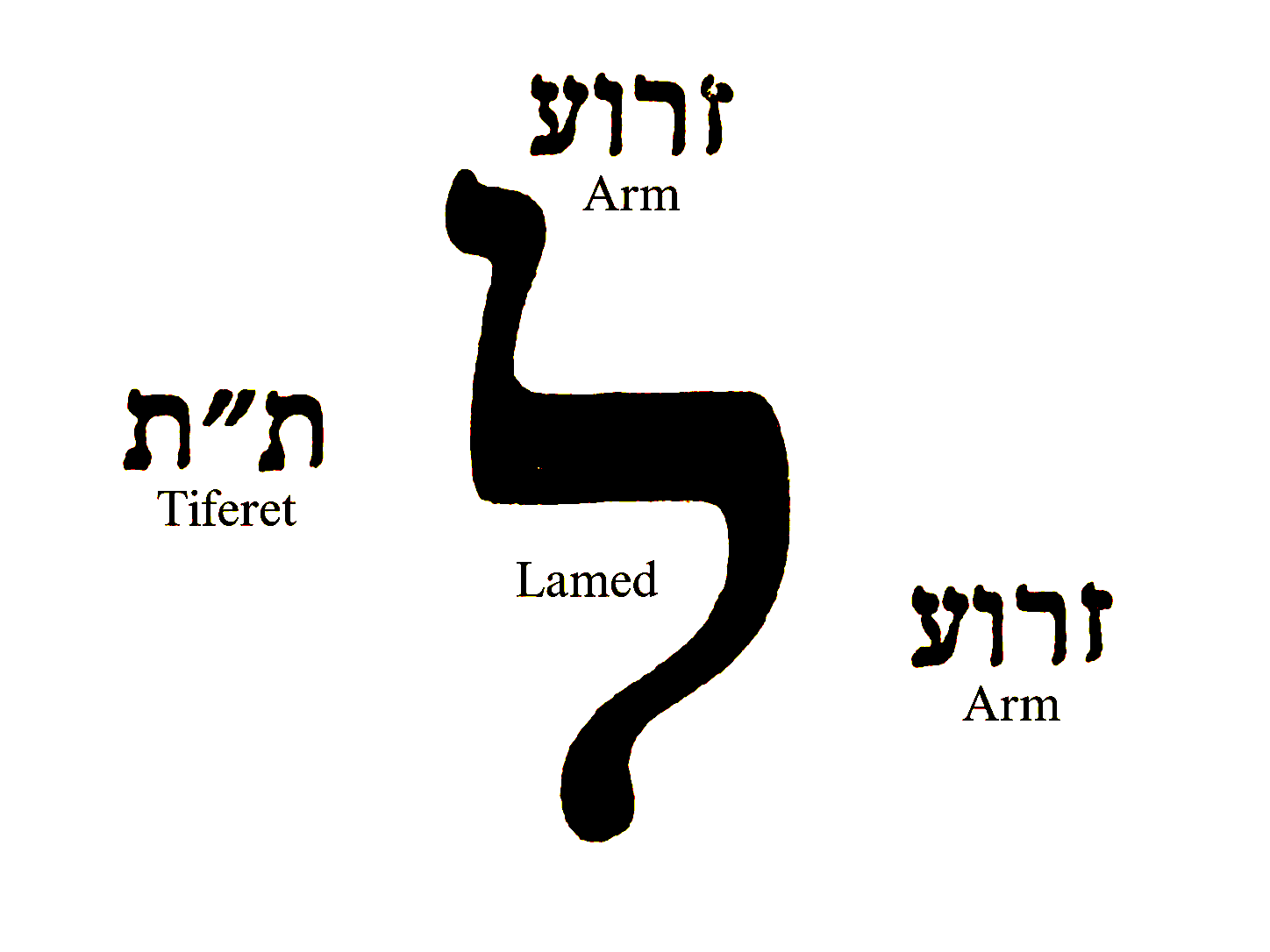
Also in another manner, and that is the true one (גַּם בְּאוֹפֶן אַחֵר וְהוּא הָאֲמִתִּי), when one lowers one arm alone and the throat is upright, it is the form of a Lamed like this (כְּשֶׁתַּשְׁפִּיל זְרוֹעַ א׳ לְבַדּוֹ וְיִהְיֶה הַגָּרוֹן זָקוּף הוּא צוּרַת ל׳ כָּזֶה <ציור>).
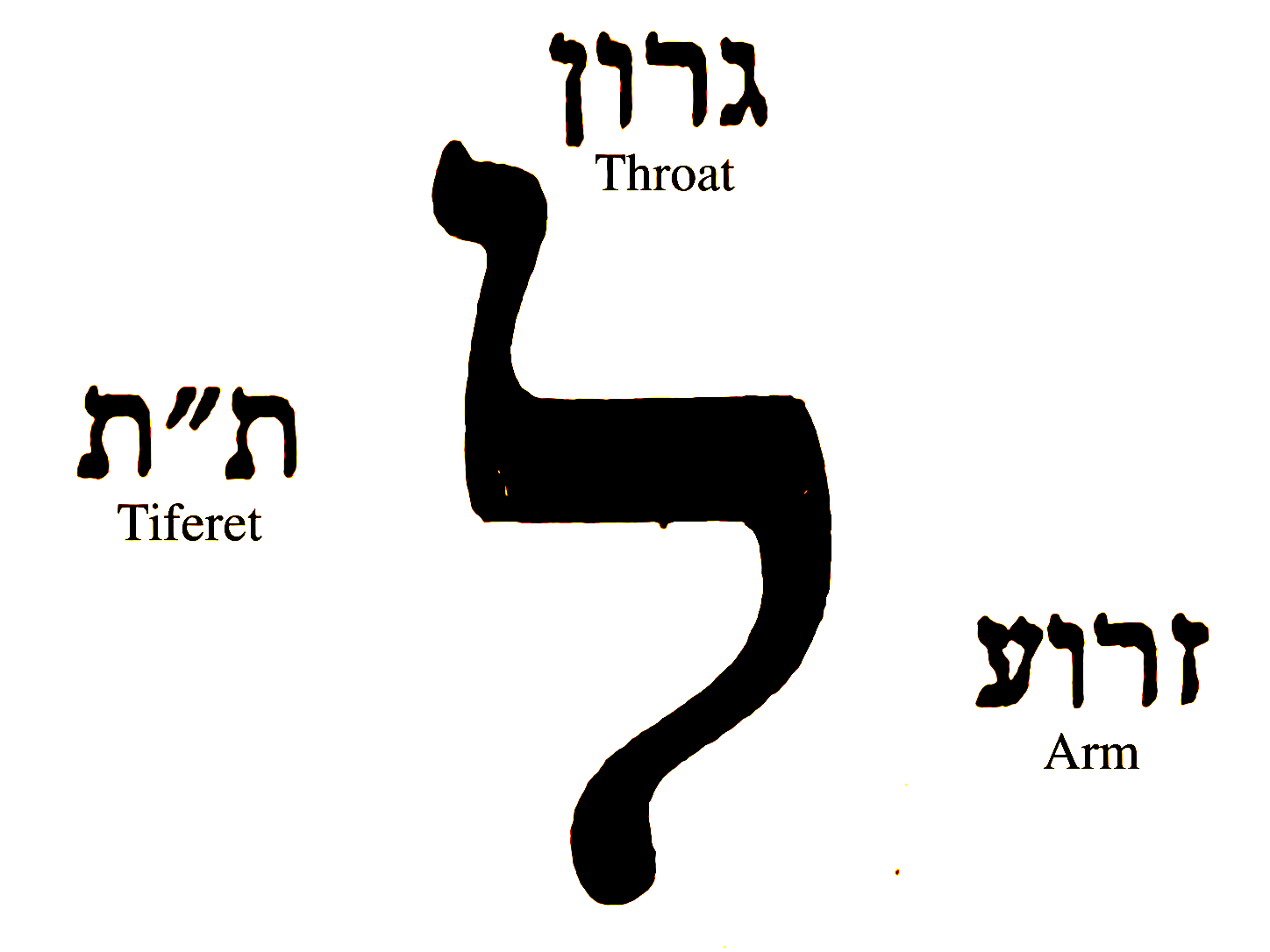
And know that holiness, wherever it descends, makes an impression and remains there its root (וְדַע כִּי הַקְּדֻשָּׁה בְּכָל מָקוֹם שֶׁהִיא יוֹרֶדֶת עוֹשָׂה רֹשֶׁם וְנִשְׁאָר שָׁם שֹׁרֶשָׁהּ), and its essence (שֶׁה), and its principal aspect (וְעִקָּרָהּ), and this is what cannot spread downward due to the abundance of its light (וְהוּא מַה שֶּׁאֵינוֹ יָכוֹל לְהִתְפַּשֵּׁט לְמַטָּה מֵרֹב הָאָרָתָם). Therefore the Mem of the Tzelem [Image] is the essential aspect which cannot descend further downward (לָכֵן ם׳ דְּצֶלֶם הִיא בְּחִי׳ הָעִיקָּרִית שֶׁא״א לֵירֵד יוֹתֵר לְמַטָּה), and afterward the Lamed, which is inferior to it (וְאַחַ״כ ל׳ הַגָּרוּעַ מִמֶּנָּה), and afterward the Tzadi, which is the lowest aspect of all of them (וְאַחַ״כ צ׳ הִיא בְּחִי׳ תַּחְתּוֹנָה שֶׁבְּכֻלָּם), and it is an illumination that Ze’ir Anpin can receive internally (וְהִיא הֶאָרָה שֶׁיָּכוֹל ז״א לְקַבְּלָהּ בִּפְנִימִיּוּתוֹ). And even so, he cannot receive it except through the intermediary garments of the vessels of the Netzach, Hod, Yesod of Imma as mentioned above (וְעכ״ז אֵינוֹ יָכוֹל לְקַבְּלוֹ אֶלָּא בָּאֶמְצָעִית הַמַּלְבּוּשִׁים שֶׁל הַכֵּלִים דְּנֵה״י דְּאִמָּא כַּנַּ״ל).
It is found that the two first aspects, which are Mem–Lamed of the Tzelem [Image], Ze’ir Anpin had no power to receive (וְנִמְצָא כִּי ב׳ בְּחִיּוֹת הָרִאשׁוֹנוֹת שֶׁהֵם מ״ל דְּצֶלֶם לֹא הָיָה כֹּחַ בְּז״א לְקַבְּלָם), and they remained as surrounding lights upon his head specifically (וְנִשְׁאָרוּ מַקִּיף עַל רֹאשׁוֹ דַּוְקָא), and not like other surrounding lights which are also from the sides (וְלֹא כִּשְׁאָר אוֹרוֹת הַמַּקִּיפִים אַף מִן הַצְּדָדִים), and remember this (וּזְכוֹר זֶה).
And these are the two surrounding aspects of Ze’ir Anpin, as was explained in our words in Discourse One (וְאֵלּוּ הֵם ב׳ בְּחִיּוֹת מַקִּיפִים שֶׁל ז״א כַּאֲשֶׁר נִתְבָּאֵר בְּדְבָרֵינוּ בַּדְּרוּשׁ א׳). And afterward the Tzadi of the Tzelem [Image] is the third descent of the Mochin into the three lower Sefirot, Netzach, Hod, Yesod of Tevunah (וְאַחַ״כ צ׳ דְּצֶלֶם הוּא יְרִידָה ג׳ שֶׁל הַמּוֹחִין בְּג״ת נֵה״י דְּתְבוּנָה), and these were enclothed within Ze’ir Anpin himself internally (וְאֵלּוּ נִתְלַבְּשׁוּ תּוֹךְ ז״א עַצְמוֹ בִּפְנִימִיּוּת). And behold, the length of nine joints that are in the Netzach, Hod, Yesod of Tevunah alone is their measure through the entire length of the nine Sefirot of Ze’ir Anpin (וְהִנֵּה אֹרֶךְ ט׳ פְּרָקִין שֶׁיֵּשׁ בְּנֵה״י דְּתְבוּנָה הֵם לְבַדָּם שִׁעוּרָם בְּכָל אֹרֶךְ ט׳ סְפִירוֹת דְּז״א), and he cannot bear more than them (וְלֹא יָכוֹל לִסְבֹּל יוֹתֵר מֵהֶם). Therefore only the Netzach, Hod, Yesod of Tevunah entered into him (וְלָכֵן לֹא נִכְנַס בּוֹ רַק נֵה״י דְּתְבוּנָה לְבַד), and understand this reason as well (וְהָבֵן טַעַם זֶה גַּם כֵּן).
And it appears to me, Chaim, in my humble opinion that clarification is required here at first (וְנלע״ד״ח כִּי צ״ע פֹּה רִאשׁוֹנָה), for here he says that the matter of the Tzelem [Image] is in this first Tevunah, which is the second (כִּי כָּאן אוֹמֵר בְּעִנְיַן הַצֶּלֶם הוּא בְּזוֹ הַתְּבוּנָה הָא׳ שֶׁהִיא הַב׳), and in Discourse One he wrote that the Tzelem [Image] is in the second Tevunah, which is the third (וּבְּדְרוּשׁ א׳ כָּתַב הַצֶּלֶם בִּתְּבוּנָה ב׳ שֶׁהִיא הַג׳).
And it appears to me in my humble opinion that the main position is as written there, but here he wished to shorten the discourse (וְנלע״ד כִּי הָעִיקָּר כַּכָּתוּב שָׁם אֶלָּא שֶׁפֹּה רָצָה לְקַצֵּר הַדְּרוּשׁ). And the proof of this is (וְהָרְאָיָה לָזֶה), for behold the birth is below the Yesod, which is in the middle joints of Netzach, Hod, Yesod (כִּי הֲרֵי הַלֵּידָה הִיא לְמַטָּה מִן הַיְסוֹד שֶׁהוּא בְּג״פ אֶמְצָעִים דְּנֵה״י), and behold the Mem of the Tzelem [Image] is in the three heads of Tevunah as will be explained below (וְהֲרֵי ם׳ דְּצֶלֶם בְּד״ר דְּתְבוּנָה כְּדַלְקַמָּן), therefore certainly this Mem of the Tzelem [Image] which is in the three heads of Tevunah is in the second Tevunah, which is the third (א״כ וַדַּאי הוּא שֶׁזֶּה ם׳ דְּצֶלֶם שֶׁהוּא בְּד״ר דְּתְבוּנָה הוּא בִּתְּבוּנָה הַב׳ שֶׁהִיא הַג׳), for the three heads are in the three middle ones of the first Tevunah, which is the second (שֶׁד״ר הֵם בְּג׳ אֶמְצָעִיּוֹת דְּתְבוּנָה א׳ שֶׁהִיא הַב׳), since its beginning is from the chest, as is known (כִּי הֲרֵי הַתְחָלָה שֶׁלָּהּ מֵהֶחָזֶה כַּנּוֹדָע). Also clarification is required (גַּם צ״ע), for here he said that this Mem of the Tzelem [Image] was not enclothed (כִּי פֹּה אָמַר שֶׁלֹּא נִתְלַבְּשָׁה זוֹ ם׳ דְּצֶלֶם), and there he said that it was truly enclothed (וְשָׁם אָמַר שֶׁנִּתְלַבְּשָׁה מַמָּשׁ).
And it appears to me in my humble opinion that certainly it is so, that all three aspects of the Tzelem [Image] were enclothed in the third Tevunah (וְנלע״ד וַדַּאי שֶׁכָּךְ הוּא שֶׁכָּל ג׳ בְּחִי׳ צֶלֶם נִתְלַבְּשׁוּ בִּתְבוּנָה ג׳), but since the Mem of the Tzelem [Image] is enclothed within the three heads of that Tevunah, it was evident that they are four complete Sefirot (אֶלָּא שֶׁלְּהִיוֹתָם ם׳ דְּצֶלֶם מְלוּבֶּשֶׁת תּוֹךְ ד״ר דְּתְבוּנָה הַזֹּאת נִכָּר הֱיוֹתָן ד׳ סְפִירוֹת גְּמוּרוֹת), unlike the Lamed of the Tzelem [Image] which was enclothed within the three middle ones, where there is no recognition of four Sefirot but only three (מַשֶּׁאֵין כֵּן בְּל׳ דְּצֶלֶם שֶׁנִּתְלַבְּשׁוּ תּוֹךְ ג׳ אֶמְצָעִיּוֹת וְאֵין שָׁם הֶכֵּר ד׳ סְפִירוֹת רַק ג׳ לְבַד), and this is true (וְזֶה אֱמֶת). And proof of this is (וְרְאָיָה לָזֶה), for behold the Tzelem [Image] is called thus because its gematria is 161, which is the entire Partzuf of Tevunah (כִּי הֲרֵי צֶלֶם נִקְרָא כֵּן יַעַן כִּי הוּא גִּימַטְרִיָּא קס״א שֶׁהוּא פַּרְצוּף תְּבוּנָה כֻּלָּהּ), and if so, the letter Mem is certainly also included within the Tevunah, which are her three heads, and they are not Mochin alone without garment (וְא״כ אוֹת ם׳ פְּשִׁיטָא שֶׁגַּם הוּא מִכְּלַל הַתְּבוּנָה שֶׁהֵם ד״ר שֶׁבָּהּ וְאֵינָם מוֹחִין לְבַד בְּלִי לְבוּשׁ). And what is written in this discourse that they were not enclothed is because the garments themselves are the aspect of four Mochin, the three heads (וּמַה שֶּׁכָּתוּב בַּדְּרוּשׁ זֶה שֶׁלֹּא נִתְלַבְּשׁוּ הוּא יַעַן כִּי גַּם הַלְּבוּשִׁים הֵם בְּחִי׳ ד׳ מוֹחִין ד״ר), therefore all of it is Mochin and it is not recognizable as garment (א״כ הַכֹּל מוֹחִין וְאֵין זֶה נִכָּר הֱיוֹתוֹ לְבוּשׁ), unlike the three middle ones and the three lower ones, for this is called a complete garment (מַשֶּׁאֵין כֵּן בְּג׳ אֶמְצָעִיּוֹת וְג״ת כִּי זוֹ נִקְרֵאת לְבוּשׁ גָּמוּר).
Also clarification is required (גַּם צ״ע), for in Discourse One we said that the Mem of the Tzelem [Image] was enclothed in the six first Sefirot of Tevunah until the chest, and the Lamed and Tzadi in the three lower Sefirot of Tevunah (כִּי בְּדְרוּשׁ א׳ אָמַרְנוּ כִּי ם׳ דְּצֶלֶם נִתְלַבְּשָׁה בְּו׳ סְפִירוֹת רִאשׁוֹנוֹת דְּתְבוּנָה עַד הֶחָזֶה וְל׳ וְצ׳ בְּג״ת דְּתְבוּנָה), except that the Lamed before their enclothing in Ze’ir Anpin and the Tzadi after their enclothing (אֶלָּא שֶׁהַל׳ קֹדֶם הִתְלַבְּשָׁם בְּז״א וְהַצ׳ אַחַר הִתְלַבְּשָׁם). And here I received explicitly from my master, of blessed memory, that the Lamed is in Chesed, Gevurah, Tiferet and the Tzadi in Netzach, Hod, Yesod (וּפֹה קִבַּלְתִּי בְּפֵרוּשׁ מִמּוֹרִי זלה״ה כִּי ל׳ בְּחג״ת וְצ׳ בְּנֵה״י), and it appears, according to my humble opinion, that this is the true formulation of the discourse in this matter (וְנִרְאֶה לְפִי עַנְיוּת דַּעְתִּי כִּי זֶהוּ אֲמִיתַּת הַדְּרוּשׁ בָּזֶה), and there he was not precise (וְשָׁם לֹא דִּקְדֵּק), and remember this (וּזְכוֹר זֶה).
Meaning: the three heads that are in the third Tevunah are etc. (in manuscript) (ר״ל ד״ר שֶׁהֵן בִּתְּבוּנָה שְׁלִישִׁית הֵן וְכוּ׳ (כ״י)) And now we shall explain the distinction that exists between the three letters of the Tzelem [Image] (וְעַתָּה נְבָאֵר הַחִלּוּק שֶׁיֵּשׁ בֵּין ג׳ אוֹתִיּוֹת דְּצֶלֶם), and it is that these two surrounding aspects, the Mem and the Lamed of this Tzelem [Image], are Chokhmah, Binah, Da‘at and Chesed, Gevurah, Tiferet (וְהוּא כִּי אֵלּוּ ב׳ מַקִּיפִין דְּל״ם דְּצֶלֶם הַזֶּה הוּא חב״ד וְחג״ת), the garments and the vessels and the externalities of which are in the body of Tevunah itself (הַלְּבוּשִׁים וְהַכֵּלִים וְהַחִיצוֹנִים הֵם בְּגוּפָא נ״א גוּפָא דְּתְבוּנָה עַצְמָהּ), and the Inner Light is shared (וְאו״פ הֵם מְשֻׁתָּפִים), for there are there lights of Tevunah itself and also lights of Ze’ir Anpin which are called Mochin (כִּי יֵשׁ שָׁם אוֹרוֹת דְּתְבוּנָה עַצְמָהּ וְגַם אוֹרוֹת שֶׁל ז״א הַנִּקְרָא מוֹחִין), and because there are within them lights of the Mochin of Ze’ir Anpin therefore they are called the surrounding lights of Ze’ir Anpin (וּלְסִבַּת הֱיוֹת בָּהֶם אוֹרוֹת דְּמוֹחִין דְּז״א לָכֵן נִקְרְאוּ מַקִּיפִים דְּז״א). However, the Tzadi of the Tzelem [Image] is divided into two aspects (אֲמְנָם צ׳ שֶׁל צֶלֶם נֶחְלְקָה לִב׳ בְּחִינוֹת), for the Keter of Ze’ir Anpin, both in the externalities and in the internalities, which are lights and vessels, all of them are from Tevunah alone, with no participation whatsoever from Ze’ir Anpin (כִּי כֶּתֶר שֶׁל ז״א בֵּין הַחִיצוֹנִים בֵּין הַפְּנִימִיִּים שֶׁהֵם אוֹרוֹת וְכֵלִים כֻּלָּם הֵם מִתְּבוּנָה לְבַד בְּלִי שִׁתּוּף כְּלָל מִן הַז״א). However, it is the aspect of the lower third of the Tiferet of Tevunah, or the two thirds as mentioned above, see the reason there (אֲמְנָם הִיא בְּחִי׳ שְׁלִישׁ תַּחְתּוֹן דְּת״ת דְּתְבוּנָה אוֹ ב׳ שְׁלִישִׁים כַּנַּ״ל הַסִּבָּה ע״ש), and this third of the Tiferet of Tevunah, the lights and the vessels, all of them are from Tevunah alone, with no participation whatsoever of Ze’ir Anpin (וְזֶה הַשְּׁלִישׁ שֶׁל ת״ת דְּתְבוּנָה הָאוֹרוֹת וְהַכֵּלִים הַכֹּל הֵם מִן הַתְּבוּנָה לְבַד בְּלִי שִׁתּוּף כְּלָל דְּז״א).
However, because it descends as the actual aspect of a third and surrounds and crowns the head of Ze’ir Anpin and his Mochin, as is written (וְאֲמְנָם הוּא לִהְיוֹתוֹ יוֹרֵד מַמָּשׁ בְּחִי׳ שְׁלִישׁ וְסוֹבֵב וּמַכְתִּיר רֹאשׁ הַז״א וּמוֹחוֹתָיו כְּמ״ש), therefore it is considered within the category of Ze’ir Anpin (לָכֵן נֶחְשָׁב מִכְּלַל הַז״א), unlike the surrounding lights which stand above the head and not from the sides like the Keter as mentioned above (מַשֶּׁאֵין כֵּן בַּמַּקִּיפִים שֶׁעוֹמְדִין לְמַעְלָה מִן הָרֹאשׁ וְלֹא מִן הַצְּדָדִין כְּמוֹ הַכֶּתֶר כַּנַּ״ל).
In such a manner that the Surrounding Lights, because there is participation of Ze’ir Anpin within them, even though they are distant, are called the Surrounding Lights of Ze’ir Anpin (בְּאוֹפֶן שֶׁהַמַּקִּיפִין לְסִבַּת הֱיוֹת בָּהֶם שִׁתּוּף דְּז״א אַף עַל פִּי שֶׁהֵם רְחוֹקִים נִקְרָא מַקִּיפִין דְּז״א), and the Keter, even though there is no participation of Ze’ir Anpin in it, neither in the lights nor in the vessels (וְהַכֶּתֶר אַף עַל פִּי שֶׁאֵין בּוֹ שִׁתּוּף ז״א לֹא בָּאוֹרוֹת וְלֹא בַּכֵּלִים), since it surrounds him on all sides up to the chest as explained (כֵּיוָן שֶׁהוּא מְסוֹבְבוֹ מִכָּל צְדָדָיו עַד הֶחָזֶה כְּמ״ש), therefore it is considered within the category of Ze’ir Anpin (לָכֵן נֶחְשָׁב מִכְּלַל הַז״א).
However, the Tzadi of Ze’ir Anpin, which are the Mochin that enter within him, these Chokhmah, Binah, Da‘at (אֲמְנָם הַצ׳ דְּז״א שֶׁהֵם הַמּוֹחִין הַנִּכְנָסִים בְּתוֹכוֹ חב״ד אֵלּוּ), behold, the garments and the vessels are from the Netzach, Hod, Yesod of Tevunah alone (הִנֵּה הַלְּבוּשִׁים וְהַכֵּלִים הֵם דְּנֵה״י דְּתְבוּנָה לְבַד), and the lights are from Ze’ir Anpin alone (וְהָאוֹרוֹת דְּז״א לְבַד). Thus there are three distinctions: the Mem and the Lamed which are the Surrounding Lights, and the Keter, and the Tzadi which are the internal Chokhmah, Binah, Da‘at (הֲרֵי ג׳ חִלּוּקִים שֶׁהֵם מ׳ ל׳ הַמַּקִּיפִים וְהַכֶּתֶר וְהַצ׳ שֶׁהֵם חב״ד פְּנִימִים). For the Surrounding Lights are the body of Tevunah alone, and the lights are shared, of Tevunah and of Ze’ir Anpin (כִּי הַמַּקִּיפִים הֵם גוּפָא דְּתְבוּנָה לְבַד וְהָאוֹרוֹת מְשֻׁתָּפִים דְּתְבוּנָה וְדְּז״א), and the Keter—its body and its lights are from Tevunah alone (וְהַכֶּתֶר גוּפָא וְאוֹרוֹת דְּתְבוּנָה לְבַד), and the Chokhmah, Binah, Da‘at which are the Tzadi of the Tzelem [Image]—the body is from Tevunah alone and the lights are from Ze’ir Anpin alone (וְחב״ד שֶׁהֵם צ׳ דְּצֶלֶם גוּפָא דְּתְבוּנָה לְבַד וְאוֹרוֹת דְּזְעֵיר אַנְפִּין לְבַד). Behold, it has been explained in brief (הֲרֵי נִתְבָּאֵר בְּקִיצּוּר).
Discourse 5
שער כה דרוש ה
[25:5] Behold, after the matter of the Mem–Lamed of the Tzelem [Image] has been explained, which are the two Surrounding Lights (הִנֵּה אַחַר שֶׁנִּתְבָּאֵר עִנְיַן מ״ל דְּצֶלֶם שֶׁהֵם ב׳ מַקִּיפִים), which are made from the aspect of the enclothing of the Mochin in two stages—first in the three heads as Chokhmah, Binah, Da‘at of Tevunah, and second in Chesed–Gevurah and the two upper thirds of the Tiferet of Tevunah (הַנַּעֲשִׂין מִבְּחִי׳ הִתְלַבְּשׁוּת מוֹחִין בְּב׳ פְּעָמִים א׳ בְּד״ר כְּחב״ד דְּתְבוּנָה וּב׳ בְּח״ג וּב׳ שְׁלִישִׁים עֶלְיוֹנִים דְּת״ת דְּתְבוּנָה), where the vessels are from Tevunah alone and there are no vessels of Ze’ir Anpin there (אֲשֶׁר שָׁם הַכֵּלִים הֵם דְּתְבוּנָה לְבַד וְאֵין שָׁם כֵּלִים דְּז״א), but the lights are shared, of Tevunah and of Ze’ir Anpin, within the vessels of Tevunah (אֲמְנָם הָאוֹרוֹת הֵם מְשֻׁתָּפִים דְּתְבוּנָה וְדְּז״א תּוֹךְ כֵּלֵי תְבוּנָה), we shall now explain the matter of the Keter of Ze’ir Anpin (נְבָאֵר עַתָּה עִנְיַן כֶּתֶר דְּז״א). Which is made from the final third of the Tiferet of Tevunah, and sometimes from two thirds, as mentioned above (הַנַּעֲשֶׂה מִשְּׁלִישׁ אַחֲרוֹן דְּת״ת דְּתְבוּנָה וּלְפָעָמִים מִב׳ שְׁלִישִׁים כַּנַּ״ל), and the vessel and the light, both of them, are from Tevunah (וְהַכְּלִי וְהָאוֹר שְׁנֵיהֶם מִתְּבוּנָה), and it too is a Surrounding Light (וְהוּא ג״כ מַקִּיף).
However, since it crowns and surrounds from all sides, it is called Keter and not Makif (אֲמְנָם לְפִי שֶׁהוּא מַכְתִּיר וּמְסוֹבֵב מִכָּל הַצְּדָדִין נִקְרָא כֶּתֶר וְלֹא מַקִּיף), for the Makif is upon the head and not from the sides, in the secret of “a shadow upon his head” (כִּי הַמַּקִּיף הוּא עַל הָרֹאשׁ וְלֹא מִן הַצְּדָדִין בְּסוֹד צֵל עַל רֹאשׁוֹ). And first we shall explain the reason why he takes only the final third of the Tiferet of Tevunah (וּתְחִלָּה נְבָאֵר הַטַּעַם לָמָּה אֵינוֹ לוֹקֵחַ רַק שְׁלִישׁ אַחֲרוֹן דְּת״ת דְּתְבוּנָה), and in this there are three reasons (וְיֵשׁ בָּזֶה ג׳ טְעָמִים): one because of Imma herself (א׳ מִפְּנֵי אִמָּא עַצְמָהּ), one because of Ze’ir Anpin himself (ב׳ מִפְּנֵי ז״א עַצְמוֹ), and one because of Rachel the Nukvah (ג׳ מִפְּנֵי רָחֵל נוּקְבָּא). And the first reason is as explained above (וְהַטַּעַם הָא׳ הוּא כְּמַשְּׁ״ל), that corresponding to what entered Ze’ir Anpin—four measures and one third—there must be four measures and one third more above, to enlarge them by doubling in order to complete the ten Sefirot (כִּי כְּנֶגֶד מַה שֶּׁנִּכְנַס בְּז״א ד׳ מִדּוֹת וְשְׁלִישׁ צְרִיכִין ד׳ מִדּוֹת וְשְׁלִישׁ אֲחֵרוֹת יוֹתֵר עֶלְיוֹנִים לְהַגְדִּיל לִהְיוֹתָן כְּפוּלִים לְהַשְׁלִים הַי״ס). And their beginning is from the two lower thirds of Binah (וְהַתְחָלָתָן מִב׳ שְׁלִישִׁים תַּחְתּוֹנִים מִבִּינָה).
Thus it is found that there remained now Keter and Chokhmah and the upper third of Binah that did not enlarge (שֶׁנִּשְׁאָרוּ עַתָּה כֶּתֶר וְחָכְמָה וְשְׁלִישׁ עֶלְיוֹן מִבִּינָה שֶׁלֹּא הִגְדִּילוּ), and their power was divided—half upward and half to complete the lack of the lower ones as explained above (וְנִתְחַלֵּק כֹּחָם חֶצְיָן לְמַעְלָה וְחֶצְיָן לְהַשְׁלִים חֶסְרוֹן הַתַּחְתּוֹנוֹת כַּנַּ״ל). And if he were to take for the Keter of Ze’ir Anpin two thirds of the Tiferet (וְאִם הָיָה לוֹקֵחַ כֶּתֶר דְּז״א ב׳ שְׁלִישִׁים ת״ת), then there would be four measures and two thirds lacking that Ze’ir Anpin would have taken (הָיוּ ד׳ מִדּוֹת וּב׳ שְׁלִישִׁים הַחֲסֵרִים שֶׁלָּקַחָם הַז״א), and it would require that corresponding to them all of Binah and Da‘at, Chesed, Gevurah and the upper third of the Tiferet be doubled (וְהָיוּ צְרִיכִין כְּנֶגֶד בִּינָה כֻּלָּהּ וְדַעַת חֶסֶד גְּבוּרָה וְשְׁלִישׁ ת״ת הָעֶלְיוֹן לְהִכָּפֵל), in order to divide their power and enlarge the four measures and two thirds that are lacking (לְחַלֵּק כֹּחָם וּלְהַגְדִּיל הַד׳ מִדּוֹת וּב׳ שְׁלִישִׁים הַחֲסֵרִים). And this cannot be done (וְזֶה א״א לַעֲשׂוֹת כֵּן), and the reason is known (וְהַטַּעַם כַּנּוֹדָע), that just as Abba and Imma of the generality of Atzilut always have a constant Zivug [Union] that does not cease (שֶׁכְּמוֹ שֶׁאו״א שֶׁל כְּלָלוּת הָאֲצִילוּת יֵשׁ בָּהֶם תָּמִיד זִוּוּג תָּדִיר דְּלָא פָּסִיק), the reason is that they are equal in one level (וְהַסִּבָּה הוּא לִהְיוֹתָם שָׁוִים בְּמַעֲלָה אַחַת), and this is the secret of “they emerge as one and dwell as one” (וְזֶהוּ סוֹד כְּחַדָּא נָפְקִין וּכְחַדָּא שָׁרְיָין). Which is not so with Ze’ir Anpin and Nukvah (מַה שֶּׁאֵין כֵּן בְּזו״ן), for they are not equal (שֶׁאֵינָם שָׁוִים), since sometimes one is greater than the other (כִּי לִפְעָמִים זֶה גָּדוֹל מִזֶּה), and therefore their Zivug [Union] ceases (וְע״כ זִוּוּגֵיהוּ פָּסִיק), for they cannot unite when they are not equal (שֶׁלֹּא יוּכְלוּ לְהִזְדַּוֵּג כִּי אֵינָם שָׁוִין).
And behold, thus is the matter with all Chokhmah–Binah in every Partzuf, in particular (וְהִנֵּה כֵּן הָעִנְיָן בְּכָל חו״ב שֶׁבְּכָל פַּרְצוּף וּפַרְצוּף שֶׁבִּפְרָטוּת), and their Zivug [Union] does not cease (וְזִוּוּגֵיהוּ לֹא פָּסִיק). It is found that the Chokhmah–Binah of Imma herself, the two Mochin of hers, both of them are equal as one (נִמְצָא כִּי חו״ב דְּאִמָּא עַצְמָהּ תְּרֵין מוֹחִין דִּילָהּ תַּרְוַיְיהוּ שָׁוִים כְּחַדָּא), neither this greater than that nor that greater than this (לֹא זֶה גָּדוֹל מִזֶּה וְלֹא זֶה מִזֶּה), in order that their Zivug [Union] be constant (כְּדֵי שֶׁיִּהְיוּ זִוּוּגֵיהוּ תָּדִיר). And if all the parts of Binah were doubled in order to enlarge the lacking lower measures (וְאִלּוּ כָּל חֶלְקֵי הַבִּינָה יֻּכְפְּלוּ לְהַגְדִּיל הַמִּדּוֹת הַחֲסֵרִים הַתַּחְתּוֹנִים), behold her strength would be weakened and she would be entirely divided (הִנֵּה נֶחְלַשׁ כֹּחָהּ וְנֶחְלְקָה לְגַמְרֵי), unlike her Chokhmah (מַשֶּׁאֵין כֵּן בְּחָכְמָה שֶׁבָּהּ), for she is entirely complete in all her strength, not having been divided to complete the lack of the lower ones (כִּי כֻלָּהּ שְׁלֵמָה בְּכָל כֹּחָהּ שֶׁלֹּא נֶחְלְקָה לְהַשְׁלִים חֶסְרוֹן הַתַּחְתּוֹנִים). And if so, their Zivug [Union] would not be constant (וְאִם כֵּן לֹא הָוֵי זִוּוּגֵיהוּ תָּדִיר).
Therefore it was necessary that at least the upper third of her remain (לָכֵן הֻצְרַךְ שֶׁלְּכָל הַפָּחוֹת נִשְׁאָר שְׁלִישׁ הָעֶלְיוֹן שֶׁבָּהּ), so that her strength not be weakened (שֶׁלֹּא יֵחָלֵשׁ כֹּחָהּ), and not be changed from what it was (וְלֹא יִשְׁתַּנֶּה מִמַּה שֶּׁהָיָה), and in that third she would be equal to the Chokhmah (וּבְאוֹתוֹ שְׁלִישׁ תִּהְיֶה שָׁוָה אֶל הַחָכְמָה). And the matter is that Binah has the form of the letter Heh, in three lines, like this: Heh—right line and left and middle (וְהָעִנְיָן כִּי הַבִּינָה צוּרַת ה׳ בְּג׳ קַוִּין כָּזֶה ה׳ קַו יָמִין וּשְׂמֹאל וְאֶמְצָעִי), and after the heads of the three lines are complete, which are the three first ones, which are her Chokhmah, Binah, Da‘at, and they are complete (וְאַחַר שֶׁרָאשֵׁי ג׳ קַוִּין שְׁלֵמִים שֶׁהֵם ג׳ רִאשׁוֹנוֹת שֶׁהֵם חב״ד שֶׁלָּהּ וְהֵם שְׁלֵמִים), behold this suffices (הֲרֵי מַסְפִּיק), for the remainder of the lines, which are the six extremities—Chesed, Gevurah, Tiferet, Netzach, Hod, Yesod—are compelled to descend below for the sake of the children (כִּי שְׁאָרִית הַקַּוִּין שֶׁהֵם ו״ק חג״ת נצח הוד יסוד מֻכְרָחִין לָרֶדֶת לְמַטָּה לְצוֹרֶךְ הַבָּנִים). And behold, in those three first ones of Binah the verse is fulfilled, “and a river goes out of Eden,” and their Zivug [Union] does not cease (וְהִנֵּה בְּאוֹתָן ג׳ רִאשׁוֹנוֹת שֶׁבַּבִּינָה יִתְקַיֵּם קְרָא וְנָהָר יֹצֵא מֵעֵדֶן וְלֹא פָּסִיק זווגייהו), according to what was explained above regarding Binah and Tevunah (ע״ד הנ״ל בבינה ותבונה), and understand this well (וְהָבֵן זֶה הֵיטֵב). And the matter of their division is that always, in every aspect and aspect, there are three upper ones and six lower ones (וְעִנְיַן הַחִלּוּק שֶׁלָּהֶם כִּי לְעוֹלָם בְּכָל בְּחִי׳ וּבְחִי׳ יֵשׁ ג״ר וו״ק), and this is one aspect by itself and that is one aspect by itself (וְזֶה בְּחִי׳ בפ״ע וְזֶה בְּחִי׳ בפ״ע). Also, another reason close to the above (גַּם ט״א קָרוֹב אֶל הנ״ל), and it is that always the three upper ones are equal as one (וְהוּא כִּי הִנֵּה לְעוֹלָם ג״ר שָׁוִים כְּאֶחָד).
And behold, Keter and Chokhmah were not doubled (וְהִנֵּה כֶּתֶר וְחָכְמָה לֹא נִכְפְּלוּ), and if all of Binah were doubled then she would be different from them and not important and equal to be like them (וְאִם כָּל הַבִּינָה תִּכָּפֵל א״כ תִּהְיֶה מְשֻׁנָּה מֵהֶם וְלֹא חֲשׁוּבָה וְשָׁוָה לִהְיוֹת כְּמוֹתָם), therefore that upper third of hers remained equal and important like them (לָכֵן נִשְׁאַר אוֹתוֹ שְׁלִישׁ הָעֶלְיוֹן שֶׁבָּהּ שָׁוֶה וְחָשׁוּבה כְּמוֹתָן). And the second reason is because of Ze’ir Anpin himself (וְטַעַם ב׳ בַּעִיבּוּר ז״א עַצְמוֹ), and it is that if his Keter were above her chest, which are two thirds (וְהוּא כִּי אִם הַכֶּתֶר שֶׁלּוֹ יִהְיֶה לְמַעְלָה מֵהֶחָזֶה שֶׁלָּהּ שֶׁהֵם ב׳ שְׁלִישִׁים), then it would be found that Tevunah would need to descend and enter into Ze’ir Anpin more and descend further below (א״כ נִמְצָא שֶׁיִּצְטָרֵךְ שֶׁתֵּרֵד הַתְּבוּנָה וְתִכָּנֵס בְּז״א יוֹתֵר וְתֵרֵד לְמַטָּה בְּיוֹתֵר), for by the entry of the two thirds of her Tiferet the middle line of hers, which is her Yesod beneath her Tiferet, would spread and descend further below (כִּי בְּהִכָּנֵס ב׳ שְׁלִישֵׁי הַת״ת שֶׁבָּהּ יִתְפַּשֵּׁט קַו אֶמְצָעִי שֶׁלָּהּ שֶׁהוּא יְסוֹד שֶׁבָּהּ שֶׁתַּחַת הַת״ת שֶׁבָּהּ וְיוֹרֵד לְמַטָּה בְּיוֹתֵר), until the navel of Ze’ir Anpin, which is at the end of the two thirds of the Tiferet of Ze’ir Anpin (עַד טַבּוּרָא דְּז״א שֶׁהוּא בְּסִיּוּם ב׳ שְׁלִישֵׁי ת״ת דְּז״א). And then the Chasadim that spread within Ze’ir Anpin to enlarge him and illuminate him as explained above in the discourses would now be very darkened and would not be revealed until the place of the lower third of Ze’ir Anpin (וְיִהְיוּ הַחֲסָדִים הַמִּתְפַּשְּׁטִים בְּז״א לְהַגְדִּילוֹ וּלְהָאִירוֹ כַּנַּ״ל בַּדְּרוּשִׁים עַתָּה חֲשׁוּכִים מְאֹד וְאֵינָם מִתְגַּלִּים עַד מְקוֹם שְׁלִישׁ תַּחְתּוֹן דְּז״א), and he would remain without light (וְיִשָּׁאֵר בְּלִי אוֹר), for the Yesod of Binah would descend all the way down and cover them, as is known (כִּי יְסוֹד הַבִּינָה יוֹרֵד עַד לְמַטָּה וּמְכַסֶּה אוֹתָם כַּנּוֹדָע). But now, since Tevunah does not enter Ze’ir Anpin except from the lower third of her Tiferet alone (אַךְ עַתָּה שֶׁאֵין הַתְּבוּנָה נִכְנֶסֶת בְּז״א רַק מִשְּׁלִישׁ תַּחְתּוֹן ת״ת שֶׁבָּהּ לְבַד), it is found that the Yesod in her middle line does not spread except until the chest, at the end of the upper third of the Tiferet of Ze’ir Anpin (נִמְצָא כִּי הַיְסוֹד שֶׁבְּקַו הָאֶמְצָעִי שֶׁלָּהּ אֵינוֹ מִתְפַּשֵּׁט רַק עַד הֶחָזֶה בְּסִיּוּם שְׁלִישׁ עֶלְיוֹן דְּת״ת דְּז״א), and there the Chasadim are revealed and illuminate and enlarge Ze’ir Anpin more openly than they would have if the Yesod of Imma had descended to the navel of Ze’ir Anpin as mentioned above (וְשָׁם מִתְגַּלִּים הַחֲסָדִים וּמְאִירִים וּמַגְדִּילִים אֶת ז״א יוֹתֵר בְּגִלּוּי מִמַּה שֶּׁהָיָה אִם יָרַד יְסוֹד אִמָּא עַד טַבּוּרָא דְּז״א כַּנַּ״ל).
The third reason is because of Malkhut, the Nukvah of Ze’ir Anpin (טַעַם ג׳ הוּא בַּעִיבּוּר מַלְכוּת נוּקְבָּא דְּז״א), and the matter depends on the second reason explained above (וְהָעִנְיָן תָּלוּי בְּטַעַם הַב׳ הַנַּ״ל), for behold, the Malkhut emerges only from the Gevurot of Imma, from their illumination that goes outward (כִּי הִנֵּה הַמַּלְכוּת אֵינָהּ יוֹצֵאת רַק מֵהַגְּבוּרוֹת דְּאִמָּא מֵהָאָרָתָן הַיּוֹצֵאת לַחוּץ), and when they are within two coverings and partitions they cannot pass through two partitions—the Yesod of Imma and the Tiferet of Ze’ir Anpin (וּבִהְיוֹתָן תּוֹךְ ב׳ כִּסּוּיִים וּמְחִיצוֹת אֵינָם יְכוֹלִין לַעִיבּוּר ב׳ מְחִיצוֹת יְסוֹד אִמָּא וְת״ת דְּז״א). And when the Yesod of Imma ends, so that there is there only the garment of the Tiferet of Ze’ir Anpin alone (וּבְכִלּוֹת יְסוֹד אִמָּא שֶׁאֵין שָׁם רַק לְבוּשׁ ת״ת דְּז״א לְבַד), then their illumination emerges (אָז יוֹצֵאת הָאָרָתָן), and from their illumination the Malkhut is made (וּמֵהָאָרָתָן נַעֲשֵׂית הַמַּלְכוּת).
And if the Yesod of Binah had descended until the lower third of the Tiferet of Ze’ir Anpin (וְאִם יְסוֹד דְּבִינָה הָיָה יוֹרֵד עַד שְׁלִישׁ הַתַּחְתּוֹן דְּת״ת דְּז״א), the Malkhut would be a very small point and would have no measure (הָיְתָה הַמַּלְכוּת נְקֻדָּה קְטַנָּה מְאֹד וְאֵין לָהּ שִׁעוּר). However, all of this is only when only the Mochin of the Tzelem [Image] of Imma have entered Ze’ir Anpin (וְאֲמְנָם כָּל זֶה אֵינוֹ רַק כַּאֲשֶׁר לֹא נִכְנְסוּ בְּז״א עֲדַיִן רַק מוֹחִין דְּצֶלֶם דְּאִמָּא), for when also the Mochin of the Tzelem [Image] of Abba enter (כִּי כְּשֶׁיִּכָּנְסוּ גַּם כֵּן מוֹחִין דְּצֶלֶם דְּאַבָּא גַּם כֵּן), then the Keter of Ze’ir Anpin will grow by one third and his Keter will be two thirds (אָז יִגְדַּל כֶּתֶר ז״א שְׁלִישׁ א׳ וְיִהְיֶה כֶּתֶר שֶׁלּוֹ ב׳ שְׁלִישִׁים). And the matter is as is sensed by the eye (וְהָעִנְיָן כַּאֲשֶׁר נִרְגָּשׁ בְּחוּשׁ הָעַיִן), that when two vessels are equal in their length exactly and one enclothes within the other (כִּי בִּהְיוֹת ב׳ כֵּלִים שָׁוִים בְּאָרְכָּן מַמָּשׁ וְיִתְלַבְּשׁוּ זֶה תּוֹךְ זֶה), necessarily the inner one rises a little higher above (בְּהֶכְרֵחַ הַפְּנִימִי נִגְדָּל מְעַט יוֹתֵר לְמַעְלָה), for it does not enter entirely until the very bottom of the outer one (כִּי אֵינוֹ נִכְנָס כֻּלּוֹ עַד שׁוּלֵי חִיצוֹן).
And behold, the vessels of Abba and Imma are equal in their length, as is known (וְהִנֵּה כֵּלִים דְּאו״א שָׁוִים בְּאָרְכָּן כַּנּוֹדָע), and when the Tzelem [Image] of Abba enters within the Tzelem [Image] of Imma (וּבְהִכָּנֵס צֶלֶם אַבָּא תּוֹךְ צֶלֶם אִמָּא), it is found that the Tiferet of Abba will exceed by one third above the Tiferet of Imma (נִמְצָא כִּי ת״ת דְּאַבָּא יִהְיֶה עוֹדֵף שְׁלִישׁ א׳ לְמַעְלָה מִת״ת דְּאִמָּא), and it is greater above by one third above the third of the Tiferet of Imma (וְהוּא גָּדוֹל לְמַעְלָה שְׁלִישׁ א׳ לְמַעְלָה מִשְּׁלִישׁ מִת״ת דְּאִמָּא). And it is found that the one third of the Tiferet of Abba, when it is within the Tiferet of the Tzelem [Image] of Imma, will be equal corresponding to the two thirds of the Tiferet of Imma (וְנִמְצָא כִּי שְׁלִישׁ א׳ דְּת״ת דְּאַבָּא בִּהְיוֹתוֹ תּוֹךְ ת״ת צֶלֶם אִמָּא יִהְיֶה שָׁוֶה נֶגֶד ב׳ שְׁלִישֵׁי ת״ת דְּאִמָּא). And now we shall explain how this lower third of the Tiferet of Tevunah becomes Keter for Ze’ir Anpin (וְעַתָּה נְבָאֵר אֵיךְ נַעֲשֶׂה זֶה הַשְּׁלִישׁ ת״ת תַּחְתּוֹן דְּתְבוּנָה כֶּתֶר לְז״א).
Behold, as explained above, the matter of Binah and Tevunah, how they are divided into two (הִנֵּה כְּמַשְּׁ״ל עִנְיַן בִּינָה וּתְבוּנָה אֵיךְ נֶחְלָקִים לִב׳), and new Netzach, Hod, Yesod were made for Binah (וְנַעֲשׂוּ נֵה״י חֲדָשִׁים לְבִּינָה), and from the first Netzach, Hod, Yesod were made complete ten Sefirot of Tevunah (וּמִנֵּה״י הָרִאשׁוֹנִים נַעֲשׂוּ י״ס גְּמוּרוֹת דְּתְבוּנָה). According to this manner the matter is always (כְּעֵד״ז הַדָּבָר תָּמִיד), and understand this well (וְהָבֵן זֶה הֵיטֵב). It is found that also this Tevunah which enters Ze’ir Anpin in the secret of the Tzadi of the Tzelem [Image], from the final third of her Tiferet and below (נִמְצָא כִּי גַּם זוֹ הַתְּבוּנָה הַנִּכְנֶסֶת בְּז״א בְּסוֹד צ׳ דְּצֶלֶם מִשְּׁלִישׁ אַחֲרוֹן דְּת״ת שֶׁבָּהּ וּלְמַטָּה), and her Netzach, Hod, Yesod enter into the innerness of Ze’ir Anpin within him (וְנִכְנָסִים נֵה״י שֶׁלָּהּ בִּפְנִימִיּוּת ז״א בְּתוֹכוֹ), necessarily must also have new Netzach, Hod, Yesod (בְּהֶכְרֵחַ צָרִיךְ לִהְיוֹת לָהּ גַּם כֵּן נֵה״י חֲדָשִׁים). And those first Netzach, Hod, Yesod of hers were made into a complete Partzuf of ten Sefirot (וְאוֹתָן הַנֵּה״י שֶׁלָּהּ הָרִאשׁוֹנִים הֵם נַעֲשׂוּ פַּרְצוּף שָׁלֵם בְּי״ס), and they spread through the ten Sefirot of Ze’ir Anpin, as is known (וּמִתְפַּשְּׁטִין בְּי״ס דְּז״א כַּנּוֹדָע).
And now we shall explain their matter (וְנְבָאֵר עַתָּה עִנְיָנָם), for behold it has been explained above that at the time of birth the lights of the Netzach, Hod, Yesod of Tevunah ascended upward into the final third of the Tiferet of Tevunah (כִּי הִנֵּה נִתְלַ״ל כִּי בְּעֵת הַלֵּידָה עָלוּ אוֹרוֹת שֶׁל נֵה״י דְּתְבוּנָה לְמַעְלָה בִּשְׁלִישׁ אַחֲרוֹן דְּת״ת דְּתְבוּנָה), where the Mochin of Ze’ir Anpin were standing in the secret of Ibbur (אֲשֶׁר שָׁם הָיוּ עוֹמְדִים הַמּוֹחִין דְּז״א בְּסוֹד עִיבּוּר), in order to push them away at the time of birth (כְּדֵי לְדָחֳתָן בְּעֵת הַלֵּידָה), for the lights could not remain there so much in such a narrow place (כִּי לֹא יָכְלוּ כָּךְ הָאוֹרוֹת לִהְיוֹת שָׁם בְּמָקוֹם צָר).
And behold, when these lights were there (וְהִנֵּה בִּהְיוֹת אֵלּוּ הָאוֹרוֹת שָׁם), the impression of the four Mochin of Ze’ir Anpin themselves remained there, in the lower third of the Tiferet (נִשְׁאָר רֹשֶׁם ד׳ מוֹחִין דְּז״א עַצְמָן שָׁם בִּשְׁלִישׁ תַּחְתּוֹן דְּת״ת), for every matter of holiness leaves an impression wherever it is, as is known (כִּי כָּל דָּבָר שֶׁבִּקְדֻשָּׁה מַנִּיחַ רֹשֶׁם בְּכָל מָקוֹם כַּנּוֹדָע). And especially since behold the Mochin from the Keter above them emerge (וּבִפְרָט כִּי הֲרֵי הַמּוֹחִין מִן הַכֶּתֶר שֶׁלְּמַעְלָה מֵהֶם יוֹצְאִים), therefore it is necessary that the entire presence of the four Mochin leave their impression in this Keter, which is the lower third of the Tiferet of Tevunah, as explained above (וּבְהֶכְרֵחַ הוּא שֶׁכָּל מְצִיאוּת ד׳ מוֹחִין נִשְׁאָר רִשְׁמָם בַּכֶּתֶר הַזֶּה שֶׁהוּא שְׁלִישׁ תַּחְתּוֹן דְּת״ת דְּתְבוּנָה כַּנַּ״ל). And this was explained in the intention of the Amidah, in the matter of the four bowings and four straightenings, see there (וְזֶה נִתְבָּאֵר בְּכַוָּנַת הָעֲמִידָה בְּעִנְיַן הַד׳ כְּרִיעוֹת וְד׳ זְקִיפוֹת ע״ש).
And behold, also the lights of the Netzach, Hod, Yesod of Tevunah itself that ascended there remained there (וְהִנֵּה גַּם הָאוֹרוֹת דְּנֵה״י דְּתְבוּנָה עַצְמָהּ שֶׁעָלוּ שָׁם הִנֵּה נִשְׁאָרוּ שָׁם), for the vessels of Netzach, Hod, Yesod descend into Ze’ir Anpin as vessels without their lights, as mentioned above (כִּי כֵּלִים שֶׁל נֵה״י יוֹרְדִין תּוֹךְ ז״א כֵּלִי בְּלִי אוֹרוֹת שֶׁלָּהֶם כַּנַּ״ל). And it is found that even though we said that there remains there an impression of the four Mochin of Ze’ir Anpin, it is a small matter (וְנִמְצָא כִּי אַף עַל פִּי שֶׁאָמַרְנוּ שֶׁנִּשְׁאָר שָׁם רֹשֶׁם ד׳ מוֹחִין דְּז״א הוּא דָּבָר מוּעָט), but the essential lights are those of Imma (אַךְ עִקַּר הָאוֹרוֹת הֵם דְּאִמָּא), and understand this well (וְהָבֵן זֶה הֵיטֵב). For there is in the Keter an impression of the four Mochin of Ze’ir Anpin, and they are not reckoned by name (כִּי יֵשׁ בַּכֶּתֶר רֹשֶׁם ד׳ מוֹחִין דְּז״א וְאֵינָם עוֹלִין בְּשֵׁם), but only the lights of Imma herself ascend there, which are the essential ones (רַק אוֹרוֹת דְּאִמָּא עַצְמָהּ שֶׁהֵם עִיקָּרִים), for the others are only an impression (כִּי הַשְּׁאָרִים הֵם רֹשֶׁם לְבַד).
And behold, when these lights of the Netzach, Hod, Yesod of Tevunah were there in the lower third of the Tiferet (וְהִנֵּה בִּהְיוֹת אֵלּוּ הָאוֹרוֹת דְּנֵה״י דְּתְבוּנָה שָׁם בִּשְׁלִישׁ הַתַּחְתּוֹן דְּת״ת), they enlarged the vessel of the Tiferet and brought forth other new Netzach, Hod, Yesod in the aspect of vessels, by the power of their lights that were there (הִגְדִּיל כְּלִי הַת״ת וְהוֹצִיא נֵה״י אֲחֵרִים חֲדָשִׁים בִּבְחִי׳ כֵּלִים בְּכֹחַ אוֹרוֹת שֶׁלָּהֶם אֲשֶׁר שָׁם). And this is similar to the matter of the enlargement and doubling explained above in Binah and Tevunah, to bring forth new vessels for the Netzach, Hod, Yesod, as mentioned above, see there (וְזֶהוּ דֻּגְמַת דְּהַגְדָּלָה וְכֶפֶל הַנַּ״ל בְּבִינָה וּתְבוּנָה לְהוֹצִיא כֵּלִים חֲדָשִׁים אֶל נֵה״י כַּנַּ״ל ע״ש). And then those lights of the original Netzach, Hod, Yesod returned now to spread within these new Netzach, Hod, Yesod (וְאָז אוֹתָן הָאוֹרוֹת דְּנֵה״י הָרִאשׁוֹנִים חָזְרוּ עַתָּה לְהִתְפַּשֵּׁט בְּנֵה״י הַחֲדָשִׁים הָאֵלּוּ), and the Tevunah was completed (וְנִשְׁלְמָה הַתְּבוּנָה).
For at first the lights departed due to the need of birth, to push the Mochin of Ze’ir Anpin outward, as is known (כִּי בַּתְּחִלָּה נִסְתַּלְּקוּ הָאוֹרוֹת לְסִבַּת צֹרֶךְ הַלֵּידָה שֶׁיִּדְחוּ אֶת הַמּוֹחִין דְּז״א לַחוּץ כַּנּוֹדָע), but now that they have been born there is no need (אַךְ עַתָּה שֶׁנּוֹלְדוּ א״צ), and therefore they spread within the new Netzach, Hod, Yesod (וְלָכֵן מִתְפַּשְּׁטִין תּוֹךְ הַנֵּה״י הַחֲדָשִׁים). And we shall explain the order of their spreading within Ze’ir Anpin (וְנְבָאֵר סֵדֶר הִתְפַּשְּׁטוּתָן בְּז״א), for behold it is certainly so that from the lower third of the Tiferet of Tevunah the Keter of Ze’ir Anpin is made (כִּי הִנֵּה בְּוַדַּאי שֶׁמִן שְׁלִישׁ ת״ת הַתַּחְתּוֹן דְּתְבוּנָה נַעֲשֶׂה כֶּתֶר דְּז״א), and especially since the Keter is one aspect alone and is not divided into lines (וּבִפְרָט כִּי הַכֶּתֶר הוּא בְּחִי׳ א׳ לְבַד וְאֵינוֹ נֶחְלָק לְקַוִּין), therefore it is necessary that the aspect of the third of the Tiferet alone be the Keter of Ze’ir Anpin, and not the new Netzach, Hod, Yesod (וְא״כ מֻכְרָח הוּא שֶׁבְּחִי׳ שְׁלִישׁ דְּת״ת הוּא יִהְיֶה לְבַדּוֹ כֶּתֶר ז״א וְלֹא הַנֵּה״י הַחֲדָשִׁים).
And the explanation of the matter is (וּבֵאוּר הַדָּבָר), behold, if according to what people think, that the skull is the Keter and the Mochin Chokhmah, Binah, Da‘at are within the skull (הִנֵּה אִם כְּפִי מַה שֶּׁחוֹשְׁבִין בְּנֵי אָדָם שֶׁהַגֻּלְגֹּלֶת הוּא הַכֶּתֶר וְהַמּוֹחִין חב״ד שֶׁבְּתוֹךְ הַגֻּלְגֹּלֶת), it would be found that Chokhmah, Binah, Da‘at, which are the Mochin, are infinitely greater than the skull which is the Keter, since it is their garment (א״כ נִמְצָא הֱיוֹת חב״ד שֶׁהֵם הַמּוֹחִין גְּדוֹלִים לְאֵין קֵץ עַל הַגֻּלְגֹּלֶת שֶׁהוּא כֶּתֶר יַעַן הוּא לְבוּשָׁם), and this cannot be conceived at all (וְזֶה לֹא יַעֲלֶה בְּדַעַת כְּלָל). But the matter is (אַךְ הָעִנְיָן), that certainly the Keter is above the Mochin and the Mochin are not within it at all, but below it (כִּי בְּוַדַּאי שֶׁהַכֶּתֶר הוּא לְמַעְלָה מִן הַמּוֹחִין וְאֵין הַמּוֹחִין בְּתוֹכוֹ כְּלָל אֶלָּא לְמַטָּה מִמֶּנּוּ), for the Keter is exceedingly higher than them (כִּי כֶּתֶר גָּבוֹהַּ מֵהֶם מְאֹד מְאֹד), and this is simple (וְזֶהוּ פָּשׁוּט). However, the Keter has two aspects, externality and internality, which are complete supernal Mochin (וְאֲמְנָם הַכֶּתֶר הוּא מִב׳ בְּחִינוֹת חִיצוֹנִיּוּת וּפְנִימִיּוּת שֶׁהֵם מוֹחִין עֶלְיוֹנִים גְּמוּרִים), and those Mochin within it are exceedingly supernal, infinitely above the Mochin of Ze’ir Anpin which are called Chokhmah, Binah, Da‘at (וְאוֹתָן הַמּוֹחִין שֶׁבְּתוֹכוֹ הֵם עֶלְיוֹנִים מְאֹד מְאֹד לְאֵין קֵץ עַל הַמּוֹחִין דְּז״א הַנִּקְרָא חב״ד). And all of this stands above the Mochin called Chokhmah, Binah, Da‘at (וְכָל זֶה עוֹמֵד לְמַעְלָה מִן הַמּוֹחִין הַנִּקְרָא חב״ד).
However, the externality of this Keter alone spreads and extends downward in the secret of the skull, to surround and crown the lower Mochin which are called Chokhmah, Binah, Da‘at (וְאֲמְנָם חִיצוֹנִיּוּת הַכֶּתֶר הַזֶּה לְבַד הוּא מִתְפַּשֵּׁט וְנִמְשָׁךְ לְמַטָּה בְּסוֹד הַגֻּלְגֹּלֶת לְהַקִּיף וּלְהַכְתִּיר הַמּוֹחִין הַתַּחְתּוֹנִים הַנִּקְרָא חב״ד). And it is already known that “from my flesh I behold Eloah,” and “beloved is man who was created in the image of Elohim” (וְכְבָר נוֹדַע כִּי מִבְּשָׂרִי אֶחֱזֶה אֱלוֹהַ וְחָבִיב אָדָם שֶׁנִּבְרָא בְּצֶלֶם אֱלֹהִים), and behold we do not see such a thing in the lower man (וְהִנֵּה אֵין אָנוּ רוֹאִין כַּיּוֹצֵא בָּזֶה בָּאָדָם הַתַּחְתּוֹן). But the matter is as above (אַךְ הָעִנְיָן כַּנַּ״ל), for the Keter of Ze’ir Anpin does not include anything of the totality of Ze’ir Anpin himself at all (כִּי הַכֶּתֶר דְּז״א אֵינוֹ כּוֹלֵל מִכְּלָלוּת הַז״א עַצְמוֹ כְּלָל), for all the essence and the vessels are all from Tevunah herself (כִּי כָּל הָעַצְמוּת וְהַכֵּלִים כֻּלָּם הֵם מִתְּבוּנָה עַצְמָהּ), whose essence stands above as Surrounding Light upon his head without limit (אֲשֶׁר עִיקָּרָהּ עוֹמֶדֶת לְמַעְלָה או״מ עַל רֹאשׁוֹ בְּלִי מֻגְבָּל), and the end of its externality spreads downward in the secret of the skull to surround the Mochin which are called Chokhmah, Binah, Da‘at (וְסִיּוּם חִיצוֹנִיּוּתָהּ מִתְפַּשֵּׁט לְמַטָּה בְּסוֹד גֻּלְגֹּלֶת לְהַקִּיף הַמּוֹחִין הַנִּקְרָא חב״ד). And this skull is recognizable and stands below (וְזוֹ הַגֻּלְגֹּלֶת נִכֶּרֶת וְעוֹמֶדֶת לְמַטָּה), but not the essential Keter which remains above in the secret of Surrounding Light, imperceptible (אַךְ לֹא עִיקָּרִית הַכֶּתֶר הַנִּשְׁאָר לְמַעְלָה בְּסוֹד או״מ בִּלְתִּי מוּרְגָּשׁ). And so it is with the lower man (וְכֵן הוּא בָּאָדָם הַתַּחְתּוֹן), for his Keter is Surrounding Light, imperceptible (כִּי הַכֶּתֶר שֶׁלּוֹ או״מ בִּלְתִּי מוּרְגָּשׁ), and only its externality, which spreads downward in the secret of the skull, is recognizable (וְנִכָּר רַק חִיצוֹנִיּוּתוֹ הַמִּתְפַּשֵּׁט לְמַטָּה בְּסוֹד הַגֻּלְגֹּלֶת), as will be explained with the help of Hashem (וְכְמ״ש בְּע״ה). And therefore we shall depict this matter and explain it (וְלָכֵן נְצַיֵּר עִנְיָן זֶה וְנְבָאֵרֵהוּ), and behold its form is in this manner (וְהִנֵּה צוּרָתוֹ הוּא בְּאוֹפֶן זֶה <ציור>).
And the matter is that behold that lower third of the Tiferet is made into the aspect of Keter for Ze’ir Anpin (וְהָעִנְיָן כִּי הִנֵּה אוֹתוֹ שְׁלִישׁ תַּחְתּוֹן דְּת״ת הוּא נַעֲשֶׂה בְּחִי׳ כֶּתֶר לְז״א), and it rests upon his Mochin (וְרוֹבֵץ עַל גַּבֵּי מוֹחִין שֶׁלּוֹ), and the rest of the body of Tevunah stands upright above (וּשְׁאָר הַגּוּף דְּתְבוּנָה זָקוּף לְמַעְלָה). And her new Netzach, Hod, Yesod spread behind Ze’ir Anpin (וְנֵה״י הַחֲדָשִׁים שֶׁלָּהּ מִתְפַּשְּׁטִין אַחֲרֵי ז״א), like a great person relative to him, who leans upon a small youth (כְּאָדָם הַגָּדוֹל בְּעֶרְכּוֹ הַנִּסְמָךְ עַל גַּבֵּי נַעַר קָטָן), who bends his navel to rest upon the head of the youth (אֲשֶׁר כָּפַף טַבּוּרוֹ לְהִסָּמֵךְ עַל רֹאשׁ הַנַּעַר), and the head of the man stands upright above (וְרֹאשׁ הָאָדָם זָקוּף לְמַעְלָה), and his legs hang behind the youth and extend downward (וְרַגְלָיו תּוֹלִין אַחֲרֵי הַנַּעַר וְנִמְשָׁכִין לְמַטָּה), as is known (כַּנּוֹדָע). For Ze’ir Anpin, relative to Imma, is a small youth, her son, like a dwarf beneath a giant (כִּי ז״א לְגַבֵּי אִמָּא הוּא נַעַר קָטָן בֶּן שֶׁלָּהּ כְּנָנָס תַּחַת הָעָנָק).
And behold, the vessel of the Tiferet of Imma is wide (וְהִנֵּה כְּלִי ת״ת דְּאִמָּא הוּא רָחָב), for there is no vessel in the entire body and ten Sefirot as wide as the vessel of Tiferet (כִּי אֵין בְּכָל הַגּוּף וְי״ס כְּלִי רָחָב כְּמוֹ כְּלִי הַת״ת). And especially the Tiferet of Tevunah relative to the head of Ze’ir Anpin, which is very wide (וּבִפְרָט ת״ת דְּתְבוּנָה אֵצֶל רֹאשׁ זְעֵיר אַנְפִּין שֶׁהוּא רָחָב מְאֹד), for not only is this Tiferet a wide body and that head small in measure (כִּי לֹא דַּי שֶׁזֶּה ת״ת גּוּף רָחָב וְזֶה רֹאשׁ קָטָן הַכַּמּוּת), but this is Tevunah and that is Ze’ir Anpin, a small youth, as mentioned above (אֶלָּא שֶׁזֶּה תְבוּנָה וְזֶה ז״א נַעַר קָטָן כַּנַּ״ל).
And behold, the Tiferet is a body hollow within, as is known (וְהִנֵּה הַת״ת גּוּף חָלוּל בְּתוֹכוֹ כַּנּוֹדָע), therefore when the Tiferet rests upon the Mochin of Ze’ir Anpin, there is within it measure such that part of it remains above and part of it descends below to clothe the Mochin in the secret of the skull from all its sides, in the secret of a crown (לָכֵן כְּשֶׁרוֹבֵץ הַת״ת עַל מוֹחִין דְּז״א יֵשׁ בּוֹ שִׁעוּר לִהְיוֹתוֹ קְצָתוֹ נִשְׁאָר לְמַעְלָה וְקְצָתוֹ יוֹרֵד לְמַטָּה לְהַלְבִּישׁ הַמּוֹחִין בְּסוֹד גֻּלְגַלְתָּא מִכָּל צְדָדָיו בְּסוֹד כּוֹתֶרֶת), and this is the reason that it is called Keter, and understand this (וְזֶהוּ הַטַּעַם שֶׁנִּקְרָא כֶּתֶר וְהָבֵן זֶה). And after this being so, that the Keter of Ze’ir Anpin—its light and its vessel—are entirely from the Tiferet of Tevunah (וְאַחַר שֶׁהוּא כֵן שֶׁכֶּתֶר דְּז״א הָאוֹר וְהַכְּלִי כּוּלוֹ מִת״ת דְּתְבוּנָה), therefore you will find that the beginning of the ten Sefirot of Ze’ir Anpin is from Chokhmah, which is called “Beginning” (לָכֵן תִּמְצָא כִּי הַתְחָלַת הַי״ס דְּז״א הוּא מֵהַחָכְמָה הַנִּקְרָא רֵאשִׁית), and in the place of Keter we insert Da‘at (וּבִמְקוֹם כֶּתֶר אָנוּ מַכְנִיסִין הַדַּעַת).
And this is the view of Rabbi Isaac Sagi-Nahorp1-3, son of the Ra’avadp1-4, of blessed memory, who received it from the mouth of Elijah, of blessed memory (וְזֶה סְבָרַת ר״י סַגִּי נָהוֹר בֶּן הָרָאב״ד ז״ל שֶׁקִּבֵּל מִפִּי אֵלִיָּהוּ זלה״ה). And this is also the explanation of “Keter,” for Keter means crown and circlet upon a man’s head and is not part of the man’s body (וְזֶהוּ ג״כ פֵּרוּשׁ כֶּתֶר כִּי כֶּתֶר הוּא לְשׁוֹן כּוֹתֶרֶת וַעֲטָרָה בְּרֹאשׁ הָאָדָם וְאֵינוֹ מִכְּלַל גּוּף הָאָדָם), and this is clear to those who understand knowledge (וְזֶהוּ בָּרוּר לְמֵבִינֵי מַדָּע). Also through this you will understand what is written in the Zohar and in the Tikkunim, that every Keter is from the side of Imma, which is the Name Ehyeh in Keter (גַּם בְּזֶה תָּבִין מ״ש בַּזֹּהַר וּבַּתִּקּוּנִים דְּכָל כֶּתֶר הֲוֵי מִסִּטְרָא דְּאִמָּא שֶׁהוּא שֵׁם אֶהְיֶה בַּכֶּתֶר), and it is known that Ehyeh is in Imma (וְנוֹדָע כִּי אֶהְיֶה בְּאִמָּא), and all of this is not understood except as we have said, that the Tiferet of Imma is the Keter of Ze’ir Anpin (וְאֵין כָּל זֶה מוּבָן אֶלָּא כְּמַה שֶּׁאָמַרְנוּ כִּי ת״ת דְּאִמָּא הוּא כֶּתֶר דְּז״א).
And if you will say: if so, since both the aspect of the light and the aspect of the vessel are from the Tiferet of Tevunah, then it has no connection whatsoever with Ze’ir Anpin, so how is it called his Keter (וְאִם תֹּאמַר א״כ אַחַר שֶׁבֵּין בְּחִי׳ הָאוֹר וּבֵין בְּחִי׳ הַכְּלִי הוּא מִת״ת דְּתְבוּנָה וְא״כ אֵין לוֹ שׁוּם שַׁיָּכוּת כְּלָל עִם ז״א וְאֵיךְ נִקְרָא כֶּתֶר שֶׁלּוֹ דְּז״א). And the answer is that behold, Imma descends and lowers herself and broods upon the Mochin of Ze’ir Anpin in complete cleaving with them, with great union, and she also clothes the Mochin in the secret of the skull, as mentioned above (וְהַתְּשׁוּבָה כִּי הִנֵּה אִמָּא יוֹרֶדֶת וּמַשְׁפֶּלֶת עַצְמָהּ וְרוֹבֶצֶת עַל הַמּוֹחִין דְּז״א בִּדְבֵקוּת גָּמוּר עִמָּהֶם בְּהִתְחַבְּרוּת גָּדוֹל וּמַלְבִּישׁ אֶת הַמּוֹחִין גַּם כֵּן בְּסוֹד גֻּלְגַלְתָּא כַּנַּ״ל), and therefore it is called by the name Keter of Ze’ir Anpin himself (וְלָכֵן הוּא נִקְרָא בְּשֵׁם כֶּתֶר דְּז״א עַצְמוֹ). And from this you will understand all the Keters of all the aspects of Arich Anpin and Abba and Imma, what their nature is, that they are not of their essence, but only due to cleaving and connection alone, according to what was explained above (וְהִנֵּה מִזֶּה תָּבִין לְכָל הַכְּתָרִים שֶׁל כָּל בְּחִי׳ דְּא״א וְדְּאו״א מָה עִנְיָנָם שֶׁאֵינָם מִכְּלָלָם רַק לְסִבַּת הַהִתְדַּבְּקוּת וְהַהִתְחַבְּרוּת לְבַד ע״ד הַנַּ״ל).
And it is found that when this Keter departs from Ze’ir Anpin, he will remain without any Keter at all, except from Chokhmah and below (וְנִמְצָא כִּי כְּשֶׁיִּסְתַּלֵּק כֶּתֶר זֶה מִז״א יִשָּׁאֵר בְּלִי כֶּתֶר כְּלָל זוּלָתוֹ מֵחָכְמָה וּלְמַטָּה), for it is known that a minor, even though he has no Mochin, has a complete head (כִּי נוֹדָע שֶׁהַקָּטָן אַע״פ שֶׁאֵין לוֹ מוֹחִין יֵשׁ לוֹ רֹאשׁ שָׁלֵם). And the reason is from what you know, that Arich Anpin is the Keter (וְהַטַּעַם בְּמַה שֶּׁיָּדַעְתָּ כִּי א״א הוּא כֶּתֶר), but Ze’ir Anpin is counted from Chokhmah and below (אַךְ ז״א הוּא נִמְנֶה מֵחָכְמָה וּלְמַטָּה), and therefore the Keter is outside of him and is made for him anew after the completion of his nine Sefirot (וְלָכֵן הַכֶּתֶר הוּא חוּץ מִמֶּנּוּ וְנַעֲשֶׂה לוֹ מֵחָדָשׁ אַחַר גְּמַר ט׳ סְפִירוֹתָיו). And through this also you will understand the matter of the superiority of the Keter over the other Sefirot (גַּם בְּזֶה תָּבִין עִנְיַן מַעֲלַת הַכֶּתֶר עַל שְׁאָר הַסְּפִירוֹת).
For behold, even the Mochin of Ze’ir Anpin are only his own lights and Mochin, and the garments are from the Netzach, Hod, Yesod of Tevunah (כִּי הִנֵּה אֲפִלּוּ הַמּוֹחִין דְּז״א אֵינָם רַק אוֹרוֹת וּמוֹחִין דִּילֵיהּ וְהַמַּלְבּוּשִׁין מִנֵּה״י תְּבוּנָה), but the Keter—even the lights, all of them, are from Tevunah (אַךְ הַכֶּתֶר אֲפִלּוּ הָאוֹרוֹת כֻּלָּם הֵם מִתְּבוּנָה). And certainly all the lights of the ten Sefirot of Ze’ir Anpin are not considered anything in comparison to the lights of the Tiferet of Tevunah (וּבְוַדַּאי כִּי כָּל אוֹרוֹת י״ס דְּז״א אֵינָם נֶחְשָׁבִים לְכְלוּם בִּפְנֵי אוֹרוֹת דְּת״ת דְּתְבוּנָה).
And also behold, the Tiferet of Tevunah and also her new Netzach, Hod, Yesod which were enlarged together with their lights, all of them were given in the head of Ze’ir Anpin in the secret of Surrounding Light, as explained (וְגַם כִּי הִנֵּה הַת״ת דְּתְבוּנָה וְגַם הַנֵּה״י הַחֲדָשִׁים שֶׁלָּהּ שֶׁהֻגְדְּלוּ עִם הָאוֹרוֹת שֶׁלָּהֶם כֻּלָּם נִתְּנוּ בְּרֵישָׁא דְּז״א בְּסוֹד מַקִּיף כְּמ״ש), and they are many and great lights, all of them are from Tevunah (וְהֵם אוֹרוֹת רַבִּים וּגְדוֹלִים כֻּלָּם הֵם מִתְּבוּנָה). And it is known that the smallest light in an upper Sefirah is greater than everything below it until the end of the levels (וְנוֹדָע כִּי הָאוֹר הַקָּטָן שֶׁבַּסְּפִירָה הָעֶלְיוֹנָה הִיא גְּדוֹלָה מִכָּל מַה שֶּׁלְּמַטָּה מִמֶּנָּה עַד סִיּוּם הַמַּדְרֵגוֹת), like the vitality in Parashat Beshalach, which says that the heads of the Chayot are like all the thighs of the Chayot, etc. (דֻּגְמַת הַחַיּוּת בְּפָּרָשַׁת בְּשַׁלַּח שֶׁאָמַר שֶׁרָאשֵׁי הַחַיּוֹת כְּכוּלְּהוּ שׁוֹקֵי הַחַיּוֹת כו׳). And all the more so here, for they are many and great (וּמִכָּל שֶׁכֵּן פֹּה שֶׁהֵם רַבִּים וּגְדוֹלִים), for certainly the Keter of Ze’ir Anpin is infinitely greater than these Mochin (כִּי בְּוַדַּאי כֶּתֶר דְּז״א גָּדוֹל לְאֵין קֵץ מְאֹד עַל הַמּוֹחִין הָאֵלּוּ). And in addition to this, as explained above, the impression of the four Mochin of Ze’ir Anpin is also imprinted there, as explained in the four bowings and the four straightenings in the Amidah, see there (וְנוֹסָף עַל זֶה כַּנַּ״ל שֶׁרֹשֶׁם ד׳ מוֹחִין דְּז״א גַּם כֵּן נִרְשָׁמִים שָׁם כְּמ״ש בְּד׳ כְּרִיעוֹת וּבְד׳ זְקִיפוֹת שֶׁבָּעֲמִידָה ע״ש).
It is found now that the Keter of Ze’ir Anpin is only the lower third of the Tiferet of Tevunah, its vessel and its light (נִמְצָא עַתָּה כִּי הַכֶּתֶר דְּז״א אֵינוֹ רַק שְׁלִישׁ הַתַּחְתּוֹן דְּת״ת דְּתְבוּנָה הַכְּלִי וְהָאוֹר שֶׁלָּהּ), which is bent upon the Mochin of Ze’ir Anpin, resting upon them, as mentioned above (שֶׁהוּא כָּפוּף עַל גַּבֵּי הַמּוֹחִין דְּז״א רָבוּץ עֲלֵיהֶם כַּנַּ״ל). And half the stature of Tevunah stands upright (וַחֲצִי קוֹמַת תְּבוּנָה זְקוּפָה), and her face is toward the face of Ze’ir Anpin as well (וּפָנֶיהָ כְּלַפֵּי פְּנֵי הַז״א גַּם כֵּן). It is found that her new Netzach, Hod, Yesod hang behind Ze’ir Anpin (נִמְצָא נֵה״י שֶׁלָּהּ הַחֲדָשִׁים תְּלוּיִים מֵאַחֲרֵי ז״א), and they do not hang on the side of the face of Ze’ir Anpin (וְלֹא נִתְלִין מִצַּד פְּנֵי הַז״א), for their intention is to be face-to-face with Ze’ir Anpin (כִּי כַּוָּנָתָם לִהְיוֹת פב״פ עִם הַז״א), with their face on the side of the face of Ze’ir Anpin (פָּנֶיהָ בְּצַד פְּנֵי הַז״א), to look at him and gaze upon his face, to illuminate toward him face-to-face (לְהִסְתַּכֵּל בּוֹ וּלְהַבִּיט בּוֹ בְּפָנָיו לְהָאִיר אֵלָיו פב״פ).
And behold, the new Netzach, Hod, Yesod extend from behind the nape of Ze’ir Anpin (וְהִנֵּה נֵה״י הַחֲדָשִׁים הֵם נִמְשָׁכִין מֵאַחֲרֵי הָעוֹרֶף דְּז״א), and they cover his nape until opposite the chest from behind (וּמְכַסִּים עוֹרֶף שֶׁלּוֹ עַד כְּנֶגֶד הֶחָזֶה מֵאֲחוֹרָיו). For indeed, in the place where the Yesod of Imma finishes internally within Ze’ir Anpin, there the external new Netzach, Hod, Yesod of Imma also finish (כִּי הֲלֹא בַּמָּקוֹם שֶׁמִּסְתַּיֵּם יְסוֹד דְּאִמָּא מִבִּפְנִים בְּז״א שָׁם הֵם מִסְתַּיְּמִים נֵה״י דְּאִמָּא הַחִיצוֹנִים הַחֲדָשִׁים). For even though these new Netzach, Hod, Yesod have the same measure of length as the first inner Netzach, Hod, Yesod (שֶׁאַף עַל פִּי שֶׁאֵלּוּ הַנֵּה״י הַחֲדָשִׁים שִׁעוּר אָרְכָּם כְּמוֹ הַנֵּה״י הָרִאשׁוֹנִים הַפְּנִימִיִּים), nevertheless what spreads straight is not like what bends (עכ״ז אֵינוֹ דּוֹמֶה הַמִּתְפַּשֵּׁט בְּיֹשֶׁר לַמִּתְעַקֵּם). Therefore the first Netzach, Hod, Yesod, which entered internally in a straight manner, spread through all nine Sefirot of Ze’ir Anpin entirely (לָכֵן הַנֵּה״י הָרִאשׁוֹנִים אֲשֶׁר נִכְנְסוּ בִּפְנִים בְּיֹשֶׁר הֵם מִתְפַּשְּׁטִים בְּכָל ט׳ סְפִירוֹת דְּז״א כֻּלָּם), but the new external Netzach, Hod, Yesod, which bend and are suspended and descend through the back, reach only until the chest alone from behind (אַךְ נֵה״י חֲדָשִׁים הַחִיצוֹנִים שֶׁמִּתְעַקְּמִים וְהֵם נִתְלִין וְיוֹרְדִין דֶּרֶךְ הָאֲחוֹרַיִּים אֵינָם מַגִּיעִין רַק עַד הֶחָזֶה לְבַד מֵהָאֲחוֹר).
And know that these new Netzach, Hod, Yesod are the secret of the whitenesses of the skull mentioned in Idra 132 (וְדַע כִּי אֵלּוּ הַנֵּה״י הַחֲדָשִׁים הֵם סוֹד חוורתי דקדלי הַנִּזְכָּר בְּאַדְרָא קל״ב), for every aspect of Imma is whiteness and mercy relative to Ze’ir Anpin (כִּי כָּל בְּחִי׳ אִמָּא לֹבֶן וְרַחֲמִים בְּעֶרֶךְ ז״א), and the white head of the skull is the whiteness of the Tiferet of Tevunah (וְרֵישָׁא חוָרָא דְּגֻלְגֹּלְתָּא הוּא לְבָנוּנִית ת״ת דְּתְבוּנָה), and the whiteness of the neck is the spreading of the new Netzach, Hod, Yesod (וְחוָרָא דְּקַדְלָא הוּא הִתְפַּשְּׁטוּת נֵה״י הַחֲדָשִׁים). And according to this you will understand in Arich Anpin, “the white head of His…” and so on (וְעַל דֶּרֶךְ זֶה תָּבִין בְּא״א רֵישָׁא חוָרָא דִּילֵיהּ כו׳), and enough said (וְדַי לָן). And this whiteness does not extend across the entire width of the arms (וְאֵין חוָרָא זֶה נִמְשָׁךְ בְּכָל רֹחַב הַזְּרוֹעוֹת), but only in the middle line of Ze’ir Anpin, behind the nape, until opposite the chest, in the middle line of the Tiferet of Ze’ir Anpin alone (רַק בַּקַּו הָאֶמְצָעִי דְּז״א אֲחוֹרֵי הָעוֹרֶף עַד נֶגֶד הֶחָזֶה בַּקַּו הָאֶמְצָעִי דְּת״ת דְּז״א לְבַד), and not in his Chesed–Gevurah (וְלֹא בְּח״ג דִּילֵיהּ). And this is what is said in the Idra regarding Arich Anpin: “and from this skull emerges one white pathway that descends to the skull of Ze’ir Anpin” (וְז״ש בְּאַדְרָא עַל א״א וּמֵהַאי גֻּלְגֹּלְתָּא נָפִיק חַד עִיבָר חוָר דְּנָחִית לְגֻּלְגֹּלְתָּא דְּז״א), and this is certainly from behind the head of Arich Anpin (וְזֶהוּ וַדַּאי מֵאֲחוֹרָיו דְּרֵישָׁא דְּא״א).
And behold, through this whiteness, the backs of Ze’ir Anpin, which are judgments, are covered by it until half of Ze’ir Anpin (וְהִנֵּה ע״י הַאי חוָרְתֵּי הָאֲחוֹרַיִּים דְּז״א שֶׁהֵם דִּינִין מִתְכַּסִּין בָּהֶם עַד חֲצִי ז״א), and the external forces do not attach to those judgments of the back from its midpoint and above (וְאֵין הַקְּלִיפּוֹת נֶאֱחָזִין בְּאוֹתָן דִּינִין שֶׁל אֲחוֹרַיִּים שֶׁמֵּחֶצְיוֹ וּלְמַעְלָה). And afterward, from there downward, Rachel the Nukvah of Ze’ir Anpin emerges, back-to-back (וְאַחַ״כ מִשָּׁם וּלְמַטָּה יָצְאָה רָחֵל נוּקְבָּא דְּזְעֵיר אַנְפִּין אֲבָ״א), and there as well judgments do not attach (וְגַם שָׁם אֵין דִּינִין נֶאֱחָזִים), as will be explained in its place with the help of Hashem (כְּמ״ש בִּמְקוֹמוֹ בְּע״ה).
However, Leah stands there face-to-back with Ze’ir Anpin from his midpoint and above (וְאֲמְנָם לֵאָה עוֹמֶדֶת שָׁם פָּנִים בְּאָחוֹר עִם ז״א מֶחֱצְיוֹ וּלְמַעְלָה), and the reason is that certainly at first the Mochin enter during the first twelve years, as explained above (וְהוּא כִּי וַדַּאי שֶׁתְּחִלָּה נִכְנָסִין הַמּוֹחִין בְּי״ב שָׁנִים הָרִאשׁוֹנִים כַּנַּ״ל), and then by the power of the Inner Light of Malkhut (of Malkhut) of the Malkhut within the first Netzach, Hod, Yesod of Tevunah, which entered together with the Mochin into Ze’ir Anpin (וְאָז מִכֹּחַ או״פ דְּמַלְכוּת הַמַּלְכוּת שֶׁבְּנֵה״י הָרִאשׁוֹנִים דְּתְבוּנָה שֶׁנִּכְנְסוּ עִם הַמּוֹחִין תּוֹךְ ז״א), from there Leah emerged from their backs, as will be explained in its place, with the help of Hashem (מִשָּׁם יָצְאָה לֵאָה בַּאֲחוֹרֵיהֶן כְּמ״ש בִּמְקוֹמוֹ בְּע״ה). And in the thirteenth year, with the coming of the Keter and these new Netzach, Hod, Yesod (וּבִשְׁנַת הַי״ג בְּבוֹא הַכֶּתֶר וְאֵלּוּ הַנֵּה״י הַחֲדָשִׁים), they covered Leah (כִּסּוּ אֶל לֵאָה), and it is found that Leah is between them and the body of Ze’ir Anpin (וְנִמְצָא לֵאָה בֵּינֵיהֶן וּבֵין גּוּפָא דְּז״א), and it is found that Leah is covered from the external forces by that whiteness of the new external Netzach, Hod, Yesod (וְנִמְצֵאת לֵאָה מְכוּסָּה מִן הַחִיצוֹנִים ע״י הַהוּא חוָרְתֵּי דְּנֵה״י הַחֲדָשִׁים הַחִיצוֹנִים). And this is the reason she is called Leah, the concealed world (וְזֶהוּ הַטַּעַם שֶׁנִּקְרֵאת לֵאָה עַלְמָא דְּאִתְכַּסְיָא), and understand this (וְהָבֵן זֶה). Unlike Rachel, for the whiteness already ended there and she remained revealed, the revealed world (מַשֶּׁאֵין כֵּן בְּרָחֵל שֶׁכְּבָר נִסְתַּיֵּם הַהוּא חוָרְתָּא וְנִשְׁאֲרָה מְגוּלָּה עַלְמָא דְּאִתְגַּלְיָא), and therefore she was compelled to be back-to-back, as explained in its place (אֲשֶׁר עַל כֵּן הֻכְרְחָה לִהְיוֹת אֲבָ״א כְּמ״ש בִּמְקוֹמוֹ).
And behold, that whiteness sweetens the judgments of the backs of Leah, who stands face-to-back with Ze’ir Anpin (וְהִנֵּה אוֹתוֹ הַחוָרְתֵּי מְמַתֵּק דִּינֵי אֲחוֹרַיִּים דְּלֵאָה הָעוֹמֶדֶת פָּנֶיהָ בְּאָחוֹר דְּז״א), and that whiteness covers her backs and sweetens them (וְהַחוָרְתֵּי הַנַּ״ל מְכַסֶּה הָאֲחוֹרַיִּים שֶׁלָּהּ וּמְמַתְּקָם). And also for this reason Leah is not mentioned in the Idra (וְגַם לְסִבָּה זוֹ לֹא נִזְכְּרָה לֵאָה בָּאַדְרָא), since she is concealed and included within the Keter of Rachel, as will be explained, with the help of Hashem (יַעַן הֱיוֹתָהּ סְתוּמָה וְנִכְלֶלֶת בְּכֶתֶר דְּרָחֵל כְּמ״ש בעז"ה). And afterward that single lock of hair is drawn from the head of Ze’ir Anpin through his back and not through the face, so as not to cover it (וְאַח״כ נִמְשָׁךְ הַהוּא חַד קוּצֵי דְּשַׂעֲרֵי מֵרֵישָׁא דְּז״א דֶּרֶךְ אֲחוֹרָיו וְלֹא דֶּרֶךְ הַפָּנִים שֶׁלֹּא לְכַסּוֹתוֹ), and also because when it is drawn through the back it conceals and covers that whiteness of the neck mentioned in the Idra (וְגַם כִּי בִּהְיוֹתוֹ נִמְשָׁךְ בָּאֲחוֹרַיִּים מַעֲלִים וּמְכַסִּים הַהוּא חוָרָא דְּקַדְלָא כַּנִּזְכָּר בְּאַדְרָא), even though it is said regarding Arich Anpin, from this we learn for Ze’ir Anpin (אַף עַל פִּי שֶׁנֶּאֱמַר לְגַבֵּי א״א מִזֶּה נִלְמַד לְז״א).
And if so, it is found that the Keter of Ze’ir Anpin is not one body attached to the first Netzach, Hod, Yesod, the Tzadi of the Tzelem [Image], which entered as Mochin within Ze’ir Anpin (וְא״כ נִמְצָא כִּי הַכֶּתֶר דְּז״א אֵינוֹ גּוּף א׳ דָּבוּק עִם הַנֵּה״י הָרִאשׁוֹנִים צ׳ דְּצֶלֶם שֶׁנִּכְנַס בְּסוֹד מוֹחִין תּוֹךְ זְעֵיר אַנְפִּין), but rather it is one body attached to these new Netzach, Hod, Yesod which hang behind the chest, as explained above (אֶלָּא הוּא גּוּף אֶחָד הַדָּבוּק עִם אֵלּוּ הַנֵּה״י הַחֲדָשִׁים שֶׁהֵם תְּלוּיִים מֵאַחֲרֵי הֶחָזֶה כַּנַּ״ל). However, it is more attached to the inner Netzach, Hod, Yesod (אֲמְנָם הוּא דָּבוּק יוֹתֵר עִם הַנֵּה״י הַפְּנִימִיִּים), for behold the new Netzach, Hod, Yesod hang from the sides behind Ze’ir Anpin (כִּי הֲרֵי הַנֵּה״י הַחֲדָשִׁים תְּלוּיִים מִן הַצְּדָדִים מֵאַחֲרֵי ז״א), and the Tiferet rests and is attached upon the Mochin themselves, which are in the first Netzach, Hod, Yesod, as explained above (וְהַת״ת רָבוּץ וְדָבוּק עַל הַמּוֹחִין מַמָּשׁ שֶׁהֵם בַּנֵּה״י הָרִאשׁוֹנִים כַּנַּ״ל), and the new Netzach, Hod, Yesod do not interrupt in between (וְאֵין הַנֵּה״י הַחֲדָשִׁים מַפְסִיקִין בֵּינְתַּיִם). And through this you will understand what is written elsewhere, that the middle line of Ze’ir Anpin sometimes descends downward and the Keter and Da‘at of Ze’ir Anpin descend downward, and the two lines of Chokhmah–Binah remain in their place (וּבְזֶה תָּבִין מ״ש בְּמ״א כִּי קַו אֶמְצָעִי דְּז״א יוֹרֵד לִפְעָמִים לְמַטָּה וְיוֹרְדִין כֶּתֶר וְדַּעַת דְּז״א לְמַטָּה וְנִשְׁאָרִין ב׳ קַוִּין הַחו״ב שֶׁלּוֹ בִּמְקוֹמָם), and how is this possible, that this middle line which is connected to the body descends, while the other two lines remain in their place (וְאֵיךְ אֶפְשָׁר זֶה שֶׁיֵּרֵד קַו אֶמְצָעִי זֶה הַמְחֻבָּר לַגּוּף וְיִשָּׁאֲרוּ ב׳ קַוִּין הָאֲחֵרִים בִּמְקוֹמָן).
But it will be understood from what was said, that the body of the Keter is not one body attached to the Mochin of Ze’ir Anpin (אַךְ יוּבַן בְּמַה שֶּׁאָמַרְנוּ כִּי גּוּף הַכֶּתֶר אֵינֶנּוּ גּוּף א׳ דָּבוּק עִם הַמּוֹחִין דְּז״א), and it is able to ascend and descend according to its will, without the two other lines descending or ascending with it (וְהוּא יָכוֹל לַעֲלוֹת וְלָרֶדֶת כְּפִי רְצוֹנוֹ בִּלְתִּי שֶׁיֵּרְדוּ וְיַעֲלוּ עִמָּהֶם ב׳ קַוִּין הָאֲחֵרִים). And the manner of this descent and ascent depends upon the descent of the new Netzach, Hod, Yesod behind Ze’ir Anpin or their ascent (וְדֶרֶךְ יְרִידָה זוֹ וַעֲלִיָּה זוֹ הִיא תְּלוּיָה כְּפִי יְרִידַת נֵה״י הַחֲדָשִׁים מֵאַחֲרֵי ז״א אוֹ עֲלִיָּתָן), and understand this (וְהָבֵן זֶה).
And through this you will understand the matter of the thirteenth year, which is the aspect of the descent of the Keter (וּבְזֶה תָּבִין עִנְיַן שְׁנַת הַי״ג שֶׁהִיא בְּחִי׳ יְרִידַת הַכֶּתֶר), for if this Keter had been the Tiferet attached to the first Netzach, Hod, Yesod of the Mochin (כִּי אִלּוּ הָיָה הַכֶּתֶר הַזֶּה הַת״ת נֶאֱחָז בַּנֵּה״י הָרִאשׁוֹנִים שֶׁל הַמּוֹחִין), it would not have required time for its descent (לֹא הָיָה צָרִיךְ זְמַן לִירִידָתוֹ), for immediately with the descent of the Mochin the Keter would remain resting upon them (כִּי תֵּכֶף בִּירִידַת הַמּוֹחִין יִשָּׁאֵר הַכֶּתֶר מֻנָּח עֲלֵיהֶם).
However, since it is necessary to add the new Netzach, Hod, Yesod (אֲמְנָם כֵּיוָן שֶׁצָרִיךְ לְהוֹסִיף נֵה״י הַחֲדָשִׁים), and for the Tiferet to rest upon the Mochin (וְלִרְבּוֹץ הַת״ת עַל הַמּוֹחִין), and for the new Netzach, Hod, Yesod to descend and spread until the chest behind Ze’ir Anpin (וְלֵרֶדֶת נֵה״י הַחֲדָשִׁים וּלְהִתְפַּשֵּׁט עַד הֶחָזֶה מֵאֲחוֹרַיִּים דְּז״א), therefore the time of the thirteenth year is required (צָרִיךְ זְמַן שְׁנַת הַי״ג). And behold, from the termination of this whiteness made from the new Netzach, Hod, Yesod that reach until the chest, from their end is made the Keter of Rachel, which begins opposite the chest (וְהִנֵּה מִסִּיּוּם הַאי חוָרְתָּא הַנַּעֲשִׂים מִן הַנֵּה״י הַחֲדָשִׁים הַמַּגִּיעִין עַד הֶחָזֶה מִסּוֹפָם נַעֲשֶׂה כֶּתֶר שֶׁל רָחֵל הַמַּתְחֶלֶת מִכְּנֶגֶד הֶחָזֶה). Therefore Leah, who is concealed there, is considered truly the Keter of Rachel, and understand this (לָכֵן לֵאָה הַנִּסְתֶּרֶת שָׁם הִיא נֶחְשֶׁבֶת לְכֶתֶר דְּרָחֵל מַמָּשׁ וְהָבֵן זֶה). And this is the secret of “two kings who use one crown” (וְזֶהוּ סוֹד ב׳ מְלָכִים שֶׁמִּשְׁתַּמְּשִׁין בְּכֶתֶר א׳), for behold these new Netzach, Hod, Yesod, from the vessel of the Tiferet of Tevunah that were enlarged, were made as explained above (כִּי הִנֵּה אֵלּוּ הַנֵּה״י הַחֲדָשִׁים מֵהַכְּלִי שֶׁל ת״ת דְּתְבוּנָה שֶׁהִגְדִּילוּ נַעֲשׂוּ כַּנַּ״ל), and thus all of them are called by the name of the Tiferet of Tevunah (וְא״כ כֻּלָּם נִקְרָאִים ע״ש ת״ת דְּתְבוּנָה).
And behold, from its beginning it becomes the Keter of Ze’ir Anpin, and from its end the Keter of Rachel (וְהִנֵּה מֵרֵאשִׁיתוֹ נַעֲשֶׂה כֶּתֶר לְז״א וּמִסּוֹפוֹ כֶּתֶר לְרָחֵל), and they are two kings who use one crown (וְהֵם ב׳ מְלָכִים שֶׁמִּשְׁתַּמְּשִׁין בְּכֶתֶר אֶחָד). And know that what we said that Rachel takes only the end of this whiteness is only now, when she is at his back (וְדַע כִּי זֶה שֶׁאָמַרְנוּ שֶׁרָחֵל אֵינָהּ לוֹקַחַת רַק סִיּוּם הַחוָרְתָּא זֶהוּ עַתָּה בְּהִיוֹתָהּ בַּאֲחוֹרָיו), for after she grows and becomes equal to Ze’ir Anpin, or also becomes equal to him face-to-face, then they will share one Keter equal for both of them (כִּי אַחַר שֶׁתִּגְדַּל וְתִּהְיֶה שָׁוָה אֶל ז״א אוֹ גַּם כֵּן תִּהְיֶה שָׁוָה אֵלָיו פב״פ בְּכֶתֶר אֶחָד שָׁוֶה לִשְׁנֵיהֶן). And it is found now that just as the Keter of Ze’ir Anpin is not from himself but from Tevunah alone, so too the Keter of Rachel is from Tevunah and not from herself (וְנִמְצָא עַתָּה כִּי כְּמוֹ שֶׁכֶּתֶר דְּז״א אֵינוֹ מִשֶּׁלּוֹ רַק מִתְּבוּנָה לְבַד כֵּן כֶּתֶר דְּרָחֵל הוּא מִן הַתְּבוּנָה וְלֹא שֶׁלָּהּ), for Imma becomes a Keter for him and for her, and understand this well (כִּי אִמָּא נַעֲשֵׂית כֶּתֶר לוֹ וְלָהּ וְהָבֵן הֵיטֵב).
And it appears to me (Chaim) that it refers to Atik, who took the crowns of the seven lower ones (of B״N), from which Ze’ir Anpin and Nukvah were made, as explained above (chapter three) (וְנלע״ד דְּקָאֵי אַעֲתִּיק שֶׁלָּקַח הַכְּתָרִים שֶׁל ז״ת דְּב״ן שֶׁמֵּהֶם נַעֲשׂוּ זו״ן כְּמַשְּׁ״ל פ״ג).
And it appears to me (Chaim) that it is from the Malkhut that is there, similar to Leah who emerges from the Malkhut of the inner first Netzach, Hod, Yesod of Tevunah (וְנל״ח שֶׁהוּא מִן הַמַלְכוּת אֲשֶׁר שָׁם דֻּגְמַת לֵאָה הַיּוֹצֵאת מִמַלְכוּת נֵה״י תְּבוּנָה הַפְּנִימִים הָרִאשׁוֹנִים).
Discourse 6
שער כה דרוש ששי
[25:5] And now we shall explain the Tzadi of the Tzelem [Image], which is made from the first Netzach, Hod, Yesod of the third Tevunah, which is the second (וְעַתָּה נְבָאֵר צ׳ דְּצֶלֶם שֶׁנַּעֲשֵׂית מִנֵּה״י הָרִאשׁוֹנִים דְּתְבוּנָה הַג׳ שֶׁהִיא הַב׳). And behold, the lights which are the Mochin of Ze’ir Anpin are enclothed within them (וְהִנֵּה הָאוֹרוֹת שֶׁהֵם הַמּוֹחִין דְּז״א מִתְלַבְּשִׁין בְּתוֹכָם), and the garment is drawn after the spirituality and is secondary to it (וְהַלְּבוּשׁ נִגְרָר אַחַר הָרוּחָנִיּוּת וְטָפֵל לוֹ). And therefore all is considered and attributed to the body of Ze’ir Anpin and not to Tevunah (וְלָכֵן הַכֹּל נֶחְשָׁב וּמִתְיַחֵס לְגוּף הַז״א וְלֹא אֶל הַתְּבוּנָה), and the garment departs from its original nature, which was of Tevunah, and becomes the nature of Ze’ir Anpin himself (וְהַלְּבוּשׁ מִסְתַּלֵּק מִטִּבְעוֹ הָרִאשׁוֹן שֶׁהָיָה שֶׁל תְּבוּנָה וְנַעֲשֶׂה טֶבַע הַז״א עַצְמוֹ). And they return to be truly the body of Ze’ir Anpin (וְחוֹזְרִין לִהְיוֹת גּוּפָא דְּז״א מַמָּשׁ), and it is called “bone of his bone and flesh of his flesh” (וְנִקְרָא עֶצֶם מֵעַצְמוֹ וּבָשָׂר מִבְּשָׂרוֹ), for the body is conducted according to the spirituality within it (כִּי הַגּוּף מִתְנַהֵג אַחַר הָרוּחָנִיּוּת אֲשֶׁר בְּתוֹכָם).
Therefore the ten Sefirot of Ze’ir Anpin are considered from Chokhmah and below, which is called “Beginning,” as mentioned above (לָכֵן הַי״ס דְּז״א הֵם נֶחְשָׁבִין מֵחָכְמָה וּלְמַטָּה הַנִּקְרָא רֵאשִׁית כַּנַּ״ל), and not from the Keter (וְלֹא מִן הַכֶּתֶר), and also not from Chesed and below (וְגַם לֹא מִן הַחֶסֶד וּלְמַטָּה), but from Chokhmah downward (אֶלָּא מֵהַחָכְמָה לְמַטָּה). For all is considered as the body of Ze’ir Anpin himself (כִּי הַכֹּל נֶחְשָׁב כְּגוּף הַז״א עַצְמוֹ), and they are Chokhmah, Binah, Da‘at, Chesed, Gevurah, Tiferet, Netzach, Hod, Yesod (וְהֵם חב״ד חַג״ת נֵה״י), and understand this principle (וְהָבֵן זֶה הַכְּלָל).
And through this you will understand what I told you in the secret of the Gadlut [Greatness] of Ze’ir Anpin through the entry of these Mochin (וּבְזֶה תָּבִין מַה שֶּׁאָמַרְתִּי לְךָ בְּסוֹד הַגַּדְלוּת דְּז״א ע״י כְּנִיסַת הַמּוֹחִין הָאֵלּוּ), for at first he was only six extremities, and he grew and became nine Sefirot (כִּי בַּתְּחִלָּה הָיוּ ו״ק לְבַד וְנִגְדְּלוּ וְנַעֲשׂוּ ט״ס), and this was through the three Sefirot of the Netzach, Hod, Yesod of Imma that entered into him, and he became nine Sefirot (וְהוּא ע״י ג״ס דְּנֵה״י אִמָּא שֶׁנִּכְנְסוּ לְתוֹכוֹ וְנַעֲשָׂה ט״ס). And were it not that they are considered from the body of Ze’ir Anpin himself and flesh of his flesh, how could he grow through them (וְלוּלֵי שֶׁנֶּחְשָׁבִים מִגּוּף הַז״א עַצְמוֹ וּבָשָׂר מִבְּשָׂרוֹ אֵיךְ יִגְדַּל עֲלֵיהֶם).
However, after they are no longer the flesh of Imma but the flesh of Ze’ir Anpin alone, therefore Ze’ir Anpin grew a true and actual growth (אֲמְנָם אַחַר שֶׁאֵינָם עַתָּה בְּשַׂר אִמָּא אֶלָּא בְּשַׂר ז״א לְבַד לָכֵן נִגְדַּל הַז״א הַגְדָּלָה מַמָּשִׁית). For the first joint of the Netzach of Tevunah mixes with the two upper joints of the Chesed of Ze’ir Anpin and becomes the Chokhmah of Ze’ir Anpin (כִּי פ״א דְּנֵצַח תְּבוּנָה מִתְעָרֵב עִם ב״פ דְּחֶסֶד דְּז״א וְנַעֲשֶׂה חָכְמָה דְּז״א), and the middle joint of Netzach mixes with the lower joint of Chesed and the first joint of Netzach of Ze’ir Anpin and becomes the Chesed of Ze’ir Anpin (וּפֶרֶק אֶמְצָעִי דְּנֵצַח מִתְעָרֵב עִם פ״ת דְּחֶסֶד וּפ״א דְּנֵצַח ז״א וְנַעֲשֵׂית חֶסֶד דְּז״א), and the lower joint of Netzach of Imma joins with the two lower joints of the Netzach of Ze’ir Anpin and becomes the Netzach of Ze’ir Anpin (וּפ״ת דְּנֵצַח אִמָּא מִתְחַבֵּר עִם ב״פ תַּחְתּוֹנִים דְּנֵצַח ז״א וְנַעֲשֶׂה נֵצַח דְּז״א).
And in this manner with the other two Sefirot, until he becomes a son of nine complete Sefirot of his own (וְכַעֵד״ז בִּשְׁתֵּי סְפִירוֹת אֲחֵרוֹת עַד שֶׁנַּעֲשֶׂה בֶּן ט״ס גְּמוּרוֹת שֶׁלּוֹ מַמָּשׁ). And it is found that these Mochin spread through all nine Sefirot of Ze’ir Anpin (וְנִמְצָא כִּי אֵלּוּ הַמּוֹחִין הֵם מִתְפַּשְּׁטִים בְּכָל ט״ס דְּז״א), and they have two garments: one, the garments of the Netzach, Hod, Yesod of Tevunah, and two, garments from the body of Ze’ir Anpin (וְיֵשׁ לָהֶם ב׳ לְבוּשִׁין א׳ לְבוּשֵׁי נֵה״י דְּתְבוּנָה וּב׳ לְבוּשִׁין מִגּוּפָא דְּז״א), within which the Netzach, Hod, Yesod of Tevunah are enclothed (אֲשֶׁר בְּתוֹכָם מִתְלַבְּשִׁים נֵה״י דְּתְבוּנָה). And it is found that they are a garment within a garment (וְנִמְצָא הֱיוֹתָן לְבוּשׁ תּוֹךְ לְבוּשׁ), and nevertheless the essence of the Mochin are only those in the Chokhmah, Binah, Da‘at of Ze’ir Anpin (וְעכ״ז עִקַּר הַמּוֹחִין אֵינָם רַק אוֹתָן שֶׁבְּחב״ד דְּז״א), for the other Mochin that spread through the lines are not true Mochin (כִּי שְׁאָר הַמּוֹחִין הַמִּתְפַּשְּׁטִין דֶּרֶךְ קַוִּין אֵינָם מוֹחִין מַמָּשׁ), and this has been explained in its place, with the help of Hashem (וְנִתְבָּאֵר זֶה בִּמְקוֹמוֹ בְּע״ה).
And know that these Mochin of Chokhmah–Binah are drawn from the Zivug [Union] of Abba and Imma, from the Mochin themselves of Abba and Imma, from their head of Chokhmah–Binah of Abba and Imma (וְדַע כִּי אֵלּוּ הַמּוֹחִין חו״ב נִמְשָׁכִין מִזִּוּוּג או״א מִן הַמּוֹחִין עַצְמָן דְּאו״א מִן רֹאשָׁם דְּחו״ב דְּאו״א). However, the two drops of Da‘at, which are Chesed and Gevurah, are drawn from the Chesed–Gevurah that spread in the six extremities of the body of Abba and Imma, and not from the Da‘at itself of Abba and Imma (אֲמְנָם ב׳ טִפּוֹת הַדַּעַת שֶׁהֵם חו״ג נִמְשְׁכוּ מִן הַחו״ג הַמִּתְפַּשְּׁטִין בְּו״ק דְּגוּפָא דְּאו״א וְלֹא מִן הַדַּעַת עַצְמוֹ דְּאו״א). And it would have been proper that when this Da‘at enters Ze’ir Anpin it should be in the manner stated above (וּמֵהָרָאוּי הָיָה שֶׁכַּאֲשֶׁר יִכָּנֵס הַדַּעַת הַזֶּה בְּז״א שֶׁיִּהְיֶה בְּאוֹפֶן הַנַּ״ל), that Chokhmah–Binah remain in his head in the secret of Mochin (שֶׁחו״ב יִשָּׁאֲרוּ בְּרֹאשׁוֹ בְּסוֹד מוֹחִין), and the Da‘at would spread in his body in the six extremities of Ze’ir Anpin below (וְהַדַּעַת יִתְפַּשֵּׁט בְּגוּפוֹ בְּו״ק דְּז״א לְמַטָּה), and there would not be in his head a Da‘at gathered from Chesed–Gevurah (וְלֹא יִהְיֶה בְּרֹאשׁוֹ דַּעַת מְקוּבָּץ מֵחו״ג). However, it was not so (אֲמְנָם לֹא כָּךְ הָיָה). Rather, at first a gathered Da‘at was made from them in his head itself, from Chesed–Gevurah (אֶלָּא תְּחִלָּה נַעֲשָׂה מֵהֶם דַּעַת מְקוּבָּץ בְּרֹאשׁוֹ מַמָּשׁ מֵחו״ג), and afterward they also spread into the six extremities (וְאַח״כ מִתְפַּשְּׁטִין גַּם בְּו״ק). And in the discourse “For the God is a God of knowledges,” which are the two Da‘ats of Ze’ir Anpin, this matter will be explained well—see there (וּבְּדְרוּשׁ כִּי אֵל דֵּעוֹת ה׳ שֶׁהֵם ב׳ דֵּעוֹת דְּז״א יִתְבָּאֵר עִנְיַן זֶה הֵיטֵב ע״ש).
And the reason for the matter is (וְטַעַם הַדָּבָר הוּא), for behold it was explained above that the Keter in him is the lower third of the Tiferet of Tevunah, the vessel together with the light within it, of Tevunah itself (כִּי הִנֵּה נִתְבָּאֵר לְעֵיל שֶׁהַכֶּתֶר שֶׁבּוֹ הוּא שְׁלִישׁ תַּחְתּוֹן דְּת״ת דְּתְבוּנָה הַכְּלִי עִם הָאוֹר שֶׁבּוֹ דְּתְבוּנָה עַצְמָהּ), and it is a very great light, as explained above (וְהוּא אוֹר גָּדוֹל מְאֹד כַּנַּ״ל), for the body of the Keter is small relative to the lights that are within it, as explained above (כִּי גּוּפָא דְּכֶתֶר קָטָן בְּעֶרֶךְ הָאוֹרוֹת אֲשֶׁר בְּתוֹכוֹ כַּנַּ״ל).
And therefore there was power in those lights to raise the Da‘at of Ze’ir Anpin through the middle line, like the Keter, and to make Mochin in his head, like the Da‘at-Mochin of Abba and Imma which are in their head (וְלָכֵן הָיָה כֹּחַ בָּאוֹרוֹת הָהֵם לְהַעֲלוֹת אֶת הַדַּעַת דְּז״א דֶּרֶךְ קַו אֶמְצָעִי דֻּגְמַת כֶּתֶר וְלַעֲשׂוֹת מוֹחִין בְּרֹאשׁוֹ דֻּגְמַת הַדַּעַת מוֹחַ דְּאו״א שֶׁהוּא בְּרֹאשָׁם). And know that all these Mochin that enter into Ze’ir Anpin, which are the Tzadi of the Tzelem [Image], all of them return to ascend from below to above in the secret of Returning Light (וְהִנֵּה דַּע כִּי כָּל אֵלּוּ הַמּוֹחִין הַנִּכְנָסִים תּוֹךְ ז״א שֶׁהוּא צ׳ דְּצֶלֶם כֻּלָּם הֵם חוֹזְרִים לַעֲלוֹת מִמַּטָּה לְמַעְלָה בְּסוֹד אוֹר חוֹזֵר), for thus it is everywhere that when Direct Light descends it must have Returning Light in all places, and understand this (כִּי כֵן הוּא בְּכ״מ שֶׁאוֹר יָשָׁר יוֹרֵד מֻכְרָח הוּא שֶׁיִּהְיֶה לוֹ אוֹר חוֹזֵר בְּכָל הַמְּקוֹמוֹת וְהָבֵן זֶה).
It is found that also in the Mochin of the right and left lines, which are Chokhmah–Binah, there is Returning Light from below to above, and they spread from below to above (נִמְצָא כִּי גַּם בַּמּוֹחִין דְּקַו יָמִין וּשְׂמֹאל שֶׁהֵם חו״ב יֵשׁ אוֹר חוֹזֵר מִמַּטָּה לְמַעְלָה וּמִתְפַּשְּׁטִין מִמַּטָּה לְמַעְלָה). However, our discourse now is only about the Returning Light of the Da‘at alone, for it is the secret of the waters that enlarge the tree, as explained above in Discourse One (אֲמְנָם אֵין דְּרוּשֵׁנוּ עַתָּה רַק בְּאוֹר חוֹזֵר שֶׁל הַדַּעַת לְבַד כִּי הוּא סוֹד הַמַּיִם הַמְּגַדְּלִין הָאִילָן כַּנַּ״ל בַּדְּרוּשׁ א׳).
And first we shall explain the manner of the spreading of the Chasadim in the body of Ze’ir Anpin and his enlargement during thirteen years and one day (וּתְחִלָּה נְבָאֵר דֶּרֶךְ הִתְפַּשְּׁטוּת הַחֲסָדִים בְּגוּפָא דְּז״א וְהַגְדָּלָתוֹ בִּי״ג שָׁנִים וְיוֹם א׳), for just as we explained above in Discourse Three the matter of the entry of all the Mochin themselves until thirteen years and one day (כִּי כְּמוֹ שֶׁבֵּאַרְנוּ לְעֵיל בַּדְּרוּשׁ ג׳ עִנְיַן כְּנִיסַת כָּל הַמּוֹחִין עַצְמָן עַד י״ג שָׁנָה וְיוֹם אֶחָד), so now it is necessary to explain the spreading of the Chasadim alone and their return from below to above during the course of those thirteen years and one day (כֵּן עַתָּה צָרִיךְ לְבָאֵר הִתְפַּשְּׁטוּת הַחֲסָדִים לְבַדָּן וַחֲזָרָתָן מִמַּטָּה לְמַעְלָה בִּזְמַן מֶשֶׁךְ י״ג שָׁנִים וְיוֹם אֶחָד הַנַּ״ל).
And behold, this is close to what was explained above in Discourse Three, at the time of thirteen years and one day, regarding the entry of all the Mochin (וְהִנֵּה זֶהוּ קָרוֹב אֶל הַנַּ״ל בַּדְּרוּשׁ ג׳ בִּזְמַן הַי״ג שָׁנִים וְיוֹם א׳ בִּכְנִיסַת כָּל הַמּוֹחִין). And the matter is that it has already been explained above that the essential growth of Ze’ir Anpin is through the Chasadim of the Da‘at that spread in the six extremities of Ze’ir Anpin (וְהָעִנְיָן כִּי כְּבָר נִתְלַ״ל כִּי עִקַּר הַגְדָּלַת ז״א הוּא ע״י הַחֲסָדִים שֶׁל הַדַּעַת הַמִּתְפַּשְּׁטִין בְּו״ק דְּז״א). And behold, they do not enlarge him until the Atarat Yesod of Tevunah enters its place in the upper third of the Tiferet of Ze’ir Anpin (וְהִנֵּה הֵם אֵינָם מַגְדִּילִין אוֹתוֹ עַד שֶׁיִּכָּנֵס עֲטֶרֶת יְסוֹד דְּתְבוּנָה בִּמְקוֹמָהּ בִּשְׁלִישׁ הָעֶלְיוֹן דְּת״ת דְּז״א), and then they emerge from there and are revealed, and then they enlarge him (וְאָז יוֹצְאִין מִשָּׁם וּמִתְגַּלִּין וְאָז מַגְדִּילִין אוֹתוֹ). And it is found that these Chasadim were delayed from emerging from the Atarah of Tevunah until the duration of seven years and one day after Ibbur and two years of Yenikah (וְנִמְצָא כִּי אֵלּוּ הַחֲסָדִים נִתְעַכְּבוּ מִלָּצֵאת מֵעֲטֶרֶת הַתְּבוּנָה עַד מֶשֶׁךְ ז׳ שָׁנִים וְיוֹם אֶחָד אַחַר עִיבּוּר וּב׳ שָׁנִים הַיְנִיקָה). For until then the joints of the Netzach, Hod, Yesod of Tevunah were entering and journeyed six journeys, which are six Sefirot—Chokhmah, Binah, Da‘at, Chesed–Gevurah—and an additional third of Tiferet (כִּי עַד אָז הָיוּ נִכְנָסִים הַפְּרָקִין דְּנֵה״י דְּתְבוּנָה וְנָסְעוּ ו׳ מַסָּעוֹת שֶׁהֵם ו׳ סְפִירוֹת חב״ד ח״ג וְעוֹד שְׁלִישׁ ת״ת).
Behold, six years and one day, at which time the Chasadim began to enter into the head of Ze’ir Anpin (הֲרֵי ו׳ שָׁנִים וְיוֹם אֶחָד שֶׁהִתְחִילוּ הַחֲסָדִים לִיכָּנֵס בְּרֵישָׁא דְּז״א), and they were not completed to stand in their place, from which they began to be revealed, until the end of seven years and one day as mentioned above (וְלֹא נִגְמְרוּ לַעֲמוֹד בִּמְקוֹמָם אֲשֶׁר מִשָּׁם הִתְחִילוּ לְהִתְגַּלּוֹת עַד סוֹף ז׳ שָׁנִים וְיוֹם אֶחָד כַּנַּ״ל). Therefore the law of minors from six years and one day, that their transaction is valid regarding movable property (לָכֵן דִּין הַפְּעוּטוֹת מִבֶּן ו׳ שָׁנִים וְיוֹם אֶחָד דְּמִקְחָן מֶקַח בְּמִטַּלְטְלִין), which is the secret of the Da‘at, which are the Chasadim (שֶׁהוּא סוֹד הַדַּעַת שֶׁהֵם הַחֲסָדִים), for then they begin to emerge and spread in the six extremities which are called movable (שֶׁאָז מַתְחִילִים לָצֵאת וּלְהִתְפַּשֵּׁט בְּו״ק הַנִּקְרָא מִטַּלְטְלִין).
For these are the ones that make the encircling and the joining upon the ground, which is the Malkhut Rachel (כִּי אֵלּוּ הֵם הָעוֹשִׂים הַהִקֵּף וְהַצֵּירוּף עַל גַּבֵּי הַקַּרְקַע שֶׁהִיא הַמַּלְכוּת רָחֵל), and in the six extremities which are movable the Da‘at begins to spread (וּבְו״ק שֶׁהֵם מִטַּלְטְלִין מַתְחִיל הַדַּעַת לְהִתְפַּשֵּׁט בָּהֶם). Therefore their transaction is valid regarding movable property, for he already has Da‘at below, which touches the movable property (לָכֵן מִקְחָן מֶקַח בְּמִטַּלְטְלִין כִּי כְּבָר יֵשׁ בּוֹ דַּעַת לְמַטָּה שֶׁנּוֹגֵעַ אֶל הַמִּטַּלְטְלִין). However, with regard to land, he does not yet have Da‘at (אַךְ לְעִנְיַן קַרְקַע אֵין בּוֹ דַּעַת עֲדַיִן), for Da‘at has not yet spread into the land, which is the Malkhut (כִּי עֲדַיִן לֹא נִתְפַּשְּׁטָה הַדַּעַת בַּקַּרְקַע שֶׁהִיא הַמַּלְכוּת), and when Da‘at spreads into the Malkhut, which is the land, then he may sell land, as is explained in its place (וּכְשֶׁיִּתְפַּשֵּׁט הַדַּעַת בַּמַּלְכוּת שֶׁהִיא הַקַּרְקַע אָז מוֹכֵר בְּקַרְקָעוֹת כְּמ״ש בִּמְקוֹמוֹ).
And indeed, in the chapter Yesh Nochalin (Baba Batra 155b) there is an opinion that the transaction of minors is valid only already at eight or nine (וְאֲמְנָם בְּפֶרֶק יֵשׁ נוֹחֲלִין יֵשׁ סְבָרָה שֶׁאֵין מִקְחַ הַפְּעוּטוֹת קַיָּם רַק כְּבָר ח׳ אוֹ ט׳), and the reason is that he also counts the two years of Yenikah together with the seven mentioned above (וְהַטַּעַם לְפִי שֶׁהוּא מוֹנֶה גַּם ב׳ שָׁנִים דְּיְנִיקָה עִם הַז׳ הַנַּ״ל), and behold they are nine years and one day (וַהֲרֵי הֵם ט׳ וְיוֹם א׳). And behold, after these nine years mentioned above, the revealed Chasadim have already been revealed, which are the two thirds of Chesed of Tiferet and the Chasadim of Netzach, Hod, Yesod, as explained above (וְהִנֵּה אַחַר ט׳ שָׁנִים הַנַּ״ל כְּבָר נִתְגַּלּוּ הַחֲסָדִים הַמְּגוּלִּים שֶׁהֵם ב׳ שְׁלִישֵׁי חֶסֶד דְּת״ת וְחַסְדֵּי נ״ה כַּנַּ״ל), and they have spread into their true place (וְנִתְפַּשְּׁטוּ בִּמְקוֹמָם הָאֲמִתִּי).
Therefore, the intercourse of a son of nine years and one day is intercourse (לָכֵן בִּיאַת בֶּן ט׳ שָׁנִים וְיוֹם אֶחָד בִּיאָתוֹ בִּיאָה), however he is not yet fit to beget (אֲמְנָם עֲדַיִן אֵינוֹ רָאוּי לְהוֹלִיד), except after they return to ascend in the secret of Returning Light to the Mochin and enlarge them (רַק עַד אַחַר שֶׁיַּחְזְרוּ לַעֲלוֹת בְּסוֹד אוֹר חוֹזֵר עַד הַמּוֹחִין וִיגַדְּלוּ), which are the four Sefirot of Chokhmah, Binah, Da‘at (שֶׁהֵם ד׳ סְפִירוֹת כְּחב״ד), during four additional years (בְּד׳ שָׁנִים אֲחֵרוֹת). And behold, thirteen years and one day are completed (וַהֲרֵי נִשְׁלְמוּ י״ג שָׁנִים וְיוֹם א׳), and his Mochin have already grown (וְכְבָר נִגְדְּלוּ הַמּוֹחִין שֶׁלּוֹ), and then he is fit to beget (וְאָז הוּא רָאוּי לְהוֹלִיד), unlike before the growth of the essential Mochin (מַשֶּׁאֵין כֵּן קֹדֶם הַגְדָּלַת הַמּוֹחִין הָעִיקָּרִים), when he was nine years and one day (כְּשֶׁהָיָה בֶּן ט׳ שָׁנִים וְיוֹם אֶחָד), for then his intercourse is intercourse, but he is not fit to beget except by way of happenstance (כִּי אָז בִּיאָתוֹ בִּיאָה וְאֵינוֹ רָאוּי לְהוֹלִיד אֶלָּא ע״י מִקְרֶה).
And we shall explain the reason how this matter of growth is through the revealed Chasadim (וְנְבָאֵר טַעַם אֵיךְ עִנְיַן הַגְּדֵלָה זוֹ ע״י הַחֲסָדִים הַמְּגוּלִּים), and the matter is that concealed light is not like revealed light (וְהָעִנְיָן כִּי אֵינוֹ דּוֹמֶה הָאוֹר הַמְּכוּסֶה לָאוֹר הַמְּגוּלֶה), therefore the revealed Chasadim have doubled light compared to when they were sealed within the Atarat Binah (לָכֵן הַחֲסָדִים הַמְּגוּלִּים אוֹרָם כָּפוּל מִבִּהְיוֹתָם סְתוּמִים תּוֹךְ עֲטֶרֶת בִּינָה). It is found now that these Chasadim that were revealed have their light doubled, twice what they were when initially sealed (נִמְצָא עַתָּה כִּי אֵלּוּ הַחֲסָדִים שֶׁנִּתְגַּלּוּ נִכְפָּל אוֹרָם כְּפַלַּיִם מִמַּה שֶּׁהָיוּ סְתוּמִים בַּתְּחִלָּה). And when they ascended by way of Returning Light up to the two Chasadim and the concealed third, whose light is also doubled but, since they are concealed, only half of their light is recognizable (וּכְשֶׁעָלוּ דֶּרֶךְ אוֹר חוֹזֵר עַד ב׳ חֲסָדִים וְשְׁלִישׁ הַמְּכוּסִים אֲשֶׁר גַּם אוֹרָם הוּא כְּפַלַּיִם אֶלָּא שֶׁלְּהִיוֹתָם סְתוּמִים אֵינוֹ נִכָּר רַק מַחֲצִית אוֹרָם), behold, through the ascent of these revealed Chasadim to that place they add strength to them and enlarge them (הִנֵּה בַּעֲלוֹת אוֹרוֹת אֵלּוּ הַחֲסָדִים הַמְּגוּלִּים עַד שָׁם הֵם מוֹסִיפִין בָּהֶם כֹּחַ וּמַגְדִּילִין אוֹתָם). And through this the doubling of the light that was in them is revealed, according to the nature of water to enlarge the tree and to reveal its power from potential into actuality (וְע״י מִתְגַּלֶּה כֶּפֶל הָאוֹר שֶׁהָיָה בָּהֶם כְּפִי טֶבַע הַמַּיִם לְהַגְדִּיל הָאִילָן וּלְגַלּוֹת כֹּחוֹ מַה שֶּׁהָיָה בְּכֹחַ לְהוֹצִיא אֶל הַפֹּעַל). It is found that all of these, both the concealed and the revealed, through the Returning Light their power and their light were revealed and manifested, and they were doubled twice what they were initially (וְנִמְצָא כִּי כָּל אֵלּוּ בֵּין הַסְּתוּמִים בֵּין הַמְּגוּלִּים כֻּלָּם ע״י אוֹר הַחוֹזֵר נִתְגַּלָּה וְנִתְרָאָה בָּהֶם כֹּחָם וְאוֹרָם וְנִכְפְּלוּ כְּפַלַּיִם מִמַּה שֶּׁהָיָה בָּהֶם בַּתְּחִלָּה). However, the matter of their doubling twice was explained above in Discourse Three, and I skipped some of the matter and will write it here briefly (וְאֲמְנָם עִנְיַן כְּפִילָתָן כְּפַלַּיִם נִתְלַ״ל בַּדְּרוּשׁ ג׳ וְדִּלַּגְתִּי קְצָת מִן הָעִנְיָן וְאֶכְתְּבֶנּוּ פֹּה בְּקִצּוּר).
Behold, the Chesed within Chesed is doubled into two and becomes six thirds—three for itself, two for Chokhmah, and one for Da‘at (הִנֵּה הַחֶסֶד שֶׁבְּחֶסֶד נִכְפַּל לִב׳ וְנַעֲשֶׂה ו׳ שְׁלִישִׁים ג׳ לְעַצְמוֹ וּב׳ לְחָכְמָה וְא׳ לְדַעַת). And likewise the Chesed within Gevurah becomes six thirds—three for itself, two for Binah, and one for Da‘at (וְכֵן חֶסֶד שֶׁבִּגְבוּרָה נַעֲשֶׂה ו׳ שְׁלִישִׁים ג׳ לְעַצְמוֹ ב׳ לְבִינָה וְא׳ לְדַעַת). And in the above discourse we asked why in the Chokhmah, Binah, Da‘at of Ze’ir Anpin there are in each only two thirds, whereas in the extremities of Ze’ir Anpin there are in each three thirds (וּבַדְּרוּשׁ הַנַּ״ל שָׁאַלְנוּ לָמָּה בְּחב״ד דְּז״א אֵין בְּכָל א׳ רַק ב׳ שְׁלִישִׁים וּבַו״ק דְּז״א כָּל א׳ ג׳ שְׁלִישִׁים). And we answered one answer, and this is another answer (וְתֵירַצְנוּ תֵּרוּץ א׳ וְזֶה תֵּרוּץ אַחֵר). For behold, Da‘at is not a Sefirah on its own (כִּי הִנֵּה הַדַּעַת אֵינָהּ סְפִירָה בִּפְ״ע), rather it is the aspect of the Yesod that joins and mediates between Chokhmah and Binah (אֶלָּא הוּא בְּחִי׳ הַיְסוֹד הַמְזוַּוֵּג וּמַכְרִיעַ בֵּין חו״ב). And it is found that Da‘at is divided into two halves—its right half is the crown of Chesed from the side of Chokhmah, and its left half is the crown of Gevurah from the side of Binah (וְנִמְצָא כִּי הַדַּעַת נֶחְלָק לִשְׁנַיִם חֶצְיוֹ הַיְמָנִי עֲטָרָה דְּחֶסֶד מִצַּד הַחָכְמָה וְחֶצְיוֹ הַשְּׂמָאלִי עֲטָרָה דְּגְבוּרָה מִצַּד הַבִּינָה).
And behold now it is as though there are three thirds in Chokhmah and three in Binah (וְהֲרֵי עַתָּה כְּאִלּוּ יֵשׁ ג׳ שְׁלִישִׁים בְּחָכְמָה וְג׳ בְּבִינָה). And we complete the matter of the doubling, for this Chesed within Tiferet is also doubled into six thirds—three for itself, two for the Keter of Ze’ir Anpin, and one for the Keter of the Nukvah (וְנַשְׁלִים עִנְיַן הַכֶּפֶל כִּי זֶה הַחֶסֶד שֶׁבְּת״ת גַּם הוּא נִכְפָּל לְו׳ שְׁלִישִׁים ג׳ לְעַצְמוֹ וּב׳ לְכֶּתֶר ז״א וְא׳ לְכֶּתֶר נוּקְבָּא). And the Chesed of Netzach is doubled into six thirds—three for itself and three for the Chokhmah of the Nukvah of Ze’ir Anpin, which corresponds to the Netzach of Ze’ir Anpin, as is known, in its first joint (וְחֶסֶד דְּנֵצַח נִכְפָּל לְו׳ שְׁלִישִׁים ג׳ לְעַצְמוֹ וְג׳ לְחָכְמָה דְּנוּקְבָּא דְּז״א שֶׁהוּא נֶגֶד נֵצַח דְּז״א כַּנּוֹדָע בְּפ״א שֶׁלּוֹ). And likewise the Chesed of Hod is doubled into six—three for itself and three for the Binah of the Nukvah, which corresponds to the first joint of the Hod of Ze’ir Anpin (וְכֵן חֶסֶד הַהוֹד נִכְפָּל לְו׳ ג׳ לְעַצְמוֹ וְג׳ לְבִינָה דְּנוּקְבָּא שֶׁהוּא נֶגֶד פ״א דְּהוֹד דְּז״א).
And behold now has been explained what is written in Parashat Shelach, “that Da‘at comes with six sides,” etc. (וְהֲרֵי עַתָּה נִתְבָּאֵר מ״ש בְּפָּרָשַׁת שְׁלַח דְּק״ע דַּעַת אֵיתִי בְּו׳ סִטְרִין כו׳), for the spreading of Da‘at in Ze’ir Anpin is the spreading of the five Chasadim in his body, according to what was explained above (כִּי הִתְפַּשְּׁטוּת הַדַּעַת בְּז״א הוּא הִתְפַּשְּׁטוּת הֶה״ח בְּגוּפוֹ ע״ד הַנַּ״ל), and understand this (וְהָבֵן זֶה). And in what was said, that from the lower third of the Chesed of Tiferet it was doubled into two thirds, and one third ascended to the Keter of Ze’ir Anpin and one third to the Keter of the Nukvah (וּבְמַה שֶּׁאָמַרְנוּ כִּי מִשְּׁלִישׁ תַּחְתּוֹן דְּחֶסֶד הַת״ת נִכְפַּל לִב׳ שְׁלִישִׁים וְשְׁלִישׁ א׳ עָלָה לְכֶתֶר ז״א וְשְׁלִישׁ א׳ לְכֶתֶר נוּקְבָּא), through this you will understand the verse “And it shall be one day, known to Hashem, not day and not night” (וּבְזֶה תָּבִין פָּסוּק וְהָיָה יוֹם אֶחָד הוּא יוֹדֵעַ לַה׳ לֹא יוֹם וְלֹא לָיְלָה).
For the Keter of Ze’ir Anpin and the Nukvah, both of them, were made from one third (כִּי כֶּתֶר זו״ן שְׁנֵיהֶם נַעֲשׂוּ מִשְּׁלִישׁ א׳), and this is the “one day” (וְזֶהוּ יוֹם אֶחָד), and it is not from Ze’ir Anpin alone, who is called “day,” nor from the Nukvah alone, who is called “night,” but from both of them together (וְאֵינוֹ לֹא מִן הַז״א לְבַד הַנִּקְרָא יוֹם וְלֹא מִן הַנּוּקְבָּא לְבַד הַנִּקְרָא לָיְלָה רַק מִשְּׁנֵיהֶם יַחַד), and this is “not day and not night” (וְזֶהוּ לֹא יוֹם וְלֹא לָיְלָה). And this is the secret of “two kings who use one crown,” equal for both of them in this aspect of that lower third which was divided into two, as mentioned above (וְזֶהוּ סוֹד ב׳ מְלָכִים שֶׁמִּשְׁתַּמְּשִׁין בְּכֶתֶר א׳ שָׁוֶה לִשְׁנֵיהֶם בִּבְחִי׳ זֶה הַשְּׁלִישׁ הַתַּחְתּוֹן הַנֶּחְלָק לִב׳ כַּנַּ״ל). And this is the secret of “their end is wedged in their beginning,” for Keter and Malkhut are hewn from one place (וְזֶהוּ סוֹד נָעוּץ סוֹפָן בִּתְחִלָּתָן כִּי כֶּתֶר וּמַלְכוּת מִמָּקוֹם אֶחָד חֲצוּבִים). And through this you will also understand the reason why we do not mention the Keter in the counting of the ten Sefirot (וּבְזֶה תָּבִין גַּם כֵּן הַטַּעַם לָמָּה אֵין אָנוּ מַזְכִּירִין הַכֶּתֶר בְּמִנְיַן י״ס), since it is not completed until after the completion of all nine Sefirot and all the Mochin, as explained above in the previous discourses (יַעַן לֹא נִשְׁלַם רַק אַחַר גְּמַר כָּל ט״ס וְכָל הַמּוֹחִין כַּנַּ״ל מִדְּרוּשִׁים שֶׁעָבְרוּ). And it is not completed until the Keter of the Nukvah of Ze’ir Anpin is also completed (וְלֹא נִשְׁלַם עַד שֶׁגַּם נִשְׁלַם כֶּתֶר דְּנוּקְבָּא דְּז״א גַּם כֵּן), therefore we always count nine Sefirot from Chokhmah until Yesod together with Da‘at (עַל כֵּן אָנוּ מוֹנִין תָּמִיד ט״ס מֵחָכְמָה עַד הַיְסוֹד עִם הַדַּעַת), and we do not mention either Keter or Malkhut (וְאֵין אָנוּ מַזְכִּירִין לֹא כֶּתֶר וְלֹא מַלְכוּת), for both of them were made as one (some say: at one time) after everything (כִּי שְׁנֵיהֶם נַעֲשׂוּ כְּאֶחָד (נ״א פ״א) אַחַר הַכֹּל). And now we shall explain one question that we asked above in Discourse Three (וְנְבָאֵר עַתָּה שְׁאֵלָה אַחַת שֶׁשָׁאַלְנוּ לְמַעְלָה בַּדְּרוּשׁ ג׳), for after it was explained there that the five Chasadim were already spreading in the nine joints of the Mochin in the Tzadi of the Tzelem [Image] before their entry into Ze’ir Anpin (כִּי אַחַר שֶׁנִּתְבָּאֵר שָׁם שֶׁה״ח כְּבָר הָיוּ מִתְפַּשְּׁטִין בְּט״פ שֶׁל מוֹחִין בְּצ׳ דְּצֶלֶם קֹדֶם כְּנִיסָתָן תּוֹךְ ז״א), if so what is the matter of the descent of the Chasadim to the Yesod of Ze’ir Anpin after nine years and one day and not earlier (א״כ מָה עִנְיַן יְרִידַת הַחֲסָדִים אֶל יְסוֹד דְּז״א אַחַר ט׳ שָׁנִים וְיוֹם אֶחָד וְלֹא קֹדֶם).
And the matter is that certainly so it is, that they already spread, each one in its own joint, and with the entry of that joint the fitting Chesed enters with it (וְהָעִנְיָן כִּי וַדַּאי שֶׁכָּךְ הוּא שֶׁכְּבָר הֵם מִתְפַּשְּׁטִין כָּל א׳ בְּפֶרֶק שֶׁלּוֹ וּבְהִכָּנֵס אוֹתוֹ פֶּרֶק נִכְנָס עִמּוֹ הַחֶסֶד הָרָאוּי לוֹ). And what is said “and afterward they spread and enlarge” (וּמַה שֶּׁאָמַר וְאַחַר כָּךְ מִתְפַּשְּׁטִין וּמַגְדִּילִין), the matter is that until the Da‘at of Ze’ir Anpin enters its place in the ninth year, which is the root of all the five Chasadim that spread, which are its branches (הָעִנְיָן הוּא כִּי עַד שֶׁיִּכָּנֵס הַדַּעַת דְּז״א בִּמְקוֹמוֹ בִּשְׁנַת הַט׳ שֶׁהוּא שֹׁרֶשׁ לְכָל הֶה״ח הַמִּתְפַּשְּׁטִין שֶׁהֵם עֲנָפָיו), there is no power in these Chasadim to perform any action or growth (אֵין כֹּחַ בְּאֵלּוּ הַחֲסָדִים לַעֲשׂוֹת שׁוּם פְּעוּלָה אוֹ הַגְדָּלָה), and they do not illuminate (וְאֵינָם מְאִירִים). And after the entry of Da‘at into its place, which is their root, then there is power in them to enlarge and to reveal their action (וְאַחַר הַכְנָסַת הַדַּעַת בִּמְקוֹמוֹ שֶׁהוּא שָׁרְשָׁם אָז יֵשׁ בָּהֶם כֹּחַ לְהַגְדִּיל וּלְהַרְאוֹת פְּעוּלָּתָם). Therefore we mention their spreading only after nine years and not earlier (לָכֵן אָנוּ מַזְכִּירִין הִתְפַּשְּׁטוּתָן אַחַר ט׳ שָׁנִים וְלֹא קֹדֶם), and understand this (וְהָבֵן זֶה).
And behold, after all the aspects mentioned above of the enlargement of the lower Chasadim that entered were completed (וְהִנֵּה אַחַר שֶׁנַּעֲשׂוּ כָּל בְּחִי׳ הַנַּ״ל שֶׁל הַגְדָּלַת הֶה״ח הַתַּחְתּוֹנִים שֶׁנִּכְנְסוּ), the three upper ones of Ze’ir Anpin were completed in the aspect of vessels fit to receive the Mochin within them, and they were rectified (נִשְׁלְמוּ ג״ר דְּז״א בִּבְחִי׳ הַכֵּלִים הָרְאוּיִם לְקַבֵּל הַמּוֹחִין בְּתוֹכָם וְנִתְקְּנוּ). And the Keter of Ze’ir Anpin was the lower half of the Tiferet of Arich Anpin, from which Chokhmah, Binah, Da‘at were made in the days of Yenikah and in the days of Ibbur, as explained in its place (וְהָיָה הַכֶּתֶר דְּז״א חֲצִי ת״ת תַּחְתּוֹן דְּא״א אֲשֶׁר מִמֶּנּוּ נַעֲשׂוּ חב״ד בִּימֵי הַיְנִיקָה וּבִימֵי הָעִיבּוּר כְּמְבוֹאָר בִּמְקוֹמוֹ). Behold, now this lower half of the Tiferet of Arich Anpin ascended, which had then been the aspect of Chokhmah, Binah, Da‘at, and it became the aspect of Keter alone for Ze’ir Anpin (הִנֵּה עַתָּה נִתְעַלָּה זֶה חֲצִי ת״ת הַתַּחְתּוֹן דְּא״א שֶׁהֵם הָיוּ אָז בְּחִי׳ חב״ד וְנַעֲשׂוּ בְּחִי׳ כֶּתֶר לְבַד לְז״א). And there, in this Keter, the two thirds of the Chesed of Tiferet mentioned above ascended, which ascended into the Keter to enlarge it (וְשָׁם בְּזֶה הַכֶּתֶר עָלוּ ב׳ שְׁלִישֵׁי חֶסֶד דְּת״ת הַנַּ״ל שֶׁעָלוּ בַּכֶּתֶר לְהַגְדִּילוֹ).
And afterward, from the six extremities of Ze’ir Anpin that he had in the days of Yenikah, they spread and became for him nine Sefirot, as explained above, through the enlargement of the Chasadim (וְאַחַ״כ מִן הַו״ק דְּז״א שֶׁהָיָה לוֹ בְּעֵת הַיְנִיקָה נִתְפַּשְּׁטוּ וְהָיוּ לוֹ לְט״ס כַּנַּ״ל ע״י הַגְדָּלַת הַחֲסָדִים). And behold, the ten Sefirot of Ze’ir Anpin were completed (וְהֲרֵי נִשְׁלְמוּ י״ס דְּז״א), and afterward within them entered the supernal Mochin mentioned above, which are the Tzadi of the Tzelem [Image] (וְאַחַ״כ בְּתוֹכָם נִכְנְסוּ הַמּוֹחִין הָעֶלְיוֹנִים הַנַּ״ל שֶׁהֵם צ׳ דְּצֶלֶם). And behold, above we explained the matter of the six extremities of Ze’ir Anpin, how they became nine Sefirot after the entry of the Mochin through the nine joints of the Netzach, Hod, Yesod of Tevunah (וְהִנֵּה לְעֵיל בֵּאַרְנוּ עִנְיַן ו״ק דְּז״א אֵיךְ נַעֲשׂוּ ט״ס אַחַר כְּנִיסַת הַמּוֹחִין ע״י ט״פ דְּנֵה״י דְּתְבוּנָה).
And this is a second explanation (וְזֶהוּ פֵּרוּשׁ ב׳), for behold, through these Chasadim that enlarge the tree, which is Ze’ir Anpin, the Tree of Life, his enlargement was also in this manner (כִּי הִנֵּה ע״י אֵלּוּ הַחֲסָדִים הַמְּגַדְּלִין הָאִילָן שֶׁהוּא ז״א אִילָנָא דְּחַיֵּי הָיְתָה הַגְדָּלָתוֹ בְּאוֹפֶן זֶה ג״כ), aside from the enlargement of the Chasadim and the Mochin themselves, which are doubled as explained above (לְבַד מֵהַגְדָּלָת שֶׁל הַחֲסָדִים וְהַמּוֹחִין עַצְמָן שֶׁנִּכְפָּלִין כַּנַּ״ל). They also enlarged the very body of Ze’ir Anpin, as is known (גַּם הִגְדִּילוּ גוּפָא דְּז״א כַּנּוֹדָע), for the waters that enter the roots of the tree do not themselves become the body of the tree, but they enlarge the tree (כִּי אֵין הַמַּיִם הַנִּכְנָסִין בְּשָׁרְשֵׁי הָאִילָן נַעֲשִׂין הֵן עַצְמָן גּוּף הָאִילָן רַק הֵם מַגְדִּילִין הָאִילָן).
For in the right line of Ze’ir Anpin there were not at first, at the time of Yenikah, more than two Sefirot—Chesed and Netzach—which are six joints (כִּי בְּקַו יָמִין דְּז״א לֹא הָיוּ בּוֹ תְּחִלָּה בְּעֵת הַיְנִיקָה רַק ב׳ סְפִירוֹת חֶסֶד וְנֵצַח שֶׁהֵם ו״פ). And the two upper joints of Chesed were enlarged by the waters and became three joints as explained above, and they became one vessel to receive within it the Mochin of Chokhmah (וּב׳ פְּרָקִין עֶלְיוֹנִים דְּחֶסֶד הֻגְדְּלוּ ע״י מַיִם וְנַעֲשׂוּ ג״פ כַּנַּ״ל וְנַעֲשָׂה כְּלִי א׳ לְקַבֵּל בּוֹ מוֹחַ חָכְמָה). And the lower third of Chesed and the upper third of Netzach were enlarged by the waters and became three joints of Chesed (וְשְׁלִישׁ תַּחְתּוֹן דְּחֶסֶד וְשְׁלִישׁ עֶלְיוֹן דְּנֵצַח הֻגְדְּלוּ ע״י הַמַּיִם וְנַעֲשׂוּ ג״פ דְּחֶסֶד). And the two lower joints of Netzach were also enlarged by the waters and became three joints in Netzach (וּב׳ פְּרָקִין תַּתָּאִין דְּנֵצַח גַּם כֵּן גָּדְלוּ ע״י מַיִם וְנַעֲשׂוּ ג״פ בְּנֵצַח). And in this same manner in the left line and the middle line (וְכֵן עַל דֶּרֶךְ זֶה בְּקַו שְׂמֹאל וְאֶמְצָעִי).
And it appears to me (Chaim) that this requires clarification (וְנלע״ד חַיִּים צ״ע), for behold above we said that the first joint of Netzach of Imma mixes with the two upper joints of Chesed of Ze’ir Anpin and they become the Chokhmah of Ze’ir Anpin (כִּי הֲרֵי לְעֵיל אָמַרְנוּ שֶׁמִּתְעָרְבִין פ״א דְּנֵצַח אִמָּא עִם ב״פ דְּחֶסֶד ז״א וְנַעֲשִׂין חָכְמָה דְּז״א), and here we said that this is a garment for that (וְכָאן אָמַרְנוּ שֶׁזֶּה לְבוּשׁ לָזֶה).
It appears to me (Chaim) that it should say: and they journeyed seven journeys, which are Chokhmah, Binah, Da‘at, Chesed–Gevurah, Netzach–Hod, and an additional third of Tiferet—behold seven years and one day (נל״ח שֶׁצ״ל וְנָסְעוּ ז׳ מַסָּעוֹת שֶׁהֵם חב״ד ח״ג נ״ה וְעוֹד שְׁלִישׁ ת״ת הֲרֵי ז׳ שָׁנִים וְיוֹם אֶחָד).
It appears to me (Chaim) that this requires clarification (נל״ח שֶׁצ״ע), for behold here he said that the aspect of the head, which are the vessels of Ze’ir Anpin during Ibbur and during Yenikah, which were corresponding to the lower half of the Tiferet of Arich Anpin, from whose illumination the aspect of his head and the Mochin of his Ibbur or Yenikah were made (דְּהֲרֵי כָּאן אָמַר כִּי בְּחִי׳ הָרֹאשׁ שֶׁהֵם הַכֵּלִים דְּז״א בְּהִיוֹתוֹ בְּעִיבּוּר וּבְהִיוֹתוֹ בִּינִיקָה אֲשֶׁר הָיָה כְּנֶגֶד חֲצִי ת״ת תַּחְתּוֹן דְּא״א אֲשֶׁר מֵהֶאָרַת הַת״ת הַנַּ״ל נַעֲשָׂה בְּחִי׳ רֹאשׁוֹ וּמוֹחִין דְּעִיבּוּר אוֹ דִּינִיקָה שֶׁלּוֹ), and now all of this has ascended and has now become the vessel of his Keter (וְעַתָּה כָּל זֶה נִתְעַלָּה וְנַעֲשָׂה עַתָּה הַכְּלִי דְּכֶתֶר שֶׁלּוֹ).
And behold, elsewhere it was explained that these very same become vessels and membranes for the three Mochin of the present Gadlut [Greatness], and not for the Gadlut [Greatness] of the six extremities and their spreading to nine Sefirot (וְהֲרֵי בְּמ״א נִתְבָּאֵר כִּי אֵלּוּ עַצְמָן נַעֲשִׂין כֵּלִים וּקְרוּמוֹת אֶל ג׳ מוֹחִין שֶׁל עַתָּה דְּגַדְלוּת וְלֹא מִגַּדְלוּת דְּו״ק וְהִתְפַּשְּׁטוּתָן לְט״ס), and how did they ascend to be the Keter alone, and this requires clarification (וְאֵיךְ הֵם עָלוּ לִכְּתֶר לְבַד וְצ״ע). Also clarification is required (גַּם צ״ע), for behold above it was explained that the Keter of Ze’ir Anpin is entirely from the side of Tevunah, light and vessel (כִּי הֲרֵי לְעֵיל נִתְבָּאֵר כִּי הַכֶּתֶר דְּז״א כּוּלוֹ מִצַּד תְּבוּנָה אוֹר וְכְּלִי), and how does he say here that the Keter is from the first vessels of his Chokhmah, Binah, Da‘at (וְאֵיךְ אוֹמֵר פֹּה כִּי הַכֶּתֶר מִכֵּלִים רִאשׁוֹנִים דְּחב״ד שֶׁלּוֹ). However, for this second clarification it is possible to say (אַךְ לְזֶה צ״ע הַב׳ אֶפְשָׁר לוֹמַר), that also in Katnut [Smallness] and Yenikah there is a Tzelem [Image] of the externality of Tevunah, and he has from her a Keter and Mochin (כִּי גַּם בְּקַטְנוּת וִינִיקָה יֵשׁ צֶלֶם דְּחִיצוֹנִיּוּת תְּבוּנָה וְיֵשׁ לוֹ כֶּתֶר וּמוֹחִין מִצִּדָּהּ), and those aspects were drawn to Ze’ir Anpin in the lower half of the Tiferet of Arich Anpin (וְאוֹתָן הַבְּחִינוֹת נִמְשְׁכוּ לְז״א בַּחֲצִי ת״ת הַתַּחְתּוֹן דְּא״א).
And also then the Keter, which is the lower half of the Tiferet of Arich Anpin, was also the three upper ones—Chokhmah, Binah, Da‘at—all from the side of Tevunah alone (וְגַם אָז הָיָה הַכֶּתֶר חֲצִי ת״ת תַּחְתּוֹן דְּא״א גַּם ג״ר חב״ד כֻּלָּם מִצַּד הַתְּבוּנָה לְבַד), and therefore only the six extremities were mentioned, which are his own (כִּי לָכֵן לֹא נִזְכַּר רַק ו״ק לְבַד שֶׁהֵם מִשֶּׁלּוֹ). And now, in Gadlut [Greatness], all of this ascended into the Keter, and it is found that it is entirely from Tevunah (וְעַתָּה בְּגַדְלוּת עָלוּ כָּל זֶה בַּכֶּתֶר וְנִמְצָא כּוּלוֹ מִתְּבוּנָה). And afterward, from his own six extremities themselves, they grew and became Mochin—Chokhmah, Binah, Da‘at—from their own Gadlut [Greatness] and from his own six extremities (וְאַחַ״כ מֵהַו״ק שֶׁלּוֹ עַצְמָן נִגְדְּלוּ וְנַעֲשִׂין הַמּוֹחִין חָכְמָה בִּינָה דַּעַת מִגַּדְלוּת עַצְמָן וּמֵהַו״ק שֶׁלּוֹ עַצְמָן). For at first even the vessels of the Mochin were from Tevunah (כִּי תְּחִלָּה גַּם כֵּלִים שֶׁל הַמּוֹחִין הָיוּ שֶׁל הַתְּבוּנָה), and now the vessels of the Mochin are his, except for the Keter alone, which is entirely from Tevunah, even the vessel (וְעַתָּה כֵּלִים שֶׁל הַמּוֹחִין הֵם שֶׁלּוֹ זוּלַת הַכֶּתֶר לְבַד שֶׁכּוּלוֹ מִתְּבוּנָה אַף הַכְּלִי).
Discourse 7
שער כה דרוש ז
[25:7] I found another manner regarding the Tzelem [Image] of Ze’ir Anpin, and this is its matter (מָצָאתִי אוֹפֶן אַחֵר בְּעִנְיַן צֶלֶם דְּז״א וְזֶהוּ עִנְיָנוֹ), for behold there are two aspects in supernal Imma, and they are Binah and Tevunah (כִּי הִנֵּה ב׳ בְּחִי׳ יֵשׁ בְּאִמָּא עִלָּאָה וְהֵם בִּינָה וּתְבוּנָה), and this Tevunah is also divided into two (וְגַם זוֹ הַתְּבוּנָה נֶחְלֶקֶת לִב׳), and its second is that which becomes the Tzelem [Image] in Ze’ir Anpin (וְהַשֵּׁנִיָּה שֶׁלָּהּ הִיא הַנַּעֲשֵׂית צֶלֶם בְּז״א). However, the two halves of the said Tevunah are one Partzuf alone (אַךְ ב׳ חֲצָאֵי הַתְּבוּנָה הַנַּ״ל שְׁנֵיהֶן פַּרְצוּף א׳ לְבַד), and not like Tevunah and supernal Binah which are two Partzufim (וְלֹא כְּמוֹ הַתְּבוּנָה וּבִּינָה עִלָּאָה שֶׁהֵם ב׳ פַּרְצוּפִים), and sometimes they too are included together (וְלִפְעָמִים גַּם הֵם נִכְלָלִין יַחַד).
Except that it is in two aspects (אֶלָּא שֶׁהוּא בִּב׳ בְּחִי׳), for sometimes Tevunah ascends up to Binah and is included there with her (כִּי לִפְעָמִים הַתְּבוּנָה עוֹלָה עַד הַבִּינָה וְנִכְלֶלֶת שָׁם עִמָּהּ), and sometimes Binah descends to the place of Tevunah and is included with her (וְלִפְעָמִים בִּינָה יוֹרֶדֶת עַד מְקוֹם הַתְּבוּנָה וְנִכְלֶלֶת עִמָּהּ). And this second Ibbur of the Mochin of Ze’ir Anpin was in this second aspect (וְעִיבּוּר זֶה הַב׳ דְּמוֹחִין דְּז״א הָיָה בִּבְחִי׳ זוֹ הַב׳), for Binah descended to the place of Tevunah and was included with her (כִּי יָרְדָה בִּינָה לִמְקוֹם תְּבוּנָה וְנִכְלֶלֶת עִמָּהּ), and there was the Zivug [Union] with Chokhmah (וְשָׁם הָיָה הַזִּוּוּג עִם הַחָכְמָה). And afterward Tevunah gave birth to the Tzelem [Image] of these Mochin in her place below (וְאַחַ״כ יָלְדָה תְּבוּנָה אֶת צֶלֶם הַמּוֹחִין הָאֵלּוּ בִּמְקוֹמָהּ לְמַטָּה), and the Mochin were there revealed (וְהָיוּ שָׁם הַמּוֹחִין מְגוּלִּים), and that place was called Tzelem [Image] of Surrounding Light before they were enclothed (וְנִקְרָא שָׁם צֶלֶם או״מ קֹדֶם שֶׁיִּתְלַבְּשׁוּ), in the upper half of Tevunah herself, which is the lower Tevunah, as explained above (בַּחֲצִי עֶלְיוֹן תְּבוּנָה עַצְמָהּ שֶׁהִיא תְּבוּנָה תַּחְתּוֹנָה כַּנַּ״ל). And behold, now the Netzach, Hod, Yesod of Tevunah are upon the head of Ze’ir Anpin as the aspect of the Mem of the Tzelem [Image] (וְהִנֵּה עַתָּה נֵה״י דְּתְבוּנָה הֵם עַל רֹאשׁ ז״א בְּחִי׳ ם׳ דְּצֶלֶם).
The second aspect is the Lamed of the Tzelem [Image] (בְּחִי׳ ב׳ ל׳ דְּצֶלֶם), and it is that the Netzach, Hod, Yesod of supernal Tevunah, which is called the lower Tevunah, enter (וְהוּא כִּי נִכְנָסִים נֵה״י דְּתְבוּנָה עֶלְיוֹנָה הַנִּקְרָא תְּבוּנָה תַּחְתּוֹנָה), and they enter into the head of Ze’ir Anpin which he had when he was small (וְנִכְנָסִים בְּרֹאשׁ ז״א שֶׁהָיָה לוֹ בְּהִיוֹתוֹ קָטָן), and now that head becomes the aspect of membranes of the Mochin (וְעַתָּה אוֹתוֹ הָרֹאשׁ הוּא נַעֲשֶׂה בְּחִי׳ קְרוּמִין הַמּוֹחִין). And within these membranes the Netzach, Hod, Yesod of Tevunah enter (וּבְתוֹךְ הַקְּרוּמִין הָאֵלּוּ נִכְנָסִים נֵה״י דְּתְבוּנָה), and within the Netzach, Hod, Yesod enter the Mochin of Gadlut [Greatness] (וּבְתוֹךְ נֵה״י נִכְנָסִים מוֹחִין דְּגַדְלוּת), in such a manner that even now the Netzach, Hod, Yesod of Tevunah have not yet enclothed directly, but only within the membranes which are the first Mochin (בְּאוֹפֶן כִּי עֲדַיִן לֹא נִתְלַבְּשׁוּ נֵה״י דְּתְבוּנָה עַתָּה רַק תּוֹךְ הַקְּרוּמִין שֶׁהֵם הַמּוֹחִין הָרִאשׁוֹנִים).
The third aspect is the Tzadi of the Tzelem [Image] (בְּחִי׳ ג׳ צ׳ דְּצֶלֶם), and it is that now the six extremities of Ze’ir Anpin himself have grown (וְהוּא כִּי עַתָּה נִגְדְּלוּ ו״ק דְּז״א עַצְמוֹ), and the upper joints of his Chesed, Gevurah, Tiferet became an actual skull for him (וְהַפְּרָקִים הָעֶלְיוֹנִים דְּחג״ת שֶׁלּוֹ נַעֲשָׂה גֻּלְגֹּלֶת מַמָּשׁ אֵלָיו), as mentioned in the previous discourse (כַּנִּזְכָּר בַּדְּרוּשׁ הָעָבָר). And this skull was made and enlarged (וְזוֹ גֻּלְגֹּלֶת נַעֲשֵׂית וְנִגְדֶּלֶת), and it clothed the first membranes within which were the Netzach, Hod, Yesod of Tevunah and within them the Mochin (וְהִלְבִּישָׁה הַקְּרוּמִין הָרִאשׁוֹנִים אֲשֶׁר בְּתוֹכָם נֵה״י דְּתְבוּנָה וּבְתוֹכָם הַמּוֹחִין). And this is the Tzadi of the Tzelem [Image] (וְזֶהוּ צ׳ דְּצֶלֶם), for until now there were only membranes and no skull outside the membranes (כִּי עַד עַתָּה לֹא הָיָה רַק קְרוּמוֹת וְלֹא גֻּלְגֹּלֶת מִחוּץ לַקְּרוּמוֹת), therefore now, in this third aspect which is the Tzadi of the Tzelem [Image], when an actual skull was made outside the membranes (לָכֵן עַתָּה בִּבְחִי׳ זוֹ הַג׳ שֶׁהִיא צ׳ דְּצֶלֶם שֶׁנַּעֲשֵׂית גֻּלְגֹּלֶת מַמָּשׁ מִחוּץ לַקְּרוּמוֹת), this is what was written that Tevunah truly entered into Ze’ir Anpin (הִיא מַה שֶּׁכָּתַב שֶׁנִּכְנְסָה מַמָּשׁ תְּבוּנָה תּוֹךְ ז״א), unlike the second aspect, the Lamed of the Tzelem [Image] (מַשֶּׁאֵין כֵּן בִּבְחִי׳ ב׳ ל׳ דְּצֶלֶם). And the reason is that then Binah had not yet been enclothed except within the membranes which were at first the head and the Mochin of Yenikah that he had from the side of the lower half of the Tiferet of Arich Anpin, as explained above in the discourses (וְהַטַּעַם כִּי אָז עֲדַיִן לֹא נִתְלַבְּשָׁה הַבִּינָה רַק תּוֹךְ הַקְּרוּמִין אֲשֶׁר הָיוּ תְּחִלָּה רֹאשׁ וּמוֹחִין דְּיְנִיקָה שֶׁהָיוּ לוֹ מִצַּד חֲצִי ת״ת דְּא״א כַּנַּ״ל בַּדְּרוּשִׁים). And now we shall explain that after thirteen years and one day, when the Tzadi of the Tzelem [Image], which are the Mochin of Imma, have already entered him, the Tzelem [Image] of Abba is still lacking (וְנְבָאֵר עַתָּה כִּי אַחַר הַי״ג שָׁנִים וְיוֹם א׳ שֶׁכְּבָר נִכְנְסוּ בּוֹ צ׳ דְּצֶלֶם שֶׁהֵם הַמּוֹחִין דְּאִמָּא וַעֲדַיִן חֲסֵרִים צֶלֶם אַבָּא). Therefore we shall first explain their matter—what they are (וְלָכֵן נְבָאֵר תְּחִלָּה עִנְיָנָם מָה הֵם).
Behold, the matter of these Tzelemim [Images] [Images], which are his Mochin, is that they are made from the Zivug [Union] of Abba and Imma (הִנֵּה עִנְיַן הַצְּלָמִים הָאֵלּוּ שֶׁהֵם הַמּוֹחִין שֶׁלּוֹ נַעֲשִׂין מִזִּוּוּג או״א), for Abba emits whiteness and Imma redness (כִּי אַבָּא מַזְרִיעַ לוֹבֶן וְאִמָּא אֹדֶם). And then those two drops of Abba and Imma are formed in the Yesod of Imma (וְאָז הַב׳ טִפּוֹת הָהֵם דְּאו״א מִצְטַיְּירִין בִּיסוֹד אִמָּא), and become one complete Partzuf of ten Sefirot (וְנַעֲשִׂין פַּרְצוּף א׳ שָׁלֵם בְּי״ס), but it is spiritual and exceedingly subtle, more so than Ze’ir Anpin (רַק שֶׁהוּא רוּחָנִי דַּק מְאֹד יוֹתֵר מִן הַז״א). And it is called the Neshamah of Ze’ir Anpin (וְנִקְרָא נִשְׁמַת הַז״א), for just as the spiritual soul of the lower man does not enter the man until thirteen years and one day (כִּי כְּמוֹ שֶׁנֶּפֶשׁ רוּחָנִיּוּת שֶׁל הָאָדָם הַתַּחְתּוֹן אֵינָהּ נִכְנֶסֶת בָּאָדָם עַד י״ג שָׁנִים וְיוֹם א׳), so too these Mochin do not enter Ze’ir Anpin until thirteen years (כֵּן אֵלּוּ הַמּוֹחִין אֵינָם נִכְנָסִים בְּז״א עַד י״ג שָׁנִים).
And the reason for the enclothing of the Mochin of Ze’ir Anpin in the Netzach, Hod, Yesod of Tevunah is because these Mochin are great lights (וְטַעַם הִתְלַבְּשׁוּת הַמּוֹחִין דְּז״א בְּנֵה״י דְּתְבוּנָה הוּא כִּי יַעַן אֵלּוּ הַמּוֹחִין הֵם אוֹרוֹת גְּדוֹלִים), for they are drops that Abba and Imma draw in their Zivug [Union] from what is above them, which is Arich Anpin (כִּי הֵם טִפּוֹת שֶׁמַּמְשִׁיכִין או״א בְּזִוּוּגָם מִמַּה שֶׁלְּמַעְלָה מֵהֶם שֶׁהוּא א״א). And Arich Anpin also draws from Atik (וְא״א גַּם הוּא מַמְשִׁיךְ מֵעַתִּיק), and likewise upward from level to level, inward from level to level (וְכֵן עַד יוֹתֵר לְמַעְלָה מַדְרֵגָה לִפְנִים מִמַדְרֵגָה). And Ze’ir Anpin has no power to receive them except after their enclothing in the Netzach, Hod, Yesod of Tevunah, as mentioned above (וְאֵין כֹּחַ בְּז״א לְקַבְּלָם כִּי אִם אַחַר הִתְלַבְּשָׁם בְּנֵה״י דְּתְבוּנָה כַּנַּ״ל), and after the making of the three aspects called Tzelem [Image] (וְאַחַר עֲשׂוֹת ג׳ בְּחִיּוֹת הַנִּקְרָא צֶלֶם), and even then only barely is he able to receive them (וְהַלְוַאי אַחַ״כ שֶׁיּוּכַל לְקַבְּלָם בְּאוֹפֶן).
For for two reasons the three aspects of Tzelem [Image] were made (כִּי לְב׳ סִבּוֹת נַעֲשׂוּ ג׳ בְּחִיּוֹת צֶלֶם), one, because every matter of holiness makes an impression and leaves a residue in the place through which it passes, as mentioned above (א׳ לְפִי שֶׁכָּל דָּבָר שֶׁהַקְּדֻשָּׁה עוֹשָׂה רֹשֶׁם וּמַנִּיחַ רְשִׁימוּ בַּמָּקוֹם שֶׁעוֹבֵר כַּנַּ״ל).
The second reason is that even if Ze’ir Anpin could receive these lights after the three minimal stages mentioned above, which are the three letters of the Tzelem [Image] as explained (הַב׳ כִּי הַלְוַאי שֶׁיּוּכַל ז״א לְקַבֵּל אוֹרוֹת אֵלּוּ אַחַר ג׳ הַמְּעַטּוֹת הַנַּ״ל שֶׁהֵם ג׳ אוֹתִיּוֹת דְּצֶלֶם כַּנַּ״ל), certainly the level of the last, which is the Tzadi, is not like the level of the Lamed, and the level of the Lamed is not like the level of the Mem, which is the highest of all (וּבְוַדַּאי שֶׁאֵין מַעֲלַת הָאַחֲרוֹן שֶׁהוּא צ׳ כְּמַעֲלַת ל׳ וּמַעֲלַת ל׳ כְּמַעֲלַת ם׳ הָעֶלְיוֹנָה מִכֻּלָּן). And Ze’ir Anpin can receive only a diminished illumination, which is called the Tzadi of the Tzelem [Image] (וְז״א לֹא יוּכַל לְקַבֵּל כִּי אִם הֶאָרָה מוּעֶטֶת נִקְרָא צ׳ דְּצֶלֶם), and remember this (וּזְכוֹר זֶה). And do not forget the introduction of the three aspects of the Netzach, Hod, Yesod of Tevunah: external, intermediate, and internal (וְאַל תִּשְׁכַּח הַקְדָּמַת ג׳ בְּחִיּוֹת נֵה״י דְּתְבוּנָה חִיצוֹן אֶמְצָעִי וּפְנִימִי). And we return to the first matter (וְנַחֲזוֹר לָעִנְיָן רִאשׁוֹן), that since these Mochin are from the drop of the Zivug [Union] of Abba and Imma as explained above, which are whiteness and redness (כִּי לִהְיוֹת מוֹחִין אֵלּוּ מִטִּפַּת זִוּוּג או״א כַּנַּ״ל שֶׁהֵם לוֹבֶן וְאֹדֶם), it is necessary that two kinds of Mochin be formed: one from the side of Abba and one from the side of Imma (מוּכְרָח שֶׁיַּעֲשׂוּ ב׳ מִינֵי מוֹחִין א׳ מִצַּד אַבָּא וְא׳ מִצַּד אִמָּא). And each of the two of them is included of three Mochin, which are Chokhmah, Binah, Da‘at (וְכָל אֶחָד מִשְּׁנֵיהֶן כָּלוּל מִג׳ מוֹחִין שֶׁהֵם חב״ד). And when they needed to enter into the head of Ze’ir Anpin in Gadlut [Greatness], then the Mochin from the side of Abba enter and are enclothed within his Netzach, Hod, Yesod (וּכְשֶׁהֻצְרְכוּ לִכָּנֵס בְּרֵישָׁא דְּז״א בְּגַדְלוּת אָז נִכְנָסִין מוֹחִין דְּמִצַּד אַבָּא וְיִתְלַבְּשׁוּ תּוֹךְ נֵה״י שֶׁלּוֹ), and one Tzelem [Image] is revealed in all its three particulars, as explained above in the discourses (וְיִתְגַּלּוּ בְּחִי׳ צֶלֶם אֶחָד בְּכָל ג׳ פְּרָטָיו כַּנַּ״ל בַּדְּרוּשִׁים).
Discourse 8
שער כה דרוש ח
[25:8] The discourse of the Tzelem [Image]—and part of this discourse—we explained in the Priestly Blessing (דְּרוּשׁ הַצֶּלֶם וְקְצָת מִדְּרוּשׁ זֶה בֵּאַרְנוּ בְּבִרְכַּת כֹּהֲנִים). And the matter is already known to you, that the Mochin of Ze’ir Anpin are from the Zivug [Union] of Abba and Imma (וְהָעִנְיָן כְּבָר יָדַעְתָּ כִּי הַמּוֹחִין דְּז״א הֵם מִזִּוּוּג או״א), for Abba emits whiteness and Imma redness (כִּי אַבָּא מַזְרִיעַ לוֹבֶן וְאִמָּא אֹדֶם). And then both of them are formed in the form of the womb of a woman (וְאָז שְׁנֵיהֶן מִצְטַיְּירִין בְּצִיּוּר רֶחֶם הָאִשָּׁה), and there, in the womb of the woman, one complete Partzuf of ten Sefirot is made (וְשָׁם בְּרֶחֶם הָאִשָּׁה נַעֲשֶׂה פַּרְצוּף אֶחָד בְּי״ס), but it is exceedingly spiritual, more so than Ze’ir Anpin (רַק שֶׁהוּא רוּחָנִי מְאֹד יוֹתֵר מִן הַז״א). And it is called the Neshamah of Ze’ir Anpin (וְנִקְרָא נְשָׁמָה שֶׁל הַז״א), for just as the soul of a man does not enter him until thirteen years (כִּי כְּמוֹ שֶׁנִשְׁמַת הָאָדָם אֵינָהּ נִכְנֶסֶת בּוֹ עַד י״ג שָׁנִים), so too the Neshamah of Ze’ir Anpin, which is his Mochin, do not enter him until thirteen years (כֵּן נִשְׁמַת הַז״א שֶׁהִיא הַמּוֹחִין שֶׁלּוֹ אֵינָם נִכְנָסִים בּוֹ עַד י״ג שָׁנִים).
And we have already explained that there is vitality and Mochin for the minor in all three periods—whether in Ibbur, whether in Yenikah, whether in the aspect of Mochin (וּכְבָר בֵּאַרְנוּ כִּי יֵשׁ חַיּוּת וּמוֹחִין אֶל הַקָּטָן בְּכָל ג׳ זְמַנִּים הֵן בְּעִיבּוּר הֵן בִּינִיקָה הֵן בִּבְחִינַת מוֹחִין), and we explained this in the secret of Mochin of Katnut [Smallness] (וּבֵאַרְנוּ זֶה בְּסוֹד מוֹחִין דְּקַטְנוּת). For behold, in every Sefirah and Sefirah there are three aspects—garments: external, intermediate, and internal (כִּי הֲלֹא בְּכָל סְפִירָה וּסְפִירָה יֵשׁ ג׳ בְּחִי׳ לְבוּשִׁים חִיצוֹן וְאֶמְצָעִי וּפְנִימִי), and within these garments there is spiritual light (וּבְתוֹךְ לְבוּשִׁים אֵלּוּ יֵשׁ אוֹר רוּחָנִי), and it too is divided into three parts—Nefesh, Ruach, Neshamah—and there is no need to lengthen (וְגַם הוּא מִתְחַלֵּק לְג׳ חֲלָקִים נר״ן וְאֵין לְהַאֲרִיךְ).
And behold, the Mochin of Ibbur were enclothed in the external garment of the Netzach, Hod, Yesod of Tevunah (וְהִנֵּה הַמּוֹחִין שֶׁל הָעִיבּוּר נִתְלַבְּשׁוּ בְּלְבוּשׁ הַחִיצוֹן שֶׁל נֵה״י דְּתְבוּנָה). And behold, each one of these three aspects of Mochin that were enclothed in the Netzach, Hod, Yesod of Tevunah—the inner light of Tevunah departs, and nothing remains there except the garment alone (וְהִנֵּה כ״א מִבְּחִי׳ ג׳ אֵלּוּ הַמּוֹחִין שֶׁהָיוּ מִתְלַבְּשִׁין בְּנֵצַח הוֹד יְסוֹד תְּבוּנָה מִסְתַּלֵּק אוֹר פְּנִימִי שֶׁל תְּבוּנָה וְאֵינוֹ נִשְׁאָר שָׁם רַק הַלְּבוּשׁ לְבַד). And these Mochin that are enclothed become within it the aspect of Inner Light (וְאֵלּוּ הַמּוֹחִין הַמִּתְלַבְּשִׁין נַעֲשִׂין בּוֹ בְּחִינַת או״פ). And this is what was said: “The Torah is not sustained except in one who kills himself over it” (וְזֶהוּ שֶׁאָמְרוּ אֵין הַתּוֹרָה מִתְקַיֶּמֶת אֶלָּא בְּמִי שֶׁמֵּמִית עַצְמוֹ עָלֶיהָ), for Tevunah is called Mi (Who), and she kills herself, for her Ruach and Nefesh depart, and no vitality remains in her garments (כִּי הַתְּבוּנָה נִקְרֵאת מִי וְהִיא מְמִיתָה עַצְמָהּ שֶׁנִּסְתַּלֵּק רוּחָהּ וְנַפְשָׁהּ וְאֵין נִשְׁאָר בָּהּ שׁוּם חַיּוּת בִּלְבוּשֶׁיהָ), except those Mochin that are enclothed afterward (אֶלָּא אוֹתָן הַמּוֹחִין הַמִּתְלַבְּשִׁין אַח״כ). And this is for the sake of Ze’ir Anpin, who is called Torah (וְזֶהוּ לְצוֹרֶךְ ז״א הַנִּקְרָא תּוֹרָה). And each aspect of the three Mochin is the aspect of a drop of Abba within Imma (וְכָל בְּחִי׳ מִג׳ מוֹחִין הֵם בְּחִי׳ טִפַּת אַבָּא בְּאִמָּא), and they are formed in the womb of Imma (וּמִצְטַיְּירִין בְּמֵעֵי אִמָּא), and afterward they are enclothed in the Netzach, Hod, Yesod and enter into Ze’ir Anpin (וְאַחַ״כ נִתְלַבְּשׁוּ בְּנֵה״י וְנִכְנָסִין בְּז״א).
However, since these Mochin are included from the drop of Abba and Imma, and each one of them contains Mochin of Chokhmah, Binah, Da‘at (אֲמְנָם הֱיוֹת מוֹחִין אֵלּוּ כְּלוּלִין מִטִּפַּת או״א וְכָל א׳ מֵהֶם יֵשׁ בּוֹ מוֹחִין חב״ד), therefore in each of these aspects there are three Mochin (לָכֵן בְּכָל בְּחִי׳ מֵאֵלּוּ יֵשׁ ג׳ מוֹחִין), and they are doubled (וְהֵם כְּפוּלִים), for they are two Mochin—one from Abba and one from Imma (כִּי הֵם ב׳ מוֹחִין א׳ מֵאַבָּא וְא׳ מֵאִמָּא). And however, when they wish to enter into Ze’ir Anpin, they are first enclothed in the secret of Netzach, Hod, Yesod (וְאֲמְנָם כְּשֶׁרוֹצִין לִכָּנֵס בְּז״א הֵם מִתְלַבְּשִׁין תְּחִלָּה בְּסוֹד נֵה״י). How so: the Mochin of Abba are enclothed in the Netzach, Hod, Yesod of Abba, and the Mochin of Imma in the Netzach, Hod, Yesod of Imma (כֵּיצַד מוֹחִין דְּאַבָּא מִתְלַבְּשִׁין בְּנֵה״י דְּאַבָּא וּמוֹחִין דְּאִמָּא בְּנֵה״י דְּאִמָּא). And afterward they are joined together (וְאַחַ״כ מִתְחַבְּרִין יַחַד), for the Netzach, Hod, Yesod of Abba are drawn into the Netzach, Hod, Yesod of Imma (כִּי נִמְשָׁכִין נֵה״י דְּאַבָּא בְּנֵה״י דְּאִמָּא), and afterward the Netzach, Hod, Yesod of Imma enter into Ze’ir Anpin (וְאַחַ״כ נִכְנָסִין נֵה״י דְּאִמָּא תּוֹךְ ז״א). And we shall now speak regarding the aspect of the Mochin of the Gadlut [Greatness] of Ze’ir Anpin at thirteen years (וְנְדַבֵּר עַתָּה בִּבְחִי׳ הַמּוֹחִין דְּגַדְלוּת ז״א הַי״ג שָׁנִים), and see the Priestly Blessing (וְעַיֵּן בְּבִרְכַּת כֹּהֲנִים).
And it is known that the Ibbur of Ze’ir Anpin was above in the Yesod, when Binah and Tevunah were included together (וְנוֹדָע כִּי עִיבּוּר ז״א הָיָה לְמַעְלָה בִּיסוֹד כְּשֶׁנִּכְלְלָה בִּינָה וּתְבוּנָה יַחַד), and there one Partzuf was made (וְשָׁם נַעֲשָׂה פַּרְצוּף אֶחָד). And in the Yesod that is fitting for the entire generality of the Partzuf, there was the Ibbur of Ze’ir Anpin (וּבִיסוֹד הָרָאוּי אֶל כָּל כְּלָלוּת הַפַּרְצוּף זֶה שָׁם הָיָה הָעִיבּוּר שֶׁל ז״א). For at the time when Tevunah is alone, separated from Binah, then the Yesod of Tevunah is low (כִּי בִּזְמַן שֶׁתִּהְיֶה הַתְּבוּנָה לְבַד נִפְרֶדֶת מִן הַבִּינָה אָז יְסוֹד שֶׁל תְּבוּנָה לְמַטָּה), for all the generality of the Partzuf of Tevunah is her Netzach, Hod, Yesod of supernal Binah (כִּי כָּל כְּלָלוּת שֶׁל הַפַּרְצוּף שֶׁל תְּבוּנָה דִּילָהּ הִיא נֵה״י שֶׁל בִּינָה עִלָּאָה). And when Binah and Tevunah were joined together, her Yesod was then very high (וּכְשֶׁנִּצְטָרְפוּ בִּינָה וּתְבוּנָה יִהְיֶה הַיְסוֹד שֶׁלָּהּ אָז גָּבוֹהַּ מְאֹד), and its place was from where Tevunah had originally been (וּמְקוֹמָהּ מִמָּקוֹם שֶׁהָיְתָה תְּבוּנָה תְּחִלָּה). And when Binah gave birth to Ze’ir Anpin, it was while she was together as a complete Partzuf with Tevunah (וּכְשֶׁיָּלְדָה בִּינָה אֶת ז״א הָיָה בְּהִיוֹתָהּ יַחַד פַּרְצוּף שָׁלֵם עִם תְּבוּנָה), and Ze’ir Anpin emerged—the secret of his Mochin of Gadlut [Greatness]—emerged from the mouth of the Yesod of Imma (וְיָצָא ז״א סוֹד הַמּוֹחִין דְּגַדְלוּת שֶׁלּוֹ יָצְאוּ מִפִּי יְסוֹד אִמָּא). And they remained suspended between her knees, which are her Netzach, Hod, Yesod, at the heads of her upper joints (וְנִשְׁאָרוּ תְּלוּיִים בֵּין בִּרְכֶּיהָ שֶׁהֵם נֵה״י דִּילָהּ בְּרָאשֵׁי פְּרָקִין עִלָּאִין שֶׁלָּהּ). After the Ibbur, Imma must brood over the chicks (אַחַר הָעִיבּוּר צְרִיכָה לִהְיוֹת רוֹבֶצֶת אִמָּא עַל הָאֶפְרוֹחִים), and she must clothe the Mochin of Ze’ir Anpin in her Netzach, Hod, Yesod in order for them to enter the head of Ze’ir Anpin (וְהִיא צְרִיכָה לְהַלְבִּישׁ אֶת הַמּוֹחִין שֶׁל ז״א בְּנֵה״י שֶׁלָּהּ כְּדֵי לְהִכָּנֵס בְּרֹאשׁ ז״א).
For Ze’ir Anpin cannot receive them without enclothing, in order to diminish their light (כִּי ז״א לֹא יוּכַל לְקַבְּלָם בִּלְתִּי הִתְלַבְּשׁוּת כְּדֵי לְהַמְעִיט אוֹרָם), and therefore supernal Imma needed to clothe these Mochin within her Netzach, Hod, Yesod and afterward bring them into the head of Ze’ir Anpin (שֶׁלָּכֵן הֻצְרְכָה אִמָּא עִלָּאָה לְהַלְבִּישׁ הַמּוֹחִין אֵלּוּ תּוֹךְ נֵה״י שֶׁלָּהּ וּלְהַכְנִיסָן אַחַ״כ בְּרֹאשׁ ז״א). And you already know that supernal Imma never separates from Abba, in the secret of “and a river goes out of Eden to water the garden,” continuously and without interruption (וּכְבָר יָדַעְתָּ דְּאִמָּא עִלָּאָה לֹא מִתְפָּרְשָׁא לְעָלְמִין מֵאַבָּא בְּסוֹד וְנָהָר יוֹצֵא מֵעֵדֶן לְהַשְׁקוֹת אֶת הַגָּן תָּדִיר וְלֹא פָּסִיק). And if her Netzach, Hod, Yesod were to enter into Ze’ir Anpin, the Zivug [Union] of Abba and Imma would be nullified (וְאִם יִכָּנְסוּ נֵה״י שֶׁלָּהּ תּוֹךְ ז״א יִתְבַּטֵּל זוּוּג או״א), for after her Yesod is sealed in the head of Ze’ir Anpin, how could she unite with Abba (כִּי אַחַר שֶׁהַיְסוֹד שֶׁלָּהּ סָתוּם בְּרֵישָׁא דְּז״א אֵיךְ תּוּכַל לְהִזְדַּוֵּג עִם אַבָּא). Therefore, what does she do (לָכֵן מָה הִיא עוֹשָׂה): she returns to her first state and divides into two parts, which are Binah and Tevunah (חוֹזֶרֶת לְמְצִיאוּתָהּ הָרִאשׁוֹן וְנֶחְלֶקֶת לִב׳ חֲלָקִים שֶׁהֵם בִּינָה וּתְבוּנָה).
And behold, from the Netzach, Hod, Yesod of supernal Imma a complete Partzuf of Tevunah is made (וְהִנֵּה נֵה״י שֶׁל אִמָּא עִלָּאָה נַעֲשֶׂה מֵהֶם פַּרְצוּף תְּבוּנָה כּוּלָּהּ), and from half of supernal Imma a single supernal Partzuf is made, and it is called Binah (וּמֵחֲצִי אִמָּא עִלָּאָה נַעֲשֶׂה פַּרְצוּף אֶחָד עֶלְיוֹן וְנִקְרָא בִּינָה). And then in that supernal Binah the verse is fulfilled, “and a river goes out of Eden to water the garden,” and they do not separate forever (וְאָז בְּאוֹתוֹ בִּינָה עִלָּאָה נִתְקַיֵּם קְרָא וְנָהָר יוֹצֵא מֵעֵדֶן לְהַשְׁקוֹת אֶת הַגָּן וְלֹא אִתְפָּרְשׁוּ לְעָלְמִין), for new Netzach, Hod, Yesod are made for her above Tevunah (כִּי נַעֲשׂוּ לָהּ נֵה״י חֲדָשִׁים לְמַעְלָה מִן הַתְּבוּנָה). And then it is found that Tevunah is made from the first aspects from the time when she was one Partzuf (וְאָז נִמְצָא תְּבוּנָה נַעֲשֵׂית מִבְּחִי׳ הָרִאשׁוֹנִים בִּזְמַן שֶׁהָיְתָה פַּרְצוּף אֶחָד), and the first Netzach, Hod, Yesod are divided, each and every one, into three joints (וְהַנֵּה״י הָרִאשׁוֹנִים מִתְחַלְּקִים כָּל א׳ וְאֶחָד לְג׳ פְּרָקִין). The three upper joints become the Chokhmah, Binah, Da‘at of Tevunah (ג׳ רִאשׁוֹנִים נַעֲשׂוּ חב״ד שֶׁל תְּבוּנָה), the three middle joints her Chesed, Gevurah, Tiferet (וְג׳ אֶמְצָעִיִּים חַג״ת שֶׁלָּהּ), and the three lower joints her Netzach, Hod, Yesod (וְג׳ תַּחְתּוֹנִים נֵה״י שֶׁלָּהּ). However, when the Partzuf of the Mochin of Ze’ir Anpin first emerged from the first Netzach, Hod, Yesod (אֲמְנָם כְּשֶׁיּוֹצֵא פַּרְצוּף מוֹחִין דְּז״א תְּחִלָּה מִנֵּה״י הָרִאשׁוֹנִים), afterward they returned and from them the complete Partzuf of Tevunah was made (אָז חָזְרוּ אַחַ״כ מֵהֶם לִהְיוֹת פַּרְצוּף תְּבוּנָה כּוּלָּהּ).
And behold, the Partzuf of the Mochin of Ze’ir Anpin emerged into the air and stood there in the air between the anterior joints of the first Netzach, Hod, Yesod (וְהִנֵּה פַּרְצוּף מוֹחִין דְּז״א יָצְאוּ לָאוִיר וְעָמְדוּ שָׁם בָּאוִיר שֶׁבֵּין פְּרָקִין קַדְמָאִין דְּנֵה״י הָרִאשׁוֹנִים), which afterward returned and from them the three upper ones of Tevunah were formed (אֲשֶׁר חָזְרוּ אַחַ״כ וְנִתְהַוּוּ מֵהֶם וְנַעֲשָׂה ג״ר דְּתְבוּנָה). And behold, this is one aspect and it is called the Mem of the Tzelem [Image] (וְהֲרֵי זוֹ בְּחִי׳ אֶחָד וְנִקְרָא ם׳ שֶׁל צֶלֶם), for now the Mochin have not yet been enclothed within Tevunah (כִּי עַתָּה לֹא נִתְלַבְּשׁוּ עֲדַיִן הַמּוֹחִין תּוֹךְ הַתְּבוּנָה), and when they are not enclothed they are four Mochin—Chokhmah–Binah and Chesed–Gevurah—the Mem of the Tzelem [Image] (וּכְשֶׁאֵינָם מִתְלַבְּשִׁין הֵם ד׳ מוֹחִין חו״ב חו״ג ם׳ שֶׁל הַצֶּלֶם). And afterward, when the Partzuf of Tevunah was made, these Mochin needed to descend downward into the Netzach, Hod, Yesod of Tevunah to be enclothed within them in order to enter Ze’ir Anpin (וְאַחַ״כ שֶׁנַּעֲשָׂה פַּרְצוּף תְּבוּנָה הָיוּ צְרִיכִין הַמּוֹחִין הָאֵלּוּ לֵרֵד לְמַטָּה עַד נֵה״י דְּתְבוּנָה לְהִתְלַבֵּשׁ בָּהֶם כְּדֵי שֶׁיִּכָּנְסוּ בְּז״א), for the Netzach, Hod, Yesod of Tevunah alone are long enough for the entire measure of the length of Ze’ir Anpin, as explained by us (כִּי הַנֵּה״י דְּתְבוּנָה הֵם לְבַדָּם אֲרוּכִים בְּכָל שִׁעוּר אֹרֶךְ ז״א כְּמְבוֹאָר אֶצְלֵינוּ). And behold, these Mochin stand in the place of the three upper ones of Tevunah (וְהִנֵּה אֵלּוּ הַמּוֹחִין עוֹמְדִין בִּמְקוֹם ג״ר דְּתְבוּנָה), and they need to descend in two descents (וְצְרִיכִין לֵרֵד ב׳ יְרִידוֹת). The first, into the Chesed, Gevurah, Tiferet of Tevunah (א׳ בְּחג״ת דְּתְבוּנָה), and then they are enclothed there (וְאָז הֵם מִתְלַבְּשִׁין שָׁם), and there they are four Mochin within only three Sefirot (וְשָׁם הֵם ד׳ מוֹחִין תּוֹךְ ג׳ סְפִירוֹת לְבַד), for Chesed–Gevurah are enclothed within the Tiferet of Tevunah (כִּי חו״ג הִתְלַבְּשׁוּ תּוֹךְ ת״ת דְּתְבוּנָה).
It is found that now there is no recognition that there are four Mochin there, but only three, corresponding to the Chesed, Gevurah, Tiferet of Tevunah (נִמְצָא כִּי עַתָּה לֹא יֵשׁ הֶכֵּר לִהְיוֹת שָׁם ד׳ מוֹחִין רַק ג׳ לְבַד נֶגֶד חג״ת דְּתְבוּנָה), and then it is called the Lamed of the Tzelem [Image] (וְאָז שָׁם נִקְרָא ל׳ דְּצֶלֶם). And afterward they descend further downward into the Netzach, Hod, Yesod of Tevunah (וְאַחַ״כ יוֹרְדִין יוֹתֵר לְמַטָּה לְנֵה״י דְּתְבוּנָה), and then they enter into Ze’ir Anpin (וְאָז הֵם נִכְנָסִין תּוֹךְ ז״א), and then it is called the Tzadi of the Tzelem [Image], as explained (וְאָז נִקְרָא צ׳ דְּצֶלֶם כְּמְבוֹאָר).
And it is found that every aspect in which they descend becomes an illumination there and its root remains there (נִמְצָא שֶׁכָּל בְּחִי׳ שֶׁהֵם יוֹרְדִין שָׁם הֵם נַעֲשִׂין הֶאָרָה שָׁם וְנִשְׁאֲרוּ שָׁם שָׁרְשָׁם), for on the contrary, the spirituality that cannot enter the second aspect due to its greatness and exaltedness remains above in the first aspect (כִּי אֲדַרְבָּא הָרוּחָנִיּוּת שֶׁאֵין יָכוֹל לִכָּנֵס בִּבְחִי׳ ב׳ מֵחֲמַת גַּדְלוּתוֹ וּמַעֲלָתוֹ נִשְׁאָר לְמַעְלָה בִּבְחִי׳ הָרִאשׁוֹנָה), and what cannot enter the third aspect remains in the second aspect (וּמַה שֶּׁאֵינוֹ יָכוֹל לִכָּנֵס בִּבְחִי׳ הַג׳ נִשְׁאָר בִּבְחִי׳ ב׳). Thus the order of their levels is Mem–Lamed–Tzadi (א״כ סֵדֶר מַעֲלָתָן הֵם מ״ל״צ). Mem is the upper surrounding light (ם׳ הוּא מַקִּיף עֶלְיוֹן), Lamed is the second surrounding light (ל׳ הוּא הַמַּקִּיף ב׳), and afterward Tzadi, which is the Inner Light that enters within Ze’ir Anpin (אַחַ״כ צ׳ וְהוּא או״פ הַנִּכְנָס תּוֹךְ ז״א), and these three aspects are called Tzelem [Image] (וְג׳ בְּחִיּוֹת אֵלּוּ נִקְרָא צֶלֶם). In such a manner that holiness, wherever it passes, leaves an impression and a root in that place (בְּאוֹפֶן שֶׁהַקְּדֻשָּׁה בְּכָל מָקוֹם שֶׁעוֹבֶרֶת שָׁם הִנִּיחָה רֹשֶׁם וְשֹׁרֶשׁ בַּמָּקוֹם הַהוּא), and those two aspects, since they cannot enter Ze’ir Anpin in the secret of Inner Light, remain above—namely upon his head (וְאוֹתָן ב׳ בְּחִיּוֹת לְפִי שֶׁאֵינָם יְכוֹלִים לִכָּנֵס תּוֹךְ ז״א בְּסוֹד או״פ נִשְׁאָרִים לְמַעְלָה צ״ל עַל רֹאשׁוֹ). Therefore they are Surrounding Light (לָכֵן הוּא או״מ), for from there they illuminate Ze’ir Anpin below (כִּי מִשָּׁם הוּא מֵאִיר אֶל הַז״א לְתַתָּא), but they do not surround from the sides, only upon his head alone (אַךְ אֵינָם מַקִּיפִין מִצַּדָּדִים רַק עַל רֹאשׁוֹ לְבַד). However, what I understood from the words of my master, of blessed memory, is this (אֲמְנָם מַה שֶּׁהֵבַנְתִּי מִתּוֹךְ דִּבְרֵי מוֹרִי זלה״ה הוּא זֶה), for he said that the Mem is Chokhmah, Binah, Da‘at of Tevunah and the Lamed is Chesed, Gevurah, Tiferet of Tevunah (כִּי הוּא אָמַר כִּי ם׳ הוּא חב״ד דְּתְבוּנָה ל׳ חַג״ת דְּתְבוּנָה). And according to these our words it appears to me to say that we do not need that which we call the Mem of the Tzelem [Image] because they are Mochin without garment and it is evident that they are four (וּכְפִי דְּבָרֵינוּ אֵלּוּ נִרְאֶה לִי לוֹמַר שֶׁאֵין אָנוּ צְרִיכִין שֶׁמַּה שֶׁאָנוּ קוֹרְאִין ם׳ שֶׁל צֶלֶם לְפִי שֶׁהֵם מוֹחִין בְּלִי לְבוּשׁ וְנִכָּרִים שֶׁהֵם ד׳).
For behold, Tzelem [Image] has the gematria of Ehyeh with Yods, which is in Tevunah (כִּי הֲרֵי צֶלֶם גִּימַטְרִיָּא אֶהְיֶה דְּיוּדִי״ן שֶׁהוּא בִּתְבוּנָה), according to this it should be said (צ״ל לְפֵירוּשׁ אַחֵר) that they are not included in the Ehyeh of Tevunah, but are Mochin alone (שֶׁהֵם אֵינָם בִּכְלַל אֶהְיֶה דְּתְבוּנָה אֶלָּא הֵם מוֹחִין לְבַד). But the matter appears to me to be thus (אַךְ הָעִנְיָן נִרְאֶה לִי שֶׁהוּא כָּךְ), that the Mem is called so because the Mochin are enclothed in the three heads of Tevunah, which are Chokhmah, Binah, Da‘at (כִּי ם׳ נִקְרָא ע״ש שֶׁמִּתְלַבְּשִׁין הַמּוֹחִין בְּד״ר דְּתְבוּנָה שֶׁהֵם חב״ד), and it is found that four are enclothed within four, therefore it is called Mem (וְנִמְצָא כִּי הֵם מִתְלַבְּשִׁין ד׳ תּוֹךְ ד׳ לָכֵן נִקְרָא ם׳). And even though we say that they are revealed, since they are enclothed in the three heads of Tevunah and are called Mochin (וְאַף עַל פִּי שֶׁאָנוּ אוֹמְרִים שֶׁהֵם נִגְלִים לִהְיוֹתָם שֶׁהֵם מִתְלַבְּשִׁין בְּד״ר דְּתְבוּנָה וְנִקְרָאִים מוֹחִין), therefore we do not mention them by the name of garment (לָכֵן אֵין אָנוּ מַזְכִּירִין בְּשֵׁם לְבוּשׁ), and behold they are as if they are Mochin alone without garment (וְהֲרֵי הֵם כְּאִלּוּ הֵם מוֹחִין לְבַד בְּלִי לְבוּשׁ). However, the Lamed of the Tzelem [Image], being the Chesed, Gevurah, Tiferet of Tevunah, is called Lamed (אֲמְנָם ל׳ דְּצֶלֶם לִהְיוֹת חַג״ת דְּתְבוּנָה נִקְרָא ל׳), as we already explained, since they are only three Sefirot, it is called Lamed (שֶׁכְּבָר בֵּאַרְנוּ לְפִי שֶׁהֵם ג׳ סְפִירוֹת לְבַד נִקְרָא ל׳). But there is another reason in the secret of the form itself (אֲבָל יֵשׁ טַעַם א׳ בְּסוֹד הַצִּיּוּר עַצְמוֹ), for when one raises one arm upward and lowers one arm downward, the two arms together with the body between them form the shape of a Lamed like this (כִּי כַּאֲשֶׁר תַּגְבִּיהַ הַזְּרוֹעַ אֶחָד לְמַעְלָה וְיַשְׁפִּיל זְרוֹעַ אֶחָד לְמַטָּה יִהְיוּ דּוֹמִים הַב׳ זְרוֹעוֹת עִם הַגּוּף שֶׁבֵּינֵיהֶן מְחֻבָּרִים צוּרַת ל׳ כָּזֶה ציור).
And also in another manner, and that is the true one (גַּם בְּאוֹפֶן אַחֵר וְהוּא אֲמִתִּי), when one lowers one arm and the throat is upright, it is the form of a Lamed like this (כְּשֶׁתַּשְׁפִּיל זְרוֹעַ אֶחָד וְיִהְיֶה גָרוֹן זְקוּפָה יִהְיֶה צוּרַת ל׳ כָּזֶה ציור).
And indeed, the thirteen years and one day in which this Tzelem [Image] of Ze’ir Anpin enters are according to the measure of the descent of the Chasadim from above to below and their return from below to above, and they are thirteen years and one day (וְאָ מְנָם י״ג שָׁנִים וְיוֹם אֶחָד שֶׁנִּכְנָס זֶה הַצֶּלֶם דְּז״א הוּא בְּסוֹד שִׁעוּר יְרִידַת הַחֲסָדִים מִלְּמַעְלָה לְמַטָּה וַחֲזָרָתָן מִמַּטָּה לְמַעְלָה וְהֵם י״ג שָׁנִים וְיוֹם אֶחָד).
And behold, just as we count those thirteen years in the secret of the descent of the Chasadim and their return (וְהִנֵּה כְּמוֹ שֶׁאָנוּ מוֹנִין אוֹתָן י״ג שָׁנִים בְּסוֹד יְרִידַת הַחֲסָדִים וַחֲזָרָתָן), so too it is necessary to explain the secret of the thirteen years in the order of the Chasadim alone (כֵּן צָרִיךְ לְבָאֵר סוֹד הַי״ג שָׁנִים בְּסֵדֶר הַחֲסָדִים לְבַד), because the principal growth of Ze’ir Anpin is the Chasadim, which are the secret of the waters that enlarge the tree (מִפְּנֵי שֶׁעִקַּר גִּדּוּל הַז״א הוּא חֲסָדִים שֶׁהֵם סוֹד הַמַּיִם הַמְּגַדְּלִין אֶת הָאִילָן). And they cause the growth of Ze’ir Anpin over thirteen years (וְהֵם גּוֹרְמִין הַגְדָּלַת הַז״א בְּי״ג שָׁנִים), therefore we place the growth and the thirteen years in the order of the Chasadim (לָכֵן אָנוּ מַכְנִיסִין הַהַגְדָּלָה וְהַי״ג בְּסֵדֶר הַחֲסָדִים), but certainly with respect to the Mochin themselves they are also thirteen years (אֲבָל וַדַּאי שֶׁבַּמּוֹחִין עַצְמָן הֵם י״ג שָׁנִים). And it also appears to me that this will be explained by another matter that I heard from my master, of blessed memory (וְגַם נ״ל כִּי זֶה יִתְבָּאֵר בְּעִנְיַן אַחֵר שֶׁשָּׁמַעְתִּי מִמּוֹרִי זלה״ה), who would say that even though we say that the Chasadim spread within Ze’ir Anpin after the entry of all the Mochin (שֶׁהָיָה אוֹמֵר כִּי אַע״פ שֶׁאָנוּ אוֹמְרִים כִּי הַחֲסָדִים הֵם מִתְפַּשְּׁטִין תּוֹךְ הַז״א אַחַר כְּנִיסַת כָּל הַמּוֹחִין), nevertheless you must know (עכ״ז צָרִיךְ שֶׁתֵּדַע) that from the time (that they were, etc.—in truth at the time) that the Mochin were above in the secret of Surrounding Light upon the head of Ze’ir Anpin (כִּי מִן הָעֵת (שֶׁהָיוּ כו׳ אֱמֶת בְּעֵת) שֶׁהָיוּ הַמּוֹחִין לְמַעְלָה בְּסוֹד מַקִּיף עַל רֵישָׁא דְּז״א), already there the five Chasadim were divided and spread above in their place (כְּבָר שָׁם נִתְחַלְּקוּ וְנִתְפַּשְּׁטוּ הֶה״ח לְמַעְלָה בִּמְקוֹמָם), which was in the six middle and lower joints of the Netzach, Hod, Yesod of Imma (שֶׁהָיוּ בְּשִׁית פְּרָקִין אֶמְצָעִין וְתַתָּאִין דְּנֵה״י דְּאִמָּא). And when one joint of them descends (וּכְשֶׁיוֹרֵד פֶּרֶק אֶחָד מִנַּיְהוּ), already the Chesed fitting for it comes there together with it (כְּבָר הַחֶסֶד הָרָאוּי לוֹ בָּא שָׁם עִמּוֹ), and there is no need for it to spread afterward within Ze’ir Anpin (וְאֵינוֹ צָרִיךְ לְהִתְפַּשֵּׁט אַחַ״כ תּוֹךְ הַז״א). And what we say, that afterward they spread and enlarge (וּמַה שֶּׁאָנוּ אוֹמְרִים שֶׁמִּתְפַּשְּׁטִים אַחַ״כ וּמַגְדִּילִין), the reason is (הַטַּעַם הוּא) that until the supernal Da‘at enters—which is the Mochin of Da‘at, which is the root of these Chasadim that spread (כִּי עַד שֶׁיִּכָּנֵס הַדַּעַת הָעֶלְיוֹן שֶׁהוּא מוֹחַ הַדַּעַת שֶׁהוּא שֹׁרֶשׁ לְאֵלּוּ הַחֲסָדִים הַמִּתְפַּשְּׁטִים), behold there is no ability in them to perform any action (הֲרֵי אֵין בָּהֶם יְכוֹלֶת לַעֲשׂוֹת שׁוּם פְּעוּלָה), (and I do not understand how, but) (וְלֹא אָבִין אֵיךְ אַךְ).
The result of this is (הָעוֹלֶה מִזֶּה) that the descent of the Chasadim together with the entry of the Mochin is all at one time (כִּי יְרִידַת הַחֲסָדִים עִם כְּנִיסַת הַמּוֹחִין הַכֹּל בִּזְמַן אֶחָד), and this is what I heard from my master, of blessed memory (הוּא זֶה שֶׁשָּׁמַעְתִּי מִמּוֹרִי זלה״ה). For behold, when Ze’ir Anpin is born in the secret of Ibbur and afterward enters the secret of Yenikah (כִּי הִנֵּה כְּשֶׁנּוֹלַד ז״א בְּסוֹד הָעִיבּוּר וְאַחַ״כ נִכְנַס בְּסוֹד הַיְנִיקָה), then he nurses two years (אָז יוֹנֵק ב׳ שָׁנִים), and afterward the Mochin enter until thirteen years and one day (וְאַחַ״כ נִכְנָסִים הַמּוֹחִין עַד י״ג שָׁנִים וְיוֹם אֶחָד), and behold it is in this manner (וְהִנֵּה בְּאוֹפֶן זֶה).
For behold, in each and every joint one year is required to enter (כִּי הֲלֹא בְּכָל פֶּרֶק וּפֶרֶק צָרִיךְ שָׁנָה אֶחָד לִיכָּנֵס), and behold there are three joints in Netzach and three joints in Hod and two joints in Yesod (וְהִנֵּה ג׳ פְּרָקִין יֵשׁ בְּנֵצַח וְג״פ בְּהוֹד וּב״פ בִּיסוֹד), behold eight joints in Netzach, Hod, Yesod of Tevunah (הֲרֵי ח׳ פְּרָקִין בְּנֵצַח הוֹד יְסוֹד דְּתְבוּנָה). However, her Yesod, being in the Nukvah, has only one joint (אֲמְנָם הַיְסוֹד שֶׁלָּהּ לִהְיוֹתוֹ בַּנּוּקְבָּא אֵין לוֹ אֶלָּא פֶּרֶק אֶחָד), and afterward the second joint is the secret of the Atarah and is not counted among the other joints (וְאַחַ״כ פ״ב הוּא סוֹד הָעֲטָרָה וְאֵינוֹ נֶחְשָׁב בִּכְלַל שְׁאָר הַפְּרָקִין). Thus all of them are seven joints, which are seven years (א״כ כֻּלָּם הֵם ז׳ פְּרָקִין הֵם ז׳ שָׁנִים), and that joint is the aspect of one day (וְאוֹתוֹ הַפֶּרֶק הוּא בְּחִי׳ יוֹם אֶחָד), behold seven years and one day (הֲרֵי ז׳ שָׁנִים וְיוֹם אֶחָד), which is then the time of the minors whose sale is valid regarding movable property (שֶׁאָז הוּא זְמַן הַפְּעוּטוֹת שֶׁמִּכְרָן מֶכֶר בְּמִטַּלְטְלִין).
And behold, the entire matter of thirteen years and one day, when the inner Mochin entered him, which are the Tzadi of the Tzelem [Image] of Imma, there is no need to explain them (וְהִנֵּה כָּל עִנְיַן י״ג שָׁנִים וְיוֹם אֶחָד כְּשֶׁנִּכְנְסוּ בּוֹ הַמּוֹחִין הַפְּנִימִיִּים שֶׁהוּא צ׳ דְּצֶלֶם דְּאִמָּא א״צ לְבָאֵרָם). But our intention is to explain them after thirteen years and one day until twenty years and onward (אַךְ כַּוָּנָתֵנוּ לְבָאֵרָם אַחַר הַי״ג שָׁנָה וְיוֹם אֶחָד עַד כ׳ שָׁנָה וָאֵילָךְ), for now there are still lacking the inner Mochin, the Tzadi of the Tzelem [Image] of Abba, to enter, and also the Surrounding Lights of Abba, and also the Surrounding Lights of Imma of the Tzelem [Image] (כִּי עַתָּה חֲסֵרִים עֲדַיִן מוֹחִין פְּנִימִיִּים צ׳ דְּצֶלֶם אַבָּא לִיכָּנֵס גַּם מַקִּיפִים אַבָּא גַּם מַקִּיפִים אִמָּא שֶׁל צֶלֶם), behold they are three aspects (הֲרֵי הֵם ג׳ בְּחִיּוֹת). And first the Surrounding Lights of Imma—the Mem–Lamed of the Tzelem [Image]—enter in five years, from thirteen years until eighteen years and one day, for then it is said: “a son of eighteen for the wedding canopy” (וּתְחִלָּה נִכְנָסִים מַקִּיפֵי אִמָּא ל״ם שֶׁל צֶלֶם בְּה׳ שָׁנִים מִי״ג שָׁנָה עַד י״ח שָׁנָה וְיוֹם א׳ כִּי אָז נֶאֱמַר בֶּן שְׁמוֹנֶה עֶשְׂרֵה לַחֻפָּה). Afterward, for two years, from eighteen until twenty years, the inner Mochin of Abba—the Tzadi of the Tzelem [Image]—enter him (אַחַ״כ ב׳ שָׁנִים מִי״ח עַד כ׳ שָׁנִים נִכְנָסִים בּוֹ פְּנִימִיִּים דְּאַבָּא צ׳ דְּצֶלֶם).
And afterward, from twenty years and onward, the Surrounding Lights of Abba enter (וְאַחַ״כ מִכ׳ שָׁנָה וָאֵילָךְ נִכְנָסִים מַקִּיפֵי אַבָּא). And in this there are many difficulties (וּבְזֶה יֵשׁ קֻשְׁיוֹת רַבּוֹת), for how do the Mem–Lamed of the Surrounding Lights of Imma enter in five years (כִּי אֵיךְ בְּה׳ שָׁנִים נִכְנָסִים ל״ם דְּמַקִּיפִים דְּאִמָּא), and also how in two years do the inner Mochin of Abba enter (וְגַם אֵיךְ בְּב׳ שָׁנִים יִכָּנְסוּ פְּנִימִיִּים דְּאַבָּא), and also how from twenty years and onward do the Surrounding Lights of Abba enter (וְגַם אֵיךְ מִכ׳ שָׁנָה וָאֵילָךְ יִכָּנְסוּ מַקִּיפֵי אַבָּא), for behold we do not derive a hint to this (וַהֲלֹא אֵין אָנוּ מוֹצִיאִין רֶמֶז לָזֶה). But the truth, according to what I heard in explanation, is this (אַךְ הָאֱמֶת ע״ד שֶׁשָּׁמַעְתִּי בְּבֵיאוּר הוּא זֶה): Behold, first the Surrounding Lights of Imma enter in two years, namely from thirteen until fifteen, corresponding to the Surrounding Lights of Mem–Lamed (כִּי הִנֵּה תְּחִלָּה נִכְנָסִים מַקִּיפֵי אִמָּא בְּב׳ שָׁנִים דְּהַיְינוּ מִי״ג עַד ט״ו נֶגֶד מַקִּיפֵי ל״ם).
It is found that the inner Mochin of Imma entered until thirteen years, and the Surrounding Lights until fifteen years, as is said in the secret of the Sabbath night (נִמְצָא שֶׁנִּכְנְסוּ הַפְּנִימִיִּים דְּאִמָּא עַד י״ג שָׁנִים וּמַקִּיפִים עַד ט״ו שָׁנָה כְּמ״ש בְּסוֹד לֵיל שַׁבָּת). For the Lamed of the Tzelem [Image]—or these—indeed are not considered except as one Sefirah, and not across the entire Tzadi which is a complete Partzuf (כִּי ל׳ דְּצֶלֶם אוֹ הֵם אֵין הָכִי נַמִּי אֵינוֹ חָשׁוּב רַק לְסְפִירָה א׳ וְלֹא בְּאֹרֶךְ כָּל הַצ׳ שֶׁהוּא פַּרְצוּף גָּמוּר), therefore they are called only by the name of two years alone (לָכֵן אֵינָם נִקְרָאִים אֶלָּא בְּשֵׁם ב׳ שָׁנִים לְבַד). And this is “a son of thirteen for commandments,” for he already has all the inner Mochin of Imma (וְזֶהוּ בֶּן שְׁלֹשׁ עֶשְׂרֵה לְמִצְוָה שֶׁכְּבָר יֵשׁ לוֹ כָּל פְּנִימִיִּים דְּאִמָּא), and “a son of fifteen for study,” for he already has all the Surrounding Lights of Imma (וּבֶּן ט״ו לַתַּלְמוּד כִּי כְּבָר יֵשׁ לוֹ כָּל מַקִּיפֵי אִמָּא). It is found that the order of their entry is thus: the inner Mochin of Imma and the Surrounding Lights, and afterward the inner Mochin of Abba and the Surrounding Lights (נִמְצָא כִּי סֵדֶר הַכְנָסָתָם כָּךְ הוּא פְּנִימִי דְּאִמָּא וּמַקִּיפִים וְאַחַ״כ פְּנִימִי דְּאַבָּא וּמַקִּיפִים).
And behold, from fifteen until eighteen are three years (וְהִנֵּה מִט״ו עַד ח״י ג׳ שָׁנִים), and even though the inner Mochin of Imma entered over several years (וְאַף עַל פִּי שֶׁפְּנִימִיִּים דְּאִמָּא נִכְנְסוּ בְּכַמָּה שָׁנִים), the reason is that at first, when he had no Mochin, he was not fit to receive them except over many years (הַטַּעַם הוּא כִּי תְּחִלָּה שֶׁלֹּא הָיָה בּוֹ מוֹחִין לֹא הָיָה רָאוּי לְקַבֵּל אֶלָּא בְּשָׁנִים רַבּוֹת). But afterward, since he already grew through those inner Mochin of Imma (אֲבָל אַחַ״כ שֶׁכְּבָר הֻגְדַּל ע״י אוֹתָן פְּנִימִיִּים דְּאִמָּא), behold now, when the inner Mochin of Abba come to him, they do not need to be delayed so many years (הִנֵּה עַתָּה בְּבוֹא אֵלָיו הַפְּנִימִיִּים דְּאַבָּא א״צ שֶׁיִּתְעַכְּבוּ כָּךְ שָׁנִים רַבּוֹת), rather three years alone suffice to enter all the inner Mochin of Abba (רַק ג׳ שָׁנִים לְבַד מַסְפִּיקִין לִכָּנֵס כָּל פְּנִימִיִּים דְּאַבָּא), and they correspond to the totality of the three Mochin (וְהֵם נֶגֶד כְּלָלוּת ג׳ מוֹחִין). And now he is eighteen years old (וְעַתָּה הוּא בֶּן ח״י שָׁנִים), and then he is fit for the wedding canopy (וְאָז הוּא רָאוּי לַחֻפָּה), for after he also has the inner Mochin of Abba, behold he is complete and fit for a complete Nukvah (שֶׁאַחַר שֶׁיֵּשׁ לוֹ מוֹחִין פְּנִימִיִּים דְּאַבָּא גַּם כֵּן הֲרֵי הוּא שָׁלֵם וְרָאוּי לְנוּקְבָּא גְמוּרָה). But when he was nine years old, and then he was not fit for the wedding canopy (אַךְ בְּהִיוֹתוֹ בֶּן ט׳ שָׁנָה וְאָז אֵינוֹ רָאוּי לַחֻפָּה), it was only said that his intercourse is intercourse in an incidental manner only (לֹא אָמַר רַק שֶׁבִּיאָתוֹ בִּיאָה דֶּרֶךְ אֲקְרַאי בְּעָלְמָא). But the principal marriage to a woman is “a son of eighteen for the wedding canopy,” as is written (אֲבָל עִקַּר נִשּׂוּאֵי אִשָּׁה הוּא בֶּן ח״י לַחֻפָּה כְּמ״ש). And two years correspond to the two Surrounding Lights, which are the Mem–Lamed of the Tzelem [Image] (וּב׳ שָׁנִים עַל ב׳ מַקִּיפִים שֶׁהֵם ל״ם דְּצֶלֶם), and then he is a complete son of twenty years (וְאָז הוּא בֶּן ך׳ שָׁנִים גְּמוּרִים). And this is the secret that a son of twenty is fit for the priestly blessing and to sell landed property that his father left him (וְז״ס שֶׁבֶּן עֶשְׂרִים רָאוּי לִנְשִׂיאוּת כַּפַּיִם וּמוֹכֵר קַרְקָעוֹת שֶׁהִנִּיחַ לוֹ אָבִיו), for he is a complete Tzelem [Image] (וְהוּא צֶלֶם גָּמוּר).
This is the secret of “a son of twenty to pursue” (וְהוּא סוֹד בֶּן עֶשְׂרִים לִרְדֹּף), for until now he has been completely perfected (כִּי עַד עַתָּה נִשְׁלַם לְגַמְרֵי), and now it is fitting (וְהַשְּׁתָּא אֲתֵי שַׁפִּיר), since we do not find further growth afterward (שֶׁלֹּא מָצָאנוּ גִּדּוּל אַחַ״כ), and this is certainly the true path (וְזֶהוּ הַדֶּרֶךְ הָאֲמִתִּי בְּוַדַּאי). Also there is an aspect of Tzelem [Image] for Ya‘akov and Rachel (גַּם יֵשׁ בְּחִי׳ צֶלֶם לְיַעֲקֹב וְרָחֵל), for when the lights go out from the chest of Ze’ir Anpin to Ya‘akov, at first an aspect of Surrounding Light is made from them and stands upon the head of Ya‘akov (כִּי בְּצֵאת הָאוֹרוֹת מֵהֶחָזֶה דְּז״א לְיַעֲקֹב תְּחִלָּה נַעֲשֶׂה מֵהֶם בְּחִי׳ מַקִּיף וְעוֹמֵד בְּרֹאשׁ יַעֲקֹב), and afterward it enters within the head of Ya‘akov (וְאַחַ״כ נִכְנָס תּוֹךְ רֹאשׁ יַעֲקֹב). And he too has aspects of Tzelem [Image] like Ze’ir Anpin himself (וְיֵשׁ לוֹ גַּם כֵּן [ג׳] בְּחִי׳ צֶלֶם כְּמוֹ ז״א מַמָּשׁ). And likewise, when the Mochin go out to Rachel behind Ze’ir Anpin, she has aspects of Tzelem [Image] as Surrounding Lights upon her head (וְגַם עַד״ז בְּצֵאת הַמּוֹחִין לְרָחֵל אֲחוֹרֵי ז״א וְיֵשׁ לָהּ בְּחִי׳ צֶלֶם בִּבְחִי׳ מַקִּיפִים עַל רֹאשָׁהּ), and afterward they enter as inner lights (וְאַחַ״כ נִכְנָסִים בִּפְנִימִיִּים), exactly like Ze’ir Anpin (דֻּגְמַת ז״א מַמָּשׁ). And the matter of the Tzelem [Image] of Ya‘akov is explained (וְעִנְיַן צֶלֶם יַעֲקֹב מִתְבָּאֵר), and that of Rachel is of the Birurim (וְדְּרָחֵל שֶׁל הַבֵּרוּרִים), for they are drops of the Yesod of Ya‘akov (שֶׁהֵם טִיפִּין דְּיְסוֹד וְיַעֲקֹב). (Also know) when Ze’ir Anpin is in the state of six extremities he is called ish (man), and his Tzelem [Image] is also called Tzelem [Image] ish [man], in the secret of “but man walks in an image” (גַּם דַּע בִּהְיוֹת ז״א בֶּן ו״ק נִקְרָא אִישׁ וְגַם הַצֶּלֶם שֶׁלּוֹ נִקְרָא צֶלֶם אִישׁ בְּסוֹד אַךְ בְּצֶלֶם יִתְהַלֵּךְ אִישׁ). And after Mochin of Gadlut [Greatness] come to him, Ze’ir Anpin is called a complete Adam with ten Sefirot (וְאַחַר שֶׁבָּאוּ לוֹ מוֹחִין דְּגַדְלוּת נִקְרָא ז״א אָדָם שָׁלֵם בְּי״ס), and then his Tzelem [Image] is called Tzelem [Image] Adam, as it is written “Let us make man in our image, according to our likeness” (וְאָז הַצֶּלֶם שֶׁלּוֹ נִקְרָא צֶלֶם אָדָם כְּמ״ש נַעֲשֶׂה אָדָם בְּצַלְמֵנוּ כִּדְמוּתֵנוּ), and likewise “And God created the man in His image” (וְכֵן וַיִּבְרָא אֱלֹהִים אֶת הָאָדָם בְּצַלְמוֹ), and likewise “For in the image of God He made man” (וְכֵן כִּי בְּצֶלֶם אֱלֹהִים עָשָׂה אֶת הָאָדָם). And this Tzelem [Image] goes always with the man (וְזֶה הַצֶּלֶם הוֹלֵךְ תָּמִיד עִם הָאָדָם).
Notes
Rabbi Avraham ben David of Posquières (Raavad): Rabbi Avraham ben David of Posquières, known throughout the generations as the Raavad, was among the greatest sages of Torah in Provence and a towering authority in Talmud, Halakhah, and the mesorah of the Rishonim. He flourished in southern France in the latter half of the 12th century and is traditionally dated to c. 1125–1198 CE, corresponding to c. 4885–4959, with his passing placed during Ḥanukkah 4959. Renowned for his hasagot on the Mishneh Torah, the Raavad did not oppose Rambam polemically but rather safeguarded the received Torah tradition, preserving earlier halakhic currents and defending the integrity of the Oral Law. His Beit Midrash in Posquières stood as a bastion of Torah transmission, and from his house emerged both revealed halakhic mastery and the concealed wisdom that would later be articulated in early Kabbalah.
Rabbi Yitzchak Sagi Nahor (Isaac the Blind)Rabbi Yitzchak Sagi Nahor, revered in the tradition as “the Blind One who was full of light,” was the foremost early master of the hidden wisdom of Torah in Provence and is traditionally identified as the son of the Raavad. He lived and taught in the late 12th and early 13th centuries, generally dated c. 1160–1235 CE, corresponding to c. 4920–4995.