
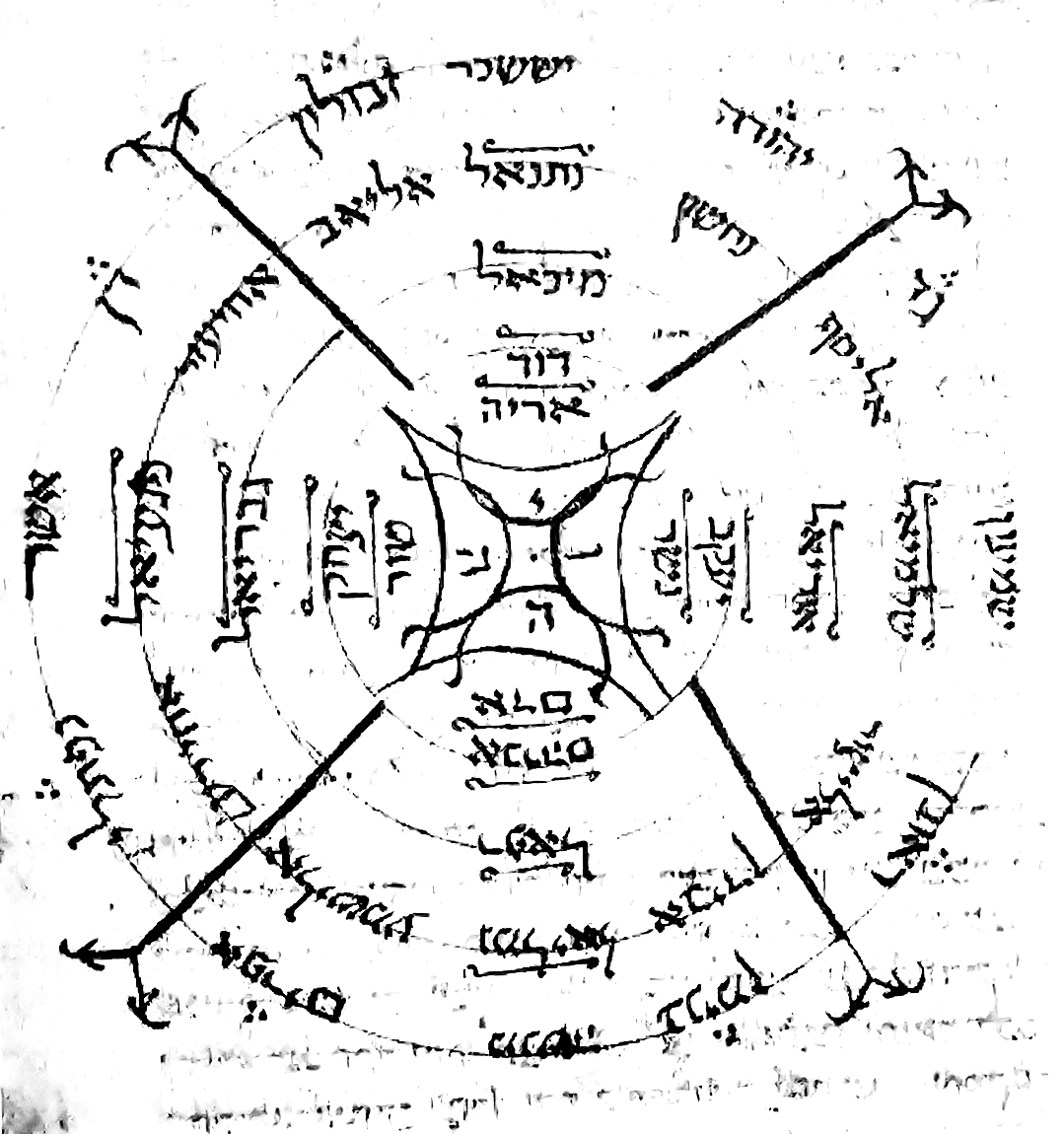
The circle of the life of the world, as drawn by Rasham.
עִיגּוּל חַיֵּי הָעוֹלָם כְּפִי שֶׁצִּיֵּירוֹ רַש״ם
And even though the Patriarchs and David descend into the Garden and to the entrance of the Cave of Machpelah (וְאַף עַל פִּי שֶׁהָאֲבוֹת וְדָוִד יוֹרְדִים לַגַּן וּלְפֶתַח מְעָרַת הַמַּכְפֵּלָה), nevertheless they possess power above (מִכָּל מָקוֹם יֵשׁ לָהֶם כֹּחַ לְמַעְלָה), and this is alluded to in the names of the princes that end with “El” (וְהוּא רָמוּז בִּשְׁמוֹת הַנְּשִׂיאִים הַנִּגְמָרִים בְּ״אל). And since every matter is upheld by two witnesses or by three (וּלְפִי שֶׁכָּל דָּבָר מִתְקַיֵּם עַל פִּי שְׁנֵי עֵדִים אוֹ עַל פִּי שְׁלֹשָׁה), just as they ascend from there - from the opening - and bring the souls of the righteous before the Holy One Blessed be He (כְּמוֹ שֶׁהֵם עוֹלִים מִשָּׁם מִן הַפֶּתַח וּמוֹלִיכִים נְשָׁמוֹת הַצַּדִּיקִים לִפְנֵי הקב״ה), each and every one of them has three witnesses (יֵשׁ לְכָל אֶחָד וְאֶחָד מֵהֶם שְׁלֹשָׁה עֵדִים), and they are the three tribes who stand with them in their camps (וְהֵם שְׁלֹשֶׁת הַשְּׁבָטִים הָעוֹמְדִים עִמָּם בְּמַחֲנוֹתֵיהֶם), and they testify regarding the soul that she is a Tzaddeket [righteous woman] (וּמְעִידִים עַל הַנֶּשָׁמָה שֶׁהִיא צַדֶּקֶת).
And for this reason it is fitting that the tribes stood in that place which is the supernal Temple, always built (וְעַל זֶה רָאוּי שֶׁעָמְדוּ הַשְּׁבָטִים בְּאוֹתוֹ מָקוֹם שֶׁהוּא בֵּית הַמִּקְדָּשׁ שֶׁל מַעְלָה הַבָּנוּי תָּמִיד), to be a testimony for Israel (לִהְיוֹת עֵדוּת לְיִשְׂרָאֵל). And when the Patriarchs take the soul to walk with her before the Holy One Blessed be He (וּכְשֶׁנוֹטְלִים הָאֲבוֹת אֶת הַנֶּשָׁמָה לָלֶכֶת עִמָּהּ לִפְנֵי הקב״ה), she says: “I rejoiced when they said to me: Let us go to the House of Hashem” (הִיא אוֹמֶרֶת: ״שָׂמַחְתִּי בְּאֹמְרִים לִי בֵּית ה׳ נֵלֵךְ) (Tehillim 122:1). And she also says: “This is my reward” (וְגַם אוֹמֶרֶת: ״זֶה הַשָּׂכָר שֶׁלִּי), for I stood in songs and praises facing this place (לְפִי שֶׁעָמַדְתִּי בְּשִׁירוֹת וּתְשְׁבָחוֹת כְּנֶגֶד זֶה הַמָּקוֹם), as it is written: “Our feet were standing within your gates, O Jerusalem” (דִּכְתִיב: ״עָמְדוּ רַגְלֵינוּ בִּשְׁעָרַיִךְ יְרוּשָׁלָ͏ִם) (Tehillim 122:2). That is to say: in synagogues and houses of study, which are the gates of heaven (רוֹצֶה לוֹמַר: בְּבָתֵּי כְנֶסֶת וּבָתֵּי מִדְרָשׁ, שֶׁהֵם שַׁעֲרֵי שָׁמַיִם), that one who prays must direct his heart always to the built Jerusalem - that is, the supernal one (שֶׁצָּרִיךְ לַמִּתְפַּלֵּל שֶׁתִּהְיֶה כַּוָּנָתוֹ תָּמִיד עַל יְרוּשָׁלַיִם הַבְּנוּיָה, אוֹתָהּ שֶׁל מַעְלָה), for there the tribes ascended (שֶׁשָּׁם עָלוּ הַשְּׁבָטִים), who testify on behalf of Israel (הַמְעִידִים עֵדוּת לְיִשְׂרָאֵל), for those who merited to ascend there and give thanks to the Name of Hashem (לָאֵלֶּה שֶׁזָּכוּ לַעֲלוֹת שָׁם לְהוֹדוֹת לְשֵׁם ה׳). For there “were set thrones for judgment” (שֶׁשָּׁם ״יָשְׁבוּ כִסְאוֹת לְמִשְׁפָּט) (Tehillim 122:5). And if a person does not have sufficient merit to stand there (וְאִם אֵין כָּל כָּךְ זְכוּת לָאָדָם לַעֲמוֹד שָׁם), he must ask from the Holy One Blessed be He to act with him in kindness (צָרִיךְ לוֹ לִשְׁאוֹל מֵהקב״ה שֶׁיַּעֲשֶׂה עִמּוֹ חֶסֶד), for the sake of His attributes (בַּעֲבוּר מִידּוֹתָיו), for His great and perfect Name (וּבַעֲבוּר שְׁמוֹ הַגָּדוֹל וְהַשָּׁלֵם), and for the merit of the Patriarchs (וּבַעֲבוּר זְכוּת הָאֲבוֹת), as it is written: “Pray for the peace of Jerusalem” (כְּדִכְתִיב: ״שַׁאֲלוּ שְׁלוֹם יְרוּשָׁלָ͏ִם) (Tehillim 122:6) “Yeru–Shalem”p1-53, complete awe and completeness (יָ״רוּ שָׁלֵם).
And the Holy One Blessed be He responds: even though you are liable in judgment (וְהקב״ה מֵשִׁיב, אַף עַל פִּי שֶׁאַתָּה חַיָּיב בְּמִשְׁפָּט), “for the sake of my brothers and companions, I shall now speak peace concerning you” ("לְמַעַן אַחַי וְרֵעָי אֲדַבְּרָה נָּא שָׁלוֹם בָּךְ) (Tehillim 122:8). And from where do we know that the tribes testify about the souls of the righteous? (וּמִנָּא לַן שֶׁהַשְּׁבָטִים מֵעִידִים עַל נְפָשׁוֹת הַצַּדִּיקִים) In the book of the Zoharp1-54 (בְּסֵפֶר הַזֹּהַר):
Rabbi Zeira and Rabbi Abba came before Rabbi Yehudah (רִ׳ זֵירָא וְרִ׳ אַבָּא אֲתּוּ לְגַבֵּי רִ׳ יְהוּדָה), they said to him (אָמְרוּ לֵיהּ): Let master tell us - the tribes, sons of Ya'akov, what are they in the World to Come? (לֵימָא לַן מַר, הַשְּׁבָטִים בְּנֵי יַעֲקֹב מַאי אִינּוּן לְעָלְמָא דְאָתֵי) He said to them (אָמַר לוֹן): The Holy One Blessed be He raised them to the heavenly academy (קֻדְשָׁא בְּרִיךְ הוּא סַלִּיק לוֹן לְמְתִיבְתָּא דְּרָקִיעָא), and every soul of the righteous that ascends (וְכָל נִשְׁמְתָא דְצַדִּיקַיָּא דְסָלִיק), they testify upon his deeds (אִינּוּן סַהֲדִין עַל עוֹבָדּוֹהִי). And this is what is written (הֲדָא הוּא דִּכְתִיב): “Jerusalem built up, like a city” (״יְרוּשָׁלַ͏ִם הַבְּנוּיָה כְּעִיר) this is the Supernal Jerusalem (זוֹ יְרוּשָׁלַ͏ִם שֶׁל מַעְלָה).
“There the tribes went up, the tribes of Yah, an ordinance for Israel” ("שֶׁשָּׁם עָלוּ שְׁבָטִים שִׁבְטֵי יָהּ עֵדוּת לְיִשְׂרָאֵל) - in order to testify about every righteous one of Israel (כְּדֵי לְהָעִיד עַל כָּל צַדִּיק וְצַדִּיק מִיִּשְׂרָאֵל). And each and every one recognizes his own and praises himself, saying: Master of the World, see what I left in the earth! (וְכָל חַד וְחַד מַכִּיר לְדִילֵיהּ וּמִשְׁתַּבַּח וְאָמַר: רִבּוֹנוֹ שֶׁל עוֹלָם, חֲזֵי מַה דְּשַׁבַּקְתִּי בְּאַרְעָא), and this is (וְדָא הוּא) “to give thanks to the Name of Hashem” ("לְהוֹדוֹת לְשֵׁם ה׳) (Tehillim 122:4).
And if it is difficult for you why the first of the four names of the princes - that is Netanel - is associated with David (וְאִם קָשֶׁה בְּעֵינֶיךָ לָמָּה הַשֵּׁם הָרִאשׁוֹן מֵאַרְבַּעַת שְׁמוֹת הַנְּשִׂיאִים, שֶׁהוּא נְתַנְאֵל, מִתְיַחֵס עִם דָּוִד), the reason is that even though kingship rightly belonged to Reuven, who was the firstborn (הַסִּיבָּה הִיא שֶׁאַף עַל פִּי שֶׁהַמְּלוּכָה רְאוּיָה לִרְאוּבֵן שֶׁהוּא הַבְּכוֹר), the Holy One Blessed be He took it from him and gave it to Yehudah (הקב״ה נְטָלָהּ מִמֶּנּוּ וּנְתָנָהּ לִיהוּדָה), and from him it came to David (וּמִמֶּנּוּ בָּא לְדָוִד). And all of this is alluded to in the name Netanel (וְהַכֹּל רָמוּז בְּשֵׁם נְתַנְאֵל), meaning: El has given him kingship (רוֹצֶה לוֹמַר: שֶׁנָּתַן לוֹ אֵל הַמְּלוּכָה), and also to his seed forever (וְגַם לְזַרְעוֹ עַד עוֹלָם), as it is written: “And shows kindness to His anointed, to David…” (דִּכְתִיב: "וְעֹשֶׂה חֶסֶד לִמְשִׁיחוֹ לְדָוִד" וְגוֹ׳) (Tehillim 18:51).
Therefore with him is Michael, the prince of Israel, who is like a king (וּלְפִיכָךְ עִמּוֹ מִיכָאֵל שַׂרוֹ שֶׁל יִשְׂרָאֵל שֶׁהוּא כְּמֶלֶךְ), and the lion, who is king of the beasts (וְאַרְיֵה שֶׁהוּא מֶלֶךְ עַל הַחַיּוֹת), and it is written: “A lion’s cub is Yehudah” (וּכְתִיב: "גּוּר אַרְיֵה יְהוּדָה) (Bereshit 49:9).
And the second name, Shelumiel (וְהַשֵּׁם הַשֵּׁנִי שְׁלוּמִיאֵל), is associated with Ya'akov (וּמִתְיַחֵס עִם יַעֲקֹב), because he is whole before El more than all the Patriarchs (לְפִי שֶׁהוּא שָׁלֵם לִפְנֵי אֵל יוֹתֵר מִכָּל הָאֲבוֹת), and therefore it is written “Shelumiel” without a vav (וְלָכֵן "שְׁלוּמִיאֵל" כְּתִיב, חָסֵר וא״ו). And with him are Uriel and the eagle (וְעִמּוֹ אוּרִיאֵל וְנֶשֶׁר); Uriel from the language of light (אוּרִיאֵל מִלְּשׁוֹן אוֹר), because from him came twelve tribes (לְפִי שֶׁיָּצְאוּ מִמֶּנּוּ שְׁנֵים־עָשָׂר שְׁבָטִים), who are the light of the world (שֶׁהֵם אוֹרוֹ שֶׁל עוֹלָם), and the eagle is superior to all the birds (וְנֶשֶׁר יֵשׁ לָהּ מַעֲלָה עַל כָּל הָעוֹפוֹת), and Ya'akov is precious before the Holy One Blessed be He more than all creatures (וְיַעֲקֹב חָשׁוּב לִפְנֵי הקב״ה מִכָּל בְּנֵי עוֹלָם).
And Gamliel, which is the third name (וְגַמְלִיאֵל, שֶׁהוּא הַשֵּׁם הַשְּׁלִישִׁי), is associated with Avraham (מִתְיַחֵס עִם אַבְרָהָם), who performed kindness with the whole world (שֶׁגָּמַל חֶסֶד עִם כָּל הָעוֹלָם). And with him are Adam and Raphael (וְעִמּוֹ אָדָם וּרְפָאֵל); Adam, because he was the first to recognize his Creator (אָדָם לְפִי שֶׁהוּא הָרִאשׁוֹן שֶׁהִכִּיר אֶת בּוֹרְאוֹ), and it is written of him: “the great man among the giants” (וּבִיהּ כְּתִיב: ״הָאָדָם הַגָּדוֹל בָּעֲנָקִים); Raphael, for through him, healing came to the world by way of Avraham (רְפָאֵל, שֶׁעַל־יְדֵי אַבְרָהָם בָּאָה הַרְּפוּאָה לָעוֹלָם), for they were sick from the illness of idolatry (שֶׁהָיוּ חוֹלִים מֵחָלִי עֲבוֹדָה זָרָה).
Pagiel, the fourth name (פַּגְעִיאֵל, שֵׁם הָרְבִיעִי), is associated with Yitzḥak (מִתְיַחֵס עִם יִצְחָק), because of the afflictions that come from Gevurah (לְסִיבַּת הַפְּגָעִים הַבָּאִים מִגְּבוּרָה), that afflicted him when he was offered upon the altar (שֶׁפָּגְעוּ בוֹ לְהַקְרִיבוֹ עַל גַּבֵּי הַמִּזְבֵּחַ). And with him are the ox and Gabriel (וְעִמּוֹ שוֹר וְגַבְרִיאֵל); the ox corresponds to the attribute of judgment (שוֹר כְּנֶגֶד מִדַּת הַדִּין), through which the Holy One Blessed be He saved him and executed His judgment (שֶׁהקב״ה הִצִּילוֹ וְעָשָׂה דִּינוֹ); Gabriel corresponds to the fire (גַּבְרִיאֵל כְּנֶגֶד הָאֵשׁ), which is alluded to there in Gevurah (הָרְמוּז שָׁם בִּגְּבוּרָה), for even though Yitzḥak was saved (כִּי אַף עַל פִּי שֶׁנִּצָּל יִצְחָק), the Holy One Blessed be He considered it as though he was burned (הקב״ה חֲשָׁבוֹ כְּמוֹ שֶׁנִּשְׂרָף), and appointed him to be in Gevurah (וּמַנָּא לֵיהּ לְמֵהֲוֵי בִּגְּבוּרָה), because he was a hero to be bound upon the altar (לְפִי שֶׁהָיָה גִּבּוֹר לְהֵעָקֵד עַל הַמִּזְבֵּחַ).
And if you say: From where do we know that these angels stand with the holy beasts in the four directions as we said (וְאִם תֹּאמַר מִנָּא לַן שֶׁהַמַּלְאָכִים הָאֵלּוּ עוֹמְדִים עִם הַחַיּוֹת הַקֹּדֶשׁ בְּאַרְבַּע רוּחוֹת כְּמוֹ שֶׁאָמַרְנוּ), come and see in the Book of the Zohar (תָּא חֲזֵי בְּסֵפֶר הַזֹּהַר):
Rabbi Shimon opened (פָּתַח רַבִּי שִׁמְעוֹן): “And when the beasts went, the wheels went with them; and when the beasts were lifted up…” etc. (״וּבְלֶכֶת הַחַיּוֹת יֵלֵכוּ הָאוֹפַנִּים אֵצֶלָם, וּבְהִנָּשֵׂא הַחַיּוֹת״ גוֹ). “And when the beasts went, they went in the upper brightness” (וּבְלֶכֶת הַחַיּוֹת בְּקוּזְפִירָא דְּלְעֵילָּא הֲווֹ אָזְלֵי), for if you say that this is above above - not so - rather below (דְּאִי תֵּימָא דְּהַאי לְעֵילָּא לְעֵילָּא, לָאו, לְתַתָּא). But rather in the form: this one before the faces, and this one behind the faces (אֶלָּא כְּגוֹונָא הַאי מִקַּמֵּי אַנְפִּין, וְהַאי לְבָתַר אַנְפִּין). A wind from four winds (זִיקָא מֵאַרְבַּע זִיקִין), in four dwellings (בְּאַרְבַּע מְדוֹרִין), and in four sides (וּבְאַרְבַּע סְטָרִין), in the radiance that you [angels] come with, from the quills of radiant faces (בְּזִיוְוָן דְּאַתְיֵיתוּן בְּקוֹלְמִיטִין דְּאַנְפִּין נְהִירִין). Therefore in the appearance of an eagle (בְּגִין כָּךְ כְּעֵין נֶשֶׁר), in the likeness of the beasts that are four corners (כְּמַרְאֵה הַחַיּוֹת דְּאִינּוּן אַרְבַּע זָוְיָין), banners revealed (דְּגָלִין פְּרִישִׁין): lion, eagle, ox, and man (אַרְיֵה, נֶשֶׁר, שׁוֹר, וְאָדָם) - for all are encompassed in the four angels that rule (דְּכָלִיל כָּלְהוֹ ד' מַלְאָכִין דְּשַׁלְּטִין) and all are encompassed together (וּכְלִילִין כֻּלָּא). The first banner bears the sign: lion - Michael (דְּגָלָא קַדְמָאָה מַשְׁרַיָּא מִזְיָנָא: אַרְיֵה, מִיכָאֵל), marked in the separation of the banner on the right - east (רְשִׁים בְּפְרִישׁוֹ דְּגָלָא פְּרִישָׁא לִימִינָא, מִזְרָח [...]). The second banner bears the sign: eagle - Uriel - south (דְּגָלָא תִּנְיָינָא מַשְׁרַיָּא מִזְיָנָא: נֶשֶׁר, אוּרִיאֵל, דָּרוֹם [...]). The third banner: ox - Gabriel - north (דְּגָלָא תְּלִיתָאָה: שׁוֹר, גַּבְרִיאֵל, צָּפוֹן [...]). The fourth banner: man - Raphael - west (דְּגָלָא רְבִיעָאָה: אָדָם, רְפָאֵל, מַעֲרָב), with healing on the side of man (בְּהַדְיֵיהּ אַסְוָותָא בִּסְטְרָא דְּאָדָם [...]). And if you say, from where do we know that these angels stand with the holy Chayot in the four directions as we have said, come and see in the Book of the Zohar (וְאִם תֹּאמַר מִנָּא לַן שֶׁהַמַּלְאָכִים הָאֵלּוּ עוֹמְדִים עִם הַחַיּוֹת הַקֹּדֶשׁ בְּאַרְבַּע רוּחוֹת כְּמוֹ שֶׁאָמַרְנוּ, תָּא חֲזֵי בְּסֵפֶר הַזֹּהַר):
Rabbi Shim'on opened, “And when the Chayot went, the Ofanim went beside them, and when the Chayot were lifted…” etc. (פָּתַח רַבִּי שִׁמְעוֹן, ״וּבְלֶכֶת הַחַיּוֹת יֵלֵכוּ הָאוֹפַנִּים אֵצְלָם, וּבְהִנָּשֵׂא הַחַיּוֹת״ וגו׳). And when the Chayot went, they went in the brightness above (וּבְלֶכֶת הַחַיּוֹת בְּקוּזְפִּירָא דְּלְעֵילָּא הֲוֵו אָזְלֵי), for if you say that this is above above, no, [rather,] below (דְּאִי תֵימָא דְּהַאי לְעֵילָּא לְעֵילָּא, לָאו, לְתַתָּא). Rather, in this manner: this one before the face, and this one after the face (אֶלָּא כְּגוָונָא הָא דְּקַמֵּי אַנְפִּין, וְהָא לְבַתַר אַנְפִּין). A wind from four winds, in four abodes, and in four directions, in the brightness wherein you come with quills of luminous faces (זִיקָא מֵאַרְבַּע זִיקִין בְּאַרְבַּע מְדוֹרִין וּבְאַרְבַּע סִטְרִין בְּזִיוִין דְּאַתְּיֵיתוּן בְּקוּלְמִיטִין דְּאַנְפִּין נְהִירִין). Therefore, like the appearance of the eagle (בְּגִין כָּךְ כְּעֵין נֶשֶׁר), like the vision of the Chayot, who are four corners (כְּמַרְאֵה הַחַיּוֹת דְּאִינּוּן אַרְבַּע זַוְיֵין), revealed and separated: lion, eagle, ox, and man (דְּגַלְיֵין פְּרִישָׁן אַרְיֵה, נֶשֶׁר, שׁוֹר, וְאָדָם), which all are encompassed in four angels that dominate and include all (דְּכָלִיל כֹּלְהוֹ ד׳ מַלְאָכִים דְּשָׁלְטִין וּכְלִילָן כֻּלָּא). The first banner rests from the array of the lion: Mikha’el, head over the separation of the eastern banner (דְּגָלָא קַדְמָאָה מִשְׁרַיָּא מִזְּיֵינָא אַרְיֵה, מִיכָאֵל, רֵאשִׁים בְּפְרִישׁוּ דְּגָלָא פְּרִישָׁא לִימִינָא, מִזְרָח [...]).
The second banner rests from the array of the eagle: Uri’el, south (דְּגָלָא תְּנִיָּינָא מִשְׁרַיָּא מִזְּיֵינָא נֶשֶׁר, אוּרִיאֵל, דָּרוֹם [...]).
The third banner: ox-Gavri’el, north (דְּגָלָא תְּלִיתָאָה שׁוֹר, גַּבְרִיאֵל, צָפוֹן [...]).
The fourth banner: man-Rafa’el, west, with the medicine in the side of man (דְּגָלָא רְבִיעָאָה אָדָם, רְפָאֵל, מַעֲרָב, בַּהֲדֵיהּ אֲסְוָותָא בְּסִטְרָא דְּאָדָם [...]).p1-55 And from the circle that is before you, you will understand everything well (וּמִתּוֹךְ הָעִגּוּל אֲשֶׁר לְפָנֶיךָ תָּבִין הַכֹּל הֵיטֵב), for in these matters no person has permission to speak at length (לְפִי שֶׁבְּאֵלּוּ הָעִנְיָנִים אֵין רְשׁוּת לְשׁוּם אָדָם לְדַבֵּר בָּאֹרֶךְ).
And even so, you must know that within the secrets we have spoken are other secrets, great and awesome (וְעִם כָּל זֶה, יֵשׁ לְךָ לָדַעַת שֶׁבְּתוֹךְ הַסּוֹדוֹת שֶׁאָמַרְנוּ יֵשׁ סוֹדוֹת אֲחֵרוֹת, גְּדוֹלוֹת וְנוֹרָאוֹת). And regarding the guarding that is above in the Merkavah, we have already explained (וּבְשְׁמִירָה שֶׁשּׁוֹמְרִים לְמַעְלָה בַּמֶּרְכָּבָה כְּבָר פֵּרַשְׁנוּ). And one must look-why is guarding needed above? (וְאִית לְאִסְתַּכְּלָא, מַאי צָרִיךְ לְמַעְלָה שְׁמִירָה) For since His will, may He be blessed, cannot be changed (שֶׁבְּהִיוֹת שֶׁרְצוֹנוֹ יִתְבָּרַךְ אֵין לְשַׁנּוֹתוֹ), if He wishes that no harm should come to the souls of the Tzaddikim (אִם הוּא יִרְצֶה שֶׁלֹּא יָבוֹא שׁוּם נֵזֶק לְנִשְׁמוֹת הַצַּדִּיקִים), then no other guarding is necessary (אֵין צָרִיךְ שְׁמִירָה אַחֶרֶת).
Rather, here the guarding is a matter of honor (אֶלָּא, בְּכָאן הַשְּׁמִירָה הִיא דֶּרֶךְ כָּבוֹד), like the custom of guarding the royal palace (כְּמִנְהַג שְׁמִירַת פַלְטְרִין שֶׁל מֶלֶךְ), who guard the king’s treasuries and secrets (שֶׁשּׁוֹמְרִים גְּנָזֵי הַמֶּלֶךְ וְסִתְרָיו).
And how many hidden things, and how many sealed levels, and secrets of secrets there are in the upper chambers, one distinct from the other (וְכַמָּה נִסְתָּרוֹת וְכַמָּה מַדְרֵגוֹת סְתוּמוֹת וְרָזֵי דְּרָזִין יֵשׁ בְּחֲצֵרוֹת שֶׁל מַעְלָה, שֶׁנִּינָן דָּא מִן דָּא). Part of them are revealed to the faithful Tzaddikim in the house of the Holy One Blessed Be He, according to their level (חֵלֶק מֵהֶם נִגְלוֹת לַצַּדִּיקִים הַנֶּאֱמָנִים בְּבֵיתוֹ שֶׁל הקב״ה כְּפִי מַדְרֵגָתָם), and part of them are hidden from the eyes of all living and remain for Him, may He be blessed, alone (וְחֵלֶק מֵהֶם נִסְתָּרוֹת מֵעֵינֵי כָּל חַי וְנִשְׁאֲרוּ לוֹ יִתְבָּרַךְ לְבַדּוֹ).
And the revealed things, which man has permission to look upon, were not revealed to the nations of the world, but to Yisrael alone, in the merit of the Torah (וְהַנִּגְלוֹת שֶׁיֵּשׁ רְשׁוּת לִבְנֵי אָדָם לְאִסְתַּכְּלָא בְּהוֹן לָא נִגְלוּ לְאֻמּוֹת הָעוֹלָם אֶלָּא לְיִשְׂרָאֵל לְבַדּוֹ, בִּזְכוּת הַתּוֹרָה). And this is what the verse says, “The hidden things belong to Hashem our God” (כַּדְכְּתִיב: ״הַנִּסְתָּרֹת לַה׳ אֱלֹהֵינוּ) [Deuteronomy 29:28], meaning, the matters hidden from all eyes, that no living being has permission to gaze upon, are for Hashem our God (רוֹצֶה לוֹמַר, הַדְּבָרִים הַנִּסְתָּרִים מֵעֵין כָּל, שֶׁאֵין רְשׁוּת לְשׁוּם חַי לְהַבִּיט בָּהֶם, הֵם לַה׳ אֱלֹהֵינוּ). “But the revealed things are for us and for our children forever” (וְהַנִּגְלוֹת לָנוּ וּלְבָנֵינוּ עַד עוֹלָם), meaning, those matters that can be revealed shall not be revealed to the nations of the world, but only to us and our children (רוֹצֶה לוֹמַר, אוֹתָם הַדְּבָרִים שֶׁאֶפְשָׁר שֶׁיִּהְיוּ נִגְלִים לֹא יִהְיוּ גְּלוּיִים לְאֻמּוֹת הָעוֹלָם אֶלָּא לָנוּ וּלְבָנֵינוּ).
And why is this so? Because we and our children fulfill the commandments of the Torah that the Holy One Blessed Be He gave us (וְלָמָּה לְפִי שֶׁאֲנַחְנוּ וּבָנֵינוּ עוֹשִׂים מִצְוֺת הַתּוֹרָה שֶׁנָּתַן לָנוּ הקב״ה). And this is [the meaning of the verse] “to perform all the words of this Torah” (וְזֶהוּ "לַעֲשׂוֹת אֵת כָּל דִּבְרֵי הַתּוֹרָה הַזֹּאת) [Deuteronomy 29:28], for by the merit of fulfilling and guarding the words of the Torah, we attain this level (כִּי בִּזְכוּת לַעֲשׂוֹת וְלִשְׁמוֹר דִּבְרֵי הַתּוֹרָה יֵשׁ לָנוּ זֹאת הַמַּעֲלָה). And proof of our words-come and see in the Book of the Zohar (וּרְאָיָה לִדְבָרֵינוּ, תָּא חֲזֵי בְּסֵפֶר הַזֹּהַר):
In the lower Gan Eden, there is one place, hidden and concealed, that is not known (בְּגַנְתָּא דְעֵדֶן דְּלְתַתָּא אִית אֲתַר חַד גָּנִיז וּטְמִיר דְּלָא אִתְיְדַע [...]), and within it are hidden a thousand palaces of yearning (וּבֵיהּ גְּנִיזִין אֶלֶף הֵיכָלִין דְּכִסּוּפִין), and no one enters them except Mashiach (וְלֵית מַאן דְּעָיֵיל בְּהוֹן בַּר מְשִׁיחַ [...]). And Mashiach stands upon them, and [also] over many forces and legions of the souls of the Tzaddikim who are there (וּמְשִׁיחַ קָאֵים עֲלַיְיהוּ, וְעַל כַּמָּה חֵילִין וּמְשִׁרְיָין דִּנְשָׁמָתִין דְּצַדִּיקַיָּא תַּמָּן), and at times and on Sabbaths, Mashiach enters that place to delight in all those palaces (וּבִזְמַנִּין וּבְשַׁבָּתֵי מְשִׁיחַ עָאל בַּהֲהוּא אֲתַר, לְאִשְׁתַּעֲשְׁעָא בְּכָל אִינּוּן הֵיכָלִין).
Within and further within all of those palaces, there is another place, hidden and concealed, completely unknown, and it is called “Eden” (לְגוֹ לְגוֹ מִכָּל אִינּוּן הֵיכָלִין אִית אֲתַר אֲחֲרָא טְמִיר וְגָנִיז דְּלָא אִתְיְדַע כְּלָל וְאִתְקְרֵי עֵדֶן), and there is no one who can know it (וְלֵית מַאן דְּיָכִיל לְמִנְדַּע בֵּיהּ). And Mashiach is hidden outside the surrounding walls of that place (וּמְשִׁיחַ אִתְגְּנִיז לְבַר סְחָרַנְיָיהּ דְּהַהוּא אֲתַר), until there is revealed to him one place that is called “The Bird’s Nest” (עַד דְּאִתְגְּלֵי לֵיהּ חַד אֲתַר דְּאִתְקְרֵי קֵן צִיפּוֹר), and that is the place about which that Bird cries out, aroused in the Garden of Eden each day (וְאִיהוּ אֲתַר דְּכָרֵיז עֲלֵיהּ הַהוּא צִיפּוֹר דְּאִתְעֲרַ בְּגַנְתָּא דְעֵדֶן בְּכָל יוֹמָא). And in that place are engraved the images of all the other nations, who assembled against Yisrael to oppress them (וּבְהַהוּא אֲתַר מְרַקְּמָן דִּיוּקְנִין דְּכָל שְׁאָר עַמִּין, דְּאִתְכְּנְשׁוּ עֲלַיְיהוּ דְּיִשְׂרָאֵל לְאַבָּאָשָׁא לוֹן).
He [Mashiach] entered that place, lifted his eyes, and saw the Patriarchs entering at the destruction of the House of God (עָאַל בְּהַהוּא אֲתַר, זָקִיף עֵינֵיהּ וְחֲזֵי אַבְהָן דְּעָאלִין בְּחֻרְבָּן בֵּית אֱלָהָא), until he beheld Rachel, whose tears were upon her face (עַד דְּחֲזֵי לְרָחֵל דִּדְמַעָהּ בְּאַנְפָּהּ), and Kudsha Berikh Hu comforts her (וּקֻדְשָׁא בְּרִיךְ הוּא מְנַחֵם לָהּ), and she refuses to accept comfort, as it is said: “She refuses to be comforted for her children” (וְלָא צְבִיאָת לְקַבָּלָא תַּנְחוּמִין, כְּמָה דְּאִתְּאֲמַר: "מֵאַנָה לְהִנָּחֵם עַל בָּנֶיהָ) [Jeremiah 31:14].
Then Mashiach lifts his voice and weeps (כְּדֵין מְשִׁיחַ אֲרִים קָלֵיהּ וּבָכֵי), and the whole Garden of Eden trembles (וְאִתְּזִיעַעַ כָּל גַּנְתָּא דְעֵדֶן), and all those Righteous who are there cry out and weep a second time (וְכָל אִינּוּן צַדִּיקַיָּא דְּתַמָּן גָּעוֹ וּבָכוֹ זִמְנָא תִּנְיָינָא). And that firmament above the Garden trembles (וְאִתְּזִיעַעַ הַהוּא רָקִיעַ דְּעַל גַּבֵּי גַּנְתָּא), and one thousand five hundred myriad supernal camps (אֶלֶף וַחֲמֵשׁ מֵאָה רְבוָוא מִשְׁרְיָין עִלָּאִין), until it reaches the inner Throne above (עַד דְּמָטֵי לְגוֹ כֻּרְסְיָא עִילָּאָה). Then Kudsha Berikh Hu signals to that Bird (כְּדֵין קֻדְשָׁא בְּרִיךְ הוּא רָמֵיז לְהַהוּא צִפְּרָא), and she enters her nest (וְעָאַל בְּהַהוּא קֵן דִּילָהּ), and sits beside Mashiach (וְיָתְבָא לְגַבֵּי מְשִׁיחַ), and recites what she recites (וְקָרֵי מַה דְּקָרֵי), and arouses what she arouses (וְאִתְעֲרַ מָה דְּאִתְעֲרַ).
Until from within the Holy Throne, that Bird’s Nest and Mashiach are proclaimed three times (עַד דְּמִגּוֹ כֻּרְסְיָא קַדִּישָׁא אִתְקְרֵי תְּלָת זִמְנִין הַהוּא קֵן צִיפּוֹר וּמְשִׁיחַ), and all of them ascend on high (וְכוּלְּהוֹ סַלְקִין לְעֵילָּא), and Kudsha Berikh Hu commands them to remove the wicked kingdom from the world by the hand of Mashiach (וְאוֹמֵי לוֹן קֻדְשָׁא בְּרִיךְ הוּא לְאַבְּרָא מַלְכוּ חַיְּיבָא מִן עַלְמָא עַל יְדָא דִּמְשִׁיחַ), and to execute vengeance for Yisrael for all the goodly punishments that Kudsha Berikh Hu is prepared to bring upon the nations (וּלְאִנְקְמָא נִקְמִין דְּיִשְׂרָאֵל בְּכָל אִינּוּן טָבוּן דְּזַמִּין קֻדְשָׁא בְּרִיךְ הוּא לְמֶעְבַּד לְעַמִּין).
Then the Bird’s Nest and Mashiach return to their place (וְתָב הַהוּא קֵן צִיפּוֹר וּמְשִׁיחַ לְדוּכְתֵיהּ), and Mashiach returns and is hidden in that place as before (וְשָׁב מְשִׁיחַ וְאִתְגְּנִיז גּוֹ הַהוּא אֲתַר כְּמִלְּקַדְמִין). (Shemot 8a) And if you understand this teaching well, deep things hinted at within it will be revealed to you (וְאִם תָּבִין זֶה הַמַּאֲמָר הֵיטֵב יִתְגַּלּוּ לְךָ דְּבָרִים עֲמוּקִים הַנִּרְמָזִים בּוֹ), for they are sealed and closed, and bound with the end of days of the Holy One Blessed Be He (כִּי סְתוּמִים וַחֲתוּמִים הֵמָּה וּקְשׁוּרִים בְּקֵץ יָמֵינוּ שֶׁל הקב״ה), until the day breathes and the shadows flee away, which are tied to the end of all flesh (עַד שֶׁיִּפוּחַ הַיּוֹם וְנָסוּ הַצְּלָלִים הַקְּשׁוּרִים בְּקֵץ כָּל בָּשָׂר). Strength from the left brings disgrace upon Yisrael and upon all the dominions of the mighty (עוֹז מִן הַשְּׂמֹאל גּוֹרֵם זִילוּת לְיִשְׂרָאֵל וּלְכָל שַׁלְטֵי הַגִּבּוֹרִים), and then the wise shall understand (וְאָז הַמַּשְׂכִּילִים יָבִינוּ).
And even so, I shall explain to you a little of the matter of the teaching (וְעִם כָּל זֶה אֲפָרֵשׁ לְךָ מְעַט מֵעִנְיַן הַמַּאֲמָר). And that which it said: “Until from within the Holy Throne, that Bird’s Nest and Mashiach are proclaimed three times, and all ascend above” (וְהַהוּא דַּאֲמַר: "עַד דְּמִגּוֹ כּוּרְסְיָא קַדִּישָׁא אִתְקְרֵי תְּלַת זִמְנִין הַהוּא קֵן צִפּוֹר וּמְשִׁיחַ, וּכְלָּא סַלְקִין לוֹן לְעֵילָּא), one must look: why did it say three times-no more and no less? (אִית לְאִסְתַּכֲּלָא, לָמָּה אָמַר תְּלַת זִמְנִין, לֹא פָּחוֹת וְלֹא יוֹתֵר). Rather, certainly thus it is (אֶלָּא בְּוַדַּאי הָכִי הוּא). When the Patriarchs are at the destruction of the House of God (בְּהִיוֹת שֶׁהָאֲבוֹת בַּחֻרְבָּן בֵּית אֱלָהָא), they always hope for the salvation of Hashem by the hand of Mashiach ben David (הֵם מְקַוִּים תָּמִיד יְשׁוּעַת ה׳ בְּיַד מָשִׁיחַ בֶּן דָּוִד), to bring freedom to His children at that time when the spirit of Binah rests upon him (לִהְיוֹת דְּרוֹר לְבָנָיו בָּאוֹתָהּ הַשָּׁעָה שֶׁיָּנוּחַ עָלָיו רוּחַ בִּינָה). Which is the Bird, as the teaching said, that is aroused every day in the Garden (שֶׁהִיא הַצִּפּוֹר שֶׁאָמַר הַמַּאֲמָר דְּמִתְעָר כָּל יוֹמָא בְּגַנְתָּא), for this Bird has no perfect rest except in the House of David (לְפִי שֶׁזֶּה הַצִּפּוֹר אֵין לָהּ מְנוּחָה שְׁלֵמָה אֶלָּא בְּבֵית דָּוִד), which is Beit Lechem (שֶׁהִיא בֵּית לֶחֶם), meaning, the house worthy to receive all bread and nourishment in the world (רוֹצֶה לוֹמַר, הַבַּיִת הָרְאוּיָה לְקַבֵּל כָּל הַלֶּחֶם וְכָל הַמָּזוֹן שֶׁבָּעוֹלָם).
For everything comes from her, who is the Mother brooding over all who enter the world (שֶׁהַכֹּל בָּא מִמֶּנָּה שֶׁהִיא הָאֵם הָרוֹבֶצֶת עַל כָּל בָּאֵי עוֹלָם), and this is as it is written, “For if you call to Binah”p1-56 (וְדָא הוּא דִּכְתִיב: ״כִּי אִם לַבִּינָה תִקְרָא) [Proverbs 2:3]. Therefore she is aroused every day to seek her home and her rest before the Holy One Blessed Be He (לְכָךְ הִיא מִתְעָרָה כָּל יוֹם לְבַקֵּשׁ בֵּיתָהּ וּמְנוּחָתָהּ לִפְנֵי הקב״ה). And when she attains the House-which is the House of David-there will be freedom in the land and for all its inhabitants (וּבְהַשִּׂיג הַבַּיִת שֶׁהִיא בֵּית דָּוִד יִהְיֶה דְּרוֹר בָּאָרֶץ וּלְכָל יוֹשְׁבֶיהָ). This is what is written, “Even the bird has found a home, and the ‘Dror’ a nest for herself” (הֲדָא הוּא דִּכְתִיב: ״גַּם צִפּוֹר מָצְאָה בַיִת וּדְרוֹר קֵן לָהּ) [Psalms 84:4], meaning, she has found the house and made it freedom, and attained her nest (רוֹצֶה לוֹמַר, מָצְאָה הַבַּיִת וַעֲשָׂאָה דְּרוֹר וְהִשִּׂיגָה הַקֵּן שֶׁלָּהּ).
For she is now hidden, and therefore people do not know the path of supernal Binah (לְפִי שֶׁהִיא עַתָּה גְּנוּזָה, וְלָכֵן בְּנֵי אָדָם אֵינָם יוֹדְעִים דֶּרֶךְ בִּינָה עִילָּאָה), until it is revealed to Mashiach for their good, and to unify them in His service, may He be blessed (עַד דְּאִתְגַלֵּי לְמְשִׁיחַ לְטוּבָתָם וּלְיַחֲדָם בַּעֲבוֹדָתוֹ יִתְבָּרַךְ). For then the earth shall be filled with knowledge of Hashem, to be One and His Name One upon the lips of all nations (כִּי אָז יִמָּלֵא הָאָרֶץ דֵּעָה אֶת ה׳, לִהְיוֹת אֶחָד וּשְׁמוֹ אֶחָד בְּפִי כָּל הָעַמִּים).
And this is what the teaching said, “And there is no one who can know it, and Mashiach is hidden outside the walls of that place, until there is revealed to him one place that is called ‘Bird’s Nest’” (וְזֶהוּ שֶׁאָמַר הַמַּאֲמָר: ״וְלֵית מַאן דְּיָכִיל לְמִנְדַּע בֵּיהּ, וּמְשִׁיחַ אִתְגְּנִיז לְבַר סְחָרַנְיָיהּ דְּהַהוּא אֲתַר, עַד דְּאִתְגְּלֵי לֵיהּ חַד אֲתַר דְּאִתְקְרֵי קֵן צִפּוֹר). And the Patriarchs seek each day the salvation of their children (וְהָאֲבוֹת דּוֹרְשִׁים בְּכָל יוֹם יְשׁוּעָתָם שֶׁל בְּנֵיהֶם). And from that place where they stand surrounding the Throne, each one of them calls out to that Bird’s Nest and to Mashiach (וּמֵאוֹתוֹ הַמָּקוֹם שֶׁהֵם עוֹמְדִים סָבִיב לַכִּסֵּא, כָּל אֶחָד מֵהֶם קוֹרֵא לַהוּא קֵן צִפּוֹר וּלְמָשִׁיחַ). And this is the “three times” (וְדָא הִיא תְּלַת זִמְנִין).
And the Bird and Mashiach come, and they ascend above (וּבָאִים הַצִּפּוֹר וּמְשִׁיחַ, וְסָלְקִין לוֹן לְעֵילָּא), to see whether it is His will, may He be blessed, to join them together-the Bird with Mashiach p1-57(לִרְאוֹת אִם יֵשׁ רְצוֹנוֹ יִתְבָּרַךְ לְחַבְּרָם יַחַד, הַצִּפּוֹר עִם מְשִׁיחַ). And the Holy One Blessed Be He says to them (וְהקב״ה אוֹמֵר לוֹן), “To remove the wicked kingdom from the world (לְאַבְּרָא מַלְכוּ חַיְּיבָא מִן עַלְמָא), by the hand of Mashiach (עַל יְדָא דְמְשִׁיחַ), and to exact vengeance for Yisrael (וּלְאִנְקְמָא נִקְמִין דְּיִשְׂרָאֵל), for all those abundant good things (בְּכָל אִינּוּן טָבוּן סַגִּיאִין), that the Holy One Blessed Be He is prepared to do to the nations” (דְּזַמִּין קֻדְשָׁא בְּרִיךְ הוּא לְמֶעְבַּד לְעַמִּין). The meaning is (הַכַּוָּנָה), that His will, may He be blessed (כִּי רְצוֹנוֹ יִתְבָּרַךְ), is to remove the rule of wickedness from the earth (לְהַעֲבִיר מֶמְשֶׁלֶת זְדוֹן מִן הָאָרֶץ), by the hand of Mashiach (עַל יְדֵי מָשִׁיחַ). But it is necessary (אֶלָּא צָרִיךְ), that their measure be filled (שֶׁיִּתְמַלֵּא סְאַתָם), as in the matter of (כְּעִנְיַן), “For the iniquity of the Amorite is not yet full” (כִּי לֹא שָׁלֵם עֲוֺן הָאֱמֹרִי עַד הֵנָּה) [Bereshit 15:16].
For the Holy One Blessed Be He constantly bestows good upon the nations of the world (לְפִי שֶׁהקב״ה תָּמִיד מֵיטִיב לְאֻמּוֹת הָעוֹלָם), and showers them with great goodness (וּמַשְׁפִּיעַ לָהֶם טוֹבוֹת גְּדוֹלוֹת), and they anger Him (וְהֵם מַכְעִיסִין אוֹתוֹ). And the one who sins against his Creator (וְהַחוֹטֵא כְּנֶגֶד בּוֹרְאוֹ), is fitting to receive a great punishment (רָאוּי לְקַבֵּל עוֹנֶשׁ גָּדוֹל), in proportion to the greatness of the goodness that He, may He be blessed, has done for him (לְעֵרֶךְ גּוֹדֶל הַטּוּבוֹת שֶׁעָשָׂה יִתְבָּרַךְ עִמּוֹ).
Therefore, the nations of the world will in the future receive vengeance upon them (וְעַל כֵּן עֲתִידִין אֻמּוֹת הָעוֹלָם לֵיעָשׂוֹת בָּהֶם נְקָמָה), according to the measure of the goodness (כְּעֵרֶךְ הַטּוּבוֹת), that the Holy One Blessed Be He prepared for them in this world (שֶׁהֵזְמִין לָהֶם הקב״ה בָּעוֹלָם הַזֶּה), after they completed receiving them (אַחֲרֵי שֶׁהִשְׁלִימוּ לְקַבֵּלָם). And this is: “To exact vengeance for Yisrael for all those abundant good things (וְזֶהוּ: "לְאִנְקְמָא נִקְמִין דְּיִשְׂרָאֵל בְּכָל אִינּוּן טָבוּן סַגִּיאִין), that the Holy One Blessed Be He is prepared to do to the nations” (דְּזַמִּין קֻדְשָׁא בְּרִיךְ הוּא לְמֶעְבַּד לְעַמִּין). And until these goodnesses are completed (וְעַד שֶׁלֹּא יִשְׁלְמוּ אֵלּוּ הַטּוּבוֹת), it is not possible to unite the Bird with Mashiach (אִי אֶפְשָׁר לְיַחֵד הַצִּיפּוֹר עִם הַמָּשִׁיחַ). And this is: “And the Bird’s Nest and Mashiach return to their place” (וְזֶהוּ: ״וְתָב הַהוּא קֵן צִפּוֹר וּמְשִׁיחַ לְדוּכְתֵיהּ), until the days of reckoning arrive (עַד שֶׁיָּבוֹאוּ יְמֵי הַפְּקֻדָּה). And since this vengeance is by the hand of David, it is exceedingly great (וּלְהִיוֹת הַנְּקָמָה הַזֹּאת עַל יְדֵי דָוִד הִיא גְּדוֹלָה עַד מְאֹד), for they shall be lost from the earth and from beneath the heavens (דְּיֵאָבְדוּ מִן אַרְעָא וּמִן תַּחוֹת שְׁמַיָּא), and they shall descend to the pit of destruction (וְיֵרְדוּ לְבְאֵר שַׁחַת), for all who descend there are cut off (שֶׁכָּל הַיּוֹרְדִין שָׁם הֵם נִכְרָתִים), like that hatchet of the son of the carpenter (Bar Nagra) (כְּהַהִיא חֲצִינָא דְּבַר נַגָּרָא), which falls back a second time (דְּהַא שַׁב שְׁנִי דְּנָפִיל), as stated in the chapter “He Who Sells the Ship” p1-58(כְּדְאִיתָא בְּפֶרֶק הַמּוֹכֵר אֶת הַסְּפִינָה), where a bat kol [heavenly voice] came forth and said: “Do not descend” (דְּנָפַק בַּת קַל וְאָמַר: לָא תֵּנְחִיתוּ).
What are “seven years”? These are seven days, which are seven thousand years (מַאי שַׁב שְׁנִין אִלֵּין שִׁבְעָה יוֹמִין דְּאִינּוּן שִׁבְעָה אֲלָפִים), as it is written: “For a thousand years in Your eyes are as a day gone by” (כְּדִכְתִיב: ״כִּי אֶלֶף שָׁנִים בְּעֵינֶיךָ כְּיוֹם אֶתְמוֹל״) [Psalms 90:4].
And what is Bar Nagra [the son of the carpenter] (וּמַאי ״בַּר נַגָּרָא״)? It is the power of the lion in his right hand—the axe (הַחֲצִינָא)—to cut off the branches of those liable from the Tree of Life (כֹּחַ הָאֲרִיֵּה שֶׁבְּיָדוֹ הַיְּמָנִיתָא, הַחֲצִינָא, לִכְרוֹת עֲנָפֵי הַחַיָּבִין מֵעֵץ הַחַיִּים). And proof of the matter is in the Zohar p1-59(וּרְאָיָה לַדָּבָר בְּסֵפֶר הַזֹּהַר):
The lion stretches forth his right hand (אֲרִיֵּה אוֹשִׁיט יְדֵיהּ יְמִינָא), gathers all his forces to him (כְּנִישׁ לְכָל חֵילֵיהּ לְגַבֵּיהּ), three hundred and seventy thousand lions (תְּלַת מֵאָה וּשְׁבְעִין אַלְפִין אֲרִיְוָותָא), his entourage are the lions (סוֹחֲרָנְיָיהּ דְּהַהוּא אֲרִיֵּה), and he is among them at the center (וְאִיהוּ בֵּינַיְיהוּ בַּאֶמְצָעִיתָא). When that lion approaches (כְּד גָּעֵי הַהוּא אֲרִיֵּה), the heavens shake (מִזְדַּעְזְעִין רְקִיעִין), and all forces and hosts tremble at his awe (וְכָל חֵילִין וּמִשְׁרַיָין מִזְדַּעְזְעִין מִדְּחִילוּ דִּילֵיהּ). From that voice, the River of Fire ignites (מִן הַהוּא קָלָא נַהַר דִּי־נוּר מִתְלַהֲטָא), and descends one thousand and five hundred levels of Gehinnom below (וְנָחֵית בְּאַלֶף וַחֲמֵשׁ מֵאָה דַּרְגִּין דְּגֵיהִנֹּם לְתַתָּא). Then all the guilty of Gehinnom shake (כְּדֵין כָּלֵהוֹ חַיָּיבִין דְּגֵיהִנֹּם מִזְדַּעְזְעִין), and fire burns in them (וּמַלְהֲטִין אֶשָּׁא). And regarding this it is written, “The lion roars-who shall not fear?” (וְעַל דָּא כְּתִיב: "אֲרִיֵּה שָׁאָג מִי לֹא יִירָא) [Amos 3:8].
And to this the Psalmist intended when he said, “Your hand will find all Your enemies” (וּלְזֶה כִּיוֵּן הַמְשׁוֹרֵר בְּאֲמָרוֹ: ״תִּמְצָא יָדְךָ לְכָל אֹיְבֶיךָ) [Psalms 21:9]. Which hand? It is that which is said about it, “Your hand upon the neck of Your enemies” (אֵיזוֹ יָד הִיא אוֹתָהּ שֶׁנֶּאֱמַר עָלֶיהָ: ״יָדְךָ בְּעֹרֶף אֹיְבֶיךָ) [Bereshit 49:8], which is the right hand, as stated at the end of the verse, “Your right hand will find those who hate You” (שֶׁהִיא יְמִינָךָ, בְּסִיפֵּיהּ דְּקְרָא: ״יְמִינְךָ תִּמְצָא שֹׂנְאֶיךָ) [Psalms 21:9]. What does it mean “will find”? To cut them off from the Land of the Living and to bring them down to She’ol beneath (לְמָה תִּמְצָא לְהַכְרִיתָם מֵאֶרֶץ הַחַיִּים וּלְהוֹרִידָם לִשְׁאוֹל תַּחְתִּיָּה), as adjacent in the verse: “You shall make them as a fiery furnace” (כְּדִסְמִיךְ: "תָּשִׁיתֵמוֹ כְּתַנּוּר אֵשׁ) [Psalms 21:10]; “Their fruit You shall destroy from the earth” (וּ״פִּרְיָמוֹ מֵאֶרֶץ תְּאַבֵד) [Psalms 21:11]. And why? “Because they intended evil against You” (וְלָמָּה ״כִּי נָטוּ עָלֶיךָ רָעָה) [Psalms 21:12], meaning, they repaid their Creator evil in return for good (הַכַּוָּנָה: שֶׁגָּמְלוּ כְּנֶגֶד בוֹרְאָם רָעָה תַּחַת טוֹבָה).
And that which our Sages said (וּמַה שֶּׁאָמְרוּ רַבּוֹתֵינוּ), in Tractate Berakhot, first chapter p1-60(בְּמַסֶּכֶת בְּרָכוֹת פֶּרֶק קַמָּא): When dawn broke (כֵּיוָן שֶׁהִגִּיעַ עַמּוּד הַשַּׁחַר), the Sages of Yisrael entered before him (נִכְנְסוּ חַכְמֵי יִשְׂרָאֵל אֵצְלוֹ). They said to him (אָמְרוּ לוֹ), “Our master the king, your people Yisrael need sustenance” (אֲדוֹנֵנוּ הַמֶּלֶךְ, עַמְּךָ יִשְׂרָאֵל צְרִיכִים פַּרְנָסָה). He said to them (אָמַר לָהֶם), “Go and support one another” (לְכוּ וְהִתְפַּרְנְסוּ זֶה מִזֶּה).
The intention of King David was (כַּוָּנַת דָּוִד הַמֶּלֶךְ הָיְתָה) that Yisrael should perform tzedakah [charity] with one another (שֶׁיִּשְׂרָאֵל יַעֲשׂוּ צְדָקָה זֶה עִם זֶה). For when Yisrael do not perform tzedakah [charity] with their brethren (שֶׁבִּזְמַן שֶׁאֵין יִשְׂרָאֵל עוֹשִׂים צְדָקָה עִם אֲחֵיהֶם), the Holy One, blessed be He, does not perform tzedakah [charity] with them (אֵין הקב״ה עוֹשֶׂה עִמָּהֶם צְדָקָה), and He removes the shefa [abundance] from over them (וּמֵסִיר הַשֶּׁפַע מֵעֲלֵיהֶם). But when they return to perform tzedakah [charity] (וּכְשֶׁיָּשׁוּבוּ לַעֲשׂוֹת צְדָקָה), the Holy One, blessed be He, restores the shefa [abundance] over them (הקב״ה מַחֲזִיר עֲלֵיהֶם הַשֶּׁפַע).
And this is what it says (וְזֶהוּ שֶׁאָמַר): “Tzedek [justice], tzedek [justice] shall you pursue” (צֶדֶק צֶדֶק תִּרְדֹּף) [Deuteronomy 16:20]. That is to say (רוֹצֶה לוֹמַר): when you pursue the lower Tzedek [righteousness] (כְּשֶׁתִּרְדֹּף צֶדֶק שֶׁל מַטָּה), you will also attain the upper Tzedek [righteousness] (תַּשִּׂיג גַּם כֵּן הַצֶּדֶק שֶׁל מַעְלָה), for they are bound together and dependent upon one another (שֶׁהֵם נִכְלָלִים וּתְלוּיִים זֶה בָּזֶה).
And that which the verse says, “Nevertheless, there shall be no needy among you” (וּמַה שֶּׁאָמַר הַכָּתוּב: ״אֶפֶס כִּי לֹא יִהְיֶה בְּךָ אֶבְיוֹן״) [Deuteronomy 15:4]—this efes is as in the expression, “They are reckoned as nothing and void” (זֶה הָאֶפֶס כְּעִנְיָן: ״מֵאֶפֶס וָתֹהוּ נֶחְשְׁבוּ לוֹ״) [Isaiah 40:17]. The meaning is that no poverty or destitution whatsoever should be found (הַכַּוָּנָה: שֶׁלֹּא יִמָּצֵא עֹנִי וְאֶבְיוֹנוּת כְּלָל וָעִיקָר).
And why? “For Hashem will surely bless you in the land” (וְלָמָּה: ״כִּי בָרֵךְ יְבָרֶכְךָ ה׳ בָּאָרֶץ״) [Deuteronomy 15:4]. This blessing is conditional: “If you will surely listen to the voice of Hashem your God” (הַבְּרָכָה הַזֹּאת עַל תְּנַאי: ״אִם שָׁמוֹעַ תִּשְׁמַע בְּקוֹל ה׳ אֱלֹהֶיךָ״) [Deuteronomy 15:5]. For then, “He will bless you as He spoke to you, and you shall lend… and rule over many nations” (כִּי אָז: ״וּבֵרַכְךָ כַּאֲשֶׁר דִּבֶּר לָךְ, וְהַעֲבַטְתָּ גּוֹיִם רַבִּים… וּמָשַׁלְתָּ״) [Deuteronomy 15:6].
But if you do not listen, to guard and to perform (וְאִם לֹא תִשְׁמַע לִשְׁמֹר וְלַעֲשׂוֹת), “There shall be a needy one among you” (יִהְיֶה בְּךָ אֶבְיוֹן) [Deuteronomy 15:7], for the Holy One, blessed be He, has removed the shefa [abundance] and the upper Tzedek [righteousness] from over you (כִּי הקב״ה סִילֵק הַשֶּׁפַע וְהַצֶּדֶק שֶׁל מַעְלָה מֵעָלֶיךָ). Because of this it is written, “For the needy shall never cease from the midst of the land” (וּבִשְׁבִיל זֶה: ״כִּי לֹא יֶחְדַּל אֶבְיוֹן מִקֶּרֶב הָאָרֶץ״) [Deuteronomy 15:11], certainly (וַדַּאי).
And not only this, but after the famine that surrounds the needy (וְלֹא זוֹ בִּלְבַד, אֶלָּא שֶׁאַחַר הָרָעָב שֶׁמְּסוֹבֵב אֶת הָאֶבְיוֹנִים), the sword of the enemy comes and rules over them (בָּאָה חֶרֶב הָאוֹיֵב וּמוֹשֶׁלֶת בָּהֶם), the opposite of “and you shall rule over many nations” (הֶפֶךְ מִ״וּמָשַׁלְתָּ בְּגוֹיִם רַבִּים״) [Deuteronomy 15:6]. Yet, with all this, the Holy One, blessed be He, does good to them (וְעִם כָּל זֶה, הקב״ה מֵיטִיב עִמָּהֶם), leaving among them people who have the means to perform tzedakah [charity] (לְהַשְׁאִיר בְּתוֹכָם אֲנָשִׁים שֶׁיֵּשׁ לָהֶם כֹּחַ בְּיָדָם לַעֲשׂוֹת צְדָקָה). Because of this matter, the Holy One, blessed be He, restores the blessing (וּבִגְלַל הַדָּבָר הַזֶּה הקב״ה מֵשִׁיב הַבְּרָכָה).
But if, Heaven forbid, those with ability close their hand at a time of famine (וְאִם חַס וְשָׁלוֹם אוֹתָם בַּעֲלֵי הַיְּכוֹלֶת הֵם קוֹפְצִים יָדָם בְּעֵת רָעָב) they are cut off to Gehinnom (נִכְרָתִים לגיהינום). And in their saying to David, “Your people Yisrael need sustenance,” he replied: They need sustenance because the Holy One Blessed Be He does not bestow upon them (וּבְאָמְרָם לְדָוִד, עַמְּךָ יִשְׂרָאֵל צְרִיכִים פַּרְנָסָה, הוּא הֵשִׁיב: צְרִיכִים פַּרְנָסָה בַּעֲבוּר שֶׁהַקָּב״ה אֵינוֹ מַשְׁפִּיעַ לָהֶם). And what is there to do? That they should sustain one another (וּמָה יֵשׁ לַעֲשׂוֹת שֶׁיִּתְפַּרְנְסוּ זֶה מִזֶּה). And then the Holy One Blessed Be He will give them every good and they will no longer need one another p1-61(וְאָז הַקָּב״ה יִתֵּן לָהֶם כָּל טוֹב וְלֹא יִצְטְרְכוּ זֶה לָזֶה). And the sages of Yisrael said to him (וְאָמְרוּ לוֹ חַכְמֵי יִשְׂרָאֵל): “Our master the king (אֲדוֹנֵנוּ הַמֶּלֶךְ), although this is the upright path (אַף עַל פִּי שֶׁזוֹהִי דֶּרֶךְ הַיְשָׁרָה), and those who deviate from it sin (וְהַנּוֹטִים מִמֶּנָּה חוֹטְאִים) and are judged to Gehinnom (וְנִידּוֹנִין לְגֵיהִינוֹם), as it is written: ‘And he will cry out against you to Hashem, and there will be sin in you’” (כַּדְכְּתִיב: ״וְקָרָא עָלֶיךָ אֶל־ה׳ וְהָיָה בְךָ חֵטְא״) [Deuteronomy 15:9]—no man sets his heart to fear that lion (אֵין אִישׁ שָׂם עַל לֵב לְיִרְאָה מֵאוֹתוֹ הָאֲרִי), who holds the axe in his hand (שֶׁבְּיָדוֹ הַחֲצִינָא), to cut them off, segment by segment, from the Tree of Life (לִכְרוֹתָם חֻלְיוֹת חֻלְיוֹת מֵעֵץ הַחַיִּים), and to cast them into the pit (לְהַשְׁלִיכָם אֶל הַבּוֹר).
And although this lion “extends his hand” to gather them to himself (וְאַף עַל פִּי שֶׁזֶּה הָאֲרִי ״אוֹשִׁיט יְדֵיהּ״ לֶאֱסֹפָם אֵלָיו), that handful does not satisfy him (אֵין הַקּוֹמֶץ הַהוּא מַשְׂבִּיעַ), for every day he stands ready to gather to himself all those who are judged (שֶׁהוּא מֻכָּן בְּכָל יוֹם לֶאֱסוֹף אֵלָיו כָּל הַנִּידּוֹנִין). Likewise, the pit of Gehinnom is not filled by those segments, and it remains open every day to receive those who are cut off there (וְגַם הַבּוֹר שֶׁל גֵּיהִינּוֹם אֵינוֹ מִתְמַלֵּא מֵאוֹתָן חֻלְיוֹת, וְהוּא פָּתוּחַ לְקַבֵּל הַנִּכְרָתִין לְשָׁם בְּכָל יוֹם).
And therefore: “You shall surely open your hand to your brother, to your poor” (וְעַל כֵּן: ״פָּתֹחַ תִּפְתַּח אֶת יָדְךָ לְאָחִיךָ לַעֲנִיֶּךָ״); and if not, they will open for you the gates of the pit that is not filled (וְאִם לָאו, יִפְתְּחוּ לְךָ פִּתְחֵי הַבּוֹר שֶׁאֵינוֹ מִתְמַלֵּא). And this is the intent of: “A handful does not satisfy the lion, and the pit is not filled from its courses” (וְזוֹהִי כַּוָּנַת: ״אֵין הַקּוֹמֶץ מַשְׂבִּיעַ אֶת הָאֲרִי וְאֵין הַבּוֹר מִתְמַלֵּא מֵחֻלְיוֹתָיו״).
And what he said, “Go and extend your hands against the troop” (וּמַה שֶּׁאָמַר ״לְכוּ וּפִשְׁטוּ יְדֵיכֶם בַּגְּדוּד״), his intent is (כַּוָּנָתוֹ): after they do not fear the lion who extends his hand (אַחֲרֵי שֶׁהֵם אֵינָם יְרֵאִים מֵהָאֲרִי דְּמוֹשִׁיט יְדֵיהּ), and all those liable to Gehinnom tremble and burn with fire (וְכוּלְּהוּ חַיָּיבֵי גֵּיהִינּוֹם מִזְדַּעְזְעִין וּמִתְלַהֲטִין אֶשָּׁא), it is fitting that they extend their hands against the troop (רָאוּי שֶׁיִּפְשְׁטוּ יָדָם בַּגְּדוּד), to be saved from the sword of the enemy (מֵהִנָּצֵל מֵחֶרֶב הָאוֹיֵב).
For when Yisrael do not repent at the time of famine (לְפִי כִּי בִּזְמַן שֶׁאֵין יִשְׂרָאֵל עוֹשִׂין תְּשׁוּבָה בִּהְיוֹת הָרָעָב), war comes upon them (בָּאָה עֲלֵיהֶם מִלְחָמָה), and they descend into exile lacking everything (וְיוֹרְדִים בַּגָּלוּת בְּחוֹסֶר כֹּל), lacking rulers (וּבְחוֹסֶר שַׁלְטֵי), and lacking mighty men (וּבְחוֹסֶר גִּבּוֹרִים). What do they lack? Kol [everything]—this is the blessing, as it is said: “And Hashem blessed Avraham with everything” (מַה הוּא מְחֻסָּר ״כֹּל״—זוֹ הַבְּרָכָה, שֶׁנֶּאֱמַר: ״וַה׳ בֵּרַךְ אֶת אַבְרָהָם בַּכֹּל״) [Bereshit 24:1].
Shiltei [rulers]—this is dominion and rulership, as it is written: “And Yosef was the ruler” (שִׁלְטֵי—זוֹ הַמֶּמְשָׁלָה וְהַשִּׁלְטוֹן, דְּכְתִיב: ״וְיוֹסֵף הוּא הַשַּׁלִּיט״) [Bereshit 42:6]. And in whose name did he rule? In the name of Yaʿakov, as it is written: “And Yosef shall place his hand upon your eyes”—this is Ayin Yaʿakov [the eye of Yaʿakov] (וּבְשֵׁם מִי הָיָה מוֹשֵׁל בִּשְׁמִי דְּיַעֲקֹב, דְּכְתִיב: ״וְיוֹסֵף יָשִׁית יָדוֹ עַל עֵינֶיךָ״—הוּא עֵין יַעֲקֹב), and it is written: “These are the generations of Yaʿakov—Yosef” (וּכְתִיב: ״אֵלֶּה תּוֹלְדוֹת יַעֲקֹב יוֹסֵף״) [Bereshit 37:2].
HaGibborim [the mighty ones]—this is Gevurah, in which are a thousand powers (הַגִּבּוֹרִים – זוֹ גְּבוּרָה שֶׁבָּהּ אֶלֶף כֹּחוֹת). Through them, one pursues a thousand—corresponding to those thousand powers (וּבָהֶם רוֹדֵף אֶחָד אֶלֶף, כְּנֶגֶד הָאֶלֶף כֹּחוֹת); and two put ten thousand to flight—corresponding to the ten thousand powers standing beneath the aforementioned thousand (וּשְׁנַיִם יָנִיסוּ רְבָבָה, כְּנֶגֶד רְבָבָה כֹּחוֹת הָעוֹמְדִים לְמַטָּה מֵהָאֶלֶף שֶׁאָמַרְנוּ).
And all of them are in the hand of Yitzchak, the son of Avraham (וְכוּלָּם בְּיַד יִצְחָק בְּנוֹ שֶׁל אַבְרָהָם), as it is written concerning him (דְּכְתִיב בֵּיהּ): “Happy is the man who fears Hashem” (״אַשְׁרֵי אִישׁ יָרֵא אֶת ה׳״) [Psalms 112:1]; and it is written: “Now I know that you are a fearer of God, and you have not withheld your son” (וּכְתִיב: ״עַתָּה יָדַעְתִּי כִּי יְרֵא אֱלֹהִים אַתָּה, וְלֹא חָשַׂכְתָּ אֶת בִּנְךָ״) [Bereshit 22:12]—to perform My commandments, for you delight in them, as it is written: “In His commandments he greatly delights” (לַעֲשׂוֹת מִצְוֺתַי כִּי חָפַצְתָּ בָּהֶן, דְּכְתִיב: ״בְּמִצְוֺתָיו חָפֵץ מְאֹד״) [Psalms 112:1].
Therefore, “Mighty in the land shall be his seed” (וְלָכֵן: ״גִּבּוֹר בָּאָרֶץ יִהְיֶה זַרְעוֹ״)—this is Yitzchak in Gevurah (שֶׁהוּא יִצְחָק, בַּגְּבוּרָה). “Wealth and riches are in his house” (״הוֹן וָעֹשֶׁר בְּבֵיתוֹ״), as it is written: “And he found in that year a hundredfold, and Hashem blessed him … until he became very great, and he had livestock” (כְּדִכְתִיב: ״וַיִּמְצָא בַשָּׁנָה הַהִיא מֵאָה שְׁעָרִים, וַיְבָרְכֵהוּ ה׳… עַד כִּי גָדַל מְאֹד, וַיְהִי לוֹ מִקְנֶה״ וכו׳) [Bereshit 26:12–14].
And when it says, “And his righteousness endures forever” (וּבְאָמְרוֹ: ״וְצִדְקָתוֹ עֹמֶדֶת לָעַד״) [Psalms 112:9], since from him emerged both a righteous one and a wicked one—Yaʿakov and Esav (לְפִי שֶׁיָּצְאוּ מִמֶּנּוּ צַדִּיק וְרָשָׁע – שֶׁהֵם יַעֲקֹב וְעֵשָׂו)—Esav is to be cut off, while Yaʿakov, who is his righteousness, is to endure forever (עֵשָׂו לִיכָרֵת, וְיַעֲקֹב – שֶׁהוּא צִדְקָתוֹ – לַעֲמֹד לָעַד), as it is written: “For I will make an end of all the nations among whom I have scattered you, but of you I will not make an end” (דְּכְתִיב: ״כִּי כָלָה אֶעֱשֶׂה בְּכָל הַגּוֹיִם אֲשֶׁר הֲדַחְתִּיךָ שָׁם, וְאוֹתְךָ לֹא אֶעֱשֶׂה כָלָה״) [Jeremiah 30:11]; and it is written: “But you, children of Yaʿakov, are not consumed” (וּכְתִיב: ״וְאַתֶּם בְּנֵי יַעֲקֹב לֹא כִלִּיתֶם״) [Malachi 3:6].
And even though Yitzchak is in Gevurah, which is the attribute of Judgment, darkness, and cloud (וְאַף עַל פִּי שֶׁיִּצְחָק בַּגְּבוּרָה שֶׁהִיא מִדַּת הַדִּין, חֹשֶׁךְ וַעֲרָפֶל), he is there only to do good (אֵינוֹ שָׁם אֶלָּא לַעֲשׂוֹת טוֹב), as it is written: “Light shines in the darkness for the upright” (כְּדִכְתִיב: ״זָרַח בַּחֹשֶׁךְ אוֹר לַיְשָׁרִים״) [Psalms 112:4].
And from where do we know that “his righteousness endures forever” alludes to Yaʿakov? For it is written after it: “His horn shall be exalted in honor” (וּמִנַּיִן לָן דְּ״צִדְקָתוֹ עֹמֶדֶת לָעַד״ רוֹמֵז לְיַעֲקֹב דְּכְתִיב בַּתְרֵיהּ: ״קַרְנוֹ תָּרוּם בְּכָבוֹד״) [Psalms 112:9]. This is Yosef the Tzaddik in Egypt, who there “scattered and gave to the poor” (זֶה יוֹסֵף הַצַּדִּיק בְּמִצְרַיִם שֶׁשָּׁם ״פִּזֵּר נָתַן לָאֶבְיוֹנִים״), while he was ruler in Ayin Ya’akov [the eye of Ya’akov] (בִּהְיוֹתוֹ שָׁלִיט בְּעֵין יַעֲקֹב).
But the wicked one, who is Esav, “shall see and be angered, he shall gnash his teeth” (אֲבָל הָרָשָׁע שֶׁהוּא עֵשָׂו: "יִרְאֶה וְכָעַס שִׁנָּיו יַחֲרֹק) [Psalms 112:10], and therefore: “The desire of the wicked shall perish” (וְלָכֵן: ״תַּאֲוַת רְשָׁעִים תֹּאבֵד) [Psalms 112:10]. And one must look at this verse that says: “And he found in that year one hundredfold” (וְאִית לְאִסְתַּכְּלָא עַל הַאי קְרָא דְּאָמַר: ״וַיִּמְצָא בַּשָּׁנָה הַהִיא מֵאָה שְׁעָרִים) [Bereshit 26:12], and it is written afterward: “And Hashem blessed him” (וּכְתִיב בַּתְרֵיהּ: "וַיְבָרֲכֵהוּ ה׳) [Bereshit 26:12].
Rather, surely thus it is (אֶלָּא וַדַּאי הָכִי הוּא): the blessing, and the sovereignty, and the Gevurah that we established in Avraham, Yitzchak, and Ya'akov (שֶׁהַבְּרָכָה וְהַשּׁוֹלְטָנוּת וְהַגְּבוּרָה דְּאוֹקִימְנוֹן בְּאַבְרָהָם יִצְחָק וְיַעֲקֹב), each one is bound with one hundred (מִתְקַשְּׁרִים כָּל אֶחָד וְאֶחָד בְּמֵאָה). And one must attain them also through one hundred (וְצָרִיךְ לְהַשִּׂיגָם גַּם כֵּן בְּמֵאָה), which are one hundred blessings (שֶׁהֵם מֵאָה בְּרָכוֹת). As it is written: “And now, Yisrael, what does Hashem your God ask of you” (דְּכְתִיב: ״וְעַתָּה יִשְׂרָאֵל מָה ה׳ אֱלֹהֶיךָ שׁוֹאֵל מֵעִמָּךְ) [Deuteronomy 10:12], “Do not read mah (what), but me’ah (100)” (אַל תִּקְרִי מָה אֶלָּא מֵאָה).p1-62
For when Yitzchak attained the hundred gates (כִּי כַאֲשֶׁר יִצְחָק הִשִּׂיג הַמֵּאָה שְׁעָרִים), immediately, “And Hashem blessed him” (תִּכֵּף ״וַיְבָרֲכֵהוּ ה׳״)—with wealth, with honor, and with Gevurah, with the thousand powers that are there (בָּעֹשֶׁר וּבַכָּבוֹד וּבַגְּבוּרָה בְּאֶלֶף הַכּוֹחוֹת אֲשֶׁר שָׁם).
And Yitzchak said before the Holy One, blessed be He (וְאָמַר יִצְחָק לִפְנֵי הקב״ה): “Master of the world (רִבּוֹנוֹ שֶׁל עוֹלָם), the vineyard that You gave to the guardians—that is, the Divine shefa [flow] (הַכֶּרֶם שֶׁנָּתַתָּ לַנּוֹטְרִים – שֶׁהִיא הַשֶּׁפַע הָאֱלֹהִי)—is mine, together with Avraham and Yaʿakov, to guard it and to receive its fruit (הִיא שֶׁלִּי עִם אַבְרָהָם וְיַעֲקֹב לִשְׁמוֹר אוֹתָהּ וּלְקַבֵּל פִּרְיָהּ).
But You have given me more Gevurah than the other keepers (אֶלָּא נָתַתָּ לִי גְּבוּרָה יוֹתֵר מִשְּׁאָר הַשּׁוֹמְרִים), in which are the thousand powers (אֲשֶׁר בָּהֶם הָאֶלֶף כֹּחוֹת). And it is not fitting for me, but for You, as it says: “To You, Hashem, is the greatness and the Gevurah” (וְאֵינָהּ רְאוּיָה לִי אֶלָּא לְךָ, כְּעִנְיָן: ״לְךָ ה׳ הַגְּדֻלָּה וְהַגְּבוּרָה) [I Chronicles 29:11]. And therefore, even though “My vineyard, which is mine, is before Me” (וְלָכֵן אַף עַל פִּי שֶׁ״כַרְמִי שֶׁלִּי לְפָנָי), “The thousand is for You, Shlomo, and two hundred for those who keep its fruit” (הָאֶלֶף לְךָ שְׁלֹמֹה, וּמָאתַיִם לְנֹטְרִים אֶת פִּרְיוֹ) [Song of Songs 8:12] one hundred for Avraham, and one hundred for Ya'akov (מֵאָה לְאַבְרָהָם, וּמֵאָה לְיַעֲקֹב), and my hundred I have already spent, according to “And he found in that year a hundredfold” p1-63(וְהַמֵּאָה שֶׁלִּי כְּבָר הוֹצֵאתִי אוֹתָם עַל דֶּרֶךְ: ״וַיִּמְצָא בַּשָּׁנָה הַהִיא מֵאָה שְׁעָרִים).
And just as Avraham, Yitzchak, and Yaʿakov needed to draw down blessing, dominion, and Gevurah through reciting one hundred blessings (וּכְמוֹ שֶׁהָיוּ צְרִיכִין אַבְרָהָם יִצְחָק וְיַעֲקֹב לְהַמְשִׁיךְ בְּרָכָה וּשְׁלִיטוֹן וּגְבוּרָה לֵאמֹר מֵאָה בְּרָכוֹת), so too every one of their children must recite one hundred blessings each day (כָּךְ צָרִיךְ כָּל אֶחָד וְאֶחָד מִבָּנֵיהֶם לְבָרֵךְ מֵאָה בְּרָכוֹת בְּכָל יוֹם), to be blessed with the blessing of the Patriarchs (לִהְיוֹת מְבֹרָךְ בִּבְרֶכֶת הָאָבוֹת): bakol, mikkol, koli [with everything, from everything, my voice] (בְּכֹּל מִכֹּל כֹּלִי); and to be bound to the ketz [end] of the right side (וּנְקָשִׁים בְּקֵץ שֶׁל יָמִין), and not to the ketz kol basar [end of all flesh], which is on the left side (וְלֹא בְּקֵץ כָּל בָּשָׂר שֶׁהוּא בְּצַד שְׂמֹאל).
For from there come the ketz ha-ḥayyim [end of life] and the moment of death (כִּי מִמֶּנּוּ בָּאִים קֵץ הַחַיִּים וְרֶגַע הַמָּוֶות) (Sefer haMefo’ar 26b). However, from the ketz ha-yamin [end of the right] come the end of evils and the beginning of goodness (אֲמְנָם מִקֵּץ הַיָּמִין בָּאִים קֵץ הָרָעוֹת וְרֵאשִׁית הַטּוֹבוֹת), and then they are exalted through one hundred blessings and Torah study (וְאָז הֵם בְּרוּמֵיּוּת עַל יְדֵי מֵאָה בְּרָכוֹת וְתַלְמוּד תּוֹרָה), as it is said in the Book of the Zohar (כְּמוֹ שֶׁאָמַר בְּסֵפֶר הַזֹּהַר):
Rabbi Ba in the name of Rabbi Yoḥanan says: one must also look at the earlier verse, “Your neck is like the tower of David, built for talpiyyot” (ר׳ בָּא בְּשֵׁם ר׳ יוֹחָנָן אוֹמֵר, עוֹד אִית לְאִסְתַּכְּלָא בְּהַאי קְרָא דְּקַדְמֵיתָא: "כְּמִגְדַּל דָּוִיד צַוָּארֵךְ בָּנוּי לְתַלְפִּיּוֹת) [Song of Songs 4:4]. For we have learned: Rabbi Shim‘on said in the name of Rabbi Zeira (דְּהָא תַּנִינָן, אָמַר ר׳ שִׁמְעוֹן אָמַר ר׳ זֵירָא): so long as Yisrael engaged in Torah, the Beit haMikdash stood (כָּל זְמַן שֶׁיִּשְׂרָאֵל הָיוּ עוֹסְקִים בַּתּוֹרָה, בֵּית הַמִּקְדָּשׁ הָיָה קַיָּם).
That is what is written: “Your neck is like the tower of David, built” (הֲדָא הוּא דִּכְתִיב: ״כְּמִגְדַּל דָּוִיד צַוָּארֵךְ בָּנוּי). If they build [through] Torah, like that tower-then “your neck is built” (אִי מִגְדָּלִין תּוֹרָה, כְּהַאי מִגְדָּל – צַוָּארֵךְ בָּנוּי). What is “your neck”? This is the Beit haMikdash (מַהוּ ״צַוָּארֵךְ״ דָּא בֵּית הַמִּקְדָּשׁ), as it is written: “And he fell upon the neck of Binyamin his brother and wept” (הֲדָא הוּא דִּכְתִיב: ״וַיִּפֹּל עַל צַוְּארֵי בִנְיָמִין אָחִיו וַיֵּבְךְּ) [Bereshit 45:14], which teaches that he wept for the First Temple and the Second Temple (מְלַמֵּד שֶׁבָּכָה עַל מִקְדָּשׁ רִאשׁוֹן וְעַל מִקְדָּשׁ שֵׁנִי).
A person must engage in Torah by day and by night (צָרִיךְ הָאָדָם לְהִתְעַסֵּק בַּתּוֹרָה לַיְלָה וְיוֹמָם), and as long as they engage in it and become great through it, like the Tower of David, the neck is built like a strong and great structure (וּבְעוֹד שֶׁיִּתְעַסְּקוּ בָּהּ וְיִתְגַּדְּלוּ בָּהּ, כְּמִגְדַּל דָּוִיד – הַצַּוָּאר בָּנוּי כִּבְנִיָּן חָזָק וְגָדוֹל). But if not-“A thousand shields hang upon it” (וְאִם לָאו – ״אֶלֶף הַמָּגֵן תָּלוּי עָלָיו" [Song of Songs 4:4] these are the thousand years that will be spent in exile (אֵלּוּ אֶלֶף שָׁנִים שֶׁיִּהְיוּ בַּגָּלוּת), and the matter is suspended-whether they will be redeemed within them or not (וְהַדָּבָר תָּלוּי, אִם יִגָּאֲלוּ בְּתוֹכָם וְאִם לָאו). If they merit through Torah, they will be redeemed in those thousand years (זָכוּ בַּתּוֹרָה – יִגָּאֲלוּ בֶּאֱלֶף שָׁנִים). If not-“All the shields of the mighty” (לֹא זָכוּ – "כֹּל שִׁלְטֵי הַגִּבּוֹרִים) [Song of Songs 4:4] Rabbi Tanḥum said:p1-64 all the shields of the mighty will subjugate them (אָמַר ר׳ תַנְחוּם: כֹּל שִׁלְטֵי הַגִּבּוֹרִים יִשְׁתַּעְבְּדוּ בָּהֶם), and only afterward will they be redeemed (וְלְאַחַר מִכֵּן יִגָּאֲלוּ).
The intent of the teaching is: since our Sages said, “Six thousand years is the world’s existence-two thousand of chaos, two thousand of Torah, and two thousand of the days of Mashiach” (כַּוָּנַת הַמַּאֲמָר: כֵּיוָן שֶׁאָמְרוּ רַזַ״ל: ״שִׁשָּׁה אֲלָפִים שָׁנָה הֲוֵי עָלְמָא – תְּרֵין אֲלָפִים תּוֹהוּ, תְּרֵין אֲלָפִים תּוֹרָה, תְּרֵין אֲלָפִים יְמוֹת הַמָּשִׁיחַ), due to our many sins a portion of them has already passed (בַּעֲוֹנוֹתֵינוּ שֶׁרֻבּוּ – יָצְאוּ מֵהֶן מַה שֶּׁיָּצְאוּ).
And if Yisrael had merited through Torah, they would have been redeemed in the fifth millennium (וְאִם יִשְׂרָאֵל זָכוּ בַּתּוֹרָה – הָיוּ נִגְאָלִים בֶּאֱלֶף הַחֲמִישִׁי), which is the thousand years spoken of in the teaching (שֶׁהוּא הָאֶלֶף שָׁנִים שֶׁאָמַר הַמַּאֲמָר). And if not-then “all the shields of the mighty,” which are the three hundred we mentioned regarding blessings (וְאִם לֹא – ״כֹּל שִׁלְטֵי הַגִּבּוֹרִים״, שֶׁהֵם שְׁלֹשׁ מֵאוֹת שֶׁאָמַרְנוּ בִּבְּרָכוֹת), corresponding to one year for each blessing (כְּנֶגֶד כָּל בְּרָכָה וּבְרָכָה – שָׁנָה אֶחָת), as in the matter of the spies: “A day for a year, a day for a year” (כְּעִנְיָן הַמְּרַגְּלִים: ״יוֹם לַשָּׁנָה, יוֹם לַשָּׁנָה) [Numbers 14:34], for the nations of the world to rule over Yisrael with crushing labor (לִמְשֹׁל הָאוּמוֹת בְּיִשְׂרָאֵל בְּפֶרֶךְ), after they forfeited the power of the shields of the mighty-that is, the three hundred powers that manifest Gevurah in Yisrael (אַחַר שֶׁאִבְּדוּ כֹּחַ שִׁלְטֵי הַגִּבּוֹרִים – שֶׁהֵם שְׁלֹשׁ מֵאוֹת כֹּחוֹת שֶׁעוֹשִׂים גְּבוּרָה בְּיִשְׂרָאֵל).
And while the nations of the world rule over Yisrael during these three hundred years (וּבִהְיוֹת הָאוּמוֹת מוֹשְׁלִים בְּיִשְׂרָאֵל אֵלּוּ שְׁלֹשׁ מֵאוֹת שָׁנָה), during this period they inflict upon them exceedingly many afflictions, such as had not befallen them from the day of their exile (בְּתוֹךְ זְמַן זֶה – עוֹשִׂים לָהֶם צָרוֹת רַבּוֹת מְאֹד שֶׁלֹּא עָבְרוּ עֲלֵיהֶם מִיּוֹם גָּלוּתָם). For even though they had been under the hand of the nations, those nations had not inflicted upon them persecutions, killings, and expulsions such as were inflicted during these three hundred years (שֶׁאַף עַל פִּי שֶׁהָיוּ בְּיַד הָאוּמוֹת – לֹא עָשׂוּ לָהֶם שְׁמָדוֹת וְהֲרִיגוֹת וּגְרָשִׁין כְּמוֹ שֶׁנַּעֲשׂוּ בְּאֵלּוּ שְׁלֹשׁ מֵאוֹת שָׁנָה).
And this is what it means: “All the rulers of the mighty ones shall subjugate them, and afterward they shall be redeemed” (וְזֶהוּ שֶׁאָמַר: ״כֹּל שִׁלְטֵי הַגִּבּוֹרִים יִשְׁתַּעְבְּדוּ בָּהֶם, וְלְאַחַר כֵּן יִגָּאֲלוּ״). The meaning is that all the rulers of the mighty ones among the nations of the world will subjugate them (הַכַּוָּנָה – שֶׁיִּשְׁתַּעַבְּדוּ בָּהֶם כֹּל שִׁלְטֵי הַגִּבּוֹרִים מֵאֻמּוֹת הָעוֹלָם), because they lost all their shiltei ha-giborim [rulers of the mighty ones], who are the mighty men of Yisrael (מִפְּנֵי שֶׁאִבְּדוּ כָּל שִׁלְטֵי הַגִּבּוֹרִים שֶׁלָּהֶם שֶׁהֵם גִּבּוֹרֵי יִשְׂרָאֵל): “All of them wielders of the sword, learned in warfare” (״כֻּלָּם אֲחֻזֵי חֶרֶב מְלֻמְּדֵי מִלְחָמָה״) [Song of Songs 3:8]; for there is no “night” except exile (שֶׁאֵין ״לַיְלָה״ אֶלָּא גָּלוּת).
And from where do we have a hint to this in the Torah (וּמַנָּא לָן רֶמֶז לְזֶה בַּתּוֹרָה)? In the Song that Yisrael sang upon the shore of the Sea (בַּשִּׁירָה שֶׁאָמְרוּ יִשְׂרָאֵל עַל שְׂפַת הַיָּם). The Holy One, blessed be He, said to Yisrael (אָמַר הקב״ה לְיִשְׂרָאֵל), when they beheld the great hand that Hashem had wrought in Egypt (בִּרְאוֹתָם הַיָּד הַגְּדוֹלָה אֲשֶׁר עָשָׂה ה׳ בְּמִצְרָיִם): “Let it not enter your minds that I shall divide for you this spoil alone (אַל יַעֲלֶה עַל דַּעַתְכֶם שֶׁזֶּה הַשָּׁלָל בִּלְבַד אֲחַלֵּק לָכֶם). For just as Pharaoh, his horsemen, and his army pursued after you at the Sea (כִּי כְּמוֹ שֶׁפַּרְעֹה וּפָרָשָׁיו וְחֵילוֹ רָדְפוּ אַחֲרֵיכֶם עַל הַיָּם), so all the nations of the world are destined in the future to pursue after you upon the dry land, in your land (כָּךְ עֲתִידִין כָּל אוּמוֹת הָעוֹלָם לִרְדֹּף אַחֲרֵיכֶם עַל הַיַּבָּשָׁה בְּאַרְצְכֶם), and I shall pursue after them (וַאֲנִי אֶרְדֹּף אַחֲרֵיהֶם). This will be in the war of Gog and Magog (וְזֶה יִהְיֶה בְּמִלְחֶמֶת גּוֹג וּמָגוֹג), and then I shall give you spoil greater than that which was at the Sea” (וְאָז אֲנִי אֶתֵּן לָכֶם שָׁלָל גָּדוֹל יוֹתֵר מִמַּה שֶׁהָיָה עַל הַיָּם).
And this is what the verse says (וְזֶהוּ שֶׁאָמַר הַכָּתוּב): “The enemy said: ‘I shall pursue, I shall overtake, I shall divide spoil’” (״אָמַר אוֹיֵב אֶרְדֹּף אַשִּׂיג אֲחַלֵּק שָׁלָל״)—meaning (רוֹצֶה לוֹמַר): The Holy One, blessed be He, said (אָמַר הקב״ה), “O enemy!”—a term of calling (אוֹיֵב – לְשׁוֹן קְרִיאָה)—“I shall pursue after you, overtake you, and divide spoil for My children” (אֶרְדֹּף אַחֲרֶיךָ וְאַשִּׂיג וַאֲחַלֵּק שָׁלָל לִבְּנַי). And why? Because you pursued after them (וְלָמָּה – עַל כִּי רָדַפְתָּ אַחֲרֵיהֶם).
And when? At the time of the initials of “Said the enemy: I shall pursue, I shall overtake, I shall divide the spoil” (וְאֵימָתַי – בִּזְּמַן רָאשֵׁי תֵבוֹת שֶׁל "אָמַר אוֹיֵב אֶרְדֹּף אַשִּׂיג אֲחַלֵּק שָׁלָל), which are five thousand and three hundred (שֶׁהֵם חֲמֵשֶׁת אֲלָפִים וּשְׁלוֹשׁ מֵאוֹת). And this too is hinted at in what the tribes said in the verse (וְגַם זֶה רָמוּז בְּמַה שֶׁאָמְרוּ הַשְּׁבָטִים בַּפָּסוּק): “And they said, each man to his brother: ‘Indeed we are guilty’” (וַיֹּאמְרוּ אִישׁ אֶל אָחִיו: אֲבָל אֲשֵׁמִים) (Bereshit 42:21), and because of this, within the words “guilty” and “we” is the number itself (וּבַעֲבוּר זֶה בְּתוֹךְ ״אֲשֵׁמִים״ וְ״אַנַּחְנוּ״ יֵשׁ הַגֶּרְמִיָּה), to teach that up to here you are to count, and no more (לְהוֹרוֹת כִּי עַד פֹּה תָּבִיא בְּחֶשְׁבּוֹן וְלֹא תוֹסִיף). And why are we guilty to such an extent (וְלָמָּה אֲנַחְנוּ אֲשֵׁמִים בְּכָל כָּךְ)?
Over our brother, whose soul’s distress we saw (עַל אָחִינוּ אֲשֶׁר רָאִינוּ צָרַת נַפְשׁוֹ), “therefore this distress has come upon us” (עַל כֵּן בָּאָה אֵלֵינוּ הַצָּרָה הַזֹּאת) (Bereshit 42:21) which is the suffering of exile (שֶׁהִיא צָרַת הַגָּלוּת). And this is also hinted at in the Song of David in his saying (וְגַם רָמוּז זֶה בְּשִׁירַת דָּוִד בְּאֹמְרוֹ): “I will pursue my enemies and destroy them, and I will not return until they are consumed” (אֶרְדֹּפָה אוֹיְבַי וְאַשְׁמִידֵם, וְלֹא אָשׁוּב עַד כַּלּוֹתָם) (Psalms 18:38). David said to Yisrael (אָמַר דָּוִד לְיִשְׂרָאֵל): I am going the way of all the earth, as it is written “And these are the last words of David” (אֲנִי הוֹלֵךְ בְּדֶרֶךְ כָּל הָאָרֶץ כַּדִּכְתִיב "וְאֵלֶּה דִּבְרֵי דָּוִד הָאַחֲרוֹנִים) (II Samuel 23:1), and in the future Yisrael will be redeemed through me, for I am prepared to destroy all my enemies (וְעָתִידִין יִשְׂרָאֵל לִהְיוֹת נִגְאָלִים עַל יָדִי, שֶׁאֲנִי מֻכָן לְהַשְׁמִיד כָּל אוֹיְבַי); however, now I go and I will not return until the end of the years hinted at in the Song of Moshe and also in this verse (אֲבָל עַתָּה אֲנִי הוֹלֵךְ וְלֹא אָשׁוּב עַד כְּלוֹת הַשָּׁנִים הָרְמוּזִים בְּשִׁירַת מֹשֶׁה וְגַם בַּפָּסוּק הַזֶּה), and this is what he said: “and I will not return until they are consumed” (וְזֶהוּ שֶׁאָמַר: ״וְלֹא אָשׁוּב עַד כַּלּוֹתָם).
And proof that “until they are consumed” refers to the years and not the enemies (וְרַאֲיָה שֶׁ״כַּלּוֹתָם״ שָׁב עַל הַשָּׁנִים וְלֹא עַל הָאוֹיְבִים): for after David said this, he fought no more wars (כִּי אַחַר שֶׁדָּוִד אָמַר זֶה לֹא עָשָׂה עוֹד מִלְחָמָה), and he was speaking with Ruach haKodesh (וְהָיָה מְדַבֵּר בְּרוּחַ הַקֹּדֶשׁ). And in this too it is hinted (וּבְזֶה גַּם כֵּן נִרְמַז): “And if an ox gore a man or a woman” (וְכִי יִגַּח שׁוֹר אֶת אִישׁ אוֹ אֶת אִשָּׁה) (Exodus 21:28) it should have said, “a man or a woman” (שֶׁהָיָה לוֹמַר ״אִישׁ אוֹ אִשָּׁה), And he added the 'Et's to complete the calculation (וְהוֹסִיף הָאֵתִים לְהַשְׁלִים הַחֶשְׁבּוֹן).
And its Targum is: “and if an ox gores” - Torap1-65 (וְתַרְגּוּמוֹ: ״וַאֲרֵי יִגַּח תּוּרָא), because it speaks of Mashiach ben Ephraim, who in the future will gore both man and woman (לְפִי שֶׁמְדַבֵּר עַל מָשִׁיחַ בֶּן אֶפְרַיִם שֶׁעָתִיד לִיגַּח אִישׁ וְאִשָּׁה), as I will explain with the help of Hashem (כַּאֲשֶׁר אֲבָאֵר בְּעֶזְרַת ה׳), whose name is Tor [Ox] (שֶׁשְּׁמוֹ תּוֹר). And to this he hinted in the Covenant between the Pieces, which contains the secret of the war of Gog and Magog (וְלָזֶה רָמַז בִּבְרִית בֵּין הַבְּתָרִים שֶׁשָּׁם סוֹד מִלְחֶמֶת גּוֹג וּמָגוֹג), in what was said: “To give you this land to inherit it” and “How shall I know that I shall inherit it?” (בְּמַה שֶׁנֶּאֱמַר: ״לָתֵת לְךָ אֶת הָאָרֶץ הַזֹּאת לְרִשְׁתָּהּ״ וְ״בַּמָּה אֵדַע כִּי אִירָשֶׁנָּה) (Bereshit 15:7–8).
For after Hashem promised Avraham to give him the land, he believed and did not ask for a sign or proof of His words (כִּי אַחַר שֶׁהִבְטִיחַ הקב״ה לְאַבְרָהָם לָתֵת לוֹ אֶת הָאָרֶץ, הֶאֱמִין וְלֹא שָׁאַל אוֹת אוֹ מוֹפֵת לִדְבָרָיו), only that He would show him what would occur in the future at the time of inheriting the land (אֶלָּא שֶׁיַּרְאֵהוּ אֶת הַדְּבָרִים הָעֲתִידִים לִהְיוֹת בִּזְמַן יְרֻשַּׁת הָאָרֶץ). And Hashem said to him: “Take for Me a three-year-old heifer, and a three-year-old she-goat, and a three-year-old ram, and a turtledove and a young bird” (וְאָמַר לוֹ ה׳: ״קְחָה לִי עֶגְלָה מְשֻׁלֶּשֶׁת וְעֵז מְשֻׁלֶּשֶׁת וְאַיִל מְשֻׁלָּשׁ וְתֹר וְגוֹזָל) (Bereshit 15:9) they are nine animals corresponding to nine kings (שֶׁהֵם תִּשְׁעָה בְּהֵמוֹת כְּנֶגֶד תִּשְׁעָה מְלָכִים), Amrafel and his allies, the “four kings against the five” (אַמְרָפֵל וַחֲבֵרָיו, שֶׁהֵם ״אַרְבָּעָה מְלָכִים אֶת הַחֲמִשָּׁה) (Bereshit 14:9), who fought a war in the days of Avraham, to serve as a hint to the war of Gog and Magog (שֶׁעָשׂוּ מִלְחָמָה בִּימֵי אַבְרָהָם, לִהְיוֹת רֶמֶז לְמִלְחֶמֶת גּוֹג וּמָגוֹג).
For just as Avraham defeated them all in war (כְּשֵׁם שֶׁאַבְרָהָם נִצַּח אֶת כֻּלָּם בַּמִּלְחָמָה), so too one from the seed of Avraham will defeat nine other kings in the mentioned war - kings of the nations of the world, who will fall there and be eaten by the birds of the heavens (כָּךְ עָתִיד אֶחָד מִזֶּרַע אַבְרָהָם לְנַצֵּחַ תִּשְׁעָה מְלָכִים אֲחֵרִים בַּמִּלְחָמָה הַנֶּאֱמֶרֶת מִמַּלְכֵי אוּמוֹת הָעוֹלָם שֶׁיִפְּלוּ שָׁם וְיוֹאכַל עוֹף הַשָּׁמַיִם אֶת בְּשָׂרָם). You already know that the nations of the world are compared to beasts (וְכְבָר יָדַעְתָּ: אוּמוֹת הָעוֹלָם נִמְשְׁלוּ כִּבְהֵמוֹת), and therefore He gave him a sign through the threefold heifer, etc. (וְלָכֵן נָתַן לוֹ אוֹת בַּעֶגְלָה מְשֻׁלֶּשֶׁת וְכוּ').
The Tor [ox] is Mashiach ben Ephraim (וְהַתּוֹר הוּא מָשִׁיחַ בֶּן אֶפְרַיִם), and the gozel [young bird] is Mashiach ben David (וְהַגּוֹזָל הוּא מָשִׁיחַ בֶּן דָּוִד). And what is meant by “and he cut them in the middle, and placed each piece opposite its fellow” (וּמַה שֶׁאָמַר ״וַיְבַתֵּר אֹתָם בַּתָּוֶךְ, וַיִּתֵּן אִישׁ בִּתְרוֹ לִקְרַאת רֵעֵהוּ״)—it is a hint to the death of the kings that we mentioned (לִהְיוֹת רֶמֶז לְמִיתַת הַמְּלָכִים שֶׁאָמַרְנוּ). And what it says, “but the bird he did not divide” (וּמַה שֶׁאָמַר ״וְאֶת הַצִּפֹּר לֹא בָתָר״)—this is because it is a hint to the King Mashiach, who lives and endures (לְפִי שֶׁהוּא רֶמֶז לְמֶלֶךְ הַמָּשִׁיחַ שֶׁהוּא חַי וְקַיָּם).
“And the bird of prey came down upon the carcasses, and Avram drove them away” (וַיֵּרֶד הָעַיִט עַל הַפְּגָרִים וַיַּשֵּׁב אֹתָם אַבְרָם) [Bereshit 15:11]—why does it say, “drove them away” (לָמָּה ״וַיַּשֵּׁב״)? To guard the Tor [ox], who too will fall in that war, so that he will not be devoured like the other carcasses (לִשְׁמֹר הַתּוֹר שֶׁגַּם הוּא יִפּוֹל בַּמִּלְחָמָה הַהִיא – שֶׁלֹּא יֹאכְלֻהוּ כְּמוֹ הַפְּגָרִים הָאֲחֵרִים), for he is destined to be revived (שֶׁהוּא עָתִיד לְהַחֲיוֹת).
And regarding this it says, “but the bird he did not divide,” referring to the gozel [young bird] (וְעַל זֶה אָמַר ״וְאֶת הַצִּפֹּר לֹא בָתָר״ עַל הַגּוֹזָל); but it does not speak of the Tor [ox], for he will die temporarily by the stones of the siegeworks (וּמִן הַתּוֹר אֵינוֹ מְדַבֵּר, שֶׁיָּמוּת לְפִי שָׁעָה בְּאַבְנֵי הַסּוֹלְלוֹת).
And this is the meaning of “the ox shall surely be stoned, and its flesh shall not be eaten” (וְזֶהוּ ״סָקוֹל יִסָּקֵל הַשּׁוֹר וְלֹא יֵאָכֵל אֶת בְּשָׂרוֹ״) [Exodus 21:28], because Avraham will guard him and drive away the bird of prey (לְפִי שֶׁיִּשְׁמֹר אֹתוֹ אַבְרָהָם וְיַשֵּׁב הָעַיִט).
And now I shall explain to you who is the man and who is the woman, of whom it is said, “And if an ox gore…” etc. (וְעַתָּה אֲפָרֵשׁ לְךָ מִי הָאִישׁ וּמִי הָאִשָּׁה שֶׁנֶּאֱמַר עֲלֵיהֶם ״וְכִי יִגַּח שׁוֹר״ וְגוֹ׳) (Exodus 21:28). The man is Armilus the wicked, who is the Satanp1-66 (הָאִישׁ הוּא אַרְמִילוּס הָרָשָׁע שֶׁהוּא שָׂטָן), and the woman is his chariot (וְאִשָּׁה הִיא הַמֶּרְכָּבָה שֶׁלּוֹ).
From where do we learn this? Come and see from the Book of the Zohar p1-67(מִנָּא לַן תָּא חֲזֵי מִסֵּפֶר הַזֹּהַר): Whoever seeks to inquire concerning demons must focus on the evil inclination, the harmful one, Samael, the serpent, crowned over sixty myriad destructive angels (מַאן דְּבָעֵי לְמִשְׁאֵל בְּשֵׁידִין יְכַוֵּן בִּיצֶר הָרָע מַזִּיק סַמָּאֵל נָחָשׁ כְּלִיל שִׁתִּין רִבּוֹא מַלְאֲכֵי חַבָּלָה), and these - their horses are female, and their spears are torches, and their swords are flame (וְאִילֵין וְאִילֵין סוּסְוָן אִשָּׁה, וְרוֹמַחְיָהוֹן לַפִּידִין, וְחַרְבוֹתֵיהוֹן לֶהָבָה). And why are their horses female? (וְלָמָּה סוּסְוָן אִשָּׁה) Because from the side of the woman, through her sin, came to them the power to possess spears of flame and flaming swords to rule over sinners (לְפִי שֶׁמִצַּד הָאִשָּׁה בַּחֶטְאָה בָּאָה לָהֶם כֹּחַ לִהְיוֹת בָּהֶם רוֹמָחִין לַפִּידִים וְחַרְבוֹת מֵלֶהָבָה לִמְשֹׁל בַּחַטָּאִים).
However, in the days of Mashiach, death will be swallowed up forever, and the spirit of impurity I will remove from the earth (אֶלָּא בִּימֵי הַמָּשִׁיחַ בִּלַּע הַמָּוֶת לָנֶצַח וְרוּחַ הַטֻּמְאָה אֲעַבֵּר מִן הָאָרֶץ) (Isaiah 25:8, Zechariah 13:2). Nonetheless, it will be necessary to destroy and eradicate that aforementioned chariot (וְעַל כָּל פָּנִים צָרִיךְ לְהַשְׁחִית וּלְהַשְׁמִיד הַמֶּרְכָּבָה הַנִּזְכֶּרֶת).
And now I shall explain to you the exaltedness of the eagle (וְעַתָּה אֲפָרֵשׁ לְךָ מַעֲלַת הַנֶּשֶׁר), and why it was established regarding Ya'akov (וְלָמָּה אוֹקְמֵיהּ בְּיַעֲקֹב). I have already explained that she is the mother of the world, and Ya'akov likewise is a father of the world (כְּבָר פֵּרַשְׁתִּי שֶׁהִיא אֵם הָעוֹלָם, וְיַעֲקֹב גַּם כֵּן אָב לָעוֹלָם). And Hashem decreed that he descend to Egypt, he and his sons, for his good, and so that Yisrael would attain supreme elevation (וְהקב״ה גָּזַר שֶׁיֵּרֵד לְמִצְרַיִם הוּא וּבָנָיו לְטוֹב לוֹ וְלִהְיוֹת לְיִשְׂרָאֵל מַעֲלָה עֶלְיוֹנָה), and this is what is said: “And I gave to Esav Mount Seir to possess it, and Ya'akov and his sons went down to Egypt” (וְזֶה שֶׁאָמַר: ״וָאֶתֵּן לְעֵשָׂו אֶת הַר שֵׂעִיר לְרֶשֶׁת אֹתוֹ וְיַעֲקֹב וּבָנָיו יָרְדוּ מִצְרָיְמָה) that is to say, just as Esav inherited Seir, so too Yisrael’s inheritance was to descend into Egypt (יִרְצֶה: כְּמוֹ שֶׁיָּרַשׁ עֵשָׂו שֵׂעִיר, כָּךְ יְרוּשַׁת יִשְׂרָאֵל הָיְתָה לָרֶדֶת מִצְרָיְמָה). And that which is said, “and I shall bring you up also surely” (וּמַה שֶּׁנֶּאֱמַר: ״וְאָנֹכִי אַעַלְךָ גַּם עָלֹה) (Bereshit 46:4) the intent is that from there he will have ascent and exaltation (הַכַּוָּנָה שֶׁמִּשָּׁם יִהְיֶה לוֹ עִלּוּי וְהִתְנַשְּׂאוּת). And from where did they come to Egypt? From beyond the river (וּמֵאַיִן בָּאוּ לְמִצְרַיִם מֵעֵבֶר הַנָּהָר).
And what is the river? One of the four rivers that we explained (וּמַהוּ הַנָּהָר אֶחָד מֵאַרְבַּעַת הַנְּהָרוֹת שֶׁפֵּרַשְׁנוּ), and it surrounds the land of Egypt (וְהוּא סוֹבֵב בְּאֶרֶץ מִצְרָיִם). And Yisrael needed to pass over that river (וְנִצְטָרֵךְ שֶׁיַּעַבְרוּ יִשְׂרָאֵל מֵעֵבֶר לַנָּהָר הַזֶּה) to draw from it great shefa (לְהַמְשִׁיךְ מִמֶּנּוּ שֶׁפַע גָּדוֹל), for there was in it an elevated preparation (שֶׁהָיְתָה שָׁם הֲכָנָה מְעֻלָּה) to understand and perceive more than the entire world (לְהָבִין וּלְהַשְׂכִּיל יוֹתֵר מִכָּל הָעוֹלָם).
And therefore Egypt had an abundance of wisdom (וּלְפִיכָךְ הָיְתָה בְּמִצְרַיִם רִבּוּי חָכְמָה), and this is what the verse says: “And the wisdom of Shlomo increased more than the wisdom of all the children of the East and all the wisdom of Egypt” (וְזֶה שֶׁאָמַר הַכָּתוּב: ״וַתֵּרֶב חָכְמַת שְׁלֹמֹה מֵחָכְמַת כָּל בְּנֵי קֶדֶם וּמִכָּל חָכְמַת מִצְרָיִם) (I Kings 5:10) for when they sought to extol the wisdom of Shlomo, they compared it to the wisdom of Egypt (כִּי כְּשֶׁרָצוּ לְהַפְלִיג בִּשְׁבַח חָכְמַת שְׁלֹמֹה, דִּמּוּ אוֹתָהּ לְחָכְמַת מִצְרָיִם). And proof:
In the Mishnah it is taught: there are waters that grow wise, and there are waters that grow foolish (בְּמַתְנִיתִין: אִית מַיָּא מְגַדְּלִין חֲכִימִין, וְאִית מַיָּא מְגַדְּלִין טִפְשִׁין), and those waters that grow wise - they are the dripping waters of Eden (וְאִינּוּן מַיָּא דְּמְגַדְּלִין חֲכִימִין - אִינּוּן מַיָּא הֲווֹ מְטַפְּפִין דְּעֵדֶן […]).
And therefore the wisdom of Egypt was greater than all the world (וּלְפִיכָךְ הָיְתָה חָכְמַת מִצְרַיִם יוֹתֵר מִכָּל הָעוֹלָם), and once the decree was issued that the wisdom of Egypt be lost (וּמִשֶּׁנִּגְזְרָה גְּזֵרָה שֶׁתֵּאָבֵד חָכְמַת מִצְרַיִם), the Kudsha Berikh Hu took those drops and cast them into that garden (נָטַל קוּדְשָׁא בְּרִיךְ הוּא אוֹתָם טִפִּין וְזָרַק לוֹן בְּהַהוּא גִּנָּא […]), and since those drops were taken and did not go out from the garden, wisdom was lost from Egypt (וּמִשֶּׁנִּטְּלוּ אֵלּוּ הַטִּפִּין, שֶׁלֹּא יָצְאוּ מִן הַגָּן, אָבְדָה הַחָכְמָה מִמִּצְרַיִם).p1-68
And come and see (וּתְא חֲזֵי), everything that Moshe and Aharon did in Egypt (כָּל מָה דַּעֲבִיד מֹשֶׁה וְאַהֲרֹן בְּמִצְרָיִם), the sorcerers also did likewise (עֲבִידוּ נַמֵי הַחַרְטֻמִּים), until all the waters of Egypt were struck twice (עַד דְּאִתְמַחוּ כָּל מֵי מִצְרָיִם תַּרְתֵּין זִמְנִין), according to the mystery of “by the mouth of two witnesses” (בְּסוֹד ״עַל פִּי שְׁנֵי עֵדִים) (Deuteronomy 19:15). And once the plague of water was completed (וּכְוָון דְּאִשְׁתַּלֵּם מַכַּת מַיִם), the wisdom of Egypt was lost (אָבְדָה חָכְמַת מִצְרַיִם), and the sorcerers could no longer do anything (וְלָא יָכְלוּ הַחַרְטֻמִּים לְמֶעְבַּד עוֹד שׁוּם דָּבָר). And they said at the plague of lice, “This is the finger of God” (וְאָמְרוּ בְּמַכַּת כִּנִּים: ״אֶצְבַּע אֱלֹקִים הִוא) (Exodus 8:15). And from then on (וּמֵאָז) the understanding and wisdom remained with Yisrael (נִשְׁאֶרֶת הַהֲבָנָה וְהַחָכְמָה עִם יִשְׂרָאֵל), as we have said in the Mishnah (כְּדְאָמַרַן בְּמַתְנִיתָא): “Hashem took those drops and cast them into that garden” (נָטַל הקב״ה אוֹתָן טִפִּין וְזָרַק לוֹן בְּהַהוּא גִנָּא), where Yisrael stand alive and enduring forever (שֶׁשָּׁם עוֹמְדִים יִשְׂרָאֵל חַיִּים וְקַיָּמִים לְעוֹלְמֵי עַד). And that which is said, “You have seen what I did to Egypt” (וּמַה שֶׁאָמַר: ״אַתֶּם רְאִיתֶם אֲשֶׁר עָשִׂיתִי לְמִצְרַיִם) (Exodus 19:4) this means (רוֹצֶה לוֹמַר): I did evil to them in order to do good to you (עָשִׂיתִי לָהֶם רָעָה לְהֵיטִיב לָכֶם). “And I bore you on the wings of eagles” (וָאֶשָּׂא אֶתְכֶם עַל כַּנְפֵי נְשָׁרִים) (Exodus 19:4) what are eagles? (מַהֵי נְשָׁרִים) As it is written, “and the face of an eagle was for all four of them” (דִּכְתִיב: ״וּפְנֵי נֶשֶׁר לְאַרְבַּעְתָּן) (Ezekiel 1:10) meaning they are all included within one eagle (שֶׁהֵם כְּלוּלִים בְּנֶשֶׁר אֶחָד).
And so we learned (וְהָא תְּנַן): “The eagle and the lion raise a single voice” (נֶשֶׁר וַאֲרִיֵּה כְּחַדָּא אֲרִים קוֹלָא), all the others go up and come down (כָּלָא אַחֲרִינָן סָלְקִין וְנָחְתִין), chirping from their sides across many levels (מְצַפְצְפִין מִסִּטְרֵיהוֹן מִכַּמָּה דַּרְגִּין). “And I brought you to Me” (וָאָבִא אֶתְכֶם אֵלָי) (Exodus 19:4) indeed, so it is (וַדַּאי כֵּן הוּא): I bore you high, high - up to the wings of the supreme eagles (שֶׁנָּשָׂאתִי אֶתְכֶם לְמַעְלָה לְמַעְלָה עַד עַל כַּנְפֵי הַנְּשָׁרִים הָעֶלְיוֹנִים), to be “a kingdom of priests and a holy nation to Me” (לִהְיוֹת "לִי מַמְלֶכֶת כֹּהֲנִים וְגוֹי קָדוֹשׁ) (Exodus 19:6). “And I multiplied you in that place like the stars of the heavens” (וְאַרְבֶּה אֶתְכֶם בְּאוֹתוֹ הַמָּקוֹם כְּכוֹכְבֵי הַשָּׁמַיִם), for from there come male children (לְפִי שֶׁמִּשָּׁם בָּאִים הַבָּנִים הַזְּכָרִים).
And therefore, Ya'akov - who was united with that eagle on the southern side - from him came twelve tribes who rose to sixty myriadsp1-69 (וְעַל כֵּן יַעֲקֹב, שֶׁנִּתְיַחֵד עִם הַנֶּשֶׁר הַזֶּה בִּסְטַרָא דְּדָרוֹם, יָצְאוּ מִמֶּנּוּ שְׁנֵים עָשָׂר שְׁבָטִים שֶׁעָלוּ לְשִׁשִּׁים רִיבּוֹא), according to the secret of the Vav that is called “staff,” in which he was strengthened (בְּסוֹד הַוא״ו שֶׁלּוֹ הַנִּקְרֵאת מַקֵּל, שֶׁבּוֹ נִתְחַזֵּק), as it is written: “For with my staff I crossed this Jordan, and now I have become two camps” (דִּכְתִיב: ״כִּי בְמַקְלִי עָבַרְתִּי אֶת הַיַּרְדֵּן הַזֶּה, וְעַתָּה הָיִיתִי לִשְׁנֵי מַחֲנוֹת) (Bereshit 32:11) meaning, with my staff in my hand, I merited to become two camps (יִרְצֶה, בִּהְיוֹת מַקְלִי בְּיָדִי זָכִיתִי לִהְיוֹת לִשְׁנֵי מַחֲנוֹת). And come and see in the Zohar:p1-70 “The Vav - south and north depend upon it; the Vav is in the middle; and that is the male child; and therefore he stands between north and south” (וּתְא חֲזֵי בְּסֵפֶר הַזֹּהַר: ״וא״ו - דָּרוֹם וְצָפוֹן תְּלַיָּין בֵּיהּ. וא״ו בְּאֶמְצָעִיתָא. וְדָא הוּא בֵּן דְּכַר. בְּגִין כָּךְ אִיהוּ בֵּין צָפוֹן לְדָרוֹם). And so we learned: one who places his bed between north and south will have male children (וְעַל דַּא תְּנִינָן: מַאן דִּיהַב מִטָּתוֹ בֵּין צָפוֹן לְדָרוֹם הֲוֵין לֵיהּ בָּנִים זְכָרִים).
And what is meant by “south and north depend on it”? (וּמַהִי ״דָּרוֹם וְצָפוֹן תְּלַיָּיא בֵּיהּ) You already know that the north is the left, the attribute of harsh judgment (כְּבָר יָדַעְתָּ, שֶׁצָּפוֹן הוּא הַשְּׂמֹאל, מִדַּת הַדִּין הַקָּשֶׁה), and when it is dependent on this Vav (וּבִהְיוֹתָהּ תְּלוּיָה בְּזוֹ אָתוּן וא״ו), even though from it come destruction and desolation (אַף עַל פִּי שֶׁמִּמֶּנָּה בָּאִים חֻרְבָּן וּשְׁמָמָה), the world endures through the merit of Yisrael and his staff (מִתְקַיֵּים הָעוֹלָם בִּזְכוּת יִשְׂרָאֵל וּמַקְלוֹ), for everything rests upon it (שֶׁהַכֹּל נִשְׁעָן עָלָיו). And in the north is the ox - and what is the ox? (וּבַצָּפוֹן שׁוֹר, וּמַהוּ שׁוֹר)
Matter from the entirety of the world (חוֹמֶר מֵהָעוֹלָם כֻּלּוֹ), as it is written concerning it: “Behemot upon the thousand hills” (דִּכְתִּיב עָלָיו: ״בְּהֵמוֹת בְּהַרְרֵי אָלֶף) (Psalms 50:10). What is “harerei”? - multitudes of Yisrael who are strengthened by the power of the thousand (מַהוּ ״הַרְרֵי״ רְבָבוֹת יִשְׂרָאֵל הַמִּתְגַּבְּרִים בְּכֹחַ הָאֶלֶף), which we explained in Gevurah in the verse, “A thousand is for you, Shlomo” (שֶׁפֵּרַשְׁנוּ בִּגְבוּרָה בַּפָּסוּק ״הָאֶלֶף לְךָ שְׁלֹמֹה) (Song of Songs 8:12) and upon these thousand depend the harerei, which are the multitudes of Yisrael we mentioned (שֶׁבָּאֵלֶּה הָאֶלֶף תְּלוּיִים הַהַרְרֵי, שֶׁהֵם רְבָבוֹת יִשְׂרָאֵל שֶׁאָמַרְנוּ).
And it was called “Behemot upon the thousand hills” because each and every day it consumes a thousand forces (וְכִינּוּהוּ ״בְּהֵמוֹת בְּהַרְרֵי אָלֶף״ מִפְּנֵי שֶׁבְּכָל יוֹם וָיוֹם אוֹכֵל אֶלֶף כֹּחוֹת), which are suspended upon them - sixty myriad ministering angels (שֶׁתְּלוּיִים בָּהֶם שִׁשִּׁים רִבּוֹא מַלְאֲכֵי הַשָּׁרֵת), as the number of the children of Yisrael (כְּמִנְיַן בְּנֵי יִשְׂרָאֵל), who cannot consume below unless this ox - which is the substance of the upper world - consumes first (שֶׁאֵינָם יְכוֹלִים לֶאֱכֹל לְמַטָּה אֶלָּא אִם כֵּן אוֹכֵל זֶה הַשּׁוֹר שֶׁהוּא חֹמֶר הָעוֹלָם לְמַעְלָה). This is the beast of which our Sages said: it grazes upon a thousand mountains every day (זֹאת הַחַיָּה שֶׁאָמְרוּ חֲכָמֵינוּ זִכְרוֹנָם לִבְרָכָה שֶׁרוֹעָה אֶלֶף הָרִים בְּכָל יוֹם), and immediately upon consuming them, it turns its face and others are created in their place p1-71(וּמִיָּד שֶׁאוֹכְלָם חוֹזֵר פָּנָיו וְנִבְרָאִים אֲחֵרִים בִּמְקוֹמָם), as it is written: “They are new every morning; great is Your faithfulness” (כַּדִּכְתִיב: ״חֲדָשִׁים לַבְּקָרִים רַבָּה אֱמוּנָתֶךָ) (Lamentations 3:23).
For the Holy One Blessed Be He does all this to increase the people of Ya'akov (שֶׁהקב״ה עוֹשֶׂה הַכֹּל לְהַרְבּוֹת אֶת עַם יַעֲקֹב), to whom He gave truth (הָאֱמֶת שֶׁנָּתַן לוֹ), as it is written: “You shall give truth to Ya'akov” (דִּכְתִּיב: ״תִּתֵּן אֱמֶת לְיַעֲקֹב) (Micah 7:20) which is truth and faithfulness (שֶׁהִיא אֱמֶת וֶאֱמוּנָה).
From here we learn that from Ya'akov - who is the south, the right side of the Holy One Blessed Be He (מִכָּאן שֶׁמִּצַּד יַעֲקֹב שֶׁהוּא דָּרוֹם, יְמִינוֹ שֶׁל הקב״ה) - the place of multiplication of offspring (מְקוֹם רִבּוּי הַבָּנִים), emerge new angels (יוֹצְאִים מַלְאָכִים חֲדָשִׁים). Therefore, all food consumed in this world comes directly from Ya'akov and his sons (לְפִיכָךְ כָּל הַנֶּאֱכָל בָּעוֹלָם הַזֶּה בָּא מִיָּד מִיַּעֲקֹב וּבָנָיו).p1-72
And come and see in the Book of the Zoharp1-73 (וּתְא חֲזֵי בְּסֵפֶר הַזֹּהַר): Rabbi Ḥiyya opened and said (רַבִּי חִיָּיא פָּתַח וַאֲמַר): “And the likeness of their faces - the face of a man” (וּדְמוּת פְּנֵיהֶם פְּנֵי אָדָם) (Ezekiel 1:10). The likeness of the ox - for it is said of it: “and the face of an ox from the left” (דְּמוּת שׁוֹר, דְּאִיתַּמַר בֵּיהּ: ״וּפְנֵי שׁוֹר מֵהַשְּׂמֹאל). It consumes sixty myriad angels (אֲכִיל שִׁתִּין רִבּוֹא דְּמַלְאָכִים), and they sprout immediately (וּצְמָחִין מִיָּד). And because of this it is said of it: “as an ox licks” (וּבְגִין דָּא אִיתַּמַר בֵּיהּ: ״כְּלַחֵךְ הַשּׁוֹר) (Numbers 22:4). This ox - it is the substance of this world (שׁוֹר דְּאִיהוּ חַמְרָא דְהַאי עָלְמָא).
Everything that licks has within it a sign of blessing and sprouts forth as before (כָּל מָה דְּלַחֵיךְ אִית בֵּיהּ סִימָן בְּרָכָה וְצָמֵחַ כְּדִקְדָּמְתָיָא), like a tree whose branches are cut off and they grow back as before, from its roots (כְּגוֹן אִילָנָא דְּקְצִיצוּ עֲנָפוֹי וְאִצְמַחוּ כְּמִלְקַדְמִין בְּשָׁרְשׁוֹי). And the mystery of the matter is: “He shall return to the days of his youth” (וְרָזָא דְּמִלָּה: ״יָשׁוּב לִימֵי עֲלוּמָיו) (Job 33:25). And this is the mystery: “One generation goes and another comes” (וְהַאי הוּא רָזָא: ״דּוֹר הֹלֵךְ וְדּוֹר בָּא) (Ecclesiastes 1:4).
Open the eyes of your mind and see from this teaching (פְּקַח עֵינֵי שִׂכְלְךָ וּרְאֵה מִזֶּה הַמַּאֲמָר), that everything which the ox licks contains blessing (כִּי כָּל מָה שֶׁהַשּׁוֹר מְלַחֵךְ יֵשׁ בּוֹ בְּרָכָה), because of the shefa it receives from Ya'akov in the south (בְּעֲבוּר הַשֶּׁפַע שֶׁהוּא מְקַבֵּל מִיַּעֲקֹב בַּדָּרוֹם), and therefore it stands opposite him in the north (וְעַל כֵּן הוּא כְנֶגְדּוֹ בַּצָּפוֹן). And thus the firstborn of Yosef is called “ox” (וּלְפִיכָךְ נִקְרָא בְּכוֹר יוֹסֵף ״שׁוֹר) (Deuteronomy 33:17). And you already know that the firstborn is Menasheh (וְכְבָר יָדַעְתָּ שֶׁהַבְּכוֹר הוּא מְנַשֶּׁה), but the blessing was given to Ephraim (אֶלָּא נִתְּנָה הַבְּרָכָה לְאֶפְרָיִם), in the mystery of his name (בְּסוֹד שְׁמוֹ), as in the matter: “For God has made me fruitful in the land of my affliction” (כְּעִנְיָן: ״כִּי הִפְרַנִי אֱלֹקִים בְּאֶרֶץ עָנְיִי) (Bereshit 41:52) the meaning is, that the Holy One Blessed Be He took the blessing and the fruitfulness from the land of my affliction to be in my hand (הַכַּוָּנָה, שֶׁנָּטַל הקב״ה הַבְּרָכָה וְהַפְּרוֹת מֵאֶרֶץ עָנְיִי לִהְיוֹת בְּיָדִי).
And it is written, “By you shall Yisrael bless” (וְכָתוּב: ״בְּךָ יְבָרֵךְ יִשְׂרָאֵל) (Bereshit 48:20) what is “by you”? In Ephraim (מַאי ״בְּךָ״ - בְּאֶפְרָיִם), as it is written, “and he placed Ephraim before Menasheh” (כְּדִכְתִיב: ״וַיָּשֶׂם אֶת אֶפְרַיִם לִפְנֵי מְנַשֶּׁה) (Bereshit 48:20) that is, to be the firstborn and to be strengthened to receive blessing from the eagle, the right side of Ya'akov (הַיְנוּ, לִהְיוֹת בְּכוֹר וּלְהִתְחַזֵּק לְקַבֵּל בְּרָכָה מִן הַנֶּשֶׁר - יְמִינוֹ שֶׁל יַעֲקֹב).
Therefore he crossed his hands (לָכֵן שִׂכֵּל אֶת יָדָיו) (Bereshit 48:14). And what is that which is written: “And he clothed him in garments of fine linen […] and made him ride in the second chariot that he had” (וּמַהוּ דִּכְתִיב: ״וַיַלְבֵּשׁ אֹתוֹ בִּגְדֵי שֵׁשׁ [וְגוֹ׳] וַיַּרְכֵּב אֹתוֹ בְּמֶרְכֶּבֶת הַמִּשְׁנֶה אֲשֶׁר לוֹ) (Bereshit 41:42–43) “garments of fine linen” - as in the matter of “and he took six hundred chariots” (״בִּגְדֵי שֵׁשׁ״ כְּעִנְיָן: ״וַיִּקַּח שֵׁשׁ מֵאוֹת רֶכֶב) (Exodus 14:7), like the form of “six hundred thousand on foot” (כְּדוּמוּת: ״שֵׁשׁ מֵאוֹת אֶלֶף רַגְלִי) (Exodus 12:37). And what is “the second chariot”? The leftward chariot (וּמַהוּ ״מֶרְכֶּבֶת הַמִּשְׁנֶה״ מֶרְכֶּבֶת הַשְּׂמָאלִית), which has no comparison or likeness to the right, which is the first, as it is written: “I am first” (שֶׁאֵין לָהּ עֵרֶךְ וְדִמְיוֹן עִם הַיְּמָנִית, שֶׁהִיא הָרִאשׁוֹנָה, דִּכְתִיב: ״אֲנִי רִאשׁוֹן) (Isaiah 44:6) etc. “And Yosef was thirty years old” - in the secret of “and he tripled over the entirety” (וְיוֹסֵף בֶּן שְׁלוֹשִׁים שָׁנָה״ בְּסוֹד: ״וְשִׁלְּשָׁם עַל כָּלוֹ) (II Kings 11:12), for he needed to be thirty in order to receive the power of the thirds (שֶׁנִּצְרַךְ לוֹ לִהְיוֹת בֶּן שְׁלוֹשִׁים לְקַבֵּל כֹּחַ הַשְּׁלִישִׁים). And this is: “And Pharaoh removed his ring from his hand and placed it upon Yosef’s hand” (וְזֶהוּ: ״וַיָּסַר פַּרְעֹה אֶת טַבַּעְתּוֹ מֵעַל יָדוֹ וַיִּתֵּן אֹתָהּ עַל יַד יוֹסֵף) (Bereshit 41:42) what is his ring? The encompassing of the revolving sphere upon Pharaoh (מַאי ״טַבַּעְתּוֹ״ - הַסָּבִיב מֵהַגַּלְגַּל הַסּוֹבֵב עַל פַּרְעֹה), so that Yosef should rule over it (לִהְיוֹת יוֹסֵף מוֹשֵׁל בּוֹ).
And therefore “they called before him: Avrech” - to hint that the blessing of Egypt is before him (וְעַל כֵּן: ״וַיִּקְרְאוּ לְפָנָיו אַבְרֵךְ״, לְרַמֵּז שֶׁבִּרְכַּת מִצְרַיִם לְפָנָיו) (Bereshit 41:43). And it is in his hand that Yisrael rule with both right and left (וּבְיָדוֹ לִהְיוֹת יִשְׂרָאֵל מוֹשְׁלִים בַּיָּמִין וּבַשְּׂמֹאל). Therefore, no man has the power to turn back the left hand except the Tzaddik (לְפִיכָךְ אֵין יְכוֹלֶת בְּשׁוּם אָדָם לְהָשִׁיב אָחוֹר יַד שְׂמֹאל רַק הַצַּדִּיק), as it is written: “And the Tzaddik is the foundation of the world” (כַּדִּכְתִיב: ״וְצַדִּיק יְסוֹד עוֹלָם) (Proverbs 10:25), to sustain it (לְקַיְּמוֹ), the opposite of judgment whose power lies in destruction and desolation (הֶפֶךְ הַדִּין שֶׁכֹּחוֹ בַּחֻרְבָּן וּשְׁמָמָה), as it is written: “From the north shall evil break forth” (כַּדִּכְתִיב: ״מִצָּפוֹן תִּפָּתַח הָרָעָה) (Jeremiah 1:14).
Therefore Yosef was named Tzafnat Pa’ane’aḥ (וְלָכֵן שָׁם יוֹסֵף צָפְנַת פַּעְנֵחַ) [Bereshit 41:45], for “Tzafnat” is from the expression tzafon [hidden] (שֶׁ״צָפְנַת״ מִלְּשׁוֹן צָפוֹן), and “Pa’ane’aḥ” from ha-mefa’ne’aḥ [one who deciphers] hidden things (וְ״פַּעְנֵחַ״ מִלְּשׁוֹן הַמְּפַעְנֵחַ נַעֲלָמִים).
And you already know that part of the north is desolate and dark (וּכְבָר יָדַעְתָּ שֶׁחֵלֶק מִצַּד צָפוֹן חָרֵב וַחֲשׁוּךְ), and because from there the nations receive influence (וּלְפִי שֶׁמִּשָּׁם מֻשְׁפָּעִים הָאוּמּוֹת), as it is written: “For behold, darkness shall cover the earth and thick cloud the nations” (דִּכְתִּיב: ״כִּי הִנֵּה חֹשֶׁךְ יְכַסֶּה אֶרֶץ וַעֲרָפֶל לְאֻמִּים) (Isaiah 60:2), meaning, they have no blessing (הַיְינוּ, שֶׁאֵין לָהֶם בְּרָכָה) but are nourished only from the blessing of Yisrael (אֶלָּא נִיזּוֹנִים מִבִּרְכַּת יִשְׂרָאֵל), as it is written: “And nations shall walk in your light” (כְּדִכְתִּיב: ״וְהָלְכוּ גוֹיִם לְאוֹרֵךְ) (Isaiah 60:3). What is “your light”? Uri’el, who is from the south with Ya'akov (מַאי ״אוֹרֵךְ״ אוּרִיאֵ״ל, שֶׁהוּא מִצַּד דָּרוֹם עִם יַעֲקֹב), and Yosef would receive light from Ya'akov to illuminate the darkness and shatter it for all who enter (וְיוֹסֵף הָיָה מְקַבֵּל אוֹר מִיַּעֲקֹב לְהָאִיר הַחֹשֶׁךְ לְשַׁבֵּר לְכָל הַבָּאִים). And why did nations walk by his light? Because at the end of the section it says: “And your people - all of them righteous” (וְלָמָּה הָלְכוּ גוֹיִם לְאוֹרֵךְ לְפִי שֶׁבְּסוֹף הַפָּרָשָׁה כְּתִיב: ״וְעַמֵּךְ כֻּלָּם צַדִּיקִים) (Isaiah 60:21). And what is “a shoot of My planting”? It is Ya'akov (וּמַהוּ ״נֵצֶר מַטָּעַי״ הוּא יַעֲקֹב). Therefore it says “My planting” (לָכֵן ״מַטָּעוֹ״ כְּתִיב), in the secret of his Vav (בְּסוֹד וא״ו שֶׁלוֹ). “The work of My hands, in whom I glory” - “Yisrael, in whom I glory” (מַעֲשֵׂה יָדַי לְהִתְפָּאֵר - ״יִשְׂרָאֵל אֲשֶׁר בְּךָ אֶתְפָּאָר) (Isaiah 60:21). What is “Yisrael”? Ya'akov (מַהוּ ״יִשְׂרָאֵל״ יַעֲקֹב), as it is written of him: “Who shall rise for Ya'akov, for he is small?” (כְּדִכְתִּיב בֵּיהּ: ״מִי יָקוּם יַעֲקֹב כִּי קָטֹן הוּא) (Amos 7:2). Who will rise? The Holy One Blessed Be He (מִי יָקוּם - הקב״ה), as it is written: “Arise, shine, for your light has come” (כְּדִכְתִּיב: ״קוּמִי אוֹרִי כִּי בָא אוֹרֵךְ) (Isaiah 60:1). And in what manner will the rising be?
Until “the small shall become a thousand” (וּבְאֵיזֶה אֹפֶן תִּהְיֶה הַתְּקוּמָה - עַד ״הַקָּטֹן יִהְיֶה לָאֶלֶף) (Isaiah 60:22), when the strength will return to Yisrael to pursue one thousand (כְּשֶׁיָּשׁוּב לְיִשְׂרָאֵל כֹּחוֹ לִרְדֹּף אֶחָד אָלֶף), “and the youngest a mighty nation” (וְהַצָּעִיר לְגוֹי עָצוּם) (ibid)., as it is written: “Two nations are in your womb […] and the elder shall serve the younger” (דִּכְתִּיב: ״שְׁנֵי גוֹיִים בְּבִטְנֵךְ […] וְרַב יַעֲבֹד צָעִיר) (Bereshit 25:23) that certainly the younger shall prevail and become a mighty nation (שֶׁבוַּדַּאי הַצָּעִיר יֶאֱמָץ וִיהִי לְגוֹי עָצוּם). And the proof is from what we said regarding “And he clothed him in garments of fine linen” and regarding “And he took six hundred chariots” (וְהָרְאָיָה מִמַּה שֶּׁאָמַרְנוּ עַל "וַיַּלְבֵּשׁ אֹתוֹ בִּגְדֵי שֵׁשׁ" וְעַל "וַיִּקַּח שֵׁשׁ מֵאוֹת רֶכֶב).
Come and see from the Book of the Zohar p1-74(תָּא חֲזֵי מִסֵּפֶר הַזֹּהַר): “And he took six hundred chariots” etc. ("וַיִּקַּח שֵׁשׁ מֵאוֹת רֶכֶב" וְגוֹ׳) (Exodus 14:7). Why six hundred? (שֵׁשׁ מֵאוֹת אֲמַאי) Rabbi Yosi said: corresponding to the number of Yisrael (אָמַר רַבִּי יוֹסֵי: לְקַבֵּל מִנְיָנָא דְּיִשְׂרָאֵל), as it is written: “about six hundred thousand on foot” (דִּכְתִּיב: ״כְּשֵׁשׁ מֵאוֹת אֶלֶף רַגְלִי) (Exodus 12:37). “Chosen ones” - corresponding to the strong men, who are the essence of all the rest (״בָּחוּר״ - לְקַבֵּל הַגְּבָרִים, דְּאִינּוּן עִיקָּרָא דְּכָל שְׁאָר). “All the chariots of Egypt” - the rest of the warriors, who are subordinate and behind (כָּל רֶכֶב מִצְרַיִם - שְׁאָר רְתִיכִין דְּאִינּוּן טָפֵילִין לְאַחֲוֹרֵי), corresponding to the little ones, as it is written: “aside from the little ones” (לְקַבֵּל הַטַּף, דִּכְתִּיב: ״לְבַד מִטַּף) (Numbers 14:31). And all of it he did by way of the craft of his sorceries and wisdom (וּכְלָא עֲבִיד בְּעֵיטָא דְּחַרְשׁוּי וְחַכְמוֹי). “And officers over all of them” - all by wisdom, corresponding to three supernal levels: two and one (וּשְׁלִישִׁים עַל כָּלּוֹ - כְּלָא בְּחָכְמְתָא, לְקַבֵּל דַּרְגִּין עִילָּאֵין תְּרֵין וְחַד). And furthermore, know that the name Yosef is from the root of increase (וְעוֹד תֵּדַע, כִּי שֵׁם יוֹסֵף דְּלִשׁוֹן הוֹסָפָה), as it is said: “Hashem, the God of your fathers, add to you a thousand times as many as you are” (כְּדִכְתִּיב: ״ה׳ אֱלֹקֵי אֲבֹתֵכֶם יוֹסֵף עֲלֵיכֶם כָּכֶם אֶלֶף פְּעָמִים) (Deuteronomy 1:11) these are the thousand we mentioned in “the thousand hills” (שֶׁהֵם הָאֶלֶף שֶׁאָמַרְנוּ בְּהַרְרֵי אָלֶף).
For when he reaches one thousand, the blessing immediately arrives, as it is written: “and He shall bless you” (כִּי בְּהַגִּיעוֹ לְאֶלֶף - מִיָּד בָּאָה הַבְּרָכָה, דִּכְתִּיב: ״וִיבָרֵךְ אֶתְכֶם) (Deuteronomy 1:11). And since the eagle, from which comes increase and multiplication due to its exaltedness that we have discussed (וּבִהְיוֹת הַנֶּשֶׁר, שֶׁמִּמֶּנָּה בָאָה הַתּוֹסֶפֶת וְהָרִבּוּי מֵרוֹב מַעֲלָתוֹ שֶׁאָמַרְנוּ), one must contemplate why it was placed last among the Chayot (אִית לְאִסְתַּכָּלָא לָמָּה אוֹקְמוּהִי אַחֲרוֹנָה בַּחַיּוֹת).
Know that this is in the mystery of the Shekhina, who is last (דַּע דְּהַדָּא בְּסוֹד הַשְּׁכִינָה שֶׁהִיא אַחֲרוֹנָה), and the first attribute relative to us, which is Malchut (בַּמִּדָּה הָרִאשׁוֹנָה אֵלֵינוּ שֶׁהִיא מַלְכוּת), and they placed her by the name Matronita, a term of guarding p1-75(וְאוֹקְמוּהָ בְּשֵׁם מַטְרוֹנִיתָא, לְשׁוֹן שְׁמִירָה). And she is at the rear, guarding the children who are upon her and upon her wings (וְהִיא בָּאַחֲרוֹנָה לִשְׁמֹר הַבָּנִים שֶׁעָלֶיהָ וְעַל כַּנְפֶיהָ). And she is the Tziphruta [young bird], the younger one who receives from the greater one (וְהִיא הַצִּפְרוּתָא צְעִירָה מְקַבֶּלֶת מִן הַגְּדוֹלָה); therefore Yaʿakov is called the younger one (לָכֵן נִקְרָא יַעֲקֹב צָעִיר).
And concerning the attribute of Malchut: Yesod, the attribute of Yosef (וְעַל מִדַּת מַלְכוּ״ת: יְסוֹ״ד, מִדַּת יוֹסֵף), as it is written: “And Rachel and Yosef were last” (דִּכְתִיב: ״וְאֶת רָחֵל וְאֶת יוֹסֵף אַחֲרֹנִים״) [Bereshit 33:2]. And you already know that Rachel is an allusion to the Shekhinah, and she is at the rear to guard her children (שֶׁכְּבָר יָדַעְתָּ שֶׁרָחֵל רֶמֶז לַשְּׁכִינָה, וְהִיא אַחֲרוֹנָה לִשְׁמֹר בָּנֶיהָ).
And why is Yosef with her? Because the Matronita guards Yisrael only through the Tzaddikim (וְלָמָּה יוֹסֵף עִמָּהּ לְפִי שֶׁהַמַּטְרוֹנִיתָא אֵינָהּ שׁוֹמֶרֶת יִשְׂרָאֵל אֶלָּא עַל יְדֵי הַצַּדִּיקִים). As it is written: “I lift my eyes to the mountains” (דִּכְתִיב: ״אֶשָּׂא עֵינַי אֶל הֶהָרִים״) [Psalms 121:1]. The Matronita said this while her face was continually turned upward (אָמְרָה מַטְרוֹנִיתָא שֶׁהָיְתָה תָּמִיד בִּפְנִים שֶׁל מַעְלָה): “I lift my eyes to the mountains”—they are above me (אֶשָּׂא עֵינַי אֶל הֶהָרִים שֶׁהֵם לְמַעְלָה מִמֶּנִּי). “From where shall my help come?” (מֵאַיִן יָבֹא עֶזְרִי) [Psalms 121:1]—from Ein [Nothingness], namely from Ein Sof; that is my help (מֵאֵין סוֹף – שֶׁהוּא עֶזְרִי).
“From Hashem” - to guard the children (מֵעִם ה׳ לִשְׁמֹר הַבָּנִים), for He is the true guardian (לְפִי שֶׁהוּא הַשּׁוֹמֵר הָאֲמִיתִּי), and the Holy One Blessed Be He answers her: “He will not let your foot stumble, your Guardian will not slumber” (וְעוֹנֶה הקב״ה: ״אַל יִתֵּן לַמּוֹט רַגְלֶךָ, אַל יָנוּם שֹׁמְרֶךָ) (Psalms 121:3), as it is written: “The eyes of Hashem your God are always upon it” (כְּדִכְתִּיב: ״תָּמִיד עֵינֵי ה׳ אֱלֹהֶיךָ בָּהּ) (Deuteronomy 11:12). And in this psalm, there are six instances of the word guarding (וּבְזֶה הַמִּזְמוֹר שֵׁשׁ פְּעָמִים שְׁמִירָה), corresponding to the six directions, for the Tzaddik is their foundation (כְּנֶגֶד שֵׁשׁ קְצָווֹת שֶׁהַצַּדִּיק יְסוֹד לָהֶם).
Therefore: “And Rachel and Yosef were last” (עַל כֵּן: ״וְאֶת רָחֵל וְאֶת יוֹסֵף אַחֲרֹנִים) (Bereshit 33:2) so that the Tzaddik be with the Matronita, to come to her as help from Ein Sof p1-76 (לִהְיוֹת הַצַּדִּיק עִם הַמַּטְרוֹנִיתָא לָבוֹא אֵלֶיהָ, עֵזֶר מֵאֵין סוֹף). And therefore, even though in the verse you saw two who are last (וּלְפִיכָךְ אַף עַל פִּי שֶׁרָאִיתָ בַּקְּרָא תְּרֵי אַחֲרוֹנִים), the last of the last is beloved (אַחֲרוֹן אַחֲרוֹן חָבִיב), as it is written: “And Yisrael loved Yosef more than all his sons” (דִּכְתִּיב: ״וְיִשְׂרָאֵל אָהַב אֶת יוֹסֵף מִכָּל בָּנָיו) (Bereshit 37:3) And come and see in the Book of the Zohar (וּתְא חֲזֵי בְּסֵפֶר הַזֹּהַר):
This is the mystery - this is the tree in which Rabbi Nehorai made a nest for the Shekhinta, who is the Holy Dove, from the side of a known rung (רָזָא דָּא - דָּא אִילָנָא דְּבֵיהּ עֲבִיד ר׳ נְהוֹרָאֵי קִנָּא לִשְׁכִינְתָא דְּאִיהִי יוֹנָא קַדִּישָׁא מִסִּטְרָא דְּדַרְגָּא יְדוּעָה). And she is the bird that Rabbah bar bar Ḥana saw, who was going in a ship (וְאִיהִי צִפּוֹר דְּחָזָא רַבָּה בַּר בַּר חַנָּה דַּהֲוָה אָזֵיל בְּסְפִינְתָּא)p1-77, water reached to its ankles and its head reached the heavens (דְּמַיָּא מַטֵּי עַד כַּרְסוּלֵיהּ וְרֵישֵׁיהּ מַטֵּי לִשְׁמַיָּא). And concerning this it is said, “You shall surely send the mother” (וְעַל דָּא אִתְּאָמַר: "שַׁלֵּחַ תְּשַׁלֵּחַ אֶת הָאֵם) (Deuteronomy 22:7) that one who is called “Mother of the World” (הַהִיא דְּאִתְקְרִי אֵם עָלְמָא), as it is written, “If you call for understanding” (הֲדָא הוּא דִּכְתִּיב: "כִּי אִם לַבִּינָה תִּקְרָא) (Proverbs 2:3).
And there is a small bird - Metatron - and by his name he is called Ziz Shaddai (וְאִית צִיפּוֹרָא זְעִירָא - מְטַטְרוֹן, וְעַל שְׁמֵיהּ אִתְקְרֵי זִיז שַׁדַּי). And his waters were set upon him (וּמַיָּא דִּילֵיהּ עֲלֵיהּ אוֹקְמוּה), not because the waters were abundant (לָאו מִשּׁוּם דְּנַפִּישֵׁי מַיָּא), but because the waters were pursuing (אֶלָּא מִשּׁוּם דְּרַדִּיפֵי מַיָּא). And these are the waters of the Orayta his, a river of fire, from which the Pardes is irrigated (וְדָא מַיָּא דְּאוֹרַיְתָא דִּילֵיהּ נְהַר דִּינוּר דְּאִשְׁתְּקֵי מִנֵּיהּ פַּרְדֵּס).. And understand this well (וְהָבֵן הֵיטֵב).
For behold, from this teaching great matters are clarified for the enlightened (כִּי הִנֵּה מְבֹאָר מִזֶּה הַמַּאֲמָר לַמַּשְׂכִּילִים דְּבָרִים גְּדוֹלִים): that no person has permission to reveal what is in the Pardes, which is watered from the waters of the Orayta (שֶׁאֵין רְשׁוּת לְשׁוּם אָדָם לְגַלּוֹת מַה שֶׁיֵּשׁ בַּפַּרְדֵּס דְּאִשְׁתַּקֵּי מִמַיָּא דְּאוֹרַיְּיתָא), which is Peshat [plain meaning], Remez [allusion], Derash [interpretation], and Sod [secret] (דַּאִיהוּ פ׳שׁט ר׳מז ד׳רשה ס׳וד). For every Peshat requires proof that it is so (שֶׁכָּל הַפְּשָׁט צָרִיךְ לוֹ רְאָיָה שֶׁהוּא כֵּן), and after a person attains the Peshat and its proof (וְאַחַר שֶׁיַּשִּׂיג הָאָדָם הַפְּשָׁט וְהָרְאָיָה שֶׁלוֹ), if it is a matter fit to expound publicly, let him expound it (אִם יִהְיֶה דָבָר לִדְרוֹשׁ אוֹתוֹ בָּרַבִּים יִדְרוֹשׁ); but if not, let it remain with him in secret (וְאִם לָאו - יִהְיֶה עִמּוֹ בְּסוֹד), as it is written: “The secret of Hashem is for those who fear Him” (דִּכְתִיב: ״סוֹד ה׳ לִירֵאָיו) (Psalms 25:14).
And what our Sages said, “Wine enters; secret emerges” (וּמַה שֶׁאָמְרוּ רַז״ל: ״נִכְנַס יַיִן יָצָא סוֹד), the meaning is that the secret of Hashem is found in yayin [wine]: they are the God-fearing, upright, and prophets (הַכַּוָּנָה: שֶׁסוֹד ה׳ נִמְצָא בַּיַּיִן, שֶׁהֵם יְרֵאִים יְשָׁרִים נְבִיאִים), all of whom are faithful to their Creator (שֶׁכֻּלָּם נֶאֱמָנִים לְבוֹרְאָם). But Moshe was more faithful than all of them, as it is written concerning him: “In all My house he is faithful” (אֲבָל מֹשֶׁה יוֹתֵר מִכֻּלָּם, דִּכְתִיב בֵּיהּ: ״בְּכָל בֵּיתִי נֶאֱמָן הוּא) (Numbers 12:7).
For all the prophets reveal somewhat: in Yeshayahu, “And I saw the Lord sitting upon a throne” (שֶׁכָּל הַנְּבִיאִים מְגַלִּים קְצָת: בִּישַׁעְיָהוּ ״וָאֶרְאֶה אֶת אֲדֹנָי יֹשֵׁב עַל כִּסֵּא) (Isaiah 6:1); and in Yechezkel, “And I saw, and behold, a stormy wind,” and so forth (וּבִיחֶזְקֵאל: ״וָאֵרֶא וְהִנֵּה רוּחַ סְעָרָה״ וְגוֹ׳)—all the Ma’aseh Merkavah (כָּל מַעֲשֵׂה הַמֶּרְכָּבָה). But concerning Moshe it is written: “And I remained on the mountain forty days and forty nights” (וּבְמֹשֶׁה כְּתִיב: ״וָאֵשֵׁב בָּהָר אַרְבָּעִים יוֹם וְאַרְבָּעִים לַיְלָה) (Deuteronomy 9:9), yet he did not state what he saw above (וְלֹא אָמַר מַה שֶׁרָאָה לְמַעְלָה). Therefore, certainly, “In all My house he is faithful” (עַל כֵּן בְּוַדַּאי: ״בְּכָל בֵּיתִי נֶאֱמָן הוּא) (Numbers 12:7).
And this is the wine of which I said that it is preserved in the grapes in the Pardes from the six days of Creation (וְזֶה הַיַּיִן שֶׁאָמַרְתִּי הוּא שָׁמוּר בָּעֲנָבִים בַּפַּרְדֵּס מִשֵּׁשֶׁת יְמֵי בְּרֵאשִׁית), and the grapes are in the vine of Yisrael (וְהָעֲנָבִים הֵם בְּגֶפֶן יִשְׂרָאֵל). And from it came the vineyard of Noach: “And he drank of the wine”—for he was a righteous man (וּמִמֶּנָּה כֶּרֶם שֶׁל נֹחַ, ״וַיֵּשְׁתְּ מִן הַיַּיִן״ לְפִי שֶׁהָיָה אִישׁ צַדִּיק), “and he became drunk” with the Holy Spirit and the sayings of Hashem (וַיִּשְׁכָּר עִם רוּחַ הַקֹּדֶשׁ וְאִמְרוֹת ה׳), as it is written: “And Elohim said to Noach: This is the sign of the covenant” (דִּכְתִיב: ״וַיֹּאמֶר אֱלֹקִים אֶל נֹחַ: זֹאת אוֹת הַבְּרִית) (Bereshit 9:17).
And this vineyard the Holy One Blessed Be He gave to the keepers, to enter there and extract the secret from within the wine (וְזֶה הַכֶּרֶם נָתַן הקב״ה לַנּוֹטְרִים שֶׁיִּכָּנְסוּ שָׁם וְיוֹצִיאוּ הַסּוֹד מִתּוֹךְ הַיַּיִן). And in Avraham it is written: “Now I know that you fear Elohim” (וּבְאַבְרָהָם דִּכְתִּיב: ״עַתָּה יָדַעְתִּי כִּי יְרֵא אֱלֹקִים אַתָּה) (Bereshit 22:12). And it is written: “And the two of them went together” (וְכָתוּב: ״וַיֵּלְכוּ שְׁנֵיהֶם יַחְדָּו) (Bereshit 22:6). The meaning is: they went together […] he is a prophet […] he is one of the upright (יֵרָצֶה: שֶׁיֵּלְכוּ יַחְדָּו […] נָבִיא הוּא […] הוּא מִן הַיְּשָׁרִים), as it is written: “And Ya'akov was a wholesome man” (דִּכְתִּיב: ״וְיַעֲקֹב אִישׁ תָּם) (Bereshit 25:27). And tam [upright] means nothing other than yashar [upright] (וְאֵין ״תָּם״ אֶלָּא ״יָשָׁר״), as it is written: “A man tam and yashar” (דִּכְתִּיב: ״אִישׁ תָּם וְיָשָׁר״) (Job 1:1). And these are the guardians: Avraham, Yitzḥak, and Yaʿakov (וְאֵלּוּ הֵם הַנּוֹטְרִים: אַבְרָהָם, יִצְחָק, וְיַעֲקֹב), in whose hands, and in the hands of their seed, is the fruit of the vine—which shall be in the vineyard, wherein is the wine, where the secret of the Orayta is found (שֶׁבְּיָדָם וּבְיַד זַרְעָם פְּרִי הַגֶּפֶן שֶׁיִּהְיֶה בַּכֶּרֶם שֶׁבָּהּ הַיַּיִן שֶׁשָּׁם הַסּוֹד דְּאוֹרַיְיתָא).
As it is written: “The secret of Hashem is for those who fear Him” (דִּכְתִּיב: ״סוֹד ה׳ לִירֵאָיו״) (Psalms 25:14); and it is written: “In the council of the upright is a congregation” (וְכָתוּב: ״בְּסוֹד יְשָׁרִים וְעֵדָה״) (Psalms 111:1); and it is written: “For Hashem will do nothing unless He reveals His secret to His servants the prophets” (וְכָתוּב: ״כִּי לֹא יַעֲשֶׂה ה׳ דָּבָר כִּי אִם גָּלָה סוֹדוֹ אֶל עֲבָדָיו הַנְּבִיאִים״) (Amos 3:7). And these three constitute yayin [wine], and the man who brings forth from his fruit a thousand (וְאֵלּוּ הַשְּׁלֹשָׁה — יַיִן, וְהָאִישׁ שֶׁיָּבִיא בִּפְרִיו אֶלֶף).
And since I have explained to you a little concerning the three Chayot [Living Creatures] (וּמֵאַחַר שֶׁפֵּרַשְׁתִּי לְךָ מְעַט מִזְּעֵיר בִּשְׁלוֹשָׁה חַיּוֹת), I wish to explain to you briefly concerning Adam [man] (רְצוֹנִי לְבָאֵר לְךָ בִּקְצָר עַל אָדָם). And I have already explained him in connection with Avraham Avinu (וּכְבָר פֵּרַשְׁתִּיו בְּאַבְרָהָם אָבִינוּ), since every first one is called Kohen [priest] (לְפִי שֶׁכָּל רִאשׁוֹן נִקְרָא כֹּהֵן), and therefore the priesthood is with him (וְעַל כֵּן הַכְּהוּנָה עִמּוֹ), as it is written: “You are a priest forever, because of My word: Melchizedek” (כְּדִכְתִיב: ״אַתָּה כֹהֵן לְעוֹלָם עַל דִּבְרָתִי מַלְכִּי־צֶדֶק״) (Psalms 110:4).
Therefore, just as he is first, so too in the Merkavah the face of Adam is mentioned first (וְלָכֵן כְּמוֹ שֶׁהוּא רִאשׁוֹן, גַּם בַּמֶּרְכָּבָה נִזְכַּר הָאָדָם בָּרִאשׁוֹנָה), and he brought healing to the world, as I have explained (וְהוּא הֵבִיא רְפוּאָה לָעוֹלָם כְּמוֹ שֶׁפֵּרַשְׁתִּי). And he went out from idolatry to serve his Creator (וְיָצָא מִתּוֹךְ הָעֲבוֹדָה זָרָה לַעֲבוֹד אֶת בּוֹרְאוֹ), and he passed through all the land of Canaan and descended to Egypt (וְעָבַר בְּכָל אֶרֶץ כְּנַעַן וְיָרַד לְמִצְרַיִם), to drink from the waters of which we spoke (לִשְׁתּוֹת מִן הַמַּיִם שֶׁאָמַרְנוּ), to attain every wisdom that could be attained (לְהַשִּׂיג כָּל הַחָכְמוֹת כְּמוֹ שֶׁהִשִּׂיג), for there was none as discerning and wise as he in his generations (שֶׁלֹּא הָיָה נָבוֹן וְחָכָם כָּמוֹתוֹ בְּדוֹרוֹתָיו). And this is what is said: “From a brook along the way he drinks; therefore he lifts up his head” (וְזֶהוּ שֶׁנֶּאֱמַר: ״מִנַּחַל בַּדֶּרֶךְ יִשְׁתֶּה עַל כֵּן יָרִים רֹאשׁ״) (Psalms 110:7).
Surely he was worthy to lift his head and be a Kohen through his recognition of his Creator (בוַּדַּאי רָאוּי הָיָה לוֹ לְהָרִים רֹאשׁ וְלִהְיוֹת כֹּהֵן בְּהַכָּרַת בּוֹרְאוֹ). And the Holy One Blessed Be He sent his strength from Zion, the place of life, to rule over his enemies (וְהקב״ה שָׁלַח עוּזּוֹ מִצִּיּוֹן מְקוֹם הַחַיִּים לִמְשׁוֹל עַל אוֹיְבָיו), who bring death into the world - for they are left-sided forces (הַגּוֹרְמִים מָוֶת בָּעוֹלָם - שֶׁהֵם כּוֹחוֹת שְׂמָאלִיִּים), as it is written: “Rule in the midst of your enemies” (דִּכְתִּיב: ״רְדֵה בְּקֶרֶב אוֹיְבֶיךָ) (Psalms 110:2). And before this, it says: “Hashem will send forth the rod of your strength” (וְקוֹדֶם לָזֶה: ״מַטֵּה עֻזְּךָ יִשְׁלַח ה׳) which is strength to rule (שֶׁהוּא עוֹז לִשְׁלוֹט). And this is what the verse says: “Out of the mouths of babes and sucklings You have founded strength” (וְזֶהוּ שֶׁאָמַר הַכָּתוּב: ״מִפִּי עוֹלְלִים וְיֹנְקִים יִסַּדְתָּ עֹז) (Psalms 8:3).
What is “Out of the mouths of babes”? This is Avraham Avinu, who rose up from idolatry to cleave to the Torah (מַהוּ "מִפִּי עוֹלְלִים" - זֶהוּ אַבְרָהָם אָבִינוּ שֶׁעָלָה מִן הָעֲבוֹדָה זָרָה לְהִדָּבֵק בְּתּוֹרָה). For there is no “strength” but Torah, as it is said: “Hashem will give strength to His people” (שֶׁאֵין ״עֹז״ אֶלָּא תּוֹרָה, שֶׁנֶּאֱמַר: ״ה׳ עֹז לְעַמּוֹ יִתֵּן) (Psalms 29:11).
And what are “sucklings”? That he was three years old when he recognized his Creator (וּמַהֵם ״יוֹנְקִים״- שֶׁהָיָה בֶּן שָׁלוֹשׁ שָׁנִים כְּשֶׁהִכִּיר אֶת בּוֹרְאוֹ), as it is said: “Because Avraham obeyed My voice” (שֶׁנֶּאֱמַר: ״עֵקֶב אֲשֶׁר שָׁמַע אַבְרָהָם בְּקֹלִי) (Bereshit 26:5). Therefore: “You have made him rule over the works of Your hands” (לָכֵן: ״תַּמְשִׁילֵהוּ בְּמַעֲשֵׂי יָדֶיךָ) (Psalms 8:7) “sheep and oxen all of them” (צֹנֶה וַאֲלָפִים כֻּלָּם).
What is “oxen”? The ox and the forces below it (מַהֵם ״אֲלָפִים״ - הַשּׁוֹר וְהַכּוֹחוֹת אֲשֶׁר לְמַטָּה מִמֶּנּוּ). And Avraham Avinu, master of the covenant (וְאַבְרָהָם אָבִינוּ בַּעַל הַבְּרִית), and Eliyahu, who was zealous for the covenant (וְאֵלִיָּהוּ שֶׁקִּנֵּא עַל הַבְּרִית), the Holy One Blessed Be He said to him: “What are you doing here, Eliyahu?” (אָמַר לוֹ הקב״ה: "מַה לְּךָ פֹה אֵלִיָּהוּ) (I Kings 19:9).
And he answered: “I have been very zealous for Hashem” (וְהֵשִׁיב: "קַנֹּא קִנֵּאתִי לַה׳) (I Kings 19:10). And the Holy One Blessed Be He wanted to show him the forces prepared to exact punishment (וְהקב״ה רָצָה לְהַרְאוֹתוֹ הַכּוֹחוֹת הַמּוּכָנִים לִפָּרַע מֵהֶם), as it is written: “Go out and stand on the mountain before Hashem, and behold, Hashem passed by, and a great and strong wind splitting mountains and shattering rocks before Hashem” (דִּכְתִּיב: ״צֵא וְעָמַדְתָּ בָּהָר לִפְנֵי ה׳, וְהִנֵּה ה׳ עוֹבֵר, וְרוּחַ גְּדוֹלָה וְחָזָק מְפָרֵק הָרִים וּמְשַׁבֵּר סְלָעִים לִפְנֵי ה׳) (I Kings 19:11).
What is “before Hashem”? Before Him, but not with Him (מַהוּ ״לִפְנֵי ה׳״ - לְפָנָיו וְלֹא עִמּוֹ), for He is entirely mercy (לְפִי שֶׁכֻּלּוֹ רַחֲמִים). And this is what is meant: “Hashem was not in the wind” (וְזֶהוּ: ״לֹא בָרוּחַ ה׳). “And after the wind - an earthquake” (וְאַחַר הָרוּחַ רַעַשׁ) - the meaning is: since Hashem did not come upon the wind to subdue it, the earthquake came (הַכַּוָּנָה: כְּיוֹן שֶׁלֹּא בָא ה׳ עַל הָרוּחַ לְהַכְנִיעוֹ - בָּא הָרַעַשׁ). And since “Hashem was not in the earthquake” (וּכְיוֹן שֶׁ״לֹא בָרַעַשׁ ה׳), “and after the earthquake - a fire” (וְאַחַר הָרַעַשׁ אֵשׁ). And likewise, since “Hashem was not in the fire” to extinguish it (וְגַם כֵּן: כְּיוֹן שֶׁ״לֹא בָאֵשׁ ה׳״ לְכַבּוֹתוֹ), “after the fire - a still small voice,” which is more severe than the fire (אַחַר הָאֵשׁ קוֹל דְּמָמָה דַקָּה - שֶׁהִיא יָקָרָה וְחֲמוּרָה מִן הָאֵשׁ). And therefore: “And it came to pass when Eliyahu heard, he wrapped his face in his mantle” (וְעַל כֵּן: ״וַיְהִי כִּשְׁמֹעַ אֵלִיָּהוּ וַיָּלֶט פָּנָיו בְּאַדַּרְתּוֹ) (I Kings 19:13) he was afraid (פַּחַד הָיָה לוֹ). “And he went out and stood at the mouth of the cave” (וַיֵּצֵא וַיַּעֲמֹד פֶּתַח הַמְּעָרָה).
And what is: “What are you doing here, Eliyahu”? - the meaning is, since I have shown you the punishment prepared for the wicked, what are you doing here? (וּמַהוּ ״מַה לְּךָ פֹּה אֵלִיָּהוּ״ - הַכַּוָּנָה: מִכֵּיוָן שֶׁהֶרְאֵיתִי לְךָ הָעוֹנֶשׁ הַמּוּכָן לָרְשָׁעִים - מַה לְּךָ פֹּה) “Return on your way to the wilderness of Damascus” (שׁוּב לְדַרְכְּךָ מִדְבַּרָה דַּמֶּשֶׂק) (I Kings 19:15). And since Avraham is the master of the covenant and a great man (וּבִהְיוֹת אַבְרָהָם בַּעַל הַבְּרִית וְאָדָם גָּדוֹל), he has the power to bind the ox by its horns, which stands on the northern side (יֵשׁ לוֹ כֹּחַ לִקְשׁוֹר הַשּׁוֹר בְּקַרְנָיו הָעוֹמֵד מִצַּד צָפוֹן), where the still small voice is (שֶׁשָּׁם קוֹל דְּמָמָה דַּקָּה). And because Avraham listened to the voice of the Holy One Blessed Be He (וְעֵקֶב שֶׁשָּׁמַע אַבְרָהָם בְּקוֹלוֹ שֶׁל הקב״ה), he was given strength through another voice that rules over the still small voice (נִתְּן לוֹ כֹּחַ בְּקוֹל אַחֵר הַמּוֹשֵׁל עַל קוֹל דְּמָמָה דַּקָּה).
And what is that voice? The voice of the trumpets that are in the hands of the Kohanim (וּמַהוּ זֶה הַקּוֹל - קוֹל הַחֲצֹצְרוֹת שֶׁבְּיַד הַכֹּהֲנִים), as it is written: “And you shall sound an alarm with the trumpets, and you shall be remembered before Hashem your God, and you shall be saved from your enemies” (דִּכְתִּיב: "וַהֲרֵעֹתֶם בַּחֲצֹצְרוֹת וְנִזְכַּרְתֶּם לִפְנֵי ה׳ אֱלֹקֵיכֶם וְנוֹשַׁעְתֶּם מֵאֹיְבֵיכֶם) (Numbers 10:9). And what are “your enemies”? These are the forces we mentioned, that influence our enemies (וּמַהֵם ״אֹיְבֵיכֶם״ - אֵלּוּ הַכּוֹחוֹת שֶׁאָמַרְנוּ שֶׁהֵם הַמַּשְׁפִּיעִים עַל אוֹיְבֵינוּ).
And come and see (וּתְא חֲזֵי): From the west, with it, there is healing - on the side of Adam, the supernal judgment is integrated upon it and is healed (מִמַּעֲרַב בַּהֲדָיְיהּ אֲסְוּוְתָא, בִּסְטַרָא דְאָדָם אִתְכְּלִיל דִּינָא עִילָּאָה עֲלֵיהּ אִתְאַסֵּי). This one is held by the horns of the ox when he seeks to raise them into the great abyss (הַאי אֲחִיד בְּקַרְנוֹי דְּשׁוֹר כַּד מִבְעֵי לְעַלָּאָה לוֹן לִתְהוֹמָא רַבָּא). And he subdues them so that the world is not burned (וְכַפִּית לוֹן דְּלָא יוּקַד עָלְמָא). After this, the still small voice rests (בָּתַר דָּא שַׁרְיָא קוֹל דְּמַמָּה דַקָּה).
Here, a word in silence - no articulate sound is heard at all (הָכָא מִלָּה בְּחַשַּׁאי לָא מִשְׁתְּמַע מִלָּה דְּהֶבְרָה כְּלָל). On this side, dwells whoever dwells, ascends whoever ascends (בִּסְטַרָא דָא שַׁרְיָא מַאן דְּשַׁרְיָא, סַלִּיק מַאן דְּסַלִּיק), the sun gathers into the river toward this place (שִׁמְשָׁא אִתְכְּנִישׁ לְאַנְהֲרָא לְהַאי אַתְרָא). Because of this, “And you shall sound a Teru‘ah on the southern side” (בְּגִין כָּךְ: ״וּתְקַעְתֶּם תְּרוּעָה בִּסְטַר דָּרוֹם). But here it is neither this nor that (אֲבָל הָכָא לָאו הָאי וְלָאו הָאי). Why Teru‘ah? To subdue the northern side (אָמַאי תְּרוּעָה לְאַכְפָּיָא סִטְרָא דְּצָפוֹן), and therefore the northern side recoils backward (וּבְגִין כָּךְ סִטְרָא דְּצָפוֹן לַאֲחוֹרָא).
Come and see: two trumpets - for they are from the two sides that speak: from the east and from the south (תָּ"ח: שְׁתֵּי חֲצוֹצְרוֹת, בְּגִין דְּאִינּוּן מִסִּטְרֵי תְּרֵין דְּקָאָמְרִי, מִמִּזְרָח וּמִדָּרוֹם). They are prepared to break the judgments and to subdue them (אִנּוּן זְמִינִין לְתַבְרָא דִּינִין וּלְאַכְפָּיָא לוֹן), and therefore they are made of silver (וְעַל דָּא אִינּוּן מִכֶּסֶף). And therefore: “On your days of rejoicing and on your festivals” etc., “you shall sound with the trumpets” (וּבְגִין כָּךְ: ״וּבְיוֹם שִׂמְחַתְכֶם וּבְמוֹעֲדֵיכֶם״ וְגוֹ׳ ״וּתְקַעְתֶּם בַּחֲצוֹצְרוֹת) (Numbers 10:10). It concludes:p1-78 “And you shall be remembered before Hashem your God and you shall be saved from your enemies” - both above and below (סְתָם: ״וְנִזְכַּרְתֶּם לִפְנֵי ה׳ אֱלֹקֵיכֶם וְנוֹשַׁעְתֶּם מֵאֹיְבֵיכֶם״ - בֵּין לְעֵילָּא בֵּין לְתַתָּא).
And now that we have explained regarding all four Chayot (וְעַתָּה שֶׁפֵּרַשְׁנוּ עַל כָּל אַרְבַּע חַיּוֹת), it is fitting to consider: if Rachel and Yosef are last, why does it say “Leah and her children were last”? (אִית לְאִסְתַּכְּלָא: אִם רָחֵל וְיוֹסֵף אַחֲרוֹנִים, לָמָּה נֶאֱמַר ״לֵאָה וִילָדֶיהָ אַחֲרוֹנִים) - when they are in the middle (שֶׁהֵם בָּאֶמְצַע). And also it is fitting to consider: why did Ya'akov place the handmaids and their children first? (וְגַם אִית לְאִסְתַּכְּלָא: לָמָּה יַעֲקֹב שָׂם אֶת הַשְּׁפָחוֹת וְאֶת יַלְדֵּיהֶן רִאשׁוֹנָה). Rather, all is according to a supernal secret, and this is it (אֶלָּא, הַכֹּל בְּסוֹד עֶלְיוֹן, וְהוּא זֶה): you already know that Lavan had two daughters (כְּבָר יָדַעְתָּ, כִּי שְׁתֵּי בָּנוֹת לְלָבָן), the elder was fit for Esav and the younger for Ya'akov, in the secret that Ya'akov is called “the younger” (הַגְּדוֹלָה הָיְתָה רְאוּיָה לְעֵשָׂו וְהַקְּטַנָּה לְיַעֲקֹב, בְּסוֹד שֶׁיַּעֲקֹב נִקְרָא קָטָן). And since Esav sold his birthright to Ya'akov (וּכְוָן שֶׁמָּכַר עֵשָׂו בְּכוֹרָתוֹ לְיַעֲקֹב), his mate was included in the sale as well - she who was the elder (נִכְלְלָה בַּמְּכִירָה בַּת זוּגוֹ גַּם כֵּן, שֶׁהִיא הַגְּדוֹלָה).
And therefore, Leah and Zilpah her maidservant were joined to him first (וְעַל כֵּן נִזְדַּוֵּג לוֹ תְּחִלָּה לֵאָה וְזִלְפָּה שִׁפְחָתָהּ), and afterward Rachel and Bilhah her maidservant were joined to him (וְאַחַר כָּךְ נִזְדַּוֵּג לוֹ רָחֵל וּבִלְהָה שִׁפְחָתָהּ). And understand: regarding Zilpah the verse says “maidservant” (וְהָבֵן, כִּי בְּזִלְפָּה אָמַר הַכָּתוּב "שִׁפְחָה), but regarding Bilhah it says “to her as a maidservant” (וּבְבִלְהָה אָמַר "לָהּ לְשִׁפְחָה), in such a way that Bilhah, Rachel’s maidservant, has two Lameds and a Heh extra (בְּאוֹפֶן שֶׁבְּבִלְהָה שִׁפְחַת רָחֵל יֵשׁ שְׁנֵי לָמְדִין וְהֵ״א יוֹתֵר), and these are lamed, Heh, lamed, in the secret of Adonaip1-79 (וְאֵלּוּ הֵן ל״ה״ל, בְּסוֹד אֲדנ״י).
And why? To be a hint to the Shekhinah hinted at in Rachel (וְלָמָּה לִהְיוֹת רֶמֶז לַשְּׁכִינָה הָרְמוּזָה בְּרָחֵל). But regarding Zilpah it only says “maidservant” (וּבְזִלְפָּה לֹא נֶאֱמַר בָּהּ אֶלָּא "שִׁפְחָה), because the two maidservants hint to two supernal attributes (לְפִי שֶׁשְּׁתֵּי הַשְּׁפָחוֹת רְמוּזוֹת בִּשְׁתֵּי מִדּוֹת עֶלְיוֹנוֹת), which serve Knesset Yisrael (שֶׁהֵן מְשָׁרְתוֹת לְכְנֶסֶת יִשְׂרָאֵל), where are the right and the left (שֶׁשָּׁם יָמִין וּשְׂמֹאל). The right is always fitting for Yisrael (הַיָּמִין רְאוּיָה תָּמִיד לְיִשְׂרָאֵל), and therefore it is written regarding her: “to her as a maidservant” (וְעַל כֵּן כְּתוּב בָּהּ: ״לָהּ לְשִׁפְחָה). But the left, whose name is the sword that avenges the vengeance of the covenant (אֲבָל הַשְּׂמֹאל שֶׁשְּׁמָהּ חֶרֶב נֹקֶמֶת נְקַם בְּרִית), it says of her only “maidservant” (נֶאֱמַר בָּהּ ״שִׁפְחָה״ בִּלְבַד).
And a maidservant of whom? Of Yisrael and his actions (וּמִי מִשִּׁפְחָה - מִיִּשְׂרָאֵל וּמַעֲשָׂיו), as in the matter: “And it shall be when you become restless, you shall break his yoke from upon your neck” (כְּעִנְיָן: ״וְהָיָה כַּאֲשֶׁר תָּרִיד וּפָרַקְתָּ עֻלּוֹ מֵעַל צַוָּארֶךָ) (Bereshit 27:40). And since the maidservants correspond to supernal attributes which are above the first attribute accessible to us (וּבִהְיוֹת הַשְּׁפָחוֹת כְּנֶגֶד מִדּוֹת עֶלְיוֹנוֹת שֶׁהֵן לְמַעְלָה מֵהַמִּדָּה הָרִאשׁוֹנָה אֵלֵינוּ), it was necessary to place them first (הוּצְרַךְ לָשִׂים אוֹתָם בָּרִאשׁוֹנָה). And Rachel and Leah, who correspond to right and left, it is written of them: “last” (וְרָחֵל וְלֵאָה שֶׁהָיוּ כְּנֶגֶד יָמִין וּשְׂמֹאל נִכְתַּב בָּהֶן: ״אַחֲרוֹנִים). And the attributes which we said serve Knesset Yisrael are Yesod and Gevurah (וְהַמִּדּוֹת שֶׁאָמַרְנוּ שֶׁמְּשָׁרְתוֹת לְכְנֶסֶת יִשְׂרָאֵל הֵן יְסוֹד וּגְבוּרָה), therefore Yosef and Binyamin came from Rachel (לָכֵן יָצְאוּ מֵרָחֵל יוֹסֵף וּבִנְיָמִין).
Yosef - to be the one who influences Binyamin in the Beit haMikdash, which is in his portion (יוֹסֵף - לִהְיוֹת מַשְׁפִּיעַ לְבִנְיָמִין בְּבֵית הַמִּקְדָּשׁ שֶׁהוּא בְּחֶלְקוֹ), directed toward Knesset Yisrael (מְכוּוָן לְכְנֶסֶת יִשְׂרָאֵל). And before they were born (וְקוֹדֶם שֶׁנּוֹלְדוּ)... And Leah said again, “Bagad”p1-80 (וְהָשִׁיבָה לֵאָה וַתֹּאמֶר: ״בָּגָד) - the meaning is: all was in my merit, for the prayer I offered (הַכַּוָּנָה: הַכֹּל הָיָה בִּזְכוּתִי, בִּשְׁבִיל הַתְּפִלָּה שֶׁעָשִׂיתִי), and therefore came the mazal, “and she called his name Gad” (וְלָכֵן בָּא הַמַּזָּל, ״וַתִּקְרָא שְׁמוֹ גָּד) (Bereshit 30:11). As it is written: “Gad - a troop shall troop forth from him, and he shall troop at the heel” (דִּכְתִּיב: "גָּד גְּדוּד יְגוּדֶנּוּ וְהוּא יָגוּד עָקֵב) (Bereshit 49:19). The meaning is: Gad will form a troop in Israel (הַכַּוָּנָה: גָּד יַעֲשֶׂה גְּדוּד בְּיִשְׂרָאֵל), and therefore Gad is placed in the circle we drew on the side of Ya'akov - to the right, which is the south (וְעַל כֵּן נִמְצָא גָּד בֶּעָגוֹל שֶׁכָּתַבְנוּ בְּצַד יַעֲקֹב, בַּיָּמִין שֶׁהוּא דָּרוֹם).
And since all was in the merit of Leah, “and Leah said: ‘In my happiness! for daughters have called me happy’” (וּלְפִי שֶׁהַכֹּל בִּזְכוּת לֵאָה: ״וַתֹּאמֶר לֵאָה בְּאָשְׁרִי כִּי אִשְּׁרוּנִי בָּנוֹת) (Bereshit 30:13) that is, the daughters of Jerusalem called me happy for the tears I shed (רוֹצָה לוֹמַר: אִשְּׁרוּנִי בְּנוֹת יְרוּשָׁלַיִם עַל הַדְּמָעוֹת שֶׁזָּלְגוּ מֵעֵינַי) to be saved from the lot of that wicked one (לְהִנָּצֵל מֵחֶלְקוֹ שֶׁל אוֹתוֹ הָרָשָׁע), “and she called his name Asher” ("וַתִּקְרָא שְׁמוֹ אָשֵׁר) (Bereshit 30:13).
And you will find him on the northern side, to separate between Dan and Naphtali (וּתְמְצָאֵהוּ בְּצַד צָפוֹן לְהַפְרִיד בֵּין דָּן וְנַפְתָּלִי), so that Dan and the twistings of Elohim not be joined together to give strength to Pegi’el (כְּדֵי שֶׁלֹּא יִהְיוּ דָּן וּפִתְּלוּלֵי אֱלֹקִים בְּיַחַד לָתֵת חֹזֶק לְפַגְעִיאֵל), of whom we spoke in Gevurah, that from him come evil afflictions (שֶׁאָמַרְנוּ בַּגְּבוּרָה, שֶׁבָּאִים מִמֶּנּוּ פְּגָעִים רָעִים)p1-81, as it is written: “Iron and copper are your bolts” (דִּכְתִּיב: "בַּרְזֶל וּנְחֹשֶׁת מִנְעָלֶיךָ) (Deuteronomy 33:25) the meaning is: iron is the sword and copper is the serpent (הַכַּוָּנָה: בַּרְזֶל - שֶׁהוּא הַחֶרֶב, וּנְחֹשֶׁת - שֶׁהוּא הַנָּחָשׁ), and all of them are under Samael, the minister of Esav (שֶׁכֻּלָּם תַּחַת סַמְאֵָל שַׂר שֶׁל עֵשָׂו), under the foot and the shoe of Asher (תַּחַת הָרֶגֶל וְהַמִּנְעָל שֶׁל אָשֵׁר).
And why? Because “he dipped his foot in oil” (וְלָמָּה - לְפִי שֶׁ״טָבַל בַּשֶּׁמֶן רַגְלוֹ) (Deuteronomy 33:24), and he stands aligned with Ya'akov to receive light from Uri’el (וְעוֹמֵד מְכוּוָן לְיַעֲקֹב לְקַבֵּל אוֹר מֵאוּרִיאֵ"ל). And this is hinted in the oil - to shine with Yisrael (וְזֶה רָמוּז בַּשֶּׁמֶן: לְהָאִיר עִמּוֹ לְיִשְׂרָאֵל), the opposite of the darkness and the cloud which are in Gevurah (הֶפֶךְ הַחֹשֶׁךְ וְהָעֲרָפֶל שֶׁהֵם בַּגְּבוּרָה).
Therefore: “From Asher - his bread is rich”p1-82 (לָכֵן: ״מֵאָשֵׁר שְׁמֵנָה לַחְמוֹ) (Deuteronomy 33:24) the opposite of “Dan is a serpent on the road” (הֶפֶךְ מִ״דָּן נָחָשׁ עֲלֵי דֶרֶךְ) (Bereshit 49:17) “and he shall provide royal delicacies” (״וְהוּא יִתֵּן מַעֲדַנֵּי מֶלֶךְ) (Bereshit 49:20) he will give fine delicacies to the King of Yisrael, who is in the attribute of Malchut (יִתֵּן מַעֲדָנִים טוֹבִים לְמֶלֶךְ יִשְׂרָאֵל, שֶׁהוּא בְּמִדַּת מַלְכוּת). And Dan will not be a serpent to Yisrael, but rather he shall judge them as one of the other tribes (וְדָן לֹא יִהְיֶה נָחָשׁ לְיִשְׂרָאֵל, אֶלָּא יָדִין אוֹתָם כְּאַחַד הַשְּׁבָטִים הָאֲחֵרִים).
But for the nations of the world: “a serpent on the road” (אֲבָל לְאֻמּוֹת הָעוֹלָם: ״נָחָשׁ עֲלֵי דֶרֶךְ), as we found in Egypt - they came after Yisrael by way of the Sea of Reeds (כְּמוֹ שֶׁמָּצָאנוּ בְּמִצְרַיִם - שֶׁבָּאוּ אַחֲרֵי יִשְׂרָאֵל בְּדֶרֶךְ יַם־סוּף), and when they reached the “pathway” - that is, the path through the sea made by Hashem for Yisrael (וּכְשֶׁהִגִּיעוּ ״עָלֵי אוֹרַח״, רוֹצֶה לוֹמַר: לָאוֹרַח יָמִים שֶׁעָשָׂה הקב״ה לְהַעֲבִיר אֶת יִשְׂרָאֵל), Dan - who is the Din (Judgment) - bit the heels of the horse and toppled its rider backward (דָּן - שֶׁהוּא הַדִּין - נָשַׁךְ עִקְּבֵי סוּס וְהִפִּיל רֹכְבוֹ אָחוֹר), as it is written: “Horse and its rider He cast into the sea” (כְּדִכְתִּיב: ״סוּס וְרֹכְבוֹ רָמָה בַּיָּם) (Exodus 15:1).
Just as the Holy One Blessed Be He promised: “And also the nation whom they shall serve - Dan will I judge” (כְּמוֹ שֶׁהִבְטִיחַ הקב״ה: ״וְגַם אֶת הַגּוֹי אֲשֶׁר יַעֲבֹדוּ - דָּן אָנֹכִי) (Bereshit 15:14) how will He judge them? With Dan (בַּמֶּה יָדוּן אוֹתָם - בְּדָן). That he shall be a serpent over them (שֶׁיְּהִיֶּה נָחָשׁ עֲלֵיהֶם). And when Ya'akov came to the blessing of Dan and said: “He bites the heels of the horse and its rider falls backward” (וּכְשֶׁהִגִּיעַ יַעֲקֹב לִבְרָכַת דָּן וְאָמַר: ״הַנֹּשֵׁךְ עִקְּבֵי סוּס וַיִּפּוֹל רֹכְבוֹ אָחוֹר) (Bereshit 49:17), he remembered the salvation which the Holy One Blessed Be He had promised him and said: “For Your salvation I have hoped, Hashem” (זָכַר הַיְשׁוּעָה שֶׁאָמַר לוֹ הקב״ה וְאָמַר: "לִישׁוּעָתְךָ קִוִּיתִי ה׳) (Bereshit 49:18).
And it is further proper to contemplate the verse: “From Asher - his bread is rich” (וְאִית לְאִסְתַּכְּלָא עוֹד בַּקְּרָא: ״מֵאָשֵׁר שְׁמֵנָה לַחְמוֹ) (Bereshit 49:20). We have already explained that His Blessed Will was for Asher to be on the side of Gevurah, for the reason we explained (כְּבָר פֵּרַשְׁנוּ שֶׁרְצוֹנוֹ יִתְבָּרַךְ הָיָה לִהְיוֹת אָשֵׁר מִצַּד גְּבוּרָה לַסִּבָּה שֶׁאָמַרְנוּ). And since Esav sold his birthright to Ya'akov (וּכְוָן שֶׁמָּכַר עֵשָׂו בְּכוֹרָתוֹ לְיַעֲקֹב), it was fitting for him [Ya'akov] also to receive the blessing of Esav, which was in the hands of Yitzḥak, in Gevurah (הָיָה רָאוּי לוֹ גַּם כֵּן בִּרְכַּת עֵשָׂו שֶׁהָיְתָה בְּיַד יִצְחָק בִּגְבוּרָה).
And the blessings of our father Ya'akov were in the hands of the Holy One Blessed Be He, to bless him - and not in the hands of Yitzḥak (וּבִרְכוֹת יַעֲקֹב אָבִינוּ הָיוּ בְּיַד הקב״ה לְבָרֵךְ אוֹתוֹ וְלֹא בְּיַד יִצְחָק), as it says: “I am Hashem, the God of Avraham your father” - and it does not say “the God of Yitzḥak your father” (כְּמוֹ שֶׁאָמַר: "אֲנִי ה׳ אֱלֹקֵי אַבְרָהָם אָבִיךָ״ וְלֹא כְּתִיב: ״אֱלֹקֵי יִצְחָק אָבִיךָ), because His Blessed Will was to bless him with His right-hand blessing (לְפִי שֶׁרְצוֹנוֹ יִתְבָּרַךְ הָיְתָה לְבָרְכוֹ בִּבְרָכָתוֹ הַיְּמָנִית). And therefore, it mentions “Avraham your father,” as it is written: “And Hashem blessed Avraham in everything” (וְעַל כֵּן הִזְכִּיר ״אַבְרָהָם אָבִיךָ״, דִּכְתִּיב: "וַה׳ בֵּרַךְ אֶת אַבְרָהָם בַּכֹּל) (Bereshit 24:1). What is bakol? In the right and in the left (מַהוּ ״בַּכֹּל״ - בַּיָּמִין וּבַשְּׂמֹאל).
And in Yitzḥak it is written: “And I have eaten from all” (וּבְיִצְחָק כְּתִיב: "וְאָכַלְתִּי מִכֹּל) (Bereshit 27:25) and he ate from that kol which was in the hand of Avraham (וְאָכַל מֵאוֹתוֹ ״כֹּל״ שֶׁהָיָה בְּיַד אַבְרָהָם). But in Ya'akov it is written: “For I have everything” (אֲבָל בְּיַעֲקֹב דִּכְתִּיב: ״כִּי יֶשׁ לִי כֹּל) (Bereshit 33:11) for he had everything directly from the Holy One Blessed Be He (שֶׁהָיָה לוֹ הַכֹּל מִיַּד הקב״ה), as it is written: “The land upon which you lie, to you I will give it and to your seed…” etc., until “and in you shall all the families of the earth be blessed and in your seed” (דִּכְתִּיב: ״הָאָרֶץ אֲשֶׁר אַתָּה שֹׁכֵב עָלֶיהָ לְךָ אֶתְּנֶנָּה וּלְזַרְעֶךָ״ וְגוֹ׳ עַד ״וְנִבְרְכוּ בְךָ כֹּל מִשְׁפְּחֹת הָאֲדָמָה וּבְזַרְעֶךָ) (Bereshit 28:13–14) and why? Because all the blessing is in your hands (וְלָמָּה לְפִי שֶׁהַבְּרָכָה כֻּלָּה בְּיָדְךָ).
And all that remained was that blessing which was in Gevurah, in the hands of Yitzḥak (וְלֹא נִשְׁאַר אֶלָּא אוֹתָהּ הַבְּרָכָה שֶׁהָיְתָה בַּגְּבוּרָה בְּיַד יִצְחָק).p1-83 And this is the blessing that the Holy One Blessed Be He gave to Ya'akov - included within it are the good of this world and the life of the World to Come (וְזוֹ הִיא הַבְּרָכָה שֶׁבֵּרֵךְ הקב״ה לְיַעֲקֹב - נִכְלָלִים בָּהּ הַטּוֹבוֹת שֶׁל הָעוֹלָם הַזֶּה וְחַיֵּי הָעוֹלָם הַבָּא), as it is written: “The land upon which you lie…” and it is written: “And behold, Hashem stood over him” (דִּכְתִּיב: ״הָאָרֶץ אֲשֶׁר אַתָּה שֹׁכֵב עָלֶיהָ״ וּכְתִיב: ״וְהִנֵּה ה׳ נִצָּב עָלָיו) (Bereshit 28:13). And over this Yitzḥak was distressed - to give the blessing to Ya'akov, which he already had from his Creator (וְעַל זֶה נִצְטַעֵר יִצְחָק לָתֵת הַבְּרָכָה לְיַעֲקֹב, שֶׁכְּבָר הָיְתָה לוֹ מִיַּד בּוֹרְאוֹ), and the only thing remaining was that one blessing that was in Gevurah, which is one (וְלֹא נִשְׁאַר אֶלָּא אוֹתָהּ שֶׁבַּגְּבוּרָה שֶׁהִיא אַחַת), as it is written: “Is the blessing one for you, my father?” (דִּכְתִּיב: ״הַבְּרָכָה אַחַת הִוא לְךָ אָבִי) (Bereshit 27:38) that which is for you, in Gevurah, is one, and is fitting for me (אוֹתָהּ שֶׁהִיא לְךָ - בִּגְבוּרָה - הִיא אַחַת וּרְאוּיָה לִי).
Therefore, Yitzḥak did not say in blessing Ya'akov, “May Hashem give you” - because he already had it with his Vav (לָכֵן לֹא אָמַר יִצְחָק בְּבָרְכוֹ לְיַעֲקֹב: ״יִתֵּן לְךָ ה׳״, לְפִי שֶׁכְּבָר הָיְתָה לְיַעֲקֹב בְּוא״ו שֶׁלוֹ), therefore it is written: “And may give you” (וְלָכֵן כְּתוּב: ״וְיִתֵּן לְךָ), the intent being on the Vav that is already yours from Hashem (הַכַּוָּנָה עַל הַוא״ו שֶׁיֵּשׁ לְךָ מִיָּד ה׳), in which are hinted the pure mercies (שֶׁבָּהּ רְמוּזִים הָרַחֲמִים הַפְּשׁוּטִים): “May Elohim give you” - He who is the sword of judgment (יִתֵּן לְךָ הָאֱלֹקִים - שֶׁהוּא חֶרֶב הַדִּין).
And what will He give you? The good that is found in that Midah where Asher is (וּמַה יִּתֵּן לְךָ - הַטּוֹב הַנִּמְצָא בְּאוֹתָהּ הַמִּדָּה שֶׁשָּׁם אָשֵׁר), as it is written: “From Asher - his bread is rich” (דִּכְתִּיב: ״מֵאָשֵׁר שְׁמֵנָה לַחְמוֹ) (Bereshit 49:20), and it is written: “and of the fatness of the land…” (וּכְתִיב: ״וּמִשְּׁמַנֵּי הָאָרֶץ) (Bereshit 27:28). And from where will this fatness come? From the dew of the heavens above (וּמֵאַיִן יָבֹאוּ אֵלּוּ הַשְּׁמַנִּים - מִטַּל הַשָּׁמַיִם שֶׁהֵם לְמַעְלָה). And in ‘Esav too it is written a blessing in this (וּבְעֵשָׂיו גַּם כֵּן כָּתוּב בְּרָכָה בְּזֹאת), as it is written: “Behold, of the fatness of the earth shall be your dwelling” (דִּכְתִּיב: ״הִנֵּה מִשְּׁמַנֵּי הָאָרֶץ יִהְיֶה מוֹשָׁבֶךָ) (Bereshit 27:39). The meaning is: your dwelling is there, but it will not be given to you (הַכַּוָּנָה, מוֹשָׁבְךָ שָׁם, וְלֹא יִנָּתְּנוּ לְךָ). And why? Because from the dew of the heavens - from there come the fatnesses - from above you, in another place (וְלָמָּה לְפִי שֶׁמִּטַּל הַשָּׁמַיִם, שֶׁמִּשָּׁם בָּאִים הַמִּשְׁמַנִּים - מִמַּעַל מִמְּךָ, בִּמְקוֹם אַחֵר), as it is written: “and from the dew of the heavens above” (דִּכְתִּיב: ״וּמִטַּל הַשָּׁמַיִם מֵעָל) (Bereshit 27:28) they shall be above you, not upon you (יִהְיוּ מֵעָלֶיךָ, וְלֹא עָלֶיךָ).
Rather, you must live by your sword (אֶלָּא צָרִיךְ שֶׁעַל חַרְבְּךָ תִּחְיֶה), for when your dwelling is in Gevurah, there is where the sword will be (כִּי בִּהְיוֹת מוֹשָׁבְךָ בַּגְּבוּרָה - שָׁם יִהְיֶה הַחֶרֶב). But “and it shall be when you become restless” - that is, when Asher, who is there, descends from giving merit to Yisrael through the merit of the Tzaddikim and the upright (אֶלָּא ״וְהָיָה כַּאֲשֶׁר תָּרִיד״, רוֹצֶה לוֹמַר: בִּזְמַן שֶׁאָשֵׁר שֶׁהוּא שָׁם יָרִיד מִהְיוֹתוֹ נוֹתֵן זְכוּת לְיִשְׂרָאֵל בִּזְכוּת הַצַּדִּיקִים וְהַיְּשָׁרִים), who had seized Dan (שֶׁתָּפְסוּ דָּן), Dan will then be joined with Naftali (יִתְחַבֵּר דָּן אֵצֶל נַפְתָּלִי), and then: “you shall break his yoke from off your neck” (וְאָז ״וּפָרַקְתָּ עֻלּוֹ מֵעַל צַוָּארֶךָ) (Bereshit 27:40), and the sword will be in your hand (וְיִהְיֶה הַחֶרֶב בְּיָדְךָ).
And from here you understand that the blessing that Yitzḥak gave to Ya'akov and to ‘Esav is one and the same (וּמִכָּאן תָּבִין שֶׁהַבְּרָכָה שֶׁבֵּרֵךְ יִצְחָק לְיַעֲקֹב וּלְעֵשָׂיו אַחַת הִיא).
But when Yisrael are righteous, they rule over it (אֲבָל בִּזְמַן שֶׁיִּשְׂרָאֵל צַדִּיקִים - מוֹשְׁלִים בָּהּ). And when they are not righteous, Esav rules by the sword and not with compassion (וּבִזְּמַן שֶׁאֵינָם צַדִּיקִים - מוֹשֵׁל עֵשָׂיו בַּחֶרֶב וְלֹא בְּרַחֲמָנוּת).p1-84 And since Ya'akov received the blessing from the side of Gevurah (וּכְוָון שֶׁיַּעֲקֹב קִיבֵּל הַבְּרָכָה מִצַּד גְּבוּרָה), he sought to destroy the idolatry which they uphold beneath that attribute (רָצָה לְהַשְׁמִיד הָעֲבוֹדָה זָרָה שֶׁמַּעֲמִידִים אוֹתָם שֶׁהָיוּ תַּחַת אוֹתָהּ הַמִּדָּה), in order not to act according to their deeds (לְבִלְתִּי עֲשׂוֹת כְּמַעֲשֵׂיהֶם), for thus is His Blessed Will (שֶׁכָּךְ רְצוֹנוֹ יִתְבָּרַךְ).
Therefore he said to Rachel and Leah to go with him and separate from their father, who served idolatry (לָכֵן אָמַר לְרָחֵל וּלְלֵאָה שֶׁיֵּלְכוּ עִמּוֹ וְיִפָּרְדוּ מֵאֲבִיהֶן שֶׁהָיָה עוֹבֵד עֲבוֹדָה זָרָה). And why did he say this to them? Because they knew of the deed with the rods which he peeled in the troughs (וְלָמָּה אָמַר זֶה לָהֶן לְפִי שֶׁהָיוּ יוֹדְעוֹת מַעֲשֵׂה הַמַּקְלוֹת אֲשֶׁר פִּצֵּל בָּרָהֲטִים), which I explained to you in the second konṭres (שֶׁפֵּרַשְׁתִּי לְךָ בַּקּוֹנְטְרַס הַשֵּׁנִי).p1-85 As it is written: “I am the God of Bet El” (דִּכְתִּיב: ״אָנֹכִי הָאֵל בֵּית־אֵל) (Bereshit 31:13), and it is written: “You shall not bow to another god…” until “for Hashem is a jealous God” (וּכְתִיב: ״לֹא תִשְׁתַּחֲוֶה לְאֵל אַחֵר... אֵל קַנָּא הוּא) (Exodus 34:14) jealous over those who serve idolatry (קַנָּא עַל הָעוֹבְדִים עֲבוֹדָה זָרָה).p1-86
And the wives of Ya'akov said to him: “All that Elohim has said to you, do” (וְאָמְרוּ נְשֵׁי יַעֲקֹב לוֹ: ״כָּל אֲשֶׁר אָמַר אֱלֹקִים אֵלֶיךָ עֲשֵׂה) (Bereshit 31:16) meaning: to destroy the idolatry, to fulfill “And you shall break their pillars…” etc. (רוֹצֶה לוֹמַר: לְהַשְׁמִיד הָעֲבוֹדָה זָרָה, לְהַשְׁלִים ״וְאֶת מַצֵּבֹתָם תְּשַׁבֵּרוּן״ וְגוֹ׳) (Exodus 34:13). And just as Rachel understood from Ya'akov’s mouth that God is jealous over idolatry (וּכְמוֹ שֶׁרָחֵל הֵבִינָה מִפִּי יַעֲקֹב שֶׁהָאֵל מְקַנֵּא לָעֲבוֹדָה זָרָה), she stole the terafim that were her father’s (גָּנְבָה אֶת הַתְּרָפִים אֲשֶׁר לְאָבִיהָ), which were made at specific times, like the rods which the Holy One Blessed Be He told Ya'akov to make in response to Lavan’s deceit (שֶׁהָיוּ עֲשׂוּיִים בִּשְׁעוֹת יְדוּעוֹת, כְּמוֹ הַמַּקְלוֹת שֶׁאָמַר הקב״ה לְיַעֲקֹב שֶׁיַּעֲשֵׂם בִּשְׁבִיל הַרְמָאוּת שֶׁל לָבָן), as we explained on the verse “Lift your eyes and see” (כְּמוֹ שֶׁפֵּרַשְׁנוּ בַּפָּסוּק ״שָׂא נָא עֵינֶיךָ וּרְאֵה) (Bereshit 31:12). Therefore they are called terafim p1-87(עַל כֵּן נִקְרְאוּ תְּרָפִים).
Come and see in the Book of the Zohar p1-88(תָּא חֲזֵי בְּסֵפֶר הַזֹּהַר): Rabbi Yosi said: What are terafim? They were nothing other than idolatry (אָמַר רַבִּי יוֹסֵי: מַאן תְּרָפִים אֶלָּא עֲבוֹדָה זָרָה הֲוָה). And why are they called terafim? Because they were disgraceful (וְאָמַאי אִקְרֵי תְּרָפִים בִּגִין גְּנַאי הֲוָה), as we have learned: “in the place of the toraf [private parts]” (כְּמָה דְּתַנִּינָן: ״בִּמְקוֹם הַתּוֹרָף״).
And from where do we know that they were idolatry? For it is written: “Why did you steal my gods?” (וּמִנָּלַן דְּעֲבוֹדָה זָרָה הֲוָה דִּכְתִיב: ״לָמָּה גָּנַבְתָּ אֶת אֱלֹהָי״) (Bereshit 31:30); and it is written: “With whomever you find your gods…” and so forth (וּכְתִיב: ״עִם אֲשֶׁר תִּמָּצֵא אֶת אֱלֹהֶיךָ״ וְגוֹ׳) (Bereshit 31:32).
And Lavan was the chief sorcerer of all the sorcerers in the world (וְלָבָן חַרָּשׁ דְּכָל חַרְשֵׁי עָלְמָא הֲוָה), and by means of this he knew whatever he wished to know (וּבְהַאי הֲוָה יָדַע בְּכֹל מַאן דְּבָעֵי לְמֶנְדַּע).
Rabbi Ḥiyya said: It was made with magic (אָמַר רַבִּי חִיָּיא: בְּקֶסֶם אִתְעֲבִיד). Rabbi Yosi said: With divination (רַבִּי יוֹסֵי אָמַר: בְּנַחֲשׁ). Rabbi Yehuda said: They were made only at known hours (אָמַר רַבִּי יְהוּדָה: לָא אִתְעֲבִידוּ אֶלָּא בִּשְׁעָתֵי יְדִיעָן). And why are they called terafim? Because they strike and relax the hand (וְאַמַאי אִקְרֵי תְּרָפִים בִּגִין דְּבַּטְשִׁי וְאַרְפֵי יַדָּא), as it is said: “Enough now - let Your hand relax” (כְּמָה דְּאַתְּ אָמַר: ״רַב עַתָּה - הָרֶף יָדֶךָ) (II Samuel 24:16). When a craftsman made one, the one who knew the moment and the hour would stand over him (וּמְנָא דְּיָדַע רֶגַע וּשְׁעָתָא קָאֵים עֲלֵיהּ), and say: “Now - loosen,” and “Now - strike” (וְאָמַר: הַשְׁתָּא אַרְפֵּי, וְהַשְׁתָּא עֲבִיד). And no other labor was needed from it - only this one (וְלָא תִשְׁכַּח עֲבִידְתָּא דְּאִצְטָרִיךְ מִנָּהּ - אֶלָּא הָאֵי). And it would speak constantly, giving evil advice to ruin the soul of a person (וְאִיהוּ מְלִיל תָּדִיר, וִיהֵיב עֵיטִין בִּישִׁין לְאַבָּאָשָׁא לְנַפְשֵׁיהּ דְּבַר נָשׁ).
And now I will explain to you what our Sages said in Chullin, chapter “These are the Tereifot” (וְעַתָּה אֲפָרֵשׁ לְךָ מַה שֶּׁאָמְרוּ רַז״ל בְּחוּלִין, פֶּרֶק "אֵלּוּ הַטְּרֵיפוֹת): “Rabbi Shimon ben Pazi posed a contradiction: ‘And Elohim made the two great lights,’ and it is written: ‘The greater light… and the lesser light…’” etc. (רַבִּי שִׁמְעוֹן בֶּן פָּזִי רָמֵי: ״וַיַּעַשׂ אֱלֹקִים אֶת שְׁנֵי הַמְּאוֹרוֹת הַגְּדוֹלִים״, וּכְתִיב: ״אֶת הַמָּאוֹר הַגָּדוֹל וְאֶת הַמָּאוֹר הַקָּטֹן" וְגוֹ׳) (Chullin 60b).
This statement is difficult to reconcile (הַמַּאֲמָר הַזֶּה קָשֶׁה לְהוֹלְמוֹ), but their intention, may their memory be blessed, is this (אֶלָּא כַּוָּנָתָם ז״ל הִיא זוֹ): You already know that Ya'akov and Esav were both great (כְּבָר יָדַעְתָּ שֶׁיַּעֲקֹב וְעֵשָׂיו שְׁנֵיהֶם גְּדוֹלִים), as it is written: “And behold, there were twins in her womb” (דִּכְתִּיב: "וְהִנֵּה תוֹמִים בְּבִטְנָהּ) (Bereshit 25:24). One of them, namely Esav, is an allusion to the sun (אֶחָד מֵהֶם, שֶׁהוּא עֵשָׂיו - רֶמֶז לַשֶּׁמֶשׁ), and Ya'akov is an allusion to the moon (וְיַעֲקֹב רֶמֶז לַלְּבָנָה), as it is written: “And the first came out ruddy” (דִּכְתִּיב: ״וַיֵּצֵא הָרִאשׁוֹן אַדְמוֹנִי) (Bereshit 25:25) like the sun, which emerges first and is entirely red (כְּמוֹ הַשֶּׁמֶשׁ שֶׁיוֹצֵאת רִאשׁוֹנָה וְכֻלּוֹ אַדְמוֹנִי). And Ya'akov - you already know - his image is engraved in the moon (וְיַעֲקֹב - כְּבָר יָדַעְתָּ - הֱיוֹת צוּרָתוֹ חֲקוּקָה בַלְּבָנָה), which receives light from the sun (אֲשֶׁר הִיא מְקַבֶּלֶת אוֹר מִן הַשֶּׁמֶשׁ), in the secret of “and his hand was grasping the heel of Esav” (בְּסוֹד "וְיָדוֹ אֹחֶזֶת בַּעֲקֵב עֵשָׂיו) (Bereshit 25:26).
And therefore the chariot from the sun is drawn by one lion (וְלָכֵן הָעֲגָלָה מִן הַשֶּׁמֶשׁ מוֹשֶׁכֶת אֲרִיֵּה אֶחָד), and upon his loins rests the head of a lioness (וְעַל מָתְנָיו שָׁם רֹאשׁ מִלְּבִיאָה אַחַת), which pulls the chariot from the moon (שֶׁהִיא הַמּוֹשֶׁכֶת הָעֲגָלָה מִן הַלְּבָנָה). And with one of her hands she grasps the foot of the lion (וּבְאַחַת מִיָּדֶיהָ מַחֲזֶקֶת הָרֶגֶל מֵהָאֲרִיֵּה), and with the other she spreads it over his back (וְהַיָּד הָאַחֶרֶת פּוֹרֶשֶׁת אוֹתָהּ עַל גַּב הָאֲרִיֵּה), such that it is never possible for the lion to see the face of the lioness (בְּאֹפֶן כִּי מֵעוֹלָם לֹא הָיְתָה אֶפְשָׁרוּת לָאֲרִיֵּה לִרְאוֹת פְּנֵי הַלְּבִיאָה). And this is the intent of our Sages’ statement:p1-89 “The sun has never seen the face of the moon” (וְזֶהוּ כַּוָּנַת מַאֲמָרָם ז״ל: מֵעוֹלָם לֹא רָאֲתָה חַמָּה פְּנֵי הַלְּבָנָה).
And do not let it enter your mind that these chariots are tied to the lions like carts are tied to horses or oxen (וְאַל יַעֲלֶה עַל דַּעְתְּךָ שֶׁאֵלּוּ הָעֲגָלוֹת שֶׁאָמַרְנוּ יִהְיוּ קְשׁוּרוֹת בָּאֲרָיוֹת כְּמוֹ שֶׁקוֹשְׁרִים עֲגָלוֹת בְּסוּסִים אוֹ בְּשׁוֹרִים), rather they stand in place without motion (אֶלָּא הֵם עוֹמְדִים בִּמְקוֹמָם בְּלֹא תְּנוּעָה), and from there each one governs its own chariot through the power the Holy One Blessed Be He bestows upon them (וּמִשָּׁם מְנַהֵג כָּל אֶחָד מֵהֶם אֶת הָעֲגָלָה שֶׁלּוֹ בְּכֹחַ שֶׁמַּשְׁפִּיעַ הקב״ה עֲלֵיהֶם).
And since the greater luminary is first, he is the firstborn and receives his light from the Holy One Blessed Be He, who is first, and there is no beginning to His beginning (וּלְפִי שֶׁהַמָּאוֹר הַגָּדוֹל רִאשׁוֹן - הוּא הַבְּכוֹר - וּמְקַבֵּל מְאוֹרוֹ מֵהקב״ה שֶׁהוּא רִאשׁוֹן וְאֵין רֵאשִׁית לְרֵאשִׁיתוֹ). So too Esav, who is the firstborn, was fit for the greater luminary (כָּךְ עֵשָׂיו שֶׁהוּא הַבְּכוֹר - הָיָה רָאוּי לוֹ הַמָּאוֹר הַגָּדוֹל), and Ya’akov was fit to grasp his heel in order to receive that light from him (וְרָאוּי הָיָה לְיַעֲקֹב לֶאֱחֹז בְּעֲקֵבוֹ לְקַבֵּל מִמֶּנּוּ אוֹתוֹ הָאוֹר), as he received his birthright and his blessing (כַּאֲשֶׁר קִיבֵּל בְּכוֹרָתוֹ וּבִרְכָּתוֹ).
In the manner we have described (בְּאֹפֶן שֶׁאָמַרְנוּ), that is: just as the power was in the hand of Yitzḥak, which is from the side of Elohim (כְּלוֹמַר, כְּמוֹ שֶׁהָיְתָה הַיְּכוֹלֶת בְּיַד יִצְחָק - שֶׁהִיא מִצַּד אֱלֹקִים). And since from that Midah come darkness and cloud, that blessing was not complete (וּלְפִי שֶׁמִזּוֹ הַמִּדָּה בָּא חֹשֶׁךְ וַעֲרָפֶל - לֹא הָיְתָה שְׁלֵמָה הַבְּרָכָה הַהִיא), except for that blessing which Ya'akov received directly from the Holy One Blessed Be He, who possesses the true light (אֶלָּא אוֹתָהּ הַבְּרָכָה שֶׁקִּיבֵּל יַעֲקֹב מִיָּד הקב״ה - שֶׁעִמּוֹ הָאוֹר הָאֲמִיתִי), as it is written: “For a sun and shield is Hashem Elohim” (דִּכְתִּיב: ״כִּי שֶׁמֶשׁ וּמָגֵן ה׳ אֱלֹקִים) (Psalms 84:12). What is “Hashem Elohim”? (מַאי "ה׳ אֱלֹקִים) Two blessings and two types of light are alluded to in what we said regarding “I am Hashem, the God of Avraham your father” (שְׁתֵּי בְּרָכוֹת וּשְׁנֵי מִינֵי אוֹר רְמוּזִים בְּמַה שֶּׁאָמַרְנוּ גַּבֵּי ״אֲנִי ה׳ אֱלֹקֵי אַבְרָהָם אָבִיךָ) (Bereshit 28:13), and regarding “And may Elohim give you…” (וּגַבֵּי ״וְיִתֵּן לְךָ הָאֱלֹקִים) (Bereshit 27:28). In these two blessings - in one it says “Hashem,” and in the other “Elohim” (שֶׁבְּאֵלּוּ שְׁתֵּי הַבְּרָכוֹת, בְּאַחַת נֶאֱמַר ״ה׳״ וּבָאַחֶרֶת "אֱלֹקִים).
In the one in which “Hashem” is written, all good is included (בָּאוֹתָהּ שֶׁנִּכְתַּב בָּהּ ״ה׳״ נִכְלָלִים כָּל טוּב), whereas in the other, from “Elohim,” judgment is included (וּבָאַחֶרֶת, מֵאֱלֹקִים, נִכְלָל הַדִּין). Therefore: “For a sun and a shield is Hashem Elohim” (וּלְפִיכָךְ: ״כִּי שֶׁמֶשׁ וּמָגֵן ה׳ אֱלֹקִים״) (Psalms 84:12). However, grace and glory are from Hashem, as it is written: “Hashem gives”—and it does not say “Elohim” (אֲבָל הַחֵן וְהַכָּבוֹד מֵה׳ הוּא, דִּכְתִיב: ״יִתֵּן ה׳״, וְלֹא כָּתוּב ״אֱלֹקִים״), for “Elohim” does not include all good, as we have said (שֶׁאֵין עִמּוֹ כָּל טוּב כְּמוֹ שֶׁאָמַרְנוּ).
And what is the benefit that comes to us from “Hashem gives”? (וּמַהוּ הַתּוֹעֶלֶת הַמַּגִּיעַ לָנוּ מִ״יִתֵּן ה׳״) That “He does not withhold good from those who walk in wholesomeness” (שֶׁ״לֹא יִמְנַע טוֹב לַהֹלְכִים בְּתָמִים״) (Psalms 84:12). He will not withhold His goodness from Yaʿakov, since he was an Ish Tam [whole man] (לֹא יִמְנַע הַטּוֹב שֶׁלּוֹ מִיַּעֲקֹב בִּהְיוֹתוֹ אִישׁ תָּם), one who trusts in Him and not in the other hosts (הַבּוֹטֵחַ בּוֹ וְלֹא בִּשְׁאָר צְבָאוֹת), as it is written: “Hashem Tzevaot [Lord of Hosts], happy is the man who trusts in You” (דִּכְתִיב: ״ה׳ צְבָאוֹת אַשְׁרֵי אָדָם בֹּטֵחַ בָּךְ״) (Psalms 84:13). And it is written: “Yisrael trusts in Hashem; He is their help and their shield” (וּכְתִיב: ״יִשְׂרָאֵל בָּטַח בַּה׳, עֶזְרָם וּמָגִנָּם הוּא״) (Psalms 115:9).
And regarding the luminaries it is written: “And Elohim made”—and it does not say, “And Hashem made” (וּבַמְּאוֹרוֹת כְּתִיב: ״וַיַּעַשׂ אֱלֹקִים״, וְלֹא כָּתַב ״וַיַּעַשׂ ה׳״); that is, the light of the sun is from Gevurah [Might] (הֵינוּ שֶׁאוֹרוֹ שֶׁל שֶׁמֶשׁ מִגְּבוּרָה הוּא), as it is written: “It rejoices like a mighty man to run its course” (דִּכְתִיב: ״יָשִׂישׂ כְּגִבּוֹר לָרוּץ אָרַח״) (Psalms 19:6). Therefore, the moon comes beneath the sun at the time of the new moon and has no light (לְכָךְ הַלְּבָנָה מַגַּעַת תַּחַת הַשֶּׁמֶשׁ בִּזְמַן הַמּוֹלָד וְאֵין לָהּ אוֹר), according to the governance issuing from the lions, as we have explained (כְּפִי הַהַנְהָגָה מֵהָאֲרָיוֹת שֶׁאָמַרְנוּ).
And know that they receive the power of the female from Tiferet [Beauty], and that of the male from Gevurah [Might] (וְדַע, שֶׁהֵם מְקַבְּלִים כֹּחַ הַנְּקֵבָה מִתִּפְאֶרֶת וְהַזָּכָר מִגְּבוּרָה), and these are the two rocks (וְהֵם הַשְּׁנֵי סְלָעִים). The one rock is Tiferet [Beauty], where the source of living waters is (הַסֶּלַע הָאֶחָד הוּא תִּפְאֶרֶת שֶׁשָּׁם מְקוֹר מַיִם חַיִּים), as it is written: “The hope of Yisrael is Hashem … for they have forsaken the source of living waters, Hashem” (דִּכְתִיב: ״מִקְוֵה יִשְׂרָאֵל ה׳… כִּי עָזְבוּ מְקוֹר מַיִם חַיִּים אֶת ה׳״) (Jeremiah 17:13).
And the blessing which the Holy One, blessed be He, bestows upon the world is the rains (וְהַבְּרָכָה שֶׁמַּשְׁפִּיעַ הקב״ה בָּעוֹלָם הִיא הַגְּשָׁמִים), and they depend upon the renewal of the moon (וְהֵם תְּלוּיִים בְּחִדּוּשׁ הַלְּבָנָה). Therefore it is written: “And you shall speak to the rock before their eyes, and it shall give its water” (וְעַל כֵּן כְּתוּב: ״וְדִבַּרְתֶּם אֶל הַסֶּלַע לְעֵינֵיהֶם וְנָתַן מֵימָיו״) (Numbers 20:8): the Holy One, blessed be He, commanded them to speak to the rock and direct their thoughts to the supernal rock (שֶׁצִּוָּה לָהֶם הקב״ה שֶׁיְּדַבְּרוּ אֶל הַסֶּלַע וִיכַוְּנוּ לַסֶּלַע שֶׁל מַעְלָה), where the pure sayings of Hashem are (שֶׁשָּׁם אִמְרוֹת ה׳ הַטְּהוֹרוֹת). From there speech goes forth (וּמִשָּׁם יוֹצֵא הַדִּבּוּר), and from there prophecy comes to Moshe (וּמִשָּׁם בָּאָה הַנְּבוּאָה לְמֹשֶׁה), as it is written: “And Hashem spoke to Moshe face to face” (דִּכְתִיב: ״וְדִבֶּר ה׳ אֶל מֹשֶׁה פָּנִים אֶל פָּנִים״) (Exodus 33:11).
Therefore, everything that the Holy One, blessed be He, said to Moshe was through speech (לָכֵן כָּל מַה שֶּׁאָמַר הקב״ה לְמֹשֶׁה הָיָה בְּדִבּוּר), as it is written: “And Hashem spoke…” (כְּתִיב: ״וַיְדַבֵּר ה׳״), and it is written: “And Hashem said…” (וּכְתִיב: ״וַיֹּאמֶר ה׳״).
Therefore it was proper for Moshe to do everything through speech (לָכֵן הָיָה רָאוּי לְמֹשֶׁה לַעֲשׂוֹת הַכֹּל עַל יְדֵי דִּבּוּר). And at the time that Yisrael went forth from Egypt (וּבִזְמַן שֶׁיָּצְאוּ יִשְׂרָאֵל מִמִּצְרַיִם), because they went forth through Gevurah (לְפִי שֶׁיָּצְאוּ בִּגְּבוּרָה), as it is written: “And the children of Israel went up armed” (דִּכְתִּיב: ״וַחֲמֻשִׁים עָלוּ בְנֵי יִשְׂרָאֵל) (Exodus 13:18), they could not drink water from Marah, for they were bitter (לֹא יָכְלוּ לִשְׁתּוֹת מַיִם מִמָּרָה כִּי מָרִים הֵם), because the attribute of judgment ruled over the water (לְפִי שֶׁהָיְתָה מוֹשֶׁלֶת מִדַּת הַדִּין בַּמַּיִם), and it was necessary to sweeten them through the overpowering of mercy upon judgment (וְהָיָה צָרִיךְ לְהַמְתִּיקָם בְּהִתְגַּבְּרוּת הָרַחֲמִים עַל הַדִּין). And the Holy One Blessed Be He wanted to show them that He has power over all (וְהקב״ה רָצָה לְהַרְאוֹת לָהֶם שֶׁיֵּשׁ לוֹ כֹּחַ עַל הַכֹּל), meaning, to subdue the judgment (רוֹצֶה לוֹמַר: לְהַכְנִיעַ אֶת הַדִּין), in what He said to Moshe: “Behold, I will stand before you there upon the rock” (בְּאֹמְרוֹ לְמֹשֶׁה: ״הִנְנִי עֹמֵד לְפָנֶיךָ שָׁם עַל הַצּוּר) (Exodus 17:6) which is din (שֶׁהוּא הַדִּין), “and you shall strike the rock, and water shall come out from it” (וְהִכִּיתָ בַצּוּר, וְיָצְאוּ מִמֶּנּוּ מַיִם).
And thus Moshe acted, by striking (וְכָךְ עָשָׂה מֹשֶׁה — בְּהַכָּאָה), for with the tzur [rock], one must act by striking (לְפִי שֶׁבַּצּוּר צָרִיךְ לַעֲשׂוֹת עַל יְדֵי הַכָּאָה), corresponding to the matters that issue from it (מֵעֵין הַדְּבָרִים הַיּוֹצְאִים מִמֶּנּוּ), as it is written: “For Hashem has spoken good concerning Yisrael” (דִּכְתִיב: ״כִּי ה׳ דִּבֶּר טוֹב עַל יִשְׂרָאֵל״) (I Kings 8:15).
And initially, concerning the tzur [rock], the Holy One, blessed be He, stands upon it in order to subdue it (וּבָרִאשׁוֹנָה בְּעִנְיַן הַצּוּר עוֹמֵד הקב״ה עָלָיו לְהַכְנִיעוֹ), as in the matter: “Elohim has gone up with a teru‘ah [blast]” (כְּעִנְיָן: ״עָלָה אֱלֹקִים בִּתְרוּעָה״) (Psalms 47:6), meaning, to execute judgment (רוֹצֶה לוֹמַר: לַעֲשׂוֹת דִּין); then: “Hashem with the voice of the shofar”—to subdue it (אָז ״ה׳ בְּקוֹל שׁוֹפָר״ — לְהַכְנִיעוֹ), for the voice of the shofar is as we said concerning the trumpets (שֶׁקוֹל שׁוֹפָר כְּעִנְיָן שֶׁאָמַרְנוּ בַּחֲצוֹצְרוֹת).
However, with the sela‘ [rock], it was not necessary that Hashem stand upon it (אֲבָל בַּסֶּלַע לֹא הָיָה צָרִיךְ שֶׁיַּעֲמוֹד ה׳ עָלָיו), and Moshe thought that He would be standing there, as with the tzur [rock] (וּמֹשֶׁה חָשַׁב שֶׁיִּהְיֶה עוֹמֵד שָׁם כְּמוֹ עַל הַצּוּר). When he came to the sela‘ [rock] and did not see the Shekhinah standing upon it (וּכְשֶׁבָּא אֶל הַסֶּלַע וְלֹא רָאָה הַשְּׁכִינָה עוֹמֶדֶת עָלָיו), it entered his mind that, because of the complaints of Bnei Yisrael and their anger with them, the Shekhinah had departed (עָלָה בְּדַעְתּוֹ שֶׁבִּסְבִּבַת תְּלוּנוֹת בְּנֵי יִשְׂרָאֵל וְכַעְסָם עִמָּהֶם נִסְתַלְּקָה הַשְּׁכִינָה).
Then, “he struck the rock,” in order to bring forth the water through the power of Hashem engraved in the staff (וְאָז ״וַיַּךְ אֶת הַסֶּלַע״, לְהוֹצִיא הַמַּיִם בְּכֹחַ ה׳ הַחָקוּק בַּמַּטֶּה), with which Moshe and Aharon performed the plagues in Egypt (שֶׁעִמּוֹ הָיוּ מֹשֶׁה וְאַהֲרֹן עוֹשִׂים הַמַּכּוֹת בְּמִצְרַיִם), as it is written: “And Aharon stretched out his hand with his staff” (כְּדִכְתִיב: ״וַיֵּט אַהֲרֹן אֶת יָדוֹ בְּמַטֵּהוּ״) (Exodus 8:1).
And because they both knew the power of the staff, they were both punished (וּלְפִי שֶׁשְּׁנֵיהֶם יָדְעוּ כֹּחַ הַמַּטֶּה — נֶעֱנְשׁוּ שְׁנֵיהֶם), for it was not fitting to touch the staff in that place, from which the power of the staff and all powers issue—which is the power of speech (שֶׁלֹּא הָיָה רָאוּי לִנְגֹּעַ בַּמַּטֶּה בְּאוֹתוֹ הַמָּקוֹם אֲשֶׁר כֹּחַ הַמַּטֶּה וְכָל הַכֹּחוֹת יוֹצְאִים מִשָּׁם — שֶׁהוּא כֹּחַ הַדִּבּוּר), as it is written: “By the word of Hashem the heavens were made, and by the breath of His mouth all their host” (דִּכְתִיב: ״בִּדְבַר ה׳ שָׁמַיִם נַעֲשׂוּ, וּבְרוּחַ פִּיו כָּל צְבָאָם״) (Psalms 33:6). With understanding, you shall understand that which is before you (וּבֵין תָּבִין אֶת אֲשֶׁר לְפָנֶיךָ).
Behold, we have explained that sela‘ [rock] is an allusion to mercy and tzur [rock] to judgment (הִנֵּה בֵּאַרְנוּ כִּי סֶלַע הוּא רֶמֶז לְרַחֲמִים וְצוּר לְדִין). Between these two attributes you will understand the interpretation of the secret of: “My Beloved is clear and ruddy” (וּבֵין שְׁתֵּי הַמִּדּוֹת תָּבִין פֵּירוּשׁ הַסּוֹד מִ״דּוֹדִי צַח וְאָדוֹם״) (Song of Songs 5:10), for they are an allusion to the sun and the moon (שֶׁהֵם רֶמֶז לַחַמָּה וְלַלְּבָנָה). Also, the secret of: “My Beloved is like a deer” (וְגַם הַסּוֹד מִ״דּוֹמֶה דוֹדִי לִצְבִי״) (Song of Songs 2:9), and likewise the horns of the altar (וְגַם קַרְנוֹת הַמִּזְבֵּחַ)—all these matters are in the secret of the two rocks (שֶׁכָּל אֵלּוּ הַדְּבָרִים בְּסוֹד הַשְּׁנֵי סְלָעִים).
From here you will understand the interpretation of the statement in Rosh Hashanah, chapter “All Shofarot” (וּמִכָּאן תָּבִין פֵּירוּשׁ הַמַּאֲמָר מֵרֹאשׁ הַשָּׁנָה פֶּרֶק ״כָּל הַשּׁוֹפָרוֹת״) (Rosh Hashanah 26a): He said to them, “I was ascending Ma‘aleh Adumim, and I saw it crouched between two rocks (אָמַר לָהֶם, עוֹלֶה הָיִיתִי בְּמַעֲלֵה אֲדוּמִים וְרְאִיתִיו שֶׁהוּא רָבוּץ בֵּין שְׁנֵי סְלָעִים), its head resembling a calf (רֹאשׁוֹ דּוֹמֶה לְעֵגֶל), its ears resembling those of a kid (אָזְנָיו דּוֹמִין לְגְדִי), its horns resembling a deer (קַרְנָיו דּוֹמוֹת לִצְבִי), and its tail set between its thighs (וְזָנָבוֹ מֻנַּח לוֹ בֵּין יְרֵכוֹתָיו); I looked at it, recoiled, and fell backward” (וְהִצַּצְתִּי בּוֹ וְנִרְתַּעְתִּי וְנָפַלְתִּי לְאָחוֹרַי).
The meaning is that he did not see this thing through walking in the land, but in his learning (הַכַּוָּנָה, שֶׁלֹּא רָאָה זֶה הַדָּבָר בְּהִלּוּכוֹ בָאָרֶץ אֶלָּא בְּלִימּוּדוֹ). And when he reached this comprehension, he recoiled backward and was afraid to gaze into more inward things (וּכְשֶׁהִגִּיעַ לַהַשָּׂגָה הַזֹּאת, נִרְתַּע לְאָחוֹרָיו וְפָחַד לְהִסְתַּכֵּל בְּדְבָרִים יוֹתֵר פְּנִימִיִּים), just as I now am afraid (כַּאֲשֶׁר אֲנִי יָרֵא עַתָּה).
That if not for the fear of Elohim, I would depict it here, just as I drew the circle (שֶׁאִילְמָלֵא הָיְתָה לִי יִרְאַת אֱלֹקִים - הָיִיתִי מְצַיֵּר אוֹתוֹ פֹּה, כְּמוֹ שֶׁצִּיֵּרְתִּי הָעִגּוּל). And from the behavior of the lion and lioness that we mentioned, you will find that the sun comes out first, like Esav from his mother’s womb (וּמִהַנְהָגַת הָאֲרִי עִם הַלְּבִיאָה שֶׁאָמַרְנוּ - תִּמְצָא שֶׁהַשֶּׁמֶשׁ יוֹצֵא בָּרִאשׁוֹנָה, כְּעֵשָׂו מִבֶּטֶן אִמּוֹ), and the moon remains behind him, like Ya’akov at the heel of Esav (וְנִשְׁאֶרֶת הַלְּבָנָה מֵאַחֲרָיו, כְּיַעֲקֹב בַּעֲקֵב עֵשָׂיו).
And just as Esav turned his face away from his Creator (וּכְמוֹ שֶׁעֵשָׂיו הָפַךְ פָּנָיו מִבּוֹרְאוֹ), and Ya’akov sought to walk in wholeness before Him (וְיַעֲקֹב בִּיקֵּשׁ לָלֶכֶת בְּתָמִימוּת לְפָנָיו), so too the sun goes on its way (כָּךְ הַשֶּׁמֶשׁ הוֹלֵךְ לְדַרְכּוֹ), in such a way that at night it passes in the west (בְּאֹפֶן שֶׁבַלַּיְלָה עוֹבֵרֶת בַּמַּעֲרָב), and the moon is seen there after the molad (וְהַלְּבָנָה הִיא נִרְאֵית שָׁם אַחַר הַמּוֹלָד). And with each day, it remains at sunset more toward the east (וּבְכָל יוֹם נוֹתֶרֶת בִּשְׁקִיעַת הַשֶּׁמֶשׁ יוֹתֵר קְרוֹבָה לַמִּזְרָח), until the time of opposition (עַד שְׁעַת הַנִּגּוּד), and from then its light begins to diminish (וּמֵאָז הוֹלֵכֶת וּמִתְמַעֶטֶת אוֹרָהּ), due to the line of eclipse (לְסִיבַּת הַקַּו הַלַּקּוּת), until the moment of the molad (עַד שְׁעַת הַמּוֹלָד), when it is renewed (שֶׁאָז הִיא מִתְחַדֶּשֶׁת), to renew the natural order of the months by His Blessed Will (לְחַדֵּשׁ טֶבַע הַחֳדָשִׁים בִּרְצוֹנוֹ יִתְבָּרַךְ), according to the hours in which the molad occurred (לְפִי הַשָּׁעוֹת שֶׁנַּעֲשָׂה בָּהֶם הַמּוֹלָד).
For in each of the hours there is a power distinct from the other (כִּי בְּכָל אֶחָד מִן הַשָּׁעוֹת יֵשׁ לָהֶם כֹּחַ נִפְרָד מֵחֲבֵרוֹ). And even if it should happen that those hours or forces indicate evil or good (וְגַם אִם יִזְדַּמֵּן שֶׁהַשָּׁעוֹת הָהֵם אוֹ הַכֹּחוֹת יוֹרוּ רַע אוֹ טוֹב), nevertheless, the Holy One Blessed Be He alters them according to His Will (מִכָּל מָקוֹם הקב״ה מְשַׁנֶּה אוֹתָם כִּרְצוֹנוֹ), whether for evil or for good (בֵּין לְרַע, בֵּין לְטוֹב). And just as the attribute of Elohim, which is the left in the north - the place of darkness (וּכְמוֹ שֶׁמִּדַּת אֱלֹקִים שֶׁהִיא הַשְּׂמֹאל בַּצָּפוֹן - מְקוֹם הַחֹשֶׁךְ), even though the sunlight shines (אַף עַל פִּי שֶׁאוֹר הַשֶּׁמֶשׁ זוֹרֵחַ), it does not have the ability to illuminate the moon (אֵין יְכוֹלֶת בְּיָדוֹ לְהָאִיר לַלְּבָנָה), for the reason we said (לְסִיבָּה שֶׁאָמַרְנוּ): “And Elohim made…” (וַיַּעַשׂ אֱלֹקִים) (Bereshit 1:16). But when it reaches the east, it loses its own light (אֶלָּא בְּהַגִּיעָהּ לַמִּזְרָח - מַפְסֶדֶת אוֹרָהּ), and receives light from its Creator (וּמְקַבֶּלֶת אוֹר מִבּוֹרְאָהּ).
And since this light is new, it is called chodesh, from the language of renewal (וּבְהִיוֹת זֶה הָאוֹר חָדָשׁ - נִקְרָא חֹדֶשׁ מִלְּשׁוֹן חִדּוּשׁ). And a proof from the Zohar (וְרָאַיָּה מִסֵּפֶר הַזֹּהַר): “When the moon draws near to the sun” (כְּד סִיהֲרָא אִתְקָרֵב בִּשְׁמַשָּׁא), “the Holy One Blessed Be He arouses the northern side” (אִתְעַר קוּדְשָׁא בְּרִיךְ הוּא סִטְרָא דְצָפוֹן), “and grasps her with love and draws her to Himself” (וְאַחִיד בַּהּ בְּרַחִימוּ וּמְשִׁיךְ לַהּ לְגַבֵּיהּ). “And the south is aroused from the other side” (וְדָרוֹם אִתְעַר מִסִּטְרָא אֲחֳרָא), “and the moon ascends and joins in the east” (וְסִיהֲרָא סַלְקָא וּמִתְחַבְּרָא בְּמִזְרָח), “and then she nurses from both sides and receives blessings in secret” (וְכַדֵּין יַנְקָא מִתְרֵין סִטְרִין וְנָטֵיל בִּרְכָּאן בְּחַשָּׁי), “and then the moon is blessed and becomes full” (וְכַדֵּין אִתְבָּרְכַת סִיהֲרָא וְאִתְמַלְיָא). And from this teaching you will understand much of what we wrote concerning Ya'akov, and about the south and Uriel (וּמִזֶּה הַמַּאֲמָר תָּבִין רֹב מִמַּה שֶׁכָּתַבְנוּ בְּעִנְיַן יַעֲקֹב, וְעַל דָּרוֹם וְאוּרִיאֵל).
And when the moon receives renewal from the Holy One Blessed Be He (וְכַאֲשֶׁר הַלְּבָנָה מְקַבֶּלֶת הַחִדּוּשׁ מֵהקב״ה), it is seen by us in the west (נִרְאֵית לָנוּ בַּמַּעֲרָב). And even though the course of its orbit is every day from east to west (וְאַף עַל גַּם שֶׁמַּהֲלַךְ גַּלְגַּלָּהּ בְּכָל יוֹם מִמִּזְרָח לְמַעֲרָב), nonetheless its voluntary motion is also every day from west to east (מִכָּל מָקוֹם תְּנוּעָתָהּ הָרְצוֹנִית גַּם כֵּן בְּכָל יוֹם מִמַּעֲרָב לְמִזְרָח). A parable to a ship going from east to west (מָשָׁל לִסְפִינָה הַהוֹלֶכֶת מִמִּזְרָח לְמַעֲרָב), and a man inside it walking by his own will from west to east (וְאִישׁ בְּתוֹכָהּ הוֹלֵךְ בִּרְצֹנוֹ מִמַּעֲרָב לְמִזְרָח). And so Yisrael did, to fulfill what is written: “Lest you lift your eyes to heaven and see…” etc., until “that Hashem your God has apportioned them to all the nations under the entire heavens; but you Hashem has taken…” (וְכָךְ עָשׂוּ יִשְׂרָאֵל לְהַשְׁלִים מַה שֶּׁכָּתוּב: ״וּפֶן תִּשָּׂא עֵינֶיךָ הַשָּׁמַיְמָה וְרָאִיתָ…״ וְגוֹ׳ עַד ״אֲשֶׁר חָלַק ה׳ אֱלֹקֶיךָ אוֹתָם לְכָל הָעַמִּים תַּחַת כָּל הַשָּׁמָיִם, וְאֶתְכֶם לָקַח) (Deuteronomy 4:19–20). That even though Yisrael observe the movement of the spheres from east to west (שֶׁאַף עַל פִּי שֶׁיִּשְׂרָאֵל רוֹאִים תְּנוּעַת הַגַּלְגַּלִּים מִמִּזְרָח לְמַעֲרָב), and that from their motion come changes in the world (וּמִצַּד תְּנוּעָתָם יֵעָשׂוּ חִדּוּשִׁים בָּעוֹלָם), they do not seek or ask goodness from them but only from the Holy One Blessed Be He (אֵינָם דּוֹרְשִׁים וּמְבַקְשִׁים טוֹבוֹת מֵהֶם אֶלָּא מֵהקב״ה). This is what is said: “This is the generation of those who seek Him, those who seek Your face-Ya’akov, Selah” (זֶה דּוֹר דֹּרְשָׁיו מְבַקְשֵׁי פָנֶיךָ - יַעֲקֹב סֶלָה) (Psalms 24:6), meaning: those who seek the face of the Holy One Blessed Be He as Ya’akov did (רוֹצֶה לוֹמַר: מְבַקְשִׁים פָּנָיו שֶׁל הקב״ה כְּמוֹ שֶׁבִּקֵּשׁ יַעֲקֹב).
And immediately comes the King of Glory to fulfill their request through those gates into which their prayer entered (וּמִיָּד בָּא מֶלֶךְ הַכָּבוֹד לְהוֹצִיא שְׁאֵלָתָם דֶּרֶךְ אוֹתָם שְׁעָרִים שֶׁנִּכְנְסָה בָהֶם תְּפִלָּתָם). And this is what is said: “Lift up your heads, O gates… and the King of Glory shall come in” (וְזֶהוּ שֶׁנֶּאֱמַר: ״שְׂאוּ שְׁעָרִים רָאשֵׁיכֶם… וְיָבֹא מֶלֶךְ הַכָּבוֹד) (Psalms 24:7). And so too is the intention of our Sages, may their memory be blessed, in their statement: “Never has the sun seen the face of the moon” (וְגַם כֵּן כַּוָּנַת חֲכָמִים זִכְרוֹנָם לִבְרָכָה בְּאָמְרָם: ״מֵעוֹלָם לֹא רָאֲתָה חַמָּה פְּנֵי הַלְּבָנָה), meaning: Esav never sought those very same faces that Ya’akov sought (רוֹצֶה לוֹמַר: לְעוֹלָם לֹא בִּקֵּשׁ עֵשָׂו אוֹתָם פָּנִים שֶׁבִּקֵּשׁ יַעֲקֹב), to return in repentance (לַעֲשׂוֹת תְּשׁוּבָה). And I ought not to have lengthened so much in explaining the words of Rabbi Shimon ben Pazi (וְלֹא הָיָה לִי לְהַאֲרִיךְ כָּל כָּךְ בְּפֵירוּשׁ הַמַּאֲמָרִים מֵרַבִּי שִׁמְעוֹן בֶּן פָּזִי), except that I wished to reveal to you the secrets we have said (רַק מִפְּנֵי שֶׁרָצִיתִי לְגַלּוֹת לְךָ הַסּוֹדוֹת שֶׁאָמַרְנוּ). And let us return to the matter of the teaching we are engaged in (וְנָחֲזוֹר לְעִנְיַן הַמַּאֲמָר שֶׁאֲנַחְנוּ בּוֹ).
“The moon said before the Holy One Blessed Be He, ‘Master of the world, is it possible for two kings to use one crown?’” (אָמְרָה הַיָּרֵחַ לִפְנֵי הקב״ה: רִבּוֹנוֹ שֶׁל עוֹלָם, אֶפְשָׁר לִשְׁנֵי מְלָכִים שֶׁיִּשְׁתַּמְּשׁוּ בְּכֶתֶר אֶחָד) - the intention is only regarding the maidservant who remained to serve one at one time and one at another (אֵינוֹ הַכַּוָּנָה אֶלָּא עַל הַשִּׁפְחָה שֶׁנִּשְׁאֶרָה לְשָׁרֵת זְמַן לָזֶה וּזְמַן לָזֶה), as in the matter of “and it shall be when you break loose” (כְּעִנְיַן "וְהָיָה כַּאֲשֶׁר תָּרִיד) (Bereshit 27:40), who is one of the maidservants we mentioned (שֶׁהִיא אַחַת מִן הַשְּׁפָחוֹת שֶׁאָמַרְנוּ).
The Holy One Blessed Be He said to her, “Go and diminish yourself” (אָמַר לָהּ הקב״ה: לְכִי מְעַטִּי אֶת עַצְמֵךְ). That is, His blessed intention was: go and diminish yourself to be in that place where the small ones receive strength, which is the kingship of David (יוֹמַר, כַּוָּנָתוֹ יִתְבָּרֵךְ: לְכִי וּמִעֲטִי אֶת עַצְמֵךְ לִהְיוֹת בְּאוֹתוֹ הַמָּקוֹם שֶׁהַקְּטַנִּים מְקַבְּלִים כֹּחַ, שֶׁשָּׁם מַלְכוּת דָּוִד), as it is written: “And David was the youngest, and the three eldest went after Shaul” (דִּכְתִּיב: "וְדָוִד הוּא הַקָּטָן וּשְׁלוֹשָׁה הַגְּדֹלִים הָלְכוּ אַחֲרֵי שָׁאוּל) (I Samuel 17:14). The intention is that because David was small, he was worthy of kingship (הַכַּוָּנָה: שֶׁבִּשְׁבִיל שֶׁדָּוִד קָטָן - הָיְתָה רְאוּיָה לוֹ הַמְּלוּכָה). But the three great ones went after Shaul (אֲבָל הַשְּׁלוֹשָׁה הַגְּדוֹלִים הָלְכוּ אַחֲרֵי שָׁאוּל), meaning: in the same way Shaul went - whose kingship was taken from him (רוֹצֶה לוֹמַר: בְּאוֹתוֹ הַדֶּרֶךְ שֶׁהָלַךְ שָׁאוּל - שֶׁנִּלְקְחָה מִמֶּנּוּ הַמְּלוּכָה). But David, who is small, is living and enduring in that place (אֲבָל דָּוִד שֶׁהוּא קָטָן חַי וְקַיָּם בְּאוֹתוֹ הַמָּקוֹם).
Therefore, when we say the blessing of the moon, we say: “David, King of Yisrael, lives and endures” (לָכֵן כְּשֶׁאֲנוּ אוֹמְרִים בִּרְכַּת הַלְּבָנָה - אוֹמְרִים ״דָּוִד מֶלֶךְ יִשְׂרָאֵל חַי וְקַיָּם). Our intention is to fulfill the will of the Holy One Blessed Be He in His saying to the moon: “And diminish yourself” (כַּוָּנָתֵנוּ לְהַשְׁלִים רְצוֹנוֹ יִתְבָּרֵךְ בְּאֲמִירוֹ לַלְּבָנָה: ״וּמְעַטִּי אֶת עַצְמֵךְ), for in your being small like David, life and endurance will come to you like him (כִּי בִּהְיוֹתֵךְ קְטַנָּה כְּמוֹ דָּוִד - יָבוֹאוּ לָךְ חַיִּים וְקִיּוּם כְּמוֹהוּ). Not so the kings of the nations of the world (מַה שֶּׁאֵין כֵּן מַלְכֵי אוּמוֹת הָעוֹלָם), as it is written: “If you rise like the eagle, and if you set your nest among the stars, from there I will bring you down” (דִּכְתִּיב: ״אִם תַּגְבִּיהַּ כַּנֶּשֶׁר, וְאִם בֵּין כּוֹכָבִים שִׂים קִנֶּךָ - מִשָּׁם אוֹרִידְךָ) (Obadiah 1:4).
The meaning is: “If you rise like the eagle” - as the Midrash says, that when it ages it returns to its youth (הַכַּוָּנָה: ״אִם תַּגְבִּיהַּ כַּנֶּשֶׁר״ - שֶׁכָּתוּב בַּמִּדְרָשׁ שֶׁכְּשֶׁנִּזְקֵן - חוֹזֵר לִנְעוּרָיו), that is, just as the old eagle ascends up until it reaches the heat of the sphere of fire, is burned, and falls into the sea (רָצוּי לוֹמַר: שֶׁכְּמוֹ שֶׁהַנֶּשֶׁר הַזָּקֵן עוֹלֶה לְמַעְלָה עַד שֶׁהוּא מַגִּיעַ בְּחֹם גַּלְגַּל הָאֵשׁ, וְנִשְׂרָף וְנוֹפֵל לַיָּם), and from that ash the Holy One Blessed Be He renews it (וּמֵאוֹתוֹ הָאֵפֶר מְחַדְּשׁוֹ הקב״ה), and this is an allusion to Yisrael who were carried on the wings of eagles, as we said (וְזֶה רֶמֶז לְיִשְׂרָאֵל שֶׁנִּשְּׂאוּ עַל כַּנְפֵי נְשָׁרִים כְּמוֹ שֶׁאָמַרְנוּ). Therefore the Holy One Blessed Be He is destined to perform the resurrection of the dead for Yisrael (וְלָכֵן עָתִיד הקב״ה לַעֲשׂוֹת עִם יִשְׂרָאֵל תְּחִיַּת הַמֵּתִים), and to renew them from that very dust in which they sleep (וּלְחַדְּשָׁם מֵאוֹתוֹ עָפָר שֶׁהֵם יְשֵׁנִים בּוֹ), as it is written: “Those who hope in Hashem shall renew their strength; they shall ascend with wings like eagles” (כְּדִכְתִּיב: "וְקוֹיֵי ה׳ יַחֲלִיפוּ כֹחַ, יַעֲלוּ אֵבֶר כַּנְּשָׁרִים) (Isaiah 40:31). And since Yisrael is called a youth, it is written: “You shall be renewed like the eagle in your youth” (וּמִכֵּיוָן שֶׁיִּשְׂרָאֵל נִקְרָא נַעַר - כְּתִיב: "תִּתְחַדֵּשׁ כַּנֶּשֶׁר נְעוּרִיכִי) (Psalms 103:5).
Truly, the nations of the world, (אָמְנָם אֻמּוֹת הָעוֹלָם) even though they rise like the eagle, (אַף עַל פִּי שֶׁיַּגְבִּיהוּ כַנֶּשֶׁר) their ascent is not for the Holy One Blessed Be He to make a renewal with them, (אֵין עֲלִיָּתָם לַעֲשׂוֹת הקב״ה חִידּוּשׁ עִמָּם) but to bring them down to the lowest She’ol, (אֶלָּא לְהוֹרִידָם עַד שְׁאוֹל תַּחְתִּית) as it is written: “From there I will bring you down, says Hashem” (Obadiah 1:4) (דְּכְתִיב "מִשָּׁם אוֹרִידְךָ נְאֻם ה׳).
And from here [we learn] that the moon, (וּמִכָּאן שֶׁהַלְּבָנָה) which is a symbol for the Israelite nation, (שֶׁהִיא רֶמֶז לָאֻמָּה יִשְׂרְאֵלִית) rules by day and by night, (מוֹשֶׁלֶת בַּיּוֹם וּבַלַּיְלָה) meaning: in Gan Eden and in Gehinnom, (רוֹצֶה לוֹמַר, בְּגַן עֵדֶן וּבְגֵיהִינּוֹם) that the destructive angels cannot rule over them. (שֶׁאֵין מַלְאֲכֵי חַבָּלָה יְכוֹלִים לִשְׁלוֹט בָּהֶם). And that which he said (וּמַה שֶׁאָמַר) He saw that her mind was not appeased, (חֲזִיֵּיהּ דְּלָא קָא מִיתְבָּא דַּעְתָּהּ) the Holy One Blessed Be He said: (אָמַר הקב״ה) “Bring an atonement for Me, for I diminished the moon.” (הָבִיאוּ כַפָּרָה עָלַי שֶׁמִּעַטְתִּי אֶת הַיָּרֵחַ). And this is what Rabbi Shimon ben Lakish said: (וְהַיְינוּ דְּאָמַר רַ"שׁ בֶּן לָקִישׁ):
Why is the goat of Rosh Chodesh different, that it is said regarding it “to Hashem”? (Numbers 28:15) (מַה נִּשְׁתַּנָּה שָׂעִיר שֶׁל רֹאשׁ חֹדֶשׁ שֶׁנֶּאֱמַר בּוֹ "לַה׳") The Holy One Blessed Be He said: (אָמַר הקב״ה) “This goat shall be an atonement for Me, for I diminished the moon.” (שָׂעִיר זֶה יְהֵא כַפָּרָה עָלַי שֶׁמִּעַטְתִּי הַיָּרֵחַ). This diminution is about another matter, (זֶה הַמִּעוּט הוּא עַל דָּבָר אַחֵר) and not about the same diminution when the Holy One Blessed Be He said to her: (וְלֹא עַל אוֹתוֹ הַמִּעוּט שֶׁאָמַר לָהּ הקב״ה) “Go and diminish yourself.” (״לְכִי וּמִעֲטִי אֶת עַצְמֵךְ).
And the meaning of “Bring atonement for Me,”- (וְהַכַּוָּנָה "הָבִיאוּ כַפָּרָה עָלַי") the Holy One Blessed Be He said to Israel: (אָמַר הקב״ה לְיִשְׂרָאֵל) Since Shekhina, My Glory, is in the quality of Malkhut, from which the moon is renewed, (בְּהִיוֹת שְׁכִינָא כְּבוֹדִי בְּמִדַּת מַלְכוּת שֶׁמִּשָּׁם מִתְחַדֶּשֶׁת הַלְּבָנָה) so long as Israel are small in exile, (כָּל זְמַן שֶׁיִּשְׂרָאֵל הֵם קְטַנִּים בַּגָּלוּת) as it is written: “Who shall arise for Ya'akov, for he is small,” (Amos 7:2) (דְּכְתִיב ״מִי יָקוּם יַעֲקֹב כִּי קָטֹן הוּא) also My Throne and My Name are not complete, (גַּם כִּסְאִי וּשְׁמִי אֵינָם בִּשְׁלֵמוּת) as it is written: “For a hand is on the throne of Yah.” (Exodus 17:16) (דְּכְתִיב "כִּי יָד עַל כֵּס יָהּ).
Therefore, this goat that you offer to be an atonement is surely also an atonement for Me. (לְכָךְ הַשָּׂעִיר הַזֶּה שֶׁאַתֶּם מַקְרִיבִים לִהְיוֹת כַּפָּרָה, וַדַּאי גַּם הוּא כַּפָּרָה עָלַי). The intent is not, Heaven forbid, that atonement is needed for the One who atones for all, (אֵין הַכַּוָּנָה חַס וְשָׁלוֹם שֶׁצָּרִיךְ כַּפָּרָה לַמְכַפֵּר לַכֹּל) rather, when you are exalted, My Throne and My Name will also be complete. (אֶלָּא בְּהִיוֹתְכֶם בְּרוּמְמוּת, כִּסְאִי וּשְׁמִי יִהְיוּ גַּם כֵּן בִּשְׁלֵמוּת).
And therefore, just as you offer for your transgressions, so too must you intend that when your kingship is exalted, Mine will also be exalted, (וְעַל כֵּן, כְּמוֹ שֶׁאַתֶּם מַקְרִיבִים עַל חַטָּאוֹתֵיכֶם, צָרִיךְ גַּם כֵּן שֶׁתְּכַוְּנוּ שֶׁבְּהִיוֹת בְּרוּמְמוּת מַלְכוּתְכֶם, יִהְיֶה גַּם כֵּן בְּרוּמְמוּת מַלְכוּתִי) as it is written: “And Hashem shall be King over all the earth.” (Zechariah 14:9) (דְּכְתִיב "וְהָיָה ה׳ לְמֶלֶךְ עַל כָּל הָאָרֶץ). Then shall be fulfilled what our sages of blessed memory established (וְאָז יִתְקַיֵּם מַה שֶׁתִּקְּנוּ רַזַ״ל), “A new altar in Zion you shall prepare” (״מִזְבֵּחַ חָדָשׁ בְּצִיּוֹן תָּכִין״). And what is this renewal? (וּמַה חִדּוּשׁ הַזֶּה) That the Holy One Blessed Be He will return the strength to Yisrael (שֶׁיֵּשִׁיב הקב״ה הָעֹז לְיִשְׂרָאֵל).
What is this strength? (מַהוּ הָעֹז) The supernal righteousness (צֶדֶק שֶׁל מַעְלָה) that connects with the Tzaddik who is called Zion (הַמִּתְחַבֵּר עִם הַצַּדִּיק הַנִּקְרָא צִיּוֹן) in Yesod, which is his attribute (בַּיְּסוֹד שֶׁהִיא מִדָּתוֹ), as it is written (דִּכְתִיב), “For there Hashem commanded the blessing” (״כִּי שָׁם צִוָּה ה׳ אֶת הַבְּרָכָה״) (Psalms 133). And from where do we know that strength is in Yesod? (וּמְנָא לַן שֶׁהָעוֹז בְּיְסוֹד) As it is written (דִּכְתִיב), “A tower of strength is the Name of Hashem; into it the Tzaddik runs” (״מִגְדַּל עֹז שֵׁם ה׳, בּוֹ יָרוּץ צַדִּיק״) (Proverbs 18). And in a time when there are no Tzaddikim in Yisrael (וּבִזְמַן שֶׁאֵין צַדִּיקִים בְּיִשְׂרָאֵל), the Holy One Blessed Be He removes His strength from them (יְסַלֵּק הקב״ה עוּזוֹ מֵהֶם), and then the nations of the world rule (וְאָז אוּמּוֹת הָעוֹלָם מוֹשְׁלִים), and the maidservant is in their possession (וְהַשִּׁפְחָה בִּרְשׁוּתָם), about whom the saying was stated (שֶׁעָלֶיהָ נֶאֱמַר הַמַּאֲמָר), “Is it possible for two kings to use one crown?” (״אֶפְשָׁר לִשְׁנֵי מְלָכִים שֶׁיִּשְׁתַּמְּשׁוּ בְּכֶתֶר אֶחָד״).
The intention is: with one power, which is the maidservant (הַכַּוָּנָה, בְּכֹחַ אֶחָד, שֶׁהִיא הַשִּׁפְחָה). Therefore, the goat of Rosh Chodesh is called a goat of goats (לָכֵן נִקְרָא שָׂעִיר שֶׁל רֹאשׁ חוֹדֶשׁ שָׂעִיר עִזִּים), from the language of strength [‘oz] (מִלְּשׁוֹן עֹז).
And from where do we know that, in the future, the Holy One, blessed be He, will restore the strength to Yisrael? (וּמְנָא לַן שֶׁעָתִיד הקב״ה לְהַחֲזִיר לְיִשְׂרָאֵל הָעֹז). Come and see (בּוֹא וּרְאֵה): concerning the bulls of the festival, on the first day, the second day, and the fourth day (בְּפָרֵי הֶחָג בְּיוֹם א׳ וּבְיוֹם ב׳ וּבְיוֹם ד׳), it is written (כְּתִיב): “And one goat of goats for a sin offering” (״וְשָׂעִיר עִזִּים אֶחָד חַטָּאת״) (Numbers 29).
This sin offering is in accordance with the matter: “And it shall be, when my lord the king lies with his fathers, then I and my son Shlomo shall be sinners” (וְזֶה הַחַטָּאת כְּעִנְיָן ״וְהָיָה כְּשָׁכַב אֲדֹנִי הַמֶּלֶךְ עִם אֲבֹתָיו, וְהָיִיתִי אֲנִי וּבְנִי שְׁלֹמֹה חוֹטְאִים״) (I Kings 1:21). There is an allusion here (וְרֶמֶז בְּכָאן) that the nations shall become sinners with respect to the strength (שֶׁהָאוּמּוֹת יִהְיוּ חוֹטְאִים מֵהָעֹז), until it is lost from them (עַד שֶׁיֵּאָבֵד מֵהֶם). Therefore, they alluded to this on days one, two, and four (לָכֵן רִמְזוּ זֶה בְּיוֹם א׳ ב׳ ד׳); and the mnemonic is: “Their memory is lost” (וְהַסִּימָן: ״אַב״ד זֶכְרָם הֵמָּה״).
It is written afterward (וְכְתִיב בְּתַרֵּיהּ): “And Hashem sits forever; He has established His throne for judgment” (״וַה׳ לְעוֹלָם יֵשֵׁב, כּוֹנֵן לַמִּשְׁפָּט כִּסְאוֹ״) (Psalms 9:8)—that the perfection of which we have spoken shall come, to judge the entire world (שֶׁיָּבוֹא לוֹ הַשְּׁלֵמוּת שֶׁאָמַרְנוּ, לִשְׁפּוֹט הָעוֹלָם כֻּלוֹ).
It is also written (וְכְתִיב): “And I will place My dwelling in your midst, and My soul shall not loathe you” (״וְנָתַתִּי מִשְׁכָּנִי בְּתוֹכְכֶם, וְלֹא תִגְעַל נַפְשִׁי אֶתְכֶם״) (Leviticus 26:11). I have already explained (שֶׁכְּבָר פֵּרַשְׁתִּי) that “My soul” (נַפְשִׁי) is an allusion to the supernal attribute (רֶמֶז לַמִּדָּה הָעֶלְיוֹנָה), which is the Neshamah [soul] of all the attributes (שֶׁהִיא נְשָׁמָה לְכָל הַמִּדּוֹת).
It is written: “Let sins cease from the earth” (וְכְתִיב: ״יִתַּמּוּ חַטָּאִים מִן הָאָרֶץ״) (Psalms 104:35)—these are the sinners of whom we spoke (שֶׁהֵם אוֹתָם הַחַטָּאִים שֶׁאָמַרְנוּ), whose memory has perished (שֶׁאָבַד זִכְרָם הֵמָּה)—“and the wicked shall be no more” (״וּרְשָׁעִים עוֹד אֵינָם״); and then: “Bless Hashem, O my soul” (״בָּרֲכִי נַפְשִׁי אֶת ה׳״).
Therefore, the name of the supernal attribute is Ehyeh (לָכֵן שֵׁם הַמִּדָּה הָעֶלְיוֹנָה אֶהְיֶה). In this reckoning come days three, five, six, and seven (וּבָזֶה הַחֶשְׁבּוֹן עוֹלֶה יוֹם ג׳ וְיוֹם ה׳ וְיוֹם ו׳ וְיוֹם ז׳), in which “goats” is not written, but only “one goat for a sin offering” (שֶׁאֵין כְּתִיב בָּם עִזִּים, אֶלָּא שָׂעִיר חַטָּאת אֶחָד). From this attribute, the horn of Yisrael is exalted (וּמִן הַמִּדָּה הַזֹּאת מִתְרוֹמֵם קֶרֶן יִשְׂרָאֵל), at the time when there shall be tzaddikim [righteous ones] (בִּזְמַן שֶׁיִּהְיוּ צַדִּיקִים).
And why is this? (וְלָמָּה) For it is written regarding Yisrael, “horn,” in the singular (דִּכְתִיב בְּיִשְׂרָאֵל ״קֶרֶן״, לָשׁוֹן יָחִיד), and in all the places in the Torah it is in the plural, such as “horns of the altar” and the like (וּבְכָל הַמְּקוֹמוֹת שֶׁבַּתּוֹרָה בְּלָשׁוֹן רַבִּים כְּמוֹ ״קַרְנוֹת הַמִּזְבֵּחַ״ וְדוֹמֵיהֶם). Rather, such is the secret (אֶלָּא, כָּךְ הוּא הַסּוֹד): You already know (כְּבָר יָדַעְתָּ) that there are places (שֶׁיֵּשׁ מְקוֹמוֹת) where, due to the heat operating there from the sun (שֶׁלְּפִי הַחִמּוּם הַפּוֹעֵל בָּהֶם הַשֶּׁמֶשׁ), there are found wild venomous beasts (נִמְצָאִים שָׁם חַיּוֹת רָעוֹת אַרְסִיּוֹת) and other animals whose nature is not so (וְחַיּוֹת אֲחֵרוֹת שֶׁאֵין טִבְעָן כֵּן), and they fear to drink (וְיִרְאִים לִשְׁתּוֹת) the water which the wild beasts drank (הַמַּיִם שֶׁשָּׁתוּ בָּם הַחַיּוֹת הָרָעוֹת). And the Tzvi comes and raises its voice over the waters (וּבָא הַצְּבִי וּמֵרִים קוֹלוֹ עַל הַמַּיִם), as it is written: “As a deer longs for streams of water” (דִּכְתִיב ״כְּאַיָּל תַּעֲרֹג עַל אֲפִיקֵי מָיִם) (Psalms 42:2), and the Unicorn hears its voice (וְשׁוֹמֵעַ קוֹלוֹ אוּנִיקוֹרְנ״וּ), meaning, a beast that has a single horn on its forehead (רוֹצֶה לוֹמַר, חַיָּה שֶׁיֵּשׁ לָהּ קֶרֶן אֶחָד בְּמִצְחָהּ), and it comes and touches its horn to the water (וּבָא וְנוֹגֵעַ בְּקַרְנוֹ בַּמַּיִם), and it heals them from the poison (וְיִרְפָּא אוֹתָם מֵהַסַּם), and then all the beasts will drink (וְאָז כָּל הַחַיּוֹת יִשְׁתוּ).
And therefore this horn is against the poison of death (וְלָכֵן הַקֶּרֶן הַזֶּה הוּא כְּנֶגֶד סַם הַמָּוֶת), and with this you will understand great secrets (וּבָזֶה תָּבִין סוֹדוֹת גְּדוֹלוֹת), for all the beasts which the Holy One Blessed Be He created below (שֶׁכָּל הַחַיּוֹת שֶׁבָּרָא הקב״ה לְתַתָּא) are counterparts to upper forces (דֻּגְמָתָן לְכֹחוֹת שֶׁל מַעְלָה), and the Tzvi is a hint to the Holy One Blessed Be He (וְהַצְּבִי רֶמֶז לַהקב״ה), as it is written: “My Beloved is like a deer” (דִּכְתִיב ״דּוֹמֶה דוֹדִי לִצְבִי) (Song of Songs 2:9), and it is written: “The voice of Hashem is upon the waters” (כְּתִיב ״קוֹל ה׳ עַל הַמָּיִם) (Psalms 29:3).
The meaning is (הַכַּוָּנָה), that His world was not in exaltation (שֶׁלֹּא הָיָה עוֹלָמוֹ בְּרוּמֵמוּת) until Ya'akov Avinu came (עַד שֶׁבָּא יַעֲקֹב אָבִינוּ). And even though twelve tribes came out from him (וְאַף עַל פִּי שֶׁיָּצְאוּ מִמֶּנּוּ שְׁנֵים עָשָׂר שְׁבָטִים), they unite together (מִתְחַבְּרִים יַחַד), and they unify the Name of the Holy One Blessed Be He (וּמְיַחֲדִים שְׁמוֹ שֶׁל הקב״ה), and He called them “one nation in the land” (וְקָרָא אוֹתָם ״גוֹי אֶחָד בָּאָרֶץ) (II Samuel 7:23). And the prince of Yisrael is Micha’el (וְשָׂרוֹ שֶׁל יִשְׂרָאֵל הוּא מִיכָאֵל), meaning: “Who is like El” (רוֹצֶה לוֹמַר: ״מִי כָאֵל״), and not “Mi ke-Elohim,” with the addition of “Yod, Mem” (וְלֹא ״מִי כֵאלֹקִים״ בְּתוֹסֶפֶת ״הַיָּם״); and in the sea are salty waters (וּבַיָּם מַיִם מְלוּחִים). When they are “like El” (וּבִהְיוֹתָם ״כָּאֵל״), they are waters of Chesed [Kindness], from which life-force comes (הֵם מֵי חֶסֶד שֶׁמֵּהֶם בָּאָה הַחַיּוּת).
Come and see from the book Kelalut ha-Kadmonim [The Generality of the Ancients] (וּתְא חֲזֵי מִסֵּפֶר כְּלָלוּת הַקַּדְמוֹנִים): the sages, of blessed memory, said (אָמְרוּ חֲכָמִים זִכְרוֹנָם לִבְרָכָה): Micha’el, the prince of Yisrael, is in the likeness of a man (מִיכָאֵל שַׂר שֶׁל יִשְׂרָאֵל בִּדְמוּת אִישׁ), and he has one horn (וְיֵשׁ לוֹ קֶרֶן אַחַת), and upon that horn is one angel in the likeness of a man (וְעַל אוֹתוֹ הַקֶּרֶן מַלְאָךְ אֶחָד בִּדְמוּת אִישׁ), who grasps the horn, with his hands outstretched (אוֹחֵז בַּקֶּרֶן וְיָדָיו פְּשׁוּטוֹת).
And know (וְדַע), that the Unicornu is under Micha’el (כִּי הָאוּנִיקוֹרְנ"וּ תַּחַת מִיכָאֵל), and the ox is under Gavri’el (וְהַשּׁוֹר תַּחַת גַּבְרִיאֵל), and likewise all the other living creatures in the world are under other angels (וְכֵן שְׁאָר הַבַּעֲלֵי חַיִּים שֶׁבָּעוֹלָם תַּחַת מַלְאָכִים אֲחֵרִים), as our sages of blessed memory said: “The kingdom below is like the kingdom above” (כְּמַאֲמַרָם זִכְרוֹנָם לִבְרָכָה: ״מַלְכוּתָא דְאַרְעָא כְּעֵין מַלְכוּתָא דְרָקִיעָא). And just as Yisrael is separated from the nations (וּכְמוֹ שֶׁיִּשְׂרָאֵל מֻבְדָּלִים מִן הָאֻמּוֹת), so too the Unicornu is separated from all the beasts and animalsp1-90 (כָּךְ מֻבְדָּל הָאוּנִיקוֹרְנ״וּ מִכָּל הַחַיּוֹת וְהַבְּהֵמוֹת), for they all have horns (שֶׁלְּכוּלָּם יֵשׁ קַרְנַיִם), and he has only one horn (וְלוֹ קֶרֶן אֶחָד בְּלַבַּד), corresponding to the unity of Hashem (כְּנֶגֶד יִחוּד ה׳), and so too Micha’el (וְכֵן לְמִיכָאֵל). And that which the saying says, “And upon that horn is one angel grasping the horn and his hands are outstretched” (וּמַה שֶּׁאָמַר הַמַּאֲמָר ״וְעַל אוֹתוֹ הַקֶּרֶן מַלְאָךְ אֶחָד אוֹחֵז בַּקֶּרֶן וְיָדָיו פְּשׁוּטוֹת), this angel is Ya'akov (זֶה הַמַּלְאָךְ הוּא יַעֲקֹב), who grasps and holds the unity (אוֹחֵז וּמַחֲזִיק בַּיִּחוּד), for all the servants of Hashem are called angels (שֶׁכָּל עַבְדֵי ה׳ נִקְרָאִים מַלְאָכִים), as it is written: “My servants Ya'akov” (וְכִתִּיב "עַבְדַּי יַעֲקֹב) (Isaiah 65:9). “His hands are outstretched” (וְיָדָיו פְּשׁוּטוֹת), this is “And the hands of a man were beneath their wings” (זֶהוּ "וִידֵי אָדָם מִתַּחַת כַּנְפֵיהֶם) (Ezekiel 1:8).
And if it is difficult in your eyes: how can he grasp the horn while his hands are outstretched? (וְאִם יִקְשֶׁה בְּעֵינֶיךָ אֵיךְ יוּכַל לֶאֱחֹז בַּקֶּרֶן וְלִהְיוֹת יָדָיו פְּשׁוּטוֹת), know that “the hands of a man” is written as “his hand” (דַּע כִּי ״וִידֵי אָדָם״ — ״וְיָדוֹ״ כְּתִיב). “Beneath their wings” (מִתַּחַת כַּנְפֵיהֶם)—its final letters spell tam [perfect] (סוֹפֵי תֵבוֹת ת״ם), to inform us that this man is Ya‘akov (לְהוֹדִיעֵנוּ שֶׁזֶּה הָאָדָם הוּא יַעֲקֹב), who possesses the Vav (שֶׁיֵּשׁ לוֹ הַוָּא״ו); one hand grasps the horn (וְיָד אַחַת אוֹחֶזֶת בַּקֶּרֶן), and the other hand is outstretched to receive those who return in teshuvah [repentance] (וְיָד הָאַחֶרֶת פְּשׁוּטָה לְקַבֵּל בַּעֲלֵי תְשׁוּבָה).
All was prepared from the Six Days of Creation (וְהַכֹּל מִשֵּׁשֶׁת יְמֵי בְּרֵאשִׁית), as it is written: “In the beginning, Elohim created” (דִּכְתִיב ״בְּרֵאשִׁית בָּרָא אֱלֹקִים״) (Bereshit 1:1); and it is written: “Yisrael is holy to Hashem, the first of His produce” (וְכִתִּיב ״קֹדֶשׁ יִשְׂרָאֵל לַה׳ רֵאשִׁית תְּבוּאָתֹה״) (Jeremiah 2:3). This means that, from the beginning, the form of Ya‘akov has been engraved beneath the Throne of Glory (יִרְצֶה, שֶׁמִּבְּרֵאשִׁית צוּרָתוֹ שֶׁל יַעֲקֹב חָקוּקָה תַּחַת כִּסֵּא הַכָּבוֹד).
Let it not arise in your mind that there is a form above, Heaven forbid (וְאַל יַעֲלֶה עַל דַּעְתְּךָ שֶׁלְּמַעְלָה יֵשׁ דְּמוּת חַס וְשָׁלוֹם), for there is neither form nor body nor bodily power there (שֶׁאֵין שָׁם לֹא דְּמוּת וְלֹא גּוּף וְלֹא כֹּחַ בְּגוּף). Rather, all are spiritual matters (אֶלָּא הַכֹּל דְּבָרִים רוּחָנִיִּים), and “form” is written concerning them only according to our material comprehension (וְכָתוּב בָּהֶם ״דְּמוּת״ לְפִי הַשָּׂגָתֵנוּ הַחֹמְרִית).
The intent is: that when it is Hashem’s will to send a angel to a certain person (הַכַּוָּנָה, כִּי בִּרְצוֹתוֹ יִתְבָּרַךְ לִשְׁלוֹחַ מַלְאָךְ לְאֵיזֶה אָדָם), as we find with Avraham, and Yehoshua, and the mother of Shimshon, and others like them (כְּמוֹ שֶׁמָּצִינוּ בְּאַבְרָהָם וּבִיהוֹשֻׁעַ וְאֵם שִׁמְשׁוֹן וְדוֹמֵיהֶם), each and every one has a form and garment in which to be revealed (יֵשׁ לְכָל אֶחָד וְאֶחָד דְּמוּת לִלְבֹּשׁ וּלְהִגָּלוֹת), for in any other manner a human being would have no capacity to see them (כִּי בְּאֹפֶן אַחֵר לֹא הָיְתָה יְכֹלֶת בָּאָדָם לִרְאוֹתָם). And were it not that I fear Hashem (וְלוּלֵי כִּי יְרֵא הָאֱלֹקִים אָנִי), I would have written to you (הָיִיתִי כּוֹתֵב אֵלֶיךָ) in what form and clothing each one of the ministering angels would appear if they were to be revealed in the world (אִם יִתְגַּלּוּ בָּעוֹלָם כָּל אֶחָד מִמַּלְאֲכֵי הַשָּׁרֵת, בְּאֵיזֶה לְבוּשׁ וּדְמוּת יִתְלַבְּשׁוּ לִהְיוֹת נִרְאֶה לִבְנֵי אָדָם).
The end of the matter is (סוֹף דָּבָר): the world is sustained because of Ya’akov (שֶׁהָעוֹלָם מִתְקַיֵּם בִּשְׁבִיל יַעֲקֹב), who grasps the unity of the Name (שֶׁאוֹחֵז בִּיִחוּד הַשֵּׁם). And even though other forces came (וְאַף עַל פִּי שֶׁבָּאוּ כֹּחוֹת אֲחֵרוֹת)-those we spoke of among the wild beasts (אוֹתָם שֶׁאָמַרְנוּ בַּחַיּוֹת רָעוֹת)-to destroy the world and cast defilement into it (לְהַשְׁמִיד הָעוֹלָם וּלְהַטִּיל זוֹהֲמָא בוֹ), like the serpent did (כְּמוֹ שֶׁעָשָׂה הַנָּחָשׁ), for the sake of Yisrael all harsh decrees are nullified (בִּשְׁבִיל יִשְׂרָאֵל מִתְבַּטְּלִים כָּל גְּזֵרוֹת קָשׁוֹת).
Therefore, they must pursue righteousness (לָכֵן צָרִיךְ לָהֶם לִרְדֹּף הַצֶּדֶק), so that strength and Gevurah will be with their King (לִהְיוֹת הָעֹז וְהַגְּבוּרָה לְמַלְכָּם), who is David (שֶׁהוּא דָּוִד), in the kingship above and in the kingship below (בְּמַלְכוּת שֶׁל מַעְלָה וּבְמַלְכוּת שֶׁל מַטָּה), and to raise his horn (וּלְהָרִים קַרְנוֹ). And concerning this it is written (וְעַל זֶה כְּתִיב): “And He gives strength to His king and lifts the horn of His anointed” (וַיִּתֵּן עֹז לְמַלְכּוֹ וַיָּרֶם קֶרֶן מְשִׁיחוֹ) (Samuel I 2:10). And when strength is with the king (וּכְשֶׁיֵּשׁ הָעֹז עִם הַמֶּלֶךְ), then his horn is exalted (אָז יָרוּם קַרְנוֹ). And since they did not do so in all these three sets of seven (וּלְפִי שֶׁלֹּא עָשׂוּ כֵן בְּכָל אֵלּוּ הַשָּׁלוֹשׁ שְׁבִיעִיּוֹת), it is written: “For three transgressions of Yehudah, and for four I will not turn it back” (וְכָתוּב "עַל שְׁלֹשָׁה פִשְׁעֵי יְהוּדָה וְעַל אַרְבָּעָה לֹא אֲשִׁיבֶנּוּ) (Amos 2:4), meaning: if they repent during these three sets of seven, they will be sustained in the kingship (רוֹצֶה לוֹמַר, אִם יָשׁוּבוּ בִּתְשׁוּבָה בִּשְׁלוֹשׁ הַשְּׁבִיעִיּוֹת הָאֵלֶּה יִהְיוּ קַיָּמִים בַּמְּלוּכָה), and if not - they will go into exile (וְאִם לָאו – יֵרְדוּ בַּגָּלוּת).
And since they did not repent (וּלְפִי שֶׁלֹּא עָשׂוּ תְשׁוּבָה), the Holy One Blessed Be He did not wait to establish seven other pillars to complete four sets of seven (לֹא הִמְתִּין הקב״ה לְהָקִים שִׁבְעָה עַמּוּדִים אֲחֵרִים לִהְיוֹת אַרְבַּע שְׁבִיעִיּוֹת), as it is written: “And for four, I will not turn it back” (דִּכְתִיב: ״וְעַל אַרְבָּעָה לֹא אֲשִׁיבֶנּוּ) (Amos 2:4). Why? (לָמָּה) “Because they have despised the Torah of Hashem and have not kept His statutes” (עַל מָאָסָם אֶת תּוֹרַת ה׳ וְחֻקָּיו לֹא שָׁמָרוּ) (Amos 2:4). And the Holy One Blessed Be He removed from them the supernal eyes which influence upon them (וְהקב״ה הֵסִיר מֵהֶם אֶת הָעֵינַיִם שֶׁל מַעְלָה הַמַּשְׁפִּיעִים עֲלֵיהֶם), these being those of whom our sages of blessed memory said in Sotah (שֶׁהֵם אוֹתָם שֶׁאָמְרוּ זִכְרוֹנָם לִבְרָכָה בְּסוֹטָה): “And she sat at the entrance of Einayim” (וַתֵּשֶׁב בְּפֶתַח עֵינַיִם) (Bereshit 38:14) this teaches that she went and sat at the entrance of Avraham Avinu (מְלַמֵּד שֶׁהָלְכָה וְיָשְׁבָה בִּפְתָחוֹ שֶׁל אַבְרָהָם אָבִינוּ), a place to which all eyes look forward to see him (מָקוֹם שֶׁכָּל הָעֵינַיִם מְצַפִּים לִרְאוֹתוֹ).
And just as the Holy One Blessed Be He removed His eyes from them (וּכְמוֹ שֶׁהֵסִיר הקב״ה עֵינָיו מֵהֶם), their eyes were gouged (נִקְּרוּ עֵינֵיהֶם), and there was power in the hands of the nations to rule over them (וְהָיְתָה יָד לַגּוֹיִם לִשְׁלֹט בָּהֶם), as it is written: “And the sons of Tzidkiyahu they slaughtered before his eyes... and the eyes of Tzidkiyahu they blinded” (דִּכְתִיב: ״וְאֶת בְּנֵי צִדְקִיָּהוּ שָׁחֲטוּ לְעֵינָיו... וְאֶת עֵינֵי צִדְקִיָּהוּ עִוְּרוּ) (Kings I 25:7) due to the removal of the supernal eyes (לְסִבַּת הִסְתַלְּקוּת הָעֵינַיִם שֶׁל מַעְלָה). And from where do we know that the world is sustained by seven pillars, and in each pillar there is one Tzaddik? (וּמְנָא לַן שֶׁהָעוֹלָם מִתְקַיֵּם עַל שִׁבְעָה עַמּוּדִים וּבְכָל עַמּוּד צַדִּיק אֶחָד) As it is written: “And what great nation is there that has righteous statutes and ordinances?” (דִּכְתִיב: ״וּמִי גּוֹי גָּדוֹל אֲשֶׁר לוֹ חֻקִּים וּמִשְׁפָּטִים צַדִּיקִם) (Deuteronomy 4:8). These are the Tzaddikim (אֵלּוּ הֵם הַצַּדִּיקִים).
Pesach, Rosh Hashanah, Shavuot, Yom Kippur, Sukkot, Shabbat, Rosh Chodesh - these are the Tzaddikim above (פֶּסַח, רֹאשׁ הַשָּׁנָה, שָׁבוּעוֹת, יוֹם הַכִּפּוּרִים, סֻכּוֹת, שַׁבָּת, רֹאשׁ חֹדֶשׁ – וְאֵלּוּ הֵם הַצַּדִּיקִים שֶׁל מַעְלָה). And the Tzaddikim below who pursue after them: Avraham, Yitzchak, Ya'akov, Moshe, Aharon, Yosef, David (וְהַצַּדִּיקִים שֶׁל מַטָּה הָרוֹדְפִים אַחֲרֵיהֶם: אַבְרָהָם, יִצְחָק, יַעֲקֹב, מֹשֶׁה, אַהֲרֹן, יוֹסֵף, דָּוִד). And their “eyes” are: Chesed, Gevurah, Tiferet, Netzach, Hod, Yesod, Malkhut (וְהָעֵינַיִם שֶׁלָּהֶם: חֶסֶד, גְּבוּרָה, תִּפְאֶרֶת, נֵצַח, הוֹד, יְסוֹד, מַלְכוּת). And Avraham - with him are Chesed and Pesach (וְאַבְרָהָם – עִמּוֹ חֶסֶד וּפֶסַח), for the world was created with ten utterances (לְפִי שֶׁהָעוֹלָם נִבְרָא בַּעֲשָׂרָה מַאֲמָרוֹת), and in Egypt there were ten plagues (וּבְמִצְרַיִם הָיוּ עֶשֶׂר מַכּוֹת) - therefore, in the Kiddush we say: “Remembrance of the Exodus from Egypt,” “Remembrance of the act of Creation” (לָכֵן בַּקִּדּוּשׁ אָנוּ אוֹמְרִים: ״זֵכֶר לִיצִיאַת מִצְרַיִם״, ״זֵכֶר לְמַעֲשֵׂה בְרֵאשִׁית). And Avraham was the first to observe Pesach (וְאַבְרָהָם הוּא הָרִאשׁוֹן שֶׁעָשָׂה פֶּסַח), as it is written: “Knead and make cakes” (דִּכְתִיב: ״לוּשִׁי וַעֲשִׂי עֻגוֹת) (Bereshit 18:6), and it is written after that: “And he baked matzot, and they ate” (וְכָתוּב בַּתַּרְיָיה: ״וּמַצּוֹת אָפָה וַיֹּאכֵלוּ) (Bereshit 19:3), to complete: ugot matzot (לְהַשְׁלִים ״עֻגוֹת מַצּוֹת).
Yitzchak - in Gevurah and Rosh Hashanah (יִצְחָק – בִּגְבוּרָה וְרֹאשׁ הַשָּׁנָה), because there is judgment then (לְפִי שֶׁשָּׁם הַדִּין), and all creatures pass before Him like sheep (וְכָל הַבְּרוּאִים עוֹבְרִים בָּאוֹתוֹ הַזְּמַן לְפָנָיו כִּבְנֵי מָרוֹן).
Ya'akov - in Tiferet and Shavuot (יַעֲקֹב – בְּתִפְאֶרֶת וְשָׁבוּעוֹת), because he is the third (לְפִי שֶׁהוּא שְׁלִישִׁי), and therefore: “In the third month…” etc. (לָכֵן: ״בַּחֹדֶשׁ הַשְּׁלִישִׁי״ וְגוֹ׳) (Exodus 19:1).
Moshe - in Netzach and Yom Kippur (מֹשֶׁה – בְּנֵצַח וְיוֹם הַכִּפּוּרִים), as it is written: “Also the Eternity of Yisrael will not lie…” (דִּכְתִיב: ״גַּם נֵצַח יִשְׂרָאֵל לֹא יְשַׁקֵּר) (I Samuel 15:29) He will not lie in atoning for them (לֹא יְשַׁקֵּר מִלְכַפֵּר עֲלֵיהֶם), and Moshe was always in prayer for the complaints of Bnei Yisrael (וּמֹשֶׁה הָיָה תָּמִיד בִּתְפִלָּה עַל תְּלוּנוֹת בְּנֵי יִשְׂרָאֵל), and because of him it is written: “And Hashem descended in a cloud and stood with him there” etc. (וּבִשְׁבִילוֹ דִּכְתִיב: ״וַיֵּרֶד ה׳ בֶּעָנָן וַיִּתְיַצֵּב עִמּוֹ שָׁם״ וְגוֹ׳) (Exodus 34:5).
Aharon - in Hod and Sukkot (אַהֲרֹן – בְּהוֹד וְסֻכּוֹת), because by his merit, the glory of Hashem - the Clouds of Glory - journeyed with Yisrael in the wilderness to make for them a Sukkah (לְפִי שֶׁבִּזְכוּתוֹ הוֹדוֹ שֶׁל הקב״ה – שֶׁבַּעֲנָנֵי הַכָּבוֹד – הוֹלְכִים עִם יִשְׂרָאֵל בַּמִּדְבָּר לַעֲשׂוֹת לָהֶם סֻכָּה).
Yosef - in Yesod and Shabbat (יוֹסֵף – בִּיסוֹד וְשַׁבָּת), because Shabbat is the foundation of the world (לְפִי שֶׁהַשַּׁבָּת יְסוֹד הָעוֹלָם), and also the Tzaddik, by virtue of his covenant - which is the true Yesod (וְגַם הַצַּדִּיק, בִּשְׁבִיל בְּרִיתוֹ שֶׁהוּא הַיְּסוֹד הָאֲמִתִּי). And about Shabbat it is said: “It is a sign forever” (וּבַשַּׁבָּת נֶאֱמַר: ״אוֹת הִיא לְעוֹלָם) (Exodus 31:17), and the seal of the Tzaddik shall be a sign of the holy covenant (וּבְחוֹתָמוֹ שֶׁל צַדִּיק יִהְיֶה לְאוֹת בְּרִית קֹדֶשׁ).
David - in Malkhut and Rosh Chodesh (דָּוִד – בְּמַלְכוּת וְרֹאשׁ חֹדֶשׁ), for in this attribute, the moon is renewed every month (שֶׁבְּזֹאת הַמִּדָּה מִתְחַדֶּשֶׁת הַלְּבָנָה בְּכָל חֹדֶשׁ וְחֹדֶשׁ), and from there his kingdom will be renewed in the future (וּמִשָּׁם עָתִיד לְהִתְחַדֵּשׁ מַלְכוּתוֹ). And these seven Tzaddikim, through their deeds, each directed himself toward his attribute, which is one of the seven (וְאֵלּוּ הַשִּׁבְעָה צַדִּיקִים בְּמַעֲשֵׂיהֶם נִתְכַּוְּנוּ כָּל אֶחָד לְמִידָּתוֹ שֶׁהִיא מֵהַשִּׁבְעָה). Regarding Avraham it is written: “For these seven ewes you shall take from my hand” (בְּאַבְרָהָם כְּתִיב: ״כִּי אֶת שֶׁבַע כְּבָשׂוֹת תִּקַּח מִיָּדִי) (Bereshit 21:29); concerning Yitzchak: “And he called it Shiv‘ah” (בְּיִצְחָק: ״וַיִּקְרָא אֹתָהּ שִׁבְעָה) (Bereshit 26:33); regarding Ya'akov: “I will serve you seven years for Rachel your younger daughter” (בְּיַעֲקֹב: "אֶעֱבָדְךָ שֶׁבַע שָׁנִים בְּרָחֵל בִּתְּךָ הַקְּטַנָּה) (Bereshit 29:18).
Regarding Moshe: “Now the priest of Midian had seven daughters” (בְּמֹשֶׁה: ״וּלְכֹהֵן מִדְיָן שֶׁבַע בָּנוֹת) (Exodus 2:16); and it is written: “And he gave Zipporah his daughter to Moshe” (וּכְתִיב: ״וַיִּתֵּן אֶת צִפֹּרָה בִתּוֹ לְמֹשֶׁה) (Exodus 2:21). Regarding Aharon: “And Aharon took Elisheva” (בְּאַהֲרֹן: ״וַיִּקַּח אַהֲרֹן אֶת אֱלִישֶׁבַע) (Exodus 6:23). Regarding Yosef: “And Elohim blessed the seventh day” (בְּיוֹסֵף: ״וַיְבָרֶךְ אֱלֹקִים אֶת יוֹם הַשְּׁבִיעִי) (Bereshit 2:3); and also, the blessing of the berit is not performed until the child passes through seven attributes (וְגַם בִּרְכַּת הַבְּרִית אֵינָהּ נַעֲשֵׂית עַד שֶׁיַּעַבְרוּ עַל הַיֶּלֶד הַשִּׁבְעָה מִדּוֹת). Regarding David: “And David comforted Bat-Sheva his wife” (בְּדָוִד: ״וַיְנַחֵם דָּוִד אֶת בַּת־שֶׁבַע אִשְׁתּוֹ)(Samuel II 12:24). And I have no need to lengthen on these sets of seven (וְאֵין לִי לְהַאֲרִיךְ בְּאֵלּוּ הַשְּׁבִיעִיּוֹת), for within them are awesome and tremendous secrets, known only to the One who counts them (שֶׁבָּהֶם סוֹדוֹת גְּדוֹלוֹת וְנוֹרָאוֹת עַצְמוֹ מִסְפָּר).
However, I wished to say a certain word about the matter of Elimelech, Machlon, and Kilyon (אֶלָּא, הָיָה לִי לוֹמַר אֵיזֶה דָּבָר עַל עִנְיַן אֱלִימֶלֶךְ וּמַחְלוֹן וְכִלְיוֹן), which one of my beloved friends wrote to me (שֶׁכָּתַב אֵלַי אֶחָד מֵאֹהֲבַי), that it is difficult to believe they would be a hint to the strength and blessings of the Holy One Blessed Be He (שֶׁהָיָה דָּבָר קָשֶׁה לְהַאֲמִין שֶׁיִּהְיוּ רֶמֶז לְעוּזוֹ שֶׁל הקב״ה וּבִרְכוֹתָיו), since they died - and He, may He be blessed, lives and exists forever and ever (לְפִי שֶׁמֵתוּ, וְהוּא יִתְבָּרַךְ חַי וְקַיָּם לְעוֹלְמֵי עוֹלָמִים). Far be it! Far be it! Heaven forbid (חָלִילָה, חָלִילָה, וְחַס וְשָׁלוֹם) that any matter above could ever be described with the language of death (שֶׁבְּשׁוּם דָּבָר שֶׁל מַעְלָה יוּכַל לְהֵאָמֵר בּוֹ לְשׁוֹן מִיתָה).
Rather, everything we said there was a representation and a hint to things which have departed from Him (אֶלָּא כָּל מַה שֶּׁאָמַרְנוּ שָׁם הָיָה דּוּגְמָא וְרֶמֶז לִדְבָרִים שֶׁנִּסְתַלְּקוּ מִמֶּנּוּ), and have left us during the length of the exile (וְעָזְבוּ אוֹתָנוּ בְּאֹרֶךְ הַגָּלוּת), and have not stirred themselves to have mercy upon us (וְלֹא נִתְעוֹרְרוּ לְרַחֵם עָלֵינוּ), as it is written: “Awake! Why do You sleep, O Hashem? Rouse Yourself! Do not forsake us forever” (כַּדְּכָתִיב: "עוּרָה לָמָּה תִישַׁן אֲדֹנָי, הָקִיצָה אַל־תִּזְנַח לָנֶצַח) (Psalms 44:24). And death in Yisrael is nothing but sleep (וְהַמִּיתָה בְּיִשְׂרָאֵל אֵינָהּ אֶלָּא שֵׁנָה), for they are destined to awaken from their dust (שֶׁהֵם עֲתִידִים לְהִתְעוֹרֵר מֵעֲפָרָם), as it is written: “Awake and sing, you who dwell in the dust” (כַּדְּכָתִיב: ״הָקִיצוּ וְרַנְּנוּ שׁוֹכְנֵי עָפָר) (Isaiah 26:19).
And because I am burdened with great matters (וּלְפִי שֶׁיֵּשׁ לִי עֲסָקִים גְּדוֹלִים), and with constant denunciations, day by day, from among our own people (וְהַלְשָׁנוֹת גְּדוֹלוֹת דְּבַר יוֹם בְּיוֹמוֹ מִבְּנֵי עַמֵּנוּ), regular as the daily offerings, but like additional offerings that are not in accordance with halakhah (תָּמִידִין כְּסִדְרָן וּמוּסָפִין שֶׁלֹּא כַהֲלָכָתָן), and I have not had tranquility, nor quiet, nor rest, nor even found a resting place for the sole of my foot (וְלֹא שָׁלוֹתִי וְלֹא שָׁקַטְתִּי וְלֹא נָחְתִּי וְלֹא מָצָאתִי מְנוּחָה לְכַף רַגְלִי).
And even though Hashem has shown me grace (וְאַף עַל פִּי כֵּן חֲנַנִי אֱלֹקִים), and I have in my hand the ability to write on the entire Torah greater things than these (וְיֵשׁ בְּיָדִי לִכְתֹּב עַל הַתּוֹרָה כֻלָּה דְּבָרִים גְּדוֹלִים יוֹתֵר מֵאֵלֶּה), “my strength is dried up like a shard, and my tongue cleaves to my jaw” (יָבֵשׁ כַּחֶרֶשׂ כֹּחִי וּלְשׁוֹנִי מֻדְבָּק מַלְקוֹחִי) (Psalms 22:16).
A man is not able to speak unless in prayer and supplication before the One who dwells in the high abode (לֹא יוּכַל אִישׁ לְדַבֵּר אֶלָּא בִּתְפִלָּה וּבְקָשָׁה לִפְנֵי שׁוֹכֵן מְעוֹנָה), that He may give strength to His king and raise the horn of His anointed one (שֶׁיִּתֵּן עֹז לְמַלְכּוֹ וְיָרֵם קֶרֶן מְשִׁיחוֹ), and that He may fulfill for us the verse that is written: “And the redeemed of Hashem shall return and come to Zion with singing, and eternal joy shall be upon their heads” (וְיְקַיֵּם עָלֵינוּ קְרָא דִּכְתִיב: "וּפְדוּיֵי ה׳ יְשׁוּבוּן וּבָאוּ צִיּוֹן בְּרִנָּה, וְשִׂמְחַת עוֹלָם עַל רֹאשָׁם) (Isaiah 35:10). Amen - may it be soon (אָמֵן בְּמְהֵרָה).
Be strong and… (חֲזַק וְ)p1-91
Notes
Yeru - that is, the Name of seventy-two letters (יְר״וּ, דְּהַיְנוּ שֵׁם בֶּן ע״ב), which is comprised of 216 letters (הַמֻּרְכָּב מִרְי״ו אוֹתִיּוֹת). This is what Rasham expounds on the verse (זֶהוּ שֶׁדוֹרֵשׁ רַש״ם אֶת): “Pray for the peace of Jerusalem” ("שַׁאֲלוּ שְׁלוֹם יְרוּשָׁלָ͏ִם) - that one should request (שֶׁיִּבַּקֵּשׁ) from Hashem to act in kindness (מֵה׳ לַעֲשׂוֹת חֶסֶד), for the sake of His great and complete Name (בַּעֲבוּר שְׁמוֹ הַגָּדוֹל וְהַשָּׁלֵם): Yeru–Shalem (יְר״וּ שָׁלֵם).
(Zohar Hadash, Parashat Lech Lecha) (ז״ח, פָּרָשַׁת "לֶךְ לְךָ), which has come down to us in different versions (שֶׁהִגִּיעַ אֵלֵינוּ בְּנוּסְחָאוֹת שׁוֹנִים), and the version here is that of Rasham (וְהַנֻּסַּח כָּאן הוּא שֶׁל רַש״ם).
Zohar III, 154a–155a, as presented here in the version before us (זֹהַר ח״ג, קנד ע״א–קנה ע״א, הַמּוּבָא כָּאן בַּנּוּסַח שֶׁלְּפָנֵינוּ), and which Rasham quotes with omissions (וּשְׁרַשַׁ״ם מְצַטֵּט בִּדְּלִיגִים), which we have marked by three consecutive dots (שֶׁסִּימַנּוּ עַל יָדֵינוּ בִּשְׁלוֹשׁ נְקֻדּוֹת רְצוּפוֹת), and with variant readings (וּבְשִׁינּוּיֵי נוּסָח).
Proverbs 2:3-It is written “im [if]” (מִשְׁלֵי ב׳:ג׳ – כְּתִיב "אִם), and the masters of midrash interpret “im” (וּבַעֲלֵי מוּ"ד דּוֹרְשִׁים "אִם).
Rasham explains that every day the Holy One, Blessed Be He, desires to bring the Redemption (רַשַׁ״ם מְפָרֵשׁ שֶׁבְּכָל יוֹם רוֹצֶה הקב״ה לְהָבִיא אֶת הַגְּאוּלָה). The Sefirah of Binah-she is the “Bird” and the “Mother of all life”-seeks to nest in her nest, that is, the Kingship of the House of David (סְפִירַת הַבִּינָה – הִיא הַ"צִּפּוֹר" וְ"אֵם כָּל חָי" – מְבַקֶּשֶׁת לְקַנֵּן בְּקֵן שֶׁלָּהּ, דְּהַיְינוּ מַלְכוּת בֵּית דָּוִד). But Mashiach is hidden outside the Nest and does not yet merit that the spirit of Binah should rest upon him with the attribute of Gevurah, through which he shall take vengeance for Yisrael (וְהַמָּשִׁיחַ גָּנוּז מִחוּץ לַקֵּן וְאֵינוֹ זוֹכֶה שֶׁתִּשְׁרֶה עָלָיו רוּחַ הַבִּינָה עִם מִדַּת הַגְּבוּרָה, שֶׁבָּהּ הוּא יִנְקֹם נִקְמַת יִשְׂרָאֵל). When the measure of the nations is full-and as will be noted later, when the Children of Yisrael practice tzedakah with one another-then Binah and Mashiach will be joined in Malkhut (כְּשֶׁתִּתְמַלֵּא סְאַתָן שֶׁל הָאֻמּוֹת – וּכְפִי שֶׁיֻּצַּיֵּן בְּהֶמְשֶׁךְ, גַּם יַעֲשׂוּ בְּנֵי יִשְׂרָאֵל צְדָקָה זֶה עִם זֶה – יִתְחַבְּרוּ הַבִּינָה וְהַמָּשִׁיחַ בַּמַלְכוּת). Rasham marked the three words Bayit, Dror, and Ken in the original source (רַשַׁ״ם סִימֵן אֶת שְׁלוֹשֶׁת הַמִּילִים בַּיִת, דְּרוֹר, וְקֵן בַּמָּקוֹר).
Chapter Five of Tractate Bava Batra is called “The One Who Sells the Ship” (פֶּרֶק ה׳ בְּמַסֶּכֶת בָּבָא בַּתְרָא נִקְרָא ״הַמּוֹכֵר אֶת הַסְּפִינָה״), and part of it was brought at the beginning of the “Discourse on the Redemption” (וְחֵלֶק מִמֶּנּוּ הוּבָא בִּפְתִיחַת ״הַמַּאֲמָר עַל הַגְּאֻלָּה״). Rabba bar bar Ḥanah recounts there that once they were in a ship and saw a bird—ziz sadeh [bird of the field]—whose ankles were in the water and whose head reached the heavens (רַבָּה בַּר בַּר חַנָּה מְסַפֵּר שָׁם שֶׁפַּעַם הָיוּ בַּסְּפִינָה וְרָאוּ צִיפּוֹר—״זִיז שָׂדֶי״—שֶׁקַּרְסוּלָיו הָיוּ בַּמַּיִם וְרֹאשׁוֹ בַּשָּׁמַיִם). He and his companions imagined that the waters were shallow and sought to descend into them (וְדִּמְיוּ בְּעֵינֵיהֶם שֶׁאֵין הַמַּיִם עֲמוּקִים וְרָצוּ לָרֶדֶת), but a bat kol [heavenly voice] came forth and warned them not to descend (וְנָפְקָה בַּת קוֹל וְאָמְרָה שֶׁלֹּא לָרֶדֶת), for the waters were deep and turbulent (כִּי הַמַּיִם עֲמוּקִים וְגּוֹעֲשִׁים). Even a ḥatzina [axe] of Bar Nagra [son of the carpenter]—that is, the axe of Bar Nagra—which had fallen into them seven years earlier, had not yet reached the bottom (וַאֲפִלּוּ חֲצִינָא דְּבַר נַגְּרָא, דְּהַיְינוּ גַּרְזֵן דְּבַר נַגְּרָא, דְּנָפַל לְתוֹכָם מִשֶּׁבַע שְׁנִין—לָא מָטָא לְקַרְקַע). (Bava Batra 73a) [בָּבָא בַּתְרָא ע״ג ע״א] Now Rasham will interpret the words of the bat kol [heavenly voice] according to the way of sod [esoteric meaning] (וְכַעֵת יְפָרֵשׁ רַשַ״ם אֶת דִּבְרֵי הַבַּת קוֹל עַל דֶּרֶךְ הַסּוֹד).
Zohar III, 154a (זוֹהַר ח״ג, קנד ע״א). Earlier, Rasham cited the opening of this passage in the Zohar (לְעֵיל, צִטֵּט רַשַ״ם אֶת פְּתִיחַת הַמַּאֲמָר הַזֶּה שֶׁבַּזּוֹהַר), wherein Rabbi Shim‘on expounded on the matter of “And when the Chayot went” (שֶׁרַבִּי שִׁמְעוֹן דָּרַשׁ בְּעִנְיַן "וּבְלֶכֶת הַחַיּוֹת" [יחזקאל א׳:י״ט] [Ezekiel 1:19]).
Berakhot 3a (בְּרָכוֹת ג׳ ע״א)—and in our Talmudic text it reads, “that dawn had risen” (she-ʿalah [that dawn had risen]), instead of “that midnight had arrived” (she-higiʿa [that it had arrived]) (וּלְפָנֵינוּ בַּגְּמָרָא: ״שֶׁעָלָה״ בִּמְקוֹם ״שֶׁהִגִּיעַ״). This is part of the discussion concerning the watches of the night, which Rasham explained in the “Discourse on the Redemption” (זֶהוּ חֵלֶק מִן הַדִּיּוּן בְּמִשְׁמְרוֹת הַלַּיְלָה שֶׁפֵּרֵשׁ רַשַ״ם בְּ״מַאֲמָר עַל הַגְּאֻלָּה״). In this section, it is related that the sages of Yisrael turned to King David and claimed that the people required sustenance (וּבְחֵלֶק זֶה מְסֻפָּר שֶׁחַכְמֵי יִשְׂרָאֵל פָּנוּ אֶל דָּוִד הַמֶּלֶךְ וְטָעֲנוּ שֶׁהָעָם זָקוּק לְפַרְנָסָה). David suggested that they support one another (דָּוִד הִצִּיעַ שֶׁיִּתְפַּרְנְסוּ זֶה מִזֶּה). They said to him: “A handful does not satisfy a lion, and a pit is not filled from its own rim” (אָמְרוּ לוֹ: אֵין הַקּוֹמֶץ מַשְׂבִּיעַ אֶת הָאֲרִי, וְאֵין הַבּוֹר מִתְמַלֵּא מֵחֻלְיָתוֹ). He said to them: “Go and extend your hands against the troops” (אָמַר לָהֶם: לְכוּ וּפִשְׁטוּ יְדֵיכֶם בַּגְּדוּד). Now, and in what follows, Rasham will interpret the words of the sages and of David by way of mashal [parable] and הַמוּ״ד (כְּעֵת וּבַסָּמוּךְ יְפָרֵשׁ רַשַ״ם אֶת דִּבְרֵי הַחֲכָמִים וְדָוִד עַל דֶּרֶךְ הַמָּשָׁל וְהַמוּ״ד).
David’s answer to the sages (תְּשׁוּבָתוֹ שֶׁל דָּוִד לַחֲכָמִים): as stated in the Zohar III, 154a (כְּאָמֻר בַּזּוֹהַר ח״ג, קנד ע״א), “The lion stretches forth his hand…” etc. (״אַרְיֵה אוֹשִׁיט יְדֵיהּ״ כו׳), which was cited above: “Then all the guilty of Gehinnom tremble and flame with fire” (״כְּדֵין כָּלֵהוֹ חַיָּיבִין דְּגֵיהִנֹּם מִזְדַּעְזְעִין וּמַלְהֲטִין אֶשָּׁא״), and as it is written: “The lion has roared-who shall not fear?” (וְעַל דַּרְכָּא דְכְתִיב: ״אַרְיֵה שָׁאַג מִי לֹא יִירָא״) [Amos 3:8].
This is the language of Tosafot in Menachot 43b (זוֹ לְשׁוֹן הַתּוֹסְפוֹת בְּמְנָחוֹת מג), based on the interpretation of Rashi there (בְּהִסְתַּמֵּךְ עַל פֵּירוּשׁ רַשִ״י שָׁם):
Song of Songs 8:12 (שִׁיר הַשִּׁירִים ח׳:י״ב): That is, Yitzchak says that the vineyard is his and before him (כְּלוֹמַר: יִצְחָק אוֹמֵר שֶׁהַכֶּרֶם שֶׁלּוֹ לְפָנָיו), and that he found one hundred gates (וְשֶׁהוּא מָצָא מֵאָה שְׁעָרִים), and that the thousand powers of Gevurah belong to the King to whom peace belongs-that is, the Holy One Blessed Be He (וֶאֶלֶף כֹּחוֹת הַגְּבוּרָה הֵם שֶׁל הַמֶּלֶךְ שֶׁהַשָּׁלוֹם שֶׁלוֹ, דְּהַיְינוּ הקב״ה), and two hundred [belong] to the other two keepers, who are Avraham and Ya'akov (וּמָאתַיִם לִשְׁנֵי הַנּוֹטְרִים הָאֲחֵרִים, שֶׁהֵם אַבְרָהָם וְיַעֲקֹב). That is, in order to attain the blessing, the sovereignty, and the Gevurah, they were required to recite one hundred blessings (כְּלוֹמַר: כְּדֵי לְהַשִּׂיג אֶת הַבְּרָכָה, הַשּׁוֹלְטָנוּת וְהַגְּבוּרָה, הָיוּ חַיָּבִים לְבָרֵךְ מֵאָה בְּרָכוֹת).
The Zohar Ḥadash, Midrash haNe'elam, Parashat Vayetze, section 18 (זוֹהַר חֲדָשׁ, מִדְרַשׁ הַנֶּעֱלָם, פָּרָשַׁת "וַיֵּצֵא", פָּרַשְׁתָּא י״ח), and in Rasham’s manuscript it appears with slight textual variations (וּבִכְתַב הַיָּד שֶׁל רַשַ״ם הוּא מוֹפִיעַ בִּשִׁינּוּיֵי נוּסַח קַלִּים).
In the first verse that Rasham brings (בַּפָּסוּק הָרִאשׁוֹן שֶׁמֵּבִיא רַשַׁ״ם), he explicitly notes (הוּא מְצַיֵּן בְּפֵרוּשׁ) that the letter shin in the word shalal completes the count to five thousand and three hundred (שֶׁהָאוֹת שִׁי"ן שֶׁבְּמִלָּה "שָׁלָל" מַשְׁלִימָה לַחֶשְׁבּוֹן הַמֵּשֶׁת אֲלָפִים וּשְׁלוֹשׁ מֵאוֹת), that is, the year 1540 according to their reckoning (דְּהַיְנוּ שְׁנַת רֵשׁ מֵם לְמִנְיָנָם). In all the additional verses that Rasham brings (בְּכָל הַפְּסוּקִים הַנּוֹסָפִים שֶׁמֵּבִיא רַשַׁ״ם), the letter shin follows the final alef in: ashamim, ashuv, ishah (אוֹת שִׁי"ן עוֹקֶבֶת לְאַלֶ"ף הָאַחֲרוֹנָה: "אֲשֵׁמִים", "אָשׁוּב", "אִשָּׁה). The first two were marked by Rasham himself (אֶת שְׁתֵּי הָרִאשׁוֹנוֹת סִימֵן רַשַׁ״ם בְּעַצְמוֹ), and even though he did not mark the third (וְאַף עַל פִּי שֶׁלֹּא סִימֵן אֶת הַשְּׁלִישִׁית), the intention is clear (הַכַּוָּנָה בְּרוּרָה).
An ox - and in Aramaic: Tor - hints to Mashiach ben Ephraim (שׁוֹר, וּבַאֲרָמִית: תּוֹר, מְרַמֵּז לִמְשִׁיחַ בֶּן אֶפְרַיִם), as Rasham mentions in Sefer HaMefo’ar (כְּפִי שֶׁמַּזְכִּיר רַשַ״ם בְּסֵפֶר הַמְּפוֹאָר) (21:1)[כ״א:א׳]: “Mashiach ben Ephraim, of whom it is said, ‘his firstborn ox’” (מָשִׁיחַ בֶּן אֶפְרַיִם שֶׁנֶּאֱמַר בּוֹ "בְּכוֹר שׁוֹרוֹ) (Deuteronomy 33:17)[דְּבָרִים ל״ג:י״ז]. And likewise it is brought also on folios 19b and 30a (וְכֵן מוּבָא גַּם בְּדַפֵּי י״ט ע״ב וְל׳ ע״א). In the following paragraph, Rasham proposes that also in the sense of “bird,” Tor hints to Mashiach ben Ephraim (בַּפִּסְקָה הַבָּאָה, מַצִּיעַ רַשַ״ם שֶׁגַּם בְּמוּבָן שֶׁל "צִפּוֹר" מְרַמֵּז "תּוֹר" לִמְשִׁיחַ בֶּן אֶפְרַיִם).
Targum Yonatan to (Isaiah 11:4) notes that Armilus is the wicked one who will be killed by Mashiach ben David (תַּרְגּוּם יוֹנָתָן לְ(יְשַׁעְיָה י״א:ד׳) מְצַיֵּן שֶׁאַרְמִילוּס הוּא הָרָשָׁע אֲשֶׁר יוּמַת בְּיַד מָשִׁיחַ בֶּן דָּוִד). In midrashim such as Lekach Tov, Sefer Zerubbavel, and Nistarot deRabbi Shimon bar Yochai (בַּמִּדְרָשִׁים כְּגוֹן לֶקַח טוֹב, סֵפֶר זְרֻבָּבֶל וְנִסְתָּרוֹת רַבִּי שִׁמְעוֹן בֶּן יוֹחָאי), and also in the words of Rabbi Saadia Gaon (וְכֵן בִּדְבַרֵי רַב סַעַדְיָה גָּאוֹן), Armilus is presented as a king who will wage war against Yisrael at the end of days and will kill Mashiach ben Yosef (מוּצָג אַרְמִילוּס כְּמֶלֶךְ שֶׁיִּלָּחֵם בְּיִשְׂרָאֵל בְּאַחֲרִית הַיָּמִים וְיַהֲרֹג אֶת מָשִׁיחַ בֶּן יוֹסֵף).
In the introduction to Tikkunei haZohar, it is told that the evil inclination is the Shin–Dalet (ש"ד), and he is appointed over sixty myriads of destructive spirits (בְּהַקְדָּמָה לִתְקוּנֵי הַזֹּהַר מְסֻפָּר שֶׁיֵּצֶר הָרָע הוּא שֵׁ״ד וּמְמֻנֶּה עַל שִׁשִּׁים רִבּוֹא מַזִּיקִין) (Tikkunei Zohar 11a). And in Tikkun 57, it is told that the angels whose horses are fire and whose spears are fire and whose weapons of war are fire - their root is in the attribute of Gevurah (וּבְתִיקּוּן נ״ז מְסֻפָּר שֶׁהַמַּלְאָכִים שֶׁסוּסֵיהֶן אֵשׁ וְרוֹמְחֵיהֶן אֵשׁ וּכְלֵי הַמִּלְחָמָה שֶׁלָּהֶם אֵשׁ - יְסוֹדָם בְּמִדַּת הַגְּבוּרָה), and the angels of destruction, who are fire, have their root in Gehinnom (וּמַלְאֲכֵי חַבָּלָה שֶׁהֵם אֵשׁ - יְסוֹדָם בְּגֵיהִנּוֹם) (Tikkunei Zohar 91b). And it seems that Rasham expounds the similarity between the words eish (fire) and ishah (woman) (וְנִרְאֶה שֶׁרַשַ״ם דּוֹרֵשׁ אֶת הַדְּמִיּוֹן שֶׁבֵּין הַמִּלִּים "אֵשׁ" וְ"אִשָּׁה), and similarly this is expounded in the Zohar regarding Zimri, Nadav, and Avihu: “Just as there, it was strange fire, so here too it is a strange woman” (וּבְדוֹמֶה לָזֶה נִדְרַשׁ בַּזֹּהַר בְּעִנְיָן זִמְרִי, נָדָב וַאֲבִיהוּא: "מַה לְהַלָּן אֵשׁ זָרָה - אַף כָּאן נַמֵי אִשָּׁה זָרָה) (Zohar III, 57b).
Zohar I, 125a (זוֹהַר ח״א, קכ״ה ע׳ א׳). Parts of this teaching have already been brought above (כְּבָר הוּבָאוּ חֲלָקִים מֵהַמַּאֲמָר הַזֶּה לְעֵיל). The spelling here follows the Zohar before us (הָאִיוּת כָּאן הִיא עַל פִּי הַזֹּהַר שֶׁלְּפָנֵינוּ), and the spelling according to Rasham differs slightly (וְהָאִיוּת אֵצֶל רַשַ״ם שׁוֹנֶה בְּמִקְצָת).
As appears in the diagram “The Circle of the Life of the World” above, Ya'akov, the eagle, and the letter Vav are all located in the south, to the right side (כְּמוֹפִיעַ בְּצִיּוּר עִגּוּל חַיֵּי הָעוֹלָם לְעֵיל, יַעֲקֹב, הַנֶּשֶׁר וְאוֹת ו׳ כֻּלָּם נִמְצָאִים בַּדָּרוֹם, לְצַד יָמִין). Vav has a value of six (ו׳ עֶרְכָּהּ שֵׁשׁ), and it also signifies the six Sefirot of Ya'akov (וּמְסַמֶּנֶת גַּם אֶת שֵׁשׁ הַסְּפִירוֹת שֶׁל יַעֲקֹב), and therefore it hints to the sixty myriads (וְעַל כֵּן הִיא רוֹמֶזֶת לְשִׁשִּׁים רִבּוֹא).
As cited in Zohar, Bemidbar, Volume III, 118b, as it appears before us in certain versions and as Rasham brings it (זֹהַר "בְּמִדְבַּר", חֵלֶק ג׳, קי״ח ע׳ ב׳, כְּפִי שֶׁהוּא מוֹפִיעַ לְפָנֵינוּ בְּחֵלֶק מִן הַגִּרְסָאוֹת וּכְפִי שֶׁמְּבִיאוֹ רַשַ״ם). And some read in place of “Vav - south and north depend on it” (וְיֵשׁ הַגּוֹרְסִים בִּמְקוֹם "וָ״ו דָּרוֹם וְצָפוֹן תְּלַיָּין בֵּיהּ): “Yod-Heh - south and north depend on them” ("י״ה דָּרוֹם וְצָפוֹן תְּלַיָּין...), and the meaning is similar (וְהַמַּשְׁמָעוּת דּוֹמָה), because Vav is the son of Yod–Heh, and he is the male child who stands between south and north and unites them (כִּי ו׳ הוּא בְּרֵיהּ דִּי״ה, וְהוּא הַבֵּן הַזָּכָר שֶׁנִּמְצָא בֵּין דָּרוֹם לְצָפוֹן וּמְיַחֵד אוֹתָם), as explained by Baal haSulam (כְּפִי שֶׁמְּפָרֵשׁ בַּעַל הַסּוּלָם).
Then the entire world is nourished in the merit of Ya'akov, as will be explained (אָז כָּל הָעוֹלָם מֻשְׁפָּע בִּזְכוּת יַעֲקֹב, כְּפִי שֶׁיִּבָּאֵר). (And possibly, based on Zohar III, 240b, "chamar" should read "chamira", i.e., leaven) (וְאוּלַי, עַל פִּי זֹהַר ח״ג ר״מ ע׳ ב׳, חֲמַר צָרִיךְ לוֹמַר חֲמִירָא, דְּהַיְנוּ שְׂאוֹר).
As brought in Pirkei deRabbi Eliezer, chapter 11 (מוּבָא בִּפְרִקֵי דְּרַבִּי אֱלִיעֶזֶר, פֶּרֶק י״א): “The Behemoth that is lying on the thousand hills - each day he eats upon a thousand mountains, and at night they regrow as though they had not been touched” ("בְּהֵמוֹת שֶׁהוּא רָב רָבוּץ בְּהַרְרֵי אָלֶף, וּבְכָל יוֹם וָיוֹם בְּאֶלֶף הָרִים עִיתּוֹ, וּבַלַּיְלָה הֵן נִצְמָחִין מֵאֵלֵיהֶן כְּאִלּוּ לֹא נָגַע בָּהֶן)
The teaching as brought by Rasham does not appear in the Zohar before us (הַמַּאֲמָר כְּפִי שֶׁמְּבִיאוֹ רַשַ״ם אֵינוֹ נִמְצָא בַּזֹּהַר שֶׁלְּפָנֵינוּ), and it is possible that it was before Rasham (וְיִתָּכֵן שֶׁהָיָה לְפָנָיו רַשַ״ם). Zucker noted that a similar derash exists in Zohar III, 217a (צוּקֵר צִיֵּן שֶׁקַּיָּם דְּרוּשׁ דּוֹמֶה בְּזֹהַר חֵלֶק ג׳, רִי״ז ע׳ א׳). Indeed, there Rabbi Ḥiyya expounds (אָכֵן, שָׁם דּוֹרֵשׁ רַבִּי חִיָּיא) that sixty thousand myriad angels created on the second day of Creation are called chatzir (שִׁשִּׁים אֶלֶף רִבּוֹא מַלְאָכִין שֶׁנִּבְרְאוּ בְּיוֹם שֵׁנִי דִּבְרִיאַת הָעוֹלָם נִקְרָאִים "חָצִיר), for they are harvested and regrow daily (שֶׁהֵם נִקְצָרִים וְצוֹמְחִים מֵחָדָשׁ בְּכָל יוֹם), as it is written, “He makes grass grow for the animal” (כְּמוֹ שֶׁכָּתוּב: "מַצְמִיחַ חָצִיר לַבְּהֵמָה) (Psalms 104:14). And they raise up to the Behemah one thousand mountains (וּמַעֲלִים לַבְּהֵמָה אֶלֶף הָרִים), each of which is sixty myriad angels, every day (שֶׁכָּל אֶחָד מֵהֶם הוּא שִׁשִּׁים רִבּוֹא מַלְאָכִים בְּכָל יוֹם), and it consumes them (וְהוּא אוֹכֵל אוֹתָם). And man rules over this Behemah (וְהָאָדָם שׁוֹלֵט בַּבְּהֵמָה הַזֹּאת), and through his merit the world is sustained (וּבִזְכוּתוֹ נִיזּוֹן הָעוֹלָם), as it is written, “And on the likeness of the throne was a likeness like the appearance of a man” (כְּמוֹ שֶׁכָּתוּב: "וְעַל דְּמוּת הַכִּסֵּא דְּמוּת כְּמַרְאֵה אָדָם) (Ezekiel 1:26).
That the Targum of mishmeret is matrat (שֶׁתַּרְגּוּם "מִשְׁמֶרֶת" - "מַטְרַת) (Sefer haMefo’ar 34b).
Rasham asks: Why is the eagle, whose stature is exalted, listed last among the Chayot of the Merkavah? (רַשַ״ם שׁוֹאֵל: לָמָּה הַנֶּשֶׁר, שֶׁמַּעֲלָתוֹ גְּבוֹהָה, נִרְשָׁם אַחֲרוֹן בֵּין חַיּוֹת הַמֶּרְכָּבָה) And he answers that it symbolizes the Shekhina, in the attribute of Malchut - that is, the final Sefirah (וְהוּא מְתָרֵץ שֶׁהוּא מְסַמֵּל אֶת הַשְּׁכִינָה שֶׁבְּמִדַּת הַמַּלְכוּת - דְּהַיְנוּ הַסְּפִירָה הָאַחֲרוֹנָה), and she guards her children (וְהִיא שׁוֹמֶרֶת עַל בָּנֶיהָ). And Yosef the Tzaddik - whose attribute is Yesod, which is called Tzaddik (וְיוֹסֵף הַצַּדִּיק שֶׁמִּדָּתוֹ הִיא יְסוֹד, הַנִּקְרָא צַדִּיק) - stands above Malchut in order to be her helper through their union (נִמְצָא מֵעַל מִדַּת מַלְכוּת כְּדֵי לִהְיוֹת לָהּ לְעֵזֶר בְּהִתְחַבְּרָם). And he transfers the shefa from the mountains and from the eyes of Hashem (וְהוּא מַעֲבִיר אֶת הַשֶּׁפַע מִן הֶהָרִים וּמֵעֵינֵי ה׳), and from the six Sefirot Chesed, Gevurah, Tiferet, Netzach, Hod, Yesod (וּמִשֵּׁשׁ הַסְּפִירוֹת חֶסֶד–גְּבוּרָה–תִּפְאֶרֶת–נֵצַח–הוֹד–יְסוֹד), yet the source of shefa and help is in Ein Sof (אֲבָל מְקוֹר הַשֶּׁפַע וְהָעֶזְרָה הוּא בְּאֵין סוֹף). And the Tzaddikim in the land give strength above and assist the union of Yesod and Malchut (וְהַצַּדִּיקִים שֶׁבָּאָרֶץ נוֹתְנִים עֹז לְמַעְלָה וּמְסַיְּעִים לְחִבּוּר יְסוֹד וּמַלְכוּת). In the “Discourse on the Redemption,” Rasham wrote regarding the Sefirah of Malchut, where the Matronita resides (בְּ"מַאֲמָר עַל הַגְּאֻלָּה" כָּתַב רַשַ״ם עַל סְפִירַת הַמַּלְכוּת שֶׁשָּׁם הַמַּטְרוֹנִיתָא): “That in this place, which is the gateway - there is the Face” ("שֶׁבַּזֶּה הַמָּקוֹם שֶׁהוּא הַפֶּתַח שָׁם הַפָּנִים).
Bava Batra 73b, as mentioned above in connection with the ḥatzina de-var naggara [the axe of the craftsman] (בָּבָא בַּתְרָא ע״ג ע״ב, כְּנִזְכָּר לְעֵיל בְּקֶשֶׁר לְחֲצִינָא דְּבַר נַגָּרָא). As related in Bava Batra, Rabbah bar bar Ḥana encountered a wave that was about to sink the ship (כְּמוּבָא בְּבָבָא בַּתְרָא, שֶׁרַבָּה בַּר בַּר חַנָּה נִתְקַל בְּגַל שֶׁהָיָה עוֹמֵד לְהַטְבִּיעַ אֶת הַסְּפִינָה).
Zohar III, 155a (זוֹהַר חֵ״ג, קנ״ה ע׳ א׳). The verse “and you shall be remembered…” does not appear in the Zohar text before us (הַפָּסוּק "וְנִזְכַּרְתֶּם..." אֵינוֹ מוֹפִיעַ בְּנֻסְחַת הַזּוֹהַר שֶׁלְּפָנֵינוּ), and Rasham added it to clarify that it refers to your enemies above and below (וְרַשַ״ם הוֹסִיפוֹ כְּדֵי לְהַבְהִיר שֶׁמְּדֻבָּר בְּאֹיְבֵיכֶם דְּלְעֵילָּא וּדְלְתַתָּא), who are our enemies and the forces that influence them (שֶׁהֵם אֹיְבֵינוּ וְהַכּוֹחוֹת הַמַּשְׁפִּיעִים עֲלֵיהֶם).
“ל״ה״ל” - in gematria it comes to 65, like the name Adonai, which is the Name of Hashem that hints to Malchut and the Shekhinah (לָהּ לְשִׁפְחָה, בְּגִימַטְרִיָּא עוֹלֶה ל״ה״ל לְחֶשְׁבּוֹן ס״ה, כְּמוֹ אֲדנ״י שֶׁהוּא שֵׁם ה׳ הַמְרַמֵּז לְמַלְכוּת וְלַשְּׁכִינָה). When Bnei Yisrael sin, the sword of Esav prevails, and the maidservant on the left side serves Esav (כַּאֲשֶׁר בְּנֵי יִשְׂרָאֵל חוֹטְאִים, חֶרֶב עֵשָׂו מִתְגַּבֶּרֶת, וְהַשִּׁפְחָה שֶׁמִּצַּד שְׂמֹאל מְשָׁרֶתֶת אֶת עֵשָׂו).
It is written “Bagad” but read “Ba Gad” (כְּתִיב "בָּגָד" וְקְרִי "בָּא גָּד) (Bereshit 30:11) that is, “good fortune has come” (דְּהַיְנוּ "בָּא מַזָּל טוֹב) (Rashi on the verse)[רש״י עַל הַפָּסוּק].
“…and he dipped his foot in oil; iron and copper are your bolts” ("וְטָבַל בַּשֶּׁמֶן רַגְלוֹ, בַּרְזֶל וּנְחֹשֶׁת מִנְעָלֶיךָ) (Deuteronomy 33:24–25)[דְּבָרִים ל״ג:כ״ד–כ״ה] - from Moshe’s blessing to the tribes (מִבִּרְכָתוֹ שֶׁל מֹשֶׁה לַשְּׁבָטִים), meaning that the sword, etc., which belong to Esav’s portion, will be struck by the hand of Asher (כְּלוֹמַר שֶׁהֶחֶרֶב וְכוּ׳ שֶׁהֵם שֶׁיֵּחָסֵנוּ לְחֶלְקוֹ שֶׁל עֵשָׂו - יוּכְּעוּ בְּיַד אָשֵׁר). Rasham understands that verse 25 is a continuation of verse 24 and is still speaking of the tribe of Asher (רַשַ״ם מֵבִין שֶׁפָּסוּק כ״ה הוּא הֶמְשֵׁךְ שֶׁל פָּסוּק כ״ד וְעוֹדֵנוּ מְדַבֵּר בְּשֵׁבֶט אָשֵׁר), as explained by the Sifrei, and not as in Rashi’s interpretation (כְּמוֹ שֶׁמְּפָרְשׁוֹ הַסִּפְרִי וְשֶׁלֹּא כְּפֵירוּשׁ רַשִ״י). As hinted above and further on, the intent of the derash is that when Yisrael are righteous and have merit (כְּפִי שֶׁנִּרְמַז לְמַעְלָה וְגַם בְּהֶמְשֵׁךְ, כַּוָּנַת הַדְּרוּשׁ הִיא שֶׁכְּשֶׁיִּשְׂרָאֵל צַדִּיקִים וְיֵשׁ בָּהֶם זְכוּת), the force of Din is in their control, and they are Me’usharim - blessed (כֹּחַ הַדִּין נִמְצָא בִּשְׁלִיטָתָם וְהֵם מְאֻשָּׁרִים). But when Asher falls due to lack of merit, and the force of Din (Dan) grows stronger (אֲבָל כְּשֶׁיוֹרֵד אָשֵׁר מִפְּנֵי חֶסֶר זְכוּת, וְכֹחַ הַדִּין - דָּן - מִתְגַּבֵּר), then the blessing given to Esav becomes effective, and the sword of Esav takes vengeance (אָז הַבְּרָכָה שֶׁנִּתְּנָה לְעֵשָׂו תּוֹפֶסֶת וְחֶרֶב עֵשָׂו נֹקֶמֶת).
י “From Asher - his bread is rich, and he shall yield royal delicacies” (Bereshit 49:20)[בְּרֵאשִׁית מ״ט:כ׳], and “Dan shall be a serpent on the road, a viper on the path, that bites the horse’s heels and its rider falls backward” (Bereshit 49:17)[בְּרֵאשִׁית מ״ט:י״ז] - these are the blessings with which Ya'akov blessed the tribes of Asher and Dan respectively (אֵלֶּה הֵן הַבְּרָכוֹת שֶׁבֵּרֵךְ יַעֲקֹב אֶת הַשְּׁבָטִים אָשֵׁר וְדָן, בְּהִתְאִים), and Rasham expounds them in detail until the end of this current section (וּרַשַ״ם דּוֹרֵשׁ בִּפְרָטֵיהֶן עַד סוֹף הַפִּסְקָה הַנּוֹכְחִית).
In the circle that Rasham drew, the tribe of Asher is placed on the left side, between Dan and Naphtali, and Pega’el is beneath them (בָּעִגּוּל שֶׁצִּיֵּר רַשַ״ם, שֵׁבֶט אָשֵׁר נִמְצָא בְּצַד שְׂמֹאל בֵּין דָּן וְנַפְתָּלִי, וּפְגָעִיאֵל מִתַּחְתֵּיהֶם).
It is unclear whether the period should come before the word “and on the left” or after it (לֹא בָרוּר אִם נְקֻדַּת סִיּוּם צְרִיכָה לָבוֹא לִפְנֵי הַמִּלָּה "וּבַשְּׂמֹאל" אוֹ אַחֲרֶיהָ). Beginning a new sentence with “And on the left and in Yitzḥak…” would match the spirit of Rasham’s words here (פְּתִיחַת מִשְׁפָּט חָדָשׁ בְּ"וּבַשְּׂמֹאל וּבְיִצְחָק..." תִּתְאַפֵּן לְרוּחַ דְּבָרָיו שֶׁל רַשַ״ם כָּאן), since the blessing of Gevurah on the left belongs to Yitzḥak (שֶׁבִּרְכַּת הַגְּבוּרָה שֶׁבַּשְּׂמֹאל שַׁיֶּכֶת לְיִצְחָק). But it is also possible that Rasham meant that the blessing of Gevurah was also included in the blessing of Hashem (אֲבָל יִתָּכֵן שֶׁרַשַ״ם הִתְכַּוֵּן לוֹמַר שֶׁבִּרְכַּת הַגְּבוּרָה נִכְלְלָה גַּם בִּבְרַכַּת ה׳). In his derash on “a hundredfold” above, Rasham already noted: “To You, Hashem, is greatness and Gevurah…” (בַּדְּרוּשׁ שֶׁלּוֹ עַל "מֵאָה שְׁעָרִים" (לְעֵיל) צִיֵּן רַשַ״ם שֶׁ"כִּי לְךָ ה׳ הַגְּדֻלָּה וְהַגְּבוּרָה...) (I Chronicles 29:11). And thus the Ramban writes (Bereshit 24:1), that the blessing of “Bakol” hints to Yesod and Malchut, “and behold, he is blessed in heaven and earth” (וְכָךְ כּוֹתֵב הָרַמְבַּ״ן (בְּרֵאשִׁית כ״ד:א׳), שֶׁבִּרְכַּת "בַּכֹּל" מְרַמֶּזֶת לִיסוֹד וּלְמַלְכוּת - "וְהִנֵּה הוּא מְבֹרָךְ בַּשָּׁמַיִם וּבָאָרֶץ). Rasham’s question “What is Bakol?” appears in the Zohar (Part I, 130b) (שְׁאֵלָתוֹ שֶׁל רַשַ״ם: "מַאי בַּכֹּל" מוֹפִיעָה בַּזֹּהַר (חֵלֶק א׳, קל ע׳ ב׳)), and the answer is: a river whose waters do not cease (וְהַתְּשׁוּבָה הִיא: נָהָר שֶׁמֵּימָיו אֵינָם פּוֹסְקִים), which Baal haSulam interprets as the Yesod of Abba veImma Ila’in (שֶׁבַּעַל הַסֻּלָּם מְפָרְשׁוֹ כִּיסוֹד דְּאַבָּא וְאִמָּא עִלָּאִין). And perhaps one may say it refers to Yesod / male / right side (וְאֶפְשָׁר לוֹמַר שֶׁמְּדֻבָּר בִּיסוֹד / זָכָר / יָמִין), and one may say that Imma is also included (וְאֶפְשָׁר לוֹמַר שֶׁאִימָּא כְּלוּלָה גַּם הִיא). And already Riqanati pointed out (Parashat “Chayei Sarah) that the question whether “Bakol” is in the right or in the left is subject to dispute among the Kabbalists (וּכְבָר צִיֵּן הָרִיקָנָאטִי (פָּרָשַׁת "חַיֵּי שָׂרָה) שֶׁהַשְּׁאֵלָה אִם "בַּכֹּל" בַּיָּמִין אוֹ בַּשְּׂמֹאל נְתוּנָה בְּמַחֲלֹקֶת בֵּין חַכְמֵי הַקַּבָּלָה).
In Sefer haMefo’ar, 25b, Rasham explains that there is a common aspect between the blessings (בְּסֵפֶר הַמְּפוֹאָר, כ״ה:נ״ב, הִסְבִּיר רַשַ״ם שֶׁיֵּשׁ צַד שָׁוֶה לַבְּרָכוֹת), and when Yisrael do not observe the Torah, Esav prosecutes, the blessing withdraws, and the sword of Esav afflicts them (וּכְשֶׁיִּשְׂרָאֵל אֵינָם שׁוֹמְרִים אֶת הַתּוֹרָה - עֵשָׂיו מְקַטְרֵג, הַבְּרָכָה מִסְתַלֶּקֶת, וְחֶרֶב עֵשָׂיו מְיַסֶּרֶת אוֹתָם). And in more detail, Rasham expounds here that Hashem gave Ya'akov the blessing of the right side, which belongs to him (וּבִפְרָטוּת מְבָאֵר רַשַ״ם כָּאן שֶׁה׳ נָתַן לְיַעֲקֹב אֶת בִּרְכַּת הַיָּמִין שֶׁהִיא שֶׁלּוֹ), and Yitzḥak wished that the Vav of mercy would bestow to Ya'akov the attribute of Elohim (וְיִצְחָק בִּקֵּשׁ שֶׁהַוָּ״ו שֶׁל רַחֲמִים תִּתֵּן לְיַעֲקֹב אֶת מִדַּת אֱלֹקִים), meaning... (כְּלוֹמַר..).. That the attribute of judgment will be in the hand of the attribute of mercy, as expressed in the name Asher (שֶׁמִּדַּת הַדִּין תִּהְיֶה בְּיַד מִדַּת הָרַחֲמִים, כְּפִי שֶׁבָּא לִידֵי בִּטּוּי בַּשֵּׁם אָשֵׁר), and thus the fatness of the earth will reach Ya'akov from the dew of the heavens (וְכָךְ מִשְּׁמַנֵּי הָאָרֶץ יַגִּיעוּ אֶל יַעֲקֹב מִטַּל הַשָּׁמַיִם): judgment from mercy (דִּין מֵרַחֲמִים).
The second konṭres that Rasham wrote, that is, the second half of Sefer haMefo’ar, on daf 31b (הַקּוֹנְטְרַס הַשֵּׁנִי שֶׁכָּתַב רַשַ״ם, דְּהַיְנוּ הַחֵצִי הַשֵּׁנִי שֶׁל סֵפֶר הַמְּפוֹאָר, בע׳ ל״א:ב׳).
That is to say, Hashem warned Ya'akov that it is forbidden to benefit from idolatry (כְּלוֹמַר שֶׁה׳ הִזְהִיר אֶת יַעֲקֹב שֶׁאָסוּר לֵהָנוֹת מֵעֲבוֹדָה זָרָה), and the allowance to do the act with the rods (ma‘aseh ha-maklot) was a one-time event, in response to the deceit of Lavan (וְהַהֶיתֵּר לַעֲשׂוֹת אֶת מַעֲשֵׂה הַמַּקְלוֹת - הוּא חֶרֶג יְחִידִי, כְּתוּגְבָּה לִרְמִיָּה שֶׁל לָבָן). Before “for you shall not bow down…” (Exodus 34:14)[שְׁמוֹת ל״ד:י״ד] it is written: “and their pillars you shall break” (לִפְנֵי "כִּי לֹא תִשְׁתַּחֲוֶה..." (שְׁמוֹת ל״ד:י״ד) כָּתוּב "וְאֶת מַצֵּבֹתֵיהֶם תְּשַׁבֵּרוּן), as Rasham is about to mention (כְּפִי שֶׁרַשַ״ם עוֹמֵד לְהַזְכִּיר).
Zohar I, 164b (י זוֹהַר ח״א, קס״ד ע׳ ב׳). Rasham’s words here are as those of Rabbi Yehudah (דִּבְרֵי רַשַ״ם הֵם כְּדִבְרֵי רַבִּי יְהוּדָה), that terafim are called so because at certain times during their making one must strike them (שֶׁתְּרָפִים נִקְרָאִים כָּךְ מִשּׁוּם שֶׁבְּשָׁעוֹת יְדוּעוֹת בְּעֵת עֲשִׂיָּתָם חַיָּיבִים לְהַכּוֹת בָּהֶם), and at other times, one must let go of them (וּבִשְׁעוֹת אֲחֵרוֹת לְהַרְפּוֹת יָדַיִם מֵהֶם).
Chullin 60b: upon which the moon complained before the Holy One Blessed Be He: “Is it possible for two kings to use one crown?” (חֻלִּין ס׳: עַל פִּיו הַיָּרֵחַ הִתְלוֹנֵן לִפְנֵי הקב״ה: "אֶפְשָׁר לִשְׁנֵי מְלָכִים שֶׁיִּשְׁתַּמְּשׁוּ בְּכֶתֶר אֶחָד?) See Sefer haMefo’ar 9b (רְאוּ סֵפֶר הַמְּפוֹאָר ט׳:א׳).
Unicornu, that is, a one-horned creature (אוּנִיקוֹרְנוּ", דְּהַיְינוּ חַד־קֶרֶן). In the Talmud, the one-horned animal is identified with the tachash of the wilderness (בַּתַּלְמוּד מְזַהִים אֶת הַחַד־קֶרֶן עִם הַתַּחַשׁ שֶׁבַּמִּדְבָּר), and they ask whether it is a wild animal or a domesticated one, whether it is pure or impure (וּשׁוֹאֲלִים אִם הִיא חַיָּה אוֹ בְּהֵמָה, טְהוֹרָה אוֹ טְמֵאָה), and Rabbi Yehudah said (וְאָמַר רַבִּי יְהוּדָה): The ox that Adam HaRishon offered - it had one horn on its forehead (שׁוֹר שֶׁהִקְרִיב אָדָם הָרִאשׁוֹן, קֶרֶן אַחַת הָיְתָה לוֹ בְּמִצְחוֹ), as it is said: “And it shall please Hashem better than a bull, a full-grown ox with horns and hooves” (שֶׁנֶּאֱמַר: "וְתִיטַב לַה׳ מִשּׁוֹר פָּר מַקְרִן מַפְרִיס) (Psalms 69:32) (Shabbat 28b) That is to say, similar to the Unicornu, so too is Ya'akov and the nation of Yisrael (כְּלוֹמַר, בְּדוֹמֶה לַחַד־קֶרֶן, כָּךְ יַעֲקֹב וְעַם יִשְׂרָאֵל). Hashem calls, and Ya'akov and the children of Yisrael unify His Name and exalt the world (ה׳ קוֹרֵא, וְיַעֲקֹב וּבְנֵי יִשְׂרָאֵל מְיַחֲדִים אֶת שְׁמוֹ וּמְרוֹמְמִים אֶת הָעוֹלָם). In the continuation of the paragraph and into the next one, Rasham's intention is clarified (בְּהֶמְשֵׁךְ הַפִּסְקָה עַד לְסוֹף הַפִּסְקָה הַבָּאָה מִתְבָּהֶרֶת כַּוָּנָתוֹ שֶׁל רַשַ״ם): that Ya'akov is like a mal’ach in our world (שֶׁיַּעֲקֹב כְּמַלְאָךְ בְּעוֹלָמֵנוּ), and opposite the wild and dangerous beasts in the world stand Ya'akov and the children of Yisrael (וּמוּל הַחַיּוֹת הָרָעוֹת שֶׁבָּעוֹלָם נִצָּבִים יַעֲקֹב וּבְנֵי יִשְׂרָאֵל), through whom the forces of the evil beasts are nullified (שֶׁבִּשְׁבִילָם מִתְבַּטְּלִים כֹּחוֹת הַחַיּוֹת הָרָעוֹת) - on condition (בִּתְנַאי) that the children of Yisrael unify the Name of Hashem and pursue righteousness (שֶׁבְּנֵי יִשְׂרָאֵל יְיַחֲדוּ אֶת שֵׁם ה׳ וִירְדְּפוּ צֶדֶק), and then Mashiach ben David will come (וְאָז יָבוֹא מָשִׁיחַ בֶּן דָּוִד).
Here the handwriting of Rasham is cut off (כָּאן נִקְטַע כְּתַב יָדוֹ שֶׁל רַשַ״ם). It is unlikely that the incompletion of the word—“and he strengthened” (veḥuzzaq), “or he will strengthen himself” (veyitḥazzeq), or “and I shall strengthen” (ve’e’ematz) (וְחֻזַּק אוֹ וְיִתְחַזֵּק אוֹ וֶאֱמָץ)—arose from a desire to abbreviate the writing (אֵין זֶה סָבִיר שֶׁאִי־הַשְׁלָמַת הַמִּלָּה נָבְעָה מֵרָצוֹן לְקַצֵּר בַּכְּתִיבָה), for it bears no abbreviation mark (כִּי אֵין עָלֶיהָ סִימַן קִצּוּר). Therefore, the incomplete vav appears as a sudden break (עַל כֵּן נִרְאֵית הַוָּ״ו הַשְּׁכוּלָה כְּקְטִיעָה פִּתְאֹמִית), and, from its place at the end of the manuscript, there emerges an image (וּמִמְּקוֹמָהּ בְּסוֹף כְּתַב הַיָּד מִצְטַיֶּרֶת תְּמוּנָה)—even if it does not reflect the literal reality (אַף אִם אֵינָהּ מְשַׁקֶּפֶת אֶת הַמְּצִיאוּת)—of a man hastening to explain as many sugyot [Talmudic discussions] as possible before his imminent end (שֶׁל אִישׁ הַמְּמַהֵר לְפָרֵשׁ סוּגְיוֹת רַבּוֹת כְּכָל אֲשֶׁר אֶפְשָׁר לִפְנֵי שֶׁיָּגִיעַ קִצּוֹ הַקָּרוֹב). And behold, he already abbreviates in the matter of the sevens (וְהִנֵּה כְּבָר מְקַצֵּר בְּעִנְיַן הַשְּׁבִיעִיּוֹת), in order to clarify his intention concerning Machlon and Kilyon (כְּדֵי לְהָבִיא בֵּאוּר לְכַוָּנָתוֹ בְּעִנְיַן מַחְלוֹן וְכִלְיוֹן); the end is near (וְהַקֵּץ קָרוֹב), and he asks that they pray for his welfare (וּמְבַקֵּשׁ שֶׁיִּתְפַּלְלוּ לִשְׁלוֹמוֹ). And when he completes the writing of the derashot [homiletic discourses] themselves (וּבְהַשְׁלִימוֹ אֶת כְּתִיבַת הַדְּרָשׁוֹת עַצְמָן), he does not delay—even to complete one further word (אֵינוֹ מִתְמַהְמֵהַּ, אֲפִלּוּ לֹא לְהַשְׁלִים מִלָּה נוֹסֶפֶת). And even though it was revealed to him in a vision that his death depended upon this matter (וְאַף עַל פִּי שֶׁנִּגְלָה לוֹ בַּחֲזוֹן שֶׁמִּיתָתוֹ תְּלוּיָה בַּדָּבָר), he acts with joy (הוּא עוֹשֶׂה בְּשִׂמְחָה), and does not delay to arise and go out to meet the emperor (וְאֵינוֹ מְאַחֵר לָקוּם וְלָצֵאת לִפְגוֹשׁ אֶת הַקֵּיסָר), and to die al kiddush Hashem [for the sanctification of the Name] (וּלָמוּת עַל קִדּוּשׁ הַשֵּׁם).
In Sefer haMefo’ar, there (בְּסֵפֶר הַמְּפוֹאָר, שָׁם)
(Beshalach 46b)