
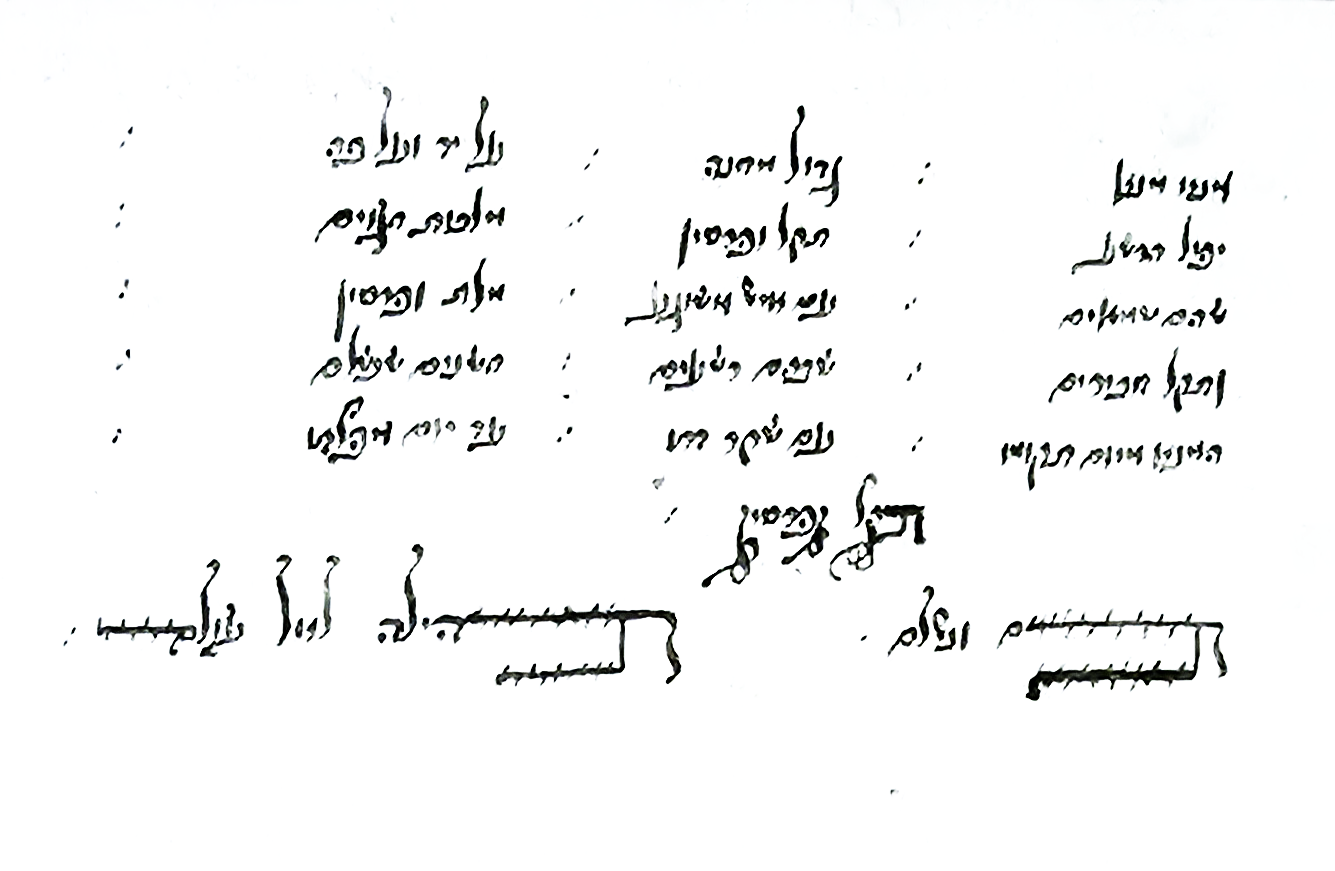
A song: “The hidden shall be revealed”
(שִׁיר: "יִגָּלוּ הַסְּתוּמִים)
by
Rabbi Shlomo Molcho
(מֵאֵת ר׳ שְׁלֹמֹה מוֹלְכוֹ).
Introduction: On the manuscript (הַקְדָּמָה: עַל כְּתַב הַיָּד)
The poem “The Hidden Shall Be Revealed,” by Rabbi Shlomo Molcho, (הַשִּׁיר ״יִגָּלוּ הַסְּתוּמִים״, לְר׳ שְׁלֹמֹה מוֹלְכוֹ) has survived from the sixteenth century in three versions. (שָׂרַד מֵהַמֵּאָה הַשֵּׁשׁ־עֶשְׂרֵה בִּשְׁלוֹשָׁה נוּסָחִים). Already in that century, a portion of the poem was quoted by one who testified that it had been composed in the year 1530]. (בְּאוֹתָהּ הַמֵּאָה צוּטַט חֵלֶק מִן הַשִּׁיר עַל־יְדֵי אָדָם שֶׁהֵעִיד שֶׁהַשִּׁיר נִכְתַּב בִּשְׁנַת ר״ץ [1530]).
The version of the poem presented here, published now for the first time, (אֶת הַשִּׁיר בְּנוּסְחוֹ הַמּוּבָא כָּאן, הַמִּתְפַּרְסֵם לָרִאשׁוֹנָה) was copied by the scribe Shmuel bar Yitzchak of Prague, (הֶעְתִּיק הַסּוֹפֵר שְׁמוּאֵל בַּר יִצְחָק מִפְּרָאג) approximately thirty years after the death of Rasham. (כִּשְׁלוֹשִׁים שָׁנָה לְאַחַר מוֹתוֹ שֶׁל רַשַ״ם). As noted above, Shmuel bar Yitzchak copied into his notebook both Rasham’s book (Sefer haMefo’ar) and sections of Rasham’s letters. (כְּנִזְכַּר לְעֵיל, שְׁמוּאֵל בַּר יִצְחָק הֶעְתִּיק לִמְחַבַּרְתּוֹ גַּם אֶת סִפְרוֹ שֶׁל רַשַ״ם [סֵפֶר הַמְּפֹאָר] וְגַם חֲלָקִים מֵאִגְּרוֹתָיו שֶׁל רַשַ״ם).
The manuscript is held in the Frankfurt Library. (כְּתַב־הַיָּד נִמְצָא בְּסִפְרִיָּית פְּרַנְקְפוּרְט). The scholar David Kaufmann published another version of the poem in 1897, (הַחֹקֵר דָּוִד קָאוּפְמַן הִדְפִּיס נוּסָח אַחֵר שֶׁל הַשִּׁיר בְּשַׁנַת 1897) and in 1993, Professor Moshe Idel printed an additional version which he found in MS Oxford Reggio 2/24. (וּבִשְׁנַת הַפְּרוֹפֶסוֹר מֹשֶׁה אִידֶל הִדְפִּיס נוּסָח נוֹסָף אֲשֶׁר מָצָא בִּכְתַב־יָד אוֹקְסְפוֹרְד).
In Kaufmann’s version, the stanzas are composed of four lines; (אֵצֶל קָאוּפְמַן בַּתֵּי הַשִּׁיר מוּרְכָּבִים מֵאַרְבַּע שוּרוֹת) in Idel’s - two lines; and in the Frankfurt MS before us - three. (אֵצֶל אִידֶל – מִשְּׁתֵּי שוּרוֹת, וּבִכְתַב־הַיָּד שֶׁל פְּרַנְקְפוּרְט שֶׁלְּפָנֵינוּ – מִשְּׁלוֹשׁ). In all versions it is difficult to distinguish between the opening and closing clauses of several statements, (בְּכָל הַגִּרְסָאוֹת קָשֶׁה לְהַבְחִין בֵּין הָרֵישָׁא לְסֵיפָא שֶׁל אֲחָדִים מִן הַהִיגָּדִים) and it appears that the stanza division is somewhat arbitrary, (וְנִרְאֶה שֶׁהַחֲלָקָה לְבָתִּים שְׁרִירוּתִית) especially as the rhyme scheme is not complete. (מַה גַּם שֶׁהַחֲרִיזָה בַּשִּׁיר אֵינָהּ שְׁלֵמָה). Because the phrases or clauses often spill over into subsequent stanzas, (מִשּׁוּם שֶׁהַמִּשְׁפָּטִים אוֹ הַהִיגָּדִים גּוֹלְשִׁים מִדֵּי פַּעַם לְתוֹךְ בָּתִּים עוֹקְבִים) we shall present the poem here as recorded in the Frankfurt MS - each cluster of three lines treated as a stanza and written in continuous sequence - (נַצִּיג אֶת הַשִּׁיר כָּאן כְּפִי שֶׁנִּרְשַׁם בִּכְתַב־הַיָּד שֶׁל פְּרַנְקְפוּרְט – כָּל מִקְבָּץ שֶׁל שָׁלוֹשׁ שוּרוֹת יֵחָשֵׁב בַּיִת וְיֵירָשֵׁם בְּרֶצֶף –) but we will add punctuation to clarify the meaning. (אֲבָל נוֹסִיף סִימְנֵי פִּסוּק כְּדֵי לְהַבְהִיר אֶת הַתּוֹכֶן).
At the end of the manuscript before us, it is written: “Completed and finished - praise to the Eternal God,” (בְּסוֹף כְּתַב־הַיָּד שֶׁלְּפָנֵינוּ כָּתוּב: ״תַּם וְנִשְׁלַם, תְּהִלָּה לְאֵל עוֹלָם״) which are most likely the words of the scribe marking the completion of his work in copying the poem, (וְאֵלֶּה כְּכָל הַנִּרְאֶה דִּבְרֵי הַמַּעְתִּיק הַמְּצַיֵּן אֶת הַשְׁלָמַת מְלֶאכֶת הַהַעְתָּקָה) and not the words of the poet. (וְלֹא דִּבְרֵי הַמְשׁוֹרֵר).
On the content of the poem (עַל תּוֹכֶן הַשִּׁיר): In order to interpret lines difficult to understand (כְּדֵי לְפָרֵשׁ שׁוּרוֹת קָשׁוֹת לְהָבִין), Kaufmann- and to a lesser extent, also Idel- (נֶאֱלַץ קָאוּפְמָן, וּבְמִדָּה פְּחוּתָה גַּם אִידֶל), was compelled to find in them various and unusual allusions (לִמְצֹא בָּהֶן רְמָזִים שׁוֹנִים וּמְשֻׁנִּים), which are rendered unnecessary in the version before us (הַמִּתְיַתְּרִים בַּנּוּסַח שֶׁלְּפָנֵינוּ), which is intelligible as it stands (הַמּוּבָן כְּמוֹת שֶׁהוּא). At present, there is no way to determine (אֵין בֵּינְתַּיִם אֶפְשָׁרוּת לְקַבֵּעַ), which version is more faithful to the original (אֵיזֶה נוּסַח נֶאֱמָן יוֹתֵר לַמָּקוֹר), which is no longer extant (שֶׁאֵינוֹ בַּמְּצִיאוּת). Moreover (זֹאת וְעוֹד), anyone who seeks to interpret a poem must decide (הַבָּא לְפָרֵשׁ שִׁיר חַיָּיב לְהַחֲלִיט), how to regard the poet (אֵיךְ לְהִתְיַחֵס לַמְשׁוֹרֵר). If the poet is unskilled, (אִם הַמְּשׁוֹרֵר אֵינוֹ מֻכְשָׁר), then any depth given to his words is baseless (כָּל הַעֲמָקָה בְּדְבָרָיו תְּלוּיָה עַל בְּלִימָה). But in his other writings, (אֲבָל בִּכְתָבָיו הָאֲחֵרִים), Rasham appears as a gifted preacher and scribe (מִתְגַּלֶּה רַשַ״ם כְּדַרְשָׁן וְסוֹפֵר מְחוֹנָן), versed in all the sacred writings (הַבָּקִי בְּכָל כִּתְבֵי הַקֹּדֶשׁ), whose letters are filled with verses and verse fragments (שֶׁפְּסוּקִים וַחֲצַאי פְּסוּקִים מְמַלְּאִים אַף אֶת שׁוּרוֹת מִכְתָּבָיו). Therefore, it may be assumed (עַל כֵּן מֻתָּר לְהַנִּיחַ), that the words of the poem were chosen with precision (שֶׁמִּלּוֹת הַשִּׁיר נִבְחֲרוּ עַל יָדוֹ בִּדְקִידוּק), and that their biblical or midrashic origin is no accident (וּמְקוֹרָן בַּתַּנַ״ךְ אוֹ בִּכְתָבִים מִדְרָשִׁיִּים אֵינוֹ מִקְרֶה), but the very reason for their inclusion in the poem (אֶלָּא סִבַּת שִׁיבּוּצָן בַּשִּׁיר). Accordingly, the poem must - and indeed can - be interpreted on multiple levels (וְנִתָּן – וְהוּא גַּם הֶכְרֵחִי – לְפָרְשׁוֹ בִּרְבָדִים שׁוֹנִים).
The plain meaning of the poem is: (פְּשׁוּטוֹ שֶׁל הַשִּׁיר הוּא) Rasham declares that he- with the help of Heaven- (רַשַ״ם מוֹדִיעַ שֶׁהוּא – בְּסִיַּעְתָּא דִּשְׁמַיָּא –) will reveal secrets that were hinted at in his other writings (יִגְלֶה סוֹדוֹת שֶׁנִּרְמְזוּ בִּכְתָבָיו הָאֲחֵרִים), concerning the coming of the Messiah and Hashem’s vengeance upon the nations, (עַל בּוֹא הַמָּשִׁיחַ וּנְקַמַּת ה׳ בַּגּוֹיִים), including the time of redemption. (כּוֹלֵל מוֹעֵד הַגְּאֻלָּה).
He opens with a general description of Hashem’s wars (הוּא פּוֹתֵחַ בִּתְאֵור כְּלָלִי שֶׁל מִלְחֲמוֹת ה׳) and of Messiah son of Ephraim against the enemies of Yisrael. (וּמָשִׁיחַ בֶּן־אֶפְרַיִם בְּאוֹיְבֵי יִשְׂרָאֵל). Messiah son of Ephraim will begin the campaign against Edom (מָשִׁיחַ בֶּן־אֶפְרַיִם יַפְתַּח בַּמַּעֲרָכָה נֶגֶד אֱדוֹם), to avenge them, (כְּדֵי לִנְקֹם בָּהֶם), and Rasham is told he himself will join the battle. (וְרַשַ״ם מִתְבַּשֵּׂר שֶׁהוּא עַצְמוֹ יִשְׁתַּתֵּף בַּלַּחֶם). The nations will be afraid (הַגּוֹיִים יִפְחָדוּ), and they will cry out for Hashem’s mercy (וְיִשְׁוַעוּ לִרְחֲמֵי ה׳), but they will not be answered. (וְלֹא יֵעָנוּ). Yerushalayim will be comforted and rebuilt (יְרוּשָׁלַיִם תְּרוּחַם וְתִבָּנֶה), while Edom stands for judgment before Hashem. (בְּזְמַן שֶׁאֱדוֹם עוֹמֵד לְדִין לִפְנֵי ה׳). The children of Yisrael who survive the troubles of the war of Gog and Magog (בְּנֵי יִשְׂרָאֵל הַשּׂוֹרְדִים אֶת צָרוֹת מִלְחֶמֶת גּוֹג וּמָגוֹג) will merit to behold the salvation of Messiah son of David (יִזְכּוּ לִרְאוֹת בִּישׁוּעַת מָשִׁיחַ בֶּן־דָּוִד), and to offer sacrifices in the Beit haMikdash. (וּלְהַקְרִיב קָרְבָּנוֹת בְּבֵית הַמִּקְדָּשׁ). While Messiah son of Ephraim will wage war with the sword, (וּבְזְמַן שֶׁמָּשִׁיחַ בֶּן־אֶפְרַיִם יִלָּחֵם בַּחֶרֶב), Messiah son of David will fight with his mouth. (מָשִׁיחַ בֶּן־דָּוִד יִלָּחֵם בְּפִיו). The Christians will flee, (הַנּוֹצְרִים יָנוּסוּ), and the followers of Islam will inherit the lands of Edom. (וּבְנֵי דַּת הָאִסְלָאם יִירְשׁוּ אֶת אֲרָצוֹת אֱדוֹם). The final victory of Yisrael over Edom and over the Yishmaelim (הַנִּצָּחוֹן הַסּוֹפִי שֶׁל יִשְׂרָאֵל עַל אֱדוֹם וְעַל הַיִּשְׁמְעֵאלִים) will come in the year hinted at already by Daniel, (יָבוֹא בַּשָּׁנָה שֶׁרָמַז כְּבָר דָּנִיֵּאל) and which Rasham also cites in greater detail- though still by hint. (וְשֶׁרַשַ״ם גַּם־הוּא מַזְכִּירָהּ בְּפֵרוּט יָתֵר, אַף שֶׁעֲדַיִן בְּרֶמֶז). An open question remains (שְׁאֵלָה פְּתוּחָה הִיא), whether the figure described in the poem who acts to bring the redemption (אִם הָאִישׁ הַמְּתוּאָר בַּשִּׁיר הַפּוֹעֵל לְהָבִיא אֶת הַגְּאֻלָּה), is the Messiah, or Eliyahu haNavi, or perhaps Rasham himself. (הוּא הַמָּשִׁיחַ, אֵלִיָּהוּ הַנָּבִיא, אוֹ אוּלַי רַשַ״ם עַצְמוֹ).