
Daf 8b (דַּף ח ע״ב)
יַהְוָ הִיָוֵ הַהְיְ הְהָוֹ הַוַהְ יְהְהְ יַוַהֵ יְוְהְ וָהֶיָ הֱוְיֹ הַהֶוֹ הִהֶיָ הִיֶהְ וְהֲהַ וַיַהָ וֹיָהְ הֵוֹיַ וְהֹיֹ וִוְה וְוָיֶ וֵיַוְ הֵוְיֹ הַיָוֵ הַוַהָ יֶוְהֵ וֶיֶהֶ וִוְי וְוֵהַ וָהָוָ יִוָוְ יְהְוְ יַהֶוּ וֵיֹהֻ יֶוַהְ יְיְוָ יֵיְהִ יָהָיְ וַיָיְ וֵהְיֵ וִהֵיָ הֶיִוְ יְהְוָ יַיֵהְ יִיְוַ יַוֵיָ הְיָיְ הַוְיָ הֻוִיֻ יֻהֵיַ הְיָיָ הֶהַיֶ הָהַיְ הָיְהֶ יְהֵהְ יִיֵהַ יְיהָ הֵוְהְ וֵהִהֶ וֶוַהָ וָוְהְ וַהִוֶ הַוֶוַ הֲהֶוַ הְהַוִ וְיַוָ יֵוְוְ יַיֵוֻ יְיַוֵ יֵוַי וֵיָי וֶוָיִ וְוֵיְ
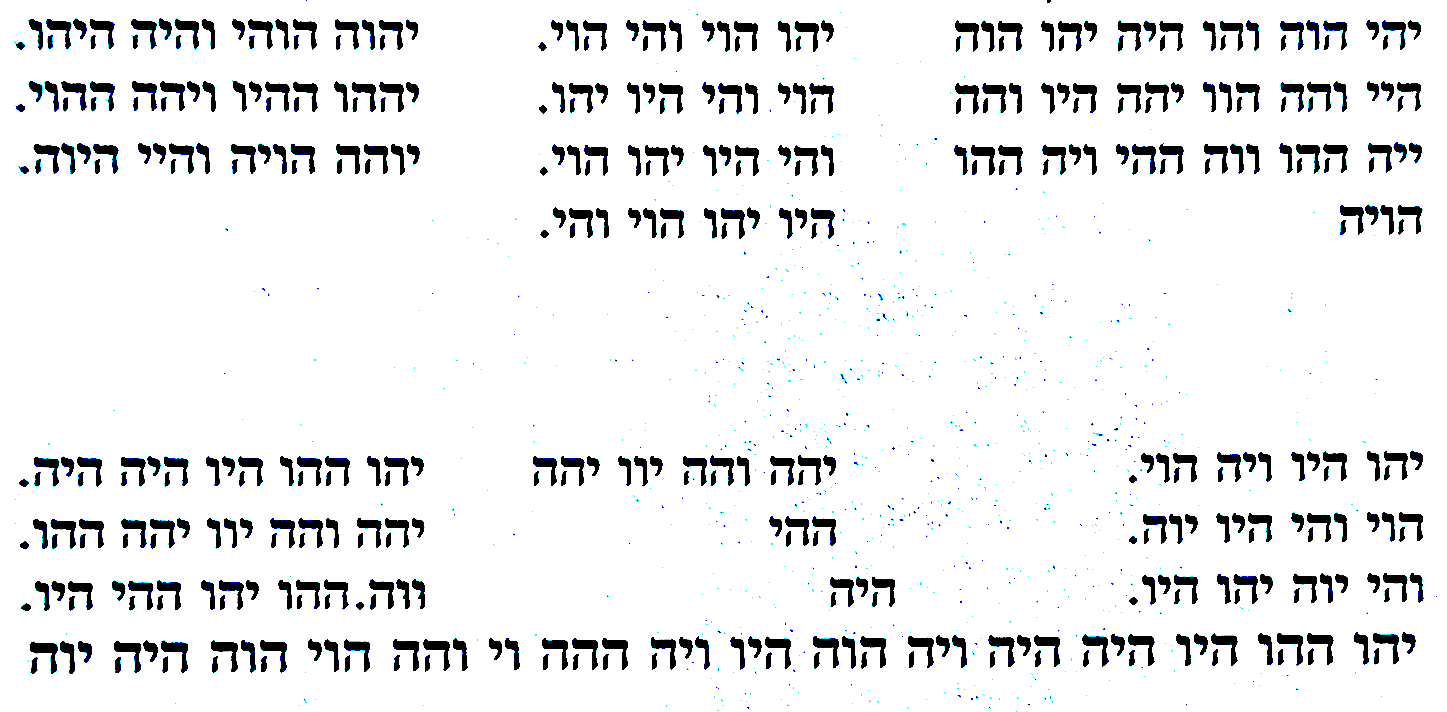
And these I found in another book (וְאֵלֶּה מָצָאתִי בְּסֵפֶר אַחֵר)
יהי הוי והי ויה ייה היי יהי הוה והו היה היי והה הוו יהה ההו ווה ההי יהו הוה היו יהה ההו הוי יהו היו ויה הוי הוי והי יהה והה יוו יהה ההי היה יהי ההו ההו היו היה היה ויה הוה היו ויה ההה ויי והה הוי הוה היה יוה יהו ההו היו היה היה יהה והה יוו יהה ההו יוה ההו יהו ההו יהו היו ויה: יהוה הוהי והיה היהו. יההו. ההיו. ויהה. ההוי יוהה. הויה וההי היוה
(Some say: in the Name of B”N 72, and it is written with deficiencies in the script of the elders of the Rav
(נ״א בְּשֵׁם בֶּן ע״ב וְכָתוּב בַּחֲסֵרוֹנוֹת שֶׁל כְּתִיבַת זִקְנֵי הָרַב).
The Name Hashem (שֵׁם יהו״ה), its Yod is at the head of the sword (י׳ דִילֵיהּ בְּרֵישָׁא דְחַרְבָּא). There is no one who can surely prevail against the Master of this sword (דְּלֵית מָאן דְּנָצַח וַדַּאי לְמָארֵי חַרְבָּא דָא). And with it He prevails over all other sides, and none can stand before it (וּבָהּ נָצַח לְכָל סִטְרִין אָחֳרָנִין, וְלֵית חַד קַיְימָא קַמָּהּ). The body of this sword is Vav (גּוּפָא דְהַאי חַרְבָּא ו׳). Blessed is he who knows to wield it in his hand to every side, above and below and the four directions, with the six Sefirot (זַכָּאָה אִיהוּ מָאן דְּיָדַע לְאַנִּיף לֵיהּ בִּידֵיהּ לְכָל סִטְרָא, עִילָא וְתַתָּא וְאַרְבַּע סִטְרִין בְּשִׁית סְפִירָן). The two edges, that cut with them above and below from two sides, these are Hei Hei (תְּרֵין פִּיפִיּוֹת דְּחַתִּיךְ בְּהוֹן עִילָא וְתַתָּא מִתְּרֵין סִטְרִין אִינוּן ה׳ ה׳). And the point is Elohim, which is its sheath (וּנְקוּדָא אֱלֹהִי״ם, וְהַיְינוּ נַרְתֵּק דִילֵיהּ).
And because of this Binah is the point Elohim (וּבְגִין דָּא בִּינָה נְקוּדָה אֱלֹהִי״ם), in this likeness of YHVH as it is said (כְּגַוְונָא דָא יְהִֹוִ״ה כְּמָה דְאִתְּמַר). And this is what the masters of Mishnah established: whoever recites the Shema, it is as if he holds a double-edged sword in his hand (וְהַאי אִיהוּ דְאוּקְמוּהוּ מָארֵי מַתְנִיתִין, כָּל הַקּוֹרֵא קְרִיאַת שְׁמַע, כְּאִלּוּ אוֹחֵז חֶרֶב פִּיפִיּוֹת בְּיָדוֹ). And this was established: upon his bed, to protect from the harmful beings (וְהָא אוּקְמוּהוּ עַל מִטָּתוֹ, לְהָגֵן מִן הַמַּזִּיקִין). But in the Shema of prayer, the master of the destroyers is bound, he has no permission to flee (אֲבָל בִּקְרִיאַת שְׁמַע דִצְלוֹתָא, אֲדוֹן הַמַּזִּיקִין קָשׁוּר, לֵית לֵיהּ רְשׁוּ לְמִבְרַח). Blessed is he who slaughters him at that time, to fulfill “If one comes to kill you, rise early to kill him” - in prayer (וְזַכָּאָה אִיהוּ מָאן דְּשָׁחִיט לֵיהּ בְּהַהוּא זִמְנָא, לְקַיֵּים [בָּא לְהָרְגְּךָ] הַשְׁכֵּם לְהָרְגוֹ בִּצְלוֹתָא). As it is said of it: “And Avraham rose early in the morning” (דְאִתְּמַר בָּהּ וַיַּשְׁכֵּם אַבְרָהָם בַּבֹּקֶר) (Bereshit 19:27). How much more so one who does not spare his honor, to slaughter his evil inclination and his enemy (כָּל שֶׁכֵּן מָאן דְּלָא חָשַׁשׁ לִיקָרֵיהּ לְשַׁחֲטָא יִצְרֵיהּ וְשַׂנְאֵיהּ). For the enemy is not only his enemy, but the enemy of Kudsha Berikh Hu (דְּלֵית שַׂנְאֵיהּ לְחוֹד אֶלָּא שַׂנְאֵיהּ דְּקוּדְשָׁא בְּרִיךְ הוּא). Every day He demands the sins of His children, to slaughter them (דִּבְכָל יוֹמָא תָּבַע חוֹבִין דִּבְנוֹי לְשַׁחֲטָא לוֹן).