
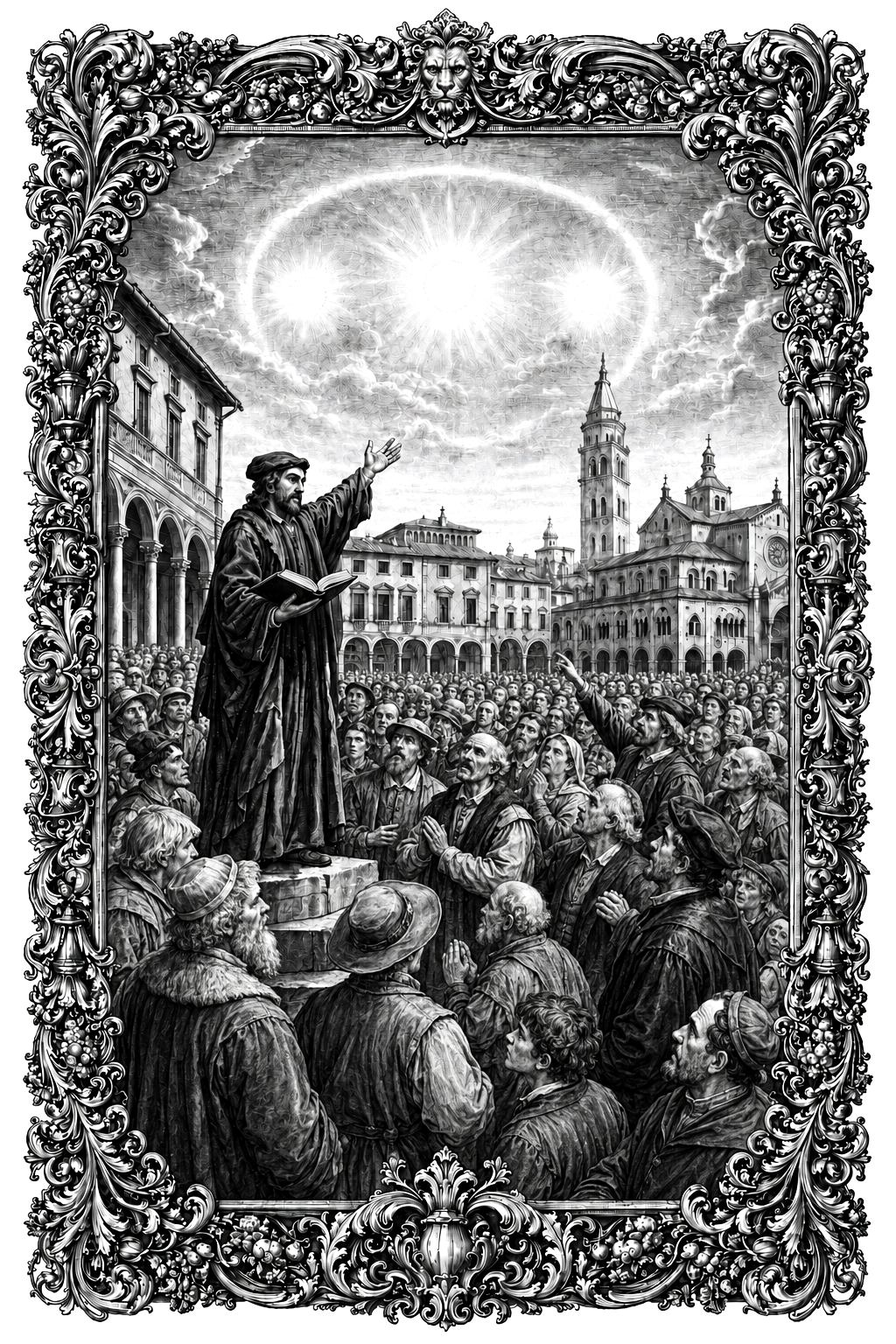
A Sermon Delivered by Rabbi Shlomo Molcho in the City of Mantua, Italy
דְּרָשָׁה שֶׁנָּשָׂא ר׳ שְׁלֹמֹה מוֹלְכוֹ בְּעִיר מַנְטוּבָה שֶׁבְּאִיטַלְיָה
Those standing in the main square of the city of Modena, Italy, on April 22, 1531, were astonished to see three suns in the sky (הָעוֹמְדִים בְּכִיכַּר הָעִיר מוֹדֶנָה שֶׁבְּאִיטַלְיָה בְּ- בְּאַפְרִיל הוּפְתְּעוּ לִרְאוֹת שָׁלוֹשׁ שִׁמָּשׁוֹת בַּשָּׁמַיִם). At the end of that same August, a drawing of the three suns sighted in the city of Troia in the region of Naples, Italy, was sent to the King of England, Henry VIII (בְּסוֹף חֹדֶשׁ אוֹגוּסְט שֶׁבָּאוֹתָהּ שָׁנָה, נִשְׁלַח לְמֶלֶךְ אַנְגְּלִיָּה, הֶנְרִי הַשְּׁמִינִי, צִיּוּר שֶׁל שָׁלוֹשׁ שִׁמָּשׁוֹת שֶׁנִּצְפּוּ בְּעִיר טְרוֹיָה שֶׁבְּמְחוֹז נַאַפּוֹלִי הָאִיטַלְקִי). These sights frightened the local population, who regarded them as religiously meaningful omens, possibly portending evil (מַרְאוֹת אֵלֶּה הִבְהִילוּ אֶת תּוֹשְׁבֵי הָאֵזוֹר, אֲשֶׁר הַחְשִׁיבוּ אוֹתָם לְאוֹתוֹת בַּעֲלוֹת מַשְׁמָעוּת דָּתִית וְאוּלַי מְבַשְּׂרוֹת רָעוֹת).
Rasham, who during that period was delivering sermons in local synagogues (רַש״ם, שֶׁבְּאוֹתָהּ תְּקוּפָה נָשָׂא דְּרָשׁוֹת בְּבָתֵּי הַכְּנֶסֶת הַמְּקוֹמִיִּים), addressed the topic in one of his derashot (דָּן בַּנּוֹשֵׂא בְּאַחַת מִדְּרָשׁוֹתָיו). In his words, he attempted to stir his listeners’ hopes for salvation and their longing for redemption (בְּדִבְרָיו, הוּא נִסָּה לְעוֹרֵר אֶת צִפִּיּוֹת מַאֲזִינָיו לִישׁוּעָה וְאֶת כִּסּוּפֵיהֶם לִגְאֻלָּה).
Unlike the sermons that were edited by Rasham and revised in preparation for publication in writing (שׁוֹנֶה מִן הַדְּרָשׁוֹת שֶׁעוּבְּדוּ עַל יְדֵי רַש״ם וְהוּגָהוּ לִפְנֵי פִּרְסוּמָן בִּכְתָב), this sermon was recorded by one of his listeners, more or less as it was delivered in the synagogue (דְּרָשָׁה זוֹ נִרְשְׁמָה עַל יְדֵי אֶחָד מִמַּאֲזִינָיו, פָּחוֹת אוֹ יוֹתֵר כְּפִי שֶׁנִּשְּׂאָה בְּבֵית הַכְּנֶסֶת). p1-13The listener-scribe of the derashah included it in a bundle of leaves (הַמַּאֲזִין־הַכּוֹתֵב שֶׁל הַדְּרָשָׁה כִּלֵּל אוֹתָהּ בִּמְקַבֶּץ דַּפִּים), Oxford MS Reggio 24/2 (כ״י אוֹקְסְפוֹרְד), in which he also copied Rasham’s letter to the sages of Venice (שֶׁבָּהֶם הֶעְתִּיק גַּם אֶת מִכְתָּבוֹ שֶׁל רַש״ם לַחֲכְמֵי וֶנֶצְיָה), that is-the second letter in Sefer Ḥeit Qaneh (הוּא הַמִּכְתָּב הַשֵּׁנִי שֶׁבְּסֵפֶר חֵית קָנֶה), as well as Rasham’s poem Yigalu haSetumim (The hidden will be revealed) (וְגַם אֶת שִׁירוֹ שֶׁל רַש״ם ״יִגָּלוּ הַסְּתוּמִים״).
This means he was not a casual listener who happened to be inspired by the sermon and wished to remember it (כְּלוֹמַר, לֹא הָיָה מַאֲזִין מִזְדַּמֵּן שֶׁבְּמִקְרֶה הִתְלַהֵב מִן הַדְּרָשָׁה וּבִקֵּשׁ לְשַׁמְּרָה). This fact raises the possibility that the material was sent to Rasham’s followers in another city (עוּבְדָּה זוֹ מַעֲלָה אֶת הָאֶפְשָׁרוּת שֶׁהַחֹמֶר נִשְׁלַח לְאוֹהֲדָיו שֶׁל רַש״ם בְּעִיר אַחֶרֶת), and perhaps suggests a coordinated effort to spread Rasham’s ideas and preserve his teachings (וְיִיתָכֵן שֶׁהִיא מֵעִידָה עַל מַאֲמָץ מְרוּכָּז לְהַפִּיץ אֶת רַעְיוֹנוֹתָיו שֶׁל רַש״ם וּלְשַׁמֵּר אֶת תּוֹרָתוֹ).
The scribe’s own introductory words to the text support this conclusion (פְּנִיָּתוֹ שֶׁל הַכּוֹתֵב עַצְמוֹ בַּפְּתִיחָה לַטֶּקְסְט תּוֹמֶכֶת בַּמַּסְקָנָה הַזֹּאת): “Incline your ears…” he writes (״הַטּוּ אָזְנֵיכֶם…״ הוּא כּוֹתֵב). The derashah has come down to us in two manuscripts (הַדְּרָשָׁה הִגִּיעָה אֵלֵינוּ בִּשְׁנֵי כִּתְבֵי יָד): the above-mentioned Oxford MS (כ״י אוֹקְסְפוֹרְד הַנ״ל), and JTS MS 80 (וְכ״י), and it was first published by Prof. Moshe Idel (וּפוּרְסְמָה לָרִאשׁוֹנָה עַל־יְדֵי פְּרוֹפ׳ מֹשֶׁה אִידֶל)p1-14. Idel preferred the version of the Oxford manuscript (אִידֶל הֶעֱדִיף אֶת הַנּוּסַח שֶׁל כ״י אוֹקְסְפוֹרְד), and we have followed in his path (וַאֲנַחְנוּ הָלַכְנוּ בְּעִקְבוֹתָיו), though we incorporated several words or partial phrases from the JTS manuscript (אִם כִּי שִׁלַּבְנוּ מִסְפַּר מִלִּים אוֹ חֶלְקֵי מִשְׁפָּטִים מִכ״י), when they clarified Rasham’s intent more effectively (כַּאֲשֶׁר הֵבִהִירוּ טוֹב יוֹתֵר אֶת כַּוָּנָתוֹ שֶׁל רַש״ם).
Notes
(According to Somasino Lancelotti, Chronicle of Modena, vol. III (April 1531) (עַל פִּי סוֹמַסִינוֹ לַנְסֶלוֹטִי, כְּרוֹנִיקָה שֶׁל מוֹדֶנָה, כָּרֶךְ ג׳ [אַפְּרִיל 1531]), and a letter from the ambassador William Bennet to King Henry VIII, dated 30 August 1531 (וּמִכְתָּב מֵהַשָּׁגִיר וִילְיָם בֶּנֶט אֶל הַמֶּלֶךְ הֶנְרִי הַשְּׁמִינִי, 30 בְּאוֹגוּסְט 1531), the event is also mentioned in a letter by Johannes Dantiscus to Erasmus of Rotterdam (הָאֵרוּעַ מֻזְכָּר גַּם בְּמִכְתָּב שֶׁל יוֹהַנֶס דַּנְטִיסְקוּס אֶל אֶרַסְמוּס מֵרוֹטֶרְדַּם), October 1531 (אוֹקְטוֹבֶּר 1531), published in Erasmus’s correspondence for that year, p. 197 (שֶׁנִּפְרְסַם בִּהְתַכְּתוּת שֶׁל אֶרַסְמוּס לְאוֹתָהּ שָׁנָה, ע׳ 197). Professor Moshe Idel, who published the derashah for the first time thirty years ago (פְּרוֹפ׳ מֹשֶׁה אִידֶל, אֲשֶׁר פִּרְסֵם אֶת הַדְּרָשָׁה לָרִאשׁוֹנָה לִפְנֵי שְׁלוֹשִׁים שָׁנָה), suggested that Rasham delivered the sermon in Italian (הִצְּעָה שֶׁרַש״ם דָּרַשׁ בִּשְׂפָה הָאִיטַלְקִית). If so, then the record before us-however accurate-is nevertheless a translation (אִם כֵּן, הָרִישּׁוּם שֶׁלְּפָנֵינוּ, מְדֻיָּק כְּכָל שֶׁיִּהְיֶה, הוּא בְּכָל זֹאת תִּרְגּוּם).
Moshe Idel, “An Unknown Derashah by R. Shlomo Molcho” (מֹשֶׁה אִידֶל, ״דְּרָשָׁה לֹא יְדוּעָה שֶׁל ר׳ שְׁלֹמֹה מוֹלְכוֹ״), in Exile after Exile: Studies in the History of the Jewish People Presented to Professor Haim Beinart on the Occasion of His Seventieth Birthday (בְּתוֹךְ גָּלוּת אַחַר גָּלוּת, מַחְקָרִים בְּתוֹלְדוֹת עַם יִשְׂרָאֵל מֻגָּשִׁים לְפְרוֹפ׳ חַיִּים בֵּינָארְט לִמְלוֹאות לוֹ שִׁבְעִים שָׁנָה), Jerusalem: Ben-Zvi Institute, Yad Ben-Zvi and The Hebrew University, 1988 (יְרוּשָׁלַיִם: מָכוֹן בֶּן־צְבִי, יַד בֶּן־צְבִי וְהָאוּנִיבֶרְסִיטָה הָעִבְרִית, תשמ״ח [1988]).